Home Blog Page 403

Transforming India into a Digital Healthcare Economy

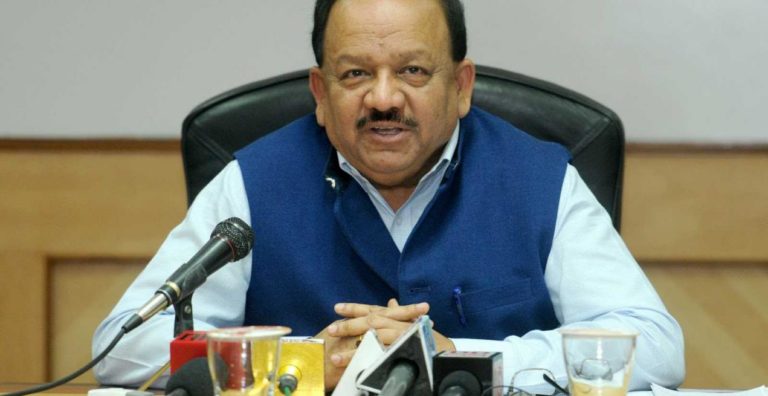
Urging the stakeholders to work towards implementing the National Digital Health Blueprint (NDHB) in a time bound manner, Union Minister of Health and Family Welfare Dr. Harsh Vardhan has said that “Government of India is committed to ensuring high quality healthcare, accessible to all upto the last mile. The digital health interventions are accelerating this transformation and have a huge potential for supporting Universal Health care.” The final NDHB report was submitted to Dr. Harsh Vardhan by J. Satyanarayana, former Chairman, UIDAI and Chairman of the National Digital Health Blueprint (NDHB) Committee.

J. Satyanarayana also provided a brief overview of the efforts that have gone into preparation of NDHB report and made a brief presentation on the overall framework as proposed in NDHB. He said that the priorities of Government of India in health care were included in the National Health Policy 2017 and this recommendation report by Ministry of Health and Family Welfare has shown the implementation angle for achieving the same.He further added that this may be considered as the biggest leap of GoI towards achieving the goal of Universal Healthcare Coverage (UHC) with impetus on Digital Healthcare component.

Dr. Harsh Vardhan said that “The need of the hour is to create an ecosystem which can integrate the existing disparate health information systems and show clear path for upcoming programmes. There is a need to ensure convergence across these IT systems to monitor and provide health services in a robust and efficient manner. Ministry of Health and Family Welfare has initiated efforts in the direction of a comprehensive, nationwide integrated e-Health system under National Digital Health Blueprint.”

NDHB will help in providing a common platform for integration of existing applications in health domain and data which has existed in silos, either in public health facility, or, in private healthcare facility, in India. It was also updated that building on the initial document of “National Health Stack” (NHS) by Niti Aayog, Ministry of Health and Family Welfare has defined clear timelines, targets and the resources required for this digital convergence of Healthcare programmes in India.

Speaking at the event, Dr. Harsh Vardhan referred to vision of Prime Minister Narendra Modi, to reach each individual of this country with services at their doorstep under Digital India Programme and hoped that implementation of NDHB with programmes of Ministry of Health and Family Welfare would benefit every individual.

He congratulated Ms Preeti Sudan, Secretary, Ministry of Health and Family Welfare and Sh. J.Satyanarayanafor this extensive exercise which would transform India into a Digital healthcare economy and urged all stakeholders to work towards implementing the blueprint in a time bound manner. Dr. Neeta Verma, DG, NIC, Alok Kumar, Advisor (Health), NITI Aayog and senior officials of the Ministry were also present at the event.

Kerala to have India’s 1st Water Metro

The Centre has given the environment clearance for Rs 819 crore water metro project that aims to provide better connectivity of islands around Kochi with the mainland, according to official document. The Union Environment Ministry has given the final environment clearance to the proposed project after taking into account the views of its green panel. Kerala is now set to have to have India’s 1st water metro.

Kochi Metro Rail Ltd (KMRL), a joint venture firm of the Centre and Kerala government, is the implementing agency of the proposed project.

As per the proposal, the project will cover 15 identified routes in Kochi connecting 38 terminals across 10 island communities across 78.2 km channel length and two boatyards.

KMRL has proposed to take up development of 7 additional terminals (Info Park, Vaduthala, Njarackal, Mulavukad View Point and Embarkation jetty) as a social initiative, the document added.

The cost of the proposed project is pegged at Rs 819 crore and about 9.51 hectare of land to be acquired for it.

According to KMRL, the proposed metro project aims to provide easy access to scenic islands around the mainland Kochi besides will enhance overall employment opportunities.

Members of European Parliament to explore various parts of India, including J&K

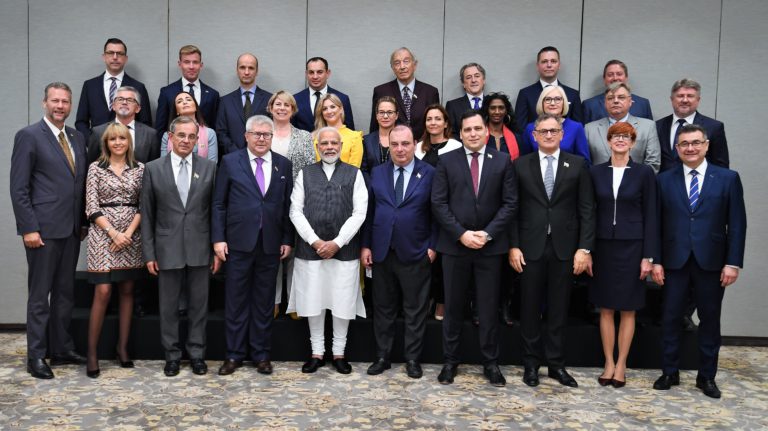
A delegation of Members of European Parliament has arrived in India. They will be visiting various parts of the country, including Jammu and Kashmir.  The delegation called on Prime Minister Narendra Modi at 7, Lok Kalyan Marg, New Delhi today. Prime Minister appreciated the importance the Parliamentarians attach to their relationship with India by visiting right at the beginning of their term.

Prime Minister said that India’s relationship with the European Union is based on shared interests and common commitment to democratic values. He said that an early conclusion of a fair and balanced BTIA is a priority for the government. Talking about the need to strengthen engagement with EU on regional and global matters, Prime Minister highlighted the importance of close international cooperation to fight terrorism. He also mentioned about the growth of International Solar Alliance as a global partnership.

Prime Minister, while welcoming the delegation to India, expressed the hope that they have a fruitful visit to various parts of the country, including to Jammu and Kashmir. Their visit to Jammu and Kashmir should give the delegation a better understanding of the cultural and religious diversity of the region of Jammu, Kashmir and Ladakh; apart from giving them a clear view of the development and governance priorities of the region.

Prime Minister highlighted the huge jump in India’s position in Ease of Doing Business rankings from 142 in 2014 to 63 currently. He said that this is a massive achievement for a country as enormous in size, demography and diversity as India. Governance systems are today enabling people to move in aspirational direction, he said.

Prime Minister also underlined the focus of the government on ensuring Ease of Living for all Indians. He mentioned about the success of key programmes of the Government including Swachh Bharat and Ayushman Bharat. He reiterated India’s commitment to eliminate TB by 2025, five years before the global target. He also talked about steps taken for environment protection and conservation including enhanced renewable energy targets and movement against single use plastics.

The Naked Man and his Shirt

1

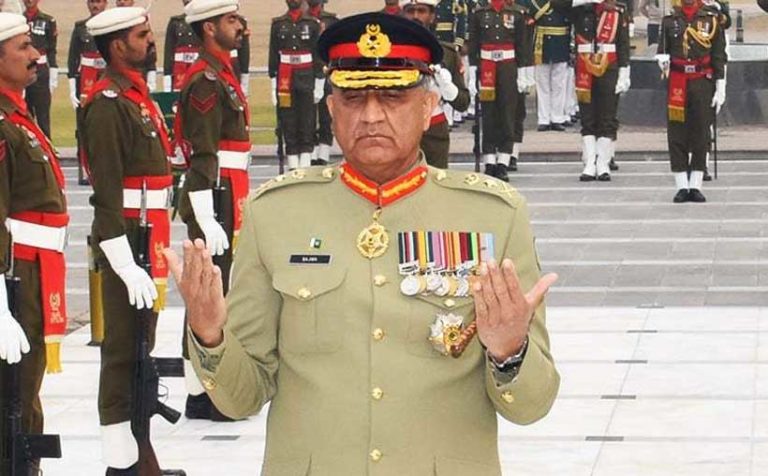
“Beware the naked man who offers you his shirt” is an old African proverb that aptly sums up Pakistan Army chief Gen Qamar Javed Bajwa’s announcement that his army is prepared to “go to any extent” to help Kashmiris. In any democracy, for the army chief to make such a politically charged statement would be something unheard of, but then, Pakistan has its own unique democratic setup in which everything appears to be hunky-dory–provided that you really believe the repetitive announcements made by their Politicians and Generals that they are “on the same page’!

In armies all over the world, making promises that can’t be kept is considered an unsoldierly act and so, promising to “go to any extent” is an ‘open ended’ assurance that not many army men would dare to give. But to be fair to Gen Bajwa, he isn’t the first Pakistan Army chief to have done so and neither will he be the last. Yet, in contrast to his predecessors who took care to avoid any direct mention of Pakistan Army’s support to the proxy war in Kashmir, Gen Bajwa seems to get so emotional that while speaking about Kashmir, he invariably gives such incredible assurances that at times he sounds more like a politician rather than an army chief.

But why does the Pakistan Army have such a fatal obsession with Kashmir?

Well, whereas the Pakistan Army defends its Kashmir fixation by terming it the “unfinished agenda” of partition, the reality is quite different. The fact of the matter is that it has unsuccessfully tried to militarily ‘resolve’ this so called “unfinished agenda,” not once but twice. It did so in 1947 by concealing deployment of its regular forces by passing them off as tribals and repeated the same ploy in 1965 by disguising its soldiers as ‘razakars’ (civilian volunteers). Since both these attempts failed miserably, it is but natural that for an army that has bestowed superhuman military prowess upon itself, Kashmir constantly reminds Rawalpindi of its own failings and weakness.

By abrogating Article 370 and declaring that it’s India’s internal matter, New Delhi has made it clear to the world that it has absolute authority over Kashmir. This move has fully exposed the falsity of Islamabad’s claim of Kashmir being a “disputed territory” and Rawalpindi’s assertion of it being the “unfinished agenda” of partition. Since Pakistan has twice failed to get control of Kashmir, one wonders what exactly Gen Bajwa means when he says that the Pakistan Army is prepared to go to “any extent” for the sake of Kashmiris. That’s the reason why this assurance of Gen Bajwa has a striking similarity to the case of a naked man offering his shirt!

Some say that frustration could be the reason behind Gen Bajwa’s announcement. Though this does appear to be plausible, but Gen Bajwa doesn’t seem to be the kind of person who would indulge in empty rhetoric. Nor is he as swashbuckling as Gen Ayub Khan who started the Indo-Pak conflict in 1965 to annex Kashmir, or whimsical like Gen Yahya Khan who declared war against India in 1971 with great flourish and ended up losing East Pakistan; lastly, he’s most certainly not as foolhardy as Gen Musharraf who embarrassed Pakistan by his 1999 Kargil misadventure. That’s why even though Gen Bajwa’s assurances may sound farfetched, they can’t be brushed aside as the grumbling of a sore loser.

Let’s not forget that it was the Pakistan Army and its Inter-Services Intelligence (ISI) that during Gen Zia-ul-Haq’s rule brought terrorism to J&K by training local youth and equipping them with weapons. But right from the beginning, it was abundantly clear that Gen Zia and his Generals were never under any delusions that the ‘mujahideen’ that they had created would be able to achieve ‘azadi’ (independence) by defeating Indian security forces. On the contrary, Gen Zia formed these ‘mujahideen’ only to offset the numerical disparity between the conventional forces of India and Pakistan and his plan was simple–Terrorists would remain elusive and employ hit-and-run tactics, thereby tying down a large number of Indian troops for security duties and anti-terrorism operations.

Furthermore, as this plan didn’t involve use of Pakistan Army personnel, the proxy war in Kashmir couldn’t be directly linked to Islamabad and since the terrorists were Kashmiris, Pakistan would be under no obligation to provide financial support or look after the families of those terrorists killed in gunfights with security forces. In short, this being a ‘low cost’ option “to bleed India through a thousand cuts,” was too lucrative to ignore. That terrorism in Kashmir is being patronised by Rawalpindi solely for the purposes of suiting its own vested interests has even been accepted by none other than Hizbul Mujahideen chief Syed Salahuddin, who also heads Pakistan-based ‘United Jihad Council’ when he said that his cadres were actually “fighting Pakistan’s war in Kashmir”!

Tailpiece- Since Pakistan Army lacks the capability to wrest Kashmir by force, the only logical interpretation of Gen Bajwa’s promise of going to “any extent” is that regardless of the consequences, the Pakistan Army is prepared to escalate violence levels along the Line of Control and terrorist activities in the hinterland. But how exactly will all this help the people of Kashmir is a million-dollar question, which neither Gen Bajwa nor his Inter Services Public Relations spin-master Maj Gen Asif Ghafoor will ever care to answer.

A humble suggestion for my Kashmiri brothers and sisters– while they say that it’s not good to look the gift horse in the mouth, but when a naked man offers you his shirt, then one needs to be very-very careful!

Pak Army reveals its true face on Kashmir with violent attacks on POJK protesters

Jammu and Kashmir continues to remain calm and peaceful with the process of reorganisation moving ahead smoothly but Pakistan is facing upheaval in Pakistan Occupied Jammu and Kashmir (POJK), the territories of the erstwhile princely state of Jammu and Kashmir that are under Pakistan’s illegal occupation.

October 22 is marked as “Black Day” by the people of the POJK. On this day in 1947 the perfidious and brutal Razakars (mercenaries) from Pakistan invaded the princely state of Jammu and Kashmir with full support of the Pakistan Army.

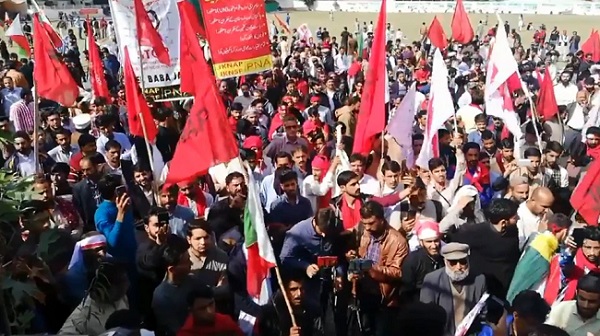
Earlier, a few dozen people used to come out to register a weak protest on October 22. What was different this year was the intensity. A number of political parties under an umbrella organisation named All Independent Parties Alliance (AIPA) came out to protest and the number of people on the street was in thousands.  

The police force responded with unprecedented brutality. The largely peaceful rally was tear-gassed and Lathi (Baton) charged. The outcome of this unnecessary and brutal use of force by the police was the death of two innocent civilians, even as more than 80 sustained serious injuries.

One big reason behind this action by the security forces was the presence in the area of a large number of foreign diplomats and journalists whom the Pakistan Army had invited to the occupied territories to prove that there are no terror camps being operated from this region. Obviously, the authorities did not want these foreign dignitaries to see the protests and hence the tearing need to scuttle the demonstrations with overpowering use of force.

Masood Khan, the titular and toothless President of the so-called “Azad Jammu and Kashmir,” was quick to come out in support of his masters by terming the vicious police action as a “preventive measure.” He also resorted to India-bashing by saying that the police response was restrained as compared to that used by Indian forces on the other side of the line. It would be difficult for a stooge like him, who is selling his people to stay in power, to understand that as President it is his duty to protect his people from atrocity and not carry out comparisons with others. A high ranking military officer had the audacity to term the protestors as “Indian Agents,” little realising that by saying so he was acknowledging that the region has many who have a leaning towards India, thus negating the very concept of “Azaadi” on which this occupation stands. 

As expected, the protests and the civilian casualties hardly found any mention in the Pakistani media. The region is behind an iron curtain from where no news leaks out. While in India the blocking of Internet facility is a temporary measure, in POJK the communication is totally restricted or is under close scrutiny of the government intelligence agencies.

Not satisfied with treating innocent civilians like common criminals the Pakistani security forces blatantly attacked journalists of the region. On October 22, while a media briefing by Jammu Kashmir People’s National Alliance (JKPNA) was underway at the press club in Muzaffarabad, the police barged in, beat up the journalists mercilessly and broke their expensive equipment. According to the news agency, ANI, visuals from outside the press club showed police firing tear gas shells and lathi-charging the journalists as well as breaking their recording equipment. It is reported that many journalists were seriously injured. The objective, quite clearly, was to intimidate them into submission and thus ensure that no credible news goes out. The very next day these journalists took to the streets to protest against this raid and openly raised slogans against the security forces.

There are many voicing their condemnation and displeasure at the state of affairs. While making it known that “Muzaffarabad POJK is burning,” Senge Sering, a US-based activist from Gilgit-Baltistan has elucidated on social media the curfew like situation in Muzaffarabad with journalists being beaten up and women pouring out in the streets calling the Pakistan Army as a bunch of hooligans and terrorists. He then goes on to ask, “Now, where are those 15,000 “British Kashmiris” who attacked Indian Embassy in London to show love for their homeland? They were carrying flags of POJK in their hands. Now that POJK is burning, they seem to have lost the address of Pakistan Embassy in London…..”

The Muttahida Qaumi Movement (MQM) has condemned the Pakistani security forces for “brutal manhandling” of a peaceful protest against oppression and atrocities by state agencies. It also appealed to the foreign diplomats to take notice of the barbarism and called upon human rights organisations to step forward for the sake of humanity.

Journalists of the international magazine New York Times, who were granted rare access to the region, found a “toughening Pakistani security response to a growing pro-independence movement there.”

The writing on the wall is clear – the people of POJK are fed up with the brutal subversion of their basic rights and virtual colonisation by the federal government of Pakistan and the Pakistan Army. They are fearlessly demanding freedom from the illegal occupation by Pakistan. They want to rid themselves of political stooges like Masood Khan who take office only after swearing allegiance to Pakistan and then function in subservience to the draconian Ministry of Kashmir Affairs of the federal government of Pakistan. The people want fresh elections with equal right to pro-freedom candidates. They are also demanding a separate constitutional assembly and unification with Gilgit-Baltistan. 

The bubble of Pakistan’s much vaunted sympathies with the Kashmiri people has burst good and proper. There remains no doubt that the country has a single objective of milking the Kashmiris’ of their rich resources and throwing the people back into the medieval ages. The international community has also seen through Pakistan’s game plan and is now openly questioning its illegal and suppressive actions in POJK. India, in particular, needs to mobilise all means – political, diplomatic and otherwise, to ameliorate the poor condition of the people of POJK, more so, since they are citizens of the country under foreign occupation. 

Hong Kong government to withdraw bill that sparked protests

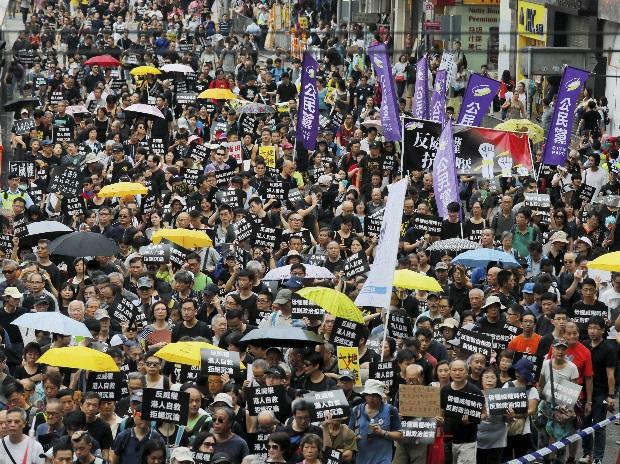
Hong Kong authorities are set to formally withdraw an unpopular extradition bill that sparked months of chaotic protests in the semi-autonomous Chinese city.The security chief is likely to announce the bill’s withdrawal in the city’s legislature very soon.

Hong Kong leader Carrie Lam had proposed the amendments to resolve a case involving a man wanted for murder in Taiwan who could not be sent to the self-ruled island because there was no extradition agreement in place. But the proposal stoked widespread fears residents would be put at risk of being sent into mainland China’s Communist Party-controlled judicial system, and Lam was forced to drop the bill in the face of fierce opposition.

The crisis has snowballed into demands for universal suffrage and an investigation into police tactics.

Under a deal signed with Britain, authoritarian China agreed to allow Hong Kong to keep its unique freedoms when it was handed back in 1997.But many Hong Kongers feel those freedoms are being chipped away, especially since China’s hardline president Xi Jinping came to power. In the last three months millions of people have hit the streets

The 2019 Hong Kong anti-extradition bill protests are a series of ongoing demonstrations against the Fugitive Offenders and Mutual Legal Assistance in Criminal Matters Legislation (Amendment) Bill 2019 proposed by the Hong Kong government.

Dharmendra Pradhan reviews oil and gas projects in the Russian far-east

The Minister of Petroleum and Natural Gas & Steel Dharmendra Pradhan recently reviewed oil and gas projects being undertaken in the Russian far-east, including India Russia joint collaborations. Far-east in Russia has vast mineral opportunities, with Russian government keen to partner with India. The proposed joint projects are expected to further add strength to our time-tested bilateral friendship.

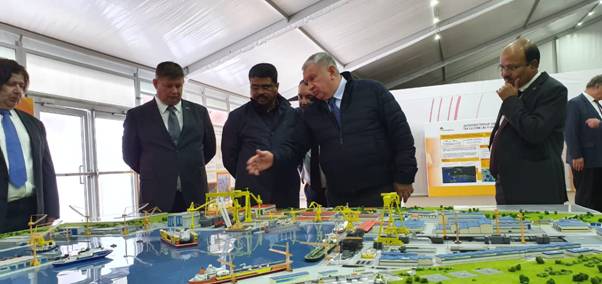
The Minister also visited the shipbuilding Complex, Zvezda. The Zvezda shipyard is poised to make a huge contribution in the development of Arctic shipping and developing shipping routes between Russia and India. Prime Minister Narendra Modi had visited the Zvezda ship building complex back in September’19 during his historic visit to Vladivostok, Russia. During Pradhan’s visit to Zvezda, he was accompanied by  CEO, Rosneft Igor Sechin who demonstrated the cutting edge technologies there.

As a follow up to the visit of Prime Minister to Vladivostok for the Eastern Economic Forum in September 2019, the Minister of Petroleum and Natural Gas & Steel is currently on a 4-day visit to Vladivostok.

Pakistan’s deep state is frustrated and its conduct gets bizarre by the day

Yet again, the Line of Control has heated up! The last few days have seen a heavy exchange of artillery fire, and the recent face-off is the result of Indian retaliation to unprovoked fire by Pakistan from its terrorist launch pads in Jura, Athmuqam and Kundalsahi in Pakistan Occupied Kashmir (POK). It is quite apparent that the Indian Army had specific information about the location of terrorists and it resorted to pin-point firing in retaliation to the infiltration attempts which resulted in many casualties of the terrorists and Pakistani soldiers. According to media reports, at least three terror camps each having 40-50 terrorists have suffered severe damage on the Pakistani side and the infiltration attempt stands irretrievably foiled.

The Indian Army gave routine information with regard to this very successful operation. “Unprovoked Ceasefire Violation by Pakistan in Tangdhar Sector. Own troops retaliated strongly causing heavy damage and casualties to the enemy. Two own soldiers martyred. Pakistan also targeted civilian areas killing one and injuring three civilians. Indian Army salutes their supreme sacrifice,” stated a short and crisp statement issued by the Public Relation Officer (PRO) of the Northern Command.

Along with the statement, both Northern Command and the Army Headquarters issued a condolence message in honour of the two brave Indian soldiers who fell to this unprovoked firing. “#LtGenRanbirSingh, #ArmyCdrNC and all ranks salute the supreme sacrifice of our brave soldiers & offer deepest condolences to the families. @adgpi @PIB_India @SpokespersonMoD,” stated a tweet by @NorthernComd_IA, the official twitter handle of Northern Command.

This tweet was further retweeted by @adgpi, the official handle of Army Headquarters, with a condolence message by the Army Chief, “General Bipin Rawat #COAS and all ranks salute the supreme sacrifice of our brave soldiers & offer deepest condolences to the families,” stated the @adgpi tweet.

“Last night, the Pakistani Army initiated unprovoked ceasefire violation to assist infiltration by terrorists into the Indian territory. As a result, calibrated escalation of area weapons was undertaken by the Indian side in which terrorist launch pads, Pak Army posts, giving incidental protection to these launch pads and certain gun positions, were hit,” an Army source is reported to have stated as quoted by India Today.

What is of interest is the propaganda that the Pakistan Army launched in the wake of this incident. The Inter Services Public Relations (ISPR) of the Pakistan Army, known for its verbosity and proclivity to sensationalise news, responded with a series of very belligerent and provocative tweets.

“Indian unprovoked CFVs in Jura, Shahkot & Nousehri Sectors deliberately targeting civilians. Effectively responded. 9 Indian soldiers killed, several injured. 2 Indian bunkers destroyed. During exchange of fire 1 soldier & 3 civilians shaheed, 2 soldiers & 5 civilians injured” said the first tweet by @OfficialDGISPR.

“Targeting innocent civilians by Indian Army is an attempt to justify their false claims of targeting alleged camps. Injured civilians evacuated to District hospitals. UNMOGIP as well as domestic & foreign media have open access to AJK, a liberty not available in IOJ&K,” stated another tweet by @OfficialDGISPR.

“Typical of Indian media falsely claiming targeting of alleged camps. Get access to IOJ&K & have moral courage to cover damages caused by Pak Army. All your previous claims met their fate so shall this one. Follow journalistic ethos of Pak Media for reporting with responsibility,” said the third tweet by @OfficialDGISPR.

Prime Minister Imran Khan, obviously at the behest of his military masters, condemned what was termed as “unprovoked firing by Indian security forces on civilian population along the Line of Control” in the statement issued by the PM Office.

The aforementioned response indicates the mindset of the Pakistan establishment, as also the obtuse and graceless functioning of the propaganda machinery of Pakistan Army, which has no civilian oversight to contain its maverick utterances. Pakistan Army has obviously been badly hit by the losses and is attempting to turn tables on India by quoting false casualty levels. It does not realise that in the open Indian media environment, casualties suffered by the Indian Army cannot remain hidden. The Indian Army authorities were quick in making public the unfortunate loss of two soldiers that it suffered. Also, from the second tweet it becomes clear that Pakistan continues to harbor illusions of garnering some international support, for which it is clutching at the weakest possible straws. The reference to the redundant UNMOGIP (United Nations Military Observer Group in India and Pakistan) is an indicator of this frustrated attempt.

Finally, in the third tweet DGISPR of the Pakistan Army is attempting to provoke the Indian media into targeting the Indian Army, which is extremely pathetic and the infantile manner indicates its own lack of intellect and thinking.

The fact is that every attempt made by Pakistan to pressurise India in the wake of the decision to reorganise the state of Jammu and Kashmir into two Union Territories and ensure better integration by modifying Article 370 of the Indian Constitution has failed miserably. The country is diplomatically isolated, militarily without options and internally unstable. The military is both perturbed and annoyed by its own inability and that of its subservient civilian administration to gain at least some leverage in the situation to save face. The situation, as it stands today, points to the complete failure of policies that Pakistan has adopted since partition of the country.

It is time for the Pakistani deep state to realise that it has lost out completely since its policies were both evil and untenable. It should step aside and allow the government to concentrate upon the grave internal situation and work towards saving the country from disintegration. It is hoped that good sense will prevail and one will not have to witness such a laughable response of the ISPR to its own failures.

Philosophical and Historical Foundations of American Secularism 8 – Minority Religions and the American Nation-State

Dr. Herb Silverman is the Founder of the Secular Coalition for America, the Founder of the Secular Humanists of the Lowcountry, and the Founder of the Atheist/Humanist Alliance student group at the College of Charleston. He authored Complex variables (1975), Candidate Without a Prayer: An Autobiography of a Jewish Atheist in the Bible Belt (2012) and An Atheist Stranger in a Strange Religious Land: Selected Writings from the Bible Belt (2017). He co-authored The Fundamentals of Extremism: The Christian Right in America (2003) with Kimberley Blaker and Edward S. Buckner, Complex Variables with Applications (2007) with Saminathan Ponnusamy, and Short Reflections on Secularism (2019).

Here we talk about minority religions and the American nation-state.

Scott Douglas Jacobsen: Christian mythology pervades so much of the American landscape in the present day. It does the same for much of the long-term history of the United States too. Our references in the series look at mostly Christians, deists, pantheists, or the indigenous, whether the leadership or the population. Numerous minority religious belief systems exist in America today. 

Many minority religions existed in America in the past. They have had interactions with the dominant religion and must have influenced the secular and freethought community over time. Islam and Judaism have had impacts on the political and social landscape of the United States of America. What have been impactful or important minority religions in the development of religion in America?

How have those religions been positive for secularism in America? How have those religions been negative for secularism in America? What has been the interplay between the dominant religion, minority religions, and the secular and freethought communities in the ongoing struggle for motion towards the proposed ideals of the United States with equality for all – in this case equality for the religious and the non-religious, the secular and the non-secular, or the naturalists and the supernaturalists?

Dr. Herb Silverman: Religious freedom, guaranteed by the United States Constitution, allows individuals to practice and promote any religion or no religion without government interference. Our founders supported freedom of religion because they understood that such religious diversity would help our new country avoid the kinds of wars that had plagued Europe, where hundreds of thousands of people had been tortured and killed over religious differences.

I view the existence of many minority religions as a “blessing.” Christians are wrong when they claim America is a Christian nation. It’s a Christian nation in the same way that America is a white nation. The majority of Americans are both white and Christian. However, America is not now, nor has it ever officially been, a white nation or a Christian nation.

One of my favorite minority religions is the Satanic Temple. Its members are mostly atheists. These Satanists might be having a little fun with the name, but their primary purpose is to promote secularism. They hit on a clever name to get publicity for promoting rational thought and separation of religion and government. But these “Satanists” especially trouble some religious believers because the name engages in their own religious narrative. The Satanic Temple has gained international attention for asserting equal rights for Satanists when other religious privileges have been granted, primarily to Christians. They have successfully applied for equal representation when religious monuments are placed on public property, opposed religious exemption and legal protection against laws that unscientifically restrict women’s reproductive autonomy, exposed fraudulent harmful pseudo-scientific practitioners and claims in mental health care, and they have applied to hold clubs alongside other religious after school clubs in schools besieged by proselytizing organizations.

In addition to being an atheist, a humanist, an agnostic, a freethinker, and other labels (depending on definitions), I’m also a Jew. The definition of a Jew is a person born of a Jewish mother. There is no requirement for a Jew to believe anything special. Many, if not most, Jews in America are atheists. I am a member of the Society for Humanistic Judaism, a nontheistic religion with atheist rabbis.  Other religions consistent with being an atheist include Buddhism and Hinduism. Some Buddhists and Hindus believe in reincarnation, but that is not a requirement.

Many of us non-religious types like to collaborate with religious people to achieve common goals. An added bonus is that negative stereotypes might change when religious people and atheists get to know each other better. I’ve participated in a number of interfaith dialogues, though I would prefer a different term (perhaps “interfaith and values”). I think it’s terrific when interfaith groups invite atheists to join and work with them. These interfaith dialogues have mostly been with progressive religionists who are comfortable engaging with people of other faiths and none. They can more easily collaborate with us on good works than with conservative religionists, whose primary interest in those outside their narrow belief system is to proselytize. These interfaith religious believers seem to value behavior more than belief, and find in their holy books an obligation to advocate for social justice. The more conservative religious believers tend to place belief above behavior, and think of this life as preparation for an imagined afterlife.

Aside from deciding who allegedly goes to heaven, there have been countless claims by so-called experts about the specifics of an afterlife. How do we determine who the experts are? The number of experts on any given topic is inversely proportional to the evidence available on that topic. And by that criterion, we are all experts on the afterlife because there is absolutely no evidence for its existence. Anyone can make up stuff about heaven or quote stuff from books made up by others.

I think there is a lot of value even in religions I dislike because they help us maintain a pluralistic society. I’ll mention just two of many.

First, Islam. Given the high-profile atrocities committed by some Muslims in the name of their religion, a number of Americans oppose giving complete religious freedom to Muslims. They point to passages in the Quran that can be interpreted to justify atrocious acts. But the same can be said about passages in the Hebrew and Christian Bibles. If you can find an interpretation in one holy book to justify an atrocity, then you can likely find a comparable interpretation and justification in the other holy books. These include genocide, holy wars, slavery, misogyny, death for crimes like blasphemy, homosexuality and worshipping the wrong god or even the right god in the wrong way. We need to distinguish between peaceful religious believers and those who are inspired by their holy books to commit atrocities. It becomes Islamophobia when we lump all Muslims into the same category.

Pope Francis once said that faith and violence are incompatible. Not if you read a comprehensive history of religion, including the history of the Catholic Church. Ironically, conservative Christians who seem most worried about Sharia agree with more tenets of Sharia law than do atheists like me. Sharia opposes abortion, contraceptives, and sex education, considers being gay a sin, has little tolerance for other religions, and treats women as subservient to men while claiming women are privileged within the religion.

I don’t much care for the beliefs of Mormons, now called Latter Day Saints, especially their effective political opposition to same-sex marriage, opposition to the Equal Rights Amendment and to physician assisted suicide. For nearly 150 years, the Mormon Church had taught that all blacks were cursed, which was why a black Mormon male could not become an LDS priest or enter the Mormon Temple. In1978, LDS President Spencer W. Kimball claimed that God had removed the curse on blacks and that worthy black men could now become priests.

One amusing story about Mormons is that they baptize dead people. Many Jews, myself excluded, are upset that Mormons have sometimes focused on Jewish Holocaust victims (perhaps even my dead relatives) for posthumous baptism. This practice, however ludicrous, is fine with me. It does no harm to my deceased relatives or to me. In fact, I take this as an expression of good will, much like, “I’ll pray for you.” I believe in its positive sentiment, if not its efficacy.

In a debate I had in North Carolina with well-known Christian apologist William Lane Craig, I asked him during the debate what he thought of a different resurrection story believed by many Christians. After Jesus died, but before he went to heaven, Jesus stopped in the United States. This story was chiseled on gold plates in Egyptian hieroglyphics and buried in Palmyra, New York. In 1827, the angel Moroni led Joseph Smith to the gold plates and a magic stone. When Smith put the magic stone into his hat and buried his face in the hat, he was able to translate the plates into English. I asked Craig if he believed the Book of Mormon was true, and if he thought Mormons were Christians. Craig didn’t respond during the debate. But after the debate, I asked Craig if he thought Mormons were real Christians, and he said, “No. They are a cult.”

The word “cult” is not well defined. Christianity was once a cult of Judaism that eventually had enough members to rise to the status of sect. It became a separate religion when they added their own holy book, the New Testament. The difference between a religion and a cult seems to be the number of adherents. I once saw a cartoon showing a bearded guru at a table on the sidewalk holding a sign-up sheet. A giant thermometer in the cartoon marked off increasingly larger categories of religion, starting at the bottom with “handful of wackos,” and moving up the thermometer with “bunch of nuts,” “cult,” “faction,” “sect,” and at the top— “mainstream religion.” The poster next to the guru read, “Join us and help us reach our goal!”

Sen. Mitt Romney, a Mormon, once said, “The most unusual thing in my church is that we believe there was once a flood upon the earth, and that a man took a boat and put two of each animal inside the boat, and saved humanity.” Romney essentially said that his holy book is no more preposterous than other holy books. I think he has a point.

I’m just pleased that we tolerate all kinds of beliefs, as long as they are not forced on those who are not devotees or harm minors. I support the 1971 Supreme Court decision in the three-pronged “Lemon Test,’ named after the lead plaintiff Alton Lemon. It says that government action must have a secular legislative purpose, must not have the primary effect of either advancing or inhibiting religion, and must not result in an excessive entanglement with religion.

Jacobsen: Thank you for the opportunity and your time, Dr. Silverman.

Photo by Kevin Bluer on Unsplash