Home Blog Page 417

Prioritise steel cluster development: Dharmendra Pradhan

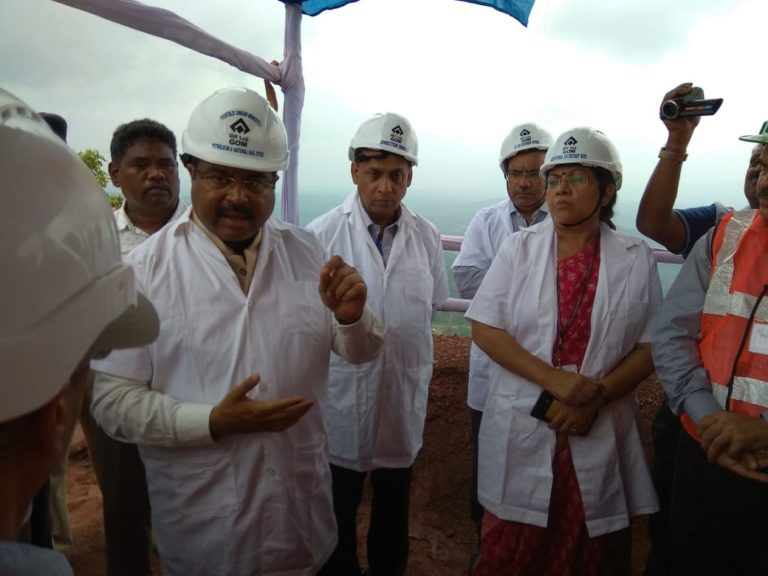
Union Minister for Petroleum and Natural Gas and Steel Dharmendra Pradhan during his visit to Jharkhand stressed on giving priority to small companies for raw material procurements. The steel clusters development in states like Jharkhand, Odisha and West Bengal which Minister spelled out as one of his priorities is based on iron ore availability in this region. Planning first tour after assuming charge as Steel Minister to Jharkhand, visiting mines, steel plants and advising SAIL to give priority to small companies reaffirms Minister’s commitment to take both public as well as private sector along. In an earlier letter written to steel sector employees Pradhan stressed on a spirit of teamwork to contribute towards India’s growth story.

The stress he has given on reopening of closed mines, and the pursuant necessary directions he issued to the officials points to the fact that this remains one of his priority areas. Reopening of closed mines will further lead to growth of steel sector and will benefit small companies too.

It is notable that during his tour to Jharkhand Pradhan asked SAIL officials, district administration, Mines department to present a time bound roadmap for reopening of closed mines. This has generated hope not only in Jharkhand but also among businesses engaged in Steel industry in neighbouring states of Odisha and Chattisgarh which have been facing challenges due to headwinds being faced by global steel industry.

Textile gallery added to the National Crafts Museum

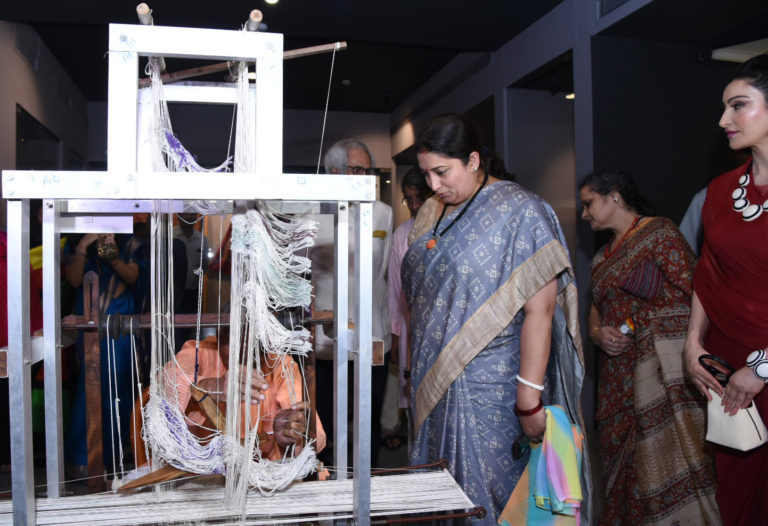
Visitors to the National Crafts Museum would now be able to know about Indian textile Craftsmanship. Union Minister of Textiles and Women and Child Development, Smriti Zubin Irani, recently inaugurated Textiles Gallery at National Crafts Museum in New Delhi. There are five zones in the gallery and each zone has been named as weaving, embroidery, dying (Ikatpatola), pattern (Bandhej, Kalamkari, and Leheria) and Tana Bana based on the intricacies of the textiles.

With this unique collection, the National Crafts Museum takes another leap to exhibit the fine Indian Craftsmanship to public. The other galleries of the museum i.e. Folk and Tribal Art, Cultic and Courtly Craft galleries have remained very famous amongst the visitors especially the foreign tourists. The village complex with huts from different states provides for the sense to rural India.

The rich collection on display will be another step towards conserving India’s rich heritage of handlooms for the next generations. The gallery will serve to be a resource centre for the students of fashion technology, apparel sciences and textiles designing. It has been curated with a unique design in which the master pieces of traditional handlooms are juxtaposed with modern audio-visual effects. The visitors will be able to feel the ethnicity with a soft touch of technology.

The collection has a vision to help people explore, enjoy, and rediscover the world of Indian textiles through design and technology. The Gallery consists of more than 230 different types of textiles collections divided into categories of over more than 30 traditions.

The concept of display has been based on three categories:

Pre Loom “Ikat”, where the design is already visualized and transferred to the yarn before the yarn is placed on the loom.

On- Loom, the design is entered on the loom while weaving brocade, muslin, jamdani, weaved shawls, weaved sarees.

Post Loom, the techniques that can be done on cloth after it is woven-block printing, embroidery and kalamkari comes in this category.

MoU between Indian Navy and CIAL for naval air operations

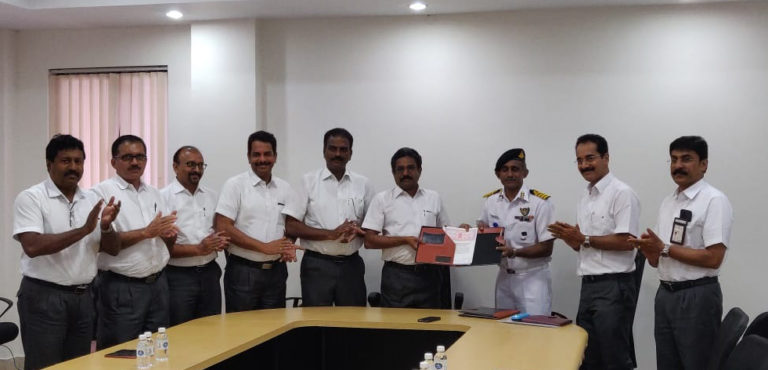
A Memorandum of Understanding(MoU) between Naval Air Enclave (NAE), Kochi and Cochin International Airport Limited(CIAL) was signed on 08 Aug 19 in a formal function held at CIAL. Captain Satish Kumar S, Officer-in- Charge, NAE and Shri ACK Nair, Airport Director CIAL, signed the document on behalf of both organisations.

The memorandum was signed in connection with commencement of naval air operations from the NAE, a naval aviation facility comprising an independent dispersal, aircraft hangar, administrative building and taxy track, located on the northwest side of CIAL. Military aircraft would use the CIAL runway for take off and landing and the NAE taxy track for proceeding to and from the dispersal / hangar.

The Memorandum of Understanding lays down Standard Operating Procedures and their adherence by CIAL and the Indian Navy, for ensuring safe, secure and uninterrupted military air operations. Senior management functionaries of CIAL including Shri AM Shabeer, Executive Director, Shri Sunil Chacko, Chief Financial Officer and Shri Dinesh Kumar C, Head of Operations were present for the function.

Naval Air Enclave is capable of supporting operations of the highly capable P8I Long Range Maritime Reconnaissance aircraft, which was extensively used to coordinate Search and Rescue Operations off the coast of Kerala and the Lakshadweep Islands in Dec 2017, following Cyclone Ockhi. The optimal exploitation of the NAE would significantly enhance the maritime reconnaissance capability of Southern Naval Command, as also the Indian Navy.

Larger picture is murky in Abdul Basit Shoba De controversy

In an environment that thrives on sensationalism, former Pakistan High Commissioner to India Abdul Basit’s claim that he got Shoba De to write “an article in the newspaper for Kashmiris’ right to self-determination,” has set the Indian media abuzz. He was referring to a piece written by her in July 2016, titled ‘Burhan Wani is dead but he’ll live on till we find out what Kashmir really wants’ when Kashmir Valley was in the throes of a mass unrest triggered by Hizbul Mujahideen commander Burhan Wani’s death in an encounter with security forces.

Coming at a time when abrogation of Articles 370 and 35A along with bifurcation of J&K into two Union Territories is the prime topic for discussion, Basit’s revelation could not have been better timed as it has generated a debate on whether Ms. Shobha De wrote this article, of her own volition or at Basit’s behest. Since the article in question does advocate an anti-establishment viewpoint on the Kashmir issue, many are convinced that Basit is telling the truth, but there are also an equal number of people who feel that she’s just being framed.

In a bid to prove themselves right, both those who are demanding her head as well as the one’s going all-out to defend Ms. Shobha De’s professional integrity are busy fighting each other. While there’s nothing wrong in doing so, but in the ensuing cacophony, we are losing sight of the larger picture. Even though it’s important to clear the air on what was Ms. Shobha De’s motivation behind the particular article that she wrote, but this by itself isn’t the sole matter of prime concern. But Basit’s own admission of having got an Indian journalist to write an article that furthered Islamabad’s interests, is something that cannot be swept under the carpet.

There is nothing new in diplomats using local assets to further their national interests. Four centuries ago, British politician Sir Henry Wotton (1568- 1639) said as-much by stating that “An ambassador is an honest gentleman sent to lie abroad for the good of his country.” However, even though it may be rampant, but such skulduggery as Basit has himself admitted to hasn’t been accorded diplomatic licence since it’s most commonly used to impregnate the peoples’ mind with anti-establishment thoughts and amounts to subversion of sorts.

Therefore, New Delhi needs to step-in immediately and demand an explanation from Islamabad for Basit’s self-confessed indiscretion since it must certainly be having sanction of the government of Pakistan. This revelation has also given New Delhi undeniable proof that Islamabad is misusing its diplomatic facilities to arouse passions and incite unrest. It also needs to be remembered that Basit is the same person who by disregarding an advisory by New Delhi that his meeting with Hurriyat leaders would jeopardise Indo-Pak talks, precipitated a crisis that heralded an end to bilateral engagement between the two countries.

Basit’s revelation could well be a tip of the iceberg and the possibility of Pakistan having infiltrated into other domestic pressure groups cannot be ruled out. Therefore, it’s but natural for one to view attempts by some to portray abrogation of Articles 370 and 35A as well as restructuring J&K as a communally inspired act with suspicion. Similarly, when claims of widespread unrest against this move and deaths of protesters as a result of firing by police in Kashmir Valley are being made without any physical verification, would it be unfair if one was to dismiss this as motived communication? 

The media too needs to take a serious note of such attempts being made by Pakistan to further its vested interests. Freedom of expression is the hallmark of any vibrant democracy. Yet, due prudence should be exercised by the media fraternity to prevent its members from being lured into championing a detrimental cause either by falling prey to material inducements or through emotional exploitation. No laws, rules, directives or guidelines can be invoked on this issue and as such it’s only the media that can shoulder the onerous task of ensuring that inimical forces don’t succeed in turning the fourth estate in India into a colony of fifth columnists.

SC refuses to pass directions on lifting of restrictions in J&K

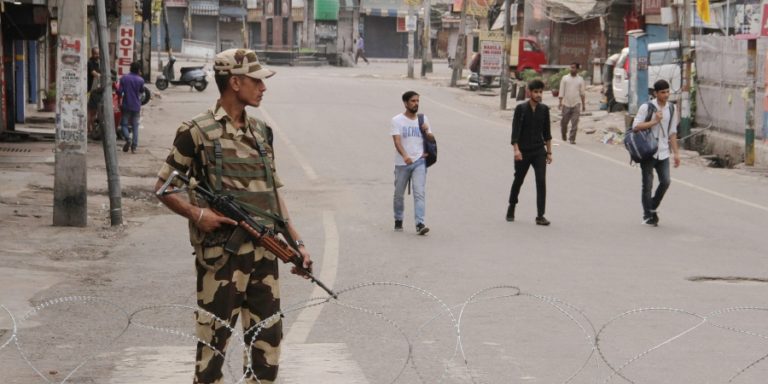
The Supreme Court on Tuesday refused to pass any immediate directions to the Centre and the Jammu and Kashmir government on a plea seeking lifting of all restrictions imposed after the abrogation of Article 370.

The apex court said that it will wait for return of normalcy and take up the matter after two weeks.

A three judge bench headed by Justice Arun Mishra was hearing the petition filed by Congress activist Tehseen Poonawalla on the Centre’s decision to impose restrictions and “other regressive measures” in Jammu and Kashmir following the revocation of the provisions of Article 370.

During the hearing, the bench also comprising Justices M R Shah and Ajay Rastogi, said the present situation in Jammu and Kashmir was “very sensitive” and some time should be given for bringing back normalcy in the region.

The bench also said that it should be ensured that there is no loss of life there.

National Youth Awards conferred by Kiren Rijiju

The Union Minister for Youth Affairs & Sports (I/C) Kiren Rijiju recently conferred the National Youth Awards on individuals (aged between 15-29 years) and organizations for excellent work and contribution in different fields of development and social service, such as health, promotion of human rights, active citizenship, community service etc.

The objective of the awards given by the Ministry of Youth Affairs and Sports, Department of Youth Affairs is to motivate young persons to achieve excellence in the field of national development and social service, to encourage young people to develop a sense of responsibility to the community and thus to improve their own personal potential as good citizens and to give recognition to the outstanding work done by voluntary organizations working with the youth for national development including social service.

During the National Youth Awards Function, Rijiju also inaugurated a Photo Exhibition on “China through Eyes of Indian Youth – 2019”. It was an exhibition of photos taken by youth delegates who participated in the recent Youth Exchange Program to China.

NYA 2016-17 was conferred upon the following 20 individuals and 3 organizations:

Rohit Kumar Kashyap

Vinit Devidas Malpure

Momota Thounaojam

Nitesh Kumar Sahu

Oddiraju Vamshikrishna

Prince Singhal

Apoorv Om

A G Padmanaban

Onkar Rajiv Navalihalkar

Gattem Venkatesh

Kh Krishna Mohan Singha

Prudhvi Golla

Raju Gorai

Rahul Dabur

Hansraj Khatawaliya

Priteesh Kumar

Mrityunjay Dwivedi

Mitesh Gajjar

Subrat Kumar Das

Manu Kamboj

Organization Category

Eco-Pro Bahuuddeshiya Sanstha, Chandrapur, Maharashtra

Care and Share Foundation, Manipur

Samutkars Yuva Vikas Navyuvak Mandal, Rajasthan

The individual award comprises of a medal, a certificate and a cash prize of Rs. 50,000/-. The award to a youth organisation includes a medal, a certificate and a cash prize of Rs. 2,00,000/-. In addition, 3 awards were also conferred to individuals for the Photo Exhibition on “China through Eyes of Indian Youth – 2019”.

Congratulating the winners of the awards and greeting everyone on the occasion of the International Youth Day, Rijiju said that the Ministry is organizing various programmes to motivate youth, under the guidance of Hon’ble Prime Minister, Shri Narender Modi ji. The National Youth Awards Function is one such programme. He stressed that India is a young country filled with immense potential. The development of the country is in the hands of youth who can shape its future. If the energy of youth is channelized in right direction, the progress of country in various fields can gain momentum, and youth can become prosperous. The Minister said that the youth are idealistic, aim high and when they achieve their goals through their efforts, it becomes necessary to grant recognition to their efforts, which has been attempted through this program. Sh Rijiju said that the awards give recognition as well as encouragement to the winners, but at the same time gives them onerous responsibility to carry forward the good work being done by them. He said that one should not age in thoughts and action, and should remain young at heart.

It is a divine blessing to share food: Ashish Chopra, renowned Culinary Historian

With his fingers swiftly moving on the key board, fixed atop an intricately carved work station, Ashish Chopra ensures he is always connected to the world outside. At the same time, his beautifully maintained personal library, makes sure he is always in touch with the past. A renowned culinary historian, author, television host, painter and art collector, Chopra adorns many hats with equal élan but most importantly considers himself a foodie at heart; not by profession but by passion. It is his relentless spirit for food and travel that has led him to discover and re-discover life again and again.

A born foodie, Chopra has successfully straddled various paths during the eventful journey of his life. From a young politician and an Hon. Advisor to the Governor of Mizoram to a Social Development advisor of Assam Rifles, Secretary general of FACT and then founder Executive Director of the Institute for Environmental Management and Social Development, his long professional journey spread over three decades never had a dull phase. And one day, he decided, after retrospection and introspection to take permanent sabbatical to pursue his passion for food and travel. His life is now dedicated towards promoting and showcasing India’s rich culinary heritage.

Chopra feels that food has taught him so much. “Feasting has always been an integral part of human society and culture. It has always brought people together and that’s what made me explore it with passion and desire,” he says. His culinary journey is full of amazing anecdotes and unforgettable incidents. Sharing about his meeting with His Holiness Dalai Lama, Chopra says how he wanted to become a monk and shared his desire with Dalai Lama. “The real monk is inside you”, came the reply from the Holy guru, who jokingly called him Momo Lama, since then many of his friends have been calling him Momo Lama.

Born in New Delhi , this Punjabi lad’s love for North East started quite early in life, but he never knew it would become such an important part of his life and he will eventually marry a Naga girl. “As a child, I used to visit Assam regularly, as my uncle was in Railways and soon North East was just like home. While working as an Hon advisor to the Governor, I got a wonderful opportunity to explore North East extensively and understand the essence of their food, music and culture.” Chopra believes that it was his passion for food that could make a Punjabi connect instantly with people from North East. He subsequently authored NE Belly: The Basic Northeast Cook Book (2006) – a book on the cuisines of the eight North Eastern states. He has also documented traditional tribal foods of India in his another book Tribal Cuisines of India, for which he travelled extensively throughout the country. Not surprising, over the past one decade or so he has covered more than 4 lakh km, experimenting and documenting cuisines, culture, and traditions of more than 250 tribes pan-India. “Food and festivity is an integral part of their existence and their indigenous knowledge about various herbs and medicinal plants teaches us a lot. With their lands being encroached upon now by various agencies, it’s all the more important to document their cultures before it dies due to rampant modernisation in the wrong way,” says Chopra

Chopra also feels passionate about rediscovering lost recipes and restoring their lost glory. He has done tremendous work to popularise Kadaknath, which was once known as the‘Pride of Madhya Pradesh’. He first tasted the bird at the Maharaja of Panna’s dinner party nearly two decades ago. He was on his way to Rewa, in Madhya Pradesh (MP), to visit his old friend maharaja Pushpraj Singh Ju Deo. En route, he decided to stop and meet a mutual acquaintance, the late maharaja of Panna. “That is where I had the Kadaknath for the first time. I was fascinated by the jet-black beauty of the bird and, when cooked, it was meaty, chunky and tasted just like game fowl,” he says. However, Kadaknath could never retain its popularity during the next two-decades and it remained anguished in relative obscurity until 2015. Thanks to efforts of culinary historians like Ashish Chopra, that the revered indigenous chicken has now made a successful comeback from the backyards of tribal Madhya Pradesh to the tables of luxurious hotels. Chopra is also an active supporter and a promoter of the slow food movement, a global initiative to persuade people to move from fast food to traditional recipes using locally sourced ingredients.

When he is not experimenting in his kitchen, he is usually conducting workshops and masterclasses. Just back from a fortnight long shoot in the picturesque surrounding of Rewa in Madhya Pradesh for Travel XP, he is now off to Kolkata to conduct workshops in ITC Royal Bengal. Chopra has been a food consultant with ITC Welcome Heritage group of hotels for several years having documented the Royal cuisines of the erstwhile Maharajas. He has been invited to co-author a book on the Royal cuisines of Bhagel with Pushpraj Singh – the erstwhile Maharaja of Rewa and subsequently Gajraj Singh the Thakur of Diggi State in Rajasthan has also commissioned him to do a coffee table book on the erstwhile secret recipes and food traditions of the Diggi State. He has consulted for the television series, Gordon Ramsey’s Great Escapes on “North east Indian Cuisine” as well as for BBC and National Geographic Channel. He is also the Principal Advisor of Woodpecker International Film Festival and Culinary Advisor of TRAVEL XP Channel and FOOD XP channel and has also co-hosted a few episodes on the channel.

Transforming his passion for food as an art form, into a more concrete idea and platform, he is currently putting his efforts towards the setting up of India’s first School of Ancient Culinary Arts (SACA). Located in the picturesque surroundings of Rajaji National park in the foothills of Dehradun in Uttaranchal, the school will have chefs from villages and they will impart their traditional knowledge to chefs from different parts of the world. “This will be a place where tops chefs of big hotels will come and get trained by tribal, rural cooks and share the rich culinary heritage of India with the world,” he says.

For Chopra, who has been tirelessly documenting and preserving India’s rich and diverse food traditions, essence of life is an unending quest to explore, understand and rediscover food.

Communication and sobriety are key to Kashmir riddle

0

The Indian nation has remained engrossed in the all pervasive “K” issue since the beginning of this month when indications of some major change started coming in. In view of the volumes already written on the subject, a good columnist would realise that fatigue has set in among the readers. Another piece may not be a great idea, nevertheless, it is quite difficult to curtail the urge to put in some more words.

Earlier “stakeholders” was the preferred word to define the various players in the Kashmir battleground. Now, the goal posts have changed in a manner that has made the so-called stakeholders, national and international, irrelevant. In the ensuing fall out, the centre stage has gone to two protagonists – the people of the region and the Indian Union, in the given order of priority. Having changed the status of Jammu and Kashmir forever, the Narendra Modi-led government of India now has to convince the people of the region that what has been done is for their benefit.

Some important issues that have been flagged in the aftermath of this momentous affair need to be reiterated. Top on the list is the reaction of the Indian nation; then comes Pakistan’s reaction since it will also guide the reaction of other ex-stakeholders; most important is the reaction of people of the region, presently not fully known due to restrictions and the fact that the change will take some time to sink in. Finally, comes the position of the security forces on whose shoulder lies the responsibility to control any adverse or violent situation.

The Indians, since long exhausted by the never ending violence, turmoil and political disruption in the region, would have welcomed any change in the status quo and that is exactly what has happened. There is a belief that the change will be for the better even as some sections continue to remain cynically critical. The main grouse is not the change of the status; it is the so-called lack of consensus for the same. A realist would certainly say that no amount of discussion would have led to a consensus. This has often been substantiated by the failure of successive governments of the NDA as well as the UPA in reaching to an accord whenever talks with separatists or Pakistan have been held.  

Therefore, the decision to go for a change in status quo was the only recourse available notwithstanding the element of abruptness that it came with. It had to happen at some point in time and now it is over and done with! Whether it was right or not too right, only time will tell, but definitely, the situation will not deteriorate from the level where it was already standing.

Pakistan has been caught completely by surprise and is presently getting its act together. Its initial maneuverings on the diplomatic, economic and political front has not accrued the desired results. International support to its appeals is nowhere near what it would have desired, and the decision to stall relations with India will have a much more critical impact on it while India will hardly feel the pinch.

There, however, exists for India no reason to be too elated by the neighboring country’s disarray and discomfort. It is not likely to remain quiet due to the setback and will definitely strike back with more innovative and incisive methods. It should not be forgotten that Pakistan holds influence over China because of CPEC and on the US due to Afghanistan; it will definitely maximise this influence in its revised Kashmir policy. Pakistan will exploit such local elements that have lost their hold over the region due to the new dispensation. These assets have considerable power and their coming together poses a potent danger. People, who form the most important element being the centre of gravity, will elicit the focus of all competing powers. Whosoever gains the initiative will emerge the winner. How they will react is still not known since restrictions are in place. It is also feasible that an initial calm will be more of the proverbial “lull before the storm.”

India has to take all possible actions to win the confidence of the people and remove their sense of insecurity and deprivation which would be a natural fallout of the change that has taken place. The government alone cannot do this; the entire nation will need to pitch in and that too with an open heart and clean hands; a long call but definitely the need of the hour. Since Kashmir is already quite comfortable on the development index, assertions of development and economic gain will not be enough to get the desired results. What is required is immediate end to the endemic corruption and inequitable distribution of wealth to the common man. Achieving this in the short term is a tall order for the government but absolutely imperative to remove the trust deficit.

A security threat beyond what has been tackled successfully earlier is not envisaged, even though high state of alertness is the need of the hour. What can be effectively leveraged is the close bond that the Indian Army has with the people, particularly those living in remote higher reaches. These people, being simple, gullible and not very educated, will be targets for rumour mongering and psychological warfare of the enemy and inimical forces. If the army gives to them the right picture and removes the insecurity and distrust that they may feel, the chances of their falling prey to the enemy machinations will get obviated.

There is definitely a need to look at the development with due sobriety and seriousness. There is also a need to remain vigilant and alive to the situation. It is the emotional connect as seen through honesty of effort which will pay maximum dividends. The challenge to the nation has just begun.

Watan – a patriotic song by DD released as a tribute to New India

On the occasion of Independence Day, Union Minister Prakash Javadekar has released a patriotic song “Watan” produced by Doordarshan. The song pays tribute to New India. It highlights several path breaking initiatives of the government including the determination and vision behind the recent successful launch of “Chandrayaan 2”.  The song also pays tribute to the bravery and valour of our armed forces and the martyrs of the country.

Speaking on the occasion, Javadekar congratulated Doordarshan and Prasar Bharati for creating the song. He added that the song will add colour and fervour to the Independence Day celebrations this year.

Sung by famous Bollywood singer Javed Ali, penned by lyricist Alok Shrivastav and musically composed by Dushyant, this special song has been produced by Doordarshan, Prasar Bharati. Being broadcast by all the stations and kendras of Akashvani and Doordarshan, this song has been made free of copyright by Doordarshan and Ministry of I&B  for all the FM stations, entertainment and news TV channels, social media and all other communication platforms to ensure that more and more citizens of this country can enjoy and share this song and celebrate Independence Day with this song.

Chairman, Prasar Bharati  Dr. A. Suryaprakash; CEO, Prasar Bharati Shashi Shekhar Vempati; DG, Doordarshan Supriya Sahu; DG, DD News, Mayank Agrawal; DG, AIR, F. Sheheryar along with senior officers of Ministry of I&B and Prasar Bharati were also present on the occasion.

The song can be watched here:

JAMA – Shared Decision-Making in Practice

Beach and Sugarman (2019) provided an analysis of the SDM or shared decision-making framework in clinical practice, in which clinicians are encouraged to engage patients on the values and preferences of the patients.

“Professional societies and other groups generating screening and treatment guidelines specifically recommend SDM. In 2015, reimbursement from Medicare for lung cancer screening was made contingent on SDM,” the authors of the JAMA article stated.

If the values and preferences of the patients sit on morally firm foundations, then there can a more reliable process moving forward for the benefits of the patients. It respects the cultural and individual variations in values and preferences while also dignifying the independent judgment of the patient about their own health and welfare.

Even so, SDM, as a practice, is “rarely achieved in practice.” The reasons provided for this theory and practice gap is the multifactorial nature of the problem. There are many factors leading to reduced implementation of it.

“Studies show that patients tend to think they have been involved in making decisions when direct observation suggests they have not,” Beach and Sugarman reported, “This may be because patients are unaware that a decision was made, the measurement standards for observed behavior are too dogmatic, or both.”

Then the coding of the information can be problematic as well as creating an environment in which patients know their role in decisions and processes with the medical professionals.  Further time placed into the hands of the medical professionals to explain to the patients may be wasted time better spent on other medical issues or medical duties. Benefits of more time explaining remain uncertain.

The positions of the author of the paper is that SDM should be implemented in medical settings more in spite of the lack of clarity in the reportage. They provided solutions includng more specificity for the task in the calls for SDM, the use of decision aids to become more routine and available, the prioritization of decisions requiring SDM over others to increase its prevalence, the facilitation of engagement with a better interpersonal environment, and the importance of the communication models of practitioners more conducive to the independence of the patients and the giving of recommendations by the medical professionals with a modicum of prudence.

“SDM is a means to an end. The principal goals of SDM are to respect patients as individuals and to deliver care consistent with their values and preferences. Achieving these goals will sometimes involve explicitly engaging patients in decision-making. But decision-making can be emotionally demanding, and imposing a standard by which patients are expected to engage in all (or even most) decisions is not only unrealistic and inefficient, but also potentially burdensome to patients and clinicians,” the authors concluded.

Reference

Beach MC, Sugarman J. Realizing Shared Decision-making in Practice. JAMA. Published online July 25, 2019. doi:10.1001/jama.2019.9797

Photo by Louis Reed on Unsplash