Home Blog Page 418

Amidst India-Pak tension Mika Singh performs at Karachi wedding; sparks outrage

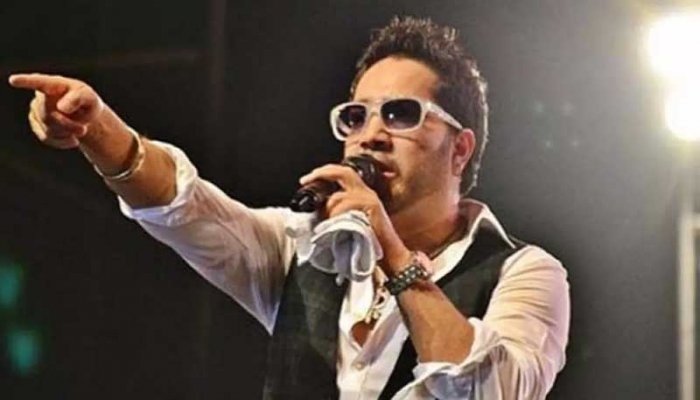
For some artists money remains the ultimate deciding factor in life, with no concern for ethics, morality or humanity. At a time when Pakistan is busy strategizing how to destabilize the ensuing peace in Kashmir, post Article 370, Singer Mika Singh and his troupe recently performed at the wedding of a billionaire’s daughter in Karachi, apparently close to former Pakistan President General Pervez Musharaff.  Mika apparently charged USD 150,000 for his performance.

According to a report in Daily Jang newspaper, Mika reportedly performed on August 8 at the ceremony and his presence in the city came to light when some guests uploaded videos of his performance on social media.

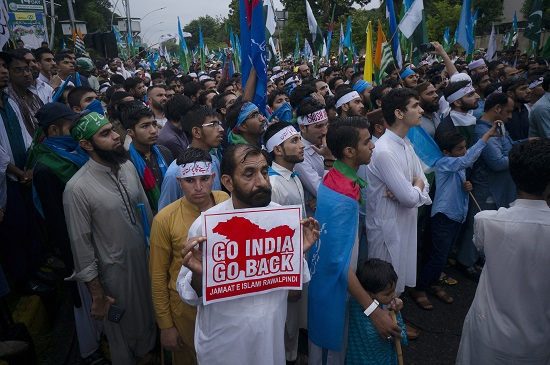
India’s action to revoke Article 370 of the Constitution and decision to bifurcate the State of Jammu and Kashmir into two Union Territories, drew a sharp reaction from Pakistan. As a result Pakistan downgraded its diplomatic ties and snapped trade relations with India, besides suspending the Samjhauta Express services between the two countries.

Opposition leader of the Pakistan Peoples Party Syed Khursheed Shah said the government must find out who gave the security clearance and visas to the Indian singer and his 14-member troupe to visit Pakistan at a time when the country had suspended diplomatic and trade relations with India. “This is a time when there is a ban on Indian films, dramas, shows, and Pakistan has made its views clear to the Indian government. Even if visas were issued early on they should have been cancelled,” Shah said.

The newspaper reported that apparently the groom was a big fan of Mika and wanted to see a live performance and to grant his wish the in-laws used their connections to procure high-level security clearance and visas for the Indian band.

Twitterati in India, lambasted the singer on social media. One of the Twitter users wrote, “Shame on you traitor.”

“Mika Singh Paaji we Indians gave you so much love… And in a situation like that when Pak banned all trade ties with us, sending terrorists across the border, our tensions are very high right now. Why did you go to Pakistan for a show? Few bucks are bigger than India? ” another user tweeted.

Tax assessment process simplified for startups

While the government of India has been a major supporter of startup ecosystem in the country, the Income Tax department has been the cause of major heart burn in the startup sector. The Finance Ministry is now taking steps to simplify the process of assessment in the case of Startup entities.

In cases where scrutiny assessments of Startup entities are pending, the CBDT has decided that:

i) In case of Startup Companies recognized by DPIIT which have filed Form No. 2  and whose cases are under “limited scrutiny” on the single issue of applicability of section 56(2)(viib),the contention of the assessee will be summarily accepted.

ii) In case of Startup Companies recognized by DPIIT which have filed Form No. 2 and whose cases have been selected under scrutiny to examine multiple issues including the issue of section 56(2)(viib),this issue will not be pursued during the assessment proceedings and inquiry on other issues will be carried out by the Assessing Officer only after obtaining approval of the supervisory authority.

iii) In case of Startup Companies recognized by the DPIIT, which have not filed Form No. 2, but have been selected for scrutiny, the inquiry in such cases also will be carried out by the Assessing Officer only after obtaining approval of the supervisory authorities.

In addition to the above, the Central Government has further decided to relax Para-6 of the DPIIT notification No.127 (E) dated 19.02.2019 and make it clear that this notification will also be applicable to Startup Companies where addition under section 56(2)(viib) has been made and the assessee has been recognized by DPIIT and subsequently filed Form No. 2. The Circular to this effect in F.No 173/149/2019-ITA-1 of CBDT dated 8th August, 2019, has been placed on www.incometaxindia.gov.in.

Kashmir: Pak ups the ante, New Delhi must not be complacent

For the last seven decades, Pakistan has been shouting from rooftops that India is in “illegal occupation” of Kashmir but no one has cared to listen because this claim is factually untrue. To buttress its stand, Islamabad keeps talking about the UNSC (United Nations Security Council) resolutions and asserting that Kashmir is “disputed territory”, but even here it hasn’t been able to find any support from the international community because of its selective application and interpretation of these resolutions. But even after having twice failed to wrest control by force, the Pakistan Army still hasn’t given up and has been waging a proxy war in Kashmir for the last three decades as it gives it a face-saving mechanism and serves as a source that enhances its relevance amongst the people of Pakistan.

By abrogating Articles 370 and 35 A of the Indian constitution and reorganising J&K into Union Territories of J&K and Laddakh, India has sent out a loud and clear message that J&K is very much an integral part of India. This decision has punctured Pakistan’s balloon of lies and also proved that neither does Islamabad have the diplomatic ability to garner support of the international community to challenge this move, nor the military capability to intimidate India into making amends. Yet to think that Pakistan Army will finally reconcile with reality and stop its mischief would be suicidal because keeping the Kashmir pot boiling gives the military an excuse to corner a lion’s share of the impoverished country’s GDP.

Unlike other militaries who keep changing their stratagems to baffle the enemy, the Pakistan Army appears to be a ‘one trick pony’ which believes that it can continuously fool the world by disguising its personnel and then denying their existence even if it amounts to disowning their own dead soldiers. In 1947, Pakistan Army personnel masquerading as tribals invaded Kashmir; in 1965, they secretly infiltrated into J&K in the guise of ‘razakars’ (volunteers) and in 1999 they intruded across the Line of Control (LoC) in Kargil disguised as ‘mujahideens’ (holy warriors). Generals and those heading terrorist groups being nurtured by the military openly speak about the involvement of the Pakistan Army and terrorists in Kashmir and enumerated below are a few examples:

  • During an interview given to Der Spiegel in 2010, Gen Pervez Musharraf admitted that it was the Pakistan Army that created “militant underground groups to fight India in Kashmir.”
  • In 2012, Syed Salahuddin, who as chief of ISI created ‘Muttahida Jihad Council’ controls various terrorist groups operating in Kashmir said during an interview that “We are fighting Pakistan’s war in Kashmir” and even threatened that “if it (Pakistan Army) withdraws its support, the war would be fought inside Pakistan.” 
  • In a 2014 TV interview, Gen Musharraf accepted that Pakistan Army was fomenting unrest in Kashmir by admitting that “People in Kashmir are fighting against (India). We just need to incite them.” 
  • In 2015, Lashkar-e-Taiba co-founder who has been designated international terrorist by UN admitted that the jihad’ (holy war) in Kashmir being waged by his terrorist organisation was being supported by Government of Pakistan and its army.
  • Even a few weeks back, while at the US Institute of Peace, Prime Minister Imran Khan admitted “we still have about 30,000- 40,000, armed people who have been trained and (have) fought in some part of Afghanistan or Kashmir.”   

But despite such incriminating revelations, the indifference of the international community is surprising and so is the lack of determination in New Delhi’s part in highlighting the dangers being posed to the world by Pakistan Army’s continued patronage of terrorist groups. Resultantly, the military has been able to get away with only a mild rap on its knuckles and continues to nurture terrorist groups.

With no support forthcoming from the international community, Pakistan’s much publicised plans to gather international support and move the UNSC against India’s decisions has turned out to a damp squib. Due to this, the present situation has become extremely volatile because the only option the Pakistan Army is left with is resorting to the use of violence in order to reaffirm its relevance by ensuring that there is no peace and tranquility in Kashmir. The hostile reactions emanating from Pakistan substantiate this apprehension and therefore one can expect continued ceasefire violations by the Pakistan Army in an endeavor to keep the LoC ‘hot’.

In the hinterland, the ISI will increase the tempo of its two-pronged strategy to disrupt normal life. Separatists would be instructed to organise demonstrations on a massive scale and incite protesters to indulge in acts of violence and arson in a bid to provoke law enforcement agencies to use force. Simultaneously, while intensity of terrorist activities will increase, an upsurge in frequency of grenade attacks against security forces in crowded places is likely as this could compel the security forces to retaliate and could cause collateral damage. By saying “We fear more bloodshed in coming days in the Occupied Kashmir,” Pakistan Foreign Minister Shah Mehmood Qureshi has given a clear hint about Islamabad’s future plans for Kashmir!  

New Delhi needs to apprise the world of how, by airing apprehensions of Indian excesses against Kashmiris just to prejudice the thinking of the international community, Pakistan is cleverly preparing ground to facilitate deniability of its own deep involvement in inciting violence in Kashmir. On more than one occasion, Islamabad has talked about how India’s “reckless approach” could result in “some false flag operation” or a “Pulwama-2” type of action and “Pakistan blamed on the fake pretext of terrorism.” Whereas this prognosis is theoretically within the realms of possibility, but who would ever believe that a country would target its own citizens just in order to humiliate a neighbouring nation?

Tailpiece

Despite unsuccessfully trying to sell the “false flag operation” hypothesis a number of times, Islamabad still continues to do so. But this also has a positive side as it serves as a timely warning of an impending act of terrorism and that’s why Pakistan Army Chief Gen Qamar Javed Bajwa’s willingness to “go to any extent” to help Kashmiris should give New Delhi a wakeup call!

Pakistan’s angry men continue to blabber after Art370 shock

1

Pakistan’s Prime Minister Imran Khan is an angry man. But that’s understandable because even before he could fully savour the euphoria of his US visit (the success of which he likened to “having won the World Cup”), his Indian counterpart Narendra Modi spoilt the party by altering the seven-decade old status quo on Kashmir. But there’s more to it- by abrogating Articles 370 and 35A of the Indian constitution and carving out two new Union Territories (J&K and Laddakh) out of what was earlier the state of Jammu and Kashmir, Modi also disproved the prediction made by Khan just four months ago to a group of foreign journalists when he said that “Perhaps if the BJP, a right-wing party, wins, (then) some kind of settlement in Kashmir could be reached.” 

Even though abrogating Article 370 and 35 A was part of the BJP-led NDA’s election manifesto it seems that Islamabad and Rawalpindi didn’t take this forewarning seriously. Perhaps, since this promise had also been made by the NDA in its last election manifesto but not acted upon and so Pakistan’s Foreign Office may have rejected this as another election gimmick. Even when New Delhi rushed additional security forces into Kashmir, the Pakistani establishment and its army failed to connect the dots. US President Donald Trump’s talk about him being asked by Modi to mediate between India and Pakistan on the Kashmir issue could also be a reason why the otherwise deeply suspicious Pakistan Army failed to visualise this eventuality.

Miffed by the latest developments in J&K, Pakistan has resorted to a series of knee-jerk reactions and in the process ended up inadvertently making some monumental blunders that give India even more substance to expose the absolute fallacy of Islamabad’s narrative on the issue of Kashmir. Pakistan Foreign Minister Shah Mahmood Qureshi is reported to have said that “Indian move to revoke Article 370 has no legal or constitutional justification.” But he has failed to offer any justification to buttress his views other than his plea of J&K being an “international dispute” which has no bearing on this move. Qureshi’s anger is also understandable but in case he wants to be taken more seriously by the international community then he will have to replace rhetoric with logic and with Washington terming India’s actions in J&K as an “internal matter” it should be clear to him that his is just a voice in the wilderness.

On the other hand, by using constitutional provisions and following legitimate legislative procedures to permanently alter status quo on Kashmir, New Delhi has sent out a strong signal to the world that J&K is an integral part of India and this is what appears to have actually rattled Islamabad. But Qureshi conveniently forgets that if Islamabad wants the international community to view abrogation of Articles 370 and 35 A along with the reorganisation of J&K’s administrative structure as an act that has “no legal or constitutional justification,” then doesn’t the same yardstick also apply to Pakistan’s unilateral decision of handing over Shaksgam Valley, which is part of the Hunza-Gilgit region of J&K, to China in 1963?

One of the most serious reaction is Khan’s aggressive announcement that “incidents like Pulwama are bound to happen again, (and) I can already predict this will happen.” This isn’t a mere foreboding or the emotional outburst of an out-manoeuvred politician; when one co-relates this with his own recent admission at United States Institute of Peace during his three-day US visit that “when you talk about militant groups, we still have about 30,000-40,000-armed people who have been trained and fought in some part of Afghanistan or Kashmir,” his rant actually turns out to be a sinister threat and a clear expression of intent. Additionally, by warning that “there will be bloodshed,” Qureshi has literally let the cat out of the bag!

Pakistan’s special advisor to PM Imran Khan for information and broadcasting, Firdous Ashiq Awan’s declaration that “Pakistan will continue to extend moral, diplomatic and political support to Kashmiris until they achieve their right to self-determination under UN Security Council resolution” is fine. But how does any sane person decipher Pakistan Army chief Gen Qamar Javed Bajwa’s pledge that “Pakistan Army firmly stands by the Kashmiris in their just struggle to the very end. We are prepared and shall go to any extent to fulfil our obligations in this regard”?

Since an army has only military means and warlike material at its disposal, isn’t Gen Bajwa’s specific reassurance amount to directly or indirectly providing military support to terrorist groups operating in Kashmir? Once again, there’s a need for New Delhi to co-relate this statement with undisputable proof of Pakistan army patronising terrorist groups that are fighting in neighbouring countries. Isn’t it because of this that Pakistan has landed itself in the grey-list of the Financial Action Task Force (FATF)? Therefore, Gen Bajwa’s promise to “go to any extent” in helping Kashmiris to fight against New Delhi’s decision (which has constitutional sanctity) needs to be brought to the notice of the international community and FATF yet once again!

Tailpiece: New Delhi can’t afford to be complacent because the Pakistan Army will definitely escalate violence levels through its proxies to keep the pot in Kashmir boiling. Hence, rather than dismissing the menacing voices emanating from Pakistan as hollow threats arising out of anger and sheer frustration, it would be more appropriate for New Delhi to pay heed to the old saying that one must always “listen to people when they are angry, because that is when the real truth comes out!”

Sanjay Leela Bhansali wins first National Award as a music director

It was a special moment for Sanjay Leela Bhansali when National Film Awards were announced this year.  His film “Padmavaat”, won three National Film Awards, including two for music. The film won the best music director award (songs) for Bhansali in addition to best choreography (Kruti Mahesh Madya and Jyoti Tomar) and best playback singer to Arijit Singh for “Binte Dil” at the 66th National Film Awards that were announced on Friday.

It is the first National award for Bhansali as a music director. He has previously won for awards for “Devdas”, “Black” and “Bajirao Mastani” in different categories.

Recalling his experience of making the film he said, “It is the most difficult film that I have ever made. There has been physical assault, morcha, dharna, banning of the film and every possible thing that could have gone wrong. But every time I felt low, I created a song and it was a nice outlet for me. It (music) was a positive way of looking at all the difficulties,” Bhansali added.

“In any creative field, an artiste goes through some difficulties here and there. In my case, it was more than necessary but you still look at it positively… We went to the recording studio and shut all the sound that was coming from the protests and concentrated on making music. It has come from the heart and it resonated with the people.”

Bhansali said the awards, chosen by a jury of qualified people, encourages one to work hard.  “Any recognition, and especially the one coming from the government, means a lot. It is chosen by the jury of very qualified and respected people. It encourages you to work harder. It is a pat on the back and an emotional moment.”

66th National Film awards announced

After a delay of four months, the 66th National Film awards were announced today by Rahul Rawail, head of the Jury for feature films. 419 films competed for the awards this year. 

While normally, the recipients of the National Film Awards are announced in April and the presentation takes place on May 3 every year, it was delayed this time owing to the Lok Sabha polls. The national film awards are given in 31 categories. Vicky Kaushal and Ayushmann Khurrana were named Best Actors and Keerthy Suresh won the Best Actress award. Uttarakhand declared most film friendly state.

Here is the full list of awardees

Most film friendly state: Uttarakhand

Best Feature Film: Hellaro a Gujarati film directed by Abhishek Shah

Best Actor: Ayushmann Khuranna for Andhadhun and Vicky Kaushal for Uri : The Surgical Strike

Best Actress: Keerthy Suresh for Mahanati

Best Supporting Actor – Swanand Kirkire for Chumbhak

Best supporting actress – Surekha Sikri for Badhaai Ho

Best non feature film: Son Rise by Vibha Bakshi and The Secret Life of Frogs by Ajay and Vijay Bedi

Best Educational Film: Sarala Virala

Best Director: Uri : The Surgical Strike- Aditya Dhar

Best Action Direction: KGF Chapter I

Best Choreography:  Padmaavat for Goomar

Best Film for National Integration – Ondalla Eradalla (Kannada)

Best Cinematography – Olu (Malayalam) to MJ Radhakrishnan

Best Popular Film: Badhaai Ho

Best film on Environment issues – Paani

Best Debut Film of a Director: Naal (Marathi)

Best film on Social Issues: Padman

Best Child artist:  P V Rohith (Kannada), Sameep Singh (Punjabi), Talha Arshad Reshi (Urdu) and Shrinivas Pokale (Marathi)

Best Children’s Film: Sarkari Area Prathamika Shaale Kasaragod

Best Cinematography: MJ Radhakrishnan for Olu, Malayalam

Best Special Effects: KGF

Special Jury Award: Award shared by Sruthi Hariharan, Joju George for Joseph, Savithri for Sudani From Nigeria, Chandrachood Rai

Best Film on Environment Conservation/Preservation: Paani

Best Regional films

Best Rajasthani Film: Turtle

Best Tamil Film: Baaram

Best Marathi Film: Bhonga

Best Hindi Film: Andhadhun

Best Urdu Film: Hamid

Best Telugu Film: Mahanati

Best Assamese Film: Bulbul Can Sing

Best Punjabi Film: Harjeeta

Music

Best Lyrics: Nathichirami (Kannada)

Best Music Direction (Songs): Sanjay Leela Bhansali for Padmaavat

Best Music Direction (Background score): Uri

Best Sound Design: Uri

Best Female playback Singer: Bindu for Mayavi Manave (Kannada)

Best Male Playback Singer: Arijit Singh for Bhinte Dhil

Production

Best Make Up artist- Awe

Best Production Design:  Kammara Sambhavam (Malayalam)

Best Costume: Mahanati

Screenplay

Best Original Screenplay:  Chi La Sow

Best Adapted Screenplay:  Andhadhun

Best Dialogues: Tariqh

Kashmir: Security poses no worry, yet precaution is necessary

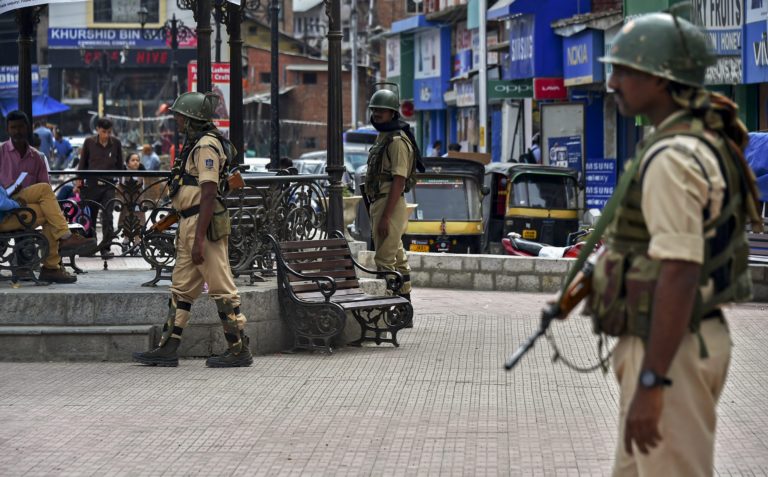
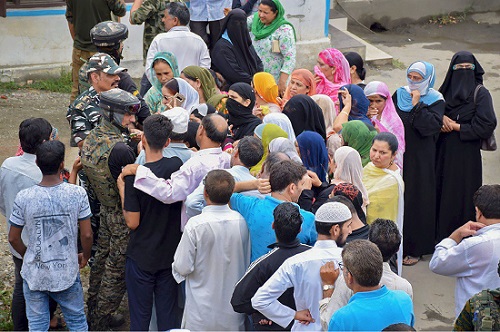
With the reorganisation of the state of Jammu and Kashmir done, all eyes are on the possible fall out, more so, from Pakistan. The neighbouring country has partially recovered from the shock to rustle up a response, however incoherent and disjointed.

In the initial stages came the tweets. “CCC on Kashmir situation at GHQ. Forum fully supported Government’s rejection of Indian actions regarding Kashmir. Pakistan never recognised the sham Indian efforts to legalise its occupation of Jammu & Kashmir through article 370 or 35-A decades ago efforts which have now been revoked by India itself. Pakistan Army firmly stands by the Kashmiris in their just struggle to the very end. We are prepared and shall go to any extent to fulfil our obligations in this regard,” COAS affirmed. The above were the brave words tweeted on @OfficialDGISPR, the official Twitter handle of the Pakistan Army.

Also of note was a rambling speech in the National Assembly of Pakistan by Imran Khan from which two main points emerged – a threat of “more Pulwama-like incidents” and possibility of a “conventional war being triggered.” This is probably the first time that a prime minister has made such an open threat about terrorist activity as a fall out of a legitimate decision taken by a foreign country with respect to its internal affairs. It seems that the prime minister was later appraised of the diplomatic blunder that he had committed and he has now give a statement ruling out war and terror as instruments of his country’s response. However, an initial, spontaneous reaction is the best indicator of a person’s mindset, hence, there should remain no doubt about what Khan actually wishes to do.

Pakistan has also announced that it will be downgrading diplomatic relations with India and will suspend bilateral trade. As an afterthought, it chose to order partial closure of its airspace. In another demonstration of pettiness, it stopped the Samjauta Express on its own side of the border and told Indian authorities to send their own crew to take the train back.

All of this and more was expected from Pakistan. Security experts have been cautioning about escalation in the conflict spectrum. “The biggest challenge comes from the Kashmir’s hinterland, where rabble-rousing will be attempted under instigation from Pakistan….. We cannot afford a repeat of either 2010 or 2016. In the latter case, India became the target of international criticism due to the blinding by pellet guns,” said Lt. Gen. Ata Hasnain, a military veteran who, while in service, commanded the Srinagar-based Chinar Corps.

There exists universal agreement that Pakistan will emerge as the pivot for all activities directed against India for having changed the status quo in Kashmir. Pakistan Army is poised to not only invoke its massive infrastructure of terrorists as a riposte; it is also ready to get into the fray with military interventions, while the government looks into the diplomatic and religious aspects. It is from Pakistan that anti-national elements will get the finances, direction and facility to go for the rabble-rousing that Gen. Hasnain has referred to. In assistance to Pakistan will be such people who have lost control over the region and would now need to contest the emerging scenario with all might that they can muster.

The moot question that arises is: Does India need to be worried about these actions that all experts are very rightly pointing towards as the response from Pakistan and its proxies? The answer lies in a counter-question, “Would there be anything new or extraordinary, that India has not handled earlier, in these actions if taken by Pakistan and its proxies?” The response is a big “NO.”

The Army Commander, Northern Command, Lt. Gen. Ranbir Singh chaired a meeting of the Core Group of Intelligence and Security agencies at Srinagar to review the operational readiness to meet any contingency that could adversely impact the security situation in J&K. He admitted to an intensification of proxy war activities by Pakistan including ceasefire violations, pushing infiltrators across the LoC, calibrating terrorist actions in the hinterland as also exploiting the social media to launch disinformation campaign in J&K. He has also given an assurance that the Army has given a befitting response in thwarting these nefarious designs of the enemy to cause disturbances in our country, particularly in the Kashmir Valley.

Thus, the assurance given by Home Minister Amit Shah that there will be no untoward fallout of the decision of the government in Jammu and Kashmir has been further substantiated by the Army Commander on ground. Overall, the security forces are firmly in control of the situation and necessary arrangements had been put in place for ensuring peace.

Nevertheless, there exists a need to remain both cautious and vigilant since the enemy is going to leave no stone unturned in attempting to wrest back the initiative. He is like a wounded animal and can strike in any direction. There is a need for the nation to stay ready to face all eventualities– political, security, administrative, international and economic.

The silver lining is that the nation has done what it set out to do and thus it holds the benefit of the first strike. The requirement is simply to respond to what the enemy throws at us and for that detailed preparation has been done. Of maximum importance is the capacity to instil in the people of the state a sense of security since what they considered to be normal has been disrupted. This is possible only through application of a national will. More than promises of development and financial gain, it is propagation of the political empowerment and social justice derivatives that will pay dividends in the reconciliation phase. If there is conviction that what has been done is to the benefit of the nation and more importantly the people of Jammu and Kashmir, there will be no hurdle that cannot be crossed. 

India needs to wrest back Pakistan-occupied Kashmir

0

I vividly remember that day in school when a simple exercise about map explanation turned out to be a big shocking experience for me. The assignment was to draw the external boundaries of various Indian states and mark important cities therein.

Each student chosen to draw the boundaries of one Indian state would also mark its major cities and explain the state’s historical, geographical and political importance to the whole class.

I was to explain about Jammu Kashmir.

“This is Jammu Kashmir and this is the state’s capital city Srinagar,” I said pointing my little finger towards Srinagar on the map.

“…the famous ‘silk route’ passed through this state which served as the world’s major trade route since ancient times. Jammu, Gilgit-Baltistan, Muzaffarabad, Gulmarg, Mirpur are other important cities of this state. The state has famous pilgrimage centres such as the Sharada Peeth, Amarnath Shrine and Mata Vaishno Devi….” I went on with my erudite explanation about the state.

“So, where do you want to go in Jammu Kashmir?” the teacher asked.

“Hmmm….well, I want to go to Sharada Peeth,” I replied after a brief pause.

I had read that Sharada Peeth was the great centre for learning and was also ancient place for Vedic learning, but this seat of higher knowledge was now in ruins and shambles. Yet, being a student I felt a strong connect with Goddess Saraswati’s abode–the Sharada Peeth, and wanted to visit the shrine.

The teacher smiled and said, “Yes that’s a noble thought but you need to have a passport to go to the Sharada Peeth….”

“Passport? Why do I need a passport to visit an Indian city?” I asked in exasperation.

“Well, the Sharada Peeth is part of Kashmir that is with Pakistan and is now known as the Pakistan-occupied Kashmir (PoK)…so you must seek Pakistan’s permission by taking a visa to visit any place in the PoK,” the teacher explained.

“B…but how can this be true… see this is the map of Jammu Kashmir and here are Sharada Peeth, Srinagar, Jammu, Gilgit-Baltistan, Gulmarg, Mirpur, Muzaffarabad which are all within the territorial limits of this state and a part of India so why do I need a visa and a passport…,” I blurted out.

“Yes this is true but then this truth exists only on paper…in reality a huge portion of our Jammu Kashmir is still with Pakistan which is known as the Pak-occupied Kashmir…so cities such as Gilgit-Baltistan, Sharada Peeth, Mirpur, Muzaffarabad are all under Pakistan’s illegal control ever since India’s independence. And we in India have still not been able to get back this entire region…,” the teacher elaborated and I listened with stunned silence.

When this incident took place I was a student of standard sixth and found it hard to believe that India has not been able to take back its own region from Pakistan.

This was several years back.

Much water has flown through the Jhelum and Indus rivers of Jammu Kashmir since then, but I still find it hard to digest why India has not been able to wrest back its own region– the Pakistan-occupied Jammu Kashmir (PoJK) despite winning four wars against Pakistan.

Ironically, Pakistan that has committed worst forms of human rights violation with the people of Gilgit-Batistan, Muzaffarabad, Mirpur destroyed the centre of learning–Sharada Peeth, and many other parts of PoJK celebrates a “solidarity” day for “Kashmiri people” on February 5.
The Pakistani establishment commemorate this day to reaffirm their commitment to support all kinds of terrorist activities on the Indian side of Jammu Kashmir.

Pakistani politicians, ministers and terrorist leaders take a pledge on this day to provide arms and ammunition to separatists and terrorist outfits operating across Jammu Kashmir to help them continue their proxy war against the Indian security forces and Indian establishment. And then the mainstream media (lame-stream media?) never dares to question Pakistani regime over its sponsorship of terrorism in Jammu Kashmir!

Background

During India’s partition there were two kinds of territories: British India and Princely States. The portion of India that was ruled directly by the British was partitioned as India and Pakistan, and the rulers of princely states were given the option to join either India or Pakistan.

Hari Singh, erstwhile Maharaja of the then princely state of Jammu Kashmir signed the Instrument of Accession with the Indian government on October 26, 1947. With his signature on the Instrument of Accession and India’s subsequent acceptance of it, the entire state of Jammu Kashmir became an integral part of India, which includes Gilgit-Baltistan and other Pak-occupied regions of Jammu Kashmir. And it is in these regions wherein the revered Sharada Peeth lies. Sadly, this ancient and pious pilgrimage site that was the seat of higher vedic learning is now in ruins.

India and Pakistan have fought four wars since 1947, and despite winning all four wars India has let go each opportunity to wrest control of the Pak-occupied Kashmir.

The accession of Jammu Kashmir with India happened through the same process as that of other Princely States so no questions can be raised about the region being an integral part of India. Even the oft-repeated claims of Plebiscite in Jammu Kashmir had become invalid after United Nations said that Pakistan never fulfilled the mandated preconditions before a referendum could be held in the state.

Further, on February 22, 1994 both houses of the Indian Parliament (Lok Sabha and Rajya Sabha) passed a unanimous resolution reaffirming its stand to take back the region of Jammu Kashmir occupied by Pakistan. “On behalf of the People of India…(we) firmly declare that the State of Jammu Kashmir has been, is and shall be an integral part of India and any attempts to separate it from the rest of the country will be resisted by all necessary means… and demands that Pakistan must vacate the areas of the Indian State of Jammu and Kashmir, which they have occupied through aggression  and resolves that all attempts to interfere in the internal affairs of India will be met resolutely,” the Parliamentary resolution of February 22, 1994 read in clear terms. 

However, simultaneously we let the wretched Article 370 and its illegitimate child Article 35A wreak havoc in Kashmir. The wounds from these twin articles continued to fester over the last seven decades until August 5th, 2019 when Narendra Modi in a decisive move scrapped these two articles.

The ease with which Indian Parliament has ratified the bill to revoke Articles 370 and 35A proves that there’s an overwhelming support for Modi to settle this “Kashmir issue” once and for all.

It is time that the world knows about Sharada Peeth and its importance for Hindus. It’s time Narendra Modi government takes decisive action against blatant human rights violations by Pakistan in Gilgit-Baltistan, Mirpur and Muzaffarabad. The region’s culture, traditions and historical monuments are systematically being destroyed. And the most glaring example is our revered Sharada Peeth.

India cannot shirk its responsibility of protecting its citizens even if those territories continue to be in illegal occupation by Pakistan. It’s time that we initiate diplomatic processes to get back remaining portion of Jammu Kashmir to India. 

Sharada Peeth, the seat of higher Vedic learning now lies in ruins in the Pakistan-occupied Kashmir.

Excerpts of Columns on Art 370 & Art 35A written over the years by Jaibans Singh

The courageous and righteous action taken by Narendra Modi-led NDA (National Democratic Alliance) government by rendering Article 370 and Article 35A redundant and reorganising the state of Jammu and Kashmir has received approbation from across India. Some negative elements say that the matter should have been discussed further.

I have remained dedicated to the study of Jammu and Kashmir, Pakistan and China for a decade and a half now. In this time frame, I have written nearly 2000 articles on my area of study, many pertaining to Article 370 and Article 35A.

I have also given scores of lectures and participated in as many discussions across the country where these legislations came up for dialogue and debate. Recently while speaking at the Gujarat University, Ahmedabad and MS University, Vadodra, on the occasion of Kargil Vijay Diwas, I emphatically rooted for the removal of Article 370 and Article 35A from the Constitution. I did not know that the time for this aspiration to come true was so near.

I have collated and given below excerpts of 15 articles of mine written since 2013 in which I have made a mention of Article 370 and Article 35A. These were uploaded on my blog www.defenseinfo.com and also carried by many other publications. Now it is difficult to trace all the inputs, hence, only my blog links have been incorporated in this paper.

This apart, I have written on the subject for many publications, newspapers, magazines and books. The main among these are the ‘Organiser’; ‘Indian Military Review’ and my book ‘Jammu and Kashmir: The Tide Turns’.

Article 370 and Article 35A formed an intrinsic part of the efforts towards creating awareness about Jammu and Kashmir and subjecting the matter to a national debate.  A study of these excerpts will give an idea of the deep study carried out for years on end before the government reached to the momentous decision to change the status-quo in the region. It will also clearly establish the manner in which the decision making process progressed from one stage to the other.

Those rooting for more debate are either uninformed or merely playing to the gallery now that their very rigid stand on the subject has been simply blown away. They had their chance and failed to leverage the same; now, the die is cast and not too soon.

Article 370: How reality is overshadowed by myths (December, 14, 2013)

How is it that billion plus citizens of this country are surviving happily without the provisions of Article 370 that seem to be a matter of life and death for some political leaders of J&K? Is the rest of India withering under political restriction simply because Article 370 is not applicable to them? The fact is that Article 370 does not give any such facility to the people of J&K that can enhance their life in any manner.

There are, on the other hand, many areas where Article 370 is posing impediments in the progress of the state and its people. There are many progressive legislations and provisions of the central government which cannot be extended to J&K because they have not been legislated upon by the state government. It is well known that Panches and Sarpanches in the state are fighting for empowerment of the Panchayat’s which is not coming by because 73rd and the 74th amendments to the Constitution of India have not been extended to the state. More serious is the loss being borne by the all important Scheduled Castes, Scheduled Tribes and Other Backward Classes who are not availing the benefits of central schemes.

Article 370 Controversy: A storm in a teacup (May, 29, 2014)

Dr Jitendra Singh, Member of Parliament from Udhampur, Jammu and Kashmir and Minister of State, Prime Minister’s Office and Department of Personnel and Training (DoPT), during his interaction with the media on taking charge of DoPT referred to Article 370 of the constitution that gives special status to the state of Jammu and Kashmir. His comment evoked a sharp response from the ruling National Conference (NC) and opposition Peoples Democratic Party (PDP), to create an avoidable controversy.

The matter has since been hotly debated on television and has been written about in newspapers and websites. The overwhelming opinion is that there is absolutely no harm in debating and discussing the status of Article 370.

Omar Abdullah says that Article 370 provides the constitutional link between the Union of India and the state of Jammu and Kashmir. Many legal luminaries and prominent citizens of the state, on the other hand, are convinced that Article 370 was set up as a temporary measure to implement the Indian Constitution fully in Jammu and Kashmir. This line of thought logically concludes that Article 370 should have been repealed within six months after having completed the constitutional obligation. The country is already behind time by seven decades in this regard.

Many look upon the inability to do away with Article 370 as a failure of the political leadership at both the centre and the state level. The economic and political loss that the people of the state suffer due to continuation of the article far outweighs the preferential treatment that it assures.

As things stand there are so many national schemes that cannot be extended to the state due to the limitations posed by Article 370. Businesses suffers because people from the rest of the country cannot establish infrastructure in the state. The socio-psychological divide created by the statute negates integration of the youth of the state in other parts of the country. The state is not accountable to the nation despite looking for assistance all the time. The objective of every law and statute is betterment of the people; if such betterment is not coming by, then legality cannot be quoted as a reason for continuing with it.

There is a widespread perception that those who misused the law and the constitutional situation to establish a feudal cult in the state of Jammu and Kashmir are now worried about their future, since a more representative and aware character is fast emerging. When seen in this context the reaction of both NC and PDP reflects the insecurity that they harbour on the subject. 

Debate on Article 370 is gaining momentum (June, 28, 2014)

Prime Minister Narendra Modi, during an election rally at Jammu in December 2013, sought debates and discussions on Article 370. The statement drew a stringent response from the Kashmir-based political parties.

The fact that seminars on the subject are being arranged across the country indicates universal acceptance of the proposal mooted by Prime Minister Narendra Modi.

Jugal Kishore gave an impassioned narration on the manner in which Article 370, instead of connecting Jammu and Kashmir to India, is creating walls and barriers. He reinforced his contention by explaining how the legislation has stalled development, negatively impacted important parameters like health and education and restricted political empowerment at the grass roots level of Sarpanches and Panches.

Jagdeep Dhankar stressed on the temporary nature of the Article 370 and narrated the manner in which the first Prime Minister of India, Jawahar Lal Nehru, absented himself from parliament when the legislation was passed and later attempted to put the blame on Sardar Patel, all to please his good friend – Sheikh Abdullah. Jawaharlal Nehru has gone on record to say that the Article would wither away in time which, sadly, has not happened.

Instead of engaging in a logical debate there are leaders who predict doomsday even if the Article is mentioned. Chief Minister Omar Abdullah has, on his twitter handle, remarked, “Mark my words & save this tweet- long after Modi Govt is a distant memory J&K won’t be part of India or art 370 will still exist.” Mehbooba Mufti has called upon the Prime Minister’s Office to clarify to “reassure the people of Jammu and Kashmir that no mischief is on the way.”  These are rhetorical statements that do not pass the test of logic.

Kashmiris need to be masters of their own destiny (July, 19, 2014)

There are voices saying that the impact of development funds sent to the valley is negligible. Whose fault is it? The state government uses Article 370 to absolve itself of all accountability. The Right to Information route is not followed in Kashmir to find out where the funds went? The poor people are ignorant while the rich and mighty are in collusion; so how can the facts emerge?

It is time to wrest the initiative from Pakistan (October, 03, 2014)

A loud and clear message should be sent to the terror recruits in Pakistan that they would face certain death while making an infiltration attempt. A fear psychosis should be created in their minds. At the same time the actual “legal aspects” should be communicated across the world; the fallacies surrounding the role of India Army in Jammu and Kashmir, Article 370 and state suppression etc should be exposed. The duplicity of the self serving supporters of foreign sponsored terror in Jammu and Kashmir should be laid bare.

A path-breaking political revolution on the cards in J&K (November, 11, 2014)

There are issues like the 1947 refugees still surviving without state recognition and colonisation of people in Gilgit-Baltistan and Pakistan-Occupied Kashmir by the federal government of Pakistan that are not being addressed in a serious manner. Organisations like the Jammu and Kashmir Study Centre (JKSC) sponsored by the Sangh have been creating awareness in the national capital region of Delhi and outwards in the rest of India about the actual situation on ground and how it is being negatively impacted by Article370. Now the whole nation is looking forward to the complete and irrevocable integration of Jammu and Kashmir within India. The divisive agenda of some vested interests, maintained over decades for personal benefit, stands exposed.

Jammu and Kashmir: A reality check (January, 02, 2015)

There is talk about the Kashmir leadership looking for assurances from the BJP on political issues pertaining to Article 370, the Armed Forces Special Powers Act (AFSPA) etc. There is one simple question to be asked in this regard – if the PDP could have ruled while espousing the concept of self rule, and the NC could have ruled while espousing the concept of autonomy which are basically unconstitutional, why can the BJP not rule while espousing the concept of abrogation of Article 370, when the issue lies within the ambit of the Constitution of India?

Split-reunify-split: The Hurriyat drama goes on! (April, 22, 2015)

There is a second aspect to this reunification drive also. The direction that the debate on Article 370 is taking has rattled the separatists to the extent that they are now feeling the necessity to close ranks to meet the challenge. Earlier debates on the issue would witness a huge salvo of political rhetoric by the media savvy Kashmir-based political leadership of the state that would overwhelm voices coming out from the Jammu and the Ladakh region. Now, the voice from Jammu region advocating debate and discussion has become determined and steadfast.

Article 35-A: A challenge to the Constitution of India (July, 11, 2015)

Jammu and Kashmir Study Centre, a Delhi-based Think Tank engaged in the study about the state of Jammu and Kashmir organised an interaction with some residents of the state whose rights are being curtailed due to application of Article 35 A of the Indian Constitution on the state.  The interaction was organised at the Constitution Club, New Delhi on 11th July, 2015.

Legal experts now feel that a bigger damage to the spirit of the Indian Constitution is being done by the provisions of Article 35A. Article 35A, experts say, denies residents of the State protection under various Articles, including Article 14 (equality), Article 15 (prohibition of discrimination on basis of religion, caste, race or place of birth), Article 16 (Equality of opportunity in matters of public employment and reservations), the fundamental rights under Article 19 including the right to free speech and the right to life and liberty under Article 21. The victims of this draconian statute are of the opinion that there is no place in democratic India for such provisions that actively curb the rights and privileges’ of the citizens of the country. There exists every reason to do away with them.

MK Narayanan pays back to Congress at the cost of Kashmiris (June, 02, 2016)

Mr. Narayanan goes on to denounce the present government as being in “denial mode” and unable to grasp the “Gravity of the situation” in Kashmir, which according to him is the result of the BJP policy of “the centrality of Article 370 and the erosion of the special status in Kashmir.” This is a falsity!!  Yes, there is a well defined movement to create awareness about the legal and political aspects of Article 370 and the manner in which it is harming rather than benefitting the people of the state. Surely, there is nothing wrong in creating such awareness.

It is time for the people of Kashmir to introspect (September, 03, 2016)

They do not pause to think that, in the very same India and without Article 370 or some other special status, their contemporaries are moving forward at a frenetic pace. They do not realise that they can also do so and better if they would only concentrate on their studies.

Article 35A: Myths versus Reality (August, 22, 2018)

The basic fault line that Article 370 and 35A have elicited is the uneven distribution of constituencies. Sheikh Abdullah assisted by his brutal majority engineered that warped formation of constituencies which favoured the Kashmir Valley and left Jammu and Ladakh region bereft of a political status commensurate to their geographic and demographic strength. Jammu has a bigger area and equal population as compared to the Kashmir Valley and Ladakh has a bigger area than both Jammu and Kashmir, yet, the legislative constituencies are such that maximum strength in the legislative assembly comes from the Kashmir Valley. Successive Kashmir-centric governments are steamrolling all efforts to carry out a long overdue delimitation of the constituencies and this is being done under protection of Article 35A and Article 370.

There are many benefits that the people of India enjoy due to development initiatives of the central government that are denied to the people of Jammu and Kashmir due to restrictive legislations like Article 35A and Article 370. A good example is of Other Backward Classes (OBCs) who get 27% reservation in the whole of India except the state of Jammu and Kashmir where they have not even been identified because the empowering legislation has not been extended to the state.

Elections herald hope and opportunity (Organiser, April, 16, 2019)

The campaigning, sadly, is following the well trodden path of negativity. Political parties are more engrossed in deriding each other. The main agendas put forth are political issues like status of Article 370, Article 35A and AFSPA that have limited relevance for the day to day life of the common man. Small parties with limited popular reach are at each other’s throats. Each is renouncing the other as self serving and opportunist. In effect, this implies that all are self serving and opportunist. Only BJP is placing its campaign on issues of development and security that are most important for the people who wish nothing more than to lead a normal life.

Jammu and Kashmir: Show the door to the I, me, myself leadership (30 April 2019)

The endless debates on Article 370, Article 35A, AFSPA et al are not what will help the region and its people to evolve. These are subjects that are of interest to only a few who leverage them for political gains. What is going to help is a strong government that can root out the endemic corruption that is eating into the very fabric of the state. A government that can propel the state to its rightful place in the development index with modern forward looking economic policies; a government that can boast more about its own achievements than indulge in a blame game with the centre.

Country pays an emotional adieu to Sushma Swaraj

Sushma Swaraj, one of the most loved women politicians, who brought a rare empathy and a human approach to India’s diplomacy, was cremated with full state honour today. Swaraj died on Tuesday night at the age of 67. The senior BJP leader was brought to AIIMS around 9:30pm and was taken to the emergency ward after suffering a massive cardiac arrest.

The mortal remains of the former external affairs minister were cremated in an electric crematorium as senior leaders, besides family, friends and admirers bid a tearful adieu to the political stalwart. President Ram Nath Kovind, PM Narendra Modi and top party leaders, including UPA Chairperson Sonia Gandhi, were among the hundreds of people who paid their last respects to former external affairs minister at her residence on Wednesday.

Swaraj had put out a tweet on Tuesday evening congratulating Modi after the Centre’s move to revoke the special status for Jammu and Kashmir and bifurcate the border state into two Union Territories secured Parliament’s approval. “Narendra Modi ji – Thank you Prime Minister. Thank you very much. I was waiting to see this day in my lifetime,” she had said.

Former prime minister Manmohan Singh on Wednesday expressed shock at the demise of senior BJP leader and former external affairs minister Sushma Swaraj, describing her as a great parliamentarian and exceptionally-talented Union minister. Paying rich tributes to her, BJP veteran L K Advani described her as one of his closest colleagues who rose to become one of the BJP”s most popular and prominent faces and “a role for women leaders”.

UNGA Prez Maria Fernanda Espinosa also expressed condolences at the demise of India’s former External Affairs Min Sushma Swaraj, describing her as an “extraordinary” woman and leader who devoted her life to public service.

Sushma Swaraj, who also served as the Leader of Opposition and chief minister of Delhi, was given full state honours after which her body was cremated in the electric crematorium. Hundreds of political leaders and workers from BJP, Bhutan’s Prime Minister Tshering Tobgay, and several leaders from the National Democratic Alliance (NDA) as well as the opposition, were also present on this solemn occasion.