Home Blog Page 416

India-US strategic partnership to strengthen energy security: Dharmendra Pradhan

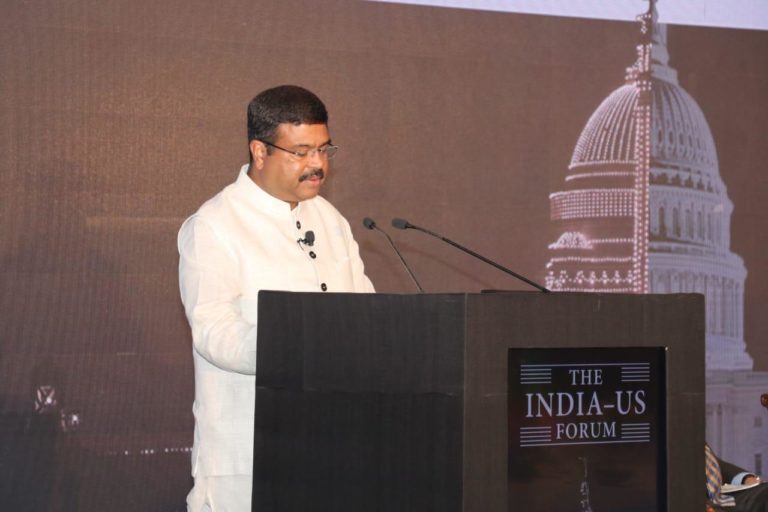
Union Minister of Petroleum & Natural Gas Dharmendra Pradhan has said that India is making a quick transition into cleaner fuels, with a predominant role for natural gas and renewables, and there is greater opportunity for India and the US to evolve a new paradigm of engagement. He was addressing the 2019 edition of the India-US Forum.

He also shared India’s approach in the next five years. “Hon’ble Prime Minister of India Narendra Modi announced that India will target to become a US$ 5 trillion economy by 2024. It is natural to expect that the energy sector will assume a prominent role in achieving this target.”

The minister said that India’s energy consumption is projected to grow at 4.2 percent per annum up to 2035, faster than all major economies of the world. Driven by strong economic development, India’s share of total global primary energy demand is set to double to 11 percent by 2040.  

In June 2017 Prime Minister Narendra Modi and President Donald Trump had envisioned a Strategic Energy Partnership between India and US. The Strategic Energy Partnership was launched in April 2018. The minister said, “The partnership provides for deeper and more meaningful engagements through government and industry channels. We need to collectively enhance energy security, expand energy and innovation linkages across our respective energy sectors, bolster our strategic alignment, and facilitate increased industry and stakeholder engagement in the energy sector.”

While speaking at the forum he informed that India’s hydrocarbon imports from US have exceeded the US $ 6 billion mark and US has emerged– for the first time– among the top ten sources of crude oil for India, with 9th position in 2018-19. 

Talking about the changes taking place in India, he said that there is already a cardinal shift in energy production in India with emphasis on renewables and other environmentally sustainable forms of it. “Our renewable energy target of 175 GW by 2022, with solar target of 100 GW by 2022, is well on its way to be achieved.”

The International Energy Agency, in its World Energy Investment 2019 Report, highlighted that foreign energy investments in India grew to US $ 85 billion. This marks a record 12 percent increase, and the highest growth of energy investments anywhere in the world. The minister informed that the government is moving simultaneously on energy infrastructure expansion. Augmenting power generation capacity, improving energy efficiencies across the board and faster integration of more renewable energy with the grid are proceeding apace. Simultaneously, hydrocarbon investments in a number of areas such as refinery upgradation, petrochemicals, pipeline, city gas network, LNG terminals, marketing network and so forth, are on the increase.

Given the complex and fast-growing nature of India’s energy needs, the country depends on all sources of energy that are secure, efficient, affordable and sustainable. “We have embarked on a realization of a gas-based economy. The share of natural gas is set to increase from 6 percent to 15 percent in the primary energy mix by 2030. To achieve this vision, we have entered into long-term contracts for LNG imports from many countries, including with the US. The imports from the US are increasing progressively since the imports started in March 2018. The India-US Gas Task Force set up last year has begun its work. It will prepare a blueprint for greater engagement of the US in realizing a gas trading hub in India, which is our next priority.”

The minister outlined the four pillars of strategic energy partnership – Oil and Gas; Power and Energy Efficiency; Renewable Energy and Sustainable Growth; and Sustainable growth in Energy sector, which covers the key priorities of India’s energy engagement. 

“There is already enough momentum through our existing cooperation on clean energy. It needs to be aligned to support India’s ambitious renewable and clean energy targets by supporting research and deployment of clean energy technologies.  I invite US oil and gas majors to join innovative and attractive schemes for oil and gas exploration and production in India.”

He also informed that Indian companies are also acquiring quality producing oil and gas assets in the US. “Presently, Indian public sector companies have already invested in the US worth approx. US$ 500 million. Our companies are exploring more investments opportunities in the upstream sector.”

The minister emphasized on the growing convergences in energy sector between India and the US and hoped that the great potential that exists in energy cooperation would enable India and US to scale new heights in their bilateral engagement.

Veteran music composer Khayyam passes away at 92

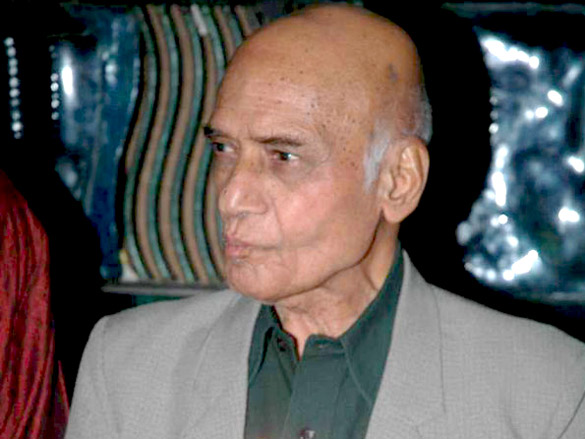
Legendary composer Khayyam, best known for his music in classic films such as ‘Umrao Jaan’, ‘Kabhi Kabhie’ and ‘Noorie’, passed away after a prolonged illnesses at a hospital here on Monday.

Mohammed Zahur Hashmi, popularly known as Khayyam, 92, was admitted to hospital a few days ago owing to breathing issues and other age-related illnesses.

Prime Minister Narendra Modi tweeted, “India will remain grateful to Khayyam Sahab for giving us some of the most memorable compositions, which will be remembered forever.”

“He will also be remembered for his humanitarian gestures to support upcoming artists. His demise is extremely saddening,” he said.

Lata Mangeshkar also took to Twitter and wrote that Khayyam’s demise is the end of an era in music. “Great musician and a man with a kind heart, Khayyam sahab isn’t with us anymore. I am so saddened to hear this, I can’t put it in words. With Khayyam sahab, an era of music has ended. I offer my humble tribute to him,” she wrote.

“Khayyam sahab would treat me as his younger sister. For me, he used to make his special songs. I loved working with him but would also be a little scared because he was a perfectionist. His understanding and knowledge of Shayari was exceptional,” she tweeted.

Superstar Amitabh Bachchan remembered the music veteran as “a soft-spoken, amiable soul”, who contributed to his several films, including ‘Kabhi Kabhie’ and ‘Trishul’.

“…KHAYAM sahib…for all the memorable music he conducted and produced .. prayers condolences,” Bachchan tweeted.

“Umrao Jaan” director Muzaffar Ali remembered Khayyam as a “storehouse of feelings, emotions and music”. Reminiscing the memories of Rekha-fronted 1982 classic, the director said it took Khayyam and him almost two years to create music for the film. “Day in, day out, I used to go to him. He used to stay at my house. It was an evolution of music. Today, no composer, director or producer will spend so much time on making the music. We left no stone unturned for this film’s music,” Ali told PTI.

The musician’s other notable works include films such as “Trishul”, “Noorie” and “Shola Aur Shabnam”. In 2007, Khayyam was honoured with Sangeet Natak Akademi Award in Creative Music by the Sangeet Natak Akademi, India’s national academy of music, dance and theatre. Four years later, he was conferred the Padma Bhushan, the country third highest civilian award.

Now what can Pakistan possibly do in Kashmir

The change in status of the state of Jammu and Kashmir carried out in the most legitimate and constitutional manner is essentially an internal matter of the Indian nation. What is galling here is the undesirable and disgusting interference that is being attempted by our neighbour Pakistan. It was of course, expected, since the all-powerful political and military establishments of the country owe their existence to keeping the Kashmir issue on the boil. There is now a big question mark on the effectiveness of the ‘Kashmir Banega Pakistan’ (Kashmir will become Pakistan) and ‘Kashmir Hamari Shahrag Hai’ (Kashmir is Pakistan’s jugular vein) type of slogans that the political leadership of Pakistan, with active support of their army, uses to divert the minds of the people from their extreme poverty and deprivation.

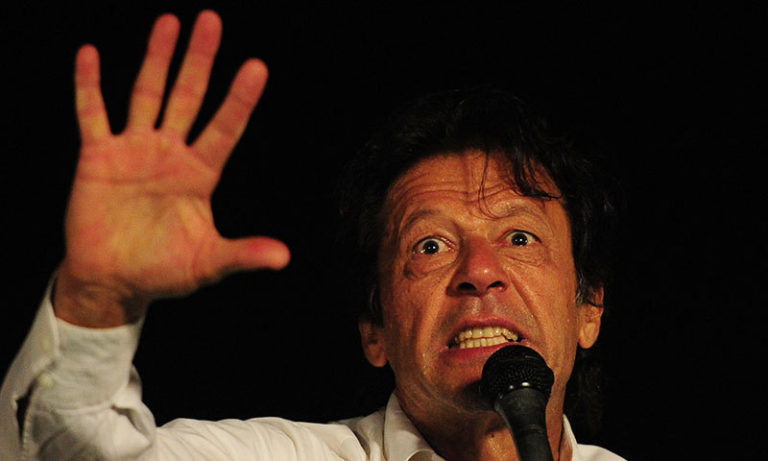
The Pakistani leadership did not even imagine that the Narendra Modi-led government would move so fast and decisively towards bringing about the much needed reorganization of the state and its seamless integration with the rest of India. It has been caught completely off-guard and is unable to come up with a strong and cohesive response. The despair in the Pakistani political ranks is personified by the ‘What can I do’ lament of Prime Minister Imran Khan.

Secondly, Pakistan is on the verge of a financial break down. It simply cannot afford direct belligerence towards India for fear of reacquiring the terrorist state stamp which will close all doors of much needed financial aid from the international community.

Nevertheless, it would be simplistic to think that Pakistan will not hit back. It will definitely do everything possible to negate the emerging positive situation in Jammu and Kashmir with all the might and means that it can muster. The question that arises here is – what can Pakistan do? Some statements by eminent journalists and thinkers of this country can give a fair idea of the path that Pakistan is likely to follow.

“Pakistan is morally and politically bound to support the Kashmiris. However, supporting the resistance movement will have serious consequences for Pakistan. The poor state of Pakistan’s economy, internal political crises and struggling diplomacy are factors which will limit active support to the resistance movement in IHK (Indian Held Kashmir),” says a well known Pakistani journalist, Muhammad Amir Rana, in an article – The Kashmir Challenge.

A derivative of the statement is that Pakistan will love to see the locals of Kashmir reacting forcefully with what it terms as “Intifada.” An intifada is a concept of Arabic usage referring to an uprising against oppression. Mostly it has been used to describe the Palestinian uprising and has been adopted by Pakistan for Kashmir as a part of its psychological messaging. While the Kashmiris’ will be egged on to the self destructive path of “Intifada,” Pakistan will give to it no more than “moral support.”

So what can be expected is a massive religion-based psychological campaign being launched by Pakistan to incite the people of Kashmir to come out in open revolt. It will be driven by the social media and supported by the many assets that Pakistan has nurtured in the valley and in its own land. Already the leaders of Pakistan based militant groups are circulating audio, video and text messages in social media groups in which they are declaring their support for the Kashmir cause.

The second option is well elucidated by another well-known journalist Arif Nizami by his statement, “However, unfortunately ground realities are not in Pakistan’s favour. In the backdrop of a rather muted international response– even from our traditional friends– Islamabad has few options. Barring any military adventure by India, a military response is off the table. Pakistan has after the event embarked on a diplomatic offensive…..”

The derivative here is that being unable to go for military options, Pakistan will up the diplomatic ante for which it has only the United Nations to fall back upon. It has already used the offices of good friend China to initiate a discussion in the United Nations Security Council (UNSC). The UNSC meeting, however, has not gone in favour of Pakistan since four of the permanent member and nine of ten temporary members have termed the reorganization of J&K as India’s internal matter. A consultative meeting vetoed the idea of moving the issue to the next level. So it is already curtains for Pakistan on this side. But the matter will not end here; India can expect a frontal diplomatic assault from the country in the United Nations General Assembly (UNGA) coming September. The aim will be to embarrass India and press for a fresh UN Resolution from the Security Council on the premise that India’s recent actions are not consistent with the status of Jammu & Kashmir as a disputed territory. Even the Muslim Ummah has remained unmoved by the machinations of Pakistan what to talk of the big powers so not much progress is envisaged. In all likelihood, the recent position adopted by the UNSC will set the pace of things.

A clear view of the Pakistani plan of action can give direction to the Indian counter measures. The most important is for the Kashmir people to not fall prey to Pakistan propaganda. It is very clear that Pakistan is looking to use them as cannon fodder and will not come to their assistance in any manner whatsoever.

The Indian Army is more than ready for any misadventure that Pakistan may be foolish enough to attempt. “Pakistan’s attempts to push in terrorist infiltrators will not succeed. Indian Army is alert and has been able to foil all attempts of infiltration and given effective response to ceasefire violations,” an emphatic statement by Lt. Gen. Ranbir Singh, Army Commander, Northern Command says it all.

It would be best for Pakistan to accept the reality and concentrate more on its precarious internal condition. In case it does not relent then India needs to be prepared for a structured point by point response to its ignoble machinations.

Naxalism thrived due to trust-deficit between tribals and govt. : Chhattisgarh CM Bhupesh Baghel

Bhupesh Baghel, Chief Minister of Naxal affected state of Chhattisgarh, has said that Naxals could thrive in Chhattisgarh due to the deepening trust-deficit between tribals and authorities. Speaking on ‘Changing Chhattisgarh under New Leadership’ at an event in New Delhi, Baghel said that under the previous government Naxalism spread from 4 blocks to 40 blocks in the state, due to anti-tribal policies and behaviour of government agencies. Earlier no one talked to the tribal population to know about their sufferings. They responded to violence by violence and that resulted in widening the gap between the authorities and the tribal population, he said.

“Naxalism is not just a security or law and order problem. Naxals could infiltrate Chhattisgarh because of the trust deficit between the authorities and the tribals,” he said, “The biggest challenge for us is to bridge that trust deficit between the government and local people,” he added.  

Social Indicators

Chhattisgarh Chief Minister Bhupesh Baghel said that malnutrition is a much bigger threat than Naxal violence in the state and that his government is working hard to improve the health of the people. “Today malnutrition is a bigger threat than Naxalism in the state.” He said over 37 per cent of the state’s children under the age of 5 years are malnourished and more than 40% women in the age group of 15-49 years are anemic.

“We have started camps in some of the worst Naxal-infested areas of Dantewada and Bastar and gave hot, cooked meal to children and women there, as part of the Suposhan scheme. Out of 124 panchayats in the state, 109 now have this programme and on October 2, the ‘Suposhan’ scheme will be launched in all the districts,” he said.

To provide better medical facilities in interior areas, Baghel said he took the primary health centres in the local ‘haats’, so that more tribal people can come there for treatment.

“I am happy to share that the number of patients arriving at the local haats is 20 times higher than the patients arriving at the OPDs of a primary health centre and government hospitals,” he said, adding that it has brought the medical facilities much closer to the people.

Earning the trust

Highlighting the works of his government in the last eight months in the state, Baghel said, “After we came to power we returned the lands of the tribals which were acquired in 2006 but no industries was set up.”

“We returned 4,200 acres of land located in 1,700 villages to the tribal people,” he said. It was a step to win the trust of the tribal population by returning their land that was taken over by previous governments. “They realised that it was the first time that the government returned them their land. Next, I waived their loans,” he said.

He shared that today Chhattisgarh is the only state in the country where no farmer is indebted. He said to increase the income of the farmers his government also bought the paddies from them at the rate of Rs 2,500 per quintal which is much higher than any state government.

Development to focus on agriculture and small scale industries

Baghel also appealed to investors to come to Chhattisgarh and that his government will help them in providing land and power. Though, he added that the focus of his government is not on establishing large scale industrial complexes but on small and medium scale industries.  

He also explained his mantra of rural development viz Narwa, Garwa, Ghurwa, Badi called as NGGB in official circles. Under it the development of pasture land, cattle and water resources are taken up. Referring to the water problem, he said, “Groundwater level is falling across the country. Thus I have made a scheme to recharge the groundwater in the state by working on the nallahs.” He said a detailed project report of over 1,028 nallahs has already been made.

He said that to counter the issue of stray cattle, his government has kept 3-5 acres of land only for stray cattle in different areas. “There we tell farmers to put their extra straw that they would otherwise be burnt so that the environment is not polluted and the cattle get their food too,” he said.

Baghel said that the focus of industrial development under his government would be to create job opportunities for locals and improve earnings of tribals. “Our industries, mines and power plants have not benefitted the locals. They have only added to the pollution. Now we are focussing on establishing small and medium businesses that would give value addition to the tribals and will boost local incomes,” said Baghel.

Environment

Making a strong pitch for preserving the forests of Chhattisgarh Baghel categorically opposed uranium mining in the state. He said that he was not interested in any more projects that would involve massive mining including that of uranium.

Elaborating on why he was opposed to large scale mining specially of uranium, Baghel said, “Chhattisgarh has 44% of its area under forest. I am very keen to preserve this pristine environment and don’t want any more mining of forests. Also, large scale mining, over these years, has not benefitted our people and it has only added to pollution.”

Vidya Sinha: Hindi cinema’s woman-next-door passes away

Vidya Sinha, who has starred in popular and acclaimed Hindi movies such as “Rajinigandha”, “Chhoti Si Baat” and “Pati Patni Aur Woh”, died on Thursday after prolonged illness. She was 71 and was diagnosed with lung disorder a while ago. However, her condition had become worse in the past three months.

The veteran actor made a name for herself with her woman-next-door characters opposite Amol Palekar in “Rajnigandha” and “Chhoti Si Baat” and in mainstream commercial space for “Pati Patni Aur Woh” among others

In a career spanning over four decades, she also featured in “Josh”, “Love Story”, “Bodyguard” and TV shows such as “Kkavyanjali”, “Qubool Hai” and “Kullfi Kumarr Bajewala”.

Veteran actor Amol Palekar, who worked with her in memorable films like Rajnigandha (1974), Chhoti Si Baat (1975) and Safed Jhooth (1977), remembered his late co-star with fondness, saying that her passing away is a great loss. Producer Rajan Shahi, who worked with the actor on the TV show “Itti Si Khushi”, said Sinha was not only extremely talented but “most importantly a very down to earth person.” “I remember her very sweet request… When she was cast to play a pivotal role in the show, she requested me if I would direct one of her scenes. I had stopped directing since long… but could not say no to such a senior and veteran actor… She was extremely warm and created a family bond with all unit and actors,” he said in a statement.

TV actor Smriti Karla, who worked with Sinha on “Itti Si Khushi”, called her passing away “a big loss for the film and tv Industry.”

“As a child I have seen her as a heroine and then I had the honour of working with her as my ‘Dadi’… I remember gushing when she complimented me for being a fine actress. She was extremely loving and caring. We will miss her presence but she will live through her films,” she said

On Twitter, filmmaker Sanjay Gupta wrote, “RIP Vidya Sinha Ji. You were the epitome of grace and dignity on and off the screen.”

Director Madhur Bhandarkar said Sinha will always be remembered for her superlative performances in films like “Rajnigandha”, “Chhoti si Baat” & “Pati Patni Aur Woh”.

“My condolences to her family & friends. #OmShanti,” he tweeted

“RIP Vidya Sinha. You will be always remembered, specially for Rajinigandha, Chhoti Si Baat and Mukti,” Bengali superstar Prosenjit Chatterjee wrote on Twitter.

J&K returning to normal life as restrictions on movement of people are eased

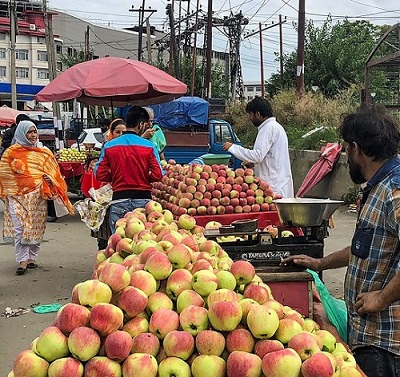
Jammu and Kashmir is slowly returning to normalcy as restrictions on the movement of people in the Kashmir Valley were eased on Saturday, with landline services restored in some areas of the city. Primary schools across the Valley will reopen on Monday and government offices will also be fully functional from then.

Addressing a press conference, government spokesperson Rohit Kansal said the relaxations have been eased out in 35 police station areas. “The process of providing relaxation and easing out of restrictions is already in progress. Relaxation has been provided in 35 police station areas across the length and breadth of the Valley and so far, there are no reports of any untoward incident. The public transport is plying and we have encouraging reports of a lot of public movement,” Kansal said.

On the restoration of landline services, the government spokesperson said out of the 96 exchanges in the Kashmir Valley, 17 are functional and providing landline services to people.  “The endeavour is to make at least half of the exchanges in the Valley functional by today evening and by tomorrow evening, all of the exchanges, barring few in the vulnerable areas, would be made functional,” he said.

Kansal said in Jammu region, landlines and mobile phone services are functional and mobile internet services with some functionality in at least five districts have been restored.  “The services will be restored in other areas in a calibrated manner,” he said.

Regarding the detained political leaders, Kansal said such a decision would be taken by local authorities based on the law and order situation in their respective areas.

Security forces continued to remain deployed, while barricades remained on the roads, but people were allowed to move after checking their credentials, they said. There was increase in movement of private vehicles in the civil lines areas and other district headquarters of the Valley, the officials said, adding that some inter-district cabs were also seen plying in Dalgate area of the summer capital. Some shops in the civil lines area opened on Saturday morning, the officials said.

Beijing helped India by taking Kashmir to UN Security Council

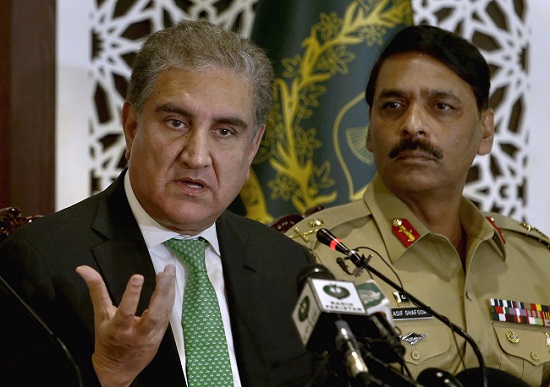
That nothing worthwhile emerged from the ‘closed door meeting’ on Kashmir at the UNSC (United Nations Security Council) shouldn’t come as a surprise to the people of Pakistan. After all, didn’t Foreign Minister Shah Mehmood Qureshi already warn them in advance not to live in a “fool’s paradise” because when Islamabad would take the Kashmir issue to UNSC, no one would be waiting for them with “garlands in their hands”.

Some feel that being the Foreign Minister Qureshi shouldn’t have sounded so negative but his detractors fail to realise that he really didn’t have any other choice since Poland, which is the current president UNSC, had already rejected Islamabad’s request of raising the Kashmir issue at this forum on the grounds that it should be resolved “bilaterally.”

The hearing that Islamabad eventually managed to get at UNSC was a face-saving and heavily compromised alternative hastily brokered by its “all weather” friend China. For Islamabad, which was anxiously rearing to pounce upon New Delhi for its decision to revoke special status in J&K, which it believes is “illegal” that “violates UN resolutions on Kashmir.” For Islamabad, which was making so much noise, this came as a big climbdown.

Instead of getting a chance to use the UNSC podium for internationalising Kashmir, the meeting was held without Pakistan being in attendance. Being a ‘closed door meeting’ it was held under the less formal provision of “any other business” and to make things even more embarrassing, instead of deliberating on the issue of New Delhi’s latest actions in J&K as proposed by Pakistan, the agenda of the discussion was “India-Pakistan question.” 

No records of what transpires during ‘closed door meeting’ at UNSC are maintained and details of its deliberations aren’t made public. No statement is issued unless all its 15 members agree to do so and only a communique is made. In the absence of any statement, it’s more than evident that the UNSC members didn’t find any merit in the allegations and apprehensions levelled by Islamabad regarding New Delhi’s actions in J&K and its intent. But despite this, Islamabad is still terming this informal meeting that doesn’t even maintain a record of its proceedings, nor issues any statement, a big success.

Pakistan’s envoy to UN, Maleeha Lodhi is jubilant that “The voice of the Kashmiri people resonated in the chambers of the world’s highest diplomatic forum today,” but the people want to know the practical significance and positive implications of voices resonating in the UNSC. Similarly, in interpreting the ‘closed door meeting’ as being an act of the “whole world” discussing Kashmir and thereby deducing that Kashmir “is an international dispute,” Ms. Lodhi has stretched things a bit too far.

New Delhi may be annoyed with Beijing for having arranged a ‘closed door meeting’ at UNSC for Islamabad, but in retrospect, it has actually done New Delhi a great favour. Refusal of UNSC president Ms Joanna Wronecka to formally entertain Islamabad’s request for intervention highlights the fact that the international community respects India’s stand on Kashmir. Lack of any statement by UNSC after its ‘closed door meeting’ gives India’s stand of Kashmir being its integral part a collective ‘thumbs up’ from the international community.

Islamabad too has done New Delhi a big favour by approaching UN because Stephane Dujarric who is the spokesman for Secretary General Antonio Guterres once again made it clear that the UN chief “recalls the 1972 Agreement on bilateral relations between India and Pakistan, also known as the Shimla Agreement, which states that the final status of Jammu and Kashmir is to be settled by peaceful means, in accordance with the Charter of the United Nations.”

After Islamabad’s abysmal failure at UNSC, Beijing did try and console Pakistan. In a joint press conference with his Pakistani counterpart, Beijing’s UN ambassador Zhang did say that “India has violated bilateral agreement to keep peace in the border areas” and “..It is obvious the constitutional amendment by India has changed the status quo by India.” But since these views wern’t conveyed by UNSC either in its communique or in the form of statement, it’s obvious that this is the viewpoint of Beijing and not that of UNSC. Some also see this statement as a means to divert attention from the fact that out of 15 members, Beijing was the only one who was on Pakistan’s side.

Finally, all that Islamabad can boast about is that “…The voice of the Kashmiri people resonated in the chambers of the world’s highest diplomatic forum,” which one can safely conclude either fell on deaf ears or wasn’t convincing because UNSC didn’t come out with any statement in support of Islamabad. But this was expected all along because the moment UNSC president refused to formally take up Pakistan’s request, it was obvious that Islamabad’s stratagem had misfired.

This is the reason why everyone had their fingers crossed when Qureshi who had warned Pakistanis to stop living in a “fool’s paradise,” suddenly changed track by telling the media in advance that the UNSC ‘closed door meeting’ was Pakistan’s big success on the diplomatic front. But then, Qureshi has always been a dreamer and a die-hard optimist to the point of gullibility-after all, wasn’t he the one who just recently hailed US President Donald Trump’s ludicrous offer of mediation on Kashmir as something that was “more than Pakistan’s expectations”!

British Pakistani groups create ruckus outside Indian High Commission in London

Is UK allowing its land to be used for anti-India protests? Members of the Indian diaspora are raising similar questions after the recent violent spat with anti-India protestors in London. The protestors cornered the Indian diaspora who were at the High Commission to celebrate Independence Day and attacked them with eggs, potatoes and water bottles.

Several members of Indian diaspora took to social media on Friday to question police preparedness for pre-planned anti-India protests led by British Pakistani groups, and have also demanded action over violent Kashmir protests.  

The so-called Black Day protests were organised to coincide with Independence Day celebrations at the Indian mission and resulted in four arrests after Scotland Yard officers intervened to break up a face-off between anti-India and pro-India demonstrators.  Many Indian-origin activists were caught up in a lockdown situation and sought refuge inside India House as they were targeted with stones, bottles and eggs.

“We literally waited for 2.5 hours for more police force to arrive. The situation was so bad that we were not even able to go out. All the women and kids were frightened to say the least,” said one of the members of the group, which had gathered with tricolours and pro-India banners to mark Independence Day.

The demonstration was aimed at countering the anti-India protest, organised by Pakistani groups as well as Sikh and Kashmiri separatist outfits, with the focus largely on the Indian government’s recent decision to revoke Article 370 that gave the special status to Jammu and Kashmir.

The two demonstrations had been demarcated with metal barriers outside India House but as thousands began to gather, Metropolitan Police officers could be seen struggling to keep the aggressive anti-India protestors from breaking across the divide.

“Talked to members of Indian diaspora in London. They are under shock but their resolve is firm. Talked to our High Commissioner. Timely intervention by her resulted into safe passage to everyone, read a Twitter statement by Vijay Chauthaiwale, the Head of the Foreign Affairs Department of the BJP, who said he has also raised the matter with external affairs minister S. Jaishankar. “It’s time for (London Mayor) Sadiq Khan, met Police to take appropriate action against these goons. Hope the British High Commission in India too take a note, he added.

The Metropolitan Police made four arrests under Section 4 of the Public Order Act, affray, obstruction of police and possession of an offensive weapon. Investigations following the arrests remain ongoing.

Nature Communications: Some African CO2 Emissions Higher Than Previously Thought

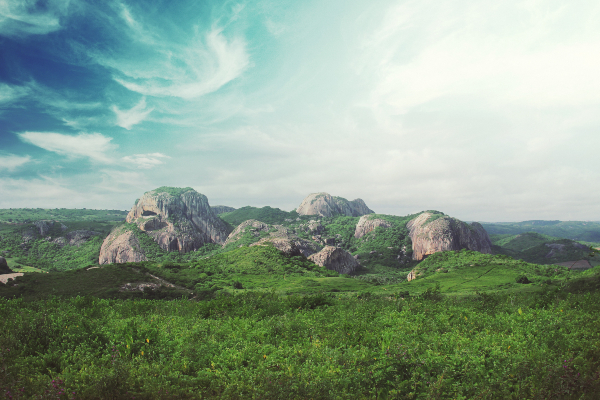
The tropical ecosystems contain massive stores of carbon with a high vulnerability to anthropogenic climate change. With the “sparseness of ground-based measurements,” the estimates as to how much carbon has been sunk into the topic and how much has been released retained a great margin of error.

A lot of uncertainty for an important metric of a pressing global problem. As noted in the Nature Communications article, the knowledge of the net sink or net contributor to atmospheric carbon levels remains uncertain. These labelled +ve and -ve, respectively, for net annual source or net annual sink for carbon.

By “sink,” this means something akin to the oceans be sinks. In that, the oceans and the tropics absorb more carbon than they emit. They hold the carbon as opposed to releasing it. The release contributing to the levels of carbon in the atmosphere, as noted at levels of parts per million.

The paper published, based on independent – rather than dependent – satellite data sets, shows the land tropics to be +ve as opposed to -ve, or net annual sources rather than net annual sinks of carbon – not a positive finding for those wishing for easier solutions to the problem of human-induced global warming.

Carbon dioxide emissions from the North Africa region are higher than previously estimated in other words.

As stated, “These pan-tropical estimates reflect unexpectedly large net emissions from tropical Africa… The largest carbon uptake is over the Congo basin, and the two loci of carbon emissions are over western Ethiopia and western tropical Africa, where there are large soil organic carbon stores and where there has been substantial land use change. These signals are present in the space-borne CO2 record from 2009 onwards.”

References

Palmer, P.I. et al. (2019, August 13). Net carbon emissions from African biosphere dominate pan-tropical atmospheric CO2 signal. Retrieved from https://www.nature.com/articles/s41467-019-11097-w.

Photo by Sergey Pesterev on Unsplash

Editors of WIN ONE Magazine: Graham Powell and Krystal Volney

His Lordship of Roscelines, Graham Powell, earned the “best mark ever given for acting during his” B.A. (Hons) degree in “Drama and Theatre Studies at Middlesex University in 1990” and the “Best Dissertation Prize” for an M.A. in Human Resource Management from the University of Newcastle-upon-Tyne, England in 1994. Powell is an Honorary Member of STHIQ Society, Former President of sPIqr Society, Vice President of Atlantiq Society, and a member of British MensaIHIQSIngeniumMysteriumHigh Potentials SocietyElateneosMilenijaLogiq, and Epida. He is the Full-Time Co-Editor of WIN ONE (WIN-ON-line Edition) since 2010 or nearly a decade. He represents World Intelligence Network Italia. He is the Public Relations Co-Supervisor, Fellow of the Royal Society for the Encouragement of Arts, Manufactures and Commerce, and a Member of the European Council for High Ability. A previous comprehensive interview in parts through In-Sight: Independent Interview-Based Journal here.

Krystal Volneyis the new Journal Editor of United Sigma Korea. Volney is known for her computing interviews for WIN ONE Magazine (World Intelligence Network) as a tech writer, Co-Editor and publications in Award-winning/bestselling educational books that can be found in bookstores and libraries around the world, journals, blogs, forums & magazines such as Thoth Journalof Glia Society and City Connect Magazine since 2012-present. She is the author of Cosmos and Spheres poetry book and the ‘Dr. Zazzy‘ children’s series.

Here Powell and Volney took some time to describe the nature of editing a high IQ publication, whether from a veteran position of Powell or a fresh perspective of Volney, for the largest Umbrella high IQ organization, World Intelligence Network, journal in the entire world, WIN ONE.

Scott Douglas Jacobsen: What was the original point of high IQ journals?

Lord Graham Powell: High IQ journals are a medium for displaying the talents and thoughts of the society members. They unify interest and are a means for expressing the current initiatives and ethos of participatory societies – most journals represent more than one society.

Krystal Volney: To provide the very intelligent with a place to publish their ideas, essays, articles, poetry and be interviewed.

Jacobsen: What have been some notable successes of high IQ journals in the past?

Powell: The journals have helped forge friendships and when friends collaborate to produce not only articles, but aide participation in conferences and get-togethers as well, I think that a hugely positive corollary of journal collaboration.

Volney: Celebrating the work of geniuses around the world.

Jacobsen: Some prolific authors can be known as part of the high IQ community, though dead, e.g., Isaac Asimov. Who have been lesser-known and fruitful writers in the high IQ community?

Powell: Both Krystal and I have produced books. Some more are being planned now. Yet, other authors who spring to mind are: Thomas Hally, Jason Betts, Greg Grove, Liliana Alam, Anja Jaenicke and Elisabetta di Cagno. Greg Grove founded a society for poets, all of whom had to be within the top one percent of IQ scores. One influential poet within that society was Thom Hadley, though his influence on me mainly stemmed from the utterly noble way he faced death from cancer. I will never forget him. His humility and resignation towards the inevitable and his supreme dignity in that, for me, made him a great man.

Jacobsen: General intelligence as the basis for societies and umbrella organizations presents issues. Within the context of the journals or magazines happening to arise within some, we can note the ways in which the content sets an average bar to access of the content in comprehension disregarding background knowledge or interest in the subject matter, or persistence, for the moment. Graham, we have talked about some of this before. What should the creators of a high IQ journal, whether linked to a society or independent of one, bear in mind regarding expectations – positive and negative – about the size of the and quality of the readership?

Powell: The potential readership is increasing, not only due to demographics, but other factors such as the Flynn Effect (I.E., that IQ scores are increasing over time, though that is now slowing) and access to technology. The high IQ community is, however, even more transitory in interest than the average (in my opinion) so magazines, or, indeed, anything pitched towards the high IQ community, has to change, evolve and stimulate to a high extent. It has to undergo criticism, stark analysis and, at times, fierce debate. It has to face rejection as a medium, then react and resurface with gusto. In the modern world, the concept of a magazine seems almost anathema to the ever-changing flow of ideas and discussion. They are fixed moments in time, even if they express universal, long-term concepts and beliefs. This can of course be a positive aspect, the journal becoming a historical document and record of the thoughts, even the zeitgeist, of a particular moment in human existence. The creator has to maintain a broad view of what they are doing and why.

Jacobsen: What forms of content seem more affected by the singular factor of general intelligence: brief articles, interviews, philosophical essays, poetry, or others? Different types of submissions would seem, intuitively, effected in different ways and to different extents by the level of general intelligence expected by the readership (if connected to a society, then, more often, the membership).

Powell: Puzzles, conundrums, quizzes: these stimulate readers in this realm of society and members enjoy creating them. Any article with precise language and a well backed-up, scientific or philosophical thesis will appeal and hold interest too. Mathematical theses, discussions and explanations are esoteric, but of interest to the high IQ community, especially to those members who are extraneous to the academic community, yet have an in depth knowledge of mathematics and physics. The Leonardo journal, which I text edit for the AtlantIQ Society, has some recurring themes, these expressing the focus of that society on art and science, with the interests of the main compiler, Beatrice Rescazzi, taking precedent. She is primarily a scientist, with a particular passion for 3D printing and robotics, though we also have many poets in the society, so poetry also appears in each edition. The focus of the editorial teams that I form a part of is shifting these days, the perceived need for the high IQ community to be actually doing something positive for humanity becoming ever more fervent. The dominant ethos within the high IQ world has been for self-promotion (even by proven charlatans) yet this is being countered now by a few who are intent on being genuinely philanthropic and altruistic. Gradually, this will appeal to more and more of the high IQ community, many of whom have felt subjugated by the more egocentric members. It is restoring a balance, one which, I think, reflects more closely other sectors of society.

Jacobsen: How did this editorial relationship start for the two of you?

Powell: Krystal was a stalwart supporter of the book “The Ingenious Time Machine” – which I edited and produced for the World Intelligence Network (WIN). I already knew Krystal from the WIN and I was contacted by her to write some reviews of her creative writing. Recently, I felt her innate enthusiasm ideal to help rekindle interest in the WIN On-Line Edition, the WIN’s magazine. I suggested that she help me and was pleased to hear that she accepted.

Volney: I discussed the collaboration with Lord Graham and he saw it as a very good idea. Doing the first issue as Co-Editor was very pleasant with him. I am looking forward to the second magazine because I expect it to contain more submissions from High-IQ members as well as guest contributors.

Jacobsen: What were the pluses and minuses of collaborative versus solo editing for the two of you?

Powell: This first edition under our collaborative umbrella was almost entirely procured by Krystal, at least in terms of the content for it. I issued adverts to attract participation, but was too busy to spend hours and hours creating and soliciting submissions. For me, the arrival of content was refreshing because it did just that: arrive. It was only after looking closely that I realised that almost all of the content this time consisted of poetry. I was hoping for some in-depth articles, but they weren’t amongst the contributions. That resulted in the ‘Poetry Edition’ coming out, which was not a bad thing, but it was different from expectation. Krystal and I have, however, vowed to work harder and over an extended period of time so that the next edition will have more variety within it. Krystal was also a useful commentator on what was prepared by me, especially because I had to do it quickly. We agreed on adjustments efficiently and effectively, which was a positive factor in the collaboration. I think my experience of the post-production process also helped because the uploading of the magazine took a long time, which disheartened Krystal at first. We managed to get the magazine released in the Facebook groups (which was a first) and I think the next magazine will be something progressive and diverse from anything previously produced for the WIN.

Volney: I did not have any minuses. A plus was that we got along working together on the first issue for World Intelligence Network’s magazine and there were not any arguments. This connotes that we are both easy to work with.

Jacobsen: Where can people find the work edited by the two of you – in the past and into the future?

Powell: As already noted, the www.iqsociety.org/interactions/winone page shows all the magazines produced for the World Intelligence Network. The Leonardo magazine is on the AtlantIQ society website: www.atlantiqsociety.com/leonardo-magazine.html and both are accessible by the general public. The book The Ingenious Time Machine can be bought from the Amazon site. Just type in the title and it will come up! It is also on the “Goodreads” website.

Volney: On the World Intelligence Network’s site- https://www.iqsociety.org/.

Jacobsen: Thank you for the opportunity and your time, Graham and Krystal.

Powell: Any time, Scott.

Volney: Not a problem Scott. It was lovely!

Photo by Michael Dziedzic on Unsplash