Home Blog Page 418

India needs to wrest back Pakistan-occupied Kashmir

0

I vividly remember that day in school when a simple exercise about map explanation turned out to be a big shocking experience for me. The assignment was to draw the external boundaries of various Indian states and mark important cities therein.

Each student chosen to draw the boundaries of one Indian state would also mark its major cities and explain the state’s historical, geographical and political importance to the whole class.

I was to explain about Jammu Kashmir.

“This is Jammu Kashmir and this is the state’s capital city Srinagar,” I said pointing my little finger towards Srinagar on the map.

“…the famous ‘silk route’ passed through this state which served as the world’s major trade route since ancient times. Jammu, Gilgit-Baltistan, Muzaffarabad, Gulmarg, Mirpur are other important cities of this state. The state has famous pilgrimage centres such as the Sharada Peeth, Amarnath Shrine and Mata Vaishno Devi….” I went on with my erudite explanation about the state.

“So, where do you want to go in Jammu Kashmir?” the teacher asked.

“Hmmm….well, I want to go to Sharada Peeth,” I replied after a brief pause.

I had read that Sharada Peeth was the great centre for learning and was also ancient place for Vedic learning, but this seat of higher knowledge was now in ruins and shambles. Yet, being a student I felt a strong connect with Goddess Saraswati’s abode–the Sharada Peeth, and wanted to visit the shrine.

The teacher smiled and said, “Yes that’s a noble thought but you need to have a passport to go to the Sharada Peeth….”

“Passport? Why do I need a passport to visit an Indian city?” I asked in exasperation.

“Well, the Sharada Peeth is part of Kashmir that is with Pakistan and is now known as the Pakistan-occupied Kashmir (PoK)…so you must seek Pakistan’s permission by taking a visa to visit any place in the PoK,” the teacher explained.

“B…but how can this be true… see this is the map of Jammu Kashmir and here are Sharada Peeth, Srinagar, Jammu, Gilgit-Baltistan, Gulmarg, Mirpur, Muzaffarabad which are all within the territorial limits of this state and a part of India so why do I need a visa and a passport…,” I blurted out.

“Yes this is true but then this truth exists only on paper…in reality a huge portion of our Jammu Kashmir is still with Pakistan which is known as the Pak-occupied Kashmir…so cities such as Gilgit-Baltistan, Sharada Peeth, Mirpur, Muzaffarabad are all under Pakistan’s illegal control ever since India’s independence. And we in India have still not been able to get back this entire region…,” the teacher elaborated and I listened with stunned silence.

When this incident took place I was a student of standard sixth and found it hard to believe that India has not been able to take back its own region from Pakistan.

This was several years back.

Much water has flown through the Jhelum and Indus rivers of Jammu Kashmir since then, but I still find it hard to digest why India has not been able to wrest back its own region– the Pakistan-occupied Jammu Kashmir (PoJK) despite winning four wars against Pakistan.

Ironically, Pakistan that has committed worst forms of human rights violation with the people of Gilgit-Batistan, Muzaffarabad, Mirpur destroyed the centre of learning–Sharada Peeth, and many other parts of PoJK celebrates a “solidarity” day for “Kashmiri people” on February 5.
The Pakistani establishment commemorate this day to reaffirm their commitment to support all kinds of terrorist activities on the Indian side of Jammu Kashmir.

Pakistani politicians, ministers and terrorist leaders take a pledge on this day to provide arms and ammunition to separatists and terrorist outfits operating across Jammu Kashmir to help them continue their proxy war against the Indian security forces and Indian establishment. And then the mainstream media (lame-stream media?) never dares to question Pakistani regime over its sponsorship of terrorism in Jammu Kashmir!

Background

During India’s partition there were two kinds of territories: British India and Princely States. The portion of India that was ruled directly by the British was partitioned as India and Pakistan, and the rulers of princely states were given the option to join either India or Pakistan.

Hari Singh, erstwhile Maharaja of the then princely state of Jammu Kashmir signed the Instrument of Accession with the Indian government on October 26, 1947. With his signature on the Instrument of Accession and India’s subsequent acceptance of it, the entire state of Jammu Kashmir became an integral part of India, which includes Gilgit-Baltistan and other Pak-occupied regions of Jammu Kashmir. And it is in these regions wherein the revered Sharada Peeth lies. Sadly, this ancient and pious pilgrimage site that was the seat of higher vedic learning is now in ruins.

India and Pakistan have fought four wars since 1947, and despite winning all four wars India has let go each opportunity to wrest control of the Pak-occupied Kashmir.

The accession of Jammu Kashmir with India happened through the same process as that of other Princely States so no questions can be raised about the region being an integral part of India. Even the oft-repeated claims of Plebiscite in Jammu Kashmir had become invalid after United Nations said that Pakistan never fulfilled the mandated preconditions before a referendum could be held in the state.

Further, on February 22, 1994 both houses of the Indian Parliament (Lok Sabha and Rajya Sabha) passed a unanimous resolution reaffirming its stand to take back the region of Jammu Kashmir occupied by Pakistan. “On behalf of the People of India…(we) firmly declare that the State of Jammu Kashmir has been, is and shall be an integral part of India and any attempts to separate it from the rest of the country will be resisted by all necessary means… and demands that Pakistan must vacate the areas of the Indian State of Jammu and Kashmir, which they have occupied through aggression  and resolves that all attempts to interfere in the internal affairs of India will be met resolutely,” the Parliamentary resolution of February 22, 1994 read in clear terms. 

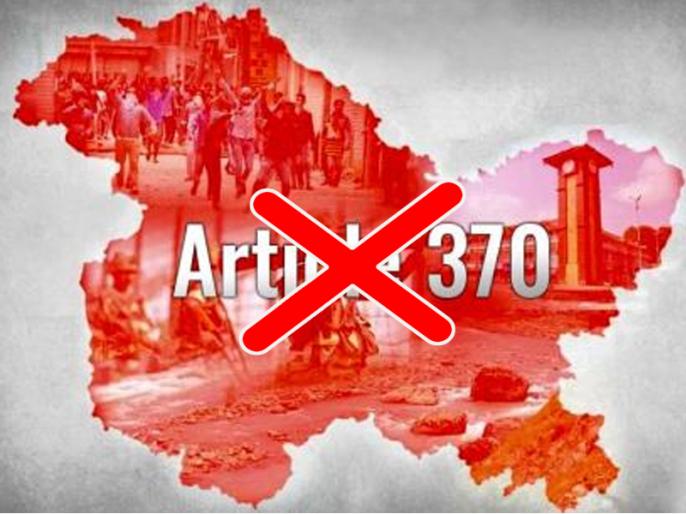
However, simultaneously we let the wretched Article 370 and its illegitimate child Article 35A wreak havoc in Kashmir. The wounds from these twin articles continued to fester over the last seven decades until August 5th, 2019 when Narendra Modi in a decisive move scrapped these two articles.

The ease with which Indian Parliament has ratified the bill to revoke Articles 370 and 35A proves that there’s an overwhelming support for Modi to settle this “Kashmir issue” once and for all.

It is time that the world knows about Sharada Peeth and its importance for Hindus. It’s time Narendra Modi government takes decisive action against blatant human rights violations by Pakistan in Gilgit-Baltistan, Mirpur and Muzaffarabad. The region’s culture, traditions and historical monuments are systematically being destroyed. And the most glaring example is our revered Sharada Peeth.

India cannot shirk its responsibility of protecting its citizens even if those territories continue to be in illegal occupation by Pakistan. It’s time that we initiate diplomatic processes to get back remaining portion of Jammu Kashmir to India. 

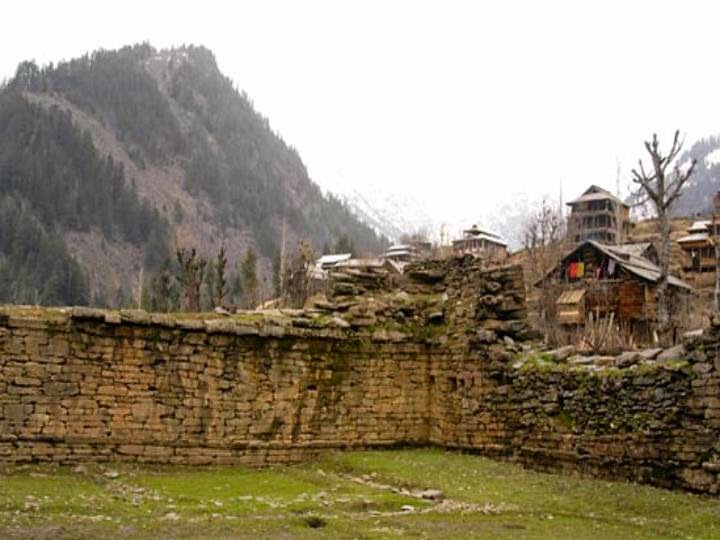
Sharada Peeth, the seat of higher Vedic learning now lies in ruins in the Pakistan-occupied Kashmir.

Excerpts of Columns on Art 370 & Art 35A written over the years by Jaibans Singh

The courageous and righteous action taken by Narendra Modi-led NDA (National Democratic Alliance) government by rendering Article 370 and Article 35A redundant and reorganising the state of Jammu and Kashmir has received approbation from across India. Some negative elements say that the matter should have been discussed further.

I have remained dedicated to the study of Jammu and Kashmir, Pakistan and China for a decade and a half now. In this time frame, I have written nearly 2000 articles on my area of study, many pertaining to Article 370 and Article 35A.

I have also given scores of lectures and participated in as many discussions across the country where these legislations came up for dialogue and debate. Recently while speaking at the Gujarat University, Ahmedabad and MS University, Vadodra, on the occasion of Kargil Vijay Diwas, I emphatically rooted for the removal of Article 370 and Article 35A from the Constitution. I did not know that the time for this aspiration to come true was so near.

I have collated and given below excerpts of 15 articles of mine written since 2013 in which I have made a mention of Article 370 and Article 35A. These were uploaded on my blog www.defenseinfo.com and also carried by many other publications. Now it is difficult to trace all the inputs, hence, only my blog links have been incorporated in this paper.

This apart, I have written on the subject for many publications, newspapers, magazines and books. The main among these are the ‘Organiser’; ‘Indian Military Review’ and my book ‘Jammu and Kashmir: The Tide Turns’.

Article 370 and Article 35A formed an intrinsic part of the efforts towards creating awareness about Jammu and Kashmir and subjecting the matter to a national debate.  A study of these excerpts will give an idea of the deep study carried out for years on end before the government reached to the momentous decision to change the status-quo in the region. It will also clearly establish the manner in which the decision making process progressed from one stage to the other.

Those rooting for more debate are either uninformed or merely playing to the gallery now that their very rigid stand on the subject has been simply blown away. They had their chance and failed to leverage the same; now, the die is cast and not too soon.

Article 370: How reality is overshadowed by myths (December, 14, 2013)

How is it that billion plus citizens of this country are surviving happily without the provisions of Article 370 that seem to be a matter of life and death for some political leaders of J&K? Is the rest of India withering under political restriction simply because Article 370 is not applicable to them? The fact is that Article 370 does not give any such facility to the people of J&K that can enhance their life in any manner.

There are, on the other hand, many areas where Article 370 is posing impediments in the progress of the state and its people. There are many progressive legislations and provisions of the central government which cannot be extended to J&K because they have not been legislated upon by the state government. It is well known that Panches and Sarpanches in the state are fighting for empowerment of the Panchayat’s which is not coming by because 73rd and the 74th amendments to the Constitution of India have not been extended to the state. More serious is the loss being borne by the all important Scheduled Castes, Scheduled Tribes and Other Backward Classes who are not availing the benefits of central schemes.

Article 370 Controversy: A storm in a teacup (May, 29, 2014)

Dr Jitendra Singh, Member of Parliament from Udhampur, Jammu and Kashmir and Minister of State, Prime Minister’s Office and Department of Personnel and Training (DoPT), during his interaction with the media on taking charge of DoPT referred to Article 370 of the constitution that gives special status to the state of Jammu and Kashmir. His comment evoked a sharp response from the ruling National Conference (NC) and opposition Peoples Democratic Party (PDP), to create an avoidable controversy.

The matter has since been hotly debated on television and has been written about in newspapers and websites. The overwhelming opinion is that there is absolutely no harm in debating and discussing the status of Article 370.

Omar Abdullah says that Article 370 provides the constitutional link between the Union of India and the state of Jammu and Kashmir. Many legal luminaries and prominent citizens of the state, on the other hand, are convinced that Article 370 was set up as a temporary measure to implement the Indian Constitution fully in Jammu and Kashmir. This line of thought logically concludes that Article 370 should have been repealed within six months after having completed the constitutional obligation. The country is already behind time by seven decades in this regard.

Many look upon the inability to do away with Article 370 as a failure of the political leadership at both the centre and the state level. The economic and political loss that the people of the state suffer due to continuation of the article far outweighs the preferential treatment that it assures.

As things stand there are so many national schemes that cannot be extended to the state due to the limitations posed by Article 370. Businesses suffers because people from the rest of the country cannot establish infrastructure in the state. The socio-psychological divide created by the statute negates integration of the youth of the state in other parts of the country. The state is not accountable to the nation despite looking for assistance all the time. The objective of every law and statute is betterment of the people; if such betterment is not coming by, then legality cannot be quoted as a reason for continuing with it.

There is a widespread perception that those who misused the law and the constitutional situation to establish a feudal cult in the state of Jammu and Kashmir are now worried about their future, since a more representative and aware character is fast emerging. When seen in this context the reaction of both NC and PDP reflects the insecurity that they harbour on the subject. 

Debate on Article 370 is gaining momentum (June, 28, 2014)

Prime Minister Narendra Modi, during an election rally at Jammu in December 2013, sought debates and discussions on Article 370. The statement drew a stringent response from the Kashmir-based political parties.

The fact that seminars on the subject are being arranged across the country indicates universal acceptance of the proposal mooted by Prime Minister Narendra Modi.

Jugal Kishore gave an impassioned narration on the manner in which Article 370, instead of connecting Jammu and Kashmir to India, is creating walls and barriers. He reinforced his contention by explaining how the legislation has stalled development, negatively impacted important parameters like health and education and restricted political empowerment at the grass roots level of Sarpanches and Panches.

Jagdeep Dhankar stressed on the temporary nature of the Article 370 and narrated the manner in which the first Prime Minister of India, Jawahar Lal Nehru, absented himself from parliament when the legislation was passed and later attempted to put the blame on Sardar Patel, all to please his good friend – Sheikh Abdullah. Jawaharlal Nehru has gone on record to say that the Article would wither away in time which, sadly, has not happened.

Instead of engaging in a logical debate there are leaders who predict doomsday even if the Article is mentioned. Chief Minister Omar Abdullah has, on his twitter handle, remarked, “Mark my words & save this tweet- long after Modi Govt is a distant memory J&K won’t be part of India or art 370 will still exist.” Mehbooba Mufti has called upon the Prime Minister’s Office to clarify to “reassure the people of Jammu and Kashmir that no mischief is on the way.”  These are rhetorical statements that do not pass the test of logic.

Kashmiris need to be masters of their own destiny (July, 19, 2014)

There are voices saying that the impact of development funds sent to the valley is negligible. Whose fault is it? The state government uses Article 370 to absolve itself of all accountability. The Right to Information route is not followed in Kashmir to find out where the funds went? The poor people are ignorant while the rich and mighty are in collusion; so how can the facts emerge?

It is time to wrest the initiative from Pakistan (October, 03, 2014)

A loud and clear message should be sent to the terror recruits in Pakistan that they would face certain death while making an infiltration attempt. A fear psychosis should be created in their minds. At the same time the actual “legal aspects” should be communicated across the world; the fallacies surrounding the role of India Army in Jammu and Kashmir, Article 370 and state suppression etc should be exposed. The duplicity of the self serving supporters of foreign sponsored terror in Jammu and Kashmir should be laid bare.

A path-breaking political revolution on the cards in J&K (November, 11, 2014)

There are issues like the 1947 refugees still surviving without state recognition and colonisation of people in Gilgit-Baltistan and Pakistan-Occupied Kashmir by the federal government of Pakistan that are not being addressed in a serious manner. Organisations like the Jammu and Kashmir Study Centre (JKSC) sponsored by the Sangh have been creating awareness in the national capital region of Delhi and outwards in the rest of India about the actual situation on ground and how it is being negatively impacted by Article370. Now the whole nation is looking forward to the complete and irrevocable integration of Jammu and Kashmir within India. The divisive agenda of some vested interests, maintained over decades for personal benefit, stands exposed.

Jammu and Kashmir: A reality check (January, 02, 2015)

There is talk about the Kashmir leadership looking for assurances from the BJP on political issues pertaining to Article 370, the Armed Forces Special Powers Act (AFSPA) etc. There is one simple question to be asked in this regard – if the PDP could have ruled while espousing the concept of self rule, and the NC could have ruled while espousing the concept of autonomy which are basically unconstitutional, why can the BJP not rule while espousing the concept of abrogation of Article 370, when the issue lies within the ambit of the Constitution of India?

Split-reunify-split: The Hurriyat drama goes on! (April, 22, 2015)

There is a second aspect to this reunification drive also. The direction that the debate on Article 370 is taking has rattled the separatists to the extent that they are now feeling the necessity to close ranks to meet the challenge. Earlier debates on the issue would witness a huge salvo of political rhetoric by the media savvy Kashmir-based political leadership of the state that would overwhelm voices coming out from the Jammu and the Ladakh region. Now, the voice from Jammu region advocating debate and discussion has become determined and steadfast.

Article 35-A: A challenge to the Constitution of India (July, 11, 2015)

Jammu and Kashmir Study Centre, a Delhi-based Think Tank engaged in the study about the state of Jammu and Kashmir organised an interaction with some residents of the state whose rights are being curtailed due to application of Article 35 A of the Indian Constitution on the state.  The interaction was organised at the Constitution Club, New Delhi on 11th July, 2015.

Legal experts now feel that a bigger damage to the spirit of the Indian Constitution is being done by the provisions of Article 35A. Article 35A, experts say, denies residents of the State protection under various Articles, including Article 14 (equality), Article 15 (prohibition of discrimination on basis of religion, caste, race or place of birth), Article 16 (Equality of opportunity in matters of public employment and reservations), the fundamental rights under Article 19 including the right to free speech and the right to life and liberty under Article 21. The victims of this draconian statute are of the opinion that there is no place in democratic India for such provisions that actively curb the rights and privileges’ of the citizens of the country. There exists every reason to do away with them.

MK Narayanan pays back to Congress at the cost of Kashmiris (June, 02, 2016)

Mr. Narayanan goes on to denounce the present government as being in “denial mode” and unable to grasp the “Gravity of the situation” in Kashmir, which according to him is the result of the BJP policy of “the centrality of Article 370 and the erosion of the special status in Kashmir.” This is a falsity!!  Yes, there is a well defined movement to create awareness about the legal and political aspects of Article 370 and the manner in which it is harming rather than benefitting the people of the state. Surely, there is nothing wrong in creating such awareness.

It is time for the people of Kashmir to introspect (September, 03, 2016)

They do not pause to think that, in the very same India and without Article 370 or some other special status, their contemporaries are moving forward at a frenetic pace. They do not realise that they can also do so and better if they would only concentrate on their studies.

Article 35A: Myths versus Reality (August, 22, 2018)

The basic fault line that Article 370 and 35A have elicited is the uneven distribution of constituencies. Sheikh Abdullah assisted by his brutal majority engineered that warped formation of constituencies which favoured the Kashmir Valley and left Jammu and Ladakh region bereft of a political status commensurate to their geographic and demographic strength. Jammu has a bigger area and equal population as compared to the Kashmir Valley and Ladakh has a bigger area than both Jammu and Kashmir, yet, the legislative constituencies are such that maximum strength in the legislative assembly comes from the Kashmir Valley. Successive Kashmir-centric governments are steamrolling all efforts to carry out a long overdue delimitation of the constituencies and this is being done under protection of Article 35A and Article 370.

There are many benefits that the people of India enjoy due to development initiatives of the central government that are denied to the people of Jammu and Kashmir due to restrictive legislations like Article 35A and Article 370. A good example is of Other Backward Classes (OBCs) who get 27% reservation in the whole of India except the state of Jammu and Kashmir where they have not even been identified because the empowering legislation has not been extended to the state.

Elections herald hope and opportunity (Organiser, April, 16, 2019)

The campaigning, sadly, is following the well trodden path of negativity. Political parties are more engrossed in deriding each other. The main agendas put forth are political issues like status of Article 370, Article 35A and AFSPA that have limited relevance for the day to day life of the common man. Small parties with limited popular reach are at each other’s throats. Each is renouncing the other as self serving and opportunist. In effect, this implies that all are self serving and opportunist. Only BJP is placing its campaign on issues of development and security that are most important for the people who wish nothing more than to lead a normal life.

Jammu and Kashmir: Show the door to the I, me, myself leadership (30 April 2019)

The endless debates on Article 370, Article 35A, AFSPA et al are not what will help the region and its people to evolve. These are subjects that are of interest to only a few who leverage them for political gains. What is going to help is a strong government that can root out the endemic corruption that is eating into the very fabric of the state. A government that can propel the state to its rightful place in the development index with modern forward looking economic policies; a government that can boast more about its own achievements than indulge in a blame game with the centre.

Country pays an emotional adieu to Sushma Swaraj

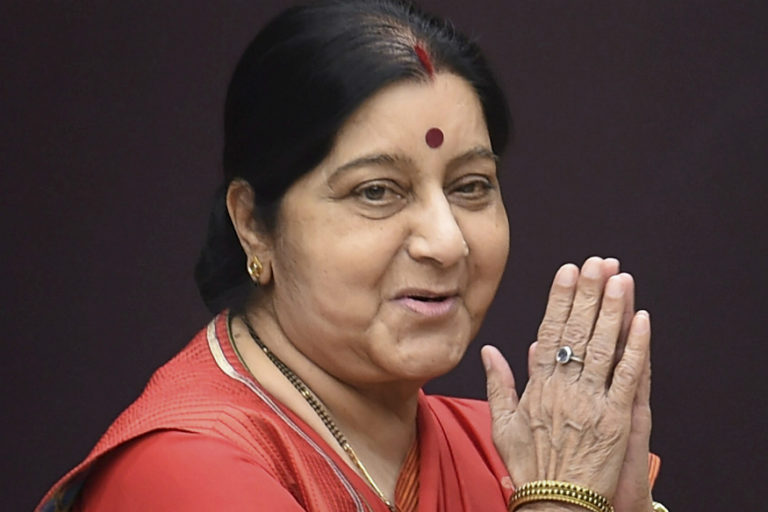
Sushma Swaraj, one of the most loved women politicians, who brought a rare empathy and a human approach to India’s diplomacy, was cremated with full state honour today. Swaraj died on Tuesday night at the age of 67. The senior BJP leader was brought to AIIMS around 9:30pm and was taken to the emergency ward after suffering a massive cardiac arrest.

The mortal remains of the former external affairs minister were cremated in an electric crematorium as senior leaders, besides family, friends and admirers bid a tearful adieu to the political stalwart. President Ram Nath Kovind, PM Narendra Modi and top party leaders, including UPA Chairperson Sonia Gandhi, were among the hundreds of people who paid their last respects to former external affairs minister at her residence on Wednesday.

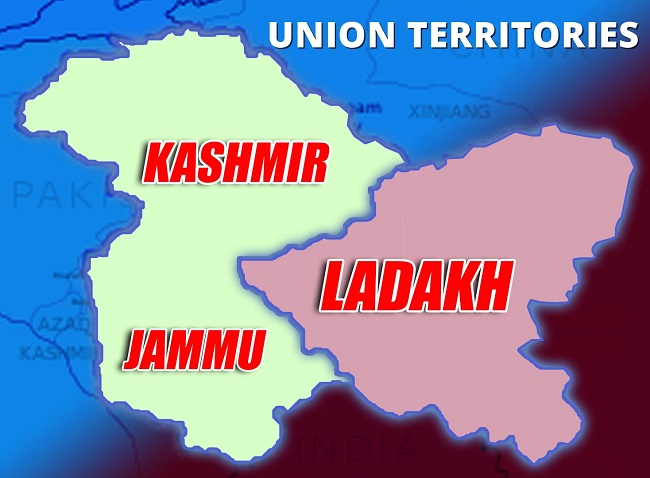
Swaraj had put out a tweet on Tuesday evening congratulating Modi after the Centre’s move to revoke the special status for Jammu and Kashmir and bifurcate the border state into two Union Territories secured Parliament’s approval. “Narendra Modi ji – Thank you Prime Minister. Thank you very much. I was waiting to see this day in my lifetime,” she had said.

Former prime minister Manmohan Singh on Wednesday expressed shock at the demise of senior BJP leader and former external affairs minister Sushma Swaraj, describing her as a great parliamentarian and exceptionally-talented Union minister. Paying rich tributes to her, BJP veteran L K Advani described her as one of his closest colleagues who rose to become one of the BJP”s most popular and prominent faces and “a role for women leaders”.

UNGA Prez Maria Fernanda Espinosa also expressed condolences at the demise of India’s former External Affairs Min Sushma Swaraj, describing her as an “extraordinary” woman and leader who devoted her life to public service.

Sushma Swaraj, who also served as the Leader of Opposition and chief minister of Delhi, was given full state honours after which her body was cremated in the electric crematorium. Hundreds of political leaders and workers from BJP, Bhutan’s Prime Minister Tshering Tobgay, and several leaders from the National Democratic Alliance (NDA) as well as the opposition, were also present on this solemn occasion.

Hegemony of Kashmir Valley is over and out

We are witnessing the historic decision of abrogation of Art 370 and Art 35A that establishes supremacy of the Parliament over entire Indian union.

Kashmir has been reeling under externally sponsored terrorist attacks. The dominant political group from the valley had begun to pander to fundamentalist Islamic propensity from 1980, a conspiracy in which Pakistan was directly involved. Owing to the pusillanimity of Congress regimes, sponsored terrorists having made common cause with the local radicals and separatists had slowly and gradually worked for the establishment of an Islamic theocratic character of Jammu and Kashmir. Not only ISI but ISIS and the Saudi al-Akhbarat also had made inroads into Kashmir polity. Lately, China had also begun to carve out its constituency in the Kashmir Valley. For many years Pakistan has been demanding Kashmir deal from the US in exchange for bartering her out from the Afghan imbroglio. Out of his buffoonery, Trump made Imran believe that he would push the barter deal. Therefore India took the precipitate action to forestall these nefarious designs. 

Kashmiris are inherently happy with an atmosphere of turmoil and unrest. They must have a pretext. Hate India is the best pretext their leaders provided them and they would go with that culture for decades to come.

Let us not take into account the Kashmir terror in isolation. Islamic terror is a worldwide phenomenon. This terror will not go away either that soon or that easily. India and particularly the Narendra Modi government is adequately geared up to fight terrorism for at least half-a-century from now. India will have to train and equip one half of her youth (in the 20 to 30 age group) to fight terrorism.

Kashmiri Pandits are determined to return to the Kashmir Valley. Nothing on earth will stop them. They have the support of vast international community besides the powerful Indian Diaspora abroad. But they have made it clear to the Indian government that they will go back to a peaceful and pious Kashmir and not to the Theo-Fascist and Wahhabized Kashmir. Kashmiri Pandits have a mega plan of rebuilding Kashmir as the Asian Switzerland. Kashmiri Pandit think-tank is in contact with a gigantic international corporate segment for changing Kashmir into real paradise and into the most cherished destination of world tourism. They are in liaison with agencies national as well as international on the important area of exploring and exploiting hidden mineral wealth in the Himalayan Mountains and slopes and karewas so that the economy of Kashmir makes an unprecedented turn around.

What India should keep in mind after the development of 5th August 2019, is to remain alert and not allow Islamic fundamentalism and terrorism to spread its tentacles in parts of the country. Indian civil society has to isolate anti-national elements in academia, administration, judiciary, media and other services and make them dysfunctional.

The Indian society is to be sensitized against a clandestine connection of anti-national elements forming networks with the objective of conducting anti-national activities. After the revocation of Article 370, people will gradually come to know the huge network which the terrorists had set up and in which many locals were active participants. This should do not happen again.

As far as reaction on an international level is concerned, Pakistan will, obviously, feel most hurt and will retaliate by escalating tension and firing along the LoC. Pakistan’s deep state will exacerbate anti-India propaganda and lastly, they will be knocking at the doors of international bodies like the UN, British Parliament, US Congress and foreign media to paint India in dark colour regarding J&K. Once the detained political leaders are set free they will raise stone pelters at the rate of 100 rupees instead of the earlier 500 rupees per head to target the forces and then claim a medal for bravery. After about a few weeks of protests and demonstrations, they will cool down.

We expected Home Minister Amit Shah to say that the State would be trifurcated. I would have welcomed if it was trifurcated. Ultimately it has to be trifurcated otherwise Jammu people will go on suffering discrimination and deprivation at the hands of Kashmir Valley’s majority. It is unjust. Nothing on earth binds them together. It is unnatural, irrational and unjust marriage and the divorce must come sooner rather than later.

In the final analysis, the hegemony of Kashmir Valley leadership has come to an end and so has the dynastic rule. There is a fair chance that Indian government will start a huge developmental plan for Kashmir like building of basic infrastructure, roads, connectivity, industries, educational institutions of excellence, health projects, forest industry on modernized lines producing wooden furniture, doors, windows, ceilings, etc. of prefabricated technology borrowed from Russia or the US, a gigantic boost to international tourism while simultaneously reducing the vicious influence of radicalisation and Wahhabism. Kashmiris will interact with wider sections of Indian civil society and there will be vibrant exchanges of social and cultural nature between Kashmir and the rest of the country. 

Kashmir: Army Commander assures that security forces are in control

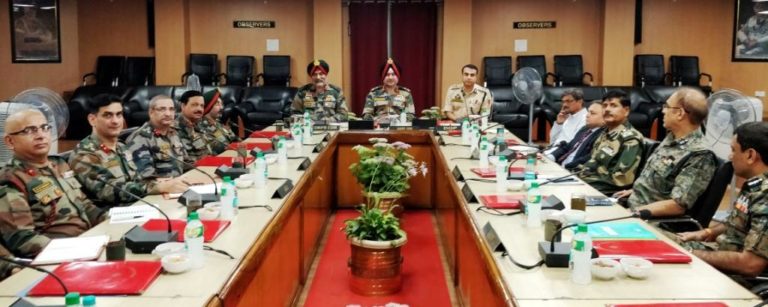
Against the backdrop of the prevailing situation in Jammu & Kashmir, the Indian Army’s Commander of the Northern Command, Lt. Gen. Ranbir Singh chaired a meeting of the Core Group of intelligence and security agencies at Srinagar to review the operational readiness to meet any contingency that could adversely impact the security situation in J&K.

The Army Commander highlighted that during the past few days, Pakistan had intensified its efforts at increasing strength of terrorists in launch pads along the Line of Control, initiating ceasefire violations, pushing infiltrators across the LoC, calibrating terrorist actions in the hinterland as also exploiting the social media to launch disinformation campaign in J&K. The Indian Army has given a befitting response in thwarting these nefarious designs of the enemy to cause disturbances in our country, particularly in the Kashmir Valley.

He urged the people not to fall prey to the enemy’s evil designs to poison their minds with incessant propaganda and exhorted them not to proliferate or indulge in rumour mongering. He warned Pakistan Army against continuing with such a disruptive course and said that the Indian Army would respond to such activity with resolve and the cost would be prohibitive for the neighbouring country.  

Giving details of security in the hinterlands, it was highlighted that counter-terrorism and law & order grids have been strengthened. The security forces are suitably deployed to guard important vulnerable points/areas, prepared for crowd control, and any other challenge that would be posed to the law and order situation in the state. There will be no let down in the conduct of counter-terrorist operations. The Army Commander further stated that security forces are maintaining a high state of alertness and readiness to counter any inimical designs.

Serving a note of caution to those who harbour plans to disrupt peace and harmony within, the Army Commander stated that they would be dealt with firmly.

The changing political narrative with removal of Article 370 and bifurcation of the state into two Union Territories has necessitated a state of high alert. While the entire nation has expressed satisfaction with the decision of the government it is appreciated that the external enemies will use their proxies within to create trouble. A big challenge is being posed by rumour mongering that has the potential to create widespread panic and a fear psychosis.

There is a need for the security forces to remain vigilant. The words of the Army commander and the joint security meeting are indicative of the resolve and high state of preparedness of the security forces to meet any and every challenge that is posed by inimical powers with the intention of negatively exploiting the current situation.

Overall, the security forces are firmly in control of the security situation and necessary security arrangements had been put in place for ensuring peace and security. The assurance given by Home Minister Amit Shah that there will be no untoward fallout of the decision of the government in Jammu and Kashmir has been further substantiated by the Army Commander on ground.

Victorian Govt. to confer ‘Excellence in Cinema’ award on Shah Rukh Khan

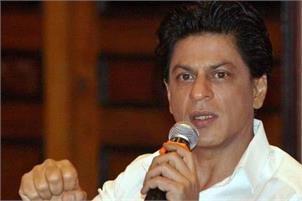
Bollywood King Shah Rukh Khan will be felicitated with ‘Excellence in Cinema’ honour at the awards night of Indian Film Festival of Melbourne. The award will be presented by Linda Dessau, who is the first female Governor of the State of Victoria.

“I’m humbled and honoured for this recognition. It will be a great experience to share the stage and the podium with my fellow industry members who are all coming from various parts of India to celebrate cinema in Melbourne.

“I look forward to meeting her excellency, Linda Dessau at the wonderful evening that has been planned by IFFM,” Shah Rukh said in a statement.

Helmed by the Victorian government, Australia, the Indian Film Festival of Melbourne. (IFFM) is back for its tenth edition in the cultural city and will celebrate “courage” as its central theme in 2019.

The felicitation will take place at the iconic Palais Theatre in Melbourne, which is one of the city’s heritage landmarks.

Most opportune time for New Delhi to revoke Art 370 & Art 35A

This is the problem the world gets when you have non-professional political leaders attempting to deal with long standing political and international issues. President Donald Trump, by no means astute in handling international affairs, assumed that Prime Minister Narendra Modi wanted him to mediate on Jammu and Kashmir, probably based on an innocuous mention by the Indian PM that the US could help reduce tensions in the Indian subcontinent. Prime Minister Imran Khan, again a novice on understanding international affairs, presumed that with the US taking the lead to suggest mediation on J&K, this was the golden moment which his nation had been seeking for long.

Khan’s generals probably advised him that there could not be a better time to go for it, with the US firmly dependent on Pakistan for its negotiations with Taliban and a window yet available to attempt causing mayhem in Kashmir. General Qamar Bajwa has gone and misled his PM into thinking that India was vulnerable now and upping the ante in the Valley would lead to Pakistan regaining the ability to calibrate the situation in J&K.

Signals coming out of Kashmir also indicated that the new Indian government was hell bent on dismantling the ecosystem and networks on which separatism runs. If Indian action was not stopped this could put an end to Pakistan’s ability to be relevant in J&K.

The Amarnath yatra with all its vulnerabilities to action by irregulars still had time to go before it ended on August 15, also India’s Independence Day. That or any other major targets engaged by sponsored terrorists could pay rich dividends and evoke a response from India similar to Pulwama-Balakot, thus creating conditions for the US under Trump to mediate (or so the Pakistani perception went).

There was one problem. The Indian army had so emasculated the terrorist networks that a high profile attack using resident terror groups was not possible at short notice. Even the street agitation would run into problems due to lack of availability of finances with the separatists.

Something so emotive and big had to be done that there would be a backlash in the streets with the Indian police forces forced into targeting unarmed civilians and providing a multiplier effect. To execute this Pakistan needed to commence infiltration again. Such big tasks would need Pakistan army personnel’s organisational skills; a risk Bajwa was probably willing to take.

That started the sudden spurt of activity across the LoC in the Kashmir segment in the last few days of July 2019; concentration of trained terrorists, infiltration attempts galore and Border Action Team (BAT) activity. What are being read as BATs could well be attempts to infiltrate high profile Pakistan army personnel along with terrorists into the Valley. The Kashmir segment of the LoC went aflame with mortar and artillery fire for the first time in years. None of this activity was opposite Poonch and Rajouri, the traditional area of exchange of fire.

What Khan does not know is that mediation on J&K is only possible, when India too agrees to such a course. With the neo-nationalism so evident in the cadres of the ruling dispensation in India, the government cannot even imagine doing this. With Pakistan itself deliberately creating a crisis situation there can hardly be an opportunity for early intervention. This is clearly dangerous territory which Pakistan is stepping into, from which retraction may be extremely difficult. Economically it is in ruins, yet willing to risk a conventional standoff with India.

The government of India, with a fresh and decisive mandate and the ruling party’s manifesto already promising constitutional and administrative changes in Kashmir, considered this the most opportune time to act. The nullification of Articles 370 and 35A is being welcomed in two segments of the state. Ladakh is happy with the new status of Union territory (UT). The UT status with legislature for the Jammu and the Kashmir segment does not bifurcate the populous areas but certainly dilutes Kashmir’s political hold over the combined territory.

Dismantling those networks and systems which have enabled separatists and the Pakistani deep state to rule the roost, will now be much simpler with a greater say of New Delhi and perhaps of Jammu. There is still a lot of ground to cover both politically and administratively, which will happen now that the iron is hot.

As to response in the streets, the measures will certainly constrain the mainstream political parties. Hopefully they will not sponsor and resort to violence. The parties are all led by responsible personalities whose job it was to protest democratically till the final decision. Now that the decision has been taken it is incumbent on them to accept it and work towards optimally mainstreaming J&K.

It is yet early to assess what the final outcome will be on the streets of Kashmir. The army is well geared to negate any coercion by Pakistan at the LoC and enough CAPF deployment has been done to control any attempts at destabilisation. What the government needs to be mindful of is attempts by disparate groups to spread rumours and instigate communal tension. Failure to control that will never be advantageous to the nation.

(this article was first published in The Times of India)

Art 370: What? Why? When? How?

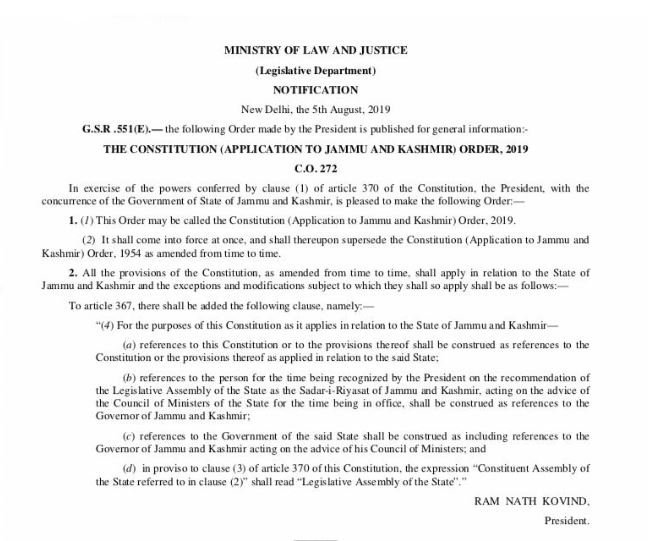
This article on Art 370 was written well before the Narendra Modi government moved The Constitution (Application to Jammu and Kashmir) Order, 2019 which has now repealed Art 370 and its illegitimate child Art 35A. These twin articles are now history. Yet it will be proper to know the background and circumstances in which Art 370 was introduced so as to be able to refute the nefarious propaganda against its revocation.

Article 370 of the Indian Constitution has been the singular bone of contention in multiple debates in this country. This is primarily because this Article 370 has been misquoted and used as an instrument to confuse and confound the masses by various political denominations to suit their own ends. There is a simplicity to this Article, which an elementary reading of the Indian Constitution can divulge. But the conundrum lies in twisting and turning its meaning, in order to prevent its abrogation since the 1950s whence such repeal was warranted.

In order to understand the genesis of this contentious Article 370 let’s look at the events of yesteryears. It is pertinent to note that the British Parliament passed the Indian Independence Act on 18th July, 1947 that provided for setting up of the Dominions of India and Pakistan. The Instruments of Accession were signed by approximately 565 Princely States in the months that followed. And Jammu and Kashmir became an integral part of the Dominion of India with the signing of the Instrument of Accession on 26th October, 1947. During those months India was preparing its Constitution.

On 17th October, 1949, Mr. Ayyangar suggested the adding of a new Article 306 (A) to the Draft Constitution of India which was already compiled by the Drafting Committee. This new additional temporary Article was eventually to be numbered as Article 370. Later on, the Indian Constitution was adopted and enacted on 26th November, 1949 and the Constitution of Jammu and Kashmir was enacted on 17th November, 1956.

It is worth noting that Dr. Babasaheb Ambedkar, who was Chairman of the Drafting Committee of the Constitution of India did not include any of the provisions of Article 370 in the Draft Constitution. The general debate on the Draft Constitution began on 4th November and lasted upto 9th November, 1948. The clause by clause consideration of the Draft Constitution commenced on 15th November, 1948 and lasted for 114 days as the members scrutinized every clause that was needed in our Constitution. Still Article 370 found no place in the Draft Constitution of India. It was Mr. Gopalaswamy Ayyangar who advocated the introduction of this article.

The position of Jammu and Kashmir in the Indian Constitution by virtue of Art 370, emanates from the basis underlined by Art 1 of the Constitution itself. Art 1 applies to Jammu and Kashmir by itself and independently brings the state within limits of the territories of Indian Union and within its jurisdiction. Art 1 is an independent constitutional instrument, which does not depend upon Article 370; rather, the instruments created by Article 370 depend upon the provisions of Art 1.

Further, the Clause 1(c) of Art 370 is redundant and reiterates the fact which is already accomplished by Art 1 of the Indian Constitution. Also, Art 370 describes a jurisdiction which is temporary and transitional. The provisions of Clause 1(c) of Article 370 do not prejudice the nature of Art 1 in its application to Jammu and Kashmir and in case Art 370 is abrogated, the applicability of Art 1 will not be affected. In fact, in such an eventuality Jammu and Kashmir will immediately be placed at par with other states of Indian Union and brought within the purview of all other provisions of the Indian Constitution without modification, including those pertaining to the Constitution of Jammu and Kashmir. The Constitution of Jammu and Kashmir will simultaneously be set aside. It must be noted that the state Constitution of Jammu and Kashmir was modelled on the Indian Constitution, with alterations that were needed and inserted to deal with temporary problems and upheaval brought about by the Pakistan’s invasion.

The provisions of Art 370 are not relevant to the accession of the state and do not form any constitutional commitments in regard to accession. If Art 370 is abrogated, it will not affect the accession of Jammu and Kashmir, because Art 370 does not accomplish the accession of Jammu and Kashmir to the Indian Union. Nor does Art 1 of the Indian Constitution accomplish accession of the erstwhile Indian States to the Indian Union. In fact, to reiterate the above point, even if Art 1 ceases to be operative then to the accession of Jammu and Kashmir (making it an integral part of the Union of India) will remain unaffected.

It needs to appeal to the sensibility of any astute government that Art 370 has become redundant ever since the day the Constituent Assembly of Jammu and Kashmir was dissolved, after completion of its task. This Article 370 is obsolete today, and can fulfil no productive or conducive purpose.

The manner of insertion of Article 370 into the Indian Constitution

When Dr. B.R. Ambedkar prepared the Draft Constitution of India, it did not contain Art 370. It was proposed by Mr. Gopalaswami Ayyangar, minister without portfolio, when the amendments and modifications were being discussed in the Constituent Assembly. Art 370 was debated in the Constituent Assembly on October 17th, 1949 where it was initially numbered as Art 306-A

The statements set out below are of the debate pertaining to Art 306-A which was re-numbered as Art 370 in the Indian Constitution.

Debate on Art 370 during the drafting of Indian Constitution

Mr. President: Very well. We take up article 306A now. Mr. Gopalaswami Ayyangar.

Mr. N. Gopalaswami Ayyangar: Sir, I move:

“That with reference to Amendment no. 379 of List XV (Second Week), after article 306, the following new article be inserted: 306A

Sir, this matter, the matter of this particular motion, relates to the Jammu and Kashmir State. The House is fully aware of the fact that the State has acceded to the Dominion of India. The history of this accession is also well known. The accession took place on the 26th October, 1947. Since then, the State has had a checkered history. Conditions are not yet normal in the State. The meaning of this accession is that at present that State is a unit of a federal State, namely, the Dominion of India. This Dominion is getting transformed into a Republic, which will be inaugurated on the 26th January, 1950. The Jammu and Kashmir State, therefore, has to become a unit of the new Republic of India.

As the House is aware, accession to the Dominion always took place by means of an instrument which had to be signed by the Ruler of the State and which had to be accepted by the Governor-General of India. That has taken place in this case. As the House is also aware, Instruments of Accession will be a thing of past in the new Constitution. The States have been integrated with the Federal Republic in such a manner that they do not have to accede or execute a document of Accession for the purpose of becoming units of the Republic, but they are mentioned in the Constitution itself; and, in the case of practically all States other than the State of Jammu and Kashmir, their constitutions also have been embodied in the Constitution for the whole of India. All those other States have agreed to integrate themselves in that way and accept the Constitution provided.

Maulana Hasrat Mohani: Why this discrimination, please?

N. Gopalaswami Ayyangar: The discrimination is due to the special conditions of Kashmir. That particular State is not yet ripe for this kind of integration. It is the hope of everybody here that in due course even Jammu and Kashmir will become ripe for the same sort of integration as has taken place in the case of other States. (Cheers) At present it is not possible to achieve that integration. There are various reasons why this is not possible now, I shall refer again to this a little later.

In the case of the other Indian States or Unions of States there are two or three points which have got to be remembered. They have all accepted the Constitution framed for States in Part I of the new Constitution and those provisions have been adapted so as to suit conditions of Indian States and Unions of States. Secondly, the Centre, that is the Republican Federal Centre will have power to make laws applying in every such State or Union to all Union Concurrent Subjects. Thirdly, a uniformity of relationship has been established between those States and Unions and the Centre. Kashmir’s conditions are, as I have said, special and require special treatment. I do not want to take much of the time of the House, but I shall briefly indicate what the special conditions are. In the first place, there has been a war going on within the limits of Jammu and Kashmir State.

There was a cease-fire agreed to at the beginning of this year and that cease-fire is still on. But the conditions in the State are still unusual and abnormal. They have not settled down. It is therefore necessary that the administration of the State should be geared to these unusual conditions until normal life is restored as in the case of the other States.

Part of the State is still in the hands of rebels and enemies.

We are entangled with the United Nations in regard to Jammu and Kashmir and it is not possible to say now when we shall be free from this entanglement. That can take place only when the Kashmir problem is satisfactorily settled.

Again, the Government of India have committed themselves to the people of Kashmir in certain respects. They have committed themselves to the position that an opportunity would be given to the people of the State to decide for themselves whether they will remain with the Republic or wish to go out of it. We are also committed to ascertaining this will of the people by means of a plebiscite provided that peaceful and normal conditions are restored and the impartiality of the plebiscite could be guaranteed. We have also agreed that the will of the people, through the instrument of a constituent assembly, will determine the constitution of the State as well as the sphere of Union jurisdiction over the State.

At present, the legislature which was known as the Praja Sabha in the State is dead. Neither that legislature nor a constituent assembly can be convoked or can function until complete peace comes to prevail in that State. We have therefore to deal with the Government of the State which, as represented in its Council of Ministers, reflects the opinion of the largest political party in the State. Till a constituent assembly comes into being, only an interim arrangement is possible and not an arrangement which could at once be brought into line with the arrangement that exists in the case of the other States. Now, if you remember the viewpoints that I have mentioned, it is an inevitable conclusion that, at the present moment, we could establish only an interim system. Article 306A is an attempt to establish such a system.

I shall now proceed to take the House through the provisions of this article. As honourable Members will remember, the constitution of Indian States is mainly governed by article 211A of this Constitution which applies the Constitution to Indian States, subject to the modifications contained in Part VI-A read with the Schedule. So far as that provision in concerned, I have already indicated to you that the provisions regarding the Constitution of other States could not at present be applied to Jammu and Kashmir. Therefore, clause (1) (a) of this article says that the provisions of article 211A of this Constitution shall not apply to the State of Jammu and Kashmir.

The Second portion of this article relates to the legislative authority of Parliament over the Jammu and Kashmir State. This governed primarily by the Instrument of Accession. Broadly speaking, that legislative power is confined to the three subjects of defence, foreign affairs and communications, but as a matter of fact these broad categories include a number of items which are listed in the Instrument of Accession. I believe they number some twenty to twenty-five. Now, these items have undergone a change in description, in numbering, in arrangement, as amongst themselves, in List I and List III of the new Constitution. It is therefore necessary that the items mentioned in the Instrument of Accession should be brought into line with the changed designations of entries in Lists I and III of the new Constitution. So, clause (1) (b) of article 306A says that this listing of the items as per the terms of the new Constitution should be done by the President in consultation with the government of the Sate.

Clause (b)(ii) refers to possible additions to the List in the Instrument of Accession, and these additions could be made according to the provisions of this article with the concurrence of the government of the Sate. The idea is that even before the Constituent Assembly meets, it may be necessary in the interests of both the Centre and the State that certain items which are not included in the Instrument of Accession would be appropriately added to the List in that Instrument so that administration, legislation and executive action might be furthered, and as this may happen before the Constituent Assembly meets, the only authority from whom we can get consent for the addition is the Government of the State. That is provided for.

Then, there is the Explanation, which defines what the Government of the State means. The Government of the State is defined both in the Constitution which is now supposed to be in force in the Jammu and Kashmir State as well as in the Proclamation which the Maharaja issued on the 5th March, 1948. The terms of the Proclamation, to the extent that they are inconsistent with the provisions of the Constitution Act of the State, will prevail over that Constitution Act, and therefore it is that in this Explanation it is the Proclamation which is referred to. Under the terms of that Proclamation the Maharaja constituted an interim popular Government, and he said: –

“I hereby ordain as follows :-

(1) My Council of ministers shall consist of the Prime Minister and such other Ministers as may be appointed on the advice of the Prime Minister. I have by Royal Warrant appointed, Sheikh Mohd. Abdullah as the Prime Minister with effect from the 1st day of March 1948.

He proceeds –

“The Prime Minister and other Ministers would function as a Cabinet and act on the principle of joint responsibility.”

Then there was no Legislature functioning, and so he instituted a kind of responsible Government with a Prime Minister and colleagues who would own collective responsibility for their acts and regard themselves as jointly responsible for all the acts of the Government. Now, that is brought out in this Explanation.

K. Santhanam: The Explanation says that the Maharaja will be recognised by the Union instead of by the President.

N. Gopalaswami Ayyangar: Perhaps we may leave it to the Third Reading. As you know the scheme of the Constitution Act is that the Rajpramukh must be recognised by the President. So, this also says that the Maharaja of Jammu and Kashmir should be a person recognized for the time being by the Union.

As regards the Council of Ministers, this Proclamation set up a system under which this Council was to be established, viz., that the Maharaja first finds the Prime minister and then on his advice appoints his colleagues, and the Explanation as now amended by me says that whatever Council of Ministers is in being at the time will, along with the Maharaja to whom they are responsible give their concurrence or give their advice on such matters as are referred to them under this article.

Clauses (c) and (d) refer to the provisions of the Constitution other than the matters listed in Lists I and III. These various provisions have been divided into certain categories. The first according to this draft is that article 1 of the Constitution will automatically apply. As you know, it describes the territory of India, and includes amongst these territories all the States mentioned in Part III, and Jammu and Kashmir is one of the States mentioned in Part III. With regard to the other provisions in the Constitution, these will apply to the Jammu and Kashmir State with such exceptions and modifications as may be decided on when the President issues an order to that effect. That Order can be issued in regard to subjects mentioned in the Instrument of Accession only after consultation with the Government of the State. In regard to other matters, the concurrence of that Government has to be taken.

Now, it is not the case, nor is it the intention of the members of the Jammu and Kashmir Government whom I took the opportunity of consulting before this draft was finalized – it is not their intention that the other provisions of the Constitution are not to apply. Their particular point of view is that these provisions should apply only in cases where they can apply the only subject to such modifications or exceptions as the particular conditions of the Jammu and Kashmir State may require. I wish to say no more about that particular point at the present moment. Then we come to clause (2). You will remember that several of these clauses provide for the concurrence of the Government of Jammu and Kashmir State. Now, these relate particularly to matters which are not mentioned in the Instrument of Accession, and it is one of our commitments to the people and Government of Jammu-Kashmir that no such additions should be made except with the consent of the Constituent Assembly which may be called in the State for the purpose of framing its Constitution. In other words, what we are committed to is that these additions are matters for the determination of the Constituent Assembly of the State.

Now, you will recall that in some of the clauses of this article we have provided for the concurrence of the Government of the State. The Government of the State feel that in view of the commitments already entered into between the State and the Centre, they cannot be regarded as final authorities for the giving of this concurrence, though they are prepared to give it in the interim periods but if they do give this concurrence, this clause provides that that concurrence should be placed before the Constituent Assembly when it meets and the Constituent Assembly may take whatever decisions it likes on those matters.

The last clause refers to what may happen later on. We have said article 211A will not apply to the Jammu and Kashmir State. But that cannot be a permanent feature of the Constitution of the State, and hope it will not be. So the provision is made that when the Constituent Assembly of the state has met and taken its decision both on the Constitution for the State and on the range of federal jurisdiction over the State, the President may on the recommendation of that Constituent Assembly issue an order that this article 306A shall either cease to be operative, or shall be operative only subject to such exceptions and modifications as may be specified by him. But before he issues any order of that kind the recommendation of the Constituent Assembly will be a condition precedent. That explains the whole of this article.

The effect of this article is that the Jammu and Kashmir State which is now a part of India will continue to be a part of India, will be a unit of the future Federal Republic of India and the Union Legislature will get jurisdiction to enact laws on matters specified either in the Instrument of Accession or by later addition with the concurrence of the Government of the State. And steps have to be taken for the purpose of convening a Constituent Assembly in due course which will go into the matters I have already referred to. When it has come to a decision on the different matters it will make a recommendation to the President who will either abrogate article 306A or direct that it shall apply with such modifications and exceptions as the Constituent Assembly may recommend. That, Sir, is briefly a description of the effect of this article, and I hope the House will carry it.

Big News: Art 370 and Art 35A scrapped from Jammu Kashmir

1

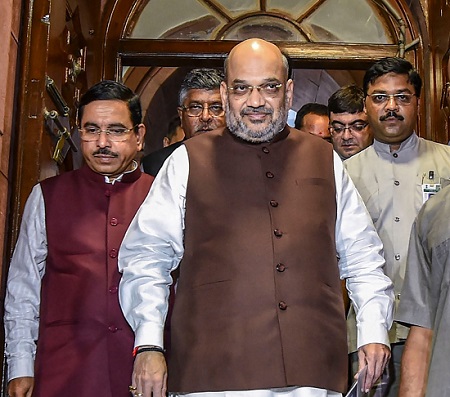
India’s Home Minister Amit Shah proposed in the Rajya Sabha today morning to remove all provisions of the contentious and anti-people Article 370 of the Indian constitution. Article 370 was a Temporary Provision in the Indian Constitution for Jammu and Kashmir which gave it a special status. Using the provisions of this Art 370 a separate Constitutional Order was introduced on 14th May 1954, popularly known as the Article 35A.

Both these articles were responsible for the ongoing problems in Jammu and Kashmir, especially the Kashmir Valley. All welfare provisions of Indian Constitution could not be applied in the state due to provisions in these two articles. By revoking these two articles Prime Minister Narendra Modi has corrected a historical wrong which was initiated by Sheikh Abdullah and the then PM Jawaharlal Nehru. Provisions of Art 370 and Art 35A were cemented by local politicians of Kashmir Valley and a section of politicians from New Delhi. These politicians and the Valley-based separatists had turned Kashmir into an “industrial enterprise” such that “Kashmir issue” continued to hog limelight across the world even as common man in the Valley, Laddakh and Jammu regions continued to suffer.

Using the provisions of Art 35A several thousand crores of rupees (billions of dollars) were sanctioned for the “welfare” of Kashmir, which never reached the common man in the state. While the politicians built palatial bungalows for themselves and settled their children aboard the gullible Kashmiri teenager was made to chant Azadi slogans and become a stone pelter or a terrorist.

All this will change now. With the abrogation of Articles 370 and 35A there will be a plethora of options for employment and divisive politics will die its natural death. The welfare provisions of Indian Constitution such as relief to Scheduled Castes (SCs) and Scheduled Tribes (STs) will now be implemented across the state. Big industries and services sector will now be able to set foot in the Valley which will create employment opportunities for the young and restive population.

The Constitution (Application to Jammu and Kashmir) Order 2019 will usher in a new era of peace across Kashmir Valley, Jammu and Laddakh.

PM Narendra Modi revokes Art 370 & Art 35A

0

PM Narendra Modi revokes Art 370 & Art 35A