Home Blog Page 419

Hegemony of Kashmir Valley is over and out

We are witnessing the historic decision of abrogation of Art 370 and Art 35A that establishes supremacy of the Parliament over entire Indian union.

Kashmir has been reeling under externally sponsored terrorist attacks. The dominant political group from the valley had begun to pander to fundamentalist Islamic propensity from 1980, a conspiracy in which Pakistan was directly involved. Owing to the pusillanimity of Congress regimes, sponsored terrorists having made common cause with the local radicals and separatists had slowly and gradually worked for the establishment of an Islamic theocratic character of Jammu and Kashmir. Not only ISI but ISIS and the Saudi al-Akhbarat also had made inroads into Kashmir polity. Lately, China had also begun to carve out its constituency in the Kashmir Valley. For many years Pakistan has been demanding Kashmir deal from the US in exchange for bartering her out from the Afghan imbroglio. Out of his buffoonery, Trump made Imran believe that he would push the barter deal. Therefore India took the precipitate action to forestall these nefarious designs. 

Kashmiris are inherently happy with an atmosphere of turmoil and unrest. They must have a pretext. Hate India is the best pretext their leaders provided them and they would go with that culture for decades to come.

Let us not take into account the Kashmir terror in isolation. Islamic terror is a worldwide phenomenon. This terror will not go away either that soon or that easily. India and particularly the Narendra Modi government is adequately geared up to fight terrorism for at least half-a-century from now. India will have to train and equip one half of her youth (in the 20 to 30 age group) to fight terrorism.

Kashmiri Pandits are determined to return to the Kashmir Valley. Nothing on earth will stop them. They have the support of vast international community besides the powerful Indian Diaspora abroad. But they have made it clear to the Indian government that they will go back to a peaceful and pious Kashmir and not to the Theo-Fascist and Wahhabized Kashmir. Kashmiri Pandits have a mega plan of rebuilding Kashmir as the Asian Switzerland. Kashmiri Pandit think-tank is in contact with a gigantic international corporate segment for changing Kashmir into real paradise and into the most cherished destination of world tourism. They are in liaison with agencies national as well as international on the important area of exploring and exploiting hidden mineral wealth in the Himalayan Mountains and slopes and karewas so that the economy of Kashmir makes an unprecedented turn around.

What India should keep in mind after the development of 5th August 2019, is to remain alert and not allow Islamic fundamentalism and terrorism to spread its tentacles in parts of the country. Indian civil society has to isolate anti-national elements in academia, administration, judiciary, media and other services and make them dysfunctional.

The Indian society is to be sensitized against a clandestine connection of anti-national elements forming networks with the objective of conducting anti-national activities. After the revocation of Article 370, people will gradually come to know the huge network which the terrorists had set up and in which many locals were active participants. This should do not happen again.

As far as reaction on an international level is concerned, Pakistan will, obviously, feel most hurt and will retaliate by escalating tension and firing along the LoC. Pakistan’s deep state will exacerbate anti-India propaganda and lastly, they will be knocking at the doors of international bodies like the UN, British Parliament, US Congress and foreign media to paint India in dark colour regarding J&K. Once the detained political leaders are set free they will raise stone pelters at the rate of 100 rupees instead of the earlier 500 rupees per head to target the forces and then claim a medal for bravery. After about a few weeks of protests and demonstrations, they will cool down.

We expected Home Minister Amit Shah to say that the State would be trifurcated. I would have welcomed if it was trifurcated. Ultimately it has to be trifurcated otherwise Jammu people will go on suffering discrimination and deprivation at the hands of Kashmir Valley’s majority. It is unjust. Nothing on earth binds them together. It is unnatural, irrational and unjust marriage and the divorce must come sooner rather than later.

In the final analysis, the hegemony of Kashmir Valley leadership has come to an end and so has the dynastic rule. There is a fair chance that Indian government will start a huge developmental plan for Kashmir like building of basic infrastructure, roads, connectivity, industries, educational institutions of excellence, health projects, forest industry on modernized lines producing wooden furniture, doors, windows, ceilings, etc. of prefabricated technology borrowed from Russia or the US, a gigantic boost to international tourism while simultaneously reducing the vicious influence of radicalisation and Wahhabism. Kashmiris will interact with wider sections of Indian civil society and there will be vibrant exchanges of social and cultural nature between Kashmir and the rest of the country. 

Kashmir: Army Commander assures that security forces are in control

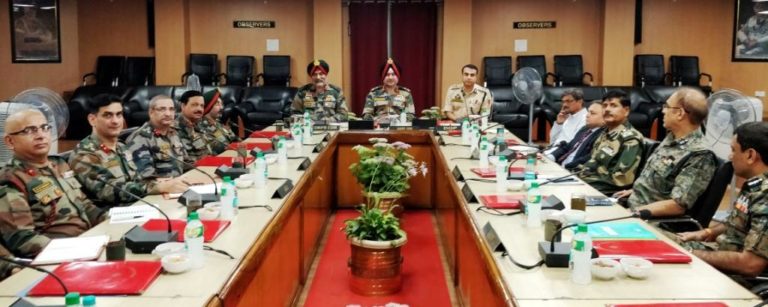
Against the backdrop of the prevailing situation in Jammu & Kashmir, the Indian Army’s Commander of the Northern Command, Lt. Gen. Ranbir Singh chaired a meeting of the Core Group of intelligence and security agencies at Srinagar to review the operational readiness to meet any contingency that could adversely impact the security situation in J&K.

The Army Commander highlighted that during the past few days, Pakistan had intensified its efforts at increasing strength of terrorists in launch pads along the Line of Control, initiating ceasefire violations, pushing infiltrators across the LoC, calibrating terrorist actions in the hinterland as also exploiting the social media to launch disinformation campaign in J&K. The Indian Army has given a befitting response in thwarting these nefarious designs of the enemy to cause disturbances in our country, particularly in the Kashmir Valley.

He urged the people not to fall prey to the enemy’s evil designs to poison their minds with incessant propaganda and exhorted them not to proliferate or indulge in rumour mongering. He warned Pakistan Army against continuing with such a disruptive course and said that the Indian Army would respond to such activity with resolve and the cost would be prohibitive for the neighbouring country.  

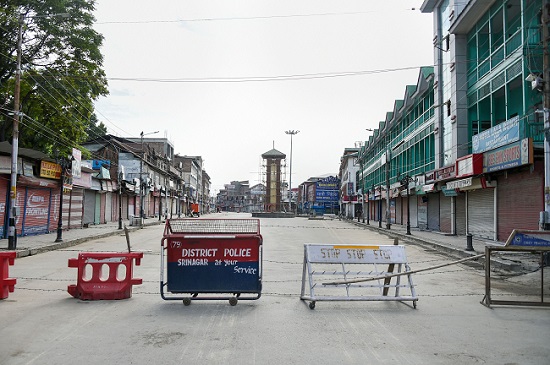
Giving details of security in the hinterlands, it was highlighted that counter-terrorism and law & order grids have been strengthened. The security forces are suitably deployed to guard important vulnerable points/areas, prepared for crowd control, and any other challenge that would be posed to the law and order situation in the state. There will be no let down in the conduct of counter-terrorist operations. The Army Commander further stated that security forces are maintaining a high state of alertness and readiness to counter any inimical designs.

Serving a note of caution to those who harbour plans to disrupt peace and harmony within, the Army Commander stated that they would be dealt with firmly.

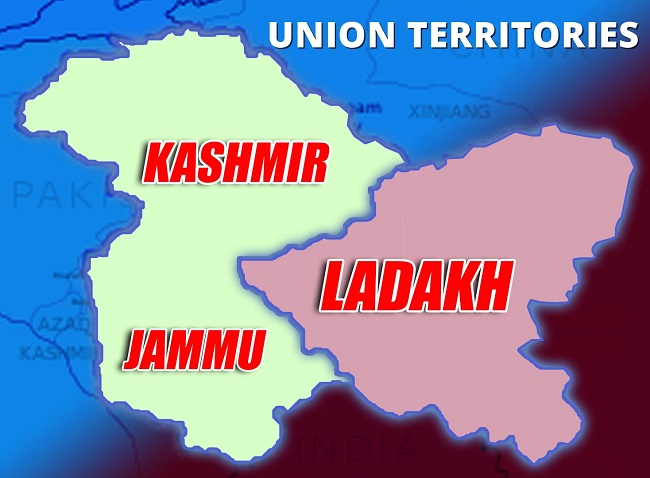
The changing political narrative with removal of Article 370 and bifurcation of the state into two Union Territories has necessitated a state of high alert. While the entire nation has expressed satisfaction with the decision of the government it is appreciated that the external enemies will use their proxies within to create trouble. A big challenge is being posed by rumour mongering that has the potential to create widespread panic and a fear psychosis.

There is a need for the security forces to remain vigilant. The words of the Army commander and the joint security meeting are indicative of the resolve and high state of preparedness of the security forces to meet any and every challenge that is posed by inimical powers with the intention of negatively exploiting the current situation.

Overall, the security forces are firmly in control of the security situation and necessary security arrangements had been put in place for ensuring peace and security. The assurance given by Home Minister Amit Shah that there will be no untoward fallout of the decision of the government in Jammu and Kashmir has been further substantiated by the Army Commander on ground.

Victorian Govt. to confer ‘Excellence in Cinema’ award on Shah Rukh Khan

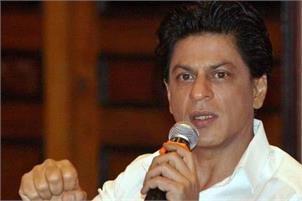
Bollywood King Shah Rukh Khan will be felicitated with ‘Excellence in Cinema’ honour at the awards night of Indian Film Festival of Melbourne. The award will be presented by Linda Dessau, who is the first female Governor of the State of Victoria.

“I’m humbled and honoured for this recognition. It will be a great experience to share the stage and the podium with my fellow industry members who are all coming from various parts of India to celebrate cinema in Melbourne.

“I look forward to meeting her excellency, Linda Dessau at the wonderful evening that has been planned by IFFM,” Shah Rukh said in a statement.

Helmed by the Victorian government, Australia, the Indian Film Festival of Melbourne. (IFFM) is back for its tenth edition in the cultural city and will celebrate “courage” as its central theme in 2019.

The felicitation will take place at the iconic Palais Theatre in Melbourne, which is one of the city’s heritage landmarks.

Most opportune time for New Delhi to revoke Art 370 & Art 35A

This is the problem the world gets when you have non-professional political leaders attempting to deal with long standing political and international issues. President Donald Trump, by no means astute in handling international affairs, assumed that Prime Minister Narendra Modi wanted him to mediate on Jammu and Kashmir, probably based on an innocuous mention by the Indian PM that the US could help reduce tensions in the Indian subcontinent. Prime Minister Imran Khan, again a novice on understanding international affairs, presumed that with the US taking the lead to suggest mediation on J&K, this was the golden moment which his nation had been seeking for long.

Khan’s generals probably advised him that there could not be a better time to go for it, with the US firmly dependent on Pakistan for its negotiations with Taliban and a window yet available to attempt causing mayhem in Kashmir. General Qamar Bajwa has gone and misled his PM into thinking that India was vulnerable now and upping the ante in the Valley would lead to Pakistan regaining the ability to calibrate the situation in J&K.

Signals coming out of Kashmir also indicated that the new Indian government was hell bent on dismantling the ecosystem and networks on which separatism runs. If Indian action was not stopped this could put an end to Pakistan’s ability to be relevant in J&K.

The Amarnath yatra with all its vulnerabilities to action by irregulars still had time to go before it ended on August 15, also India’s Independence Day. That or any other major targets engaged by sponsored terrorists could pay rich dividends and evoke a response from India similar to Pulwama-Balakot, thus creating conditions for the US under Trump to mediate (or so the Pakistani perception went).

There was one problem. The Indian army had so emasculated the terrorist networks that a high profile attack using resident terror groups was not possible at short notice. Even the street agitation would run into problems due to lack of availability of finances with the separatists.

Something so emotive and big had to be done that there would be a backlash in the streets with the Indian police forces forced into targeting unarmed civilians and providing a multiplier effect. To execute this Pakistan needed to commence infiltration again. Such big tasks would need Pakistan army personnel’s organisational skills; a risk Bajwa was probably willing to take.

That started the sudden spurt of activity across the LoC in the Kashmir segment in the last few days of July 2019; concentration of trained terrorists, infiltration attempts galore and Border Action Team (BAT) activity. What are being read as BATs could well be attempts to infiltrate high profile Pakistan army personnel along with terrorists into the Valley. The Kashmir segment of the LoC went aflame with mortar and artillery fire for the first time in years. None of this activity was opposite Poonch and Rajouri, the traditional area of exchange of fire.

What Khan does not know is that mediation on J&K is only possible, when India too agrees to such a course. With the neo-nationalism so evident in the cadres of the ruling dispensation in India, the government cannot even imagine doing this. With Pakistan itself deliberately creating a crisis situation there can hardly be an opportunity for early intervention. This is clearly dangerous territory which Pakistan is stepping into, from which retraction may be extremely difficult. Economically it is in ruins, yet willing to risk a conventional standoff with India.

The government of India, with a fresh and decisive mandate and the ruling party’s manifesto already promising constitutional and administrative changes in Kashmir, considered this the most opportune time to act. The nullification of Articles 370 and 35A is being welcomed in two segments of the state. Ladakh is happy with the new status of Union territory (UT). The UT status with legislature for the Jammu and the Kashmir segment does not bifurcate the populous areas but certainly dilutes Kashmir’s political hold over the combined territory.

Dismantling those networks and systems which have enabled separatists and the Pakistani deep state to rule the roost, will now be much simpler with a greater say of New Delhi and perhaps of Jammu. There is still a lot of ground to cover both politically and administratively, which will happen now that the iron is hot.

As to response in the streets, the measures will certainly constrain the mainstream political parties. Hopefully they will not sponsor and resort to violence. The parties are all led by responsible personalities whose job it was to protest democratically till the final decision. Now that the decision has been taken it is incumbent on them to accept it and work towards optimally mainstreaming J&K.

It is yet early to assess what the final outcome will be on the streets of Kashmir. The army is well geared to negate any coercion by Pakistan at the LoC and enough CAPF deployment has been done to control any attempts at destabilisation. What the government needs to be mindful of is attempts by disparate groups to spread rumours and instigate communal tension. Failure to control that will never be advantageous to the nation.

(this article was first published in The Times of India)

Art 370: What? Why? When? How?

This article on Art 370 was written well before the Narendra Modi government moved The Constitution (Application to Jammu and Kashmir) Order, 2019 which has now repealed Art 370 and its illegitimate child Art 35A. These twin articles are now history. Yet it will be proper to know the background and circumstances in which Art 370 was introduced so as to be able to refute the nefarious propaganda against its revocation.

Article 370 of the Indian Constitution has been the singular bone of contention in multiple debates in this country. This is primarily because this Article 370 has been misquoted and used as an instrument to confuse and confound the masses by various political denominations to suit their own ends. There is a simplicity to this Article, which an elementary reading of the Indian Constitution can divulge. But the conundrum lies in twisting and turning its meaning, in order to prevent its abrogation since the 1950s whence such repeal was warranted.

In order to understand the genesis of this contentious Article 370 let’s look at the events of yesteryears. It is pertinent to note that the British Parliament passed the Indian Independence Act on 18th July, 1947 that provided for setting up of the Dominions of India and Pakistan. The Instruments of Accession were signed by approximately 565 Princely States in the months that followed. And Jammu and Kashmir became an integral part of the Dominion of India with the signing of the Instrument of Accession on 26th October, 1947. During those months India was preparing its Constitution.

On 17th October, 1949, Mr. Ayyangar suggested the adding of a new Article 306 (A) to the Draft Constitution of India which was already compiled by the Drafting Committee. This new additional temporary Article was eventually to be numbered as Article 370. Later on, the Indian Constitution was adopted and enacted on 26th November, 1949 and the Constitution of Jammu and Kashmir was enacted on 17th November, 1956.

It is worth noting that Dr. Babasaheb Ambedkar, who was Chairman of the Drafting Committee of the Constitution of India did not include any of the provisions of Article 370 in the Draft Constitution. The general debate on the Draft Constitution began on 4th November and lasted upto 9th November, 1948. The clause by clause consideration of the Draft Constitution commenced on 15th November, 1948 and lasted for 114 days as the members scrutinized every clause that was needed in our Constitution. Still Article 370 found no place in the Draft Constitution of India. It was Mr. Gopalaswamy Ayyangar who advocated the introduction of this article.

The position of Jammu and Kashmir in the Indian Constitution by virtue of Art 370, emanates from the basis underlined by Art 1 of the Constitution itself. Art 1 applies to Jammu and Kashmir by itself and independently brings the state within limits of the territories of Indian Union and within its jurisdiction. Art 1 is an independent constitutional instrument, which does not depend upon Article 370; rather, the instruments created by Article 370 depend upon the provisions of Art 1.

Further, the Clause 1(c) of Art 370 is redundant and reiterates the fact which is already accomplished by Art 1 of the Indian Constitution. Also, Art 370 describes a jurisdiction which is temporary and transitional. The provisions of Clause 1(c) of Article 370 do not prejudice the nature of Art 1 in its application to Jammu and Kashmir and in case Art 370 is abrogated, the applicability of Art 1 will not be affected. In fact, in such an eventuality Jammu and Kashmir will immediately be placed at par with other states of Indian Union and brought within the purview of all other provisions of the Indian Constitution without modification, including those pertaining to the Constitution of Jammu and Kashmir. The Constitution of Jammu and Kashmir will simultaneously be set aside. It must be noted that the state Constitution of Jammu and Kashmir was modelled on the Indian Constitution, with alterations that were needed and inserted to deal with temporary problems and upheaval brought about by the Pakistan’s invasion.

The provisions of Art 370 are not relevant to the accession of the state and do not form any constitutional commitments in regard to accession. If Art 370 is abrogated, it will not affect the accession of Jammu and Kashmir, because Art 370 does not accomplish the accession of Jammu and Kashmir to the Indian Union. Nor does Art 1 of the Indian Constitution accomplish accession of the erstwhile Indian States to the Indian Union. In fact, to reiterate the above point, even if Art 1 ceases to be operative then to the accession of Jammu and Kashmir (making it an integral part of the Union of India) will remain unaffected.

It needs to appeal to the sensibility of any astute government that Art 370 has become redundant ever since the day the Constituent Assembly of Jammu and Kashmir was dissolved, after completion of its task. This Article 370 is obsolete today, and can fulfil no productive or conducive purpose.

The manner of insertion of Article 370 into the Indian Constitution

When Dr. B.R. Ambedkar prepared the Draft Constitution of India, it did not contain Art 370. It was proposed by Mr. Gopalaswami Ayyangar, minister without portfolio, when the amendments and modifications were being discussed in the Constituent Assembly. Art 370 was debated in the Constituent Assembly on October 17th, 1949 where it was initially numbered as Art 306-A

The statements set out below are of the debate pertaining to Art 306-A which was re-numbered as Art 370 in the Indian Constitution.

Debate on Art 370 during the drafting of Indian Constitution

Mr. President: Very well. We take up article 306A now. Mr. Gopalaswami Ayyangar.

Mr. N. Gopalaswami Ayyangar: Sir, I move:

“That with reference to Amendment no. 379 of List XV (Second Week), after article 306, the following new article be inserted: 306A

Sir, this matter, the matter of this particular motion, relates to the Jammu and Kashmir State. The House is fully aware of the fact that the State has acceded to the Dominion of India. The history of this accession is also well known. The accession took place on the 26th October, 1947. Since then, the State has had a checkered history. Conditions are not yet normal in the State. The meaning of this accession is that at present that State is a unit of a federal State, namely, the Dominion of India. This Dominion is getting transformed into a Republic, which will be inaugurated on the 26th January, 1950. The Jammu and Kashmir State, therefore, has to become a unit of the new Republic of India.

As the House is aware, accession to the Dominion always took place by means of an instrument which had to be signed by the Ruler of the State and which had to be accepted by the Governor-General of India. That has taken place in this case. As the House is also aware, Instruments of Accession will be a thing of past in the new Constitution. The States have been integrated with the Federal Republic in such a manner that they do not have to accede or execute a document of Accession for the purpose of becoming units of the Republic, but they are mentioned in the Constitution itself; and, in the case of practically all States other than the State of Jammu and Kashmir, their constitutions also have been embodied in the Constitution for the whole of India. All those other States have agreed to integrate themselves in that way and accept the Constitution provided.

Maulana Hasrat Mohani: Why this discrimination, please?

N. Gopalaswami Ayyangar: The discrimination is due to the special conditions of Kashmir. That particular State is not yet ripe for this kind of integration. It is the hope of everybody here that in due course even Jammu and Kashmir will become ripe for the same sort of integration as has taken place in the case of other States. (Cheers) At present it is not possible to achieve that integration. There are various reasons why this is not possible now, I shall refer again to this a little later.

In the case of the other Indian States or Unions of States there are two or three points which have got to be remembered. They have all accepted the Constitution framed for States in Part I of the new Constitution and those provisions have been adapted so as to suit conditions of Indian States and Unions of States. Secondly, the Centre, that is the Republican Federal Centre will have power to make laws applying in every such State or Union to all Union Concurrent Subjects. Thirdly, a uniformity of relationship has been established between those States and Unions and the Centre. Kashmir’s conditions are, as I have said, special and require special treatment. I do not want to take much of the time of the House, but I shall briefly indicate what the special conditions are. In the first place, there has been a war going on within the limits of Jammu and Kashmir State.

There was a cease-fire agreed to at the beginning of this year and that cease-fire is still on. But the conditions in the State are still unusual and abnormal. They have not settled down. It is therefore necessary that the administration of the State should be geared to these unusual conditions until normal life is restored as in the case of the other States.

Part of the State is still in the hands of rebels and enemies.

We are entangled with the United Nations in regard to Jammu and Kashmir and it is not possible to say now when we shall be free from this entanglement. That can take place only when the Kashmir problem is satisfactorily settled.

Again, the Government of India have committed themselves to the people of Kashmir in certain respects. They have committed themselves to the position that an opportunity would be given to the people of the State to decide for themselves whether they will remain with the Republic or wish to go out of it. We are also committed to ascertaining this will of the people by means of a plebiscite provided that peaceful and normal conditions are restored and the impartiality of the plebiscite could be guaranteed. We have also agreed that the will of the people, through the instrument of a constituent assembly, will determine the constitution of the State as well as the sphere of Union jurisdiction over the State.

At present, the legislature which was known as the Praja Sabha in the State is dead. Neither that legislature nor a constituent assembly can be convoked or can function until complete peace comes to prevail in that State. We have therefore to deal with the Government of the State which, as represented in its Council of Ministers, reflects the opinion of the largest political party in the State. Till a constituent assembly comes into being, only an interim arrangement is possible and not an arrangement which could at once be brought into line with the arrangement that exists in the case of the other States. Now, if you remember the viewpoints that I have mentioned, it is an inevitable conclusion that, at the present moment, we could establish only an interim system. Article 306A is an attempt to establish such a system.

I shall now proceed to take the House through the provisions of this article. As honourable Members will remember, the constitution of Indian States is mainly governed by article 211A of this Constitution which applies the Constitution to Indian States, subject to the modifications contained in Part VI-A read with the Schedule. So far as that provision in concerned, I have already indicated to you that the provisions regarding the Constitution of other States could not at present be applied to Jammu and Kashmir. Therefore, clause (1) (a) of this article says that the provisions of article 211A of this Constitution shall not apply to the State of Jammu and Kashmir.

The Second portion of this article relates to the legislative authority of Parliament over the Jammu and Kashmir State. This governed primarily by the Instrument of Accession. Broadly speaking, that legislative power is confined to the three subjects of defence, foreign affairs and communications, but as a matter of fact these broad categories include a number of items which are listed in the Instrument of Accession. I believe they number some twenty to twenty-five. Now, these items have undergone a change in description, in numbering, in arrangement, as amongst themselves, in List I and List III of the new Constitution. It is therefore necessary that the items mentioned in the Instrument of Accession should be brought into line with the changed designations of entries in Lists I and III of the new Constitution. So, clause (1) (b) of article 306A says that this listing of the items as per the terms of the new Constitution should be done by the President in consultation with the government of the Sate.

Clause (b)(ii) refers to possible additions to the List in the Instrument of Accession, and these additions could be made according to the provisions of this article with the concurrence of the government of the Sate. The idea is that even before the Constituent Assembly meets, it may be necessary in the interests of both the Centre and the State that certain items which are not included in the Instrument of Accession would be appropriately added to the List in that Instrument so that administration, legislation and executive action might be furthered, and as this may happen before the Constituent Assembly meets, the only authority from whom we can get consent for the addition is the Government of the State. That is provided for.

Then, there is the Explanation, which defines what the Government of the State means. The Government of the State is defined both in the Constitution which is now supposed to be in force in the Jammu and Kashmir State as well as in the Proclamation which the Maharaja issued on the 5th March, 1948. The terms of the Proclamation, to the extent that they are inconsistent with the provisions of the Constitution Act of the State, will prevail over that Constitution Act, and therefore it is that in this Explanation it is the Proclamation which is referred to. Under the terms of that Proclamation the Maharaja constituted an interim popular Government, and he said: –

“I hereby ordain as follows :-

(1) My Council of ministers shall consist of the Prime Minister and such other Ministers as may be appointed on the advice of the Prime Minister. I have by Royal Warrant appointed, Sheikh Mohd. Abdullah as the Prime Minister with effect from the 1st day of March 1948.

He proceeds –

“The Prime Minister and other Ministers would function as a Cabinet and act on the principle of joint responsibility.”

Then there was no Legislature functioning, and so he instituted a kind of responsible Government with a Prime Minister and colleagues who would own collective responsibility for their acts and regard themselves as jointly responsible for all the acts of the Government. Now, that is brought out in this Explanation.

K. Santhanam: The Explanation says that the Maharaja will be recognised by the Union instead of by the President.

N. Gopalaswami Ayyangar: Perhaps we may leave it to the Third Reading. As you know the scheme of the Constitution Act is that the Rajpramukh must be recognised by the President. So, this also says that the Maharaja of Jammu and Kashmir should be a person recognized for the time being by the Union.

As regards the Council of Ministers, this Proclamation set up a system under which this Council was to be established, viz., that the Maharaja first finds the Prime minister and then on his advice appoints his colleagues, and the Explanation as now amended by me says that whatever Council of Ministers is in being at the time will, along with the Maharaja to whom they are responsible give their concurrence or give their advice on such matters as are referred to them under this article.

Clauses (c) and (d) refer to the provisions of the Constitution other than the matters listed in Lists I and III. These various provisions have been divided into certain categories. The first according to this draft is that article 1 of the Constitution will automatically apply. As you know, it describes the territory of India, and includes amongst these territories all the States mentioned in Part III, and Jammu and Kashmir is one of the States mentioned in Part III. With regard to the other provisions in the Constitution, these will apply to the Jammu and Kashmir State with such exceptions and modifications as may be decided on when the President issues an order to that effect. That Order can be issued in regard to subjects mentioned in the Instrument of Accession only after consultation with the Government of the State. In regard to other matters, the concurrence of that Government has to be taken.

Now, it is not the case, nor is it the intention of the members of the Jammu and Kashmir Government whom I took the opportunity of consulting before this draft was finalized – it is not their intention that the other provisions of the Constitution are not to apply. Their particular point of view is that these provisions should apply only in cases where they can apply the only subject to such modifications or exceptions as the particular conditions of the Jammu and Kashmir State may require. I wish to say no more about that particular point at the present moment. Then we come to clause (2). You will remember that several of these clauses provide for the concurrence of the Government of Jammu and Kashmir State. Now, these relate particularly to matters which are not mentioned in the Instrument of Accession, and it is one of our commitments to the people and Government of Jammu-Kashmir that no such additions should be made except with the consent of the Constituent Assembly which may be called in the State for the purpose of framing its Constitution. In other words, what we are committed to is that these additions are matters for the determination of the Constituent Assembly of the State.

Now, you will recall that in some of the clauses of this article we have provided for the concurrence of the Government of the State. The Government of the State feel that in view of the commitments already entered into between the State and the Centre, they cannot be regarded as final authorities for the giving of this concurrence, though they are prepared to give it in the interim periods but if they do give this concurrence, this clause provides that that concurrence should be placed before the Constituent Assembly when it meets and the Constituent Assembly may take whatever decisions it likes on those matters.

The last clause refers to what may happen later on. We have said article 211A will not apply to the Jammu and Kashmir State. But that cannot be a permanent feature of the Constitution of the State, and hope it will not be. So the provision is made that when the Constituent Assembly of the state has met and taken its decision both on the Constitution for the State and on the range of federal jurisdiction over the State, the President may on the recommendation of that Constituent Assembly issue an order that this article 306A shall either cease to be operative, or shall be operative only subject to such exceptions and modifications as may be specified by him. But before he issues any order of that kind the recommendation of the Constituent Assembly will be a condition precedent. That explains the whole of this article.

The effect of this article is that the Jammu and Kashmir State which is now a part of India will continue to be a part of India, will be a unit of the future Federal Republic of India and the Union Legislature will get jurisdiction to enact laws on matters specified either in the Instrument of Accession or by later addition with the concurrence of the Government of the State. And steps have to be taken for the purpose of convening a Constituent Assembly in due course which will go into the matters I have already referred to. When it has come to a decision on the different matters it will make a recommendation to the President who will either abrogate article 306A or direct that it shall apply with such modifications and exceptions as the Constituent Assembly may recommend. That, Sir, is briefly a description of the effect of this article, and I hope the House will carry it.

Big News: Art 370 and Art 35A scrapped from Jammu Kashmir

1

India’s Home Minister Amit Shah proposed in the Rajya Sabha today morning to remove all provisions of the contentious and anti-people Article 370 of the Indian constitution. Article 370 was a Temporary Provision in the Indian Constitution for Jammu and Kashmir which gave it a special status. Using the provisions of this Art 370 a separate Constitutional Order was introduced on 14th May 1954, popularly known as the Article 35A.

Both these articles were responsible for the ongoing problems in Jammu and Kashmir, especially the Kashmir Valley. All welfare provisions of Indian Constitution could not be applied in the state due to provisions in these two articles. By revoking these two articles Prime Minister Narendra Modi has corrected a historical wrong which was initiated by Sheikh Abdullah and the then PM Jawaharlal Nehru. Provisions of Art 370 and Art 35A were cemented by local politicians of Kashmir Valley and a section of politicians from New Delhi. These politicians and the Valley-based separatists had turned Kashmir into an “industrial enterprise” such that “Kashmir issue” continued to hog limelight across the world even as common man in the Valley, Laddakh and Jammu regions continued to suffer.

Using the provisions of Art 35A several thousand crores of rupees (billions of dollars) were sanctioned for the “welfare” of Kashmir, which never reached the common man in the state. While the politicians built palatial bungalows for themselves and settled their children aboard the gullible Kashmiri teenager was made to chant Azadi slogans and become a stone pelter or a terrorist.

All this will change now. With the abrogation of Articles 370 and 35A there will be a plethora of options for employment and divisive politics will die its natural death. The welfare provisions of Indian Constitution such as relief to Scheduled Castes (SCs) and Scheduled Tribes (STs) will now be implemented across the state. Big industries and services sector will now be able to set foot in the Valley which will create employment opportunities for the young and restive population.

The Constitution (Application to Jammu and Kashmir) Order 2019 will usher in a new era of peace across Kashmir Valley, Jammu and Laddakh.

PM Narendra Modi revokes Art 370 & Art 35A

0

PM Narendra Modi revokes Art 370 & Art 35A

Right time to tackle Kashmiri separatists: Ata Hasnain

The trigger for this essay comes from the mounting protests in Hong Kong; an advanced society in the throes of street turbulence. Sooner than later China may throw caution to the winds and send in the People’s Liberation Army to take over the territory and quell democracy. But my focus is elsewhere, on home territory, Kashmir. Having faced street protests there for many years it’s a different ballgame to Hong Kong. I am drawn back to it because of the rumours in the air of impending changes that could act as triggers.

Kashmir usually sits on the edge and street violence, for the last ten years, has been a norm. Will we see it implode again as it did in 2008 with the Amarnath Shrine Board agitation, in 2009 with rumours connected to the Shopian rape case, in 2010 with the Machil and Tufail Mattoo incidents and in 2016 with the killing of Burhan Wani? I am not examining here anything remotely related to the merits and demerits of Article 35A, the abrogation of which is being assessed as a likely trigger.

The power of the street was realised by the separatists in 2008 taking inspiration from the Palestinian Intifada. Little known but the other inspiration for Kashmir’s street turbulence was a book called ‘From Dictatorship to Democracy’ by an American scholar called Gene Sharpe. The latter is considered the father of modern revolutions and his chapter — ‘98 Ways of Non-Violent Action’ has inspired many of them. Syed Ali Shah Geelani is known to have read it and been inspired by it.

In August 2008 when we faced the murderous one lakh strong mob which attempted to march from Sopore to Uri, there was no social media. Yet thousands of people poured into the streets. None of us, the army, intelligence services or JK Police were prepared for it. Thereafter, seasoned commanders of anti-terrorist operations were taken aback by the vehemence and passion in the streets. They had little idea about dealing with such protests.

Many a time women led the front pushing even children ahead. Over a period of time, the art of street violence was near perfected by the Kashmiri protestors no doubt with some guidance from across the LoC. Social media expansion became the means of rallying protestors, taking inspiration from Tahrir Square, the Lotus Revolution and many other such protests of the Arab Spring. As the age of the street protestor became younger we witnessed 11 and 12-year-olds take to the streets. From 2014 an innovation entered into the methods with protestors rallying in support of terrorists cornered in houses through intelligence-driven cordons. This proved a major challenge for the security forces and led to more civilian casualties. The notion that separatists support nonviolent ways of protest has been a misnomer successfully fed to human rights organisations.

In 2008-10 two recalls are of significance. First, the Indian Army held a moral sway; its young company commanders had the networking skills and courage to walk up to leaders of protesting mobs and dissuade them many times to put an end to the protest in their area. Secondly, while the police had the most uncomfortable and challenging job the protestors mastered ways of breaking up police squads, attracting them into by lanes and then targeting them, forcing them to fire and cause civilian casualties.

The ecosystem of J&K, of which much is being written and spoken about today, has been the core centre of the organisational capability to run the agitation which at one time came to be termed as ‘agitational terror’ for various reasons. Protest without money power would have ground to a halt. In the town of Baramula from where the protests really began and spread; there were fixed rates for each stone thrower. Stones were ‘imported’ by vehicles and stone-throwers came from other towns so that identification of leaders was difficult. The rallying of mobs was done by a large network of over ground workers (OGWs) armed with an information system multiplied many times over today due to social media. Manipulated video clips and rumours form the focus of the information system which the government establishment has a little answer for except the shutting down of the internet. Civilian casualties draw mass response at funerals and increase alienation manifold. The local media with more publications than those found in Delhi or Mumbai has rarely found itself under control except during periods when curfew restricted the movement of its workers.

No one is saying that we are heading towards a period of street protests but it’s always good to be wary and cautious when attempts are being to change the tack of the strategy and campaign in J&K. The security forces’ identified weakness is what the separatists consider their strength. That is the lack of a professional way of tackling mass protests. We cannot sit on a moral high horse and claim the use of minimum force when the international community throws such things in our face. Also, let us not gloat over our capability to resist international pressure. China may get away with treatment of Uyghurs in Xinjiang and possibly even with handing over of Hong Kong to the PLA; that is because China does not claim democratic norms of functioning. Yet, even as Government of India is getting down to tackle issues which have never been tackled in the past it should ensure none of this is done in an un-smart way. It has done well to go after the ecosystem but the same is so strongly entrenched that it will take time. The money conduits and information system which help the separatists run the power of the streets must be legitimately choked completely. Let there be more transparency about this.

No doubt this seems an appropriate time to tackle the separatists when Pakistan too is under pressure and attention is more on Afghanistan. Kashmir’s stamina for resistance is also low notwithstanding formation of joint resistance committees by the separatists. There are far more smart, legitimate and humane ways of controlling violence in the streets than by just pumping in a hundred companies of armed police forces. May be good to take a cue from what the Indian Army does before it sends any troops to conflict zones. It trains them for the situation and threat that they are likely to meet. Untrained soldiers or armed policemen can be a greater liability than can be imagined. Lastly, where is our information system to counter the separatist misinformation? Rumour mongering isn’t the best way of tackling such situations.

Media’s anti-India lobby using global platforms to defame country

India no longer buys the baseless theories of rising intolerance and lack of press freedom from dubious journalists. But these Lutyen’s leeches and self-serving media strategists have now begun to push their agenda-driven journalism on global platforms. The Ministry of External Affairs and the Ministry of Information & Broadcasting have taken a strong note of it.

The Ministry of External Affairs (MEA), in a strongly worded communication, has sought explanation from United Kingdom (UK) and Canada as to why they allowed their soil to host an event on ‘unfounded’ remarks on Indian press freedom. The letter refers to events that occurred on 10th and 11th July during the Global Conference for Media Freedom in London, organised by the United Kingdom and Canada jointly. Over 100 countries were represented at the conference, with 60 ministers and 1,500 delegates from all regions. “It is unacceptable and unfortunate that their governments have provided a platform where totally unfounded remarks were allowed to be made” India’s Ministry of External Affairs told the High Commissions of UK and Canada.

At this conference, the Caravan magazine’s executive editor Vinod K. Jose had made a presentation ‘Religion and Media, the Untold Story’ on the incidents of erosion of press freedom in India in the wake of rising religious intolerance. In his presentation he referred to incidents of lynching as evidence of religious intolerance against India’s minorities, at the global conference. The claims made by him in the presentation were strongly rebutted by Prasar Bharati chairman A. Surya Prakash, who was part of Indian delegation at the conference along with Rajya Sabha MP Swapan Dasgupta and political analyst Kanchan Gupta, nominated and sent by the information and broadcasting ministry to represent the government of India.

After the conference also, the anti-India media lobby tried to garner support to defame the country globally. Jose wrote a letter to British and Canadian government to be ‘vigilant’ on the issue of press freedom in India. “I hope you and your office will take up these grave matters at all appropriate forums, and will let your vigilance be known to the government of India,” said Vinod K Jose in a letter addressed to Jeremy Hunt, former Foreign Secretary of the United Kingdom, Chrystia Freeland, Minister for Foreign Affairs of Canada and the organisers and delegates of the Global Conference for Media Freedom 2019. In the letter, also published in The Caravan, Jose wrote that after the event, a United Nations official had asked him if he needed asylum, but he refused.

Prasar Bharati chairman, A Surya Prakash, post the workshop, submitted a report to the Minister of Information & Broadcasting Prakash Javadekar, pointing out that he took strong exception to the choice of speakers made by the organisers as the allegations made in the presentation were “a direct assault on India’s democracy, credibility and the working of the Constitution”.

A. Surya Prakash (left), Swapan Dasgupta (centre) and Kanchan Gupta (right) were nominated as delegates by the Government of India. They have taken strong exception to the anti-India tirade by other journalists at the conference.

“Those who raise a question mark about press freedom in India must be really tone deaf… In fact, (of) the present political leaders of the country from across parties, there are a large number who have fought for restoration of democracy and press freedom in the mid-1970s in this country. For them, democracy is very clear. You must see the plurality of news media in India,” he said in the report. Prakash questioned whether by allowing such a presentation, the organisers were trying to question the “massive mandate” by the people of India for the Narendra Modi government.

“I am pained by the decision of the organisers to have given a platform for such a blatantly anti-India presentation. I don’t think anyone is furthering the cause of democracy by running down the most vibrant democracy in the world,” Prakash said.

Subsequently, the matter was taken up with the Ministry of External Affairs. According to sources, the external affairs ministry has told UK and Canada that “..it is unacceptable and unfortunate that their governments have provided a platform where totally unfounded remarks were allowed to be made.” In a letter to the union minister of information and broadcasting, Prakash Javadekar, Union minister of external affairs S Jaishankar said the issue of allowing “unwarranted remarks” by one of the speakers was taken up with the high commission of both the countries.

With sources of foreign funding drying up, depleting support from the opportunistic left intellectuals and academia, and pro-Pakistan lobbyists looking for a safe haven, anti-India media strategists are now looking for foreign grounds to defame the country for their own self-serving interests. Both External Affairs and I&B Ministries need to ensure that these efforts to malign the country are strongly and timely dealt with.

Kashmir: Speculative, malicious propaganda is engineering the current fear psychosis

What exactly has happened in Kashmir in the last few days that is so out of the ordinary? There has been a movement of a few thousand troops – so what? Is it the first time that troop movement has been seen in the Kashmir Valley? The government has clarified that the movement is to carry out a routine turnover, prepare for elections and also to give some respite to troops who are overworked due to security commitment for Shri Amarnath Yatra. Operationally, both reasons make a lot of sense, so why this chasing of ghosts? In any case, what difference will a few thousand additional troops make to the existing deployment that has weathered much bigger storms?  

Is this the first time that an advisory has been issued to Amarnath Yatris? Almost every year the pilgrimage witnesses a pause due to some security alert or the other. The government has clarified that the alert has been issued since some military hardware with Pakistani markings have been found on the pilgrimage route. Security protocol demands complete sanitisation of the area which takes time. Is this, by any means, out of the ordinary?

New Delhi is hyper-sensitive about safe conduct of the Yatra, especially so, since the state is under Governor’s rule. It has spent millions of rupees in technology and additional manpower to ensure fool proof security. At this point in time, when the Yatra is in its last leg, the administration is bound to be over-cautious, hence the advisory to cut short the vacation and get back home safe and sound. What is so odd in this? The Yatra has not been called off, it has been suspended, so there remains a chance of resumption once the security environment is stabilised.

In a press conference the General Officer Commanding (GOC) of the Srinagar-based Chinar Corps has clarified that the last few days have witnessed an increase in activity from across the border. Ceasefire violations have once again started as have the sinister Border Action Team (BAT) operations. There have been a series of infiltration attempts that have been successfully thwarted. Pakistan had put a plug on such activities as a prelude to the meeting of Prime Minister Imran Khan with US President Donald Trump since he wanted the latter to agree to resumption of aid. Now that the Pakistani premier has come back empty handed, is it not logical for Pakistan to declare business as usual on the border? What is happening on the border is not an increase in activity by Pakistan; it is resumption of activity by Pakistan. What is new or extraordinary in this? Definitely the situation requires a professional response from Indian security forces and extra caution for some days is part of that professionalism.

Troops of the Rapid Action Force (RAF) reached Jammu on August 3rd, 2019. On August 2nd, Jammu and Kashmir government had asked the Amarnath Yatris and tourists in Kashmir Valley to leave the valley. The advisory, issued by the states’ home department, cited intelligence inputs about terror threats. (Photo: PTI)

The problem is that a particular political segment in the Valley has a proclivity to see demons everywhere and talk about them. The situation has given to this segment the opportunity to come out of political wilderness and the opportunity is being exploiting to the hilt. If these very political leaders had attempted to instil confidence among the people and allay their insecurities, this panic situation would not have taken place at all. Sadly, instead of showing maturity they sought to ride on the fears of the people and thus added fuel to the fire. They are least bothered about the effect on the common man and the economy of the state.

The next blameworthy element is the social media. Everybody seems to have become an alter ego of Prime Minister Narendra Modi with inside knowledge of his mind and chosen course of action. Scenarios ranging from the removal of Article 35A to trifurcation of the state are being uploaded with utmost confidence and are being dutifully forwarded by millions. With each passing hour the options are becoming more and more bizarre. The latest is that all of this is a plan hatched by the US, Pakistan and India to break CPEC and thus marginalise Chine – can it get more ludicrous than this?

Nobody is ready to give credence to the fact that senior most functionaries are denying the existence of any unprecedented reason behind the tightening of security protocols in the last few days. Governor Satya Pal Malik has categorically denied knowledge of any move by the centre to remove Art 35A or Art 370. He has stated that there is no change in the stature of these issues. Senior most security commanders have addressed a press conference to allay all fears, yet, some political leaders and the social media are not ready to relent from the endeavour to create panic.

Quite apparently, the present chaos is based only on speculation. The panic which started on 29th July came under control a day later, but because of some statements by local leaders and the social media it has once gained momentum and reached the present level. This proves that the people did not fall prey to the rumours but have been forced to do so by constant negative conditioning by those who will gain tremendously by keeping the pot boiling. 

The aforementioned argument does not imply that the government will not remove Art 370 and Art 35A. It is ideologically inclined to the abrogation and has spelt it out as a mandate during the recently held parliamentary elections. The present activities, however, do not seem to be directed towards this end due to a number of reasons. First, no government would like to take this kind of an action so close to the Independence Day. Secondly, the government would not have liked to inconvenience the pilgrims to Shri Amarnath Shrine. 

The people of Kashmir should not get swayed by malicious propaganda. They should resume their routine life without fear or insecurity. By so doing they will give a befitting response to those evil forces that are blatantly attempting to disrupt their lives and cause to them great financial loss.