Home Blog Page 420

Pak must show maturity in Kulbhushan Jadhav case

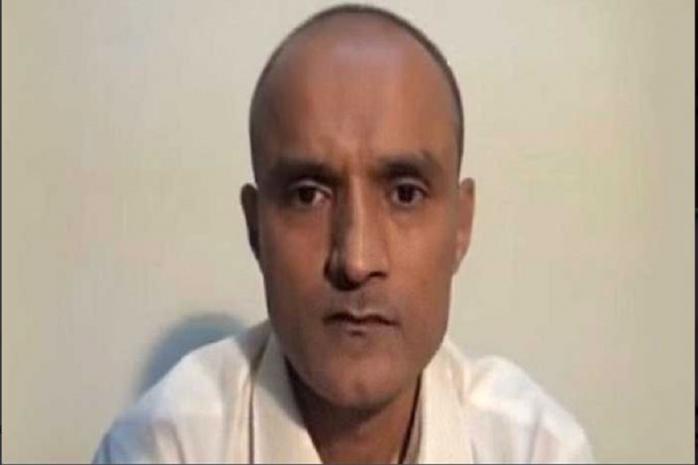
Kulbhushan Jadhav who was allegedly arrested from the Pakistan-Iran border in Balochistan on March 3, 2016 has been accused of being a spy of India’s external intelligence agency, Research and Analysis Wing (R&AW). Pakistan had alleged that Jadhav was engaged in masterminding terrorist activities in Balochistan. Jadhav was tried by a military court and after a trial that lasted just three-and-a-half months, he was awarded the death sentence on April 10, 2017.

Though the government of Pakistan had authorised its military courts to try terrorism related cases, this move had come under very severe criticism from the international legal community as in addition to serious procedural shortcomings, its trial procedure lacked transparency. Under these adverse circumstances, it would have been more the sensible for the government of Pakistan to have tried Jadhav in a civil court as this would have enhanced the legal credibility of the trial at international level. This issue has since snowballed into a flash point for India-Pakistan relations.

India moved the ICJ (International Court of Justice) in May 2017 protesting against the “farcical trial” of their 48-year-old retired Indian Navy Officer by Pak’s military court. India’s first win came when the ICJ admitted that prima facie there were legal lacunae in the trial of Jadhav by Pak’s military court. Another monumental mistake that Islamabad made was its inordinate delay in informing New Delhi that it has taken Jadhav (who is an Indian national) into custody. Secondly, by refusing to entertain New Delhi’s request for grant of consular access to Jadhav, Islamabad violated the Vienna Convention and thus weakened its own case. Thirdly, Jadhav has been awarded death sentence solely on the basis of his confessional statement, which is legally debatable since it could have well have been extracted under duress.

Pakistan Army may have succeeded in temporarily diverting public attention from its own failure to tackle home-grown terrorism by blaming R&AW for masterminding unrest in Balochistan and making Jadhav the face of what it calls ‘proxy war’ being waged by India. However, ICJ’s verdict putting a stay on Jadhav’s execution and asking Islamabad to grant consular access to him vindicates India’s stand that Jadhav is just being a scapegoat to assuage the traumatisation of the people of Pakistan.

Yet the ICJ verdict shouldn’t be viewed in terms of victory or defeat as this will only aggravate an already explosive situation and vitiate the already tense environment. Statesmanship demands that both sides be more practical rather than emotional in their approach and instead of using Jadhav issue as a means to ignite hyper-nationalist feelings, use it to mend fences. On this account, Pakistan is lucky because by it is in a position of showing magnanimity by releasing Jadhav, and should it do so, New Delhi will be in no position to show belligerence.

With Jadhav in its custody, Islamabad definitely has an upper hand today. Yet, it has to seriously think about what do with him. There’s an old saying that “bandh muthi lakh ki, khul gayi toh khaak ki” (while a closed fist is invaluable since no one knows what it holds within, it becomes worthless the moment it’s opened). Jadhav’s execution would certainly be met with great celebration in Pakistan, but besides being momentary, it will lay down the dangerous precedent for a ‘tit for tat’ policy which will see both countries ‘legally” lynching many innocent ‘Jadhavs’ just in order to pacify the collective domestic conscience.

If we really want to get out of the unending cycle of death and destruction, then both sides need to stop getting over-obsessed by hyper nationalist propaganda and instead work for reconciliation through reciprocal demonstration of magnanimity.

Pakistan should not forget that if it’s an “Indian spy” and alleged terror mastermind called ‘Jadhav’ that the ISI has caught today and sentence to death by its military court without even giving him consular access, then isn’t it possible that tomorrow the R&AW could possibly apprehend a Pakistani national named ‘Javed’, air a confessional video of him admitting being an ISI operative tasked to create unrest in Kashmir and other communally sensitive areas within India and sentence him to death?

In making Jadhav a sacrificial lamb, Pakistan is treading upon a very dangerous path and one only hopes that good sense prevails because pacifying the public by executing Jadhav isn’t a permanent solution. To cater to the public, the ISI will have to keep finding more ‘Jadhavs’ and at some stage R&AW will surely retaliate. India and Pakistan are already fighting it out on the LoC (Line of Control) and introducing this new practice of apprehending an Indian citizen, keeping him in custody incognito, denying him consular access and then sentencing him to death will always evoke a similar action from the other side. It would be good for Pakistan to reconsider its dependency on short term populist actions for the upkeep of its image, because R&AW can also do the same.

Long pending Kashmir dispute is the root cause of all problems between the two countries and has become an eye soar for neighbouring countries which took many lives in the border skirmish and also in the main land. This flash point always gave dent to relations between India and Pakistan.

The reluctance of the two countries to settle Kashmir dispute is taking its toll on the commoner in India and Pakistan. The people in India and Pakistan deserve a better deal. India and Pakistan must shun path of confrontation and join hands to usher in a new era of trust, peace and friendship in the sub-continent.

Celebrating 58th anniversary of India-Somalia diplomatic relations

India was among the few countries to establish diplomatic relations with Somalia just after its independence. A year after the independence of Somalia in 1960, the Commissioner of India to Mauritius was accredited as Ambassador of India to Somalia and presented his Credentials in 1961. Later, a resident Mission was opened in Mogadishu. Since then, India and Somalia have established a time-tested and strong diplomatic relations.

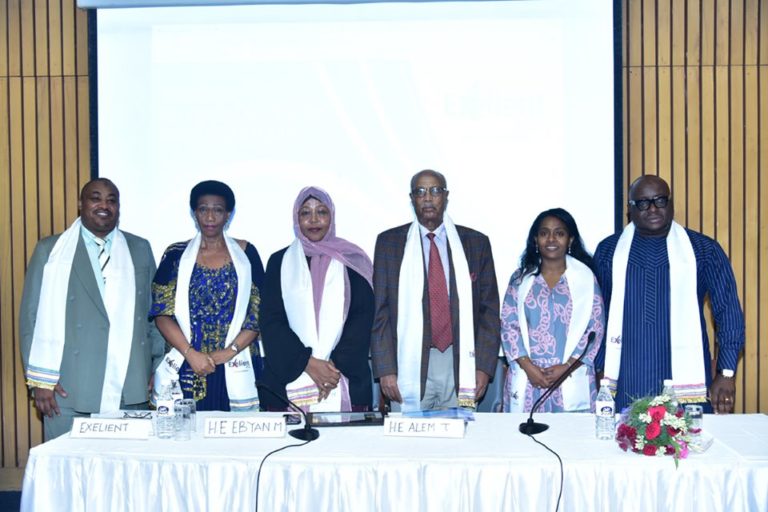
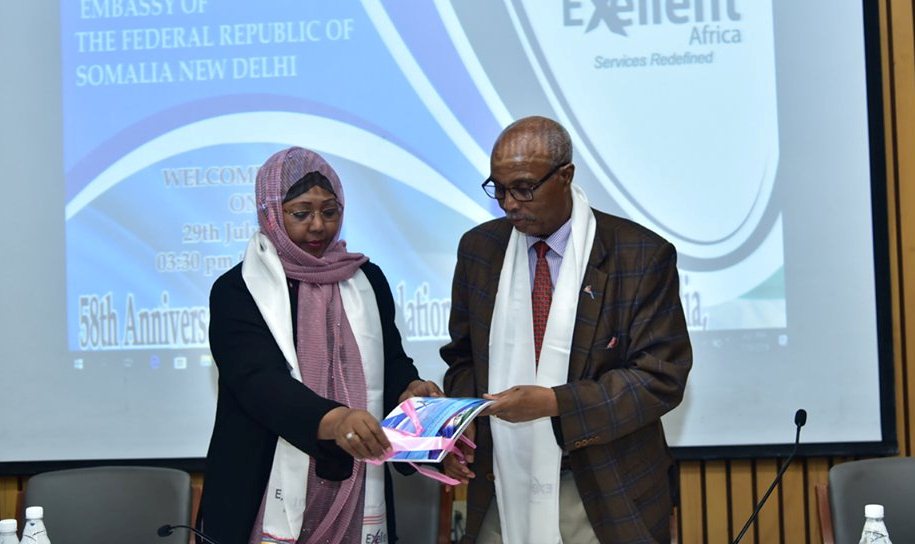
The celebration of over a “Decade of Service” by the Embassy of The Federal Republic of Somalia in India organized in collaboration with Exelient Africa commemorating the diplomatic relations between Somalia and India which has been in existence for over 58 years now, was held recently at India International Centre, New Delhi. On this occasion a special magazine was launched by H.E Alem Tsehaye Woldemariam (Ambassador of Eritrea) and Her Excellency Ebyan Mahamed Salah (Ambassador of Somalia).

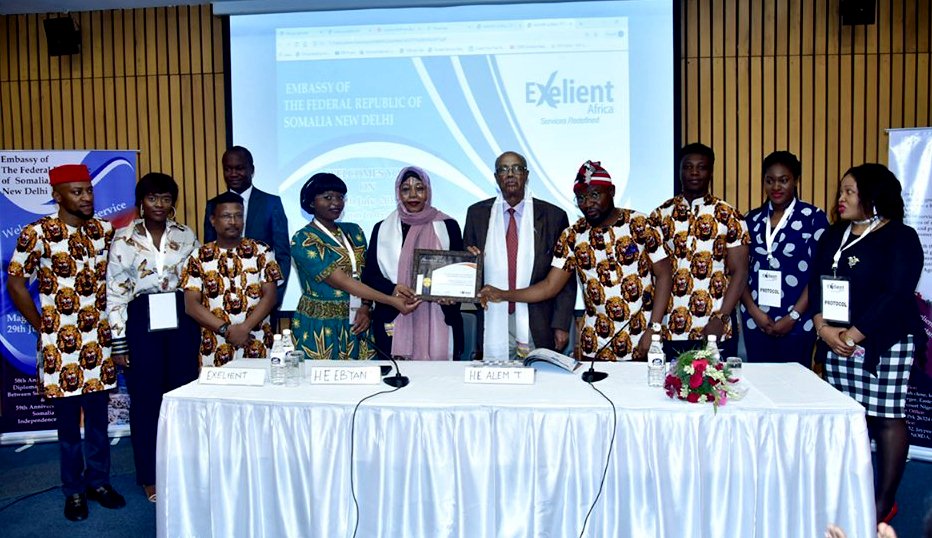
The Chief Guest H.E Alem Tsehaye Woldemariam (Ambassador of Eritrea to India; Dean African Heads of Missions in India – AHOM), in his address congratulated Somalia and also applauded the efforts of the Exelient Africa group “I’m indeed pleased that Africa’s youths are not only focusing on business as we have always known but are doing so with a different approach, one of a public and corporate social responsibility style. Exelient Africa is not just a brand name I believe but a family of Young Pan-Africans to reckon with and promote,” he said. Her Excellency Ebyan Mahamed Salah (Ambassador of Somalia; Former Dean Arab League, and Deputy Dean AHOM) reiterated the need of giving such an opportunity to young Leaders. She was also awarded with “The Award of Extraordinary Diplomacy” from Exelient Africa for her exemplary leadership and commitment in promoting Africa-India Relations through youths and people to people connect.

Speaking on the occasion, Ezeugo Nnamdi, Co-Founder Exelient Africa & Secretary General Africa-Asia Youth Foundation (AAYFO), said, “We hope and look forward to a more fruitful relationship between Africa and India as we continue to harness the potentials that are available in both continent and Subcontinent respectively.”

The event was attended by H.E Michael Aaron Oquaye (High Commissioner of Ghana to India), H.E Stella Budiriganya (Ambassador of Burundi to India), H.E Dr. Heba Salah Eldin (Ambassador of Egypt to India), H.E Dr. Tizita Mulugeta Yiman (Ambassador of Ethiopia to India), and H.E Deputy Ambassador of Sudan. Diplomats from The Embassy of DRC, and Somalia were also present at the event and magazine launch. The gathering was also joined by various organizations of repute including members of The Africa-Asia Youth Foundation (AAYFO), India-Africa Youth Energy Forum (IA-YEF), Confederation of Young Leaders (CYL), Indian Institute of Governance and Leadership (IIGL), Human Achievers Foundation, Association of Social Media Professionals, Lions Club Veg, Delhi, and Rajasthani Academy, MSME Chamber of commerce, India Africa Today, Times of Africa and students from Africa. 

On every 1st July, the Somalis globally celebrates the anniversary of Somalia’s Independence which was attained on the 26th of June, 1960 in the Northern region of the country, but it was  on 1st of July that the unification of the South and North of Somalia was witnessed, making it a momentous day in the history of Somalia.

Indian Army goes green with E-Car initiative to combat pollution

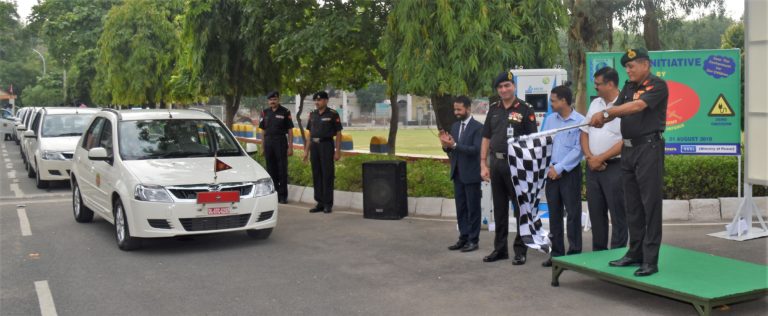
The Indian Army in step with government policies on environmental protection has launched an ecological initiative with employing electrical cars for use of its officials in New Delhi in partnership with Energy Efficiency Services Ltd (EESL), a joint Venture of Central PSUs under Ministry of Power. The introduction of E-Car in Army at Delhi was visualised on World Environment Day and launched on 01 Aug 2019 with flagging off the first lot of E-Cars for Indian Army by QMG, Lt Gen Gopal R. Army plans to operate the first batch of 10 E-Cars as a pilot project and develop further on this initiative and increase the number of E Cars in Delhi to ensure economy, efficiency and minimal emissions.

Army has always been at the forefront of environmental initiatives. Indian Army has a large number of Territorial Army Battalions (ECO) which have done a yeoman service in environmental protection initiatives such as forestation. Army units posted in remote and ecologically sensitive areas from Kashmir to Kanya Kumari have been carrying out various activities in close coordination with local populace to conserve the ecological balance and protect the environment.

Air pollution has been a major challenge in Delhi. Governments across the world are investing a lot of resources in fighting this menace. Electric vehicle technology has proved to be a viable alternative by reducing the carbon emission footprint. Indian companies like Tata Motors and Mahindra have taken a lead in R&D and manufacturing of Electric Cars. EESL has been the main facilitator in providing these vehicles to various Government agencies. Army’s initiative in encouraging these electric vehicles will go a long way in further development of this technology and its adoption for the general public in near future.

Committee to explore Coastal Tourism, Cruise Tourism and Sea Sports avenues in the country

India has a coast line of 7,516.6 km, which has immense potential for maritime tourism. Gujarat forms the longest coastline of all Indian states with 1600 km and Goa having the smallest coastline with 101 km. The Minister of State for Shipping (I/C) and Chemicals & Fertilizers Mansukh Mandaviya and Minister of State (I/C) for Tourism & Culture Prahlad Singh Patel, in a meeting, emphasised on the need to promote important tourist destinations in the coastal areas of the country through coastal tourism .

It was decided in the meeting to set up a committee of senior officials of the two Ministries to explore the avenues for coastal tourism in the country and work out ways to promote the same. It was also decided to explore  the possibilities and opportunities in the areas of  Coastal Tourism, Cruise Tourism, Sea Sports, Light House Viewing Gallery.  It was suggested that every coastal area can create a calendar of events for  tourist engagement, with activities like beach volleyball, sand art, food festivals, dances of the fishing community, to name a few.

The Shipping Ministry is promoting tourism in maritime states under the Sagarmala Programme. This is being done in convergence with the Ministry of Tourism and Tourism Development Departments of maritime state governments.

These new, unexplored tourism areas will open a door to coastal communities of the maritime states where they will find many new and diverse job opportunities. In the coming years, coastal and maritime tourism will be a source for growth and job creation in the coastal states of India.

The two Ministers also underscored the need  for better coordination and synergy between their respective Ministries so that desired results can be achieved in a time bound manner.

Café Coffee Day: Successful Model with a Lonely Entrepreneur

“It is a lonely job at the top” is a statement that has been spoken for a very long time over the past few decades and we saw one more example of a distressed entrepreneur (Mr VG Siddhartha) taking the extreme step.

Café Coffee Day is a classic example of a successful business model with a high profile and celebrated promoter who was possibly a very lonely human being with no one to share his innermost feelings of distress, loneliness and possibly depression.

The challenges being faced by the group of companies are not over – by exiting from the scene, Mr Siddhartha has shifted the onus of resolving his challenges to his family and the board of directors of his multiple businesses. He built a very strong brand and created job opportunities for thousands of people. More importantly, he will be remembered by the millions of customers who discovered friendships, relationships, startups, business ventures and the social relationships over a cup of coffee at his stores.

A lot has been spoken and written about the financial liabilities of the group and the asset base of the business. Allegations have been traded between political parties trying to gain some political advantage out of this tragedy.

A few businessmen, possibly facing financial pressures in their own businesses, have started making allegations against the government because of the alleged undue pressures of the government agencies. Have these individuals thought of their retraction if actual financial irregularities are found?

Audits and forensic audits will be undertaken. Investigative agencies will have to do their job. The Board of Directors of the various group companies will need to do a lot of introspection and seek answers.  The Private Equity investors who have supported these businesses will have their own perspectives to offer. The answers will emerge in the next few months and it is only after that should our political and business pundits start their pontification and give their opinions.

Nothing can bring back Mr VG Siddhartha. The loss to the family and the organisation is final.

It is important at this time to sit back and think of a much wider malaise that is affecting the entrepreneurial community. Why is it that 9 out of 10 startups fail? How much money do these failed businesses lose? All this money comes from the promoters’ own hard-earned earnings, from friends and family and from Angel investors. A few startups manage to raise money from private equity investors. When businesses fail, all these investors lose their money.

For the entrepreneurs, failure of their business is a quadruple whammy.

  • First is the loss of confidence since they have not been able to deliver on their dreams.
  • Second is the loss of all the investment made by each stakeholder.
  • Third is the pressure from creditors, employees, government agencies and financial institutions who start to demand their money.
  • Fourth is the negative coverage of a failure by our revered Fourth Estate.
Family members and relatives pay their last respects to mortal remains of Cafe Coffee Day (CCD) Founder VG Siddhartha at Chikmagalur on July 31, 2019. The body of Siddhartha, who went missing two days ago, was found by local fishermen and patrolling policemen on the banks of River Netravathi near Mangaluru. (Photo: PTI)

Where does the entrepreneur go? Bankruptcy, though now available for companies, is a very cumbersome process. Personal bankruptcy commonly accepted in the developed economies is not an option to Indian businessmen. This law needs to be made more friendly for entrepreneurs in distress. Individuals need to feel comfortable to reach out for protection under this law rather than “fear the consequences”.

Entrepreneurial Depression

Entrepreneurial depression is a serious issue that confronts every Startup Promoter. Let us look at some of the reasons why Entrepreneurs reach such a challenging situation.

  • Business idea is flawed: Ideas could be well ahead of their time in a market not ready to accept it or ideas could be significantly behind the stage the market is in. If the business itself is suspect, there is really no hope for the startup. If the customer does not buy your idea, no matter how smart or good it may be, the startup is doomed from the very start.
  • Funding is Insufficient: Most startups bootstrap their early months / years till they are able to raise funding. The moment funds are received, it has generally been seen that the expenses of the organisation increase in a ratio completely out of proportion of the business of the company. Once overheads are built up, it is very difficult to pull back. A lot of time is spent trying to keep raising funding to keep the business going. When funding starts to dry up, the business starts to flounder. A common reason given for pulling down shutters is “we never had enough money in the bank!”
  • Diversion of Funds into areas not intended: This is a very common reason for businesses running out of money. No one is questioning promoters where all the funds taken from banks as loans have been used. If loans are taken and they are meant for growth of the business, why do businesses reach a situation where they cannot even pay the interest? If there is strong evidence to establish that an entrepreneur has misused, diverted or embezzled funds, the strongest possible action must be taken against such individuals. 
  • Burn Rate is too high: Most founders underestimate their “burn” rate. Burn, very simply put, is the amount of cash you are spending every month. Once the company starts to earn from its business, burn can be classified as spend minus the earnings. Therefore, if there is a constant burn in the startup, funds need to come from equity to meet cash flow requirements. The longer the period of the burn, the more difficult it is to raise new funding.
  • High cost of Acquiring a Customer: Remember that the Cost of Acquiring a Customer must never be greater than the Lifetime Value of the Customer. Most startups believe that this equation will gradually change in their favour. They also wrongly believe that Lifetime Value of a Customer is the top line earned and not the profit from the revenue.
  • Weak Management Teams: Many promoters start with friends as their team members instead of bringing in strong management teams. Weak or in-disciplined management teams have weak execution and their insecurity perpetuates the challenge faced by the startup when they bring in even weaker team members down the line. This leads to a domino effect and does insurmountable harm to the young startup.
  • Scaling Up: A big reason for losses is when a startup scales up before it has established its business plan in a smaller and more controllable environment. Conversely, startups have failed because they have not scaled up fast enough. There is really no right or wrong answer when it comes to building a startup.
  • Getting a Coach or a Mentor: Most entrepreneurs are lonely people and while they have the ability to hire a business coach who could function as a friend, philosopher and guide without any agendas, they are either not aware of this input they can seek or have a sense of “know it all” bravado. The young and abrasive energy of a startup founder needs tempering with the wisdom of an older manager. Bringing together the vision of the Startup Entrepreneur and the experience of an older manager in an unobtrusive and non-threatening manner will prove to be very helpful. In addition to watching the back of the startup entrepreneur and guiding him when the ship hits troubled waters, such individuals will also bring in strong subject matter knowledge, from their respective domains.

There is a hot new startup that is being seeded by its founder and breaking out of its incubator every so often each day and yet there is another startup that has had its place in the sun and basked in its glory and is quietly riding off into the sunset.

We need to create an environment that certainly applauds successes but does not punish failures. Otherwise, people will stop nurturing entrepreneurial dreams and this can be a serious challenge for any economy.

Unless there is a support system for entrepreneurs to handle failure, entrepreneurs will continue to take steps to mitigate their losses and save their businesses. When nothing works, we need to prevent them from taking any extreme steps.

Ex-Faujis condemn the self-serving celebrities for their Open Letter to PM

More than 100 retired defence officers have strongly condemned and criticized the Open Letter written to the PM recently by a group of 49 people from diverse creative fields. Given below is the statement issued by these veterans.

An open letter to our Prime Minister Narendra Modi has been written by some self-styled custodians of democracy and freedom of speech, led by the likes of Aparna Sen and others. The letter has been published on July 23, 2019. It was signed by some 49 so called celebrities.

The letter has deeply hurt our sentiments, the sentiments of the veteran soldiers. The letter is one sided and quotes only selective incidents. The tone and tenor of the letter seems to please our enemies, rather than an effort to solve our problems. 

We are hurt that their diatribe did not even spare “Shree Ram”. “Shree Ram” has been the soul and spirit of this country for millennia. We have survived the invaders for more than a thousand years only through our patience and faith in “Shree Ram”. We the soldiers fight for our country and uphold all faiths and religions. But when someone tries to demean the majority faith, we really feel hurt. It becomes difficult for the Military leadership to keep the morale high among the soldiers. The soldier whose religion is attacked, feels demoralised.

We felt for long that there are black sheep among us, the enemy within. But now we know them. It was strange and shameful that within a day or so when our country was celebrating the great feat of Chandrayaan-2 that these people rolled out this letter. They have tried to demean and belittle India in the eyes of the world. 

We were told for long that Indian cinema is in the grip of some absconding criminals and enemies of Hindu faith. Their letter gives credence to such claims for these film personalities at least. These people are either anti-Hindu & anti-national or they are on the payroll of some criminal syndicates. Their only agenda is to keep India under cloud and look for opportunities to damage its growing image.

Indian soldier, everyone knows, has always stood the tests of time to protect our territorial integrity and sovereignty under every adversity despite lukewarm to contemptible treatments by most of the earlier regimes, till Modi arrived. Everything changed as Modi arrived on the scene. There has been a sense of comfort, a breath of fresh air. The corruption has been stifled, the military procurement has been expedited and a big boost has been provided to our own Military-Industrial Complex. 

May be these people are not happy that PM Modi has stopped their loot, checked their anti-India activities and that the morale of our soldiers is very high. 

We the soldiers may not be good at pen, we may not be able to select politically correct words, but we speak from the heart. We do not mince words. For us “India is First, Always and Every Time; and Under All Circumstances”.

In the present times, we find a strong and a committed leadership in PM Narendra Modi. We, the veterans pray to God and Mother India to bless Modi with long life to continue at the helm as PM till all the anti-India forces are totally demolished.

We the following strongly condemn the letter by 49 people and request our Prime Minister to adopt zero tolerance against such people who bring bad name to our great country. They may not be terrorists but they are definitely anarchists and we request the common patriotic citizens of our country to understand their nefarious designs and shun their cheap politics.  

1. Commander VK Jaitly, Co-ordinator: ExFaujis4Nation

2. Cdr Neeraj Singla

3. Capt (IN) SK Namboori

4. Cdr Praful Tayal

5. Lt Cdr Atul Asthana

6. Air Cmde V Sehgal

7. Brig SK Sawhney

8. Col KN Jetly

9. Gp Capt Ashok K Singh

10. Cdr Vishal Bhargava

11. Col Sumesh Seth

12. Cmde RK Rana

13. Cdr Vijay K Agarwal

14. Col Sanjay Dilwaria

15. Cdr Dutta

16. Capt (IN ) Raghvendra Rai

17. Cdr Prakash Chand

18. Cdr Anurag Vibhuti

19. Lt Col Yogesh Dadu

20. Col Madhukar Nikam

21. Cdr Kulbhushan Sharma

22. Col KC Tiwari

23.  Col RS Tripathi

24. Col GK Medirtta

25. Col PK Khare

26. Col TS Gururaj

27. Col AK Singh

28. Cdr Abhinav Sapru

29. Sunil Kapila

30. Cdr RS Bala

31. Cdr Ajay Panwar

32. Col Sudhir Garg

33. Col Ajay Pathak

34. Cdr RK Dudeja

35. Lt Col Anil K Singh

36. Cmde Munjal

37. Maj Raghbir Singh

38. Cdr Bharat Chauhan

39. Cmde Seth

40. Amar Nath Pandey HFO

41. Maj TC Rao

42. Col Dr Semwal

43. Gp Capt Jindal

44. Col Sushil Choudhary

45. Gp Capt Ashok K Singh

46. Cdr VVK Arjuna

47. Cdr Sushil Jangra

48. Capt SK Thakur

49. Cdr Ms Raghunath

50. Cmde Anil Lal

51. Cdr BR Sharma

52. Cdr CM Maini

53. Cdr SK Rautray

54. AirCmde VK Mishra

55. Lt Col Sunil Yadav

56. Col Shishir Gupta

57. Capt Jagdev Singh Gulliya

58. Col JS Kaundal c

59. Capt SK Sharma (IN ) 

60. Col Prashant Jha

61. Ashok Dabas MCERA

62. Cmde SK Iyer

63. Cdr Anil Saxena

64. Cmde Ashok Khetan

65. Cdr Anil Goel

66. Cdr Ramjit Singh

67. Col DK Dass

68. WgCdr SC Mohla

69. Cmde Gopal Bharti

70. Cmde Sunil Jetly

71. Gen Prakash Panjikar

72. Raj

73. Lt Col Sanjiv Chopra

74. Subhash Bhutani

75. Lt Col AK Singh

76. Gurdarshan

77. Rajeev Ranjan

78. Gp Capt Anshlesh Saxena

79. Maj Rajesh Mishra

80. Col JP Singh

81. Cdr KM Desai

82. AB Mishra Sgt

83. R Upadhya JWO

84. Diwakar Chaubey

85. SK Mishra Air Veteran

86. Gopal Singh Chahar

87. Brig Anil Gupta

88. Col S Kaul

89. Col Gopal Singh

90. Brig Rajesh Malhotra

91. Cdr TB Rangachari

91. Col BK Sharma

92. Cdr Manoj Tayal

93. Cdr Pawan Sanan

94. Cdr Saket Singh

95. Capt Ashok Goyal

96. Wg Cdr Anil Rastogi

97. Hon Subedar Major PS Bhagel

98. Lt Cdr Rajeev Shukla

99. Brig MI Jaisi ghani

100. WgCdr GS Makkad

101. Cdr HS Saluja

102. Wg Cdr GS Makkad

103. LtCdr Vikram Singh Katoch

104. Col Uday Singh Rathore

105. RAdm MK Badhwar

106. RAdm OP Singh Rana

107. LtCdr Raj Kumar

108. Capt BC Kumavat

109. Capt KK Chaudhary

110. Capt Ishwar Rath

111. Capt Sudhir Dua

112. Maj Gen RK Sudan

Kashmir needs to curb its tendency to get swayed by rumours

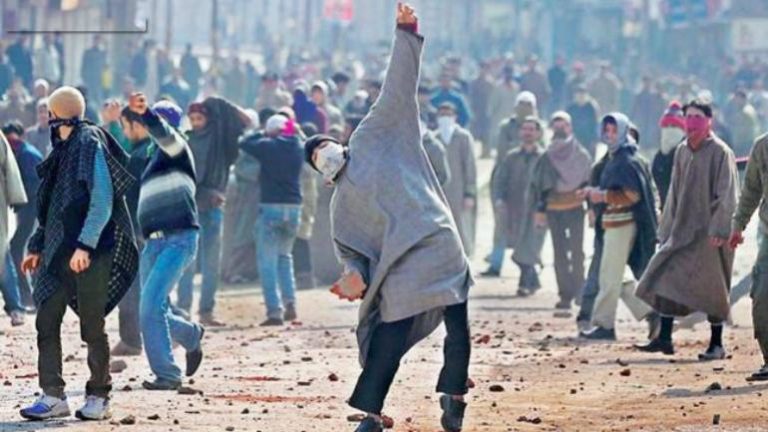
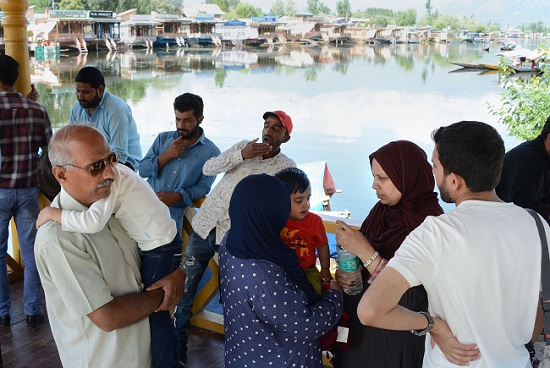
Rumours have a tendency to spread like wildfire in Kashmir, most of these have a negative connotation and are designed to create insecurity among the people. The insecurity soon converts into a panic situation. This malaise has become all the more prominent with the advent of social media where fake and twisted news gains instant prominence.

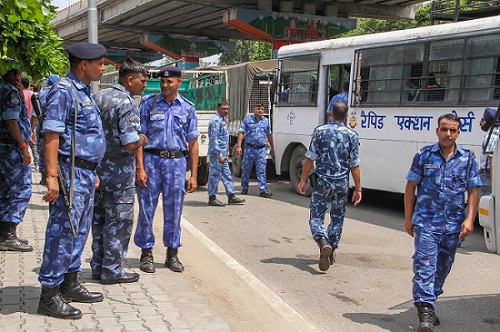
Such a scenario is being played out since the last few days. A perfectly normal decision by New Delhi to send additional troops to the Kashmir Valley has led to wild speculation. Troop movement can be for many reasons, including a changeover schedule where incoming troops are moved earlier to take over duties. The disrupters, however, have created a fear psychosis that something unusual is about to happen. The primary conjecture is that the government is poised to remove Article 35A which will lead to massive protests and disturbance of normal life. Naturally the common man is left worried.

Alongside, two perfectly innocent missives by government officials have added the proverbial fuel to the fire. The first is a note by Railway Protection Force (RPF) officer to his subordinates advising them to gear up for a “deteriorating situation” and the second is an instruction to Zonal Superintendents of Police to provide a list of mosques in the city and their management committees.

It is not out of the ordinary for over-zealous officers to pass instruction in anticipation of some unusual happening, as a precaution in anticipation; this is a time tested method of bureaucratic “cover my back.” This could probably be the motive of the RPF officer.

Taking details of religious institutions and their management is a routine updating activity; it would be foolish to believe that such detail is not already available with the government. What is alarming with respect to the incidents listed above is the alacrity with which information has been leaked out and used by inimical social media. This is something that the government needs to look into seriously, as it’s a big intelligence and security lapse.

The rumour mongering has given to the sidelined leadership of Kashmir Valley the much needed leverage to get back into limelight. Statements containing dire threats if the constitutional status-quo in the state is changed are flowing thick and fast. Mehbooba Mufti, whose Peoples Democratic Party (PDP), is on the verge of collapse, is cleverly using the opportunity to take centre stage by attempting to get the mainstream leadership together. She has reached out to Omar Abdullah and Sajjad Lone among others.

Even marginal leaders like Shah Feasal are being approached by the media to give statements. And, in this welcome moment under the sun, Shah Feasal has, most ludicrously, declared any attempt to remove the legislations as illegal and unconstitutional amounting to “declaration of war” against the people of Kashmir. This ex-bureaucrat seems to be in need of some serious lessons on the Constitution and history.

Never far behind in exploiting an environment of instability, Pakistan has responded by heating up the line of control with ceasefire violations. The increased activity has come after a relative respite of about two months. Undoubtedly, Pakistan will also attempt to increase the terror threshold and get its civilian assets within the Kashmir Valley to create more fear and dissension.

Under these circumstances, where every attempt is being made to exploit a routine situation to vested political advantage, a strong statement by Governor Satya Pal Malik has done wonders in restoring the confidence of the people.  While assuring the people that “everything is fine, everything is normal” he has rejected as “invalid” the so-called government orders that had generated panic in recent days. “Many rumours float here on a daily basis but please do not pay any heed to that. Everything is fine, everything is normal,” he has said.

It is to the credit of the people of Kashmir that they have not allowed the rumours to cloud their better judgement. The panic subsided within 24 hours and the Valley got back to its normal routine by July 31st.

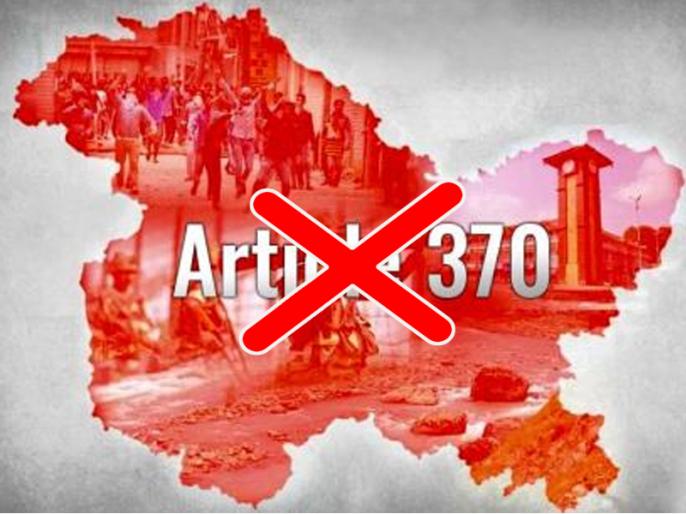
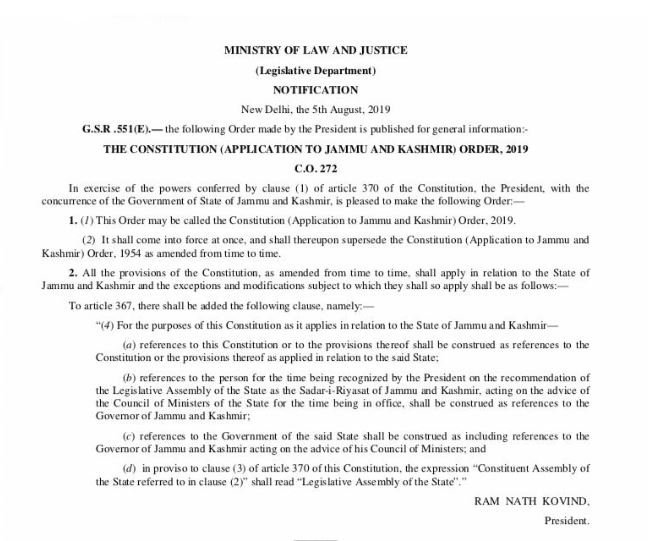
While the New Delhi does not seem to have any immediate intention to abrogate Article 370 or remove Article35A, the need to do so sometime in the future cannot be undermined. The constitutional status of Article 35A has been challenged through a series of Public Interest Litigations (PILs) and the petitions are being heard by a five judge bench of the Supreme Court. The very fact that the Supreme Court has admitted the petitions is indicative of the merit in them. It would be best to wait for the legal and constitutional aspects to be concluded before giving opinions and spreading rumours about the same. The disruptive manner in which the matter is being raked up by some elements of Kashmir Valley indicates their fright at the prospect of the said legislations being removed. It is so because they are the biggest beneficiaries having used them to build feudal political empires while keeping the common man subjugated.

The fact is that these legislations are wholly redundant in the present context and are standing in the way of overall progress, development and prosperity of the state and its people. There are many benefits that the people of India enjoy due to development initiatives of the central government that are denied to the people of Jammu and Kashmir due to Article 370.

Yet, things are improving rapidly in Kashmir! The security situation is stable; recruitment of locals in the fold of terrorism is reducing and so is infiltration from across the border. It is being said that state assembly elections will be held in the last quarter of this year. The enemy, being on the back foot, is clutching at straws to remain relevant. It is important for the people to understand the environment and not get swayed by the attempts being made by the enemy to create dissension. The tendency to give credence to rumours needs to be curbed.

Can we take a Letter to PM seriously that is self-deceiving? Asks Former Special Secretary, RAW

Last week, an ensemble of 49 filmmakers, actors, authors, artists, activists, historians and professionals were in the news for writing an open letter to Indian Prime Minister Narendra Modi, expressing their concern over rise in intolerance to dissent, distorting meaning of patriotism to hound people and lynching of Muslims and Dalits. Their anguish was no surprise because the signatories had a liberal spread of those who are historically non-conformist, like to swim against the current and are inherently anti-establishment. They also have never had any connect with how criminal justice system works.

Their litany of grievances instantly took you back to 2014, when beneficiaries of national awards had echoed similar sentiments while returning their awards soon after Narendran Modi had become prime minister. They had accused him of promoting divisiveness, Hindu religious bigotry and encouraging his party workers to attack Christians and NGOs and to lynch Muslims and Dalits in the name of protecting cows. They had created so much fear that a few gullible film makers, artists and retired police officers even thought of leaving India for good and settle abroad. It is a different matter, they never left the Indian shores and continued to breathe in Modi’s alleged stifling regime. Their catcalls went on for a few more months but died their natural death in due course.

Yet, they did not lose hope. They kept badgering Modi and selling a narrative that he was breaking India on communal lines, he always lied to people about the insipid record of his government and that he was corrupt, mercenary, vengeful and a master in manipulating electorates’ mind. They made their audience believe that he was a fascist and a failed leader who was going to lose his re-election in 2019. That did not happen. Modi returned with a stronger mandate, leaving them down and out, though temporarily.

Two months after NDA-II returned to power in May 2019 was a long period for these 49 self-proclaimed guardians of India’s moral conscience to remain out of news, as they thrive on publicity and adulation by an audience that forms a minuscule section of India. Hence the open letter which really makes no sense to most Indians who toil day in and day out for food and shelter. In fact, there was no need for Prasoon Joshi (Chairman, Central Board of Film Certification) and 60 others to issue a rejoinder and try to peel off their motive. It matters little whether signatories are mouthpiece or ideologues of insurgents, terrorists and separatists and whether they are out to defame the nation. Forty nine agitated minds cannot define what will be the best for a country of billion plus people. It is for the governments elected by voters to structure policies and programmes and implement them.

There is of course nothing wrong for them to share their anguish and apprehensions. What irritates is when they talk of subjects, they are naïve of. They should have written to suggest how best to protect, preserve and develop a temper of art, history, science and literature in the country. Instead, they wrote about issues that are the sole preserve of criminal administration and judiciary. No wonder, their letter lacks conviction and raises suspicion about their intent.

There is no ambiguity that lynching of anyone is a heinous crime and perpetrators must be severely punished. It does not matter who does it and why and whether this is a bailable or a non-bailable offence. But no Prime Minister has a role in such cases. He can neither lodge an FIR nor investigate or punish offenders. It is for the police to prosecute them and, for courts to convict them. Neither of these institutions functions under the PM. Police works under the state governments and courts under judiciary. The constitution bars the central government from interfering in such matters. PM can at best express anger, frustration or issue advisories to state governments but that means nothing. If petitioners are sincere, they should put pressure on state governments, hire best lawyers for the diseased, offer them financial help and create awareness among people in sensitive areas to ensure that lynching does not take place.

Their other grouse is that chanting of “Jai Sri Ram” has become a war cry and provokes violence. The question is how can anyone stop people from raising slogans in a country that passionately swears by freedom of expression? Moreover, if the chanting leads to riots, why doesn’t the state police impose Section 144, arrest hooligans and prosecute them. Instead of endorsing the letter of the petitioners, Mamata Banerjee (West Bengal’s Chief Minister) should have acted against chanters and rid her state free of slogans hailing “Jai Sri Ram”. Does she really believe that Modi can silence zealots of Ram by just appealing and, why would anyone listen to Modi since it concerns an individual’s faith?

The other concern of the Group of 49 is that when someone criticises the government or BJP, he is branded anti-national and hounded for expressing dissent. Well, it is an oversimplified grievance. If anyone feels aggrieved on these counts or faces wrath of people for his or her creations and views, there are courts and police stations where he or she can go to get his or her grievances redressed. But the individual must understand that he/she has to be responsible for what he writes, speaks and sketches and that he has the capacity to defend himself. He cannot expect a Prime Minister to work as 24×7 vigilante for individuals with no sense of accountability and rescue them from storm troopers.

As for the dissent, no country walks the distance as aggressively as Indians do. The dissent has in fact been taken to a level where politicians abuse merrily and media misinforms with impunity. It is about time, the signatories should come forward to build a mass movement for enacting simpler and effective defamation laws so that sanity prevails in public discourses and courts promptly rescue those who are wrongly incarcerated for expressing dissent. Just writing to the Prime Minister and feeling happy about it, is merely a pathetic public relations exercise.

Taslima Nasreen: I never think of India as foreign land

Taslima Nasreen is a writer, free thinker and humanist, who was driven out of Bangladesh—her country of birth. Now, India is her home. In this rather emotive piece, Taslima writes how she continues to be on edge due to uncertainties in her resident permit by India.

Twenty-five years ago, the government of my country had driven me out of my home and my land. Had I committed a murder, a rape, a burglary of some kind?

No.

I had simply written books.

In those books, I had written about democracy, secularism, humanity, human rights and the equal rights of women.

In those books, I had laid bare my dreams of an equal society where all manner of discriminatory practices, injustices and oppression have been abolished.

In the past 25 years, there have been numerous changes in the government in Bangladesh — but none of them have allowed me to return home, and neither has anyone given me a reason as to why I cannot.

A significant portion of the first half of this quarter century, I spent in Europe and America. But I was desperate during those years to return to my country — and since the doors to my homeland were closed for me, I would repeatedly visit West Bengal to get some semblance of taste and smell of home.

The Bengali language is my one true home after all.  

Thus, in order to find an environment of the Bengali language and Bengali culture outside Bangladesh, I had chosen West Bengal as the closest approximate for my home. It was not possible to set up a home somewhere with a tourist visa but fortunately, one day, I did get permission to make Kolkata my permanent home. That was the day I earned a residence permit to live in India — something that can be renewed at regular intervals. I started living in India from 2004.

In the beginning, residence permit would be renewed every six months, which was changed to a year in 2008. Instead of the tedious application process every year, would it not have been easier to issue a permit for five or ten years at one go? In fact, Rajnath Singh had once promised me a 50-year visa. But that was only talk — nothing has come of it and my residence permit has remained subject to annual renewals. Although many foreign nationals have been living permanently in India with extended residence permits for a number of years, unlike mine, for many of them, their permit needs to be renewed every 5 or 10 years.

In 2007, when the CPI (M) government of West Bengal drove me out of the state in order to appease Muslim fundamentalists, the UPA government in the centre put me under house arrest in a cantonment in Delhi — and coerced me to concede leaving India in 2008.

From 2008 till the beginning of 2011, even though my residence permit was regularly renewed, I was not allowed to live in India.

Around that time, many people had told me that when the BJP would come to power, I would no longer have to worry about my residence permit, and that I would be made a citizen and allowed to live in Kolkata again. I had thought so too.

So, imagine my utter surprise when, after coming to power in 2014, the BJP government reduced the duration of my residence permit from a year to two months. And after coming back to power for the second time, they have yet again revised it from one year to three months. I don’t know why they have chosen to do so. After living in this country for 14 years, does the BJP government want to snatch away the ground beneath my feet yet again?

I don’t know what these three months signal for me.

I remember how, after I was driven out of West Bengal, Narendra Modi, who was then the Chief Minister of Gujarat had declared in a speech that if Bengal could not give security to Taslima, then they should send her to Gujarat where he would give her security. During his electoral campaigns in Kolkata, he had demanded to know why I was driven out of the state and why the Trinamool government that had replaced the CPI(M) had done nothing to help me return.

Few Indian politicians have ever spoken in favour of me in public with any authority, like Modi ji has.

Even though I have no favourites when it comes to politics, I have been grateful to him for having unhesitatingly supported a persecuted, exiled, truly secular writer such as I.

So, naturally, I assumed I was going to be free of the ordeal of having to renew my residence permit annually if he came to power, that I was finally going to be able to live in this country for real, free to live out the rest of my days and write without any worries or anxieties.

But even after Modi ji has come to power, my troubles have remained the same. Rather than worrying less, this reduction of the duration of my residence permit has only served to augment my anxieties.

I have done nothing wrong. I have just been writing. I have been trying to inspire women in our society to become educated and aware. Despite being a Swedish citizen, a resident of the European Union and a permanent resident of the US as well, I have chosen India as my home. All because I speak in an Indian language, I write, think and dream in it. India truly is my home in that sense — the only place in this subcontinent where I can think of living. People of this subcontinent are usually desperate to move to Europe or the USA — I have done the exact opposite, simply because of my love for this land. I have ignored the promise of fame and security abroad and chosen to plunge into the uncertainties of living here.

Yet, even after a quarter-century of exile and nearly fourteen years of living here, I still feel shivers crawling down my spine when I see my residence durations reduced abruptly.

I cannot help but worry if one day it will yet again come down to zero.

Many people believe that the government of India sustains me — that I am their guest. That’s absolutely not true. I live with my own money — that is how I sustain myself, and I also pay a considerable amount in taxes. I am not personally acquainted with any of the ministers, neither do I know any influential people. I am decidedly a commoner who lives a very average, regular life. I mix with the common people, they are the ones who are my daily companions. Since my own country has moved far away from me in these twenty-five years, since its doors are forever closed for me, India is my country now.

I have never thought of it as a foreign land since I truly believe that mere birth does not make a location someone’s nation — a nation is born of love.

I believe that I love India much more than many citizens of this country. I am also aware that should they get citizenship from the EU or a green card from the USA, many so-called patriots would not blink twice before emigrating.

And here I am, having chosen this land even after being offered other such options. If India values love at all, I am certain there will be no problems for me living here in the future.