The National Center for Good
Governance (NCGG), India’s leading civil services training institution, has
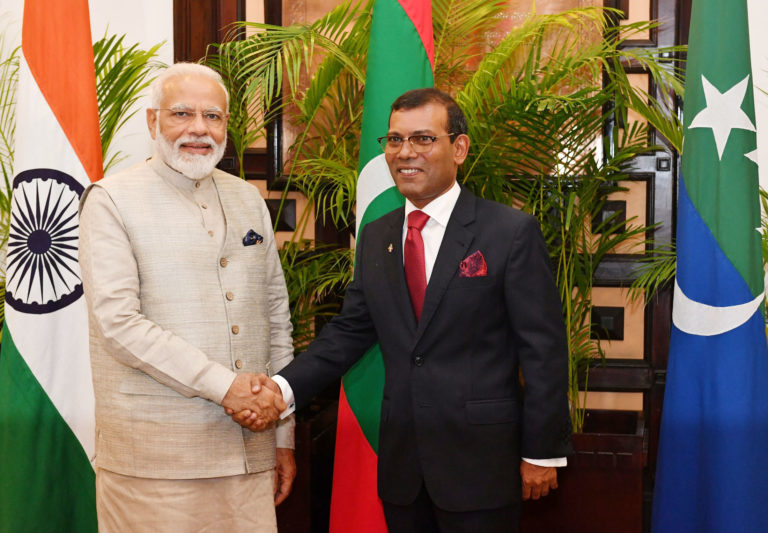
entered into an MOU with the Maldives Civil Services Commission for capacity
building of 1000 Maldives civil servants over the next 5 years. The agreement
was signed during the visit of the Prime Minister of India to Male on 8th June
2019. The Ministry of External Affairs will bear all expenses pertaining to the
training program.
The agreement envisages that NCGG
will be the nodal institution for designing customised training modules and its
implementation taking into account the requirements of the Civil Service
Commission, Maldives. The subject matters of the training program will include
public administration, e-governance and service delivery, public policy and
governance, information technology, best practices in fisheries in coastal
areas, agro-based practices, self help group initiatives, urban development and
planning, ethics in administration and challenges in implementation of SDGs.
Maldives will nominate suitable civil servants in the senior/ executive/ middle
management levels as per agreed timelines.
Further the NCGG will assist the
Civil Services Training Institute, a subsidiary of the Civil Service
Commission, Maldives to develop training programs and materials, assist in organizing the exchange of experts
as needed by the Civil Services Commission.
Shri K.V.Eapen Director General
NCGG and Secretary to Government of India Department of Administrative Reforms
and Public Grievances said that NCGG had trained 28 Maldives Civil Servants in
April 2019 and this successful engagement encouraged the two countries to take
the collaboration forward. Shri. Eapen said that in 2019 NCGG has successfully
conducted training programs for civil servants of Bangladesh, Myanmar, the
Gambia and Maldives.
Two letters sent by Pakistan,
after the Modi government came back to power, shows the sheer desperation of
Imran Khan and his team, who are finding themselves helpless amidst global
diplomatic pressure and deteriorating economic crisis at home.
Just a week after seasoned
diplomat, S Jaishankar, took over as the new Minister of External Affairs,
Pakistan had sent a letter stating that Islamabad would want to hold talks with
New Delhi on ‘all important matters’. In the congratulatory letter to the MEA,
Pakistan Foreign Minister Shah Mehmood Qureshi had said that his country is
committed towards establishing peace in the region. In his letter, Qureshi said
“Islamabad wants to hold talks with New Delhi on all important
matters…remains committed to all efforts to establish peace in the region”,
PTI quoted The Express Tribune as saying.
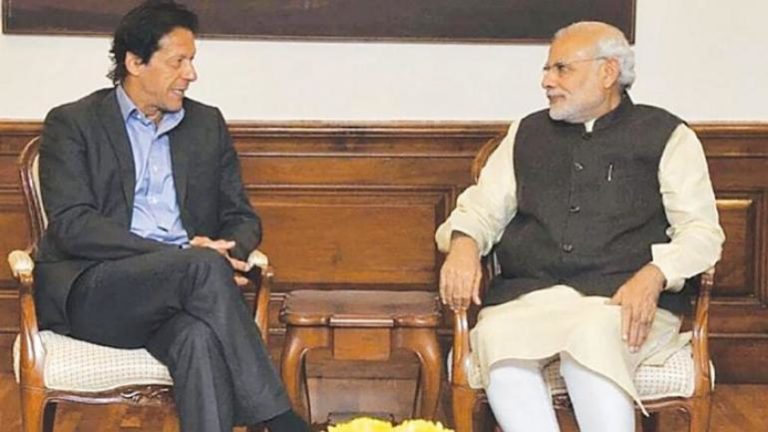
Subsequently, Pakistan Prime Minister Imran Khan also wrote a letter to Prime Minister Narendra Modi stating the same requests as Qureshi wrote to Jaishankar, also mentioning Kashmir. In his letter to Narendra Modi, congratulating him on his second term as the Prime Minister of India, Imran Khan said talks between the two nations were the only solution to help both countries’ people overcome poverty. Khan said Pakistan desires the resolution of all problems, including that of the Kashmir issue, as per Geo TV reports. However, India has rejected Pakistan’s offer of talks, maintaining that terror and talks cannot go together and said that no bilateral meeting has been planned between the two premiers on the sidelines of the Shanghai Cooperation Summit (SCO) in Kyrgyzstan’s capital Bishkek on June 13-14. Meanwhile, the White House has said Pakistan should take it on itself to resolve the tension between India and Pakistan.
The new peace overtures from the Imran Khan government after
the re-election of Prime Minister Narendra Modi, comes months afterthe Pulwama
attack on February 14 by Pakistan-based terrorist group Jammat-ud-Dawa (JuD),
killing 44 CRPF jawans. Ten days later, India had launched massive airstrikes
in Pakistan territory and bombed terror havens in Pakistan’s Balakot, destroying
the JuD’s training camps. The airstrike and subsequent developments gave a
massive blow to Pakistan diplomatically.
Salman Khan is back with a bang
on the silver screen. Khan’s Eid release Bharat recorded opening day collections
of Rs. 41.50 crore, making it the second highest first day earnings of all time
for a Hindi film. The record for the highest opening day collections are
currently held by Aamir Khan and Amitabh Bachchan’s Diwali release Thugs of
Hindostan that had made Rs. 48.27 crore last year.
Not only has the film done well
on its opening day, but it has been unstoppable at the box office, earning
around Rs 130.5 crore in four days of its release, reveal early estimates,
despite one of the biggest sporting events, ICC Cricket World Cup 2019, going
on England. The film has notched up the highest opening day numbers for a
Salman Khan-starrer beating hits like Prem Ratan Dhan Payo (Rs. 39.32 crore),
Sultan (Rs. 36.59 crore) and Tiger Zinda Hai (Rs. 34.12 crore).
The film is on its way to
breaking all-time records.“Bharat hits the ball out of the park on day one,
storms the box office and proves yet again Salman Khan is the biggest crowd
puller,” trade analyst Taran Adarsh tweeted.
Salman Khan has set a new record
with Bharat’s success — he is the biggest star in Bollywood with maximum films
(14) in the coveted Rs 100-crore club. Of these 14 films, three have crossed Rs
300 crore, while two films earned over Rs 200 crore.
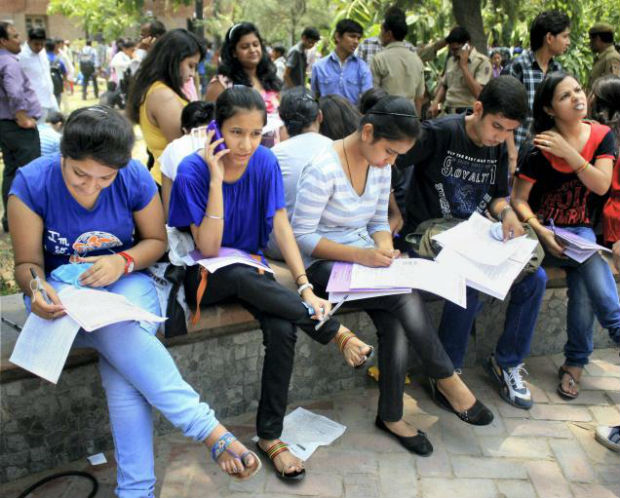
After crossing the class XII juggernaut, the next major challenge for students is to get admission in their favourite college and course. However, with multiple courses being offered, it becomes difficult for students as well as their parents to identify the most appropriate courses and colleges of their choice. To facilitate the admission process, a career counseling and guidance program for the students, who have recently passed class XII examinations and seek admission in the undergraduate courses in various universities/colleges/Institutions, has been planned by Youth United For Vision And Action (YUVA).
Titled as ‘UDAY’, this one-day career counselling and guidance program for the students has been scheduled for 9th June, 10 am onwards, at Dyal Singh College Auditorium, Lodhi Road. During the session, counselling will be provided for all streams by leading academicians from Delhi University, JNU, IP University, Ambedkar University and also by people from administration i.e. Principals of Dault Ram College, Hansraj College, Dyal Singh College, PGDAV College, Aryabhatt College, Registrar JNU & IP University, Director ICSSR (NRC) etc. There would be separate session Science/Commerce/ Arts/Technical/Vocational courses.
The counselling is free of cost. Interested
participates are requested to register on the website yuva.net.in to attend the counselling program.
HBO’s latest show “Chernobyl”, which dramatises
one of the world’s worst man-made catastrophes due to an explosion in a nuclear
plant, has surpassed shows such as “Game of Thrones” and
“Breaking Bad” to become IMDb’s all-time TV rankings just days after
airing. “Chernobyl” is a retelling of the massive explosion of the
nuclear power plant in the Ukraise on April 26, 1986 and its aftermath. The
explosion released radioactive material across Belarus, Russia and Ukraine and
as far as Scandinavia and western Europe, according to Variety.
The five-episode show, written by Craig Mazin and directed
Johan Renck, had a 9.6-star rating out of 10, based on 152,634 users, as of
June 6.
The rating puts “Chernobyl” ahead of cult TV shows
such as “Breaking Bad” (9.5), “Planet Earth II” (9.5),
“Band of Brothers” (9.5), “Planet Earth” (9.4), “Game
of Thrones” and “The Wire”.
The Union Minister for Information & Broadcasting and
Environment, Forests & Climate Change Prakash Javadekar has said that
India’s forest cover increased by 1% in the last 5 years and that similar
progress will be possible in the coming five years through people’s
participation. He said that when compared with the amount of oxygen we consume
in a lifetime, all of us must plant and help grow at least 10 trees; he said it
is the way forward for environment protection.
The Minister said this during an interaction with the media,
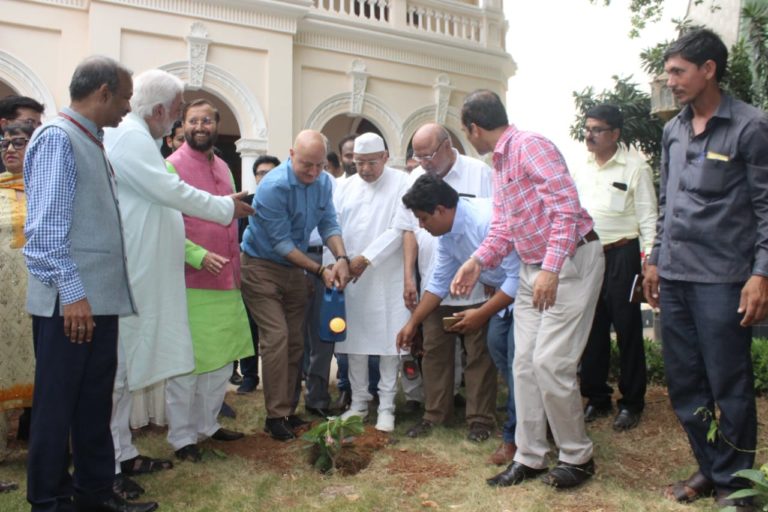
after planting three saplings in the premises of Gulshan Mahal, the historic
building in Films Division that houses a part of NMIC, as part of the
celebration of World Environment Day. Film personalities Anupam Kher, Jackie
Shroff, Shyam Benegal, Kiran Shantaram, Varsha Usgaonkar and others were
present on the occasion. The Minister expressed his heartfelt gratitude to all
artists for coming together and joining the movement.
The Minister had launched a people’s campaign
#SelfiewithSapling on Environment Day eve, urging everyone to plant a sapling
and to post the selfie with the sapling on social media. On Environment Day,
Shri Javadekar planted saplings in the premises of Environment Ministry in New
Delhi along with the Minister of State in the Environment Ministry Shri Babul
Supriyo, renowned cricketer Shri Kapil Dev, Bollywood actors Shri Jackie Shroff
and Shri Randeep Hooda and noted singer Smt. Malini Awasthi.
On the occasion, the Minister undertook his first visit to
the National Museum of Indian Cinema (NMIC), Films Division, which was
inaugurated by the Prime Minister on January 19, 2019.
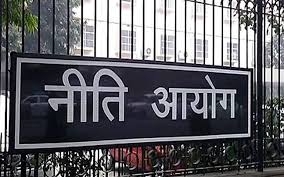
Government has reconstituted NITI
Aayog. Prime Minister Narendra Modi, who is also the Chairperson of Aayog, has
approved the re-constitution of National Institution for Transforming India
(NITI) Aayog.
The reconstituted Aayog includes Dr.
Rajiv Kumar as Vice-Chairperson and 3 full-time
members viz. Shri V.K. Saraswat, Prof.
Ramesh Chand and Dr. V.K. Paul. Ex-officio Members are Shri Raj Nath Singh,
Minister of Defence, Shri Amit Shah, Minister of Home Affairs, Smt. Nirmala
Sitharaman, Minister of Finance and Minister of Corporate Affairs, Shri
Narendra Singh Tomar, Minister of Agriculture and Farmers Welfare; Minister of
Rural Development; Minister of Panchayati Raj.
Special Invitees in the Aayog are
Shri Nitin Jairam Gadkari, Minister of Road Transport and Highways; Minister of
Micro, Small and Medium Enterprises, Shri. Thaawar Chand Gehlot, Minister of
Social Justice and Empowerment, Shri PiyushGoyal, Minister of Railways; and Minister
of Commerce and Industry, Shri Rao Inderjit Singh, Minister of State (Independent
Charge) of the Ministry of Statistics and Programme Implementation and Minister
of State (Independent Charge) of
Ministry of Planning.
The Indian electorate has delivered a massive mandate to the Narendra Modi-led BJP Government, now securely back in power at the helm of India’s political leadership, with an assured tenure up to 2024, perhaps beyond, if all goes well. The overwhelming majority secured by the BJP on its own in the just concluded Lok Sabha Elections augurs well for a stable period ahead, sans internal squabbling which is a prominent feature of coalition governments.
At the start of Modi’s second innings, some important questions come to mind.
• How well will the Modi Government take
advantage of this enviable position?
• Will pre-poll promises be fulfilled
effectively?
• Will his team of Ministers perform the
way they are expected to and deliver great results which the people of India
are longing to see?
• Will the various shortcomings and
failures of the last five years be truly compensated for?
• Will the prevailing serious challenges
on various fronts be met squarely and successfully?
• Will the country’s overall socio-economic
standards and quality of life improve dramatically over the coming five years?
• Will societal peace and harmony improve
and sustain?
• Will the people of India have good
reason to be proud of being Indians?
• Will India attain a globally premier
economic position in the coming years?
The
answers to these primordial questions depends largely on how carefully the
following deeply inter-related prospective initiatives and actions to be taken
by the Government are addressed, and how our leadership chooses to deal with
existential issues.
India’s
Expectations
• the preparation of a comprehensive
National Reform Agenda
• the way federal resources are mobilized
and allocated
• the way scientific decision making
processes are followed at all levels
• the system of delegation of apex level
Government responsibilities to elected people’s representatives and devolution
of operating powers with defined accountability.
• the governance methodology
• the way Centre-State relations are synergized
• the national character, discipline and
societal conduct we seek to engender in our people
• the way we train, skill and encourage
our youth to be gainfully employed
• the way we work to optimise utilization
of our fiscal, human and natural resources
• the policies and programmes we embrace
to achieve rapid socio-economic development
• the encouragement we give to promote national interests
• the improved laws and procedures we lay
down in all domains and at all levels
• the oversight and regulatory systems we
adopt
• the new reward-punishment mechanisms we introduce;
building more jails, if required
• the way we involve and motivate people
to complement the efforts of the Government by participative actions to usher
improvement, and so on.
Seems
a long and complex list! Well, unfortunately there is no short cut to achieving
enduring success in a country as large and complex as India.
In the Chart given below I have illustrated the cycle of macro-economic activity, starting with the sourcing of mege-scale fiscal resources necessary to achieve socio-economic development and all manner of positive progress as a nation.
The inner cycle shows the plans and procedures necessary to realise the development phases shown in the outer circle.
Cascading Benefit to Country of Prudent Macro-Fiscal Investments
The recommended way forward would broadly be as follows:
A. Statement of National Objectives and Fixation of Targets
1. To
make a concise 5-year Plan covering all facets of country’s requirements.
2. To specify State / Union Territory-wise numerical values of five-year targets, divided in to measurable and verifiable annual targets.
3. Fixation
of tiered responsibilities and accountability, instituting stringent
administrative oversight mechanisms.
4. Monthly performance review and financial audit and 3-level appraisal based on daily, weekly, monthly MICS (Management Information and Control Systems).Timely course correction plans.
5. Engagement
of senior external domain experts to guide, advise and support Government in
its attainment of defined goals.
B. 30 Most Important Areas which must be the PRINCIPAL PRIORITY for PM Narendra Modi
These 30 Most Important Areas require attention and action with a sense of great urgency. These are not listed in any particular order of priority as all are important and urgent.
1. National
Resource Mobilisation and Conservation.
2. Boosting
Sustainable Employment in rural, urban and metro areas covering agro,
industrial and services sectors.
3. Enhancing
Programmes for Technical Education, Skill Development and Specialised Training
through establishing new hi-tech SDCs (Skill Development Centres) in every
viable District; reskilling programmes and Special Programmes to impart skills
to differently abled youth.
4. Attracting
significant FDI on sustained basis. Enhancing Forex Reserves.
5. Simplification
of convoluted civil laws and introducing new system for abridged and tiered
adjudication.
6. Introducing
Legal Reforms. De-clogging all Courts and Tribunals. Curbing avoidable new
litigation through effective conciliation and mediation mechanisms complementing
arbitration processes.
7. Enhancing
ease of doing business measured against international benchmarks.
8. Boosting
infrastructure development.
9. Providing
fillip to agro-sector through enhanced thrust on co-operative models and
value-added agro products. Special thrust to safeguard livestock from harmful
impact of anti-social activities; introducing modern identification and traceability systems for all valuable
species of livestock to benefit (i) actual
owners against stock theft and (ii) veterinary authorities in management
of disease and assurance of food quality.
10. Enhancing
output from industrial and services sectors.
11. Thrust
on increasing exports from all sectors.
12. Announcing
all-round Amnesty Schemes to recover fiscal resources expeditiously while
providing freedom to concerned people from past entanglements and allowing them
a fresh opportunity to progress.
13. Strengthening
criminal justice system, while simplifying and expediting trial process.
14. Introduction of serious Banking Sector Reforms including the financial sector, aimed at (i) curbing NPAs, bank frauds and revenue leakages; and (ii) consolidation of PSU banks.
15. Increasing
the role of Information Technology in supporting achievement of all objectives
stated herein.
16. Reducing
fiscal deficit, public debt and interest burden of government. Attaining
accelerated growth rate in GDP based on robust, achievable Plans and Programmes
to grow core sector industries by at least 10% per annum to realize such GDP
growth targets.
17. Providing all deserving Indian citizens with the following basic amenities, which should be based on proof of unique Citizenship ID. The non-Indians (illegal refugees and unauthorized squatters) must be specifically excluded in these welfare schemes. • affordable housing • education and training • vocational support • medicare including specialised care • life insurance • electricity • drinking water • safety in society • freedom to lead an honourable life of their choice.
18. Eradication
of poverty, uplifting people presently in the BPL (Below Poverty Line) categories.
19. Dramatically
improve conservation and utilisation of all natural resources and earth
resources, prioritisation of renewable energy and water resources. Reducing
dependence on fossil fuels.
20. Special
care of senior citizens in all economic strata of society via establishment of
modern Old Age Welfare Homes in every District, appropriate pension schemes.
Care of differently abled citizens, orphans, destitute
women and abandoned populace.
21. Enhancing (i) external value of Indian Rupee; improving forex rate and (ii) intrinsic purchasing power. Streamlining currency and coin system with qualitative enhancements and improvements in nomenclature. Re-defining the role of currency in monetary transactions.
21. Simplifying
direct tax laws, introducing world pioneering methods of facile resource mobilization, completely devoid of both grift as well as
revenue leakage.
22. Creating
new framework to safeguard large and mega industrial and commercial
undertakings in both public and private sectors to prevent distressed
enterprises from imminent collapse, including developing new, sophisticated
systems of apex level corporate oversight to pre-empt sickness, mismanagement,
fraud or impact of external factors causing distress or disruption to business,
via robust higher management procedures and adroit mechanisms. Dealing with
unviable Public Sector Enterprises.
23. Improving
living standards and quality of life, country-wide. Reducing income and
societal inequity.
24. Curbing
illicit financial outflows from the country.
25. Improving
service conditions and benefits to defence, para- military and police personnel
including retirees.
26. Introducing
serious reforms in land and labour laws to prepare India for exponential
growth.
27. Segregating
Productive versus Unproductive
Expenditure from Central Exchequer and tagging Revenue Resources appropriately
matched via novel Ways & Means Accounts.
28. Regulating
population growth and migration including deterring illegal immigration;
strengthening borders to prevent infiltration. Decongesting urban areas.
Improving demographic spread and balance.
29. Preventing
national wastage in various forms, including reclamation and redevelopment of
wasteland. Control air, water and noise pollution and the industrial effluents.
30. Disincentivising
and pre-empting corruption and crime in any form at all levels through deep
systemic correction.
C. Detailed Know-How and Working Plans for Action
I have already prepared specific, nonpareil, ready–to–deploy solutions for the above mentioned priority areas in slim workbooks. These workbooks, for each of the 30 Areas referred above, can be provided to Government within twenty four hours, upon receiving their official request.
An Indian-origin woman in the US
has been sentenced to 22 years to life in prison for strangling her
nine-year-old stepdaughter to death in a bathtub, a crime described as
“unimaginable” by the court.
Shamdai Arjun, 55, of Queens, New
York was convicted last month of second-degree murder of her step daughter
Ashdeep Kaur by the Jury. She was sentenced Monday to an indeterminate term of
22 years to life in prison. “The
defendant in this case goes beyond the tales of evil stepmothers. This
defendant committed the unimaginable – she wrapped her hands around her
stepdaughter’s little neck and squeezed the life out of her,” Acting
Queens District Attorney John Ryan said in a harsh statement after the verdict.
“The victim was an innocent
child and just nine years old. The Court has imposed a sentence that will
likely guarantee this woman never sees freedom again. The sentence of the Court
is more than warranted in this tragic case, Ryan said.
Kaur had arrived in the US from
India just three months before she was killed in August 2016 and was living
with her father and Arjun in an apartment in Queens that was shared with
another couple.
South African and American actress Charlize Theron will receive the 2019 American Cinematheque Award. She will be presented with the award in a ceremony set to take place on November 8 at the Beverly Hilton in Beverly Hills, California.
“The American Cinematheque is extremely pleased to
honour Charlize Theron as the 33rd recipient of the American Cinematheque Award
at our celebration this year. Charlize
Theron is making a significant contribution to the art of motion pictures while
breaking through outmoded limitations on what an actress and producer can
do,” said American Cinematheque chairman Rick Nicita.
The award is bestowed annually by the nonprofit arts
organisation to honour an “extraordinary filmmaker in the entertainment
industry who is fully engaged in his or her work and is committed to making a
significant contribution to the art of the motion picture.”
Previous American Cinematheque Award honourees include Steven
Spielberg, Martin Scorsese, Sean Connery, Michael Douglas, Mel Gibson, Tom
Cruise, Eddie Murphy, Bette Midler, Robin Williams, Arnold Schwarzenegger,
Denzel Washington, Nicole Kidman, Al Pacino, George Clooney, Julia Roberts,
Samuel L. Jackson, Matt Damon, Robert Downey Jr, Matthew McConaughey, Reese
Witherspoon among others.
We use cookies on our website to give you the most relevant experience by remembering your preferences and repeat visits. By clicking “Accept All”, you consent to the use of ALL the cookies. However, you may visit "Cookie Settings" to provide a controlled consent.
This website uses cookies to improve your experience while you navigate through the website. Out of these, the cookies that are categorized as necessary are stored on your browser as they are essential for the working of basic functionalities of the website. We also use third-party cookies that help us analyze and understand how you use this website. These cookies will be stored in your browser only with your consent. You also have the option to opt-out of these cookies. But opting out of some of these cookies may affect your browsing experience.
Functional cookies help to perform certain functionalities like sharing the content of the website on social media platforms, collect feedbacks, and other third-party features.
Performance cookies are used to understand and analyze the key performance indexes of the website which helps in delivering a better user experience for the visitors.
Analytical cookies are used to understand how visitors interact with the website. These cookies help provide information on metrics the number of visitors, bounce rate, traffic source, etc.
Advertisement cookies are used to provide visitors with relevant ads and marketing campaigns. These cookies track visitors across websites and collect information to provide customized ads.
Necessary cookies are absolutely essential for the website to function properly. These cookies ensure basic functionalities and security features of the website, anonymously.
Cookie
Duration
Description
cookielawinfo-checkbox-analytics
11 months
This cookie is set by GDPR Cookie Consent plugin. The cookie is used to store the user consent for the cookies in the category "Analytics".
cookielawinfo-checkbox-functional
11 months
The cookie is set by GDPR cookie consent to record the user consent for the cookies in the category "Functional".
cookielawinfo-checkbox-necessary
11 months
This cookie is set by GDPR Cookie Consent plugin. The cookies is used to store the user consent for the cookies in the category "Necessary".
cookielawinfo-checkbox-others
11 months
This cookie is set by GDPR Cookie Consent plugin. The cookie is used to store the user consent for the cookies in the category "Other.
cookielawinfo-checkbox-performance
11 months
This cookie is set by GDPR Cookie Consent plugin. The cookie is used to store the user consent for the cookies in the category "Performance".
viewed_cookie_policy
11 months
The cookie is set by the GDPR Cookie Consent plugin and is used to store whether or not user has consented to the use of cookies. It does not store any personal data.