Home Blog Page 433

AAP govt. to make transport women-friendly with free rides in Metro and DTC buses

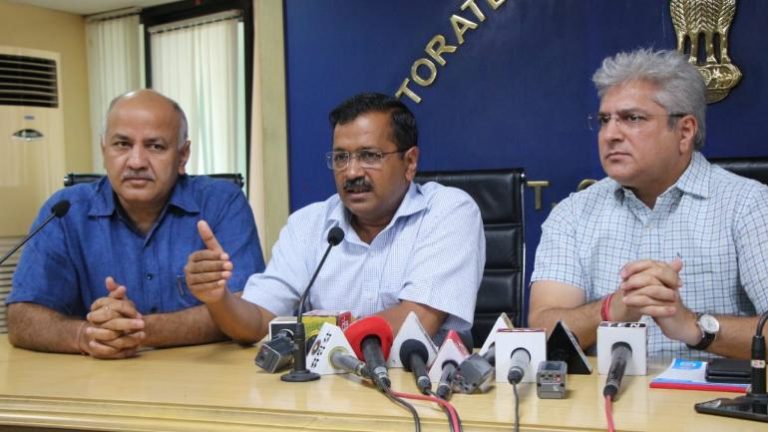
In a significant decision, that may help more women step out and use public spaces, Delhi Chief Minister, Arvind Kejriwal at a press conference on Monday, announced free rides in DTC, cluster buses and the Delhi Metro for women. The proposal will be implemented in two-three months.

Aimed towards creating a women-friendly transport system, the free travel may help more women use public transport in the city. The AAP government says only 33 percent of metro commuters in Delhi are women i.e 7 lakh women for every 16 lakh male commuters, daily. If the policy of free rides is implemented, more and more women will use public spaces, creating new opportunities for education and employment for women in the city and providing them a better future.

On the question of revenue loss for the debt-ridden Delhi metro, government said that the DMRC will not suffer at all because of this as the ticket revenue lost by Delhi Metro will be reimbursed fully by the Delhi government. Kejriwal, in his press conference, had said that it would cost the Delhi government Rs 700 crore.  “Women will be given free rides in DTC, cluster buses and the Delhi Metro. The government will bear their travel expenses,” Kejriwal said. He added that the decision has been taken keeping the safety of women in mind. It would take about three months for the rollout of the scheme

The scheme which is expected to cost Rs 700-800 crore for the remainder of the financial year before the assembly election is held in 2020, is also seen by many as a political move to woo female voters. Delhi has about 64.42 lakh women out of 1.41 crore voters. In the Lok Sabha election, they had outnumbered men voters in three of the seven parliamentary constituencies – East Delhi, New Delhi and South Delhi, wherein AAP candidates had lost badly.

Nonetheless, it’s a welcome move which will make sure more and more women can make use of public transport in the national capital.  

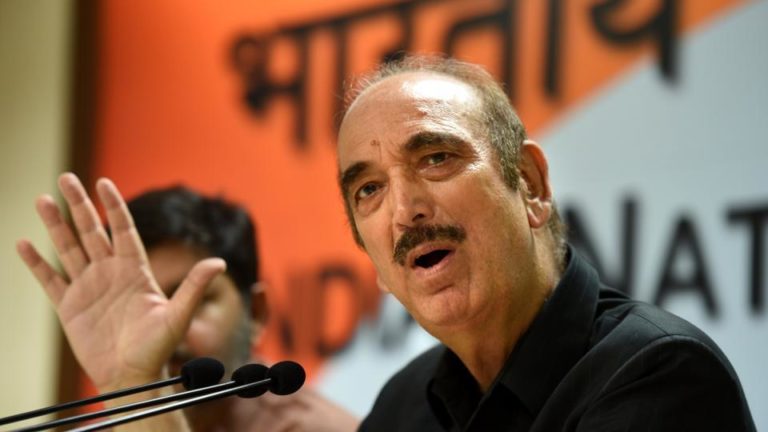
Kashmir: Lure of Terrorism is self-destructive and tragic for the youth

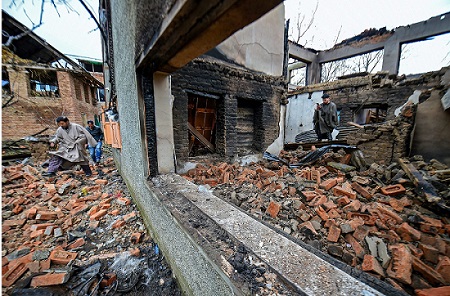
Official records suggest that 101 terrorists have been eliminated in Kashmir in this current year. Last few days, since the declaration of election results, have seen conduct of incisive counter-terrorist operations in quick succession with very good results. On 31st May, two terrorists were killed in Pulwama and three in Shopian. A day earlier on 30th May, two terrorists were eliminated in Baramulla. All operations were carried out jointly by Indian Army troops, J&K Police personnel and the paramilitary forces. They were based on receipt of specific information about the presence of terrorists in the target areas and were conducted with incisive precision.

The operation exemplified the seamless synergy that exists between our security forces, as also the deep rooted intelligence apparatus that is in place to flush out terrorists. Most terrorist Tanzeems (groups) have been infiltrated by security forces and intelligence agencies, leading to credible information about the whereabouts of the terrorists. Moles are taking money to set up terrorists for encounters. In such a situation the terrorists do not stand a chance.

The new age terrorist in Kashmir can safely be profiled as an indoctrinated local youth who is both ill-trained and ill-equipped. With the Line of Control (LOC) virtually sealed, a well laid out pattern is being followed for recruitment of local terrorists. Those vested with the responsibility of recruiting local terrorists look for boys from middle class to poor families who are ready to sell their souls for a small amount of money or promises of a bright future beyond this world (jihad). Some are drug addicts and others, in the flush of youth, get impressed by the likes of Burhan Wani. Some, most unfortunately, join with the intention of impressing their girlfriends. The new local recruits cannot be sent across the border into Pakistan for training as was the case earlier. They are, therefore, indoctrinated, recruited, given some rudimentary instructions, handed over a rifle and some ammunition and let loose. Such ill-trained terrorists are no match for the highly professional and experienced security forces. On top of it, they lack local support.

The terrorists move around in small groups and are not comfortable operating away from their own locality. Sadly for them, they are most vulnerable in their home base. There are some among their own people who sell them out.

The poor recruited boys, therefore, stand no chance once caught in the security dragnet except to surrender, as they are invariable and consistently called upon to do. Sadly, not many take this option and end up losing their lives. Most of these terrorists have a shelf life of only a few months, some die within days of joining a Terrorist Tanzeem (group) which, these days, is mostly the Hizbul Mujahedeen. 

The killing leads to a eulogy in some local newspapers along with a well-attended Namaz-e-Janaza (funeral procession). Here too people are being paid by Pakistani stooges to join in so as to show a big crowd. The slain terrorists are mostly projected as devout Muslims, motivated by the idea of “sacrifice.”  For their recruiters, however, they are nothing more than cannon fodder to meet the objectives of some very evil forces. Death awaits all such youngsters who commit the fatal error of being swayed into the path of terrorism. It is a needless loss of life which leaves behind devastated parents, brothers, sisters and families.

There is no element of religiosity and sacrifice visible in the murderous and perfidious acts of the terrorists.  The sheen given by the media is absolutely ridiculous. It amounts to blatant spreading of disinformation. These boys do not realise that what they are seeing is a fatal illusion. In actuality, terrorist are like hunted animals, always fearful of the time when they will be shot dead and knowing full well that the time is not too far.

It is quite heartening to see the resolve with which security forces are targeting terrorists in the Kashmir Valley. The intention to rid the region from the scourge of terrorism is quite obvious. Such a pressure could not have come by without complete support of the government and the people. Anti-national forces at the behest of their foreign masters will try everything possible to reduce the pressure, now that the general elections are over and state elections slated for some time soon. Counter terrorist operations will witness interference in the form of stone pelting, slogan shouting etc., massive crowds will be garnered for funeral processions of slain terrorists; rumours of innocents being killed will be floated; attempts will be made to frame security forces in cases of human rights violations. Herein will be the acid test of the government, it has to absorb the pressure and ensure that the momentum is maintained under all circumstances.

The people of Jammu and Kashmir do not want terrorism to gain ascendency all over again and the authorities need to ensure that it does not happen. It is important to take all desired steps to nip this problem in the bud. Some good steps have been taken but more needs to be done. No space should be given to terrorist and divisive forces to resurrect the draconian times when terrorism was at its peak.

Undoubtedly, the needless loss of life and the grief of the families leave a tinge in the heart and a prayer that this tragic circumstance may be controlled. It is the responsibility of the civil society and the parents in Kashmir to ensure that their boys do not get lured by the illusion that is being created. The government and the nation have spread out their hands to assist able and qualified Kashmiri youth in chalking out a career. It is this opportunity that needs to be leveraged and not the despicable, evil and violent path of terrorism that assures nothing other than ignominious death.  

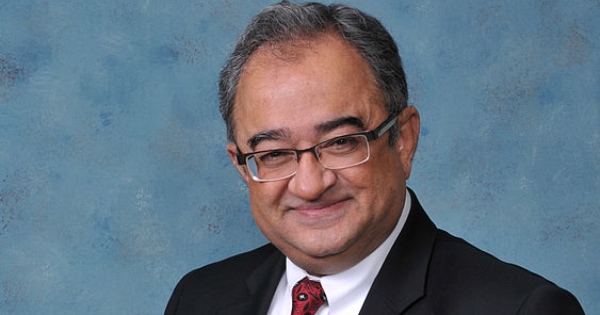
Conversation with Tarek Fatah, the renowned Islamic Scholar

Scott Douglas Jacobsen: Please let us know a bit about your personal background…

Tarek Fatah: I was born in Karachi, which is now Pakistan. It used to be the capital of the part of British India. I grew up there. I went to a Catholic School. I went to college over there. I went to prison over there. I got thrown out from Pakistan television in 1979.

It was a charge of sedition or treason, but formally “sedition.” I spent about 10 years in Saudi Arabia doing advertising. I have spent 30 years now in Canada, living one day at a time, watching things go down the drain.

Jacobsen: Over those 30 years, in reflection, based on the phrase, “Going down the drain,” can you unpack that for us, please?

Tarek Fatah: When I came here in 1987, you had leaders like Jean Chretien, Brian Mulroney, Joe Clark, the Quebec Separatists, the BQ. Everything was discussed was political in nature, whether the Oka Crisis or otherwise. 

It was about ideas across social, political, and economic issues. Mr. Broadbent from Oshawa had one aspect. Mr. Mulroney had a different one. Mr. Clark had a different one. The British Columbians had a viewpoint. Over the last 30 years, it has descended into a very low standard of leadership, where ethnic vote banks have risen.

There always used to be. The Orange Order would determine who ran Toronto. The Catholics must live North of a certain street in Toronto [Laughing]. I used to get bashed by the Orange Order. The Jews got beaten up in a very famous place, a park in Toronto.

All that aside, most were small. It came down to the idea of this as a battle of ideas. All the concepts settled down into a balance, then came the collapse of the Soviet Union. Now, the ideas do not matter anymore. 

The background matters more, “I am proud to be from Latvia.” What does that mean?!

Jacobsen: [Laughing].

Tarek Fatah: Everyone is proud to be a Lithuanian. How does it matter between Bolivian, and an Ecuadorian, or an Indian and a Pakistani? But the crafty manner, the dumbest of political activists manipulated the nominated system of the political party candidates.

To be very honest, a white person cannot get nominated from any part of Mississauga or Brampton. White people do not have tribes anymore. So, the Sikhs can get anyone elected, even anyone as right-wing as Jagmeet Singh.

By “right-wing,” his thinks in terms of religion. It means he is medieval rather than right-wing and can pose as a left-wing activist. He can afford to say, “Who said what to whom about white supremacy?” 

Now, it is the latest. He can become the leader of the NDP. In 1988, can you imagine Broadbent stepping down and being replaced by Jagmeet Singh or Brian Mulroney being replaced by Mr. Scheer who has no personality?

Or the Conservative Party leader who has become a leader in Brampton. You simply must have props with you, to look more exotic. People like me are like circus animals. We need to stand behind politicians. You are younger than me.

You would not know that there was never a time to stand behind politicians as props and not look someone in the face and cheering him. That is the norm today! You have been selected to sit or stand at the back of the person speaking without watching their face and getting enamoured. That is dumb! – Capital D.

That’s where we are today. The mayor of the City of Toronto does not know about the major issue of the Saudi woman landing in her city. He does not know which vote bank to get. It is hilarious.

You can do the Oka Crisis today. You would not know who to deal with. It is like the pipeline. The band councils think it is fine. Then you find out about the other issue o the heritage treaties. No one is interested in factual issues.

It is how you cajole how you were born. The disgrace has been that ideas went away for my DNA. It means a person cannot speak, cannot have ideas. We have dropped that way in 30 years before my eyes. 

I ran for politics on the NDP ticket. I voted NDP most of my life. I cannot imagine voting for someone who thinks hair is the most important thing to them in a turban. I cannot say that. What I would be, anti-Sikh?

A high percentage of the Sikhs do not wear turbans. Similarly, I cannot be taken as a Muslim because I am not ugly enough to be considered Muslim so far. To be a Muslim, I must have a beard, no moustaches. 

The moment I do that. I will have MPs standing next to me. I can put on a guttural accent. We cannot even stand up and say that a burqa is a disgrace on the face of women. We cannot say that. I can say that. Nobody else can say that.

The layers of the burqa. Someone asked me if it was a choice. I said, “Next time some drug addict walks into a train. You say, ‘Oh, he made a choice. It is a democracy!'” When someone wants to commit suicide, back in Toronto, they made a choice. 

A person who disguises a persona, not showing their face, is being tolerated. Because otherwise, you would be called a racist. Nobody wants to be a racist. This is what we are facing as crises.

Jacobsen: If we are looking at the growth of arguments dependent on identity, something that someone was not merited with; they were born with it. It is congenital rather than acquired in this sense. 

With this, it makes conversations more difficult, more fraught, and, in the phrase, as if one is ‘walking on eggshells.’ How does this prevent, as you are noting and getting at, more serious political conversations and social dialogues?

Tarek Fatah: We are at war. There is a world war ongoing between international Islamism and secular liberal Western democracy. Effectively, the enemy, which is essentially The Muslim Brotherhood, the Taliban, or ISIS, there are 50 different bodies that are enemy Muslims within our countries.

They can shut us down. It has become the story. A Muslim woman who is a young student refused to go to the prom but is perfectly happy to become the wife of the jihadis under ISIS. The places like Tunisia have tens of thousands of pregnant women coming back after willingly, accepting, that rape by jihadis as an act of worship.

It is half of a million dead in Syria. They cannot seem to figure out that what we own today has been inherited by those who worked in the far North over 200-300 years ago. They would lay down their workers who did not have central heating.

When people say, “I pay my taxes.” Those assets were invested by people who did not have running water. I lived in a neighbourhood called Cabbagetown in Toronto. It is not a joke there. People over there literally grow cabbages in their front yards.

That is what their food was, Irish, and others. Other than getting beat up by the Orange Order. They made food to make liberal democracy what it is today, especially after the Second World War. The idea of individual liberty got embedded in the United Nations 1948 Universal Declaration of Human Rights.

This is core to civilization. It is the crystallization of Britain, France, and the United States. Even after Osama Bin Laden comes in a burqa, we say, “Who could that be behind it? Is it a bank robber?” You cannot say it. But that guy wears a leather jacket and rides a motorbike. 

Therefore, we better take him down. That is how stupid we are. To sum, we are going downhill. Unless, we recognize the idea that our enemies are in philosophy in a way. The fighting of Nazis before fighting the Nazis. 

As with the First World War, how many millions died? We still have not learned. We keep going back to the same thing. 17 times a day, Jews are cursed in Muslim prayer. Every mosque.

It is the opening prayer of Islam. Surah Al-Fatiha, “The path of those on whom You have bestowed your grace, not (the way) of those who have earned Your anger, nor of those who went astray.” [Not the one used, I had trouble finding it, and hearing it properly.]

It is the opening thing. Now, if the mullahs say, ‘We denounce the hadiths.” It becomes a different story. Then it becomes, “Well, the short and straight path,” but not the path of the murderer, of the pedophile, of the smuggler. Right?

But when you publicly say one thing when the microphone is on, then someone asks. You say, “Brother, it is the Jews.” Every Muslim knows that this is going on. On Fridays, we literally pray to Allah to give Muslims the better treatment over the kafirun. That is, you, the kafir.

Nobody is coming to speak out against it, and saying, “Don’t spread hate. We will not finance you with taxpayer money.” The cooperation of the government is funding a situation. There are the issues of anti-Semitism in the 1930s. They would rather have that conversation.

We are focusing on the Maple Leafs, the Blue Jays, and so on. Everyone wearing the same hat. The gladiators who are coming home, the BBQ. People are laughing at us. There is nobody in Pakistan, Saudi Arabia, Iran, Yemen, who believes 9/11 happened. 

There is nobody. I can tell you 90% of Canadian Muslims, in my community, who openly say, “5,000 Jews didn’t die.” As soon as you ask them, “Do you condemn it?” They say, “Yes, it is very bad.” They say one thing in one context and another thing in another context.

The leaders, no one believes anyone unless they are a Saudi style or other dress. They see this as the Islam way. Most of what is Islam has no relation to any Islamic ideology. There were Muslims before the Quran was written. 

There were Muslims who did things before fasting, praying, and the like. How did they become Muslims? The Quran is not a chronological order in which it was revealed. But we shall make you memorize it. It makes it hard to learn. The mullah says, “You do not have read the book in Arabic.” 

Because many have memorized it. We can not go back. Because the people who have memorized it will fail the test.

Jacobsen: Right [Laughing].

Tarek Fatah:​ They have memorized it in an order, which is incorrect. Something fundamental to Islam is no priest class. There is nothing between yourself and the divine. The Pope, the priest, the rabbi, the mullah, this was an attraction; you were free.

The some said, “The Christians have a good thing going. They have a Dome.” This is how this came. There was no Dome in Islam. It was the Eastern Orthodox. The Sikhs took it, too. It is an Eastern Orthodox Church replica from Damascus.

What I am saying, it is historically accurate, but, from the Islamic point of view, blasphemy. To save ourselves from blasphemy, we have been becoming dumber and dumber, day by day.

Jacobsen: By which you mean, more historically illiterate in its development and history.

Tarek Fatah:​ I have never met an illiterate radical Muslim. 80% of Muslims still cannot read or write. You will never find a terrorist who cannot read or write. It means all jihadis and others come from the educated class.

When Malala says, “Give me a book, give me a book,” nothing!​ The moment you read the book; you become crazy because you have enemies. You realize, “Th computer, I have nothing to with it. The light, no! The chair, no!” There is no contribution to our community to any invention in the last 200 years.

What do we have? We have the 8th century to look up to. So, should we move forward or put the car in reverse gear? Then we complain. Gear number one should be forward. The Sun does not set in a rule of mud. 

It is not fair. I have seen it. Why would I believe in scholars who believe the world was flat? Can some imam ride a bicycle in the 8th century or 9th century? I can; therefore, I am better than him. Just because he had a guttural accent and a long name, a name that never ends. 

Who is he? There are 17 diverse types of the same guy. Tell that to a Pakistani, they will say, “Tarek is lying.” Why? Because that person has the imam telling them. Because Islam came to ordinary men from the priests.

Islam’s last verse – it is very interesting – or the last words of the revelation are “I have completed the faith for you.” The Arabs said, “No, no, no.” 100% of the text has been written after supposedly God said, “Today, I have finished everything.” 

By the way, what I am discussing with you, there is no place on Earth that this can be discussed. 

​Jacobsen: Any thoughts on the larger conversation around a single secular public-school system?

Tarek Fatah:​ It must be. When you started with the Catholic school system, it began some of the vote banks. Then the Indians and the others started their own. Thank goodness for Father [did not get name], who is in his 90s. 

He helped us. I did not know that. We learned that there was a subject about character building. We learned how a Muslim, a Christian, and a Jew lived together. They are no longer in Pakistan. We learned what was geography, history, mathematics, geometry, trigonometry, and, also, we had character building, where ethics and morals were taught to us.

We were supposed to write about character. We had a thing about doing one good deed a day. It did not matter what. My patrol leader was Catholic. The real victims were the Muslims who were willing to become American aid and tanks, and money, to become the foot soldiers of the United States.

Because the Serbs did not want to fight the Soviets after Vietnam. With Afghanistan, Iran, and Pakistan have been ruined now, Iran with Khomeini, The Americans got in there. It is not as if Khomeini was with the USSR. 

The Americans overthrew the elected Prime Minister Mohammad Mosaddegh. He was socialist. It was people sitting in the House of Representatives [Laughing]. If we do not wake up, we might survive – secular democracy and liberalism, and ethics in government by humanity rather than ordered by the divine.

We can get religion as a moral compass. We can get our guidance. I am not going to get guidance necessarily. I am not a copy. I do not think God wanted me to tell people what to do in their backyard, “No pig rolls there!”

​Jacobsen: How do we shift this conversation from where, typically, someone’s own religion is seen as universal into a situation in which humanity is seen as the universal and religion is seen as a flavour – so to speak – or the particulars of that universal?

Tarek Fatah:​ You cannot change this overnight. Muslims will be 2 billion soon. Most Muslim imams think that the more Muslims there are the better. 1 billion was not enough. So, they want 2 billion [Laughing]. The only way to do this is to separate religion and state public policy and public life. 

You cannot respect someone for being stupid. He has a right. She has a right to be an idiot. You are not asking anyone to take away that right. But to fund it?! You give tax breaks to someone who is cursing Jews. Do you see this?

Can you imagine someone having a memorial for Hitler? India has memorials for Muslim invaders that destroyed their cities! I am visiting India very soon. The holiest place in India is the confluence of three rivers.

Every 12 years when Jupiter and Earth are in line; there is a festival. I have calculated that this could be my last time to visit it, as I am 70. I will 82 next time. I better visit this place now. The holiest place in Hinduism. Guess its name?

Allahabad [Laughing], they put “Allah” right in the name. 

Over here, the invaders came here, took over the holiest city, named it after their God, and then said, “Anyone who changes it is against India.” Give me another example of it. So, it only stems when people either lose self-respect, which I think many Canadians are losing.

They are losing self-respect. They are embarrassed. They do not know what their parents left for them. They did not get it by working hard. Your parents’ generation is responsible for the Charter or the UN Declaration and the concept of individual liberty and the concept of the man and the woman, the respect for the child, the court system that says that you are innocent until proven guilty. 

These are new things. It used to be that you are guilty until you are proven innocent. We, as a civilization, turned this around. We are tolerating a king that killed Turkey. We are calling him a reformer. A murder takes place in a sovereign country.

As soon as Trump got in, he is only a one-term president. What is going to do? It is for the businesses. This is the level at which we have sunk to here. Kudos to our prime minister, I am not much of a liker of the Liberals. But Trudeau gave a kick and stood up; it hurt the Saudis. I salute him for it.

There is one woman. Chrystia Freeland said, “I am getting this girl, giving her citizenship, and making sure that she has full protection. This is Canada.”

​Jacobsen: When we look at the literalists in every tradition or the fundamentalists in the secular and in the ideologies, most of the violent offenders, of those literalist fundamentalist interpreters of a faith, which is not necessarily an interpretation, are men.

Why are men more often attracted to these kinds of interpretations – so to speak – or these ideologies?

Tarek Fatah:​ Men and women are very different, constructed in very different ways. I just bought a book on it. The thought processes are different. The entire biologies are different. Women create people. We create a mess. They are supposed to clean it up.

Therefore, you do not have as many female warriors. They are in the business of nurturing. I am strictly speaking of the biology and the neuroscience. They are wired differently; the female brain is different. You also must understand that the mobility issues for women were being locked up.

A woman could not go about a month’s travel without a problem. On a horse, probably, she had to sit cross-legged. A major development in women’s independence was the pill; I think it was the pad. I think the mobility was it. The lessened restrictedness at that time and now. Where do you go now?

There was nothing to do. This was in the 20th century. They could not do anything. Women were dependent on men. So, men have dominated and exploited and made sure that the woman does not come up. Therefore, you have polygamy, but you do not have polygyny to the same extent.

There are some places. This needs to be studied more. I am not an expert. But the main impediment in Muslim development has been, even in the Christians in this sense, polygamy, multiple wives and this means multiple heirs to the throne and multiple wars over it.

Europe, you must understand; one wife, one prince, two brothers or three brothers maximum, right? In the European empires, there were the issues of 200 princes fighting it out. I am giving you context at that level. Women, how are they subjugated? It is primarily for this reason. It will take a few hundred years for things to change.

Because this is how a gene pool happened and changed, and how certain traits were passed onto men, how we think of our sons, how we think of our daughters, and so on. Why do men go into body building? The odd woman will go to work in wrestling.

The most educated and enlightened woman still wear heels. [Laughing] Women, we saw what happened at 9/11. There were hundreds of thousands of heels left over there. The men ran and then women had to throw their stilettoes and others down, so they ran barefoot. They were impeded in running and escaping.

It is a story ongoing of dependency. It will, it will, come to a balance. In many ways, religion, the moment it goes into being a moral compass, will allow women to be free. Imagine Indian women who love to wear black shrouds voluntarily, all their lives; all their lives. That is a great challenge.

If the world cannot stand up and ban the burqa, then they are cowards.

Jacobsen: Thank you for the opportunity and your time, Tarek.

Tarek Fatah: Thank you! Take care.

*This Interview has been abridged.*

Pakistan is back to old games of India baiting

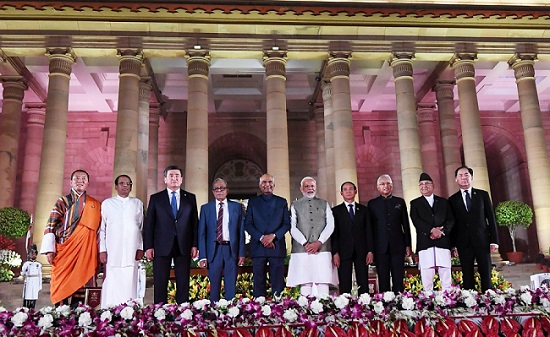
The incoming Bharatiya Janata Party (BJP) led National Democratic Alliance (NDA) government opted to invite Heads of the State of BIMSTEC alliance for the swearing-in ceremony of Prime Minister Narendra Modi and his first set of Cabinet colleagues, on May 30th. BIMSTEC stands for the Bay of Bengal Initiative for Multi-sectoral Technical and Economic Cooperation and includes as its members, Bangladesh, Myanmar, Sri Lanka, Thailand, Nepal, Bhutan and of course, India. During the swearing-in of the NDA Government in 2014, the heads of state of SAARC (South Asian Association for Regional Cooperation) nations were invited and prominent among the guests was Nawaz Sharif, the then prime minister of Pakistan.

India cannot be diplomatically faulted for changing the list of invitees, but there remains a lingering feeling that the exercise has been carried out in order to avoid inviting the prime minister of Pakistan, a country which is a member of SAARC but not BIMSTEC.  The reason, quite apparently, is to continue with the posture of not engaging with Pakistan till such time that the neighbouring country puts a check on terror activities from its soil targeted against India, especially so, since the NDA government is coming to power predominantly on the mandate of national security.

The Indian General Elections were keenly followed by Pakistani media, their websites provided live updates of the results even as TV news commentators debated the impact of Modi’s sweeping victory. It would be interesting here to see what Pakistan media has to say about the return to power of Prime Minister Narendra Modi.

Dawn, a prominent English daily of Pakistan, in an editorial, termed the result to be a victory of communal politics. “For the world’s largest democracy, the writing is on the wall: communal politics in India has triumphed in an age that will define the future of the republic,” it wrote. “Notably, the months leading up to Mr Modi’s campaign were marked by anti-Muslim and anti-Pakistan rants, with India going so far as to escalate tensions by conducting air strikes inside Pakistan in order to whip up nationalist sentiment,”  it added, as reported by News 18 and some other news outlets.

Another Pakistani media outlet, the News International, attempted to highlight the “Right wing” credentials of the incoming government. “His re-election reinforces a global trend of right-wing populists sweeping to victory, from the United States to Brazil and Italy, often after adopting harsh positions on protectionism, immigration and defence,” it said in a report.

The Express Tribune, another prominent English daily of Pakistan, stated, “Modi’s opponents and critics fear that India’s secular foundation is under serious threat. The re-election of Modi is also of great interest for Pakistan. His previous five-year term showed that Modi could take steps for peace but at the same time lead the two countries to a war. Against this backdrop what should we expect from him in next five years in office?”

Some independent writers and columnists in Pakistan have offered praise to Modi in his moment of victory. “If the BJP and Modi have won this election, they perhaps deserved to win. They put in a great deal of hard work and have had the hunger to win,” says a well known journalist, Aijaz Zaka Syed. However, his further elaboration used a critique of the opposition to strike at the core of brand Modi, “It failed to offer a positive, redeeming narrative to counter the BJP’s campaign of hate and toxicity,” he wrote.

Pakistan, once again, is following the policy of offering dialogue with India but in a negative manner. The foreign office of Pakistan is attempting to create a narrative based on the tried and tested route of the United Nations resolutions, knowing fully well that India will not respond to this line. Also being significantly played out by Pakistan is the meeting between Indian Foreign Minister Sushma Swaraj and her Pakistani counterpart Shah Mehmood Qureshi at the sidelines of the Shanghai Cooperation Organisation (SCO) meet in Kyrgyzstan. Pakistan is making a lot of noise about the meeting being a harbinger of good days to come.

Pakistan has also attempted to play down the decision of the Indian Government to not invite the Pakistani premier for the swearing-in ceremony by putting the cause as “internal politics” of the country. “His [Modi’s] entire focus [during the election campaign] was on Pakistan-bashing. It was unwise to expect that he can get rid of this narrative [soon],” said Shah Mehmood Qureshi.

The final olive branch came from Prime Minister Imran Khan himself when he tweeted a goodwill message. “Look forward to working with him for peace, progress and prosperity in South Asia,” Imran said Khan in the message.

It is quite evident that Pakistan is desperate for initiation of the dialogue process but lacks the grace to say so openly. It is continuing with its attempts to place itself on a high moral pedestal in the global arena not realising that the international community is as exasperated with the continuous harping on the redundant UN Resolutions as is India. It is also unwilling to give credit to India for having conducted the largest democratic exercise in the world in a free and fair manner and thus put in place a strong and popular government.

Pakistan in nurturing a belief that the strong posture adopted by Prime Minister Narendra Modi was purely for electoral reasons and now a thaw can be expected. It feels that a hard line approach is not sustainable for India. Nothing can be further from truth; India under Modi will not succumb to diplomatic blackmail by a global pariah like Pakistan. It is only when the country demonstrates its good intentions by dismantling terror modules operating on its soil and by taking a more practical and pragmatic diplomatic posture that dialogue will resume. Till then its belligerent foreign minister can harangue all he wants; India will not budge. 

Actress Vidya Balan gives a strong message on the issue of body shaming

Bollywood actress Vidya Balan recently opened up about the issue of body shaming on her social media platform. Vidya had uploaded a video on Instagram a few days ago. She captioned it: “Most of us are potential victims of ‘body shaming’ – the widespread phenomenon of receiving cruel feedback when our bodies don’t meet the unrealistic beauty standards of our time. Here’s my take on body shaming.”

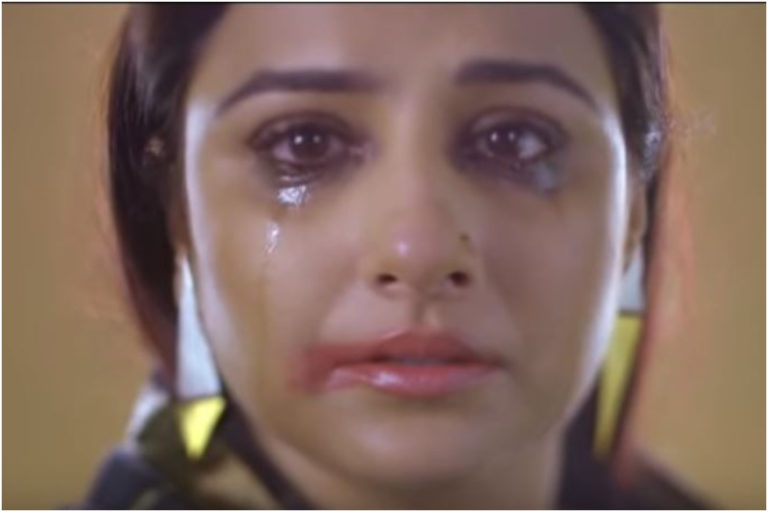
Dressed in a black sari and messed up make-up, Vidya even broke down while talking about the issue. Highlighting the discriminatory comments and jokes made at people regarding their looks, Vidya says in the video,”Kabhi tu moti kehta hai, kabhi tu choti kehta hai…. “Don’t make jokes on someone’s size, colour. Everyone is different…that’s why everyone is special.”

Earlier, she had said: “In my early days, even before I entered the film industry, people said various discouraging things about me, they called me ‘moti’ and I faced body shaming. It really affects our confidence. Physical fitness shouldn’t be achieving an unrealistic goal to look in a certain way and thinking that is beautiful.”

Watch Video Here: https://www.youtube.com/watch?v=rOunvdHHNYU

The video is part of an initiative for her radio show Dhun Badal Ke Toh Dekho.

Oscar Academy President John Bailey launches Hindi version of ‘Digital Dilemma’ by NFAI

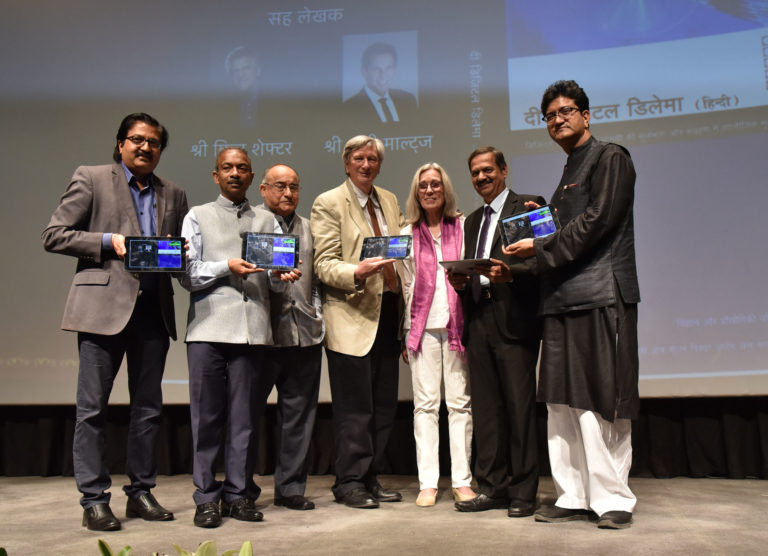
In a special event, John Bailey, President of Academy of Motion Picture Arts & Sciences (popularly known as Oscar Academy), e-launched the Hindi translation of an Academy Publication, “Digital Dilemma”, in Delhi recently. Also present on the occasion were renowned film editor and Governor of Academy Ms. Carol Littleton; Justice Manmohan Sarin, Chairman, FCAT; Shri Amit Khare, Secretary, Ministry of I&B; Shri Prasoon Joshi, Chairman, CBFC; Shri Ujwal Nirgudkar, Member of the Academy and Shri Prakash Magdum, Director, NFAI.

During his speech, John Bailey said that the translation of the Academy publication into Hindi is important in order to reach out to film fraternity in India. There are many challenges thrown by the technological changes in the film storage medium and this book will help film makers in understanding and planning the storage of born-digital material, he said.

Written by Milt Shelton and Andy Maltz, this publication has been translated in many languages the world over. National Film Archive of India, the premier organization of Ministry of Information and Broadcasting which is involved in film conservation, preservation and restoration, had signed an MoU with the Academy to translate the publication into Hindi so that it can benefit various stakeholders in the country.

The Academy works towards the goal of advancing the arts and sciences of motion pictures. In its landmark report, the Academy’s Science and Technology Council examined ways in which key players in the movie business currently store and access important digital data. Through years of research, the Council discovered that issues of digital storage reliability go far beyond lost snapshots and spreadsheets. The publication discusses the challenges of efficiently archiving and accessing the massive data in the long term.

Army conducts Children Summer Adventure Camp 2019 at Mount Abu

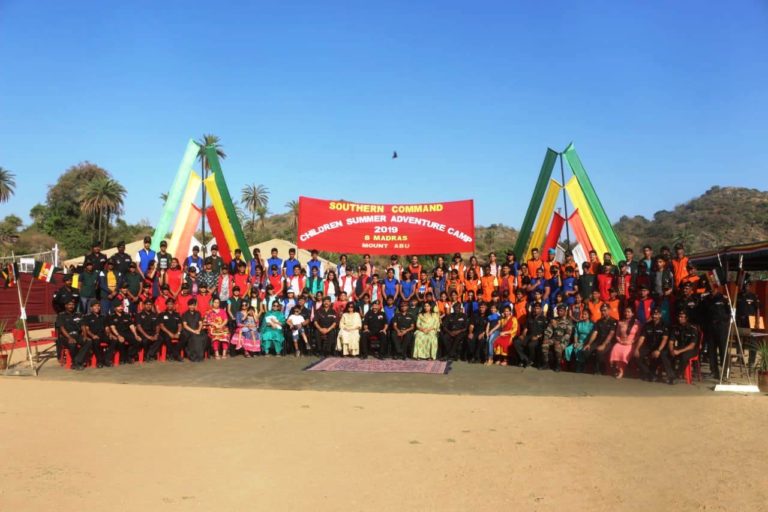
Southern Command Children Summer Adventure Camp 2019 is being organised at Mount Abu from 27 May to 03 June 2019. The eight day camp is being conducted under the aegis of 8 MADRAS Battalion of Battle Axe Division.  This camp offers opportunity to the participating children to instill a spirit of adventurism and personality development.

Around 125 children from units of entire Southern Command of Indian Army subscribe to attend the camp. During their stay in camp children enthusiastically participate in various indoor & outdoor activities, including trekking, caving, boating, various games & competitions.

The camp provides opportunities to explore the nature, make new friends, develop new & diverse interests and create lasting memories.  The organisers of the camp also intend to motivate the children towards adoption of new hobbies, shouldering responsibilities, goal setting & achieving the same.  Towards that, various activities like introduction to yoga & meditation techniques, lectures on safety, security & social graces are also conducted.

India is a land of storytellers: John Bailey, President, Academy of Motion Picture Arts and Sciences

With a vision to explore possibilities of collaboration, Ministry of Information & Broadcasting today organized a Special Interactive Session with Mr. John Bailey, President of Academy of Motion Picture Arts and Sciences at Siri Fort, New Delhi. The session was followed by an interaction of Mr. Bailey with the press.

In the Session Mr. John Bailey talked about the need to increase the membership of Indians in the Academy of Motion Picture Arts and Sciences. He highlighted the initiative of the Academy to double the diversity of membership in the Academy and added that India truly represents the opportunities, challenges and the unifying power of diversity. Through the interaction, budding filmmakers and students from several Mass Media Institutes got the opportunity to not only interact with Mr. John Bailey – the Academy President, but also with Mr. John Bailey – the master cinematographer. The interaction threw light not only on the nuances behind the craft of cutting edge filming techniques but also helped develop an understanding about creating world class content. Mr. Bailey also talked about the influence of women cinematographers on him. Hailing India as a land of story-tellers, he highlighted the need for filmmakers to tell intensely personal stories. He also appreciated the enthusiasm and willingness shown by India towards deeper collaborations with the Academy.

Shri Amit Khare, Secretary, I&B talked about the abundance of talent across India and the spurt in films being made in regional languages. He highlighted the incentives offered to budding filmmakers by different states and expressed hope that the association with Mr. Bailey and the Academy will help showcase the craft of Indian filmmakers all over the world.

Justice Mahmohan Sarin, Chairperson, Film Certification and Appellate Tribunal, highlighted the achievements of Mr. John Bailey as a Cinematographer par excellence.

Shri Prasoon Joshi, Chairman, CBFC talked about how Cinema is a part and parcel of everyday life in India; with even life philosophies being derived from Cinema. He highlighted the current trend of ‘Cinema Loktantra’ – the democratization of cinema in India through technology and increased outreach. He also talked about the importance of emotions and songs in Indian cinema, which is different from the kind of cinema known to the Western world, and the need of prior sensitization for audiences in the West to appreciate Indian Cinema. He also talked about the importance of collective viewing of Cinema and the significance of Festivals like International Film Festival of India.

It’s time Kashmir’s local political leadership stands up and be counted

As the new government starts taking on the responsibility of governing the nation, Kashmir will once again take centre stage. Pakistan has already started laying the foundation for resumption of talks, towards which end, Prime Minister Imran Khan has made many overtures. The election results will give six members of Parliament from the state. It is hoped that this lot will represent the state at the centre in the true sense.

The most important factor, however, will remain dealing with the internal situation in the state, especially so the Kashmir Valley. No serious incident of violence was reported during the course of the elections. Candidates have been able to campaign fearlessly and polling has been peaceful. It is quite apparent that the security forces have, yet again, created an environment of peace wherein political activity is possible; it is now up to the political leadership to leverage the same and apply a balm on the open wounds of the people who have been traumatised by violence and disruption for decades on end.    

Assembly elections will be the next big political activity in the state. They will be conducted under the watchful and experienced eye of Governor Satya Pal Malik. The Governor has been in the state long enough to understand all the nuances; he has conducted himself with grace and maturity in many critical situations. It can be said with reasonable confidence that the elections will be conducted in a free and fair environment under this watch.

The entire nation was quite fed up with the constant negativity of the campaigns during the Lok Sabha polls; people heaved a sigh of relief when the results were declared on May 23rd. Imagine the plight of the people of Jammu and Kashmir who are going to be subjected to yet another round of this negativity during the State Assembly elections. The need of the hour is moderation in tone and tenor of the election campaign. The political parties, more so the local variety, should not follow the tried and tested path of running harmful campaigns based on blame games and painting of dismal scenarios. It is a wish that may not see the light of day since political parties are without new leadership or new ideas but should it happen it would do a world of good to the region.

The people in Kashmir, having neutralised the cult of violence and foreign sponsored terrorism most bravely, hand in hand with the security forces, are now looking for a normal life wherein they can function unhindered. They want a peaceful environment that allows them to look after their families and tread along the path of overall development along with the nation.

The most important dimension in this tryst for peace is the youth of the region. Their problems, aspirations and insecurities need to be addressed in priority. Even, Governor Satya Pal Malik has repeatedly stressed on the point of engaging the youth of the state, especially in Kashmir Valley, in a positive manner. He consistently emphasises the point that terrorism would not end with the elimination of terrorists but by engaging them in a positive manner and to do so, weaning away the youth from the self-destructive path of terrorism is essential. The number of youth pursuing the path is small when seen as a percentage of the young population of the Valley, but, the objective should be that not even one boy becomes a terrorist.

Checking radicalisation of the youth is imperative for the valley and the biggest role in this direction is to be played by the civil society. It is the parents, elders, religious leaders, teachers, intellectuals, role models and most of all the political leaders who can motivate the youth to engage in gainful activity and look for an aspiring life, rather than meeting an ignominious death as a terrorist for no reason whatsoever. The political leaders are the most important link in this chain of civil society engagement since they can not only motivate but also put in place the necessary policies and infrastructure to ensure that the youth remains protected from bad influence and focussed on to building their careers and lives.

The political leadership of the valley would be well advised to take a leaf out of the “Winning Hearts and Minds’ (WHAM) initiative of the Indian Army that has been in place since many decades now. It provides succour through the welfare initiative, Operation Sadbhavana, in a manner that gains the confidence of the common man. It needs to be studied closely by the political leadership to understand exactly what the common man aspires for and how it can be provided. 

The political parties need to focus attention to the real issues being faced by the people of the state; if they speak a voice that integrates rather that divides; if they attempt to build bridges with the central government and the rest of the nation instead of increasing the insecurity of the people, the scenario in the region will change drastically. In the coming elections, the manifesto of the political parties should include all such issues that are causing agitation and the means to dispel the same.

In case the political parties fail to play up in a manner that ensures advent of peace and prosperity in the state then the hard work of the security forces in creating an environment conducive for political activity is likely to be frittered away, yet again. If the political policies do not witness a paradigm shift, there are chances of the people emerging more grieved and emotionally shattered by the time the results of the assembly elections are declared.

It is sincerely hoped that the political leadership will respond and the situation in the valley would take a turn for the better. This is the time for the last push!