Home Blog Page 434

Jammu & Kashmir: Security policies under Modi’s second innings

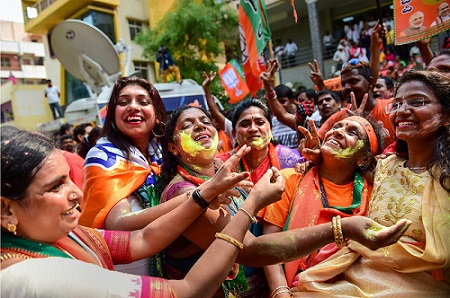
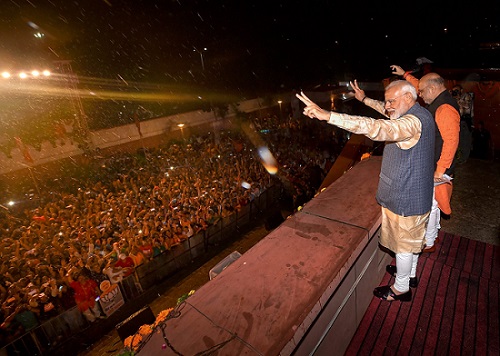
The Bharatiya Janata Party (BJP)-led National Democratic Alliance (NDA) government is poised to begin its second consecutive term in office with a landslide victory in the recently concluded general elections. The clear majority will facilitate the party in taking some bold decisions. Quite naturally, all eyes are on Kashmir. There is anticipation of some drastic changes in policy with respect to the sensitive region, especially so, in the domain of security.

Will the government upscale its posture on the line of control? Will it give more traction to the counter-terrorist operations being conducted in the hinterland? Security decisions are taken on the basis of threat perceptions, internal or external. They have to be in concert with the imperatives of national sovereignty and integrity and the resultant political aim.  In military terminology there is no such term as muscular policy, as some like to define the current operational mode in Kashmir. It has been coined in the political and intellectual domain to give a desired and vested interest dimension to a security scenario.

The outgoing NDA government was very clear in its political aim. It did not wish to micro-manage the operations of the security forces, and as such, it gave the commanders on ground full liberty to conduct the same as they deemed fit. 

With regards to the external environment, the government made it known, not only to the country but to the entire world that it will not take ingressions on its sovereignty lying down. Hence, the Army was motivated to use its freedom in the conduct of operation along the line of control to effectively counter all enemy misadventures, be they infiltration, ceasefire violations, raids, ambushes etc. By launching the surgical strike and the air attack on identified terrorist camps deep within Pakistani territory, the government merely pursued its declared policy of zero tolerance to enemy aggression.  

It is the duty of the state to rid society of criminal, violent and anti-national elements operating within its territories. To this extent, neutralising of terrorists by our security forces amounts to a discharge of the functions of internal security. The security forces were free to do what was necessary; they have performed their duty with efficiency and will undoubtedly continue to do so. It is notable here that during the conduct of operations, our security forces pursue a very humane policy. All cornered terrorists are given an opportunity to surrender. Parents and elders are especially called to motivate them to do so. The killing is mostly the last resort when all other efforts have failed. On many occasions, the security forces buy casualties of own personnel in their attempt to save the life of the terrorist. What more can be expected from any force?

It is quite apparent that the internal security policy in Kashmir is based primarily on the situation on ground. More importantly, it is righteous, justified and in national interest. Under the circumstance, the incoming government does not have much leverage to tweak, let alone change, the existing paradigm in the state. Changes, if any, can come about only if the protagonists in the game bring about a change in their policies towards the Indian Nation.

The Prime Minister of Pakistan, Imran Khan, has been giving wide hints about initiation of talks with the incoming government. Such a situation is feasible only if he can control the rogue elements in his country who are aligned against India, since the NDA government is unlikely to let down on its policy of “no talks till Pakistan does not stop export of terror into India.” The stand taken by the government finds justification on two counts. First, the policy is reasonable and defensible in the global domain. Second, the alliance has won the general elections on this mandate. The heating up of the line of control can stop in one day if Pakistan can measure up to what is expected of it not only by India but the entire world.

The internal security situation can change only if the minuscule percentage of Kashmiri youth who are taking the path of terrorism realise the folly of pursuing this self-destructive path at the behest of enemies of the nation. Those who are in it already have an open offer to rejoin the mainstream with no questions asked, those who are being indoctrinated should inform the security forces about the elements indulging in this nefarious activity and thus help to nip it in the bud. 

It is often debated as to who is responsible to wean away the youth from the cult of terrorism, the government agencies, security forces or the civil society. There can be no two views about the primary responsibility being that of the civil society, especially the immediate family of the youth. The government needs to extend all required assistance in this direction in terms of creating awareness, more job opportunities and social activities, among others, to keep the youth gainfully engaged. The security forces, especially the Indian Army, have for long had in place some very innovative and positive initiatives aimed at “winning the hearts and minds” of those who are suffering because of the ongoing foreign sponsored terrorism. Operation Sadbhavana by the Indian Army is one such initiative that has seen extraordinary results in welfare measures in both scale and content.

It is a matter of time (and not too long) before the Indian Army completely dominates the security situation, both internal and external. It is hoped that those aligned against the interests of the Indian nation will understand the futility of their cause and opt for an honourable path of reconciliation before it is too late for them. In India the same party may be coming back to power but a change in government does afford an opportunity to herald a new beginning. They will find the government to be both forthcoming and responsive.

Jammu and Kashmir is safe and secure assures Indian Army’s Northern Command Chief

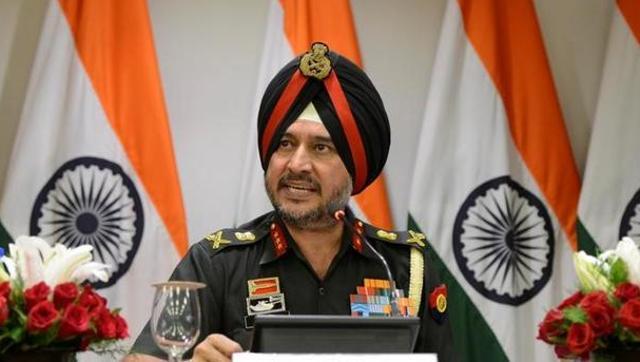
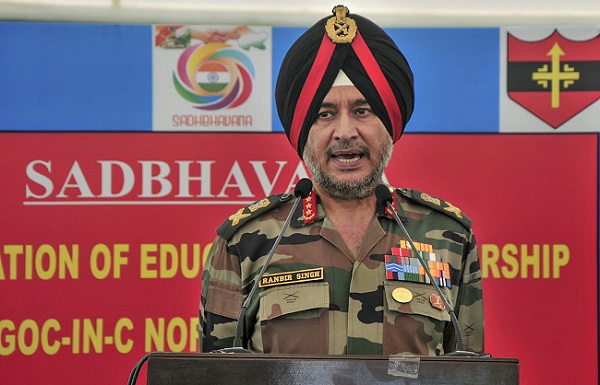
“Indian Army is a very potent, responsive and accountable element of national power. It remains committed to be able to take on any challenge as far as external threats are concerned and similarly take on any internal disturbances when called upon to do so. So, as far as the Army is concerned we always carry on in a professional manner and a very strong code of conduct and we have been doing so ever since army was employed in counter terrorist operations in 1990,” said Lt. Gen. Ranbir Singh, the General Officer Commanding-in-Chief of the Northern Command which is responsible for the northern military theatre of the nation, comprising the state of Jammu and Kashmir.

The General was speaking to media on the sidelines of a function held at the Command Headquarters in Udhampur to present financial aid to 71 selected students from below poverty line category and belonging to the remote areas of Jammu and Kashmir.

The financial aid provided under Sadbhavana, a welfare initiative of the Army, included scholarship to the tune of Rs 1.45 crores. The 71 students (45 for Army Public School, Beas and 26 for Drona Boys Hostel, Udhampur) were handed over the scholarship certificates and cheques which cover the complete expenditure of their schools to include education fees, boarding, lodging and transportation.

Speaking on the occasion, the Army Commander said that Army would do everything possible within the ambit of Sadbhavana to assist the civil population of J&K, especially those who are affected by terrorism. “So far as Operation Sadbhavana is concerned, it was conceived to ameliorate the suffering of the people living in remote, inaccessible areas and affected by the military operations. Its success is in front of you. So many children who have been trained under the initiative have grown to become very useful members of society,” he said.

The event also provided an opportunity to take stock of the situation in Jammu and Kashmir. The General gave an assurance that the Indian Army was fully prepared to thwart each and every inimical action by Pakistan and the country will not be able to succeed in its designs. “They dare not try and come anywhere near the line of control to carry out any kind of action. Our deterrence and articulation of our military strategy is very clear. Should there be any misadventure by Pakistan, they will be given a befitting reply,” said the General while asserting that the Indian Army has the capability, the resolve and the operational plan to take on any challenge from Pakistan whenever it may arise.

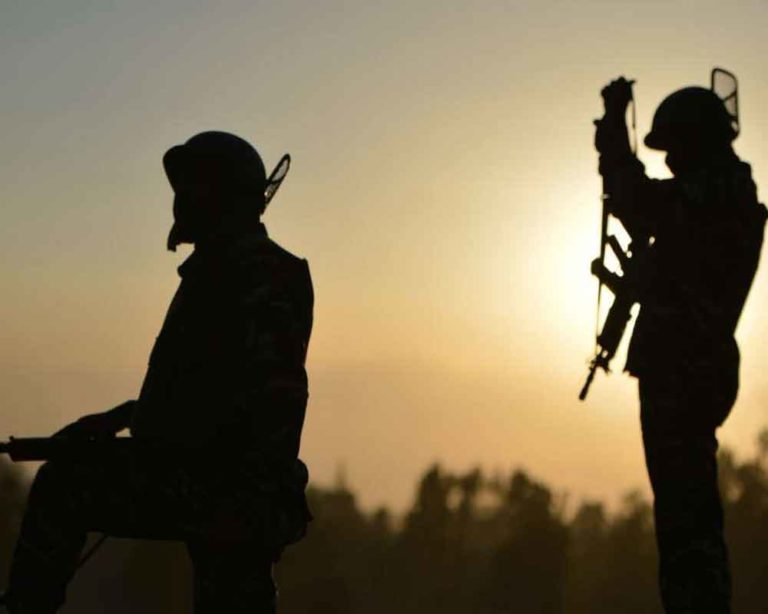
The Indian Army is maintaining a strong counter infiltration grid on the border to ensure that no infiltrators can get in. In the hinterland, the counter terrorism grid is potent enough to facilitate incisive operations on the basis of credible intelligence and neutralise terrorists.

During this year the security forces have been able to neutralise 86 terrorist and operations continue. 20 terrorists have been apprehended during this period. A welcome development is that the initiative by the security forces to involve parents, teachers and other prominent members of civil society in an attempt to wean away young boys misled into the fold of terrorism has witnessed a fair degree of success with a large number having rejoined the mainstream.

The General Officer attributed the conduct of free, fair and peaceful general elections in the state to the unrelenting efforts of the security forces and the civil administration. Those who came out to vote strengthened democracy and chose their representatives for the highest seat of legislative power in the country.

While referring to the line of actual control with China, the Army Commander said that peace and tranquillity has been ensured there with the development of mechanisms of confidence building to ensure that there are no friction points. If at all there are friction points the mechanisms ensure that the situation does not escalate.

Gen. Singh also confirmed that the Indian Army considers the surgical strike of September 2016 to be the first operation of this nature carried out against Pakistan. To substantiate his point, he referred to a reply to an RTI by the Director General Military Operations (DGMO) of the Army which has confirmed that the first surgical strike happened in September 2016. “I don’t want to go into what political parties say, they will be given an answer by the government. What I have told you is a statement of fact,” he said.

The interaction by the Army Commander and his views on various aspects concerning Jammu and Kashmir will assist in the build up of the policy of the new government once it take oath of office. The NDA government, under the able leadership of Prime Minister Narendra Modi, will wish to reassess its Kashmir policy and bring about certain changes that are in tune with the current realities. These realities have been articulated in great measure by the Army Commander.

The prime minister of Pakistan, Imran Khan, has for long been laying the foundation for resumption of talks, toward which end he has made many overtures. In consideration of the strong position that India has with respect to the security situation, the talks should be carried out from a position of strength and righteousness. The successful conduct of the general elections builds the confidence to hold the state assembly elections also on an early date. The political leadership of the valley would be well advised to take a leaf out of the “Winning Hearts and Minds’ (WHAM) initiative of the army.  It provides succour through the welfare initiative, Operation Sadbhavana, in a manner that gains confidence of the common man.

It is quite apparent from the articulation of Lt. Gen. Ranbir Singh that the security forces have, yet again, created an environment of peace wherein political activity is possible; it is now up to the political leadership to leverage the same and apply a balm on the open wounds of the people who have been traumatised by violence and disruption for decades on end.   

A Country Reborn

I saw a revolution emerge today
Power of a people in all its glory
No blood shed heard, no hue and cry
A simple vote was all it took to display
The unbeatable strength of democracy.

For years now its lingered in shadows
Many a tribulation sent to the gallows
The will of masses subdued in a sham
Pain and fears ignored, hope lay low
Scandals abound under promises hollow.

And it simmered deep in all their hearts
And it simmered and it burned to start
A resolve to move the mountains high
And it simmered and then it burnt bright
A fire, an urge to set things right.

And as if a phoenix, he rose above
Winds of a change he brought about
A man of masses, a leader anew
The kind of which existed so few
To drive those forces of tyranny out.

With abated breath, now stands a nation
It’s time for a tryst with destiny again
I belong here like any, a citizen hopeful
I belong to this land we stand to own
I belong now to a country reborn.

Public sector banks recover Rs 1.2 lakh cr from bad loans in 2018-19

Public sector banks (PSBs) have recovered close to Rs 1.2 lakh crore from stressed assets during the financial ended March, primarily helped by resolution under the Insolvency and Bankruptcy Code (IBC), an official said.

During the first half of the previous fiscal, banks recovered Rs 60,713 crore from bad loans. “Due to non-resolution of some big accounts referred under NCLT (National Company Law Tribunal), PSBs could not achieve the resolution target of Rs 1.80 lakh crore. But, these accounts should be resolved in the current financial year,” the official said.

Banks recovered close to Rs 55,000 crore from the NCLT resolution, the official said. “Compared to Rs 74,562 crore in 2017-18, the recovery in the previous financial year nearly doubled to Rs 1.2 lakh crore,” the official said.

Two large accounts of Essar Steel and Bhushan Power & Steel Ltd are still pending to be resolved. It is expected that these two accounts should be resolved in the next few months and recoveries from these could be around Rs 50,000 crore.

JSW Steel had revised its offer from Rs 11,000 crore to Rs 18,000 crore and later to over Rs 19,000 crore, whereas Tata Steel’s last offer was at Rs 17,000 crore after it had refused to revise its bid. ArcelorMittal has made a bid of Rs 42,000 crore for Essar Steel.

According to the official, consolidation among public sector banks and higher recoveries by state-owned lenders will be on the government’s agenda in the current financial year.

DRDO Successfully Flight-Tested Guided Bomb

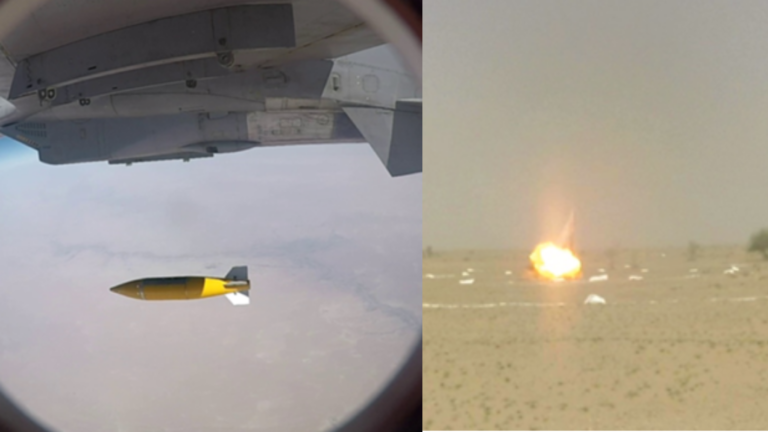
Defence Research and Defence Organisation (DRDO) has successfully flight tested a 500 kg class Inertial Guided Bomb from Su-30 MKI Aircraft from the Pokhran test range in Rajasthan. The guided bomb achieved the desired range and hit the target with high precision.

All the mission objectives have been met. The weapon system is capable of carrying different warheads.

Government bans Jamaat-ul-Mujahideen Bangladesh and its manifestations

The Central Government vide notification dated 23rd May, 2019 has banned the Jamaat-ul-Mujahideen Bangladesh or Jamaat-ul-Mujahideen India or Jamaat-ul-Mujahideen Hindustan and all its manifestations under clause (a) of sub-section (1) of section 35 of the Unlawful Activities (Prevention) Act, 1967 with immediate effect.

The notification states that the Jamaat-ul-Mujahideen Bangladesh and its formations like Jamaat-ul-Mujahideen India or Jamaat-ul-Mujahideen Hindustan and their manifestations have committed acts of terrorism, promoted acts of terrorism and have been engaged in radicalisation and recruitment of youth(s) for terrorist activities in India.

Modi victory can build unrealistic expectations

The euphoria over Narendra Modi’s second coming is too heady at this moment. Getting re-elected with his own party, the BJP, getting a clear majority on its own is a very significant achievement. Very, very significant when you see it from the perspective of there being an absence of a government with a single-party majority from 1989 to 2014. For a quarter century.

These results will LIVE for five years, an entire tenure and it was amusing to read Shobha De’s comments about them. She wrote that the results could not be killed with over-analysis. In fact, that sounds more like wishful thinking and desire. If only it were possible to kill them, she and others like her would have done it! Without any remorse. That luxury is not available to anyone in India following a first past the post system or determination of majority. Fortunately. Gushing over Modi victory is one thing. A serious reality check another.

Modi is far behind Rajiv Gandhi who had over 400 MPs that was over two-thirds majority. Modi is nowhere near that figure of supporting lawmakers. He just doesn’t have that kind of support even with his allies. It seems almost all Congress PMs, at least once in their tenures, were better placed than Modi is now. The reference here is to those from the Nehru-Gandhi dynasty. Lal Bahadur Shastri and PV Narasimha Rao are excluded from that. Never mind that they discharged their duties extraordinarily well. Manmohan too doesn’t count. The dynasts had a larger pool of MPs on the Treasury Benches when they ruled. Perhaps it only led to their arrogance and sense of entitlement getting more readily entrenched in them.

Building narratives about what Modi might do is one thing, but constitutional checks and balances are another thing. They keep him on the back foot. Whoever said no to more! More of power, more of support, more of money, and so on. Modi has, less than, not more of MPs than he needs (or needed) to push forward his agenda. It needs to be understood here that two-thirds majority can lead to passage of laws as conceived by parties, or individuals. A lesser majority acts as a serious constraint and leads to compromises, it often dilutes a proposed legislation beyond recognition. It is often being said that not enough progress was made on Ayodhya Ram Temple despite a clear majority. Or on the issue of Uniform Civil Code. With a clear majority, but far less than two-thirds, Modi can only do as much as his mandate allows. These issues are there amongst us and cannot be wished away. Or brushed under the carpet, as it were. They need to be tackled now so that they are not campaign issues in the future.

Congress’s Kapil Sibal had argued that Ayodhya Ram Temple hearings in the Supreme Court be held after May so that they do not influence the general elections. That has happened and we are in the last week of May. The apex court can perhaps order hearings on a fast-track basis. Decide on the issue in accordance with established laws. Why let the issue linger on and on?

In the near future, crumbling of the Karnataka government seems imminent. More due to the inability of the incumbent Gowda dynasty to hold on than due to any serious nudges from outside. The Congress, despite larger numbers, played second fiddle to Kumaraswamy in May last year as keeping “the BJP out” was its top priority. This explanation will hardly help a year later and we can see this political dynasty crumble. In south, Jagan Reddy and Stalin are the rising dynasts even as Scindia, Akhilesh and the RJD clan are on their way out. Incidentally, one Congress spokesperson had claimed that south was more educated and hence voted less in favour of Modi! How will she now explain the rise of Reddy and Stalin? Her contortions will make for an interesting visual picture.

For now, one thing can be thought of as a takeaway from this round of elections. Hard work helps in all circumstances. Smriti Irani is a prime example of that. Relentlessly carrying on her work in Amethi and emerging as a giant killer. Naveen Patnaik, working diligently and without flashy style, managed to tame the BJP in his backyard. On his chosen turf. There is a lesson in that: Nobody is invincible. Not Mamata Banerjee in West Bengal either. Let us put the acrimony of campaigning behind and move on. Let us forget the bitterness and mend fences. After all, we are all Indians and working for the betterment of the nation is something that is our common goal. Or it should be. Let us bury the proverbial hatchet. Only to dig it out five years later, as has been ordained in our magnificent Constitution.

How a section of media sensationalized Northern Command Chief’s statement

There’s an old saying in media circles that news is worth reporting only when a man bites a dog and not vice versa. This may now sound hackneyed. But then, how else can you describe media’s brazen attempts to fish in troubled waters with such insensitivity; such that instead of reporting an important event it chooses to utilise a comment made on its sidelines concerning an unrelated issue? This is exactly what happened when newspapers carried a report stating that while replying to a question during a press conference on May 21, General Officer Commanding in Chief (GoC-in-C) Northern Command, Lt Gen Ranbir Singh had stated that the September 2016 surgical strike carried out by Indian Army against terrorist launch pads located in Pakistan occupied Kashmir (PoK) was the first of its kind. 

Since the Ministry of Defence (MoD) had already stated that there was no record of any surgical strike carried out by Indian Army prior to September 2016, there was nothing new in what Lt Gen Singh had said. Furthermore, since Lt Gen Singh had only drawn attention of the media to the statement already issued by Directorate General of Military Operations (DGMO) and steered clear of any comments that could be misconstrued as being political in nature, this certainly wasn’t a ‘man bites dog’ or ‘breaking news’ type of situation. All he said on this issue was,”A few days ago, DGMO said in a reply to an RTI that the first surgical strike happened in September 2016. I don’t want to go into what political parties say, they will be given an answer by the government. What I have told you is a statement of fact.” 

Readers would agree that there is nothing controversial in what Lt Gen Singh has stated. It is also amply clear that the question posed by the journalist was ‘politically loaded’ since it was in reference to Congress party’s recent claim that the Indian Army had carried out six surgical strikes when the UPA was in power, which the MoD had already refuted. Therefore, Lt Gen Singh sagaciously drew the scribe’s attention to official response of the army on this subject, thereby avoiding any chances of scandalous inferences being drawn. Regrettably, even this matter-of-fact reply didn’t prevent the media from turning a statement that was completely devoid of any contentious content into a sensational news report. Resultantly, instead of the main Project Sadbhavana event during which financial assistance was extended to 71 deserving students of Jammu and Kashmir from ‘Below Poverty Line’ {BPL} category, it was the press conference held on sidelines that hogged the limelight than the scholarship award function.

It’s obviously the media’s insatiable appetite for sensationalism that spurred journos to give an innocuous statement the tone and tenor of a politically charged comment in order to sensationalise the issue, which is rather unfortunate. Since practical experience has taught us the import of Texas Guinan’s view that “A politician is a fellow who will lay down your life for his country,” it doesn’t hurt so much when netas seek to extract political mileage out of the achievements of our armed forces. But the situation becomes worrisome and depressing when media, which the public adulates for being society’s watchdog starts indulging in or encourages sensationalism. Reproduced below are certain captions and excerpts that reveal the extent to which some newspapers and news portals can go just in order to create catchy captions:

  •  “Army contradicts Congress’ claim, says it carried out first surgical strike in September 2016 to avenge Uri,” reads one caption that conveys an erroneous impression that the Indian Army was exceeding its brief by getting involved in a pre-poll war of words between political parties.
  • Another report claims that “Lt Gen Ranbir Singh’s statement appeared to contradict one made by his predecessor Lt Gen (retd.) DS Hooda, who oversaw the 2016 surgical strikes.” But the article doesn’t even hint at, let alone amplify as to what the “contradiction” exactly was! Since Lt Gen Hooda (retd.) is currently associated with Congress, this misleading caption unnecessarily creates doubts in minds of readers and fuels rumours that the government is hiding something.
  • A news site published the report with a rather offensive caption that stated “BIG Embarrassment For Congress: Army Contradicts UPA-era Surgical Strikes Claim, Says First Was Conducted In September 2016.” While the statement may be ‘technically correct’, the fact is that it was not Lt Gen Singh but the DGMO who had made this statement nearly two weeks earlier in reply to an RTI query.
  • Another news report had the caption “Embarrassment for Congress: ‘India conducted first surgical strike in 2016’, confirms Northern Army commander.” Here again, it would be pertinent to note that all the Northern Army Commander did was to quote the DGMO’s statement and this cannot be construed as a “confirmation” under any circumstances.

While the media has all the rights to use journalistic liberties in the interests of positive reporting and conveying a social message, but unbridled sensationalism beyond can prove to be dangerous. Readers would recall that during the recent ICJ hearings, Pakistan’s lawyer Khawar Qureshi cited articles written by three renowned Indian journalists in order to strengthen Islamabad’s trumped-up case of espionage against Kulbhushan Jadhav and implicate him.

Therefore, with inimical forces lurking everywhere, isn’t there a need for the fourth estate to be a bit more careful while ‘sprucing up’ news reports so as to avoid the scope of these being misused by vested interests to generate negativity?

Human Rights Watch (Israel and Palestine) on Common Rights and Law Violations

Omar Shakir is the Israel and Palestine Director for Human Rights Watch (Middle East and North Africa Division). Here we talk about rights and law violations, and more.

Scott Douglas Jacobsen: With regards to the Israeli and Palestinian conflict or issue, there are violations of international law on both sides. When these violations happen, what are common streams of international law in this conflict? How are they consistently violated?

Omar Shakir: Because Israeli authorities have occupied the West Bank, including East Jerusalem, and the Gaza Strip since 1967, international humanitarian law applies to the situation on the ground. International humanitarian law, otherwise known as the law of war or the law of occupation, provides one layer of protection to the occupied Palestinian population.

But, of course, in addition to international humanitarian law, international human rights law applies to the Israeli authorities, but also to the Palestinian authorities vis-a-vis their own populations and vis-a-vis Israelis. 

Different bodies of law will apply depending on the particular circumstances. For example, when there are armed hostilities, missiles fired back and forth between the Gaza Strip and Israel, international humanitarian would apply.

It would also perpetually apply because Palestinians are protected persons. Sometimes, a particular event might trigger a different body of law. For example, when Palestinians in Gaza are protesting or even in Ramallah are protesting, and there are Israeli forces there policing the demonstration, whether across the fence with Gaza or in Ramallah, the body of law that would govern would be human rights law because that body of law applies to policing situations.

So, different bodies of law will govern. When we’re talking about the Palestinian Authority dealing with its own citizens, for example, arrests or conditions of detention, that would be governed by international human rights law, because it is the obligations of a power that has some authority over people within its jurisdiction. 

Jacobsen: For those who may hear the basic phrase of “right to self-defense,” what does this mean in the context of the conflict? How is this typically applied in the media? But then, also, how is this properly applied within a legal context?

Shakir: The UN Charter has a prohibition against using force, except as a means to self-defense. There have been different analyses over the years on what exactly constitutes self-defense. Some argue this means only attacking when one has been attacked. Others have stretched the meaning to pre-emptive attacks at different levels of distance from imminence.

There are two main governing bodies of law. There’s what you call jus ad bellum and jus in bello.

Jus ad bellum concerns the legality of using force in general. Then there is jus in bello, which governs how force is used in the context of conflict. Human Rights Watch itself focuses mostly on the latter. We don’t generally make pronouncements on whether or not war, occupation, or the beginning of hostilities is or isn’t justified.

 Jus ad bellum is a body of law that’s generally been underdeveloped.

Most of our focus is on when force is used: is the use of force legitimate regardless of whether the war, occupation, or hostilities itself was justified?

Most of HRW’s focus is on research pertaining to abuse of all parties pertaining to the laws of war, which is, in essence, jus in bello versus jus ad bellum – which would concern a decision whether to go to war or ignite hostilities is itself justified. 

Jacobsen: For those organizations like HRW, and others, covering several sides of the issue in terms of human rights violation and breaches of international law. You can get bad press from all sides. 

You might get credit from one side for critiquing one side in terms of application and human rights violations and pointing out breaches of international law, and vice versa.

What would be a proper response to those who may be critiquing what seems to me like a very legitimate work that you’re doing in terms of having a comprehensive perspective in the application of human rights and international law?

Shakir: Certainly, one of the most common critiques of HRW in the nearly 100 countries that we operate in across the world is one side or the other claiming that we underfocused on the other side’s abuses while focusing on them. That we have a bias.

I used to cover Egypt for HRW. When we were covering the abuses of Mohamed Morsi and the Muslim Brotherhood when they were in power in 2012-2013, we were accused of being against them.

Then when there was a coup, and the military government was gunning down protestors and arbitrarily arresting thousands, we were accused of supporting the Muslim Brotherhood.

It is a similar pattern everywhere. Israel-Palestine, we have seen the same dynamic. The Israeli government says that we are biased against them.

When we released reports, as we have done for more than two decades, on arbitrary arrests by the Palestinian Authority or Hamas, or the unlawful use of force by them, we are accused by of being part of an agenda of Israel and the United States to undermine them.

Even in the last year, we have seen accusations from both Israelis and Palestinians. I think the way to respond to that is to be methodologically consistent, to use the same tools, and to document the abuses of all parties. 

That doesn’t mean that we have a ledger and then count how many reports we issued on each party’s abuses to make sure that it is equal, because human rights abusers are not equal in the amount of the abuse that they inflict on the others.

But it means that you bring the same tenacity and bring the same seriousness and rigour and approach, and use the same tools, to measure abuse, and the consistently reach the same conclusions for the same abuses in different contexts.

That’s the work that we try to do in the nearly 100 countries that we operate in, including every country in the Middle East and North Africa.

Jacobsen: Thank you for the opportunity and your time, Omar.

Photo by Benjamin Suter on Unsplash

Supreme Court gets full sanctioned strength of 31 judges

Four new judges of the Supreme Court were on Friday administered the oath of office by Chief Justice of India Ranjan Gogoi. With the swearing in of the four judges, the number of judges in the Supreme Court stands at 31, the full sanctioned strength of the top court.

Justices B R Gavai, Surya Kant, Aniruddha Bose and A S Bopanna were administered oath of office by the CJI in court no.1 in the presence of several other sitting apex court judges.

The apex court, which was functioning with 27 judges including the CJI has now reached its full strength of judges for the first time since 2008 when Parliament had increased the number of judges from 26 to 31.

On Wednesday, President Ram Nath Kovind had issued warrants of appointment of Justices Gavai, Kant, Bose and Bopanna as apex court judges.

Justice Gavai, who was a judge of the Bombay High Court, will become the CJI for a little over six months in 2025 and he will be the second Chief Justice of India belonging to the Scheduled Caste community after Justice (retd) K G Balakrishnan.

Justice Kant, who was till now the chief justice of the Himachal Pradesh High Court, will succeed Justice Gavai as the CJI in November 2025 and he will remain in office till February 2027.

Justice Bose, who was till now the chief justice of the Jharkhand High Court, is at number 12 in the all-India seniority of high court judges.

Justice Bopanna, whose parent high court is Karnataka, was till now the Chief Justice of the Gauhati High Court and is at number 36 in the all-India seniority.