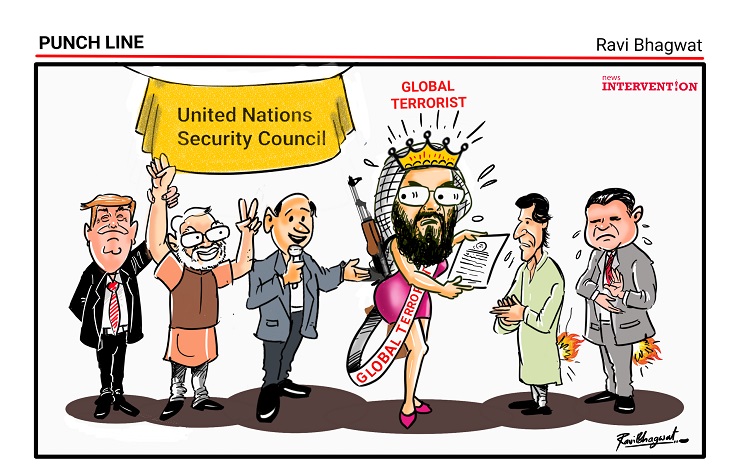
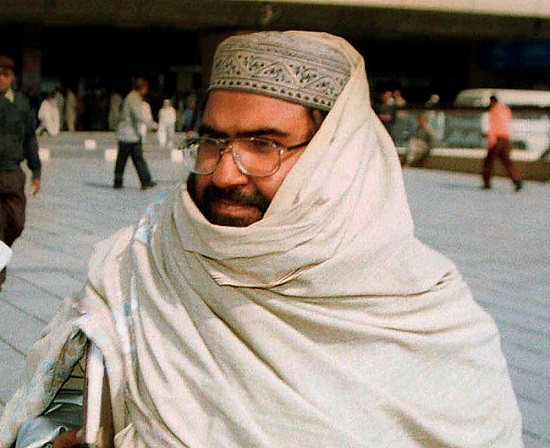
Jaish-e-Mohammad Chief Masood Azhar has been designated as a Global Terrorist by the United Nations Security Council (UNSC).
Proscription of Masood Azhar: Significance and the Aftermath
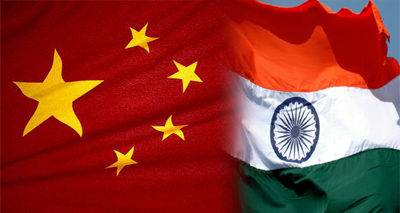
So, the world has finally realised that Masood Azhar is a terrorist! One wonders about the reason behind this enlightened thought especially so far as China is concerned. China has relented, not because of a change of heart, but because the international pressure and isolation was becoming unbearable. Its opposition to proscribing Azhar was perplexing the international community given that Jaish-e-Mohammad (JeM), the organisation that Masood Azar heads, has already been declared a terrorist organisation by the UNSC (United Nations Security Council) and China was party to the decision. As such, its obduracy in “protecting” Azhar was beyond any logic.
Pakistan, always in the lookout to secure brownie points, has attempted to reverse the very obvious diplomatic setback caused by the proscribing of Masood Azar. It is, quite comically, highlighting the omission in the UN statement about the JeM chief’s personal involvement in the spread of terror in Kashmir as also the role played by him in the terror attack at Pulwama. Apparently, Pakistan prevailed upon its all-weather friend China to do at least this much for it in the circumstance where the embarrassment became inevitable.
The fact however remains that Masood Azhar is a prized asset for Pakistan. Apart from meticulously planning several terrorist attacks against India, he has succeeded in creating an army of Jihadis who are ready to lay down their lives at his command. Most of them are directed against India, particularly Kashmir. His importance lies in the fact that the then government of Pakistan along with its army and notorious Inter-Services Intelligence (ISI) had made several attempts to get him released from a jail after he was arrested in Kashmir in 1994. Five years later, the Indian government was forced to release him along with two others–Mushtaq Ahmed Zargar and Omar Sheikh, in exchange for the safe release of passengers of the Indian Airlines Flight IC-814, which was hijacked and taken to Kandahar in Afghanistan. Pakistan should have arrested the hijackers the moment they landed in the country, instead, it gave them and their leaders Masood Azhar a hero’s welcome.
Now that Azhar is declared a global terrorist, the government of Pakistan will be forced to arrest him and seize his assets. How the same will be done is a big question since Azhar has, in the past, threatened the Pakistan government of violence if it undertakes any such act. Secondly, he enjoys the support of the Pakistani Army. Therefore, the Pakistani establishment is cagey while taking any action against him.
Also, this declaration may well turn out to be a case of “too less, too late.” Masood Azar has been unwell for long now and remains under treatment in army facilities. He does not exercise effective control on his organisation which is said to be “looked after” by his relatives, from among whom, there are casualties reported during the Indian air strike on JeM camps in Balakot.
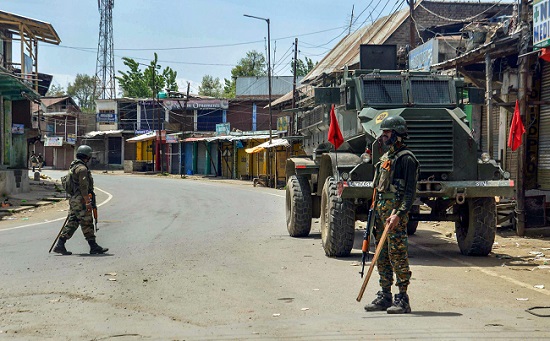
His proscription will not have anything more than salutary effect on the activities of JeM. The organisation will definitely do something big to prove that it continues to be strong despite the setback. It would, therefore, be necessary for the security forces in Kashmir and intelligence agencies across India to remain extra vigilant for the reaction. The need for alertness is necessitated even more due to the ongoing elections in India, which are now at a very sensitive stage. Another significant aspect is the advent of the holy month of Ramazan when a special brand of propaganda, supported by violence, is unleashed by terrorists in Kashmir.
On the diplomatic front India should move fast to leverage the proscription and get the international community to prevail upon Pakistan for some concrete action in eliminating the fundamentalist Islamist organisations operating in the country. In fact, the time has come to also expose the fault lines in this regard that exist in China.
China is a country that does not think twice before decimating any form of dissent against the state and in particular when there’s a religious overtone. The manner in which a crackdown has been carried out against the Uighur population in Xinjiang Province bears evidence to this reality. The Uighurs, an ethnically Turkic group of Muslims of the formerly independent Republic of East Turkistan, which is presently under China’s control and is called the Xinjiang Uighur Autonomous Region (XUAR) are unhappy under Chinese rule. Their freedom movement gained momentum since the early 1990’s. The Chinese authorities reacted with large scale arrests and summary executions. In 1998, the National People’s Congress passed a new criminal law that redefined “counter-revolutionary” crimes to be “crimes against the state”, liable with severe prison terms and even execution. Many restrictions on their religion, which include forbidding parents and guardians to allow minors to engage in religious activity that were not found elsewhere in China were imposed in XUAR. Due to this restrictive crackdown, the decade from 1998 to 2008 witnessed zero Uighur related violence, but eruptions have become common since 2009.
When China can be strict to the point of being brutal in quelling even a whiff of religion-based insurgency on its soil, surely, as a responsible world power, it needs to show sensitivity towards the problems being faced by other nations and regions across the world. With the ban in place, India should further this issue by emphasising that the delay in the process was rather unwarranted.
The proscription of Masood Azhar, though significant and definitely a feather in the cap of our foreign policy, should not create too much euphoria. The pressure has to be maintained on the terrorists operating in Kashmir and diplomatic efforts have to be further energised. The calls for opening a dialogue with Pakistan will gain momentum once the new government takes office in India. The situation will need to be studied deeply before taking any decision. One factor would be the existence of a noticeable change in the attitude and policy of the government of Pakistan post the proscription of Masood Azhar.

Big B and Emraan Hashmi to share screen for a thriller
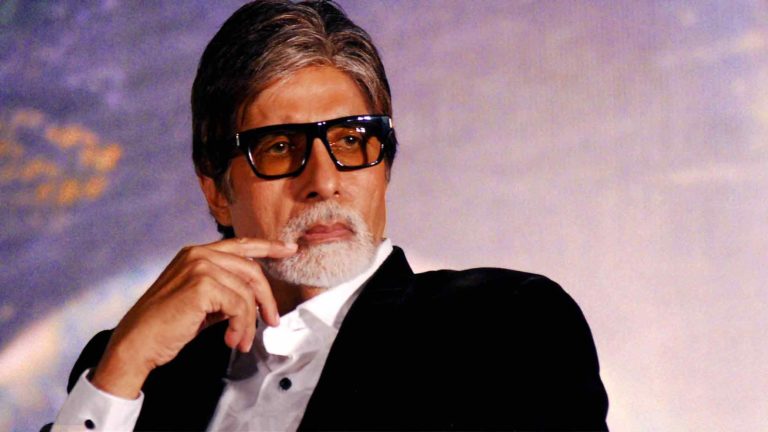
For the first time, Superstar Amitabh Bachchan and actor Emraan Hashmi will work together in a film. Bachchan and Hashmi’s untitled mystery thriller will go on floors on May 10. The film, produced by Anand Pandit Motion Pictures and Saraswati Entertainment Private Limited, will be helmed by Rumi Jaffrey.
“We are extremely excited to commence the shoot of the film from May 10. Looking forward to seeing Mr Bachchan and Emraan onscreen for the first time. Given the subject of the film, I do believe we have a winner in our hands,” Pandit said in a statement.
The film is scheduled to release on February 21, 2020.
Yes I am a Nationalist and Proud to say so
General Elections in India are coming to the end of their long cycle. These elections have possibly seen one of the most accusative and repartee filled speeches from each politician of every party that I have heard in the past few decades.
Yet one word “Nationalism” or “Nationalist” seems to be a part of these elections as never before. All anti-BJP parties, journalists and political commentators are throwing this word as an accusation at the BJP and to all its followers as if being nationalist is a crime and something that should be scorned, derided and chastised at all costs.
Nationalism is a modern movement. Throughout history people have been attached to their native soil, to the traditions of their parents, and to established territorial authorities. It was not until the end of the 18th century that nationalism began to be a generally recognized sentiment moulding public and private. Nationalism is often mistakenly regarded as a factor in political behaviour.
A Nationalistic person is one who strongly identifies with their own nation and vigorously supports the nation’s, and therefore their own, interests.
Nationalist movements around the world have helped in creating an identity and uphold national interest. The first wave of nationalist movements happened in the middle of the nineteenth century leading to revolutions in Europe, which led to the unification of Germany and Italy. Towards the end of the nineteenth century a second wave swept Eastern and Northern Europe, as well as Japan, India, Armenia, and Egypt. India’s independence movement was also a nationalist movement like the anti-colonial movements in most parts of the World.
Nationalism and nationalist movements have been on the rise all over the world.
From the election of Donald Trump who unabashedly says that he is a nationalist to President Duterte in Philippines. From President Erdogan in Turkey to President Jokowi in Indonesia. From Prime Minister Shinzo Abe in Japan to Prime Minister Benjamin Netanyahu in Israel. More nationalist leaders will be elected in more countries around the world. Chinese and Russian leaders use a form of nationalism to rally their people in their communist countries.
The important factor to study and understand is why these nationalistic movements are happening around the world through democratically elected processes. These movements are not fascist or dictatorial movements that have happened because of the power of a gun.
Is this change happening because all other forms of governance have not delivered what they promised to the common people who have largely remained where they were in most countries around the world? Identification with the land of their birth is one certainty no politician can take away from the common man and therefore, there is every reason for citizens to have a nationalistic mindset.
The Economist magazine in its issue dated 4th May 2019 has an article titled “Nationalist fervour is likely to secure a second term for Narendra Modi.” The author of the article has no interest in the performance of the Modi Government, or all the social development schemes launched by him. They have no reason to applaud Ayushman Bharat, the largest health scheme in the world that will cover 500 million people. They have no interest in the strides India has made in the world or India’s successes in international diplomacy.
Like The Economist several other “liberal journalists” and “political commentators” have been trying to convince themselves that nationalism and nothing else will result in a BJP victory. Their convenient interpretation of nationalism is protectionism, isolationism, xenophobia and an anti-elite discourse. To these journalists all that matters is what is in it for them and their pampered tribe. An unprecedented outreach programme to the masses in India does not matter to these journalists and political commentators since such programmes do not directly benefit them.
The age-old negative definitions and connotations of nationalism must change. The positives of being a nationalist need to be accepted and the role of nationalism in making a country stronger must be recognised.
Nationalism has everything to do with the nation and must not have anything to do with any religion or economic grouping in the nation. It has nothing to do with who is in a majority or who is in a minority. It surprises me that nationalism in India is being linked to one religion by such journalists and political commentators.
These journalists and political commentators conclude very simply that nationalist fervour being “whipped up” during these elections will help Narendra Modi win a second term. Since this nationalistic movement will help Mr Modi and the BJP to come back to power with a resounding victory, it must be categorised as bad and unacceptable. Is their agenda being driven because of the needs of some political parties or are they genuinely functioning as responsible members of the powerful fourth estate?
The silent majority of Indians are consolidating their thoughts (and possibly their votes) against those that are trying to destabilise the country. This thinking could be against terrorists from across the border who have hurt India time and time again and for the first time Indians see a strong leader who will hit back hard. It could be against those who speak about breaking up India using the “tukde – tukde” (small pieces) slogan. Or it could be against those who are willing to pardon sedition and are further stating that they will remove the law against sedition.
What is clear is that the citizens of India are saying they have had enough of the double speak they have been hearing from politicians for the past seven decades. They have heard enough comments like “we strongly condemn such a dastardly act” or “we respect the resilience of the citizens.”
My question to all these journalists and political commentators is what is wrong in being a nationalist?
I am a nationalist and am proud to say so.
Blockbuster ‘Gadar’ to have a sequel
“Gadar: Ek Prem Katha,” which created new records on the box office 18-years ago is all set to return to the big screen with a sequel. The story will be a continuation from the original film with a backdrop of India-Pakistan.
“We have been working on ‘Gadar’ sequel since 15 years. ‘Gadar’ will be story of Tara (Sunny), Sakeena (Ameesha Patel) and Jeet (their son). The story will move ahead with India-Pakistan angle, ‘Gadar’ is incomplete without it. “The cast will remain same, like how we have seen in films like ‘Baahubali’, ‘Rambo, ‘Fast and Furious’, etc. We have discussed the idea with Sunny. We can’t disclose anything at the moment,” a source close to the film’s production told PTI.
The film, directed by Anil Sharma, ranks among the top three Indian films in all-time highest footfalls. According to sources, it had 17 crore footfalls and had earned Rs 256 crore upon its release in 2001.
Big B unwell, shares on his blog
Bollywood megastar Amitabh Bachchan on Sunday afternoon informed his fans that he is cancelling the weekly meet and greet ritual due to ill health. The 76-year-old actor, who sees his admirers every Sunday at his house Jalsa in Juhu since past 36 years, said he might be in pain but fans need not worry. “
…Not doing the Sunday Darshan today… In bed… Pain .. Inform all, nothing to worry, but unable to come out,” Bachchan wrote on his blog.
The actor, who was last seen in “Badla”, is currently working on Ayan Mukherji’s “Brahmastra” and a bilingual project, titled “Tera Yaar Hoon Main”. Bachchan is also teaming up with Emraan Hashmi for a mystery thriller.
Biopic on PM Modi to release on May 24 now
Vivek Oberoi-starrer biopic on Prime Minister Narendra Modi, which was earlier set to release on April 11 but was banned by the Election Commission, will now be released countrywide on May 24, a day after the results of the Lok Sabha elections are declared. This was shared by the makers of the film. Producer Sandip Ssingh said he hopes the film will have a smooth run in the theatres. “We are now releasing our film on 24th May 2019. This is the first time a film will be promoted for only four days. I hope now nobody has any problem with the film and we are hoping for the smooth release this time,” he said.
The film, titled ‘PM Narendra Modi’, In its order last month, the EC had banned the screening of film during the poll period, saying any such film that subserves purpose of any political entity or individual should not be displayed in the electronic media. The EC order had come a day before the movie was to be released. Directed by Omung Kumar, the film is co-produced by Suresh Oberoi and Anand Pandit.