The Commerce Ministry
and Indian High Commissions and Embassies of eleven African countries arranged
an interaction over Digital Video Conference (DVC) over two days, on 3rd and 6th May 2019, with the Indian business
community in Africa. The interactions with Indian Diaspora were held in
Tanzania, Uganda, Kenya, Zambia, and Mauritius, Nigeria, Mozambique, Ghana,
South Africa, Botswana, and Madagascar. This initiative was held in order to
build an effective engagement with the Indian Diaspora in Africa in order to
further deepen and strengthen India-Africa trade ties.
The DVC was attended
by over 400 members of Indian business community in 11 African countries.
This initiative of the Commerce Ministry
emphasizes the need for a multipronged strategy for further enhancing trade and
investment ties between the two regions. Commerce Ministry recognizes that for formulating an effective
export strategy it is imperative to engage the Indian business community in
Africa for mutual gain for both sides as trade relations between the people of
same origin instill greater confidence amongst trade partners.
The major issues
highlighted by the Indian Business Community in these 11 countries are:
Improving the Line of
Credit system and developing a facility for an affordable and competitive
funding.
Setting up of Indian
Banks/financial institutions in Africa
Enhanced Buyers’
Credit facility for promotion of trade between the two regions
Reviewing and
liberalizing visa policies from both sides
Need for direct
flights between the India and African countries
Exploring the
possibility of rupee trade to address the issue of shortage of dollars in region.
Creation of common
database of buyer-suppliers in the two regions for facilitating matchmaking for
enhancement of bilateral trade.
Development of a
robust trade dispute settlement mechanism
More frequent and
structured country/sector specific trade exhibitions in Africa
Establishment of
country chapters of FICCI or CII in Africa
Frequent visits of
policy makers, chamber of commerce and investors for familiarization with local
business and investment regime for informed decisions
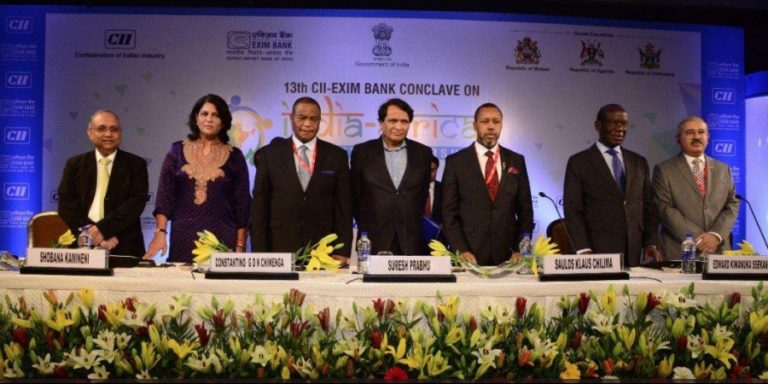
India-Africa Trade
India’s total trade with the African region
during 2017-18 was USD 62.69 billion (8.15% of India’s total trade with the
World). India’s share of exports to African countries as a percentage of
India’s total exports to the world was of the order of 8.21% in 2017-18.
Africa region’s share in India’s total imports from the World accounted for
8.12% in 2017-18.
African countries present immense
opportunities for India with the world’s largest land mass, 54 countries, a
population growing to be almost equivalent to that of India, huge mineral
resources, oil wealth, a youthful population, falling poverty levels and
increasing consumption patterns.
Thus, Africa has a huge demand for new
business models for market entry, stable market access, entrepreneurship and
investments in transport, telecom, tourism, financial services, real estate and
construction.
General
Elections in India are coming to the end of their long cycle. These elections
have possibly seen one of the most accusative and repartee filled speeches from
each politician of every party that I have heard in the past few decades.
Yet
one word “Nationalism” or “Nationalist” seems to be a part of these elections
as never before. All anti-BJP parties, journalists and political commentators
are throwing this word as an accusation at the BJP and to all its followers as
if being nationalist is a crime and something that should be scorned, derided
and chastised at all costs.
Nationalism is
a modern movement. Throughout history people have been attached to their native
soil, to the traditions of their parents, and to established territorial
authorities. It was not until the end of the 18th century that nationalism
began to be a generally recognized sentiment moulding public and private.
Nationalism is often mistakenly regarded as a factor in political behaviour.
A
Nationalistic person is one who strongly identifies with their own nation and
vigorously supports the nation’s, and therefore their own, interests.
Nationalist
movements around the world have helped in creating an identity and uphold
national interest. The first wave of
nationalist movements happened in the middle of the nineteenth century leading
to revolutions in Europe, which led to the unification of Germany and Italy.
Towards the end of the nineteenth century a second wave swept Eastern and
Northern Europe, as well as Japan, India, Armenia, and Egypt. India’s independence
movement was also a nationalist movement like the anti-colonial movements in
most parts of the World.
Nationalism
and nationalist movements have been on the rise all over the world.
From
the election of Donald Trump who unabashedly says that he is a nationalist to
President Duterte in Philippines. From President Erdogan in Turkey to President
Jokowi in Indonesia. From Prime Minister Shinzo Abe in Japan to Prime Minister
Benjamin Netanyahu in Israel. More nationalist leaders will be elected in more countries
around the world. Chinese and Russian leaders use a form of nationalism to
rally their people in their communist countries.
The
important factor to study and understand is why these nationalistic movements
are happening around the world through democratically elected processes. These
movements are not fascist or dictatorial movements that have happened because
of the power of a gun.
Is
this change happening because all other forms of governance have not delivered
what they promised to the common people who have largely remained where they
were in most countries around the world? Identification with the land of their
birth is one certainty no politician can take away from the common man and
therefore, there is every reason for citizens to have a nationalistic mindset.
Like The Economist
several other “liberal journalists” and “political commentators” have been
trying to convince themselves that nationalism and nothing else will result in
a BJP victory. Their convenient interpretation of nationalism is protectionism,
isolationism, xenophobia and an anti-elite discourse. To these journalists all
that matters is what is in it for them and their pampered tribe. An
unprecedented outreach programme to the masses in India does not matter to these
journalists and political commentators since such programmes do not directly
benefit them.
The
age-old negative definitions and connotations of nationalism must change. The
positives of being a nationalist need to be accepted and the role of
nationalism in making a country stronger must be recognised.
Nationalism
has everything to do with the nation and must not have anything to do with any
religion or economic grouping in the nation. It has nothing to do with who is
in a majority or who is in a minority. It surprises me that nationalism in
India is being linked to one religion by such journalists and
political commentators.
These journalists and
political commentators conclude very simply that nationalist fervour being
“whipped up” during these elections will help Narendra Modi win a
second term. Since this nationalistic movement will help Mr Modi and the BJP to
come back to power with a resounding victory, it must be categorised as bad and
unacceptable. Is their agenda being driven because of the needs of some
political parties or are they genuinely functioning as responsible members of
the powerful fourth estate?
The
silent majority of Indians are consolidating their thoughts (and possibly their
votes) against those that are trying to destabilise the country. This thinking could
be against terrorists from across the border who have hurt India time and time
again and for the first time Indians see a strong leader who will hit back hard.
It could be against those who speak about breaking up India using the “tukde
– tukde” (small pieces) slogan. Or it could be against those who are
willing to pardon sedition and are further stating that they will remove the
law against sedition.
What
is clear is that the citizens of India are saying they have had enough of the
double speak they have been hearing from politicians for the past seven
decades. They have heard enough comments like “we strongly condemn such a
dastardly act” or “we respect the resilience of the citizens.”
My
question to all these journalists and political commentators
is what is wrong in being a nationalist?
Air,
petro, telephony and job crises are putting the country at risk. The US
nonchalance is adding to India’s economic concern. The US, at the back of
withdrawal of zero-duty entry for Indian exports, imposed the sanctions
prohibiting purchase of oil from Iran. It is a move said to exert maximum
pressure on Iran for following US dictat on nuclear issues. The Donald Trump
administration pulled out of the landmark 2015 nuclear deal.
The
move hurts India the most as Iran is the fourth-largest oil supplier after Iraq
and Saudi Arabia. Iran supplied 23.5 million tonnes of crude oil in 2018-19 at
a price and credit facilities no other suppliers offer. India imports 80
percent of its oil and 40 percent of gas. Domestic production has been
declining for the last few years. The US move will further increase the oil
prices. It will lead to severe inflationary situation in India. The US move is
designed to benefit itself and its stakes in its allies. Indian diplomacy of
hugging dignitaries has not helped itself.
Another
detrimental impact on the economy is due to Jet Airways grounding and the deepening
crisis of Air India. Air fares are shooting up at a time when Indian railways, despite
efforts, is not performing at its best. The cost of travel and goods
transportation is shooting up. Even international travel is bleeding airlines
due to Pakistan ban on its airspace. It also reduces India’s capacity.
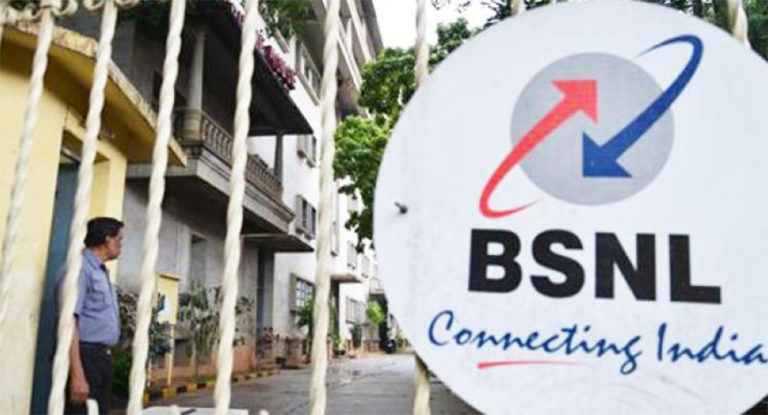
The
Jet is a classic case. It shows that seemingly thriving organisations may be in
the throes of a crisis. The BSNL, the official, telecommunication backbone is
losing on its clientele because of poor services and heavy losses. The
management says they do not have the cash flow to pay salaries to its 1.68 lakh
employees. A sick BSNL, with about Rs 90,000 crore losses, according to Kotak
Equities, may end the affordable communication and digital boom that the
country has seen for the past few years.
Another
classic case is of the international oil giant public sector ONGC. It was
developed since 1950s as key to energy security. The Congress regimes since
1990s chipped away at the company in favour of private businesses looking to
dig into profitable oil and gas sector. In 1992-93, 28 prime oil and gas fields
discovered and developed by ONGC, despite protests from think tanks like
planning commission, were given away to private businesses for a pittance. The
government in 1991 forced ONGC to take a loan of $ 450 million from the World
Bank. The WB told ONGC and Oil India to go into joint ventures with private and
foreign capital, an unnecessary condition. That was the beginning. In between a
private company virtually drilled out gas from ONGC field. The litigation has
not helped ONGC. It was also forced to shell out Rs 8,000 crore to help loss
making Gujarat State Petroleum Corporation to exit the Krishna Goadavari basin
in 2016. The GSPC could not find gas in its fields. The losses were dumped on
ONGC. The cash levels in ONGC came to a critical low in 2018 fiscal. It reduced
by 90 percent in a year. It is now under a huge debt.
So,
if India is losing jobs, its public sector is collapsing and private sector is
“thriving”, there is much that does not meet the eye. The telecom, oil,
aircraft manufacturing and many other works done by the public sector
profitably is under threat. Even there have been questions on closure of HMT
some years back instead of strengthening its operations. Its exit has helped
watch manufacturing and other tool and instrumentation companies, once rivals
of HMT.
There
is nothing wrong in private sector rising. Should it be at the cost of
manipulating losses of the public sector? The private gain is not an eyesore
but the process takes the wealth from the people of the country to some chosen
hands may be in a particular region.
A
pertinent question arises. Are really the public sector at folly or the private
sector is being made to thrive at its cost, particularly since 1992? It raises
many questions for many international deals. So if the rupee is in crisis or
repatriation of profits to foreign shores is increasing, it calls for a
holistic look at policies. It is a national crisis, needs careful, immediate
treatment and a detailed probe.
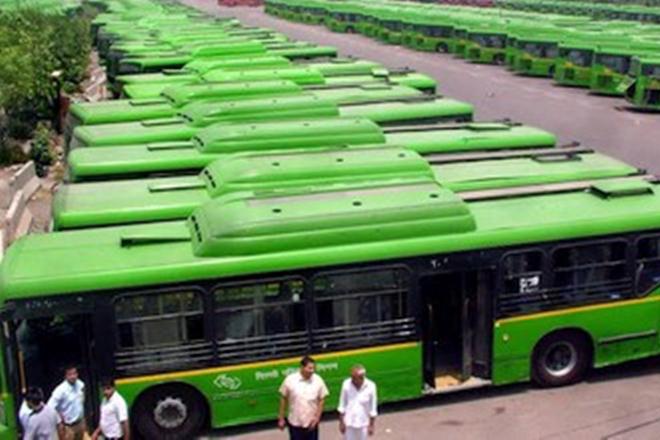
The Vice President M Venkaiah Naidu has called for adopting
a public transport-centric approach to decongest traffic-choked cities and
combat growing vehicular pollution. He observed that our cities have been
witnessing an undesirable shift from the use of public transport to private
vehicles.
‘The average two-wheeler and car ownership levels in
metropolitan cities which were 112 and 14 per 1000 population in 1994 are
expected to grow to 393 and 48 respectively by 2021. This would mean 53 million
two-wheelers and six million cars in the next 15 years in metropolitan cities,’
he added.
Speaking at the 25th Foundation Day event of Delhi Metro
Rail Corporation (DMRC) in New Delhi recently, he said urban transportation
solutions like the metro rails have the capacity to act as driving forces to
take India’s quest for sustainable urban spaces to fruition.
Pointing out that urban transport was leading to growing air
and noise pollution, he said that it was estimated to account for about 25
percent of the greenhouses gases worldwide and spending more time in the
polluted atmosphere was adversely affecting the health of the people, the Vice
President said and added that the need for clean urban mobility cannot be over
emphasized.
Referring to the deleterious effects of global warming and
climate change, he said “we need to swiftly move from fossil fuel based
automobiles to electricity or battery based vehicular system”.
He said that a relevant infrastructure, especially in regard
to charging of batteries had to be developed on an urgent basis to meet the
emerging demand for electric vehicles.
Stressing the need to put in place an adequately developed
reliable, affordable and accessible urban public transport system, Naidu called
for steps on a war footing to make public transport the most popular mode of
travel for all commuters.
The Vice President asked planners to provide hassle-free
travel facilities and said that ensuring the last mile connectivity to
commuters, especially for those travelling by metro and local rail networks.
He urged cities to increasingly focus on introducing
multi-modal transit systems. “Public transport should take precedence over
personalized motor transport and every stakeholder should work in that
direction”, he added.
The Vice President also wanted city planners to make urban
spaces safe for women, children and the elderly and make them completely
barrier-free and accessible to the differently abled.
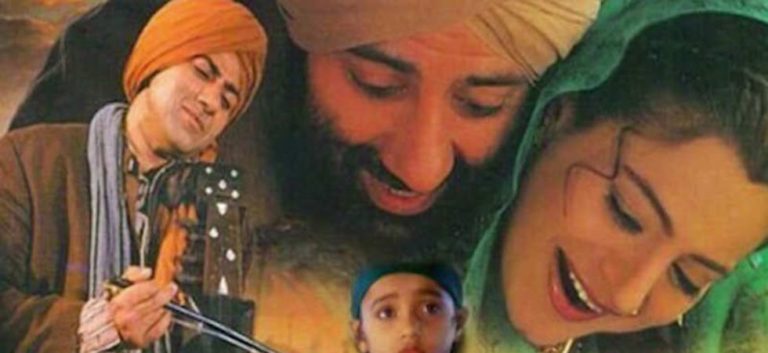
“Gadar: Ek Prem Katha,” which created new records on the box office 18-years ago is all set to return to the big screen with a sequel. The story will be a continuation from the original film with a backdrop of India-Pakistan.
“We have been working on ‘Gadar’ sequel since 15 years. ‘Gadar’ will be story of Tara (Sunny), Sakeena (Ameesha Patel) and Jeet (their son). The story will move ahead with India-Pakistan angle, ‘Gadar’ is incomplete without it. “The cast will remain same, like how we have seen in films like ‘Baahubali’, ‘Rambo, ‘Fast and Furious’, etc. We have discussed the idea with Sunny. We can’t disclose anything at the moment,” a source close to the film’s production told PTI.
The film, directed by Anil Sharma, ranks among the top three Indian films in all-time highest footfalls. According to sources, it had 17 crore footfalls and had earned Rs 256 crore upon its release in 2001.
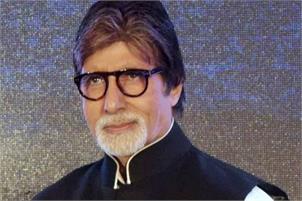
Bollywood megastar Amitabh Bachchan on Sunday afternoon informed his fans that he is cancelling the weekly meet and greet ritual due to ill health. The 76-year-old actor, who sees his admirers every Sunday at his house Jalsa in Juhu since past 36 years, said he might be in pain but fans need not worry. “
…Not doing the Sunday Darshan today… In bed… Pain .. Inform all, nothing to worry, but unable to come out,” Bachchan wrote on his blog.
The actor, who was last seen in “Badla”, is currently working on Ayan Mukherji’s “Brahmastra” and a bilingual project, titled “Tera Yaar Hoon Main”. Bachchan is also teaming up with Emraan Hashmi for a mystery thriller.
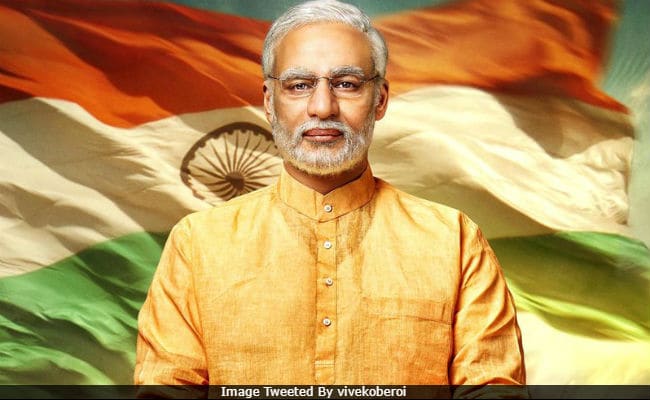
Vivek Oberoi-starrer biopic on Prime Minister Narendra Modi,
which was earlier set to release on April 11 but was banned by the Election
Commission, will now be released countrywide on May 24, a day after the results
of the Lok Sabha elections are declared. This was shared by the makers of the
film. Producer Sandip Ssingh said he hopes the film will have a smooth run in
the theatres. “We are now releasing our film on 24th May 2019. This is the
first time a film will be promoted for only four days. I hope now nobody has
any problem with the film and we are hoping for the smooth release this
time,” he said.
The film, titled ‘PM Narendra Modi’, In its order last
month, the EC had banned the screening of film during the poll period, saying
any such film that subserves purpose of any political entity or individual
should not be displayed in the electronic media. The EC order had come a day
before the movie was to be released. Directed by Omung Kumar, the film is
co-produced by Suresh Oberoi and Anand Pandit.
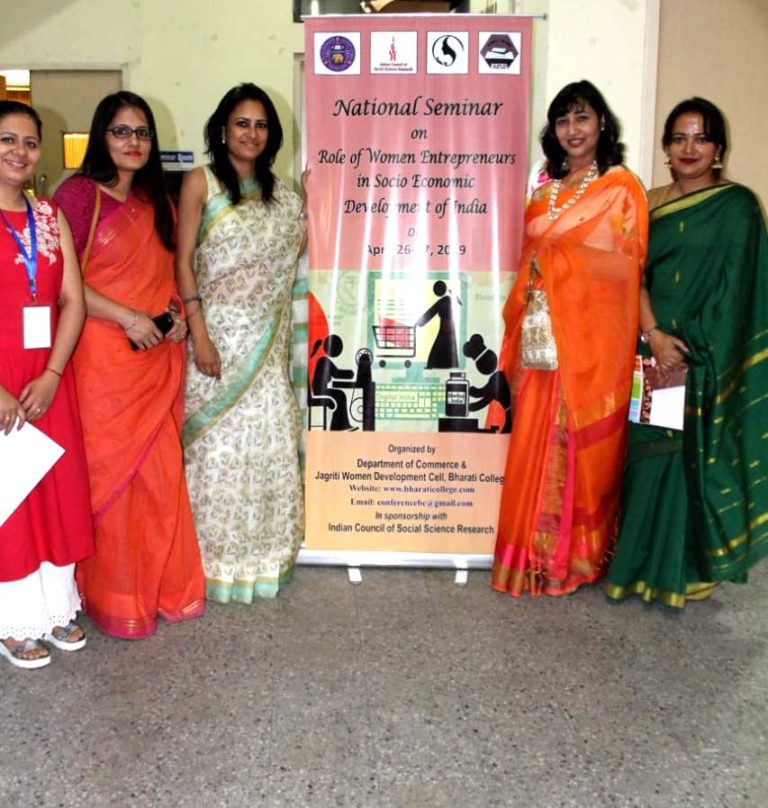
India stands at 98 out of 132 countries in the Global
Entrepreneurship Index rankings, 2016. Women entrepreneurs constitute about
13.72% of the number of the entrepreneurs in the country. According to a
McKinsey report, bridging the gender gap would have a huge economic impact and
could add Rs 46 lakh crore ($700 billion) to India’s GDP in 2025. To delve
deeper into the issue of women entrepreneurship, the Department of Commerce and
Women’s Development Cell, Bharati College organised a two day National seminar
on the “Role of Women Entrepreneurs in Socio-Economic Development of India” on
April 26 & 27, 2019.
The chief guest was Dr. Seema Rao, the first woman commando
of India. She inspired the listeners with her remarkable achievements and
daringly unique journey. Her books on Combat Training are widely used as
manuals in India by the Army and the Police and even internationally.
The keynote speaker, Dr. Archana Garodia, the founder member
of FICCI Ladies Organisation (FLO) and a successful entrepreneur set the tone
of the conference by emphasizing the great need to empower women by leading
them into entrepreneurship. Her unique contribution is in working towards
policy changes that will bring more women into the work force. Her immediate
aim is to convince governments to extend the school timings so that women can
give guilt free time at work. This, she said, was what some Scandinavian
countries did and increased their GDP tremendously.
The Chief Speaker at the Valediction, Ms Vasvi Bharat Ram
quoted Hilary Clinton in saying that “women are the largest untapped reservoir
of talent in the world. Hence empowering women by promoting entrepreneurship is
a sure shot catalyst to rapid economic growth and development of any nation”.
She pointed out that studies suggest that countries which have proportionately
higher percentage of entrepreneurs in their population have developed much
faster as compared to countries, which have lesser percentage of them. As the
Vice Chairperson of The Shri Ram Schools, Vasvi has helped set up The Shri Ram
Millenium Schools and The Shri Ram Early Years Play schools in Delhi and NCR.
More than 90% of the staff are women and their inputs allows her to have more
gender inclusive policies and a more supportive and nurturing environment.
At the conference, over 40 papers were presented across
themes such as the history of women entrepreneurship; policy initiatives and
ecosystem of women entrepreneurship; economic empowerment and social
mainstreaming of women via self -employment and business innovation by women. The
conference ended with a Nukkad Natak on Aajivika.
The people of Pakistan are looking towards
a game changer political leadership in their country. It is so because, for too
long now, the Pakistan Army has maintained proxy control over politicians and
political parties. It has either ruled through dictatorships or by proxy, as it
is doing at present by placing a pliable Imran Khan at the helm of the
political spectrum. Such a situation is a win-win for the Pakistan Army since
it enjoys all authority without responsibility and without facing the flak.
Interestingly, resistance to the iron grip on Pakistan by the Pakistan Army is coming from an unusual source. In remote, faraway Waziristan, a common citizen, Manzoor Pashteen, in 2018, started a rights based movement called the “Pashtun Tahafuz Movement (PTM).” PTM has a few demands, related mainly to alleviating the impoverished existence of the tribal belt. It wants an end to mining activity, discrimination, violence by militant groups and most significantly, a complete cap on the horrifying process of extrajudicial killings, enforced disappearances and unlawful detentions. It also wants the perpetrators of human rights violations to be tried under law within a truth and reconciliation framework. PTM has openly expressed reservation over the massive presence of the army in the area. According to Daud Khattak a reputed journalist, “A human rights movement from Waziristan is finally bringing the country together to challenge the brass.”
The Pakistan Army, ever conscious of its carefully cultivated and pristine
image as the saviour of the nation, has attempted to nip the movement in the
bud. It has exerted pressure on the PTM leadership and engineered a complete
media ban on coverage of its proceedings. These attempts have failed due to
resort to a massive social media information campaign by the activists of the
movement. Visuals of massive rallies and
public functions are doing the rounds on multiple social media platforms and
all information about the wrong doings by Pak Army is being shown.
The matter has reached a level where the Pakistan Army has been
compelled to hold a press conference at the General Headquarter, Rawalpindi, on
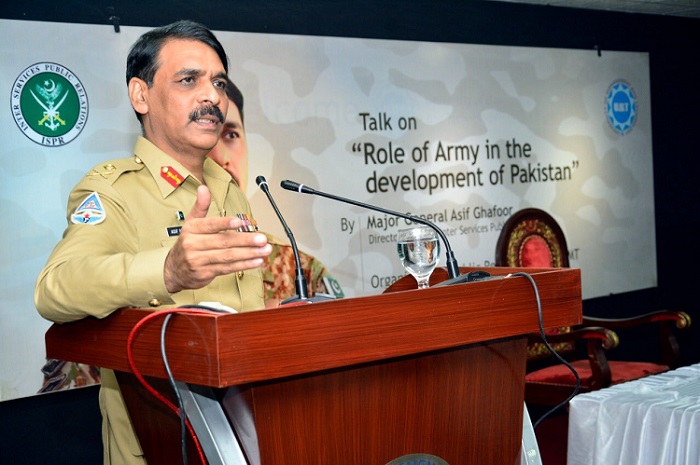
29th April. The presser was addressed by Major Gen. Asif Ghafoor,
Director General of the Inter-Services Public Relations (DG-ISPR) of the
Pakistan Army. The General rendered an address for about an hour, starting with
the inevitable and elaborate exposition on relations with India. However, as
the conference progressed it became obvious that it was the PTM and its
activities which were the main topic for the day both for the army as well as
the media.
In the course of the meeting Gen. Ghafoor accused PTM and its
leadership of waging a “Hybrid War” against the state and receiving funding
from Afghan and Indian intelligence agencies.
“But tell us how much money did you get from the NDS (Afghan National
Directorate of Security) to run your campaign? How much money did RAW (Research
& Analysis Wing) give you for the first Dharna (sit-in) in Islamabad,”
queried the DG-ISPR rather grandly.
In yet another faux pas’, while replying to a query on missing
persons by a journalist Hamid Mir, Gen. Ghafoor admitted that there were many
missing persons in the country, due to internal security operations conducted
by the Army. “We also have affection for people of Pakistan but such things
happen since everything is fair in love and war, Pakistan Army does not fight
on the personal level, it does what is required to be done in national interest,”
he said. In culmination, while speaking about the Pashtun Tahafuz Movement (PTM),
he made a statement, “Their time is up,” which has elicited widespread disgust
for its egoistic undertone and inherent viciousness.
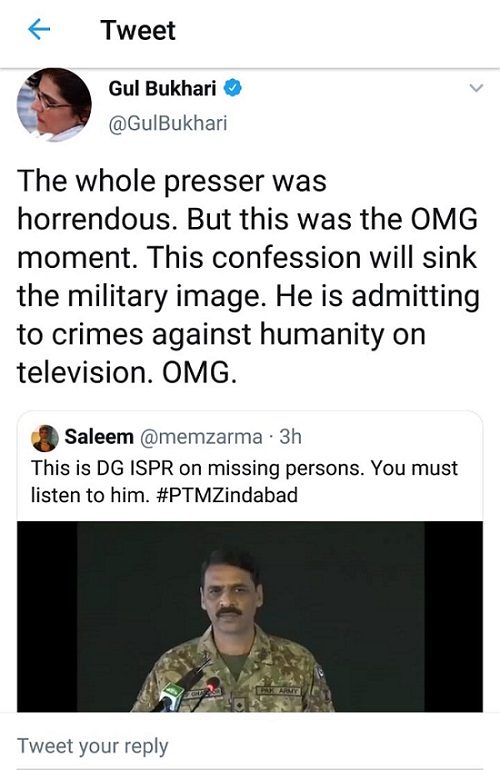
DG-ISPR’s comments, especially on the missing persons, created a twitter storm. “The whole presser was horrendous. But this was the OMG moment. This confession will sink the military image. He is admitting to crime against humanity on television, OMG,” wrote well known journalist, Gul Bukhari, in a tweet after the press conference.
Screenshot of Pakistani Journalist Gul Bukhari’s tweet in response to DG-ISPR Maj. Gen. Asif Ghafoor’s admission that Pakistan Army has been responsible for missing Pakistani citizens.
Gulali Ismail, a well known Human Rights Activist from Khyber Pakhtunkhwa tweeted, “I consider this Press Conference not an attack on PTM, but an attack on the Parliament of Pakistan, an attack on the Democracy of Pakistan and an attack on the Constitution of Pakistan #PTMZindabad.” In fact, there are thousands of tweets on the same line with #PTMZindabad which, by now, must be giving nightmares to the Pakistan Army. They are also generating debates on the role of social media across the country. It will not come as a surprise if the DG-ISPR is soon transferred from the post.
It is now apparent that the PTM and its leadership are not going
to be cowed down by the usual pressure tactics of the Pakistan Army based on
rising of anti-National, anti-Islam bogeys. These calls for accountability of
the actions taken by the Army are going to increase and also envelope other
trouble torn areas of the country like Balochistan and Pakistan Occupied
Kashmir (POK).
The political leadership also needs to see the writing on the wall
and try to change the narrative of Army control which has caused so much grief
to the country. These leaders, while in opposition align with the true
aspirations of the people, but change their ideology the moment some kind of
support from the Pakistan Army is forthcoming. Such weakness in the political
system has been exploited by the Army all these years, but now the people are
raising a voice against the same.
Politicians can survive only if they hold on to the pulse of the
people, so now is the time for Pakistani leadership to go with the desired
change. This cycle of violence perpetrated by the Pak Army and its proxies, the
attendant human rights violations, the poverty and lack of empowerment cannot
continue for too long now. The first casualty of the changing times will
probably be Imran Kan, after which, the people will look for those leaders who
have changed with times or will go for a new set of leaders altogether.
Department of Posts, Ministry of Communications, Government
of India and The Ministry of Science and ICT (Korea Post), Government of the
Republic of Korea have mutually agreed to jointly issue Postage Stamps on the
theme “Queen Hur Hwang-ok of Korea”.
The Union Cabinet, chaired by the Prime Minister Shri
Narendra Modi, was recently apprised about an MoU signed in February, 2019
between India and Republic of Korea. The joint stamps will be released on a
mutually agreed date by the end of 2019.
We use cookies on our website to give you the most relevant experience by remembering your preferences and repeat visits. By clicking “Accept All”, you consent to the use of ALL the cookies. However, you may visit "Cookie Settings" to provide a controlled consent.
This website uses cookies to improve your experience while you navigate through the website. Out of these, the cookies that are categorized as necessary are stored on your browser as they are essential for the working of basic functionalities of the website. We also use third-party cookies that help us analyze and understand how you use this website. These cookies will be stored in your browser only with your consent. You also have the option to opt-out of these cookies. But opting out of some of these cookies may affect your browsing experience.
Functional cookies help to perform certain functionalities like sharing the content of the website on social media platforms, collect feedbacks, and other third-party features.
Performance cookies are used to understand and analyze the key performance indexes of the website which helps in delivering a better user experience for the visitors.
Analytical cookies are used to understand how visitors interact with the website. These cookies help provide information on metrics the number of visitors, bounce rate, traffic source, etc.
Advertisement cookies are used to provide visitors with relevant ads and marketing campaigns. These cookies track visitors across websites and collect information to provide customized ads.
Necessary cookies are absolutely essential for the website to function properly. These cookies ensure basic functionalities and security features of the website, anonymously.
Cookie
Duration
Description
cookielawinfo-checkbox-analytics
11 months
This cookie is set by GDPR Cookie Consent plugin. The cookie is used to store the user consent for the cookies in the category "Analytics".
cookielawinfo-checkbox-functional
11 months
The cookie is set by GDPR cookie consent to record the user consent for the cookies in the category "Functional".
cookielawinfo-checkbox-necessary
11 months
This cookie is set by GDPR Cookie Consent plugin. The cookies is used to store the user consent for the cookies in the category "Necessary".
cookielawinfo-checkbox-others
11 months
This cookie is set by GDPR Cookie Consent plugin. The cookie is used to store the user consent for the cookies in the category "Other.
cookielawinfo-checkbox-performance
11 months
This cookie is set by GDPR Cookie Consent plugin. The cookie is used to store the user consent for the cookies in the category "Performance".
viewed_cookie_policy
11 months
The cookie is set by the GDPR Cookie Consent plugin and is used to store whether or not user has consented to the use of cookies. It does not store any personal data.