Home Blog Page 44

PTM Islamic scholar condemns Pakistan’s reckless use of blasphemy laws

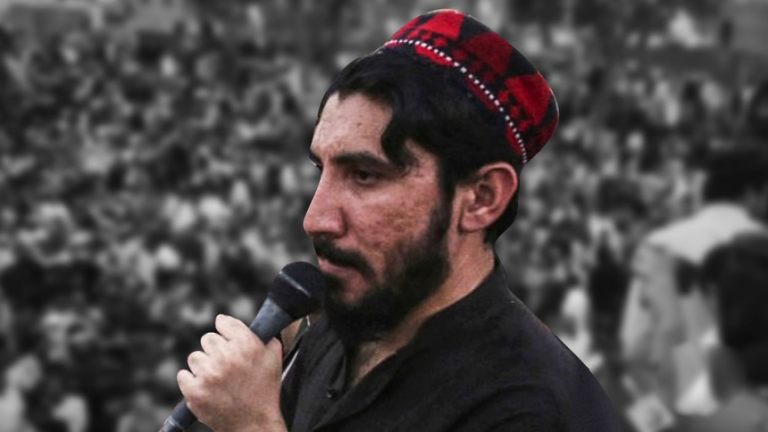
A member of the Pashtun Tahafuz Movement (PTM) and an Islamic scholar have denounced Pakistan’s blasphemy laws, highlighting the stark disparities in their enforcement between religious leaders and common citizens. He emphasized the critical distinction between genuine blasphemy and mere verbal errors, warning against the reckless use of such laws to justify violence. “Do not kill everyone in the name of blasphemy; otherwise, one day, you may find your own neck under the hands of these very extremists,” he said.

He underscored how these laws, ostensibly designed to protect religious sentiments, have become instruments of oppression, selectively applied to target vulnerable individuals while often sparing influential clerics. This critical perspective has gained urgency following the controversy surrounding Mufti Tariq Masood, a well-known Deobandi scholar who has previously advocated for the death penalty for blasphemy.

Masood now finds himself on the receiving end of the very extremist rhetoric he once championed, as Shia Islamists in Pakistan-occupied Gilgit-Baltistan call for a blasphemy case against him. Their demands were ignited by Masood’s recent remarks suggesting that the Quran contains grammatical errors and that Prophet Muhammad was illiterate, statements that have triggered widespread outrage and mob protests.

The irony of Masood’s predicament cannot be overstated. As he now calls for his remarks to be “understood in context,” it raises critical questions about the very laws he once defended. For years, these draconian measures have been used to silence critics, often resulting in tragic outcomes for those who are falsely accused or belong to minority communities. In Pakistan, mere allegations of blasphemy can lead to extrajudicial killings and severe societal repercussions, particularly against those who lack the protection afforded by a powerful Punjabi demographic.

J&K: NIA launches extensive raids in ongoing investigation of Reasi pilgrim bus attack

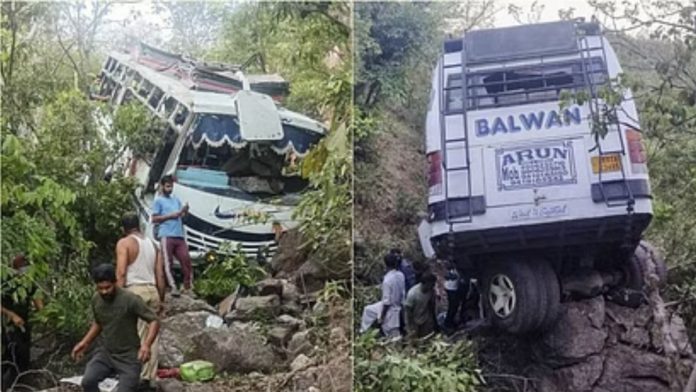
The National Investigation Agency (NIA) launched coordinated searches at seven locations in the Rajouri and Reasi districts on Friday as part of its ongoing investigation into the deadly June terror attack on a bus carrying pilgrims returning from the Shiv Khori temple. The tragic incident, which occurred on June 9, resulted in the deaths of nine individuals, including seven pilgrims from outside Jammu and Kashmir, and left 41 others injured.

Reportedly, the bus was ambushed by terrorists in the Pouni area of Reasi, prompting the driver to lose control and veer off the road, ultimately plunging into a deep gorge near Teryath village. The case was handed over to the NIA on June 17 by the Ministry of Home Affairs, following escalating concerns over the attack.

So far, authorities have arrested one suspect, Hakam Khan of Rajouri, who is alleged to have provided food, shelter, and logistical support to the terrorists, in addition to helping them conduct reconnaissance in the area prior to the assault.

As part of the current operation, multiple NIA teams have been searching various sites linked to hybrid terrorists and Over-Ground Workers (OGWs) since early Friday morning. The agency previously conducted searches at five locations in Rajouri on June 30, aimed at uncovering further connections to the attack.

The latest raids come amidst ongoing investigations that have highlighted the troubling nexus between local militants and their supporters. Items seized during earlier searches have provided evidence of linkages between the arrested suspects and the perpetrators of the attack.

The Jammu and Kashmir police previously reported that at least two terrorists were involved in the ambush, underscoring the continuing threat posed by militant groups in the region.

IED attack targets Pak police vehicle in Dera Ismail Khan

In a troubling incident, an IED explosion struck the vehicle of the police Superintendent (SP) of the President Circle while he was en route to oversee the anti-polio campaign on Kot Daulat Hathala Road in the Kulachi tehsil of Dera Ismail Khan. SP Khalid Usman, along with his guard and driver, escaped unharmed from the blast.

Furthermore, in Peshawar, militants launched an attack on the Nisar Bagh police station near Jumma Khan Khor. Gunfire continued for an extended period; however, initial reports indicate no casualties or financial losses resulting from the assault.

Meanwhile, in South Waziristan’s Sararogha area, a drone strike on a residential house has resulted in the death of one civilian, with three others reported injured.

Despite the growing violence, the Punjabi Pak military’s focus remains more on silencing innocent Pashtuns who dare to criticize its military operations. These operations, which include shelling, enforced disappearances and extrajudicial killings, have become a notorious part of the military’s oppressive strategy. As militants continue their attacks and the Punjabi Pak Army retaliates, it is the Pashtun population that finds itself caught in the crossfire, bearing the brunt of both the militants’ violence and the military’s heavy-handed response.

Quetta Bar Association vows continued boycott over female lawyer’s license suspension

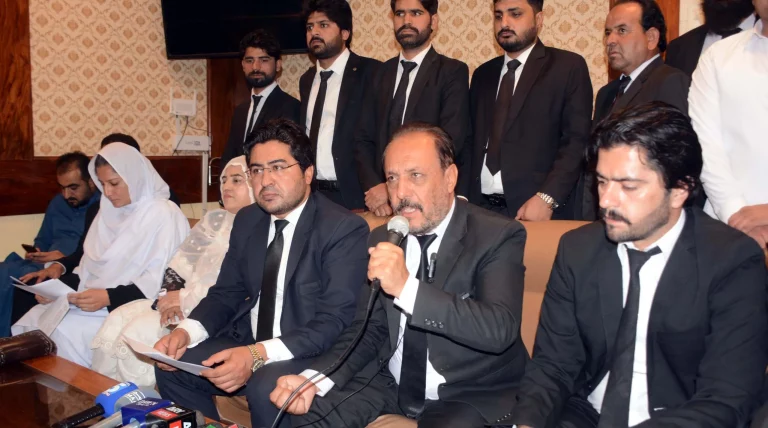
The Quetta Bar Association has announced an indefinite court boycott, condemning the revocation of a female lawyer’s license by the High Court. The association vowed to continue their protest until the license of Advocate Farzana, suspended following an incident where she allegedly locked the judge’s chamber, is fully reinstated.

The association’s president, Qari Rehmatullah, criticized the unilateral decision made by the Chief Justice, stating that the female lawyer was not given a fair chance to defend herself before her license was suspended. He declared that the boycott will persist until the lawyer’s license is restored.

“The issue is not just about one lawyer; it is about the respect and dignity of all lawyers in POB,” Rehmatullah said. He emphasized that the decision had been made without hearing the lawyer’s side of the story, which the association considers a violation of due process.

They warned that if the lawyer’s license is not restored, the courts across the region will come to a standstill. The judiciary is nothing but a tool in the hands of the Paki establishment.

Judicial Overreach in Quetta

The association demanded an immediate reversal of the decision, calling for the transfer of the judicial magistrate involved, and issued a stark warning: if their demands are not met within two days, a province-wide protest will escalate. A meeting of all POB lawyers’ unions has been scheduled for September 30, where further actions, including rallies and the closure of courtrooms, will be considered. “We will not let these courts operate until justice is served,” the lawyers declared.

The lawyers concluded by affirming that they would not back down until their demands are met. “We respect the courts, but they must respect us in return. The boycott will continue until justice is served and Advocate Farzana’s license is fully restored.”

The boycott gains added significance as Advocate Farzana represents a rare and significant presence in the patriarchal legal landscape of Pak-occupied-Balochistan. Her position as a female lawyer is a remarkable achievement, breaking barriers in a society where women in the any profession are often sidelined.

She stands as a symbol of inclusivity and excellence in an otherwise male-dominated field. However, the Chief Justice’s decision to revoke her license without allowing her to defend or explain her side not only undermines the legal profession but also defies the basic human rights that the courts are meant to uphold.

TTP attack kills over 30 Pak Army soldiers in south Waziristan

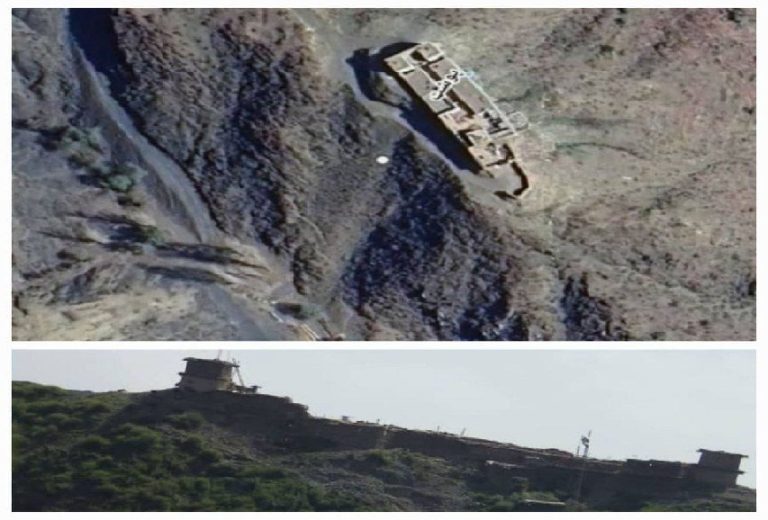
In a significant escalation of violence, terrorists from the Tehrik-i-Taliban Pakistan (TTP) launched a fierce attack on a Pak Army post located in the Ladha Meshita area of South Waziristan. The assault resulted in the deaths and injuries of over 30 military personnel stationed at the post.

The attack caused a devastating fire at the weapons depot, leading to the complete destruction of the security post. During the assault, TTP militants successfully seized an array of weapons from the security forces, including G3 rifles and other military equipment, heightening concerns over the militants’ growing capabilities.

Furthermore, TTP terrorists ambushed a convoy that was en route to assist the military in Meshita. This ambush resulted in the deaths of four personnel, with several others reported injured.

As the situation unfolded, Pak security forces employed helicopters to evacuate the casualties, both deceased and wounded. Additionally, reports indicate that a small drone aircraft was shot down by the terrorists during the conflict.

The Pak Army’s long-standing policies of nurturing and allowing the proliferation of extremist groups have come back to haunt them. The very terrorists they once fostered are now launching devastating attacks against the military itself.

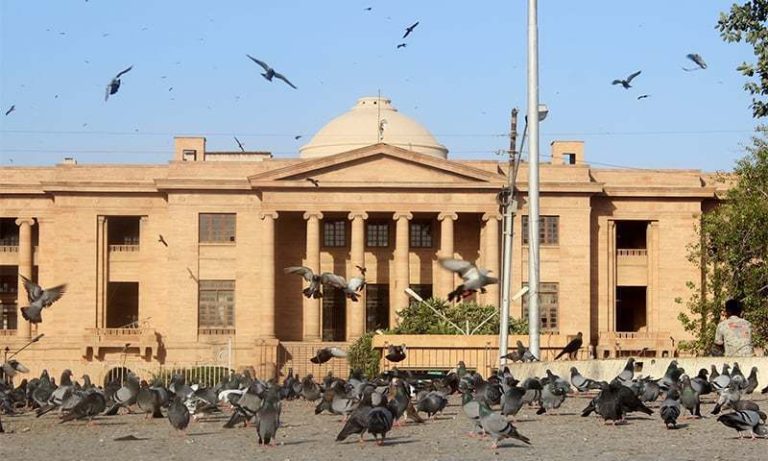
Sindh High Court demands details of citizens detained in secret detention centers

In a damning indictment of Pakistan’s state institutions, the Sindh High Court has demanded the Defence Secretary to provide detailed records of all citizens detained in secret detention centers across the country. This move comes amid growing criticism over the occupied-state’s failure to address the ongoing crisis of enforced disappearances.

During Wednesday’s hearing, a two-member bench led by Justice Naimatullah Phulpoto issued the order while hearing petitions for the recovery of missing persons. Despite repeated meetings of Joint Investigation Teams (JITs) and task forces, the occupied-state has continued to stonewall, with no concrete results in tracing the whereabouts of the disappeared.

The hearing brought to light the grave situation of enforced disappearances, a rampant issue in Pakistan, particularly in regions like POB, Khyber Pakhtunkhwa and Sindh. The state lawyer admitted that the disappearances of citizens like Ismail and Idrees had been confirmed as cases of enforced abduction, but financial assistance for their families was the only outcome so far — a pitiful response to a much larger crisis.

Justice Phulpoto’s bench questioned what tangible steps had been taken since the last hearing. The investigating officer gave an underwhelming response, stating that letters had been sent to charitable organizations like Edhi and Chhipa, but the missing persons were not located there. No replies had been received from CPLC or other law enforcement agencies. This excuse was met with frustration, especially regarding the case of Umar Siddiqui, who has been missing since 2018, with no substantial efforts made to locate him.

Sindh High Court Demands Detainee Records

Justice Phulpoto did not hold back in his critique of the occupied-state’s hollow efforts, expressing clear dismay over the state’s repeated failures. “Despite several JITs and task force meetings, we still have no trace of these missing individuals. What exactly are these meetings accomplishing?” he remarked.

Adding to the pressure, the court warned the Defence Secretary to submit a detailed report on all citizens currently held in detention centers. If the report is not submitted, the Defence Secretary has been ordered to provide a personal affidavit, a rare and pointed demand that underscores the seriousness of the issue.

The existence of secret detention centers, where the occupied-state is holding individuals without trial or due process, has been a long-standing issue. Those labeled as ‘missing persons’ are often victims of forced disappearances, with Pak Army-backed- agencies playing a key role in their abduction and detention. These disappearances are not just limited to political dissenters but often extend to anyone perceived as a threat to the establishment’s interests.

The court has given a four-week deadline for police and other agencies to submit their reports on the missing persons, an ultimatum that could further expose the establishment’s unwillingness to resolve this crisis.

Attackers vandalize another Hindu temple,intensifies anti-Hindu sentiment across U.S.

In yet another shocking act of anti-Hindu hatred, unknown miscreants vandalized the BAPS Shri Swaminarayan Mandir in Sacramento, California, defacing the temple with hate-filled graffiti, including messages like “Hindus go back!” This disturbing incident marks the second desecration of a BAPS temple in the U.S. in less than 10 days, after a similar attack on the BAPS Mandir in New York on September 17.

The BAPS Public Affairs department, taking to social media, condemned the attack, stating, “Less than 10 days after the desecration of the BAPS Mandir in New York, our Mandir in Sacramento, CA was desecrated last night with anti-Hindu hate: ‘Hindus go back!’ We stand united against hate with prayers for peace.” The incident has sent shockwaves through the local Hindu community and the wider Hindu diaspora, highlighting the increasing frequency of hate crimes targeting temples.

Local law enforcement responded quickly to the temple’s plea for help. The Sacramento County Sheriff’s Office noted not only the hateful graffiti but also reported that vandals had cut water lines on the temple property, further damaging the sacred space. BAPS, a globally renowned Hindu organization, assured the community that they are working closely with authorities to investigate the hate crime and bring the perpetrators to justice.

The vandalism of the Sacramento temple comes less than 10 days after the BAPS Shri Swaminarayan Mandir in Melville, New York, was similarly defaced with anti-Hindu messages. That incident, too, was widely condemned, including by the Consulate General of India in New York, which described it as “unacceptable.” The recurring attacks on Hindu places of worship in the U.S. point to a worrying pattern of systemic hate, with temples increasingly becoming targets of vandalism.

BAPS, headquartered in Gujarat, operates over 100 temples and centers across North America. In 2023, the organization inaugurated the Akshardham temple in New Jersey, now the largest Hindu temple outside of India.

Maulana Rehman blasts Pakistan’s double standards & loss of control in POB & Khyber-Pakhtunkhwa

In a scathing critique of Paki establishment, JUI Chief Maulana Fazlur Rehman voiced deep concerns over the deteriorating situation in the country, and the occupied-government of hypocrisy and failing to maintain control in Pak-occupied-Balochistan and Khyber Pakhtunkhwa (KP). Speaking during a meeting with journalists, he called for constitutional amendments to be passed with consensus, free from vested interests, questioning the occupied-state’s handling of key issues.

Maulana Fazlur Rehman did not mince words when addressing the occupied-state’s glaring double standards. He pointed out that when nationalist groups in POB speak of separatism, their concerns are brushed off as “internal matters.” However, any issue rooted in religion is quickly blown into an international crisis. “Why this double standard?” he asked.

He also said how two provinces have effectively fallen under the control of pro-independence groups. In POB, nationalists have been marginalized through systematic rigging, while in KP, religious parties have been sidelined. This, he said, has led to the collapse of authority in these regions, further weakening Pakistan’s internal structure.

Maulana Fazlur Rehman criticized Prime Minister Shehbaz Sharif’s desperate plea for support, stating that the his focus has been more on securing extensions for key positions rather than addressing the nation’s pressing concerns. “Extensions should be based on necessity, not personal interests,” he remarked, hinting at the Pak Army’s influence over political decisions.

Maulana Fazlur Rehman

He also took a veiled jab at the judiciary, reminding people how the nation once rallied behind figures like former Chief Justice Iftikhar Chaudhry, only to be betrayed by their actions later. This, he implied, reflects a broader trend of Pakistan’s institutions acting in their own interests rather than the public good.

Perhaps his most damning observation was that the occupied-state has lost control of POB and KP, where the Pakistan Army’s overwhelming presence has failed to restore order or legitimacy. In POB, the military-backed death squads and enforced disappearances have only deepened the alienation of nationalist groups. Meanwhile, KP remains a hotbed of insurgency and lawlessness, with no meaningful steps taken to restore stability. Maulana Fazlur Rehman’s comments are a sharp indictment of the Paki establishment’s failures.

The JUI chief stressed that constitutional amendments should serve the wider national interest and not be manipulated to serve a handful of individuals or institutions. “We want amendments that go beyond personal interests,” he said, calling for a renewed commitment to democracy and a transparent, inclusive political process.

Maulana Fazlur Rehman’s comments are a direct challenge to Pakistan’s military-dominated political system, which continues to prioritize its own interests over the needs of the people.

Pak Army’s shelling ravages Pashtun livelihood & livestock in Waziristan

The Pakistan Army’s relentless violence against the Pashtun population continues to claim innocent lives, both human and animal, in the heavily militarized region of Waziristan. In the latest incident, more than 25 cows and buffaloes were killed by mortar fire in Mir Ali, North Waziristan, as Pakistan’s Army indiscriminately bombarded residential areas. The livestock, caught in the crossfire of the Army’s artillery shelling, were burned alive in a cattle market—another grim reminder of the occupied-state’s cruel policies that now extend beyond human casualties.

The Army’s systematic persecution in Pashtunkhwa has spared neither the people nor their means of survival. The Pashtuns of Waziristan, who have long been victims of the Paki establishment’s militarization and exploitation, now find their very livelihoods under attack. The Punjabi Pak Army’s daily shelling of civilian areas is part of a broader campaign to destabilize the region, ensuring that it remains under military control while continuing to exploit its people and natural resources.

In recent weeks, the brutality has escalated even further. Just 13 days ago, two Pashtun were killed, and seven others were injured when the Army shelled a pine nuts forest in South Waziristan’s Birmal area. Less than a week later, a 15-year-old girl was killed by shelling from a Pak Army gunship helicopter in the Tirah Maidan region near the Afghan border. These are not isolated incidents but part of a calculated effort to suppress and depopulate a resource-rich region.

Military Shelling Wipes Out Pashtun Livestock

The Paki establishment, loaded with the Punjabi military elite, has a long history of exploiting the other ethnics, especially Baloch and Pashtuns while using them as pawns in its so-called fight against terrorism. Waziristan, once a vibrant hub of Pashtun culture and resilience, is now an epicenter of devastation, riddled with military checkpoints, artillery fire, and indiscriminate bombing campaigns. Under the guise of security operations, the Army has unleashed a reign of terror that includes forced disappearances, extrajudicial killings, and systematic exploitation of local resources.

This is not just a military occupation but a war economy designed to sustain the Army’s control over Pashtun lands. The Army’s indiscriminate violence is part of a broader strategy to keep the region unstable, allowing for continued exploitation while denying the Pashtuns their rights. The endless cycle of violence and destruction serves to further marginalize the Pashtuns, who have been subjected to decades of humiliation, ethnic profiling, and systemic discrimination.

The time has come for the international community to recognize the atrocities being committed by the Pak military in Pashtun territories. The exploitation of resources, the use of Pashtuns as cannon fodder in a never-ending war, and the destruction of both human lives and livelihoods must be condemned. The Punjabi-Pak Army cannot continue to wage war on its own people with impunity.

Sindh: First FIR registration of abduction & forced conversion of minor Hindu girl

In a significant development, an FIR has been registered for the first time in the history of the Digri Police Station under the Sindh Child Marriage Restraint Act, marking a small victory for activists like Shiva Kachi and the Central Chairman of the Minority Rights Organization, who have long advocated for the protection of religious minorities in the region. This action comes amid a disturbing backdrop of forced conversions and child marriages targeting vulnerable communities, particularly Hindus.

The case at hand involves Meena Lohar, a minor Hindu girl of 7th standard who was abducted, forcibly converted, and married off against her will. Family members of Meena arrived at the Pakistan Dravidian Union’s head office in Sindh to file the FIR, underscoring the urgency and gravity of the situation. IG Sindh, Ghulam Nabi Memon, has pledged to ensure the enforcement of laws aimed at preventing early marriage and protecting minority rights.

As 15 days have passed since Meena’s abduction, the lack of decisive action by the authorities shows their lack of intention to safeguard minority rights. The Paki establishment continues to conspire against the life, safety and dignity of its minority citizens.

However, this incident is not just a singular case; it is emblematic of a larger, systemic issue plaguing Pakistan’s religious minorities. The ongoing persecution and radicalization against Hindus, Christians, and Sikhs highlight a deeply entrenched extremist mindset within the Islamic Republic, where the belief that minorities should be forcibly converted to Islam prevails.

The case of Meena Lohar serves as a chilling reminder of the precarious position religious minorities find themselves in. Instead of protecting its citizens, the Paki establishment allows radical elements to thrive. While the registration of the FIR is a step forward, it cannot mask the larger crisis that religious minorities face in Pakistan.