Home Blog Page 442

Poor political leadership continues to plague Kashmir

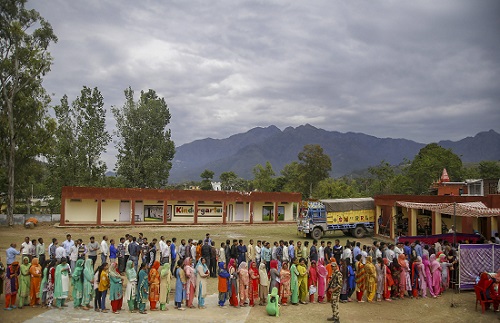
As the people of Jammu and Kashmir get on to vote to elect their representatives in the Indian Parliament, it becomes relevant to dwell on the report card of the esteemed Members of Parliament (MPs) from this state who were elected by the people in 2014 General Elections.

To begin with, many of these elected representatives have not completed their terms. Tariq Hamid Karra, MP from the Srinagar constituency resigned in October 2016 and Farooq Abdullah was elected in his place in April, 2017. Mehbooba Mufti, MP from Anantnag constituency, resigned in July 2016 and the seat has remained vacant ever since. Thupstan Chewang, MP from Ladakh resigned in December 2018.

Out of those who have completed their term, Musaffar Hussain Beig, MP from Baramulla has the most terrible performance record as provided by PRSIndia. Musaffar Hussain Beig’s attendance stands at 11%, he has participated in three debates, has asked 19 questions and initiated no Private Members’ Bill. It is quite evident that he had no interest in representing his people in the highest seat of Indian democracy where they had sent him. Jugal Kishore Sharma, MP from Jammu and Dr. Jitendra Singh, MP from Udhampur constituency were the only two who remained regular. Of these, Dr. Jitendra Singh was a Cabinet Minister. 

With such a miserable performance, the so-called mainstream local political parties of Kashmir should hide their faces in shame and not seek to represent their people in the Parliament again. But, wonder of wonders, they have fielded candidates in all the constituencies, some have even forged alliances. As the campaigning progresses, one tends to experience a sense of déjà vu. There is nothing happening in the electioneering that has not happened earlier. The candidates who have presented themselves for elections are more or less the same, they have been in this business for decades on end, in fact, for a life time and are not ready to make way for some fresh talent, such is their thirst for power and money.  Some have changed parties and are parroting the political line of their new establishments with whom they were at loggerheads earlier.

The campaigning, especially so in the Kashmir Valley, is following the tried and tested path of castigating opponents and talking of contentious political issues. Those who have been parliamentarians umpteen times and are seeking election yet again are not listing out their achievements and how they will build upon the same; it is so because they have nothing to show as performance and have no option but to skirt the issue.

There is no attempt being made to bring about a feeling of positivity by giving assurance of an improvement in the quality of life of the people with better security and economic stability. The narrative, instead, is designed to put an element of fear in the minds of the people by creating an impression that the candidate and his party are saviours of the people of Jammu and Kashmir. This is a reprehensible falsity but, sadly, democracy does not provide any means to check the same.

The end result of this confrontational path being adopted by Kashmiri leaders of all parties has a sinister connotation. Passions are being flared with no thought to the end result. A societal rift is being created among the people who are already suffering a grave sense of insecurity and alienation. By the time this psychological campaign culminates the fault lines will be more embedded than before. The politicians will get what they want but the people will be left floundering.

Can somebody kindly remind these so-called tallest leaders of Kashmiri people that their people are suffering at the hands of a foreign-driven radical ideology boosted by cross border terrorism. And, under the circumstances, their primary duty is to remove the disaffection among their youth which is guiding them towards a self destructive path of violence.

Experts across the world are identifying erosion of cultural values; radicalisation and the lack of parental control over the current young generation as reasons for the existing environment of political instability in Kashmir. The political leadership knows this very well but it is refusing to take the opportunity presented by the elections to address the core issues. Leaders are, in fact, fuelling this fire by making wild statements with open threats of leading a revolution to separate Kashmir Valley from the Indian Union. With huge properties outside the state and their children settled across the world they have nothing to lose, but what of the people who have to live where they were born? Can they survive outside of the Indian Union? Is any thought being given to the future of their children?

Here is one good example of the duplicity and double speak of these so-called leaders. The Armed Forces Special Powers Act (AFSPA) provides protection to the soldier involved in ensuring peace in the region and protecting the people from the evils of foreign-sponsored terrorism. Politicians in Kashmir, regardless of the party they represent, are known to make loud demands for abrogation or dilution of AFSPA when they get into election campaign mode. The same is the case this time too. They conveniently forget that the very election rally that they are addressing has been facilitated by a meticulously established security cover provided by the very soldiers whom they are hounding in their jaundiced speeches. Once campaigning ends, all talk of abrogating AFSPA also ends so far as the politicians are concerned, what remains is an element of doubt, however small, in the minds of some innocent common men and women that AFSPA is actually the reason behind all of their problems and not lack of education, infrastructure, jobs, skill development etc. that these politicians are responsible to provide.  

All the Jihadis and foreign sponsored fundamentalist elements joined together would not have been able to damage the psyche of the Kashmir people so much as the so-called candidates standing for elections will in a short period of over a month’s times. These elements and their self-serving nefarious designs stand exposed. The people of Kashmir deserve better than this.

Art 370 & Art 35-A have distorted the issue of ‘State Subject’ in Jammu and Kashmir

Today is April 20, 2019, and it was on this day in the year 1927 that the first formal definition of ‘State Subject’ was out in public domain in Jammu and Kashmir during the reign of Maharaja Hari Singh. Subsequently, a supplementary notification was issued five years and two months later on June 27, 1932.

These two definitions are the basis of all controversies that surround Article 370 as also Article 35-A today. Those defending the twin articles of the Indian Constitution say that they are defending the special laws made by the Maharaja.

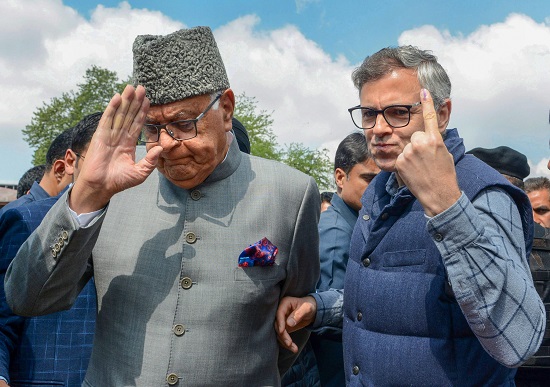
Foremost among them are the leaders of National Conference once led by Sheikh Abdullah who did everything possible to humiliate the Maharaja. It was the combined machinations of Sheikh and his bosom friend Jawaharlal Nehru, the first Prime Minister of India that ensured the exile of Maharaja Hari Singh. It is the second and third generations of the Abdullahs (former chief ministers Farooq Abdullah and Omar Abdullah), who are most vociferous defendants of something that the Maharaja did.

Ironically, Abdullahs, virtually sworn enemies of the late Maharaja, project themselves as the most ardent defenders of the State Subject laws in 2019. The National Conference (NC), under them, decided to boycott the elections of the panchayats and the urban local bodies (ULBs) held in late 2018, saying they were doing so to defend ”Article 35-A and Article 370″.

Mehbooba Mufti led her party, the Peoples Democratic Party (PDP), to follow into arch-rival NC’s footsteps. Some may say that the NC and the PDP showed a wonderful unanimity in defending the Maharaja’s laws. That is a rather simplistic interpretation of their moves and amounts to falling into their trap. Just as PDP did fall into the “poll boycott call” given by the NC.

The NC is one party which gained by emerging once again as the prime defender of the concerns of the Kashmiris regarding the articles of the Indian Constitution facing scrutiny in the Supreme Court of the country. By this deft move, it managed to push the PDP out of the central space of the discourse in J&K and also throughout the country.

The NC is now clearly being talked of as the party that will most likely bounce back to power whenever Legislative Assembly elections are held in J&K.

Abdullahs’ and Muftis’ as apparent collective defenders of the Maharaja’s laws have made the most devious and hilarious political move. Almost throughout their history, these parties and their leaders have only fanned contempt, and outright hatred for the Maharaja. In their narratives, Maharaja Hari Singh was always portrayed as a ”communal Hindu Maharaja ruling innocent Muslim Kashmiris” using his sword. As if the Mughals of Delhi durbar ruled Kashmir by giving a rose flower a day to all Kashmiris!

The defence of Article 35-A as also of the Article 370 by these parties is totally contrived. Maharaja’s laws on the issue of State Subject were much more liberal and enabling then either or both of these articles. In Maharaja Hari Singh’s reign, a 10-year period of residency in Jammu and Kashmir enabled anyone to apply for grant of domicile and citizenship of the state. And this is just one such example of enabling provision in the State Subject laws of the Maharaja.

The present Article 35-A, which governs the definition of Permanent Residents of J&K, has no such enabling provision. An arbitrary date of ”those arriving 10 years prior to May 14, 1954″ has been set for defining eligibility for the grant of PRCs (Permanent Resident Certificate).

Legal entrants to the state of Jammu and Kashmir, like the West Pakistan refugees, Gorkhas who entered the state to defend and expand its borders, Valmikis who were invited to the state by its government are not eligible to be Permanent Residents of the state. The West Pakistan refugees entered the state in 1947, the Valmikis in 1957 and the Gorkhas much earlier, are all collectively persona non grata.

The disability thrust upon these people by Article 35-A could not have been imagined or conceived in the Maharaja’s laws. The West Pakistan refugees would have become naturalised State Subjects (or PRC holders in today’s parlance) in 1957. The Valmikis would have become eligible for the grant of the PRCs in 1967, similarly the Gorkhas would have become eligible for PRCs.

It is a patent falsehood to say that Article 35-A or Article 370 are Maharaja’s laws.

The Maharaja’s laws for the protection of his ‘praja’ (people) were non-discriminatory and had enabling provisions. The 1927 law of the Maharaja was more progressive than the modern Indian Constitution.

At a communal level, if the current provisions of Article 35-A and Article 370 are examined, the state government of J&K has legislated some laws for enabling Muslims who fled J&K to neighbouring Pakistan to return. Subject to fulfilment of certain terms and conditions, these Muslims can become PRC holders again. However, when it comes to the Hindus or Sikhs or Christians, who were living in the Maharaja’s territorial jurisdiction and went out of J&K due to distress, or those who have been living here for generations, there are no enabling provisions ever legislated by any state government.

The West Pakistan refugees, who carry an odd nomenclature of ‘Pakistan’ defining them till date, a country they had fled to save their lives, the Valmikis and the Gorkhas are all Indian citizens, living permanently in Jammu and Kashmir. However, legally they are not Permanent Residents as defined under Part III of the Jammu and Kashmir Constitution which comprises five sections from Section 6 to Section 10.

Irony perhaps dies a hundred deaths every minute in J&K as these are all Indian citizens but lesser and second class citizens condemned to a third rate treatment than those Indian citizens living in J&K having PRCs (Permanent Resident Certificates). These are domiciled in Jammu and Kashmir and spent their entire lives and die here absolutely like others do. But no. They are not legal domiciles of the state as the J&K Constitution does not treat them as domiciles of the state.

Let us hope that the hearings on the petitions pertaining to Article 35-A begin in the Supreme Court someday soon. The parties opposing these provisions and those supporting them both present their points of views and the court gives its verdict.

Climate change demands urgent steps towards energy security: International Solar Alliance

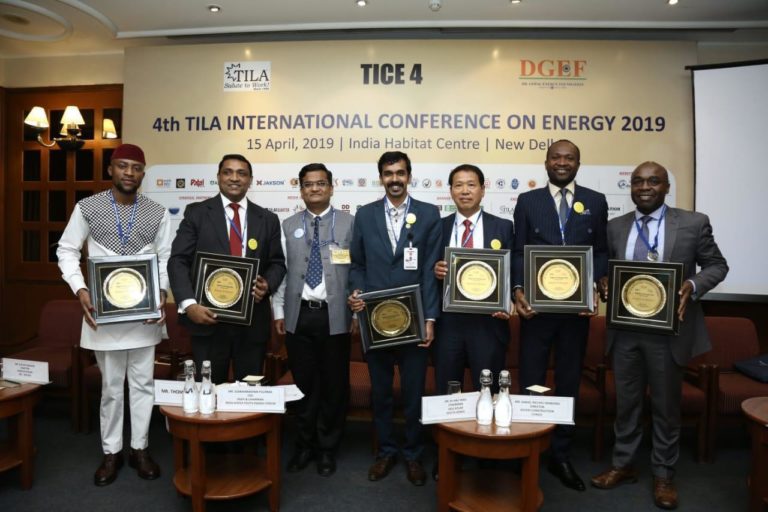
The recently concluded 4th TILA International Energy Conference gave a clarion call to make energy revolution possible through concerted efforts of all the stake holders. Organized by Dr. Gopal Energy Foundation (DGEF) at New Delhi on 15th April, the conference was inaugurated by Upendra Tripathy, IAS, Director General, International Solar Alliance (ISA). While focusing on the urgency to take short term and long terms steps to end energy deficit and energy poverty, he said that “Climate challenge necessitates immediate steps. If the global temperature increases by 1.5 degrees and there will be lot of weather uncertainty, all the investment, capital and efforts could go in vain.” He also released the “Right to Energy Declaration”, and launched TICE achievers Award 2020 for Institutions/Individuals who contribute to accelerate the pace of energy Revolution through various innovative means. The dignitaries on the dais included J N Swain, MD SECI, Pawan Singh MD, PTC, K.S. Popli, former MD IREDA, Anjuli Chandra, member PSERB, and Ramesh Chaudhry member, BERC.

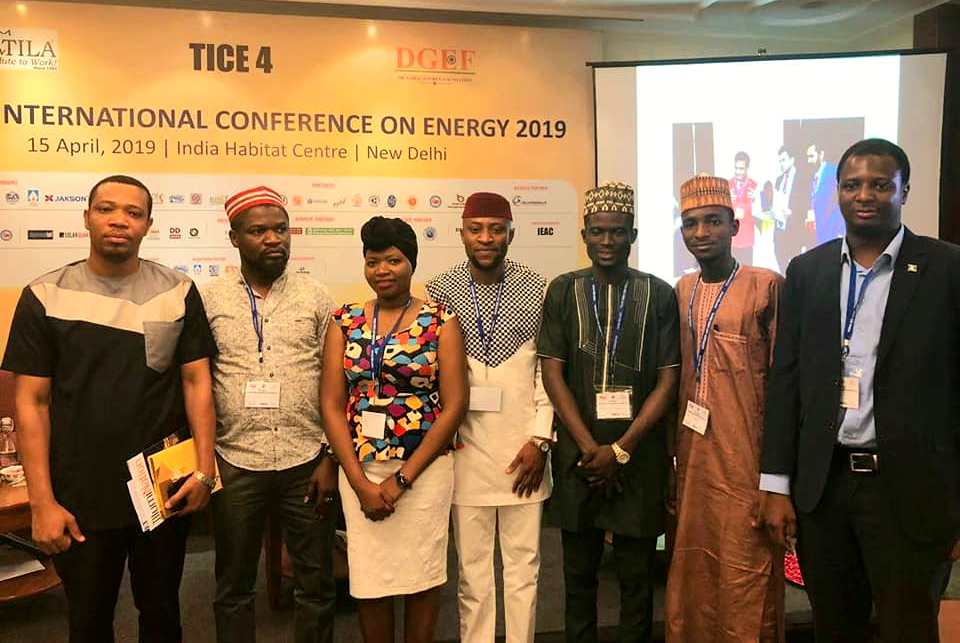
The conference started with an Open House multilateral dialogue on the need for energy revolution between representative of various countries like Nigeria, South Korea, Cameroon, and Canada. The International distinguished guests from Solar Alliance, Electricity Regulatory Commission, CMD’s/ Directors of PSUs and energy funding agencies, Financial Corporations also participated, besides delegates from different institutions from all across the globe.

While welcoming the dignitaries Sh. Raj Singh Niranjan, energy law expert & Managing Partner of TILA and Convener of the Conference (TICE 4), said that the objective of the conference is to bring about “Energy Revolution” by bringing in all the stakeholders on a single platform to discuss the existing Govt. Initiative, policies, all out innovative ideas, suggest potential measures for wholesome implementation of govt. objectives in India (Urja Kranti) to remove the curse of energy poverty in India.

The conference was supported by leading Companies in energy sector like Power Finance Corporation (PFC), Rural Electrification Corporation (REC), Indian Renewable Energy Development Agency (IREDA), Tehri Hydro Development Corporation India Limited (THDCIL), Satluj Jal Vidyut Limited (SJVNL), Railway Energy Management Company Limited (REMCL), National Hydro Electric Power Corporation Ltd (NHPC), Power System Operation Corporation Limited (POSOCO).Patel Engineering, Jakson, DMRC, Gujarat Metro, Maharashtra Metro, IREDA, PTC Financial Services and others. Trans India Law Associates, who is also the legal adviser to International Solar Alliance (ISA) was the Knowledge Partner of the Conference.

The delegates and energy experts from across the globe resolved to celebrate 15th April as “Right to Energy Day” every year.

‘Mental Hai Kya’ criticized by the Indian Psychiatric Society

Rajkummar Rao and Kangana Ranaut starrer film ‘Mental Hai Kya’ has entered into fresh trouble. The Indian Psychiatric Society has recently complained against the title of the film and has called it discriminating. The film’s poster had been launched a few days back, in which Rajkummar and Kangana were seen performing a crazy act of balancing a razor sharp blade on their tongue.

The Indian Psychiatric Society has criticized choosing a title that is discriminating against the people who are tackling mental health issues. As per a report of Mirror Now, the members of the Indian Psychiatric Society have complained against the makers to the Chairman of the Censor Board of Film Certification (CBFC), Mr Prasoon Joshi. They have also written to the makers of the film and have urged them to remove any content which would make a mockery out of the people who are battling mental issues.

For the love of organic North-East flavour

Every Sunday, Prescilla Zinyu brings an eclectic range of organic food products from North East at the Farmers’ market in Greater Noida’s Jonas Nursery. Most popular among these are her non-vegetarian pickles, turmeric powder tea, dried herbs, and the world famous dried Naga King Chilli. For residents of Delhi-NCR, it’s a weekly adventure of taste, fragrance and flavour from the north-east.

Sharing about her experiments with food, Zinyu says, “Life unfurls in mysterious ways. It has been a while living in Delhi, travelling throughout the country, discovering food and lost recipes with my husband. Whenever I am travelling, I would always make non-veg pickles at home and pack them for my survival. During the trip, my other companions would also like to try them out and they not only like the taste but also become curious to know more about the north-east food. This helped me make up my mind to start promoting organic north-east food.”

She feels that north-east is still largely unexplored in terms of its culture and food traditions. “North-east has so much variety to offer when it comes to food, yet people largely are unaware of it. So, I thought of a name which will bring attention and curiosity to others, “Terra Incognita”, which in latin means ‘unknown land’.” Zinyu started with few products in the beginning and has gradually elaborated the list of products available with her. “That’s how my organic food adventure began and I started with pickles, juices, and jams etc, which are quite handy to pick-up and can be easily introduced to others who would like to try out new things,” she adds. 

To ensure the authentic taste remains intact she sources all organic products from Nagaland, Tripura, Assam, Manipur and Sikkim.  Currently, a wide range of products are available with her including pickles, (veg, non-veg), jams, dried fruits, pulses, buckwheat powder, ginger powder, turmeric powder tea, dried herbs, dried king chilli etc. Her focus now is to market these products properly so that more and more people can enjoy and experience food from north-east.

In her constant endeavor to popularise North East food products she is regularly participating in events and exhibitions in Delhi-NCR.  “Just after the brand name Terra Incognita was christened in July 2017, I participated at an event in Delhi at India gate “Northeast Calling”. As first timers the response was good, gradually I started  promoting it online and the response has been quite positive.  Delhi being the capital city of India and people from diverse regions staying here, they want to explore different cuisines as people have become more adventurous with food and food trends, and north-east food is definitely getting popularity now.”

Sharing her future plans, Zinyu says, “Though, it’s a little too early to say but will definitely try to bring the best food from the region, and expand the product list with dry herbs, teas, rice, varieties of fruits etc. Currently I have a Facebook page, “Terra Incognita” where all the products are available. If there is any requirements then the individual can inbox me and the delivery is made within a week anywhere in India. I have also been actively participating in food events to popularise NE food in Delhi and Noida.”

Jet Airways announces temporary shutdown of its operations

Sky is no more an option for Jet Airways, which announced temporary shutdown of its operations tonight over its failure to garner immediate funds from lenders.

As per the official communication from Jet, this decision has been taken after a painstaking evaluation of all alternatives that were made available to the Company and after receiving guidance and advice on the same from its Board of Directors. Jet Airways has informed the Directorate General of Civil Aviation (DGCA), and the Ministries of Civil Aviation and Finance and other relevant government institutions, of this course of action.

Over the last several weeks and months, the company tried to seek both interim and long-term funding, however nothing materialised. As a result, the airline has been left with no other choice but to go ahead with a temporary suspension of flight operations. While Jet had been running a bare minimum number of 35-40 flights for the last few days, a total grounding will significantly affect its value for potential investors that are undergoing a bidding process.

Jet Airways will now await the bid finalisation process by SBI and the consortium of Indian Lenders. The bid process will conclude on 10th May 2019.

Chinese app TikTok no longer accessible on Google

Hugely popular video app TikTok is no longer accessible on Google platform. The move came hours after a court in Tamil Nadu refused a request by China’s Bytedance Technology to suspend a ban on its TikTok app.  The state court had on April 3 said that the app encouraged pornography and made child users vulnerable to sexual predators. The app was still available on Apple’s platforms late on Tuesday, but was no longer available on Google’s Play store in India.

TikTok, which allows users to create and share short videos with special effects, has become hugely popular in India but has been criticised by some politicians who say its content is inappropriate. It had been downloaded more than 240 million times in India, app analytics firm Sensor Tower said in February. More than 30 million users in India installed it in January 2019, 12 times more than in the same month last year. Jokes, clips and footage related to India’s thriving movie industry dominate the app’s platform, along with memes and videos in which youngsters, some scantily clad, lip-sync and dance to popular music.

Vicky Kaushal to play ‘Ashwatthama’

Vicky Kaushal to team up again  with his “Uri: The Surgical Strike” director Aditya Dhar for his next film, in which he will play Ashwatthama.

Aditya confirmed the news to PTI that he is working on the project with Vicky. There were reports doing the rounds that the film is a period drama, but the spokesperson of the director said, “It is not a period film, it’s a superhero action film set in modern times.”

As per the epic Mahabharata, Ashwatthama is the son of guru Dronacharya, who fought for the Kauravas against the Pandavas in the battle of Kurukshetra. The director is currently researching on the film and it will be shot across India. The makers are targeting a mid-2020 release.

Vicky will also be seen in “Takht”, Shoojit Sircar’s Udham Singh biopic and in a horror film, to be produced by Karan Johar.

Crisis in Punjab’s Political Leadership is Deepening by the day

As election fever overwhelms India, we in Punjab, have a complete void in political leadership. And the problem has attained critical dimensions. All parties are putting their best foot forward; selecting the best candidates and launching aggressive election campaigns. Punjab too is in the fray but here the scenario is a bit different, parties are finding it difficult to find appropriate candidates and those selected trigger a cycle of internal dissension that is both unprofessional and graceless.

The fissures in Aam Aadmi Party (AAP) came to the fore in mid 2018 when a simmering internal revolt came out in the open. Leaders like Sukhpal Singh Khaira and Dharamvir Gandhi left the party as did many others. It may be remembered that this was the party on which the distressed people of Punjab had pinned all their hopes to break the vicious cycle of power sharing between the Congress and the Shiromani Akali Dal & Bharatiya Janata Party (SAD-BJP)) combine. In the Parliamentary Election of 2014, the people of Punjab voted for AAP despite the Modi wave. That the AAP leadership could not resolve the differences for the sake of their electorate is quite unfortunate. There can be no bigger example of a political leadership letting down its people. The irony is that AAP as well as their rebels have entered the election fray, such is their gumption!

The SAD, which lost Punjab Assembly Elections to the Congress and was also overtaken in seats by AAP, went through its own phase of internal revolt in the second half of 2018. The seed was sown in 2017 when the patriarch, Prakash Singh Badal, could not get over his love for his family (read son) and handed over the mantle to him, leading to a vertical split in the party. Many senior leaders including Ranjit Singh Brahmpura, Rattan Singh Ajnala and Sewa Singh Sekhwan left the party and are attempting to stitch up an alternative power base.

The leaders of ruling Congress party have shown their self-serving face in the distribution of seats for the upcoming elections. Each allotment has put other so-called leaders into a huge sulk. They are voicing their grievances in the media and making a spectacle of their party. These worthies whom the people had elected to ensure development, progress and prosperity of the state fail to see the falling social and economic parameters and are content in concentrating on their personal upliftment.

It would be worthwhile here to discuss the performance of the outgoing esteemed Members of Parliament (MPs) from Punjab. The performance has been measured in a Pan India survey by PRSIndia. According to the data collected, the standing of Punjab in comparison to all other states in some parameters is given in subsequent paragraphs.

Debate Participation: Punjab is at the 20th position with a debate average of 23.8%; Himachal Pradesh is leading with an average of 86.3%.

Questions Asked:  Punjab is at 22nd position with question average of 170; Lakswadeep is leading with an average of 631.

Attendance: Punjab is at the 17th position with average attendance at 78%. Manipur is leading with an average of 98%.

Private Member Bill:  Punjab is at the 14th position with average at 0.7%. Delhi is highest at 5.6%.

There are many more parameters; performance is as dismal in those too.

India Today has carried out a study and given ranking to all MPs based on their performance. From Punjab the highest rank has gone to Ravneet Singh Bittu who stands at the 60th position with A+ grading. Next is Prem Singh Chandumajra at 122nd position with a B+ grading followed by Santokh Singh Choudhary at 221st position with a C+ grading. Sher Singh Gubayya is at 261 with a C grading, Harinder Singh Khalsa at 271 with a C grading, Dharamvir Gandhi at 281 with a C grading, Ranjit Singh Brahmpura at 316 with D+ grading, Bhagwant Mann at 364 with D+ grading and Sadhu Singh is bringing in the bottom at 412th position, no need to tell the grading. Can it get more shameful than this?

From the foregoing it becomes quite evident that the so-called leaders of Punjab who were mandated by the people to represent their interests at the national level have failed miserably. They have humiliated the state in the most esteemed institution of the nation with their complete lack of endeavour and application and are now shamelessly fighting with each other for seats in the forthcoming Assembly. Their personal ambitions and aspirations are reigning supreme; party loyalty is a distant second and loyalty/dedication to the constituency does not figure anywhere at all.

While the state is in a leadership crisis, Sikhs and Punjabis are making a very high and respectable niche for themselves in the international political spectrum. Here are a few examples.

Jagmeet Singh has made history by becoming the first Indian and Sikh to be an elected leader of a big political party in Canada. Harjit Sajjan is the Defence Minister of Canada. Nikki Haley aka Nimrata Randhawa has served as the Governor of South Carolina and also held a Cabinet ranking position in the US administration.

Preet Kaur Gill is the first Sikh woman elected to the UK House of Commons. Kanwaljit Singh Bakshiis the first Indian and first Sikh to hold the position of MP in New Zealand. Harinder Sidhuis presently the Australian High Commissioner to India

There is no shortage of honest, hard working, inspirational political leadership in the Punjabi and the Sikh community, unfortunately, all of it is in the foreign shores. What Punjab is left with is fatuous, double speaking, self-serving, and visionless political leadership. Sadly, political parties are repeating their failed candidates all the time. They are not scouting for talent and bringing in fresh faces eager to make a mark. The environment is marked with feudal indifference and apathy.

In a democracy it is the people who set the pace for politics. It is now up to the people to compel the politicians to shape up or ship out. People have the power which they must use judiciously. They have to force the political establishment to introspect deeply and throw up a leadership that can perform and not convert politics into a comedy circus.

Affordable medical care, including MRI and CT-Scan, at Gurudwara Bangla Sahib

Serving the society is at the core of all religions. In Sikhism ‘seva’ or selfless service constitutes the essence of Sikh faith. The goal of Sikh life is to go beyond any egocentric way of seeing the world and to realize the oneness of the world. Globally, Gurudwaras are known for their community services, where people regardless of their caste, creed or color are welcome. Apart from providing food and shelter, Gurudwaras are now increasingly providing free or highly subsidised medical services also.

Recently, the Delhi Sikh Gurdwara Management Committee (DSGMC) has decided to provide advanced medical care at a less than a fraction of the cost at Gurudwara Bangla Sahib. According to DSGMC President Manjinder Singh Sirsa, the facility for cheaper MRI and CT scan will be launched in November around Gurupurab. Charges would be as low as Rs 20-50. Recently, he also tweeted to confirm the same. In addition, DSGMC is also going to renovate and expand its daycare facility. The move is particularly significant in Delhi, as despite the presence of many government hospitals, hundreds of people fail to avail proper treatment and diagnosis at the right time. Belying the claims made by AAP government, there is a huge shortage of doctors in government hospitals and patients have to wait for several months for critical diagnosis and treatment.

Interestingly, Gurudwara Bangla Sahib has a remarkable history of providing health services to people. Since the 17th century it continues to focus towards healing and service of humankind. There are several anecdotes about the Gurudwara. One such story goes that in 1664, Delhi was struck by the epidemic of smallpox and cholera. During that time the eighth Sikh guru Guru Sahib Har Kishan was residing here and he decided to take people out of their suffering. He dipped his holy feet in the water and poured this water (charan amrit) into a small tank. People who took water from the tank were cured miraculously! Since then, people from near and far come here to end their suffering by taking a dip in the holy water here.

If more and more religious institutions starts working towards the benefit of society, religion could give a new meaning to  humanity.