Indian Air Force
marked the beginning of celebration of birth centenary of Late Marshal of
Indian Air Force Arjan Singh DFC on April 15th. Marshal was known for his
Professional Competence, Leadership and Strategic Vision. He played a stellar
role in laying the foundation of IAF as a formidable fighting force.
Arjan Singh was born
on 15 April 1919 in Lyallpur (now Faisalabad in Pakistan). He was 19 years of
age when he was selected for training at RAF College Cranwell in 1938 and was
commissioned into RAF as a Pilot Officer in December 1939. He was awarded
Distinguished Flying Cross (DFC) for outstanding leadership, great skill and
courage in Burma Campaign during World War II. He also led India as Chief of
the Air Staff in the 1965 war against Pakistan, wherein IAF gained air
superiority over PAF and helped Indian Army score strategic victories. He
passed away on 16 September 2017 at the age of 98.
To commemorate this,
various events have been planned over a period of one year. IAF conducted a
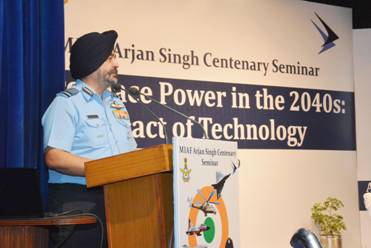
Half Marathon on 14 April 2019. As a tribute to his vision for IAF, a seminar
with the theme “Air Power in the
2040s: Impact of Technology” was also held yesterday at Air Force
Auditorium, Subroto Park. The seminar was attended by various serving and
retired dignitaries. After the seminar, Chief of the Air Staff, Air
Chief Marshal BS Dhanoa, PVSM AVSM YSM VM ADC unveiled the bust of Marshal of
the Indian Air Force at Air HQs (Vayu Bhawan). IAF has also planned to conduct
Marshal Cup All India Hockey tournament which kicked off yesterday at
Chandigarh and the same will conclude on 25 April 2019.
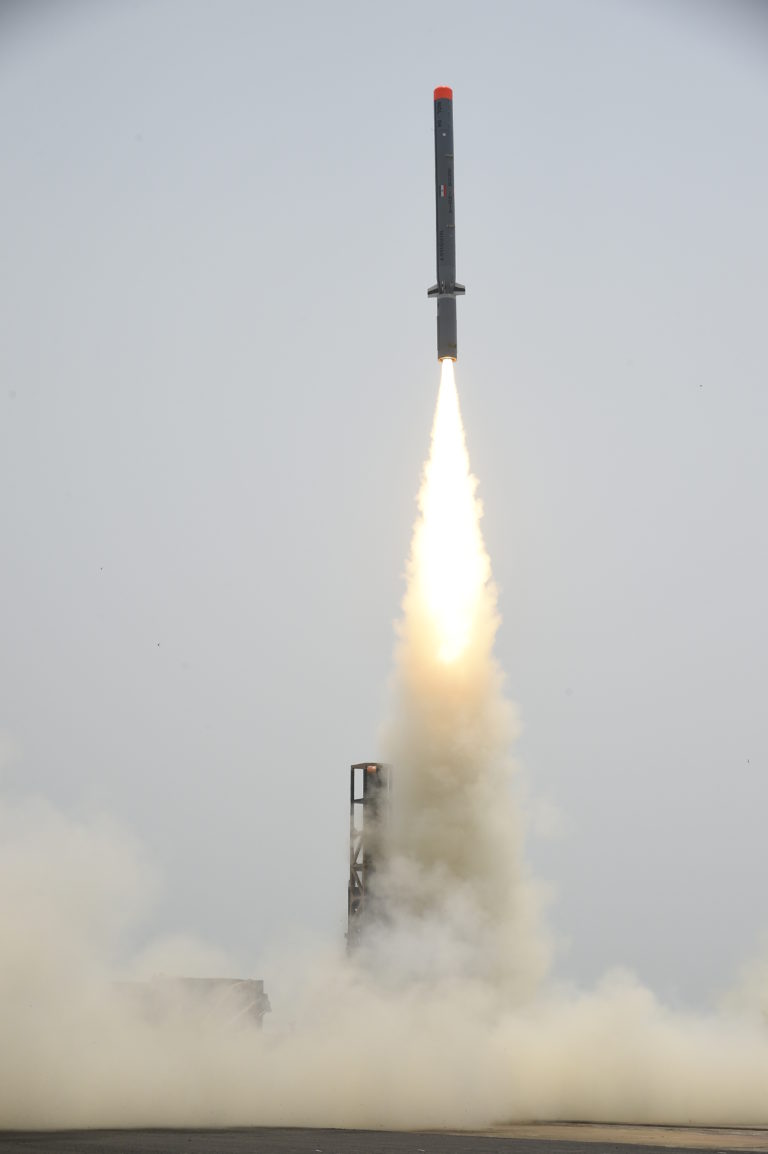
Defence Research &
Development Organisation (DRDO) successfully test fired indigenously designed
& developed Long Range Sub-Sonic Cruise Missile “Nirbhay” from the
Integrated Test Range (ITR), Chandipur Odisha on April 15th, 2019.
It is the sixth
development flight trial with objective to prove the repeatability of boost
phase, cruise phase using way point navigation at very low altitudes. The
missile took off vertically turning horizontally into desired direction,
booster separated, wing deployed, engine started, cruised all the intended
waypoints. The missile demonstrated its sea-skimming capability to cruise at
very low altitudes.
The entire flight was
fully tracked by a chain of Electro Optical Tracking Systems, Radars and Ground
Telemetry Systems deployed all along the sea coast. All the mission objectives were met.
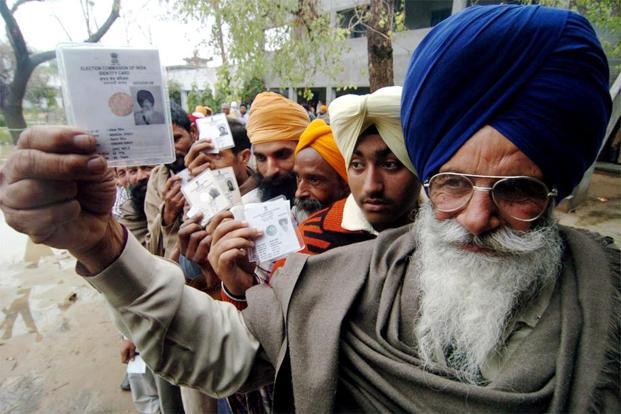
Indian voters are not as dumb as the Election Commission thinks them to be. EC needs to think of fresh ideas that could make elections in India truly participative and enjoyable.
The ongoing parliament
election has exposed all the chinks in the armour of Election Commission. Its handling
of electioneering has been completely ham-handed, to say the least. Instead of smoothly
conducting the electoral orchestra, it stands out as a helpless spectator as politicians
blatantly seek votes on the basis of caste and religion, abuse each other in
the vilest of words — day in and day out and make wild and false promises to
waylay gullible voters. And, what the Election Commission does is to seek
replies from repeat offenders, issue warnings to desist from foul-mouthing and threatening
to cede from India, reprimand some, more out of irritation and make seizures of
cash and a few bottles of liquor here and there. It hasn’t mustered the courage
to either disfranchise an erring political party or debar a candidate from
contesting or campaigning.
It is obvious that the EC
is unable to soak the pressure from a barrage of complaints. No wonder, it
reacts in hiccups by making all kinds of spurious noises — do not screen this
or that movie; do not show any content on the television channel unless it is vetted
by its officers; make public the money political parties receive through
electoral bonds and obtain its concurrence prior to making appointments; recruitment;
announcing schemes and projects and holding public meetings, road shows etc.
Actually, it is doing everything that it should not do and failing woefully in
its singular duty of holding a free and fair election.
The Election Commission should
honestly worry why voter’s turn out is less than 100%, what kind of government it
is facilitating people to elect which has a support of less than 30% of the total
number of eligible voters. Why lakhs of genuine voters are left out of the
electoral list year after year, why Indians settled abroad can vote through
postal ballots but not the Indians who move out from the place of their
permanent residence to other parts of India in search of jobs? Why can’t it
have a permanent mechanism to continuously vet the genuineness of voters and
why can’t it ensure that every voter goes out to cast his vote without fear.
These are tough questions and
would need an institution to address them that has leaders of mettle, vision
and can act tough and decisively. But what you have is a cartel of retired IAS
officers who are loyalists and favourites of parties in power. Most of them
dutifully go by what their appointees direct. A few try to make a show of
independence and a fetish for rebellion. The problem is that since it has
members from the same tribe, they have a strong tribal loyalty and their decisions
cannot be anything but uniform, and reactions knee-jerk. It was precisely to
avoid this tunnel approach that a three-member commission had been constituted to
make sure that decisions are taken based on varied inputs from experts who have
no loyalty to a particular group or service.
The model code of conduct reflects an absurd belief that people firm up their choice of candidates only between the time election dates are announced and results are known. And therefore the Election Commission must ensure that no one violates its provisions to influence voters during this period. Not only this thinking is flawed but the very construction of Model Code of Conduct (MCC) is whacky. It makes EC disproportionately empowered and master of all what it surveys, albeit for a brief period. The administration of the entire country is placed at its disposal. No administrative decisions can take place without its approval, all developmental initiatives are kept on hold and all state and central governments remain in a limbo. The irony is that the MCC authorizes Election Commission to impose a kind of emergency but its provisions are at best a list of wishful intent and have no legal backing. No wonder, political parties openly defy its provisions with impunity and EC is left to react to such violations erratically.
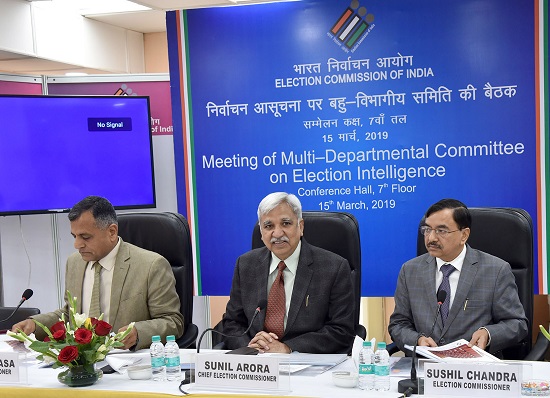
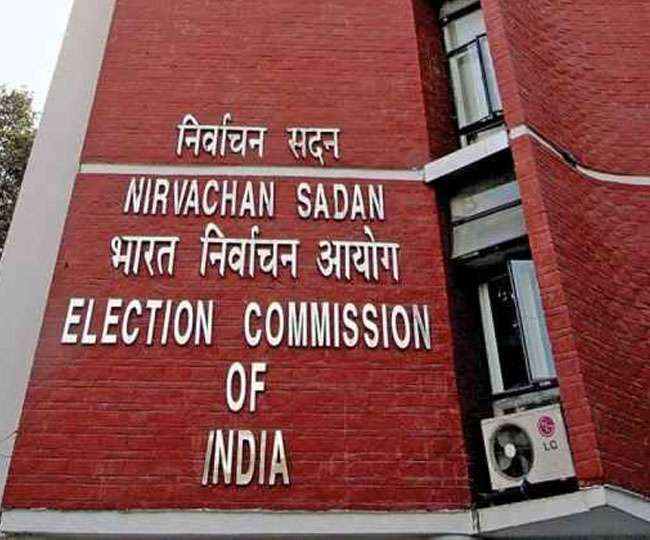
Election Commission of India
In this country of million
mutinies, you cannot have an event of the magnitude of parliamentary elections
organised by a consortium of three retired officers, equipped with pious hopes.
We are notorious for championing the cause of liberty of individuals and
freedom of expression in all forms. How can you expect discipline, civility and
concern for others’ comfort suddenly dawning from warring groups for two
months? Therefore, the best way is let go their emotions, spread over a period
of five years.
Let there be no time-bound
restriction on flow of money, liquor, propaganda, campaigning, public meetings,
rallies and on what you speak. The EC only has to ensure that law and order is
strictly maintained and normal penal laws are applied ruthlessly against
violators like on any other day. Let governments and opposition announce
schemes and give doles throughout as much as they like. If someone wants to distribute
cash and liquor, freebies, hold rallies and dish out opinion and exit polls at
the last moment, let that be his choice. Voters will soon get smart enough to
receive money from A and vote for B or they will get disgusted with the crudity
of campaigning and decide to stay at home or switch off TV channels and move to
street corners to have a sober chat with friends. Let voters learn from
experience.
They are after all not so
dumb as we think. They evaluate performance of candidates continuously over a
period of five years and do not make up their mind at the spur of the moment.
Trust their intelligence to know who can look after their interests best. Can’t
you see them talking about voting for Narendra Modi whose name is not printed
on the ballot paper. Asking them to swear by Holy books to vote for a
particular party might work for some time but not forever. Our entire effort
should be to take away the last-minute false excitement from campaigning and
make it appear routine, drab and a daily activity.
It is about time we think of out-of-the-box solutions to make elections truly participatory. Let’s challenge the Nilekanis’ and the IIT geeks to give us Apps that make it easier for voters to check validity of their electoral cards and get mistakes rectified instantly on a daily basis. Let them write a software that makes it easier for voters to make a choice of either going to booths joyously to cast their ballot along with their family and friends or vote from the comfort of their homes by using postal ballots or some features like OTPs (one time password) popping temporarily on smart phones and laptops. We need to completely ignore rusted views of the likes of Chandrababu Naidus’ and the Mamata Banerjees’ of India, and seriously push for bringing technology to change the landscape of campaigning and voting.
“You know and I know the ‘War
Politics’ that are being played out against the Hazara community in
Balochistan. The eighth largest Army in the world and a nuclear power is
deployed in every street of the Province in combat fatigues, still terrorists
strike at will, so where is the state, does anybody have an answer? You are
Baloch, where is your self-respect? Policemen have been killed; have you ever
caught even one killer of such policemen? You will cremate them at 4 PM, give
two lakh rupees, speak of Allah giving them peace and the matter will finish.
All this will stop only when the government wants it to stop, this is war
politics and we are being treated as sacrificial lambs, this is the truth and I
have said to the Army Chief too, I told him our killing is not a matter of
Islam, you are responsible for it.” These are the chilling words of a local
Hazara leader to the Home Minister of Balochistan, Mir Zia Ullah Langau, post
the terrorist attack at Quetta on 12 April 2019.
At least 20 people are
reported killed and forty wounded in the attack, which was in the form of a
bomb explosion at an open market in Quetta, the capital city of Balochistan.
The market is being run by the Shiite Hazara community which evidently suffered
the maximum casualties, also killed were personnel of the police and paramilitary
personnel among others. The terrorist organisation Lashkar-e-Jhangvi and
Islamic State of Iraq and the Levant (ISIL) have claimed responsibility for the
attack.
The situation
in Balochistan has been grave since early years of the last decade. In the last
couple of years the situation has further deteriorated. Some Pakistani
commentators have expressed a rather concerned view that the area beyond
Parachinar has gone out of government control all together.
According to government data
as quoted by Al Jazeera, since 2013, more than 509 Shia Muslims, mainly ethnic
Hazaras’, have been killed in a campaign of targeted shootings and bombings in
Balochistan. The Hazaras’ live in a state of terror and perpetual insecurity.
Even to purchase essentials they have to go to the market under security cover
provided by the government. In this instance too they had gone to the market
with security, which accounts for the killing of the paramilitary soldier who
was on duty.
Balochistan,
the most restive province of Pakistan, has been in the throes of unfettered
violence for many years now. A suicide
bombing on 5th October, 2017, at Fatehpur Dargah (shrine)
in the Jhal Magsi area of the province led to the death of more than 20
innocent people with many injured. The explosion took place at the entrance to
the Dargah at a
time when scores of people had gathered to pay their respects. ISIL took
responsibility for that strike too. Also in October 2017, unidentified gunmen opened fire on a security van
bound for the fruit and vegetable market killing the driver and four others.
The violence against the Hazara community in Balochistan by extremist organisations is perpetrated at the behest of the strong Sunni powers across the globe. The subsequent retaliation by Shia groups has made the province a battle ground for Middle East’s Shia-Sunni tussle. The Pashtu-Hazara historic rift is being exploited to perpetuate violence against the Hazaras with the objective of “disciplining’ them. This sectarian violence suits Pakistan since it can engineer a demographic change to reduce the hold of the Baloch people on the province.
Family members of the blast victims comfort each other outside a mortuary in Quetta, Balochistan. The suicide bomb attack on Friday, April 12th has killed 20 Shias of the Hazara community in Balochistan. (Photo: AP/PTI)
Balochistan is ethnically the
most diverse province of Pakistan. It is home to Baloch, Hazaras, Sikhs,
Hindus, Parsees and an array of Sunni adherents. The importance of this ethnic
diversity also lies in the spread of the communities across the border towards
Afghanistan and Iran. The Baloch took arms against Islamabad in 1971 after the
debacle in East Pakistan which led to the creation of Bangladesh. The uprising
was crushed brutally and hundreds of thousands of Afghan refugees were
permitted to settle over there with the intention of changing the demographic
profile of the region. The region has been suffering unmitigated violence ever
since.
Balochistan is today the most
impoverished and backward province of Pakistan despite having a bounty of
natural resources. The area contains copper, uranium, gold, coal, silver, and
platinum deposits. In addition, about 36% of Pakistan’s total gas production
comes from Balochistan. But, astonishingly only 17% is consumed domestically
while the rest is transferred to other parts of Pakistan, mainly Sindh and
Punjab. Most of the mining is being done by Chinese firms with Chinese manpower
and the proceeds are going to the federal government. The Baloch people should
have been the richest people of Pakistan; yet they are the poorest because of
crass colonisation which is a big reason behind the ongoing revolt. Balochistan
is the key to ambitious China Pakistan Economic Corridor (CPEC).
Inputs
regarding atrocities being committed on innocent civilians by the Pakistan Army
and its sponsored terrorists are coming out frequently despite an attempt to
keep the province under wraps. The statement of the Baloch Hazara activist
recorded on video is a clear indictment of the Government of Pakistan and the
Pakistan Army.
This struggle for independence
is being blamed upon India, the US and Israel. What gets conveniently forgotten
is that the people are fighting for their rights in the face of blatant
economic exploitation similar to the one that led to the severing of East
Pakistan (Now Bangladesh) from West Pakistan. Pakistanis whose heart bleeds for
imaginary atrocities on Kashmiris are not showing any sensitivity towards their
own nationals. This morally ambivalent situation is untenable and the world
needs to take cognisance of the same. India has been speaking up in favour of
the Baloch independence movement. Prime Minister Narendra Modi set the pace
with his speech from the ramparts of the Red Fort on Independence Day, 2016.
The forward movement from there on, sadly, has been slow and laggard. India
needs to maintain and sustain momentum in order to provide much needed relief
to the impoverished people of Balochistan who are being physically and
emotionally suppressed by an insensitive and self-serving state apparatus.
They
are the biggest names in the Bollywood. They not only rule the silver screen with
glamour and love but also try to show their socially-responsible side from time
to time. Surprisingly, many of these big stars would not be able to cast their
vote in the biggest Parliamentary election in the country. Simply because
either they are not Indian citizens or have dual citizenship.
While
Deepika Padukone was brought up in Bangalore, but she was born in Copenhagen,
Denmark and holds a Danish passport. Akshay Kumar has given up his Indian
citizenship and is a Canadian citizen. While Alia Bhatt and Katrina Kaif have British
passports, stars like Nargis Fakhri and Imran Khan hold American passports.
Online
streaming business is set to become more competitive by the end of this year. Disney
has announced that its highly anticipated streaming service, which is set to
take on the likes of Netflix and Amazon, would launch in the US on November 12.
The
company said the viewers would be able to watch its content on Disney+ after
paying a subscription fee of USD 6.99 per month. The service will offer
Disney’s films and TV shows, including Marvel Studios’ superhero films and
“Star Wars” franchise, along with the products it acquired from
Rupert Murdoch’s 21st Century Fox. Disney’s animated films including the
classics such as “Snow White”, “Cinderella”,
“Aladdin”, “Beauty and the Beast”, “Moana”, and
“The Little Mermaid” will all be available to stream when Disney+
launches. The entire library of Pixar will also be available within the year, the
company said in a statement.
Disney,
which recently completed its acquisition of 21st Century Fox, also announced
that the entire 660-episode-plus library of Fox’s “The Simpsons” will
be coming to Disney+ when it is launched.
“I fired and continued to fire until the crowd dispersed, I consider this is the least amount of firing which would produce the necessary moral and widespread effect it was my duty to produce if I was to justify my action…….It was no longer a question of merely dispersing the crowd, but one of producing a sufficient moral effect from a military point of view….,”Acting Brigadier General Reginald Dyer on the Jallianwala Bagh Massacre
Baisakh is the second month of the Sikh (Nanakshahi Calendar); it
is marked by the festival of Baisakhi which heralds the beginning of the
harvesting season. The day has been celebrated across Punjab for centuries on
end. It is because of its significance that it was chosen by the tenth Sikh
master, Guru Gobind Singh, to initiate his followers into the fold of the
Khalsa (pure) in 1699. At that stage the Baisakhi day fell on March, 30 of the
western calendar.
Baisakhi continues to be celebrated by the Punjabi community
across the world with great fervour. There is, however, a twinge of sadness
attached to it since, on this day in 1919, a tragedy of monumental proportions,
now called the Jallianwala Bagh massacre, took place in Amritsar.
On 13 April 1919, as the whole of Punjab was celebrating the festival, a British officer, Brigadier General Reginald Dyer, ordered his troops to open fire on a non-violent and unarmed gathering that had collected there to celebrate Baisakhi at Jallianwala Bagh. His troops, comprising of about 50 Gorkha, Pathan and Baluch soldiers, were ordered by him to fire directly at the congregation of men, women and children of the Sikh, Hindu and Muslim communities. It is reported that the troops came well prepared with Armoured Cars in support and fired 1650 rounds of .303 Lee-Enfield Rifles. The brutal attack lasted barely ten minutes and left in its wake, according to official figures, 379 dead of whom 217 were Hindus, 102 were Sikhs and 57 were Muslims. The actual count is said to be much higher. The operation was in contravention to the instructions contained in the Manual of Military Law, according to which, a formal warning was required to be given before opening fire and then too minimum force was to be used. Dyer justified his action by saying that enroute to the Bagh he had stopped at 19 places to read out a proclamation prohibiting public gatherings. The justification is false and perfidious. His junior officers also attempted to restrain him but he took no notice. It was fortuitous that the armoured cars that Dyer had brought along could not enter the narrow alleyway otherwise he would have used them too with devastating consequences, as admitted by him during the enquiry. When the operation culminated Brigadier General Dyer is said to have congratulated his troops for their high level of training and discipline; “We have done a jolly good thing,” he said.
Bullet marks on the walls of Jallianwala Bagh
In terms of casualties, the incident cannot be termed as the worst example of British barbarity and brutality in India. The British conquest of Bengal in 1757 devastated the wealthy region and reduced the people to famine and penury. The aftermath of the uprising of 1857 witnessed a far larger count of casualties and a much higher degree of ruthlessness.
The Jallianwala Bagh incident, however, stands out for its total lack of morality and military ethics; it put a permanent blot on the high standards of justice and fair play that the British associate themselves with. The Punjabis, Sikhs in particular, who had shown exceptional loyalty to the British during World War I, got alienated. It also brought about a major turning point in the Indian freedom struggle and gave to it an unprecedented momentum. It is often said that the British lost their Indian Empire that very day.
Martyr’s well at Jallianwala Bagh where people had jumped in to save themselves from bullets. Later on, 120 dead bodies were recovered from this well.
The trigger for the incident can be found in the appointment of Justice Rowlatt to enquire into alleged revolutionary conspiracies in India, his recommendation to suspend civil liberties was accepted by the government and legislated as the Rowlatt Act. There was a nation-wide agitation against this Act on the call of Mahatma Gandhi.
Punjab was simmering due to agrarian unrest caused by a monsoon failure. This apart, many Sikh families had lost their sons in the world war and they had a grudge against the British. The widespread demobilisation left many frustrated, jobless soldiers on the street who had imbibed concepts of freedom and nationhood while serving in foreign shores. The agitation, witnessed maximum impact in Punjab.
The Lieutenant Governor of Punjab, Sir Michael O’Dwyer, a Catholic Irishman hailing from a poor family had a tendency to go overboard in his show of loyalty to the Crown. Being of a feudal mindset, he did not take kindly to the strike calls. He was informed by his Deputy Commissioner Miles Irving that Hindus and Muslims of Punjab had united against the British, which added to his apprehension. He responded with an order to arrest two local leaders, Dr. Satyapal and Dr. Saifuddin Kitchlew. Both leaders were revered by the people for their efforts to bring about a change through non-violent agitation and civil disobedience. Their arrest on 9th April, led to demonstrations and large scale unrest in which about 20 people were killed due to Police firing.
By 10th April, the agitation had taken a violent turn in Amritsar, the seat of religious and temporal power for the Sikh community. It reached a state where Europeans in Amritsar had to be evacuated, which came as a reminder for the British of the terrible days of the uprising of 1857. The matter was aggravated by the beating up of a British woman, Marcella Sherwood, by a crowd. 45 year old Marcella was the Superintendent of the city’s mission schools. She was caught and beaten up by the crowd while on her way to one of the schools. Though she was saved by Indians the British leadership, particularly O’Dwyer and Dyer, were infuriated by this incident.
Martyr’s well at Jallianwala Bagh
A word about the perpetrator of the tragedy, Reginald Edward Harry Dyer who is erroneously called as General Dyer. He was, in fact, an acting Brigadier General at the time when the Jallianwalla Bagh incident occurred and he retired as a Colonel. He was born in Muree, now in Pakistan to a reasonably wealthy family in the Distillery business. The modern day Mohan Meakins Brewery in Kasauli once belonged to the Dyer family. He was educated in Lawrence College, Murree and Bishop Cotton School, Shimla before being commissioned from the Royal Military College, Sandhurst. As a part of the British Indian Army he served in the Punjab Regiment and held many staff appointments. He is also known as the “Butcher of Amritsar” for what he did in Jallianwala Bagh and otherwise in the city on declaration of Martial Law. He retired on 17 July 1920, retaining the rank of colonel.
Brigadier
General Reginald Dyer considered the congregation at Jallianwala Bagh to be a
direct defiance of his orders. The reports that
he was given were factually incorrect and from unreliable resources. Those whom
he thought to be revolutionaries were, in fact, common people and their
families who had collected to celebrate Baishaki. It was definitely not a
political gathering even though some activists did seize the opportunity to get
their word through. Dyer wanted to set an example by instilling terror
in the hearts of the common people. By not allowing families to collect their
dead and wounded for 24 hours he added to the shame that he had brought upon
his peers and the whole of Britain. Under the garb of Martial Law the public
was humiliated and forced to perform punishments. The most degrading was the “crawling
order” which entailed natives crawling through the alleyway where Marcella
Sherwood was assaulted. The order was cancelled by O’Dwyer within five days on directions
of Lord Chelmsford himself when nationalist people, especially youth, started
crawling voluntarily.
The
administration backed Dyer to the hilt and attempted to portray the incident as
one of a minor nature with the action taken having elicited the required effect
in quelling the unrest. The estimated casualties were also watered down to say
that no more than 200 people had died.
The matter was investigated for almost a year by what is
termed as the Hunter Enquiry. The three Indian members submitted their own
minority report. “We feel that General Dyer, by adopting an inhuman and un-British
method of dealing with subjects of His Majesty the King-Emperor, has done great
disservice to the interest of British rule in India,” they said.
Once the actual facts started coming out there was nationwide
disgust. Rabindranath Tagore returned his Knighthood in protest. Gandhi too
returned the medals awarded for his wartime services to the Empire and formally
withdrew his loyalty to the British Government. The Non-cooperation Movement
was launched the very next year.
Sadly, Dyer was not without support, he in fact had his own
quota of fans; the Anglo-Indian community looked upon him as the “Saviour of
Punjab” and money was collected for him. The Empire, however, looked upon him
as an embarrassment and he was asked to resign and go back to England. Yet, he
was accorded a hero’s send-off.
An article in India Today claims
that Governor O’Dwyer was also given a fund of rupees 1.75 lakh collected by
Punjabi elite like Kunj Bihari Thapar, Umar Hayat Khan, Chaudhary Gajjan Singh
and Rai Bahadur Lal Chand. Clearly, there was no dearth of self servers in
those days too.
The
issue finally came before the House of Commons in the form of a debate on
Dyer’s future on July 8, 1920. Dyer, his wife and Sir Michael O’Dwyer were
present in the Visitors’ Gallery. Lord Montagu, in his opening speech asked the
House, “Are you going to keep your hold upon India by terrorism, racial
humiliation and subordination, and frightfulness, or are you going to rest it
upon the goodwill…..?” The debate turned highly acrimonious since there were
many who came in support of Dyer. Winston Churchill, However, culminated the
debate by terming the act as “Monstrous.” The government won with 230 to 129
votes and Dyer was wrested of his commission; he resigned and went into
retirement thereafter. The conservative Morning
Post launched an appeal for funds for the benefit of Dyer and
portrayed him as ‘The Man Who Saved India’. More than £26,000 were raised, that
afforded for him and his wife a fairly comfortable retired life. He died in
1927 due to prolonged illness.
So high was
the level of emotions generated by the brutal massacre that a Sikh named Udham
Singh went all the way to England to seek revenge. On 13 March 1940 he killed
Michael O’Dwyer at Caxton Hall, London. Udham Singh was later tried and hanged
in accordance with British Law.
India and Pakistan both have
been demanding an apology from the British government for the brutal massacre
of innocents in Jallianwala Bagh. The Government of the Indian state of Punjab
has unanimously passed a resolution, demanding an apology from Britain. “The
tragic massacre remains one of the most horrific memories of British colonial
rule in India. This shameful military action against locals peacefully
protesting… has since received worldwide condemnation,” the resolution says.
The
British Government, sadly, has lost out on the opportunity provided by a
parliamentary debate on the subject in February this year to apologise for the
atrocity. Mike Field, the Minister for Asia and Pacific said that he recognised
the “strong and compelling case” for Britain to go beyond the deep regret
already expressed but was reluctant to apologise for things that had happened
in the past. Pressure, however, is on the British government since some members
of the British Parliament have signed a letter to the Prime Minister demanding
a formal apology.
On
19 February 19, Lord Rajinder Paul Loomba requested for a short debate to “ask
her Majesty’s Government what plans they have to commemorate the 100th
anniversary of the Amritsar massacre. Statements made by some peers indicate
the feeling that have after all these years.
“Those innocent, unarmed civilians who
died immediately, and those left to suffer a horrendous and prolonged death,
were let down by the very people who should have been protecting them…… At
the time, many Indians had given of their lives “for King and country” by
fighting in the First World War,” said Lord Loomba in his opening address.
“That most horrific day in history remains in
the memories of Indians all over the world even today. This act of complete
disregard – opening fire on innocent people who had no escape routes or an
opportunity to voice their protests is truly a black cloud in British history,”
said Baroness Sandip K Verma.
“It is not too late for the British Government
to apologise. I was with David Cameron in India on that visit in 2013. I was
hopeful that he would apologise, but he did not. He said that it was a “deeply
shameful event”, but he did not apologise,” said Lord Karan Billimoria.
It
is notable here that Queen Elizabeth visited the memorial in 1997. “History cannot
be rewritten, however much we might sometimes wish otherwise. It has its
moments of sadness, as well as gladness. We must learn from the sadness and
build on the gladness,’’ she had said.
At
Jallianwala Bagh, the bullet marks have been kept as they were and the Well has
also been preserved. There is a Martyrs Memorial and the area which was barren
has a coat of lawns. One tends to get an eerie feeling while trying to relive
the times gone by, even as many visitors pose for Selfies. It would be best for
the authorities to create an ambience that is commensurate with the history of
the place.
More than
looking for an apology for what happened 100 years back it is important for all
Indians to read the history properly and understand the consequences of being
divided and intolerant. Also important is to understand the role being played
by the Armed Forces of the nation in ensuring that the people enjoy their
freedom unhindered. There are always powers looking for ways and means to
exploit weaknesses in a country and a civilisation. Successive generations need to ensure that
Jallianwala Bagh is not repeated in our great nation ever again.
In
a dramatic move, police entered the Ecuadorian embassy in London Thursday
morning and arrested WikiLeaks founder Julian Assange, who has been in the embassy
since 2012, when he was granted asylum as part of a bid to avoid extradition to
Sweden, where he was facing allegations of sexual assault. As per the latest reports, he was
“further arrested” on his arrival at a London police station on
behalf of United States authorities, who have issued an extradition warrant.
In
a stunning chain of events, Ecuador withdrew his asylum and the ambassador ‘invited’
authorities into the embassy, to arrest Assange. Ecuadorian president Lenin
Moreno said in a video statement Thursday that his country withdrew Assange’s
asylum due to his “discourteous and aggressive behaviour,” “the
hostile and threatening declarations of his allied organisation against
Ecuador” and “the transgression of international treaties.” Assange
“violated the norm of not intervening in internal affairs of other
states,” Moreno said.
Actress
Kangana Ranaut has her hands full. After “Manikarnika: The Queen of
Jhansi”, Kangana Ranaut has locked a script for her next directorial, an
epic action drama based on a real-life story. On Tuesday wrapped up the shoot
of “Panga” in Delhi and will now head to Kolkata for the next leg.
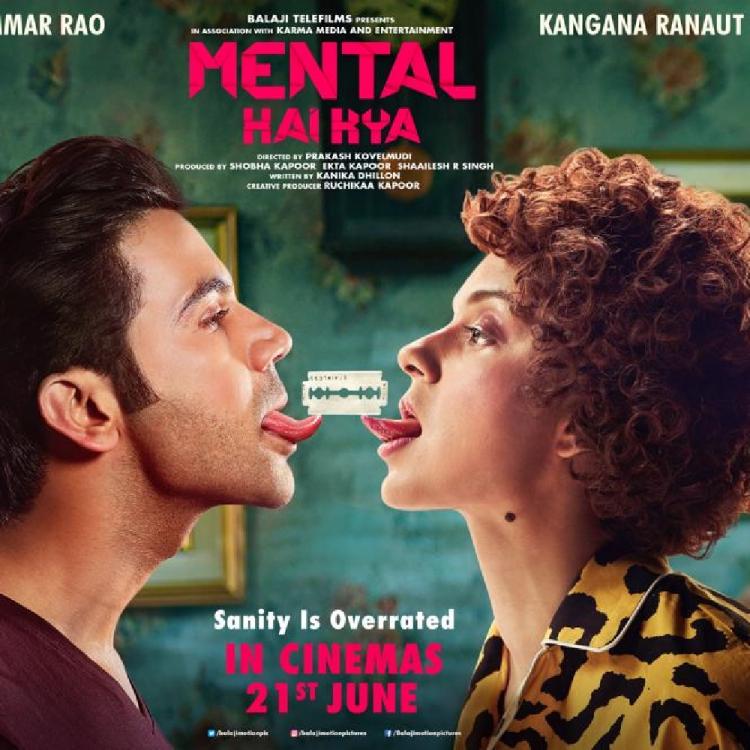
Apart from “Panga”, she also has “Mental Hai Kya” and
Jayalalithaa biopic.
Talking
about the new film, she said, “I’m on the verge of announcing my next
directorial venture. It’s an action film an epic drama. It has taken a lot of
my time. Currently, we are putting everything in order, but we have locked the
script. We’ll be doing a photoshoot soon after which we plan to release the
poster too,” Kangana said. The film will be mounted on a large scale, but
will be different from any other epic that has been made in recent times, the
actor said in a statement.
The
actor feels great that female artistes are bringing a lot of business in the
industry and believes it is the “right time” for her to start working
on her second directorial project.
The Naval Investiture Ceremony for 2019 was held at the naval helicopter base INS Shikra of Western Naval Command (WNC), Mumbai on 10 Apr 19.
Admiral Sunil Lanba PVSM, AVSM, ADC, the Chief of Naval Staff (CNS), on behalf of the President of India, conferred Gallantry and non-Gallantry Awards announced on the Republic Day this year to meritorious personnel, as well as citations to Naval units which have distinguished themselves during the past year. The ceremony was witnessed by senior dignitaries of the Indian Navy and families of the awardees.
A 50-men Guard of Honour was paraded during the ceremonial parade which was held as a part of the Investiture ceremony. The Guard of Honour was inspected by Admiral Sunil Lanba prior to reviewing the parade comprising 18 platoons of Naval personnel drawn from various ships and establishments of WNC.
On completion of the review, the CNS awarded the medals, citations and CNS Trophy for Best Green Practices to the various recipients. 45 medals which included 18 Nao Sena Medals for Gallantry, 09 Nao Sena Medals for Devotion to Duty and 16 VishishtSeva Medals for distinguished service, the Capt Ravi Dhir Memorial Gold Medal for Promoting Innovativeness in Flight Safety and the Lt VK Jain Memorial Gold Medal for best applied research in Naval Technology were presented.
The CNS also presented Unit Citations to four afloat units, viz. INS Trishul, INS Sahyadri, INAS 322 and INS Tarasa and four ashore units – NSRY (Kochi), INS Utkrosh, INHS Kalyani and Material Organisation (Mumbai) – for delivering exceptional performance over the past one year. Naval Dockyard (Vizag) and INS Dwarka were awarded the ‘CNS Trophy for Best Green Practices’ for their environment friendly green initiatives.
We use cookies on our website to give you the most relevant experience by remembering your preferences and repeat visits. By clicking “Accept All”, you consent to the use of ALL the cookies. However, you may visit "Cookie Settings" to provide a controlled consent.
This website uses cookies to improve your experience while you navigate through the website. Out of these, the cookies that are categorized as necessary are stored on your browser as they are essential for the working of basic functionalities of the website. We also use third-party cookies that help us analyze and understand how you use this website. These cookies will be stored in your browser only with your consent. You also have the option to opt-out of these cookies. But opting out of some of these cookies may affect your browsing experience.
Functional cookies help to perform certain functionalities like sharing the content of the website on social media platforms, collect feedbacks, and other third-party features.
Performance cookies are used to understand and analyze the key performance indexes of the website which helps in delivering a better user experience for the visitors.
Analytical cookies are used to understand how visitors interact with the website. These cookies help provide information on metrics the number of visitors, bounce rate, traffic source, etc.
Advertisement cookies are used to provide visitors with relevant ads and marketing campaigns. These cookies track visitors across websites and collect information to provide customized ads.
Necessary cookies are absolutely essential for the website to function properly. These cookies ensure basic functionalities and security features of the website, anonymously.
Cookie
Duration
Description
cookielawinfo-checkbox-analytics
11 months
This cookie is set by GDPR Cookie Consent plugin. The cookie is used to store the user consent for the cookies in the category "Analytics".
cookielawinfo-checkbox-functional
11 months
The cookie is set by GDPR cookie consent to record the user consent for the cookies in the category "Functional".
cookielawinfo-checkbox-necessary
11 months
This cookie is set by GDPR Cookie Consent plugin. The cookies is used to store the user consent for the cookies in the category "Necessary".
cookielawinfo-checkbox-others
11 months
This cookie is set by GDPR Cookie Consent plugin. The cookie is used to store the user consent for the cookies in the category "Other.
cookielawinfo-checkbox-performance
11 months
This cookie is set by GDPR Cookie Consent plugin. The cookie is used to store the user consent for the cookies in the category "Performance".
viewed_cookie_policy
11 months
The cookie is set by the GDPR Cookie Consent plugin and is used to store whether or not user has consented to the use of cookies. It does not store any personal data.