Home Blog Page 447

WhatsApp comes with new feature to control adding in random groups

WhatsApp, the cross-platform messaging and Voice over IP service owned by Facebook, has announced a new privacy feature that lets you control who can add you to a group. This feature is rolling out to the users on the latest version of WhatsApp, and it will reach everyone around the globe in the coming weeks.

Users need to go to the Settings to manage this feature Settings > Account > Privacy > Groups menu. The app has provided three more options there- ‘Everyone’, ‘My contacts’, and ‘Nobody’. Selecting ‘Everyone’ will let everyone with your WhatsApp number add you to a group. The ‘My contacts’ option will limit the option to people whose numbers are already saved in your contacts. And, choosing the ‘Nobody’ option will prevent everyone from adding you to a group.

While unknown people cannot add you in any group, but they will be able to send the user a private invitation to join a group. User will then have 72 hours to accept the invitation after which the invite will expire.

Banning Religious Modesty Dress is Liberal

Many liberals today believe that a ban on Muslim veiling would be inconsistent with liberalism. However, the chief architect of liberal political philosophy, John Stuart Mill, who was also one of the nineteenth century’s greatest feminists, probably would have accepted a ban in principle. Mill’s 19th century England presented a different set of religious issues to those of multicultural Britain today, but Mill considered three cases contemporaneous to his writing that offer a prism through which we can discern how liberalism’s founding father might have responded to the question of a state ban on Muslim veiling.

First, he considers whether a ban on eating pork would be acceptable in a Muslim minority country like his own. He concludes that the ban on pork-eating would be unacceptable since many would want to resist the ban because they do not accept Muslim disgust as legitimate grounds for preventing other people from eating pork.

Next, Mill looked at the Christian Puritans’ ban on various forms of recreation, such as music and dance. Mill remarked that the moral and religious sentiments of Puritans were inadequate grounds to restrict other peoples’ leisure activities.

Finally, he considered the Mormon minority in the United States, who practiced (male only) polygamy and were persecuted for it. Mill’s response was that interference in the Mormon way of life would be unjustified on the condition that the practice is undertaken with the full consent of all participants. He also stipulated that it should be permitted only if people living in Mormon communities were free to leave.

The Mormon example can be extended to any case in which a host society seeks to change the practices of a minority when those practices are not enforced on people against their will. If we accept – as most people do – that religious dress codes are sometimes forced on people against their will, then, to that extent, according to Mill’s reasoning, the state would bejustified in interfering with the practice, just as it would be in cases where the practice of male polygamy did not have the full consent of those impacted by it.  This conclusion is consistent with the rationale of Mill’s conditional ban on male polygamy, since the only condition that he thought would make state interference in the practice acceptable was if women had not fully consented to the practice and were not fully free to leave the practicing community. If these conditions are met in the case of the veil, for instance, then it is consistent with liberal political philosophy to ban it.

No one should be made, by legal or political force, to conform to ideological values that are not his or her own. So, while well-meaning British or American citizens may argue that it is not OK to tell people what to wear (or not to wear), the same goes for Salafi-Wahhabists and fundamentalists as well as for the state and government officials.

A legal restriction on veiling, because it would ensure that we are consistent when we say that “nobody should tell women what they can wear (or not wear)” is more principled and starts with the existing situation, which is that a subset of women are currently being told what to wear. Many women wear the veil because someone has told them that they cannot wear Western dress, or that not to veil themselves would be in contravention of religious values. If these women dissent, some of them would face violence, abuse and homelessness. If we really want women to be free to “wear whatever they want,” then we must (a) argue against religious authoritarians who tell women exactly what they must wear (b) stop allowing the state to prosecute as “hate speech” every attempt to do so, and (c) possibly erect a legal ban on religious modesty dress to protect those who are currently coerced to wear it.

Mill’s various responses to the cases above illustrate that mere offence is not a good reason for society to constrain what people do. Liberals have never favoured state interference with self-regarding behaviours that others merely find distasteful. Liberals have only accepted state interference when the behaviour in question is ‘other-regarding’ (i.e. when it impacts others in a significant way) and is also harmful.

While it is debatable as to what is or is not harmful, liberals have interpreted harm in a narrow sense, such that merely insulting the feelings or offending other people’s tastes or beliefs is not ‘harmful’ in any significant way, since it does not harm anyone’s permanent interests as a progressive being. On the other hand, denying people access to education or information, limiting their freedom of movement or their liberty to assemble with people, or to pursue their own goals, are acts that do harm other people’s permanent interests as progressive beings.  It limits the individual’s ability to have genuine options and a variety of sources of information. This prevents informed decision, constrains ‘education’ within very narrow limits, and ultimately stunts intellectual and personal growth and development – all of which is seriously harmful

Offence, far from injuring my development and growth, may actually stimulate my thought, provoke new ideas, or challenge me to question my own assumptions or to defend existing ones with better reasons. On the other hand, customs, when they are coerced or enforced through family and community pressure (sometimes violent pressure) do harm peoples’ permanent interests as progressive and free human agents, capable of exploring their own physical, emotional and intellectual growth. 

For this reason, liberalism has been the best form of government for allowing individuals to pursue their own good in their own way. The state does not presume to enforce any moral or ideological code, but rather is treated as a neutral referee. The state’s sole purpose is to enforce a set of principled and fair rules so that all ideologies can compete on the same level playing field and follow the same rules of engagement. When governments act paternalistically by granting special protections to a particular subculture in society, they are not protecting individuals within those cultures but lifting the protections that would otherwise grant them the same rights as other (more powerful) individuals within their culture.  Liberalism protects all members of a minority subculture, whereas the kind of faith-based multiculturalism that liberal states have pursued in the past decade allows only dominant community leaders to pursue their own values and goals, while protecting their “right” to impose these values on everyone else in the community.   This is not liberal.  It is conservative communitarianism that can quickly become religious fascism. 

Rajkummar Rao wins rule-breaker of the year award

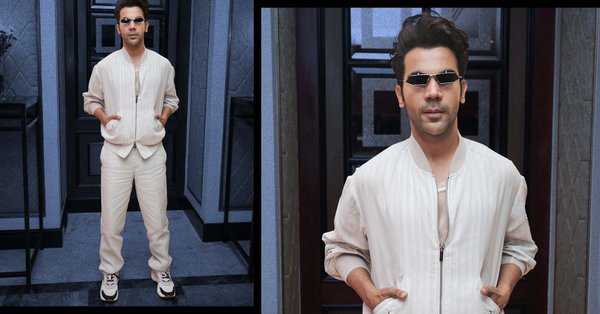
GQ recently hosted GQ style and culture Awards in Mumbai. During the event actor Rajkummar Rao won the GQ rule breaker of the year award. He was seen in head-to-toe all-white Dior outfit during the award function.

Rao also shared the news on social media. He took to Twitter to show his excitement. He tweeted, “Rule breaker of the year, thank you for this honor.”

A host of Bollywood celebrities were also spotted at the GQ Style and Culture Award including Ranveer Singh, Taapsee Pannu, Jacqueline Fernandez, and Anushka Sharma, who marked their presence in their quirky ensemble.

Rajkummar Rao will be next seen in films like Mental Hai Kya, starring opposite Kangana and Made in China.

Yesteryear Bond girl Tania Mallet passes away

Tania Mallet, best known for her role in the 1964 James Bond film “Goldfinger”, has died at the age of 77.

The official James Bond Twitter account shared the news of Mallet’s demise. “We are very sorry to hear that Tania Mallet who played Tilly Masterson in ‘Goldfinger’ has passed away. Our thoughts are with her family and friends at this sad time,” the post read.

Model-actor Mallet was born in Blackpool on May 19, 1941. She is the cousin of Academy Award-winning actress Helen Mirren. Mallet made her foray into films with an audition for the Bond girl Tatiana Romanova in “From Russia with Love”. She did not get the role of Tatiana, but later appeared as Tilly Masterson opposite Sean Connery in the third James Bond film “Goldfinger.” In 1976, she also appeared in TV’s “The New Avengers”.

India and Bahrain to enhance cooperation in outer space research

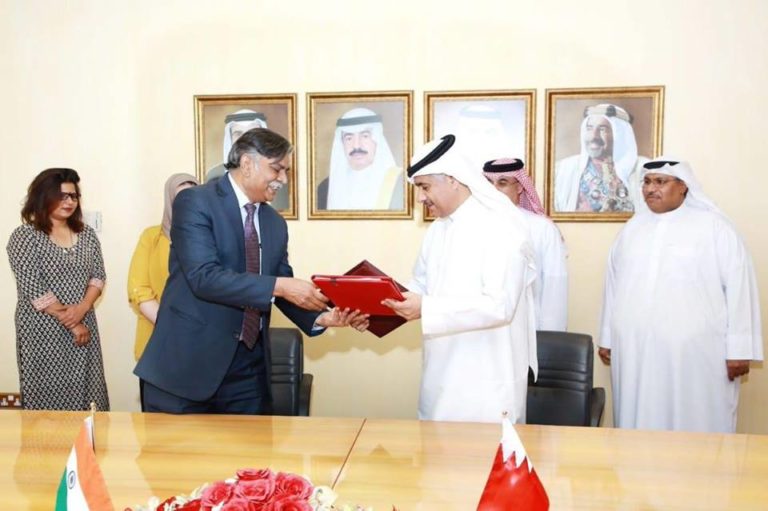
Bahrain National Space Science Agency & ISRO – Indian Space Research Organisation have signed an MoU on Cooperation in Exploration & Uses of Outer Space for Peaceful Purposes, including cooperation in space technology viz. Remote Sensing, Space Science&Planetary exploration among others.

The Minister of Transportation and Communications Kamal bin Ahmed Mohammed said, ” The purpose of this MoU is to support the efforts of NSSA in the field of space and its technical applications, through the exchange of experiences and knowledge with ISRO to contribute to building national capacities in this field, in addition to supporting scientific research efforts and the implementation of joint projects.

 “This MoU on Cooperation in the exploration and uses of outer space for peaceful purposes between India and Bahrain provides scope for cooperation in various areas of space technology viz. Remote Sensing, Space Science & Planetary exploration, application of space technology etc. A Joint Working Group would be set up for implementation of MoU soon which would implement arrangement on specific areas of cooperation,” Indian Ambassador to the Kingdom of Bahrain Alok K Sinha said.

NGT comes hard on DDA, questions its attitude of shifting responsibility

The National Green Tribunal while hearing a plea filed by Delhi resident R K Gupta seeking restoration of the Tikri Khurd Lake, commented that DDA doesn’t show any commitment towards conserving water body. The tribunal rapped the Delhi Development Authority over its submission that the Tikri Khurd Lake did not exist in the records and said,” We may only comment that stand of the DDA does not show commitment for conserving water body and merely focusses on technicalities and shifting responsibility which attitude is not consistent with Articles 48A and 51-A (g) of the Constitution, expected from a public body.”

NGT has directed the Wetlands Authority of Delhi to hold a meeting and decide within a month whether the Tikri Khurd lake in Narela here is a wetland.  A bench headed by NGT chairperson Justice Adarsh Kumar Goel said the Wetland Authority constituted under Rule 5 (2) of the Wetlands (Conservation & Management) Rules, 2017 for the NCT Delhi must look into the matter.

“Wetlands Authority may co-opt DDA as a member of the Wetland Authority under Rule 5 (3) of the rules so that the effective joint decision can be taken to resolve the dispute whether the area falls within the jurisdiction of DDA or Delhi government,” the bench said.

ISRO successfully launches military satellite EMISAT

Indian Space Research Organisation (ISRO) has achieved yet another milestone by successfully launching EMISAT, a military satellite, and 28 foreign nano satellites on-board its polar rocket from Shriharikota on Monday. ISRO chief K Sivan said at the Mission Control Centre, “Today, PSLV C45 has successfuly injected ISRO made EMISAT in 748 kms orbit as well as 28 customer satellites in 504 kms orbit.” Prime Minister Narendra Modi congratulated ISRO scientists on the successful launch of EMISAT satellite on board polar rocket PSLV-C45 from Sriharikota.

The mission marked several firsts to the credit of Indian Space Research Organisation (ISRO) as it manoeuvred satellites in various orbits and orbital experiments including on maritime satellite applications. The rocket, PSLV-C45, in its 47th mission, injected the 436 kg EMISAT, aimed at electromagnetic measurement, and 28 co-passenger satellites belonging to Lithuania, Spain, Switzerland and the US, into their designated orbits, ISRO said.

In the mission, ISRO scientists placed the satellites and payloads in three different orbits. After injecting the primary satellite EMISAT at around 17 minutes from lift off in a 748 km orbit, they restarted the fourth stage twice. During this initiative, all the other 28 customer satellites, totally weighing about 220 kgs, were released one-by-one by lowering the fourth stage to around 504 kms orbit. “This process took about 160 minutes for ISRO from lift off at 9.27 am,” an official said.

10 Reasons why India must not vote for a Coalition Government

Given the surge in popularity of the BJP in the run up to Indian General Elections, it is understandable that there would be concern amongst opposition leaders who are battling to save their dynasties and their relevance. What is more surprising are the articles that have started to glorify coalitions where authors have started to hope for a coalition government at the centre. A coalition is defined as an act of union between a group of individuals who share a common set of values or a common vision. Political coalitions have adapted the meaning of coalition to mean a temporary alliance for combined action but still with a common set of goals for the larger good of their constituents.

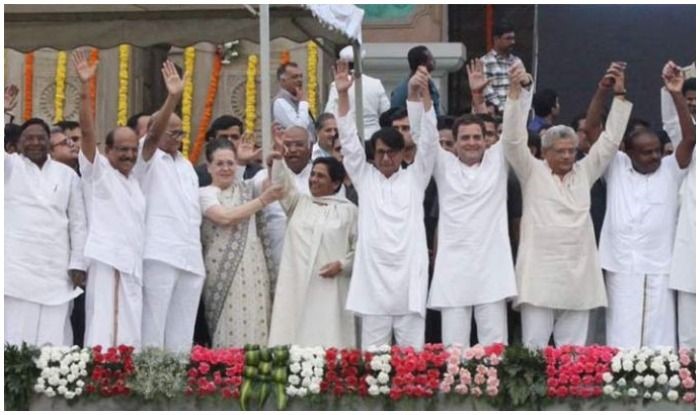
In the forthcoming elections, the now defunct mahagathbandhan has a single point agenda of removing the BJP at the centre. That is it. Unlike earlier coalitions, this time that constituents of the mahagathbandhan have not even been able to come together with a common minimum programme. No one can agree on who will lead the coalition. They blatantly fight in the states and collaborate at the centre.

Coalition governments around the world are always weaker and less decisive. Compromise and tolerance are the general dharma of most coalition governments where adjustment and acceptance of parochial needs takes priority over national needs.

Let us examine the flaws of a coalition government as is evident not just in India but around the world and then make our own assessment as we step out to vote.

  1. Federal Structure is compromised: Coalition governments by their very definition is a group of small parties that come together because no single party can form the government. This leads to the major challenge of who will lead. We have seen chief ministers by rotation so that personal agendas can be met. We must ensure that we do not allow personal agendas of regional parties to determine the path of our nation.
  2. Strong versus Lame Duck Prime Minister: Former Prime Minister Manmohan Singh had famously remarked when asked about the telecom scams that he headed a coalition government and was therefore unable to do anything. The leader has no option but to compromise when faced with a challenge that suits a single party but not the nation. Areas like GST (Goods and Services Tax), Bankruptcy Code, Social welfare schemes like Aadhar, Jan Dhan Yojana, Swachh Bharat, National Health Scheme and others have been on the agenda of successive governments for the past two decades but could not be implemented because of coalition governments.
  3. Constitution of India: The Constitution has clearly stipulated about a hundred areas that can only be decided by Parliament and not by the States. These include Defence, Foreign Policy, Common Currency, Judiciary, Federal Taxes, Airlines and several others. Coalition governments have vested interests on most of these matters. They need to make a change for their constituencies and they always figure out ways to bypass these areas.
  4. Fiscal prudence is compromised: In order to meet the vastly varying financial demands from its coalition partners, governments have been known to compromise of fiscal prudence. Regional and state requirements take precedence. It is common to see high rates of inflation and high fiscal deficits which lead to serious structural flaws in the national economy.
  5. Promises are made with no intention of meeting them: Voters need clear accountability so that they can ask their leaders to deliver on their poll promises. Coalition partners always have a credible excuse for not delivering on their promises. Corruption is also seen as an acceptable practice to meet the needs of various political parties who demand their pound of flesh. No one is accountable.
  6. Health and Education: State controlled subjects like Health and Education are a case in point. Everyone unanimously accepts that Health and Education need everyone’s focus. We can see the huge disparities that exist in states. Why do our politicians believe that all people are not equal, and some states have better health and education and others do not? The same applies to most other areas that have been handed over for governance at the state level.
  7. Personal agendas drive decision making: Given the 5-year duration of parliament and even shorter duration of coalition understandings, the political parties know that they have a short window to maximise financial gains for their respective groups. This is what we have seen in the UPA Government from 2004 to 2014 and nothing gives me confidence that the thinking will change if they come to power in 2019.
  8. Foreign Policy: World politics is changing from a borderless world to a world that is beginning to draw borders again. Only strong countries with strong leaders will be able to carve out a place in this new world that will increasingly respect strong economies and strong defence capabilities. We have seen the criticism of Uri and Balakot. We can already hear rumblings of breaking away in Kashmir if any action is taken on Article 370. A coalition government, by its very definition, will always be weak and therefore will compromise on the country’s interests in the international arena.
  9. Decision making slows down: Understandably, when there are dozens of individuals who believe that they can lead the nation better than others in the coalition, they have their own set of divergent views on every subject. Therefore, decision making on even the simplest of matters needs the support of everyone thus slowing down decision making.
  10. Any party can pull the plug: Coalition governments are frail and always walking on thin ice, not knowing when cracks may appear. They are supported by a group of individuals who have no common ideology. The first step is to start making statements against the coalition, next is to sulk and the final step is to withdraw support thus ensuring that the house of cards will collapse. Several instances of governments hanging in there or compromising their values have been seen and continue to be seen.

Can India afford to have a weak, unstable and selfish set of coalition leaders with their own personal and private agendas run this nation and fritter away all the significant gains we have seen in the past 5 years?

Remember the old line “Too many cooks spoil the broth?” Do we want to see musical chairs for the chair of the Prime Minister? Are we willing to see a new Prime Minister every 6 months?

Most governments are elected with less than 40% votes. However, simple mathematics does not work. If two warring parties add up their votes in the previous elections, they will automatically assume that they will sweep the next polls. They also assume that their voter is gullible enough to vote for a combined party and forget all that has been said by their fearless leaders against one another in the past.

We need a single party that has the required 272 seats in Parliament. This will ensure that the leaders will not have to compromise on decision making or take decisions that suit their regions but are detrimental to the nation.

We need to vote with our heads and make sure that we vote for a single party with a strong leader that can help millions of young people achieve their dreams.

Parliamentary elections can usher the change that Kashmir is yearning for

The one good take away from election campaigns is that the truth with attendant skeletons starts tumbling out of the closet. In Kashmir, this happens at a much higher degree in view of the negativity on which the campaigns are based.

Engineer Rashid, patron of the Jammu and Kashmir Awami Ittehad Party and fighting the election from the Baramulla Constituency as the sole representative of his party, has said that the mainstream political parties (National Conference and Peoples Democratic Party) are, “behaving like concubines of BJP and Congress and disgraced Kashmiris in every forum.”

Sajjad Lone, chairman of the Jammu and Kashmir Peoples’ Conference, has accused the National Conference (NC) of doublespeak, “The dynastic rulers are best separatists when out of power and worst cruel mainstreamers while in power,” he said.

The BJP has raised questions about the rationale of the NC and PDP in contesting parliamentary elections after having boycotted the Panchayat and Local Urban Bodies polls. “It is because the LS (Lok Sabha) polls will empower them and the ULB (urban local body) polls will empower the people. They are against the empowerment of people,” said BJP General Secretary Ram Madhav.

There have been instances of the selected candidates invoking allegiance to Pakistan as a part of their election rhetoric. In this context the BJP has declared its intention of registering an FIR against National Conference leader, Muhammad Akbar Lone, for allegedly raising pro-Pakistan slogans.

A summation of the statements by political leaders of various hues gives a clear indication of the fault lines that exist in the political spectrum of Kashmir. Small parties with limited popular reach are at each other’s throat. Each considers the other to be self-serving and opportunist. In effect, this implies that all are self serving and opportunist. The only statement holding merit is the one made by Ram Madhav in questioning the rationale behind the mainstream local parties contesting the parliamentary elections after having boycotted the Panchayat elections. After all, nothing has changed on ground for the parties to have a change of heart. The people should definitely pose this question to the parties concerned during their election campaigns.

The main issues on which parliamentary elections are fought deal with creation of infrastructure and taking on big projects which can bring up the standard of living of the people, especially so, in terms of  health, education and sustainable development aspects, among others. None of these is coming out in the campaigning being done by the prospective candidates in Jammu and Kashmir, more so in the Kashmir Valley. 

A derivative of the aforementioned narrative is that the political parties have nothing to show as achievement and for this reason they rely on mud-slinging at each other to gain the necessary visibility.

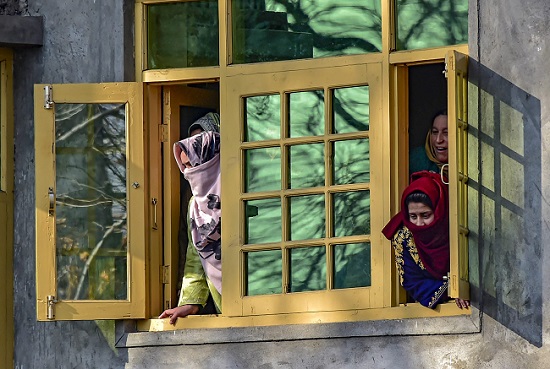
The people of Kashmir, especially the youth, are looking for affirmative action from their elected representatives to usher peace and prosperity in the region that has witnessed turmoil and violence for too long now. The youth are looking for integration to become a part of the success story of their nation. They wish to derive benefit from the nation’s march towards becoming one of the largest economies in the world with the biggest market share. The youth have the qualification as well as the will to take the plunge. What they require is the necessary push, for which the local Member of Parliament (MP) can play a big role.

It is in this direction that the entire narrative of the election campaign should be channelised and the best man should be selected for the job. The people need to compel their elected representatives towards seeking responsibility to bring about the necessary change. If they are allowed to carry on with the old rhetoric of raising passions through articulation of non-issues then the forward movement will not be possible.

The second serious aspect of the election is the voting itself. If the people come out to vote in large numbers, a message of their trust and faith in democracy and freedom will go out to the entire world. It will also pave the way for state assembly elections which the Union Government and the Election Commission have already committed to hold within a month of the parliamentary election process getting completed.

There are security concerns raised due to the call given by certain terrorist and anti-national elements for boycott of the elections. People should lay their faith in the security forces who have, with great cost and sacrifice, created an environment where there is no need for the common man to be scared. Terrorism has for long been eradicated from all regions of the state except the Kashmir valley and there too it is at the lowest ebb. Security forces, especially the army have infiltration well in control and the situation is absolutely stable for a political process to be launched. The centre has boosted the paramilitary strength to the required degree to give security to the electors from the house to the booth level.

Youth in the age of 18 to 35 years form a bulk of the voting population in the Kashmir Valley. These are educated boys and girls who know what is good for them. This is the best opportunity for them to take control of their own lives and ensure that their representatives are such who can give a shape to their aspirations and dreams.

The elections can usher the change that Kashmir is waiting for. The environment is also such that facilitates evolution of new ideas and concepts. The candidates who are most receptive to the changing environment should be chosen. Politics of hate and dissension should be replaced with positivity and forward looking thought. Coming out to vote is as important as selecting the best candidate. The elections bring with them hope and an opportunity that should not be lost.

World’s first 5G district in Shanghai

Mobile communication is set to revolutionize in the near future with the introduction of 5G coverage for the first time in China. Shanghai on Saturday claimed to have the world’s first district with 5G coverage and a broadband gigabit network. It conducted trial runs of the 5G network, backed by telecom services provider China Mobile.

It is reported that Shanghai’s vice-mayor Wu Qing made the network’s first 5G video call on Huawei’s Mate X smartphone, the first 5G foldable phone.

The city aims to build over 10,000 5G base stations by the end of this year and the number of 5G base stations could cross 30,000 in 2021, said Zhang Jianming, deputy director of the Shanghai Municipal Economic and Informatization Commission, the telecom and industry regulator.