Home Blog Page 455

Hindustan Unilever’s Surf Excel ad denigrates Holi, the festival of colours

The Surf Excel advert is facing massive backlash for portraying Holi colours as ‘daag’ (stain). Hindustan Unilever tried to play to the gallery and had expected to impress Islamists across the Indian sub-continent with this Surf Excel advertisement. It has now ended up alienating billions of Hindus who have taken serious offence to the ad’s denigration of Holi — the blissful festival of colours.

Surf Excel, the detergent brand of Hindustan Unilever (HUL) has been caught in a controversy. Following the recent trend of capitalizing on festivals by corporate giants, HUL also tried to do the same but got off on the wrong foot. The advertisement has faced massive backlash for portraying Holi colours as ‘daag’ (stain) and for subconsciously promoting ‘love jihad’.

A large number of people across India took to Twitter to vent their ire against HUL’s bigotry against Holi—the Hindu festival of colours. #BoycottSurfExcel was one of the top Twitter trends in India as scores of people objected to this advertisement.

In fact, HUL had tried to play to the gallery and expected to impress the Islamists across the Indian sub-continent with this Surf Excel advertisement. Apart from India, the main markets of Surf Excel are in Pakistan and Bangladesh, and it definitely had the large number of Muslim customers in mind by denigrating a “kafir” Hindu festival like Holi. Ironically, it’s only the ultra-conservatives such as the Wahhabis and Deobandis within Islam, who have objections with Holi colours and the Surf Excel advert chose to endorse their views. Other liberal Islamic schools have never objected to Hindu festivals, including Holi. 

But then this is not the first instance when Hindustan Liver had tried to vilify Hindu beliefs and festivals. A few weeks earlier there was this advertisement about HUL’s brand of Red-label tea that showed Kumbh Mela in bad light. This advert was released at a time when world over the Kumbh Mela was being talked about as the most peaceful congregation of spiritual Hindus at Prayagraj (earlier Allahabad). When accolades were pouring in from the international media and research institutions, HUL chose to highlight a rather insulting example of the young abandoning their elderly at the Kumbh Mela. The Red Label advertisement was aimed at branding Kumbh Mela as the religious congregation where elderly parents were routinely being abandoned. If at all (and there’s a big “If”) these incidents happened, they would have been very few. Of course there is no basis to claim that abandoning elderly has been a routine practice amongst Hindus. HUL’s advertisement of its Red Label tea was not only absurd but also derogatory to Hindus across the world.

What enrages me and the billions of Hindus is that this same HUL takes extra care while portraying dubious Islamic prescriptions such as the Hijab. Even through its latest Surf Excel advertisement, it has tried to reinforce an erroneous belief held by radical Islamists that playing with Holi colours is non-Islamic and Muslim children should abstain playing with colours, while on their way to offer namaz.

Surprisingly, the coterie of self-proclaimed champions of secularism in India have begun defending HUL’s derogatory ad. This same coterie maintains a deafening silence whenever a progressive Muslim raises his/her voice against the repressive practices in Islam.

It is this selective targeting of Hindus by companies such as HUL that has incensed us. None of these big brands will ever dare to make any advertisement that even remotely criticises the practice of mass slaughter on Eid-al-Adha (Bakrid) or the practice of forcing young Muslim girls to wear Hijab or a Burqa. This systematic bias and skewed secularism being practiced by left-liberals, a section of media and corporate houses is very dangerous as it creates undue rift in our society.

A couple of decades ago, people would have bought this nonsense of belittling Hindu faith and festivals in the name of harmony because media, text books and everything else was under the control of these self-proclaimed contractors of free speech. But thanks to Internet, their devious agenda now lies exposed. In this digital era such dubious and devious agenda cannot remain hidden for long.

PUBG ban: 10 held in Gujarat for playing game on mobile phone

Ten people, including six college students, were arrested in Gujarat’s Rajkot city in the last two days for allegedly playing the PUBG game on their mobile phones despite the police banning it.

Police Commissioner Manoj Agrawal had on March 6 issued a notification banning the online games PlayerUnknown’s Battlegrounds (PUBG) and ‘Momo Challenge’ in the city. Police stations were asked to implement the ban and arrest those who were still playing these games.  

“On Tuesday, our teams arrested six college students playing PUBG game on their mobile phones on Kalavad Road and in Jagannath Chowk area,” said an official. The same day, Gandhigram police arrested a 25-year-old private firm employee for playing the game on his phone. On Wednesday, three people were arrested by Rajkot police’s special operations group while playing the game on their phones in different areas of the city.

All the 10 were booked under Indian Penal Code Section 188 (disobedience to order duly promulgated by public servant) and later granted bail at the police stations concerned, the police officer said.

As per the police commissioner’s notification, the ban was necessary as these games were leading to violent behaviour among children and youth. The games were adversely affecting the studies and the overall behaviour, conduct and language of children, the notification said.

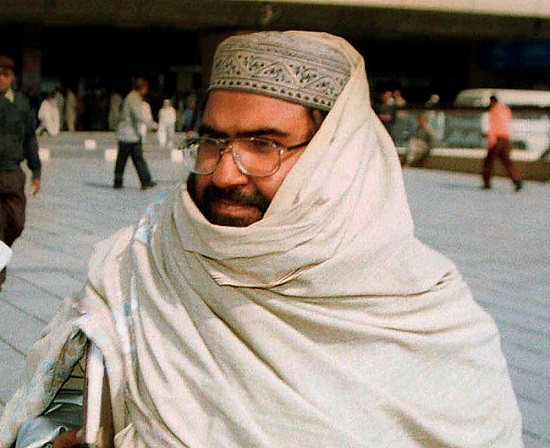
China defends Masood Azhar: India to explore other avenues with UNSC members

As once again China blocked a move to designate JeM chief Masood Azhar a global terrorist at the UNSC, India has expressed its strong disappointment over China’s decision and has indicated to “pursue all available avenues” to bring to justice terrorist leaders involved in attack on Indians.

Outraged by China’s stand responsible UNSC members warned they “may be forced to pursue other actions” at the Security Council if Beijing continued with this policy. “If China continues to block this designation, responsible member-states may be forced to pursue other actions at the Security Council. It shouldn’t have to come to that,” a Security Council diplomat told PTI in an unusual tough warning to China.

In the aftermath of the Pulwama terrorist attack, three permanent members of Security Council the US, France and the UK had moved a resolution to designate Azhar a glocal terrorist. Except for China, which wields veto power in the Security Council, all other UNSC members were on board with the move before the al-Qaida (1267) Sanctions Committee.

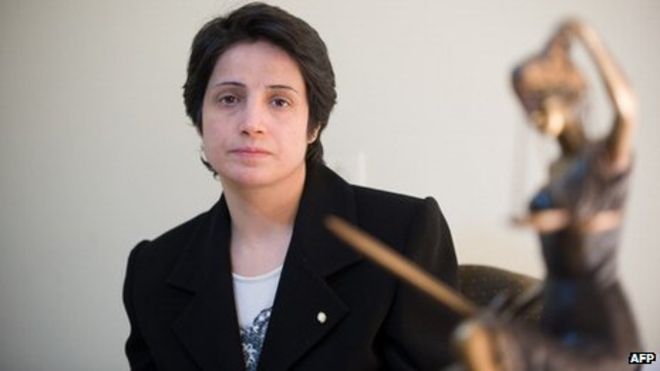
Iranian female lawyer sentenced to 38 years in jail and 148 lashes: Supported freedom from hijab

Nasrin Sotoudeh, an award-winning human rights lawyer has been sentenced to a total of 38 years in jail and 148 lashes in Tehran. She was quite vociferous in defending women protesting mandatory hijab. Sotoudeh was charged with several national security-related offences, all of which she denies. Her lawyer said she was charged with spreading information against the state, insulting Iran’s supreme leader and spying. She was arrested in June 2018.

Globally, rights groups have strongly criticised the “shocking” sentence against the prominent human rights activist, who has dedicated her life to defending women’s rights and speaking out against the death penalty.

Ms. Sotoudeh’s husband confirmed her sentence on Facebook, after a brief phone conversation with her from prison, according to the Center for Human Rights in Iran.

Bizman dies after 12-hour long hair transplant procedure

In a shocking incident a 43-year-old Mumbai based businessman died in hospital in Powai after he underwent a 12-hour-long hair transplantation procedure at a clinic. He died last week, more than 50 hours after he underwent the prolonged procedure.

The businessman, identified as Shrawan Kumar Choudhary, had attended a hair transplant session at a private clinic at Chinchpokli in central Mumbai on March 8. A resident of Sakinaka, he suffered complications soon after the hair transplant, a police official said.

Choudhary was taken to a hospital in suburban Powai, after he developed breathlessness and swelling in his throat and on face. He died on Saturday (March 9) due to allergic reaction in the hospital. According to police, the businessman showed symptoms of anaphylaxis, a serious life threatening allergic reaction. Police have registered a case of accidental death and further investigation is underway.

In his statement, the dermatologist, at whose clinic Choudhary underwent the procedure, said the businessman wanted to graft 9000 hairs in one go, which was against medical advise, the official said. Police are awaiting final postmortem report to ascertain the exact cause of death, the official added.

India has served it right and tight to Pakistan

With New Delhi having decided to walk the talk, the world leaders are holding their cards very close to their chests. They have maintained a diplomatic silence with regard to the fast changing narrative in the region.

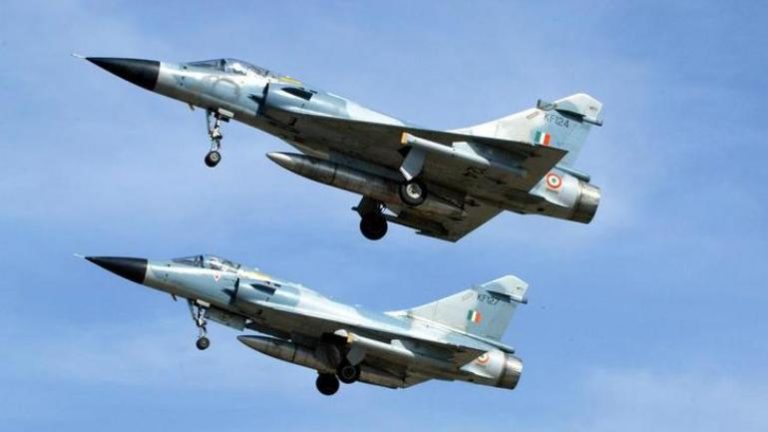
Pakistan has, for long, been testing India’s patience by carrying out devious attacks through its band of home-grown terrorists in Kashmir and other parts of the country. India has now dished out to the country what it has been asking for years. The faceoff witnessed in February this year was bound to happen. The air strikes on targets identified as terrorist hubs operating deep within Pakistani territories and those under forcible occupation of Pakistan was a hard and decisive message in continuation of the ground based surgical strike carried out as a riposte to the terrorist attack on a military camp at Uri, Kashmir.

For how long could Pakistan expect India to sit quiet as it went about with its state policy of terror? A loud and clear message has been delivered that India will not hesitate in going inside Pakistani territory to hunt out terrorists and their camps. This strong riposte was necessary to stop Pakistan on its tracks. Pakistan did attempt to retaliate the very next day with a counter air strike on military targets along the Line of Control (LOC). The attempt was thwarted by the well prepared Indian Air Force.

Political shenanigans that are the bane of Indian strategic discourses have been in play in this instance too. All parties are attempting to score brownie points and asking for proof of the casualties caused. By so doing they are exhibiting their complete lack of sensitivity for the honour and professionalism of the Indian Armed Forces. Notwithstanding the same, anybody with the slightest knowledge of military and strategic affairs will agree that the air strikes were very successful. Thus far, New Delhi had been held hostage to Islamabad’s manipulation of its nuclear assets. Now, with these air strikes, India has made it very clear that it has moved on from sharing of folders and diplomatic efforts to swift, on ground retribution. Pakistan’s nuclear bogey stands buried forever.

The strikes gave the required message to Pakistan, China and to the entire world about Indian intention to strike her enemies where and when required. In the backdrop of the aforementioned strategic gains, the number of casualties due to the strikes is irrelevant; it is being discussed merely for politics by those who do not have any inkling of what military strategy is all about.

China, in particular, would be very worried by the Indian exhibition of a will to target such areas in Pakistan that fall within its economic interest including the strategically very important Karakoram highway and the CPEC alignment. The country is bound to rework its economic and diplomatic strategy in view of these developments.

With New Delhi having decided to walk the talk, the world leaders are holding their cards very close to their chests. They have maintained a diplomatic silence with regard to the fast changing narrative in the region. Not only the western world but even the Muslim nations have not made any statements about the situation between the two countries and also Kashmir. In fact, the US National Security Advisor, John Bolton, had gone on to say that Washington supported India’s right to ‘self-defence’ from ‘cross-border terrorism.’

Not only Pakistan, even the separatist leadership of Kashmir has lost the confidence of the international community and has been left to fend for itself. They have brought about this situation upon themselves by maintaining a rigid posture when attempts were being made to look for a middle path. Now, political irrelevance and a crackdown by the government forces is what awaits them.

As for Pakistan, it does not have too many options right now. It cannot afford an all out war for fear of being branded the aggressor as India chose to target only terror camps and not civilian or military installations. This apart, the world opinion is heavily tilted in India’s favour. It is under this pressure and because of the need to fulfill its commitments to the Financial Action Task Force (FATF) that Pakistan is going in for a crackdown on the terrorist organisations operating on its soil, especially the Jaish-e-Mohammad (JeM).  The Government of Pakistan has publicly declared that, “44 people linked with several militant groups have been taken into preventive custody.” It is being said that these include some relatives of Masood Azar who are running the JeM in his absence; whether the intention of Pakistan is to “prevent” or “protect” these terrorists remains to be seen.

A study of previous such crackdowns leaves very little to be optimistic about. The first ban, under President Pervez Musharraf in 2002, brought in its wake no change other than the names of the organisations. They, in fact, bounced back richer and stronger than before. Whether the present Imran Khan led government in Pakistan is serious or not remains to be seen. It would, of course, be in Pakistan’s interest to remove these big irritants that are jeopardizing its relations with countries on which it is dependent for its very existence.

There is no doubt that India’s military action has upped the ante and the world is concerned about the escalation of hostilities. Indo-Pakistan relations have taken a severe hit and there does not seem a ray of hope of any betterment in the situation in the very near future. Any miscalculation by either of the two countries can bring them to the brink of a full-fledged war which does not augur well. India will, of course, practice restraint and bide time to give peace another chance as has been the established policy since partition. The ball, therefore, lies firmly in the court of Pakistan; the country can either give up on its attempts to create internal turmoil in India or it can expect retaliation of a type that could lead to its utter destruction.

One third of Pakistan’s share of Indus water is wasted

It’s high time Pakistan takes adequate measures to stop the wastage of Indus river’s water flowing through its territory, rather than blame India for water woes.

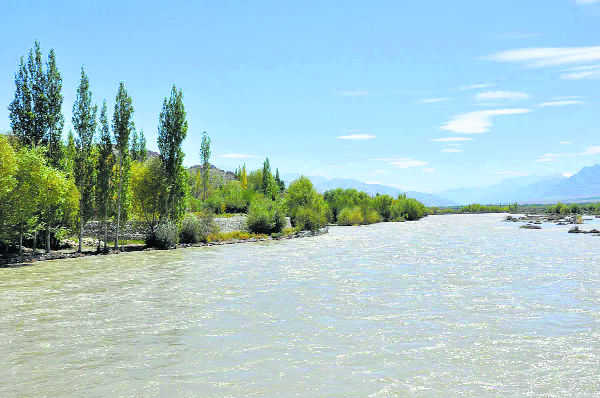
Pakistan is a nation that needs uninterrupted supplies of abundant waters in its geographical confines to sustain the lifestyle of its citizens. An overwhelming 95% of the country’s irrigated areas lie in the Indus river basin irrigated by the bounties that the Western Rivers (Indus, Jhelum and Chenab) bring with them.

The irrigation patterns that are followed in most of these vast agricultural lands are hugely inefficient and no efforts have been made or have been initiated about now to plug colossal water leakages. There is a seize mentality that prevails across the nation, be it the farmers, politicians or the men from military who own the country, to be always on the lookout for apportioning blames for all woes to a perceived enemy outside (read India).

To look outside and blame India for all the water woes that Pakistan faces is an all-time favourite pastime. Looking within, as opposed to looking outside, is apparently a very difficult thing to conceive and trying to plug in leakages is just not thought of as a viable option to address the attendant problems.

We can try to assess the impact of inbuilt inefficiencies in the delivery and usage patterns of irrigation within Pakistan in the Indus basin. According to several estimates, both by independent government agencies within Pakistan and also by international organisations that the total quantum of water losses is about one-third of the total inflows. Let us see what it means in real terms and how it creates an acute distress among potential users (the farmers irrigating their fields) who are so often paranoid about possible water scarcity. In all, the Western Rivers bring 80.52% share of total water available in the Indus system to Pakistan and the rest of 19.48% is for use by India.

We had earlier stated that a total quantum of one-third of the total waters accruing to Pakistan are lost due to inefficiencies. Stated in another manner, this means that around 26.52% (1/3rd of 80.52) are lost to factors inbuilt by Pakistan itself. This is at least 7% more than the entire Indus water share of India allocated to it under the Indus Water Treaty (IWT).

Therefore, theoretically, even if India were to be deprived of every single drop of water that it gets from the Eastern Rivers, Pakistan will still have nowhere to go to satiate its ravenous appetite for water. On the other hand, it can mitigate the sufferings of its thirsty fields and cacophonous farmers by promoting scientific, targeted, consistent conservation water management policies, beginning with resorting to drip irrigation on a large scale.

In fact, several innovative solutions to problems to deal with availability of insufficient and scarce water have been put into practice worldwide. The cornerstone of these practices is a strict no wastage regime being put into effect by technological interventions.

Perhaps Israel is a classic example of developing most efficient technologies in the field of agriculture. It uses a vast network of computers to help the farmers at the level of individual fields to create a system of drip irrigation unparalleled anywhere else in the world. The systems put into place are extraordinarily efficient and worth every penny spent in developing them. The drip system ensures that there are virtually no leakages anywhere throughout the built systems and water supply is controlled by the computers at the levels of individual plants. These highly evolved drip irrigation systems are also utilised for providing nutrients to plants individually.

Juxtapose these systems with the primitive, wasteful and profligate manners visible throughout the water delivery systems created by Pakistan in the Indus Basin Irrigation System (IBIS). Flood irrigation entailing abundant waters into cultivated areas is still the predominant method utilised all over Punjab, Sindh and other regions of the country. In fact, the hunger and thirst for water shapes the aggressive behaviour of vast populations who are all too willing to ‘do or die’ for ensuring irrigated, as opposed to parched, fields.

The muscle power, fire power and the weapons (duly kept stock of an assortment of ammunitions) with the farming communities in Pakistan are stupendous. The large amounts of money invested in buying this weaponry could have been far, far better utilised for upgrading irrigation technologies. It is inconceivable that a militaristic approach pervasive in all organs of the society, duly fostered by repeated doses of dictators, will be absent from agricultural fields, the most basic unit of individually owned territory.

PM Modi’s advice to Bollywood: Make films with message of inclusive India, says Ranveer

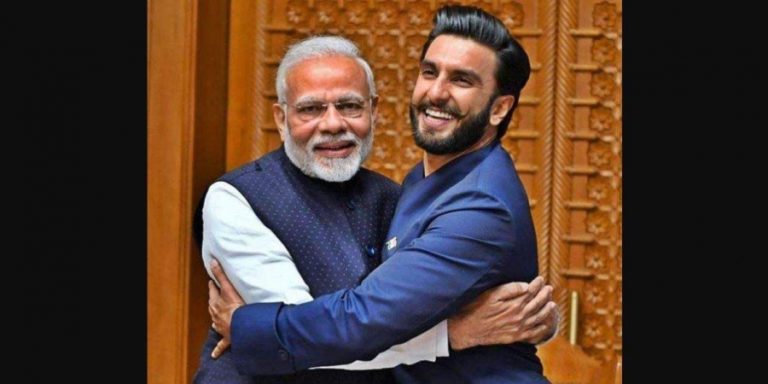
Actor Ranveer Singh, who had met the Prime Minister Narendra Modi earlier this year, has shared that PM advised the members of the film industry to choose content propagating the idea of “inclusive India and unity”. Ranveer had met the Prime Minister, along with Alia Bhatt, Ranbir Kapoor, Vicky Kaushal, Ayushmann Khurrana and others, in January this year.

“I met the Prime Minister recently, we had a very pleasant meeting. We apprised him what we as young members of the film fraternity are doing. He had something to say to us, which was, that if possible, we should choose content that has in it a message of inclusive India and unity,” Ranveer told reporters.

The actor was speaking at the announcement of 64th Vimal Filmfare Awards on Monday.

“I was very happy to report to him that my next film ’83’ is one such film where it’s truly team India. You have gentlemen from all across the country coming together to make the nation proud. It’s also an extraordinary underdog story that I’m very happy and proud to be a part of,” he added.

India grounds Boeing 737 MAX aircraft : Ethiopian Airlines crash

After United Kingdom, China, Germany, France and several other countries banned flying of the Boeing 737 MAX aircraft, India has also decided to ground the aircraft, till further orders.

“DGCA has taken the decision to ground the Boeing 737-MAX planes immediately. These planes will be grounded till appropriate modifications and safety measures are undertaken to ensure their safe operations. As always, passenger safety remains our top priority. We continue to consult closely with regulators around the world, airlines, and aircraft manufacturers to ensure passenger safety,” the aviation ministry said in a late night tweet

The aviation ministry’s order came on Tuesday after the deadly Ethiopian air tragedy on Sunday killed all 157 people on board. China, Indonesia, Ethiopia, Australia and Brazil and others had announced bans on Monday, one day after the crash.

SpiceJet and troubled Jet Airways are the only two airlines operating the Boeing 737 MAX. The grounding of these aircrafts will lead to cancellations and increase fares further in the domestic sector.

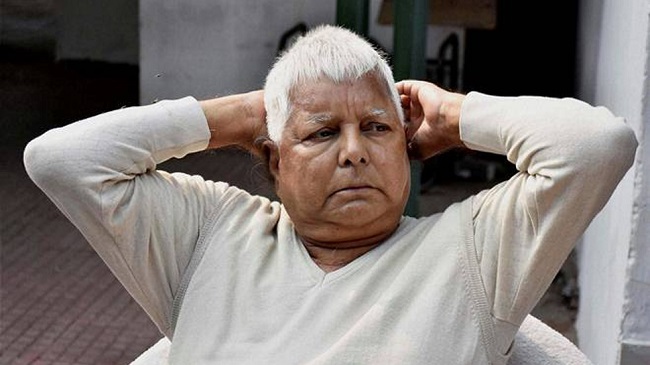
A Bihar cadre IAS officer is all set to join Lalu’s RJD

Many moons ago, the Siyaram Group of garments earned eyeballs for their campaign titled Coming Home. In short, it meant everyone is comfortable in the corner of what they consider their home, the world’s safest spot. 

As India gears up for its elections, a very powerful bureaucrat in the Indian Capital is planning his post-retirement plans. So who is this Bihar cadre IAS officer, now a top secretary, all set to walk into his sunset time in three months only to emerge and join the Rashtriya Janata Dal (RJD) of former Bihar Chief Minister Lalu Prasad Yadav? 

Apparently the decks have all been clear to get this very powerful bureaucrat to welcome into RJD. 

Want more?

The IAS officer – for long – has been a confidante of Yadav and enjoyed benefits around mid-90s when Lalu Prasad Yadav was the CM of Bihar. The IAS officer was then a District Magistrate, and reportedly took orders from Yadav. There are reports that he even organised election booths to help give access to goons hired by Yadav’s party. Remember, those were the days when there were no Electronic Voting Machines (EVMs) and booth capturing was a norm, as evident in states like Bihar, West Bengal and parts of UP (Uttar Pradesh).

Once his assignment was over in Bihar, this IAS officer shifted to Delhi to emerge as a confidante of P Chidambaram – then very powerful – but now being probed by both ED (Enforcement Directorate) & CBI (Central Bureau of Investigation). The two engineered big-time manipulation of stock market and commodity markets for their masters. He, along with another bureaucrat, Ajay Shah (now thoroughly exposed) worked as the super computer for PC. 

Such was this Bihar cadre IAS officer’s manipulative and penetrative powers – he was ably helped by fellow bureaucrats from Odisha – that he almost walked into the seat of SEBI (Securities and Exchange Board of India) Chairman till PMO (Prime Minister’s Office) was alerted by some thinking MPs (Member of Parliament) from the BJP (Bharatiya Janata Party). If he had been selected for the post, the bureaucrat’s vice-like grip would have crippled, virtually destroyed the market regulator.

There was an air of finality, a feeling of invincibility that helped this officer become very useful for politicians to do their dirty deeds. What is important is that these very bureaucrats work behind the scenes to help their political masters when the latter are out of power.

And now that the time is up for retirement, it is time to return to the Master’s Home.  What is sad is that very few remember the destruction this officer caused to some of India’s vibrant institutions, some of India’s finest markets.