Home Blog Page 456

Pakistan: Reeling under the impact of self-created fault lines

The high tension created by face-off between India and Pakistan post the barbaric terrorist attack on the Indian Central Reserve Police Force (CRPF) convoy at Pulwama, Kashmir, in mid-February has witnessed a drawback, much to the relief of the two countries and the world at large. Pakistan seems to be considerably chastened and willing to take some steps on to assuage the global perception of it being the hub for international terrorist activities. It has moved to implement the ban on the terrorist organisation Jaish-e-Mohammad (JeM) that has claimed responsibility for the Pulwama attack; senior functionaries of the terror outfit have been taken into custody even as the head terrorist, Masood Azar, gets medical treatment under Pakistan Army arrangements. A lot of publicity is being given to the fencing work going on along the western border with Afghanistan. The underlying intention, quite obviously, is to project to the United States their resolve to stop Afghan Taliban’s ingress into their country.

The aforementioned actions have been necessitated due to the fragile economic and diplomatic condition that Pakistan is facing due to the fault lines that have come to the fore because of the same.

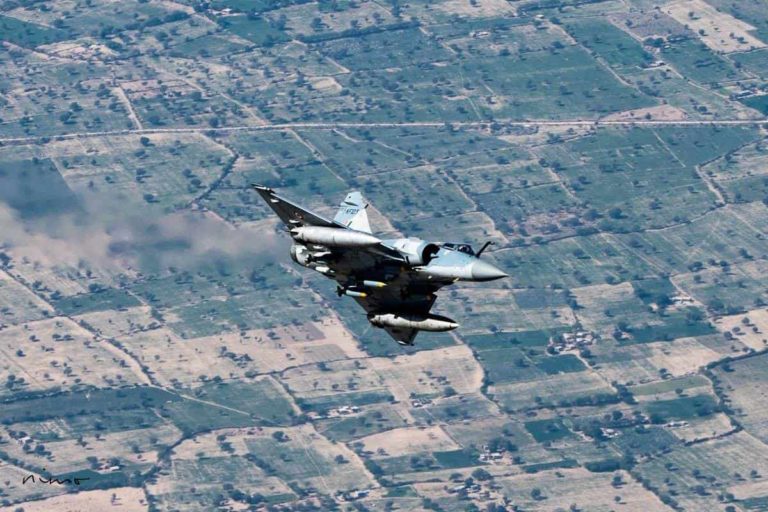
The panic stricken Pakistan Army is thinning out from the western border with Afghanistan and the space thus created is being filled by the Baloch fighters and Taliban militants. The incident of Baloch fighters capturing a Pakistan military camp in Gishkam area of Awaran district is a testimony of their increased influence and taking over the strategic space. The situation is expected to further deteriorate in the near future as the Pakistan Army keeps building up towards its eastern borders with India. It is notable here that post the 9/11 terrorist attack on the US World Trade Center, Pakistan had thinned out troops on the eastern border with India. India did take advantage of the weakening of Pakistani defences.

The panic move of forces from all the directions towards the border with India has also taken a debilitating toll on the already fragile Pakistan economy. This apart, Pakistani economy has taken a big hit due to the roll-back of Most Favoured Nation (MFN) by India. A country with a robust economy like India would not be affected by such measures but for Pakistan it has come as a body blow.

Pakistan has assured China that it will provide all security to the China Pakistan Economic Corridor (CPEC). The Chinese Ministry of Foreign Affairs has stated “China appreciates measures Pakistan has taken for the security of CPEC, effectively protecting the corridor projects and safety of Chinese citizens,” after Pakistan deployed a Division size force for protection of the same. With move of forces towards the eastern border, CPEC is now at the mercy of militants. The success or failure of CPEC lies in the provision of fool proof security which now has been compromised with the army pulling out due to the so-called threat from India. There is this possibility of the project facing a huge delay and even a roll back, something that Pakistan can ill afford.

Despite the creation of immeasurable fault lines in the wake of the Pulwama misadventure, Pakistan is not ready to extend a hand of peace and friendship towards India. The Line of Control (LOC) is heated up with both sides resorting to intensive firing. India has reported civilian casualties and so has Pakistan. The media of the neighbouring country is blatantly blaming India for the escalation which is quite untrue since the ceasefire violations are being initiated by the other side. Newspapers in Pakistan continue to remain in denial with regard to the downing of the F-16 fighter aircraft of their country. The decision of Prime Minister Imran Khan to release Wing Commander Abhinandan has witnessed a fair degree of opposition in Pakistan from the political class as well as the media. Veteran army officers have spoken against the same on Television. Hamid Mir, a noted Pakistan journalist presently working with Geo News tweeted, “Nawaz Sharif Govt release Indian pilot after 8 days captivity and lost his Govt within 6 months in 1999.”

On the positive side, a surprise package in the whole situation is the Pakistani middle class and educated society that has taken to the streets to raise a voice against war and had put up a strong demand for the release of the Indian pilot. An organisation named “Women in struggle for empowerment” carried out a rally in Lahore against escalation of the situation into an all out war. They carried banners saying “war is not a solution” and “Women against war.” Other banners demanded “Safe return of Abhinandan Varthaman” with hash tags of #NoToWar, #IStandAgainstHatred, #ProfilesforPeace etc. It is this voice that should gain centrality in the Pakistani though process.

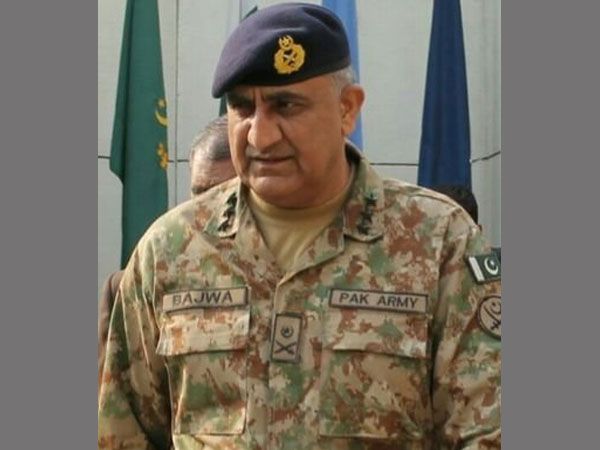
The movement of Pakistan Army towards the border with India is unwarranted; it is unnecessarily raising the escalation levels and can lead to a confrontation that Pakistan is incapable of absorbing. The Pakistani Army is keeping its cards close to its chest; it has maintained absolute silence, preferring to leave the talking to political set up and to its media. It is hoped that Pakistan will not allow its narrative to be guided by its Army as hither-to-fore and will believe the solemn commitment given by India that her fight is only against terror and not the country as a whole. The gullible populace of Pakistan should not remain sedated by Pakistan Army’s call for a response to the so-called escalating threat from India.

While continuing with a strong diplomatic initiative and economic pressure on Pakistan, India would do well to remain conscious of the primary decision making role of the Pakistan Army and remain wary of its next move of which there is no indication whatsoever. No let down in vigilance and absolute preparedness to meet all contingencies should remain in place till Pakistan gives definite indication on ground of having winded down the terrorist camps. Along with this the Pakistan Army will need to demonstrate its readiness to roll back the military build up on its borders with India.

Lok Sabha elections: Polling from April 11 till May 19, Results on May 23

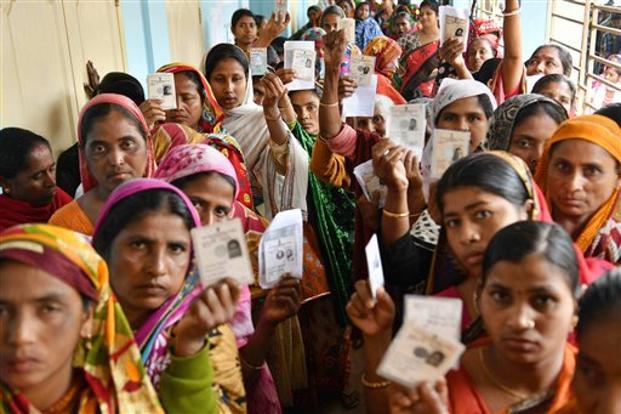
The Lok Sabha election will be held in seven phases from 11 April and the results will be announced on May 23, the Election Commission announced on Sunday. Voting will be held across India on April 11, April 19, April 23, April 29, May 6, May 12 and May 19. CEC Sunil Arora said that the Model Code of Conduct has come into force as it announced the dates for the elections to 17th Lok Sabha.

Speaking about the number of voters, the CEC Sunil Arora said that the total electorate will be in the vicinity of 900 million or 90 crore of which 15 million or 1.5 crore are in the age group of 18-19 years

Polling Schedule:

Polling in single phase: Andhra Pradesh, Arunachal Pradesh, Goa, Gujarat, Haryana, Himachal, Kerala, Meghalaya, Mizoram, Nagaland, Punjab, Sikkim, Telangana, Tamil Nadu, Uttarakhand, Andaman, Dadra & Nagar Haveli, Daman & Diu, Lakshwadeweep, Delhi, Pomdicherry, Chandigarh.

Polling in 2 phases: Karnataka, Manipur, Rajasthan, Tripura

Polling in 3 Phases: Assam, Chattisgarh

Polling in 4 Phases: Jharkhand, Madya Pradesh, Odisha, Maharashtra

Polling in 5 Phases: J&K

Polling in 7 Phases: Bihar, UP & West Bengal

Breaking: UNDRIP, Alive

By Scott Douglas Jacobsen

The government of British Columbia will be introducing legislation in order to implement an international document relating to the Indigenous rights of the Indigenous peoples of Canada.

The document is a declaration entitled the United Nations Declaration on the Rights of Indigenous People (UNDRIP). This was announced in a recent throne speech.

This would make British Columbia the first province in the country to legislate the endorsement of Canada of the UNDRIP. British Columbia Premier John Horgan stated that he remains unsure as to what this may look like but the legislative councils are working on solutions.

“I know it will be more than symbolic,” Horgan said, “We need to address reconciliation in British Columbia, not just for social justice… but for economic equality for all citizens, Indigenous and non-Indigenous.”

During the campaign trail for Horgan, there was a promise to respect, recognize, and implement the 46 articles of the UNDRIP. Those recognized as human rights for Indigenous peoples around the world. One of which is the right to self-determination. Other peoples have it. Therefore, Indigenous peoples should have it. That’s elementary.

The UN Member States with Indigenous peoples and questions surrounding land and territory should acquire free, prior, and informed consent (FPIC) in order to ensure the rights of Indigenous peoples are respected in these areas.

Horgan’s NDP campaigned on a promise to implement UNDRIP, which includes 46 articles meant to recognize the basic human rights of Indigenous Peoples’ along with their rights to self-determination.

Horgan stated, “For too long uncertainty on the land base has led to investment decisions being foregone, and I believe that that hurts Indigenous people and it hurts other British Columbians.”

Scott Douglas Jacobsen is the Founder of In-Sight: Independent Interview-Based Journal and In-Sight Publishing. He authored/co-authored some e-books, free or low-cost. If you want to contact Scott: Scott.D.Jacobsen@Gmail.com.

Photo by Michael Glass on Unsplash

Sex With a Side of Humanism, in the City

Female roles in Hollywood and women in the movie and television industry continue to make further strides due, mostly, to their own efforts and activism for recognition, respect, and equal treatment with the men in the industries and on the screen.

Sarah Jessica Parker spoke on feminism and humanism. In the call for better roles for women, she remarked how this is not simply a feminist issue but, in actual fact, a humanist issue, broadly speaking.

Part of this may be due to the stigmatizing of the term “feminist.” Another part may be due to the universalist nature of the implications, in terms of direct representations, of the term “humanist.”

Of course, the terminology of feminism, in its traditionalist meaning, is universalist, as in women and men recognized as social and legal equals. Humanist simply moves this out into the level of the species.

“The actor reiterated this sentiment in a recent interview, explaining that she believes the LGBT+ community must be included when discussing better representation in film,” the Independent reported, “When questioned over whether or not female actors are being offered higher calibre roles than they have done in the past, the actor stated that she doesn’t feel as though she’s ‘equipped to speak to the quality across the board.’”

Parker’s hope is for the quality parts in movies and television will be part of the industry, not simply as a “call-to-arms” for feminists but, in fact, a general movement for the furtherance of humanism.

A humanist is someone who does not identify with the supernatural — not necessarily the rejection of the metaphysical but the supernatural — and emphasizes human reason, compassion, and science, in addition to their inherent limitations as evolved organisms.

Both respect the human rights of men and women. In that, there is a wide overlap in their outlooks.

“People of colour, gays, lesbians, and transgenders who are carving out this space. I’m not spitting in the face or being lazy about what still needs to be done — but I don’t think it’s just women anymore,” Parker said in 2015, in Cosmopolitan.

She further explained how the movement within the television and movie industry could be even more powerful if this was identified with the humanist movement. Others have proclaimed this as, in essence, an evasion tactic with the aforementioned demonization of the term feminist.

While, at the same time, these can both be true positions; the shift into humanist language may be more powerful than the limitations, currently, of the plurality of feminisms on offer.

But this could also lead to a similar problem with a wide range of humanisms on offer as well. As there is a wide range of humanisms, indeed, these can range from the deistic humanists to the atheistic humanists, and never the two meeting.

The world is complicated; people similarly so. Meryl Streep was also on record as identifying as humanist because of being for “nice easy balance,” which does reflect the casual style and flavor of thinking of the actress.

In addition, Susan Sarandon described her view of humanism too. It is not simply about the distinction but more about the overlap and then the appropriateness of the term to social context.

But certainly, these identifications as humanist by prominent women is an important aspect of the work to modernize the views of the humanist world and, as importantly, getting the title out into the mainstream sphere through prominent and respectable actresses.

Photo by asoggetti on Unsplash

Nirav Modi’s extradition request moved to the next level: ED

After a video went viral showing Nirav Modi leisurely strolling on the road in London, Enforcement Directorate has said that UK’s home secretary has recently referred India’s request for extraditing PNB scam accused Nirav Modi to a court for initiating legal proceedings against the diamantaire.

“Request for extradition of Nirav Modi to India was sent in July 2018 to the UK. The UK Central Authority of Home Office has confirmed that the extradition request has been sent to the Westminster Magistrate Court for the district judge for further proceedings,” the agency said in a statement. The move takes the process of extraditing and bringing back Nirav Modi to face the law in India to the next stage, the sources said.

Soon, they said, a joint team of the ED and the Central Bureau of Investigation (CBI) would travel to the UK to apprise the lawyers about the Indian case and evidence against Nirav Modi, in a similar fashion that was done in the case of another absconding bank-fraud accused, Vijay Mallya.

A British daily Saturday reported that Nirav Modi, accused in the USD 2-billion Punjab National Bank (PNB) scam, is living in a swanky 8-million pound apartment in London’s West End and is now involved in a new diamond business.

The ED and the CBI are investigating Nirav Modi, his uncle Mehul Choksi and others for alleged money laundering and corruption to perpetrate the alleged scam in the Brady House branch of the PNB in Mumbai that was unearthed last year.

Early marriage chief factor impacting girls’ education: Study

On International Women’s Day, the Child Rights and You (CRY) released a study that focuses on the enablers and disablers that significantly impact access and continuation of girls’ education. It also explores the role of incentive schemes for boosting girl child education in India. The study was conducted with more than 3,000 interviewees from 1,604 households across the four states.

The study found that dependency on someone to go to school is the biggest disabler for girls in attending educational institutions and 90 per cent of girls are impacted by it. “Frequent absenteeism (29 per cent) and discomfort in absence of female teacher (18 per cent) were identified as some of the other disabling factors that are often interlinked with the drop out of girl children,” it stated.

Delving deep into the reasons behind frequent absenteeism from school, frequent illness (52 per cent) and being engaged in household chores (46 per cent) surfaced as the biggest deterrents across the four states, according to the study.

Also, infrastructural issues like poor roads and unavailability of transport to schools were highlighted as some of the top reasons for girls to miss education. Girls in Gujarat and Andhra Pradesh mentioned about the distance and cost of transportation as some of the main reasons to miss school, the study stated. In Haryana, Andhra Pradesh and Gujarat, menstruation emerged as another important reason for missing school, which highlights the vital need for improved infrastructure and amenities in school. “Though 87 per cent of schools reported to have separate toilets for girls, not all of them were found to have running water and hand wash facilities,” the study stated.

Among the enablers, self-motivation to go to school (88 per cent) and inspiration from family (87 per cent) were the most sought after motivating factors for girls to go to school.

“No resistance from family (94 per cent) and community (95 per cent) were also reported as some of the prominent encouraging reasons by majority of school going girls, while 70 per cent of school going girls claimed to have received government incentives and/or benefits in the school,” the study stated.

However, while analysing the most prevalent factors likely to hinder girl child education, the most spontaneous responses from the parents highlighted requirement of female labour within the household, indicating discontinuation of studies for the girl child.

The interesting aspect is that when both the spontaneous and the aided responses are combined, marriage of girls (66 per cent) emerged as the chief factor that hinders girls’ education, followed by household chores (65 per cent) and cost of education (62 per cent), the study found. Amongst the underlying causes, elopement/love affairs followed by caring for siblings, predetermined gender roles and physical insecurity of girls were some of the top responses in this area, it said.

Besides assessing different factors impacting girl child education, the study also evaluates the effectiveness of 21 government education incentivisation schemes, of which 12 are monetary and the rest provide non-monetary incentives. Despite a large number of schemes being implemented, the analysis reveals that 40 per cent of parents across the four states were unaware of the schemes. “This indicates that though a number of government schemes are available for promoting girl child education, their benefits are yet to reach and touch the lives of girls due to lack of awareness and knowledge about the schemes,” said Puja Marwaha, the CEO of CRY.

Mizoram Cabinet approves Liquor Prohibition Bill

The Mizoram Cabinet has approved the proposed liquor prohibition bill in the state, officials said Saturday.

The Cabinet meeting chaired by Chief Minister Zoramthanga on Friday approved the Mizoram Liquor Prohibition Bill, 2019. The bill would be introduced in the state Assembly during the Budget session starting from March 20, the official added.

The ruling Mizo National Front (MNF) had promised during the state Assembly election in November last year that if voted to power it would ensure total prohibition in the northeast state.

There was total prohibition in Mizoram from 1997 till January 2015 with the Mizoram Liquor Total Prohibition Act in force in the state. The previous Congress government of Lal Thanhawla allowed opening of wine shops in the state from March 2015.

Do Not Disappear Into That Dear Night, Dear, We Need You

The Independentreported on some of the outspoken feminism and empowerment of girls and women of Annie Lennox, former member of Eurythmics. She acknowledged the truism is the vast majority of older women simply becoming forgotten, but affirmed that this does not necessarily have to be the case. That older women do not simply have to become “invisible.”

This seems like the right orientation tome. She has continued to support important initiatives including Amnesty International and Greenpeace. Lennox is serious about feminisms and about the inculcation of the values and the term, likely, into the public sphere more and more.

Annie Lennox has spoken about the importance of empowering girls and women through feminism, expressing her belief that women her age should not have to feel as though they’ve become “invisible”.

The reportage stated, “‘My current focus is to bring the term ‘Global Feminism’ into the zeitgeist,’ Lennox tells Good Housekeeping. ‘I’m so happy we can use the ‘F’ word now and talk comfortably about being feminists!’”

For a long time, the term was something uncomfortable and not seen as worth mentioning. But, at the present moment, we are seeing a resurgence of consideration for the rights and responsibilities of women. Bearing in mind, the equality of women simply was not on the agenda for centuries and this continues to be fought against — in a red and tooth and claw manner.

As she — Lennox — has noted, it is criticizing men. It is critiquing negative behaviors that are damaging to men, women, and society that are being criticized. However, this is misrepresented as criticizing all masculinities, all men, and simply being a purported witch hunt. Not the case in most or all cases, insofar as I can tell, once one looks by the media extravaganza and hyperbole.

Now 64-years-old, Lennox is work to establish a renewed culture of interest in and public acceptance of older women, to fight against the stigma and the disappearing from public consciousness of women.

Lennox said, “At the end of the day, Global Feminism is about the fundamental human rights of girls and women — why should we continue to tolerate disrespect, abuse and disempowerment?”

“Dressing up for this photoshoot was really fun and trying on all these clothes for the pictures was enjoyable,” Lennox continued, “I want people to realise that women of my age don’t have to become invisible.”

Photo by Katie Rodriguez on Unsplash

Russia: New Bill to act against anyone insulting the state

The Kremlin-controlled lower house, the State Duma, approved a bill in the final, third reading, which introduces fines for publishing materials showing disrespect to the state, its symbols and government organs. Repeat offenders could face a 15-day jail sentence.

The Duma also endorsed a separate bill that will block anyone publishing “fake news” online, that is perceived to threaten public health and security. The bills are expected to quickly pass in the upper house before President Vladimir Putin signs them into laws.

The legislation also imposes restrictions on online media. The bill bans the spread of “unreliable socially-important information” that could “endanger lives and public health, raise the threat of massive violation of public security and order or impede functioning of transport and social infrastructure, energy and communication facilities and banks.” The bill gives those who publish such information a day to correct or remove it. If they fail to do so, prosecutors will move to block them.

Critics termed the legislation as part of Kremlin efforts to stifle criticism and tighten control. However, embers of the main Kremlin faction, the United Russia, who drafted the new legislation, argued that they were needed to protect the state.

Petroleum Minister Dharmendra Pradhan turns Ujjwala Yojana into a Roaring Success Story

Of the various welfare schemes run by the central government of India, the Pradhan Mantri Ujjwala Yojana (PMUY) has been the best performer. Under this scheme, deposit-free LPG cooking gas connection is provided to very poor (below poverty line) households and connection is released in the name of an adult woman. The scheme was launched on May 1st, 2016 by Prime Minister Narendra Modi with an initial target to give these cooking gas connections to five crore (50 million) very poor households.

On Friday March 8, as a testimony to this scheme’s stupendous success, Dharmendra Pradhan, Minister of Petroleum and Natural Gas, handed over the 70 millionth (7 croreth) LPG cooking gas connection. This seventy millionth (7 croreth) LPG cooking gas connection that was given out within just 34 months of the scheme’s launch is indeed a spectacular achievement for the Ministry of Petroleum and Natural Gas. The good news is that the scheme will still continue until it reaches out to the eighth croreth (80 millionth) household with an LPG cooking gas connection.

The current feat of Petroleum Ministry marks a sea change from the quota-permit raj of yesteryears when LPG gas connections remained in perennial short supply even in metropolitan and tier-I cities. Getting a cooking gas cylinder in the rural areas was absolutely unthinkable. Thankfully that era is now behind us.

This Ujjwala Yojana has been recognised by World Health Organisation (WHO) as one of decisive interventions by Narendra Modi government to address the indoor air pollution which accounts for nearly 10 lakh (1 million) deaths every year across India.

Under the current regime, around 69,000 new cooking gas connections are being released every day. This has led to a massive jump in LPG cooking gas connections across the country. In 2014 around 55% households in the country had LPG cooking gas connection while today it stands at 93%. Of these new connections, close to 42% beneficiaries are from the historically deprived Scheduled Caste and Scheduled Tribes.

Dharmendra Pradhan, Union Minister for Petroleum & Natural Gas with other beneficiaries during the press conference where 7th crore LPG cooking gas connection was handed over in New Delhi on March 08, 2019. (Photo: PIB) 

Further, data reveals that around 82% new LPG connection beneficiaries go for refill of their cylinders such that average refilling is about 6.5 cylinders per beneficiary per year. This marks a healthy cultural shift in the way rural India cooks food. While earlier the BPL (below poverty line) households were forced to burn dry twigs, wood and waste material to cook their food but now they can afford to cook food on the LPG cooking gas.

Under the Pradhan Mantri Ujjwala Yojana LPG Connection is released in the name of adult woman of the very poor (below poverty line) family, subject to the condition that no LPG connection exists in the name of any family member of the household. The scheme also covers a cash assistance of upto Rs 1600 for providing new LPG connection. This cash assistance is provided by the Central Government. The beneficiary bears the cost of hot plate and purchase of first refill. The beneficiary also has the option to take hot plate on purchase of first refill or both on loan basis from zero interest rate and the same is recovered through subsidy received by the beneficiary.

Petroleum Minister Dharmendra Pradhan said that 6800 new distributorships have been given in order to strengthen the rural LPG supply chain. Pradhan explained that the existing infrastructure has been strengthened and the common service centres have also been roped in to assist in the LPG booking and distribution.