Home Blog Page 456

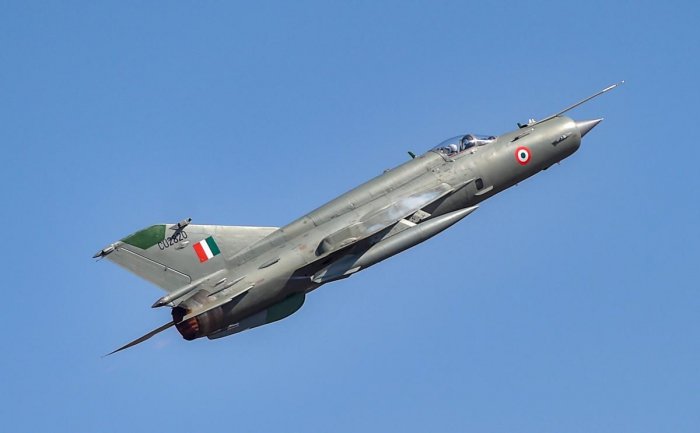
MiG-21 fighter jet crashes in Rajasthan, pilot safely ejects

A MiG-21 fighter jet of the Indian Air Force crashed in Rajasthan’s Bikaner on Friday. The plane crashed after it reportedly suffered a bird hit. The pilot is said to have ejected safely.

The IAF statement said, “Today afternoon a MiG-21 aircraft on a routine mission crashed after getting airborne from Nal near Bikaner. Initial inputs indicate the likely cause as bird hit after take off. Pilot of the aircraft ejected safely. A CoI [Court of Inquiry] will investigate the cause of the accident.”

Bikaner SP Pradeep Mohan Sharma said the MIG aircraft crashed in Shobhasar ki Dhani, 12 km from Bikaner city, news agency PTI reported. Sharma said police teams have rushed the spot to cordon off the area. No loss of life has been reported.

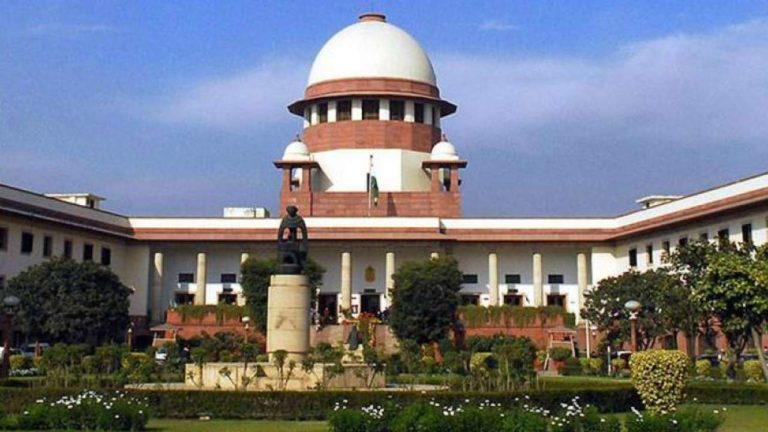
SC refers Ayodhya land dispute to 3-member mediation panel

The Supreme Court on Friday referred the politically sensitive Ram Janmabhoomi-Babri Masjid land dispute case for mediation by a panel headed by former apex court judge F M I Kallifulla and gave it eight weeks to complete the process. The other members of the panel will be spiritual guru Sri Sri Ravishankar and senior advocate Sriram Panchu, said a five-judge Constitution Bench headed by Chief Justice Ranjan Gogoi.

The panel of mediators can co-opt more members in the team, it said. In case of any difficulty, the chairman will inform the apex court registry about it, it added. 

The bench directed that the mediation will be held at Faizabad in Uttar Pradesh and the process should start within a week from Friday. The bench, also comprising Justices S A Bobde, D Y Chandrachud, Ashok Bhushan and S A Nazeer, said the panel should file a progress report of the proceedings within four weeks and complete the process within eight weeks

The apex court said “utmost confidentiality” should be maintained to ensure success of the mediation process and no media, neither print nor electronic, should report the proceedings.

Fourteen appeals have been filed in the apex court against the 2010 Allahabad High Court judgment, delivered in four civil suits, that the 2.77-acre land in Ayodhya be partitioned equally among the three parties — the Sunni Waqf Board, the Nirmohi Akhara and Ram Lalla.

Jammu Blast: Hizbul Mujahideen behind the attack

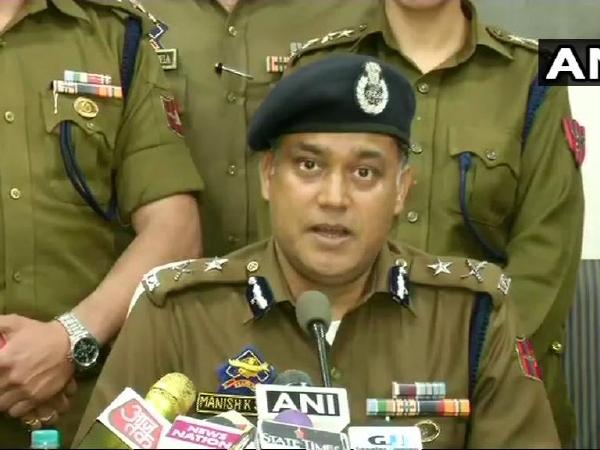
Hours after the grenade blast at Jammu bus stand, Jammu and Kashmir Police has confirmed that Hizbul Mujahideen was responsible for the blast. The cops said that the suspect, who was apprehended in Nagrota, had “confessed to his crime.” Teams were constituted to work on leads, CCTV camera footage examined, based on oral testimony of witnesses we were able to identify a suspect. He was detained, his name is Yasir Bhatt, he has confessed to the crime., “J&K Police’s Manish K Sinha said while addressing reporters.

Giving details of the attack, J&K Police’s Manish K Sinha said that District Commander of Hizbul Mujahideen in Kulgam, Farooq Ahmed Bhatt alias Omar, had tasked suspect Yasir Bhatt to throw the grenade at the bus stop.

Earlier, DGP Dilbagh Singh had said that the person who threw the grenade at the Jammu bus stand earlier today has been arrested. Police questioning was underway. So far, cops have detained 15 peoples in connection with the case. Here is the first picture of the prime suspect.

In the grenade blast that rocked the busy SRTC bus stand in Jammu today one Mohammad Shariq of Uttarakhand’s Haridwar had died in the attack. 12 people from Jammu and 11 from Kashmir were injured in the blast which took place at around 11:50 am.

Canadian Free Speech Warriors: Rights 101, Get Your Terms Right

To start some movement, whether of a religious or secular, political or social, nature, there should be a clarification of terms and appropriate utilization of the terminology.

If we look into the general work of the free speech advocates who label others with the epithet social justice warriors, the appropriate terminology for them, thus, becomes free speech warriors.

For the free speech warriors, in Canadian society, there seems to be a consistent confusion of terminology and rights. There is a discussion around the right to free speech in Canadian environments, as if this is the proper terminology, right, and replicates or maps identically onto the Canadian landscape.

With even a single Google search or a trip to the local library, the most base research can represent the incorrect stipulations amongst the free speech warriors.

As the Charter of Rights and Freedoms in Canada states, “The Canadian Charter of Rights and Freedoms guarantees the rights and freedoms set out in it subject only to such reasonable limits prescribed by law as can be demonstrably justified in a free and democratic society.”

This doesn’t require research. It simply needs reading. That’s it. This appears to not have been done, at all, amongst an entire modern ideological movement.

When we look further into the Charter, we can see the respect for the rights and freedoms in Canadian society for the acknowledgment, respect, and maintenance of the free and democratic society of modern Canada.

This leads to some further analysis, though. If the phrase is “free speech” or “freedom of speech” amongst the free speech warriors, the, obvious, contextualization is where does this terminology come from, as noted the terms come from the United States of America and then get exported to the cold place in the North.

Reading the First Amendment to the U.S Constitution, it, in full, states:

Congress shall make no law respecting an establishment of religion, or prohibiting the free exercise thereof; or abridging the freedom of speech, or of the press; or the right of the people peaceably to assemble, and to petition the government for a redress of grievances.

The abridgement of “freedom of speech” is prohibited here. In other words, the right is not to freedom of expression but, in actual fact, the freedom of speech or “free speech.” Thus, the only true free speech warriors are from America in this interpretation.

But also, we can read further in the Canadian Charter. It, clearly, states in Article 2:

2. Everyone has the following fundamental freedoms:

(a) freedom of conscience and religion;

(b) freedom of thought, belief, opinion and expression, including freedom of the press and other media of communication;

(c)freedom of peaceful assembly; and

(d) freedom of association.

Here we come to the crux and comparison of the issue, it is not complicated, easily read, and simply overlooked. David Millard Haskell gets the terminology correct. That’s praiseworthy.

However, others simply fail to notice this. The free speech warriors miss the stipulation — because they didn’t read the Charter and may have simply wanted to be a part of an ideological movement — about freedom of expression.

This is unassailable in the terminology. In America, the right is specific to freedom of speech. In Canada, the right is to freedom of expression. The question to the free speech warriors is if they want to have a coherent movement and activism in order to protect the correct rights within the appropriate bounded geography within which the rights and responsibilities are bound as well.

If not, it will continue, as it has for years, to remain incoherent, overgeneralization, and wrongly using rights in different contexts in which they do not apply.

Photo by Casey Horner on Unsplash

Muslim youth held for objectionable post on deity

A muslim youth has been arrested in Uttar Pradesh’s Ballia district for allegedly sharing an objectionable picture of a deity on WhatsApp, police said Thursday.

Mohammad Naeem was arrested on Wednesday after an FIR was registered against him for sharing the picture on the messaging platform, Additional Superintendent of Police Vijay Pal Singh said.

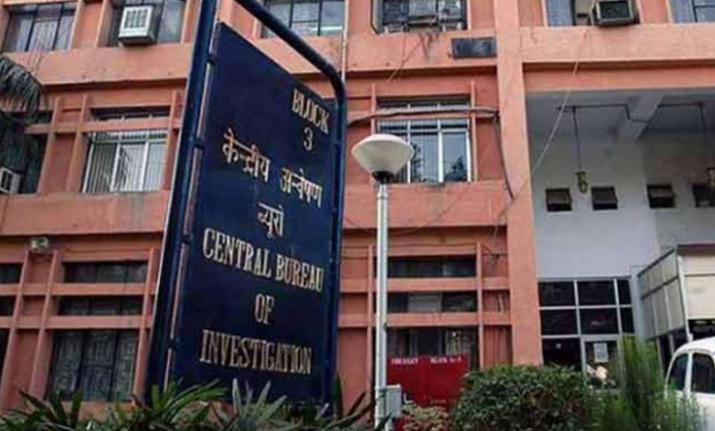
CBI: Nine officers given medal for excellence, a first for the agency

The Union Home Ministry has awarded nine CBI officers medals for excellence in investigation, for 2018, officials said Thursday.

This award has been given to a total of 101 police officers from across the country, including nine from the Central Bureau of Investigation for the first time after being instituted by the ministry, they said. The winners from the CBI include Deputy Superintendents of Police — Velladurai Navaraju, Seema Pahuja, Roshan Lal Yadav, Ramavtar Yadav, Rajesh Kumar, K Pradeep Kumar and Inspectors Chandrakant Vithal Pujari, Girish Kumar Pradhan and Raman Kumar Shukla, they said.

“The objective for institution of the medals for police investigators is to promote high professionalism standards of investigation of crime in the State Police and Central Investigating Agencies in the country and to recognise such excellence in investigation by investigating officers of the Police organisations,” a CBI spokesperson said.

Jammu Blast: 1 dead, 28 Injured in grenade explosion at Bus stand

One person died and 28 were injured in a grenade blast that rocked the busy SRTC bus stand in Jammu on Thursday. The blast occurred even as security had been tightened in the state over the now – cancelled scheduled visit of Defence Minister Nirmala Sitharaman to Jammu province on Thursday.

The grenade reportedly went off under a bus, resulting in the shrapnel being contained to a smaller area. The injured were immediately rushed to the hospital. The police have cordoned off the area and further investigation is underway. “The explosion has caused injuries to approximately 18 people, all have been shifted to hospital,” IGP Jammu MK Sinha was quoted as saying by ANI.

This is the third grenade attack by terrorists in the bus stand area of the city since May last year.  Two months ago, a similar blast had occurred at the main bus stand here. The grenade fell short of the target and exploded in the air, without causing any damage or casualty, an official had said.

The state has been on the edge since 40 CRPF jawans were killed in a suicide bomb attack carried out by the Pakistan-based Jaish-e-Mohammad terror group in Kashmir’s Pulwama district on February 14.

UK May Be OK: Medical Assistance in Dying Law

Humanists UK has been pushing for what they have been terming a compassionate assisted dying law, in which there is a law set forth in support of a “compassionate, humane, assisted dying law.”

This movement comes with a wide variety of terms. One of the important aspects of all of this is the public support for it. The Royal College of Physicians is opposed to a humane right to die law.

However, if we look into the public support, it is overwhelming at 80%. 4 out of 5 citizens support the law for this most important of choices about the end of the journey — likely — for human life.

The recent survey can be important for the advancement of medical assistance in dying, in a prominent nation. Humanists UK formed the Assisted Dying Coalition.

With the cooperation and coordination with other organizations, this can be an important move for the empowerment of those who truly want to plan and make the choice for their final days.

UK citizens may be forced to travel to another country for an assisted death. If most of the nation wants it, and if this can be passed to democratically support what the nations wants, then this can be an important democratic advancement and, in fact, a compassionate one too.

Photo by Erzsébet Vehofsics on Unsplash

Delhi University’s Daulat Ram College organises Sanskrit Fest

Sanskrit, being the oldest known language and the foundation for many modern languages, including English, presents a rich source of study. However, today there are not many takers of Sanskrit, which was once known for its comprehensiveness and refinement. In an attempt, to revive the popularity of Sanskrit language, particularly among the youth, a Sanskrit cultural festival was organised in Delhi University’s Daulat Ram College.


Ceremonial Lamp Lighting at the Sanskrit Fest by Shri Niwas (National Joint Organising Secretary of ABVP), Prof. Kaushal Sharma (Director, ICSSR), Prof. Ramesh Bhardwaj (Director, Gandhi Bhawan) and Dr. Savita Roy (Principal Daulat Ram College)

Enthusiastic response of students towards Sanskrit marked the first edition of ‘Mantra Cultural festival’ organised by Shreyas – The Sanskrit Association of Daulat Ram College to promote Sanskrit. The one day cultural festival was inaugurated by lighting of lamp by the Chief Guest, Shri Niwas (National Joint Organising Secretary of ABVP), Guest of Honor, Prof. Kaushal Sharma (Director, ICSSR), Special Guest, Prof. Ramesh Bhardwaj (Director, Gandhi Bhawan) and College Principal Dr. Savita Roy.

In the inaugural session, Chief Guest Shri Niwas talked about how our youngsters have not been able to understand and appreciate Sanskrit language. This is because our education system was manipulated right after the independence to keep our upcoming generations away from the Indian culture and its glory. The ‘modernization’ of our country and its education system has done more harm than good.

Prof. Kaushal Sharma, Director, ICSSR said that most of our literature was written in Sanskrit. Sanskrit has one of the richest and most extensive literatures of all known languages, such as the The Ramayana and The Mahabharata. It introduces children to vast epics, profound scripture, subtle philosophy, voluminous mythology, exquisite poetry and much else. Sanskrit slowly took a backseat during the Mughal era and the British period. The rise of the princely states also played a vital role in the downfall of Sanskrit as every state puts more focus on the use of its local language. He was of the view that interdisciplinary research among Sanskrit and other courses in universities will surely help us understand Sanskrit not just as a language but as culture. Prof. Ramesh Bhardwaj said that India is a country that defines unity in diversity and Sanskrit could be a language that binds us together. Dr. Savita Roy, Principal, Daulat Ram College said that Sanskrit is not just a language, but a mix bag of knowledge – full of economics, politics and religion.

The day-long activities in the festival included Sanskrit kavyali competition, Sanskrit bhashan competition and Sanskrit ekal shlok sangeet competition.

India needs to contain Pakistan Deep State to win this proxy war

Amidst all the war frenzy, the big question is who do you fight – Pakistan or also the Taliban, Jaish-e-Mohammed and other riff-raff elements?

The Pulwama blasting of CRPF jawans has caused remorse and frenzy for revenge. There is cry of teaching Pakistan a lesson. Many want a war. Indians are hurt. It’s blow on the nation. Howsoever anyone wants, the solution is not easy. The situation today is more complex than in 1971, when Bangladesh was created despite radicalization even at that time. There are many non-state actors. India has military preparedness but a war is expensive and not just in cash.

The sub-continent is passing through severe uncertainty as the neighbouring nations – Iran, Afghanistan, China are changing track every now and then. US is in a hurry to withdraw its troops from Afghanistan, and Taliban is flexing muscles. Russia and Iran are not shy of a deal with Taliban. Will the Taliban take control of Afghanistan, where India has invested huge sums as also in diplomacy, as the US withdraws? It may be seen as yet another failure of the US after Vietnam, Somalia, Iraq and Syria. Since 2001, after spending billions, the US controls not even half of Afghanistan. The Afghan soldiers and civilian casualties are heavy. The Saudi Arabia, Qatar and UAE are working out the face-saving for the US for its withdrawal. They are also pressurizing Pakistan to help as also providing financial aid to boost its forex reserves touching low of $6 billion. Saudi Arabia is giving $32 billion to Islamabad.

Apart from this the big money plays its role. It is not just the nation states that are pouring funds – in fact they, including the US, are having trouble arranging it. India is just next to a troubled Western Asia singed by ISIS. The ISIS war is being fought not for a “holy cause of jihad”. The terror is complex mix of arms-drug peddlers, cyber frauds, human traffickers and other hegemonists. The motivators of school girls from Europe to West Asia rake in huge money bags for turning them as sex fodder for marauders. It generates illicit funds.

Conflict is rising in northern borders of Pakistan. Even Iran lost 28 soldiers in a blast on its borders with Pakistan on February 12. Frenzy is there too. Iran also vowed retribution. The sub-continent is on a tinder box. A war is too complex. Astute diplomacy is needed to save India’s economic assistance and friends in Afghanistan and Iran. Taliban resurgence is a problem for Islamabad. It fears losing its might to it. Moreover, the tribal regions on Pakistan borders are on ferment with sub-nationalism. Slight change in equilibrium would cause major problems for India and other states in the region.

An aggressive diplomacy, lobbying, negotiations, and operations need huge investment as also manpower. The conflict with Pakistan costs 3% of India’s GDP, according to Indian think tank Strategic Foresight Group in 2004. India lost 3843 soldiers in 1971 and captured 93,000 soldiers. Almost a million person were in India as refugees. It had bled the economy then. Various surcharges were levied. Even on each postal item a 5-paise special refugee surcharge had to be affixed. The post-1971 war costs were higher. It had caused over 13% inflation and severe unrest. The imposition of internal emergency was another fall-out.

The proxy war since 1990 has claimed more casualties and economic cost be it in Kashmir, Kargil conflict 1999, Parliament attack in 2001, Mumbai-attack 2008 or subsequent several other blasts and raids. Military and civilian casualties are more than it was in full-fledged wars in 1965 and 1971. It is estimated that since December 2001 every year almost $600 million is spent to protect the western border. Pakistan spending is estimated to be a little less but it is higher in percentage terms for its GDP and geographical area. Carnegie Foundation has stated that even not fighting a war has a cost that is not less than an actual war. The Federation of Indian Chambers for Commerce and Industry (FICCI) estimated a huge business cost to the ongoing Indo-Pak conflict.

So what does Pakistan gain? A conflict with India, be it for Gen Zia ul Haq or Gen Parvez Musharraf has been huge economic gains in assistance from West Asia, the US and the West. US despite the World Trade Center attack considered Pakistan a strategic ally and gave Musharraf enormous aid. Even Donald Trump is doing it today. India-baiting is survival technique for the artificial state. Chinese support to Jaish-e-Mohammed operator Masood Azhar is a testimony. Chinese move is said to keep India under pressure. It is also said that saving Azhar is its insurance for checking terror by Muslim Uighurs in Xinjiang.

For India, apart from financial and political cost there is human misery. Certain powers want the rogue state to survive as they have business, territorial and other interests.  India has to chart out a new course. A war may not be easy but breaking the tentacles of those who lead to war is a necessity. India has to re-strategize and ensure global alliance to break the backbone of terror and its illicit funding.