Home Blog Page 480

In good books

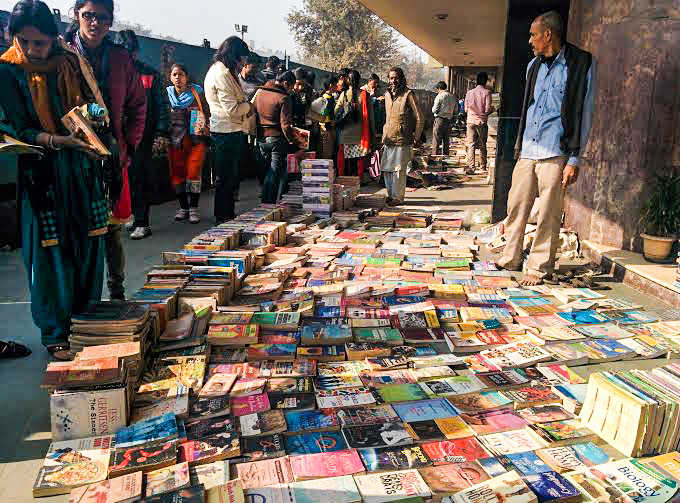
Whatever your interest area be, if you are looking for some good books, head straight to the Sunday books market in Old Delhi’s Daryaganj

Be it the intersecting narrow lanes, exquisitely designed havelis or the age old markets, Delhi’s Walled City has a lot of things on its platter to talk about. That’s the reason going to Old Delhi has always been an exciting experience for Delhiwallas. Especially, Sundays become more interesting in Daryaganj, mainly because of the ever popular books market on the sides of Daryaganj main road.

For more than two decades the market has been keeping alive the taste and flavour of the bibliophiles of the capital city. Located in an area of around 1.5 km starting from Daryaganj red light to Delite Cinema, the market has hundreds of stalls having a rich collection of old and new books. The popularity of the market is such that it has become one of the Sunday attractions in Old Delhi for Delhiites and foreign tourists alike.

What makes this books market unique is the large variety of books available here. Starting from elementary school books to higher classes and from entrance exam study material to super speciality books on photography, interiors and even surgery, everything is available on the pavements of Daryaganj. But, the only thing that is needed is a lot of patience and the ability to scan the book you require from thousands of books that lay open in this market. “The market has something for everyone. For someone preparing for GRE or TOEFL to looking for hobby books everything is available here. I have come here to collect good study material for IIT entrance. Here notes as well as books are available from several institutes and that too at cheaper rates,” says Rahul Bhatia, a student of Class XI. What makes Daryaganj Books market first choice of serious book lovers and avid book collectors is the availability of some rare and old books in this market. “There are books, especially in Urdu and Persian literature, which are generally not available in regular book shops. Moreover there are not many book shops in Delhi and most of the existing book shops are mainly concentrated in South and Lutyen’s Delhi, leaving no choice for the book lovers in other parts of the city,” says Dr RK Mishra, who has recently retired after four decades of career in academics.

Apart from the large variety of books available here, another major attraction is the heavy discount one can avail here, but only after constant bargaining. “That’s the fun of buying books from here, we get discount upto 50-60%. But now it’s getting quite difficult. The shopkeepers are becoming more and more fussy about giving discounts. They also know that there is no dearth of book lovers in Delhi. But still if you have good bargaining skills, then this is the best place to apply them,” says Latika Das, a student of architecture.

Despite its popularity, time and again several issues have been cropping up regarding this market, including that of book piracy and encroachment. Recently, the issue once again grabbed limelight when on June 22 this year, police officials from the area ordered the weekly book bazaar to be closed. The reason that was put forward was that the crowd results in traffic congestion, pick pocketing and even eve teasing. But like several previous years, nothing much happened. The market is running every week at its age old venue, as usual thronged by thousands of book lovers.
Brainstorm over a cuppa

The ever popular Ganga dhaba at JNU campus in New Delhi offers something new to explore onevery visit

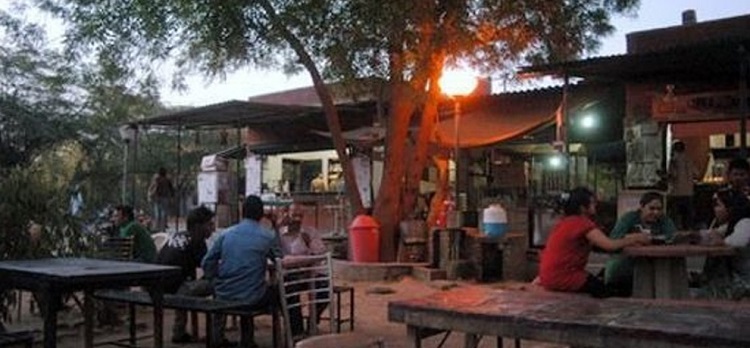
JNU has always been known for its academic excellence, intellectually stimulating sessions, lush green surroundings and the ever popular dhaba culture at its campus. It’s here only that a lot can happen over a cup of tea. Indulge in some great conversation, enjoy watching a photo exhibition and relish samosas and paranthas—all this and much more is what dhaba culture in JNU all about. The best place to catch all this is the ever popular Ganga dhaba. Nondescript and known only by the regulars, this place offers something new to explore on every visit.

For those who like spending their evenings amidst a coterie of scholars and student intellectuals discussing, debating and arguing on our national and international issues, Ganga dhaba is the perfect destination to be. Says Madhusudan Shah, a research scholar, “This is my kind of place and I like coming here again and again. Open from about six in the evening till the wee hours of the morning, this is the ideal place to indulge in thoughtful conversations and enjoy the amazing atmosphere that the JNU campus is best known for. To make the evening more pleasant is the cool night breeze and tea and paranthas.”

Started in 1983, Ganga dhaba for years has become the nerve centre of all activities in the campus and also a big brand in itself. It has found its place on several social networking sites with communities devoted to Ganga dhaba. “The popularity of Ganga dhaba is such that some people come here expecting a snazzy restaurant but what all they find here is a small shop and no seating arrangement except the rocks. But, that’s the charm of JNU dhaba culture and that’s what makes it so popular. No high-end restaurant can match the experience of sitting on the rocks outside Ganga dhaba and enjoying a cup of tea in the naturally soothing ambience of JNU campus,” shares S K Dasgupta, a JNU pass out. It is also the place where you get to know about the burning issues in the country, about the speakers that are coming in the hostel mess or any upcoming exhibition, seminar or play in the campus. Says Prasoon Negi, a regular at Ganga dhaba, “Visiting Ganga dhaba in JNU campus at night is a very nice and unique experience. I consider this place as the fountainhead of street wisdom in the country. This place is the starting point of all campaigns, debates and activities in JNU.”

Though, changes are visible in the JNU campus but the popular tradition of dhaba culture is still continuing. While earlier the campus was known more for its jhollawallas, now westernization is creeping in several ways, but what has remained intact more or less is the intellectually stimulating nightlife in JNU, glamorous dhaba culture and never ending debates and discussions. “Now, there are more bikes and cars in the campus, earlier students used to have great fun in traversing the campus on foot. In place of simplicity the glam factor is on the rise in the campus. But no matter what happens, the culture of JNU will remain unaltered for years to come,” says a visibly confident JNU student, Rajiv Kumar, enjoying his evening cupa tea at the Ganga dhaba.

British PM barely manages to win trust vote

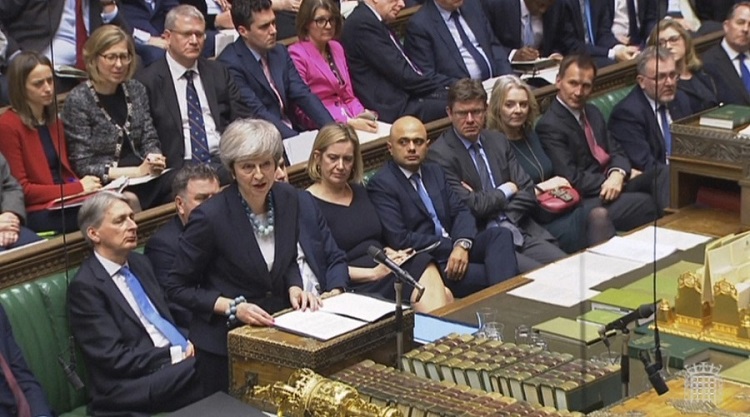
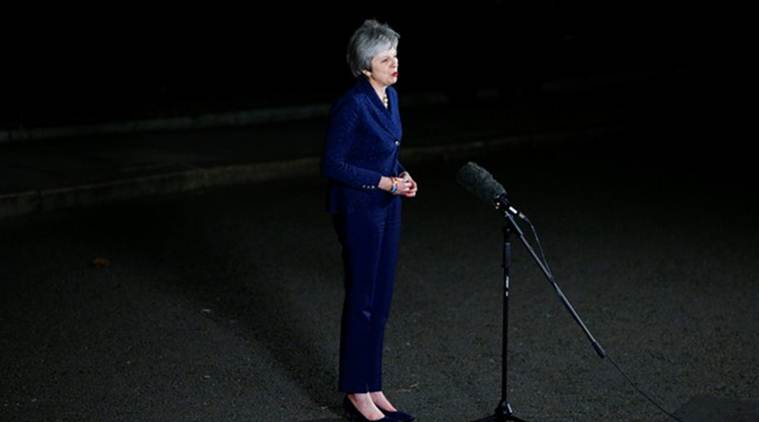
Britain’s Prime Minister Theresa May has managed to win the no-confidence vote, warding off a revolt by her own MPs but acknowledging that her time is limited in office.

“May responded to a no-confidence vote with a passion she reserves for when her back is against the wall, defending her Brexit deal and warning that ousting her could derail the whole process,” news agency AFP said in its report. AFP added that May had devoted herself “unsparingly” to delivering the 2016 vote to leave the European Union and was “ready to finish the job”.

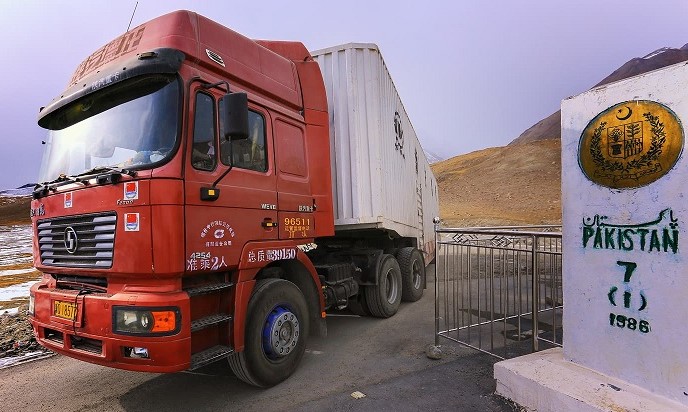
China is the new age British East India Company. Beware Pakistan

It is well known that self interest guides the foreign policies of all nations, sovereignty and security being main issues followed by trade, economic well-being and cultural manifestations, among others. China, however, is following a different path altogether, it is adopting an imperialistic posture that is supported by its immense wealth in the form of foreign currency reserves. Profit is the centre of gravity of the Chinese foreign policy which, in turn, translates into a modern version of colonisation.

Pakistan is the focal point of Chinese policy of economic colonisation, it’s there that the pilot project of the ambitious Belt and Road Initiative has been initiated. The model that is better known as the China Pakistan Economic Corridor (CPEC), is proposed to be replicated in other countries once its efficacy is established.

Pakistan is presently in a financial crisis due to a debt-trap like economic situation. It has a huge balance of payments that needs to be given to western nations and financial institutions like the World Bank. Under these circumstances, it has no option but to look towards China for relief. China, for its part, is quite ready to render financial assistance to Pakistan because every dollar going in the country is selling itself off. China already has virtual control over Gilgit-Baltistan and Balochistan and now by getting into investment in the agriculture and social sectors it is gaining a foothold in Punjab, the richest and strongest province of Pakistan and also its holy cow.

The advocates of CPEC, who have unimaginable financial gains and wealth at stake, speak incessantly of the so-called immense benefits that will accrue from it to the people of Pakistan. This is bound to remain an illusion till such time that the Pakistani government does not usher fiscal reforms that would sustain the economy and there seems to be no progress in this direction. The rich continue to become richer and the poor poorer in Pakistan and the new Pakistan envisioned by the incumbent prime minister, Imran Khan, is nowhere in sight.

The countries, like Pakistan, that are looking towards China for aid would be well advised to look at the status of the Hambantota Port in the southern coast of Sri Lanka which has been developed by China. A Port is a piece of real estate that can define the importance of a country like Sri Lanka in global affairs, such is its strategic value. In a fit of short sightedness or probably due to avarice, the government of Mahinda Rajapaksa allowed the Chinese to build a port facility at Hambantota whose capacity far exceeded the requirement. With time it remained under-utilised and became economically unviable. China then swooped in to take over the facility on a 99-year lease. It has now supported the ouster of the incumbent government in the island nation in favour of its old friend Rajapaksa in order to ensure that the hold on the Port becomes strong and irretrievable. This is a lesson for all other nations, especially Pakistan, while dealing with the country.

China is specially targeting African nations in its economy-driven imperialist and colonist designs. It is so because these countries have much in common with Pakistan so far as mis-governance is concerned. They too have borrowed indiscriminately from western countries and are now desperate to find an exit route which China is ever-ready to provide in return for unlimited access to the rich resources of these Banana Republics. A good example in this regard is Dijbouti which is under debt to China to the tune of almost three quarters of its Gross Domestic Product and is, as such, already under Chinese control. Other nations will undoubtedly follow suit.

Malaysia was more intelligent and circumspect. It drove a hard bargain with China which was obviously not accepted by the latter and the deal fell through. China is trying to revive the same but is not making any headway. Other countries like Bangladesh and Myanmar are also getting second thoughts about projects that they have negotiated with China.

China wishes to project the image of being a peaceful country committed to development of the poor countries across the world. Nothing can be further from the truth. It is, in fact, a much larger and more potent version of the British East India Company with all intentions of getting hegemony over as much of the global resources as is possible.

India is perceived by China as a big thorn in its march for unmitigated power. The countries that China is trying to harness have ancient and traditional links with India. India also has strategic influence over the Indo-Pacific region so important for China to sustain its trade. This region is also a conflict zone between the US and China wherein India has a crucial role to play.

In the wake of these developments the best recourse for Pakistan would be to understand that it ruining its future generations by adopting a parochial self serving approach with regard to China. India on its part has to challenge the Chinese strategy of using her as a leverage to project an “enemy of enemy is your friend” kind of an image while trying to influence the countries in the neighbourhood, especially Pakistan. She has to intensify diplomatic efforts and create awareness of China’s hegemonic activities while remaining aligned with such global powers that understand the need to check China.

The only language that China understands is that of power and here the build up of Indian military capabilities gain utmost importance. The Indian government will need to shed its lethargy in getting its armed forces into fighting fit mode in terms of both human resource and capacity building. Both aspects are lacking at the moment. The political class in Nepal, Bangladesh, Myanmar, Sri Lanka and Maldives are clearly divided on the lines of pro-India and pro-China lobbies and here the balance needs to be tilted in the Indian direction. Pakistan, of course, needs to introspect deeply if it wishes to save its identity as a nation.

BJP’s self-inflicted defeat in Chhattisgarh

0

With rural as well as urban support base shifting towards the Congress, BJP’s defeat is less of a surprise and more of suicide

Despite the absence of any visible pro-Congress wave, BJP in Chhattisgarh received a shameful defeat in the Assembly Elections. The humiliatingly large difference in the number of seats won by the Congress and BJP, shows how the ruling party failed to read the minds of people or deliberately overlooked it under the influence of political arrogance and over-confidence. Moreover, BJP had nothing substantial to offer to the voters in these elections, except a face for the CM’s post.

The ignominious defeat of BJP shows how angry people were from Raman Singh government and were desperate for a change, which resulted in a clear mandate for the Congress. Interestingly, this election comes with significant support for the Congress in all parts of the state. In 2013, Congress did better than the BJP mostly in south Chhattisgarh, especially the Bastar region. This time, the Congress has established strong leads across the state, including Bastar.

A closer look at the developments that took place in the state during the last two years, however, shows that the election results were not completely surprising. The greatest blunder by the ruling party has been the mishandling of agrarian crisis, which further fuelled farm discontent in the state. In the previous elections, BJP had promised increasing the MSP (Minimum Support Price) from Rs 1500 to Rs 2100 per quintal for paddy and also providing a bonus to farmers. After coming to power the government kept these promises pending for a major part of its term. It was only in 2017-18 that bonus were released to the farmers. However, the action failed to have desired political impact. Congress could see the fuelling discontent among farmers and thus came out with a populist election manifesto with Rs 2500 per quintal MSP for paddy, loan waiver to farmers and subsidized electricity. This seems to have played a major role in shifting farmers support from BJP to Congress.

What further made things complicated for BJP, was their inability to sense the growing discontent among trading community due to demonetization and GST. As a result, a crucial vote bank was lost in the urban areas. A key BJP functionary from the state who requested anonymity said that BJP had almost forgotten that Demonetization and GST could influence the elections and was under the impression that ‘impact’ of these economic decisions, introduced by the Central government, has settled down by now.

Corruption and unemployment also further fuelled the growing urban and rural discontent in the state. In almost all corruption cases, the government could only arrest lower functionaries, most of whom were from tribal areas, and the powerful perpetrators of the crime remained above the law.
With 15-years in power, BJP’s complacency became its biggest weakness in the 2018 Assembly elections. Severe farm and rural distress, unrest among the BJP’s core support base of traders and urban voters over demonetization and GST, and a feeble fight against corruption were the factors responsible for the BJP’s big loss in Chhattisgarh.

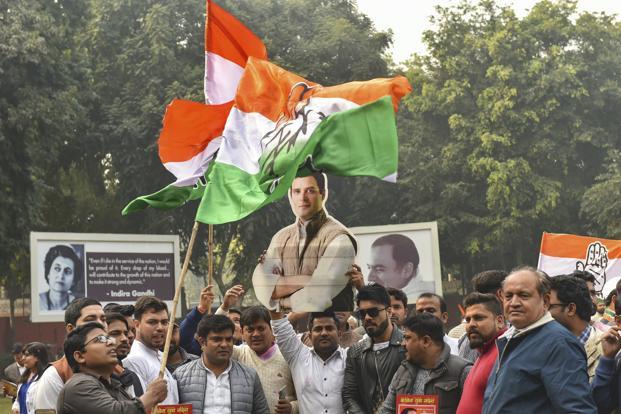
BJP loses electoral semi-final to Congress

The incumbent Bhartiya Janata Party (BJP) lost three crucial Hindi heartland states of India to rival Congress party. BJP faced a huge anti-incumbency in politically crucial states of Chhattisgarh, Rajasthan and Madhya Pradesh. The party had been ruling Madhya Pradesh and Chhattisgarh for fifteen years. In Rajasthan it had to battle hugely unpopular mis-governance of Vasudhara Raje Scindia. 

BJP was never in the contention in two other states, Telangana and Mizoram that went to polls along with Madhya Pradesh, Rajasthan and Chhattisgarh. Telangana voted in favour of incumbent Telangana Rashtra Samithi  and Mizoram ousted Congress in favour of Mizo National Front. 

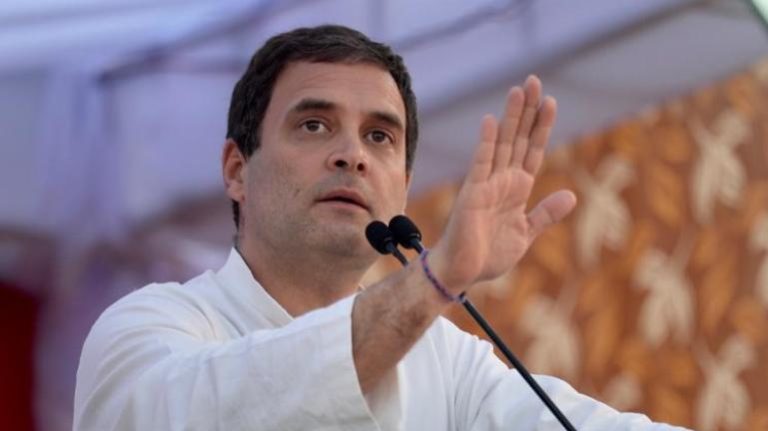
These elections were a semi-final before the General Elections of India that is expected to be held in April-May 2019. BJP’s drubbing down at the hands of Congress means Prime Minister Narendra Modi will have to face a resurgent opposition that will be led by Congress’ Rahul Gandhi when he faces the electorate in the upcoming General Elections. The win for Congress also sets the electoral momentum in their favour that had to brace a series of electoral losses over the last four years. 

Brexit vote before Jan 21, 2019

British Parliament will vote on the Brexit deal before January 21, 2019, the spokesperson of Britain’s Prime Minister Theresa May said on Tuesday.
Britain’s parliamentarians were scheduled to vote a day earlier, on Monday, to approve or reject May’s Brexit proposal. But fearing rejection of the deal, May announced that she would defer the vote and seek extra assurances from the European Union to make sure the proposal passes through the British Parliament.

Saudi journo Jamal Khashoggi is Time Person of the Year

Jamal Khashoggi, the Saudi journalist who was murdered in October at the Istanbul consulate of Saudi Arabia, was named by Time magazine as its “Person of the Year”. The Time magazine has also honoured Philippine journalist Maria Ressa, Reuters reporters Wa Lone and Kyaw Soe Oo — currently imprisoned in Myanmar — and the staff of the Capital Gazette in Annapolis, Maryland, including five members killed in a June shooting.

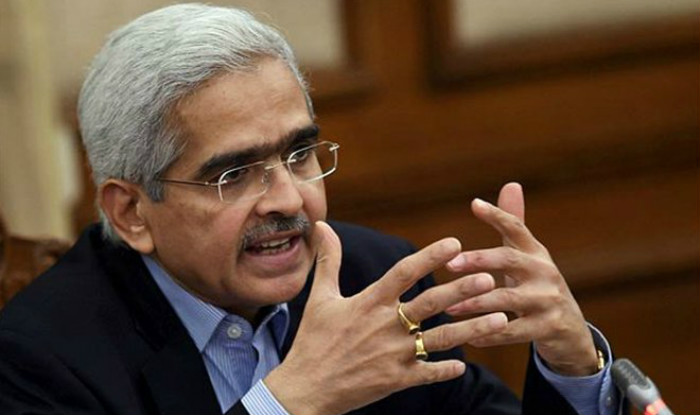
Shaktikanta Das is the new RBI Governor

Just a day after Urjit Patel resigned as RBI (Reserve Bank of India) Governor, the Narendra Modi government appointed Shaktikanta Das as the new RBI boss. Das, who served as the economic affairs secretary between 2015 and 2017, has been a strong votary of government’s demonetization exercise. He was the most visible high-profile bureaucrat who openly batted in favour of Modi government’s demonetization exercise, where high-denomination notes of Rs 500 and Rs 1000 were withdrawn from November 8, 2016.

A blood test can diagnose Alzheimer’s disease

Now a simple blood test can diagnose or predict Alzheimer’s disease much before the symptoms appear. The blood test developed by scientists will run through several validations and subsequent trials before it becomes available in hospitals and clinics.

At present the only definitive way to diagnose Alzheimer’s disease is through brain scans and tests of cerebrospinal fluid that must be collected via lumbar puncture. These tests are cumbersome and expensive yet they provide the most accurate diagnoses for patients.

The new blood test has been developed by researchers at the Brigham and Women’s Hospital in the US that could replace these cumbersome procedures.

“A blood test for Alzheimer’s disease could be administered easily and repeatedly, with patients going to their primary care office rather than having to go into a hospital,” Dominic Walsh from Brigham told PTI.
“Our test will need further validation in many more people, but if it performs as in the initial two cohorts, it would be a transformative breakthrough,” said Walsh.