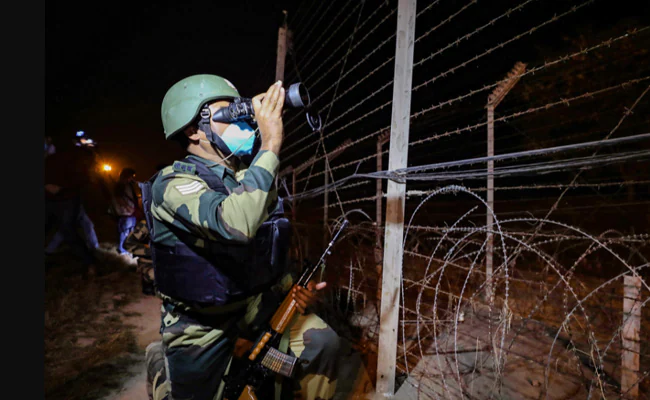
A Border Security Force (BSF) personnel was injured in the Akhnoor area of Jammu on Wednesday following unprovoked firing by Pakistani troops on Indian posts, marking a violation of the ceasefire agreement between the two countries. The incident occurred around 2:35 a.m. on September 11, 2024.
According to a BSF statement, “On September 11, 2024, at about 02:35 a.m., an incident of unprovoked firing occurred in the Akhnoor area from across the border, which was befittingly responded to by the BSF. One BSF personnel sustained injuries from the Pakistani firing. Troops are on high alert.”
The firing came despite a relatively calm period since India and Pakistan renewed their ceasefire agreement on February 25, 2021. The last recorded loss of life on the Indian side was a BSF jawan killed by Pakistan Rangers in the Ramgarh sector last year, marking the first such fatality in over three years.
The timing of this ceasefire violation is particularly concerning as it precedes the first phase of Jammu and Kashmir’s assembly elections scheduled for September 18. The elections will be conducted in three phases, with the second phase on September 25 and the final phase on October 1.
In response to the increasing security challenges, including a recent surge in terror attacks in the Jammu region, the Union government has mobilized additional paramilitary forces. This follows reports of 60 to 80 terrorists infiltrating the region earlier this year. The security measures include retaining approximately 450 companies of paramilitary forces initially deployed for the Amarnath Yatra, with nearly 450 more companies added for election duty.
BSF Director General Daljit Singh conducted a security review of the Jammu border on August 22, underscoring the heightened alert and preparedness of security forces in the region.
The Jammu Kashmir National Students Federation (JKNSF) has announced a long march towards the Chakothi Line of Control on October 22, driven by mounting frustrations over Punjabi Pak military dominance and its repressive policies in Pakistan-occupied Jammu and Kashmir (PoJK). The announcement, made at Kotli Chowk by prominent leader Israr Yusuf, highlighted a series of grievances that have pushed the community to take the action.
The primary reasons for the march are the enforced disappearances of Kashmiris, the region’s persistent underdevelopment, the suppression of the PoJK community, and the skyrocketing prices of wheat and electricity, which have crippled everyday life. Most concerning to the marchers is the recent abduction of over 20 Kashmiris in 2024, including key figures like Raja Mudassir, reportedly taken by the Pak Army. Mudassir was abducted by security forces during Ramadan, and his whereabouts have remained unknown, adding to a growing list of enforced disappearances in the region.
The Pak Army is treating the people of PoJK as second-class citizens, with no regard for their rights or welfare. The region remains economically stagnant, with no meaningful development in key sectors like industry or tourism, both of which are tightly controlled by the military. These frustrations have festered for years, but the recent wave of abductions, along with the worsening economic conditions, has brought the community to a breaking point.
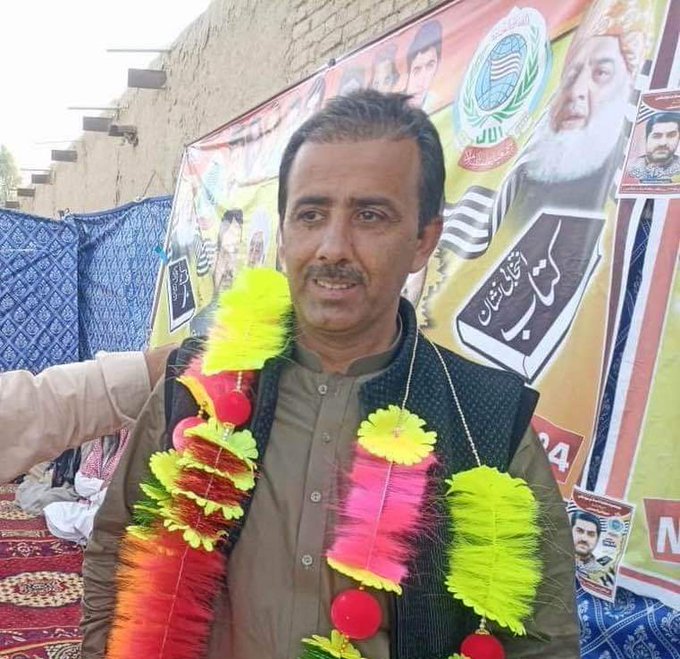
Jamiat Ulema-e-Islam (JUI) leader Mir Zahoor Badini was shot dead by unidentified gunmen near Nushki Boys’ College. The attack, which also left his bodyguard injured, highlights the ongoing security crisis in the region, exacerbated by the destabilizing presence of the Pakistan Army and its operations.
Reportedly, the assailants managed to flee the scene after the attack. The injured bodyguard was rushed to the hospital for treatment, while occupied authorities arrived at the site and launched an investigation into the incident.
No group has claimed responsibility for the attack so far.
Pak-occupied-Balochistan has long been a hotbed of conflict, where the Pakistan Army’s heavy-handed tactics have contributed to an atmosphere of unrest. The military’s constant interference, often under the pretext of combating insurgencies, has left civilian life in chaos, with political leaders and activists regularly targeted.
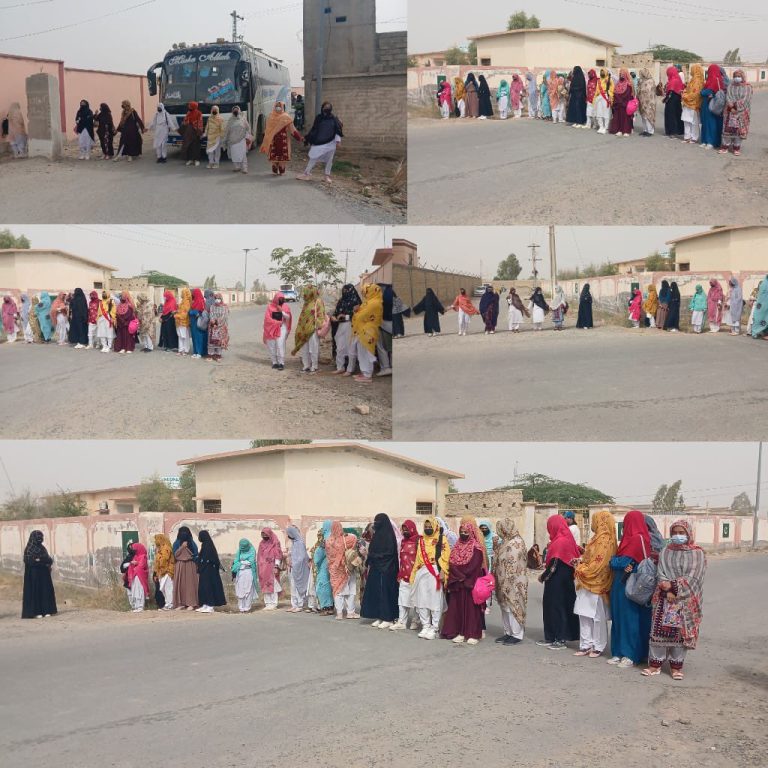
In yet another blatant disregard for the rights and well-being of Baloch students, the Frontier Corps (FC), a paramilitary force controlled by the Pakistan Army, has established a camp within the premises of a Girls’ College in Kharan district, Pak-occupied-Balochistan. This move has triggered widespread protests from students, who took to the college grounds to voice their outrage.
The protesting students condemned the construction of the military camp inside the educational institution, calling it a gross violation of their right to education and personal safety. Chanting slogans against the occupation of their college by military forces, they expressed deep frustration over the continuous militarization of civilian spaces in POB.
“This camp has severely disrupted our academic life,” said one of the protester. “Our studies are being gravely affected, and the presence of armed personnel within a women’s educational institution violates our traditions and privacy,” she added.
According to the latest report from the Balochistan Department of Education, the number of closed schools has surged to 3,694 across 35 districts as of September 2, up from 3,152 in May. The Paki establishment is continuously attempting to limit educational opportunities for the Baloch community, not only to keep them marginalized but also to suppress the spread of pro-independence sentiments.
Recently, Pak forces encircled Turbat University and launched a search operation in the women’s hostel, targeting students in their pursuit of information on Mahil Baloch, a fidayeen fighter involved in BLA’s Operation Herof, which resulted in significant casualties for the Pakistan Army.
This is the reason for the increased militarization and the presence of Pak Army forces in girls’ schools and universities, aiming to monitor and limit the rise of nationalist sentiments. However, these actions violate international human rights norms, educational institutions should be safe havens for students, not military outposts.
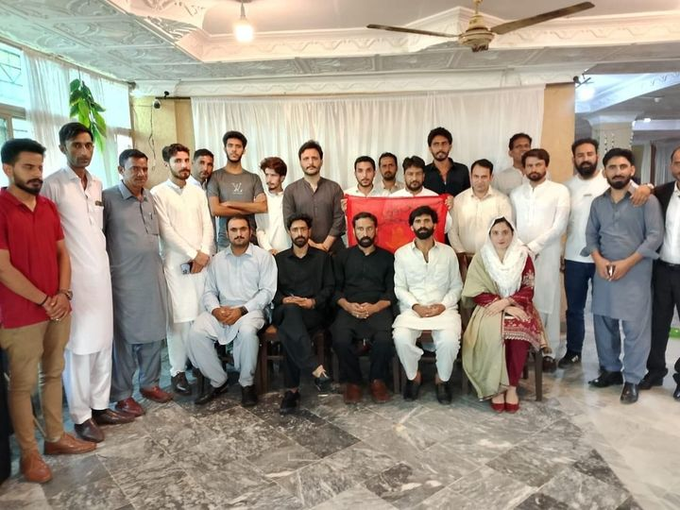
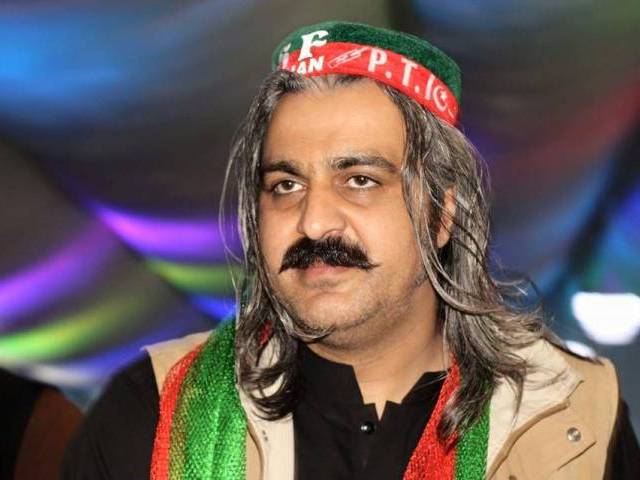
The President of the Insaaf Students Federation (ISF) Khyber Pakhtunkhwa, Ishfaq, has issued a strong call to action, urging students and youth across the province to prepare for mass demonstrations in response to the mysterious disappearance of Ali Amin Gandapur, the Chief Minister of Khyber Pakhtunkhwa. This rallying cry comes at a time of heightened unrest, as the Punjabi Pak Army orchestrated Gandapur’s abduction to silence political opposition and suppress dissent.
Gandapur’s disappearance comes shortly after his remarks at a rally in support of imprisoned former Prime Minister Imran Khan. During the rally, Gandapur boldly threatened Pak Army to forcibly free Imran from jail, which is a direct challenge to the Paki establishment. Following these remarks, Gandapur was abducted.
On Monday, reports emerged of the arrests of PTI Chairman Gohar Ali Khan, outspoken leader Sher Afzal Marwat, Waziristan MNA Zubair Khan, and lawyer Shoaib Shaheen.
Gohar and Marwat were taken into custody separately outside Parliament House, where a large contingent of personnel swiftly bundled them into vehicles as they exited the assembly building after Monday’s session.
Shaheen was apprehended in a surprise raid at his office in G-9, as captured in footage of the arrest. His staff attempted to resist, but they were also detained by nearly a dozen police officers and plainclothesmen.
The Punjabi Pak Army’s heavy-handed tactics, including the arrest of political figures, violent suppression of opposition, and ruthless crackdown on PTI leaders, are part of the Pak Army’s strategy to quash any resistance to its authority. The region is under decades of violence, exploitation, and suppression, with little to no accountability for the actions of the Pak military.
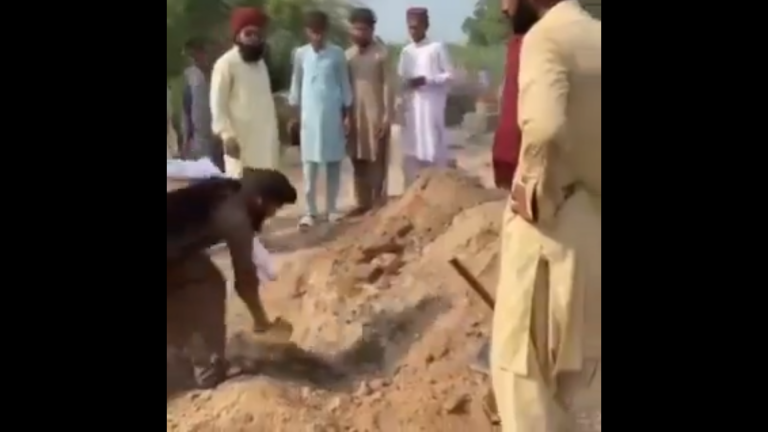
The Tehreek-e-Labbaik Pakistan (TLP) terrorists recently blocked the burial of an Ahmadi in Kamiliya, Pakistan. This incident is yet another grim reminder of the unchecked persecution Ahmadis face, not only in life but even after death.
It hasn’t even been a week since a lawyer was threatened to renounce his Ahmadi faith or risk the end of his career, underlining the systematic oppression that reaches all corners of society. The violent assaults on Ahmadi Muslim mosques are just one aspect of this persecution. Even more chilling is the Paki establishment’s sanctioned desecration of their graves, an act that strips the dead of their dignity and delivers a brutal message to the living.
In January 2024, Punjab police desecrated 65 tombstones in Musay Wala. The Paki establishment has created an environment where every religious minorities, are denied even the basic right to rest in peace.
The Paki military establishment has reinforced the power of terrorist groups like TLP, who act with impunity. From the destruction of their mosques to the desecration of their graves, their faith, history, and existence are systematically erased.
Since the constitutional amendments of 1985, Ahmadis have been stripped of their basic democratic right to vote. This policy enforced by the Pak Army and its political apparatus, effectively renders them second-class citizens, voiceless and marginalized.
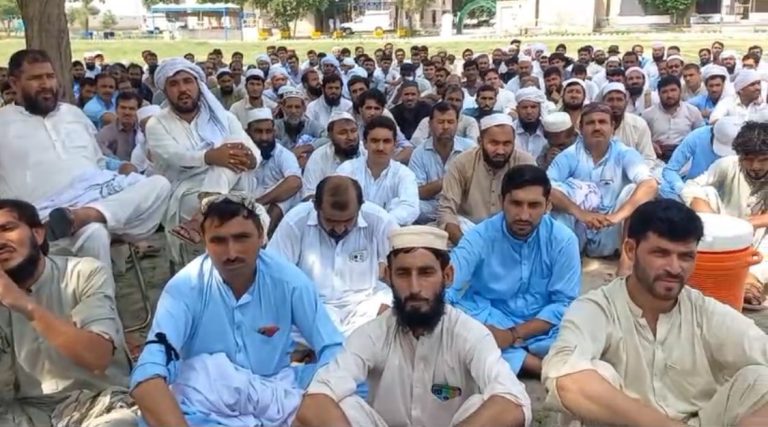
In an unprecedented move, police personnel in Lakki Marwat district, Khyber Pakhtunkhwa, have taken to the streets in protest, shutting down the Indus Highway to voice their anger over the growing wave of targeted killings in the region. The demonstrators, comprised of frustrated police officers, are demanding that the police force be empowered to counter these attacks, while calling for the removal of secret agencies from the control room.
Chanting slogans like “We are being fueled by a dollar war,” protestors expressed their frustration over the deliberate manipulation by the occupied state, the Paki establishment of exploiting the Pashtun regions for financial gain. The rise of militancy in Khyber Pakhtunkhwa is part of a calculated strategy to attract funding from the United States, under the guise of fighting terrorism.
These so-called terror attacks are engineered by the Punjabi Pak Army whenever it faces budget shortages or when the economy slows down. They impose fake terrorism on Pashtun soil to portray themselves as victims of terror. This way, the Punjabi-Pak Army draws money in the form of international aid, claiming they are fighting the war on terrorism.
However, it is the Pashtuns who bear the brunt of this “war,” facing atrocities such as targeted killings, fake encounters, and forced disappearances. While the Army fills its coffers, Pashtuns are left to suffer.
This protest marks a significant development in the ongoing unrest in Khyber Pakhtunkhwa, as the police personnel—who are often seen as foot soldiers in the occupied-state’s so-called counterterrorism efforts—have openly rebelled against the military’s manipulation and exploitation of the region.
A dangerous and extremist mindset continues to haunt religious minorities, as members of a Germany-based Pakistani radical Islamist group, led by Hassan Gondal, have been actively targeting Sikh girls for conversion. This disturbing trend mirrors the oppressive tactics seen in Pakistan, where religious minorities, including Sikhs, have long faced persecution at the hands of Islamist extremists.
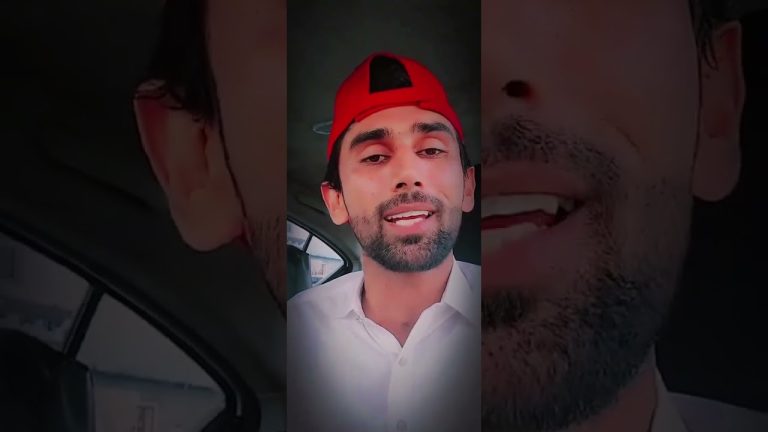
Hassan Gondal Dogar, a Pakistani-origin TikTok user based in Berlin, has gained notoriety for his inflammatory rhetoric against Sikhism and its revered leaders. His online activity is not just isolated hate speech—it reflects the broader, deeply ingrained extremist agenda within segments of radical Pakistani society. The targeting of Sikhs for conversion is part of a longstanding pattern of oppression that has its roots in the bloody partition of India in 1947.
The biggest silence on #GroomingGangs in UK was not that it was almost exclusively done by #Pakistani men or that it going on for decades. But that #Sikh girls were its first targets! Local Islamic groups paid 10x the white-girl reward for a successful KAUR to KHAN conversion. https://t.co/XqNVRKAjeSpic.twitter.com/Yz4SC1IcXK
The Sikh community has endured brutal violence at the hands of Muslim radicals since the 1947 partition, when around 7,000 Sikhs were massacred by the Muslim League, and an estimated 75,000 to 100,000 women were kidnapped and raped during the Rawalpindi massacres. Since then, the Sikh population in Pakistan has dwindled from around 40,000 in 2002 to less than 8,000 today. Those who remain live under the constant shadow of persecution, their sacred gurdwaras neglected and left to decay, if not vandalized.
Alarmingly, the online attacks by extremists like Gondal echo a more widespread issue: the forced conversion of Sikh girls, known as ‘Kaur to Khan’ conversions. While officially denied by many, reports from various parts of the world, particularly the UK, suggest that this troubling practice is more common than acknowledged.
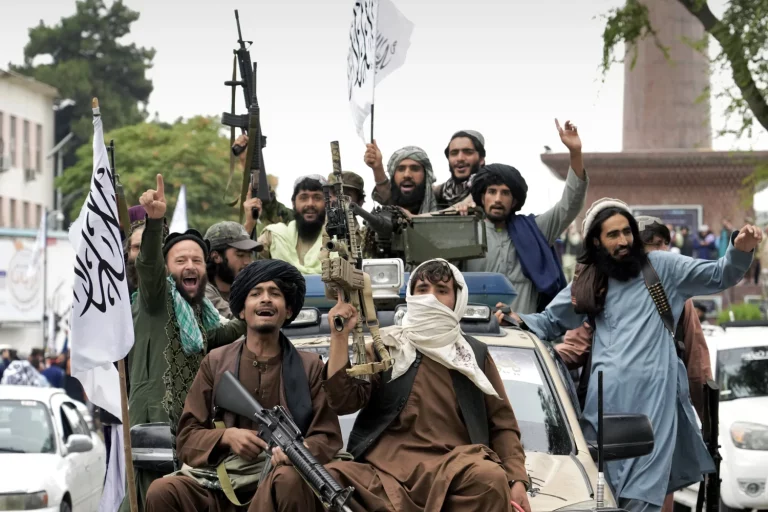
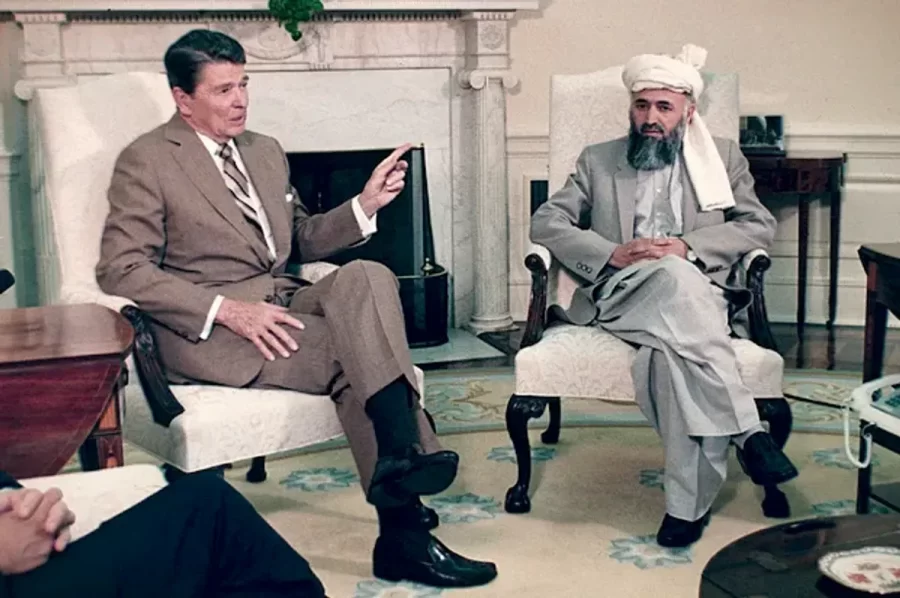
It was in the late seventies that CIA finalised its covert plan for waging proxy war against the then Soviet army in Afghanistan by using radicalised Islamic fighters [mujahideen]. Codenamed Operation Cyclone, this devious enterprise came as a windfall for Pakistan’s military dictator-turned-resident Gen Zia ul Haq as it led to a Faustian US-Pakistan bargain [or to put it more precisely, an unholy agreement between CIA and Pakistan Army’s spy agency Inter Services Intelligence or ISI].
Operation Cyclone was a classic example of proxy war. While ISI was required to provide radicalised and trained manpower to fight the occupational Soviet army in Afghanistan, Washington would divert requisite military hardware to arm the fighters as well finances to sustain this venture through CIA. Since ISI physically distributed weapons, military equipment and funds received from CIA to mujahideen groups, substantial diversion of US weapons and money for Pakistan’s proxy war in J&K as well as for lining the pockets of Generals was no big deal for Rawalpindi.
‘Poisoning’ Pakistani Society
The gains made by Pakistan in terms of extremely generous US military and financial aid packages were indeed enormous. In fact the lure for lucre was so compelling that Pakistan Army’s leadership conveniently chose to disregard the inevitable negative consequences that its deeply flawed decision to host religiously indoctrinated Islamic fundamentalists on its soil portended for the hapless people of Pakistan. The saddest part is not Rawalpindi’s continuing state of denial but the pride with which Pakistan Army Generals recall this abhorrent bargain that has claimed thousands of innocent lives.
During his 2010 interview given to Spiegel, Pakistan’s ex President and former Army chief Gen Pervez Musharraf nonchalantly admitted that “We [Pakistan Army] poisoned Pakistani civil society for 10 years when we fought the Soviets in Afghanistan in the 1980s.” He went on to boast that “It was jihad, and we brought in militants from all over the world, with the West and Pakistan together in the lead role.” This revelation was neither an emotional outburst nor an unintended or accidental utterance.
In 2019, Pakistani politician Farhatullah Babar shared an undated interview clip in which Gen Musharraf can clearly be heard saying that “…In 1979, we had introduced religious militancy in Afghanistan to benefit Pakistan and to push [the] Soviet out of the country. We brought Mujahideen from all over the world, we trained them, supplied weapons. They were our heroes.” Not only this, he even admitted that “Haqqani was our hero. Osama bin Laden was our hero.” [Emphasis added].
What Musharraf euphemistically referred to as “religious militancy” actually preached intolerance, sanctified violence against innocents by brazenly misquoting/distorting Islamic teachings. However, thanks to its effective propagation in madrassas [Islamic seminaries], this fundamentalist interpretation found widespread traction amongst talibs [students] in an impressionable age. Religious extremism thus took root within Pakistani society and spread like wildfire and several terrorist groups espousing such repugnant ideology mushroomed.
One such fanatical terrorist group is Tehreek-e-Taliban Pakistan [TTP] which shares Afghan Taliban’s skewed interpretation of Islam and wants to enforce it in Pakistan and therein lies the paradox- while Islamabad unconditionally endorses the regressive brand of Islam imposed by Afghan Taliban in Afghanistan, it doesn’t want TTP to do likewise in Pakistan. However, many locals in Pakistan’s Khyber Pakhtunkhwa province [which was a major religious indoctrination center since the late seventies] approve of TTP’s aim to establish sharia [Islamic religious laws] in Pakistan.
Rawalpindi’s Ambivalent Anti-Terrorism Policy
The Pakistan Army makes it a point to repeatedly announce its zero-tolerance for terrorism and keeps reminding the world that it has made the maximum sacrifices in its war against terrorism. While the Pakistan Army has definitely suffered inordinately high casualties due to terrorist violence, this doesn’t prove that its famous “We are going after terrorists of all hue and colour” claim made in 2014 during Operation Zarb-e-Azb anti-terrorist campaign in North Waziristan.
While the Pakistan Army claimed to have killed more than 3,500 terrorists, surprisingly not even a single terrorist belonging to the Haqqani network was either killed or captured. That BBC South Asia correspondent Andrew North’s news report was aptly captioned “All hues or some shades in North Waziristan” and mentioned that “… many reports, as well as footage obtained by the BBC, suggest some militants at least got away and some shades of “terrorist” may still be safe.” [Emphasis added].
Rather than taking the menace of terrorism by its horns, Rawalpindi has been brokering peace agreements with various terrorist groups like the Shakai agreement [2004], Sararogha Peace Agreement [2005], Waziristan Accord [2006] and Swat Agreement [2008]. The Pakistan Army has also facilitated several unwritten peace deals; some such agreements include those with terrorist leaders Hafiz Gul Bahadur [North Waziristan], Faqir Muhammad [Bajaur Agency] and Lashkar-i-Islami [Khyber Agency].
The fact that despite making several concessions to terrorist groups, none of these agreements endured just goes to prove that terrorists can never be trusted. However, despite being repeatedly backstabbed, Rawalpindi continued to appease TTP and in its desperate bid to make peace with this terrorist group [which was responsible for killing 134 school children in the gruesome 2014 Army School Peshawar massacre], even unconditionally released more than a 100 TTP fighters in its custody convicted for killing Pakistan Army soldiers as well as civilians.
Prognosis
Pakistan Army chief Gen Syed Asim Munir has been waxing eloquent on Rawalpindi’s zero tolerance towards terrorism and promising to slay this dragon- just like his predecessors did. And faithfully following the footsteps of previous Army chiefs, he too is busy blaming all and sundry for the sorry state of affairs instead of taking timely and resolute action to tackle this scourge.
So as far as Pakistan Army’s war on terror is concerned, Gen Munir has little to boast about other than attempting to discredit TTP by challenging its Islamic credentials and referring to it as Fitna al-Khawarij [the first religious-political breakaway group in the history of Islam]. He has also provided quasi-legitimacy to suppression to freedom of expression by coining the phrase “digital terrorism” to encompass actions that aim to create a gulf between state institutions and the people of Pakistan- a master stroke to muzzle growing public criticism of Pakistan Army’s continuing meddling in political affairs and judicial matters.
Till now, both Islamabad and Rawalpindi have been primarily accusing foreign powers for fuelling terrorism in Pakistan. However, Gen Munir has taken his ‘digital terrorism’ argument to a different level by classifying inimical forces working acting against national interests into “malicious actors, subversive proxies, and the facilitators of Pakistan’s external and internal adversaries” changing the existing outlook on this issue and preventing constructive criticism of institutions by equating the same with treason!
It’s therefore most likely that Rawalpindi will continue with its reactive anti-terrorism strategy based on indiscriminate use of brute force and terrorising people through enforced disappearances and extrajudicial killings. That such an inhuman approach will only further aggravate the already precarious situation in Pakistan is obvious, but Rawalpindi doesn’t need to worry because l the blame can conveniently be apportioned on ‘digital terrorists’ and “malicious actors, subversive proxies, and the facilitators of Pakistan’s external and internal adversaries.”
Tailpiece: Despite Rawalpindi’s bombastic rhetoric aimed at diverting public attention from reality, it’s abundantly clear that the people of Pakistan are suffering [and will unfortunately continue to do so], only because the Pakistan Army failed to eschew its puerile ‘good Taliban’ philosophy.
But Rawalpindi can’t complain that it wasn’t warned- in 2011, didn’t the then US Secretary of State Hilary Clinton during her Pakistan visit remind Pakistan Army Generals that “You can’t keep snakes in your backyard and expect them only to bite your neighbors… eventually those snakes are going to turn on whoever has them in the backyard”?
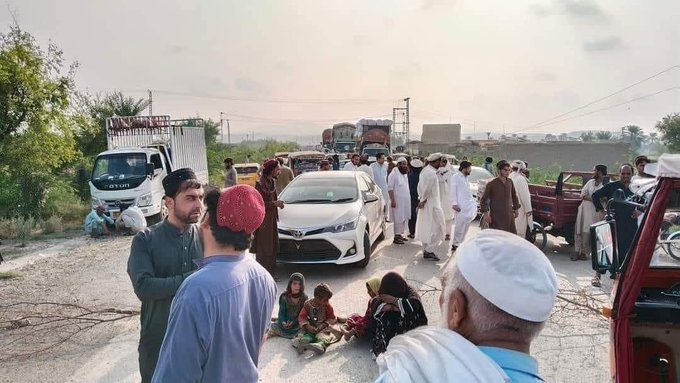
A nomadic woman and her daughters blocked a road in North Waziristan to protest the arbitrary detention and enforced disappearance of three male members of her family. The protest highlights the growing frustration and despair among the Pashtun community in Pakistan’s former Federally Administered Tribal Areas (FATA), where such incidents have become a daily reality.
The Pashtun regions, particularly North and South Waziristan, have long been subjected to the oppressive policies of the Punjabi-Pakistan Army, which continues to wield unchecked power in these areas. Enforced disappearances, arbitrary arrests, and brutal crackdowns on civilians have become a routine practice, leaving the local population in a state of perpetual fear.
This latest incident serves as a grim reminder of the plight of the Pashtun people, whose voices are continuously silenced under the oppressive policies of Pakistan’s military establishment. The region has witnessed decades of violence, exploitation, and suppression, with little to no accountability for the actions of the military.
We use cookies on our website to give you the most relevant experience by remembering your preferences and repeat visits. By clicking “Accept All”, you consent to the use of ALL the cookies. However, you may visit "Cookie Settings" to provide a controlled consent.
This website uses cookies to improve your experience while you navigate through the website. Out of these, the cookies that are categorized as necessary are stored on your browser as they are essential for the working of basic functionalities of the website. We also use third-party cookies that help us analyze and understand how you use this website. These cookies will be stored in your browser only with your consent. You also have the option to opt-out of these cookies. But opting out of some of these cookies may affect your browsing experience.
Functional cookies help to perform certain functionalities like sharing the content of the website on social media platforms, collect feedbacks, and other third-party features.
Performance cookies are used to understand and analyze the key performance indexes of the website which helps in delivering a better user experience for the visitors.
Analytical cookies are used to understand how visitors interact with the website. These cookies help provide information on metrics the number of visitors, bounce rate, traffic source, etc.
Advertisement cookies are used to provide visitors with relevant ads and marketing campaigns. These cookies track visitors across websites and collect information to provide customized ads.
Necessary cookies are absolutely essential for the website to function properly. These cookies ensure basic functionalities and security features of the website, anonymously.
Cookie
Duration
Description
cookielawinfo-checkbox-analytics
11 months
This cookie is set by GDPR Cookie Consent plugin. The cookie is used to store the user consent for the cookies in the category "Analytics".
cookielawinfo-checkbox-functional
11 months
The cookie is set by GDPR cookie consent to record the user consent for the cookies in the category "Functional".
cookielawinfo-checkbox-necessary
11 months
This cookie is set by GDPR Cookie Consent plugin. The cookies is used to store the user consent for the cookies in the category "Necessary".
cookielawinfo-checkbox-others
11 months
This cookie is set by GDPR Cookie Consent plugin. The cookie is used to store the user consent for the cookies in the category "Other.
cookielawinfo-checkbox-performance
11 months
This cookie is set by GDPR Cookie Consent plugin. The cookie is used to store the user consent for the cookies in the category "Performance".
viewed_cookie_policy
11 months
The cookie is set by the GDPR Cookie Consent plugin and is used to store whether or not user has consented to the use of cookies. It does not store any personal data.