Home Blog Page 60

Quetta:Protest against enforced disappearance of Abdul Hayee Baloch by Pak Army

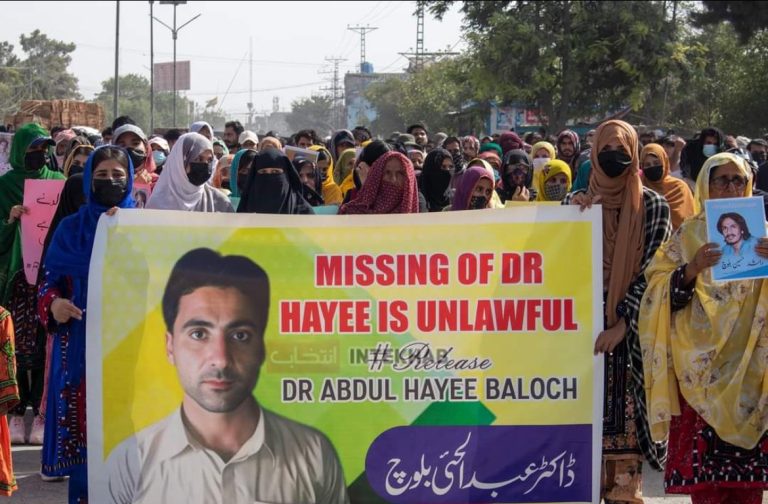
A rally and protest demonstration were held in Quetta by the family of Abdul Hay Baloch to voice their opposition to his forced disappearance.

On Tuesday, the family of Dr. Abdul Hai Baloch, a resident of Awaran, organized a rally starting from the University of Balochistan. The procession made its way through various roads and reached the Quetta Press Club, where the relatives of the missing individuals expressed their grievances.

The rally saw significant participation, including relatives of other forcibly disappeared persons. The demonstrators carried photographs of the missing individuals and chanted slogans condemning the forced disappearances.

During the rally, Bakhtawar Baloch, the sister of Dr. Abdul Hai Baloch, addressed the crowd, saying that her brother was forcibly disappeared by Pak Army forces on June 1, 2024. She said that despite three months having passed, there has been no information regarding his whereabouts.

Bakhtawar Baloch highlighted that her brother is an occupied-government employee working as an OT operating assistant at Awaran District Hospital. She said that the Pakistan security forces have abducted him from his clinic and demanded that if there are any allegations against him, he should be presented in court. She further demanded that if there are no charges, her brother should be released to spare the family further distress.

Additionally, the protest included relatives of other individuals who have been victims of forced disappearances in Pak-occupied-Balochistan. They called on the occupied-authorities and officials to bring their loved ones back into the public eye.

The protesters also criticized the Pak Army’s offer of monetary compensation in exchange for the recovery of their loved ones, describing it as an insult to their suffering. They have been struggling for years for the return of their missing family members and urged the occupied-authority to provide justice if it cannot offer anything else.

Flash floods ravage Ishokman valley, disrupt livelihoods in POGB

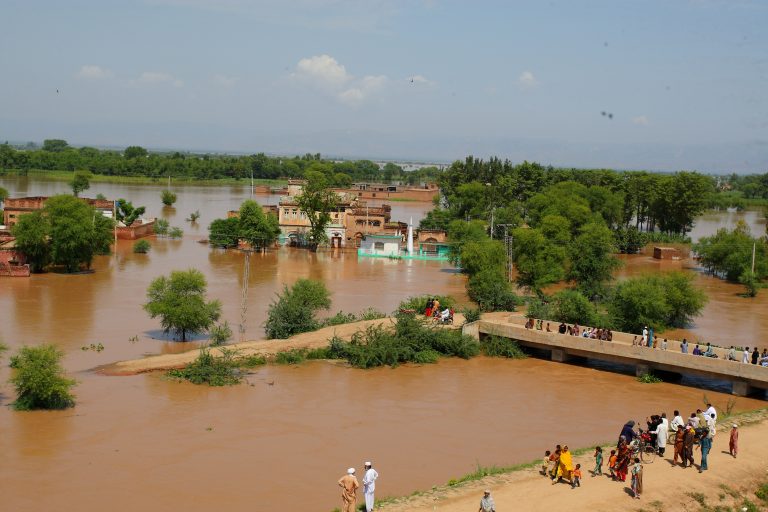
Flash floods have wreaked havoc in Ishokman Valley, located in northern Pakistan-occupied Gilgit-Baltistan (PoGB), leading to extensive damage and disruption across multiple regions.

The recent melting of the Badswat Glacier has resulted in severe damage. The floods have destroyed a temporary bridge and approximately 1,000 feet of road infrastructure in Badswat. This has isolated the areas of Ganjabad, Borth, Bazar Katu, Yazben, and Mutramdan by severing land connections between Badswat and Mutramdan.

As a result, around 400 households in these regions are facing significant difficulties in accessing essential services, including transportation and education for children. The current crisis has been exacerbated by drastic climate changes and inadequate local administrative response by the occupied-authorities.

Other villages in Ishokman, such as Center Kot and Faizabad Bala, have also suffered extensive damage. Land connections have been disrupted at three different locations, with the bridge in Kot Pain facing the risk of complete erosion by the river. Five residential houses have been damaged, and four shops and cattle sheds have also been partially affected. Major irrigation channels in Ishokman Proper have been damaged, raising concerns about the potential drying up of fertile lands due to interrupted water supply.

This disaster follows similar issues previously experienced in the Hunza Valley, where rapid glacier melting and river overflow destroyed numerous households and disrupted livelihoods. The lack of an effective local administrative response left many residents in distress.

Similar flood-like conditions were observed earlier on the outskirts of the Skardu and Shigar districts. However, inadequate rescue and assistance efforts from local authorities resulted in the destruction of private property and homes, particularly affecting poorer individuals.

Pak Army-backed Sindh police brutally attacks activists, arrests six

In a recent crackdown on Sindhi political activists, police have arrested six individuals, including Javed Mangrio, Zahid Chano, and Sanwal. Reports indicate that the arrested activists were subsequently injured by police. Two others, Sajjad Chana and Farooq Abbasi, remain unaccounted for. They have been abducted by the Pak Army.

In a distressing video statement, Zahid Chano revealed that police had shot him in the leg, causing severe injury. Chano expressed skepticism about the Sindh occupied-government’s willingness to address their grievances but expressed hope that higher authorities would intervene.

The incident underscores the broader issue of systematic persecution faced by Sindhis, which includes enforced disappearances, extrajudicial killings, and the suppression of religious minorities. The plight of Sindhi Hindus has been exacerbated by the looting of local resources, further compounding their suffering.

Notably, this crackdown is not an isolated incident, earlier Sindhi nationalist and teacher Hidayat Lohar in Larkana was brutally killed. Lohar was murdered by elements of the Paki establishment while en route to his school, highlighting the ongoing violence and repression against those advocating for Sindhi rights.

The Pakistan Army’s brutal tactics against various ethnic groups have been a recurring issue, aiming to stifle dissent and suppress voices of opposition. The recent attack on peaceful activists is a stark reminder of the mercilessness of the Army and the urgent need for international attention and intervention to address these human rights abuses.

Local leader slams PoJK’s inconsistent school curriculum

Shaukat Nawaz Mir, a prominent local leader from Pakistan-occupied Jammu Kashmir (PoJK), has raised alarm over the persistent inconsistencies in the region’s school curriculum, blaming the education department for its ambiguity.

Mir’s concerns echo a growing frustration among parents and students, who are struggling with the unclear curriculum that hinders both current academic progress and preparation for higher education.

“This issue has been ongoing for at least three years,” Mir said. “Previously, PoJK’s education system was governed by multiple education boards, including the Federal Board of Intermediate and Secondary Education, the Punjab Province education board, the Elementary & Secondary Education Department of Khyber Pakhtunkhwa, and the PoJK board.”

He further explained that the lack of a standardized education system led to schools using textbooks at their own discretion, with some boards, such as the Mirpur board, expressing dissatisfaction with the quality of the books.

PoJK Education System Under Fire

Following a court order, a decision was made to standardize the educational material, allowing only textbooks with No Objection Certification (NOC) from the PoJK board. However, Mir criticized the decision for its lack of clarity on the specific content to be taught in schools.

“I don’t understand why the education department isn’t concerned about the time being wasted for our children and the jeopardization of their futures,” Mir said. “The academic session is nearing its end, yet there is still no consistent pattern in PoJK’s textbooks. Parents are left confused about their children’s studies, and students preparing for higher education are uncertain about their study materials. Even the court’s decision has been vague and not straightforward. This lack of clarity, along with delays in book production and supply, is causing significant chaos.”

Additionally, a local businessman from PoJK highlighted the broader implications of the curriculum confusion. “The disarray among education boards is also affecting the business community,” he said. “We are stuck with large stocks of textbooks from various boards—federal, PoJK, and Mirpur. This uncertainty is not only problematic for students but also for us as we struggle to manage our inventories and predict if they will sell.”

The ongoing issues in PoJK reflect a broader neglect by the occupying authorities. The Pakistan Army’s lack of genuine concern for the people of PoJK is evident, as they prioritize exploitation and use of the region against India over addressing local crises. Essential infrastructure, including education and healthcare, is often overlooked by the occupied government, leading to widespread dissatisfaction.

From spy chief to scapegoat: Legal & political drama of Lt Gen Faiz Hameed’s court martial

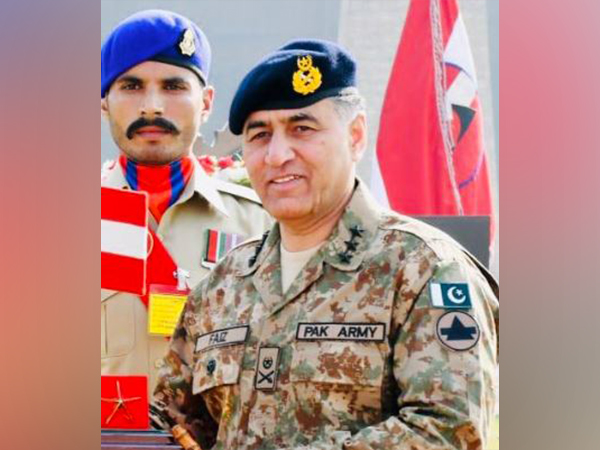
While announcing Rawalpindi’s decision to try its own former spymaster Lt Gen Faiz Hameed [Retired] by a Field General Court Martial [FGCM], Pakistan Army’s media wing Inter Services Public Relations [ISPR] clarified that the same was done in compliance of orders from the Supreme Court “to ascertain correctness of complaints in Top City Case made against Lt Gen Faiz Hameed (Retd).”  

The statement added that the accusations against the former Army spy chief were found to be true by a court of inquiry and “Consequently, appropriate disciplinary action has been initiated against Lt Gen Faiz Hameed (Retd), under provisions of Pakistan Army Act.” ISPR also mentioned that “multiple instances of violation of Pakistan Army Act [by Lt Gen Hameed] post retirement have also been established.”

ISPR’s failure to provide details of the nature of violations allegedly committed by the former Director General [DG] of Inter Services Intelligence [ISI] after his retirement has naturally raised suspicions that some other considerations were at play and the decision to court martial him has a political angle. This apprehension has gained further strength as former Prime Minister Imran Khan’s proximity to Lt Gen Hameed is no secret and leaders of the ruling parties have said as much in no uncertain terms.

Dawn has rightly opined that the “armed forces should dispel the impression being created in some quarters that the arrest is somehow a political one,” and astutely pointed out that “It ought to be asked why it took so long to investigate the former spy chief, especially when the armed forces claim to have deployed very strict internal controls to ensure accountability.” 

Rawalpindi’s Power Play

With ISPR’s subsequent announcement that three retired Army officers have also been taken into military custody “in connection with the FGCM proceedings [against Lt Gen Hameed] for their actions prejudicial to military discipline,” the plot only gets thicker, because this section of The Pakistan Army Act is meant to be used only in cases where crime the committed doesn’t fall within purview of any specified offence. 

However, by adding that “Further investigations of certain retired officers and their accomplices for fomenting instability at the behest of in collusion with vested political interests are continuing,” ISPR has left no room for any doubts. It’s evident that Rawalpindi is clearly trying to politically emasculate Khan completely by spinning its narrative of an anti-national nexus between Khan and his Pakistan Tehreek-e-Insaf [PTI] party and Lt Gen Hameed along with his coterie of retired Army officers.

That Pakistan Army chief Gen Syed Asim Munir has an axe to grind with both the PTI chief and former DG ISI is no secret-the former was responsible for his unceremonious ouster from the prestigious DG ISI appointment while the latter was the one Khan wanted for this job. The May 9 anti-Army riots in Pakistan gave Gen Munir an excellent opportunity to kill two birds with one stone, and he hasn’t wasted it.

There can be no two views that the current political crisis in Pakistan has been precipitated by Gen Munir’s reckless attempt to replicate his predecessor Gen Qamar Javed Bajwa’s stratagem of installing a “selected” prime minister. This he did by firstly manipulating the elections using every trick in the book to discredit Khan and the PTI party, followed by vote rigging and even manipulating results in favour of PML-N and PPP in several places.

Pakistan’s Military Establishment

The Friday Times editor-at-large Raza Rumi not only declared these elections “farcical,” but also warned that The new coalition government led by Pakistan Muslim League-Nawaz[PML-N] and supported by the Pakistan People’s Party [PPP] will be haunted by a deepening economic crisis and issues of legitimacy,”– a prediction that’s come true.

But Rumi went wrong on one issue. Mentioning the fact that “the PTI had already declared on numerous occasions that he is willing to talk,” TFT editor-at-large had reckoned “that time may have arrived, and within a year or sooner, a negotiated settlement cannot be ruled out.” However, Gen Munir’s outright refusal to engage with Khan has foreclosed this constructive option that could well resolve the ongoing political crisis created by the Army chief himself!

Another related issue is the role played by the judiciary. It was the Supreme Court of Pakistan that directed the Top City Housing Scheme owner to seek remedy for his grievances against Lt Gen Hameed through relevant channels including the Ministry of Defence. This court order pertains to a case filed by the plaintiff in November 2023 regarding an incident that purportedly occurred on May 12, 2017.

The Supreme Court’s decision to accept the petitioner’s plea even after a lapse of more than six years is indeed commendable. However, what defies comprehension is the apex court’s order of September 13, 2023 in which it cited the delay factor as a reason that in itself was good enough to merit rejection of an appeal.

Political Vendetta

This case pertains to an appeal filed by two Pakistan Army officers in 2000 against their conviction and prison term of four years awarded by a FGCM in 1996 on legal and technical grounds. The two officers along with 40 others were found guilty of conspiring to overthrow the Benazir Bhutto Government and eliminate the Army’s top by attacking the corps commanders’ conference venue where they were scheduled to congregate on Sep 30, 1995.

 On September 12, 2023, the Supreme Court rejected the issues raised by the petitioners on merit, while observing that the petitioners “could not give sufficient reason as to why they remained silent for years and did not invoke the constitutional jurisdiction well in time, therefore, on this score alone, their constitutional petitions are liable to be dismissed.” [Emphasis added].

Since the revision petition was filed in 2000, the convicted officers would have by then either already completed or were near completing their sentences, and so, what they were seeking was obviously the restoration of their honour and undoing the ignominy of being branded mutineers. So, while the Supreme Court graciously admitted the Top City Housing Scheme owner’s plea after a lapse of more than six years, why did it comment adversely on a four year delay by two aggrieved Army officers?

Perhaps a legal expert could clarify.

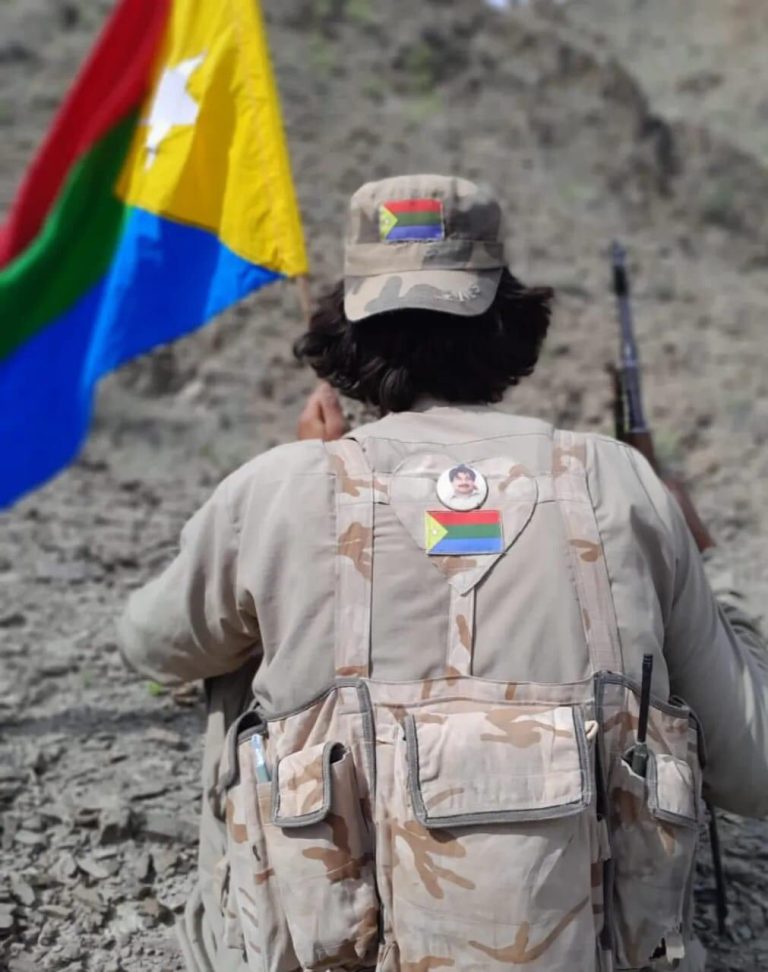
BLF issues final warning to timber mafia over deforestation in POB

Major Ghwaram Baloch, the spokesperson for the Balochistan Liberation Front (BLF), has issued a stern warning to the timber mafia operating in the Dazht region, urging them to halt their deforestation activities immediately or face severe repercussions. In a recent statement, the BLF emphasized that individuals involved in illegal logging could face arrest, hefty fines, and both financial and personal harm.

The BLF’s warning comes after a close monitoring of ongoing deforestation activities. The organization has identified all parties involved, including non-local contractors and influential backers. According to Major Baloch, the BLF has repeatedly asserted that it will not tolerate the exploitation of occupied-Balochistan’s resources, deforestation, large-scale commercial timber use, or wildlife hunting. The timber mafia has been given a final warning to cease their criminal activities without delay.

The spokesperson revealed that public complaints have highlighted extensive deforestation in areas such as Kanchti, Basholi, Kohk, and Kadan, extending up to Jan Muhammad Bazaar. Both non-local and local contractors have been engaged in deals for tree cutting. Major Baloch emphasized that occupied-Balochistan’s forests are a national heritage, not the property of any individual or tribe. The BLF will not allow any part of these forests to be cut down for commercial purposes. He warned that those treating Balochistan as abandoned and turning this illegal activity into a ‘business’ should remember that there are institutions defending Baloch national interests.

Timber Mafia in Dazht

The BLF, representing the collective strength of the Baloch people, aims to use this power in accordance with public aspirations for Baloch national interests. The organization expressed its desire that this national power not be diverted or fragmented. In light of this, the BLF has called upon all conscious individuals to unite in the protection of Pak-occupied-Balochistan’s forests, wildlife, and environment to avoid the necessity of using force to halt these activities.

Major Baloch highlighted that climate change presents a global challenge, with visible effects in POB evident in annual flood events during the rainy season. He warned that deforestation will exacerbate these issues. Environmental experts have observed a significant decline in tree planting within POB. The Pak military, he said, is also involved in burning forests and acts as a major patron of those engaged in deforestation.

The BLF concluded with a final warning to the timber mafia: cease deforestation activities immediately, or face accountability for financial and personal damages.

PTM invites major political leaders to October 11 Jirga

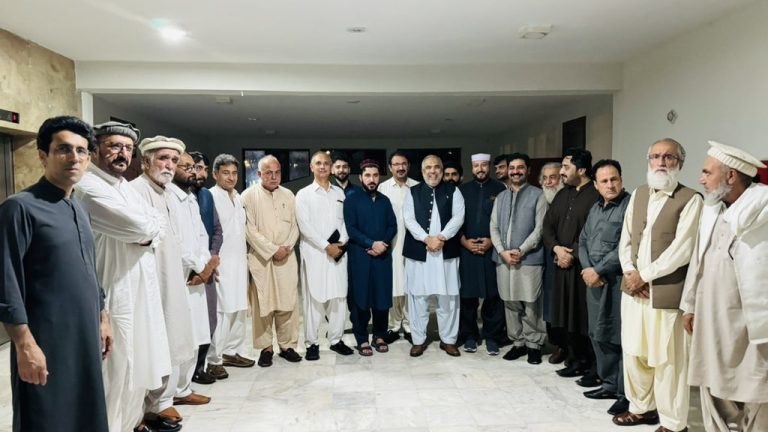
PTM Chief Manzoor Ahmed Pashteen, accompanied by leaders of the Jirga formed for October 11, met with key figures from the Pakhtunkhwa Milli Awami Party (PMAP) and Pakistan Tehreek-e-Insaaf (PTI). The meeting aimed to discuss the objectives of the Pakhtun Jirga scheduled for October 11 and underscore its significance for the region.

The PTM delegation, including Manzoor Ahmed Pashteen, Haji Abdul Samad Khan, Khairul Amin, Malik Inayatullah Khan Kasi, Saber Bilal, Sain Anwar, Imran Afridi, and Ameen Khan, presented a detailed agenda for the upcoming Jirga. They emphasized the urgent need for unity and a collective effort towards a socially and economically stable path, moving away from a war economy. Pashteen highlighted that peaceful political resistance is the only viable solution to the ongoing conflict and instability in Pakhtunkhwa.

On October 11, the representative delegation, including Jangrez Momand, Professor Faiz Muhammad Shehzad, Dr. Gul Alam, Principal Rafiq Aryan, Zahir Shah Khan Kakhar, Malik Wali Kasi, Haji Nasruddin, Sardar Ayub Sherani, Sardar Haftay Khan, and Watan Gran, also visited key leaders of the Awami National Party (ANP) and PTI. This visit was part of their broader effort to invite various Pashtun parties to the Jirga and showcase resistance against the atrocities inflicted by the Pak Army and foster unity among the Pashtun community.

The delegation’s outreach to ANP, PMAP, and PTI, and their plans to invite additional Pashtun parties, mark a critical step towards consolidating efforts for the safety and future of Pashtuns. Pashteen and his team have made it clear that now is the time for Pashtun leaders to set aside differences and work together for their people who have been under suppression of the Punjabi Pakistan Army.

ISKP kills Tablighi Jamaat member Haji Sher Zamon in Bajaur

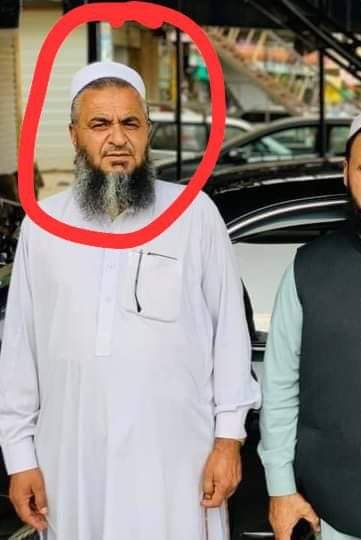
The Islamic State’s Khorasan branch has claimed responsibility for a recent attack in Bajaur merged district of Khyber Pakhtunkhwa. The attack targeted Haji Sher Zamon, a prominent associate of the Tablighi Jamaat and a well-known businessman. According to the statement from the group, Zamon was accused of espionage. He was shot dead by unidentified gunmen at the gate of the Tablighi Markaz in Bajaur. Police are currently investigating the incident.

The recent surge in violence, particularly near the Afghanistan-Pakistan border, appears to be part of ISKP’s broader strategy to destabilize local political structures and incite chaos. Since the Taliban’s takeover in August 2021, ISKP has been actively orchestrating attacks across the country, denouncing the Taliban regime as “apostate” and exacerbating the violent conflict between the two groups.

TTP launches deadly attack on Pak Army in Dera Ismail Khan

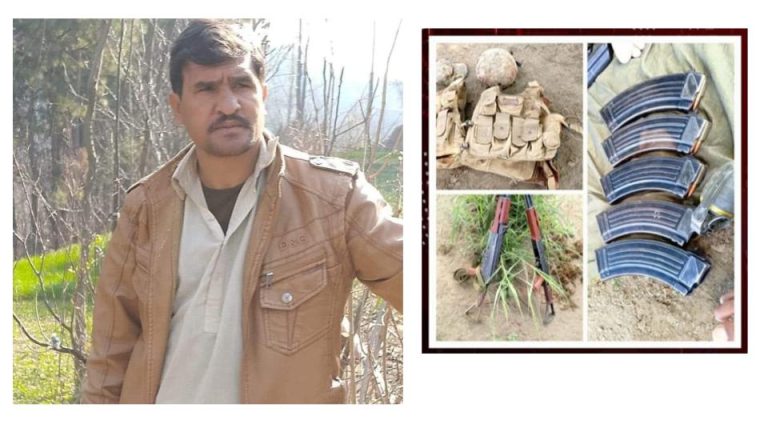
In a recent escalation of violence in Khyber Pakhtunkhwa, an unofficial TTP channel has claimed responsibility for a new attack on Pakistan Army forces in the Kulachi sub-district of Dera Ismail Khan district. The attack resulted in the deaths of five soldiers and injuries to five others. The assailants reportedly seized two Kalashnikov assault rifles, seven magazines, a walkie-talkie, a hand grenade, and other equipment from the targeted soldiers.

In contrast, Pak sources have confirmed the deaths of two soldiers and injuries to three others in the same attack. Additionally, pro-TTP sources reported thwarting a raid by Pakistan security forces in Bajaur district of Malakand division, which purportedly left at least six soldiers dead. Pak security officials have confirmed the deaths of three soldiers—Naik Inayat, Lance Naik Umar Hayat, and Sipahi Waqar—in an attack on a security post in the same area, but have not corroborated details of the raid.

The ongoing conflict has intensified scrutiny on the treatment of Pashtun communities, who have faced systematic targeting and aggression from the predominantly Punjabi Pak military and authorities. The Pashtun community has been disproportionately affected by extrajudicial killings and ongoing human rights abuses perpetrated by the Paki establishment.

The situation is further complicated by the fact that the Pakistan Army, which had previously supported and created the Tehrik-i-Taliban Pakistan (TTP), now finds itself under attack by this very group. Amidst this turmoil, innocent Pashtuns are increasingly caught in the crossfire, suffering from violence inflicted by both the Army and the TTP.

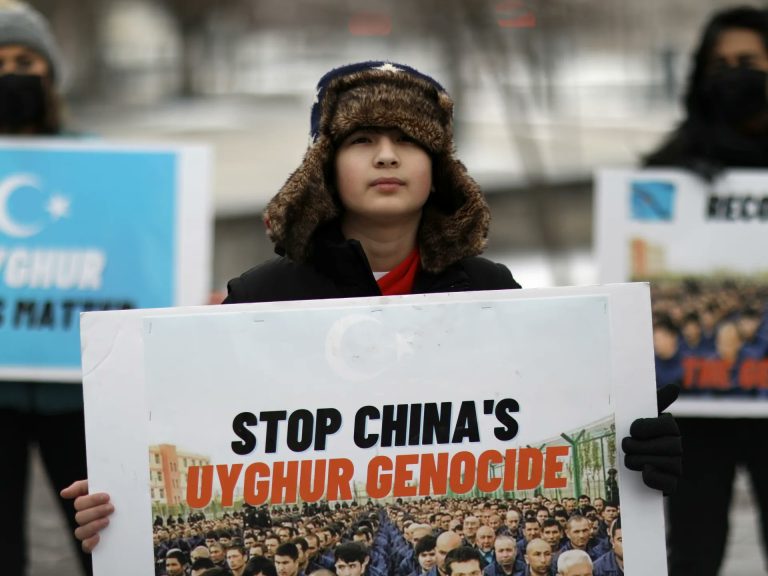
China’s ongoing Uyghur genocide: The world’s failure to act

Since May 2014, China has been systematically committing genocide against the Uyghurs and other Turkic peoples in East Turkistan, and yet, the international community has largely failed to take decisive action. Despite numerous symbolic recognitions, condemnations, and minor sanctions, the Chinese government persists with its campaign of genocide and crimes against humanity, highlighting a severe humanitarian crisis and the largest genocide of an ethnic or religious group since the Holocaust.

Millions of Uyghurs, Kazakhs, Kyrgyz, and other Turkic people remain imprisoned in concentration camps, while millions more are subjected to forced labor. This ongoing crisis underscores the global community’s failure to honor the promise of “Never Again,” as these atrocities unfold in real-time in Occupied East Turkistan.

On August 14, the Uyghurs commemorated the 100th anniversary of the martyrdom of Abdulqadir Abdulwaris, also known as Abdulqadir Damolla, a revered leader of the East Turkistan National Movement who was executed by Chinese forces. This anniversary serves as a poignant reminder of the historical and continuing struggles of the Uyghur people.

Genocide in East Turkistan

Historically, East Turkistan was an independent country until its invasion and annexation by China in 1949. Since then, the region has endured relentless colonization, systemic oppression and cultural genocide. The recent abduction of over a million Uyghur children, forcibly removed from their families and placed in state-run facilities, represents a calculated effort to dismantle Uyghur identity at its core. These children are being stripped of their language, culture, and faith, and are being moulded into instruments of the state’s assimilationist agenda.

Human rights organizations, including the United Nations Human Rights Council, as well as governments and individuals worldwide, are urged to demonstrate their commitment to human rights by calling for an immediate investigation by the International Criminal Court (ICC) into China’s ongoing genocide. Support for East Turkistan’s pursuit of justice, freedom, and independence is crucial.

Despite the Chinese authorities’ efforts to erase the identity and existence of the East Turkistani people, resistance remains strong. Advocates call for global solidarity under the banner of #StandForEastTurkistan and for humanity. It is imperative to send a clear message to China and the international community that the struggle for East Turkistan’s freedom and sovereignty will continue until justice is achieved.