Home Blog Page 61

Severe floods and heavy rainfall devastate POB; no action from Pak authorities

As of Monday, ongoing monsoon rains have caused significant damage in Pak-occupied-Balochistan, resulting in at least 19 deaths and 11 injuries, and affecting over 3,000 individuals.

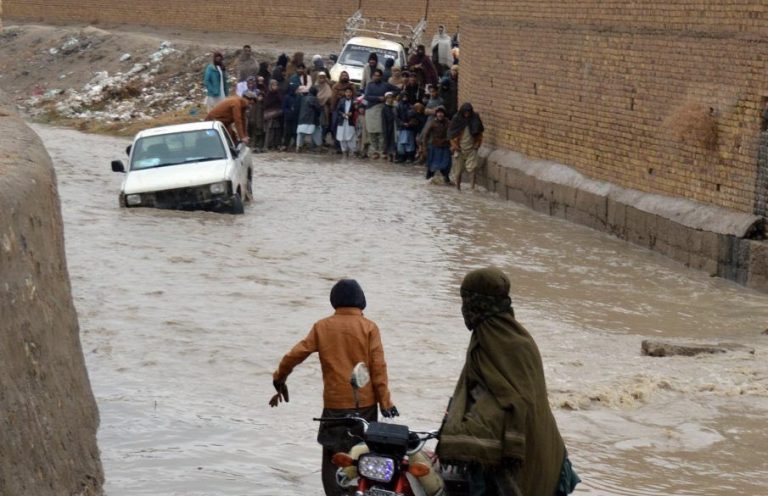
Heavy rainfall and subsequent floods have wreaked havoc across several districts of occupied-Balochistan over the past few days. Bolan, Jaffarabad, Khuzdar, Lasbela, Mastung, Noshki, and Sohbatpur have all suffered significant losses of life and property. The deluge has led to the destruction of homes, displacement of populations, closure of highways, damage to bridges, and breaches in canals—highlighting the failures of both State and Provincial occupied-authorities to address such crises effectively.

The torrential rains have caused numerous homes to collapse, major roads to be closed, and several livestock to be killed. Areas including Chaman and Qila Abdullah are among the worst affected. In Zamanabad, floodwaters have entered homes, and stormy winds have damaged solar panels. Jaffarabad has seen electricity poles collapse, while railway lines in Quetta, Chaman, and Nushki have been swept away by floodwaters, disrupting train services.

The floods have resulted in various incidents, injuring 10 individuals. In Mastung, floodwaters have damaged homes, and a woman was swept away by the deluge. In Khuzdar, heavy rains have inundated multiple villages, causing severe damage. The Nasirabad Division has been hit hard, with breaches in three canals washing away 31 villages and affecting over 25,000 people. Many are left without access to water and food, awaiting rescue.

The floods and heavy rains have exacerbated ongoing issues of hunger, poverty, and lack of access to livelihood, health, and education in Pak-occupied-Balochistan. Despite the recurrent nature of these disasters, no effective measures have been implemented by the puppet state to manage this humanitarian crisis.

This neglect reflects the colonial policies towards the Baloch people, where development efforts seem aimed at reinforcing exploitative structures rather than genuinely addressing the needs of the population. The disparity in rescue and relief efforts, favoring those loyal to the Pak Army over the common people, suggests a form of systemic neglect akin to genocide, with conditions calculated to lead to the destruction of communities.
Five arrested in connection with gang-rape of a minor on Uttarakhand government bus

Five individuals, including the driver and conductor of a government bus, have been arrested in connection with the alleged gang-rape of a teenage girl at the Dehradun bus stand. The incident reportedly took place on August 12, and police were alerted on Saturday evening.

Dehradun Senior Superintendent of Police (SSP) Ajay Singh confirmed that those arrested include Dharmendra Kumar (32), the bus driver, and Devendra (52), the conductor. The other accused are Rajpal (57), Ravi Kumar (34), and Rajesh Kumar Sonkar (38), who are bus drivers and a cashier, respectively.

According to police, the accused are:

  • Dharmendra Kumar: Driver of the bus
  • Devendra: Conductor of the bus
  • Rajpal: Bus driver
  • Ravi Kumar: Bus driver
  • Rajesh Kumar Sonkar: Cashier at the Uttarakhand Roadways bus stand

The bus involved in the alleged rape has been impounded, and forensic teams are gathering evidence from the scene.

The incident came to light after the Dehradun Child Welfare Committee (CWC) discovered the victim, a girl aged 16-17, sitting alone at platform number 12 of the Interstate Bus Terminal (ISBT) late on August 12. The CWC sent her to Bal Niketan, a government girls’ home, for her protection. During counseling, the victim disclosed the rape, leading CWC member Pratibha Joshi to file a police complaint on Saturday evening.

Rape on Uttarakhand Bus

Based on the complaint, a case was registered at Patel Nagar police station under Section 70 (2) of the Bharatiya Nyaya Sanhita and the Protection of Children from Sexual Offences (POCSO) Act. SSP Singh formed a special police team to investigate and met with the victim to gather information.

Initial statements from the girl were inconsistent. She first claimed to be from Punjab but later admitted to being from Moradabad, Uttar Pradesh. She had traveled from Delhi to Dehradun, where the alleged assault took place. The girl had previously left home without informing her family, who had been involved in locating and bringing her back on multiple occasions.

During interrogation, Devendra said that he encountered the girl at Kashmiri Gate ISBT in Delhi, where she was seeking directions to Punjab. He suggested she take his bus to Dehradun, with plans to transfer to another bus later. Once the bus arrived in Dehradun and passengers disembarked, Devendra and Dharmendra Kumar raped her. Other drivers, Ravi and Rajpal, reportedly joined in, followed by Rajesh Kumar Sonkar, who raped the girl after being informed by Devendra.

The incident has sparked widespread outrage. Uttarakhand Pradesh Congress Committee President Karan Mahara condemned the assault, criticizing the state government for its handling of law and order and women’s safety. He drew attention to the recent alleged rape and murder of a nurse in Rudrapur, accusing the state of failing to instill fear among criminals.

In response, BJP state media in-charge Manveer Singh Chauhan defended the government’s actions, saying that measures are in place to ensure the safety of women. He accused the Congress of engaging in “insensitive politics” and highlighted the party’s failure to address similar issues elsewhere, such as the rape and murder of a doctor in West Bengal.

Residents protest in POJK over disappearance of Zarnoosh Naseem

The family of Zarnoosh Naseem, a resident of Bagh district, is in acute distress following his recent disappearance. Local residents have mobilized in protest, demanding immediate action and accountability from authorities.

Zarnoosh Naseem’s disappearance has intensified concerns about the rising number of enforced disappearances in the region. Protesters are calling for those responsible for Naseem’s abduction to be brought to justice and are urging the Supreme Court of Pakistan to take notice of the growing issue of enforced disappearances in POJK.

Protesters have voiced their demand for adherence to international conventions, emphasizing that Zarnoosh Naseem’s family deserves to know his whereabouts and the reasons behind his disappearance. They argue that the act of forcibly disappearing individuals is a blatant violation of international laws and norms.

The protesters have highlighted that freedom of speech and expression, as enshrined in the United Nations Charter, should be respected. They assert that no citizen should be subjected to enforced disappearance for exercising these fundamental rights.

In their statement, the protesters have called for the immediate release of Zarnoosh Naseem and all other individuals who have been forcibly disappeared in Kashmir. They have warned that if their demands are not met, they may organize a march to Islamabad to further press their cause.

Local residents have criticized Pakistan’s reputation for forcibly disappearing its citizens and have urged human rights organizations to intensify their efforts in advocating for the recovery of missing persons. They have also appealed to the Supreme Court of Pakistan to address the legal justifications under which Kashmiri citizens are being detained.

Quetta: Protesters in Quetta decry genocide & enforced disappearances by Pak Army

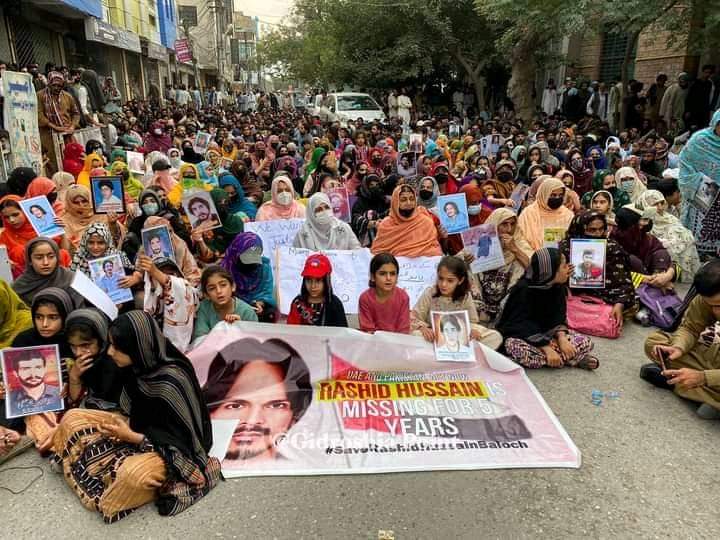
A rally was held in Quetta, the capital of Pakistan-occupied Balochistan, on Sunday by the family of Rashid Hussain, who has been missing for over five years. The protest was joined by a large number of political activists and families of other forcibly disappeared persons, highlighting the ongoing crisis of enforced disappearances in the region.

Participants carried pictures of their missing loved ones and banners, chanting slogans against enforced disappearances and the genocide of the Baloch people.

Rashid Hussain’s mother, who has been fighting for her son’s return, revealed that her son was arrested by secret agencies of the United Arab Emirates on December 26, 2018, and subsequently transferred to Pakistan. She said that her son was forcibly disappeared from the UAE at the behest of the Pakistan Army, with both Pakistan and UAE intelligence agencies were involved in the abduction.

Ongoing Crisis of Enforced Disappearances

For the past five years, Rashid Hussain’s family has been seeking justice, approaching courts and commissions tasked with investigating missing persons. However, instead of finding justice, they have faced harassment, with their legal cases being dismissed by the courts. The situation remains grim, as the High Court recently halted hearings on their case and postponed it indefinitely.

The family has made an urgent appeal to human rights organizations and the international community, urging them to question the Pakistan authorities about Rashid Hussain’s whereabouts and to help bring an end to their prolonged agony.

Meanwhile, another enforced disappearance was reported in Awaran district, where Khan Muhammad, son of Wahid Bakhsh, was taken into custody by the Pakistan military on August 15 from the Jhao Kohru area. His family, who has received no information about his whereabouts, is appealing to political, social, and human rights organizations to assist in his recovery.

These incidents are part of a disturbing pattern of enforced disappearances in Pakistani-occupied Balochistan, where such abductions and extrajudicial actions have been used as tools of oppression since the region’s forcible capture in 1948. While the area’s resources have been exploited, the local population continues to face severe human rights abuses, including enforced disappearances, marginalization, and extrajudicial killings, as a means of maintaining control over the Baloch community.

PoJK activist condemns Pakistan for no development in occupied regions

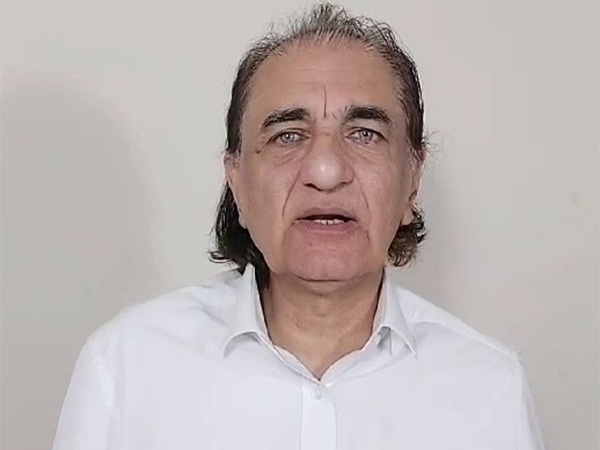
Amjad Ayub Mirza, an activist from Pakistan-occupied Jammu and Kashmir (PoJK), released a statement on Thursday highlighting the severe developmental challenges plaguing the region. He accused Pak occupied-government of deliberately keeping PoJK underdeveloped to maintain control over the local population, thereby perpetuating systemic abuses without facing resistance.

Mirza’s statement harshly criticized the governance in PoJK, asserting that the Muzaffarabad Legislative Assembly functions merely as a puppet controlled by Pakistan’s home ministry and the Inter-Services Intelligence (ISI). Despite the region’s pressing needs, Mirza said, there has been no significant effort to stimulate economic growth or improve infrastructure.

The region remains economically and infrastructurally stagnant, with no progress in industrial development or tourism, sectors that are tightly controlled by Pakistan’s military forces. Mirza also highlighted the dire state of infrastructure in PoJK, pointing out the frequent power outages that can last up to 23.5 hours a day. He questioned how any industry could thrive under such conditions and decried the acute shortage of clean drinking water.

PoJK’s Grim Reality

Residents are often forced to rely on river water, despite the region’s abundant natural water resources, exposing them to significant health risks. Additionally, Mirza condemned the poor state of roads in both PoJK and Pakistan-occupied Gilgit-Baltistan (PoGB), citing numerous fatal accidents resulting from unsafe road conditions.

“The condition of roads is pathetic. People often die from falling into deep valleys because the government has failed to build safe roads in PoGB and PoJK,” Mirza said, describing the hazardous infrastructure. He also criticized the healthcare system, saying that many hospitals lack basic amenities, qualified doctors, and essential medications, with military hospitals being the only facilities properly maintained.

The educational sector fares no better, according to Mirza, with government schools and colleges in a deplorable state. Many institutions suffer from a shortage of classrooms, teachers, and resources, leaving students with limited educational opportunities. Private schools, meanwhile, are often financially out of reach for average families.

Pak Army kills seven TTP militants in Kurram operation

In a significant operation, Pakistan security forces have eliminated seven militants belonging to the banned Tehrik-e-Taliban Pakistan (TTP) in the Kurram district.

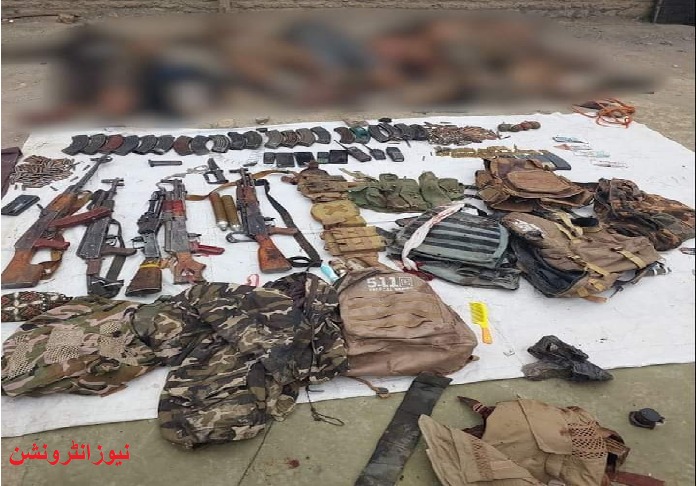
Acting on intelligence, the security forces launched an operation in the area, resulting in the deaths of seven TTP militants and the injury of five others. A substantial cache of weapons and ammunition was also seized during the operation.

Reportedly, these militants had been terrorizing the region, instilling fear among the residents and extorting money. Those who refused to comply with their demands were reportedly shot.

This operation marks a significant blow to the TTP’s activities in the region, where the group had been actively involved in spreading terror and violence.

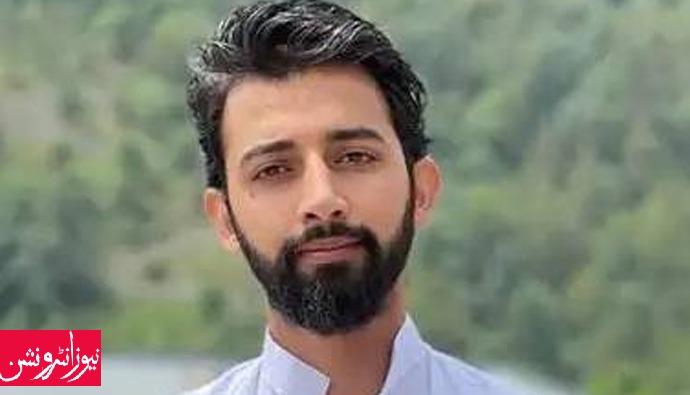
Lahore High Court orders police to locate abducted YouTuber Aun Ali Khosa

The Lahore High Court (LHC) has instructed the police to locate the missing YouTuber and artist Aun Ali Khosa by August 20. The court’s directive comes amidst concerns following Khosa’s abduction by unidentified armed men late Wednesday night.

A petition filed by Khosa’s wife, Binish Iqbal, says that her husband is being held unlawfully by law enforcement authorities. The petition raises fears for Khosa’s safety and suggests that he may be a victim of enforced disappearance.

Justice Shahbaz Ali Rizvi, who presided over the petition, has ordered the Capital City Police Officer (CCPO) Lahore to produce Khosa in court by the specified date.

Deputy Inspector General (DIG) Operations Lahore, Faisal Kamran, has said that the police had not received any formal complaints regarding Khosa’s abduction. He added that an investigation will be launched once a formal complaint is filed.

Lahore Abduction

The petition details that Khosa, a well-known digital content creator with 137,000 YouTube subscribers, was forcibly taken from his apartment by a dozen police officers and individuals in plain clothes. The armed men reportedly broke down his door, confiscated his phone, laptop, computer system, digital camera and departed in a Fortuner and a Black Revo double-cabin vehicle.

A solicitor who attempted to follow the abductors was manhandled and pushed into a Black Vigo before the vehicles drove away. The solicitor reportedly inquired about the reason for the detention but received no explanation.

On August 15, Khosa’s brother, Ali Sher Khosa, urged the public to pray for his safe return and to raise awareness about the incident. The Human Rights Commission of Pakistan (HRCP) has expressed concern over the possible connection between the abduction and Khosa’s work as a satirist. Khosa had recently released a song titled “Bill Bill Pakistan” on his YouTube channel, which addressed issues of high electricity bills. The song has since been deleted.

The YouTuber is known for his satirical videos and criticism of the current occupied-government on social media. The HRCP has called for his immediate recovery, highlighting the incident’s troubling implications for freedom of expression in Pakistan.

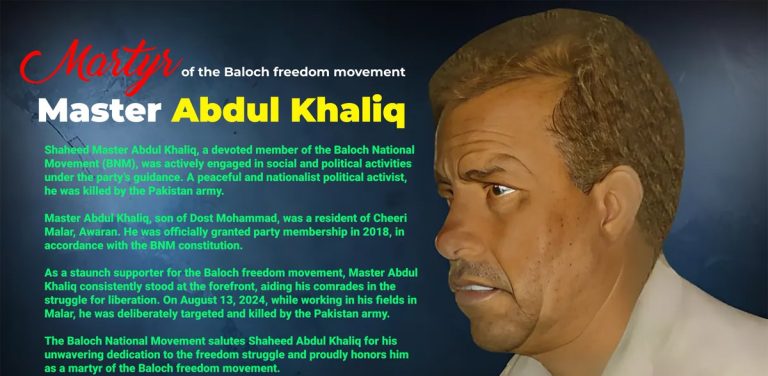
BNM proclaims Abdul Khaliq a martyr after activist’s killing by Pak Army

The Baloch National Movement (BNM) has condemned the killing of Master Abdul Khaliq, a party member, by the Pak Army. In a statement released to the media, the BNM described Khaliq as a dedicated political activist engaged in social and political work under the party’s directives.

Master Abdul Khaliq, son of Dost Mohammad, was a resident of Cheeri Malar, Awaran. He was officially granted party membership in 2018, in accordance with the BNM constitution. The party highlighted his role as a committed supporter of the Baloch liberation movement and his efforts to assist fellow freedom fighters. As a staunch supporter for the Baloch freedom movement, Master Khaliq consistently stood at the forefront, aiding his comrades in the struggle for liberation.

The BNM reported that Khaliq was shot and killed by Pakistan forces on August 13, 2024, while working in his fields in Malar. The party has labeled him a martyr of the Baloch liberation struggle and paid tribute to his dedication and sacrifice.

Since its forcible annexation of Balochistan in 1948, the Pak Army has consistently employed military force to suppress the Baloch people’s struggle for independence. This oppressive occupation has led to decades of human rights abuses, including enforced disappearances, extrajudicial killings and widespread violence against civilians.

Pak Army carries out helicopter operations in Quetta

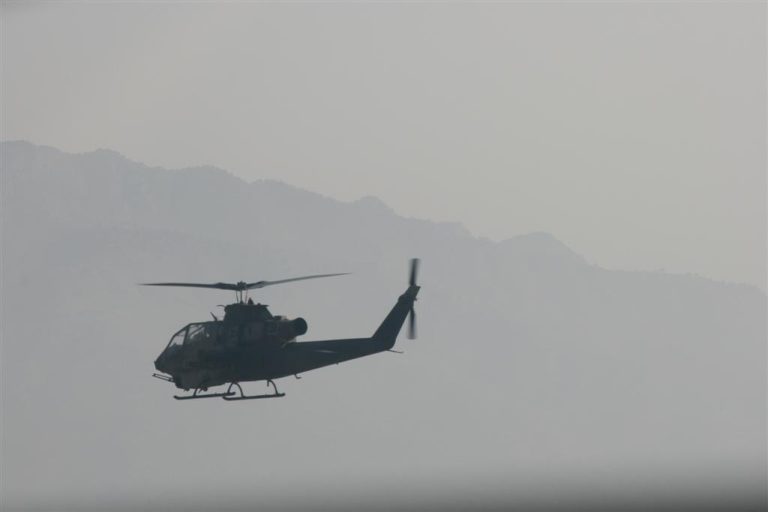
Pak Army helicopters have continued their flights over the outskirts of Quetta, with ongoing operations reported in the regions of Zargoon, Shaaban, Suresh, Wali Tangai and Tor Shar since Friday.

Local authorities have not yet provided details about the nature or purpose of these flights. Additionally, regional sources have reported that shelling occurred in the area on Saturday. However, there are no available details on the extent of any damage or casualties resulting from the shelling.

The situation remains under observation as local residents and officials await further information from the authorities.

Balochistan, home to several freedom fighter groups, has seen an increase in attacks on the Pakistan Army. These groups have been actively opposing the brutality, oppression of the Pak Army and the China-Pakistan Economic Corridor (CPEC) have further fuelled discontent.

The frequency of attacks has risen following the Pak Army’s attempt to celebrate August 14 as Independence Day, aiming to project an image of peaceful annexation of Balochistan in 1948—a narrative contested by Baloch community. In response, there have been protests, marches and attacks on Paki establishments to counter this portrayal. The Army’s helicopter activity appears to be an attempt to control the escalating situation caused by the Baloch freedom fighters.

Pak Army opens fire on peaceful protestors in north Waziristan

The Punjabi Pak Army and Frontier Corps (FC) forces have fired upon peaceful protestors in North Waziristan, a region known for its rich deposits of metals and minerals. The incident left several people injured, including two members of the Pashtun Tahafuz Movement (PTM).

In the Dossali area of North Waziristan, the military and Frontier Corps (FC) detained several locals during the previous night. When residents united in protest on Saturday, demanding the release of those detained, the Punjabi Pak Army reportedly opened fire on the crowd, resulting in numerous injuries.

The incident follows the arrest and subsequent release of many locals, which occurred after intense resistance from the community. North Waziristan has been under increased scrutiny as Marri Petroleum and the Frontier Works Organization (FWO) continue extensive extraction activities. Furthermore, the internet network in the area has also been shut down to facilitate these extraction operations.

The Punjabi Pak Army treats north Waziristan as its private domain due to the region’s abundant natural resources. The Pakistan Army is exploiting the resources of the Pashtun community, using tactics such as shelling and the placement of landmines to instil fear and silence any dissent. Rather than providing security, these actions are an effort to conceal the military’s exploitation of the area.

The Army is fostering terrorist entities within Pakistan and scapegoating the Pashtun community to divert attention from their own actions. The ongoing exploitation of resources in the Khyber-Pakhtunkhwa highlands is depriving local inhabitants of their rightful ownership.