Home Blog Page 70

Khyber-Pakhtunkhwa: Sectarian violence in Kurram claims 40 lives, over 120 injured

A recent outbreak of sectarian violence in Pakistan’s northwestern Kurram district, located in Khyber-Pakhtunkhwa province, has resulted in at least 40 fatalities, prompting the Human Rights Commission of Pakistan (HRCP) to voice its concerns over the deadly tribal conflict.

The violence, which erupted several days ago due to a land dispute between rival tribes, has escalated into a broader sectarian conflict. Heavy weaponry was used as opposing factions targeted each other’s positions. The unrest has spread to multiple areas within the district, including Peewar, Tangi, Balishkhel, and several others.

In a statement posted on social media, the HRCP expressed deep concern over the significant loss of life in Parachinar, Kurram. The non-governmental organization highlighted the severe impact on ordinary citizens, whose freedom of movement and access to essential supplies have been curtailed due to the ongoing violence.

Local residents reported that missiles and rockets were launched towards the towns of Parachinar and Sadda. The conflict has led to the closure of educational institutions and markets, while major roads have been rendered impassable.

Protests in POJK

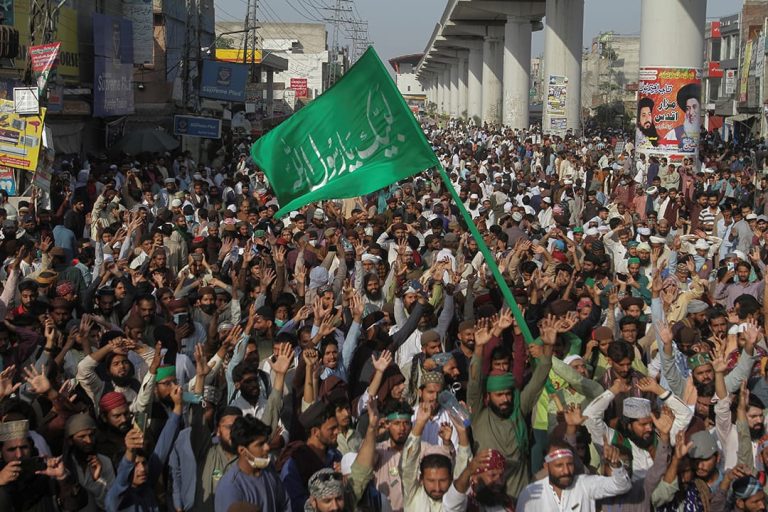
Hujjatul Islam Wal Muslim Alhaj Agha Syed Hasan Al Musawi Al Safawi, president of Jammu and Kashmir Anjuman Sharia Shia and patron of Jafaria Supreme Alliance Muzaffarabad, has strongly condemned the ongoing sectarian violence in Parachinar. The religious leader attributes the unrest to a deep-rooted real estate dispute that has spiraled into sectarian conflict.

In a statement, Agha Syed Hasan criticized the silence surrounding these atrocities, emphasizing that the victims are being targeted solely for their Shia identity.

He questioned: “Is killing the young man giving the call to prayer with a knife the solution to a real estate problem?” This highlights the brutal nature of the attacks and the disproportionate violence being employed.

The Shia leader urged the people to awaken to the gravity of these crimes and hold their occupied-authority accountable.

The situation in Parachinar has become increasingly dire. Official reports indicate at least 36 deaths and over 166 injuries resulting from recent armed confrontations. However, social media accounts suggest a far more devastating toll, with claims that the death count has surpassed 400.

While mainstream media reports cite a land dispute between different tribes as the root cause of the conflict, it’s important to note that these tribes are divided along sectarian lines, with some being Shia and others Sunni.

Protests in POGB

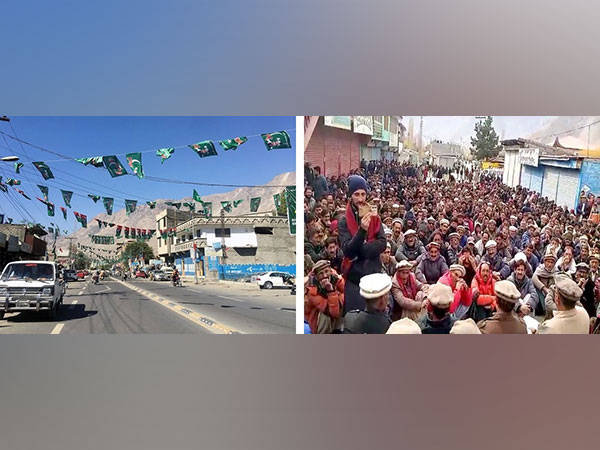
Protesters gathered along the Karakoram Highway in Pak-occupied-Gilgit-Baltistan to voice their opposition against the ongoing atrocities. The leaders expressed frustration over silence from the occupying authorities in the face of these abuses.

A particular point of contention raised during the protest was the reported suppression of Shia Muslims attempting to commemorate Imam Hussain. The followers of Hussain are being treated as criminals for practicing their faith.

A particular point of contention raised during the protest was the reported suppression of Shia Muslims attempting to commemorate Imam Hussain. The followers of Hussain are being treated as criminals for practicing their faith.

Efforts to broker a ceasefire between the Boshehra and Maleekhel tribes are reportedly underway, led by a tribal council from neighboring Hangu and Orakzai districts.

The sectarian violence between Shias and Sunnis is escalating, and responsibility for this situation lies with the Pak Army, who tacitly supporting Sunnis. Given that Shias are a minority in Pakistan and the Army is predominantly Punjabi Sunni, the minority has often been suppressed under the dominant majority regime.

PoGB traders protest over tax exemptions for cross border trade with China

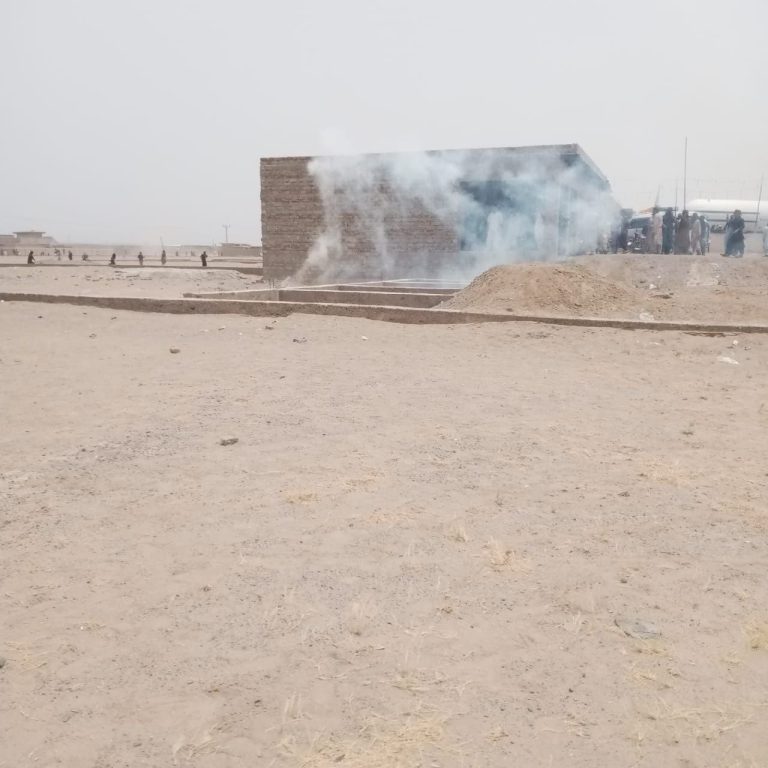
Traders from Pakistan-occupied Gilgit-Baltistan (PoGB) have initiated a sit-in protest at the NLC Dry Port in Sost, demanding the enforcement of a court directive on tax exemptions for cross-border trade with China via the Khunjerab Pass.

The protest that has now reached its third day, has brought trade operations to a halt, and traders have warned that further action, including blocking the Karakoram Highway, will be taken if their demands are not met. The occupied-government inaction is unfairly disrupting their trade and affecting their employment opportunities.

Hussain, a protest leader, emphasized the need for more effective changes to resolve ongoing problems. He pointed out that failures in managing critical issues have led to public discontent and suggested that a proactive approach is required to improve conditions.

“The protest will continue. This is a crucial issue for occupied-Gilgit-Baltistan and will impact the future of small traders. With public support, I believe we can resolve this matter,”.

The protest follows a writ petition filed by the PoGB Importer and Exporter Association. The court had issued a stay order preventing customs authorities from collecting certain taxes at the Sost border station until a final decision is reached.

However, the customs officers and the Federal Board of Revenue (FBR) are employing delaying tactics to avoid implementing the court’s order. Taxation issues in Pakistan, especially in regions like PoGB, are complex and involve multiple layers, often resulting in inconsistent enforcement of tax laws and disputes.

Frequent changes in tax policies further complicate compliance for traders, making it both costly and challenging. Despite court rulings against certain taxes, enforcement remains problematic due to delays and resistance from authorities. Corruption among tax officials also adds to the difficulty, with traders facing demands for bribes or facilitation payments. Delays in processing tax documents and refunds exacerbate cash flow problems, further hindering effective business operations.

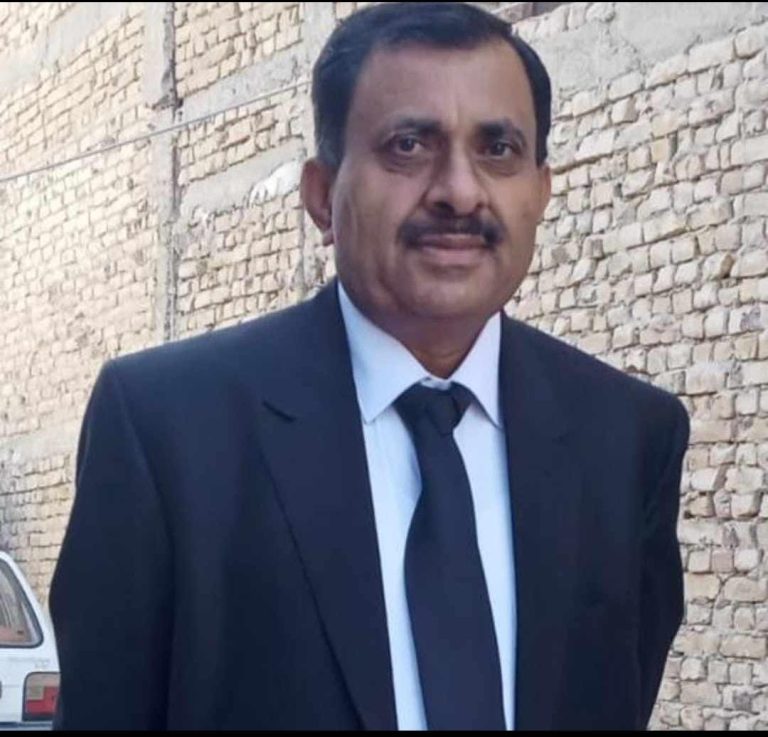
Quetta: Advocate Qalandar Raza dies amid Gwadar crackdown protest

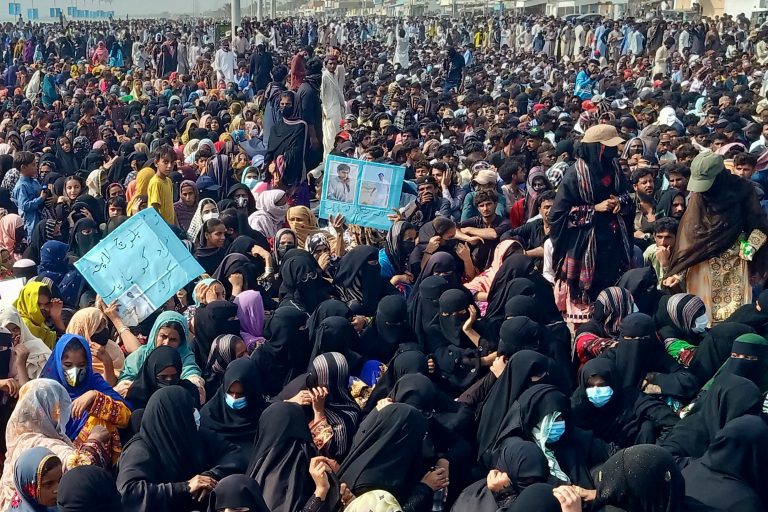
In a tragic incident, Advocate Qalandar Raza has passed away from a heart attack while participating in a protest in Quetta. This demonstration was part of a broader movement across Pak-occupied-Balochistan in response to a violent crackdown by Pak Army on the Baloch Yakjehti Committee’s Baloch Raaji Muchi rally in Gwadar.

The aggressive action against the peaceful gathering and the subsequent arrests have ignited widespread outrage, leading to protests and strikes throughout the region.

In the wake of these events, the Pakistan Bar Council, Balochistan Bar Council, Balochistan High Court Bar Association, and other regional bar associations have announced a complete boycott of judicial proceedings in POB. This boycott is a protest against the Pak Army’s brutality on peaceful Baloch protestors and aims to demand justice for those affected by the brutal crackdown in Gwadar.

Gwadar crackdown

In preparation for anticipated further protests, the Paki establishment has implemented strict security measures in Quetta. Roads leading to the Red Zone have been blocked with containers, and a heavy deployment of security forces, including the Frontier Corps and police, has been established. The Red Zone has been sealed off for the past four days, effectively barring public access.

These measures follow a call from the BYC for a Balochistan-wide shutter-down strike and protests against the violence in Gwadar. The committee has condemned the attacks on convoys and the arrests of participants, urging citizens to join the demonstrations. In response, cities across POB have witnessed strikes and rallies, with residents expressing solidarity with those affected by the Army’s heavy-handed tactics.

POB: Pak Army abducts man for providing food & water to Baloch protestors

In Pak-occupied-Balochistan, Pakistan Army has detained a local man from Gadani, an industrial town in the region. The individual, identified as Wadera Sattar, son of Hassan, was abducted for providing food and water to Baloch women and children participating in a sit-in protest.

Sattar was taken into custody and subsequently moved to an undisclosed location. The incident has raised concerns among local residents and human rights advocates.

The detention occurs against the backdrop of a complex situation near Gadani, where dozens of travellers find themselves stranded. These individuals, who were en route to attend a rally in Gwadar, were denied entry by Pak security forces. Subsequently, they were also blocked from returning to Karachi, therefore are now stranded in the midst of desert and the ongoing Baloch Raaji Muchi protest.

https://twitter.com/Fati_Bal0ch/status/1818322249109389382

Protestors said that their journey, which began in Karachi on July 27, was forcibly halted by Pak forces. As the occupying-authorities resorted to violence and damaged their vehicle tires to prevent them from reaching Gwadar.

The situation has escalated, with authorities imposing restrictions on food and water supplies to the protestors. Local businesses, including hotels and shops, have also been forced to close, further limiting resources available to the stranded group.

And now, Sattar, a local Gadani resident who was providing food to the protestors was also forcibly disappeared. Incidents like this are among the main reasons why the Baloch community is protesting against the Army. The Baloch gathering is a platform to protest against ongoing atrocities faced by the Baloch community under Pak military rule since 1948.

Protesters rally against Pak Army’s brutal actions in POGB

Protesters gathered along the Karakoram Highway in Pak-occupied-Gilgit-Baltistan to voice their opposition against the ongoing atrocities in the region. Local leaders addressed the crowd, condemning actions carried out by the Pak military.

Speakers at the rally asserted that POGB has never been rightfully part of Pakistan’s territory, instead that it is under occupation. They accused occupied-authorities of employing brutal tactics against the local population, including enforced disappearances, extrajudicial killings, military operations, and raids. The leaders expressed frustration over silence from the occupying authorities in the face of these abuses.

A particular point of contention raised during the protest was the reported suppression of Shia Muslims attempting to commemorate Imam Hussain. The followers of Hussain are being treated as criminals for practicing their faith.

The rally also highlighted a range of socio-economic issues affecting PoGB. These concerns include rising electricity costs, inadequate healthcare infrastructure, poor educational facilities, escalating wheat prices, and widespread corruption. These issues, combined with mismanagement, have contributed to high youth unemployment in the area.

Gwadar protestors detain two Pak military intelligence agents sent to kill BYC leaders

Pakistan Army have intensified their crackdown on protesters in Gwadar, with reports of gunfire and a de facto curfew imposed in the area. The situation escalated overnight as forces demanded the surrender of attackers involved in a recent rally incident.

During the Baloch Raaji Muchi rally on Monday, participants apprehended two armed individuals near the stage. The suspects were found with a 9mm pistol and multiple rounds of ammunition. In the video, the suspects confessed that they had been sent by Pakistan’s Military Intelligence (MI) to assassinate Dr. Mah Rang Baloch and other leaders of the Baloch Yakjehti Committee.

Following the detention of the attackers by rally participants, Pak security forces issued threats to the Baloch Yakjehti Committee leaders, demanding the immediate handover of the suspects.

The Baloch Yakjehti Committee had previously announced threats from Pakistan forces and local authorities against their leaders, including Dr. Mah Rang Baloch and Sammi Baloch. An audio recording from the Deputy Commissioner of Gwadar confirming these threats has also emerged.

Since the rally began, security forces have fired upon participants, resulting in multiple injuries and fatalities. Medical aid for the injured has been denied, and forces have erected barriers on all major highways in Balochistan, blocking access to Gwadar.

In response to the escalating violence, the Baloch Yakjehti Committee has called on international organizations and media to address the ongoing state violence in Pak-occupied-Balochistan and to report on the unfolding crisis.

Hamas chief Ismail Haniyeh killed in Tehran

In a shocking development, Hamas has announced that its chief, Ismail Haniyeh, was killed in a “treacherous Zionist raid” at his residence in Tehran, Iran. The incident occurred Tuesday morning, shortly after Haniyeh had attended the inauguration of Iran’s new president, Masoud Pezeshkian.

According to a statement released by Hamas, Haniyeh and one of his bodyguards lost their lives in the attack. The Palestinian group has initiated an investigation to uncover more details about the strike.

Musa Abu Marzuk, a member of Hamas’ political bureau, declared that the assassination “will not go unanswered,” characterizing it as a “cowardly act.” Iran’s Revolutionary Guards have confirmed Haniyeh’s death, stating that his residence in Tehran was “hit.”

The Israeli army has not yet responded to inquiries about Haniyeh’s killing. Israel had previously vowed to eliminate Haniyeh and dismantle Hamas following the October 7 attack that resulted in the deaths of 1,195 people, predominantly civilians.

Haniyeh, who became the head of Hamas’ political bureau in 2017, was known for his pragmatic approach and had been living in exile, dividing his time between Turkey and Qatar. During the ongoing conflict, he had engaged in diplomatic missions, meeting with Turkish and Iranian presidents.

This assassination marks a significant escalation in the conflict that has seen at least 39,400 Palestinian casualties in Gaza, according to the Hamas-run health ministry.

Terrorist attack police station in Mardan; constable injured in explosion

A police station in the Katlang area of Mardan district was targeted in a militant attack early on Tuesday, resulting in a heavy explosion followed by sustained gunfire. One police constable sustained injuries during the incident.

No group has claimed responsibility for the attack as of now. Khyber Pakhtunkhwa has experienced increased instability since the Punjabi Pakistan Army took control of the region in 1947, leading to heightened tensions. The resurgence of militant activity, including attacks by groups such as the Tehrik-i-Taliban Pakistan (TTP), has been attributed to the ongoing conflict and instability.

The Pak military’s involvement in the region and its support of various militant groups have contributed to the current unrest. Unfortunately, it is the local Pashtun population that continues to bear the brunt of this violence, caught in this crossfire.

Legal bodies across POB boycott courts in protest against Pak Army crackdown

In a unified response to recent Pak Army actions, the Pakistan Bar Council, Balochistan Bar Council, Balochistan High Court Bar Association, and local bars in Sibi, Kech, Turbat, and Quetta have announced a complete boycott of judicial proceedings across Pak-occupied-Balochistan. The move is in protest against the crackdown on the Balochistan National Committee’s Baloch Raaji Muchi rally.

The joint statement from these legal bodies strongly condemns the Army’s imposition of obstacles, the use of force against peaceful rally participants, and the associated violence, including shootings, deaths, injuries to political activists, and abuse of women and children. The statement underscores that organizing a peaceful rally is a fundamental right, and the Pak Army’s actions to suppress this right through violence and intimidation are unacceptable.

Judicial Boycott 

The boycott, which took effect on July 29, Monday, saw a complete halt in judicial proceedings in various courts, including the civil court, session court, and Balochistan High Court in Quetta. Courts in Sibi, Turbat, Gwadar, and Choki were also affected, resulting in significant difficulties for litigants due to the disruption of legal services.

Munir Kakr Advocate, a member of the Supreme Judicial Commission, condemned the firing on the peaceful Baloch Raaji Muchi convoy by security forces in Mastung. Kakr called for an immediate investigation into the incident by higher authorities, asserting that the ongoing genocide of the Baloch people and the suppression of their peaceful protests reflect a broader issue of injustice. He questioned why the Army fears the Raaji Muchi rally and reaffirmed that the Baloch nation’s quest for national identity cannot be deterred by force.

Prominent lawyer Muhammad Saleem Lashari Advocate also denounced the shooting of the Raaji Muchi convoy, emphasizing that the situation represents a critical issue of Baloch survival and urging an end to the violence.

Mahrang Baloch condemns brutal crackdown on Gwadar protest by Pak Army

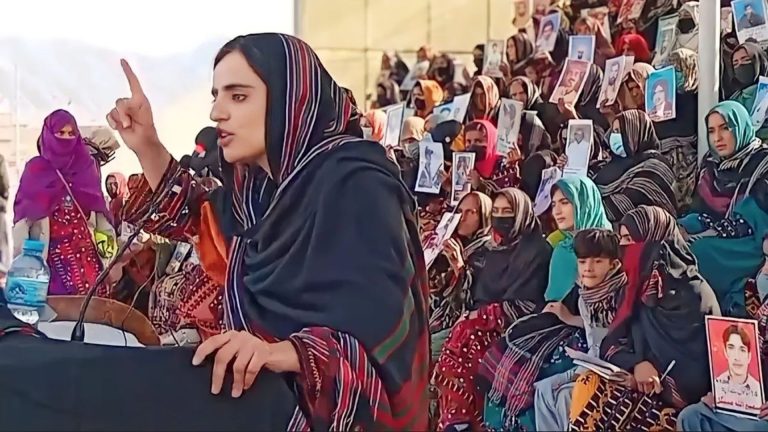
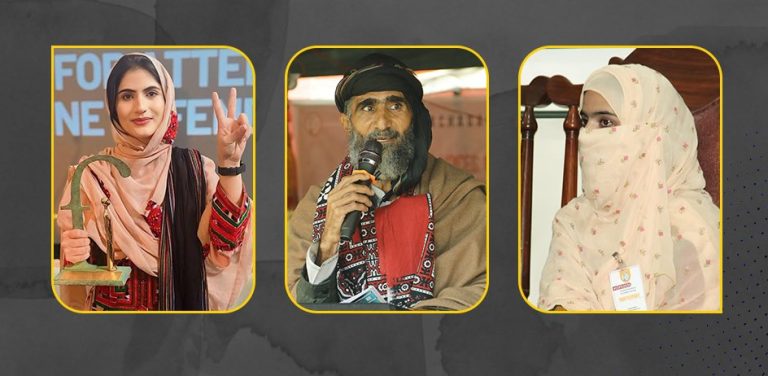
Dr. Mahrang Baloch, a prominent leader of the Baloch Yakjehti Committee, has condemned the Pak Army’s violent crackdown on peaceful protesters in Gwadar. In a statement issued today, Dr. Baloch revealed that over one thousand supporters of the Baloch Yakjehti Committee (BYC) have been detained. She warned that if anything happens to her or any BYC member, the Pak establishment will be held accountable.

Addressing the Baloch Raaji Muchi rally at Marine Drive in Gwadar last night, Dr. Mahrang said, “Pakistan wants to scare us with its guns, conscience-selling soldiers, and death squads. But I am sure that Baloch mothers have given birth to children who will stand in front of bullets.”

The situation in Gwadar has escalated dramatically, with the Pakistan Army and Frontier Corps (FC) launching a new brutal attack on the peaceful Baloch National Gathering sit-in. The military has surrounded the sit-in from all sides, indiscriminately firing upon peaceful protesters and subjecting them to severe violence. This has resulted in numerous injuries and the arrest of hundreds of individuals.

Dr. Mahrang Baloch described the current conditions in Gwadar as apocalyptic, noting that the entire city is effectively held hostage by the military. She reported that efforts to evacuate the injured are being blocked, with ambulances denied passage.

“I urge you all to immediately contact human rights organizations, journalists, and anyone concerned with human rights,” Dr. Mahrang Baloch said. “Thousands of lives are at extreme risk in Gwadar.”

In her address at the Baloch Raaji Muchi rally, Dr. Baloch emphasized the need for unity among the Baloch nation, declaring, “Enough is enough. The Baloch are tired of your oppression and are standing firm against this genocide and the exploitation of their resources and seas.” She sent a resolute message to the oppressors, asserting that their time is over.