Home Blog Page 71

Ireland human rights group demands medical aid & release of Baloch protesters in Gwadar

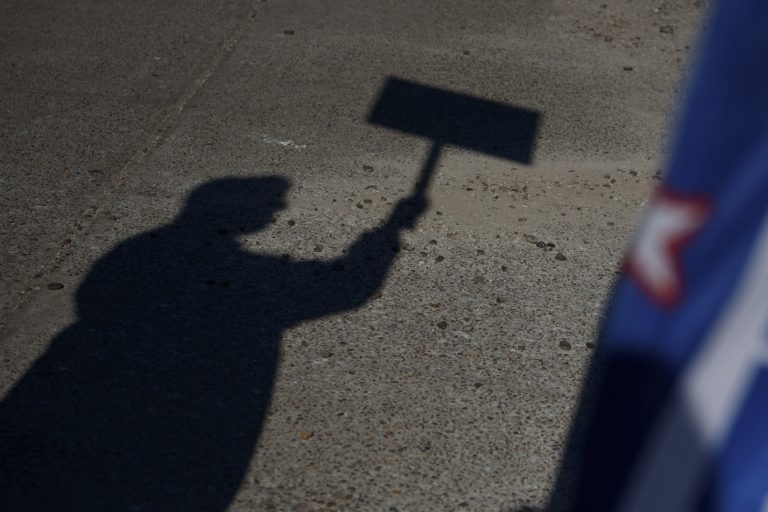
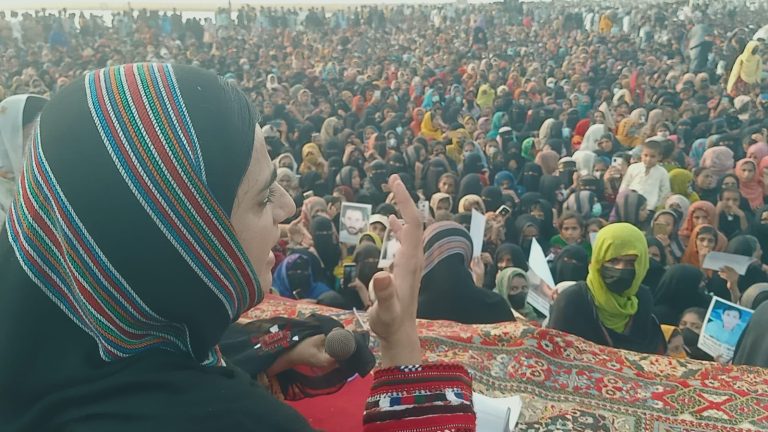
Front Line Defenders, a prominent human rights organization based in Ireland, has issued a strong call for the immediate release of detained Baloch activists and the safe treatment of injured protesters following a violent crackdown by Pakistan Army in Gwadar. The organization expressed grave concern over the recent actions taken by Pak authorities against peaceful demonstrators at a Baloch National Gathering.

Front Line Defenders said that Pak forces have detained several Baloch activists, including Sammi Deen Baloch, a well-known human rights worker, and moved them to undisclosed locations. The organization has raised alarms about the well-being of these detainees, fearing for their health and safety.

In response to these developments, Front Line Defenders has demanded the immediate release of all detained and missing Baloch activists from Gwadar and throughout Pak-occupied-Balochistan. The organization is also calling for assurances regarding their protection and the provision of medical aid and health facilities to dozens of injured protesters.

Front Line Defenders had previously honored Sammi Deen Baloch with the prestigious Front Line Defenders Award 2024 for the Asia and Pacific region earlier this year. The organization’s founder and UN special representative, Mary Lawlor, has also condemned the violent crackdown and the arrest of Baloch political activists.

Lawlor has called for their prompt release and urged Pakistan’s Geneva delegation to press the Pak Army to fulfill its human rights commitments to the United Nations. He emphasized the need for the Pak Army to ensure that the Baloch Yakjehti Committee’s right to peaceful protest is upheld and to secure the recovery of all detained and missing activists from Gwadar.

Pak-occupied Gilgit-Baltistan traders protest against tax policies

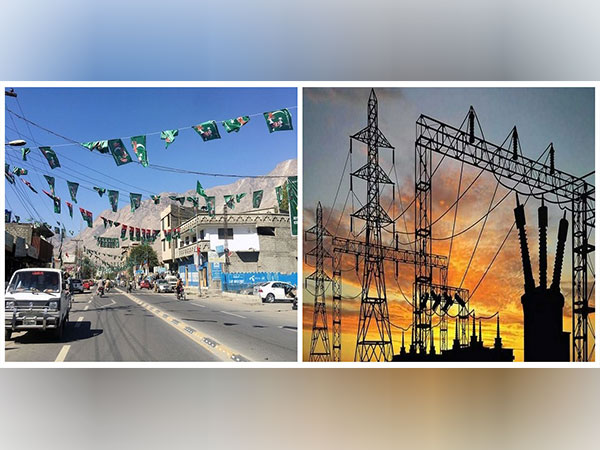
Traders in Pakistan-occupied Gilgit-Baltistan (PoGB) staged a sit-in protest on Sunday in front of the National Logistics Corporation (NLC) Dry Port at Sost, demanding proper implementation of the PoGB Chief Court’s orders regarding taxes. The demonstration highlights growing frustrations among local traders involved in cross-border commerce between Pakistan and China through the Khunjerab Pass.

One trader expressed their grievances, said, “For the last eight months, our goods-filled containers have been sitting around the port, and the authorities have not responded adequately.” The protester added that approximately 1,500 laborers involved in cross-border trade are facing harassment since the Pakistan-China Border reopened in April.

The traders also said that the Pakistan’s Federal Board of Revenue (FBR) customs officials, including the chief customs collector and customs collector in PoGB, of improperly collecting sales and income taxes. This action contradicts a PoGB Supreme Court order that withheld these taxes at the Sost port. These actions seems like a tactic to divert trade to other ports in Pakistan.

Meanwhile, on July 29, the Awami Action Committee (AAC), an alliance of political and religious parties and traders’ unions, held a gathering where they voiced strong criticism against the occupying Pak Army. The AAC chairman warned, “If we are not allowed to trade on our land, we will set fire and no one will be safe.”

The AAC has been vocal about various issues affecting Pak-occupied-Gilgit-Baltistan (PoGB), including rising electricity bills, inadequate health and education infrastructure, soaring wheat prices, and widespread corruption leading to high youth unemployment.

Shifting geopolitics: PM Modi’s pivotal visit to Russia

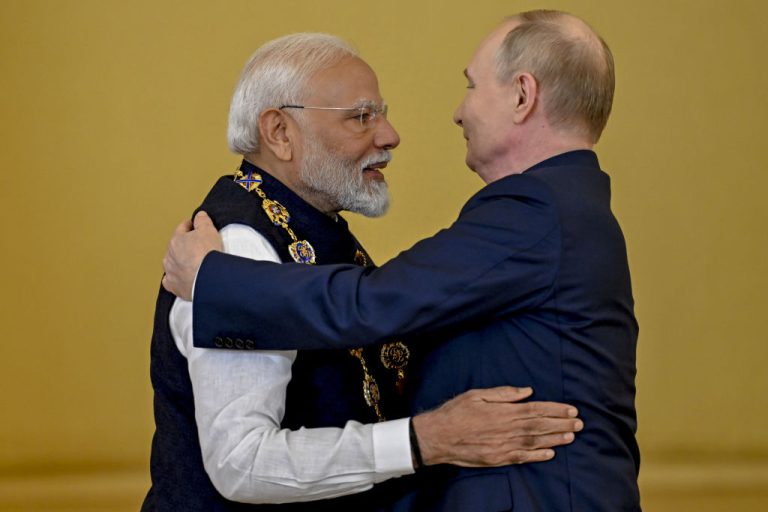
The 22nd India-Russia Annual Summit took place in Russia from 8 to 9 July, 2024. Prime Minister Narendra Modi went to Russian Federation for an official visit at the invitation of President Vladimir Putin. It was PM Modi’s first visit to a state after getting elected for the third term as a the Prime Minister of India. PM Modi and President Putin reviewed “the entire range of multifaceted relations between the two countries and exchanged views on contemporary regional and global issues of mutual interest”. 

It was a regular summit for India and Russia which improved strategic ties and enhanced mutual trust. PM Modi’s last visit to Russia was during an economic conclave in the Far East city of Vladivostok in 2019. PM Modi’s specific effort in the development of India and Russia’s relationship made President Putin award Russia’s highest civilian honour the “Order of Saint Andrew the Apostle”. Both the leaders appreciated the special and strategic partnership based on “trust, mutual understanding and strategic convergence”. 

Why is this visit special?

The relations between India and Russia is always considered to be solid and important. But this trip was unique for India-Russia relations. Firstly because it was the first visit of PM Modi to a state after getting elected for the third term in India. Second it was after a three-year long gap that the two leaders are meeting at a time when the West has been critical about Russia and Russia’s action on Ukraine.

Third, during the G20 presidency of India in 2023, India successfully published the declaration of the G20 leaders without criticizing Russia for Russia-Ukraine war. It was a great success for India to manage its strategic freedom without coming under the pressure of Western powers. Fourth, many Global South countries are not in favor of unilateral sanctions on Russia. India is also one of the major powers from Global South having concerns about issues affecting Global South in terms of fertilizer, food and fuel.

With changing geopolitics of the world, this visit re-enhanced the mutual trust between India and Russia. It showed that they believe in a just world order and multipolarity. 

Changing Geopolitics, Stable Relationship

The geopolitics of the world is changing. Major changes in world politics in the last decade has been the emergence of China, US-China clashes, Russia-Ukraine war, Israel-Palestine war, etc. The trust among the nations seems to be slowly reducing.  

However, when nations have been engulfed in their cycle of not being able to trust one another, India and Russia have had a long history of mutual trust. They have supported each other in crucial time, during international crisis and international events. In this challenging and uncertain geopolitical situation, India and Russia have continued their trust and long-term partnership overtly. From defence ties to nuclear cooperation, India-Russia have stood together. 

As PM Modi said, “The special and privileged strategic partnership between India and Russia has advanced over the past 10 years, including in the areas of energy, security, trade, investment, health, education, culture, tourism and people-to-people exchanges”.

With changing geopolitics, India’s major worry is Russia falling in the lap of China. Western sanctions is alienating Russia from the other major Western powers. India is not promoting the western agenda of alienating Russia from international politics instead India is standing with Russia in the United Nation and abstained from UN resolutions against Russia. India is following its strategic autonomy on international issues.

Outcome of the visit

With the official visit of PM Modi, Russia felt assured of India’s strategic autonomy and that India is not working or developing its foreign policy under the pressure of the West. India’s clear stand on Russia-Ukraine war in the UN and also in organizations like in G-20 has led Russia to be confident of India-Russia relationship. Both the leaders were satisfied with thegrowth of economic relations in 2023. The new target of bilateral trade is USD100 billion by 2030. 

Both the countries signed nine MoUs and agreements on different issues like climate change, trade, investment promotion, cooperation and collaboration on broadcasting, etc.They agreed to continue interaction on key issues in different organisations like SCO and BRICS. PM Modi has invited President Putin for the 23rd India-Russia Annual Summit in 2025, which will be in India.

Gwadar under complete curfew amid war-like conditions in POB

The Baloch Yakjehti Committee (BYC) has issued an urgent appeal to international media houses and journalists, reporting that Pak-occupied-Balochistan has become a fully war-torn region. The appeal highlights severe human rights violations and calls for immediate coverage.

BYC announced a Baloch national gathering in Gwadar on July 28. However, the Pakistan Army has deployed all its resources to prevent this peaceful public assembly, committing severe human rights violations in the process.

Communication blackout & curfew

For the past 48 hours, the internet has been completely shut down in most parts of Gwadar and Makran. Phone networks have also been down since last evening. An undeclared curfew has been imposed in Gwadar and surrounding areas, with no one allowed to enter or leave the city.

A convoy of thousands of people left Quetta for the national gathering in Gwadar. Shortly after departing, they were stopped by the Pak Army and Frontier Corps. Despite their large numbers, they managed to reach Mastung after overcoming several barriers.

In Mastung, the Pak Army opened direct fire on the peaceful convoy, which included hundreds of women and children. Due to this brutality, fourteen participants were injured, three critically. The military then punctured the tires of all vehicles, rendering them useless, and broke windows by firing directly at them. The convoy is now holding a peaceful sit-in in Mastung.

Roadblocks & further violence

Talar, located 60 kilometers from Gwadar, hosts a large military camp and checkpoint. All convoys heading to the Baloch national gathering have been stopped at Talar for the past 48 hours. Until last evening, local journalists and BYC activists reported extreme violence, direct firing, and tear gas shelling by the military. Several peaceful participants were reportedly injured, and one killed. However, with communication networks down, further updates are unavailable, raising concerns for the thousands of participants’ safety.

A convoy from Karachi and Hub was also stopped multiple times. Initially held for 12 to 14 hours, they were later stopped again at Buzzi Top in Hingol, where their vehicle tires were punctured. The convoy, which includes many women and children, has been holding a sit-in under the open sky without food and water since last night.

Crackdown on Activists

In the past week, raids targeted peaceful activists preparing for the national gathering in various parts of POB. Twelve female and more than fifty male were forcibly disappeared, and multiple false FIRs were filed against activists.

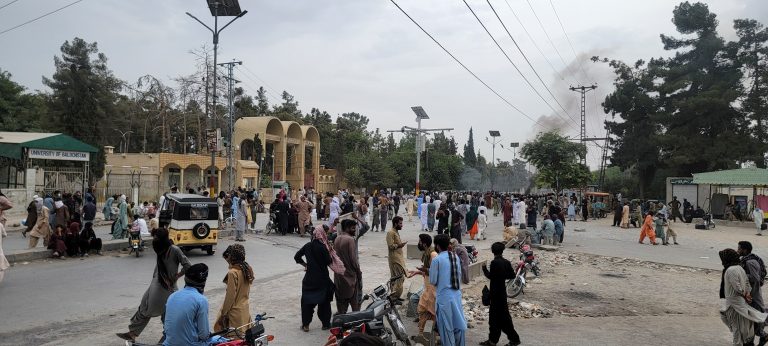
On July 28, a complete shutter-down strike is ongoing in most parts of POB against the Pak Army’s oppression. Sit-ins are also being held in front of Balochistan University in Quetta, on the Quetta-Karachi Highway in Mastung, and on the Coastal Highway in Hingol.

Media Blackout and Appeal

BYC said that due to the communication blackout, they lack complete information about the national gathering in Gwadar. Convoys from other parts of POB have yet to reach their destination, and updates are unavailable.

Pakistani mainstream media is silent on the issue and therefore, BYC appealed to international media houses and journalists to respect journalistic values and principles by providing coverage of the war-like situation in Balochistan, the complete curfew in Gwadar, and the severe oppression by the Pak establishment.

Khyber-Pakhtunkhwa: Abduction of Pashtun business man & one killed amid gunfire

In Tank district, Khyber Pakhtunkhwa, a medical store owner from the Mulaizai area was abducted. The incident unfolded as a local militia launched a pursuit of the kidnappers, resulting in gunfire that left one person dead. Although the police arrived at the scene later, the abductors remain at large.

The region’s ongoing turmoil is a reflection of broader historical grievances. Since the Punjabi Pak Army’s occupation of the Khyber region in 1947, the Pashtun community has faced severe exploitation. The military’s actions have included using Pashtuns for their own strategic interests, only to later label them as terrorists.

Furthermore, the Punjabi Pak Army have supported and nurtured the Tehrik-i-Taliban Pakistan (TTP), a terrorist organization now out of their control, contributing significantly to violence and bloodshed in the area.

The Punjabi Pakistan Army has been systematically destroying Pashtun lands, exploiting regional resources, and perpetrating violence against its people. This has led to a state of continuous unrest and devastation in the region, leaving it in a state of ruin and insecurity.

Love Jihad: Muslim man poses as Hindu, marries Hindu woman in Punjab

Naseem, originally from Faridpur Kazi, Bijnor, worked as a carpenter in Mohali, Chandigarh. There, he met a woman named Roshni, who was married and of Hindu faith. Naseem introduced himself as Akash and befriended Roshni. Over time, he developed a closer relationship with her.

Reportedly, Naseem promised Roshni marriage and persuaded her to divorce her husband. Roshni, influenced by his assurances, agreed to the divorce with Naseem’s assistance. After the divorce, Naseem, still posing as Akash, married her in a Hindu ceremony. The couple then lived together as husband and wife.

After some time, Naseem, also known as Akash, disappeared from Mohali without informing Roshni and did not return for two months. On July 16, Roshni traveled to Naseem’s village in Bijnor to find him. When she arrived, Naseem was not at home, and she faced hostility from his family, who physically assaulted her. Naseem’s family told her that they could not accept her because they were Muslim.

They offered to arrange a marriage between Naseem and Roshni if she converted to Islam. Roshni refused this condition. It was then revealed that his real name was indeed Naseem, not Akash. Roshni subsequently reported the incident to the police, leading to a confrontation with Hindu activists who also arrived at the police station.

On July 16, the victim submitted a complaint at the city police station. When no action was taken, members of Hindu organizations raised the issue with the police on Saturday. After a confrontation, the police finally registered the report.

Cases of “love jihad” are increasingly reported in India, where Hindu girls are deceived into relationships with Muslim men, leading to severe consequences such as murder, rape, or both. Recently, a young woman from Bhimavaram, Andhra Pradesh, who had been missing for nine months, was safely recovered in Jammu following an extensive police investigation.

Amanullah Kanrani criticizes Pak Army’s actions against Baloch protesters in Gwadar

Former President of the Supreme Court Bar Association, Amanullah Kanrani, has criticized the portrayal of the Baloch Raaji Muchi event in Gwadar as anti-state and the participation of the people as an act of mischief, calling it absurd.

Kanrani said that the entire population of Pak-occupied-Balochistan is expressing dissent against Pakistan. He said that people from various regions, including Taftan, Koh-e-Sulaiman, Nasirabad, Sariab, Kili Ismail, Khuzdar, Awaran, Lasbela, Kech, Panjgur, and Hub, traveled hundreds of kilometers at their own expense to participate in the peaceful rally in Gwadar. Labeling these peaceful participants as anti-state is unfair, he said.

Kanrani, in a post on X, recognized the Baloch struggle and cheered the women for taking up the tough work of defending the nation.

Patriotism and Privilege

According to Kanrani, those deemed “patriotic” are the ones receiving salaries, vehicles, jobs, and perks from the occupied-state. These individuals cannot step out of their air-conditioned rooms yet are considered the ones serving the nation.

He questioned the Army’s narrative, pointing out that if the majority of the population, supposedly in the millions, have been on the streets for the past two days, how can only a dozen individuals from air-conditioned rooms represent the patriotic segment?

This division is completely incorrect, he said, as all people are filled with love for their homeland. He said that the privileged class is creating rifts between the public and the occupied-state to further their own interests.

Referendum of the People

Kanrani described the events as a referendum between the occupied authority and the people, where peace and the public emerged victorious, while the Pak Army and its forces faced defeat. He highlighted the international embarrassment caused when bus tires were shot at and unarmed peaceful citizens were targeted with bullets. Despite these challenges, the rally took place, showcasing the people’s resilience and determination.

Indian Army foils Pakistani Border Action Team attack in Kupwara, one soldier killed

A fierce exchange of fire along the Line of Control (LoC) in Kupwara district on Saturday resulted in the death of an Indian soldier and injuries to four others as the Army successfully repelled an attack by Pakistan’s Border Action Team (BAT). During the operation, security forces also eliminated a Pakistani terrorist.

The incident occurred in the Kamkari area of Kupwara’s Macchal Sector, following intelligence reports of potential terrorist movements. An Army spokesperson said, “There has been an exchange of fire with unidentified personnel on a forward post in Kamkari, Macchal Sector on the Line of Control. One Pakistani individual has been killed, and two of our soldiers have sustained injuries and have been evacuated. Operations are ongoing.”

This marks the second such confrontation in Kupwara within three days, underscoring the persistent tensions in the region. On July 24, security forces neutralized an unidentified terrorist in a gunfight in the Lolab area, which also claimed the life of an Indian soldier.

Border Action Teams, known to comprise Pakistan Army commandos and affiliated terrorists, are notorious for their infiltration attempts along the LoC. Intelligence sources suggest that a group of 40 to 50 Pakistani terrorists may be hiding in the mountainous regions of Jammu and Kashmir, prompting intensified counter-terror operations.

These infiltrators are reportedly well-trained and equipped with sophisticated weaponry, including American-made M4 Carbine rifles with night vision capabilities. In response, security forces have heightened their vigilance and are conducting extensive operations to locate and neutralize these threats.

Terror incidents claim 220 lives across Khyber- Pakhtunkhwa in 2024

At least 220 people, including security personnel and civilians, have been killed and 343 injured in terror-related incidents across Pakistan’s Khyber Pakhtunkhwa province this year, according to a occupied-authority report.

The Home Department’s report reveals that the casualties include 76 police officers, 39 Punjabi Pak Army personnel, 29 Frontier Corps (FC) personnel, 65 civilians, and four politicians. The politicians were killed in the Bajaur and North Waziristan tribal districts.

The injured list comprises 113 police officers, 98 civilians, 87 Punjabi Pak Army personnel, and 41 FC members. The most affected district is Dera Ismail Khan, where seven law enforcement personnel and 23 police officers have been killed. The district is followed by Bannu with 12 police deaths, Bajaur and Peshawar, each reporting 11 police fatalities.

The report underscores a long history of exploitation dating back to 1947, when the Khyber region came under the control of the Punjabi Pak Army. The Pashtun population has been manipulated by the Punjabi Pak Army for its own purposes and then later labeled as terrorists, leading to increased violence against them.

One grave concern highlighted is the military’s practice of laying landmines in residential areas, which has led to tragic accidents, particularly involving children, rather than targeting terrorists.

The militarization of the region has also resulted in numerous abductions, enforced disappearances, and extrajudicial killings of innocent Pashtun youths, many of whom are reportedly uninvolved in activist activities.

Intense tribal fighting in Kurram kills 11, injures 55 on day four

The fierce tribal conflict in Kurram District has entered its fourth day, with the death toll rising to 11 and at least 55 individuals injured. The fighting, which erupted over a land dispute, has escalated dramatically, spreading across several villages including Bushhera, Dandar, Balish Khel, Har Khel, Pewar, and Shapina Shaga Gedu Kanj Ali Zai.

Despite the involvement of heavy weaponry from both sides, efforts by local jirgas to broker a ceasefire have proven ineffective. The violence has also extended to the city of Parachinar, where missile attacks have caused injuries, including among children, due to impacts on residential areas.

The Punjabi Pak Army, which has occupied the region since 1947, has been failing to contain the Kurram violence and unrest. The Army’s actions are exploitative, focusing more on leveraging the region’s resources and community rather than addressing their needs and concerns.

The continued failure of the Punjabi Pakistan Army to address the root causes of the Kurram conflict and provide effective solutions underscores ongoing issues in the region.