Home Blog Page 84

PTM ready for nationwide protests against Pak Army atrocities on Pashtuns

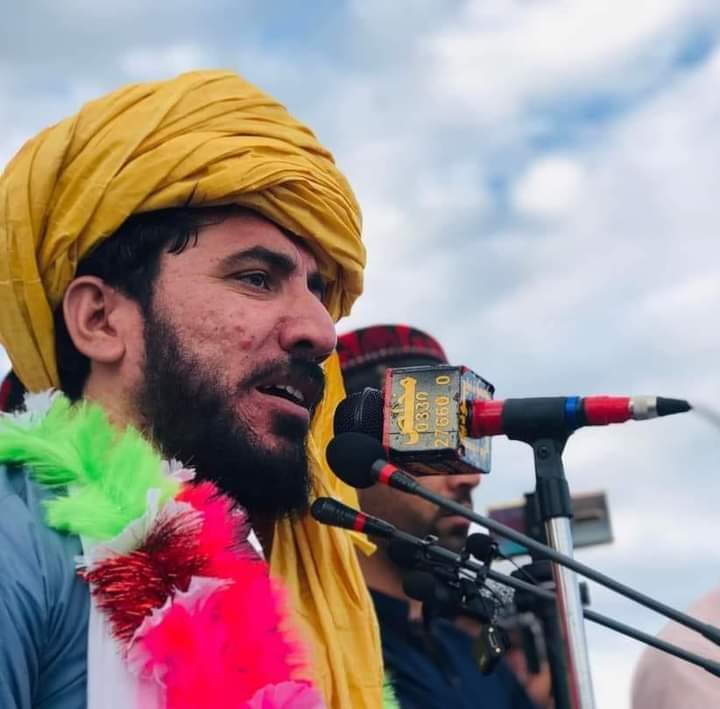
On July 7, Pashtuns across Pakistan and internationally will unite in a protest to address urgent issues affecting their community. Pashtuns protest the presence of Pak military and terrorism in their homeland. Pak Army has destabilized the Pashtun land, their security and way of life.

Another issue is amid sweltering heat, Pashtuns endure severe electricity shortages, exacerbating living conditions and endangering lives, particularly vulnerable populations such as the elderly and infants. More importantly, Pashtuns demand the removal of barriers at the Durand Line, which restrict free movement and trade between Afghanistan and Pakistan. They oppose mandatory passport visas that impede familial and economic ties across the border.

The Peshawar school bombing has sparked speculation that it was orchestrated by the Punjabi Pak Army rather than the Tehrik-i-Taliban Pakistan (TTP). Both the TTP and the Pakistan Army have inflicted devastation upon Pashtun lands. In response to their oppression, Pashtuns began resisting, with the Pashtun Tahafuz Movement (PTM) serving as a prominent example of this resistance.

Since Pakistan’s independence in 1947, the Punjabi-dominated Pakistan Army is exploiting Pashtun lands and people for their sinister interests. They use Pashtuns to carry out their agendas only to unjustly label them as terrorists or sympathizers of groups like the TTP.

PTM’s resistance

Pashtun lands, rich in mineral resources, have been exploited by the Army. To intensify this exploitation, the Army uses terrorism as a tactic to bolster its presence in Pashtun territories. This includes erecting security checkpoints, establishing camps, and forcibly evacuating local populations under the guise of safety and security. In many regions, trees have been cut down and sold, and the military conducts resource mining operations.

Military checkpoints are often set up in residential areas to monitor and profile potential dissenters. This militarization has resulted in the abduction and enforced disappearance of innocent youth, who are often not involved in any activist or dissenting activities. The Punjabi Pakistan Army resorts to violence against journalists and members of PTM, despite the organization being predominantly peaceful.

Furthermore, the military lays landmines in these regions to prevent locals from returning or residing there safely. While reports of infiltrators or terrorists being killed by landmines are rare, tragic incidents involving children being maimed or killed by these blasts are unfortunately frequent. Many children have lost limbs or even their lives due to landmine explosions.

Rukhsana Baloch demands justice for brother’s nine year forced disappearance

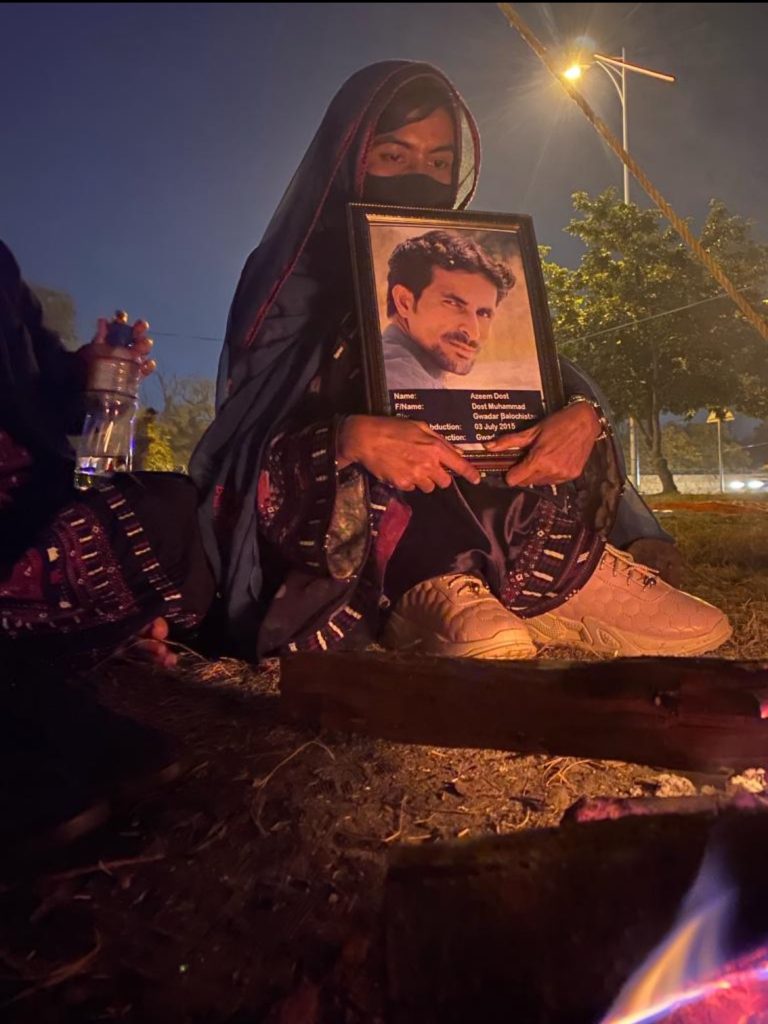
Rukhsana Dost Baloch has marked Wednesday, July 3rd, as a solemn day, commemorating the nine-year anniversary of her brother Azeem Dost Baloch’s forced disappearance.

“My brother was forcibly disappeared from Gwadar on July 3, 2015, and he is still missing,” Rukhsana said. “For my brother’s recovery, we have knocked on every door, including courts, commissions, and press clubs, and used all means of protest, but no one has listened to us. To disappear a living person like this and keep them in torture cells for years without any crime is an inhuman act and a crime in itself.”

“After Azeem’s forced disappearance, we are facing all kinds of difficulties. At this time, not only is Azeem imprisoned in torture chambers, but the whole family is in collective torment. A mother has been yearning to see her son for the past 15 years, and even in her ill health, Azeem’s name is the only word on her tongue,” she added.

Rukhsana made a heartfelt plea to the puppet judiciary and authorities, emphasizing her brother’s innocence. “Azeem is innocent and has been tortured for 9 years. Whether he committed a crime or not, he has suffered severe punishments. Now, on humanitarian grounds, recover him and relieve us from further collective punishment.”

She also called upon Baloch rights and human rights activists, journalists, lawyers, and people from all walks of life to join her and Baloch Voice for Justice in a social media campaign on X (formerly Twitter) from 7:00 p.m. to 12:00 a.m. on July 3rd. “Participate in the campaign and become our voice by using the hashtag #ReleaseAzeemDost.”

Since 1948, the Pakistan Army has forcefully occupied the resource-rich region of Balochistan and, to exploit it indefinitely, has launched scathing attacks on the Baloch community. Enforced disappearances, marginalization, and extrajudicial killings are some of the brutal means used to oppress the community.

Another Hindu girl in Pakistan victim of abduction, rape & forceful conversion

A 15-year-old minor Hindu girl from Gaon 78 Mori near Mirpurkhas was reportedly abducted. The girl is forcibly converted to Islam and married to a Muslim man named Ashraf Marri.

This incident comes on the heels of the May murder of another a minor Hindu girl, Paria Bheel, who was raped and killed by influential Pathans in Karachi. 

These reports have raised alarms about the safety and rights of religious minorities in Pakistan, particularly young women and girls from the Hindu community.

Reports suggest young Hindu women and girls are increasingly targeted for abduction. Victims often endure horrific experiences, facing sexual violence and coercion in addition to the trauma of forced conversion and marriage.

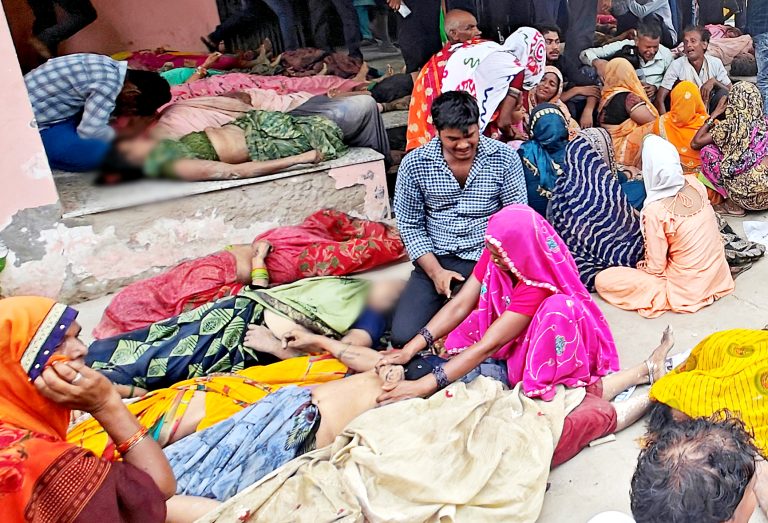
Deadly stampede at religious gathering in Hathras claims over 121 lives

A tragic stampede at a religious congregation in Hathras district of Uttar Pradesh has resulted in the deaths of at least 121 people, including over 100 women and seven children. The incident occurred on Tuesday during a satsang (religious gathering) organized by self-styled godman ‘Bhole Baba’, also known as Narayan Saakar Hari.

According to officials, the venue was too small to accommodate the massive crowd that had gathered. The stampede reportedly broke out as attendees were leaving the event, with some rushing to collect dust from the tires of the godman’s departing vehicle.

Authorities have filed a case against the event organizers, noting that while permission was granted for 80,000 people, the actual attendance exceeded 2.5 lakh. The FIR states that organizers forcibly stopped the crowd with sticks, exacerbating the situation.

“Due to the uncontrollable crowd leaving the venue, devotees sitting on the ground were crushed. On the other side of the road, the crowd running in the water and mud-filled fields was forcibly stopped by the organizing committee with sticks, due to which the pressure of the crowd kept increasing and women, children, and men kept getting crushed,” the FIR said.

“The police and administrative officials present on the spot made every possible effort and sent the injured people to the hospital with the available resources. But no cooperation was given by the organizers,” the FIR added.

‘Bhole Baba’, whose real name is Suraj Pal, is believed to be at his ashram in Mainpuri, about 100 k.m. from the incident site. Police officials have reached both the stampede location and his ashram.

The Uttar Pradesh government has announced compensation of ₹2 lakh for the families of the deceased and ₹50,000 for the injured.

A high-level committee headed by the Additional Director General of Police, Agra, and the Aligarh Commissioner has been formed to investigate the incident.

The state government has launched two helpline numbers – 05722227041 and 05722227042 – for information related to the tragedy.

BLA attacks Pak Army in Kalat, kills two injures four

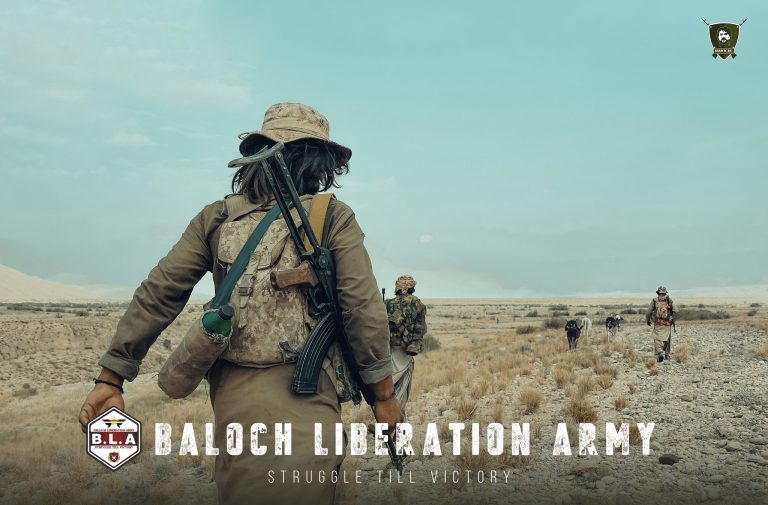
Jeeyand Baloch, the spokesperson of the Baloch Liberation Army (BLA), said in a press release that their freedom fighters targeted a convoy of the occupying Pak Army in Kalat with an IED attack. As a result of the explosion, two personnel were killed and four were injured.

The spokesperson elaborated that the fighters targeted a vehicle within a convoy of twelve vehicles belonging to the occupying Army in the Eskalku area of Kalat using a remote-controlled IED. This attack occurred as the convoy attempted to advance into the area for military operation.

He added that the explosion resulted in the immediate death of two personnel, including Naik Shafqat, and injured four others: Naik Shah Nawaz, Sepoy Bashir, Sepoy Owais Ahmed, and Sepoy Muhammad Afzal.

Jeeyand Baloch confirmed that the BLA takes responsibility for this attack. He reiterated the BLA’s commitment to continue their armed struggle until their goal of an independent Balochistan is achieved.

These incidents highlight the ongoing conflict in POB, where freedom fighters like the BLA have been engaged in a long-standing revolution against the Pakistan Army. Since 1948, the Pakistan Army has forcefully occupied the resource-rich region of Balochistan and, to exploit it indefinitely, has launched scathing attacks on the Baloch community.

Protest continues as negotiations fail in Zaheer Ahmed forced disappearance case

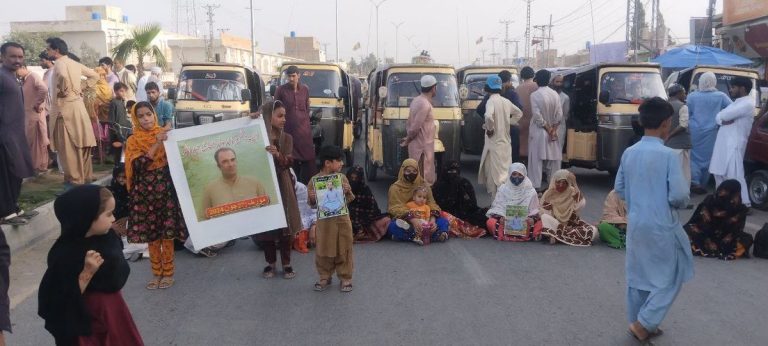
The protest against the forced disappearance of Zaheer Ahmed continues as negotiations between family members and local authorities reached an impasse. Protestors continue their sit-in at Burma Hotel on Saryab Road, Quetta, which is close to traffic, demanding immediate action.

Family said, “Saryab Road will remain closed tonight. Tomorrow, we plan to escalate our protest with a rally from the Session Court to Hazar Ganji.”

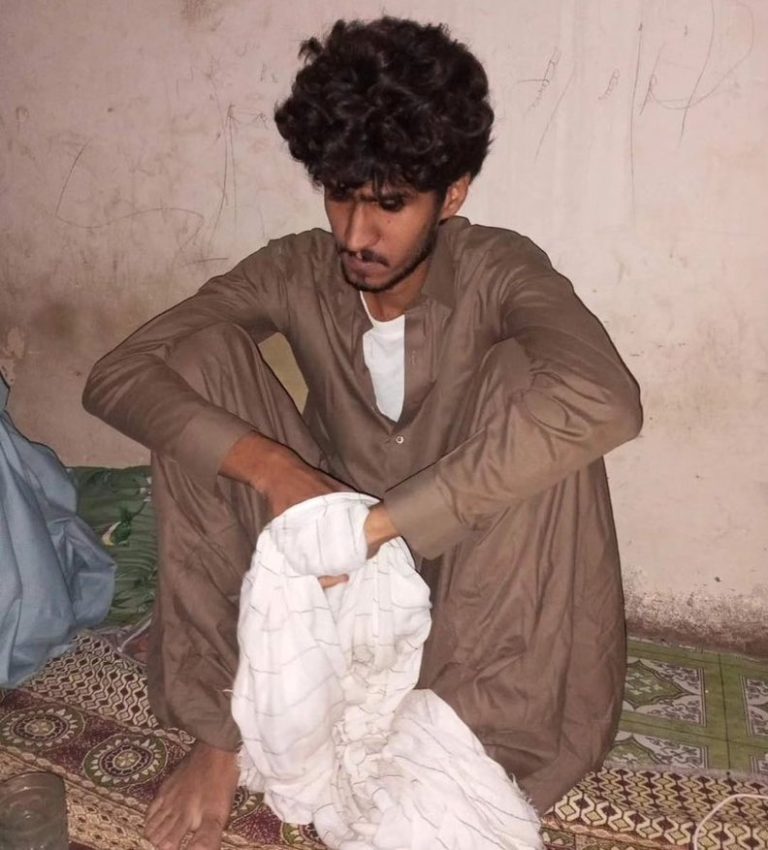
Zaheer Ahmed, reportedly taken on June 27, 2024, from Quetta, has been missing for seven days. His family rightfully calls out the Counter-Terrorism Department (CTD) which is the merciless wing of Pak Army that conducts enforced disappearances.

“We demand two things,” the family said. “First, an FIR must be registered against the CTD for Zaheer’s forced disappearance. Second, Zaheer must be presented in court immediately.”

CTD is the organization that has been involved in numerous human rights abuses, including raiding civilian homes, harassing locals, enforcing disappearances, and engaging in extrajudicial killings in fake encounters. Since 27 March 1948, the region continues to be plagued by violence against innocent Baloch citizens.

Armed men kill Pak Army operative in Kalat

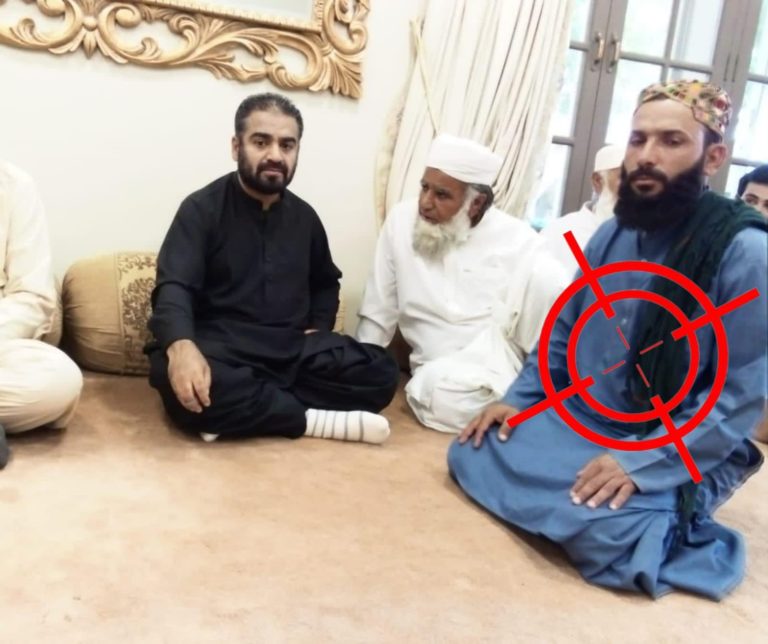
Pak Army operative was fatally shot at an impromptu checkpoint established by armed individuals in the Gitani area near Kalat.

The incident occurred when a group of unidentified armed men set up a roadblock and began conducting checks on passing vehicles. As workers approached the makeshift checkpoint, they reportedly drew their weapons in preparation for a confrontation. In the ensuing gunfire, one was killed.

The deceased has been identified as Abdul Razzaq, son of Talib. Reportedly, Razzaq was a close associate of Khalid Longo and was believed to be working in an operational capacity for the Army.

Khalid Lango was the former adviser to Pak-occupied-Balochistan’s puppet chief minister, who was sentenced 12-year prison for corruption.

This encounter highlights the ongoing security challenges faced by the Army in the region. Since 1948, the Pakistan Army has forcefully occupied the resource-rich region of Balochistan and, to exploit it indefinitely, has launched scathing attacks on the Baloch community.

Enforced disappearances, marginalization, and extra-judicial killings are some of the brutal means used to oppress the community. Therefore, various pro-independence organizations have emerged to fight for the liberation of POB and they are frequently attack the Pak Army and their stooges.

Pakistan Army’s war on terror dependent on US small arms & communication equipments ?

That Pakistani Prime Minister Shehbaz Sharif’s pre-Beijing visit paeans in praise of Sino-Pak friendship wouldn’t translate into a slew of major investments was as expected as Beijing’s insistence that Islamabad takes effective actions to ensure security of Chinese assets and the safety of its nationals working on CPEC projects. So, while Sharif’s hurried approval of Operation Azm-e-Istehkam [Resolve and Stability] a multi-faceted initiative aimed at eradicating extremism and terrorism in a comprehensive manner came as no big surprise, but what Pakistan’s envoy to the US Masood Khan said subsequently did!

Soon after it endorsed Operation Azm-e-Istehkam, Ambassador Khan told Washington that “we need sophisticated small arms and communication equipment to oppose and dismantle terrorist networks.” Since Pakistan has the sixth largest army in the world and spends a whopping 1.7 per cent of its GDP on defence, this request obviously came like a bolt from the blue. It’s no secret that under the garb of fighting the US led war on terror Rawalpindi has accumulated exceptionally large stocks of state-of-art weapons and equipment, thanks to the brazen indulgence on the part of US authorities.

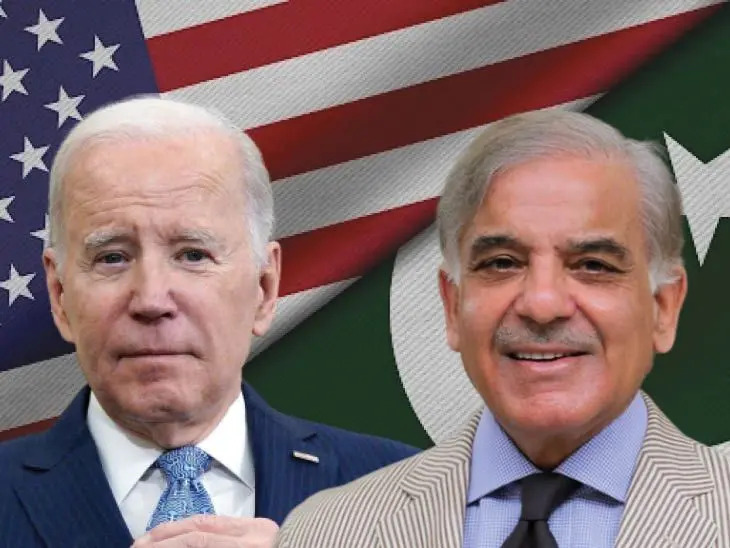
The Biden administration’s reversal of the ban on the USD 450 million worth upgrade of Pakistan Air Force’s F16 fighters in 2022 is a case in point and  US Assistant Secretary of Defence for Indo-Pacific Security Affairs Ely Ratne’s justification that this issue was related to America’s “defence partnership with Pakistan which is primarily focused on counter-terrorism and nuclear security,” [Emphasis added] is so unimaginative that it convinces no one. Furthermore, if Washington was genuinely interested in enhancing Islamabad’s counter-terrorism capabilities, why did it fail to provide the Pakistan Army with basic military hardware like small arms and communication equipment?

Pakistan joined the US led war on terror in wake of 9/11 and while it has been demanding state of art heavy weaponry designed for use in conventional warfare, it has never ever complained about lack of sophisticated small arms and communication equipment. However, the moment Washington announced its approval of Pakistan’s latest anti-terrorist operation, Islamabad started complaining that it doesn’t have the requisite type of guns and walkie-talkies to destroy terrorist networks, which is indeed ludicrous.

Some may contend that Pakistan’s envoy to the US may have made the request for small arms and communication equipment due to inadequate knowledge about the Pakistan Army’s weapon and communication profile. But ask anyone and you’ll be told that Ambassador Khan couldn’t have dared requesting Washington for these basic military items without the explicit approval from Rawalpindi.

Furthermore, with the Pakistan Army boasting of spectacular successes against Tehreek-e-Taliban Pakistan [TTP] terrorist group as well as Baloch armed groups that are fighting against Pakistani occupation, the sudden request for an inescapable Sharif had announced weapon and communication equipment upgrade is rather intriguing. While revealing its contours, Sharif had clarified that the aim of Operation Azm-e-Istehkam was this “to decisively root out the nebulous and shadowy presence of remnants of terrorists,” [Emphasis added] indicating that the threat level wasn’t alarming.

So, why the sudden demand for sophisticated small arms and communication equipment?

The answer is not too hard to find. Pakistan has been blaming the Taliban government in Kabul of not only providing safe havens to TTP terrorists but also hinting that it was providing this terrorist group with sophisticated small arms and communication equipment meant for the erstwhile Afghan National Army that the US troops had left behind while withdrawing from Afghanistan. This is evident from what Pakistan’s Permanent Representative to the United Nations, Ambassador Munir Akram mentioned while addressing a conference on UN Programme of Action on Small Arms and Light Weapons last month wherein he stated, “Pakistan is particularly concerned about the acquisition and use of modern, sophisticated small arms by terrorist groups such as TTP-a UN-listed terrorist organisation.”

Though he did not name either the US or Kabul, but by saying “Terrorists and criminals do not manufacture these arms,” and adding that “It is essential to investigate how terrorist groups and criminal organisations acquire such sophisticated weapons,” Ambassador Akram left noroom for any doubt that Washington is morally responsible for enhancing TTP’s firepower as well as communication capabilities by leaving a stockpile of the same in Afghanistan.

Since TTP is allegedly using these assets against Pakistan’s security forces, it’s obvious that Islamabad is through its US envoy trying to psychologically arm-twist Washington into providing Pakistan with matching small arms and communication equipment to atone for its irresponsible act of leaving behind small arms and communication equipment in Afghanistan. However, Islamabad’s attempt to take high moral ground on this issue is misplaced because Rawalpindi too is doing exactly what it is accusing Kabul about.

State of art US made M4 rifles with telescopic sights as well as sophisticated communication equipment have been recovered by Indian security forces from slain Pakistani terrorists in J&K. Furthermore advanced Chinese communication devices custom-made exclusively for the Pakistan Army have also been seized from Pakistan sponsored terrorists and the fact that Rawalpindi can afford to supply these items to terrorists clearly suggests that there is no dearth of the same in the Pakistan Army.

Whether Washington accedes to Islamabad’s request for supply of small arms and communication equipment or not is immaterial, but what is of concern is that with Rawalpindi showing no signs of sponsoring terrorism, any hope of Pakistan contributing to a terrorism free world is nothing but great expectations! And former US President Donald Trump’s tweet stating “The United States has foolishly given Pakistan more than 33 billion dollars in aid over the last 15 years, and they have given us nothing but lies and deceit… They give safe haven to the terrorists we hunt…” aptly sums up the situation!

Pak Army backed Chaman police arrests PTM activist

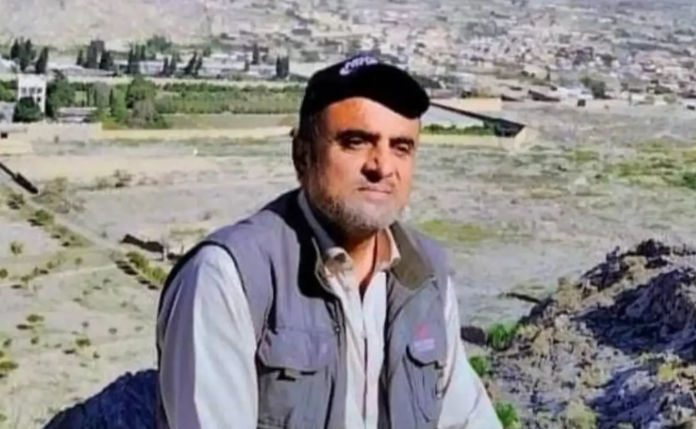
Renowned activist Mullah Bahram has been arrested by Chaman police on outdated and baseless FIRs (First Information Reports). Bahram, known for his advocacy for peace in Pashtunkhwa and his stance against Army-sponsored terrorism, has been taken into custody, sparking outrage among local communities.

This arrest is the latest in a series of incidents of abduction of Pashtun activists. On September 6, 2023, Muhammad Usman, a resident of Wana, South Waziristan, was reportedly taken by military personnel from Baghicha Checkpoint. Till date, his whereabouts remain unknown

In another case, Hameed-Ullah, from North Waziristan, was detained by the Counter-Terrorism Department (CTD) in Lahore. After 18 days of unaccounted absence, he was charged in a fabricated CTD case.

Such incidents are not isolated, hundreds of Pashtuns face similar treatment monthly. These actions are part of a broader pattern of human rights violations carried out under the guise of national security.

The situation has reignited long-standing grievances among Pashtun communities with peaceful organisations like PTM voicing their concern. Since 1947, the Punjabi Pak Army is exploiting Pashtuns for their own vested sinister interest while denying them basic rights. The militarization of Pashtun lands, including the establishment of checkpoints and military camps, has been a particular point of contention.

Furthermore, their management of the Durand Line, that arbitrary restricts Pashtuns who have familial and economic ties across the border. The use of landmines in the region has also been a severe threat to civilian safety, with reports of children being killed or maimed.

BLF attacks Pakistan Army in Kalat; heavy casualties & material damage

The Balochistan Liberation Front (BLF), operating in Pakistan’s southwestern province, has claimed responsibility for two recent attacks on Pak security forces in the Kalat district. Major Gwahram Baloch, the BLF spokesperson, released a statement detailing the incidents.

According to the BLF, the first attack occurred on June 28 at approximately 11 p.m. BLF fighters reportedly launched an assault on a Frontier Corps (FC) camp in the Johan area of Kalat, using rockets and other advanced weaponry. The rockets landed inside the camp, resulting in significant casualties and material damage to Pak forces.

In response to the attack, Pak forces allegedly fired multiple mortar shells and deployed surveillance drones in the area. The BLF statement mentions that helicopters were also used to shell the attack site at around 6 a.m. the following morning. Despite these counter-measures, the BLF claims its fighters successfully retreated to secure locations without casualties.

A second attack was reported on June 30, targeting an FC checkpoint in the Johan Shah Mardan area of Kalat. The BLF statement indicates that fighters used a combination of sniper rifles, rocket launchers, and other weapons in this assault. Again, the group have inflicted heavy losses on the security forces.

Major Gwahram Baloch said that these attacks are part of the BLF’s ongoing campaign against occupying Army in POB. The spokesperson asserted that such operations will continue until their goal of an independent Balochistan is achieved.