Home Blog Page 89

Tehreek-e-Labbaik attacks & desecrates Ahmadiyya mosque on Eid

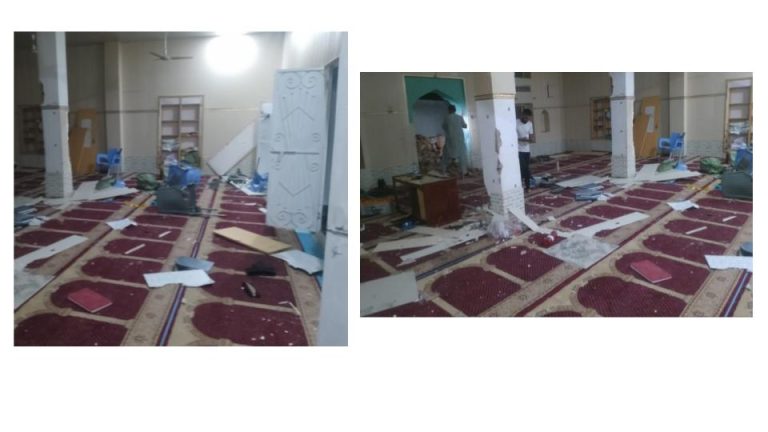
An Ahmadiyya place of worship was attacked and desecrated by over 150 Tehreek-e-Labbaik Pakistan (TLP) extremist men in Kotli district of Pak-occupied Jammu and Kashmir on the first day of Eid al-Adha.

The assailants opened fire and destroyed the minarets and arches of their place of worship in the early hours of Monday.

This attack comes on the heels of another concerning incident where three Ahmadi community members from Punjab’s Chakwal district were detained earlier this month “to avoid any likelihood of breach of peace”.

The detainees, including the community’s Chakwal district president Malik Naveed Ahmad, were held under the Punjab Maintenance of Public Order Ordinance, 1961 and lodged in Jhelum jail. The orders described them as “miscreants” and aimed to prevent them from “unlawful activities and acting in a manner prejudicial to the public safety” – a thinly veiled reference to their intended animal sacrifice on Eid al-Adha.

The Ahmadiyya community, considered non-Muslim by Pakistan’s constitution, has long been a target of persecution and hate crimes in the country. These latest incidents have once again brought to light the precarious situation faced by religious minorities in Pakistan.
Recovery of three forcibly disappeared victims in PoB

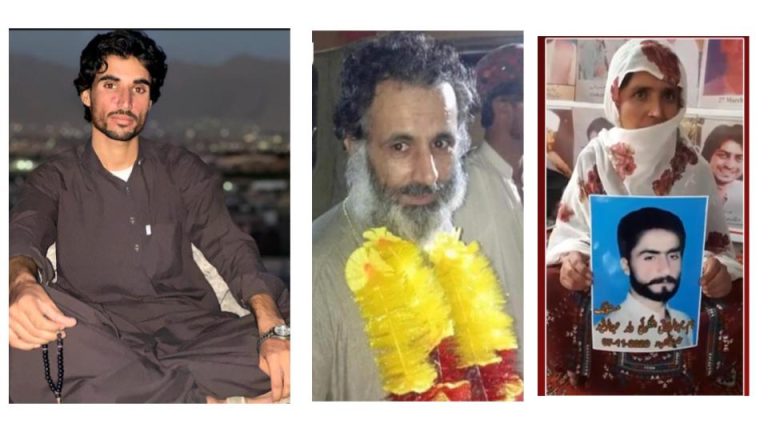
In a positive development, three individuals who had been subjected to enforced disappearance in different areas of Pak-occupied-Balochistan have been recovered. The recovered persons belong to Mach, Kech, and Mastung districts.

Gul Zaman Kurd, who had been forcibly disappeared by Pak Army from Bolan, Mach, has been recovered and has returned to his home. Gul Zaman was forcibly disappeared in March of this year. It is worth noting that his brother, Shair Zaman Kurd, was forcibly disappeared on February 12, 2011, but his mutilated body was later found in Quetta in March. Shair fell victim to the Pak Army’s brutal kill and dump policy.

Meanwhile, Shah Jahan, son of Mullah Noor Allah, who had been forcibly disappeared from Bolida, Kech, has also been recovered. Pak Army had launched an operation in the Gali area of Bolida and forcibly disappeared Shah Jahan along with his brother Sadiq from their home.

In protest against the incident, the relatives staged a sit-in in front of the Pak forces’ camp, along with local residents. However, last night, death squad personnel threatened to kill the protesters in an attempt to sabotage the demonstration.

Additionally, Abdul Razaq, son of Abdul Rasheed Bangalzai, who had been forcibly disappeared from Mastung, has been recovered. He was forcibly disappeared on November 7, 2020, from Shangi Road, Mastung. Abdul was released in Nushki, and his close sources have confirmed his recovery.

The recovery of these individuals has brought relief to their families and renewed hopes for the safe return of other forcibly disappeared persons in Pak-occupied-Balochistan. However, concerns remain about the widespread practice of enforced disappearances and the lack of accountability for the Army.

Massive anti-Taliban protest in Kurram

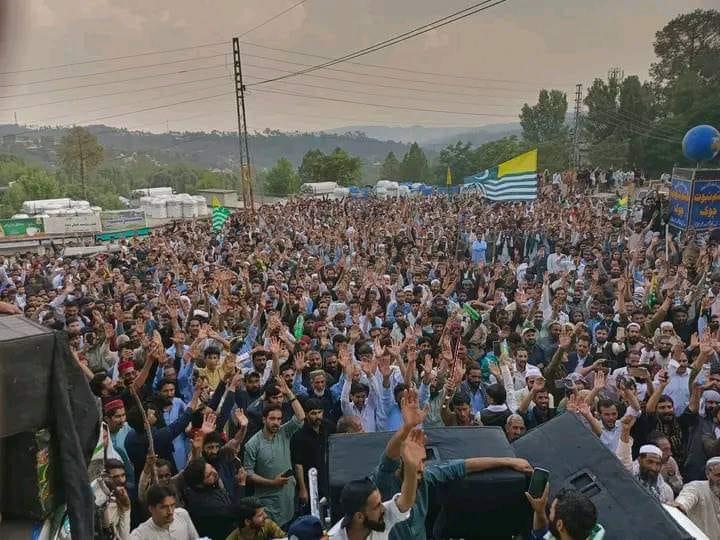
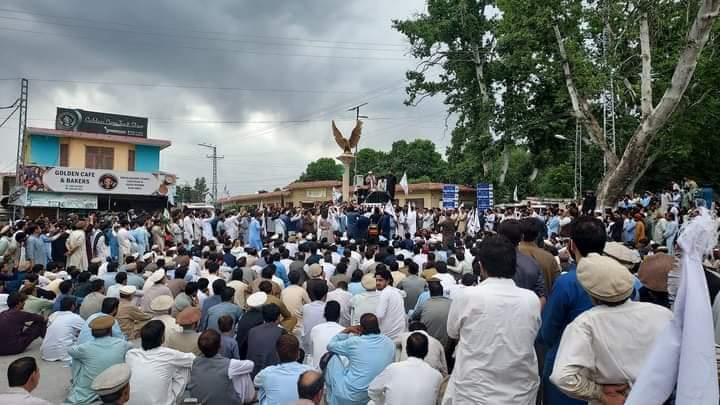
In a massive show of defiance against the Taliban’s presence and harassment by security forces, thousands of residents of Kurram district in Pakistan took to the streets yesterday, demanding peace and rejection of the “Project Taliban”. However, this significant protest remarkably received no coverage from the mainstream media.

The protesters, comprising people from all walks of life in Kurram, raised slogans against the growing Taliban influence and brutalities being inflicted upon the local populace. They criticized both the Taliban militants as well as the heavy-handed actions of Pak security forces operating in the region.

Pashtun leaders have been vocal against Islamabad in promoting religious extremism by providing covert support to the Taliban as part of its regional strategic depths policy, dubbed “Project Taliban.”

However, with no assurances forthcoming from authorities, the people of Kurram continue to live in a perpetual state of fear, caught between the Taliban’s brutalities and the heavy-handedness of security forces.

Baloch families to protest enforced disappearances by Pak Army on Eid

On the occasion of Eid al-Adha, families and supporters of forcibly disappeared Baloch individuals plan to hold a protest sit-in at Shaheed Fayaz Chowk to demand the recovery of their loved ones subjected to enforced disappearances by Pak security forces.

The protesters, including families of missing persons like Muslim Arif, Fatah Miar and Jehanzeb Fazal, are the victims of the Pak Army’s brutal widespread practice of abducting and illegally detaining Baloch activists, students and civilians. This highlights the Army’s brutal suppression of Baloch rights and its campaign of violence against the ethnic Baloch community.

After Eid prayers in the morning, the protesters will stage the sit-in at Shaheed Fayaz Chowk. Later in the evening at 5pm, they plan to march in a rally towards the Press Club to further raise awareness about their cause and missing relatives.

Political parties, human rights groups and the general public have been urged by protest organizers to participate and show solidarity with the families’ struggle against the Pak Army’s human rights abuses through enforced disappearances in occupied Balochistan since 1948.

Pak FC forces torture Chaman protestors in detention

In a fresh development, Chaman sit-in protestors, who were arrested on June 6 are being severely tortured by Pakistan’s paramilitary force, the Frontier Corps (FC), in detention. Reports indicate that the detained individuals were kept handcuffed for days and their eyes were covered.

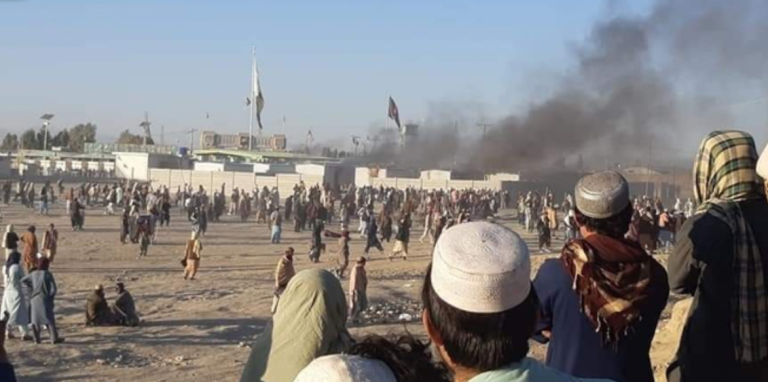
The arrested protestors were detained on June 6 when the Pak Army’s Frontier Corps (FC) opened fire on peaceful demonstrators in Chaman, escalating tensions and transforming the protest against mandatory passports into a broader struggle against oppressive tactics employed by the Pakistani establishment.

Chaman protest

Notably, lakhs of Pashtuns have been protesting on the Chaman border for over eight months. They are protesting against the Pakistani establishment’s imposed one-document regime under which the previously functional Tazkira system has been abolished, making passports mandatory for trade across the Durand Line.

Being the most important crossing on the Durand Line, this Pak-occupied Balochistan crossing has been crucial for local traders who were earlier allowed to cross the border with Tazkira (a paper slip permission). Additionally, there are familial ties between the local communities on both sides of the border. The new one-document regime is disruptive to these familial ties.

Unfortunately, no measures were taken to address these delicate issues. Moreover, a large section of the Pakistan-controlled media has neglected this massive protest for an extended period, seemingly waiting for it to die down. Seeing that not happening, the Pak Army and its FC forces have launched a crackdown on peaceful Pashtun protestors twice. On June 6, they not only killed many Pashtuns but also arrested and disappeared dozens.

The latest reports of torture are a further gruesome act by the Pak Army. It is surprising that a self-proclaimed top military force, which boasts of being a nuclear power but has lost all the wars it has fought, is only effective in torturing the people it controls.

Pashtuns call for a protest rally against target killings on June 22 by Pak Army

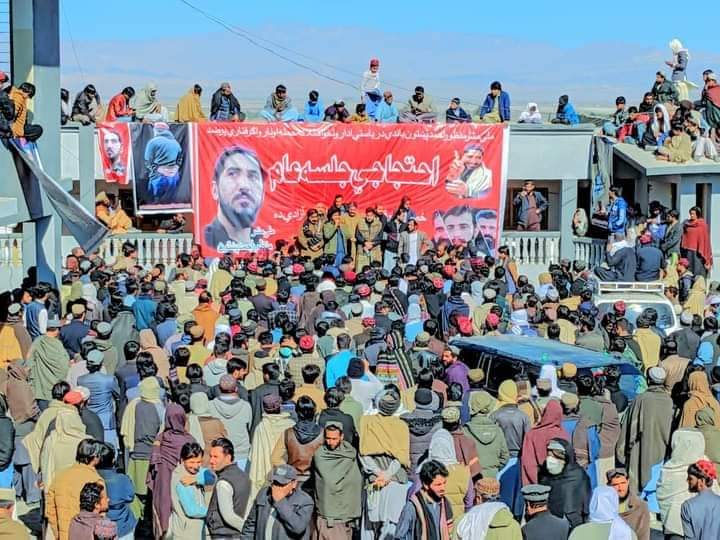
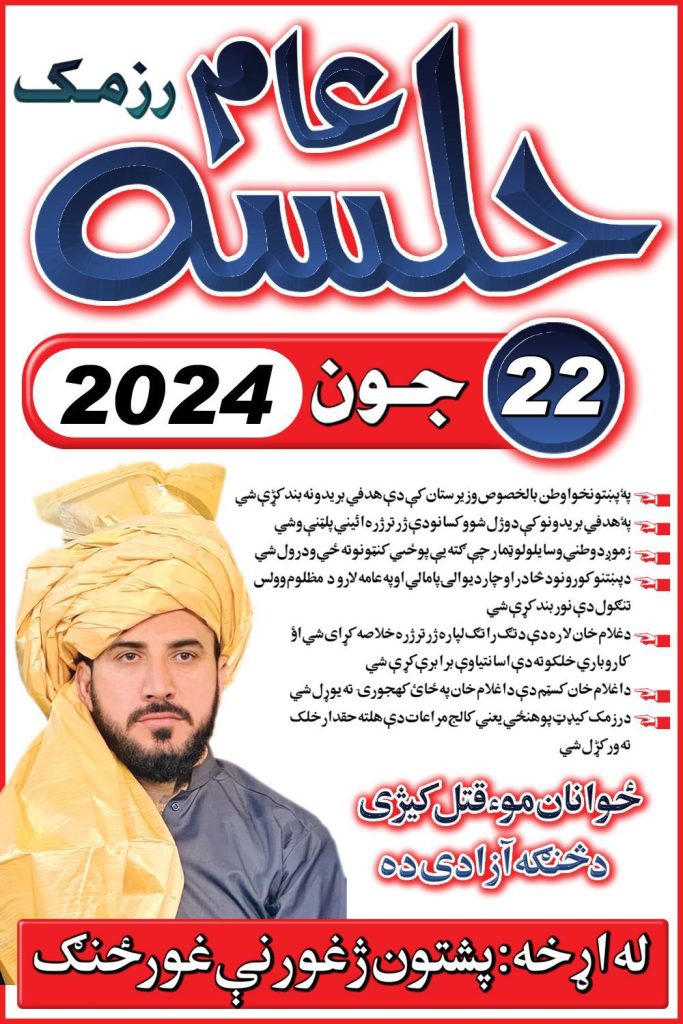
Pashtun Tahafuz Movement (PTM) has called upon Pashtuns and all the oppressed nations under the control of imperial Pakistan to a grand rally against violence in Ramzak area of Waziristan on June 22.

The protest rally is being organised demanding the Pakistan Army to stop attacks on Pashtun homeland, especially Waziristan which has witnessed multiple targeted killings in recent days. PTM is also demanding an investigation into these target killings of Pashtuns.

Moreover, the Pashtun rights organisation has demanded to open the road of Ghulam Khan, thereby facilitating the traders.

Poster of PTM rally (Photo: X)

Notably, Ghulam Khan is a town in Khyber Pakhtunkhwa and is the third most important border crossing after Chaman and Torkham. Like Chaman, Ghulam Khan is also closed over the visa issue.

Meanwhile, the Pashtun organisation has reiterated its call to end the plundering of the native resources by the Pakistan Army. In a poster released by them, PTM said the looters of national wealth, who go to military camps should be stopped.

Earlier on May 23, PTM organised a similar rally in Dhaka city after a series of targetted killings in the region. Over a month has passed since then but the Pak Army has failed to address the concerns of Pashtun community which is facing the wrath of the deadly trend as bodies of the community is dropping on the ground every passing day.

Minor Hindu girl forcibly converted and married to Muslim boy in Sindh

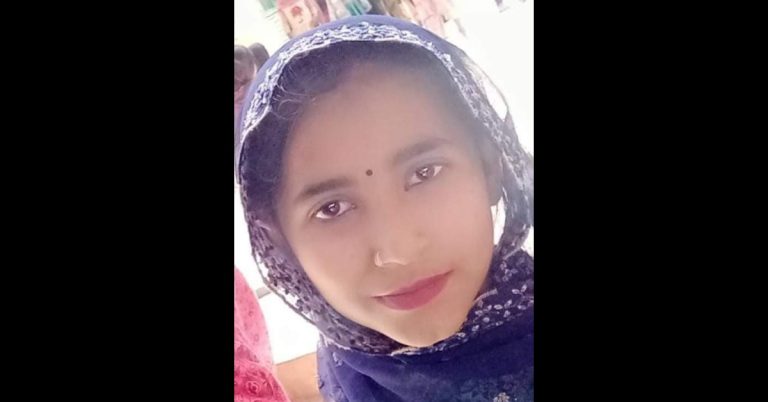
In a distressing incident that underscores the precarious situation of religious minorities in Pakistan, a 13-year-old Hindu girl named Roshni Meghwar from Mirpur Khas, Sindh, was forcibly converted to Islam and married to a Muslim boy. This case highlights the urgent need for greater protection and awareness regarding the safety of minority girls in the region.

Hindus, who once comprised a significant population in Sindh, have been reduced to a vulnerable minority. Hindu girls are prime targets for radical Islamists who abduct them, forcibly convert them, and marry them to their abductors, often men two to three times their age. These victims frequently face sexual violence and coercion. Despite the gravity of the situation, international human rights organizations have largely overlooked their plight. This neglect has led to an irreparable loss for the Hindu community in Sindh.

The abduction and forced conversion of Roshni Meghwar have sparked outrage among the community.

Pakistan mined villages in POGB kills child; injures family

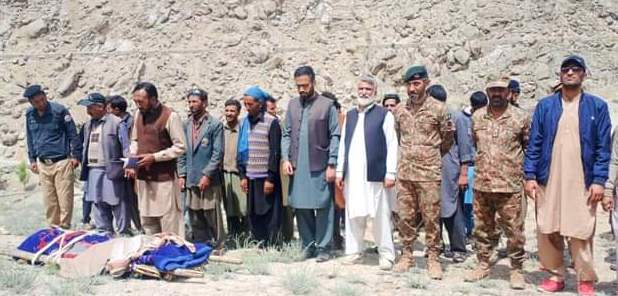
In a tragic incident, a child was killed, and his father and sister were critically injured after an explosion ripped through a meadow in Harghosil village of Pakistan-occupied Gilgit-Baltistan region.

The blast, caused by a landmine or unexploded ordnance, occurred while the family’s cattle were grazing near the Line of Control (LoC) that separates Pakistan and India’s Himalayan territories.

Despite the frequent occurrence of such tragedies, the Pak media remains silent, failing to shed light on the plight of the region’s civilians.

The incident has once again drawn attention to the pressing issue of land mines and unexploded ordnance that litter the LoC, posing a constant threat to the safety and livelihoods of border communities in Pakistan-Occupied Gilgit-Baltistan and Pakistan-Occupied Jammu and Kashmir.

This incident comes at a time when the region grapples with rampant land grabbing by influential mafias, who forcibly or deceitfully seize land from legitimate owners for real estate or monetary gain, subjecting locals to evictions and property loss.

Residents have taken to the streets, protesting the encroachment of their land rights by these powerful groups backed by the cruel Pak Army, but their appeals for justice and intervention have largely fallen on deaf ears.

The testimonies of the protesters highlight the injustice and frustration experienced by local communities, marginalized and denied access to their own lands.

POJK: Protesters demand release of Long March detainees

In Pakistan-occupied Jammu and Kashmir (PoJK), the public protests demanding the release of individuals detained during the long march by Pak security forces have intensified.

In a tumultuous turn of events on May 11, clashes erupted between protesters and Frontier Corps (FC) forces, leaving dozens injured on both sides.

The protests, which began in Pilandri and culminated in Kotli, saw demonstrators marching to demand the release of detainees arrested during the long march.

Earlier in May, FC forces resorted to gunfire, tear gas shelling, and stone pelting to disperse the protesters. In Mirpur, FC personnel disguised in civilian attire incited the mob towards violence, exacerbating the situation.

https://twitter.com/JKMI_Official/status/1801480008654807119

More than 60 Kashmiri protesters were reportedly injured in the clashes. The protests highlight the growing unrest and frustration among the people of PoJK over issues of forced disappearances, baseless cases and the detention of individuals by the occupied authorities.

The escalating tensions in PoJK have drawn international attention to the human rights situation in the region, with concerns being raised over the excessive use of force by Pakistan security forces and the suppression of dissent.

Celebrating Eid lands Ahmadiyyas in detention in Pakistan

Three prominent members of Pakistan’s minority Ahmadiyya community have been detained for one month by the Chakwal district administration to prevent them from performing religious rites during Eid-ul Azha.

The detentions in Chakwal district come just days after two Ahmadis were killed in a targeted attack in Mandi Bahauddin, highlighting the increasing threats faced by the community in Pakistan.

On June 10, Chakwal’s Deputy Commissioner Quratul Ain Malik issued separate detention orders for the three men, all residents of Dulmial village, where a mob had attacked an Ahmadi mosque in 2016, killing two people. The historic nineteenth century mosque remains sealed by authorities. The Ahmadiyya community, a religious minority in Pakistan, frequently faces persecution and discrimination.

Malik cited a police report alleging the three could “deteriorate the law and order situation”, invoking a draconian public order law to justify the detentions, which were recommended by the District Intelligence Committee to “prevent sectarian conflict”.

The detainees were subsequently arrested and sent to Jhelum prison.

Ahmadiyya community

A spokesperson for the Jamaat-e-Ahmadiyya said that the three men were summoned to a meeting with police officials and the assistant commissioner Choa Saidan Shah regarding Eid-ul Azha. During the meeting, which also included complainants opposed to the Ahmadiyya community, the men were pressured not to perform the Qurbani ritual.

They were also harassed and asked to sign a surety bond promising that no Ahmadi in the district would perform Qurbani.

Amnesty International condemned the detentions, calling them a “gross violation of individual rights to liberty and freedom of belief and religion.” The organization highlighted that the detentions occurred shortly after the targeted killing of two Ahmadiyya men in Mandi Bahauddin on June 8.

“Pakistan: The ‘preventive detention’ of three members of the Ahmadiyya community yesterday in Chakwal to stop them from engaging in religious rites during the upcoming Eid al-Adha is a gross violation of individual rights to liberty and freedom of belief and religion,” Amnesty International stated on X.

The detentions have once again drawn attention to the systemic persecution of the Ahmadiyya community in Pakistan, where they face religious discrimination, hate speech, and violence from extremist groups and the Paki establishment.