Home Blog Page 90

China court sentences Chinese #MeToo activist Huang to 5 years for subversion

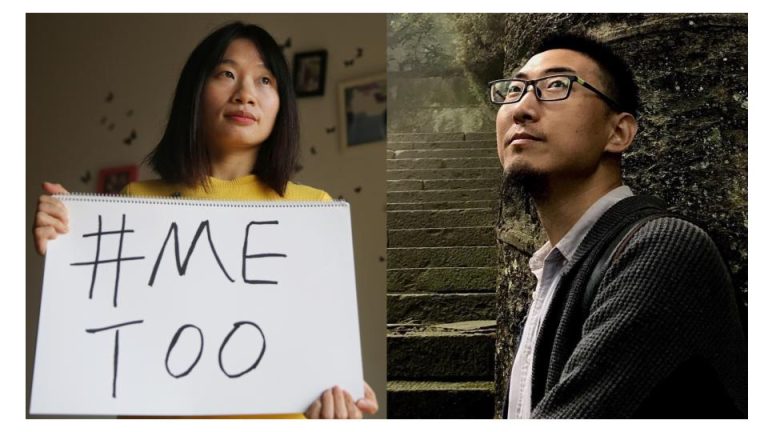
A Chinese court on Friday sentenced leading #MeToo activist Huang Xueqin to five years in prison after finding her guilty of inciting subversion of state power, in a case that has drawn international condemnation over Beijing’s crackdown on dissent.

The Guangzhou People’s Intermediate Court also sentenced labor activist Wang Jianbing to three and a half years on the same charge, according to a campaign group supporting the activists and a copy of the court verdict.

Huang, a 35-year-old independent journalist, plans to appeal the sentence, her supporters said. It remained unclear if Wang, 40, would also file an appeal.

“The sentence was longer than we expected”, said a spokesperson for the Free Huang Xueqin and Wang Jianbing campaign group, who requested anonymity citing safety concerns. “It is completely unnecessary. So we support Huang Xueqin’s intention to appeal”.

Huang and Wang were detained in September 2021 after holding gatherings where they discussed social issues with Chinese youth. Authorities accused them of inciting subversion, a vague charge frequently used to target dissidents.

During their closed-door trial last year, the pair denied any wrongdoing. Ahead of the verdict, the campaign group stated their activism for labor rights and women’s rights should not be criminalized.

There was heavy security around the Guangzhou court on Friday, with police questioning bystanders.

Huang, who covered the #MeToo movement and 2019 Hong Kong anti-government protests, had been scheduled to fly to Britain to begin a master’s degree at the University of Sussex on a British government-funded scholarship before her arrest in 2021. She was previously detained for three months in 2019 over her activism.

The harsh sentences underscore Beijing’s intensifying crackdown on dissent and activism in recent years under President Xi Jinping’s hardline rule.
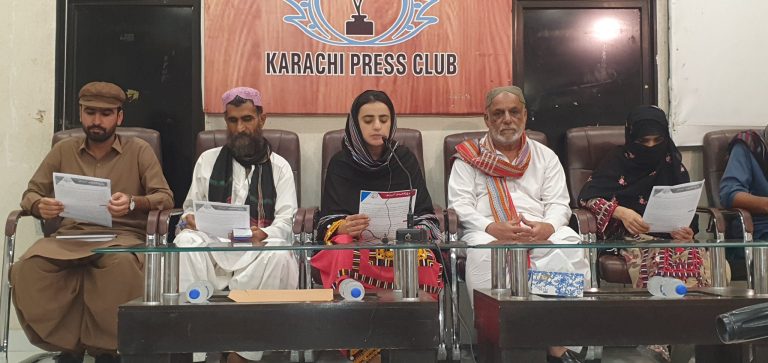
BYC meeting held in Karachi, Mahrang Baloch elected as central organizer

The Baloch Yakjehti Committee (BYC) held a crucial core committee meeting in Karachi, where it announced the formation of its organizational structure and the first central organizing body. Dr. Mahrang Baloch has been elected as the central organizer, while Lala Wahab Baloch has been appointed as the deputy organizer.

Addressing a press conference at the Karachi Press Club, the committee’s leaders highlighted the group’s long-standing struggle against the Baloch genocide and its efforts to launch an organized political movement in Pak-occupied-Balochistan last year. This movement included a long march from Turbat to Islamabad, a prolonged sit-in after reaching the capital, and a historic public gathering in Quetta upon their return.

Emphasizing their commitment to peaceful resistance, the leaders stated that despite facing threats, harassment, arrests, false cases, and violence, the committee has remained non-violent throughout its struggle. They vowed to continue their organized fight against the Baloch genocide and defend Baloch national rights, rejecting any attempts by the Army to provoke them into violence.

Establishment of Central Organizing Body

During the core committee meeting, the BYC reviewed the political situation in Pak-occupied-Balochistan, the Pak Army’s policy of Baloch genocide, the post-long march situation, the need for political organizations, and the committee’s organizational structure. Consequently, the central organizing body was formed, with Dr. Mah Rang Baloch as the central organizer and Lala Wahab Baloch as the central deputy organizer.

The meeting also approved the organization’s interim constitution and manifesto, and established a central working body comprising various departments. These departments will focus on organizing the movement against the Baloch genocide, mobilizing the Baloch people, creating unity among political and social forces within Baloch society, and organizational matters.

‘Baloch Raji Muchi’ announced

The BYC announced the “Baloch Raji Muchi” (Baloch National Gathering) for July, during which marches from all Baloch areas will converge at a central location. The date and location of the gathering will be announced through the media in the coming days.

The committee informed its activists, supporters, and the Baloch nation about a framework prepared for the preparations of the Baloch Raji Muchi, which will soon be distributed to all organizational activists. Additionally, a booklet regarding the Baloch Raji Muchi has been prepared and will be published soon.

The Baloch nation has been urged to play their role according to their capabilities and join the movement to stop the Baloch genocide and defend Baloch national rights.

Call for Support

The BYC has initiated a formal membership process, and the Baloch nation can contact the committee’s representatives in their respective areas to become members.

The leaders also appealed to the intellectual class of the Baloch nation to fulfill their national responsibilities by supporting the committee’s ongoing movement against the Baloch genocide in every possible way.

The committee emphasized its commitment to informing international human rights organizations and the media about the Army’s violent actions and violations of the constitution and law against their organization, holding the state responsible for any harm caused to their activists, supporters, or companions.

UKPNP condemns abduction of Kashmiri man, Khurshid Ahmed in Rawalpindi

The United Kashmir People’s National Party (UKPNP) has raised alarm over the abduction of a Kashmiri man, Khurshid Ahmed, from Rawalpindi, condemning the enforced disappearance and demanding his immediate release.

Sardar Nasir Aziz Khan, the central spokesperson for the UKPNP, took to X (formerly Twitter) to highlight the case of Khurshid Ahmed, a resident of Neelum district in Pakistan-occupied Jammu and Kashmir.

“Another Kashmiri, Khurshid Ahmed, resident of Neelum, was abducted on June 7 from Rawalpindi, Pakistan by uniformed personnel,” Khan said. “The UKPNP condemns this enforced disappearance & demands his immediate release and justice.”

The incident has drawn attention to the human rights issues plaguing the Pakistan-occupied regions of Jammu and Kashmir (PoJK) and Gilgit-Baltistan, which have been a subject of concern for several years.

Human rights organizations have documented numerous cases of enforced disappearances and arbitrary arrests by Pak Army forces in the occupied territories, often targeting individuals critical of the occupied government’s policies.

Moreover, reports have highlighted restrictions on freedom of expression and press freedom in PoJK and PoGB, with journalists and media outlets facing censorship for reporting on sensitive issues, including human rights violations and political dissent.

Political parties and activists advocating for autonomy in the regions also face repression and persecution by the authorities, with electoral fraud and manipulation to suppress dissenting voices.

There is a lack of effective mechanisms to hold security forces and officials accountable for violations committed against civilians in the occupied territories.

Additionally, land grabbing and exploitation of natural resources in the area is rampant, with local communities marginalized or displaced without adequate compensation or consultation.

Paki court sends PTI’s Shah Mehmood Qureshi in judicial remand over May 9 riots

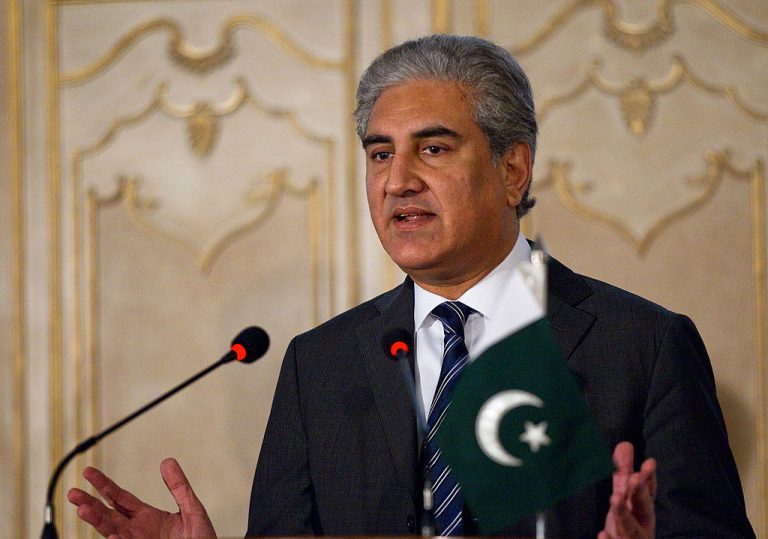
A Pakistani court has remanded former foreign minister and senior Pakistan Tehreek-e-Insaf (PTI) leader Shah Mehmood Qureshi to 14 days of judicial custody for his alleged involvement in last year’s May 9 riots.

Qureshi appeared before the court on Thursday after completing a 19-day physical remand in connection with the violent protests that erupted across Pakistan on May 9, 2023. The court denied an extension of his physical remand and instead placed him under judicial remand for a fortnight.

Qureshi, who is already incarcerated on other charges, was interrogated at Adiala Jail during his previous physical remand period.

In a separate development, the Islamabad High Court (IHC) earlier acquitted former Prime Minister Imran Khan and Qureshi in the highly-publicized cypher case. IHC Chief Justice Aamir Farooq and Justice Miangul Hassan Aurangzeb announced the verdict on petitions challenging their convictions in the case.

PTI

The PTI founder and party vice-chairman were sentenced to 10 years in prison in January this year over the cypher controversy. However, their release seems unlikely as Khan remains embroiled in the Toshakhana and Iddat cases, while Qureshi faces charges related to the May 9 riots.

The May 9 protests erupted after Khan’s arrest, with widespread violence and attacks on military installations across Pakistan, leading to numerous arrests, including that of several PTI leaders like Qureshi. The protest march, dubbed the ‘Azadi March’ by Khan, was aimed at forcing the puppet govt that had ousted him through a no-confidence vote in April 2022. As protestors entered Islamabad, clashes broke out, leading to property damage.

Khan, 71, has been jailed since August last year after convictions in some of the nearly 200 cases against him since his ouster. The cricket icon-turned-politician continues to face legal challenges from his opposition.

China’s ‘upgraded’ CPEC; Islamabad brace for more debt & dubious benefits

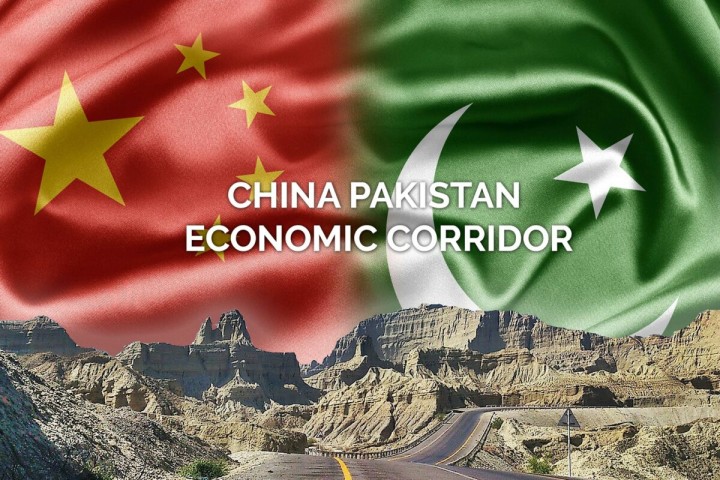
With Beijing and Islamabad signing at least 32 MOUs related to China Pakistan Economic Corridor [CPEC], it’s time for those who continue to believe that this ambitious USD 62 billion project will forever end Pakistan’s economic woes to celebrate. What must be even more exhilarating for the pro-CPEC camp is the news of Beijing’s willingness to roll out an “upgraded version” of CPEC in the second phase that will commence soon.

While CPEC certainly improved surface communication and power generation, yet this project hasn’t quite measured up to both Beijing and Islamabad’s repetitive claim of it being a “game-changer” even a decade after it was launched with much pomp and show. Hence, many are naturally wary of Beijing’s latest promise of an “upgraded version” of this project as lack of clarity on what it means raises several questions regarding this beguiling phrase.

If phase two of CPEC will be an “upgraded version”, then does it imply that first phase of this project has been executed using antiquated technology/outdated models, or is it just trying to assuage public disenchantment with this project by making tall promises? An “upgraded version” implies replacement of existing features with better and more efficient alternatives, and achieving this requires substantial investment in both terms of capital and time. So, will Beijing provide the proposed “upgraded version” without any associated cost escalation in the particular project?

If the answer is ‘No’, then where will Islamabad find the money for the “upgraded version” of CPEC? And if the reply is ‘Yes’, then isn’t it obvious that Beijing had craftily inflated the initial project estimates? This apprehension may sound outlandish but the CPEC ML 1 railway project aimed at reviving and redesigning construction of a 1,726 km long track from Karachi to Peshawar is a case in point. Originally pegged at USD 9.85 billion, it was subsequently reduced to USD 6.678 billion after Pakistani experts excluded extravagant and avoidable expenditures by focussing on critical aspects of the project.

Pakistan Railways achieved more than USD 3 billion savings by prioritisation and ingenuity while ensuring no dilution in the laid down objectives. Instead of upgrading all 630 level crossings, the most critical ones have been identified and instead of building new bridges over rivers, the comparatively much cheaper option of strengthening existing bridges has been incorporated. Though the tracks would have the designated speed limit of 140 km per hour, they would still be capable of supporting the desired speed of upto 160 Km per hour envisaged in the original plan!

Similarly, there are also compelling indications of exploitation in CPEC’s energy sector by Chinese independent power producers [IIPs]. In a well researched opinion paper titled ‘What drives Pakistan’s coal-fired power plant construction boom?: Understanding the China-Pakistan Economic Corridor’s energy portfolio’, Rishikesh Ram Bhandary and Kelly Sims Gallagher have brought out the fact that besides other considerations, “availability of Chinese public finance to support coal-fired power plants to be the most important factors that shaped energy technology selection.”

The paper has also mentioned that “while Chinese actors have been responsive to the Pakistani government’s policy choices, they have also displayed financial risk aversion, which has translated into steep economic costs for Pakistan.” This observation is buttressed by the official revelation that the circular debt [money due to IPPs] as on January 1 this year has reached a whopping Rs 2.636 trillion, and while Islamabad is trying to give excuses like increase in imported coal prices and power loss/ theft, it’s evident that IPPs are exploiting Islamabad’s inability to call for an investigation due to fear of antagonising its “iron brother.”  

Former German career diplomat Dr Anne-Marie Schleich also believes that “For China, the construction and administration of coal-fired power plants within CPEC pose good alternative business opportunities abroad for its state-owned enterprises at a time when coal-fired power in China is being scaled down…” She has also highlighted Beijing’s duplicity on this issue, stating that “the focus on coal contrasts with China’s newly proclaimed domestic sustainability policy, yet China continues to be involved in coal power plants in its neighbourhood.”

So, while both Beijing and Islamabad have once again showered clichéd praises on each other, one wonders if the Pakistanis are really so gullible as to fall hook, line and sinker for China’s sweet talk and forget that the days of free lunches are long over, or is that being completely dependent on Beijing for loans to avoid debt defaults, cash-strapped Islamabad has no other choice but to dance to its “Iron Brother’s” tune?

.

Another minor Hindu girl fall prey to Pakistan’s ‘conversion rape’ policy

In yet another case exposing the grave human rights crisis facing religious minorities in Pakistan, a Hindu girl named Radhika became the latest victim of the disturbing practice of “conversion rape” on June 10.

Radhika was abducted, forcibly converted to Islam, and then married off to her abductor Tando Muhammad Khan in Sindh province. Her plight follows that of a minor named Noori, who was not only kidnapped and raped but also forcibly converted and married off to Muslim men Muhammad Ayub “Peer Ayubjan Sarhandi” and Luqman Mohib Junejo in separate incidents.

These cases are part of a deeply concerning pattern of forced conversions and marriages targeting minority Hindu and Christian girls in Pakistan, particularly in the Sindh region. Mounting evidence points to an organized campaign using sexual violence and coercion to entrap and exploit young girls from vulnerable communities.

Human rights activists have raised alarms over the climate of fear and oppression faced by minorities, who struggle to protect their children from such heinous crimes.

The issue has sparked outrage globally, and calls on Pakistan to take concrete action to safeguard the rights and freedoms of religious minorities. The world watches with mounting concern, calling for an end to the horrific practice of “conversion rape” and a future where no child is torn away from their family, faith, and future.

Pensioners protest in Pak-occupied J&K; demand hike amid soaring inflation

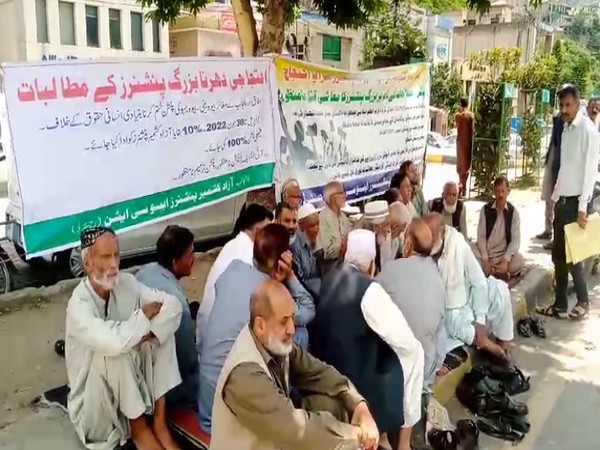
Scores of former occupied govt’s employees and pensioners in Pakistan-occupied Jammu and Kashmir (PoJK) took to the streets in a desperate bid to have their voices heard, holding a sit-in protest to demand an increase in their pensions amid soaring inflation.

Sharing heart-wrenching accounts, the protesters stated that managing household expenses has become an uphill battle, with skyrocketing cost of living rendering their meagre pensions inadequate. Despite holding numerous demonstrations over the past year, their pleas have fallen on deaf ears, with the Pak establishment not willing to address their plight.

“It is a fact that the Prime Minister of PoJK cannot make any announcements on his own. This has to be done by the government of Pakistan, and for this, the budget is fixed,” said Raja Muhammad Mumtaz, one of the protesters, highlighting the region’s lack of autonomy and dependence on Islamabad.

The pensioners also demanded the implementation of a law that would ensure the transfer of pensions to widows or unmarried daughters in the event of a pensioner’s demise, a basic right that has been denied to them.

Frustration was palpable as another protester questioned the authorities’ indifference, “When we ask the officials to address our concerns, they turn their faces away, as if nobody should come to them, and they won’t say anything. This is our condition that we are forced to sit on roads. We are old. People passing by are watching us. But our rulers are not concerned to even hear us out.”

The protesters blamed the Occupied government for not only neglecting the welfare of the people in the backward region but also compounding their misery by passing on the economic losses faced due to policy paralysis.

Pak Army acquires PoGB properties at questionable rates

The administration of Pakistan-occupied Gilgit Baltistan (PoGB) has reportedly leased 37 rest houses in forest locations to Green Pakistan Tourism, a subsidiary of the Pak military, at questionable rates.

The rental rates are set at Rs. 7 lakh per month for 20 buildings from the Communication and Works Department and Rs. 1.35 lakh monthly for 17 properties spanning 450 acres from the Forest Department.

The insatiable urge of the Pakistan Army to run public affairs has led it to start a new company called Green Tourism Limited and going a step further, it has now taken dozens of tourism sites on long-term lease and is now planning to run hotels and other such facilities.

The leasing of 37 prime rest houses and vast tracts of forest land to Green Pakistan Tourism at rates that can only be described as exploitation. These properties, which should have been developed as public spaces and revenue generators for impoverished region, have been handed over to the military’s commercial interests on a silver platter.

POGB Properties

The military’s land acquisitions, including those under the guise of initiatives like the “Green Pakistan Initiative,” have negative impact on local communities and small-scale farmers. The Army’s methods of grabbing land in PoGB are multifaceted and often involve a combination of legal manoeuvres, coercion and strategic exploitation of resources.

The military often justifies land acquisition under the pretext of strategic infrastructure development. Incidentally, the Pakistan Army runs huge commercial entities all over the country, starting from gas and petrol stations to housing colonies. It also runs many industrial units and there is hardly a sector in which the Pakistan Army is not involved.

Projects such as roads, military bases, and communication networks are often used as a pretext to acquire land, sometimes without proper compensation or consultation with local communities.

The military often collaborates with civil authorities, including local governments and administrative bodies, to acquire land through legal or quasi-legal means. This collaboration involves influencing decision-making processes, manipulating land records, or using political pressure to secure land.

While POGB grapple with crumbling infrastructure, lack of basic amenities, and marginalization, the PoGB authorities have once again chosen to prioritize the insatiable greed of the all-powerful Pak Army over the well-being of its own people.

Armed men launch grenade attack on Pak Army in Quetta

In a daring attack, Pak security forces were targeted by unknown men in the capital city, Quetta of Pak-occupied-Balochistan on Thursday. They hurled a hand grenade at a checkpoint manned by Pak forces on the Western Bypass, Brewery Road, triggering a powerful explosion.

Reportly, intense firing was witnessed after the blast rocked the area. While authorities have yet to confirm any casualties, the assault has sent shockwaves to the Army.

https://twitter.com/ZirNoor_Baluch/status/1800923148264804453

Recently, armed men abducted two personnel from the Frontier Corps (FC) in the Apsar area of Turbat on Sunday afternoon. No group has claimed responsibility for the abduction so far, but Baloch freedom organizations are known to operate in the region.

The situation in Pak-occupied-Balochistan has long been a point of concern for human rights organizations. The Pak Army has been heavy-handed, resulting in of human rights abuses. Enforced disappearances and extrajudicial killings have been employed to suppress the independence movement in the region.

Pak Army abducts another Baloch teenager in Dera Bugti

The unrelenting oppression of the Baloch community by Pak Army shows no signs of abating, with two more disturbing incidents of enforced disappearances coming to light.

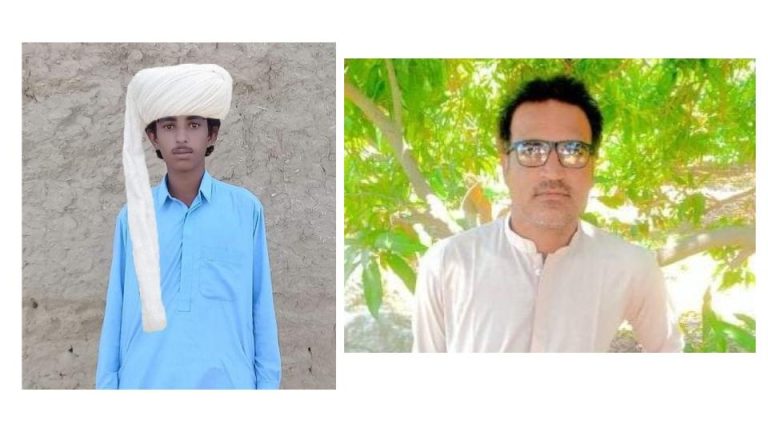
In Dera Bugti, another teenage victim, identified as Jaffar s/o Malhar Bugti, was abducted by Pak Army from the city streets in broad daylight operation.

Meanwhile, in the remote town of Teertege in Awaran district, a recent raid by the Pak military has left the local population reeling. Dill-Jan, the son of Allah Bakhsh, has become the latest victim of the Army’s brutal campaign of enforced disappearances in the region.

Since Pakistan’s forced occupation of Balochistan in 1948, the Baloch people have endured a relentless nightmare of oppression at the hands of the powerful and cruel Army. In addition to the scourge of enforced disappearances, they have been subjected to frequent raids, extrajudicial killings, and a complete disregard for their basic human rights.

Pakistan’s iron-fisted approach is only pushing the region deeper into chaos with no end in sight to the cycle of violence.