Home Blog Page 98

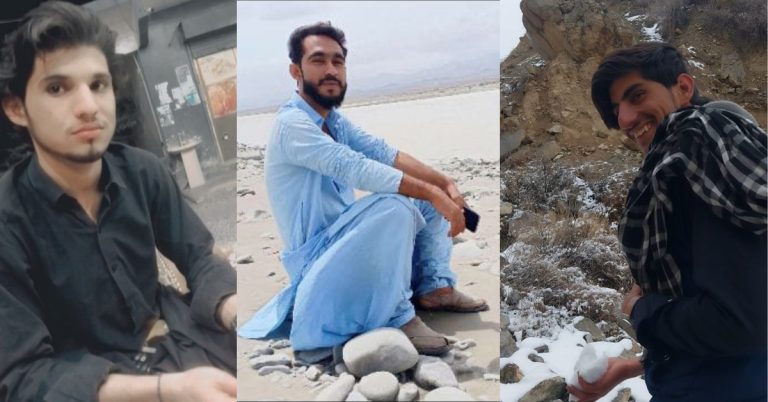
Pak Army implicates and arrests Pashtun activist in false case

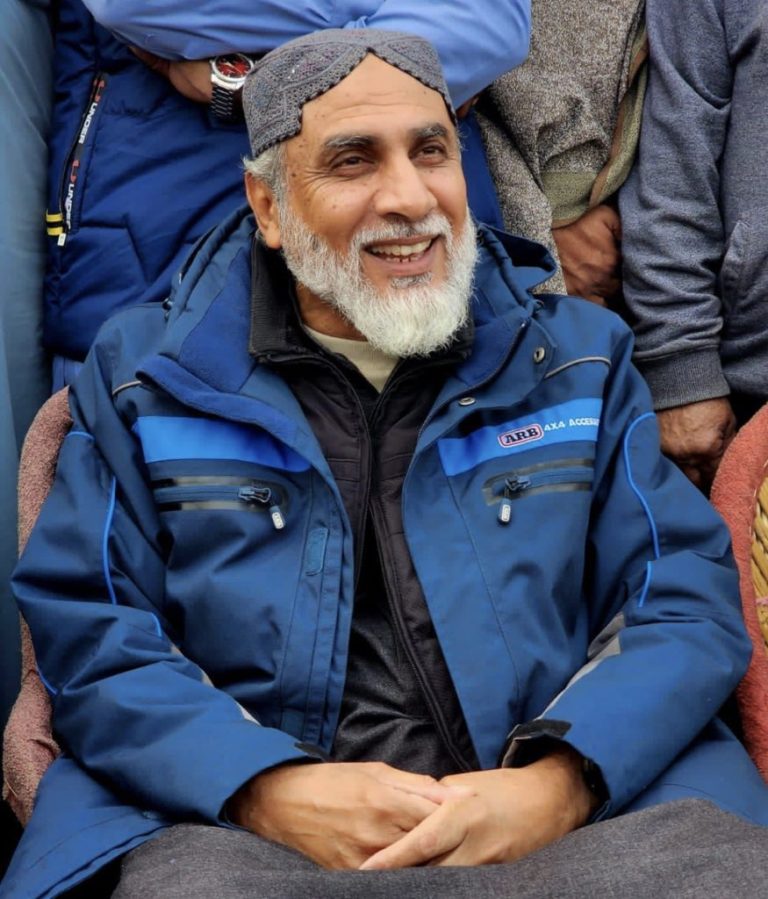
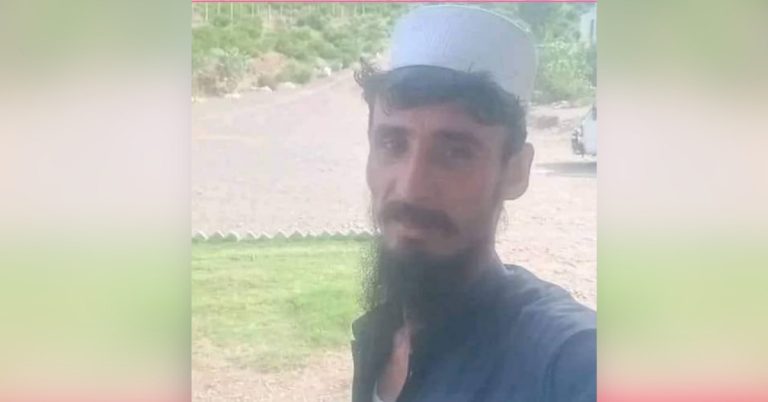
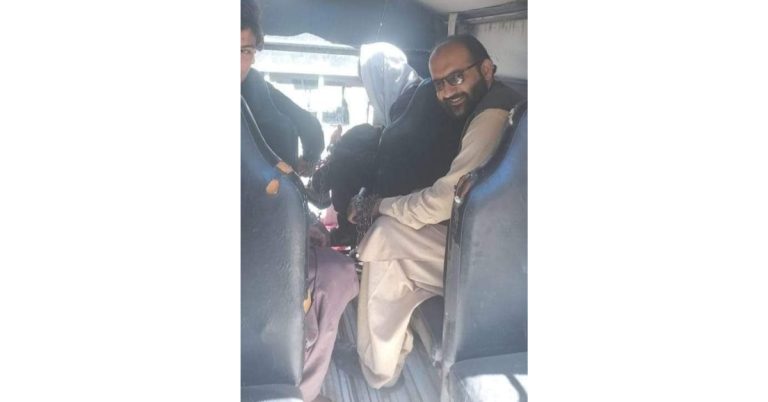
Fatih Khan Kakar, the coordinator for the Pashtun Tahafuz Movement (PTM) in Qilla Saifullah, has been arrested by Pakistani authorities under false and politically motivated FIRs. The arrest took place on May 27, and Kakar has since been remanded to police custody for five days by the court.

PTM has long accused the Pakistani establishment of using fabricated charges to target its members and suppress their activism. This latest arrest is seen by many as a continuation of this trend. Despite years of imprisonment and state repression, PTM activists have remained steadfast, refusing to abandon their cause.

Fatih Khan Kakar’s arrest has sparked outrage within PTM and among human rights activists. The movement, which advocates for the rights of Pashtun and other marginalized groups, claims that Pakistan is increasingly alarmed by the rising national consciousness and awareness among the people. This awareness, they argue, poses a threat to the oppressive policies of the authorities, prompting desperate measures to stifle dissent.

In response to Kakar’s arrest, PTM leaders have vowed to continue their struggle, emphasizing that such actions will not deter their movement.

Armed assailants kill kin of famous Baloch poet in Pak-occupied balochistan

A young man was gunned down in broad daylight on Thursday by unknown armed men in the town of Kali Sharif Khan near Noshki, Pak-occupied-Balochistan. The victim has been identified as a student named Balouch son of Nazeer Ahmed Badini.

Reportedly, a group of armed men traveling in a white car with tinted windows opened fire on the young man on Sharif Khan road, killing him on the spot. The attackers immediately fled the scene after the shooting.

The deceased was the younger brother of Absaar Baloch, a renowned poet of the Brahui language. Tragically, this was not the first time violence had touched Baloch’s family.

Last December, Pak Army conducted a raid on their home, and forcefully abducted the victim. He was eventually released, but the ordeal had deeply traumatized the family.

The motive behind the killing remains unknown, but it has sent shockwaves through the local community and reignited concerns over the widespread issue of enforced disappearances and indiscriminate killings by the occupying Pak Army in Pak-occupied-Balochistan.

Pak Army forcibly disappears six students in Quetta, three missing

Six students were subjected to enforced disappearance by Pak Army in plain clothes from a room in Arif Plaza, A-One City Phase One in Quetta early Wednesday morning.

Reportedly, the Army barged into the room around 2 a.m. and forcibly took away the six students to an undisclosed location. While three of the abducted students were later released, the whereabouts of the remaining three remain unknown.

The three still missing have been identified as Farooq son of Sakhi Dad, Shahaik son of Kahoor Khan, and Wazir son of Nazeer, who are cousins. Their distraught family members say they have received no information so far regarding their loved ones.

The abducted youths, who originally hail from Kech district, were in Quetta to pursue their education. The incident has triggered outrage, with the Baloch Voice for Justice said it is a “grave violation of fundamental human rights” in a press release condemning the enforced disappearances.

The spokesperson for the Baloch Voice for Justice, in a press release, said that last night six students were taken into custody from Quetta and taken to an unknown location. Although three students were later released, Farooq, Shahaik and Wazir are still missing.

Enforced disappearances by Pak Army

The statement said that this alarming increase in enforced disappearances is a grave violation of fundamental human rights and demanded that Farooq, Shahaik and Wazir Baloch be presented immediately.

The statement further said that the relatives of Imtiaz, Wasim and Salih Muhammad have been protesting in front of the DC office in Turbat since last night and demanding the return of their loved ones, but the institutions and administration are turning a deaf ear.

Moreover, two brothers named Faisal Suwali and Rafiq Suwali were recently taken into custody and kept missing for several days, and now a false case has been registered against Faisal Sualeh by the Army. Faisal’s life is in danger; a similar fake case was registered against Balach Baloch, and despite being presented in court and taking remand, the CTD killed him in a fake encounter.

As anger simmers in the region, the press release announced plans for a rally from Belida to Turbat on June 2 to protest the human rights abuses and press for the safe recovery of the missing students and other victims of enforced disappearances.

The Pak forces through such cowardly tactics of enforced disappearances, kill-and-dumps, and other brutalities are trying to suppress the Baloch community and their voice since it has occupied the region in 1948.

Mahrang Baloch: The fearless voice of Balochistan’s struggle for freedom from Pakistan

In the resource-rich regions of Pak-occupied Balochistan, where any basic sense of human rights and calls for justice are muffled by the oppressive Pakistan Army, one courageous woman has stood as a beacon of hope and emerged to take on the powerful establishment in Pakistan. The “lioness of Balochistan”, Dr. Mahrang Baloch, has earned the reputation of being resilient and defiant in the face of hardship.
Dr. Mahrang Baloch is a surgeon turned human rights activist. She hails from a Muslim Baloch family. Her journey from a physician to a crusader for justice is an outcome of her tragedy. In 2009, her father, Abdul Gaffar Baloch, a labourer and political activist, was forcibly abducted by the Pak Army, while he was going to a hospital in Karachi. She was only sixteen at the time. Later, in 2011, her father’s tortured body was found. Tragedy struck again when her brother, Nasir Baloch, too was abducted in 2017.


“It was the moment I decided to protest for everyone. And I removed my veil and showed my face to everyone”, Mahrang Baloch told the Guardian in 2021.

Since then, Dr. Mahrang has been at the forefront of the Baloch resistance movement, fearlessly confronting the entrenched forces of oppression. Despite facing intimidation, harassment, and baseless charges, she remains undeterred in her quest for justice.
Mahrang hasn’t raised her voice of resistance just for her community but has also stood up with oppressed groups, including the Hazara, Sindhi, Muhajir, Pashtun, Shia, Hindu and Christians of Pakistan.

Mahrang Baloch is the formidable leader of the Baloch Yakjehti Committee (BYC). The BYC is dedicated to advocating for the rights of the Baloch people, particularly against enforced disappearances and extrajudicial killings. Through peaceful protests and advocacy, the BYC seeks to draw attention to the plight of the Baloch population and challenge the oppressive policies of the Pak establishment. Under Mahrang Baloch’s leadership, the BYC continues to serve as a powerful voice for justice and accountability in Pak-occupied Balochistan.

In November 2023, the extrajudicial killing of 24-year-old Balach Mola Bakhsh, another victim of enforced disappearance by the Counter-Terrorism Department (CTD), ignited a new chapter in the Baloch struggle for justice. Dr. Mahrang and her fellow activists embarked on a powerful movement called: The Baloch Long March from Turbat to Islamabad, staging sit-ins and protests across the country. Despite facing brutal crackdowns and vilification campaigns, they refuse to be silenced.
In the male-dominated Pak-occupied- Balochistan, where it is unusual for Balochis to rally behind a woman leader, Mahrang is special.

She has made relentless efforts to garner global support for the Pak-occupied Balochistan’s cause. On April 29, 2024, she held meetings with UN officials, aiming to draw international attention to the dire human rights situation in Pak-occupied Balochistan, Mahrang engaged with United Nations officials and presented detailed accounts of human rights abuses, including enforced disappearances and extrajudicial killings. She highlighted the perilous conditions faced by Baloch protesters during demonstrations and sit-ins, and she underscored the urgent need for international intervention to address these systemic injustices.

On 25 January 2024, thousands of people gathered in Quetta near Balochistan University to celebrate the return of participants in the Turbat long march, which was led by the indomitable Mahrang Baloch. It was a historic show of bravery and dedication to their cause. The march, which covered 1,600 k.m. and ended in Islamabad, represented a passionate demonstration against the systemic injustices that the Baloch people have to live with.

Recently she spoke at a discussion organized by the Norway chapter of Pen International in Oslo, Norway. Addressing activists from around the world, she highlighted the grave human rights violations in Balochistan, particularly enforced disappearances and extrajudicial killings. Sharing personal experiences and challenges faced by Pak-occupied- Balochistan’s people, she called for international intervention and solidarity.

Dr. Mahrang is at the forefront of these movements against the Pak-occupied- Balochistan’s age-old story of discrimination and exploitation by the Islamabad-Rawalpindi regime. This can be gauged from the fact that Balochistan is a resource-rich province and the poorest in the region. Over 41% of its residents are still living below the poverty line. Pak “establishment” along with Chinese interests has been continuously exploiting the Baloch resources mainly through the infamous CPEC corridor in Gwadar.

Pak-occupied Balochistan has seen constant deprivation. As if the situation was not dire enough, for decades, the Baloch community has witnessed forced disappearances and kidnappings by Pak Army personnel.

Balochistan has a long history of enforced abductions leading to mysterious disappearances. Earlier, social activists, intellectuals or those looked upon as opposing the Pakistan establishment were picked, however, now it has come up to this that every Baloch faces the danger of being picked up with ease. It is a known fact that the Pakistan Army has, for a long, supported criminals in the creation of what the locals call “death squads.”

PAANK, the Baloch National Movement’s Human Rights Department, has released its findings stating that 38 Baloch individuals forcibly disappeared after extrajudicial detentions by the Army in April 2024 alone. Imagine the staggering figure for the past 75 years of forceful occupation of Balochistan by the Pak Army.

Hereof, a trained surgeon and fiery orator, Mahrang Baloch has become a symbol of resistance against the Pak establishment. She is being compared to the brave Baloch daughter Karima Baloch who was assassinated by the Pakistani ISI in Canada for exposing barbarism and the atrocities committed by Pakistan. Her courage inspires countless others to stand up against the oppressive tactics of the Pak Army and demand a future where justice prevails.

Gwadar residents protest over harassing night raids by Pak Army

The people of Gwadar, Pak-occupied Balochistan, are suffering from frequent nighttime raids by the merciless Pak Army. These raids, happening without warning and any justification, have ignited a raging fire among the residents.


Majid Johar, the Vice-Chairman of the municipality and leader of the Haq Do Tehreek, spoke against these raids and warned of protest if the Pak Army did not inform them prior about their operations before their barbaric raiding.

During a meeting at the Haq Do Tehreek office, Johar and others said these actions by the Army are utterly unacceptable. They also talked about the struggles the community is facing, like the denial of necessities like electricity, clean water and other essential services.

The residents of Gwadar are besieged by the terror of these midnight intrusions by the remorseless Pak Army violating their privacy by raiding their homes without permission. They expressed that these operations amount to psychological torture, casting a perpetual shadow of fear of the Pak Army showing up unexpectedly.

Additionally, residents expressed the unbearable harassment they face and the restriction on movement they encounter from the personnel during what they call “hunting hours”.

One of the residents of Gwadar, Mulahind ward recounted his experience on Tuesday night, when a large contingent of the Pak Army raided his home, confiscated his ID card and subjected him to interrogation without any lawful authority. This reign of terror is a recurring nightmare inflicted upon countless others in the area.

The municipal councillors have warned of protest if these operations are continued. As of now, there is no justification provided by the establishment for these complaints.

These raids are conducted daily, and they blatantly violate the human rights of Gwadar residents. During the occurrence of these raids, People are being displaced and tortured, women and children are terrified, and fishermen are locked in their houses when they need to go fishing.

It is important to note that since 1948, when Pakistan forcibly occupied Balochistan, the region has been subjected to the exploitation of its resources and systematic oppression of its people by the Pak Army.

Israeli retaliatory strike kills 45 in Rafah; ‘All eyes on Rafah’ trends

At least 45 people, including children, were killed in a devastating Israeli air strike on a refugee camp in Rafah, Gaza, late Sunday. The attack has drawn widespread international condemnation, coming just days after the International Court of Justice (ICJ) ordered Israel to halt its military operations in the area.

The incident occurred hours after Hamas launched a barrage of rockets at the Tel Aviv area, most of which were intercepted by Israeli defenses. Despite the ICJ’s order and global calls for restraint, Israeli forces have continued their offensive on Rafah, a border town that has become a crucial entry point for humanitarian aid and a refuge for displaced Palestinians.

The air strike on Rafah has intensified the humanitarian crisis in Gaza, which has already seen more than 1 million Palestinians flee their homes, many of whom were already displaced by ongoing conflict between Israel and Hamas. The offensive has led to significant casualties and displacement, exacerbating the dire conditions in the region.

‘All eyes on Rafah’

The attack on Rafah has also ignited a firestorm of criticism on social media, with the hashtag “All eyes on Rafah” trending globally as people expressed their support for the Palestinians affected by the air strikes. The international community has been vocal in its condemnation, with global leaders calling for an immediate cessation of hostilities and urging Israel to comply with the ICJ’s ruling.

Israel has defended its actions as necessary for its national security, citing the rocket attacks from Hamas as justification for the continued military operations. However, the global backlash has been swift and severe, with even the United States issuing a warning to Israel about the potential repercussions of its actions.

Humanitarian crisis in Gaza

The United Nations has raised alarm over the escalating humanitarian crisis in Gaza. UN Secretary-General António Guterres has expressed deep concern about the potential for famine, particularly in the north of Gaza, and has warned of increasing malnutrition in the south following the Rafah incursion. The UN has been struggling to provide adequate aid and support to the displaced population amid the ongoing conflict.

The situation in Rafah underscores the broader challenges faced by Palestinians in Gaza, who have been moving up and down the Gaza Strip in search of safety. The Israeli military’s directive for residents in the north to evacuate, followed by operations in central Gaza and the southern city of Khan Yunis, has forced hundreds of thousands to seek refuge in Rafah.

The Rafah offensive has not only deepened the humanitarian crisis but also strained Israel’s relations with the international community. As global leaders continue to call for an end to the violence and for accountability for the loss of civilian lives, the path to peace in Gaza remains fraught with challenges.

The international community’s response to the Rafah air strike highlights the urgent need for a resolution to the conflict that prioritizes the safety and well-being of civilians. With the situation on the ground rapidly deteriorating, the call for immediate humanitarian assistance and a cessation of hostilities has never been more critical.

BLF attacks Pak Army camp, inflicts heavy casualties

In a major offensive against the occupying Pak forces, the Balochistan Liberation Front (BLF) carried out a fierce assault on a central army camp in the Nondara area of Jhao, Awaran district, on the evening of May 26th. The attack resulted in significant human and material losses for the military, according to a statement issued by Major Gwahram Baloch, the spokesperson for the BLF.

The BLF’s Qurban Unit fighters surrounded the Army camp from all sides at around 6 pm on Friday and launched a massive assault using heavy weapons. The attacking team also included skilled BLF sniper shooters. “In this intense attack, more than a dozen army personnel were killed, and many others were injured,” Major Gwahram Baloch said.

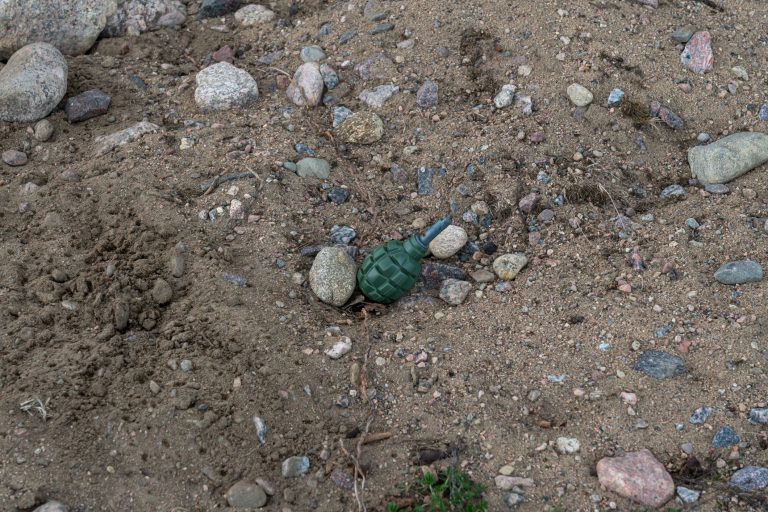
The spokesperson revealed that the assault led to the destruction of five Army outposts and all bunkers within the central camp. The fighters even managed to reach near the camp and lobbed hand grenades inside, inflicting further casualties and damage on the Army personnel. “Many soldiers fled from their pickets and the central camp out of fear during the attack, which continued for over four hours,” he added.

Tragically, the BLF also suffered a loss, as Second Lieutenant Ashraf, also known as Rehan Nokap, son of Murad Bakhsh from Mshkey village in Kandi area, was martyred during the retaliatory shelling. Paying tribute to the fallen fighter, Major Gwahram Baloch described Shaheed Ashraf as “an extremely hardworking and brave fighter who was dedicated to the freedom struggle.”

The next day, on May 27th, the defeated occupying Army retaliated against the civilian population, as per their usual tactics, by blocking roads and harassing people in several areas.

In contrast to the BLF’s open acknowledgment of the attack and its consequences, the Pak Army’s media wing, ISPR, has attempted to downplay or conceal the human and material losses suffered by its forces. “The enemy fears demoralization of its hired forces, so ISPR is trying to hide the losses even in this attack,” the BLF spokesperson stated.

Major Gwahram Baloch reiterated the BLF’s responsibility for the intense attack and vowed that such operations would continue with greater intensity until the complete liberation of Balochistan is achieved.

The assault on the Nondara army camp is a significant escalation in the long-running conflict between the Baloch liberation forces and the brutal occupying Pak Army, which has occupied the resource-rich region for decades, abuses and suppresses of the Baloch population through henious tactics such as enforced disappearances, extrajudicial killing, raids.

Islamabad: Will the judiciary prevail over the Pak Army?

In Pakistan, being critical of the country’s omnipotent Army is indeed a very dangerous thing as it can invite serious repercussions ranging from being mercilessly belaboured to being abducted and in some cases even losing one’s life. Rawalpindi’s acute intolerance to criticism, even when it’s constructive in nature, is no secret and the military is particularly offended when someone exposes its cavalier ways and abuse of power without any accountability. So, incidents of people who have dared to antagonise those in khakis being roughed up or abducted by unknown persons aren’t uncommon.

However, despite being well-aware about the law and having a fair idea of who the assailants are, seldom do the victims who dared to criticise the Pakistan Army disclose the identity of their attackers/ kidnappers and very rarely file police complaints. And leave alone preventing such incidents the police are not even able to  apprehend those brazenly carrying out these illegal acts, even when they take place in the heart of major cities and that too in broad daylight.

Islamabad claims to be having an exceptionally efficient intelligence  and investigative setup with exceptional professional skills. After every major terrorist attack, these agencies come up with a blow by blow account of how these were planned behind closed doors in its neighbouring countries, by not only Indian spy agency Research and Analysis Wing [RAW] but also the Tehreek-e-Taliban Pakistan [TTP] terrorist group.

Yet, Pakistan’s premier intelligence and investigating agencies inexplicably make no headway when it comes to tracking down those who brutalise or abduct critics of the Pakistan Army. This is even in cases wherein courageous victims give enough indications that clearly reveals who had whisked them away, and when irrefutable evidence in terms of video recordings of the incident exists. A few incidents that prove this observation:

·        On September 4, 2010, journalist Umar Cheema who had written several articles that were critical of the Pakistan Army in The News was abducted in Islamabad. Taken to an undisclosed location in the outskirts, he was physically abused and warned not to write articles that were critical of the government. After being released, Cheema reported this incident and even went on record to say that “I have suspicions, and every journalist has suspicions, that all fingers point to the ISI.” [Emphasis added]. With  Dawn in its editorial of September 7, 2010, maintaining that “This paper’s stand is clear: the government and its intelligence agencies will be considered guilty until they can prove their innocence,” [Emphasis added], there’s no room for any doubts as to who was behind this abduction. Regrettably, despite the journalist’s revelation as well as the then Pakistani Prime Minister Syed Yusuf Raza Gilani’s personal assurance to him that this incident would be thoroughly investigated, it remains unsolved till date.

·        On June 5, 2018, Gul Bhukari who is critical of the Pakistan Army was abducted when the car in which she was travelling was intercepted by “unknown persons.” As this incident took place on Sherpao Bridge inside Lahore Cantonment, which is a virtual fortress with strictly controlled access and exit points. This incident raises two questions-one, how could the abductors enter the well secured Lahore Cantonment in the first place, and two, how could they manage to get past the security check-post and escape with a kidnapped lady journalist in tow? Though Bhukari was subsequently released by her abductors, this case still remains unsolved.

·        On July 21, 2020, senior Pakistani journalist and YouTuber Matiullah Jan was abducted in broad daylight from a women’s college in Islamabad just after he had dropped his wife. The college CCTV showed around a dozen men, some dressed in uniforms worn by Pakistan’s Anti-Terrorist Squad [ATS] blocking Jan’s car and ordering him to come out. When he resists, they manhandle him and after forcing him into another vehicle drive away. Despite the fact that at least five of his abductors weren’t wearing masks the police have failed to identify the assailants.  Even the National Database & Registration Authority [NADRA] expressed inability to identify the abductors whose faces are clearly visible, giving the feeble excuse that the images weren’t clear enough. The Pakistan Army and police outrightly denied any involvement and this makes things even scarier. Needless to say that the very thought of three vehicles filled with men disguised as ATS commandos moving around unchecked in the national capital and abducting a journalist in broad daylight is indeed very disquieting. In fact, Islamabad High Court Chief Justice Athar Minallah’s pointed query that “What impression will the public get that people are roaming around freely in police uniforms,” endorses this matter-of-fact apprehension. Furthermore, Jan’s unconditional release just 12 hours later doesn’t make sense-unless its aim was to “scare others” as mentioned by the IHC chief Justice.

Despite so many incidents of those critical of the Pakistan Army being abducted, investigating agencies have failed to identify a single culprit and this in itself gives a clear indication as to who are the perpetrators. This issue has come up before the Islamabad High Court [IHC] in the ongoing case of Kashmiri poet Ahmed Farhad Shah who was abducted soon after he criticised the Pakistan Army’s harsh dealing in the recent Pakistan occupied Jammu and Kashmir [PoJK] unrest on social media.

IHC senior puisne judge Justice Mohsin Akhtar Kayani hearing this case outrightly rejected ISI’s claim that it had no information regarding the abduction of Farhad and made it clear that the claim made by Pakistan Army’s spy agency was “not believable”. He has accordingly summoned the sector commanders of both ISI and Military Intelligence [MI] alongwith others and directed that “Now, the ISI sector commander’s statement will be recorded in the missing person’s case,” adding that “A police officer will record his statement and write it.” 

The puisne judge also highlighted the fact that “In general, IB [Intelligence Bureau], MI and ISI are accused of missing persons and enforced disappearances, which has affected their reputation and governance and created a negative perception of these institutions in the eyes of the public,” and asked “What steps has the state taken so far to eliminate institutional antagonism and the negative public perception of key state institutions and their reputation?” As expected, the Attorney General had no answer!

Most importantly, Justice Kayani has decreed that “Whichever case on missing persons is fixed before this court, its hearing will be live-streamed.” This will draw public attention to the widespread malaise of abductions and enforced disappearances orchestrated by the Pakistan Army, and thus act as a deterrent. However, despite being censured on this issue several times, Rawalpindi has shown scant regards for the judiciary.

The reason for such shocking indifference can be best described in the words of senior IHC judge Justice Shaukat Aziz Siddiqui who in 2018 admitted that  “Today the judiciary and media have come in the control of ‘Bandookwala’ [literal translation ‘gunmen’; here a reference to the army],” and that the  “Judiciary is not independent.” He went on to elaborate by revealing how “In different cases, the ISI forms benches of its choice to get desired results”, adding that the Army’s spy agency blatantly indulges in “manipulating judicial proceedings as its officials manage to constitute benches at its will and mark cases to selected judges.” 

Justice Kayani has asked ISI- “Are you going to run the country or follow the law?” While this blunt poser exposes ISI’s complete lack of accountability, but what needs to be seen is how Rawalpindi reacts. Will Pakistan Army meekly accept this frontal assault on its extra-constitutional powers and supremacy over other state organs, or as is its wont, will decide to brazen it out. While logic suggests that it would be puerile for Rawalpindi to take-on the judiciary, but then, Pakistan Army’s dogged determination to defend its turf at all costs should not be underestimated!   

Armed men attack Pak Army posts and camps in Kech, Awaran

In a major offensive against the Pak Army occupation, armed men carried out two daring assaults on occupying forces in Kech and Awaran districts of Pak-occupied-Balochistan.

The first strike targeted a Pak military post in the Archinaan area of Zamran, Kech district. They effectively engaged the Army forces deployed at the post, inflicting substantial casualties upon them through precise and unrelenting fire.

Just hours later, a larger contingent of armed men launched an even more audacious operation in Awaran’s Nodra area. Surrounding a major Pak military camp from all sides, the men launched an intense multi-pronged assault. Intense exchange of gunfire and loud explosions rang across the area for an extended period as the men rained fire on the besieged military installation.

https://twitter.com/bahot_baluch/status/1795142523259650468

The fierce attack forced the Pak occupying forces trapped inside the camp to remain confined for several hours, pinned down by the armed fighters’. Reportedly, the Army suffered many casualties and losses during the daring raid.

However, the puppet authorities have not yet commented on the losses caused by the attacks. It is interesting to note that, neither the Pak Army nor its terrorist death squads have mustered the courage to officially admit the losses their forces endured during the defiant operation by the armed fighters.

No freedom fighter group has claimed responsibility for the deadly attacks as yet. However, Baloch independent groups waging an armed struggle for independence from Pakistan are known to be actively operating in the region.

Pak-occupied Balochistan has long suffered under the forceful control of Pakistan, dating back to 1948. In its efforts to maintain control over Pak-occupied Balochistan, the Pak Army has resorted to various oppressive tactics.

Enforced disappearances, kill & dump policy by Pak Army continues in occupied-Balochistan

In the latest act of violence, Yar Muhammad, son of Jalal, has been killed by the brutal Army force’s barbarians. The oppressive Pak Army continues its reign of terror and atrocities against innocent Baloch people.

Yar Muhammad was abducted and forcibly disappeared by the Pak forces just two days ago during a night raid in Dera Murad Jamali. His mutilated body bearing marks of severe torture was found dumped in the Chhattar area. The cowards tried to hide their crimes by disappearing him first, but ultimately could not escape from delivering his lifeless body as proof of their heinous acts.

Another Baloch brother Akhtar, son of Khair Muhammad, who was also abducted along with Yar Muhammad, remains forcibly disappeared by these monsters.

The atrocities did not end there. In another deplorable incident, Rafiq Baloch and Faisal Baloch, were kidnapped by the forces from their own home in Turbat Koh Murad late last night. Faisal is employed with the ATF, while Rafiq is a laborer. The Army resorted to their typical brute tactics – violating the sanctity of the home, beating up the innocent civilians, and snatching away their mobile phones during the illegal raid and abduction.

Family of victims of enforced disappearance Faisal Suwali and Rafiq Suwali staged a protest in Turbat in a sit-in outside the Kech Deputy Commissioner’s office, demanding the brothers’ immediate release after they were forcibly disappeared by Pak Army from their home Ziarat Absar.

The Pak forces through such cowardly tactics of enforced disappearances, kill-and-dumps, and other brutalities are trying to suppress the Baloch community and their voice since it has occupied the region in 1948.