Home Blog Page 136

IHC reissues summons to PM Kakar over missing Baloch students

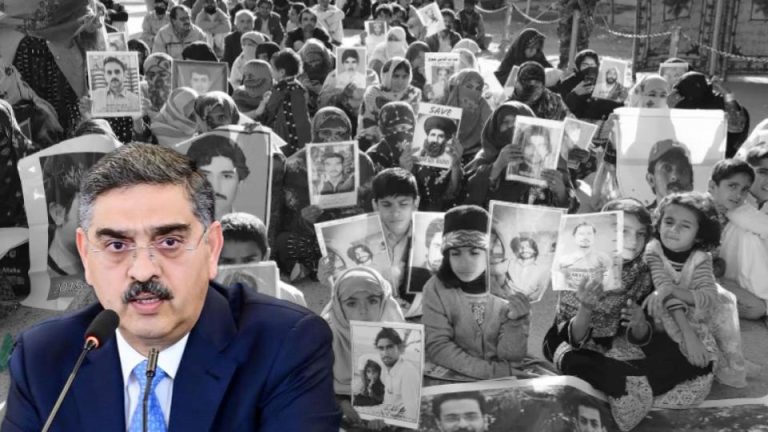
The Islamabad High Court (IHC) has issued a written order and, reasserted its previous directives, compelling caretaker Prime Minister Anwaar-ul-Haq Kakar and relevant ministry secretaries to personally attend an upcoming hearing on Monday (19th Feb) regarding the case of missing Baloch students.
In a written order issued by Justice Mohsin Akhtar Kayani on Sunday, the 4-page document emphasized the imperative presence of the Prime Minister and the secretaries of defense, human rights, and interior ministries at the scheduled hearing on February 19 at 10 am.
During the last hearing on February 13, the court specifically instructed the interim prime minister to appear before the bench. Despite a plea for adjournment due to the unavailability of the attorney general, Justice Kayani rejected the request, asserting that individuals implicated in enforced disappearances should face the death penalty.
“People involved [in enforced disappearances] should be given the death penalty twice,” remarked Justice Kayani, directing the caretaker PM to explain not registering a case against him.
PM Kakar to Appear
While the advocate general sought more time in the case, Justice Kayani declined the request, maintaining the court’s stance. This marks the second summons for PM Kakar by the IHC, with the last summons occurring on November 29, 2023, in response to a case filed by Advocate Imaan Mazari. On that occasion, the prime minister did not appear, citing his absence from the country.
The gravity of the situation can be gauged from the fact that a report by the non-governmental organization Defence of Human Rights (DHR) revealed an alarming increase in enforced disappearances in Pakistan in 2023. According to the report, 51 more cases were reported, bringing the total to 3,120 cases. The DHR disclosed that 595 individuals were released, 246 were traced, and 88 cases resulted in extrajudicial killings.
However, it should be noted that the reported numbers are lower than the actual cases. The Baloch community, for decades, has faced violence and atrocities by the Pak Army. Not only have they been abducted at gunpoint, but they have also been tortured and killed under Pakistan’s ‘establishment’s kill-and-dump policy. Even children and elderly women are shot and killed. These incidents reveal the gruesome regime under which the ethnic community of this resource-rich region resides.

Baloch National Movement awareness campaigns in London comes to an end

The recent segment of the awareness campaign launched by the Baloch National Movement (BNM) on the atrocities faced by the Baloch community by the Pak Army in London, has been concluded. During the phase of this campaign, the BNM activists distributed pamphlets in London.

In their social media post, BNM UK stated that the awareness program named “Unveiling The Baloch Struggle” will be organised in various locations in the UK. The UK cell of the Baloch National Movement commenced the campaign on February 17 this year. During the phase of this campaign, the BNM activists distributed pamphlets and raised awareness for the Baloch community in London.

Balochistan is a land of rich history, diverse cultures, and immense natural resources. However, since the occupation of Balochistan by Pakistan in 1948, the Balochis have faced systematic discrimination and exploitation. The Pak establishment has denied the Baloch their right to self-determination, suppressing their political aspirations and exploiting their natural resources for its benefit. This exploitation has led to widespread poverty, environmental degradation, and the displacement of Baloch communities.

The people of Balochistan under the control of the Pak Army have endured a persistent struggle against the atrocities and genocide perpetrated by the Pak Army. These egregious acts include frequent home invasions, disappearances, staged encounters, target killings, torture, embarrassment at checkpoints, and kidnappings for ransom.

The international community should recognize the Baloch people’s basic fundamental right to life and should conduct independent investigations into human rights violations in Balochistan and hold the Pak establishment accountable for its actions.

Amnesty International demands impartial investigation in Sindhi nationalist assassination

Amnesty International South Asia has called for an independent, impartial, and prompt investigation into the killing of Sindhi political activist and teacher, Hidayatullah Lohar. The plea emphasizes the need to ensure accountability for the perpetrators without resorting to the death penalty.

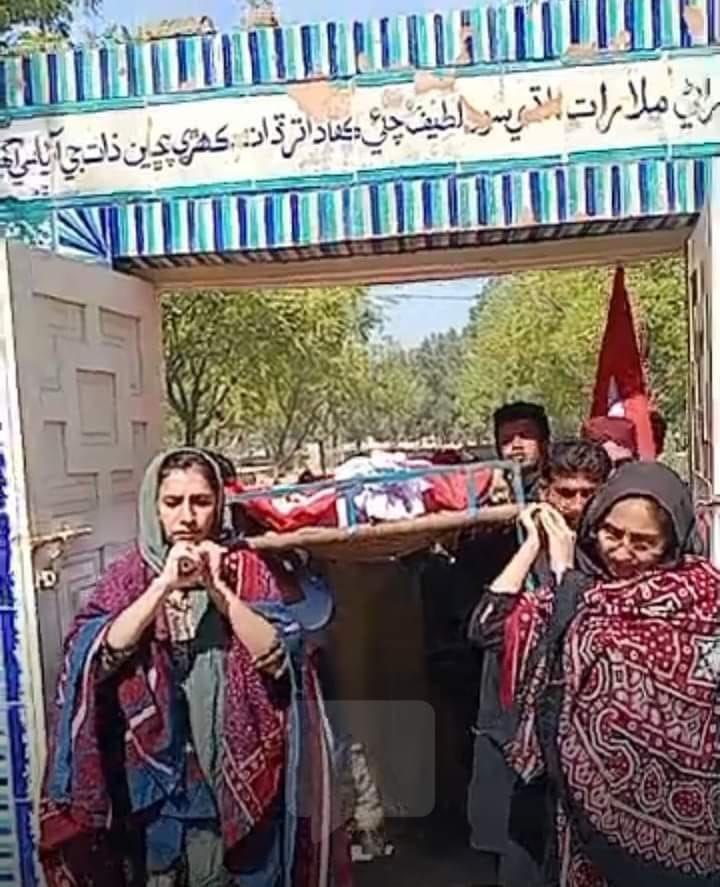
Hidayatullah Lohar, a school teacher and prominent political activist, was fatally attacked by two unidentified assailants in Naseerabad while en route to his school. Despite persistent demands and an ongoing sit-in protest by his daughters, Sasui and Sorath Lohar – both prominent activists advocating against enforced disappearances – no First Information Report (FIR) has been registered in connection with the incident.

Pak policy of enforced disappearance

Lohar’s tragic killing sheds light on the perilous conditions faced by activists and human rights defenders in their pursuit of justice. His history is marred by a previous incident in 2017 when he was forcibly disappeared by the Pakistan Army, only to be released two and a half years later in May 2019. During this period, the establishment allegedly pressured Lohar’s daughters to cease their struggle against enforced disappearances and terminate their protests, using the release of their father as leverage.

The incident underscores the broader issue of enforced disappearances in Pakistan, where dissenting voices often face abduction and intimidation. Hidayat Lohar’s case serves as a recent and poignant example of the challenges faced by those who question the establishment.

Amnesty International’s call for an independent investigation is a significant step towards addressing the enforced disappearance policy of the Pakistan Army. The international human rights organization emphasizes the importance of unveiling the truth behind Lohar’s killing, seeking justice for the slain activist, and holding those responsible accountable.

As Pakistan grapples with concerns over the suppression of dissent, the attention drawn by Amnesty International amplifies the urgency of addressing human rights violations and ensuring a transparent and fair legal process for those advocating for justice and accountability.

POGB: Protesters torch Pak Army run SIM cards in anti-Pak telecom outcry

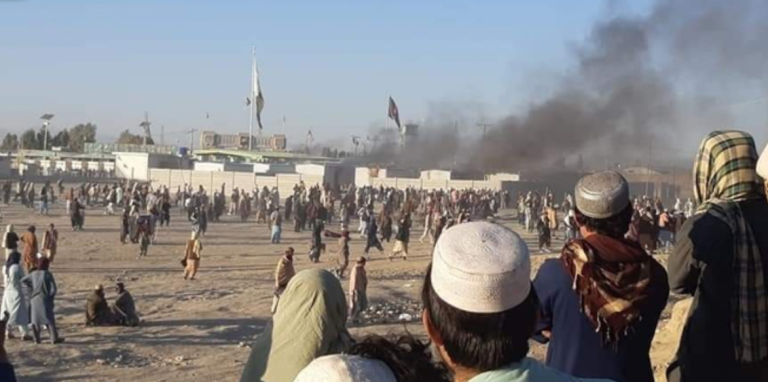
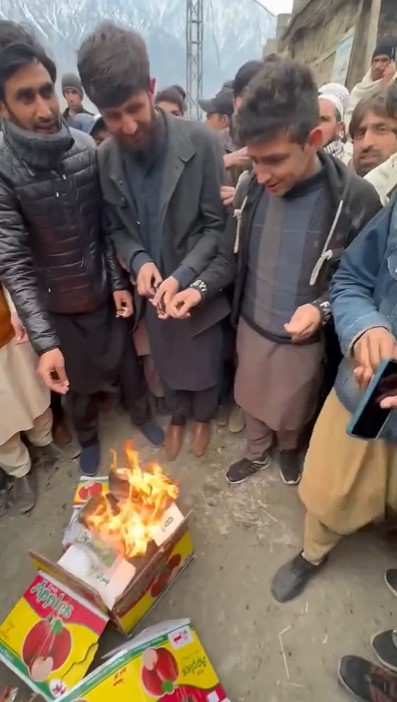
In a symbolic act of protest, approximately 150 youths in Darel initiated a SCO SIM burning campaign on February 18th, with 180 SCOM SIMs set ablaze amid chants of “SCOM Murdabad.” The campaign was sparked by growing frustration over the weak signal strength of the Pakistani establishment-owned telecom service. The demonstrators voiced their dissatisfaction with the service, accusing the Special Communication Organization (SCO) of financial exploitation.

The crux of the issue lies in the failure of the SCO to provide reliable internet services despite hefty charges for internet packages. Reports suggest that the internet, which people paid for, remained non-functional, leading to mounting grievances. This incident, while seemingly small, resonates deeply with the local population, reflecting a broader sentiment of dissatisfaction with the Pakistani establishment.

The dissatisfaction goes beyond connectivity issues. Darel, like many other areas in Pakistan-occupied Gilgit Baltistan (POGB), faces challenges related to basic amenities such as wheat, electricity, water, and education.

More disturbing is the fact that despite the scarcity of most basic amenities, the prices have been indiscriminately high because of the exploitative policies of Pakistan and its puppet regime in Pakistan occupied Gilgit Baltistan (POGB).

SCO: A tool to keep people in dark

Furthermore, the combination of exorbitant prices and weak signals is a tactic to control information flow, preventing the populace from gaining a clear understanding of the challenges they face. This control over communication is seen as an attempt to keep the people of POGB in the dark about their own plight and the larger geopolitical context.

It is noteworthy that for the past 77 years, the people of POGB lived under the illusion of freedom, largely shaped by Pakistan’s narrative through controlled media. However, the advent of the internet and social media has unravelled the reality faster than anticipated by Pakistani establishment. Pakistan, cognizant of the internet’s role in awakening the masses, is strategically using its control over the only telecom service provider to stifle dissent and maintain control over the narrative.

As the SCOM SIM burning campaign unfolds, it sheds light on the intersection of connectivity issues, economic exploitation, and information control in POGB. The incident underscores the need for addressing not only the technical challenges but also the broader socio-economic and political concerns facing the region.

Murder of Sindhi rights advocate by Paki establishment unites oppressed people across Pakistan

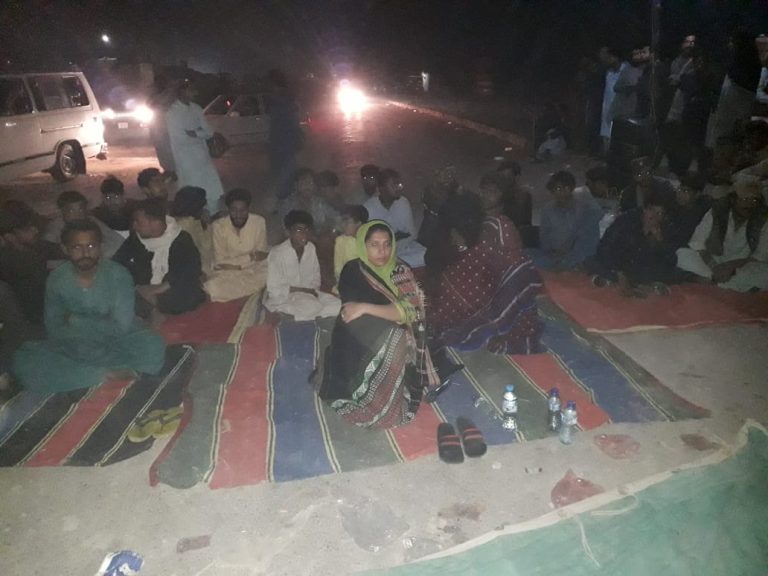
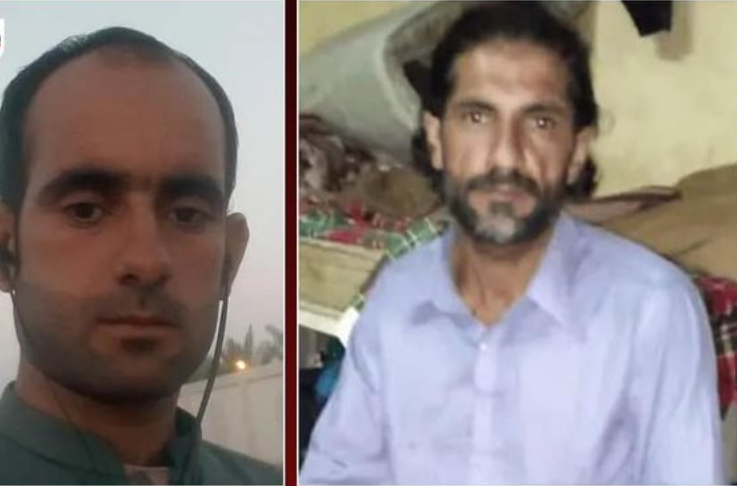
After the Pak establishment-sponsored brutal assassination of their father Hidayat Lohar, Sindhi nationalist’s daughters and the prominent voice of missing persons are on a sit-in protest against the establishment and its notoriety.

A couple of days ago, Hidayat Lohar was brutally killed by the assailants affiliated with the Pakistan Army. According to his daughters, Sorath Lohar and Sasui Lohar, their father was getting death threats since past few weeks before he was killed. Hiddayat Lohar has been a prominent figure in the struggle of Sindhis. Be it the issue of enforced disappearances or the Sindhi rights, he always remained at the fore front. In 2017, he was himself abducted by the regime and was subsequently disappeared.

Daughters of Hidayat Lohar protest for FIR

Hidayat Lohar, who was a school teacher, was also the leader of Voice of Missing Persons of Sindh (VMPS), an organisation at the helm of the challenge to the establishment sponsored enforced disappearances. As he has been killed, his daughters are calling out the Pakistan Army and demanding an FIR in the assailants, whose details are with them. But, since the establishment is itself the culprit, it is trying to stave off the issue. And hence, the brave Sindhi daughters of Hidayat Lohar are sitting in protest at the Naseerabad Highway.

Meanwhile, Sorath and Sasui have also denied a visit to the police station to register the FIR, having a clear idea of the notoriety and extra-judicial acts employed by the establishment. They have demanded that their FIR must be registered at the sit-in in front of protestors. As of now, the sit-in has seen participation from various walks of life. Sorath and Sasui are getting support and consolation from across Pakistan.

Notably, by the continuous act of curbing legal framework and acting as fascist regime, Pakistan has led to the unification of oppressed community across Pakistan. Earlier, the simultaneous crackdown on Baloch in Islamabad long march and on Pashtuns in Chaman has raised hopes for a unified resistance from Baloch and Pashtuns. Now Hidayat Lohar’s killing and subsequent support from across communities marks another incident that shows the need of a combined struggle against the brutal Pakistani regime.

Baloch victim shares her story of Tootak Operation by oppressive Pak Army in POB

Recently, a victim of the Tootak operation in Pak-occupied Balochistan has come forward to share her narrowing tale and shed light on the atrocities inflicted by the oppressive Pak Army upon the innocent Baloch civilians thirteen years ago.

In the video she talks about the horrific incident that occurred 13 years ago on February 18, 2011, an operation by the Pak Army and a group called “Death Squads” occurred in the Tootak area of the Khuzdar district of Pak-occupied Balochistan. Later, the aforementioned area fell under the control of Shafiq Mengal, who was the head of the Death Squads. During this operation, the Pak Army raided every house present in the area, inflicted atrocities on the people and took many Baloch citizens in their custody.

Two years after the Tootak operation, the discovery of mass graves was made in the area. During this operation, several individuals forcibly disappeared, including Muhammad Rahim Qalandrani and 16 members of his family who are still missing to this day without a single trace. The pain and suffering of the families of the victims are unimaginable.

Since the forcible occupation of Balochistan by the Pak Army on March 27, 1948, the people of Balochistan under the control of the Pak Army have endured a persistent struggle against the atrocities and genocide perpetrated by the Pak Army. These egregious acts include frequent home invasions, disappearances, staged encounters, target killings, torture, embarrassment at checkpoints, and kidnappings for ransom.

Rawalpindi Commissioner confesses to election rigging

Recently, a senior bureaucrat in Pakistan has accepted his involvement in the rigging of the recent general elections in Pakistan. Commissioner of the garrison city of Rawalpindi, Liaqat Ali Chattha, said he would resign from his office and turn himself into the police.

He told reporters, ” We converted the losers into winners, reversing margins of 70,000 votes in 13 national assembly seats.” Also implicates the head of the election commission and the country’s top judge.

According to Al Jazeera, the commissioner stated that he was deeply involved in serious crimes like mega-election rigging in 2024 and said betraying his own country did allow him to sleep peacefully. “I should be punished for the injustice I have done and others who were involved in this injustice should also be punished,” he added.

Pakistan election commission has rejected Chattha’s allegations and said to hold an inquiry. The Human Rights Commission of Pakistan has claimed that this confession demonstrated how the state bureaucracy’s involvement in rigging in Pakistan is beginning to be exposed.

The confession along with various reports and videos flooded the social media which showcased the malpractices that occurred during and after the election. Booth rigging, and tampering with ballot boxes, as bags full of stamped ballot papers were found in the Mand area.

This shows how Rawalpindi’s ability to continuously select and puppet the facade of civilian authority through the ballot is nothing more than a barbaric display of power.

Pakistan Army clears historical oak trees in upper Waziristan in the name of security

The historical oak trees in Upper Waziristan are being indiscriminately cut, even up to 200 meters away from roads by the military in the name of security. The actions are drawing criticism, as Pakistan Army has, at first, depopulated the region and is now contributing to environmental degradation.

While countries around the world focus on preserving their natural and scenic wealth, concerns are rising over the deforestation activities in Upper Waziristan. Apparently, under the guise of security, the Pakistan Army is not only jeopardizing the region’s ecological balance but also impacting the livelihoods and well-being of the local population.

The Pakistani establishment has defended cutting oak trees, citing security concerns as the primary motivation. However, security pretext has been a familiar modus operandi employed by the authorities. The irony is underscored by the fact that, despite claims of enhancing security, the native population of the region remains insecure, echoing earlier instances in Pakistan-occupied Balochistan, Pakistan-occupied Jammu and Kashmir (POJK), and Pakistan-occupied Gilgit Baltistan (POGB).

Evidently, deforestation is less about security and more about resource exploitation, further filling the establishment’s coffers. The situation is drawing parallels to previous acts in other disputed regions.

Notably, there has been a lack of vocal opposition from environmental protection NGOs or climate activists or may be authoritarian nature of the Pakistani establishment may be discouraging individuals and organizations from challenging these actions. The silence has led to growing concerns about the audacity and ability of environmental advocates to confront such environmentally damaging practices.

Nevertheless, the current deforestation order by the establishment is going to pose a significant dent on the ecological balance of the region, consequence of which, unfortunately, will be heard only by the people of the region and not the authorities.

J&K to get subsidised seaplane service between Dal lake and Manasbal

In a bid to enhance connectivity and promote tourism, the government of Jammu & Kashmir Union Territory in India is progressing with plans to establish a subsidized seaplane service between Dal Lake in Srinagar and Manasbal. The Mumbai-based operator Mehair is poised to take on the role of the operator for this ambitious project.

Mohammad Aijaz Asad, the Secretary of the local Civil Aviation Department, has urged officials to expedite the final approvals, particularly concerning the impact on irrigation and flood control. Security aspects are also currently under review. The envisioned direct link between Dal Lake and Manasbal is anticipated to further stimulate tourism in the region, which has already been experiencing steady growth.

Reportedly, Mehair has not disclosed a potential launch date for the new seaplane service. The regional carrier, currently dormant, recently announced plans to acquire its first Cessna C208 Grand Caravan in May 2024, with a goal of having ten planes in its fleet by the end of the year. Two of these aircraft are expected to be outfitted with floats, catering specifically to seaplane operations.

The Indian government is aligning its plans to include dedicated seaplane routes under the upcoming UDAN 5.3 subsidization scheme. This marks the first time the program explicitly targets the seaplane market segment. Seaplane operators will also have the opportunity to bid in the UDAN 5.2 round. India currently lacks commercial seaplane services, despite having numerous suitable waterways and underserved regions.

As the Jammu & Kashmir government moves forward with its seaplane plans, it signals a significant step towards enhancing regional connectivity and tourism, with potential implications for the broader Indian aviation sector. The success of this venture may set a precedent for the inclusion of seaplanes in future aviation development programs across the country.

School students protest against shortage of teachers in Pak-occupied Gilgit

Tensions boiled over in Ghizer as students from Girls Middle School staged a protest, disrupting normalcy by blocking Ghizer Road near Basin Khari Park. The demonstration, fueled by an acute shortage of teachers and frequent student transfers, has paralyzed daily activities.

The students, facing the brunt of an inadequate education system, are demanding fundamental improvements. However, their frustration resonates with the local community, which is now echoing discontent against the occupied government of Pakistan-occupied Gilgit-Baltistan (POGB).

Critics are pointing fingers at the authorities for their failure to address basic educational needs. The sentiment on the ground is that if the government cannot provide a basic education system, expectations for significant improvements seem increasingly unrealistic.

This protest adds to a growing list of student demonstrations in the region. Previously, students at Karakoram International University protested against insufficient facilities and arbitrary fee hikes. The latest unrest exposes the paradox of the occupying government unable to meet essential educational requirements while burdening students with soaring fees.

This clearly is the result of about 77 years of coloniality that people of POGB are subjugated to. While they and their resources are being exploited by Pakistan on a daily basis, they get no royalty or compensation. To the worse, they dont even have a constitutional right to make their voice heard in Islamabad.