Home Blog Page 155

TTP releases video of it’s attacks on Pakistan Army in 2023

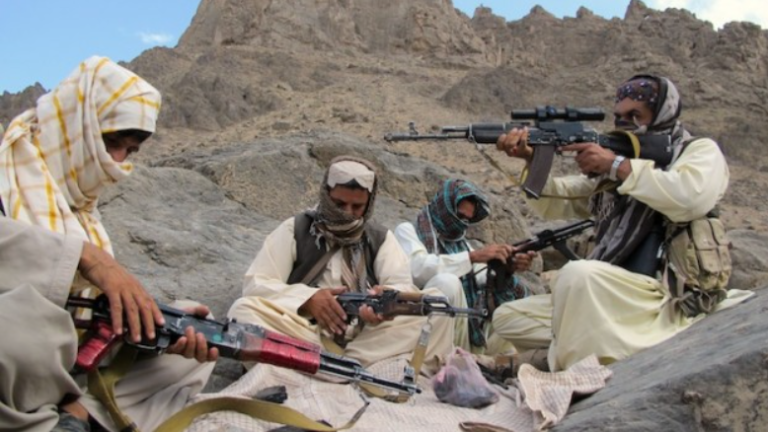
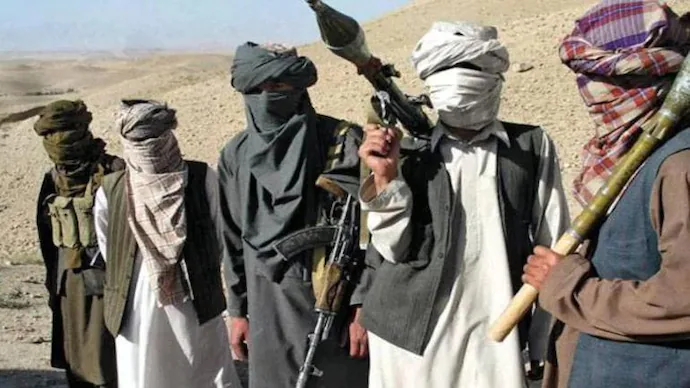
The Tehreek-i-Taliban Pakistan (TTP) has circulated a 20-minute video chronicling its assaults on the Pakistan Army throughout 2023 in Khyber-Pakhtunkhwa. Displaying footage from numerous attacks alongside a comprehensive breakdown of each assault type and resulting damages, the video asserts a significant dent in the Pakistan Army’s capabilities.

Opening with a narration suggesting Pakistan’s misconception about the weakened state of the rebels, the video asserts a contrasting narrative, claiming that the TTP has effectively fractured the backbone of the Pakistan Army. This purported and contentious video highlights the heightened firing prowess of the terrorists. It showcases diverse ambushes and their consequential aftermath, deviating from previous releases largely featuring thermal sniper footage.

Region-wise attack by TTP

The video glorifies the resource-deprived Mujahidin’s strides against the self-proclaimed “number one army.” TTP’s claims outline a total of 881 attacks on Pakistan forces, specifying 266 attacks in Khyber Pakhtunkhwa‘s Bannu district, 10 in South Punjab, and 271 in Dera Ismail Khan. Additionally, Zhob saw 5 attacks, Balochistan 70, and Makran and Kalat experienced 1 attack each. Notably, Kohat and Peshawar were targeted 29 and 184 times, while Markand, Mardan, and POGB faced 46, 24, and 1 attack(s) respectively.

Furthermore, the video delves into monthly attack statistics, with August registering the highest tally at 146 assaults. Enumerating attack types, TTP also claims responsibility for 206 sniper attacks, 143 guerrilla attacks, 129 counter attacks, and 114 ambushes.

The release of this footage signifies an intensified effort by the TTP to showcase their perceived successes and the purported weakening of Pakistan’s military stronghold. The intensity of attacks highlight that Pakistan Army is grappling with one of the biggest challenges on the western front, the repercussions of which are felt by the innocent people of Khyber Pakhtunkhwa, as highlighted by the Pashtun activists from time-to-time. However, this precarious condition is only the result of terror instigating and harbouring policies of Pakistan Army and ISI as Pakistan which gave birth to terrorism as an instrument of destabilizing South Asia is facing the consequences of the brutal, immoral and anarchic characteristic of terrorism.

Protest against soaring wheat price & Finance Act intensifies in Pak-occupied Gilgit-Baltistan

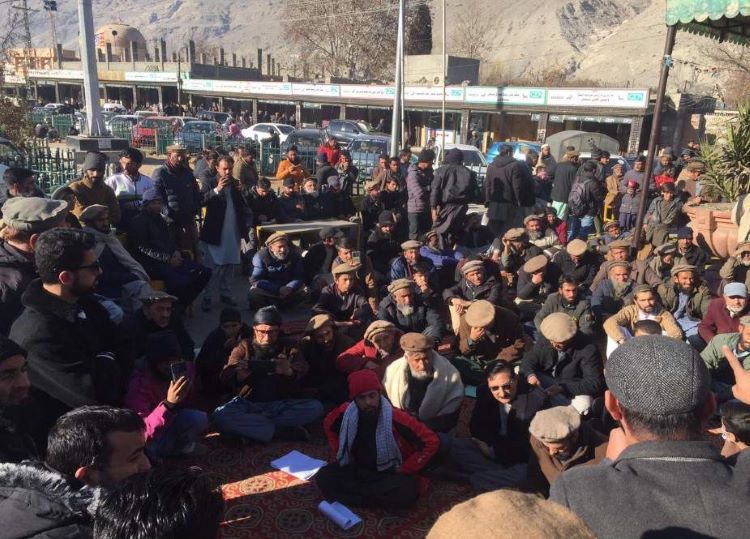
The ongoing protest movement spearheaded by the Awami Action Committee (AAC) in Pakistan occupied Gilgit-Baltistan has intensified, amplifying demands concerning wheat price hikes, Finance Act 2023, load shedding, and an array of other grievances, swiftly gaining attraction across the region. Widespread protest sit-ins in key areas including Skardu Yadgar Shahada, Gilgit Ghari Bagh, Diamar Dariel, Hunza, Ghazar, and various other locations were witnessed yesterday.

The demonstrators, rallying under the banner of the Awami Action Committee, delivered a resolute message to the occupying government, affirming that unless their public demands are met, the intensity of the protest movement will escalate continuously.

The protest at Gilgit Ghari Bagh drew participation from diverse political, social figures, and stakeholders. Chief Coordinator, Comrade Ehsan Advocate , emphasized that the Committee’s movement is dedicated to the welfare of the impoverished in Pak-occupied Gilgit-Baltistan and future generations. He urged active involvement, especially from the youth, to champion their future and ensure the movement’s success. Highlighting the disparities, he pointed out the puppet government’s misaligned priorities, focused on personal interests and corruption, rather than addressing fundamental issues such as education, employment, electricity, and healthcare.

Undeterred, Ehsan Advocate reiterated the commitment to persist until these perceived injustices are rectified, announcing daily symbolic sit-ins as part of their ongoing movement. Coordinators Fida Hussain, Sakhidullah Khan, Malik Aurangzeb, Abrar Baguru, Zaheer Qasmi, Hajit Ali, Haji Kuman, Javed Qureshi, Fida Itsar, Nizamuddin, and other leaders also voiced their concerns and objectives during the protest in Gilgit.

The fervent demonstrations underscore a growing call for socio-economic reforms, demanding immediate revocation of earlier wheat price and a more inclusive governance that prioritizes the needs and aspirations of the people of Pak- occupied Gilgit-Baltistan.

Vibrant New Year celebrations illuminate Lal Chowk in Srinagar, signifying unity and hope

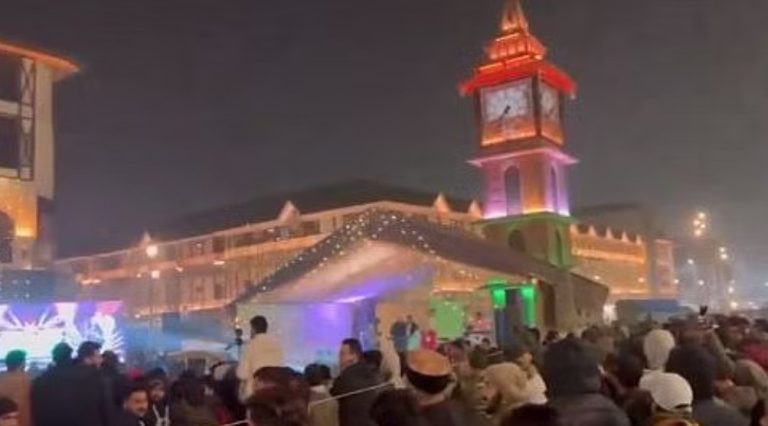
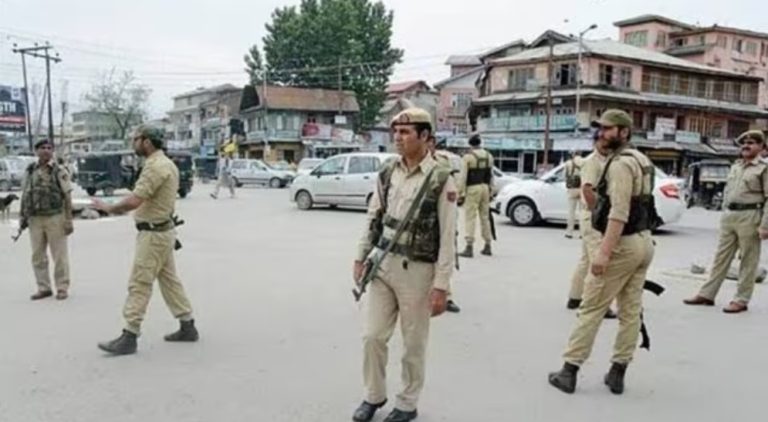
Amid bone-chilling temperatures, a diverse congregation of locals and tourists gathered at Lal Chowk, transforming the historic square into a vibrant hub of New Year festivities. The occasion, marked by colourful installations representing unity and hope, saw an amalgamation of cultures transcending divides.

The celebratory atmosphere heightened as the clock edged closer to midnight, with attendees enthusiastically singing and dancing to Bollywood tunes, filling the air with infectious joy. The famous clock tower, which underwent significant renovation before the G20 summit last year, served as the focal point for these exuberant celebrations.

Notable figures, including Srinagar Municipal Corporation (SMC) Commissioner and CEO of Srinagar Smart City, Athar Aamir Khan, lauded the occasion, terming it as a significant milestone for the city.

The event’s energy was palpable on social media, as the crowd, a blend of locals and visitors, captured the festivities on their mobile phones. The singer on stage created an electrifying ambiance, captivating all present.

However, Lal Chowk’s significance extends beyond merriment, deeply rooted in the region’s tumultuous political history. Since 1947, the Clock Tower has stood witness to Jammu and Kashmir’s strife, witnessing tragic episodes of violence since the 1990s. Political figures also utilized the platform, hoisting flags and delivering impassioned speeches, making potent statements.

Moreover, these celebrations hold profound psychological importance, particularly since the onset of insurgency in the 1990s. Post the revocation of Article 370, Lal Chowk has symbolically represented the inseparable integration of Jammu and Kashmir with India.

The rejuvenation of Lal Chowk as a hub for unity and celebration marks a pivotal moment in the city’s narrative, showcasing resilience, harmony, and a collective spirit that transcends divisive past narratives.

Jammu & Kashmir police announce cash rewards for curbing terrorism & narcotics trafficking

In a significant shift towards community involvement in law enforcement, the Jammu and Kashmir Police unveiled a novel initiative, announcing cash rewards for vital information aiding the crackdown on cross-border tunnels, drugs smuggling, and militant recruitment.

For the first time, the police have extended monetary incentives ranging from Rs 1 lakh to Rs 12.5 lakh for actionable intelligence that facilitates the arrest or elimination of militants, dismantles narcotics smuggling networks, exposes cross-border tunnels, or reveals intelligence about illicit cross-border drone movements.

In a social media post, the J&K Police affirmed, “Cash rewards will be granted to individuals furnishing information on trans-border tunnels, drones, narcotics, terror activities, and terrorists. Public cooperation can be extended by contacting district SSPs, ensuring confidentiality of informants.

Highest reward of Rs. 12.5 lakh

“The highest reward, amounting to Rs 12.5 lakh, has been earmarked for specific information leading to the neutralization or apprehension of a category ‘A’ militant, while a reward of Rs 2 lakh is designated for a category ‘C’ militant.

While this initiative isn’t the first instance of the police offering rewards for militant-related intelligence, it marks the inaugural implementation of cash incentives for information about individuals inciting recruitment into terrorist groups.

Notably, the police have previously allocated rewards of up to Rs 10 lakh for information on wanted terrorists, utilizing undisclosed funds to manage informant relations. They have also pledged Rs 5 lakh for intel leading to the dismantling of cross-border tunnels facilitating terrorist activities.

Moreover, a reward of Rs 3 lakh has been specified for information pinpointing cross-border drone sightings involved in drugs smuggling, dropping narcotics or explosives, and Rs 2 lakh for exposing inter-state narcotics networks. Further, a Rs 2 lakh bounty has been outlined for intel on individuals communicating with militant handlers within J&K or their agents, and a Rs 1 lakh reward for information identifying individuals inciting terrorist affiliations in mosques, madrassas, or educational institutions.

This paradigm shift in incentivizing community involvement seeks to augment intelligence gathering, bolstering law enforcement’s efforts in combating militancy and thwarting smuggling activities while ensuring informant confidentiality.

Pakistan’s PM sparks outrage with inflammatory remarks on Baloch freedom fighters

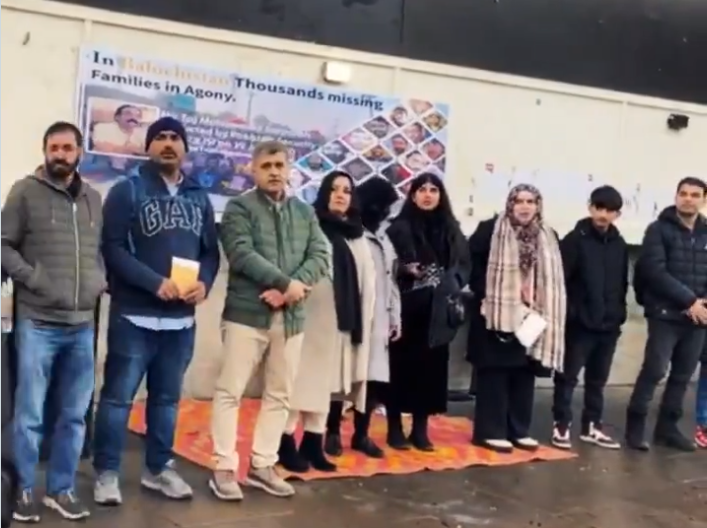
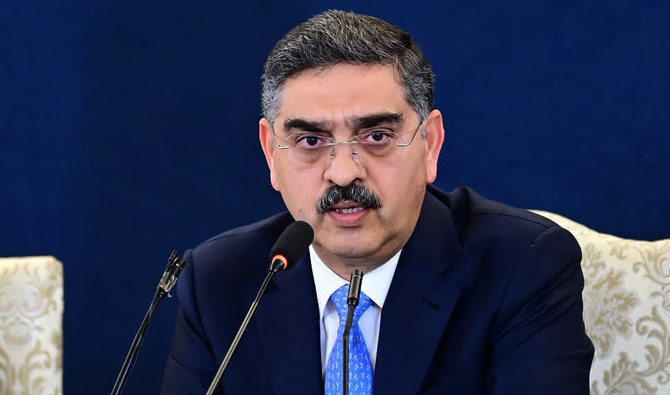
In a recent event in Lahore, the Prime Minister of Pakistan, Anwaar-ul-Haq Kakar, made an inflammatory statement, suggesting that those supporting Baloch protestors or writing in favor of missing persons in Balochistan should join armed groups like BLA and BLF. This audacious move has triggered widespread condemnation, especially for labeling victims of enforced disappearances as terrorists, insulting their families and addressing peaceful activists in a threatening tone.

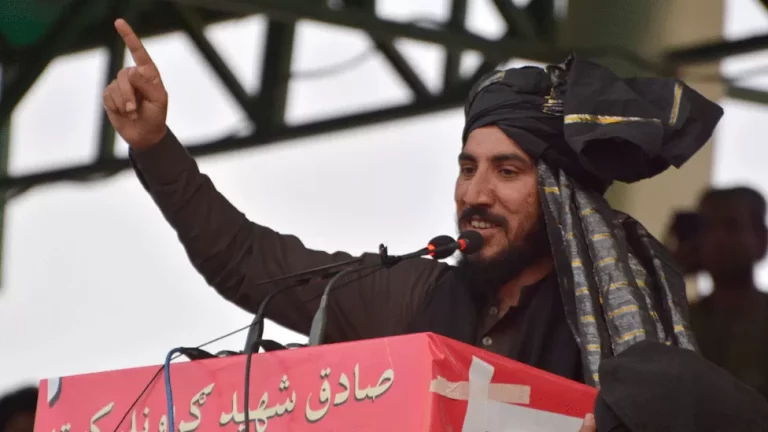
The Baloch Long March movement has consistently advocated for an end to human rights violations in Balochistan and a halt to the Baloch genocide. Leaders, including Dr. Mahrang Baloch, presented these demands to the Pakistan Army, emphasizing the need for negotiations. However, the Army continuous irresponsibility and obstinacy are evident as peaceful protestors face torture, arrests, and media trials.

Human Rights organization Paank strongly condemned the Prime Minister’s characterization of Baloch families as “families of terrorists”. The organization decried these baseless statements, asserting that they perpetuate a dangerous narrative undermining the legitimate right to peaceful protest. A call for respect for human rights, freedom of expression, and an end to stigmatization has been made.

Senator Tahir Bizenjo of the National Party criticized the Pakistan Parliament’s failure to address forced disappearances in Pak-occupied-Balochistan. He highlighted procedural disruptions and quorum issues strategically raised during sessions, compromising meaningful debate on this critical human rights issue. Bizenjo urged the government to engage in constructive negotiations with the Baloch Yakjehti Committee (BYC) leaders for a lasting resolution. He warned of potential escalation in Pak-occupied-Balochistan, emphasizing the risk of ongoing sit-ins and demonstrations evolving into widespread chaos if the situation remains unaddressed.

The future of Balochistan hangs in the balance. The Prime Minister’s inflammatory remarks, coupled with the Parliament’s apparent inaction, risk pushing the Baloch community further away from reconciliation. Meanwhile, the Baloch Long March movement and its supporters remain steadfast in their demands.

The provinces of Pak-occupied-Balochistan, rich in resources, have become a focal point of exploitation, with the Pak Army orchestrating a sinister plan to plunder the region’s wealth. Since March 27, 1948, the Baloch people have faced relentless oppression through daily home raids, disappearances, staged encounters, target killings, torture, and kidnappings for ransom.

Major military operation underway in Mashkay, Pak-occupied Balochistan

In a major operation entering its second day, the Pakistan Army is engaged in an encounter with armed individuals in the mountainous town of Mashkay tehsil in the Awaran district, Pak-occupied-Balochistan. The operation, triggered by a drone strike in the area on Sunday, has seen the deployment of highly-trained commandos and military gunship helicopters.

Reportedly, several areas have been cordoned off, and makeshift security checkpoints have been established. The public reported hearing the sounds of intense gunfire and explosions, particularly from the Gurandi area within Mashkay.

The Inter-Services Public Relations (ISPR), the media wing of the Pakistan Army, confirmed the ongoing operation. They used their propaganda machine to label the freedom fighters and cited them as the “presence of terrorists” in the area. In a statement, the ISPR claimed that five armed individuals were killed in a targeted, intelligence-based operation. Additionally, they reported the destruction of a “hideout” and the recovery of a cache of arms, ammunition, and explosives.

While the ISPR did not specify the nature of the targeted individuals or group, the Mashkay area is known to be a stronghold of the Baloch Liberation Front (BLF), freedom fighters fighting for an independent Balochistan.

Military Operation Underway

The ISPR statement indicated that the operation is still ongoing and aims to eliminate the freedom fighters present in the area. The Army’s illegal occupation has often been challenged by the freedom fighter’s group, and therefore, the Pak Army wants to eliminate them. However, independent verification of the number of casualties and claims of the operation’s progress remains difficult due to restricted access and limited information from official sources.

The province, rich in minerals and serving as a key route for the China-Pakistan Economic Corridor, has witnessed sporadic attacks on the Army and Chinese personnel in recent years. This is due to the exploitation of the resources by the hands of the occupiers – the Pak “establishment.” The operation has raised concerns about potential civilian casualties and collateral damage. Reports of cordoned-off areas and security checkpoints have also fuelled anxieties about restricted movement and communication.

The Baloch Long March that started from Turbat and is now in Islamabad has caused inconvenience and pushed the Army to act out. They are failing to control the growing momentum of the protest, and therefore, the Army is using an offensive to curb the growing movement to counter the brutality of the Pak Army in Balochistan.

The provinces of Pak-occupied-Balochistan have become a focal point of exploitation, with the Pak Army orchestrating a sinister plan to plunder the region’s wealth. Since March 27, 1948, the Baloch people have faced relentless oppression through daily home raids, disappearances, staged encounters, target killings, torture, and kidnappings for ransom.

The situation in Mashkay remains tense and fluid, with the outcome of the military operation and its impact on the local community still uncertain. This developing story will be updated as further information becomes available.

China Pakistan Economic Corridor emerges as a major debt generator for Pakistan

While almost all of Plato’s erudite observations have withstood the test of time, “iron clad brothers”– opulent China and impoverished Islamabad, appear to disprove the ancient Greek philosopher’s view that “true friendship can exist only between equals”.

In March this year, when debt-ridden Pakistan was staring at a possible default in the face, Saudi Arabia, with whom Islamabad boasts of enjoying long standing fraternal ties rooted in common religion, shared values and culture, refused to extend an interest free loan. However, Beijing promptly came to Islamabad’s rescue and not only rolled over a $2 b loan but also agreed to lend it another $700m to facilitate a cash bailout from the International Monetary Fund [IMF].

However, AidData, a renowned US based research institute has in its detailed report covering the period from 2000 to 2021 revealed that while only two percent of the loans provided by Beijing to Pakistan came in the form of grants and  the balance 98 percent funding was on “less than generous loans.” [Emphasis added]. And Islamabad’s inexplicable refusal to disclose the interest rates being charged by Beijing on these loans adds further credibility to the AidData finding.

So, while Pakistan may cite this extraordinarily liberal loan regime as proof of its “higher than the mountains and deeper than the sea” friendship with Beijing, the lack of transparency in financial agreement clearly indicates that there’s obviously much more than what meets the eye. So, the natural question that arises is- what explains the extraordinary benevolence that Beijing is showering on Islamabad?

While former Pakistani Prime Minister Shehbaz Sharif has eulogised Sino-Pak friendship as “a sacred tale of abiding trust and love,” Chinese President Xi Jinping maintains that Beijing’s mission is to “pursue the cooperation of higher standards, broader scope and greater depth, and take the China-Pakistan all-weather strategic cooperative partnership to new heights.” Such grandiloquent explanation of Sino-Pak relationship is indeed impressive.

However, these proclamations fail to conceal the fact that Beijing doesn’t consider Islamabad as an equal. While every country endeavours to have an array of allies and makes adjustments in order to preserve cordial relationships, yet no nation lets such diplomatic manoeuvres overshadow its own national interests. That is why Pakistan’s caretaker Prime Minister Anwar-ul-Haq Kakar reportedly telling Xi that “We will always stand with China and trust you blindly,” [Emphasis added] is very significant as it clearly exposes the reality of Islamabad’s pathetic servitude.

Just four months ago, Pakistan’s ambassador to China, Moin ul Haque reiterated that the China Pakistan Economic Corridor [CPEC] project was a “game changer” that had brought “peace, prosperity and development opportunities not only to Pakistan but also to the entire region,” adding that it is an “excellent example of an open, coordinated, and inclusive development paradigm that benefits all parts of the country and all segments of society.”

Unfortunately, Haque’s claims aren’t supported by ground realities.

Within a year of the CPEC agreement being signed, the World Bank in its Global Economic Prospects 2016 report had cautioned that “Sovereign guarantees associated with CPEC could pose substantial fiscal risks over the medium term.” [Emphasis added]. However, both Beijing and Islamabad rubbished this warning as a result of this, rather than proving to be a “game changer”, CPEC has today turned into a ‘debt generator’ for Pakistan.

A classic example of how Beijing has exploited Pakistan’s ‘blind trust’ to further its own commercial interests at Pakistan’s cost is the development of Gwadar port. Islamabad continues to claim that this project will usher unprecedented economic growth and has even been projecting Gwadar as the future Dubai of Pakistan. However, the fact is that it’s actually Beijing that benefits from the development of Gwadar port as this facility provides a much shorter export/import route as well as an access to the Arabian Sea.

Conversely, Gwadar port project has created a lot of ill will amongst locals. Security check posts have mushroomed overnight and commuters are being subjected to frequent security checks, illegal fishing by Chinese fishermen using sophisticated fishing equipment has deprived local fishermen of their traditional livelihood while curbs on Iran-Pak border trade have adversely impacted local trade. The degree of public alienation can be gauged from the “Gwadar ko haq do” [Give Gwadar its rights] movement that saw tens of thousands of men, women and even young children participating in a more than a month-long protest.

In his well researched article [‘Pakistan’s debt from China becomes burden as CPEC does not generate enough growth’, carried by Committee for the Abolition of Illegitimate Debt [CADTM], Abdul Khaliq notes that “The government of Pakistan and ruling elite view CPEC as a game changer for the country and region; however, experts and local economists have different insights. They view CPEC as having much less to offer Pakistan in terms of trade. The Chinese approach of not partnering with local companies is not going to help create new job opportunities for millions of Pakistani youth. [Emphasis added].

Khaliq goes on to state that “Since Chinese companies are tax-exempt, they bring everything from China, including labour, and hence they will have no reliance on Pakistani businesses to fulfil their demands. This has shattered the dreams of many local companies that planned to expand their production facilities in anticipation of receiving orders from these Chinese companies. The Chinese companies play smart and get excellent returns on their investments. Many experts see it as a threat for local businesses and fear that it won’t be a win-win situation for Pakistan. [Emphasis added].

Islamabad’s ‘blind trust’ in Beijing is most certainly not a matter of choice but an inescapable compulsion for Pakistan as it needs a regular supply of financial aid to stay afloat but has no means to repay its burgeoning debt. Only China is willing to bail out Islamabad on an ongoing basis by rolling over existing loans as well as advancing new ones and is expectedly extracting its pound of flesh for putting its money into a financial ‘sinkhole’ by demanding that Islamabad  should blindly trust  Beijing in deciding what’s good for Pakistan.

The “all weather friendship” charade cannot hide the ugly truth of Pakistan’s financial exploitation by China and this proves that Plato’s view that true friendship can only exist amongst equals isn’t wrong after all!

Pak Army releases Baloch Long March protesters after 8 days of illegal confinement

In a triumphant turn of events, the resilient spirit of the Baloch people prevails as the Pakistan Army finally releases the remaining 34 protesters after enduring 8 days of unlawful imprisonment. The unjust arrests were orchestrated by the Islamabad police, marking a blatant violation of the right to peaceful protest.

This historic protest, initiated from Turbat against the Baloch genocide, faced a brutal crackdown by the Pakistan Army under the guise of maintaining order. The movement’s leader, Mahrang Baloch, vehemently denounces the oppressive actions and calls attention to the sinister mechanisms employed to suppress the voices of the Baloch people.

The Islamabad Police initially denied any wrongdoing, falsely claiming to have released all detainees. Such deceptive practices have become a recurring pattern within the institutions under the influence of the Army.

Mahrang Baloch, standing at the forefront of the movement, passionately appeals to educators to understand that many student participants have missed exams due to their commitment to the cause. She emphasizes that the movement is not merely a solitary outcry but resonates as the collective voice of Balochistan, one that refuses to be silenced.

Expressing grave concerns, Mahrang exposes the malevolent tactics employed by the Army, revealing over 300 fabricated FIRs filed by the Islamabad Police. Demanding justice, she calls for the immediate dismissal of these baseless charges, echoing the sentiments of a movement that seeks education, not a courtroom battle for its participants.

Earlier, the release of Dr. Zaheer Baloch, who was mysteriously shifted to an undisclosed location, raises further questions about the extent of Army-led suppression. The march, ignited by the extrajudicial killing of Balaach Mola Bakhsh, stands firm in its demands for the release of missing persons, the disarmament of the Counter Terrorism Department (CTD), and accountability for the Army’s transgressions.

The provinces of Pak-occupied-Balochistan, rich in resources, have become a focal point of exploitation, with the Pak Army orchestrating a sinister plan to plunder the region’s wealth. Since March 27, 1948, the Baloch people have faced relentless oppression through daily home raids, disappearances, staged encounters, target killings, torture, and kidnappings for ransom.

As the Baloch people bravely resist, the world watches, and the call for justice echoes beyond the confines of Balochistan—a call that refuses to be silenced until the oppressive grip of the Army is loosened, and the voices of the Baloch people are heard and respected.

Pakistan Army forcefully abducts Baloch student in broad daylight

In a shocking incident that underscores the pervasive issue of enforced disappearances, Fareed Baloch, a student at Punjab University LHR, was violently abducted by the Pakistan Army in plain clothes, right in front of university guards and cameras. The distressing scene unfolded as Fareed, in clear distress, pleaded for help, but no one came to his aid, exposing the harsh reality of the ongoing crisis.

This incident has fueled a passionate response, bringing attention to the longstanding problem of disappearances in the region. Even though the exact numbers are unclear, human rights groups estimate that thousands of Baloch activists and civilians have gone missing due to the actions of the Army.

https://twitter.com/IFazilaBaloch/status/1740514231349612786

The ongoing Baloch Long March is a heartfelt call for justice and basic human rights. It resonates with the idea that every community should safeguard the well-being and dignity of its people. However, Fareed’s abduction reveals the brutal challenges faced by the Baloch people, highlighting the Army’s disregard for individual lives and basic human rights.

As the Baloch community persistently fights for justice, there’s a plea to the world to hear the cries of Fareed and others abducted without reason. The pain experienced by Fareed’s family adds to the growing list of victims, emphasizing the urgent need for global attention and action to address the widespread human rights violations in Balochistan.