Home Blog Page 159

Pak brutality halts Baloch Long March in Islamabad, POB residents block road to Quetta in response

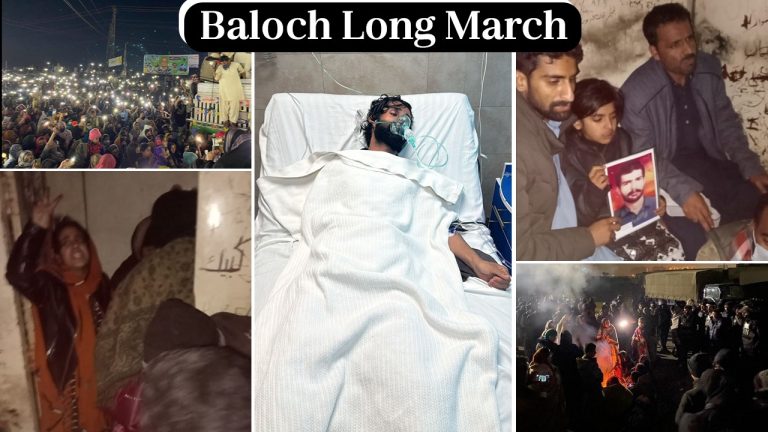
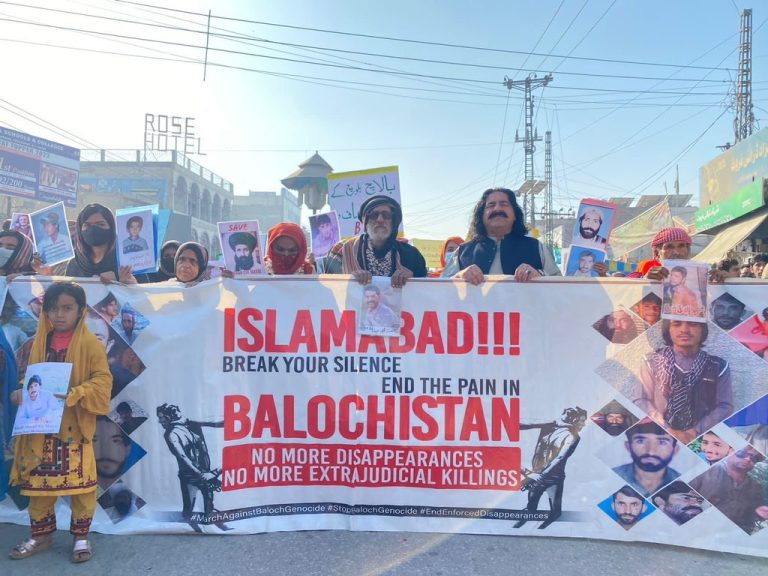
On Wednesday night, the Islamabad police forcefully dispersed Baloch protesters participating in the long march against extrajudicial killings in Pak-occupied-Balochistan. The march, which had reached Islamabad on 21 Dec night, faced obstacles as the police obstructed their entry into the city, using various tactics to harass and intimidate the protesters. The march, led by prominent activist Mahrang Baloch, had covered nearly 1,600 k.m. before encountering obstacles in the capital. But, displaying courage and commitment, she stated, “Our movement will continue until our demands are met.”

Despite facing resistance from the police, the march decided to proceed to D Chowk from the National Press Club Islamabad. In response, the Pakistan Army deployed heavy police forces and water tanks, aiming to disrupt the peaceful protest. The situation escalated as the police resorted to violence, injuring several peaceful protesters through baton charges, tear gas shelling, and water cannons.

Islamabad police cracks down

Numerous protesters were arrested by the Islamabad police, who used force not only on the long marchers but also in front of the press club. The severity of the situation left many peaceful protesters seriously injured, with urgent medical attention needed. Efforts are underway to rescue and support those injured during the clashes.

Disturbingly, the Islamabad police arrested all participants of the Long March, including families, females, and even children, dismantling the camp and initiating violence against women and others present. The crackdown extended beyond Islamabad, as the police searched residences and flats of Baloch students and families throughout the city, brutalising against the Baloch community in the name of apprehending protesters through force and ruthlessness.

The arrested protesters are being shifted to different locations, raising concerns about their safety and well-being. The Baloch community condemns the brutal actions of the Army, and there is a global call for international condemnation of the Baloch genocide.

Baloch Yakjehti Committee

The march, sparked by the death of Balaach Mola Bakhsh in extrajudicial killing, calls for the release of missing persons, disarming of the Counter Terrorism Department (CTD), and accountability for Army’s abuses. Mahrang, whose father disappeared in 2009, emphasized the need for justice and transparency. Leaders of the march demand the release of disappeared individuals and the disarming of the Counter Terrorism Department (CTD) to prevent future abductions and fake encounters.

Mahrang Baloch, a prominent leader of the Baloch Yakjehti Committee organizing the march, emphasized that the movement will persist until their demands are met. Notably, this march is unique as it is led by women, reflecting the uncompromising stand of Baloch women in the face of harassment and disappearances of male activists.

The situation in Islamabad remains tense, with concerns about the whereabouts of detained protesters. The Baloch activists have urged human rights organizations and international media to highlight their cause and advocate for the immediate release of those arrested.

Peaceful protest in Quetta

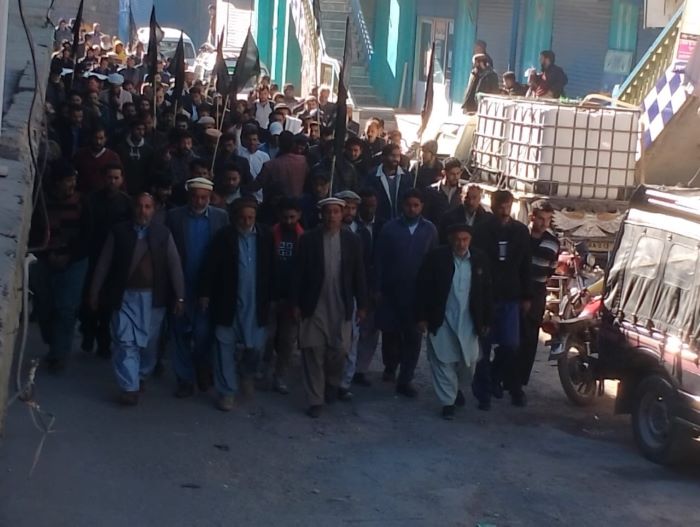
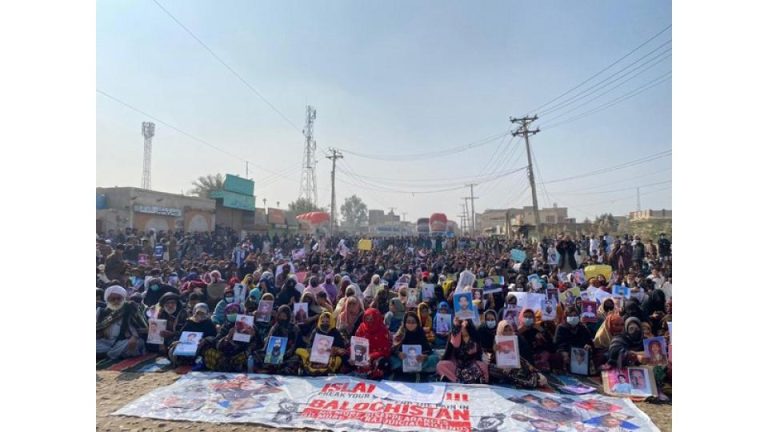
In the backdrop of the brutal crackdown on peaceful protestors, the residents of Pak-occupied Balochistan have staged a roadblock on the primary route to the capital city, Quetta. This was a remarkable attempt to express unity and solidarity with the marchers, as they call for the prompt release of participants in the Baloch Long March in Islamabad. The community remains resolute, expressing that Pakistan has caused significant harm, and they will not tolerate further violence. The plea echoes the urgency to address the ongoing genocide, emphasizing the need for collective voices to break the silence surrounding this grave issue.

Justice for Balochistan

The Pakistan Army has a long history of denying involvement in enforced disappearances, even as evidence points towards them. The Commission of Inquiry on Enforced Disappearances has received over 9,000 cases since its inception, with the vast majority originating from Pak-occupied-Balochistan.

Bakhsh’s family, like countless others, has no faith in official inquiries. Mahrang, speaking on behalf of the marchers, demands the disarmament of the Counter Terrorism Department and a guarantee of due process for all. The protesters’ call for justice extends beyond Bakhsh’s case; they seek an end to the cycle of violence and impunity that has plagued Pak-occupied-Balochistan for decades.

The crackdown on the Long March highlights the Army attempt to suppress dissent and silence Baloch voices. However, the unwavering determination of the activists and the growing support from within Balochistan and beyond indicate that the struggle for justice will not be easily silenced.

BLA attacks Pak Army in Turbat & Gwadar,Pak-occupied Balochistan

In a resolute demonstration of resistance against the oppressive Pak Army in Pak-occupied-Balochistan, the Baloch Liberation Army (BLA) has claimed responsibility for two strategic bomb attacks in Turbat and Gwadar. These targeted actions were aimed at disrupting the presence of the occupying Army and countering the activities of an enemy agent.

Turbat Strike

In Turbat, BLA operatives meticulously planned and executed an attack near an educational checkpoint where Pakistan Army personnel had gathered. The blast injured four Army personnel. This calculated move was intended to convey a powerful message that the Baloch people will not remain silent in the face of occupation, oppression, violence and injustice.

Gwadar: The Enemy Agent

In a separate operation in the Baloch Ward of Gwadar, BLA operatives targeted an agent of Pak secret agencies who had been operating in disguise. The agent, involved in intelligence activities, had taken refuge in a bathhouse, using it as a front for his covert operations. The BLA strike successfully unmasked his activities, sending a clear warning that those working against the interests of Balochistan will be held accountable.

BLA’s Perspective

Jeeyand Baloch, the spokesperson for the Baloch Liberation Army, emphasized that these operations are a response to the continued forceful occupation of Balochistan by Pakistan Army since 27 March 1948. The Pakistan Army is targeting and monitoring Baloch people, and anyone who has the potential to raise questions is either killed or abducted. The BLA’s actions underscore their commitment to resisting the oppressive Army that have marred the history of Balochistan. These strategic strikes aim to disrupt the operations of the occupying forces and deter those who collaborate with them. As the struggle for liberation intensifies, the Baloch Liberation Army remains steadfast in its pursuit of a free and sovereign Balochistan.

Pashtuns support and join Baloch Long March in Dera Ismail Khan

On the 27th day of the Baloch Long March, the movement has reached Taunsa Sharif, marking a significant milestone in the protest against the continuous Baloch genocide. Videos and images circulating online show thousands lining the streets, cheering and waving flags, as the marchers make their way towards Islamabad.

The entire Baloch nation, from Makran to Taunsa Sharif, has taken to the streets to voice their resentment against the brutal actions of the Pak Army. The historic long march received a warm welcome upon reaching Dera Ismail Khan, where the proud residents expressed their support for this bold stance against state terrorism and oppression.

Warm welcome in Dera Ismail Khan

Upon reaching Dera Ismail Khan, the historic march was met with another wave of support and warmth. The local Pashtun community, who themselves have faced state repression, played a crucial role in this warm reception.

Pashtun nationalist leader Ali Wazir, a vocal critic of Pak Army’s oppression, greeted the marchers and presented Mahrang Baloch, a prominent organizer, with a traditional dupatta, symbolizing unity and solidarity. This act of kinship resonated deeply with both communities, signifying the unwavering support of Pashtun communities who themselves bear the scars of Army’s oppression.

https://twitter.com/Ehsan_NL/status/1737368261283508655

This marked a remarkable moment of unity, as the Pashtun tribe, having faced its own challenges at the hands of the Pak Army, joined hands in solidarity with their Baloch counterparts.

The rally held in Dera Ismail Khan drew hundreds, reaffirming the march’s demands for an end to Baloch genocide, illegal forced disappearances, extrajudicial killings by the Counter Terrorism Department (CTD) in fake encounters, and the activity of death squads across Pak-occupied-Balochistan. Wazir’s participation resonated deeply, with his passionate address resonating with the gathered crowd.

With Taunsa Sharif successfully navigated, the march now sets its sights on Islamabad, the capital. There, it will join the established camp of missing persons and unveil its next course of action. The Baloch Long March appears to be galvanizing support as it moves closer to the seat of power, raising its voice for justice and a better future for the Baloch people.

UNSC nears decision on Gaza aid amid diplomatic talks & hostage negotiations

In a crucial turn of events, the UN Security Council is poised for a significant vote today, centering on a resolution designed to escalate the inflow of humanitarian aid into Gaza.This voting session, initially scheduled for Monday, faced a postponement to allow for extended deliberations, underscoring the gravity of the discussions at hand.

Reportedly, behind closed doors, diplomats engaged in intensive negotiations, honing the content of the draft resolution. Originally inclusive of a demand for a “cessation of hostilities”, aimed at facilitating the much-needed aid flow into Gaza, the specifics remained under scrutiny. Notably, the United States continued its review of the proposed text as of the latest update on Tuesday.

Simultaneously, Israel has put forth a proposition to Hamas, presenting a weeklong proposition for a week long cessation of conflict in exchange for the release of approximately 40 individuals held as hostages. Reports suggest that the proposal seeks the liberation of hostages encompassing women, the elderly, and those in dire need of immediate medical attention. Notably, Hamas has explicitly stated their stance, asserting no further releases will occur until a firm ceasefire is secured.

Baloch Long March overcomes challenges,advances towards Taunsa Sharif & DG Khan

Entering its 25th day, the Baloch Long March from Turbat has encountered roadblocks and arrests in Dera Ghazi Khan, but activists remain defiant in their fight against Baloch genocide by the Pakistan Army. The Baloch Long March, organized by the Baloch Yakjehti Council (BYC), faced resistance in Dera Ghazi Khan on Monday (19 Dec). Despite the Army’s attempts to stop the march, activists and protestors continued their journey towards Taunsa Sharif and DI Khan.

The march faced a heavy police presence in Dera Ghazi Khan and attempts to stop them from proceeding further. Authorities cited Section 144, prohibiting public gatherings, but protesters refused to comply.

The determined marchers, led by Mahrang Baloch, encountered resistance from the Pakistan Army in Dera Ghazi Khan, which attempted to halt the long march against the Baloch Genocide. The authorities warned of a ban on transporters unless they lifted their ban, prompting the activists to threaten a dharna (sit-in) in Dera Ghazi Khan.

On 19 Dec, at 11 a.m., the long march is set to continue on foot towards Islamabad from the Gadai Chowk picketing site. Ghayur Baloch, a prominent figure from Dera Ghazi Khan, is expected to ensure his active participation in the ongoing protest.

Clashes at Dera Ghazi Khan

Clashes erupted when marchers insisted on entering the city, where a partial strike had been observed. Police reportedly resorted to baton charges, detaining at least 20 individuals, including two women. Among those detained were prominent activists like Shaukat Ali, Asif Leghari, Miraj Leghari, and Abdullah Saleh. Legal proceedings have been initiated against them under Section 144.

Despite the obstacles, the long march, led by Mohammad Asif Laghari, continued onwards towards Taunsa Sharif and DI Khan. The BYC spokesman urged the Baloch community to join the protest in solidarity. The march began in response to the extrajudicial killing of Balach Mola Bakhsh by the Pak Army, sparking concerns about enforced disappearances and human rights abuses in Pak-occupied-Balochistan.

Despite this obstacle, the marchers, led by Mahrang Baloch, maintain their unwavering commitment to reaching the capital and voicing their protest. The situation is evolving, and it’s yet to be seen what will unfold when the march reaches to the capital.

J&K police hunts illegal Rohingyas & their facilitators across the region

J&K Police, on Tuesday, launched a massive crackdown against illegal Rohingya refugees across Jammu and Kashmir. In Jammu, a total of 7 FIRs have been registered against locals providing shelter. J&K police has said, “Action was initiated against all those who facilitated shelter and government benefits to the non-citizen Rohingyas.”

Searches, following procedure and in the presence of magistrates, were conducted at different locations in Jammu district where non-citizens were accommodated, and at the residential places of the facilitators. Illegally acquired Indian documents like PAN cards, Aadhaar cards, and bank documents, as well as other incriminating materials, were seized. The police have initiated an investigation into the matter.

J&K Police’s crackdown in Doda

Along with Jammu, J&K police also conducted raids in Doda district. In Doda, the police registered three FIRs against 10 immigrants, including Rohingyas and Bangladeshi nationals, and their facilitators. They were illegally staying in India and followed illegal procedures to obtain the Indian identity documents like Domicile Certificates, Aadhaar Cards, Ration Cards, Voter ID Cards, and PAN Cards.

‘A detailed inquiry was conducted, revealing that these Rohingyas managed to enter District Doda and illegally obtained Indian identity documents, falsely portraying themselves as permanent residents,’ the police stated.

Crackdown in Poonch

Similarly in Poonch district, the police reported the arrest of three individuals for creating a fake Aadhaar card and ration card for a Rohingya named Mohd Numaan from Myanmar. Numaan had been residing in village Dhargloon since 2013 and married a local girl, Farzana Kosser, from Dhargloon in 2016. Numaan, along with his father-in-law Nazir Ahmed, conspired to prepare fake Aadhaar and ration cards, using a fake Aadhaar card prepared in conspiracy with two others running an internet cafe in Dhargloon. During the investigation, Mohd Numaan, son of Muhib Ullah from Myanmar, was arrested on 30 Nov 2023 and is presently in judicial custody. As of now, four people have been arrested.

Crackdown in Rajouri and Kishtwar

In Rajouri district, J&K Police arrested one person from Laam area of Nowshera for facilitating a Rohingya woman named Haleema from Myanmar in district Rajouri. The arrested individual was, later, identified as Lal Din, son of Chidia, belonging to Kampla Mohra, Rajouri. It’s the second arrest in the case, and the police stated that the enquiry is ongoing with the possibility of more arrests.

Kishtwar Police conducted a crackdown against Rohingyas illegally residing in the Dachhan area. The investigation revealed that Rohingyas managed to procure documents such as domicile certificates, ration cards, Aadhaar cards, and voter ID cards illegally. During the ongoing investigation, the Police conducted house searches, recovering materials seized as evidence. Kishtwar police raided four houses of Ghulam Mohd Sheikh, Mushtaq Ahmed, Shahnawaz, and Fayaz Ahmed Chopan.

These widespread raids across Jammu and Kashmir shed light on the issues surrounding illegal Rohingya settlements and demonstrate the vigilance of Jammu and Kashmir police. Interestingly, the operation comes two months after the J&K Home Department set up a panel to identify illegal foreigners living in the UT.

Teachers & students of Sindh University pay a heavy price for celebrating Sindhi Cultural Day

In a disconcerting turn of events, an FIR has been lodged against two teachers and more than 10 students at Sindh University, Jamshoro. The establishment has put allegations that they were involved in terrorism. But, in reality they have been accused because of participating in the celebration of Sindhi Cultural Day. This incident has triggered widespread concerns regarding the limitations imposed on Sindhis in freely commemorating and embracing their cultural heritage. The establishment is not only resisting the celebration of different cultures but also imposing an accusation of terrorism upon them.

Copy Of FIR Against Teachers And Students (Photo: Social Media)

The filing of charges against educators and students of Sindh University for engaging in cultural festivities highlights a distressing pattern of suppressing Sindhi cultural expression. It raises pertinent questions about the extent to which cultural freedoms are permitted within Pakistan. This development has evoked strong reactions from various quarters, with individuals and groups condemning the stifling of cultural festivities and emphasizing the fundamental right of every community to celebrate and preserve its heritage without fear of persecution.

The incident yet again highlights how religious diversity is under threat in Pakistan. Last time, such an atrocious action was taken for the celebration of Holi by the Sindhis. Then also, the university and higher education departments took action against those who celebrated the festival of colours. The Higher Education Commission, at that time, banned the celebration of festivals citing the reason that such celebrations “erode the Islamic identity” of the country.

PTM holds massive protest rally demanding immediate release of Manzoor Pashteen

Pashtun Tahafuz Movement (PTM) held a massive protest rally for the release of its chief Manzoor Pashteen in Qila Saifullah, Pakistan-occupied Balochistan.

On Sunday, December 17th, PTM called for a protest sit-in against the deadly assault and subsequent arrest of Manzoor Pashteen. A huge number of Pashtuns took part in the rally making it unprecedented. The protest saw addresses from various PTM leaders who voiced for the immediate release of Pashteen. They also criticised the Pakistan Army for instigating insecurity in the region and persecuting the Pashtuns and Afghans.

Besides, to make the demonstration unsuccessful, Pakistani establishment took extra-judicial measures including raids and arrests. However, Pashtuns participated with full enthusiasm. Noor Bachaa, the Provincial President of PTM (Balochistan) took it to X (formarly known as Twitter) saying, “Long live the resistance. Despite all kinds of hardships, arrests, raids, we delivered our message to our Pashtuns. We will keep this field of resistance warm with the power of consciousness. Salute to all the people of Qala Saifullah. Salute to the organizing friends.”

Considerably, Manzoor Pashteen was arrested after a deadly attack on is convoy while he was enroute to participate in Turbat protest. Later, he was presented to the court three days after his arrest, a strict violation of legal rights of an individual. More recently, he was shifted to Adiala jail after undergoing seven day physical remand. Now PTM and its activists are agitated for the release of Manzoor Pashteen.

University students protest in Pak-occupied Jammu & Kashmir against soaring education costs

In Rawalakot, students rallied against the high costs of education, blocking roads to protest the soaring fees and closure of southern routes. At the University of Poonch Rawalakot in Pakistan occupied Jammu & Kashmir (POJK), students staged a complete boycott, barring teaching staff from campus entry.

Citing challenges from administrative groups, students voiced support for a comprehensive resolution of their demands. They demonstrated fervently, locking the university’s main campus gates in the morning and halting staff access. Subsequently, a protest unfolded at the main road block.

The protesting students of Poonch Rawalakot university highlighted ongoing challenges with administrative parties. After multiple hurdles, the administration eventually engaged in talks with students and the university. Subsequently, the temporary protest was called off post-negotiations.

Earlier, the students of Karakoram University also held similar protests over the lack of amenities and indiscriminate fee hike in Pak occupied Gilgit Baltistan. Actually, Pakistan is controlling and adultering every thing that benefits the Kashmiris in POJK and POGB. including education. To deprive the youth of the region from education, it is trying to create situations that posts hurdle in front of them. As Pakistan knows that eductaion could possibly lead to emancipation, it could eventually end up in making the region free, and hence it is subtly doing everything to make the life of Kashmiris precarious.