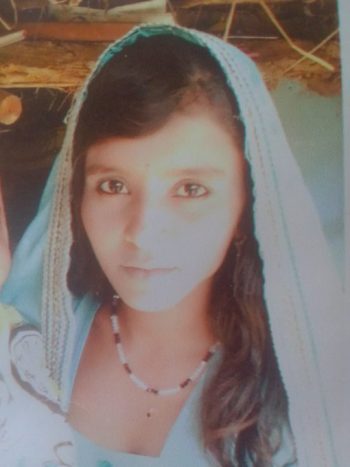
In a series of abductions of minor Hindu girls and women by radical Islamists, three other horrific incidents have emerged, sending chills through the Hindu community in Sindh. In a first, a minor Hindu girl named Jayshree has been abducted and forcibly converted. Jayshree, daughter of Chagan Kolhi was abducted from Samaro town of Umerkot in Sindh. Later she was converted to Islam and married off to her abductor named Nazeer Dhonkai.
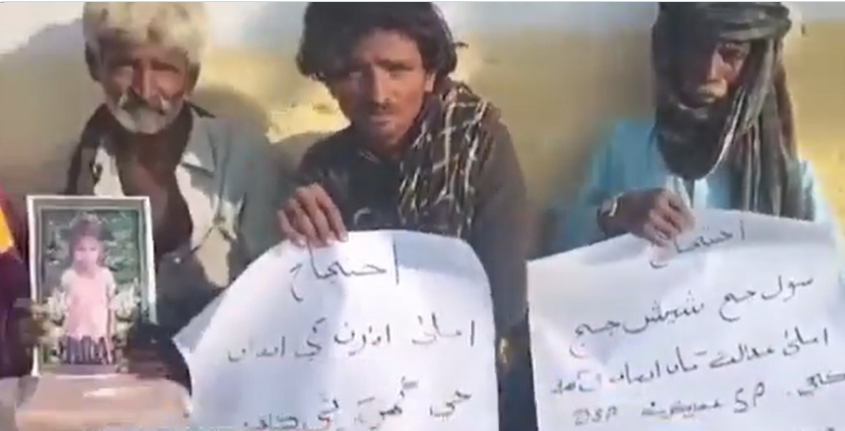
Apart from Jayshree, Nana Bheel, an 8-year-old Hindu girl has also been abducted, showcasing the precarious conditions of Hindus where even girls of this age are not safe. Nana Bheel hailing from Kunri in Umerkot was abducted by Hanif Khaskheli from her house. Unfortunately, the police is as usual trying to stave off the matter.
Family Of Nana Bheel Demanding Her Recovery With Placards And Her Photo (Photo: Social Media)
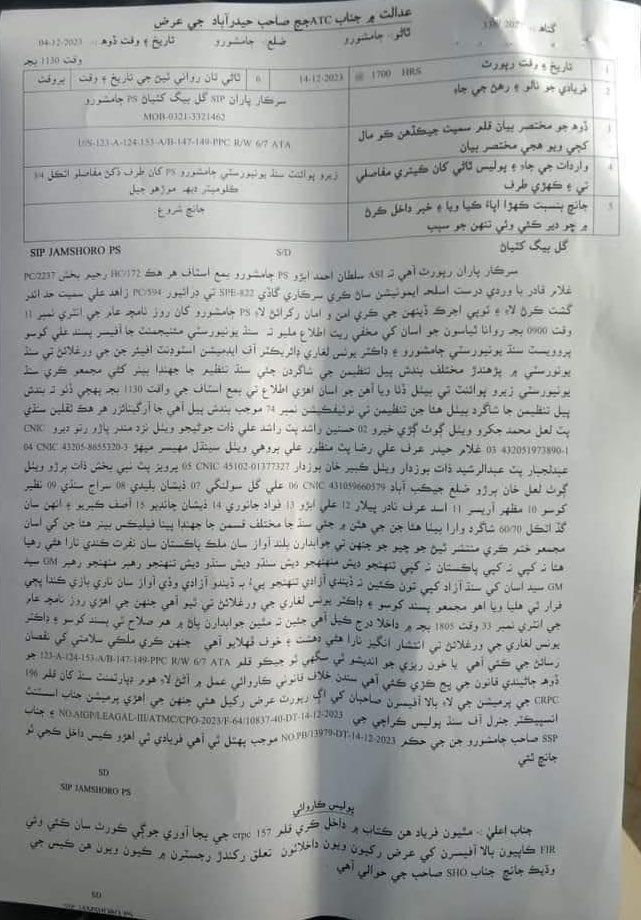
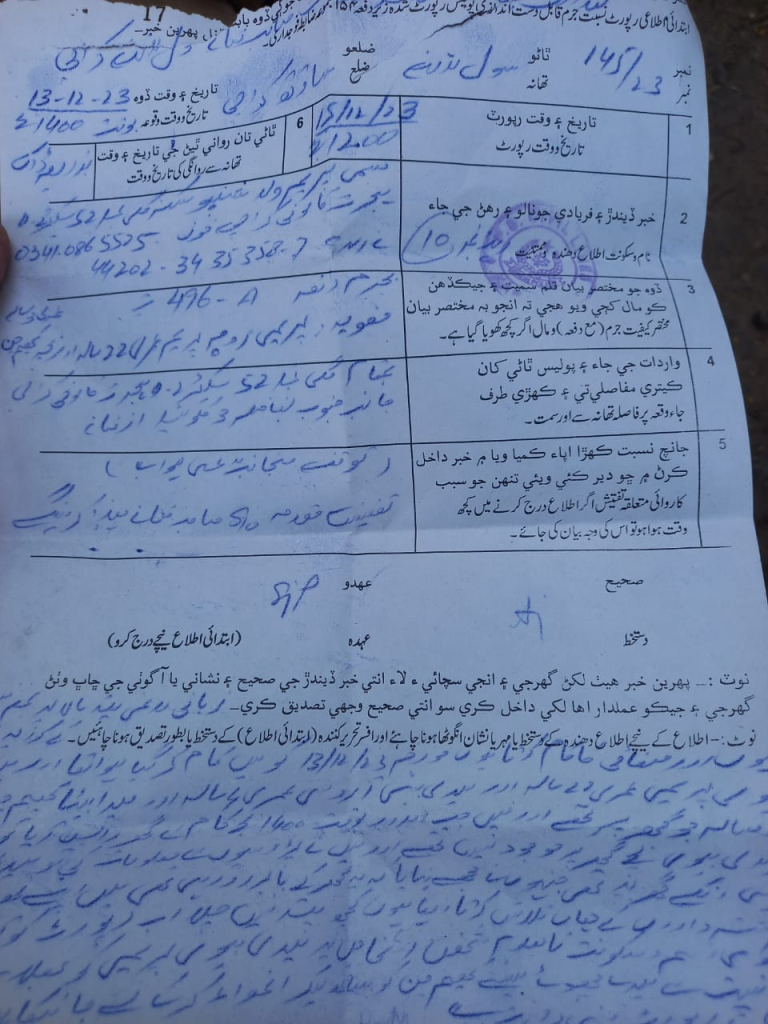
In another case of abduction, a Hindu woman named Premi has been abducted from her residence in Hijrat colony in Karachi. She was not abducted alone but with her child.
Copy Of FIR Against Abduction Of Premi (Photo: Social Media)
These cases of abductions yet again underscore that Hindus in Pakistan are under attack by the radical Islamists guided by a bigoted mindset. To make things even more perilous, the law and order provides such criminals a safe haven.
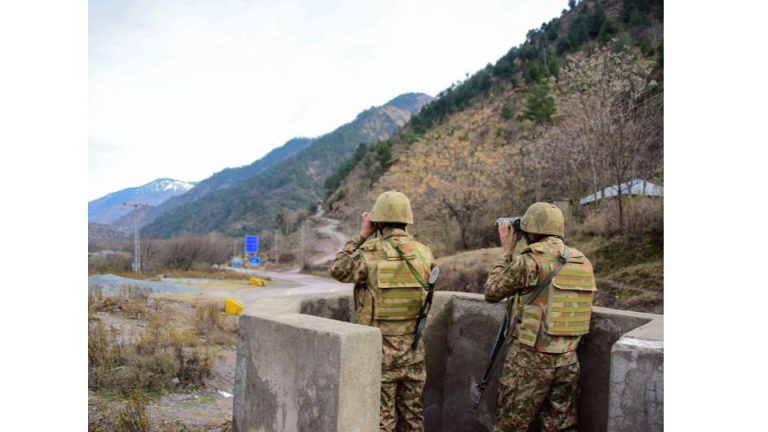
In a significant incident, unidentified armed individuals launched a targeted assault on a camp belonging to the Pakistan Army in the Malar area of the Awaran district. The attack occurred during the night earlier this week, with reports surfacing of significant financial losses incurred by the Army.
Details emerging from the scene suggest that the assailants, armed with rocket launchers and other heavy weaponry, initiated the attack at approximately 5 p.m. The central camp of the Army became the focal point of the assault.
It is noteworthy that the Kohlu region of Pak-occupied-Balochistan and its surrounding areas have been known for the presence of Baloch freedom fighters. However, no group has claimed responsibility for the attack. The longstanding grievances of the Baloch people against the Pakistan Army, primarily concerning resource depletion and human rights violations, have fueled ongoing tensions in the region since the Army forcefully occupied Balochistan in 1948.
The long march for Baloch rights, which began in Turbat and made its way through Quetta, has reached Dera Ghazi Khan. However, concerns have been raised about the continued human rights violations in the region, as four innocent Baloch students from Ghazi University – Sakim, Ameer, Salman, and Zubair – went missing from their hostel in Model Town.
Baloch Students Action Committee (BSAC) Secretary General Azhar Baloch confirmed the incident, stating that the Counter-Terrorism Department (CTD) and Punjab Police conducted overnight raids on multiple student hostels in Dera Ghazi Khan.
#MarchAgainstBalochGenocide is yet to enter DG Khan but state didn't came short of practising it's heinous crimes in Dgkhan. Four innocent Baloch students from Ghazi University,namely Sakim , Ameer, Salman and Zubair went missing from their hostel at model town dg khan. pic.twitter.com/ymSjK0xnF0
This incident highlights the ongoing pattern of human rights abuses of Baloch in Pak-occupied Balochistan. Since the forceful annexation of the resource-rich province in 1948, reports of torture, intimidation, and enforced disappearances have been widespread. Pak Army’s “kill and dump” policy, where individuals are abducted, extrajudicially killed, and their bodies discarded, has left families in anguish and uncertainty.
The Pakistan Army is resorting to ruthless tactics, such as the kidnapping of Abdullah Saleh, Mairaj Khalid, Jamil Baloch, and Asif Baloch. Although they were called for negotiation at the DPO office, their whereabouts are still unknown. These actions by the Pakistan show their hostility towards the Baloch community.
Abdullah Saleh, Mairaj Khalid , Jamil Baloch and Asif Baloch were called to the DPO office for negotiation. Yet there whereabouts remain unknown. These tactics of State and Punjab Police depicts the prejudice، desecration and hatred of state towards peaceful Baloch. pic.twitter.com/ZJjPR3CR1o
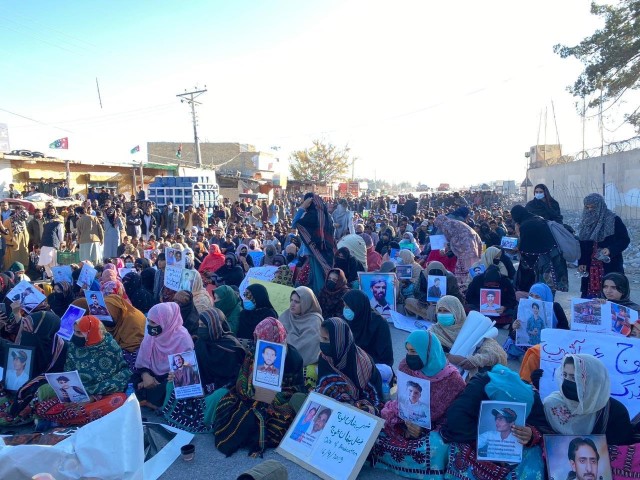
The plight of the families is particularly heartbreaking. They stage protests, marches, and hunger strikes in desperate pleas for answers and justice. Young children, some with pictures of their missing fathers, brothers, and uncles, brave the harsh weather to join these demonstrations. These incidents are a stark reminder of the ongoing tragedy.
The long march against the Baloch genocide was because of the death of Balach Baloch, 24, during a CTD raid in Turbat on November 23rd. It was the straw that broke the camel’s back & led to sit-ins and protests and now Long March. Balach was picked up by the CTD on October 29th and fell victim to the Army’s “kill and dump” policy.
The protests and sit-ins arose from both a demand for justice for Baloch victims and a call for action against the perpetrators within the CTD, which has become a tool for the Army’s raids, abductions, and indiscriminate extrajudicial killings. Frustrated by the lack of progress, the Baloch Yakjahti Committee initiated the long march.
However, the Pakistan Army has not relented. A large number of protestors, including many women, were detained on 17th Dec, as they joined the march. Police also erected barricades to impede the progress. Despite the obstacles, the march continues, with Barkhan witnessing a significant outpouring of support before it reaches Dera Ghazi Khan, where further arrests have been reported.
Breaking: Punjab police has attempted to block the long march against “Baloch Genocide” from entering Dera Ghazi Khan city. pic.twitter.com/eufsYmxHf6
As the march for justice winds its way towards Islamabad, the plight of the missing and the ongoing human rights violations in Pak-occupied Balochistan scream for an independent investigation.
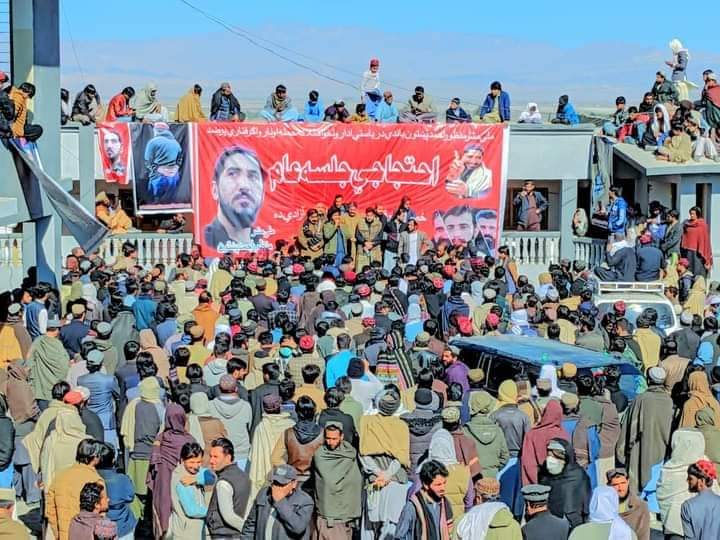
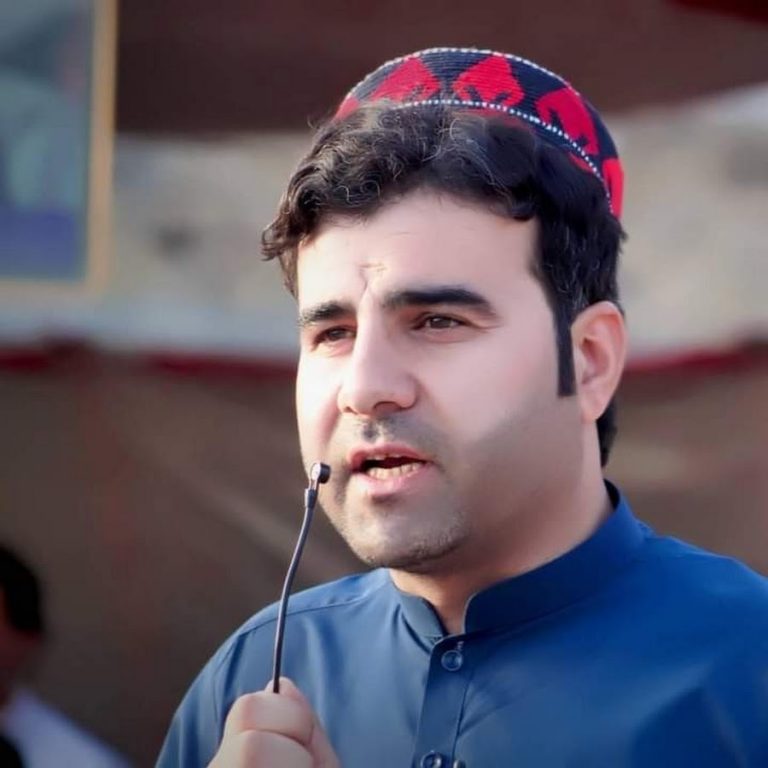
After the arrest of PTM Chief Manzoor Pashteen, PTM has actively launched a campaign demanding his immediate release. Recently, Provincial President of PTM (Balochistan), Noor Bacha along with other Pashtun activists and leaders reached Quetta and joined the Long March against “Baloch Genocide.” The march reached Quetta from Turbat on December 12.
While talking to media, he said that PTM chief Manzoor Pashteen had announced to visit Turbat protest. While he was enroute to participate in Turbat, the police abruptly attacked his car and convoy. After the indiscriminate firing, he was arrested illegally.
He said, “As he wanted to participate in Turbat protest and raise his voice against the Baloch genocide, our PTM leadership has decided that we will complete the mission of our leader Manzoor Pashteen.” He reiterated that PTM stands with Baloch Solidarity Committee (BYC) and supports their demands.
Noor Bachaa went on to say that for the last five months a ban has been enforced over Manzoor Pashteen’s travel to Pak-occupied Balochistan. He elucidated that Pashtun and Baloch are persecuted communities and Pakistan suppresses their voice, their rights are being violated and the brutality is at its peak. Despite all this, the Generals of GHQ are purchasing properties abroad. Since Manzoor Pashteen raises these issues and voices for the rights of persecuted communities, he was banned to come to Pakistan occupied Balochistan. They fear that the oppressed communities will stand by Manzoor Pashteen and become unstoppable. And that is why, as soon as Pashteen started moving towards Balochistan, all checkposts between Chaman and Quetta were sealed, and a large number of security forces were deployed. When they saw Pashteen they opened fire on him and arrested him.
Pakistan is trying to keep communities isolated
He stated that the establishment works on the policy of keeping the oppressed communities isolated. Because they know that if these communities start working together, then they will fight with full strength against the Pakistani tyranny and would go to any extent.
Accordingly, he asked all the communities be it Sindhis, Baloch or Pashtun, to unite and give a tough fight for the rights of people. Talking about the interim CM of Pak-occupied Balochistan Jan Achakzai, Noor Bachaa said that he is not competent, and he is in office for merely three months. He challenged Achakzai to sit with Pashtun leaders and address their problem, saying “we will send our representatives who will raise our issues. And if we do not give proof of every bomb blast, every missing Pashtun, Baloch and Sindhi, and every extra judicial killing, we are ready to be hanged at any square.”
As of now, PTM has joined the long march against Baloch genocide in its second phase, where the march is proceeding from Quetta to Islamabad.
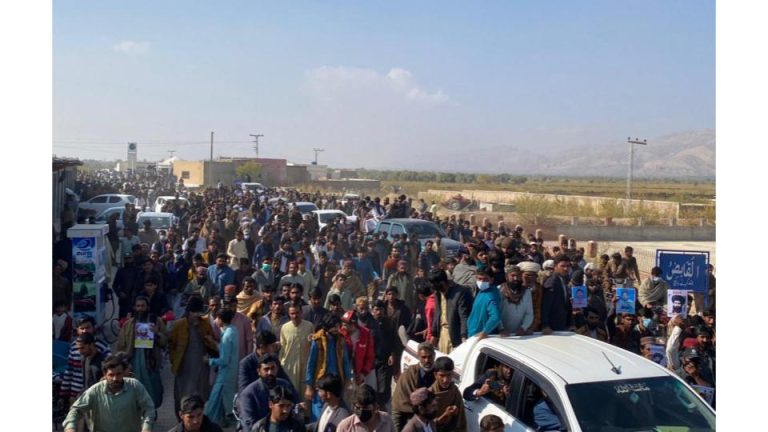
The Baloch Yakjehti Committee (BYC) successfully brought the “Long March” against the Baloch genocide to Kohlu, marking a significant demonstration of Baloch national unity and resilience in the face of oppression. Thousands of courageous Baloch individuals from Kohlu joined the rally, emphasizing their collective stance against the Pak Army’s violence.
The long march, initiated in Turbat a week ago and passing through Mastung before reaching Quetta, drew participation from thousands of people rallying from Makran to Kohlu. The Baloch Yakjehti Committee initiated the march from Turbat to Quetta in response to the extra-judicial killing of the Baloch youths. In Quetta, the march faced resistance from Army.
تاریخ ساز لانگ مارچ سے کوہلو کے تاریخ ساز مناظر ہزاروں کی تعداد میں اس وقت کوہلو کے غیور بلوچ عوام لانگ مارچ کی جانب سے ہونے والی ریلی کیلئے نکل چکے ہیں اور ریاستی دہشتگردی کے خلاف بلوچ قومی یکجہتی اور قوت کا مظاہرہ دیکھا رہے ہیں۔ مکران سے لیکر کوہلو تک لانگ مارچ کے ریلیوں میں… pic.twitter.com/jvkMeFLjTa
The Long March has touched several Baloch towns, drawing attention to the ongoing grievances of the community. While the future of the march remains uncertain, its impact in galvanizing the Baloch people and raising awareness of their concerns is undeniable.
The Long March transcends the specific incident of Balach Baloch’s death. It represents a broader struggle for the rights and dignity of the Baloch people, who have long faced marginalization and oppression at the hands of the Pak Army. The march’s success in uniting Baloch across tribal and regional lines serves as a powerful symbol of their unwavering commitment to their cause.
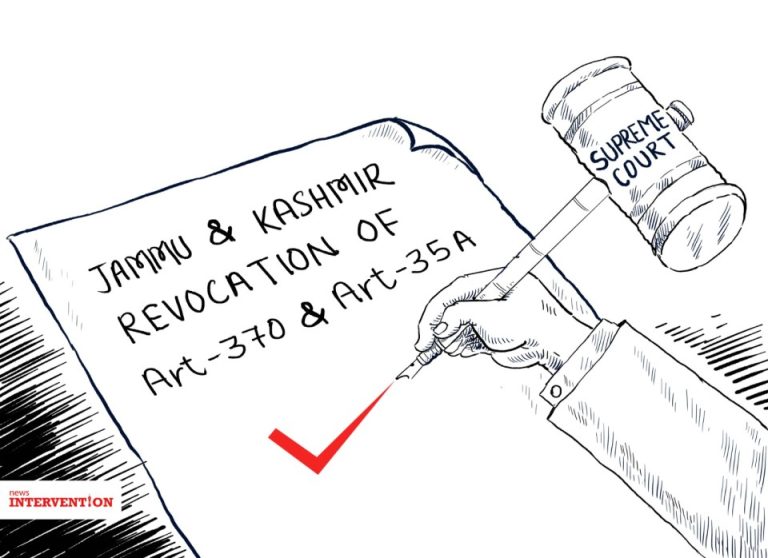
In his 2019 UNGA address, the then Prime Minister of Pakistan Imran Khan had snidely remarked, “You think Kashmiris will accept a new status quo under revocation of Article 370” and went on to prognose, “I fear there will be a bloodbath.” While this may appear to be just an innocuous observation, Kashmir watchers would agree that it was a brazen instigation in disguise.
Coming in the wake of the then Pakistan Army chief Gen Qamar Javed Bajwa’s declaration that “Pakistan army firmly stands by the Kashmiris in their just [sic] struggle to the very end; we are prepared and shall go to any extent to fulfil our obligations in this regard“ [Emphasis added], Khan’s insidious statement leaves no room for doubt that Pakistan wanted to see Kashmir Valley going up in flames.
However, to the bad luck of the cricketer turned politician, the doomsday scenario that he so confidently predicted never came to pass. And after precautionary restrictions imposed to prevent the pro-Pakistan camp in Kashmir from fomenting unrest were lifted, the situation remained calm and peaceful. This must have come as a big shock to both Khan and Gen Bajwa.
Paradoxically, the only violence that Kashmir Valley experienced after restrictions were lifted was the targeted killing of innocent migrant workers and minority community members by hitherto fore unknown groups like The Resistance Front [TRF], which is nothing but a shadow organisation of Lashkar-e-Taiba [LeT] terrorist group. This was Pakistan Army’s puerile attempt to project that new armed groups opposing Article 370 abrogation had emerged that were creating mayhem in Kashmir.
Having suffered for more than three decades due to cross border terrorism, the people of Kashmir have seen through this sinister plan and realised that Pakistan is more concerned about creating unrest and making their lives miserable solely to create an impression that normalcy continues to elude Kashmir. Thus, the fact that Pakistan is only interested in Kashmir’s real estate and the concern that it exhibits for Kashmiris is a mere farce has yet once again been exposed.
So, while Pakistan’s proxies continue their efforts to create an atmosphere through violence, the proactive actions of security forces and law enforcement agencies to simultaneously take action against the entire terrorist ecosystem has severely restricted the terrorists’ ability to do so. These efforts have yielded positive results thanks to active cooperation from the people of Kashmir Valley who are voluntarily providing information regarding terrorists, their facilitators and sympathisers to the security forces.
While those on the payroll of Pakistan Army’s notorious spy agency Inter Services Intelligence [ISI] continue to parrot Rawalpindi’s secessionist narrative, the public that once responded to All Parties Hurriyat Conference [APHC] protest calls by taking to the streets in great numbers is today much wiser. Consequently, shutdowns and protests have now become a thing of the past and locals today have no apprehensions in reiterating that they are Indians.
Even the kith and kin of many terrorists have publicly rejected the absurd Pakistan coined slogan “Kashmir banega Pakistan” [Kashmir will become part of Pakistan]. In 2021, Muzaffar Wani, the father of slain Hizbul Mujahideen terrorist and Pakistan’s poster boy Burhan Wani, hoisted the national flag at a school in J&K’s Pulwama district on Independence Day. On India’s Independence Day this year, while Bashir Ahmad, the brother of Hizbul Mujahideen [HM] terrorist Irshad Ahmad raised the Indian tricolour in J&K’s Doda district and announced “Hum Hindustani hain” [We are Indians],
Similarly, in Sopore, Rayees Mattoo, brother of active HM terrorist Javid Mattoo too waved the tricolour and his Twitter post reads “I waved the Tiranga [Tricolour] from my heart. There was no pressure from anyone”[Emphasis added] and ironically includes the quote “Saare jahaan se achha Hindustan humara, hum bulbule hain iske ye gulistan hamara” [our India is best in the world;we are its nightingales and this garden is ours] of Mohammad Iqbal, who is considered the ideological father of Pakistan.
And in what could metaphorically be called a resounding slap on Pakistan’s face, Rayees added, “The situation has changed [and] Pakistan can’t do anything…Hum Hindustani theh, hain, aur rahenge.”[We always were, are and will remain Indians].” [Emphasis added].
Just last week, social media was abuzz with a rap song titled ‘Badalta Kashmir’[changing Kashmir] rendered by a Kashmiri duo-21 year old Rasik Ahmed Sheikh and 14 year old Humaira Jan inspired by ongoing development and improved security situation in Kashmir. The starting line of this viral song goes thus- “Na koi begunah mar raha, khoon na hai beh raha” [No innocent is being killed, there is no bloodshed] and serves as an appropriate obituary for the so called “armed struggle” being sponsored by Pakistan army in J&K!
Tailpiece: More than one and a half decade ago, APHC chairman Mirwaiz Umar Farook admitted that “We have already seen the results of our fight on the political, diplomatic and military fronts which have not achieved anything other than creating more graveyards . . . ” Five years later, HM chief Syed Salahuddin who also heads the ISI created terrorist conglomerate United Jihad Council [UJC] himself exposed Rawalpindi’s dirty game in J&K by admitting that “We are fighting Pakistan’s war in Kashmir” [Emphasis added].
So, with both the UJC chief and APHC chairman admitting that Kashmiris are being used as ‘cannon fodder’ by Rawalpindi, isn’t it obvious that Pakistan is the biggest enemy of the Kashmiri people?
Religious hatred against minorities and bigotry runs deep inside Pakistani society. In a latest development, a historic Hindu temple situated in Ahmadpur Sial, Pakistan has been desecrated and converted into a chicken shop. The Sita-Ram temple carried immense historical and cultural significance as it was built over a century ago and served as a place of worship for the Hindus in the region. The architecture, embellished with detailed carvings as well as revered symbols, depicted a narrative of a vibrant cultural heritage that extended beyond religious divides. The conversion of the temple into a chicken shop is not merely an act of vandalism, but a clear attack on religious sentiments of minority Hindus and violation of the right to freedom of religion as it violates the sanctity of the Hindu temple where these things are banned by religious scriptures.
Additionally, the unfortunate conversion of the Sita-Ram temple is not an isolated incident. Reports of Hindu temple being desecrated in Pakistan are more often. The temples are converted into mosque, madrasa and even toilets. These incidents clearly highlight that Islamic Republic of Pakistan is a worst place where a religious minority could survive. Apart from religious persecution, the places of worship and every religious symbol is attacked at the behest of promoting radicalised form of Islam.
PTM leader Manzoor Pashteen was sent to judicial remand by Anti-Terrorism Court Judge Abual Hasnaat Zulqarnain on Thursday after completion of his 7-day physical remand. Manzoor Pashteen was arrested after indiscriminate firing on his convoy on December 5 from Chaman, Pakistan occupied Balochistan. Later he was taken to Islamabad.
The Police captivated him for three days without any legal representation, mocking the legal rights of a free person. After three days he was presented to the court and sent to 7-day physical remand.
Now that his physical remand is over, Prosecutor Tahir Kazim pleaded in the court for physical remand to recover cell phone of Pashteen and also passwords of his social media accounts. He requested again for physical remand to which the Judge remarked that they have already given 7-day physical remand of the accused . He has been sent to Adiala Jail.
While, he was taken out of the court handcuffed, Pashteen talked to the media and said that the arrest is unconstitutional. On the question of tough investigation, Pashteen said, “If I was put on the atomic bomb, I would stand by my position.”
He also urged his followers and PTM activists to continue the resistance and fight for the rights of Pashtuns.
On International Human Rights Day (10 December), Students For a Free Tibet held a screening of the documentary – “Leaving Fear Behind – Risking Everything, Tibetans Inside Tibet Speak Out” – by Tibetan filmmaker Dhondup Wangchen, in his presence. The SFT has been holding many more such screenings over the week in various US states to draw attention to Chinese repression in China-occupied Tibet.
(Image Courtesy – Students For a Free Tibet Facebook page)
Wangchen spent 6 years in Chinese prison under the charges of “state subversion” for documenting the plight of Tibetans on camera and smuggling the footage out of China in the lead-up to the 2008 Beijing Summer Olympics.
After being released from a Chinese prison on 5th June 2014, he was placed under surveillance by the Chinese authorities and was not allowed to travel outside of China to reunite with his family. However, in December 2017, he managed to flee to the US and has since been working to raise awareness about the Tibetan cause and the freedom movement of Tibet.
The screening commemorated the 15th anniversary of the documentary and the ongoing hardships faced by Tibetans inside occupied-Tibet. It was followed by a Q&A session where Wangchen shared his experiences encountered while filming the documentary, the motivation behind risking his family and livelihood to capture the voices of Tibetans inside Tibet, and the need to preserve the Tibetan language to safeguard their identity, which is facing a concerted extermination attempt from the Chinese regime.
Leaving Fear Behind
The 25 minute documentary details the plight of Tibetans, their hopes, aspirations, and fears in the lead-up to the 2008 Beijing Olympics. The solemn background score captures the raw emotions of Tibetans, the extent of Chinese oppression in the region, and their tenacity in the face of unending disdain.
For five months in 2007-2008, Wangchen travelled through Tibet to document the perspectives of Tibetans on the Beijing Olympics of that year.
It is based on 40 hours of raw footage from 108 interviews conducted in Amdo, a traditional Tibetan province, in 2008, despite significant risks from the Chinese administration. On 10 March 2008, he handed over the tapes to Dechen Pemba, a British citizen in Xi’an, China. On the same day, a violent protest erupted in Tibet’s capital, Lhasa in which 18 people lost their lives and most of them were Han Chinese.
Dhondup Wangchen and Golog Jigme, the Tibetan monk who assisted him in the project, were arrested a few days after finishing their filming. Nonetheless, on the eve of the Beijing Olympics (6 August 2008), the documentary was secretively screened to foreign media in Beijing.
After the film’s release, Dhondup Wangchen received a six-year prison sentence on charges of ‘inciting separatism’. He endured forced manual labor and spent six months in solitary confinement. While his assistant, Jigme fled to India in 2014 and a year later, he was granted political asylum in Switzerland.
Wangchen’s documentary has earned him multiple international accolades, including the 2012 International Press Freedom Award from the Committee to Protect Journalists and the 2014 Václav Havel International Prize for Creative Dissent. It had been screened at various film festivals around the world.
(Image courtesy – Students For a Free Tibet Facebook page)
Major takeaways of the documentary and live event
The major focus of the documentary and the remarks at these recurrent screenings has been on the need for the preservation of the Tibetan language which is the foundational footing to keep the existence of Tibetan culture and mindset alive. However, on several occasions, Wangchen points out that there has been a generational gap and bridge in relaying the Tibetan language and culture to the next generations.
Regarding this, Wangchen during the session emphasised on the preservation of the Tibetan language as the Chinese govt is on a mission to eradicate the Tibetan language which is to eradicate the Tibetan identity.
He said that “in 1993, young Tibetans despite knowing Chinese [sic] refused to speak Chinese [sic] because that’s the language of colonisers and oppressors”.
Although he never met his mother again and remained away from his kids for a decade and noted that he was almost a stranger to his kids, he stressed that he left India “knowingly” to film this documentary as there were no other options. He added that he was undertaking a huge risk as several uprisings had taken place in China around that time.
“This film is about the plight of the Tibetan people – helpless and frustrated. Therefore I hope that everyone will pay special attention and support it. That’s my biggest hope”.
Meanwhile, despite being given the choice to conceal their identities, the majority of the interviewees opted to come on camera uncloaked and expressed concerns about the Sinicization of Tibetan culture and large-scale Han Chinese migration into the Tibetan region.
It is important to note that Tibetans face persecution for as basic human rights as possessing pictures of the Dalai Lama.
Regarding this, one man in the documentary notes, “We’re not free to possess photos of the Dalai Lama so we have to hide them. If the government finds them they confiscate them. A while ago we were told that these kinds of photos were not allowed so we have to keep them secret. Otherwise, they will be taken away.”
In the documentary, Wangchen explains how the Chinese do the exact opposite of what they preach on the global stage.
Wangchen notes, “ Nowadays, what China is saying is that they are preserving and improving Tibetan culture and language. That’s what they are telling the world. Many organisations and offices have been set up for these things. What they say and what they do are totally different, opposites. If they really want to preserve and improve Tibetan culture and language, they should withdraw all the Chinese people living in Tibetan areas. Tibetan culture and language have to be practiced in all Tibetan areas. If it’s not practiced, how can it be preserved? It can’t.”
He adds, “The situation in Tibet, instead of improving is getting worse and worse every year.”
However, an old Tibetan man in the documentary encapsulated Tibetan’s apprehensions against the Chinese in the wake of their brutal repression by the Chinese regime. The old man remarked, “I don’t trust the Chinese at all. Not one bit.”
In a distressing sequence of events, Khyber-Pakhtunkhwa province has been rocked by a string of terrorist attacks, escalating tensions and leaving a trail of casualties. The latest assaults, occurring within days of each other, have not only claimed the lives of Police personnel but have also heightened concerns about the region’s security and stability.
On Friday, two separate attacks targeted Police in Khyber-Pakhtunkhwa. At the Nala Joint Post, terrorists unleashed a barrage of heavy weapons, including hand grenades, resulting in the death of two police personnel. Seven others sustained injuries in the assault but were swiftly moved to medical facilities, where their condition is reported to be stable.
Simultaneously, another attack in the Tank district claimed the lives of two policemen, while three others sustained injuries. The assailants engaged in a confrontation with the police, leading to the death of one terrorist. As authorities initiate a search operation in the area, a little-known militant group named Ansarul Islam purportedly claimed responsibility for this attack, although the claim’s authenticity remains unverified by the police.
Earlier attack in Khyber-Pakhtunkhwa
These recent assaults follow closely on the heels of a devastating suicide bombing earlier in the week in Dera Ismail Khan. This attack resulted in the tragic loss of 23 army personnel, marking one of the deadliest strikes against Pakistan military this year. Tehreek-e-Jihad (TJP), affiliated with Tehreek-e-Taliban (TTP), claimed responsibility for this attack, further exacerbating security concerns in the region.
In response to the TJP attack, Pakistan had called upon Afghanistan, specifically summoning the Chargé d’Affaires in Islamabad, to strongly address the matter. Foreign Secretary Syrus Sajjad Qazi emphasized the need for swift action and investigation by the Taliban government in Afghanistan. The Afghan Taliban government, in turn, had promised an inquiry into the attack, urging Pakistan to avoid implicating Kabul for all issues while emphasizing the need for enhanced security measures.
We use cookies on our website to give you the most relevant experience by remembering your preferences and repeat visits. By clicking “Accept All”, you consent to the use of ALL the cookies. However, you may visit "Cookie Settings" to provide a controlled consent.
This website uses cookies to improve your experience while you navigate through the website. Out of these, the cookies that are categorized as necessary are stored on your browser as they are essential for the working of basic functionalities of the website. We also use third-party cookies that help us analyze and understand how you use this website. These cookies will be stored in your browser only with your consent. You also have the option to opt-out of these cookies. But opting out of some of these cookies may affect your browsing experience.
Functional cookies help to perform certain functionalities like sharing the content of the website on social media platforms, collect feedbacks, and other third-party features.
Performance cookies are used to understand and analyze the key performance indexes of the website which helps in delivering a better user experience for the visitors.
Analytical cookies are used to understand how visitors interact with the website. These cookies help provide information on metrics the number of visitors, bounce rate, traffic source, etc.
Advertisement cookies are used to provide visitors with relevant ads and marketing campaigns. These cookies track visitors across websites and collect information to provide customized ads.
Necessary cookies are absolutely essential for the website to function properly. These cookies ensure basic functionalities and security features of the website, anonymously.
Cookie
Duration
Description
cookielawinfo-checkbox-analytics
11 months
This cookie is set by GDPR Cookie Consent plugin. The cookie is used to store the user consent for the cookies in the category "Analytics".
cookielawinfo-checkbox-functional
11 months
The cookie is set by GDPR cookie consent to record the user consent for the cookies in the category "Functional".
cookielawinfo-checkbox-necessary
11 months
This cookie is set by GDPR Cookie Consent plugin. The cookies is used to store the user consent for the cookies in the category "Necessary".
cookielawinfo-checkbox-others
11 months
This cookie is set by GDPR Cookie Consent plugin. The cookie is used to store the user consent for the cookies in the category "Other.
cookielawinfo-checkbox-performance
11 months
This cookie is set by GDPR Cookie Consent plugin. The cookie is used to store the user consent for the cookies in the category "Performance".
viewed_cookie_policy
11 months
The cookie is set by the GDPR Cookie Consent plugin and is used to store whether or not user has consented to the use of cookies. It does not store any personal data.