Home Blog Page 163

Awami Workers Party demand immediate release of Pashtun leader Manzoor Pashteen

The Awami Workers Party has strongly condemned the arrest and ill-treatment of Pashtun Tahafuz Movement leader Manzoor Pashteen, who was not allowed to contact his family for 2 days and was then charged in an anti-terrorism court in Islamabad. Calling it a violation of the principles of basic human dignity, AWP demanded an immediate release of Manzoor Pashteen.

The party warned that such violent actions not only violate the constitutional rights but are also a provocative act for followers of its non-violence political ideology and further weaken the foundations of Pakistan’s weak sovereignty.

Party President Akhtar Hussain and General Secretary Bakhshal Thalu said that Manzoor Pasteen was arrested by the police from Chaman while he was taking part in the ongoing peace protest on the border with Afghanistan. Contrary to the official statement, when his vehicle moved from Chaman towards Turbat, he was first threatened and then fired upon indiscriminately. He was going to express solidarity with the ongoing sit-in against the killing of three Baloch people in a fake encounter in Turbat.

The party iterated that Manzoor has the constitutional right to travel anywhere in Pakistan and all the allegations leveled against him in the fake case filed against him are baseless.

Awami Workers Party condemned the extra-constitutional proceedings

The leadership of the Awami Workers Party also condemned the manner in which Pashteen was handed over to the Ismail Khan Police and then to the Islamabad Police and was prevented from contacting his lawyers or any of his close relatives for 48 hours. This points to the growing lawlessness in Pakistan and makes a mockery of the establishment’s claim that it is creating a peaceful environment for holding elections.

Instead, such inhuman treatment of people who are peace-loving and progressive with conscience, along with others, makes it clear that the Pakistani establishment is rapidly becoming militarized and a graveyard of justice.

The party demanded the immediate release of Manzoor Pashteen. Additionally, all false cases made against him should be dropped immediately. Accordingly, Awami Workers Party also expressed solidarity with the ongoing peaceful protests across Pakistan for the rights of the people, oppressed communities and oppressed classes.

Fast-fashion giant Zara under fire for ethical lapses

Spanish fashion retailer Zara is facing criticism over its recent collection campaign named “The Jacket.” Palestinian and pro-Palestinian social media users are calling for a boycott, claiming that the campaign, released on December 7, mocks the death of Palestinians.

The collection features a model in black clothes against a white backdrop with props resembling a ravaged structure in ruins. Deleted images, shared on social media platform X (formerly Twitter), allegedly showed the model holding a mannequin wrapped in white cloth with rubble in the background. Other images included mannequins positioned in different ways and a prop resembling the Palestinian map. Critics point to specific elements, including:

  • A white cloth-wrapped mannequin resembling deceased Palestinians.
  • A plastic-wrapped mannequin lying on the floor, reminiscent of bomb victims.
  • A prop resembling the Palestinian map, further fuelling the controversy.

These elements, coupled with the backdrop, have led many to interpret the campaign as insensitive and disrespectful towards the suffering of Palestinians, particularly in Gaza. Pro-Palestinian users, like Majid Freeman, have compared these images to scenes from Gaza amid Israeli strikes on Hamas. The campaign has been labelled the “Gaza genocide collection,” leading to calls for a boycott.

Zara maintains that the campaign is a deliberate design choice to showcase the versatility of the garment. Amid the boycott, an older controversy involving Zara’s Israeli head designer, Vanessa Perilman, has resurfaced. In June 2021, Perilman criticized Hamas in a private chat with a pro-Palestinian model, leading to a viral exchange. In a private chat with a pro-Palestinian model, Perilman expressed critical views towards Hamas and questioned Palestinian practices. Screenshots of the conversation went viral, sparking outrage and threats against Perilman.

Perilman, an Israeli fashion industry veteran, has worked with various brands and has held the position of Head Designer for Zara Women’s Collection since 2015. The controversy has reignited amidst global calls for the boycott of Israeli brands following an offensive strike by Israel in response to the October 7 terrorist attacks by Hamas.

Zara, however, argues that the campaign’s design was intended solely to showcase the versatility of the jacket. Despite the backlash, Perilman remains employed by Zara. Some argue that her statements were courageous and defended her right to express her views. They also suggest that Islamists may be exploiting the Zara campaign to revive the Perilman controversy and attack the brand.

The controversy highlights the complex relationship between fashion, politics, and social sensitivity. While artistic expression and creative freedom are important, brands must also be mindful of the potential impact of their work on sensitive issues and communities. It remains to be seen how this situation will unfold. The boycott movement’s success will likely depend on how Zara responds to the criticism and whether it can effectively address the concerns raised.

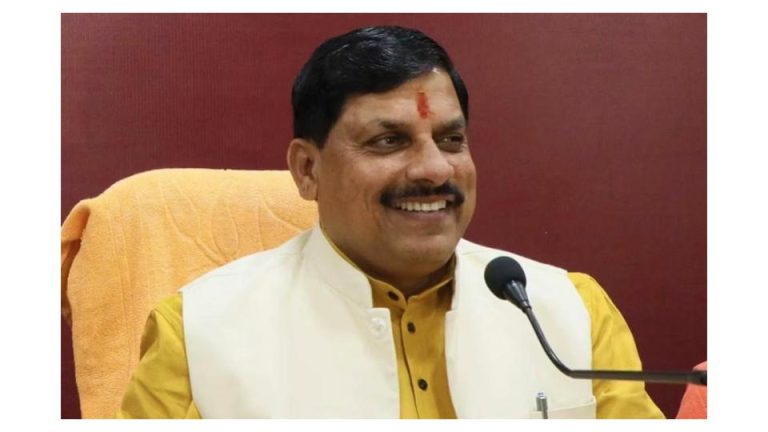
Mohan Yadav, new Chief Minister of Madhya Pradesh

The speculation surrounding the new Chief Minister of Madhya Pradesh has finally concluded as the BJP legislative party confirmed Mohan Yadav for the position. After winning 163 seats in the assembly elections, defeating anti-incumbency, this decision follows intense discussions in New Delhi and Bhopal. Several names, including Shivraj Singh Chouhan, Prahlad Patel, Jyotiraditya Scindia, VD Sharma, and Kailash Vijayvargiya, were considered.

Mohan Yadav’s selection, surprising many, comes a day after the BJP announced Vishnu Deo Sai as the CM in Chhattisgarh. The official announcement was made after BJP observers met with the newly elected MLAs in the state. Yadav, an MLA from Ujjain South and a former minister in the Shivraj Singh Chouhan cabinet, emerged as the Chief Minister-elect.

The BJP, securing 163 out of 230 seats in the November 17 polls, retained power in Madhya Pradesh. Mohan Yadav’s appointment comes more than two weeks after the BJP’s victory. In his response, Mr. Yadav expressed gratitude for the opportunity, acknowledging his role as a humble party worker.

To address ambitions and maintain harmony, the BJP also appointed two deputy chief ministers – Jagdish Deora and Rajesh Shukla. With these appointments, the suspense over the chief ministers for the states won on December 3, including Chhattisgarh, has ended.

Mohan Yadav’s selection, at 58, marks a significant turn in the state’s political landscape, potentially signaling a new era. The BJP’s strategy of “collective leadership,” centered around Prime Minister Narendra Modi, played a pivotal role in their landslide victory, sidelining the four-time Chief Minister Shivraj Singh Chouhan.

The BJP’s decisive win, contrary to exit polls, underscores the effectiveness of their campaign strategy. Former Union Agriculture Minister Narendra Singh Tomar, now a three-time MLA, has been appointed Assembly Speaker, with speculation about his potential succession to the top post. With Rajasthan being the only state without a Chief Minister among those that voted in November, the BJP has concluded its leadership announcements in the other victorious states.

Protests across Pak-occupied Balochistan against the arrest of Manzoor Pashteen by Pak Army

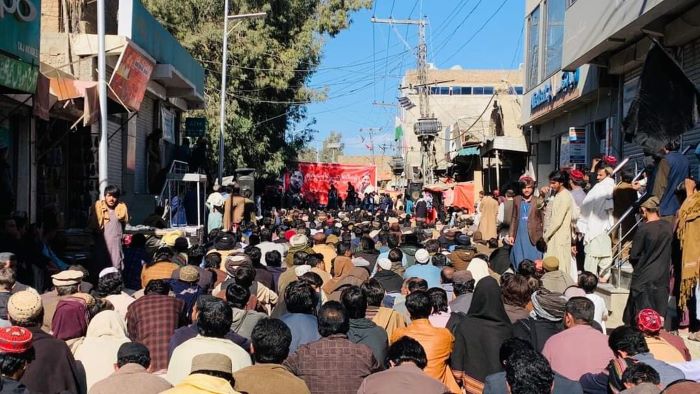
On December 10, a wave of protests surged through Zhob, Pakistan-occupied Balochistan as supporters of the Pashtun Tahafuz Movement (PTM) rallied against the illegal arrest of their supreme leader Manzoor Pashtun and several PTM members. The demonstrations were fuelled by outrage over a violent attack on Pashtun’s convoy in Chaman and the forced removal of Afghan refugees, which garnered widespread condemnation.

Amidst the fervor, PTM leaders and activists gathered in Zhob for a significant protest gathering. However, the situation escalated when senior PTM figure and former MNA Ali Wazir was intercepted by the Zhob administration while en route.

Apart from leaders, thousands of impassioned Pashtun protestors flooded Zhob, demanding the immediate release of Manzoor Pashteen and questioning the circumstances surrounding his arrest. The manner of Pashteen’s apprehension, coupled with a murderous attack and abduction, sparked concerns of human rights violations within the community.

Adding to the outcry, Pashteen was presented in an anti-terrorism court three days after his arrest and subsequently remanded to seven days of physical custody. Critics and supporters alike condemned the delay in legal proceedings, labeling it a violation of due process and fundamental rights.

Notably, Pashteen was arrested while he was en route to Turbat to participate in a protest staged around the brutal extra-judicial killings of four innocent Baloch youth by the CTD. Turbat protest sent shockwaves to the Pakistani administration and Pakistan Army since it started. Pashteen’s presence in the peaceful protest would have strengthened the struggle, fearing which Pakistan Army opened fire on Pashteen’s convoy and arrested him . The events show the horrible condition of law and order in Pakistan and emphasize the irresponsible and extra-constitutional way of working of Pakistani establishment under Pakistan Army.

Baloch Liberation Army targets & eliminates CTD officer in Khuzdar

In a daring operation, the elite force of the Balochistan Liberation Army (BLA), known as the Special Tactical Operations Squad (STOS), successfully eliminated Murad Jamot, a senior officer associated with Pakistan’s Counter-Terrorism Department (CTD), in an attack in Khuzdar.

The meticulously executed operation took place on Sultan Ibrahim Road in Khuzdar, where STOS operatives employed a magnetic Improvised Explosive Device (IED) on the target’s vehicle. The result was the complete destruction of the vehicle and the successful elimination of the intended target.

Murad Jamot’s affiliation with the so-called CTD raised concerns as the organization has been implicated in numerous human rights abuses, including raiding civilian homes, harassing locals, enforcing disappearances, and engaging in extrajudicial killings in fake encounters. Jamot himself was implicated in such crimes in Khuzdar and nearby areas, earning him a spot on BLA’s target list. The elite unit of BLA acted on this list, successfully removing Jamot from the equation.

The BLA asserts its commitment to conducting further operations against Pak Army until a complete withdrawal is achieved from Balochistan. This incident underscores the ongoing struggle in the region and the BLA’s determination to address alleged human rights violations and maintain pressure for the liberation of Balochistan. Since 27 March 1948, the region continues to be plagued by violence against innocent Baloch citizens. They suffer targeted killings at the hands of the Pak Army. The Pakistan Army is targeting and monitoring Baloch people, and anyone who has the potential to raise questions is either killed or abducted.

Supreme Court upholds the constitutional validity of abrogation of Article 370

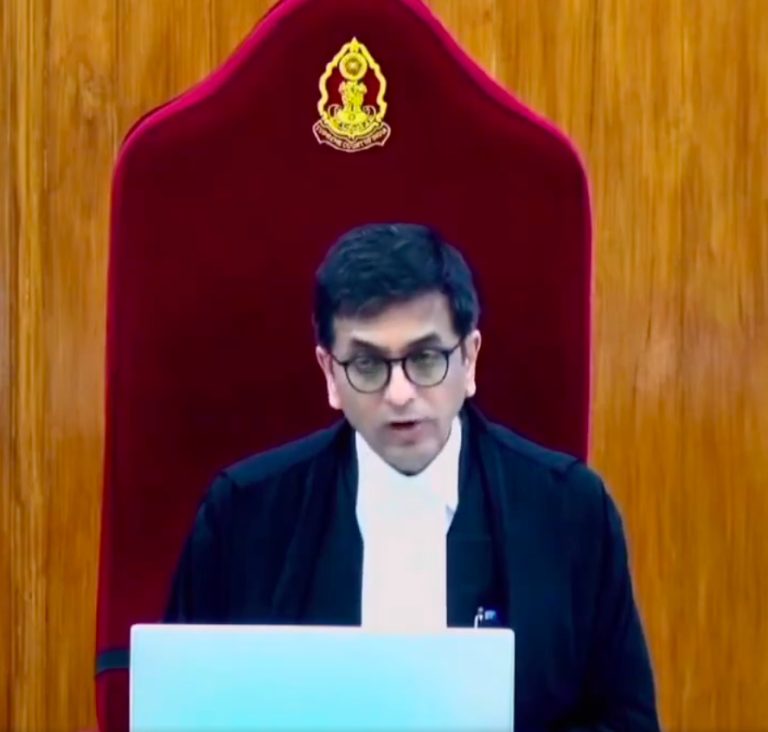
In a landmark ruling, the Supreme Court of India delivered a comprehensive judgment upholding the validity of the constitutional order abrogating Article 370, a contentious issue for Jammu and Kashmir. A Constitution bench comprising five judges, led by Chief Justice of India (CJI) DY Chandrachud, had concluded hearings on 23 petitions on September 5 this year, after a 16-day session, and reserved its verdict for judgment. Chief Justice DY Chandrachud, accompanied by Justices Suryakant and BR Gavai, formed a unified opinion, while Justices Sanjay Kishan Kaul and Sanjeev Khanna penned separate concurring opinions.

The pivotal questions addressed by the apex court regarding the validity of abrogation of Article 370 spanned the nature of Article 370’s temporariness, the validity of Parliament’s 2019 amendment redefining the meaning of “Constituent Assembly of Jammu and Kashmir,” the extension of the entire Indian Constitution to Jammu and Kashmir via Article 370, and the legality of various actions taken by the Centre without the recommendation of the J&K constituent assembly.

Excerpts of the historic judgement over Article 370

Chief Justice Chandrachud underscored that Jammu and Kashmir, post-accession to India, relinquished its internal sovereignty. Emphasizing the validity of actions by the President and Parliament following the proclamation of President’s rule under Article 356, the Chief Justice clarified that these actions were not prima facie mala fide or an extraneous exercise of power.

Furthermore, the judgment reiterated that J&K did not possess a distinct or unique relationship with the Indian Constitution. It emphasized that J&K’s integration with India was evident in both the J&K Constitution and the Indian Constitution, affirming its status as an integral part of India.

Regarding Article 370, Chief Justice Chandrachud reaffirmed its temporary nature, citing its historical context as a transitional provision designed until the formation of the J&K Constituent Assembly and to address the state’s war-like situation at the time.

Addressing the reorganization of Jammu and Kashmir into two Union Territories—Jammu and Kashmir, and Ladakh—the Court refrained from determining the validity of this move due to the Centre’s assertion that the Union Territory status is temporary. Notably, the judgment directed the expeditious restoration of statehood to J&K and mandated the Election Commission of India to conduct elections for the Legislative Assembly of J&K by September 30, 2024.

Issue of Human rights

Justice Sanjay Kishan Kaul opined that his conclusions are in tandem with what CJI concluded. He said that while the purpose of the J&K Constitution was to ensure day-to-day governance, the purpose of Article 370 was to integrate J&K into India. Mentioning his ‘sentimental’ epilogue at the end of his opinion, Justice Kaul said, ‘The valley of Kashmir carries a historical burden and “We the people of Jammu and Kashmir are at the heart of the debate.” He went on to say, “Armies are meant to fight battles against enemies… not to control law and order in the state. The entry of the army created its own ground realities in the state… men women and children have paid a heavy price.”

He proposed the establishment of a Truth and Reconciliation Commission to investigate alleged human rights violations in J&K, emphasizing dialogue and justice delivery without adopting a criminal court approach. Justice Khanna in his remarks said that Article 370 was an example of asymmetric federalism and not indicative of the sovereignty of J&K. He proclaimed that the abrogation of Article 370 does not erode federalism.

We’ll call for LOC march if Pak doesn’t stop Sharda Peeth encroachment: Ravinder Pandita

0

Sharda Peeth is one of the most revered places and pious pilgrimage sites for Hindus and was an integral part of India. it was also an ancient place for Vedic learning. However, due to it’s illegal occupation by Pakistan the place is currently in ruins. A huge part of Jammu & Kashmir has been occupied by Pakistan which is known as the Pak-occupied Jammu & Kashmir (POJK) and regions like Gilgit-Baltistan, Sharda Peeth are all still under Pakistan’s illegal control ever since India’s independence. While deliberations for its resurrection and opening of a corridor still seems to be a far-fetched thing, efforts are being made at the civil society level. Ravinder Pandita, founder and head of Save Sharda Committee Kashmir (Regd.) has been behind such endeavours and tells Shubham Bajpai Special Correspondent News Intervention that encroachment of Sharda Peeth by Pakistan has to stop and that they are ready to take a bullet to save the Peeth.

Shubham Bajpai: Despite the Pak-occupied Jammu and Kashmir’s supreme court order in 2018, Pakistan Army has built a coffee house in the Sharda Peeth premises. What action has been taken by the Save Sharda Committee so far? Has your committee, be it here or across LOC, carried out negotiations with different stakeholders in POJK?

Ravinder Pandita: Actually, on the occasion of Diwali this year, which fell on November 12, members of our civil society from 10 districts in POJK, who are Muslims by faith, gathered. We’ve formed multiple small civil societies with like-minded individuals dedicated to the Sharda mission. They visited Chilhana, the last border village in POJK, from their side, which is  just opposite to Teetwal. Between these points lies the Kishanganga river with a wooden bridge. At the bridge’s center, a white line marks the boundary. We could only reach that line but were unable to cross, just as they couldn’t cross to our side.

This marked their ninth attempt to reach the white line since 2021 on various occasions, but the Pakistan Army didn’t grant them permission to come down to the bridge and meet & greet us on the whiteline. They intended to exchange sweets on Diwali. Denied access to the bridge, we waved to them from above and suggested placing the sweets at Sharda Peeth, resonating our voices across the border. Subsequently, they visited Sharda Peeth after 3 days. On November 16, upon their arrival, they found the boundary wall vandalized, ancient wall stones missing, and a coffee house constructed above the temple premises’ boundary wall.

When I received the video, I shared it on social media, provided it to the press and national media, and furnished details to national newspapers. Despite this, we sent letters to DC Neelam, their President Sultan Barrister, and DG Archeology & Tourism Chaudhary Meharban, but received no response, so far, obviously so. Then we mobilized our civil society in POJK, led by Tanveer Ahmad, who also wrote letters to DC Neelam and the President of POJK. Now we await the actions to be taken, considering a puppet government governs POJK. Raising the issue was our duty, and we’ve fulfilled it. We’ve also written to our PM Narendra Modi ji, Home Minister Amit Shah ji, and Defence Minister Rajnath Singh ji. The Indian government’s stance remains to be seen. Importantly, I’ve also pursued four Shankaracharya Mutts to write to PM Narendra Modi ji, aiming to escalate the matter to the highest level.


Shubham Bajpai: The order of 2018, that I mentioned, permitted Pakistani Hindus to visit the temple. Still, there seems to be a lack of enthusiasm in visiting the place. Has any concrete step been taken to promote a huge influx of Pakistani Hindus? Such an influx could create pressure on the authorities in Pakistan.

Ravinder Pandita: In terms of mobilizing Pakistani Hindus, my initial step in that direction dates back to 2019. Dr. Ramesh Vankwani, the President of the Pakistani Hindu Council, made a visit to Sharda Peeth in June of that year. When the Kartarpur corridor was inaugurated, press reporter Ravinder Singh Robin raised the question of opening Sharda Peeth to the then Pak PM Imran Khan. Subsequently, Dr. Ramesh Vankwani, who was a Member of the National Assembly in Pakistan at that time, visited Sharda Peeth with a delegation of 5 Hindus of his council. During this period, I maintained contact with him, and he assured me of “good news”. However, after encountering individuals with different perspectives and opinions, they returned to Islamabad and issued a press statement indicating that initially, they would allow only Pakistani Hindus and not Indians.

I’ve been actively encouraging Hindus in Pakistan to visit Sharda Peeth and recite aarti at the Peeth. Additionally, I motivated Ram Nath Mishra, the head of Panchmukhi Hanuman Mandir, to make the journey, but he returned halfway. I try to establish contact with every Hindu who goes there, but the challenge lies in the lack of awareness among many Hindus. And because of this lack of awareness, they become suspicious when an Indian Hindu motivates them. Consequently, Pakistani Hindus haven’t been mobilized to the extent they should be. It’s imperative for the Pakistani Hindu Council to step forward and mobilize Hindus there.

Furthermore, I’ve extended invitations not only to Pakistani Hindus but also to Nepali Hindu organizations due to their favorable diplomatic relations with Pakistan. Similarly, I’ve approached Hindu organizations based in Bangladesh also. Look it takes time, and traveling across Pakistan presents challenges. There’s a rule in Pakistan that you can travel to Islamabad and Rawalpindi, but to enter POK, you require a NOC, which they never grant. The Ministry of Interior complicates matters by denying travel within five miles of the LOC. Sharda Peeth falls within this five-mile range, and they use excuses to refuse NOCs. Nonetheless, I believe Pakistani Hindus should make the journey, and I’ll persist in making it feasible.

Shubham Bajpai: The Sharda Peeth is not only significant to Kashmiri Hindus but also to Hindus across the world. What is your course of action to make it open for all Hindus?

Ravinder Pandita:  This Shakti Peeth holds immense significance for all followers of Sanatan Dharma; it’s a seat of Adi Shankaracharya. However, there has been a treaty in effect between India and Pakistan since 2005 concerning J&K residents. According to this treaty, Kashmiris from either side can traverse the LOC, but this privilege is limited to those who have relatives across the LoC. This restriction poses a significant limitation. In the 10 districts of occupied Jammu and Kashmir, there isn’t a single Hindu resident. I have no relatives living there, and despite applying twice for an LOC permit, it was rejected due to this reason astonishingly by the Indian Govt. People from that region come here, and those from here also travel there. The Uri-Muzaffarabad and Poonch-Rawalakot routes facilitate this movement through operational bus services.

Hence, there seems to be no necessity for a separate corridor. However, the Ministry of External Affairs has imposed a condition that the LOC permit will only be issued to J&K residents wishing to cross for family visits. Therefore, for the rest of the Hindus as well as any J&K domicile, we might need to contemplate about this in subsequent steps. Our primary objective is to break the initial barriers. The inaugural delegation should comprise J&K Hindus possessing the LOC permit as per the treaty. Subsequently, we can explore modifications to that treaty to facilitate a general annual pilgrimage allowing all Sanatanis to visit Sharda peeth from all over India.


Shubham Bajpai: Indeed, conducting the yatra is important, but the resurrection of Sharda Peeth is also a major concern. Are there any deliberations ongoing regarding that?

Ravinder Pandita:  The resurrection question that you have raised, I prefer to call it exploration of Sharda Civilization. This is not just a temple, but a civilization, which needs exploration to know the extent of civilization on the lines of Miami civilization in USA. We have got the satellite imagery of the site done through ISRO, but we didn’t get the extent. Scientists wrote for GPRS method but because it can only happen on ground it failed to materialize.  We then wrote to occupying POJK government to use the GPRS (Ground Penetration Radar System), but again it fizzled out after Article 370 got abrogated. Prior to it, the matter was looked into at a faster pace, but since it is “Nation First” we have some other priorities.

Besides, the puppet government of POJK crafted a rehabilitation plan for Sharda Peeth, however, I wrote a letter to them showing our disagreement. Their plan was to construct a dome like structure resembling Islamic culture. Even our civil society there also objected to this. They demanded that the Kashmiri Pandits should be called and as per their instruction, the renovation should be done. Hence as of now, the matter is in a state of stagnation. However, the exchange of books related to Sharda peeth is still going on. From this side,” Sharda – Tareekh ke aaine mein” authored by Raja Nazar Buniyari while from that side Khawaja Abdul Ghani authored “Sharda Taareekh-ke- irtiqaiMarhil” has been exchanged. I too have written a book called “Sharda: The Quest for Shared Heritage.” All these deliberations are going on. Besides we are also trying to establish Sharda University and also revive Sharda lipi.


Shubham Bajpai: We’ve seen how sweet exchanges were denied by the Pakistan Army during Eid and Diwali on LOC. The same Pakistan Army is encroaching on Sharda Peeth land. Since Pakistan Army operates above the law, how do you envision that the ends you seek would materialize?

Ravinder Pandita: See, we saw this in 2021 on 14 September during our first attempt. Our idea was akin to the Indian Army and Pakistan Army exchanging sweets during Diwali, Eid, Republic Day and Independence Day, civil societies should also be granted permission. We called the members of our civil society from across LOC, but Pakistan Army is restricting such exchanges. They are not allowing our members to come down to the bridge. But still we are trying and this time on Diwali, as I said earlier, it was the ninth time that Pakistan Army denied the permission but one day we will be successful. The exchange of gifts and pleasantries should take place.

However, for this Pakistan Army and the local puppet government should also agree and they are not agreeing because of their intent. They think that if people will unite, that is, people-to-people contact becomes strong, they will lose all the balls in the game. So basically, it is their problem not ours.


Shubham Bajpai: In India, there’s a visible embrace of diverse religions, with Hindus often seen attending churches and mosques. However, this seems less prevalent in Pakistan. Can you share how many local individuals, beyond your civil society members, have rallied behind and genuinely supported your cause for Sharda Peeth ?

Ravinder Pandita: See, our first success came in November 2016 when we facilitated a visit by the civil society from POJK to Sharda Peeth. They reverently offered flowers at the sacred site, displayed placards with my name, and sent videos from there. Subsequently, I requested them to send those flowers and sacred soil from the site to an address in Delhi. On numerous occasions, we’ve received sacred stones and soil, which we’ve also distributed to all four Shankaracharya Mutts. Recently, we successfully obtained water from the sacred pond all the way from the United Kingdom. These achievements are the result of our valuable civil society, which is our asset.

In March 2017, I sent a large picture of Ma Sharda, which I vividly recall was dispatched via postal service to Muzaffarabad on a Rs. 968 postal ticket. They framed it and installed that picture at Sharda Peeth. On September 10, 2021, I sent another picture of Ma Sharda and Swami Nandlal Ji, but the Pakistan Army consistently removes it after installation; they don’t favor such actions. The civil department claims the Army is there to protect, whereas the Army contradicts this stance. They seem to shift the blame onto each other to hinder our progress. Nevertheless, our efforts persist.

Later in 2021, one of our group from Pakistan, comprising of Muslims, went there and offered sindoor (vermillion) for the first time. So to an extent, we have been successful in our attempt but physically going there has not been possible so far and we are making requests in that direction. Undoubtedly, the government of India will also have to take steps in this regard, they will have to make amendments in LOC permit rule or they could give us a special permission after negotiating with government of Pakistan, so that we could be allowed. Like Kartarpur, where I have been to myself on November 24, 2019 after getting clearance from India & Pakistan both. The prime question is why are they denying permission to visit Sharda Peeth?

So these are some questions that we asked from our minsters too that took them to back foot. Pakistan is already on the backfoot, they would never want Sharda Peeth to open. It’s a very strategic location from the defence point of view. Entire villages there, be it Athmuqam or Shardi village are very strategic locations, and its part of Pakistan’s strategy that this should never be opened.


Shubham Bajpai: Since we all know this is not a cakewalk and you are at the center of the movement, what is the future plan of action of Save Sharda Committee Kashmir?

Ravinder Pandita: As we are inching towards our end goal, our future plan is focused on four of our ancient routes. The first one is 17 k.m. long route between Liddervan-Juma Gund in Kupwara to Dudhnial in POK. This was the very same route that was used by Kashmiri pandits and our Swami Nandlal ji who presided the peeth till 1948 to travel to Sharda Peeth. This is the shortest route. Second is the Keran route by which the Sharda Peeth is just 20 k.m. away. This was the same route that Kashmiri Pandits used to migrate to Tikker Kupwara after the tribal invasion ( Pak proxy) in 1948.

Third route is Charri Mubarak route which passes through a base camp in Teetwal, where we have constructed Sharda temple. Like for Amarnath Yatra there is the Baltal route and Pahalgam route (Charri Mubarak route), similarly for Sharda Peeth it is Charri Mubarak route. Using this route, Sharda Peeth is 70 k.m. away. Lastly, there is a route in Bandipora district also via Tarbal Gurez which was used by most of the travellers and pilgrims. So we have to explore all of these four routes. Amongst all the four routes, we have visited three, but Tarbal Gurez is left for us to explore.

We have also warned Pakistan that our base camp is again ready in Charri Mubarak, Teetwal and we are coming. Our next plan is that the encroachment of Sharda Peeth should be vacated otherwise, we will call for a LOC march. We, along with 10,000-20,000 Shankaracharya followers, will forcibly cross the bridge. Whether they start firing or kill us, we should pursue this struggle. Also, we are looking to write to both the government in India and Pakistan to amend LOC permit rule and cross-LOC heritage and religious tourism should begin. We have given it to the ministry that muslims from POK should get permission to visit Hazratbal Dargah Sharif and we should get permission to visit Sharda Peeth and Ali beg Gurudwara in Bhimber.

In the initial phase, it could start on an annual yatra basis with a small group of 4-5 people. I remember when I met with NSA in 2018, we discussed it for about one and half hours before concluding that we should also keep an eye on the issue of infiltration and other security point of view as it is a conflict zone. Then we suggested that 4-5 people at max would go from here with same reciprocity from across. It’s merely a one-day visit. In 6 hours, the visitor will be back to the territory. They would use Muzaffarabad-Uri route. We would use Teetwal route. So, Teetwal is ready as a base camp, pilgrims have started coming here, there is a huge influx. A huge temple has been constructed similar to Sikh gurudwara and Sharda mandir, as used to exist in 1947.

Also, this should be a warning as we have also concluded a symbolic Chhadi Mubarak yatra till white line in both 2021 and 2022. We marched till the white line with chhadi (holy mace) in our hands. This symbolic yatra is a signal and our efforts will continue to shape it into a final yatra by Save Sharda Committee Kashmir Regd.

J&K soars: India’s second highest potential for solar energy

Recent reports have highlighted Jammu and Kashmir’s remarkable position as the second-highest state in India for its substantial potential to generate solar energy. The region is poised to produce an estimated 111,050 MW of solar energy, trailing behind Rajasthan, which leads the nation with a potential of 142,310 MW.

Maharashtra, Madhya Pradesh, and Andhra Pradesh also showcase considerable potential in solar energy generation, with capacities of 64,320 MW, 61,660 MW, and 38,440 MW, respectively.

Presently, Jammu and Kashmir boasts an installed capacity of 27.25 MW of solar power. In a bid to further harness this potential, the central government allocated Rs 27.98 crores in the previous financial year to bolster solar energy initiatives specifically in the region.

Ministry of Renewable Energy aims 175 GW capacity

The Ministry of Renewable Energy has launched a mission aiming to establish 175 GW of renewable energy capacity nationwide, of which encompassing 100 GW from solar, 60 GW from wind, 10 GW from bio-power, and 5 GW from small hydro-power sources. Accordingly, this year, the focus of the Central government remains on establishing robust infrastructure for the utilization of renewable energy sources in Jammu and Kashmir.

Additionally, in the recently released budget, the Centre proposed key initiatives, including the installation of an additional 4,000 agricultural solar pumps and commissioning around 80 megawatts of solar capacity. These endeavors are anticipated to benefit approximately 20,000 families residing in the union territory.

Ambitions of J&K administration

Concurrently, the Jammu and Kashmir government has outlined ambitious plans to harness 500 Megawatts of solar energy by 2030 under a dedicated clean energy mission. The vision document of the Jammu and Kashmir government underscores an ultimate target of generating 1,500 MW of solar energy within the union territory by 2047.

Reportedly, an official from the Jammu and Kashmir Energy Development Agency emphasized ongoing efforts to promote the adoption of solar energy-driven appliances. “We are extending financial assistance for solar water heaters, cookers, and various everyday goods. A significant campaign encouraging the use of appliances powered by renewable energy sources will be launched in the upcoming months,” he stated.

These combined efforts signify a strategic push towards sustainable energy practices and underline the region’s commitment to embracing renewable energy sources for future growth and development.