Home Blog Page 164

Pashtuns in Germany rally against Manzoor Pashteen’s attack & arrest

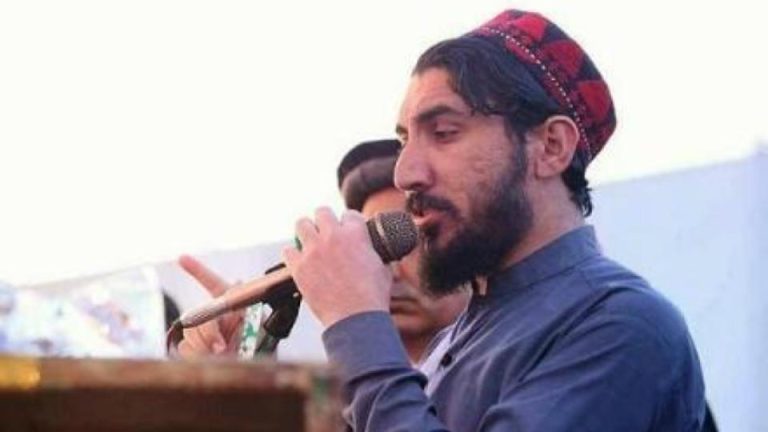
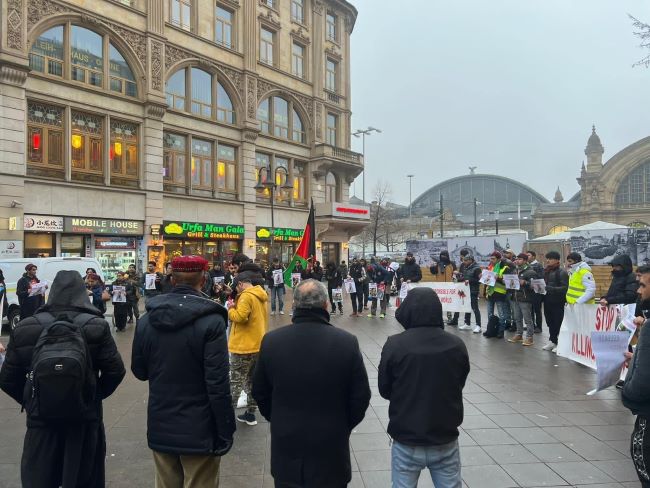
Pashtun activists all across the world are agitating against the brutal and indiscriminate firing at the convoy of Manzoor Pashteen and his subsequent arrest. In the latest development PTM Germany hit the streets protesting against his arrest.

In Frankfurt, PTM supporters carried out a long march raising slogans and banners demanding the release of PTM Chief Manzoor Pashteen. Along with that, they also emphasized the need to address the terrorist acts committed by FC and Pakistan Army against the Pashtuns. Notably, PTM Chief was arrested after deadly attack on him by Pakistan Army while he was going to participate in Turbat protest. He was to make an address to the protest which was organized against the extra-judicial killing of 4 innocent Baloch youth by the so-called Counter Terrorism Department.

After he was arrested, he was presented to court after three days only to be sent to 7-day physical remand. PTM has been protesting against his arrest and now the voice against Pakistan’s subversion and authoritarianism has escalated to a global scale. PTM Germany activists, while protesting in Frankfurt held the banner reading, “Pakistan is responsible for terrorism in the World”.


Furthermore, the protestors also went in front of the Pakistan consulate under the leadership of PTM Central Committee member Qahar Hamat.

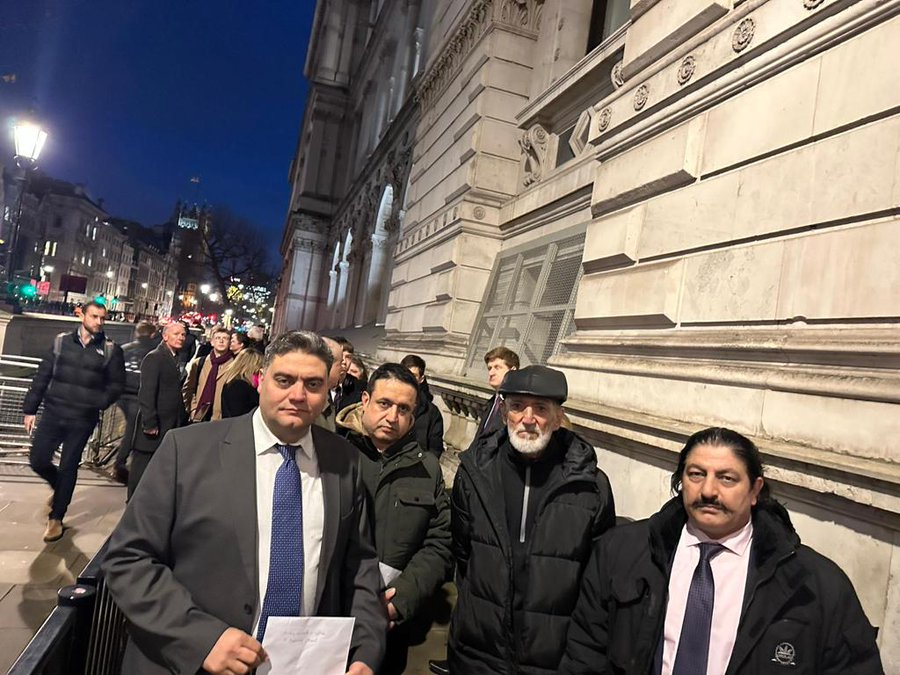
Meanwhile, UK arm of PTM reached out to House of Commons and British PM’s locale at 10 Downing Street. They submitted an official letter to the UK PM for the release of Manzoor Pashteen

PTM Activists At 10, Downing Street (Photo: Social Media)

Earlier on December 5, PTM Europe reached out to UN High Commissioner for Human Rights in Genva and appealed to consider the issue and condemn the assassination attempt on Manzoor Pashteen besides his immediate release.   

Blast at Hussainabad in Pakistan-occupied Balochistan injures four

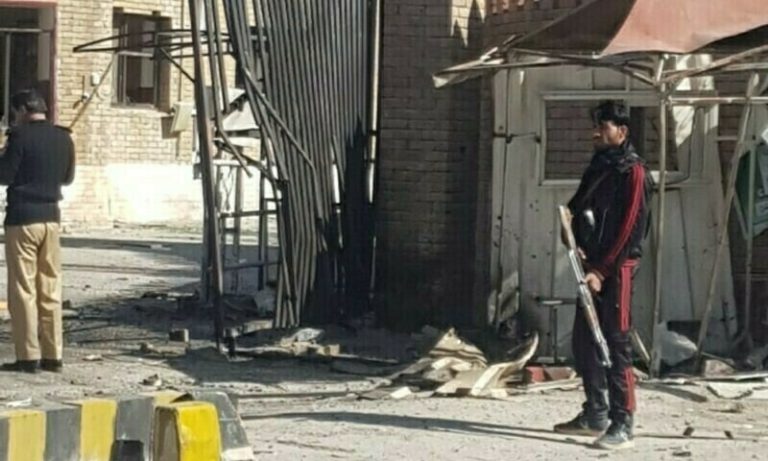
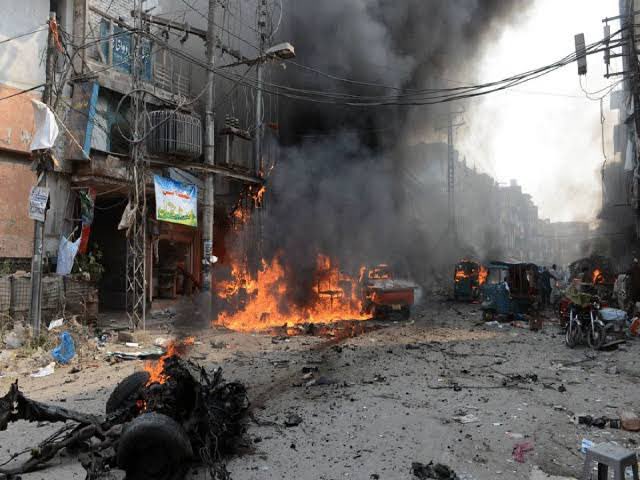
On 9 December, an explosion rocked the Hussainabad area of Sohbatpur district in Pak-occupied-Balochistan, injuring four people, including two police officers. The blast occurred at approximately 10:00 a.m.local time, near the camp of a construction company working on a local road project. Police officials believe the explosion was caused by a time bomb hidden underground.

All injured were promptly transferred to the district hospital. One of the injured succumbed to their injuries while receiving treatment. The remaining three individuals, including the injured police officers, are currently undergoing medical treatment. Security forces have launched a search operation to identify and apprehend those responsible for the attack. No group has claimed responsibility for the blast so far.

This incident serves as a stark reminder of the volatile security situation in Pak-occupied Balochistan. The region continues to be plagued by violence against innocent Baloch citizens. They suffer targeted killings at the hands of the Pak Army. The Pakistan Army is targeting and monitoring Baloch people, and anyone who has the potential to raise questions is either killed or abducted.

Jammu & Kashmir: Tightening the noose around terrorist facilitators

0

In his book titled ‘Pakistan at Knife’s Edge’, veteran Pakistani journalist notes that “Whether or not Pakistan won anything in the two Jihads of 1980’s [in Afghanistan] and 1990’s [in J&K], many Pakistani Generals certainly became extraordinarily rich and politically powerful.” This pithy but absolutely appropriate observation holds good for another category of unscrupulous people in J&K, the ones who are making a fortune by providing Pakistan based terrorist groups with ‘raw material’ in the form of recruits,as well as facilitating acts of terrorism by providing them information and logistics.

Those who belong to this ilk go by various names- while the establishment and security forces refer to them as ‘over ground workers’ [OGW], locals [till the mid-nineties at least] preferred to call them ‘Jamaatis’ [member of the Jamaat-e-Islami Jammu & Kashmir, [JIJK] a Srinagar based Islamic political party]. Not that all OGWs were [or are] members of JIJK, but it’s no secret that right from 1990 when it abandoned its vision of seeking peaceful resolution the Kashmir issue by joining Pakistan Army’s notorious spy agency Inter Services Intelligence [ISI] sponsored “armed struggle” bandwagon, JIJK has been the prime recruiter of terrorists in J&K.

In Arif Jamal’s well researched book ‘Shadow War- The Untold Story of Jihad in Kashmir’, the author recounts an interview in which Hizbul Mujahideen [HM] co-founder Master Asan Dar stated that JIJK’s endorsement of violence as a means to resolve the Kashmir issue was the result of its turf war with the JKLF terrorist group in order to “take a controlling role in the struggle”. So, besides strengthening informal relationships with smaller terrorist groups, Dar revealed that many JIJK leaders even took “direct roles in the activities of underground mujahideen”.

JIJK’s new found love for the “armed struggle” was however not impelled solely by the desire for supremacy. Au contraire, it was the lucre and power that made JIJK jettison its decade old principles and ISI quickly identified and exploited these weaknesses. Many analysts believe that buying loyalty of OGWs is one of the major expenditures in ISI fuelled proxy war in J&K, and considering how many locals with limited means have become wealthy overnight, this inference doesn’t appear to be either misplaced or exaggerated.

With lavish payments coming their way and without any fear of bodily harm or arrest, becoming a terrorist facilitator became a popular undertaking in J&K. Thanks to the backing provided by another Pakistani proxy called All Parties Hurriyat Conference [APHC] through protests and shutdowns, authorities would be compelled to release arrested OGWs. No wonder becoming an OGW was dream come true for those willing to sell their conscience without any qualms of pushing their own people into the jaws of death. So, while OGWs continue to flourish, the gullible youth they lure into joining terrorist ranks meet untimely deaths in encounters with security forces-it’s indeed a sad state of affairs spawned by greed.

This is why the government’s decision that “Each act of recruitment will be treated as an act of terror [and] people who incite or facilitate a youngster to join terrorist ranks will be equally liable, if not more,” announced recently by Director General of J&K police RR Swain is path breaking. Within their own social circles, OGWs are known to project themselves as highly principled individuals who are guided solely by their conscience, but the people aren’t fooled. However, few dare to blow the lid off their murky dealings since exposing OGWs invariably invites retribution from terrorists.   

Since they make a living by pushing the youth to their graves, OGWs are truly scum of the earth. With the intense hatred that locals have for such loathsome persons, the decision to view motivating and recruiting people into picking up the gun against the state as a terrorist act will certainly be well received by the public. Stern action against OGWs will also ensure that this key component of Pakistan’s proxy war is appropriately countered and this breed of vultures is made extinct if not completely exterminated.

It’s high time that OGWs in J&K are held accountable for their despicable deeds and the era of them enjoying the best of both worlds finally comes to an end!

Pashtun leader Manzoor Pashteen on a 7 day physical remand after arrest

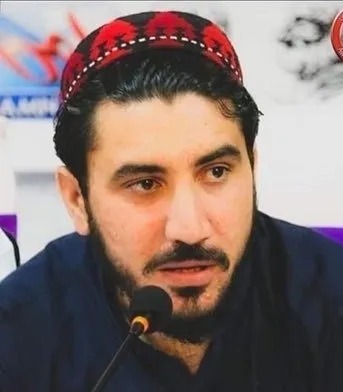
In a recent development at the anti-terrorism court in Islamabad, Manzoor Pashteen, a prominent pashtun rights leader and chief of the PTM (Pashtun Tahafuz Movement), faced a pivotal hearing concerning a case filed against him at Tarnol police station. The court, presided over by Pashtun Special Court judge Abul Hasnat Dzul-Qarnain, decided to grant a 7-day physical remand of the PTM leader to the police.

During the court proceedings, the police requested physical remand for Pashteen. However, the defense argued vehemently, asserting that consent does not amount to a physical demand of an individual. They highlighted the right to protest and referenced an incident in Pakistan occupied Balochistan where Manzoor Pashteen’s vehicle was fired upon, followed by his alleged abduction from the region. The defense emphasized that Pashteen was presented in court after a lapse of three days from the time of his kidnapping in Pak-occupied Balochistan.

Despite the defense’s arguments, the court ruled in favor of the police’s request, granting a 7-day physical remand of Manzoor Pashteen to further facilitate the ongoing investigation.

Kashmiri rappers sing paeans about Badalta Kashmir

0

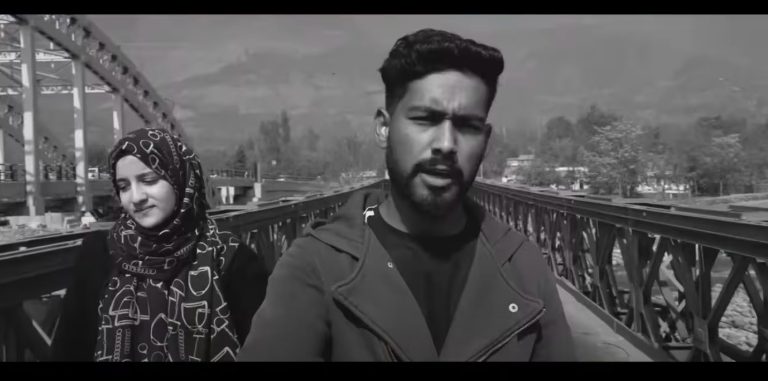
Humey is bat pe maan, Tiranga meri chati pe, ye hai meri pehchan, mein Kashmiri desh mera Hindustan, raps a dynamic young Kashmiri duo to celebrate the progressive strides in the valley and giving voice to the silent majority of Kashmiris who are proud of being Indian.

In the 3-minute rap song, ‘Badalta Kashmir’, MC Raa and Humaira (Ayyzie) lend their voices to the transformative story and echo cultural resurgence in Kashmir. The rap song, a fusion of passion and pride, speaks to the heart of a region reviving its old glory. It lists the positive changes in the valley, including the successful hosting of events from the G20 Summit, Smart City initiatives, ongoing digitalisation, and a sharp reduction in terrorism and hate crimes in the region among other slew of measures after the abrogation of Article 370.   

The Government of India and several netizens have shared the rap song praising the young Kashmiri duo for giving voice to the “New and Reformed Kashmir”.

Taking to Instagram, the GOI praised their efforts in a post that read, “The youth of Kashmir have spoken, that too through a energetic (sic) rap song! Listen to the song that encapsulates the emergence of #NayaKashmir.”

Former Cricketer Suresh Raina also lauded budding Kashmiri artists and their rapping talent.  

https://twitter.com/ImRaina/status/1731277783404605790

 The rappers point out that the land of ascetics, enlightened individuals, and penance for Rishis had been longing for its own anthem; hence, they crafted a symphony for Kashmir.

The upbeat rapper duo narrates the transformative story of Kashmir which is marked by a visible reduction in terrorism, no loss of innocent lives, and foiling the enemy’s plan to create a wedge among communities. Every beat marks a departure from the old gloomy scenario and ushering in a new dawn that cherishes its profound union with India. 

As the rap further unfolds it highlights that the change is not just political; it’s societal as well citing the testimony of female empowerment  – ladkiya pehni jeans koi nhi kehta unko Sharm kar kyunki ab kapdo se nhi judge karte character, ladkiya sabse agey in every sector.

The rap renders a beautiful blend of progress through effective governance, modernisation, and spirituality – tourism yaha peak per, peaceful rahi yatra (Amarnath), successful governance impact iska check kar, khatam ab corruption.

The rappers underscore the fact that it’s not just the surroundings that have changed, but the very emotions of the people have gone through a positive transformation. Now their aspirations are soaring higher and they don’t differentiate between a girl and a boy.

The song echoes the sentiment that if united, no mark of betrayal can prevail and the intention is no longer to divide into Pandit (Kashmiri Hindus) boy and Muslim boy. Now the positive change is bringing hope, empowering the land, improving lives lending a helping hand, and education, jobs, and industries are rising.

Uniting hearts, breaking down the divides, pandit boy, Muslims boy, ka nhi maqsad Hetra lith milit rajo gaddar ch nishan check my words nothing I put wrong if we have unity we are most strong.

The verses dive deep into the essence of Kashmir – the land of the Sufis’, the pride of Sadhus, the embryonic cord for Kashmiri Pandits, the place of brotherhood, and much more. The land is free, free to attain progress and prosperity, free from violence because India (Hindustan) stands firmly behind Kashmiris, the duo voices the so-far unconveyed emotions of the valley through their rap. 

Ye sufiyon ki yami, ye sadhu ka mann, ye pandito ki Jaan, ye bhaichare ka nam, ye majhabo ki shan . . . Kashmir ki awaaj hai ye, Kom hai azaad, vanish huye fasad ..kyunki mere sath khada mera Hindustan.

The energetic duo concludes the symphony of change and anthem of ‘Reformed Kashmir’ by noting that the pride and life of every Kashmiri reside with the Indian nation be it Hindu, Muslim, Sikh, or Christian. We (Kausar Hindustani) are proud of the fact that our chest adorns Tiranga and my identity is that I am a Kashmiri and India is my country. Notably, Kausar is an Arabic word to describe the abundance of something.

In every beat and every word, the Kashmiri rapper duo paints a portrait of the valley in metamorphosis, a rejuvenated land, striding towards progress and embracing a reinvigorated pride for national fervor.

PTM protests against the arrest of Manzoor Pashteen in Quetta

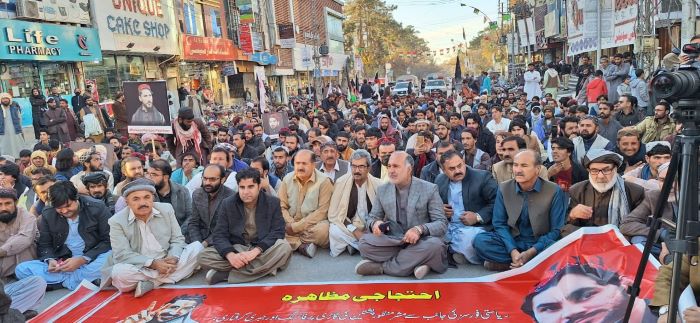
In a gathering at Quetta’s Manan Shaheed Chowk, the Pashtun Tahafuz Movement (PTM), alongside political allies ANP, PNAP, and NDM, voiced strong dissent over the arrest of PTM Chief Manzoor Pashteen. The PTM protest started in reaction to the absolute impunity of Pakistan Army and its puppet security forces. Recently Pakistan Army opened fire at Pashteen’s convoy, leading to his subsequent arrest.

Notably, PTM has been protesting in Chaman against the new rule of mandatory passport for border crossing since 21 October, which has hurt the innocent traders who traded across border and local peoples who have relatives on either side of the border. Meanwhile the tragic demise of four Baloch youth in an extra judicial encounter by the so-called Counter Terrorism Department (CTD), led to a protest in Turbat where huge number of Baloch participated in sit-in.

After extending full support to the Turbat protest from the plank of Chaman protest site, Pashteen announced to visit the Turbat protest in person. While he was on the move, Pakistan Amry opened indiscriminate fire at his convoy. The ambush culminated in the arrest of Manzoor Pashteen. They later took him to Islamabad.

This turn of events has incited heightened resentment among the Pashtun community against the Pakistan Army and its leadership. The arrest of Pashteen has fueled existing grievances, intensifying calls for accountability and fair treatment within the democratic framework.

BNM condemns attack on Pashtun leader Manzoor Pashteen’s convoy

The central spokesperson of the Baloch National Movement (BNM) conveyed congratulations to Manzoor Pashteen, a key figure in the Pashtun Tahafuz Movement, lauding his leadership in championing the rights of the Pashtun community. Emphasizing unity among oppressed communities, the spokesperson highlighted the shared struggles of the Baloch, Pashtun, and other marginalized groups within Pakistan.

In a demonstration of solidarity, the spokesperson emphasized the urgent need for a collective effort grounded in the acknowledgment of their historical and national identities. “The key to dignified lives for oppressed communities lies in a unified stance, mutual acknowledgment of suffering, and collaborative endeavours for justice,” the spokesperson emphasized.

Outlining Pakistan’s constraints on marginalised factions, the spokesperson likened the nation to a confining prison where freedom of movement is severely curtailed. Addressing recent events involving Manzoor Pashteen, the spokesperson condemned the firing at his convoy, signalling Pakistan’s unease toward potential joint resistance from marginalized communities.

The spokesperson shed light on the dominion of the Punjabi Army and the suppression faced by non-Punjabi ethnicities, highlighting restrictions imposed on the development of language and culture. Instances of curtailed academic activities and the forceful cancellation of events portrayed a consistent suppression of voices from marginalized regions.

Expressing profound concern over the recent attack on the Pashtun community, the spokesperson vehemently denounced the actions of the establishment. Reiterating the ongoing challenges faced by Baloch and Pashtun communities, the spokesperson emphasized their shared struggle against the Pakistani establishment’s attempts to erase their national identities.

POJK Council Secretariat employees lock secretariat building,demand salary restoration

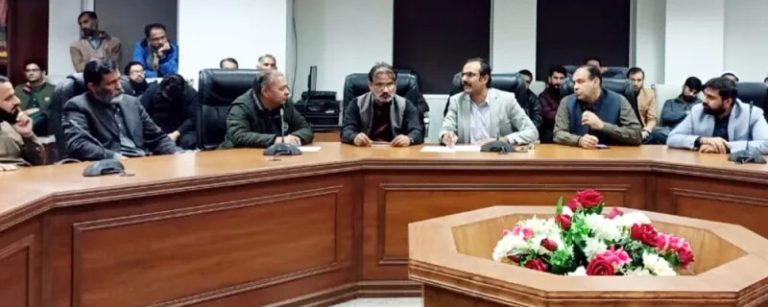
In a resolute display of unity and determination, employees of the Pakistan-occupied Jammu and Kashmir Council Secretariat situated in Islamabad staged a peaceful protest after enduring five months without receiving their salaries. The move, encompassing all employees from Grade 1 to 20, was a poignant plea for the restoration of their overdue payments.

Under the leadership of the Federal Employees Association President, Rahman Ali Bajwa, the employees locked down the Secretariat building, amplifying their demands for immediate action. Their protest, aimed at addressing a singular but critical point – the restoration of their salaries, garnered significant attention.

During the peaceful demonstration, the Secretary Admin and Section Officer General, alongside certain deputation employees, were barred from entering the premises by the participating employees. The collective effort was fueled by the solidarity displayed, with Rahman Ali Bajwa reaffirming unwavering support for their cause.

Unity amidst worsening condition

Expressing solidarity with the aggrieved Pak-occupied Jammu and Kashmir Council employees, Bajwa voiced his commitment to tirelessly advocate for their rights, emphasizing that their struggle resonated deeply with him. His impassioned speech delivered a clear message to both the Pakistani establishment and the POJK occupying government, urging immediate action to restore the withheld salaries of the POJK council employees.

Amidst the protest, distressing news emerged from the household of a senior council employee, where their landlord reportedly evicted their belongings and children onto the streets due to the non-payment of rent. The gravity of the situation took a toll on the employee’s health, necessitating immediate medical attention. In a heartening display of compassion, office employees rallied to support the affected family, providing care for the children while the employee received medical aid at the nearest hospital.

Subsequently, Rahman Ali Bajwa underscored the urgency of the situation, setting a three-day deadline for the restoration of salaries. Should their demands remain unmet, he announced plans to escalate the protest, potentially staging a demonstration in front of the Prime Minister Pakistan Secretariat. The Federal Employees Association pledged full participation in this intensified effort to secure the rights and salaries of the affected employees.

Nevertheless, Kashmiris have always endured persecution by the Pakistani establishment. The conditioned has only worsened with passing time. As of now, the basic amenities are being snatched from them. And any one related to POJK is being targeted. Few days ago, the staff of Muzaffarabad University carried out a protest rally for pending salary increment and now the council secretariat staff is protesting. This shows that Pakistani establishment is only working to somehow create tensions related to POJK.

IED blast in Peshawar injures 7, including children

In a devastating incident an IED blast in Peshawar injured 7 individuals, including 3 children. The blast took place at Warsak Road this morning. According to reports, the blast occurred close to Peshawar Public School around 9:10 am.

Warsak Superintendent of Police Arshad Khan revealed that the explosive, weighing four kilograms and concealed within a cemented block at the roadside, caused the destructive explosion. Disturbingly, those injured in the blast are reported to be between the ages of 11 and 23, none of them wearing school uniforms.

Law enforcement promptly cordoned off the area, initiating a thorough investigation into the alarming IED blast. Updates on this developing story will follow as the investigation progresses. As of now, no terrorist organisation has taken responsibility of attack neither it is clear who the target was.

Home Minister Amit Shah proposes amendments to J&K Reservation and Reorganisation Acts

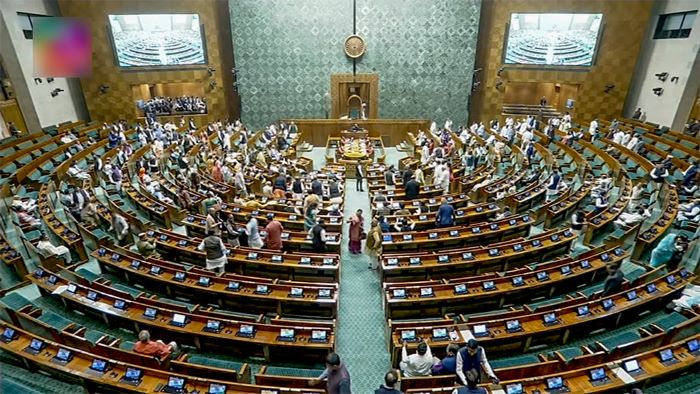
In a significant development, Home Minister Amit Shah has presented a bill in the Lok Sabha seeking amendments to both the Jammu and Kashmir Reservation Act of 2004 and the Jammu and Kashmir Reorganisation Act of 2019, signaling a critical juncture in regional governance and representation.

Jammu and Kashmir Reservation Act: The proposed amendments to the Jammu and Kashmir Reservation Act aim to broaden reservations in government positions and educational institutions. Notably, the bill introduces economic reservations for the economically weaker sections in commercial entities, emphasizing a more inclusive approach.

Reorganization Act: The suggested amendments propose an increase in seats within the Jammu and Kashmir Legislative Assembly from 83 to 90, along with specific allocations for Scheduled Castes and Scheduled Tribes to ensure better representation.

Among the notable highlights of these proposed amendments is the empowerment of the Governor to nominate members from displaced persons of Pakistan-occupied Jammu and Kashmir, emphasizing their inclusion in the Legislative Assembly. Additionally, the bill allows for the nomination of two members, including one woman, from Kashmiri migrants, aiming to safeguard their political and social rights while ensuring their adequate representation.

The term ‘migrant’ aligns with the Jammu and Kashmir Migrant Immovable Property Act of 1997, ensuring a clear and structured selection process.

Crucially, the Reorganization (Amendment) Bill proposes to reserve one-third of the total seats in the Jammu and Kashmir Legislative Assembly for women. The suggested changes are in harmony with the larger movement advocating for women’s representation in legislative bodies, akin to the Constitutional (106th Amendment) Bill, which aims for a 33% reservation for women in both the Lok Sabha and state legislatures.