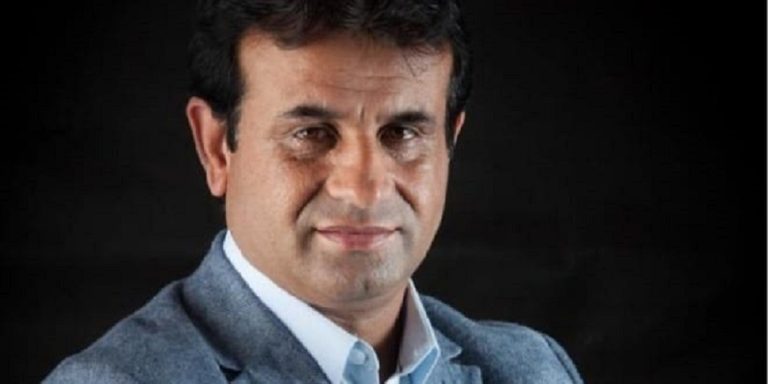
Pakistan is using all its modern military facilities to crush Baloch people and yet it has failed to do so. In this interview with Vivek Sinha, Editor-in-Chief News Intervention, Dr Naseem Baloch, chairman Baloch National Movement (BNM) explains how Balochistan is struggling for independence from Pakistan.
Vivek Sinha: You have taken over as BNM chairman at a time when Pakistani atrocities over Balochistan are increasing every day. How do you think can the Pakistani atrocities over Balochistan be stopped? Dr Naseem Baloch: Pakistan aims to eliminate the Baloch nation, Baloch civilization and the way of life as it had existed for centuries before Pakistan was created. In pursuing these goals it has, as a substance of state policy, adopted suppression, genocide (including cultural and lingual) and brutal oppression, and I do not expect them to stop as long as they are not satisfied that they have wiped out Baloch identity. On the other hand, Baloch are struggling against it to regain the independence of their land and also to preserve their culture, their identity and their way of life. As a result Pakistan is reacting, and has decided to go to extreme extent to silence the Baloch people into non-existence. In my view, Pakistan has failed to do so. Particularly as long as the resistance against Pakistani occupation exists, it is Pakistan’s failure. When a state with all the modern military powers reacts in a genocidal way to continue its occupation, it signifies its failure. Otherwise normal states talk and engage with nationalities in their domains. Recently we have seen how UK after a long colonial history had learned to handle its differences with the Scottish nation through a referendum instead of brute violence as it did in India. Pakistan has failed to convince our people, so it continues its brutalities, violence and thuggery, and evil manipulation of Balochistan’s political and cultural landscape to continue its occupation and exploitation of Baloch resources.
Vivek Sinha: What are your top priorities as the BNM Chairman? Dr Naseem Baloch: Organization in Balochistan and abroad, selection of experts in BNM and giving them responsibilities accordingly in different departments which we have created recently; for example, foreign, information, human rights and welfare departments. All of them have elected secretaries and are empowered to assign tasks to members. We have plans to further develop and structuralize these departments based on data collection, analyses and record keeping so that the upcoming leadership doesn’t lack records and continue to function smoothly. It eases our works. All departments have already started to function in a coherent manner according to the tasks and work in their respective fields. This would help us, in future, in our covert and overt diplomacy, including highlighting of Human Rights violations and other forms of public diplomacy which might help us in achieving our various goals on the world forums.
Vivek Sinha: Do you trust United Nations and other 5-star human rights organizations to pressurize Pakistan to stop “enforced disappearance” of innocent Baloch people? How do you plan to stop Pakistan’s infamous “kill and dump” policy towards innocent Baloch people? Dr Naseem Baloch: As I mentioned in the previous question that Pakistan is not going to stop its atrocities because it has failed as a state and on the other hand Baloch are not willing to compromise on their liberty. About UN and other Human Rights organizations, I would say that we have not lost hope although they are very much under the influence of a few world powers. Working Group of Enforced and Involuntary Disappearance of UN has visited Islamabad to know about the cases. Even though they were not allowed to enter Balochistan, yet Baloch representatives met them. As our people have lost hope in Pakistan and its justice system, our hope can be UN and other rights organizations. No matter, they have turned a blind eye to Balochistan at this crucial moment, but we hope our international protests, and the unending Pakistani brutality can compel the world including the UN to intervene. Other than that it also helps as a public diplomacy tool increasing awareness in the international community about the plight of the Baloch people and the evil character of Pakistan as an occupying country with no regards to human lives.
Vivek Sinha: What is the total number of Baloch who have been disappeared or killed by the Pakistani regime during the last 25 years? Dr Naseem Baloch: Balochistan is a very vast country. It is very difficult to gather all the information and data of all the persons who are extrajudicially killed or abducted. But, after so much obstacles and restrictions by Pakistan, various organizations including BNM have succeeded to enlist a large number of them. It is clear that thousands have been forcibly disappeared and extrajudicially killed. Pakistani officials have repeatedly accepted most of cases of missing persons one or other way, mostly on their own media platforms. Top government officials in the past including Federal Home Minister Aftab Sherpao, former Balochistan Home Minister Sarfaraz Bugti and Secretary Interior Akbar Hussain Durrani have openly acknowledged to the media about the arrest of more than 20,000 people during their tenures. Non of them was brought forward to the court. Similarly, a devastating high number of extrajudicial killings were registered, surpassing 7,000 dead tortured bodies. According to a BBC report, more than 1,000 Baloch were killed by state forces from 2011 to 2016 alone.
Vivek Sinha:A lady called Naila Qadri tours the world and lectures on human rights violation in Balochistan. Your comments. Dr Naseem Baloch: There are many people who are individually doing their part to highlight the plight of the Baloch people, including many non-Baloch friends. Everyone has the freedom of expression and freedom of speech and we respect that. Ms. Qadri is an experienced activist as she has been member of all the political parties of Balochistan at different occasions. If she has chosen to highlight the issue of grave human rights situation in Balochistan, it will be welcomed by everyone. But one has to be firm and consistent for an extended period on his or her stand, and political commitment so as the people could trust them.
Vivek Sinha:Naila Qadri has also formed a Balochistan government-in-exile. What is this whole story about? Do the people of Balochistan accept this govt-in-exile? Dr Naseem Baloch: I believe, for the sake of legitimacy, such a step would need consensus with the multiple stakeholders in Balochistan’s freedom struggle. It would only work when we start to develop a unified consensus and a minimal level of understanding among ourselves. Otherwise, I only see it as another unnecessary public statement put forward to serve the sentimental emotions of the Baloch public.
Vivek Sinha:Recently Saqib Baloch was murdered in Azerbaijan, which is similar to the murders of Sajid Hussain in Sweden and Karima Baloch in Canada. Do you see Pakistan’s hand in Saqib Baloch’s murder? Why do you think Pakistan is targeting Baloch diaspora? Dr Naseem Baloch: In every movement, diaspora has played vital roles. Baloch Diaspora is not huge and only recently it reached several countries. It is gathering and getting strength now. Pakistan knows that a large number of Baloch youth has escaped and has taken refuge in different countries. Pakistan also knows that after undeclared ban on Baloch political parties like the BNM and BSO, and the brutal kill and dump policy, many political activists went underground or abroad. The activists play vital role in motivating the resistance in Balochistan and are also engaged with other communities to bring about awareness about the Baloch independence struggle. This number and their work has worried Pakistan. So it has decided to target the diaspora. Saqib Baloch is one of them. Two of his brothers were targets of “enforced disappearance”, killed and dumped by the Pakistan Army for their activism. Saqib had managed to escape to Azerbaijan. He was targeted there.
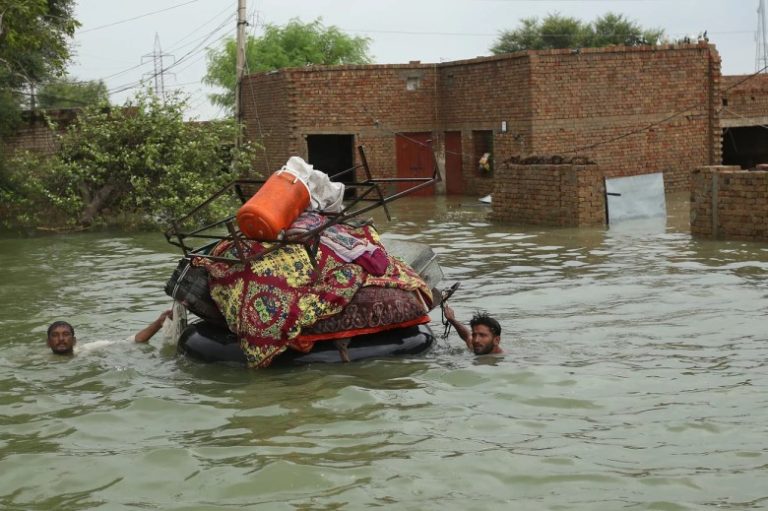
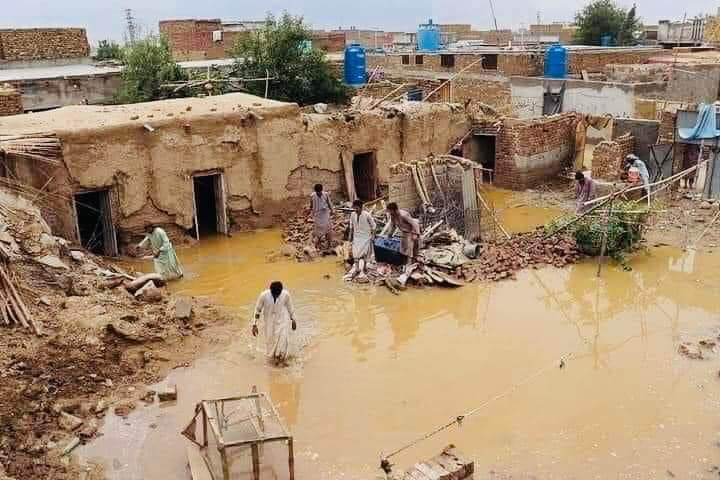
The massive floods that have hit Pakistan couldn’t have come at a more inopportune time. Struggling to keep its economy afloat by relying on the lifebuoy of international loans, the widespread destruction caused by the unprecedented deluge will only make its financial situation even more precarious. While the UN and international community has pledged financial assistance and material aid to ameliorate the suffering of beleaguered Pakistanis, the assistance provided can never be adequate to meet the actual requirement. So, these are indeed desperate times for Islamabad, which obviously call for desperate measures.
However, Islamabad has categorically ruled out importing vegetables from India, and though a very questionable decision, there’s nothing unusual about this. Yet, given the enormity of food shortage and its near empty coffers, one had expected Islamabad to act more responsibly, especially when its own people are facing a severe nutritional crisis. In fact, with Pakistan’s Finance Minister Miftah Ismail telling media that “If we have to import vegetables from India, we will do so”, it was assumed that Islamabad had finally decided to jettison its habitual [and self-defeating] approach of playing politics at its peoples’ expense.
Surprisingly, shortly after the Pakistani Finance Minister’s announcement, local media reported that Prime Minister Shehbaz Sharif had “virtually ruled out the possibility of vegetable imports from India” to overcome shortages caused by the devastating floods. The stated rationale for doing so is his unfounded allegation that “There wouldn’t have been problems about trading with India but genocide is going on there and Kashmiris have been denied their rights”, andhis preposterous claimthat “Kashmir has been forcibly annexed through abolition of Article 370”.
Thus, isn’t it evident that just like any other prime minister of Pakistan, Sharif too remains a hostage of the Kashmir issue? And his argument is indeed comical. While sermonising that “We shouldn’t be doing politics at this point,” hasn’t he himself done the same by saying, “… that minority rights are being subjugated in India.”? At a time when Pakistan’s foreign exchange reserves are the lowest in the country’s history and its people are facing a humongous food crisis, isn’t foreclosing one of the most cost-effective options of importing essential items from across the Radcliffe Line merely to display a concern for the non-existent ‘subjugation’ of minority rights in India, ill-timed and downright politicking?
This isn’t the only time that Islamabad has first mooted and then itself rejected the idea of importing commodities from India. Readers may recall that in March last year, Pakistan’s Economic Coordination Committee [EEC] announced that it had allowed its private sector to import sugar and cotton from India. Admitting that while high international sugar prices were very high, while “in India, the prices of sugar are much less as compared to Pakistan,” the then Pakistani Finance Minister Hammad Azhar announced that Pakistan had “decided to reopen sugar trade with India”, as this decision was “in the interest of the people.”
Since the rate of sugar in India then was nearly 20 percent less than that in Pakistan, the ECC’s decision to allow its import was undoubtedly, an extremely sound economic decision. However, the very next day, Pakistan’s Interior Minister Sheikh Rashid sprung a big surprise by announcing that “We have deferred the import of sugar and cotton till India reverses its decision of removal of Article 370 from Kashmir”. Ironically, this puerile decision came at a time when the then Prime Minister Imran Khan was waxing eloquent on how he was working overtime to better the lot of the common Pakistani by creating a “Naya Pakistan.”
So, just like Imran Khan, Shehbaz Sharif too has conveniently sacrificed the wellbeing of the ordinary Pakistani just to appease both the radical lobby and middlemen community. While Islamabad continues to take the high moral ground by projecting its decision of not importing commodities from India as proof of Islamabad’s solidarity with the pro separatist lobby in Kashmir, but unfortunately, the fact of the matter is that despite its vitriolic rhetoric, Indo-Pak trade continues unabated- thanks to middlemen based in the Middle East.
While on the one hand India is in a good position to export a wide variety of items, Pakistan on the other hand has the distinct disadvantage of being unable to meet its domestic demand for consumables. Thus, Islamabad’s embargo on direct trade with India allows middlemen to make a killing by facilitating import of a wide variety of commodities into Pakistan at price. Needless to say, it’s the consumer who ends up footing the exorbitant brokerage fees demanded by middlemen, which being a completely avoidable expenditure, lucidly reveals how public interests in Pakistan are being sacrificed on the altar of political expediency just to appease unscrupulous middlemen!
Proof of Islamabad’s unpardonable duplicity on trade with India can be gauged from credible media reports that while Islamabad has ruled out direct import of vegetables from India, it’s not averse to importing Indian vegetables sourced from Dubai. This is yet another example of Pakistan’s enduring proclivity for following a penny-wise and pound-foolish economic policy that has contributed to its financial woes. With Islamabad playing such puerile charades by splurging money for rhyme or reason as well as blindly chasing unattainable illusions, it seems unlikely that Pakistan will, in the foreseeable future, be able to extricate itself from the economic mess that it has not only precipitated itself, but unashamedly continues to further exacerbate!
Jeremy Boehm is a lover of music, art, and sports, and loves to spend time with his young family andanimals on his hobby farm on Vancouver Island. Jeremy has a BA with theological and youth ministry emphasis from Calgary and furthered his education in counselling with focus on addiction for a second career in supporting those with substance use disorders. Here we talk about the concepts, and evolution of the concepts of God, in the context of recovery.
Scott Douglas Jacobsen: So, here today with Jeremy Boehm, he is the son of Helmut Boehm. He (Helmut) is the founder, or father, of Wagner Hills. This is in Langley, British Columbia. I wrote an article with an addendum two or more years ago. You sent me the longest email I have ever received. A lot of it was quite vulnerable and confessional in a healthy way. I emailed back relatively rapidly within the last week.
So, you agreed to talk, specifically, the concepts of God that arise in the context of recovery for individuals. You come from, not personally but, knowing some of the communal aspects and individuals who have a theist belief; and they find it helpful in their process of recovering from forms of substance use and/or misuse. So, what concepts of God tend to arise? And how do these arise over time?
Jeremy Boehm: The concept of God, I see a lot goes by different names. If a person is comfortable, with religion, faith, Christianity, and comfortable with the particular religion they grew up with, they would call that concept God or the name they had been given for it by their religion. So often, in different places of substance use/abuse, there is a background of trauma. A person from trauma may not want to remember the source of that trauma and in that case may have some real discomfort with the names and the terminology they inherited that remind them of that trauma. Now, the construct, the theistic construct, may be the same. It may even be a good and benevolent construct.
Some who would report that they didn’t believe in God may still have, in the back of their head, a latent, benevolent, theistic construct. They believe in something or someone cares for them, loves them, made the universe a beautiful place, even if that God made the universe a place with both awful and good in it. They feel that there is something out there that’s kind. Some people will name that construct “the Universe.” For example, I often hear the phrase, “The Universe stepped in and intervened.” It really is a kind personification to say that. Some people will use the name “Creator.” Some people “God.” Some people will avoid the issue. I find that the construct is latent, though. What I mean by latent, is that when people are really in trouble, that’s when this construct comes out.
For example, what I’ve heard from some who would identify themselves as atheist, is that when they were in trouble they reached out. I remember someone saying, “I, actually, confessed that I did, in this deep, deep dark place, reach out. I didn’t even know who I was reaching out to.” Or somebody who had a near death experience at my current work, recently said “I didn’t grow up with this. I grew up with a form of First Nations belief. But actually, I had a vision of Jesus, but, I guess, that was the one in my near death experience who I gravitated towards, or reached out to.”
So this way of relating to God, or not, is also a way of dealing with the trauma. The ‘AA’ way to deal with this difficulty in ‘naming’ or identifying God for those who have had a negative experience that taints their view of God, either by their parents, or abuse, or abuse in the church, you name it, and there are so many reasons, to have negative feelings towards religion, whether it be the Residential Schools, yes, there is every conceivable reason to have something against religion, and to have negative feelings toward the people who claim to practice it, who hurt other people. The approach of AA is to allow the individual to give the deity their own name and definition. “You name your higher power. It can be your cat if you want. You can name it whatever you want. You call the shots” and this can disarm the experience of encountering the higher power, AA talks about. This approach, takes the pain and trauma that have been associated with God, and pushes that aside, and allows people to experience the higher power as they feel comfortable with it.
What I witness in the people I work with in my current work place and from before, is that a majority of them are open to pray, and even are very open about their belief in God, and even, to a certain degree, are evangelistic of each other. What I mean by open, is that they will say, “Let me pray for you,” or, “Here, let me tell you what this is about.” They will fight, occasionally, about the character of that God, or who goes to heaven, but the character of the god I mostly hear about, is benevolent. I also witness that over time, the people who had gone through step work, or who had gone through some kind of a healing process, start to lose the negative images, what I mean by that is, that I think there are incredibly negative images of religion out there of, maybe, a divine punisher.
I think this is what I wrote to you about. That as a teenager, I had a very negative of God as a divine punisher. And I don’t think this construct had anything to do with my parents, or anything else, maybe just teenage rebellion contributed to me forming this construct of a divine punisher. The interesting this I’ve witnessed, is, this image of a divine bad guy out to punish us, slowly melts away as people heal, open their hearts, or open their minds, or whatever you call it, in prayer, and they allow this higher power to just reveal Himself or Itself. They find the openness to allow this being to being to reveal the character, apart from all the religion and negative imagery that was attached with that construct.
As a person finds more revelation or experience with God, I find that they’re experience is a lot like my experience was, and they will come to the conclusion that, “Oh, this isn’t a bad guy. This person cares. There’s love. There’s healing. There’s something really good here.” They get more and more comfortable with more of the terminology, which, before, maybe they didn’t like. They might even feel comfortable enough to explore doctrine and theology and other things they avoided at first because of the painful associations.
Jacobsen: I’m seeing two core concepts here of a god, which, on the surface if not at a deeper level, are diametrically opposed. On the one hand, as you phrased it, a “divine punisher,” on the other hand, a god who cares and loves for you, created a world of good and evil, but there’s a certain redemptive quality within that world as well. So, it’s less a divine punisher, and more a divine carer and nurturer.
Boehm: Benevolent, yes, something good.
Jacobsen: Are there any other manifestations, apart from those two, which you have seen arise in others? For instance, you alluded to one individual who comes from a First Nations background with an unnamed band who, in their own experience – religious experience, had Jesus as the imagery and experience. Are there other ones outside of the image of Christ, a sort of First Nations spirituality as a transition into the image of Christ, or the ones mentioned earlier between a malevolent or a benevolent monotheistic god?
Boehm: If I understand what you’re asking here, certainly what I encountered, especially from First Nations people who had been in a recovery centre where I worked experienced spiritual experiences differently than I had. For example, a bald eagle would fly over and they would report that this was a deeply significant and spiritual experience that came from their culture. So the timing of that eagle flying at that particular moment signified something important about that timing. Certainly, the significance of smudges and of ritual, I think ritual plays a very big part in religion and, to a certain degree, spirituality. But I don’t see religion and spirituality as the same thing. I make a divide.
I’m not the one who came up with this definition of the difference. I don’t know if I can put it very clearly at this time of day. But how I would differentiate these two, is that religion is something humans do, as a ritual to influence god or the forces of nature to work to their desired goal, so that might look, for example like the sacrifice of an animal, or a certain kind of dance to influence the gods to bring rain, or something. Whereas, spirituality is connecting in relationship to the deity, and sometimes this is in a posture of powerlessness, but of intimacy. So that’s how I would define Spirituality and religion differently. Spirituality is connecting; religion is practicing a ritual with the motive of trying to achieve something. Yes, I differentiate religion versus spirituality.
I think, getting back to your question, ‘Are there other forms there?’ Yes, I think what we receive as our ‘early programming’, from our parents, creates an image in those early formative years that has a profound impact on the whether we later think of God as benevolent or evil. Maybe, our parents communicate that God is good, while, on the other hand, abusing us. Or, the reverse might be true. To answer your question, there’s all kinds of things that we develop in our brains at an early age, that later form our expectations of what we will find in God. Those early years, build the brain’s framework of what spirituality and religion is, and then we populate that framework through our experiences.
I think this book that I was describing to you, Finding God in the Waves (Finding God in the Waves: How I Lost My Faith and Found It Again Through Science), really describes that well in terms of the neurology of it. I am really interested in the brain, which I’m sure is obvious, through the correspondence we’ve had so far. But, as is probably also obvious, based on how I have expressed my beliefs to you, I take a step further than the biological formations of frameworks of beliefs that are planted in a child, because I actually believe in a discoverable reality of God. I see a measurable reality in spiritual things, just like I think you can measure the realities of math, physics, and science and so on. In the same way I think you can find ultimate reality about our origin and Creator, and the all the rest. That is if you are, open to the higher power, and warm up to the idea, and let down the guard, set aside the negativity, relax the resolve, or whatever you want to call it, that pushes back against the idea or construct of God. The biggest part of this process is to allow that deity to separate itself from all of the human experiences of evil that have populated our brain with a bad impression or a bad feeling towards that deity, then the deity’s true colours will come through.
You have to be open to it, and let that experience happen. But in the instance that a person is open, I believe a person can uncover the reality of the true deity, the Truth that I understand. That’s what I see in my experiences of working with those is substance use disorder, in the work place. I see that there are lots of names, and lots of understandings and experiences of God. It’s easy to forget that Jesus is already a name that has been translated to English. The term Christ is a Greek word. All of these names, are names that people adopt from themselves to refer to the deity. The way that I see Jesus, as we have named him in English, is that God came down to help us understand who He really is. Back then, people were incredibly confused about what religion just as they are today. Jesus served people and that confused them. He lived in a culture that expressed racism toward its neighbours. His main opponents were ‘Pharisees’. These were people who held a concept of religious law that raised their own social status and provided them with power. When God presents Himself in the world, He’s not rich. He doesn’t hold the stereotypical kingship that people expected him too, in how they interpreted prophecy. He role-modeled this, this serving, this washing of feet, this dying on a cross, this love.
He says, ‘This is what deity is like. Eventually, all the world will know my name.” They won’t know my name because I had the fastest meme or the most powerful seat of rulership in the world in a major empire. Of course, there are much more powerful kings and famous people. It is because over time, people will come to know that the way Jesus lived was the character of the deity. That character is what, I think, will come out to someone who is searching. And those who are in substance use disorder are often searching very deeply for God and using substances or alcohol to medicate or soothe the pain that they wish God could heal. I think what I’ve said about Jesus isn’t a politically-correct thing to say. When I speak this way, some will only hear it said that everyone else is wrong. It will sound intolerant to say that there is a singular reality in spirituality as there is in chemistry for example. It can be offensive to say that only one thing is true. Could it say that someone’s spirituality isn’t true? It’s much easier politically to be subjective, and even to relegate the whole topic to one that can only be considered subjective. I don’t spend time arguing that one religion is right. I say that religions may point to truth. Instead I look for Spirituality that connects us with God, and the way that I derive the character of that God, is that He visited us and showed us. It may be hard to accept for many people that Jesus was God visiting us. To be fair, there have been many charlatans over time who have made false claims and deceived people. How a person like me, or like a recovering substance user, comes to these conclusions about God, has a lot to do with personal experience, learning history, and taking their time as they ease into the ideas. I don’t assume that everybody will come to the same conclusions that I have because everyone has their own experiences that influence their views. I understand that not all people will find the truth, because their experiences or desires, may not lead them to truth. They may choose to deceive themselves. A refusal to believe in climate change might be a good example of that. It can be comfortable to remain ambiguous about certain realities in an effort to dodge responsibility. Or they may have been deceived on a mass scale, or by simply not having the experience to discover the truth.
Jacobsen: Does anyone come to a recovery program with a sense of a belief in a god, but an indifferent god?
Boehm: I’ve asked people that. I am interested in the character of God people perceive. I am particularly interested in the perception of God people have when they come from abuse. Some of my personal experience in counselling people from abuse is just felt impossibly tragic.
Particularly in some of the most horrific abuse, I was interested in what people’s view of the deity was. Is their view of deity affected? Well of course, yes. But the strange thing was, that for some reason, some of those with the most tragic abuse could still imagine a benevolence creator. I don’t know why. For whatever reason, it seems that tragic abuse from a parent can somehow co-exist with a benevolent view of God. I suppose, in the same way that people believe that good and evil both exist, people can believe in a good god even while their neighbours are burned alive. They are able to see how evil and good can be at war, and can both exist. So yes, some people who come to a recovery centre, and who are deeply wounded from trauma, have a view of a God who doesn’t care. What is so interesting to me, is those who despite their experiences believe in a benevolent one. It’s really puzzling.
Jacobsen: At the outset of the recorded conversation, at least, you mentioned trauma as the foundation for individuals coming to a lot of centres for recovery or programs for recovery? What are the common patterns of trauma experiences and – let’s say – symptomatology around it, even qualitative symptomatology?
Boehm: That’s a good question, Scott. I don’t feel qualified to answer it, to tell you the truth. I think my experience is too limited. I could tell you what I saw, but I feel like that is much too big a question – as are all of these questions really. I’d be arrogant [Laughing] to say I am qualified to answer anything your asking, other than to speak from my experiences. I feel like my counselling and my clinical experiences were much too brief to say what the common experience is for trauma. Only that, “Yes,” trauma was present in so many cases and was a root pain that was medicated through substances and through other behaviours too. It feels like just about every story included trauma. Here is an interesting part of the symptomatology. The consequences of using substances and alcohol to numb the pain, is that the use of these substances and the behaviour and consequences from the use create more consequences. So over time, the consequences of the medicating behaviour may be much greater than that of the trauma that lead to the behaviour. And in a few exceptions, I’ve heard that the addiction was the main problem-causer … in this person’s recollection, they didn’t have a painful beginning, but simply started drinking a lot at a very young age with their siblings and friends. Now of course, the neglect that could allow that to happen is a sort of abuse in itself, but this person perceived that they hadn’t begun to drink to cover pain, but that it was the alcohol from an early age that caused so many problems and so much pain. As I heard them, I wondered if it wasn’t both. A lot of people have a hard time remembering memories of trauma. They might blank out whole years or sections of life in their memory. But using alcohol and substances to numb pain is a very common means of dealing with pain, and in the perceived experience of a substance user, it is reported as a very effective way. There are other ways of course too.
The trauma story occurs generationally. The substance-use provides enough consequences in the family to cause disturbance, I think, in the oxytocin systems in a baby’s developing brain, so that rather than developing a sense of safety, of being soothed by the parent, the baby adapts with the instinct to self-soothe when the cycles of attachment with the parent are interrupted. Those basic cycles in the first 7 months, as I understand it, are so disturbed when a mother and father, are involved in substance use disorder. And this has the effect of passing this trauma from generation to generation. I think I am repeating myself, so I think I should finish with that.
Jacobsen: When an individual has an indifferentist experience of a god or a malevolent experience of a god, both grounded in a sense of trauma in personal history, or collective, how are they making that spirituality, as defined before as connecting to something, rather than human beings trying to get something, manifest itself in a recovery setting? How are they making that connection when it happens in their own words?
Boehm: Yeah! I think it’s a brilliant question. I think it starts with, “What do I got to do? How do I have to bargain to get out of here, out of trouble, out of my addiction, out of whatever? I’ll do whatever to get out of this misery.” It almost always starts with “Help. How can I bargain?” That might progress to “I don’t have anything to bargain with. I don’t have any currency that God or the deity needs. There’s nothing I can bargain with. Why should He be particularly put out, if I hurt myself, or if I do what he wants or not, or anything? Is there anything I can do that would effect the deity anyway? There’s nothing I can do, or not do, that is bargaining material.”
Once they realize their “bankruptcy,” I think, this is the AA term for this, where they might express, “I don’t have anything I can manipulate or control God with. I am not an equal player in this relationship.” Then when they come to this conclusion, there are a lot of uncomfortable feelings that go on. I think the discovery of benevolence happens in that moment. And it feels like being wrapped up in your parents loving arms, and forgiven [Laughing]. You’ve done something really naughty and can’t undo it. They forgive you and love you, only because you’re you and because they’re them, and because of love, not because you are able to fix the situation, or make it up to them, or do anything to bargain with them for forgiveness. You can’t argue your way into being forgiven.
I think the transition from the religious side of it – “I am doing this to get something” – to the spiritual connection side occurs when the person hits that point of bankruptcy or surrender where they admit “I am hopeless. I can’t do this. I have no traction.” Following this, they arrive at, as I described in my letter to you, the identity of considering themselves as a “child of God”. They gain the sense that they are worth something, simply because God made them and loves them, and not because they do anything, or perform anything, or become moral, or have the ability to flawlessly follow all the religious rules. They transition from wondering, “Am I moral enough?” to recognizing, “I am loved.” At that point, they experience the benevolence of God and I think, they make a deep connection.
Some people hear the voice of God or have visions, and gain a sense of communion, and connection with God, just like people might do with their closest human lovers or family. They’re like, “Wow, I am present with God. I feel His presence.”
Jacobsen: Is this transition from malevolence or indifference to benevolence a fulcrum grounded on, basically, conditionality to unconditionality of a sense of love?
Boehm: Yes, I think that’s it, Scott. That’s exactly what I was trying to say. When you find out, you can’t meet the conditions. What could you do anyway? Especially, you feel helpless with substance abuse disorder and the hopelessness of being unable to change. There is such a vivid picture of helplessness, especially there. I believe that the transition to a belief in God’s malevolence occurs just at that point when a person realizes that God’s love is unconditional, it’s the love, that’s the ticket. Well put.
Sam Vaknin is the author of Malignant Self-love: Narcissism Revisited as well as many other books and ebooks about topics in psychology, relationships, philosophy, economics, international affairs, and award-winning short fiction.
He is former Visiting Professor of Psychology, Southern Federal University, Rostov-on-Don, Russia and Professor of Finance and Psychology in SIAS-CIAPS (Centre for International Advanced and Professional Studies).
He was the Editor-in-Chief of Global Politician and served as a columnist for Central Europe Review, PopMatters, eBookWeb, and Bellaonline, and as a United Press International (UPI) Senior Business Correspondent. He was the editor of mental health and Central East Europe categories in The Open Directory and Suite101. His YouTube channels garnered 20,000,000 views and 85,000 subscribers.
*Previous interviews listed chronologically after interview.*
Scott Douglas Jacobsen: We will likely encounter moments of repetition in this session, in question and response.
What is free will? What are the ways in which “will” has been defined?
Prof. Shmuel “Sam” Vaknin: Free will is a useful fiction, akin to god or the afterlife: only agents with free will can be held morally responsible.
Free will comprises three conditions:
The ability to choose and act otherwise;
Having control over one’s choices and actions;
That the choice or act are rationally motivated.
The very concept of free will is founded on convenient delusions such as time or causation. Whereas teleology is prohibited in all sciences (we do not attribute purposeful actions to objects and animals, for example), it mysteriously permeates philosophy and more specifically the field of ethics.
Jacobsen: What are the ways in which “freedom” or “free” have been defined?
Vaknin: Both the external world and our internal one serve as constraints. We cannot choose or act contrary to Nature or to our individual nature. What we call “change” is merely a transition between different constrained systems. So, ostensibly, free will is a myth, there is no such thing.
But this (nomological) determinism is merely optical (compatibilism).
First: there are always other options. If someone puts a gun to your head, you are still possessed of free will: you can choose to die (in Judaism, one is instructed to choose death over certain transgressions).
But, much more importantly, in complex systems the number of probable pathways is so enormous that for all practical purposes we can never specify all or even most of them (chaos theory, quantum mechanics). So, these systems, as far as we are concerned appear to be either random (libertarianism) or subject to free will (agency).
Jacobsen: What definitions of “free”, “will”, and “free will”/“freedom of the will”, simply exist in the realm of fantasy, magical thinking?
Vaknin: Free will is a conscious, introspected experience of the degrees of freedom in systems (such as the brain or society). It reflects the fact that our ability to know the world is limited by our finitude and mortality. Our descriptions of reality – including psychological reality – will always be subject to uncertainty, indeterminacy, and apparent randomness.
This is a terrifying realization which produces anxiety (angst in existentialism). It implies an external locus of control (our lives are determined from the outside by forces and processes we will, in principle, never fathom).
We defend against such helplessness and lack of autonomy and agency by deceiving ourselves into believing that we are exempt from the laws of nature and can alter the ineluctable course of events.
But this is a useful bit of self-deception and should be perpetuated, for two reasons:
Owing to our inability to secure all the information about reality, free will feels real!
The concept of free will guarantees the acceptance of moral responsibility and the reactions to it: desert, blame, guilt, and restorative justice.
Jacobsen: Apart from simplistic considerations of semi-dismissal, as in it is fantasy or magical thinking, is free will a complex illusion of human perception and cognition, even a non-conscious mental trick bundled in the languages – everything: semiotics, semantics, syntax, etc. – used to speak about it, a mistake of intuition of sorts?
Vaknin: The BELIEF in the freedom to choose and do otherwise – regardless of whether such liberty is merely an illusion – is the foundation of human civilization, its core.
Free will is an article of FAITH. It is not a fact or a hypothesis or a theory. It has no truth value (it is not true or false). It has no ontological status, only an epistemological one.
Jacobsen: What forms of free will, if it’s to exist at all (or, indeed, not), would fit the modern scientific universes of discourse for plausibility?
Vaknin: None., Modern science is dichotomous: determinism vs. randomness (probability). In both approaches, there is no place for free will (the intelligibility problem). If the universe is preordained and predestined (by god) then, of course, individual agency is counterfactual. If, on the other hand, events are random, there can be no will, choice, or even action, all of which imply intentionality.
Some would say that Man converts the random into the structured, is an agent of increasing order in the universe. Humans, in this view, are AGENTS of determinism, the shapers of reality.
But this is just kicking the can down the road: we are still faced with randomness when human decisions and actions to increase order are undertaken.
Jacobsen: A bit of a longer question narrowed more within tighter philosophical and natural philosophical terms. In a prior session, you spoke on Kant, free will, nomic causation/causation by laws (of nature) versus causation resulting from free will, and a god. As has been phrased by others… “ultimately, of what is the will free?”
Vaknin: Every single philosopher I ever heard of grappled with the question of free will and tried to square the circle.
Ultimately, it is just a question of frame of reference and level of description. The same substance can be described as 2 atoms of hydrogen and one of oxygen – or as wet, cold water. Both descriptions are valid statements about the reality of the substance – and yet they have nothing in common.
From a fine-grained point of view of the world, free will is a confabulation. But from a human being’s perspective, free will is a very useful organizing and explanatory principle. It helps to make sense of life and provide one with self-efficacious guidance.
Jacobsen: Apart from the above mentioned considerations of the arguments, switching more to a personal voice, you have a ToE in Chronon Field Theory (CFT). Does free will exist in CFT?
Vaknin: Moreso than in any other theory I am aware of. The Chronon Field Theory is all about Time as a field of potentialities. As some of these potentials materialize, they constitute input – but not to any deterministic process! They feed into other probable processes or events. “Choice” and “action” easily fit into this view of the world because our brains are just another such superposition.
Jacobsen: With everything, and the stance on free will, any final words of anxiety and discomfort if not anguish and torture?
Vaknin: I don’t do comfort. But thank you for giving me the opportunity. Every thinker whose work I have read has miserably failed in tackling the thorny topic of free will. Even the most rigorous amongst them made fools of themselves in plain view.
Don’t go there. There is a thin line separating overthinking from inanity and overanalyzing from stupidity. Don’t cross it.
Free will exists the same way Harry Potter and Sherlock Holmes most definitely exist. It is real. It is a force to reckon with. It shapes our minds and lives. It exerts a huge influence on multiple spheres. What more do we need to know?
Shoshanim: Thank you, Doc.
Lily’s Lily: You are very welcome, survivor!
Previous Electronic ‘Print’ Interviews (Hyperlinks Active for Titles)
The movie “I, Robot” is a muddled affair. It relies on shoddy pseudo-science and a general sense of unease that artificial (non-carbon based) intelligent life forms seem to provoke in us. But it goes no deeper than a comic book treatment of the important themes that it broaches. I, Robot is just another – and relatively inferior – entry is a long line of far better movies, such as “Blade Runner” and “Artificial Intelligence”.
Sigmund Freud said that we have an uncanny reaction to the inanimate. This is probably because we know that – pretensions and layers of philosophizing aside – we are nothing but recursive, self aware, introspective, conscious machines. Special machines, no doubt, but machines all the same.
Consider the James bond movies. They constitute a decades-spanning gallery of human paranoia. Villains change: communists, neo-Nazis, media moguls. But one kind of villain is a fixture in this psychodrama, in this parade of human phobias: the machine. James Bond always finds himself confronted with hideous, vicious, malicious machines and automata.
It was precisely to counter this wave of unease, even terror, irrational but all-pervasive, that Isaac Asimov, the late Sci-fi writer (and scientist) invented the Three Laws of Robotics:
A robot may not injure a human being or, through inaction, allow a human being to come to harm.
A robot must obey the orders given it by human beings, except where such orders would conflict with the First Law.
A robot must protect its own existence as long as such protection does not conflict with the First or Second Laws.
Many have noticed the lack of consistency and, therefore, the inapplicability of these laws when considered together.
First, they are not derived from any coherent worldview or background. To be properly implemented and to avoid their interpretation in a potentially dangerous manner, the robots in which they are embedded must be equipped with reasonably comprehensive models of the physical universe and of human society.
Without such contexts, these laws soon lead to intractable paradoxes (experienced as a nervous breakdown by one of Asimov’s robots). Conflicts are ruinous in automata based on recursive functions (Turing machines), as all robots are. Godel pointed at one such self destructive paradox in the “Principia Mathematica”, ostensibly a comprehensive and self consistent logical system. It was enough to discredit the whole magnificent edifice constructed by Russel and Whitehead over a decade.
Some argue against this and say that robots need not be automata in the classical, Church-Turing, sense. That they could act according to heuristic, probabilistic rules of decision making. There are many other types of functions (non-recursive) that can be incorporated in a robot, they remind us.
True, but then, how can one guarantee that the robot’s behavior is fully predictable ? How can one be certain that robots will fully and always implement the three laws? Only recursive systems are predictable in principle, though, at times, their complexity makes it impossible.
This article deals with some commonsense, basic problems raised by the Laws. The next article in this series analyses the Laws from a few vantage points: philosophy, artificial intelligence and some systems theories.
An immediate question springs to mind: HOW will a robot identify a human being? Surely, in a future of perfect androids, constructed of organic materials, no superficial, outer scanning will suffice. Structure and composition will not be sufficient differentiating factors.
There are two ways to settle this very practical issue: one is to endow the robot with the ability to conduct a Converse Turing Test (to separate humans from other life forms) – the other is to somehow “barcode” all the robots by implanting some remotely readable signaling device inside them (such as a RFID – Radio Frequency ID chip). Both present additional difficulties.
The second solution will prevent the robot from positively identifying humans. He will be able identify with any certainty robots and only robots (or humans with such implants). This is ignoring, for discussion’s sake, defects in manufacturing or loss of the implanted identification tags. And what if a robot were to get rid of its tag? Will this also be classified as a “defect in manufacturing”?
In any case, robots will be forced to make a binary choice. They will be compelled to classify one type of physical entities as robots – and all the others as “non-robots”. Will non-robots include monkeys and parrots? Yes, unless the manufacturers equip the robots with digital or optical or molecular representations of the human figure (masculine and feminine) in varying positions (standing, sitting, lying down). Or unless all humans are somehow tagged from birth.
These are cumbersome and repulsive solutions and not very effective ones. No dictionary of human forms and positions is likely to be complete. There will always be the odd physical posture which the robot would find impossible to match to its library. A human disk thrower or swimmer may easily be classified as “non-human” by a robot – and so might amputated invalids.
What about administering a converse Turing Test?
This is even more seriously flawed. It is possible to design a test, which robots will apply to distinguish artificial life forms from humans. But it will have to be non-intrusive and not involve overt and prolonged communication. The alternative is a protracted teletype session, with the human concealed behind a curtain, after which the robot will issue its verdict: the respondent is a human or a robot. This is unthinkable.
Moreover, the application of such a test will “humanize” the robot in many important respects. Human identify other humans because they are human, too. This is called empathy. A robot will have to be somewhat human to recognize another human being, it takes one to know one, the saying (rightly) goes.
Let us assume that by some miraculous way the problem is overcome and robots unfailingly identify humans. The next question pertains to the notion of “injury” (still in the First Law). Is it limited only to physical injury (the elimination of the physical continuity of human tissues or of the normal functioning of the human body)?
Should “injury” in the First Law encompass the no less serious mental, verbal and social injuries (after all, they are all known to have physical side effects which are, at times, no less severe than direct physical “injuries”)? Is an insult an “injury”? What about being grossly impolite, or psychologically abusive? Or offending religious sensitivities, being politically incorrect – are these injuries? The bulk of human (and, therefore, inhuman) actions actually offend one human being or another, have the potential to do so, or seem to be doing so.
Consider surgery, driving a car, or investing money in the stock exchange. These “innocuous” acts may end in a coma, an accident, or ruinous financial losses, respectively. Should a robot refuse to obey human instructions which may result in injury to the instruction-givers?
Consider a mountain climber – should a robot refuse to hand him his equipment lest he falls off a cliff in an unsuccessful bid to reach the peak? Should a robot refuse to obey human commands pertaining to the crossing of busy roads or to driving (dangerous) sports cars?
Which level of risk should trigger robotic refusal and even prophylactic intervention? At which stage of the interactive man-machine collaboration should it be activated? Should a robot refuse to fetch a ladder or a rope to someone who intends to commit suicide by hanging himself (that’s an easy one)?
Should he ignore an instruction to push his master off a cliff (definitely), help him climb the cliff (less assuredly so), drive him to the cliff (maybe so), help him get into his car in order to drive him to the cliff… Where do the responsibility and obeisance bucks stop?
Whatever the answer, one thing is clear: such a robot must be equipped with more than a rudimentary sense of judgment, with the ability to appraise and analyse complex situations, to predict the future and to base his decisions on very fuzzy algorithms (no programmer can foresee all possible circumstances). To me, such a “robot” sounds much more dangerous (and humanoid) than any recursive automaton which does NOT include the famous Three Laws.
Moreover, what, exactly, constitutes “inaction”? How can we set apart inaction from failed action or, worse, from an action which failed by design, intentionally? If a human is in danger and the robot tries to save him and fails – how could we determine to what extent it exerted itself and did everything it could?
How much of the responsibility for a robot’s inaction or partial action or failed action should be imputed to the manufacturer – and how much to the robot itself? When a robot decides finally to ignore its own programming – how are we to gain information regarding this momentous event? Outside appearances can hardly be expected to help us distinguish a rebellious robot from a lackadaisical one.
The situation gets much more complicated when we consider states of conflict.
Imagine that a robot is obliged to harm one human in order to prevent him from hurting another. The Laws are absolutely inadequate in this case. The robot should either establish an empirical hierarchy of injuries – or an empirical hierarchy of humans. Should we, as humans, rely on robots or on their manufacturers (however wise, moral and compassionate) to make this selection for us? Should we abide by their judgment which injury is the more serious and warrants an intervention?
A summary of the Asimov Laws would give us the following “truth table”:
A robot must obey human commands except if:
Obeying them is likely to cause injury to a human, or
Obeying them will let a human be injured.
A robot must protect its own existence with three exceptions:
That such self-protection is injurious to a human;
That such self-protection entails inaction in the face of potential injury to a human;
That such self-protection results in robot insubordination (failing to obey human instructions).
Trying to create a truth table based on these conditions is the best way to demonstrate the problematic nature of Asimov’s idealized yet highly impractical world.
Here is an exercise:
Imagine a situation (consider the example below or one you make up) and then create a truth table based on the above five conditions. In such a truth table, “T” would stand for “compliance” and “F” for non-compliance.
Example:
A radioactivity monitoring robot malfunctions. If it self-destructs, its human operator might be injured. If it does not, its malfunction will equally seriously injure a patient dependent on his performance.
One of the possible solutions is, of course, to introduce gradations, a probability calculus, or a utility calculus. As they are phrased by Asimov, the rules and conditions are of a threshold, yes or no, take it or leave it nature. But if robots were to be instructed to maximize overall utility, many borderline cases would be resolved.
Still, even the introduction of heuristics, probability, and utility does not help us resolve the dilemma in the example above. Life is about inventing new rules on the fly, as we go, and as we encounter new challenges in a kaleidoscopically metamorphosing world. Robots with rigid instruction sets are ill suited to cope with that.
The work of an important, though eccentric, Czech-Austrian mathematical logician, Kurt Gödel (1906-1978) dealt with the completeness and consistency of logical systems. A passing acquaintance with his two theorems would have saved the architect a lot of time.
Gödel’s First Incompleteness Theorem states that every consistent axiomatic logical system, sufficient to express arithmetic, contains true but unprovable (“not decidable”) sentences. In certain cases (when the system is omega-consistent), both said sentences and their negation are unprovable. The system is consistent and true – but not “complete” because not all its sentences can be decided as true or false by either being proved or by being refuted.
The Second Incompleteness Theorem is even more earth-shattering. It says that no consistent formal logical system can prove its own consistency. The system may be complete – but then we are unable to show, using its axioms and inference laws, that it is consistent
In other words, a computational system can either be complete and inconsistent – or consistent and incomplete. By trying to construct a system both complete and consistent, a robotics engineer would run afoul of Gödel’s theorem.
In 1936 an American (Alonzo Church) and a Briton (Alan M. Turing) published independently (as is often the case in science) the basics of a new branch in Mathematics (and logic): computability or recursive functions (later to be developed into Automata Theory).
The authors confined themselves to dealing with computations which involved “effective” or “mechanical” methods for finding results (which could also be expressed as solutions (values) to formulae). These methods were so called because they could, in principle, be performed by simple machines (or human-computers or human-calculators, to use Turing’s unfortunate phrases). The emphasis was on finiteness: a finite number of instructions, a finite number of symbols in each instruction, a finite number of steps to the result. This is why these methods were usable by humans without the aid of an apparatus (with the exception of pencil and paper as memory aids). Moreover: no insight or ingenuity were allowed to “interfere” or to be part of the solution seeking process.
What Church and Turing did was to construct a set of all the functions whose values could be obtained by applying effective or mechanical calculation methods. Turing went further down Church’s road and designed the “Turing Machine” – a machine which can calculate the values of all the functions whose values can be found using effective or mechanical methods. Thus, the program running the TM (=Turing Machine in the rest of this text) was really an effective or mechanical method. For the initiated readers: Church solved the decision-problem for propositional calculus and Turing proved that there is no solution to the decision problem relating to the predicate calculus. Put more simply, it is possible to “prove” the truth value (or the theorem status) of an expression in the propositional calculus – but not in the predicate calculus. Later it was shown that many functions (even in number theory itself) were not recursive, meaning that they could not be solved by a Turing Machine.
No one succeeded to prove that a function must be recursive in order to be effectively calculable. This is (as Post noted) a “working hypothesis” supported by overwhelming evidence. We don’t know of any effectively calculable function which is not recursive, by designing new TMs from existing ones we can obtain new effectively calculable functions from existing ones and TM computability stars in every attempt to understand effective calculability (or these attempts are reducible or equivalent to TM computable functions).
The Turing Machine itself, though abstract, has many “real world” features. It is a blueprint for a computing device with one “ideal” exception: its unbounded memory (the tape is infinite). Despite its hardware appearance (a read/write head which scans a two-dimensional tape inscribed with ones and zeroes, etc.) – it is really a software application, in today’s terminology. It carries out instructions, reads and writes, counts and so on. It is an automaton designed to implement an effective or mechanical method of solving functions (determining the truth value of propositions). If the transition from input to output is deterministic we have a classical automaton – if it is determined by a table of probabilities – we have a probabilistic automaton.
With time and hype, the limitations of TMs were forgotten. No one can say that the Mind is a TM because no one can prove that it is engaged in solving only recursive functions. We can say that TMs can do whatever digital computers are doing – but not that digital computers are TMs by definition. Maybe they are – maybe they are not. We do not know enough about them and about their future.
Moreover, the demand that recursive functions be computable by an UNAIDED human seems to restrict possible equivalents. Inasmuch as computers emulate human computation (Turing did believe so when he helped construct the ACE, at the time the fastest computer in the world) – they are TMs. Functions whose values are calculated by AIDED humans with the contribution of a computer are still recursive. It is when humans are aided by other kinds of instruments that we have a problem. If we use measuring devices to determine the values of a function it does not seem to conform to the definition of a recursive function. So, we can generalize and say that functions whose values are calculated by an AIDED human could be recursive, depending on the apparatus used and on the lack of ingenuity or insight (the latter being, anyhow, a weak, non-rigorous requirement which cannot be formalized).
Author Bio
Sam Vaknin (http://samvak.tripod.com/mediakit.html) is the author of Malignant Self-love: Narcissism Revisited as well as many other books and ebooks about topics in psychology, relationships, philosophy, economics, international affairs, and award-winning short fiction.
He is former Visiting Professor of Psychology, Southern Federal University, Rostov-on-Don, Russia and Professor of Finance and Psychology in SIAS-CIAPS (Centre for International Advanced and Professional Studies).
He was the Editor-in-Chief of Global Politician and served as a columnist for Central Europe Review, PopMatters, eBookWeb , and Bellaonline, and as a United Press International (UPI) Senior Business Correspondent. He was the editor of mental health and Central East Europe categories in The Open Directory and Suite101. His YouTube channels garnered 20,000,000 views and 85,000 subscribers.
The Shiromani Gurdwara Prabandhak Committee (SGPC) has a significant role to play in the religious affairs of the Sikh community and all others who follow the tenets of Sikhism and Guru Nanak. The body was formed on 1 November 1925, by an Act passed by the British Government in India with a gazette notification from the then Government of Punjab.
The responsibilities of the SGPC include managing the finances, security, maintenance, property, (including historical artefacts and memorabilia) and religious aspects of the Sikh community. Even though there are many Gurdwara’s of historical importance outside Punjab that are not administered by the SGPC, yet, the organisation holds a lot of significance in the overall religious affairs of the Sikhs since it also appoints the Jathedar of the Akal Takth. It is the Church of the Sikh community.
As per the Gurdwara Act 1925, the SGPC has a General House comprising of 175 elected members and 15 nominated members, including five Jathedars of the Takht’s. Presently the number of representatives is 191. Elections are to be held every five years. The General House elects the office bearers including the President, Vice Presidents, General Secretaries and a 11-member executive body on a yearly basis.
The last elections of the General House were held in 2011 when the Shiromani Akali Dal (SAD) (Badal) got an absolute majority with a total of 182 members including elected and nominated; the voting electorate was – Punjab 52.69 Lakh; Haryana 3.37 Lakh; Himachal Pradesh 23000 and Chandigarh 11, 932. The 2011 election has been contested in court for non-inclusion of Sehajdhari Sikhs in the electoral rolls whose inclusion is now solicited by the process of law.
In December 2011, the Punjab and Haryana High Court nullified the polls and restored the voting rights of the Sehajdhari Sikhs by quashing the 2003 notification of the central government that disallowed them from voting.
In February 2012, the SGPC moved the Supreme Court challenging the High Court order. In 2016, the apex court, while reinstating the 2011 SGPC house, referred to an amendment by Parliament of the Sikh Gurdwaras Act, 1925, which denied voting rights to Sehajdhari Sikhs with retrospective effect from 2003. The case continues to be sub-judice. In the meantime, Haryana is demanding a separate Haryana Sikh Gurdwara Management Committee. A petition for the same is pending with the Supreme Court.
The outcome of these litigations is that after 2011 no elections of the General House of the SGPC have been held, instead, a new executive committee is being put in place in November every year.
The sub-judice status of the organisation paved the way for the SAD (Badal) and particularly the Badal family to gain full control over the SGPC. The process of the annual election of office bearers is supposed to be carried out with an unanimous verdict or voting through secret ballot. Sadly, from 2012 onwards, the SGPC members, who owe their allegiance to the Badal family, have been unanimously authorising the party President, Sukhbir Badal, to choose the entire team.
The end result is that SAD (Badal) and particularly its President Sukhbir Badal are frequently reported to be blatantly using the organisation for personal and party gains.
This situation has led to a lot of heartburn in the Sikh community that is the biggest casualty and has been left rudderless. Many senior leaders of the SAD (Badal) understood that they were getting alienated within the community. They attempted to set things right by insisting upon a more representative character of the SGPC as well as SAD (Badal), when this did not happen, many of the leaders left the SAD (Badal).
Now the detractors are joining hands to end the vice-like grip that the Badal family has over the SGPC. Sikh bodies like former Jathedar of Akal Takht Bhai Ranjit Singh led Panthic Akali Lehar (PAL), former Jathedar of Takht Damdama Sahib Giani Kewal Singh led Panthic Talmel Sangathan (PTS), Bhai Baldev Singh Wadala led Sikh Sadbhavana Dal (SSD) and Paramjit Singh Ranu led Sehajdhari Sikh Party (SSP) are the leading the campaign. Also in the fray is the SAD (Amritsar) which has suddenly gained prominence due to the victory achieved by Simranjit Singh Mann in the Sangrur constituency by-elections. A lot of the politics are now being played from foreign shores also.
These leaders and their organisations openly criticise the Badals and look for support to change the well entrenched system. Bhai Kewal Singh of PTS has announced his intention of contesting the elections. These organisations are loosely connected with each other but they do have a common objective of bringing in the required autonomy followed by transparency in functioning,
The long hiatus in the election process has come with another set of problems. As things stand, the organisation does not even have full representation. Some members have died, while the two – Sucha Singh Langah and Sharanjit Singh have resigned. The House presently consists of 165 members in addition to 15 co-opted members.
On 30 November 2021, Harjinder Singh Dhami, earlier honorary chief secretary of the organisation was elected as its president for the one-year term; his term is coming to an end in November this year, and there are many voices demanding elections of the General House before the next President is elected.
Even if elections of the General House are not held the presidential and office bearer elections will witness stiff opposition with a lot of flak being exchanged in the media, however, the SAD (Badals) is expected to prevail.
In the meantime, the registration of voters for the general house elections is underway under the scrutiny of the Chief Commissioner of Gurdwara Elections, Justice SS Saron. The chief commissioner has sent requisition for the necessary update of the electoral rolls by the field staff under various deputy commissioners. The process involves registration with the Patwari/designated person and then creation of a preliminary and final roll that stays relevant for five years. The election is held with prescribed democratic norms like filing of nomination, notification of symbols; notification of election agents, polling stations, etc. The chief commissioner has also stated that certain long standing demands like reduction of age of eligible candidates from 21 to 18 are under consideration.
The chief commissioner, however, clearly stated that elections will be held only when the central government gives the order and also in consideration of the many court cases presently underway. He has also admitted that his office lacks infrastructure and wherewithal to perform its duties since it has remained closed since 2011. Overall, from his statements it seems that the environment in terms of administration and judicial oversight would make holding of general elections in the near term a big challenge.
As things stand, there is a visible disconnect of the current SGPC dispensation with the Sikh Panth. Chaos prevails in the house proceedings of the SGPC due to the sharp rifts. There is an overwhelming perception that the office bearers are functioning only on their personal and vested interests. The SGPC also lost face by granting pardon to the Sirsa Dera chief, Gurmeet Ram Rahim who is now imprisoned for life in rape and murder cases.
The end result is that the Sikh Church is under severe stress and unable to fulfil its mandate especially propagation of Sikh tenets; many are deviating from the faith and veering towards Christianity.
It can be said with reasonable assurance that SAD will face stiff opposition in all future elections and selection processes that are held for the SGPC. The opposition is likely to join hands at the last minute to defeat the Badal family.
The government of India can play a big role in creating an environment where free and fair general election of the SGPC can be conducted. The first step would be to bid for expeditious decisions on the pending court cases; simultaneously the chief commissioner of election needs to be fully empowered to get the registration and electoral rolls in place, additions and modification can be made once the courts decide the pending cases.
Allowing the SGPC imbroglio to fester is a big risk not only for the Sikhs but also the Punjabi community in general since it holds a lot of faith in the Sikh Gurus and tenets. The grip that the Badal family has on both SAD (Badal) and the SGPC is definitely not in favour of the Sikh community and Sikh Church. A weakened Sikh Church in Punjab where the Sikh tenets are followed by all communities with equal fervour can have acute socio-political, economic and security implications in view of the border state status of Punjab and the enemy forces always on the look out to exploit chinks in the Punjabi armour. It is therefore hoped that the SGPC imbroglio will find an early resolution and all efforts will be made to usher transparency, commitment and efficiency in the functioning of this very important body.
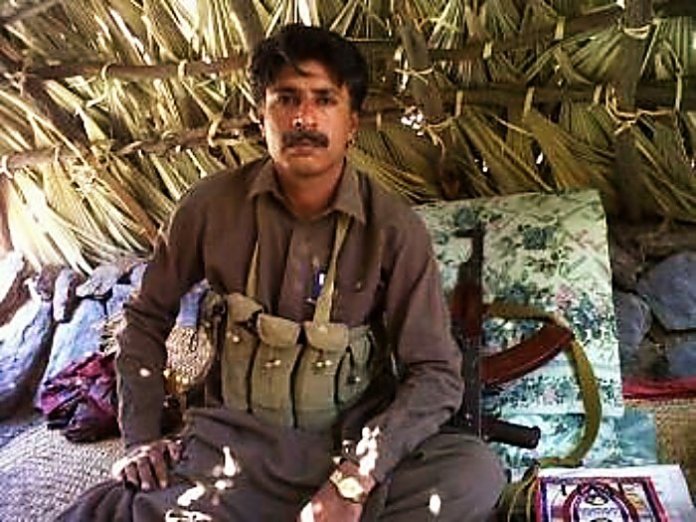
Baloch prominent leader and Balochistan Liberation Front’s head Dr. Allah Nazar Baloch, in a statement, reacted to Jamaat-e-Islami leader Maulana Hidayat-ur-Rehman’s exhortation to Baloch abstention from armed struggle.
“The apprehensions of the Baloch nationalists are turning out to be valid over time that Jamaat-e-Islami is the B-team of the Pakistani army trying to reiterate the history of Bangladesh in Balochistan. No doubt that these forces are nurtured by the Pakistani army and they create their narrative at the behest of the army”, stated Allah Nazar Baloch.
Further adding he said that Jamaat-e-Islami played a major role in the Bangladesh genocide. When Jamaat-e-Islami was unable to root in the Baloch secular society, they launched Maulana portraying him as a messiah using the platform of “Haq-Do-Tahreek” showing him as a secular Baloch, to create room for Jamaat-e-Islami indirectly in naive Baloch hearts, since he was highlighting the suffering of Baloch in a secular tone, many factions believed him. With time the Baloch secular slogan faded away and Jammat-e-Islam’s religious extremist and militant narrative came to the fore.
Nazar further said that “Maulana Hidayatur Rehman is publicly advising the Baloch youth that armed struggle is not the solution to any problem. We want to remind him, that this struggle is not for the cleaning of roads and drains, but for a great cause for which thousands of children of the Baloch nation have sacrificed. Like Jamaat-e-Islami or other parliamentary parties, they are not sacrificing their lives for privileges or mini projects in the local government system”.
Dr. Allah Nizar Baloch said that in the name of “Haqq do Balochistan” some Balochs are with Maulana but they should not consider it their authority and right to refrain Baloch from their armed struggle, it is Baloch fundamental and human right to choose any means of struggle.
The syntax is tortured, the grammar mutilated, but the message – sent by snail mail, telex, fax, or e-mail – is coherent: an African bigwig or his heirs wish to transfer funds amassed in years of graft and venality to a safe bank account in the West. They seek the recipient’s permission to make use of his or her inconspicuous services for a percentage of the loot – usually many millions of dollars. A fee is required to expedite the proceedings, or to pay taxes, or to bribe officials – they plausibly explain. A recent (2005) variant involves payment with expertly forged postal money orders for goods exported to a transit address.
It is a scam two decades old – and it still works. In September 2002, a bookkeeper for a Berkley, Michigan law firm embezzled $2.1 million and wired it to various bank accounts in South Africa and Taiwan. Other victims were kidnapped for ransom as they traveled abroad to collect their “share”. Some never made it back. Every year, there are 5 such murders as well as 8-10 snatchings of American citizens alone. The usual ransom demanded is half a million to a million dollars.
The scam is so widespread that the Nigerians saw fit to explicitly ban it in article 419 of their penal code. The Nigerian President, Olusegun Obasanjo castigated the fraudsters for inflicting “incalculable damage to Nigerian businesses” and for “placing the entire country under suspicion”.
“Wired” quotes statistics presented at the International Conference on Advance Fee (419) Frauds in New York on Sept. 17, 2002:
“Roughly 1 percent of the millions of people who receive 419 e-mails and faxes are successfully scammed. Annual losses to the scam in the United States total more than $100 million, and law enforcement officials believe global losses may total over $1.5 billion.”
According to the “IFCC 2001 Internet Fraud Report”, published by the FBI and the National White Collar Crime Center, Nigerian letter fraud cases amount to 15.5 percent of all grievances. The Internet Fraud Complaint Center (renamed the Internet Crime Complaint Center, or IC3) refers such rip-offs to the US Secret Service. While the median loss in all manner of Internet fraud was $435 – in the Nigerian scam it was a staggering $5575. But only one in ten successful crimes is reported, says the FBI’s report.
The IFCC provides this advisory to potential targets:
Be skeptical of individuals representing themselves as Nigerian or other foreign government officials asking for your help in placing large sums of money in overseas bank accounts.
Do not believe the promise of large sums of money for your cooperation.
Do not give out any personal information regarding your savings, checking, credit, or other financial accounts.
If you are solicited, do not respond and quickly notify the appropriate authorities.
The “419 Coalition” is more succinct and a lot more pessimistic:
“NEVER pay anything up front for ANY reason.
NEVER extend credit for ANY reason.
NEVER do ANYTHING until their check clears.
NEVER expect ANY help from the Nigerian Government.
NEVER rely on YOUR Government to bail you out.”
The State Department’sBureau of International Narcotics and Law Enforcement Affairs published a brochure titled “Nigerian Advance Fee Fraud”. It describes the history of this particular type of swindle:
“AFF criminals include university-educated professionals who are the best in the world for nonviolent spectacular crimes. AFF letters first surfaced in the mid-1980s around the time of the collapse of world oil prices, which is Nigeria’s main foreign exchange earner. Some Nigerians turned to crime in order to survive. Fraudulent schemes such as AFF succeeded in Nigeria, because Nigerian criminals took advantage of the fact that Nigerians speak English, the international language of business, and the country’s vast oil wealth and natural gas reserves – ranked 13th in the world – offer lucrative business opportunities that attract many foreign companies and individuals.”
According to London’s Metropolitan Police Company Fraud Department, potential targets in the UK and the USA alone receive c. 1500 solicitations a week. The US Secret Service Financial Crime Division takes in 100 calls a day from Americans approach by the con-men. It now acknowledges that “Nigerian organized crime rings running fraud schemes through the mail and phone lines are now so large, they represent a serious financial threat to the country”.
Sometimes even the stamps affixed to such letters are forged. Nigerian postal workers are known to be in cahoots with the fraudsters. Names and addresses are obtained from “trade journals, business directories, magazine and newspaper advertisements, chambers of commerce, and the Internet”.
Victims are either too intimidated to complain or else reluctant to admit their collusion in money laundering and fraud. Others try in vain to recoup their losses by ploughing more money into the scheme.
Contrary to popular image, the scammers are often violent and involved in other criminal pursuits, such as drug trafficking, According to Nigeria’s Drug Law Enforcement Agency. The blight has spread to other countries. Letters from Sierra Leone, Ghana, Congo, Liberia, Togo, Ivory Coast, Benin, Burkina Faso, South Africa, Taiwan, or even Canada, the United Kingdom, Oman, and Vietnam are not uncommon.
The dodges fall into a few categories.
Over-invoiced contract scams involve the ostensible transfer of amounts obtained through inflated invoices to the bank account of an unrelated foreign firm. Contract fraud or “trade default” is simply a bogus order accompanied by a fraudulent bank draft (or fake postal or other money order) for the products of an export company accompanied by demand for “samples” and various transaction “fees and charges”.
Some of the rackets are plain outlandish. In the “wash-wash” confidence trick people have been known to pay up to $200,000 for a special solution to remove stains from millions in defaced dollar notes. Others “bought” heavily “discounted” crude oil stored in “secret” locations – or real estate in rezoned locales. “Clearing houses” or “venture capital organizations” claiming to act on behalf of the Central Bank of Nigeria launder the proceeds of the scams.
In another twist, charities, academic institutions, nonprofit organizations, and religious groups are asked to pay the inheritances tax on a “donation”. Some “dignitaries” and their relatives may seek to flee the country and ask the victims to advance the bribe money in return for a generous cut of the wealth they have stashed abroad.
“Bankers” may find inactive accounts with millions of dollars – often in lottery winnings – waiting to be transferred to a safe off-shore haven. Bogus jobs with inflated wages are another ostensible way to defraud state-owned companies – as is the sale of the target’s used vehicle to them for an extravagant price. There seems to be no end to criminal ingenuity.
Lately, the correspondence purports to be coming from – often white – disinterested professional third parties. Accountants, lawyers, directors, trustees, security personnel, or bankers pretend to be acting as fiduciaries for the real dignitary in need of help. Less gullible victims are subjected to plain old extortion with verbal intimidation and stalking.
The more heightened public awareness grows with over-exposure and the tighter the net of international cooperation against the scam, the wilder the stories it spawns. Letters have surfaced recently signed by dying refugees, tsunami victims, survivors of the September 11 attacks, and serendipitous US commandos on mission in Afghanistan.
Governments throughout the world have geared up to protect their businessmen. The US Department of Commerce, for instance, publishes the “World Traders data Report”, compiled by US embassy in Nigeria. It “provides the following types of information: types of organizations, year established, principal owners, size, product line, and financial and trade references”.
Unilateral US activity, inefficacious collaboration with the Nigerian government some of whose officials are rumored to be in on the deals, multilateral efforts in the framework of the OECD and the Interpol, education and information campaigns – nothing seems to be working.
The treatment of 419 fraudsters in Nigeria is so lenient that, according to the “Nigeria Tribune”, the United States threatened the country with sanctions if it does not considerably improve its record on financial crime by November 2002. Both the US Treasury’s Financial Crime Enforcement Network (FINCEN) and the OECD’s Financial Action Task Force (FATF) had characterized the country as “one of the worst perpetrators of financial crimes in the world”. The Nigerian central bank promises to get to grips with this debilitating problem.
Nigerian themselves – though often victims of the scams – take the phenomenon in stride. The Nigerian “Daily Champion”, proffered this insightful apologia on behalf of the ruthless and merciless 419 gangs. It is worth quoting at length:
“To eradicate the 419 scourge, leaders at all levels should work assiduously to create employment opportunities and people perception of the leaders as role models. The country’s very high unemployment figure has made nonsense of the so-called democracy dividends. Great majority of Nigerian youthful school leaver’s including University graduates, are without visible means of livelihood… The fact remains that most of these teeming youths cannot just watch our so-called leaders siphon their God-given wealthy. So, they resorted to alternative fraudulent means of livelihood called 419, at least to be seen as have arrived… Some of these 419ers are in the National Assembly and the State Houses of Assembly while some surround the President and governors across the country.”
Some swindlers seek to glorify their criminal activities with a political and historical context. The Web site of the “419 Coalition” contains letters casting the scam as a form of forced reparation for slavery, akin to the compensation paid by Germany to survivors of the holocaust. The confidence tricksters boast of defrauding the “white civilization” and unmasking the falsity of its claims for superiority. But a few delusional individuals aside, this is nothing but a smokescreen.
Greed outweighs fear and avarice enmeshes people in clearly criminal enterprises. The “victims” of advance fee scams are rarely incognizant of their alleged role. They knowingly and intentionally collude with self-professed criminals to fleece governments and institutions. This is one of the rare crimes where prey and perpetrator may well deserve each other.
Author Bio
Sam Vaknin (http://samvak.tripod.com/mediakit.html) is the author of Malignant Self-love: Narcissism Revisited as well as many other books and ebooks about topics in psychology, relationships, philosophy, economics, international affairs, and award-winning short fiction.
He is a former Visiting Professor of Psychology, Southern Federal University, Rostov-on-Don, Russia and Professor of Finance and Psychology in SIAS-CIAPS (Centre for International Advanced and Professional Studies).
He was the Editor-in-Chief of Global Politician and served as a columnist for Central Europe Review, PopMatters, eBookWeb , and Bellaonline, and as a United Press International (UPI) Senior Business Correspondent. He was the editor of mental health and Central East Europe categories in The Open Directory and Suite101. His YouTube channels garnered 20,000,000 views and 85,000 subscribers.
Author: Sam Vaknin, Ph.D., former Visiting Professor of Psychology, Southern Federal University, Rostov-on-Don, Russia and Professor of Finance and Psychology in CIAPS (Centre for International Advanced and Professional Studies).
The narcissist regards his children in 6 ways:
1. As extensions of himself —> Possessiveness —-> Breach of BOUNDARIES —> abuse (incl. SEXUAL)
2. Mere avatars of his inner constructs
3. Pawns in the grand chess game that is his Life
4. Props in the theatre of his False Self (sources of narcissistic supply) —> Idealization-Devaluation and Approach-Avoidance —> Trauma
6. Bargaining chips in the inevitable showdown with a hostile world as reified by his reneging, traitorous spouse.
In a custody battle, all these figments of his psychodynamics need to be adroitly addressed to achieve a favorable outcome as far as the children involved are concerned.
Reckless behaviour, substance abuse, immunity, and sexual deviance —> DANGER to welfare and life of child
MANIPULATIVE NARCISSISTIC PARENTS
Conflict between ENVY and MERGING (owing to DEPENDENCE on source of SUPPLY)
Control Mechanisms:
1. Guilt-driven (“I sacrificed my life for you”)
2. Codependent (“I need you, I cannot cope without you”)
3. Goal-driven (“We have a common goal which we can and must achieve”)
4. Shared psychosis or emotional incest (“You and I are united against the whole world, or at least against your monstrous, no-good father …”, “You are my one and only true love and passion”)
5. Explicit (“If you do not adhere to my principles, beliefs, ideology, religion, values, if you do not obey my instructions, I will punish you”).
IN CUSTODY BATTLES
PROXY WARS —> Uses them to tempt, convince, communicate, threaten, and otherwise manipulate
Abuse by Proxy
Co-opting
Some offenders – mainly in patriarchal and misogynist societies – co-opt their children into aiding and abetting their abusive conduct. The couple’s children are used as bargaining chips or leverage. They are instructed and encouraged by the abuser to shun the victim, criticize and disagree with her, withhold their love or affection, and inflict on her various forms of ambient abuse.
COPING
The Children
Most victims attempt to present to their children a “balanced” picture of the relationship and of the abusive spouse. In a vain attempt to avoid the notorious (and controversial) Parental Alienation Syndrome (PAS), they do not besmirch the abusive parent and, on the contrary, encourage the semblance of a normal, functional, liaison. This is the wrong approach. Not only is it counterproductive – it sometimes proves outright dangerous.
Children have a right to know the overall state of affairs between their parents. They have a right not to be cheated and deluded into thinking that “everything is basically OK” – or that the separation is reversible. Both parents are under a moral obligation to tell their offspring the truth: the relationship is over for good.
Younger kids tend to believe that they are somehow responsible or guilty for the breakdown of the marriage. They must be disabused of this notion. Both parents would do best to explain to them, in straightforward terms, what led to the dissolution of the bond. If spousal abuse is wholly or partly to blame – it should be brought out to the open and discussed honestly.
In such conversations it is best not to allocate blame. But this does not mean that wrong behaviors should be condoned or whitewashed. The victimized parent should tell the child that abusive conduct is wrong and must be avoided. The child should be taught how to identify the warning signs of impending abuse – sexual, verbal, psychological, and physical.
Moreover, a responsible parent should teach the child how to resist inappropriate and hurtful actions. The child should be brought up to insist on being respected by the other parent, on having him or her observe the child’s boundaries and accept the child’s needs and emotions, choices, and preferences.
The child should learn to say “no” and to walk away from potentially compromising situations with the abusive parent. The child should be brought up not to feel guilty for protecting himself or herself and for demanding his or her rights.
This kind of stalker believes that he is in love with you and that, regardless of overwhelming evidence to the contrary, the feeling is reciprocal (you are in love with him). He interprets everything you do (or refrain from doing) as coded messages confessing your eternal devotion to him and to your “relationship”. Erotomaniacs are lonely, socially-inapt people. They may also be people with whom you have been involved romantically (e.g., your former spouse, a former boyfriend, a one night stand) – or otherwise (for instance, colleagues or co-workers).
Best coping strategy
Ignore the erotomaniac. Do not communicate with him or even acknowledge his existence. The erotomaniac clutches at straws and often suffers from ideas of reference. He tends to blow out of proportion every comment or gesture of his “loved one”. Avoid contact – do not talk to him, return his gifts unopened, refuse to discuss him with others, delete his correspondence.
Feels entitled to your time, attention, admiration, and resources. Interprets every rejection as an act of aggression which leads to a narcissistic injury. Reacts with sustainedrage and vindictiveness. Can turn violent because he feels omnipotent and immune to the consequences of his actions.
Make clear that you want no further contact with him and that this decision is not personal. Be firm. Do not hesitate to inform him that you hold him responsible for his stalking, bullying, and harassment and that you will take all necessary steps to protect yourself. Narcissists are cowards and easily intimidated. Luckily, they never get emotionally attached to their prey and so can move on with ease.
By far the most dangerous the lot. Lives in an inaccessible world of his own making. Cannot be reasoned with or cajoled. Thrives on threats, anxiety, and fear. Distorts every communication to feed his persecutory delusions.
“The paranoid’s conduct is unpredictable and there is no ‘typical scenario’. But experience shows that you can minimise the danger to yourself and to your household by taking some basic steps.
If at all possible, put as much physical distance as you can between yourself and the stalker. Change address, phone number, email accounts, cell phone number, enlist the kids in a new school, find a new job, get a new credit card, open a new bank account. Do not inform your paranoid ex about your whereabouts and your new life. You may have to make painful sacrifices, such as minimise contact with your family and friends.
Even with all these precautions, your abusive ex is likely to find you, furious that you have fled and evaded him, raging at your newfound existence, suspicious and resentful of your freedom and personal autonomy. Violence is more than likely. Unless deterred, paranoid former spouses tend to be harmful, even lethal.
Be prepared: alert your local law enforcement officers, check out your neighbourhood domestic violence shelter, consider owning a gun for self-defence (or, at the very least, a stun gun or mustard spray). Carry these with you at all times. Keep them close by and accessible even when you are asleep or in the bathroom.
Erotomanic stalking can last many years. Do not let down your guard even if you haven’t heard from him. Stalkers leave traces. They tend, for instance, to ‘scout’ the territory before they make their move. A typical stalker invades his or her victim’s privacy a few times long before the crucial and injurious encounter.
Is your computer being tampered with? Is someone downloading your e-mail? Has anyone been to your house while you were away? Any signs of breaking and entering, missing things, atypical disorder (or too much order)? Is your post being delivered erratically, some of the envelopes opened and then sealed? Mysterious phone calls abruptly disconnected when you pick up? Your stalker must have dropped by and is monitoring you.
Notice any unusual pattern, any strange event, any weird occurrence. Someone is driving by your house morning and evening? A new ‘gardener’ or maintenance man came by in your absence? Someone is making enquiries about you and your family? Maybe it’s time to move on.
Teach your children to avoid your paranoid ex and to report to you immediately any contact he has made with them. Abusive bullies often strike where it hurts most – at one’s kids. Explain the danger without being unduly alarming. Make a distinction between adults they can trust – and your abusive former spouse, whom they should avoid.
Ignore your gut reactions and impulses. Sometimes, the stress is so onerous and so infuriating that you feel like striking back at the stalker. Don’t do it. Don’t play his game. He is better at it than you are and is likely to defeat you. Instead, unleash the full force of the law whenever you get the chance to do so: restraining orders, spells in jail, and frequent visits from the police tend to check the abuser’s violent and intrusive conduct.
The other behavioural extreme is equally futile and counterproductive. Do not try to buy peace by appeasing your abuser. Submissiveness and attempts to reason with him only whet the stalker’s appetite. He regards both as contemptible weaknesses, vulnerabilities he can exploit. You cannot communicate with a paranoid because he is likely to distort everything you say to support his persecutory delusions, sense of entitlement, and grandiose fantasies. You cannot appeal to his emotions – he has none, at least not positive ones.
Remember: your abusive and paranoid former partner blames it all on you. As far as he is concerned, you recklessly and unscrupulously wrecked a wonderful thing you both had going. He is vengeful, seething, and prone to bouts of uncontrolled and extreme aggression. Don’t listen to those who tell you to ‘take it easy’. Hundreds of thousands of women paid with their lives for heeding this advice. Your paranoid stalker is inordinately dangerous – and, more likely than not, he is with you for a long time to come.”
Though ruthless and, typically, violent, the psychopath is a calculating machine, out to maximise his gratification and personal profit. Psychopaths lack empathy and may even be sadistic – but understand well and instantly the language of carrots and sticks.
Best coping strategy
Convince your psychopath that messing with your life or with your nearest is going to cost him dearly. Do not threaten him. Simply, be unequivocal about your desire to be left in peace and your intentions to involve the Law should he stalk, harass, or threaten you. Give him a choice between being left alone and becoming the target of multiple arrests, restraining orders, and worse. Take extreme precautions at all times and meet him only in public places.
IN COURT
It is very easy to “break” a narcissist in court by revealing facts that contradict his inflated perception of his grandiose (false) self; by criticising and disagreeing with him; by exposing his fake achievements, belittling his self-imputed and fantasized “talents and skills”; by hinting that he is subordinated, subjugated, controlled, owned or dependent upon a third party; by describing the narcissist as average, common, indistinguishable from others; by implying that the narcissist is weak, needy, dependent, deficient, slow, not intelligent, naive, gullible, susceptible, not in the know, manipulated, a victim, an average person of mediocre accomplishments.
Pro-independence leader and head of Balochistan Liberation Front, Dr. Allah Nazar Baloch, in a media statement, said that Pakistani colonial projects and colonial systems are causing an apparent increase in flood disasters in Balochistan. On the one hand, dilapidated infrastructures and corrupt projects were washed away, on the other hand, more than a dozen dams could not withstand the water pressure and collapsed due to substandard construction. Balochistan has been submerged in floods but the media and the Pakistani political system do not utter a single word about the flood and the victims. The alienation and apathy are sufficient to prove that our status is merely that of a slave nation and Pakistan’s interest lies in our resources and land only. The Pakistani political system considers the Baloch nation as just a colony.
The Baloch leader said that the devastation of the flood is undefinable. He said “we appeal to the international aid organizations and countries to come forward and support the flood victims”. Rehabilitation and helping the Baloch are not among Pakistan’s priorities. However, Pakistan will try definitely to collect international donations in the name of torrent catastrophes in Balochistan. It is to be made clear that if international organizations and countries trust Pakistan and provide aid, it will be manipulated to expand the ongoing military barbarity instead of victims’ recuperation.
He further said that if Pakistan receives any help from international donors it would be used against the Baloch nation. The earthquake of 2013 in the Awaran and Kech districts is a clear example of it. The victims of the earthquake have not been rehabilitated even today and they are living a miserable life. All the international aid received by Pakistan was spent on the military forces in Balochistan so that they continue the atrocities, Baloch genocide, and occupation of the Baloch people. They are perpetrating grave violations of human rights by playing with human lives. Balochs living in mountains and remote areas have been forcibly relocated and settled near military camps. In this way, The livelihood of hundreds of families, including agriculture and herding, is being destroyed.
Dr. Allah Nazar Baloch added that in 2013, Pakistan received a large amount of aid from multiple countries for the earthquake victims, but instead of rehabilitating the victims, they were quickly used for military operations and suppressing people. In such a situation, the Baloch nation should find a way unitedly to assist and support each other on its own. The international community is requested to send their organizations to Balochistan instead of providing funds to Pakistan so that the work of rehabilitation of the victims can be accomplished appropriately.
He further said that the families of the missing persons in the same floods and stormy rains are protesting in front of the Governor’s House in Quetta for thirty-seven days to recover their loved ones. Their demands are also genuine and simple like to be informed about their loved ones or to present them before the courts. But they are not even presenting them in the courts, because the army knows that enforced abducted people are not involved in any criminality. Therefore, the establishment cannot produce any evidence against them. They are punished just for being Baloch. In such a situation, the international community and the United Nations need to intervene so that Pakistan can be held accountable for the heinous crime of enforced disappearance.
We use cookies on our website to give you the most relevant experience by remembering your preferences and repeat visits. By clicking “Accept All”, you consent to the use of ALL the cookies. However, you may visit "Cookie Settings" to provide a controlled consent.
This website uses cookies to improve your experience while you navigate through the website. Out of these, the cookies that are categorized as necessary are stored on your browser as they are essential for the working of basic functionalities of the website. We also use third-party cookies that help us analyze and understand how you use this website. These cookies will be stored in your browser only with your consent. You also have the option to opt-out of these cookies. But opting out of some of these cookies may affect your browsing experience.
Functional cookies help to perform certain functionalities like sharing the content of the website on social media platforms, collect feedbacks, and other third-party features.
Performance cookies are used to understand and analyze the key performance indexes of the website which helps in delivering a better user experience for the visitors.
Analytical cookies are used to understand how visitors interact with the website. These cookies help provide information on metrics the number of visitors, bounce rate, traffic source, etc.
Advertisement cookies are used to provide visitors with relevant ads and marketing campaigns. These cookies track visitors across websites and collect information to provide customized ads.
Necessary cookies are absolutely essential for the website to function properly. These cookies ensure basic functionalities and security features of the website, anonymously.
Cookie
Duration
Description
cookielawinfo-checkbox-analytics
11 months
This cookie is set by GDPR Cookie Consent plugin. The cookie is used to store the user consent for the cookies in the category "Analytics".
cookielawinfo-checkbox-functional
11 months
The cookie is set by GDPR cookie consent to record the user consent for the cookies in the category "Functional".
cookielawinfo-checkbox-necessary
11 months
This cookie is set by GDPR Cookie Consent plugin. The cookies is used to store the user consent for the cookies in the category "Necessary".
cookielawinfo-checkbox-others
11 months
This cookie is set by GDPR Cookie Consent plugin. The cookie is used to store the user consent for the cookies in the category "Other.
cookielawinfo-checkbox-performance
11 months
This cookie is set by GDPR Cookie Consent plugin. The cookie is used to store the user consent for the cookies in the category "Performance".
viewed_cookie_policy
11 months
The cookie is set by the GDPR Cookie Consent plugin and is used to store whether or not user has consented to the use of cookies. It does not store any personal data.