Home Blog Page 257

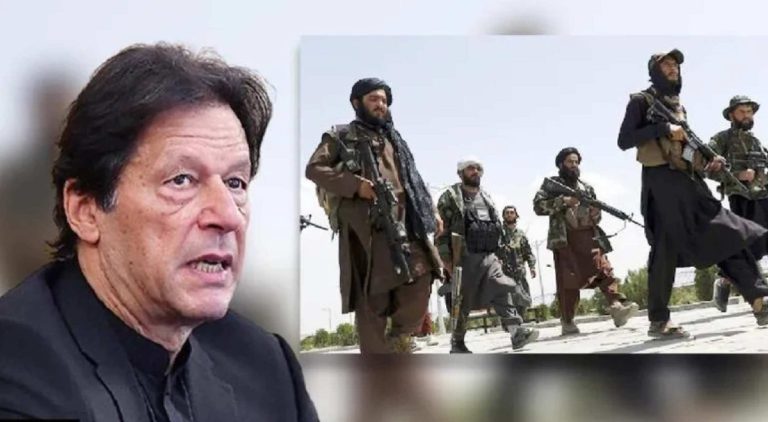
Pakistan: A hapless victim of terrorism or Rawalpindi’s machinations?

Islamabad is constantly complaining about being a ‘victim’ of terrorism and available data on terrorist acts in Pakistan and resultant loss of life and property due to the same indisputably validates this lament. However, despite its repeated allegations that terrorist violence in Pakistan is being orchestrated by India and even churning out countless dossiers, which according to Islamabad contain “irrefutable evidence” to buttress its claim, these haven’t evoked any meaningful response from the international community, and the reason is simple. Contrary to Islamabad’s allegation of global apathy and vested interests of the international community, the fact is that despite being high on rhetoric, its claims aren’t supported by any credible evidence.

A classic example of Islamabad’s wild insinuations concerns the anti-Pakistan Tehreek-e-Taliban Pakistan [TTP] terrorist group operating from Afghan soil. Prior to fall of the Hamid Karzai government, Islamabad consistently accused India’s spy agency Research and Analysis Wing [RAW] and its Afghan counterpart National Directorate of Security [NDS] of sponsoring and TTP and using it as a proxy to orchestrate terrorist activities in Pakistan.

Soon after Pakistan’s protégé Afghan Taliban seized power in Afghanistan, the then Information Minister of Pakistan Fawad Chaudhry proudly told the media during a press conference that “We should be satisfied to know with regards to the TTP, that for the first time the process of Indian funding [to them]-which had been going on for a long time, has ended and at this time they [TTP] are in disarray.”

A confident Chaudhry even went on say that “These internal challenges are not a problem for us. Our [belief] is that once they [TTP] stop having a funding stream from abroad, then it will be a big blow for them and the rest we will handle ourselves.” However, rather than suffering a “big blow”, as the interior minister had prognosed, attacks on security forces by TTP escalated to unprecedented levels and “the rest we will handle ourselves” assurance turned out to be a damp squib as just two months after the fall of Kabul the then Prime Minister of Pakistan Imran Khan announced that Islamabad was negotiating a peace deal with this terrorist group.

Considering the fact that this terrorist group is besides being responsible for killing and injuring hundreds of army men and para military force personnel, also has the blood of 134 innocent students and 14 staff members of Army School Peshawar on its hands, this is indeed an iniquitous compromise.

Another typical example of blaming others for its internal woes can be seen Islamabad’s insistence that Washington is responsible for the problem of terrorism bedevilling Pakistan. In his tedious 2019 United Nations General Assembly [UNGA] speech, the then Prime Minister Imran Khan said, “We joined the war against the Soviets in the 1980’s. Pakistan trained the then “mujahedeen” at the behest of the Americans. The Soviets called them terrorists; the Americans called them freedom fighters. Then, Soviets left, US packed up. Come 9/11, now that we had to join the US and tell the same indoctrinated people this is now not a “freedom struggle” but “terrorism”. They suddenly saw us as collaborators; it became a nightmare & they turned against us”.

However, while Khan’s heart-breaking narration was a statement of facts, albeit craftily worded and that it failed to evoke any sympathy was obvious for several reasons. Firstly, America’s proxy war against the erstwhile Soviets in Afghanistan by using radicalised Islamists was both immoral and meant only to serve its own vested interests, but yet, Pakistan’s dictator cum President Gen Zia ul Haq still allied with Washington. Isn’t it a fact that Gen Zia did so just for the sake of making a fast buck through lavish US aid packages- remember the famous 1981 “peanuts” barb that he used to express displeasure over a $250 US million aid package?

Secondly, it’s inconceivable that an experienced military man like Gen Zia was unaware that by serving as Washington’s minion and taking on the responsibility of radicalising and training ‘mujahideen’ at behest of the Americans, he was actually turning the country into a veritable breeding ground for religious indoctrination. To say that locals were insulated from the consequences of this dangerous indoctrination initiative that spawned religious extremism is, to say the least, denying the obvious.

Former Pakistan President and ex-army chief Gen Pervez Musharraf’s revelation endorses this inference. In an interview given to Der Spiegel in 2010, he proudly admitted that “We poisoned [the minds of] Pakistani civil society for 10 years when we fought the Soviets in Afghanistan in the 1980s. It was jihad and we brought in militants from all over the world, with the West and Pakistan together in the lead role.” [ Emphasis added]. Now with a man who’s served both as President and army chief himself admitting that under Gen Zia’s dictatorship, even ordinary Pakistanis were radicalised, would it still be appropriate to apportion full blame on Uncle Sam for the country’s woes?

Gen Musharraf also admitted that “In 1979, we had introduced religious militancy in Afghanistan to benefit Pakistan, and to push the Soviets out of the country. We brought Mujahideen from all over the world, we trained them and supplied weapons to them. We trained the Taliban, sent them in.” Not only this, Musharraf also went on to concede that “They were our heroes. Haqqani was our hero. Osama bin Laden was our hero. Ayman al-Zawahiri was our hero [Emphasis Added].” With such radicalised entities admittedly being hailed as heroes in Pakistan, it’s not at all surprising that religious fundamentalism took root and spread like wild fire there.

In saying that after 9/11, “we had to join the US [in the war against terror” [Emphasis added], Khan deliberately misled the international community. Thefact of the matter is that the US didn’t elbow-twist Islamabad into doing so – au contraire, it was the then Pakistani President Gen Musharraf, who in return for generous doles from the US, himself decided to jump onto America’s bandwagon! Most importantly, what Khan didn’t disclose in his impassioned UNGA speech was that how did terrorists, who were merely ‘hired guns’ and had no independent means of sustenance, not only survive but even flourish after the US left Afghanistan till 9/11. The answer to this puzzle isn’t too hard to find as Khan himself did so during his 2019 US visit by admitting that we still have about 30,000-40,000-armed people who have been trained and fought in some part of Afghanistan or Kashmir”! [Emphasis added].

Furthermore, by contending that after joining the US led war on terror, Pakistan had to “… tell the same indoctrinated people [terrorists] this is now not a freedom struggle but terrorism”, Khan has willy-nilly confessed that the terrorists who fought the Soviets in Afghanistan in the garb of ‘mujahideen’ were being patronised and sustained by none other than the Pakistan army’s spy agency Inter-Services Intelligence! He left no doubts whatsoever on this issue when he admitted that “They [terrorists] suddenly saw us as collaborators; it became a nightmare and they turned against us.” [Emphasis added].  

While Rawalpindi nurtured terrorist groups as ‘strategic assets’ for waging proxy wars against its neighbours and encouraged radicalisation and sectarianism, the people of Pakistan were the ones who had to face the blow-back of this perverse strategy in the form of terrorist attacks. So, in retrospect, it’s abundantly clear that Pakistan army’s ‘strategic asset’ policy of romancing terrorist groups has expectedly backfired. Surprisingly, it didn’t learn a lesson and brazenly disregarding Washington’s requests, continued to host Afghan Taliban for a decade with high hopes that after coming to power, Kabul would serve as an obedient and pliable vassal of Pakistan.

To doubly ensure this, Director General of ISI Lt Faiz Hameed air dashed to Kabul and secured influential government positions for members of Rawalpindi’s favourite and most trusted protégé- the Haqqani network. However, after coming to power, Afghan Taliban refused to play ball, and one of the first things it did was to disregard Islamabad’s request and unconditionally release more than 2,300 TTP fighters imprisoned in Afghanistan jails, including the terrorist group’s former deputy chief Maulvi Faqir Mohammad.

However, this was not all. To indicate its disagreement regarding the alignment of Pak-Afghan border as delineated by the Durand Line, the Taliban uprooted portions of the border fencing erected by Pakistan army and even used physical force to stop the fencing work. After Pakistan army carried trans-border strikes against TTP terrorist facilities inside Afghanistan, Chief Taliban spokesman Zabihullah Mujahid hit back and warned its erstwhile benefactor by saying “Islamic Emirate of Afghanistan [IEA] calls on the Pakistani side not to test the patience of Afghans on such issues and not repeat the same mistake again, otherwise it will have bad consequences.”

 While feeling sorry for the people of Pakistan who are facing the consequences of Rawalpindi’s self-debilitating ‘strategic asset’ strategy, one is reminded of Hillary Clinton, who as US Secretary of State had way back in 2011 during her Pakistan visit, cautioned the Pakistani establishment by saying, “You can’t keep snakes in your backyard and expect them only to bite your neighbours”, and predicting that “You know, eventually those snakes are going to turn on whoever has them in the backyard”.

So, rather than blaming foreign forces for acts of terrorism inside Pakistan, it would do Islamabad a lot of good to look inwards and rein-in Rawalpindi. However, since Pakistan “is not a country with an army, but an army with a country”, this could indeed be a tall order!

Dr Allah Nazar warns phony Baloch ‘nationalists’ against joining hands with China

Balochistan’s pro-independence leader and head of Balochistan Liberation Front (BLF) Dr. Allah Nazar Baloch castigated the self-proclaimed Baloch ‘nationalists’ Dr Abdul Malik and Sanaullah for meeting the Chinese ambassador with a request for early completion of CPEC (China Pakistan Economic Corridor).

“The meeting of so-called ‘nationalists’ Dr. Abdul Malik, Sanaullah along with parliamentary parties’ representatives with the Chinese ambassador and request for completion of CPEC is clear evidence that these parliamentary parties are prepared to collaborate and be utilized by China along with Pakistan in plundering Balochistan’s national resources and genocide of Baloch. After receiving their prices these parties can cross any extent and pawn the Baloch national destiny,” said Dr Allah Nazar Baloch angrily.

Dr Allah Nazar further explained that the said “success of CPEC and its related projects” has only brought death for the Baloch. “Baloch opposed these projects and have paid a huge price. Thousands of Baloch families and inhabitants near the CPEC route have been forced to migrate, hundreds of people have been killed and thousands are in the dungeons of the state. Yet the parliamentary parties are shamelessly not only advocating the project but offering services to China and Pakistan for further bloodshed,” Dr Allah Nazar seethed with anger.

He urged the phony nationalists to remember that all CPEC’s projects are incomplete or half complete due the Balochistan’s resistance of Pakistan and China. It is only due to this Baloch resistance that these forces want to complete CPEC no matter what it costs the Baloch nation.

Dr. Allah Nazar Baloch added that these parliamentary parties have not learnt from history. “They will face the heavy cost of this omission because the Baloch nation never forgets or forgives the traitors of motherland. It is written on the wall and the so-called “nationalists” must take note of it.”

Kashmir fights back on targeted killings

0

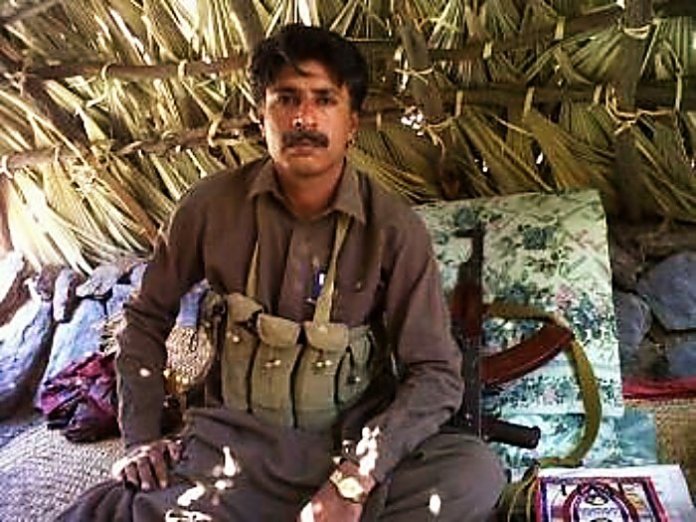
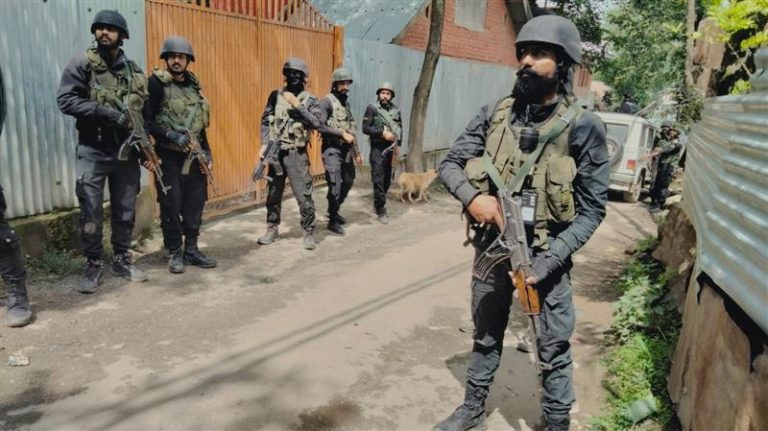
Wednesday’s killing of three Pakistan backed Lashkar-e-Taiba [LeT] terrorists [including self-styled LeT commander Lateef Rather] in the Waterhail area of Budgam district in Central Kashmir is indeed a major success for the security forces and J&K police. What makes this operation all the more special is that despite being undertaken in a populated area, security forces neutralised these terrorists without suffering any casualties or causing collateral damage

Extinction of Rather is undoubtedly a remarkable achievement-not only because of his active involvement and direct complicity several heinous acts of terrorism, but also because he was able to successfully evade arrest/extermination for nearly a decade. At a time when the average ‘active life expectancy of a terrorist’ in J&K is barely one year, Rather’s ‘longevity’ was  obviously a matter of great concern for the security forces.

So, while Rather’s name was high on the J&K police wanted list of terrorists, it shot up several notches after he was conclusively identified as the one personally responsible for murdering innocent civilians at the behest of his Pakistani masters. Amongst his hapless victims was a Kashmiri Pandit named Rahul Bhat and a female Kashmiri Muslim artiste Amreen Bhat. Both the deceased were in their mid-thirties.

To the uninitiated these may appear to be random killings. However, those closely following Pakistan army’s ongoing proxy war in Kashmir would unanimously agree that selection of these seemingly un-associated ‘targets’ has the typical hallmark of Pakistan army’s spy agency Inter-Services Intelligence [ISI] sinister strategy of trying to create mayhem and destroy Kashmir’s pluralistic and tolerant culture by its two-pronged of inciting communal disharmony and promoting fundamentalist ideology in Kashmir Valley. 

On May 12, Rahul Bhat, employed in the revenue department at Chadoora in Budgam district was at his desk, engrossed in official work when Lateef Rather, accompanied by an associate entered the office premises and walking up directly to Bhat, shot him dead at point blank range. The tragedy is that a young life was extinguished merely to terrorise Kashmir’s indigenous Pandit community and convey the message to them that they weren’t welcome back!

The irony is that even though his family was compelled to leave their ancestral home in in Budgam district’s Beerwah village due to the forced exodus of Kashmiri pandits orchestrated by fundamentalist Islamic terrorists in 1990 and take refuge in Jammu, when selected for a job in the same district, Bhat chose to return. He perhaps may have felt that since Budgam district happened to be home ground where his family had co-existed harmoniously with their Muslim brethren for centuries, he would be safe in Chadoora.

But this was not to be!  

Amreen Bhat’s case is equally tragic and intriguing. Chadoora [Budgam district] resident Ms Bhat was a spinster, who besides being a local TV artiste, was quite active on social media and ever since 2007, had been regularly posting her music videos online. The content of her videos were sober and they never violated religious edicts or any cultural/social norms. Since, Amreen took due care to ensure that contentious issues never featured in her videos or social media posts, no one had ever expected that she would end up being murdered by a fellow Kashmiri who had sold his conscience to his mentors across the Line of Control [LoC].

Ms Bhat lived with her father and other family members in Budgam’s Hushroo village in the outskirts of Srinagar. On May 26, LeT commander Rather accompanied by his indispensable sidekick came looking for Amreen. He asked her 11-year-old nephew [who was just leaving the house on an errand] to call for Amreen.  When she came out, Rather briefly engaged her in conservation before whipping out a pistol and shooting her at point blank range. Despite her grievous injuries, Amreen managed to stagger back into her house, but the heartrending sight of a profusely bleeding lady gasping for dear life didn’t move the blood thirsty Rather. Following her inside, he shot her again and after ensuring that she was dead, fled the scene like a coward.

Even if one was to apply the most skewed fundamentalist standards, there still can’t be any justification whatsoever for Amreen’s cold-blooded murder by one who claims to be a ‘mujahideen’ [Islamic warrior]. So, why was she killed? As Amreen was no threat to the pro- Pakistan camp in Kashmir, her murder was most probably an attempt at giving an impetus to growing Islamic fundamentalism in Kashmir being championed by the likes of of Dukhtaran-e-Millat [Daughters of the Nation] chief Asiya Andrabi.

The reassuring part is that those perpetrating targeted killings in Kashmir Valley are efficiently being hunted down by security forces and the local police. Take the case of Rather who had survived for so long but was finally corned and eliminated within three months after he had brutally murdered Bhat and Amreen. While security forces and intelligence agencies deserve due credit for neutralising this bloodthirsty fiend, there are all the reasons to believe that it was public anger against targeted killings of innocents that contributed immensely to this achievement.

The grapevine in Kashmir Valley is abuzz with rumours of how information regarding Rather’s whereabouts was being regularly passed on to security forces by irate locals. Furthermore, the fact that J&K police confidently announced that LeT commander Rather was trapped inside a house the moment the Waterhail encounter commenced, clearly indicates that the security forces had precise prior information about his presence.

There was a time when due to lack of actionable intelligence regarding locations of terrorists, security forces in J&K were compelled to conduct elaborate cordon and search operations. However, things have since changed and despite the threat of being killed by terrorists, the violence weary locals are now willingly cooperating with security forces. This is because senseless violence has effectively demolished the more than three-decade old façade of the so-called “armed struggle” in Kashmir.

People in J&K have started realising that terrorists who claim to engaged in an “armed struggle” for ‘azadi’ [freedom] are actually “fighting Pakistan’s war in Kashmir”– a fact that none other than United Jihad Council chief and Hizbul Mujahideen terrorist group supremo Syed Salahuddin has himself admitted. Rejection of violence by Kashmiris is a positive development that will certainly go a long way in ridding the Valley of the scourge of terrorism, which in the words of Mirwaiz Umar Farook has “not achieved anything other than creating more graveyards”!

Yasin Malik: Kashmir’s most ‘artful’ opportunist

0

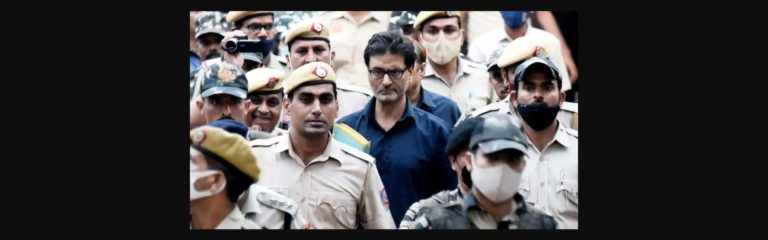
From an ordinary public event disruptor to waging Pakistan sponsored armed insurrection in J&K [in the course of which he was actively involved in killing security forces personnel and innocent civilians alike], Jammu and Kashmir Liberation Front [JKLF] chief Yasin Malik has not only come a long way. What’s really intriguing is that despite being personally involved in serious crimes, which included masterminding the forced exodus of Kashmir’s pandit community and kidnapping the then Home Minister’s daughter to secure release of his imprisoned comrades, Malik still managed to create for himself an aura of respectability and emerged as an apostle of peace.

Malik’s fame and apparent ‘invincibility’ is the result of his self-serving opportunism coupled with an extraordinary ability to see which way the wind blows. He created the ‘Tala party’ in 1980, and after renaming it the ‘Islamic Students League [ISL], became its general secretary. As ISL contended that it didn’t recognise the Constitution of India, it didn’t directly participate in the 1987 Legislative assembly elections. However, the wily Malik wasn’t the one to forego this golden opportunity to expand his area of political influence just for the sake of principles, and so he ensured that ISL not only joined Muslim United Front [MUF], but also took responsibility for its election campaigning.

Meanwhile, on the other side of the Line of Control [LoC] that divides J&K, Pakistani President Gen Zia ul Haq was immensely impressed by the success of the proxy war waged by US backed mujahideen against the Soviet army in Afghanistan. Accordingly, he ordered Pakistan army’s spy agency Inter-Services Intelligence [ISI] to replicate this irregular warfare model in J&K and start a proxy war there. ISI went about executing this sinister mission with missionary zeal and in 1986, it roped in JKLF founding member Amanullah Khan, a resident of Pakistan occupied Kashmir [PoK] who had just returned from the UK to execute this devious plan.

Using its extensive network of well-paid local ‘over ground’ workers to lure Kashmiri youth of impressionable age into crossing the LoC for undergoing arms training in special camps set up in PoK for this purpose, the ISI was able to attract hundreds of young Kashmiris, impelled by romantic visions of a “war o liberation”. After the controversial 1987 J&K elections, several Kashmiri youths made their way to PoK and in 1988, Yasin Malik too crossed the LoC and underwent arms training being organised by ISI and imparted by Pakistan army instructors.

On returning to Kashmir Valley after having received arms training there, Yasin Malik alongwith three others [Hamid Sheikh, Ashfaq Wani and Javed Ahmad Mir] took charge of waging Pakistan’s proxy war in J&K. They called themselves the HAJY group [this name being derived from the first alphabet of their respective names] and assured locals that “azadi [independence] was just around the corner.” The gullible public blindly believed them and with fundamentalists whipping up communal frenzy, even overlooked or condoned JKLF’s orgy of senseless violence that resulted in the forced exodus of Kashmiri pandits.

However, the ISI was unhappy with JKLF’s stated aim of an ’independent’ Kashmir, and  cut off arms supply and stopped funding to this group. Not only this, to suit its own vested interests, ISI created a new pro-Pakistan armed group called Hizbul Mujahideen [HM]. On the directions of ISI, HM initiated a bloody turf war for control of armed insurrection in J&K and brutally decimated JKLF. In his widely acclaimed and authoritative book ‘Shadow Wars: The Untold Story of Jihad in Kashmir’, Arif Jamal mentions that during an interview a high-ranking Rawalpindi based Hizb commander named Jamal admitted that during this period, HM had eliminated about 7,000 “political rivals” [a euphemism for JKLF cadres].On cross-checking this information with Masood Sarfraz, who was once very close to Salahuddin but had since parted ways, Jamal was told that that the actual number of “political rivals” killed by HM were “many times higher”. 

After his release on bail in May 1994, Malik declared an “indefinite” JKLF ceasefire and announced that he was renouncing violence and would instead carry out a non-violent struggle for ‘independence’.  This unilateral move was not appreciated by the JKLF [PoK chapter] and Amanullah Khan removed Malik as president of JKLF, causing this group to split in two factions.

However, despite the reality that violence in J&K was actually a proxy war being orchestrated by ISI and had nothing to do with ‘azadi’, staring them in the face, the over-optimistic media peddled Malik’s renunciation of violence as ‘the beginning of the end’ of the so-called ‘armed struggle’. He was thus perceived by many as the proverbial prodigal’s son and his decision to follow the Gandhian approach made him a hero of sorts. New Delhi too seems to have been taken-in by his proclamations and treated him with kid’s gloves and the criminal cases against him for inciting and participating in insurrection, premediated murder, kidnapping and forceful confinement appeared to have been consigned to the backburner. So, Malik became a hero of sorts!

While the grapevine was abuzz with news that Malik had been ‘cultivated’ by intelligence agencies while in prison and had made some ‘secret deal’ with the government, or that he genuinely had a change of heart during his internment, but all these speculations were far removed from the truth. The reality is that after he was released on bail in 1994, Malik realised that due to HM’s efficient predation, JKLF was just a pale shadow of its former self and being denied arms and funds by ISI it had no capability whatsoever to carry on the so-called ‘armed struggle’ for ‘azadi’. Faced with such overwhelming odds, any lesser mortal would have accepted defeat, but like a wily fox, Malik was made up of much sterner stuff!

By assuming a ‘peacenik avatar’, Malik cunningly turned an existential threat into a splendid opportunity and thus retained his political relevance and ‘immunity’ against persecution for very serious crimes that could well have invited capital punishment! And for over three decades this clever strategy has worked well. No wonder that during this period, the man who as a member of HAJY group had introduced the Kalashnikov into J&K, waged Pakistan’s proxy war by inciting an insurrection that left several thousand dead and many more wounded, was still able to enjoy an undeclared [but very visible] special status and rub shoulders with political bigwigs [including an Indian prime minister] and rights activists known for pursuing motivated agendas.

However, with National Investigation Agency [NIA] now successfully unearthing clinching evidence of his involvement in massive illegal terrorism related financial deals and Ms Rubaiya Sayeed positively identifying him as one of her abductors, Malik’s criminal past has finally caught-up with him. While he may deny any role in killings during the 90s, but the truth isn’t hidden from anyone. So much so that even a WikiLeaks cable of June 8, 2005, mentions that While a leader of the armed struggle, he [Yasin Malik] has killed in the name of Kashmir, but has become an advocate of non-violence since coming in from the cold.” [Emphasis added].

Similarly, while he may refute money laundering charges, but once again, another Wikileaks cable mentions that in April 2006, a US political councillor had been told by Hurriyat constituent Peoples Conference chief Bilal Lone that Yasin [Malik] should give up a month of his Pakistani salary to compensate the families of boys killed in Bilal’s [Lone] home area by the army, instead of urging the parents not to take Indian compensation and jobs.” [Emphasis added].

So, in 2006, when Yasin Malik told the then US ambassador to India David Mulford that “Kashmiri politics is no longer about ideology, it’s all a money game,” [Emphasis added], he wasn’t quite off the mark as this admission was straight from the horse’s mouth!

Hizb chief Salahuddin’s son and three others sacked by J&K admin

0

There may be many divergent views on the J&K government’s recent sacking of four employees by invoking Article 311 (2) (c) of the Indian Constitution that allows termination of service without holding an inquiry in the interest of the security of the State”. However, while some legal eagles, members of civil society and rights activists may not be happy with this decision, the same has been very well received by the masses.

The four whose services have been terminated include Syed Abdul Mueed, the son of Pakistan based United Jihad Council [UJC] chief Syed Salahuddin and 2019 batch JKAS cadre officer Assabah Arzoom Khan, [wife of dreaded JKLF terrorist and self-confessed mass murderer Farooq Ahmad Dar alias Bitte Karate] posted in Kashmir Rural Development Department’s Publicity Wing. The other two are Dr Muheet Ahmad Bhat, and Majid Hussain Qadri who were working at Kashmir University’s Departments of Computer Science and Management Studies respectively.

On condition of anonymity, government officials have given the following reasons for J&K Governor Manoj Sinha’s assent to terminate their services under provisions of Article 311:

·        Mueed’s 2012 appointment as an IT consultant in Kashmir Entrepreneurship Development Institute [JKEDI] has been marred in controversy, right from the initial selection on contractual basis by a panel that had three terrorist sympathisers, to his appointment being made permanent without mandatory CID verification. Besides evidence of him indoctrinating students in JKEDI, intelligence agencies have also discovered that he provided terrorists with information and logistical support to facilitate attacks against security forces in and around the JKEDI complex. [Interestingly, three such terrorist attacks have taken place between 2013 and 2019!]

·        Ms Khan secured a job in Sher-e-Kashmir University of Agricultural Science and Technology in 2003 through irregular means and was sacked in 2007 for prolonged absence due to her frequent foreign trips to funnel funds for terrorist activities in J&K. A 2019 batch JKAS officer, she till her termination, was working in Kashmir Rural Development Department’s Publicity Wing and is “a diehard secessionist having deep ties with terrorist outfits and ISI.”

·        The services of KU professors Dr Bhat and Qadri have been terminated as they were openly “propagating secessionist-terrorist agenda in the university by radicalising students for advancing the programme and agenda of Pakistan and its proxies.”

The pro Pakistan lobby in J&K headed by Hurriyat may try to portray these terminations as a sob-sob vendetta story of innocents being penalised for their beliefs or actions of their fathers/husbands. It’ll also contend that absence of any public outcry against irregular appointment of family members of terrorist leaders and separatists is proof that nothing of this sort has been happening. However, everyone knows that it’s primarily due to fear of retribution that Kashmiris choose not to air their seething anger on seeing the kith and kin those responsible for supporting Pakistan’s proxy war and turning Kashmir Valley into a veritable battle zone, securing plum posts in various government departments.

Nevertheless, whenever allegations of rules being disregarded in order to facilitate selection of family members of terrorists and separatists makes news, terrorist groups and separatist organisations invariably claim that these jobs were secured purely on merit. In his book ‘Kashmir: The Vajpayee Years’ released in 2015, former RAW chief AS Dulat has revealed that it was on Hizbul Mujahideen [HM] chief Syed Salahuddin’s discreet request that a seat in medical college was allotted to this terrorist leader’s son.

While both HM and Hurriyat have firmly rejected this claim and furthered the ‘merit’ explanation, two extremely pertinent questions arise. One, why would a highly respected former sleuth known for his integrity make a brazenly false accusation which could well erode his own credibility? Two, if Dulat’s assertion is true, then it’s obvious that such an irregular seat ‘allotment’ in a Jammu medical college couldn’t have been made without the ‘blessings’ of the then J&K Chief Minister, Farook Abdullah. So, if Dulat’s claim is false, then why didn’t Abdullah outrightly rubbish this accusation that portrays him as who pandered to the whims and fancy of terrorists?

It’s possible that family members of terrorists and separatists could have secured government jobs on merit. However, what makes things appear quite odd and raises genuine doubts is the astounding streak of brilliance that seems to “run uniformly in certain families of terrorists and separatists. An example- according to media reports, HM supremo Salahuddin has six sons, and while one is a doctor [with a controversial medical school admission that’s been discussed above] and is working in a government hospital, all the other five too have worked in various government jobs.

Whereas the service of his son Syed Abdul Mueed working as an IT manager in JKEDI has been terminated now, Salahuddin’s two other sons named Ahmad Shakeel and Shahid Yousuf had earlier lost their jobs under Article 311. The media has quoted an unnamed source as revealing that this drastic action was necessary because all the three siblings were “inducted in the government system in the 2000s in brazen violation of norms and after circumventing the vetting process.” The remaining two sons of the HM supremo are reportedly still employed in J&K administration. Few fathers can boast of such a stupendous achievement!

Similarly, in 2016, Hurriyat heavyweight Late SAS Geelani’s grandson Anees-ul-Islam was appointed as a ‘research officer’ at the Sher-e-Kashmir International Convention Centre (SKICC). This happened when Mehbooba Mufti was J&K Chief Minister and considering her penchant for keeping terrorists and separatists in good humour, Islam’s direct selection to a gazetted grade equivalent position in the government was understandably highly suspicious. Many believe that coming in wake of the 2016 summer agitation, this was Mufti’s quid pro quo seeking Geelani’s indulgence for quick return of normalcy in the Valley.  However, the fact that he was leading a group that used to covertly fly drones and after recording scenes of clashes between law enforcement agencies and unruly mobs, shared such footage with Pakistan based ISI operatives for propaganda purposes.

So, when the then US Ambassador to India David Mulford in his 2006 cable to Washington wrote that “Kashmir politics is as filthy as Dal Lake”, and that “corruption cuts across party lines and most Kashmiris take it as an article of faith that politically-connected Kashmiris take money from both India and Pakistan”, he wasn’t exaggerating. Similarly, JKLF chief Yasin Malik too was absolutely truthful in telling a US official that “Kashmiri politics is no longer about ideology, it’s all a money game”.  This is precisely why the determined attempt of J&K’s present dispensation to stem this rot through hard decisions that puts the pro-Pakistan lobby in its place is praiseworthy and merits due appreciation! 

Narcissism: The Future Religion

By Sam Vaknin

Prof. Shmuel “Sam” Vaknin (YouTubeTwitterInstagramFacebookAmazonLinkedInGoogle Scholar) is the author of Malignant Self-love: Narcissism Revisited (Amazon) and After the Rain: How the West Lost the East (Amazon) as well as many other books and ebooks about topics in psychology, relationships, philosophy, economics, international affairs, and award-winning short fiction. He was Senior Business Correspondent for United Press International (February, 2001 – April, 2003), CEO of Narcissus Publications (April, 1997 – April 2013), Editor-in-Chief of Global Politician (January, 2011 -), a columnist for PopMatters, eBookWeb, Bellaonline, and Central Europe Review, an editor for The Open Directory and Suite101 (Categories: Mental Health and Central East Europe), and a contributor to Middle East Times, a contributing writer to The American Chronicle Media Group, Columnist and Analyst for Nova MakedonijaFokus, and Kapital, Founding Analyst of The Analyst Network, former president of the Israeli chapter of the Unification Church‘s Professors for World Peace Academy, and served in the Israeli Defense Forces (1979-1982). He has been awarded Israel’s Council of Culture and Art Prize for Maiden Prose (1997), The Rotary Club Award for Social Studies (1976), and the Bilateral Relations Studies Award of the American Embassy in Israel (1978), among other awards. He is Visiting Professor of Psychology, Southern Federal University, Rostov-on-Don, Russia (September, 2017 to present), Professor of Finance and Psychology in SIAS-CIAPS (Centre for International Advanced and Professional Studies) (April, 2012 to present), a Senior Correspondent for New York Daily Sun (January, 2015 – Present), and Columnist for Allied Newspapers Group (January, 2015 – Present). He lives in Skopje, North Macedonia with his wife, Lidija Rangelovska. Here, he writes about the future of religion as narcissism.

Pathological narcissism develops as a set of complex psychological defenses against childhood abuse and trauma in all its forms, including not only “classical” maltreatment, but also idolizing the child, smothering it, parentifying it, or instrumentalizing it.

Whenever the child is not allowed to separate from the parental figures, form boundaries, and individuate (become an individual), a disorder of some kind ensues, secondary (pathological) narcissism being among the most prevalent. 

In the narcissistic pathology, the child forms a paracosm ruled over by an imaginary friend who is everything the child is not: omniscient, omnipotent, perfect, brilliant, and omnipresent. In short: a godhead or divinity. The child worships the newfound ally and makes a human sacrifice to this Moloch: he offers to it his true self. 

The child strikes a Faustian deal: he is endowed with a grandiose albeit fragile self-image and a fantastic self-perception, but, in return, he ceases to exist.

The narcissist outsources his ego boundary functions to the False Self and regulates his internal environment (for example: his sense of self-worth) via constant feedback from a multitude of interchangeable sources of narcissistic supply. His is a veritable hive mind. 

Narcissism is the celebration, elevation, and glorification of a superior absence, a howling emptiness, the all-devouring void of a black hole with a galaxy of internal objects (introjects) swirling around it.

Narcissism is, therefore, a private religion which resembles very much primitive faiths and rites. It is a fantasy defense writ large and gone awry, having metamorphesized into a delusion. Reality testing is severely impaired and the narcissist mistakes inner representations of people with the external objects that gave rise to them.

As a growing number of people become increasingly more narcissistic and as our civilization rewards narcissism and veers towards it, the allure of the narcissism religion is growing exponentially.

It is beginning to be widely and counterfactually glamorized – even in academe – as a positive adaptation. Counterfactually because narcissism ineluctably and invariably devolves into self-defeat and self-destruction. 

Narcissism is the first distributed or networked faith: every believer and practitioner (i.e., every narcissist) is a worshipper but also the god that he worships (has a godlike False Self). Every node is equipotent and self-sustaining as it seeks to consume narcissistic supply (attention, good or bad).  

Like every religion before it, narcissism is fast becoming an organizing and hermeneutic (explanatory) principle. It imbues existence with meaning and direction. It is both prescriptive and proscriptive. Fueled by technologies like social media, it is spreading with more alacrity than any previous historical faith. 

Pathological narcissism is also missionary: the narcissist attempts to convert potential sources of narcissistic supply and intimate partners to participate in his shared fantasy and to worship his grandiose deity, the False Self. 

Everything abovesaid applies with equal rigor to narcissistic collectives. This is where the danger lurks: narcissism is aggressive and intolerant, dysempathic and exploitative. It is a death cult. It elevates objects above people. In a society of the spectacle, everyone is rendered a commodity. Materialism and consumerism are manifestations of narcissism as is malignant, ostentatious individualism.

Narcissism in collectives is indistinguishable from the individual sort: it is always adversarial and results in dismal self-defeat and self-destruction. Left unbridled and unconstrained and elevated ideologically, it can bring about Armageddon in more than one way.

The rise of narcissism is inexorable. It is comparable to climate change and to the shift in gender roles: there is no going back now. If I am right, it calls for major adaptations on multiple levels, individual, institutional, and collective: 

(1) To harness the considerable energy of narcissism and channel it in socially acceptable ways (sublimate it). Prosocial and communal narcissism could spell a workable compromise, for example; 

(2) To put in place checks, balances, and institutions to prevent the more destructive, insidious, and pernicious outcomes and aspects of narcissism; and 

(3) To prepare the general populace to accept narcissism as a part of the landscape and Zeitgeist. This latter goal is best accomplished via technologies that would provide outlets to conforming, positive healthy narcissism and at the same time isolate users from an increasingly more narcissistic reality as much as possible. Social media and the metaverse as harbingers of these twin tasks. Atomization and self-sufficiency as well as the disintegration of social institutions are mere symptoms of this tectonic shift in what it means to be human.

Photo by Marija Zaric on Unsplash

Taiwan Crisis and Options for India

In Part I (Ukraine War and Taiwan Crisis are manifestations of a changing global order), we analysed the changing international Order, which is the cause of all the geo-political turbulence, of which the Ukraine war is a direct manifestation. A prognosis of the ongoing war was carried out along with its impact on China, and how India has navigated the choppy waters adroitly. We move on and discuss the Taiwan crisis which too is a direct result of the changing global dynamics.

Nancy Pelosi’s visit: Catalyst to the Taiwan Crisis
US-China relations have been confrontationist and frosty for a while, with USA the current supremo wanting to continue with its unipolar ways, and China showcasing an alternate ideology and autocratic governance style (gathering some follower nations along the way); a worthy challenger none-the-less, wanting its deserved place at the high table, and moving aggressively with the intent of dethroning the King. After lots of threats and drama and much against the wishes of the Chinese government, and even President Biden and his staff and Pentagon, Nancy Pelosi the speaker of the Senate and third senior most US Government official made a whirlwind trip to Taiwan lasting less than 24 hours (02–03 August 2022) as part of a four nations Asian tour. The trip was symbolic showing solidarity with Taiwan; technically it was not an official state visit, but the strategic messaging and implications were huge. Both USA and China have resorted to brinkmanship, which could go horribly wrong. The crisis has not yet played out, with China conducting a tri-services, multi-domain live-fire exercise in the South China sea encircling Taiwan, with five missiles reported to have even landed in the EEZ of Japan. Moving aggressively and quickly Beijing also cancelled military calls between area commanders, defence meetings, and Chinese foreign minister twice stormed out of diplomatic gatherings attended by the US. China will no longer take part in talks on maritime safety, climate change and anti-drug efforts with USA. Personal sanctions against Pelosi and her family were also announced in response to what the Chinese Foreign Ministry called her “egregious provocations.”

China had ratcheted up potential confrontation weeks ago by declaring that the Taiwan Strait that separates the island from the mainland is not international waters. The US rejected this and responded by sending more vessels through it. USA obviously wanted to establish her dominance and showcase her power projection capabilities, especially when the world specially her allies began doubting US capabilities’, intent and will, watching US internal dynamics and ‘America First’ policy, accompanied by withdrawing/cooling off from Afghanistan, Syria and Middle East. Taiwan under President Tsai Ing-wen has responded in a mature, measured manner, firm but without brinkmanship, and once Pelosi landed accorded her the decorum reserved for a significant strategic leader, and even honoured her with Taiwan’s highest civilian award ‘Order of the Propitious Clouds with Special Grand Cordon’. Concurrently and prudently, Taiwan has put itself on high alert, air raid shelters have been prepared and the government is increasing training for recruits serving their four months of required military service, considered inadequate along with annual two-week annual refresher courses for reservists.

Have both USA & China pre-planned exploitation of the Pelosi visit, or is it power rivalry playing out?

USA: In its NSS and NDS (National Security and Defence Strategy) right from 2018 onwards, USA has named China as its peer competitor and adversary, while concurrently identifying Russia, Iran and North Korea who are likely to disturb and challenge the established Order. Relations with China went into a tail spin ever since COVID. Long-simmering disputes over China’s human rights record and trade policies boiled over under Donald Trump, who instigated a tariff war with China and blamed the country for the coronavirus pandemic. Things have not improved under President Biden. China’s support for Russia in its war on Ukraine has annoyed Washington, adding to strains over Beijing’s aggressive efforts to win influence in the Indo-Pacific, South-Pacific, Africa and other regions; Chinese multi-domain espionage; and manoeuvres in the South China Sea; relentless crushing of dissent in Hong Kong and large scale human rights violations perpetrated in Xinjiang. Geo-politically and ideologically, China’s rise coupled with President Xi’s ambitions; increasing aggressive hegemonic tendencies; ascendance in the comprehensive national power (CNP-especially military) and global status index; interventions reaching global proportions due increasing power projection capabilities; have unsettled USA which as already stated sees China as a direct competitor, who has the will, capacity and capability to upstage USA if not thwarted urgently. Hence, a combination of competition and confrontation for multi-domain (PDIME – political, diplomatic, informational, military, economic) supremacy globally, is the root cause of global turbulence, especially in Asia which has been accepted as the pivotal continent for decades to come. While some nations mainly Asian (and within US too) have questioned the timing of Pelosi’s visit being too close to the 20th Congress of the CCP being held in November 2022, US compulsion was the repercussions on its international standing if it had backed out. Moreover, Chinese belligerent hyper-reactions including demonstrating its hard-military power, has worked in US favour, by alienating many nations who preferred to stay non-aligned in the US-China confrontation, and consolidated held perceptions of US allies.

China: China too has exploited this opportunity diplomatically, politically and militarily. China’s live fire exercise has showcased her ability to encircle and probably blockade the Taiwan Strait which has geo-strategic implications; it is one of the world’s busiest trade routes after all. The proximity of the action to ports and shipping lanes has forced supply line delays, a small taste of the pain China could inflict on Taiwan and world markets. We all know that Taiwan is ‘The leading producer’ of advanced semiconductors critical to products from cars to advanced weaponry. Tri-services, multi-domain (land, air, sea, amphibious, space, info-sphere) live fire exercises provided rehearsal for the actual invasion whenever launched. Mobilising and deployment of forces from outside the theatre, providing integration and interoperability experience, testing modern and new weapon systems both kinetic and non-kinetic (like radars, communications, electronic warfare), a big confidence boost with internal signalling to satisfy Chinese nationalists, finetuning operational and logistic plans including amphibious operations which are extremely complicated, are some of the strategic payoffs which have accrued thanks to the Pelosi visit. Experts globally specially from the USA have commented very favourable on the professionalism on the conduct of operations. Strategically, USA has signalled her strong intent and support to Taiwan when called upon, and China too has signalled her firm resolve to go to any lengths to maintain her ‘One China’ identity, even if it means using force against a global coalition led by USA. Whether both will follow through if and when war happens only time will tell. What has disturbed world leaders is that the probability of war has increased sharply after this visit, which could prove existential for the globe!

Most Asian and Global South Countries find themselves between a ‘rock and hard place’ post Pelosi visit. The unexpected escalation in tenuous US-China relations has left many nations nonplussed, uncomfortable and caught between a ‘rock and hard place’. Most nations except the traditional Western allies and Japan and Australia, do not wish to get caught up in this whirlpool (even South Korea has snubbed Pelosi by the President finding an excuse Not to meet her). Chinese over-heated reaction would have earned worldwide censure and condemnation, but nations are strangely quiet; probably many governments saw Pelosi’s visit as crossing a red line causing unnecessary and unwarranted strife in the region; similar to NATO encouraging and indicating willingness for Ukraine to join NATO. Shahriman Lockman, a director at the Institute of Strategic and International Studies in Malaysia said “Most Southeast Asian countries will view the United States as having provoked China’s entirely predictable overreaction.[i]” President Trump’s aggressive stance against China has been continued by Biden (much to the dismay of the Chinese), who has sought to build a broad coalition in Asia to push back against Chinese overreach, in part by telling smaller economies they don’t need to pick sides. The Indo-Pacific Economic Framework which excluded China, unveiled by Biden during a visit to South Korea in May, was emblematic of the approach. Suddenly, Pelosi’s visit has touched a red line to take sides on the most obvious red flag/line of China; its ‘One China policy’, and most nations have blinked.  

Strategic Implications of Chinese Actions
“China probably doesn’t want to go to war to achieve its ends”. This below-threshold type of conflict, also called “grey-zone” warfare by security experts, is part of China’s playbook with Taiwan and countries in the region with which it has territorial disputes. The world and particularly India are all too familiar with its ‘salami slicing’ operational tactics coupled with its 3Ws strategy (an official political and information pre-kinetic warfare strategy of the People’s Liberation Army (PLA) employing media or public opinion warfare, psychological warfare, and legal warfare). A blockade or a quarantine are scenarios that US and her allies and Asian nations are not ready for, and would find it tricky to respond. Taking a leaf from the US book, China also has turned to forms of economic coercion such as import bans on countries who have disagreements with China, viz Australia, Canada and others. An immediate casualty of the Pelosi visit were Chinese imports of Taiwanese citrus and other agricultural products[ii].

The Chinese have been anticipating a global blowback against her ever since COVID, aggravated by the support to Russia for the Ukraine war. China has unveiled earlier this year a new strategic framework, called the “Global Security Initiative (GSI)”[iii], which consolidates several strands of Beijing’s evolving conceptualisation of the global order. President Xi seeks to seize the narrative on global security away from the US and its allies in Europe and the Indo-Pacific, and discourage countries from joining ‘The Western Group’. He is showcasing an alternative international order centred around China: a force of stability and predictability in the face of an increasingly volatile and unpredictable USA, an innovator and leader in twenty-first-century global governance. This narrative is finding takers from nations frustrated by the current US-led Order, as also so-called illiberal regimes ruled by dictators or autocrats (Iran, Pakistan, Turkey, North Korea, Venezuela and Global South). Cemented on the China-Russia strategic partnership, China seeks to enlarge her favourable organisations like BRICS (Argentina, Iran officially applied, and Egypt, Saudi Arabia, and Turkey indicating interest) and SCO. Then there is this geo-politically vital issue of ‘currency change’ from the dollar, which has got a resurgence from allies and adversaries alike. Most geo-political observers are in consonance that China will grow even more aggressive after the Chinese Congress, once President Xi consolidates his power. Finally, to back everything up, is China’s blitzkrieg in diplomacy, and economic ramp up, and vitally – military capability and capacity development specially in hi-tech and niche arenas, in consonance with its superpower ‘China Dream’ ambitions.

Indian Options to Navigate the Taiwan Crisis within constraints of current turbulence in Global Order

India must be credited with navigating the choppy geo-political waters adroitly with its cornerstone policy of ‘strategic autonomy’. In a way, the Ukraine war and Taiwan crisis has got coupled geo-politically and diplomatically. The central actors are the same, mainly USA and China, and India does not wish to get involved in the emerging highly probable ‘cold war’ situation between USA and China. She seeks to avoid unnecessary confrontation with China at a sensitive time along the LAC, but doesn’t wish to claim allegiance to the “One China policy” either. Interestingly, India has not referred to the “One China” policy since at least 2010. Amid growing number of international reactions adversarial to India’s stance, New Delhi has chosen to maintain a “studied silence” on the unfolding situation, omitting any mention of it in diplomatic dialogues, including the latest talks held by External Affairs Minister S Jaishankar on the side-lines of the Association of South East Asian Nations (ASEAN) in Phnom Penh. The decision to avoid discussion is obviously deliberate and a ‘diligently analysed one’. However, India can indeed derive lessons from the way Taiwan has reacted to the crisis.

India has finally and unequivocally accepted that China only understands the language of strength and intent, coupled with proactive actions on ground; which has been amply demonstrated in Doklam in 2019 and East Ladakh since 2020. Learning from the Taiwan Crisis and in consonance with shifting geo-political order, India needs to take more assured and confident steps. Firstly, we must specifically lay down red lines and our national position, specially regards our sovereignty and territorial integrity; failing which ‘salami slicing’ will continue and in fact increase. Secondly, it is time the government sets out the actual ground situation along the LAC without ambiguity. Failure to do so, will actually embolden China as neither the nation nor the World would know of Chinese perfidious actions. Thirdly, India needs to further consolidate, get more involved and strengthen alliances like QUAD, BRICS as a counter measure to China’s rising power and hegemonic tendencies. Fourthly, India must not feel compelled to appease China or be overcautious; after all China has grabbed our lands and doing every hostile action possible in all domains both kinetic and non-kinetic. A very important lesson related to the economic and trade domain; China has as much to lose if not more. The interdependency of China and Taiwan is far more; however, it did not deter either China or Taiwan to act on their national strategic interests.

Conclusion

The two-part article highlighted the changing global order, with USA and China vying for primacy and with neither willing to give a quarter. The competition and confrontation have become multi-domain be it political, economic, military, diplomatic or informational. The danger due to brinkmanship on both sides is the increasing probability of conflict in any part of the globe. The manifestation of this changing Order is clearly evident in the ongoing Ukraine war and Taiwan crisis. India with its own vulnerabilities and challenges, but with growing confidence and CNP, needs to look after its national interests and sovereignty by anticipating events and being nimble, which she has done admirably so far.


[i] Pelosi Trip Sets Back Biden’s Effort to Woo Asia Against China, by Sarah Zheng and Philip Heijmans, 09 Aug 22, Bloomberg Asia Edition, available at https://www.bloomberg.com/news/articles/2022-08-09/pelosi-trip-hinders-biden-effort-to-galvanize-asia-against-china.

[ii] The New York Times, Opinion Today, 09 Aug 22, Yara Bayoumi, available at  https://mail.google.com/mail/u/1/#inbox/WhctKKXgjGxmgLtwJVHhNPldHMjKvLGQHhfzvrtgHzvDxGthWHvlMlkLWkJfhwRxgtKbQvv.

[iii] China on the Offensive: How the Ukraine War Has Changed Beijing’s Strategy, by Bonny Lin and Jude Blanchette, August 01, 2022, Foreign Affairs, https://www.foreignaffairs.com/china/china-offensive?utm_medium=newsletters&utm_source=twofa&utm_campaign=China%20on%20the%20Offensive&utm_content=20220805&utm_term=FA%20This%20Week%20-%20112017

How China preserved India’s cultural brilliance in Far history— Part 1

Father, Prof. Raghu Vira studied Chinese at the School of Oriental and African Studies, London in 1928. He was impressed by the beauty and complexity of Chinese characters. He came from a background of Sanskrit philosophy and grammar. The Sanskrit grammar of Panini is very intricate. Father saw Panini in the complex visual forms of Chinese ideograms. At the same time, back home, India was seeking new dimensions to her freedom movement in terms of what would be the nature of the independent State.

China, Japan and other countries of East Asia were independent. One of the attraction points for father was to understand as to how Chinese civilization had been able to sustain her independence over five thousand years, as well as maintain her cultural identity. He was fond of chinoiserie and our home was overflowing with Chinese paintings, books and other objects.

I started learning Chinese characters in 1937 at the age of ten. I asked my father: where are the consonants and vowels in them? There are no letters like A, B, C, D? How do the Chinese read? Father had a book on the Chinese script by Karlgren titled Sounds and Symbols in Chinese published by the Oxford University press in 1929. It is a fascinating account of how the Chinese characters have evolved.

It shows how early pictographs were sophisticated into manifold characters: sometimes on the basis of phonetics and sometimes by putting two characters together, e.g. sun and moon for bright. Chinese language is not only complex but it is a mirror of their thinking processes. The addition of elucidative classifiers was great fun for me. The syllable shan means mountain as well as shirt. To surmount the difficulty a classifier is added: tso ‘site’ in i tso shan ‘one site mountain’ means a mountain, while kien ‘article of dress’ in i kien shan ‘one article shirt’ means a shirt. The simplicity of Chinese grammar and the absence of an involved syntactic structure are characteristic.

Father said it was not sufficient to study only Chinese characters to learn the language but it was important to practise Chinese calligraphy. Chinese calligraphy fascinated me. All other languages are written either with a pen or a pencil, but Chinese is calligraphed with a brush. It has its own aesthetic value. Chinese calligraphy gave me an insight into their aesthetics. When father visited China in 1955, Premier Chou Enlai gave him a brush. It was a gift from Chairman Mao Tsetung, with a poem of Chairman Mao sketched on it.Ours was the only Indian home lined with Chinese printed texts and rare woodprints. The wood-printed books were different from Indian books. Their binding style was pleasing, the print was clear and the paper was light. It had a feel different from the normal paper that we used. The texture of the paper showed that Chinese are a different people, a people who had treasured their classical identity both in the style of binding and in the manufacture of paper. They adored the perfume of their culture. Culture brings beauty to life; it is the aesthetics of life.

Sacred land and Sutras

Father asked me to read Chinese writings on India. The first book that I read was the travel account of Fa-hsien who came to India in 400 AD. Thereafter I read the other two Chinese pilgrims Hsüan-tsang and I-tsing in English and later on in Chinese. It was interesting to feel the devotion extraordinary of Chinese pilgrims to India. Despite having a developed language and a rich culture, they sought fine arts and philosophic thought in India. They wanted a cultural enrichment of hearts, minds, and aesthesis as a euphoric evolution of their mighty state. China has been the only continuous ‘nation state’ in the world for the last five thousand years, both conceptually and politically.

Moreover, it is a rare phenomenon that the Chinese have documented their history for these five thousand years in the Twenty-four Dynastic Annals till 1911. The contrast between India as a cultural entity with several kingdoms and China with more or less a single state conceptually is important to perceive the Chinese mindset. The Chinese historical tradition has lessons for us.About 3000 texts were translated from Sanskrit into Chinese from the 2nd to the 13th century. They are collected in the Chinese Tripitaka. Many of them have been lost in Sanskrit originals and so they are unique for Indian history. As a historian of lndia’s culture, father was fascinated by what he found in Chinese, as their Sanskrit originals had been lost. For him Chinese was a rich source on Indian art and thought, literature and history. About 250 Indian teachers went to China from the 2nd to the 13th century, till Islam conquered Central Asia when Buddhist monasteries were destroyed and the pilgrim route died down. He was curious to see how Chinese had preserved all these texts for such a long period of time. India’s archaeology would not be complete without Hsüan-tsang. When Alexander Cunningham mapped the archaeological sites in India in the 19th century, his patron saint scholar was Hsüan-tsang. Likewise Aurel Stein was also guided by Hsüan-tsang in his archaeological expeditions to Central Asia.Tagore went to China in the 1920s and was welcomed enthusiastically. Father was influenced by him and knew him personally. Sporadic correspondence was exchanged between them. Poet Tagore established the Cheena Bhavan at Shantiniketan and Chinese studies were initiated in India for the first time. Father collaborated with Poet Tagore to found the India-China Friendship Association.

Chinese poems and sketches of Ahimsa

Monk Feng Tzukai, a friend Of Chairman Mao, wrote poems and drew pictures on Ahimsa. Father translated its first volume in English. Feng Tzukai was a Buddhist monk, calligrapher and artist. A Chinese scholar did his doctorate thesis on his art some decades ago.

Ahimsa was a central concept in our freedom struggle. Gandhiji was impressed by this book and that the Chinese also believe in Ahimsa. Father wanted to strengthen Sino-Indian friendship on a cultural footing that could absorb the shocks of political misunderstandings. Gaps of communication could be tided over by such an approach and could generate an ambience that allows us to see beyond parochial politics.

Multiple identities operate in different domains of life. These poems were written in the context of Buddhism. The Chinese have a Confucian identity, enriched by a Buddhist identity. Their nonviolence is kindness to animals on special days. The vast Buddhist population of China is keen for pilgrimage to the Land of Lord Buddha. China always had a special place of respect in the minds of Mahatma Gandhi and Pandit Nehru as a great country, a neighbour and a cultural comrade. Father was a rare Indian who had studied the language and culture of China. The sinological expertise of father brought him respect at the national level. Mahatma Gandhi. Pt. Nehru and other leaders were thrilled by his narration of the fine details of India’s contacts with Chinese culture.

Three Monkeys of Mahatma Gandhi

Mahatma Gandhi had Japanese monks at his Ashram at Wardha. They were reciting the Chinese text of the Lotus Sutra or Saddharma-pundarika-sutra.Gandhiji wanted to know its Sanskrit original and English translation for which he invited father to Wardha. Father gave him both the Sanskrit original and its English translation. Gandhiji was happy to know that the Chinese had translated thousands of texts, and that too with devotion. Gandhiji had a long conversation with father, including the three monkeys on his table. The monkeys are sacred to Buddhism, as a monkey had made an offering to the Buddha and as a consequence he has reborn as the Great King Asoka. An offering mentioned in the Buddhist texts became so prominent in the culture of East Asia that the Three Monkeys found a place on the table of Mahatma Gandhi.

Ramayana in China via Samarkand

Father translated a brief version of the Ramayana from Chinese into English. It had been translated into Chinese from the Sanskrit Sat-paramita-sutra on the six perfections by monk K’ang Seng-hui of Samarkand in AD 251. Sanskrit was a language of international commerce and intellectual expression in Central Asia with which China had active Contacts. During the struggle against British imperialism. Indian scholarship thought of the global contacts of the country and father found Chinese studies a valuable tool to comprehend the international role of India in antiquity. Samarkand was an important centre for India-China exchanges.

People in Samarkand knew both Sanskrit and Chinese. The Buddhist monk-scholars of Samarkand translated several texts from Sanskrit into Chinese. Central Asian monks from other kingdoms also contributed to the spread of Indic traditions to China, because of their trade relations_ The horses Of Ferghana were sent for the Chinese cavalry. Buddhist monks came on these horses. Central Asian monks were expert horsemen. They knew to train them, to treat them if injured or ill. They became crucial to the Chinese defence system.

In 1983, I went to see the monastery where K’ang Seng-hui lived and wrote. The ancient monastic structure does not exist, but a new monastery has been constructed at the site to pay homage to him and to the long tradition of translating Buddhist Sutras.

(This article was first published in India Narrative)

Ukraine War and Taiwan Crisis are manifestations of a changing global order

India must remain nimble at a time when the global order is changing.

This is Part I of a two part article. In Part I this article talks about the changing geo-political order and the Ukraine war. Part II of the article will deal with the Taiwan crisis and India in changing times.

International Order is in a Flux
The world is facing a unique geo-political reality; it is neither an established unipolar, bipolar or multi-polar world. It is dynamic, turbulent, chaotic, unstable and unpredictable. The liberal, rules based, free market, globally institutionalised (UN, IMF, World Bank, WTO etc.), democratic order established by the USA has been disowned by its own creator, and those who followed and enforced it. Ironically, during the unipolar phase of US dominance, it was actually neither liberal or democratic, but rested on the dominance and economic, political, geo-strategic compulsions of the West (USA and its allies), where national sovereignty was ignored, and illiberal autocratic/dictatorial regimes were supported whenever required. Most of the world even if not agreeable including China and Russia generally followed the ‘Order’. However, of recent, the global response to climate change, COVID pandemic and economic debt crisis, Ukraine war has been disparate, incoherent and disturbingly individualistic.

All nations have started following President Trump’s call to Americans for ‘Nation First’; or rather feel compelled by circumstances to do so. There is growing apathy and distrust in the concept of free trade, in old alliances bilateral or multi-lateral, strategic, economic or military, making nations to breakout and pursue policies suiting their national interests. The unipolar world is undoubtedly changing; whether it will revert to a bipolar one (USA and China) or multi-polar, only time will tell. Regional powers like Russia (once a global power), Turkey, Iran, India, Nigeria, Brazil, Japan, France, Germany and UK in Europe, Australia would certainly like a piece of the global pie and are trying their best to expand their strategic influence and space; which naturally competes and confronts with other nations, sometimes leading to conflict over national interests. The manifestations of this turbulence can be seen in increasing belligerence and hegemonic actions of China in Asia (specially against India, South and East China Sea and Taiwan); Russian invasion of Ukraine; growing move to challenge the dollar as the global currency; thereby upending the current ‘order’. The worry is that the security environment will get worse before it gets better. There is a real danger of multiple shooting wars spreading due to unchecked brinkmanship and nationalism (many times the nation’s own creation of riding a nationalistic tiger) involving nuclear powers with unimaginable consequences.

Every nation is unhappy and wants a larger share: Revisionist tendencies
The most powerful and influential disruptor is China, with Russia following closely by exploiting the fallout to regain its pre-eminence. While China undoubtedly benefitted the most within the erstwhile order, it now wants to take “centrestage”, led by the autocratic, all powerful ambitious President Xi Jinping, initially in Asia and thereafter the world. China is willing to take multi-domain measures including the use of force to attain her ‘China Dream’. Large scale turbulence especially in Asia can be easily forecast in the years ahead, as the West led by USA is unlikely to allow this transition easily. The situation is made more complex by majority nations finding Chinese ideology and modus operandi inimical to their national interest, even within its immediate and extended neighbourhood (Vietnam, ASEAN countries, Japan, South Korea).

The Russian Resurgence
End of the Cold War also ended Russian pre-eminence as the bi-pole in the international order. Russia led by President Putin have never reconciled to the collapse of the Soviet Union and subsequent reduction in global influence. This feeling of isolation and deprivation was further aggravated by the unilateral eastwards expansion of NATO till it reached the stated ‘red line of Ukraine’. With ally China (no limit strategic partnership which is debatable) in support, and upward revision of its economic clout thanks to oil and gas, Putin feels confident of challenging NATO and upending the current international order specially in Europe permanently in its favour.

Global impact of changing ‘order’
The global South (poorer and developing nations specially from Africa and Asia) have long since lost faith in the international order. Woeful response to Covid and other pandemics, economic, energy and food security, never ending disasters, mineral extraction and exploitation, civil wars, interventions for regime change with selfish agendas have added to their grievances. Truthfully, many Western countries have been guilty of colonising/invading other countries, just like Russia has done. The support of these disadvantaged states for NATO in the Ukraine War and even Taiwan crisis can no longer be taken for granted; as some find the option of an alternative world order attractive and reliable. Hard military power has also got a boost. Entire Europe with special reference to Germany, Japan, South Korea and Australia, being economically strong and are now seeking to build up their military strength, and reassess their relationships with China and Russia. New partnerships like the AUKUS and I2U2 (India, Israel, USA, UAE) are springing up, while older ones like QUAD, BRICS, SCO have got a fillip. Many have a distinctive military alliance flavour. Credibility of all international institutions like the UN, IMF and WTO has been eroded, if not lost all together due to unilateral actions by the powerful. The Chinese and Russian example of state supremacy is proving to be beneficial to many nations. The globalized world economy is fragmenting into regional and bilateral trading blocks, with gradual decoupling of Hi-Tech, trade and disruptive armaments, and ever fiercer contention between the powers for economic and political primacy. In the process, a much more dangerous and militarised world is emerging[i]. India must take note that hard power is even more important today than ever before, despite the rapid emergence of non-kinetic domains, as indicators of comprehensive national power (CNP).

All nations are adopting Modi’s Mantra: Atmanirbharata
Most nations including the USA are turning inwards and choosing ‘atmanirbharata’ (self reliance), become economically and militarily self-reliant (not possible by all, thus adopting alliances). It will take some time maybe a decade before there is clarity in the form the international order will re-organise itself. Till then all nations especially India need to be nimble and look after their own interests.

Overview of the Ukraine War: Current strategic status

As pointed out, the Ukraine War is a direct outcome of the turbulent international Order. I shall only provide a strategic overview of the war, and spell out India’s options.

After its early military setbacks, Russia has regrouped in Ukraine and focused its offensive in the East and South, giving Moscow momentum as the War moves into an attrition mode. In this phase, Russia with its vast supply of artillery, armour and troops, now has an edge. Ukraine still holds potent advantages of its own due to a fierce will to fight, firm command and control of its forces and increasing supply of sophisticated, potent long-range weapon systems (HIMARS, long range guns and missiles, anti-tank and anti-aircraft, and Electronic warfare systems, 24×7 surveillance capability (provided by NATO) and effective PSYOPS and Information Warfare operations). According to a report published by The Economist[ii], the effect of the war in Ukraine on the global economy could lead to a staggering drop of $1 trillion in expected growth of the global GDP in 2022.

Russia’s Special Operations, launched into Ukraine on 24 February along the 350 miles from Belarus to the Black Sea, has largely narrowed these weeks to a 45-mile-wide assault on cities in the Donbas region. Putin’s initial war aims were “unconditional consideration for Russia’s legitimate interests in the sphere of security, including recognition of Russia’s sovereignty over Crimea, achieving the objectives of the Ukrainian state’s demilitarization and denazification, and ensuring its neutral status.” However, on 29 June 2022 Putin stated that the “ultimate aim” of the Russian war in Ukraine is “the liberation of the Donbas, the defence of its people, and the creation of conditions which would guarantee the security of Russia itself.” This is a step back from the goals he proclaimed in the beginning: some nations still feel that Putin’s final strategic aims are larger, but he is willing to phase them out. This implies settling for control over four provinces in Southern and Eastern Ukraine, which accounts for 20% of Ukraine’s land mass, and where most of its industrial and economic base lies.

Currently it appears that Ukraine would have to relinquish Crimea permanently; its goal of NATO membership, but also its aim to become a European Union (EU) member; and remain in Russia’s sphere of “privileged interest”. The Russian and Ukraine Governments are prepared for a long campaign. Ukraine is preparing counter offensives mainly in the South to retake Kherson and subsequently other areas, mainly due to renewed potent weapons support by NATO, while Russia hopes to consolidate its gains and stabilise both its Eastern and Southern fronts.

Only a realistic negotiation strategy has a chance to achieve sustainable peace. Two major assumptions are that Russia will settle for what it has now, and the Ukrainians are ready to lose lost ground. Both assumptions specially the latter may be considered unrealistic. Thus, even if the Ukrainians were prepared to negotiate now (opinion polls[iii] and President Volodymyr Zelenskyy have negated it), it may not end conclusively. A cease-fire that allows Ukraine to regain its strength may be useful; it would certainly save at least some lives in the near term. Long-term peace, however, will require more creative (and, perhaps, brutally pragmatic realism) thinking, not least because freezing Russian control of 20 percent of Ukraine will lead to renewed conflict. Negotiators need to think about not just how to stop the fighting, but how to prevent it from recurring in future. Some NATO nations feel that one way is to arm Ukraine so heavily that it deters Russia from attacking again, while concurrently applying relentless pressure on Russia including debilitating sanctions. A very costly proposition indeed: President Zelensky told the NATO Summit that Ukraine needed around $5 billion per month for its fight against Russia, in addition to the $100 billion that donors already have committed to Ukraine’s overall support. The war and its colossal multi-domain impact especially economic, energy and food criticalities has already tested the EU, NATO and global support to Ukraine. Other imaginative ideas and out of the box ideas needs to be thought and talked out.

The Chinese and Indian Stance

China
The Ukraine war initially appeared to put China on the backfoot, given its stance on sovereignty of nations including its own on Taiwan, as also the likely fallout on its tenuously built friendly relations with the globe. Chinese messaging was stilted and confused as Chinese diplomats, propagandists, and foreign ministry spokespersons themselves tried to figure out strategic implications, and more importantly President Xi Jinping’s line on the conflict. However, now that six months have passed with conflict on an attrition mode, China is stabilising. China would prefer a clear Russian victory, but NATO specially USA exhausting its military stocks coupled with enormous economic costs incurred is a good enough payoff[iv]. In addition, longer the war progresses, the support to Ukraine and corresponding unity of nations will come under severe strain. The war has certainly cost China its reputation globally, but the South and few nations are still undecided. Interestingly, increasing global bellicosity against China specially from the West, may actually compel China to also get more aggressive geo-politically. China is aware that the Ukraine war has also brought Taiwan into the spotlight, with the USA getting increasingly confrontationist; and trying to muster global support (strategic partnerships like QUAD, I2U2, AUKUS); with adverse consequences on China’s ultimate aim of amalgamating Taiwan into China as part of its stated ‘One China’ policy. President Xi has also announced the ‘Global Security Initiative (GSI)’ as a counter-measure to enhance its global influence (more about this in Part II).

Indian Options to Navigate the Ukraine War

The Russian invasion of Ukraine has come at an inopportune time for India. For a country still recovering from the debilitating onslaught of the COVID-19 pandemic, and the India-China LAC standoff, the Ukraine war has thrown up major economic, strategic and geopolitical challenges. While India may have responded in the optimum nuanced way possible, balancing its immediate and long-term interests, it has been under criticism by the US and the Western world. Of the four potential options of unequivocally condemning Russian aggression; supporting Russia; remain silent or express displeasure (short of condemning); or call for diplomatic manoeuvres for resolution, India chose what it perceived best in her national interest: a mix of the third and fourth option. Most Ukraine supporting nations while understanding India’s stance still feel that it is a pro-Russia stance because India has not condemned an unjustifiable war.

India’s stand has evolved over the years
India’s position on the Russia-Ukraine standoff has evolved over the years. When Russia invaded and subsequently annexed the Crimean peninsula from Ukraine in 2014, the then National Security Advisor, Shiv Shankar Menon, stated “We are watching what is happening in Ukraine with concern… The broader issues of reconciling various interests (are) involved and there are, after all, legitimate Russian and other interests involved and we hope those are discussed, negotiated and there is a satisfactory resolution to them.” His remarks were further qualified by the then prime minister Manmohan Singh who subsequently highlighted India’s position on the “unity and territorial integrity” of countries and hoped a diplomatic solution would be found to the issue. Singh also hoped that all sides would exercise restraint and work together“ constructively to find political and diplomatic solutions that protect the legitimate interests of all countries in the region and ensure long-term peace and stability in Europe and beyond.”

India has been more specific now by way of putting out explanatory notes for its vote/stance. In diplomatic parlance, India’s stance has been clear about Russia’s assault on Ukraine’s sovereignty. The Indian Ministry of External Affairs’ stated in April 2022 after both Indian and Russian Foreign Ministers met that the “MEA emphasised the importance of cessation of violence and ending hostilities. Differences and disputes should be resolved through dialogue and diplomacy and by respect for international law, UN Charter, sovereignty and territorial integrity of states.” Mr Jaishankar went on to state in Parliament, “We are, first and foremost, strongly against the conflict. We believe that no solution can be arrived at by shedding blood and at the cost of innocent lives. In this day and age, dialogue and diplomacy are the right answers to any disputes. And this should bear in mind that the contemporary global order has been built on the UN Charter, on respect for international law, and for the sovereignty and territorial integrity of all states. If India has chosen a side, it is the side of peace and it is for an immediate end to violence. This is our principled stand and it has consistently guided our position in international forums and debates including in the United Nations”[v]. However, the thinking within the Indian strategic community has been somewhat ‘sympathetic’, if not supportive, of Russia. In strategic matters, Indians generally tend to think that Russia is a steadfast supporter of Indian interests internationally. This general empathy appears to be somewhat widely shared across various segments of the society. This might undergo a change if the war drags on, but for the moment, the warmth of the historical India-Russia relations seems to outweigh the sympathy for the Ukrainian victims of the war.

Changing International Order impacts Decision Making
The weakening US-led Asian regional order in the wake of the American and NATO withdrawal from Afghanistan; the potential shrinking of their interests in the Middle East, indicates reduced US interest and capacity to shape or intervene in the regional geopolitical outcomes in some of Asia’s key theatres such as South Asia, Central Asia and Middle East, among others, which are of great significance to India. This could lead to a rising China eager to fill the vacuum. Understandably, given the disparity in CNP (comprehensive national power) between India and China, the strategic partnership between China and Russia, the current relations hitting a nadir with a volatile LAC situation, India needs to take a holistic measured view. India is intrinsically ‘pro-West’, but is caught in the complex web of geo-strategic realities, which includes a unstable security environment in its not so friendly immediate neighbourhood. India is justified in being wary of the Western (specially USA) biases and increasing proclivity to acting selfishly for their own interests at even their allies cost. It is important to point out that many other nations globally are increasingly following the India lead.

Conclusion 
The dynamic international environment is creating a complex web where every nation is compelled to safeguard their national interests. The world is in a flux and will take time to stabilise. The Ukraine war has settled into a war of attrition with no clear victors, but has accelerated the aggressive manoeuvres of powerful nations from both sides of the divide, amply highlighted by the Ukraine and Taiwan crisis. Both confrontations could lead to global conflict! India has managed to navigate the troubled waters very adroitly so far. As an emerging regional power, with her own complex vulnerabilities, India has to navigate nimbly and with confidence, in consonance with her national interests and continue with its present policy of ‘strategic autonomy’.  


[i] Nobody Wants the Current World Order: How All the Major Powers—Even the United States—Became Revisionists, by Shivshankar Menon, Foreign Affairs, August 3, 2022 available at https://www.foreignaffairs.com/world/nobody-wants-current-world-order?utm_medium=newsletters&utm_source=twofa&utm_campaign=China%20on%20the%20Offensive&utm_content=20220805&utm_term=FA%20This%20Week%20-%20112017. Accessed on 08 Aug 22

[ii] By how much will the war in Ukraine reduce global growth?, The Economist, 04 August 22, available at https://www.economist.com/graphic-detail/2022/08/04/by-how-much-will-the-war-in-ukraine-reduce-global-growth. Accessed on 07 Aug 22.

[iii] Ukraine: most people refuse to compromise on territory, but willingness to make peace depends on their war experiences – new survey, 15 June 22, The Conversation, available at https://theconversation.com/ukraine-most-people-refuse-to-compromise-on-territory-but-willingness-to-make-peace-depends-on-their-war-experiences-new-survey-185147. Accessed on 07 Aug 22.

[iv] China on the Offensive: How the Ukraine War Has Changed Beijing’s Strategy, by Bonny Lin and Jude Blanchette, August 01, 2022, Foreign Affairs, available at https://www.foreignaffairs.com/china/china-offensive?utm_medium=newsletters&utm_source=twofa&utm_campaign=China%20on%20the%20Offensive&utm_content=20220805&utm_term=FA%20This%20Week%20-%20112017. Accessed on 08 Aug 2022

[v] India’s balancing act in the Ukraine war, by Happymon Jacob, 13 May 22, The Green Political Foundation, available at https://www.boell.de/en/2022/05/13/indias-balancing-act-ukraine-war#_edn1. Accessed on 08 Aug 22.

POK Kashmiris reject Pakistan’s proposal

In Islamabad, the all Parties Conference on Occupied Kashmir  unanimously decided that the 13th  amendment to the Interim Constitution Act 74 imposed by the State of Pakistan is in accordance with the public aspirations and that no attempt to take away the powers conferred by this amendment will be accepted.

However,it should be remembered, that as a result of the 13th Amendment, the establishment and congregation of any political party, organization, group that does not believe in Pakistan’s accession in this region has been declared illegal.In order to register a political party, it has been declared necessary to submit an affidavit of belief in the accession of Pakistan and to keep the idea of accession of Pakistan as the objective. Further, the privileges and looting by the ruling elite have continued by collecting unnecessary taxes on electricity bills.Taxes collected in all other heads have not yet provided any basic facilities and employment to the people of the region, which clearly shows that this amendment is only  financially beneficial to the local ruling elite.As a result of the same amendment, the non-sectarian role of this government has been abolished as per the Declaration of 24 October.As far as legislative powers are concerned, according to this amendment, the power to legislate on 32 out of 54 subjects has been given directly to the Prime Minister of Pakistan.While 22 subjects can be legislated by the local assembly but only after the prior consent or approval of the Prime Minister of Pakistan. After this came to light, there has been a strong reaction from the pro-freedom leaders of occupied Kashmir.According to them,the decision makers of occupied Kashmir in Islamabad are actually supporting Pakistan in keeping  the people of POK as slaves, which has angered the people and protests have erupted in POK.