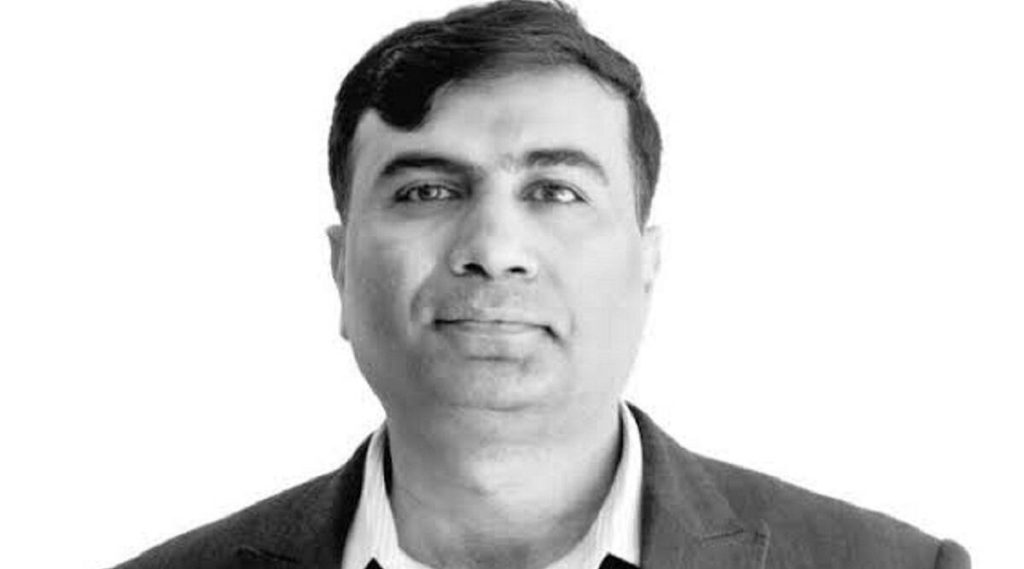
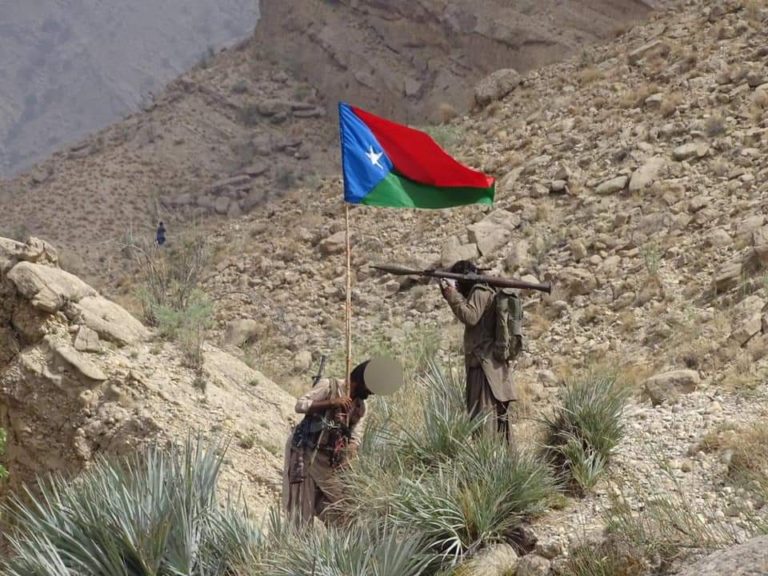
When armed gunmen of Baloch Liberation Army [BLA] abducted Lt Col Laiq Baig Mirza of Pakistan army and his cousin Umer Javed on the night of July 12/13, Pakistan army launched a swift rescue operation using its elite Special Services Group [SSG] commandos and helicopters.
In its statement issued on 14 July, Pakistan army’s media wing Inter Services Public Relations [ISPR] claimed that after receiving information of the abduction, “Army Quick Reaction Forces were immediately despatched to chase fleeing terrorists who traced them moving to their hideouts in general area Mangi Dam.”
To successfully track down a small armed group of just six to eight fighters in complete darkness and in extremely difficult terrain so quickly, is indeed a stellar achievement, which borders on the impossible. Though the abducted officer couldn’t be saved and nor could his cousin be rescued, ISPR’s assertion that Pakistan army had gunned down two BLA fighters who were directly involved in his kidnapping, would certainly help in calming public anger on the army’s inability to ensure security in Balochistan.
In a subsequent statement, ISPR claimed that “On the night of July 14/15, a terrorist hideout was identified and cleared by security forces near Khost in the Khalifat Mountains”. The statement mentioned that five BLA fighters had been killed in the Khost operation. This again was yet another major success for the Pakistan army and ISPR confidently stated that “The sanitisation operation, however, will continue in the area to apprehend the remaining perpetrators and recover Omer Javed”.
However, no sooner had ISPR issued its statement claiming that two BLA fighters had been killed by Pakistan army the night after Lt Col Mirza was abducted, BLA issued a strong rebuttal. Terming ISPR’s claims as “merely propaganda tactics to hide its catastrophic failures in Balochistan,” BLA spokesperson Jayaand Baloch maintained that “After executing the special operation in Ziarat, freedom fighters of BLA’s Special Tactical Operations Squad successfully reached their desired destinations,” adding, “In the whole operation not even a single fighter of BLA was injured or killed”.
Even before Lt Col Mirza was finally laid to rest, rumours were already doing the rounds that those killed by Pakistan army in the so called “rescue operations” weren’t BLA fighters, and there was more than one reason that lent credence to this assertion. First and foremost, BLA fighters are no novices and as such would have taken extraordinary precautions to conceal their location. So, the very speed and precision with which the Pakistani army was able to locate the abductors of Lt Col Mirza in such difficult terrain that provides excellent cover and concealment, in itself raises serious doubts regarding this claim.
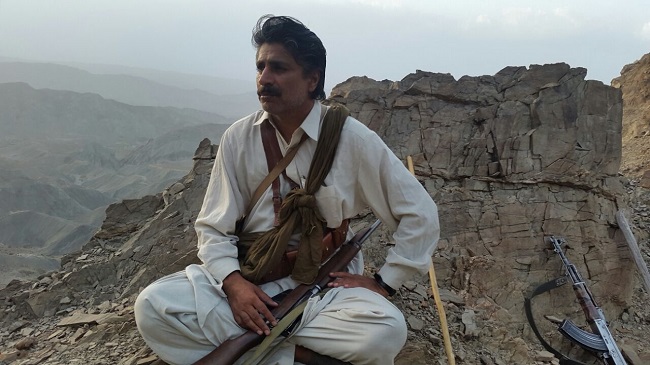
Lt Col Laiq Baig Mirza of Pakistan army (Photo: News Intervention)
Nevertheless, let’s still give the rescue teams the benefit of doubt and assume that they did track down the kidnappers who were moving with their quarry. This brings us to the second question- how could this highly proficient rescue team that had accurately identified the kidnappers in the dead of the night and even managed to kill two of the abductors, suddenly lose track of them as dawn broke? What were the helicopters being used by the army doing? Something is clearly amiss!
Thirdly, ISPR claim that “On sensing their possible encirclement, Terrorists shot Lt Col Laiq Baig Mirza Shaheed and attempted to flee,” is plausible as on being cornered, kidnappers often kill their victims. Hence, BLA may have killed Lt Col Mirza “on sensing their possible encirclement” [as ISPR claims]. However, if the fear of encirclement compelled BLA to kill Lt Col Mirza, why didn’t they kill his cousin as well?
Trying to elude a security dragnet with a hostage in tow is asking for trouble and that’s why ISPR’s claim that the BLA fighters were successful in breaking contact with SSG commandos and getting away along with the kidnapped civilian somehow doesn’t gel. Lastly, the claim that five BLA fighters were killed in the Khost area the next night too needs to be taken with a pinch of salt because BLA has outrightly rejected this claim.
One may ask as to why more credence is being given to the BLA statement rather than ISPR. The answer is simple. In its statement, BLA has announced that “Baloch Liberation Army takes utmost pride in its struggle and the martyrdom of our comrades during this struggle. BLA announces all martyrdoms of its members with great glory and honour. If any of our freedom fighters had lost their lives in this successful operation, we would have taken pride in making it public and paying rich tributes to them.” All said and done, BLA has lived up tothis claim.
So, while past experience validates BLA’s contention as far as accepting casualties is concerned, unfortunately the same can’t be said about ISPR. Didn’t the Pakistan army deny that its soldiers were involved in the 1999 Kargil intrusions, and even disowned its own dead by claiming that these were corpses of ‘mujahideens’ and not its soldiers? When an army can go to the extent of trying to cover its lies by abandoning its soldiers killed in action during the Kargil War, then how can one accept what ISPR says without double-checking?
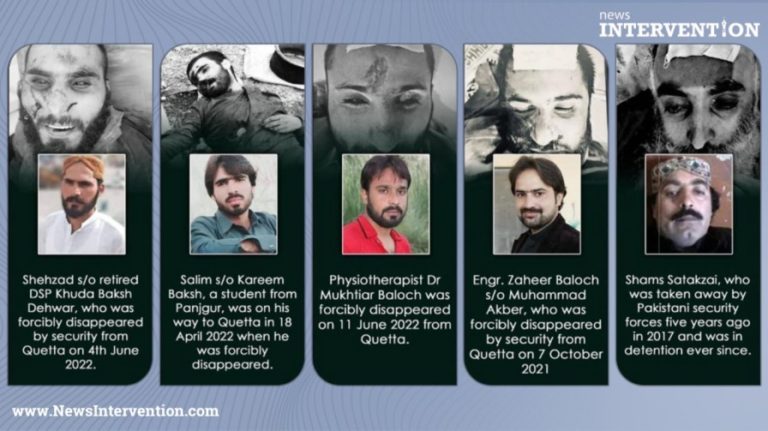
To cut a long story short, the truth is out. Human Rights Council of Balochistan has tweeted that “5 bodies out of 9 have been identified & all 5 persons are registered enforced disappeared persons who had remained in the custody of forces for months & years.” [Sic]. By providing specific details of their enforced disappearances, unlike ISPR, it has left nothing to speeculation as is evident from the information shared below:
· Victim 1- Shams Satakzai, who was forcibly disappeared by [Pakistani] forces five years ago and has remained in custody.
· Victim 2- Salim Karim, a student and resident of Panjgur who was whisked away [by the Pakistani military] in April 2022 when he was on his way to Quetta.
· Victim 3- Dr Mukhtar, a physiotherapist by profession who was forcibly disappeared on 11 June, 2022 from Quetta.
· Victim 4- Engineer Zaheer Bangulzai who was forcibly disappeared [ by security forces/ intelligence agencies] from his office at Airport Road Quetta on 7 October 2021.
· Victim 5-Shehzad Khuda Bakhsh, who was abducted by security forces on 4 June 2022 and had remained ‘disappeared’ since then.
While this revelation about these staged killings may shock others, it’s nothing new for the hapless people of Balochistan. In fact, the HR Council of Balochistan has aptly summed it up by saying, “Extrajudicial execution of Eds persons [victims of Enforced Disappearances] in staged encounters is not a new phenomenon. State has been practicing it since the adoption of EDs, kill and dump policy”!
*Previous interviews listed chronologically after interview.*
Scott Douglas Jacobsen: What defines victimization? What defines a real victim in contrast to a fake victim?
Prof. Shmuel “Sam” Vaknin: Victimization involves the denial of the self-determination, identity, self-actualization, rights, and boundaries of a person without their express consent and collaboration.
Jacobsen: What makes victim identity movements, in fact, movements?
Vaknin: When victimhood becomes an organizing and explanatory (hermeneutic) principle, a determinant of the victim’s identity, and a socially binding force centred around grievances; prosocial or communal grandiosity; entitlement; conspiracism (paranoid or persecutory delusions); aggressive engagement or, on the other end of the spectrum, schizoid withdrawal; dysempathy; defiance (reactance); and contumaciousness (rejection of expertise and authority) – we have on our hands a victim identity movement.
No one is a victim. We may end up being victimized – but it doesn’t render us victims for life, it doesn’t brand us.
Jacobsen: Some studies in British Columbia, as you have noted, found some victimhood movements have been hijacked by narcissists and psychopaths. How does this muddy the waters of the real justice movements and make them ineffectual?
Vaknin: This was not the only study to have unearthed this very disconcerting undertow. We are beginning to wake up to the reality of what Gabay et al. call (2020) Tendency for Interpersonal Victimhood, TIV). “professional” or “career” victims with emphasized narcissistic and psychopathic tendencies find new homes (“pathological narcissistic spaces”) in these social justice upswells.
It makes it difficult to tell apart legitimate evidence-based grievances from entitlement-fueled manipulative and counterfactual claims.
One helpful way to distinguish the two is by noting that narcissists and psychopaths are destructive, not solutions-oriented. They thrive on negative affects such as anger and envy and are loth to invest in the routine and tedious chores attendant upon rectifying wrongs and building a better world.
Jacobsen: What have been extreme historical cases of this going awry, as this phenomenon has been historically cyclical, including one close to ‘home’ in 2004?
Vaknin: Nazism is a victimhood movement gone awful. And, to a lesser degree the white man’s grievance movement implausibly headed by Trump is a more recent example of such subversive dynamics.
Jacobsen: What is the typical arc of development of victim movements?
Vaknin: The sociologist Bradley Campbell suggested that we have transitioned from a culture centred around dignity to one based on victimhood.
Learn more by reading Habermas, Fukuyama, and Foucault. All justice-seeking movements start with grievances (injustices). They decry and seek to remedy and reverse individual transgressions (eg, the narcissistic abuse online movement) or societal and cultural biases (implicit and explicit), discrimination, and suppression.
The victims organize themselves around exclusionary identity politics and intersectionality and this orientation results in grandiosity and entitlement, in other words: in growing narcissism. Increasingly more aggressive, these movements often become psychopathic (defiant and contumacious) and demonize the Other.
Left-leaning victimhood movements centre around entitlement and reparations claims on the majority, on social institutions, and on history. Right-wing movements are conspiracy-minded and avoidant, but also more violent.
Narcissists and psychopaths gravitate to such movements in order to obtain narcissistic supply, money, power, and sex. They become the public faces and the media darlings on these hapless victims, having hijacked their legitimate complaints and demands.
Jacobsen: How much of the online content on narcissism and psychopathy is garbage (worthless or worse) now?
Vaknin: About 90%. It is not only worthless (wrong), it is dangerously misleading and entrenches a lifelong self-defeating and self-aggrandizing victimhood stance even as it demonizes and mythologizes abusers.
Jacobsen: What is the Tendency for Interpersonal Victimhood (TIV)?
Vaknin: A series of two studies by Israeli scholar Gabay and others, published in 2020. The authors provided this abstract:
“In the present research, we introduce a conceptualization of the Tendency for Interpersonal Victimhood (TIV), which we define as an enduring feeling that the self is a victim across different kinds of interpersonal relationships. Then, in a comprehensive set of eight studies, we develop a measure for this novel personality trait, TIV, and examine its correlates, as well as its affective, cognitive, and behavioral consequences. In Part 1 (Studies 1A-1C) we establish the construct of TIV, with its four dimensions; i.e., need for recognition, moral elitism, lack of empathy, and rumination, and then assess TIV’s internal consistency, stability over time, and its effect on the interpretation of ambiguous situations. In Part 2 (Studies 2A-2C) we examine TIV’s convergent and discriminant validities, using several personality dimensions, and the role of attachment styles as conceptual antecedents. In Part 3 (Studies 3–4) we explore the cognitive and behavioral consequences of TIV. Specifically, we examine the relationships between TIV, negative attribution and recall biases, and the desire for revenge (Study 3), and the effects of TIV on behavioral revenge (Study 4). The findings highlight the importance of understanding, conceptualizing, and empirically testing TIV, and suggest that victimhood is a stable and meaningful personality tendency.”
“New research provides evidence that narcissism, psychopathy, and Machiavellianism — maladaptive personality traits known as the “Dark Triad” — are associated with overt displays of virtue and victimhood. The study suggests that people with dark personalities use these signals of “virtuous victimhood” to deceptively extract resources from others.”
(“Signaling Virtuous Victimhood as Indicators of Dark Triad Personalities“, was authored by Ekin Ok, Yi Qian, Brendan Strejcek, and Karl Aquino, Journal of Personality and Social Psychology, American Psychological Association, May 2020).
Jacobsen: What are the primary signifiers of narcissists and psychopaths who have or might hijack legitimate victimhood or justice movements looking for money, power, and sex?
Vaknin: Ironically, these usually are prosocial or communal narcissists. They often “control from the bottom” (emotionally blackmail by being self-sacrificial). So, the infestation of victimhood activism by narcissists and psychopaths is the tip of a submerged iceberg of ersatz altruism.
Some narcissists are ostentatiously generous: they dedicate time and other resources to social justice movements and to activism, they donate to charity, lavish gifts on their closest, abundantly provide for their nearest and dearest, and, in general, are open-handed and unstintingly benevolent. It is a form of virtue signalling. How can this be reconciled with the pronounced lack of empathy and with the pernicious self-preoccupation that is so typical of narcissists?
The act of giving enhances the narcissist’s sense of omnipotence, his fantastic grandiosity, and the contempt he holds for others. It is easy to feel superior to the supplicating recipients of one’s largesse. Narcissistic altruism is about exerting control and maintaining it by fostering dependence in the beneficiaries.
But narcissists give for other reasons as well.
The narcissist flaunts his charitable nature as a bait. He impresses others with his selflessness and kindness and thus lures them into his lair, entraps them, and manipulates and brainwashes them into subservient compliance and obsequious collaboration. People are attracted to the narcissist’s larger than life posture – only to discover his true personality traits when it is far too late. “Give a little to take a lot” – is the narcissist’s creed.
This does not prevent the narcissist from assuming the role of the exploited victim. Narcissists always complain that life and people are unfair to them and that they invest far more than their “share of the profit”. The narcissist feels that he is the sacrificial lamb, the scapegoat, and that his relationships are asymmetric and imbalanced. “She gets out of our marriage far more than I do” – is a common refrain. Or: “I do all the work around here – and they get all the perks and benefits!”
Some narcissists are compulsive givers.
To all appearances, the compulsive giver is an altruistic, empathic, and caring person. Actually, he or she is a people-pleaser and a codependent. The compulsive giver is trapped in a narrative of his own confabulation: how his nearest and dearest need him because they are poor, young, inexperienced, lacking in intelligence or good looks, and are otherwise inferior to him. Compulsive giving, therefore, involves pathological narcissism. In reality, it is the compulsive giver who coerces, cajoles, and tempts people around him to avail themselves of his services or money. He forces himself on the recipients of his ostentatious largesse and the beneficiaries of his generosity or magnanimity. He is unable to deny anyone their wishes or a requests, even when these are not explicit or expressed and are mere figments of his own neediness and grandiose imagination.
Some narcissists are ostentatiously generous — they donate to charity, lavish gifts on their closest, abundantly provide for their nearest and dearest, and, in general, are open-handed and unstintingly benevolent. How can this be reconciled with the pronounced lack of empathy and with the pernicious self-preoccupation that is so typical of narcissists? The act of giving enhances the narcissist’s sense of omnipotence, his fantastic grandiosity, and the contempt he holds for others. It is easy to feel superior to the supplicating recipients of one’s largesse. Narcissistic altruism is about exerting control and maintaining it by fostering dependence in the beneficiaries.
The People-pleasers
People-pleasers dread conflicts and wish to avoid them (they are conflict-averse) – hence their need to believe that they are universally liked. Always pleasant, well-mannered, and civil, the conflict-averse people-pleaser is also evasive and vague, hard to pin down, sometimes obsequious and, generally, a spineless “non-entity”. These qualities are self-defeating as they tend to antagonize people rather than please them.
But conflict-aversion is only one of several psychodynamic backgrounds for the behavior known as “people-pleasing”:
1. Some people-pleasers cater to the needs and demands of others as a form of penance, or self-sacrifice;
2. Many people-pleasers are codependents and strive to gratify their nearest and dearest in order to allay their own abandonment anxiety and the ensuing intense – and, at times, life-threatening – dysphoria (“if I am nice to him, he won’t break up with me”, “if I cater to her needs, she won’t leave me”);
3. A few people-pleasers are narcissistic: pleasing people enhances their sense of omnipotence (grandiosity). They seek to control and disempower their “charges” (“she so depends on and looks up to me”). Even their pity is a form of self-aggrandizement (“only I can make her life so much better, she needs me, without me her life would be hell.”). They are misanthropic altruists and compulsive givers.
All people-pleasers use these common coping strategies:
1. Dishonesty (to avoid conflicts and unpleasant situations);
2. Manipulation (to ensure desired outcomes, such as an intimate partner’s continued presence);
3. Fostering dependence: codependent people-pleasers leverage their ostentatious helplessness and manifest weaknesses to elicit the kind of behaviours and solicit the benefits that they angle for, while narcissistic people-pleasers aim to habituate their targets by bribing them with gifts, monopolizing their time, and isolating them socially;
4. Infantilization: displaying childish behaviours to gratify the emotional needs of over-protective, possessive, paranoid, narcissistic, and codependent individuals in the people-pleaser’s milieu;
5. Self-punishment, self-defeat, and self-sacrifice to signal self-annulment in the pursuit of people-pleasing.
Jacobsen: What, historically speaking, can be done to combat these Cluster B bad behaviours connected to some social movements?
Vaknin: As the grievances of these movements are addressed, they become a part of the establishment. This is when the hard work begins: the labors of writing laws, regulatory oversight, politics, negotiations and compromise, and the tedium of perseverance and routine.
These newfangled demands on the psychological and logistical resources of the movement and its adherents drive narcissists and psychopaths away: they are unaccustomed to and reject the hard slog and the often Sisyphean undertakings of public policy.
Shoshanim: Thanks so much for the time and opportunity, Prof. V.
Shoshanim’s Shoshanim: V for Victim or V for Vaknin? Just kidding. Thank you for suffering me yet again!
Previous Electronic ‘Print’ Interviews (Hyperlinks Active for Titles)
Pakistan-occupied Kashmir (POK) has been grappling with a flurry of protests over the last several days disrupting day-to-day life and bringing the administration to a standstill. The local Kashmiris are furious over rising price of food, fuel and unemployment. The absence of rule of law coupled with high-handed behaviour of Pakistan Army and blatant corruption within the puppet Muzaffarabad government has added fuel to fire. This has resulted in massive uprising in all the ten districts of POK.
“Demonstrations of some sort are taking place in all 10 districts of AJK (POK) and roads leading to Pakistan are also being blocked almost on a daily basis. The people’s frustration is amplified by the absence of executive power among local politicians and a lame administration/judiciary. They have finally understood that Pakistan is a sinking ship and they don’t want to be on board,” observed Tanveer Ahmed, researcher and senior journalist based in the region. Tanveer Ahmed was arrested by the Pakistani establishment in August 2020 when he pulled down Pakistani flag at the Maqbool Bhat Square at Dadyal.
That the Muzaffarabad government has always taken diktats from Rawalpindi is an open secret. So when the Tanveer Ilyas-led Muzaffarabad administration imposed higher taxes on electricity ‘supplied’ in the region it infuriated local Kashmiris and they could figure out that it was Islamabad-Rawalpindi nexus that is behind the higher taxes. Local Kashmiris understand that the hydroelectricity is generated in POK and then transmitted to Pakistan from where this electricity is re-transmitted to the ten districts after levying heavy taxes and surcharge. Islamabad’s economic chaos has had an effect on Kashmiris as well. Price of food grain and fuel has been rising steadily, eating up the monthly expense of a household and adding up to collective anger.
Further, tourism is the major source of bread and butter for Kashmiris. However, the Pakistani military’s taking over of tourist hotspots and making a tourism development authority has incensed the local Kashmiris. These local Kashmiris are also jittery about Pakistan’s efforts to gobble POK into its federation. Pakistan PM Shehbaz Sharif has formed a high-level committee to prepare a draft for 15th amendment to the AJ&K Interim Constitution Act 1974 by July 31. “Pakistan is making serious attempts to integrate AJK (POK) into its federation,” explained Tanveer Ahmed.
The result has been massive widespread protests and demonstrations at Rawalakot, Bagh, Poonch, Muzaffarabad and Neelam Valley among other districts in Pakistan-occupied Kashmir.
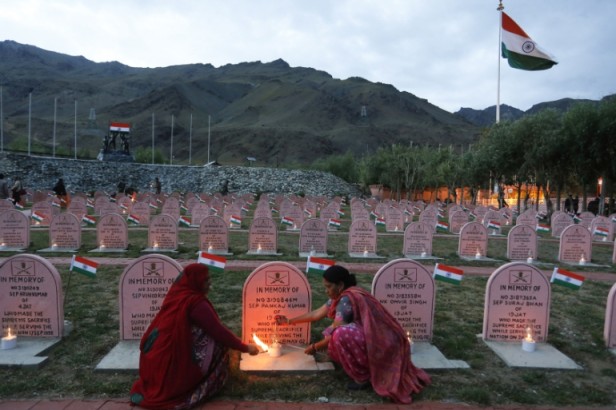
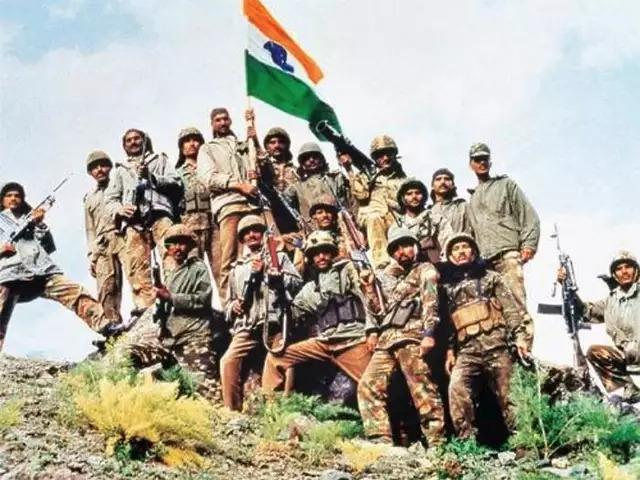
Since war begets nothing but death and destruction, to say that it also brings out some good may appear paradoxical. Yet, despite the bestial behaviour displayed by Pakistan army during the Kargil war of 1999 that brazenly violated the fundamental principle of military ethics and international law, the exemplary professional conduct displayed by the Indian army was a reassuring relief, making it the good part of this war.
Continuing with the good part. As a thoroughbred professional military, the Indian army respects and appreciates exceptional valour even when it’s displayed by the enemy. Impressed by the extraordinary courage exhibited by Capt Karnal Sher Khan of Pakistan army who was killed while leading his men in a counter attack to recapture Tiger Hill, an Indian army Brigadier wrote a citation for Capt Khan’s act of valour and slipped it into the pocket of the deceased Capt before handing over his body to Pakistan army.
[Whether Pakistan army took any cognisance of the ‘citation’ written by the Indian Brigadier is not known, but Capt Karnal Sher Khan was awarded Nishan-e-Haider, Pakistan’s highest gallantry award].
The bad part of the Kargil war was that for the first time in the history of modern warfare, an army refused to accept the mortal remains of its own dead soldiers. However, the good part is that in keeping with the age-old code of military conduct, which prescribes that the enemy soldiers killed in combat deserve due dignity after death, the Indian army ensured that the abandoned dead bodies of Pakistan soldiers were buried with military honours and in accordance with prescribed Islamic rituals.
The ugly part of the Kargil war was the inhuman way in which Capt Saurab Kalia and his five team members, who were taken prisoners of war [POW] after they ran out of ammunition, were brutally tortured by the Pakistan army while in captivity and then shot dead. By claiming that Captain Kalia and his team had died due to extreme weather and their bodies were found in a pit, Pakistan may have thought that it could get out of a very messy situation. However, the presence of cigarette burns marks as well as perforated ear drums, gouged eyes, broken bones and amputated genitalia of the Indian army officer and his men unambiguously exposed the perverse barbarism of the Pakistan army.
Another ugly incident was the cold-blooded murder of Indian Air Force [IAF] pilot Sqn Ldr Ajay Ahuja who was forced to eject after his MIG 21 fighter aircraft was shot down by a surface-to-air missile. Pakistani authorities once again tried to conceal the barbarity of its soldiers by trying to peddle the lies that Sqn Ldr Ahuja may have been killed due to accidental injuries sustained while ejecting or as the result of a faulty landing.
However, the gunshot wounds to his head and chest tell an entirely different story and clearly indicate that a defenceless Sqn Ldr Ahuja had been shot either while he was parachuting or after he had landed. Since the post mortem examination also revealed that he had a fractured knee, Sqn Ldr Ahuja would have been incapacitated and unable to move after he hit the ground and as such it’s obvious that he wasn’t shot while making a getaway to evade apprehension!
Continuing with the ugly part of the Kargil War. Captain Haneef Uddin embraced martyrdom in Turtuk sector while leading his men in a daring assault on well-fortified positions occupied by Pakistani troops. Whereas military ethics call for expeditious return of the enemy dead, the Pakistan army took a perverse delight in preventing the extrication of his dead body by indiscriminately firing at those attempting to do so. Resultantly, his mortal remains could only be recovered after 43 days.
Though an extremely tragic occurrence, the good part is that this incident once again brings to the fore Indian army’s unconditional commitment and firm determination of bringing back its dead rank and file home. It also exhibits the grave concern of a bereaved mother as regards the safety of her martyred son’s comrades, which is both touching and inspiring. While the then Pakistan army chief Gen Pervez Musharraf had no qualms about disowning the dead bodies of his own soldiers, his Indian counterpart Gen VP Malik was so perturbed by the delay in retrieving the dead body of Capt Haneef that he personally went and met the martyr’s mother Mrs Hema Aziz.
As a mother, the very thought of her son’s dead body lying in the open and exposed to the elements would have certainly traumatised Ms Aziz, but this brave lady never expressed her anguish or complained. Au contraire, quoting from her interview with Ms Aziz, noted author Ms Rachna Bisht, that when Gen Malik told Capt Haneef’s mother that her son’s dead body couldn’t be retrieved because the enemy was firing constantly, “Mrs Hema Aziz told him that she did not want another soldier to risk his life to get her son’s body.”
Who says heroes only come in uniform!
Another good thing that happened during the Kargil War was that even though the Pakistan army did all it could to thwart extrication of Capt Haneef’s dead body, by doing just the opposite in Siachen Glacier where it had captured a Pakistani position known as ‘Bilal Post’, the Indian army demonstrated that it bore no grudge or discrimination against dead Pakistani army men. In this action, one Pakistan army officer named Capt Taimur Malik along with 10 soldiers were killed, but since Pakistan had refused to accept their dead bodies, all the deceased were buried in situ with military honours.
After the Kargil war ended, the aged grandfather of Late Captain Taimur Malik who was living in London, approached the Indian Defence Attaché there. Revealing that the deceased Captain’s father was also a former Pakistan army officer, he requested repatriation of his grandson’s mortal remains. The Indian army readily agreed, but on the condition that along with Captain Malik’s mortal remains, the Pakistan army should also accept all the other dead bodies of its soldiers killed on what is now renamed as ‘Navdeep Top’. Once this was accepted, the dead bodies were handed over to the Pakistan army.
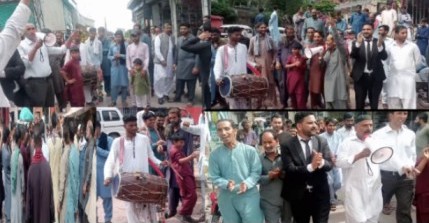
In view of the alarming situation of taxes imposed on electricity, especially fuel adjustment tax, load shedding, violations of rights, quota cut, malnutrition crisis,a protest began with huge public participation in POK. The campaign was carried out with hundreds of campaigners in more than a dozen places like Nakyal Padwah Chowk, Milad Chowk, Banala Road, Mujahan Road, Mohra Adda, Pir Kalingar Adda, Market, Chowk. The aim was to organize and mobilize the people so as to avoid economic exploitation; to awaken the ruling class and draw attention to the situation of blocked drains and wells and the dilapidated state of Chowk to Pir Kalingar Road. Drums were used to attribute to the awareness and the protest was a slap on the faces of the ruling class and the authorities.
Speaking on this occasion, speakers Shah Nawaz Ali Sher (High Court advocate), Chacha Shafiq Kashmiri, advocate Sardar Jawad Anwar Khan, Chaudhry Abdul Aziz Jarvi, Mujeeb Alam Chaudhry, Ejaz Chubb, Chaudhry Sadaqat Baghi, Usman Ali, Naveed Ahmed and others said that all the hydroelectric power was generated from the region and all they needed was just 250 megawatts of domestic electricity from the generated electricity. They said that they were also paying the bill of a few hundred units in the form of fiscal adjustment tax and other taxes of more than Rs. 55,000. They complained of injustice done to the people of POK and warned that soon people would burn local trains instead of submitting unjust sky rocketing electricity bills. They even warned that they would soon announce civil disobedience movement. They said that they were being denied their basic human rights and that they were being treated unjustly.
“While forming any exile government, it is important to include all stakeholders ‘parties and organizations and there need to be a unanimous agreement among them. No individual or organization in its personal capacity, including BNM, has the right to announce the establishment of the government-in-exile of Balochistan and claim to be the ‘self-proclaimed Prime Minister,” said the spokesperson for Baloch National Movement (BNM). “…therefore, it is vital to make this clear to tell the Baloch nation and the world that this so-called government and its so-called prime minister do not have the confidence of BNM,” clarified the BNM spokesperson. He further added that BNM has always held the position that the organizations associated with the freedom movement in Balochistan are the true heirs of Baloch movement and all national level decisions should be taken through mutual consent.
“Without the will of Baloch independence armed forces and peaceful organizations, any decision regarding the Baloch movement and the future of Balochistan will have no status among the Baloch people. And so there is no principled, political and democratic standing of this so-called exile government.”
The Baloch National Movement (BNM) is the largest political movement in Pakistan-occupied Balochistan that reflects the will of common Baloch. The clarification was issued when several media groups and social media activists started talking about Balochistan’s government-in-exile led by one Naila Qadri.
The BNM spokesperson said that it was part of their party’s manifesto and policy that they would take all freedom-loving forces on board. “That is why we are in close contact with the leadership of all political parties. In future if there is a need of such a government that needs to be formed in exile, then that decision would not be of any individual, nor of any organization, but a joint decision would also be announced from a common platform.”
“We request our neighboring countries and sympathetic organizations that if they want to help the Baloch nation, they should not spend their resources and strength on ‘individuals’ but give importance to institutions and expect that the world will build relations with the real political representatives of Balochistan instead of artificial self-proclaimed leader,” the BNM spokesperson clarified.
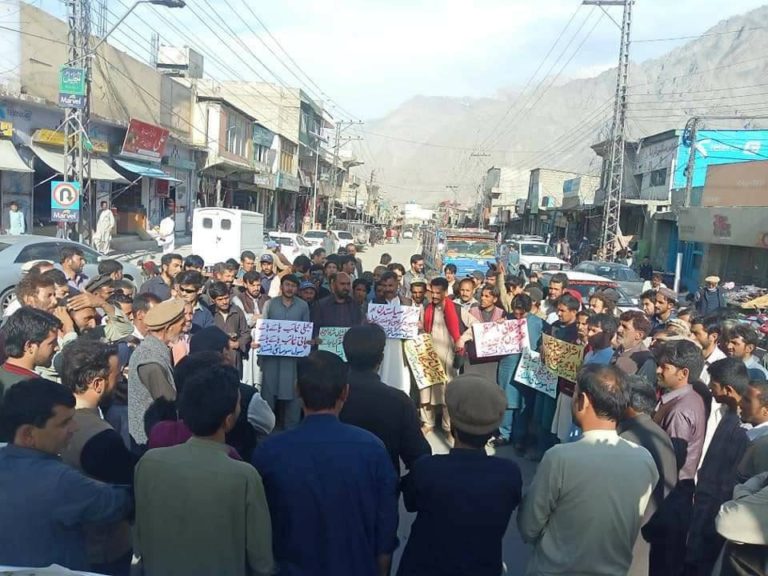
Baloch pro independence leader and head of Balochistan Liberation Front, Dr Allah Nazar Baloch, made a social media statement in Balochi language on Twitter, on the martyrdom of Baloch missing persons in a fake encounter by the Pakistani army in Ziarat and the shelling and violence of the forces on the peaceful protest of their families in Quetta.He expressed: “After burying the bodies of extra-judicially killed missing persons, the world must realize that Baloch’s struggle for independence is just. Those in denial, be they politicians or intellectuals, are answerable to their conscience. Salute to the mothers and sisters who stand against tyranny.”
Pakistani military’s claims of killing freedom fighters of Baloch Liberation Army during its so-called search operation around Ziarat and Harnai areas are merely propaganda tactics to hide its catastrophic failures in Balochistan.
After executing the special operation in Ziarat, freedom fighters of BLA’s Special Tactical Operations Squad successfully reached their desired destinations. In the whole operation not even a single fighter of BLA was injured or killed.
Despite deploying dozens of choppers, drones and thousands of its special forces, the Pakistani military was not able to contend Baloch Liberation Army at any fronts. BLA’s operation was a complete success from the beginning to the end. Therefore, to hide its colossal failures Pakistani military has highly likely killed forcibly disappeared persons, and portraying them as BLA fighters to deceive its people.
Baloch Liberation Army takes utmost pride in its struggle and the martyrdom of our comrades during this struggle. BLA announces all martyrdoms of its members with great glory and honour. If any of our freedom fighters had lost their lives in this successful operation, we would have taken pride in making it public and paying rich tributes to them.
Lt. Colonel Laeeq’s arrest and trial in Baloch national court has once again demonstrated the professionalism, and strategic and operational capabilities of Baloch Liberation Army. Our such operations will further escalate in coming days.
Through this statement, BLA would like to tell the people of Punjab that stop your sons from being the consumables in the war of few greedy egoistic generals. Balochistan belongs to Baloch nation and it is their motherland. Therefore, Baloch nation will achieve its freedom at all costs and the Pakistani state and its Army are destined for a dreadful defeat in Balochistan. Now its on the people of Punjab whether they choose to receive body bags of their sons on daily basis or they will force their military to peacefully withdraw from Balochistan.
Sooner or later, elections to the legislative assembly will be held in J&K. Political parties have begun pre-election activities and mobilization of cadres. It is premature to speculate about the formation of an election coalition because there are not only so many parties and groups in the field but there are varying ideologies and perceptions as well. Given the history of J&K elections, it is difficult to predict the behaviour of the impending political process.
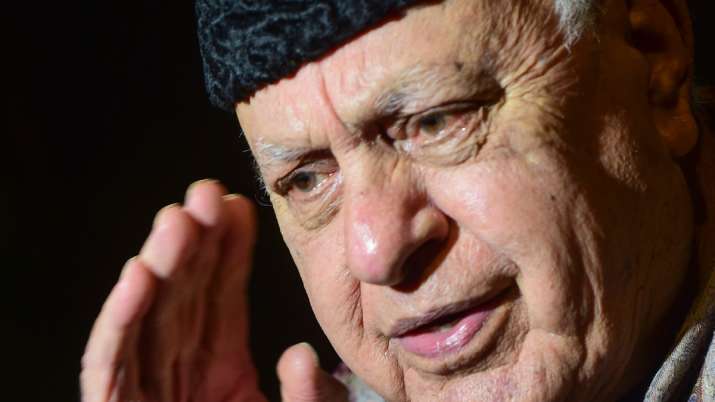
However, a few days ago NC President Dr Farooq Abdullah announced that his party would fight elections jointly with PDP. The PDP Chairperson Mehbooba Mufti confirmed that her party had decided to fight elections jointly with NC.
Election alliances are nothing new to the history of elections in our country. However, historically speaking, there was no love lost between the NC and PDP. Some commentators even went to the extent of saying that the PDP was created to undo the dynastic hegemony of the NC and to snatch from its hands the monopoly of Kashmir politics. Rivalry among political parties is a known phenomenon and rapprochement and reconciliation, too, are part of active and healthy politics. When the Gupkar Alliance was formed, Dr Farooq retained bossing of the organization and the PDP chairperson was satisfied with playing the second fiddle.
After the fall of Mehbooba Mufti’s government, the PDP cadres began to thin out; it lost its shine. However, the Jamaat-e-Islami continued supporting it and she became the unconventional spokesperson of the Jama’at. Open anti-India stance brought them together because both felt a threat looming large against the dynastic rule.
Dr Farooq has never been comfortable with the Jama’at. His father Sheikh Sahib had mended the fence with the Jama’at during his second stint in the office (1975 to 1982) and had established a liaison with the Saudi monarchy, which was instrumental in bringing about a rapprochement between the NC and the Jama’at in Kashmir in the aftermath of the execution of Zulfikar Bhutto of Pakistan. True, Farooq Abdullah adjusted all the teachers of the Jamaat-e-Islami darsgahs (seminaries) into government service yet that did not mean that he had altogether abandoned the ideological difference between what he stood for and what the Jama’at pursued. Farooq is the last to opt for Kashmir’s accession to Pakistan. It is not for the love of India or democracy; it is because he knows what his fate will be.
Dr Farooq is a victim of his father’s dichotomy about J&K’s accession to the Indian Union in 1947. He is aware wherefrom the scourge of Theo-fascism visited Kashmir valley in 1990. But he deliberately underplays the history when he says that “in 1990 a wave came that was not ours but it came from somewhere else.” He was the then chief minister and he had a large intelligence establishment under his command. He knew Kashmiri Muslim boys were crossing over to PoK in hundreds, joining terrorist camps set up by Pakistan Army where Kashmiri youth were trained, brainwashed and sent back with arms and ammunition to derail peace in Kashmir. As chief minister of J&K, he had the constitutional obligation of gearing up all resources at his disposal to scuttle the mischief of Pakistan. He had the option of approaching the Union government with the SOS request to activate security establishment and stand up to the challenge thrown by the enemy. We have no evidence of Farooq as chief minister approaching the Union Home Ministry throughout the summer of 1989 for reinforcement of security staff to face the threat. It was neither “a wave nor from somewhere” as he says. It was a calculated and well-planned Fascist attack aimed at the ethnic cleansing of Kashmir and derailment of a democratic dispensation. Dr Farooq remained a silent spectator.
Dr Farooq has begun his election campaign by addressing party gatherings. What is he talking to them about is what we would like to bring under a scanner? He is fully conscious that the present days are neither of the 1980s nor 1990s nor is his audience what it was then. He is also conscious that the Kashmiri middle class is much more awakened today than it was two or three decades ago. Therefore, he has changed the strategy of the election narrative. He is taking recourse to chauvinism and talks of things like “the region at a crucial stage” or “our children, our identity and our historical uniqueness in throes of danger”. He talks of “forces inimical to our unique identity,” and “diktats undermining our constitutionally guaranteed rights”. Then he talks of the “destruction of rural economy and crushing of farm incomes and rural unemployment” etc.
These utterances give an impression that the State is under some repressive and tyrannical forces with an agenda of demolishing and destroying the state and its people. He wants to convey subtly that there is a deep conspiracy somewhere under the sky to see an end to Jammu and Kashmir. Such irresponsible and emotive utterances are not expected from a person who has been the Chief Minister of the State for decades in the end, and also a Minister in the Union government and presently an MP. Having adorned all these high and respected positions offered to him by the Indian nation, these positions have given him a very deep and clear idea of the philosophy and administrative mechanism of the Indian Union and the broader Indian nation. If with all this fund of knowledge and experience he talks of forces inimical to his state and usurpation of the rights of the people, he has no right to continue as an MP and speak for the people of Kashmir. He should have quit the parliament long back. But he has not, and that speaks of his real intentions.
He started his election campaign by vitiating the minds of the youth against India, against the Indian administration and the Indian democratic dispensation. We clearly understand what he means by “our culture, our identity and our historical uniqueness in throes of danger”. Certainly his “our” does not constitute the people of the Jammu and Ladakh regions. He is specific about the people of Kashmir sans its ethnically cleansed Hindu population.
This is a subtle way of saying that the Islamic culture, Islamic identity and Islamic uniqueness of the people of the valley are faced with danger. Yes, of course, they are faced with dangers like the ones mentioned by Farooq. But who is at the root of the danger and where does the source of the danger lie? What steps have Farooq and his team taken to forestall that danger? Give me a single occasion when Farooq or his Gupkar bandwagon travellers even once said publicly that the Theo-fascists raised and abetted in Pakistan and warmly received and supported by the local Kashmiri Muslims are the source of the scourge that has befallen Kashmir. Show me a single appeal made by Farooq and his fellow travellers who brought out a mass of two or three lakh Kashmiris on the streets to protest against the unleashing of Theo-fascist activities in Kashmir. Farooq and other political entities pursuing his line of action had a good understanding among themselves to let terror and fundamentalist ideology thrive in Kashmir so that liberal, democratic and forward-looking elements are suppressed because they had been lately raising their voice against the dynastic rule.
And when he talks of identity and historic uniqueness, he means that the identity of Kashmiris made them slaves and underdogs of dynastic and hegemonic rule, which made them a captive of personality cult, which had mastered the art of bullying the naive Indian leadership by raising the slogan “ sandbox band karoge to bandooq uthaenge”.
The historical uniqueness which Farooq goes on trumpeting is that the Kashmiri Muslims do not consider Indian Muslims as part of the ummah but the Pakistani Muslims are. If Kashmiri Muslims had not stuck to fictional uniqueness, they would have thrown their lot with the 22 crores of Indian Muslims and sought the roadmap from the nationalist Muslim leadership on how they should steer through safe.
Alienating the Kashmiri Muslims further from India by playing the old card of victimhood is not what is in the interests of Dr Farooq or the Gupkar team or the people of Kashmir Valley. If these leaders have an open mind, they should try to find out the pain and suffering of their brethren on the other side of the LoC. Kashmiris laugh under their sleeves when Farooq and other leaders talk of Kashmir victimhood. We do not mean to say that there is nothing more left to be done in Kashmir. No, that is not the right approach. But we expect a leader of Farooq’s stature to be honest to his conscience and along with enumerating the discrepancies, if any, also note the achievements made by the state in the last decade. The opposition does not mean animosity or malice, opposition does not mean butchering the truth and adorning the falsehood. Opposition means expressing through word and deed the responsibility of ameliorating the condition of the people and chartering the path of progress. There are clear historic realities that have to be accepted. Accession of the State can never be annulled, Article 370 will never be revoked and democratic dispensation will never be replaced by any obscurantist dispensation. In preserving this status, militancy and Theo-fascism have to be eliminated.
We use cookies on our website to give you the most relevant experience by remembering your preferences and repeat visits. By clicking “Accept All”, you consent to the use of ALL the cookies. However, you may visit "Cookie Settings" to provide a controlled consent.
This website uses cookies to improve your experience while you navigate through the website. Out of these, the cookies that are categorized as necessary are stored on your browser as they are essential for the working of basic functionalities of the website. We also use third-party cookies that help us analyze and understand how you use this website. These cookies will be stored in your browser only with your consent. You also have the option to opt-out of these cookies. But opting out of some of these cookies may affect your browsing experience.
Functional cookies help to perform certain functionalities like sharing the content of the website on social media platforms, collect feedbacks, and other third-party features.
Performance cookies are used to understand and analyze the key performance indexes of the website which helps in delivering a better user experience for the visitors.
Analytical cookies are used to understand how visitors interact with the website. These cookies help provide information on metrics the number of visitors, bounce rate, traffic source, etc.
Advertisement cookies are used to provide visitors with relevant ads and marketing campaigns. These cookies track visitors across websites and collect information to provide customized ads.
Necessary cookies are absolutely essential for the website to function properly. These cookies ensure basic functionalities and security features of the website, anonymously.
Cookie
Duration
Description
cookielawinfo-checkbox-analytics
11 months
This cookie is set by GDPR Cookie Consent plugin. The cookie is used to store the user consent for the cookies in the category "Analytics".
cookielawinfo-checkbox-functional
11 months
The cookie is set by GDPR cookie consent to record the user consent for the cookies in the category "Functional".
cookielawinfo-checkbox-necessary
11 months
This cookie is set by GDPR Cookie Consent plugin. The cookies is used to store the user consent for the cookies in the category "Necessary".
cookielawinfo-checkbox-others
11 months
This cookie is set by GDPR Cookie Consent plugin. The cookie is used to store the user consent for the cookies in the category "Other.
cookielawinfo-checkbox-performance
11 months
This cookie is set by GDPR Cookie Consent plugin. The cookie is used to store the user consent for the cookies in the category "Performance".
viewed_cookie_policy
11 months
The cookie is set by the GDPR Cookie Consent plugin and is used to store whether or not user has consented to the use of cookies. It does not store any personal data.