Home Blog Page 260

Amarnath flash flood and Indian Army’s rescue efforts

Last Friday’s flash flood of unprecedented magnitude near the Amarnath shrine in J&K that completely obliterated a camping site of devotees was so swift and substantial that it gave the hapless pilgrims virtually no chance to escape. Consequently, several injured devotees were trapped under a gigantic mound of rocks, boulders and earth that covered the campsite, while many more were buried underneath.

Rescue operations to extricate the unfortunate devotees presented a colossal challenge due to several reasons. One, the area affected by the flash flood was very large and with soil and rock debris spread all over, identifying the precise location of the tents housing pilgrims buried underneath, was extremely difficult. Two, since the flash flood hit the pilgrim camp late in the evening, darkness fell soon thereafter, which made search for survivors extremely difficult.

While those who were injured or trapped but conscious could be located by their cries for help, to find those unable to call for help in the vast sea of rubble was a herculean task as it entailed a physical search for survivors in complete darkness. Lastly, though the civil administration had  prepositioned route clearing detachments along the pilgrimage tracks, but these didn’t have any heavy earthmoving equipment as since the area near the shrine had a past history of only  minor land slips and rock slides, which could be cleared manually. 

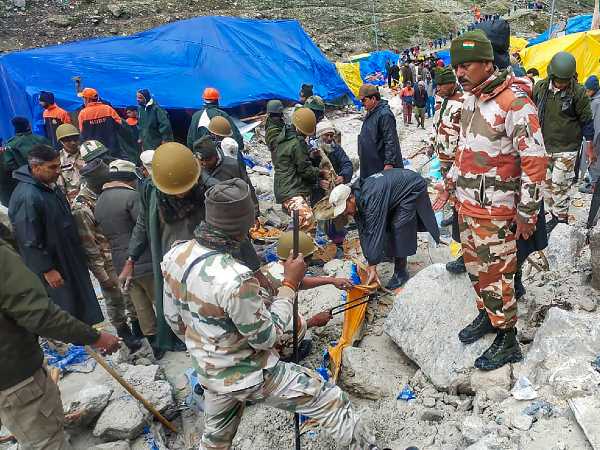
Indian Army digging the debris to rescue people trapped underneath (Photo: Social Media)

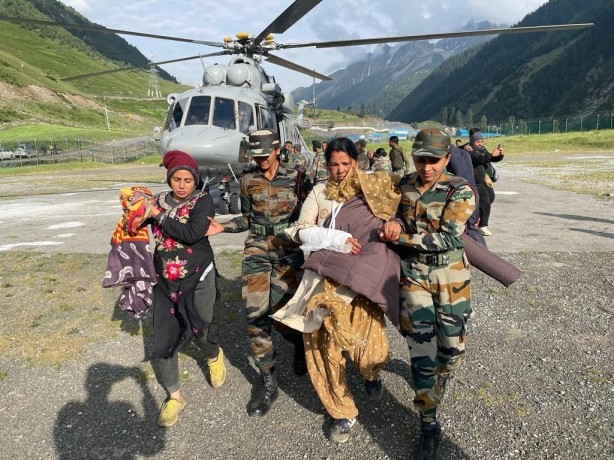
Notwithstanding these fearful odds, rescue efforts commenced immediately and the army, which was deployed for security duties, quickly became one of the first responders. While the civil administration took prompt action to augment rescue efforts, the army also pitched-in with full vigour. While soldiers at the incident site meticulously scoured the area searching for survivors, the army rushed in heavy earthmoving and specialised equipment like ground penetrating radars to expedite rescue efforts, which given the poor state of surface communication due to incessant rains, in itself was a herculean task.

In addition to round the clock rescue and relief work, and despite adverse climatic conditions, the army also undertook the construction of an alternate route towards the Amarnath cave that bypasses the water channel created by the July 8 flash floods so that the pilgrimage could continue. With the death of 16 pilgrims and another 40 devotees still missing, this incident is undoubtedly a big national tragedy, but as stated earlier, nothing could have been done to save these lives since the flash flood was so swift, sudden and enormous. 

However, while mourning the loss of so many human lives, all those involved in rescue operations deserve due appreciation for their consummate dedication that helped save many lives. While the army has been keeping us abreast with its rescue related activities through its spokesperson, this is being done with the army’s characteristic modesty and hence hasn’t received the attention that it rightly deserves. So, a few words about the army’s stellar role in rescue operations.

What’s most important that army resources in J&K are totally committed on manpower intensive tasks- from being deployed along Line of Control [LoC] to defend India’s territorial integrity as well as prevent infiltration of terrorists from Pakistan occupied Kashmir [PoK] to conducting anti-terrorist operations in the hinterland. Nevertheless, whenever required to provide assistance during manmade or natural calamities, the army leaves no stone unturned to save lives and assist the needy. Memories of the 2014 Kashmir floods are still ingrained in public memories when the army set a record of sorts by rescuing   2,98,514 civilians and setting up relief centers.

One is also reminded of the pivotal role played by the army during the massive Uttarakhand deluge of 2013 that wiped out entire habitations and washed away roads that left thousands of pilgrims stranded as well.  However, providing assistance during calamities isn’t the only field in which the Indian army has proved its mettle. Readers would recall that just before commencement of the 2010 Commonwealth Games in New Delhi, when an under construction overhanging footbridge outside the main venue came crashing down, it were the Indian army engineers who by constructing a bridge in a record time of four days helped prevent a national disaster.

Eight years later, the army was called-in to use its unmatched expertise in speedy and sturdy construction to provide three footbridges in Mumbai’s busy Elphinstone Road-Parel, Currey Road and Ambivli stations. After demonetisation in 2016, not only did the Indian army assist the central government in printing and transporting new currency notes but even provided assistance in the subsequent disposal of old currency. The Indian army has thus proved that it has unparalleled determination to efficiently undertake even those tasks for which it has no previous training whatsoever and produce the desired results. 

For the Indian army, offering a helping hand to their countrymen in distress is considered a sacred duty and as such executed with utmost dedication and determination. This remarkable ethos and outlook  of the Indian army has earned implicit public faith and that’s why it’s truly a ‘People’s Army’!

Pakistan spreading narcotic ‘ice’ in POK to fuel Islamic extremism

With the Taliban taking power in Afghanistan and the withdrawal of the United States, there has been an increase in the smuggling of dangerous drugs like heroin and crystal meth (ice) to neighboring countries, including Pakistan. However, Pakistan administered Jammu and Kashmir (POK) in general and particularly the Poonch district have become dangerous drug strongholds.

Interestingly, while Inflation is rising around the world yet the price of these dangerously addictive narcotic drugs is on a decline. That is why, in the Poonch region, considered as a symbol of resistance in Pakistan administered Jammu and Kashmir (POK), these drugs have become easily available to every section of the society. Drugs are readily available in higher educational institutions and even in the schools. As a fallout, large number of young people who are addicted to drugs are increasingly turning towards extremism and resort to criminal and violent activities. A special anti-drug campaign was launched by the administration and though there were reports of marijuana and heroin being seized in these operations, yet not a single operation has yet been conducted to seize the most rapidly spreading and dangerous narcotic drug ice (crystal meth).

What is ice (crystal meth) and where is it produced?

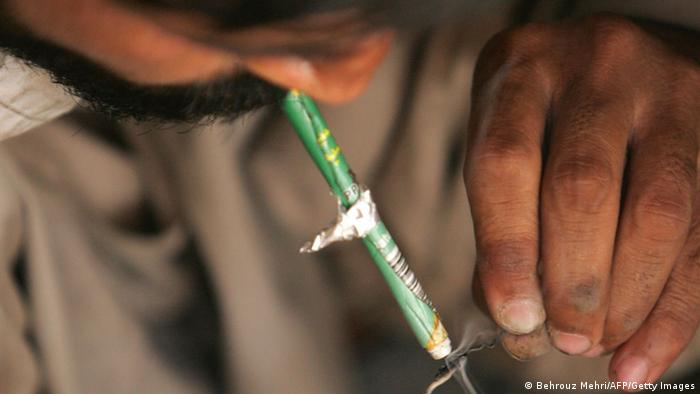
Ice is a crystal type white object equal to a large grain of sugar or salt, which is then heated by passing through a thin glass. Usually the drug addicts use thin glass pipes to smoke ice, however some drug addicts also inject it into their body. Ice or crystal meth is the common name of a chemical called ‘crystal methamphetamine’, which is made with ‘pseudoephedrine’. Ephedrine is an essential component of certain medicines, which is extracted to produce crystal meth (ice). Medicines with ephedrine are purchased in bulk from the market and ephedrine is extracted to produce ice.

However, the rapid increase in the use of ephedrine to produce narcotic drug crystal meth (ice) has been due to ephedra, a plant grown in Afghanistan. According to a BBC Urdu report, several small factories in Afghanistan convert ephedra into crystal meth. In the past, there were hundreds of factories in Taliban-dominated areas, which were an important source of income for the Taliban. However, these factories have increased manifold since the Taliban came to power. Heroin and ice are smuggled from Afghanistan to different regions via Pakistan and Iran. Until a few years ago, heroin was known as an expensive drug and ice (crystal meth) was relatively cheaper. Over last few months the demand for ice has increased tremendously. Heroin prices have fallen dramatically. Ice and heroin are considered as expensive narcotic drugs yet both are easily available.

Ice usage and effects

Jamil Hussain (name changed) from Titri Note border area of Poonch has been an active ‘jihadi’ in Afghanistan and Kashmir, in the past. “Ice was first produced from medicines”, he said. “I don’t know how to prepare, but it was used as a medicine by ‘militants’. It was such a powerful medicine that it would make it very easy for a person to go through anything after using it. Jamil said that this drug is also used for suicide attacks. “Now it has become very common and young children can be seen using it.”

According to narcotic experts, ice doubles the body’s energy for a short interval. A normal person can stay awake for 24 to 48 hours, but after ice intake the person becomes twice as active during which time sleep vanishes. Ice (crystal meth) over-activates the nervous system for some time and for a few hours the brain starts working very fast. But as soon as the intoxication descends one feels extremely tired and lazy.

Continuous use of ice adversely affects the nervous system. Gradually the memory fades and motor movements become awkward. Illusion, attention deficit, memory loss, waning of decision making ability, rapid weight loss and sleeplessness occur. Changes occur in the body, including infertility, which increase violent sexual orientation. People go the extent of self-immolation and indulge in violent activities.

How does ice reach Poonch?

“Now marijuana buyers are steadily declining,” said Salim (name changed), who is a marijuana vendor in the suburbs of Rawalakot. Young people prefer ice and heroin. When asked for the reason, Salim said, “The reason is clear, ice and heroin were extremely expensive drugs, they are no longer expensive now. But these drugs are much more dangerous than hashish. The more dangerous the intoxication, the greater its pleasure,” explained Salim. “Now heroin is available for as less as Rs. 50 to Rs. 100 which is not enough to buy even a cigarette of marijuana. Ice starts from Rs. 2,000 to Rs. 5,000 per gram. Until recently, one gram of ice was not available for Rs. 8,000, but now even for Rs. 1,000, one can get ice which is enough to give high to an individual.”

A local speaking on conditions of anonymity said, “Now, in Rawalakot, Hajira and other suburban villages and towns there is no marijuana dealer (youth selling marijuana at the village level commission) who is not selling ice. You may not get marijuana but ice and heroin are available at all times. Regarding the modus operandi of drug supply, the local said: “There are different ways, but every method and way goes through the government. I don’t know if these people are doing it deliberately, or a few people are in this business but the whole structure is connected.”

“Non-customs vehicles are also loaded with drugs when they are brought to Jammu and Kashmir from other border areas including Balochistan,” he explained. Those vehicles cannot pass through Pakistan legally, therefore, they are brought through ‘improvisation’ and weapons and drugs also become part of this improvisation.

“Besides, those who participated in ‘demonstration’ in Afghanistan are also involved in this work”, he said. Their transportation is also illegal and they also bring these drugs along with them coming from Afghanistan or border areas to Jammu and Kashmir. They are the first to bring this ice and heroin. Ice is considered as a ‘medicine of sacrifice’.

A local dealer from Khai Gala, Rawalakot explained on condition of anonymity that “…one of the simplest ways to bring ice here is to melt and bring it as packs of mineral water bottles. But to convert this ice from liquid to crystal form requires some expertise. Medicines such as Pynadol are bought from the market and used for this purpose.”

The Khai Gala dealer further explained: “Nowadays a certain type of energy saver bulb has disappeared from the market as they are bought by ice addicts. Some shopkeepers have even started making and selling glass like bulbs used for drinking ice.

Why aren’t the government campaigns effective against drugs?

Recently, the divisional administration of Rawalakot had launched an anti-drug campaign. Meanwhile, several persons were also arrested for marijuana trafficking. There have also been reports of drugs being recovered from some educational institutions. During raids at business spots in the city, a large number of flavoured tobacco, razla paper and electric cigarettes etc. were seized as intoxicants. The export of heroin has also been reported in a few incidents.

“However, no one involved in the sale and delivery process of crystal meth (ice) has been arrested so far. The police themselves provide us with drugs. How can the government campaigns eliminate the menace of drugs?” said a drug dealer from the neighbouring village of Tarar.

Continuing his point, the drug dealer explained, ”The ‘dealers’ in all the villages are selling marijuana, ice and heroin. So now everyone sells everything, and more than half of them are sold by the policemen. The policemen themselves are victims of ice. So if we stop selling ice, police will put us in prison and get us punished. But once a year some marijuana cases are made. They (police) get their job done and we also come out on bail. When drugs are recovered from the students of the University of Poonch they are blackmailed by policemen and huge money is extorted from them.”

The local police shrugged off all involvement. “I don’t know why ice dealers are not being caught,” said a policeman, speaking on condition of anonymity. However, allegations of police involvement in drug trafficking in an organized manner are baseless. There may be some elements, this society is such that no department can be cent per cent correct.”

Increase in extremism and violent activities due to proliferation of ice (crystal meth)

As the infiltration of ice is increasing, so is the attraction of young people towards extremism, as well as an increase in violent activities. There has been a marked increase in the incidents of violent attacks, murders, blackmails, kidnapping and torture of female students.

There is also an increase in the recruitment by extremist organisations. Further, in addition to social and economic problems, the use of ice (crystal meth) among young people affected by arms culture gives them a pseudo sense of bravado. ”This region is considered a symbol of resistance,” says Basharat Ali Khan, former union president of the Jammu and Kashmir National Students Federation, “…but it is now being drowned in drug addiction as part of an organized conspiracy. In the past, when a proxy war was launched in the name of ‘Kashmir Militancy’, the heroin culture was deliberately made public within the region.

“A large number of resistance youth who are aware of the policies of the state were made heroin victims in an organized manner,” said Basharat Ali. He further explained “…extremism and terrorism were promoted by ruining their lives as well as the politics of the region. Now, once again, the same method is being followed after the Taliban captured Afghanistan”.

“As this region is politically active, its youth cannot be easily used for state purposes. Therefore, a conspiracy has been planned to paralyse and cripple the younger generation. All these means of smuggling must be eliminated immediately. The state will not allow a needle here if it wants, but from stolen vehicles to non-customs paid vehicles, weapons and drugs all are available. It is well known how they are getting all these things here. No one wants to speak and raise their voice, because the business and interests of many powerful circles are all linked to this inhuman racket,” added Basharat Ali.

“We will not allow the younger generation to be ruined under any circumstances. We will stop this organized conspiracy. We warn that if the poison is not stopped from reaching and selling here, a full-fledged protest movement will be launched against it,” explained Basharat Ali.

Baloch National Court awards death sentence to Pak Army Colonel for war crimes in Balochistan

The Baloch National Court awarded death sentence to Lt. Colonel Laeeq Baig Mirza of the Pakistan Army after indicting him for grave war crimes committed against the innocent Baloch people in Pakistan-occupied Balochistan. Pak Army’s Lt Col. Laeeq Baig was found to be directly involved in the ongoing Baloch genocide, enforced disappearance of women and children and other grave human rights violation.

“He (Lt. Col. Laeeq Mirza) was given full opportunity to prove his innocence in the Baloch National Court. During the proceedings he (Lt. Col. Laeeq) confessed to all his crimes and was awarded death sentence,” Baloch Liberation Movement (BLA) said in its media statement.

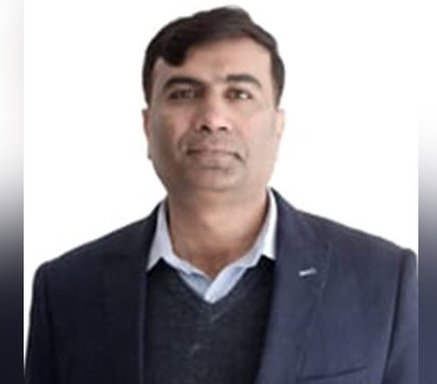
On 12 July 2022, Baloch Liberation Army’s (BLA) special force, Special Tactical Operations Squad (STOS) carried out an intelligence based operation near Ziarat in occupied Balochistan, when Lt. Col. Laeeq Baig Mirza was arrested. Lt. Col. Laeeq of 96 L/C belonged to 12 Azad Kashmir Regiment of Pakistan Army. He previously held commanding positions in Pakistan Rangers. At present he was the commanding officer of Pakistan’s Military Intelligence (MI). He was working in DHA (Defence Housing Authority) Quetta as a cover for his secretive role for the Pakistan Army.

Lt. Colonel Laeeq Baig Mirza was a primary target and he was being tracked for days by BLA’s intelligence units. On 12 July his movements were followed throughout the day and he was finally arrested in an area where risk to members of public was at minimum.

“Colonel Laeeq was travelling with his family on the day, however, the family members were treated with utmost respect and they were not harmed in any way as they were not involved in any crime,” said BLA spokesperson Jeeyand Baloch.

BLA has compiled a list of all Pakistani military officers that are directly involved in Baloch genocide. The BLA warned that strict action will be taken against all such officers.

Pakistan murders Saqib Baloch in Azerbaijan

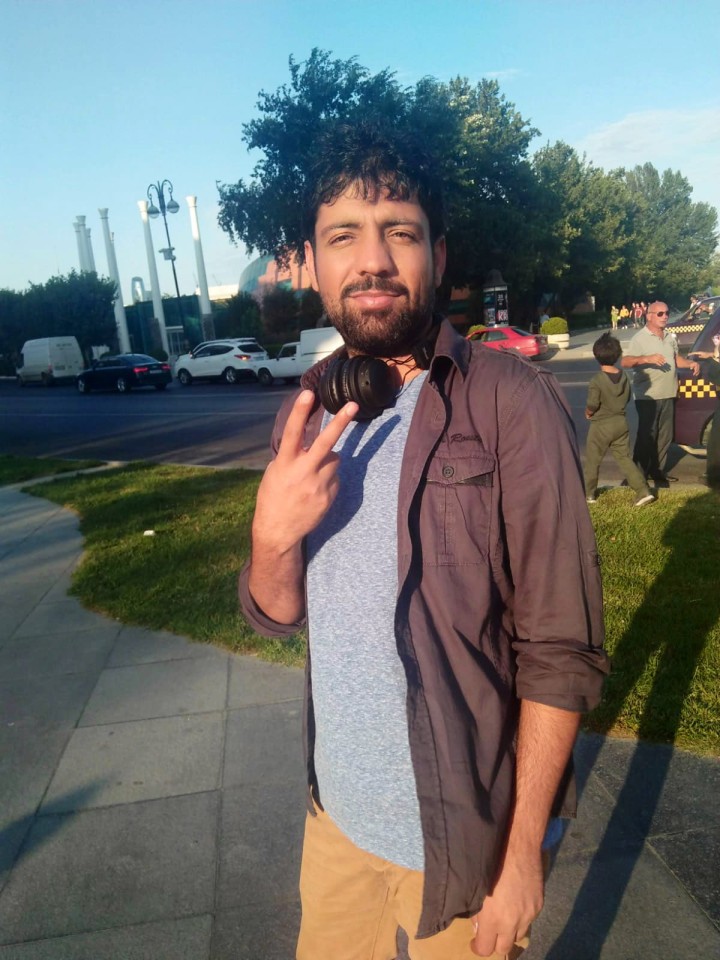
Saqib Kareem a 23 year old resident of Washq, Basima district of occupied Balochistan , who had taken asylum in Azerbaijan for the past several years, has been recovered from the sea of Baku city last evening.

According to local police sources, he reportedly died of drowning by falling into the sea.Sources say Saqib Kareem was living alone in Baku.The incident was reported to his younger brother last night through a text message.Saqib Kareem was the brother of martyrs Tariq Karim and Asim Karim. The Tariq brothers were forcibly abducted by Pak forces and were martyred during detention and their  mutilated bodies were later thrown.

In addition, other members of the same family have also been martyred by military operations and forced abduction by Pak forces.Saqib had left the country many years ago to avoid state repression.He had gone to Azerbaijan and had sought political asylum after spending the early years in the Gulf.This is not the first case of such death of a Baloch refugee abroad.Earlier also, the bodies of Baloch journalist Sajid Hussain and political leader Bank Karima Baloch have been recovered from the rivers.

Saqib Karim’s family doubt that he could have been killed.

BLF strikes at Pakistan Army, kills two soldiers

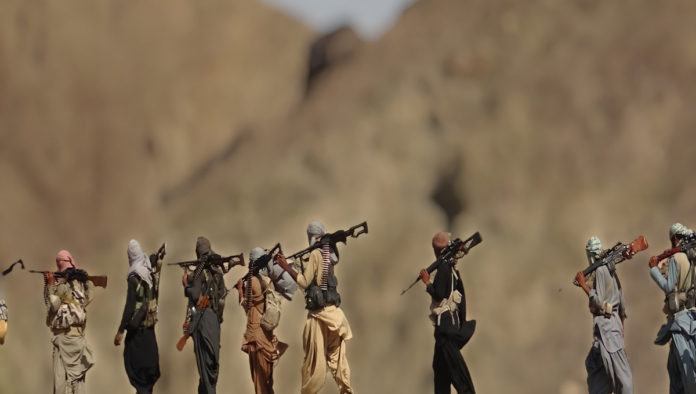
The Balochistan Liberation Front in the Ketch district of occupied Balochistan and the Baloch Liberation Army in Bolan have claimed responsibility for the attacks on Pakistani forces.The Balochistan Liberation Front has claimed responsibility for the attack on a Pakistani military convoy in Heronak area of Ketch district.While the BLA has accepted responsibility for killing two military personnel in Bolan.Talking to media from an undisclosed location, Balochistan Liberation Front spokesman Major Gharam Baloch confirmed.The militants attacked a Pakistani army convoy with rockets and heavy weapons at 12.30 p.m. in Heronak area of Ketch district on 2 July .Two land cruises and a Vigo vehicle in the enemy army convoy were hit by a severe attack, killing and injuring several officers.He said two children were injured in a passing passenger vehicle when the defeated army opened indiscriminate fire after the attack.The spokesman said that it was during this time that the enemy army gunship helicopters arrived.Gunship helicopters with air strikes in nearby areas tried to chase the freedom fighters but after the successful attack, they safely reached their safe places.Baloch Liberation Army spokesman Jayned Baloch said in a statement to the media that BLA freedom fighters targeted a Pakistani army post occupying the Talkari site in Nodaghar area of Bolan in an attack.He said that BLA fighters attacked the post with rockets and other heavy weapons from different sides, killing two enemy army personnel and injuring several others.

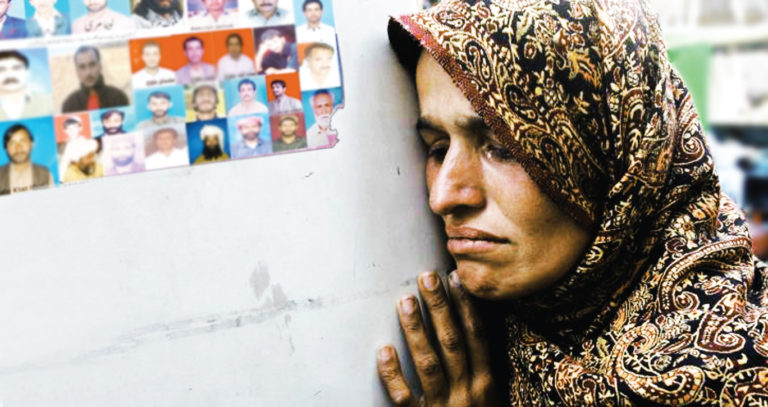
Another Baloch student ‘disappears’, protests continue at Karachi Press Club

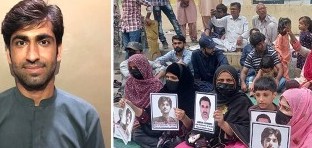
Baloch student Shoaib Ahmed Wald Azam Khan from Gulistan Johar area of Karachi was detained and disappeared by Sindh Police and forces.Shoaib Ahmed belongs to Nal area of Khuzdar district.He was keen on getting admission in Karachi University.The relatives of the missing Shoaib attended a protest camp outside Karachi press club.On the other hand, protest against enforced disappearance outside Karachi Press Club entered its ninth day today which was attended by women and children.Speaking on the occasion, Amina Baloch, organizer of the Baloch Solidarity Committee Karachi, said “that it appears that the Sindh government is not serious about the negotiations on the issue of missing persons.Two days later, not a single missing person was recovered.However, the talks were initiated by the Sindh government itself through sindh police officials which we welcomed because we are democratic people and believe in dialogue.Amina Baloch said that the family members should not be forced to sit in front of the Sindh Assembly or the Chief Minister’s House again.Their peaceful movement should not be considered their weakness.The protest camp  by the relatives of the missing outside Karachi press club had the full support of Baloch Solidarity Committee Karachi and Voice for Baloch Missing Persons.Meanwhile, Baloch Solidarity Committee Karachi organizer Amna Baloch is the leader of the protest camp.The protest camp includes the relatives of those missing from Karachi.Among the missing are Abdul Hameed Zehri from Gulistan-e-Jauhar area of Karachi, Saeed Ahmed son of Muhammad Umar from Malir area of Karachi, Muhammad Imran from Maripur, Shaukat Baloch from Lyari and Gulistan-e-Jauhar from Karachi.

Sindhi nationalists condemn Udaipur murder by radical Islamists

The gruesome murder of Kanhaiya Lal Teli in Udaipur by radical Islamists on video is a wake up call for the entire world to the danger posed by radical Islamist terrorists towards peace loving citizens of this world.

This incident has come under heavy criticism from all corners of the world and the Jeay Sindh Freedom Movement (JSFM) too has condemned it. However, they were of the opinion that such killings have been going on since the last 1400 years and that the people of Sindhudesh have been the first victim of Islamic Jihad.

The JSFM said “We stand with our Hindu brothers in time of their grief and would like to remind them that we the people of Sindhudesh are also fighting against this same mindset of Islamic terrorism.We believe that Shri Kanhaiya Lal ji is the first martyr for reconstruction of Hindu temple at Gyanvapi in Varanasi, Jeay Sindh freedom movement would like to remind our Hindu friends that the purpose of Islamic terrorism is to occupy land belonging to non-muslims and eradicate the native culture. Sindh is a glaring example of how Jihadists not only occupy but also commit cultural genocide of the land they occupy”.

They said that these Jihadists were no match to resolve the Sindhi people who continue to not only resist by also counter the cultural invasion of Jihadists even after 1400 years. They further stated that the permanent solution to the problem of Islamic terrorism is liberation of Sindhudesh on the basis of its culture and  historical identity, thereby giving a blow to Jihadists agenda of occupying non muslims and converting it into a terror factory.

What went wrong in Maharashtra?

Millions of Indians kept watching the two-week-long political melodrama of Maharashtra at not one but three places, viz., Mumbai, Surat and Guwahati. Maharashtra is an important state and its capital Mumbai is the financial hub of the country.

The narrative is bizarre as well as educative if one wants to know the nitty-gritty of Indian politics. The foundation of the Maharashtra Vikas Aghadi (English: Maharashtra Development Front), abbreviated as MVA, was on sand, and its collapse was inevitable. However, what kept the partners together for more than two years was primarily their lust for power and secondarily the general loot of the public money through pseudo-legal corruption.

The one thing that glaringly stuck its head out was non-seriousness on the part of the actors towards the fundamental duty of serving the people. Instead, they thought of serving themselves or their party which catapults politicians to the seat of power.  

We said the foundation stone of the MVA was slippery and unstable. This alliance was forged out of lust for power and not conviction of service to the people. Shiv Sena directly or indirectly accepted the support of the BJP to win 56 seats in the previous election. The history and ideological similarity between the Shiv Sena and BJP demanded that egos and ambitions had to be made subservient to national interests and for the stability of the upcoming political structure. The logjam between the BJP and Shiv Sena was about who would hold the chair of the chief minister of the state. The BJP refused to demonstrate large-heartedness and prudence by giving a local jingoistic political party a chance of leading the government. Did not the BJP succumb in J&K and allowed the PDP to lead the coalition government knowing very well that the PDP was born from the womb of terrorism and fundamentalism?

On the other hand, Shiv Sena’s leadership was intransigent to underestimate the national-level strong party like BJP. Its assertion on the count of influencing the local jingoistic party was ill-founded. Out of lust for power, it refused to play the second fiddle. What is worse, it hobnobbed with two other parties namely Congress and NCP, both of which were ideologically miles apart from it. The Congress, as everybody knew, was the other name of the Indian Muslim League and the NCP was perhaps the most opportunist party always trying to be on the side of the winner with no political ideology or destination. The Mumbaikars knew very well to what extent the NCP leadership had been enjoying bonhomie with the Mumbai underworld. Nobody knew it better than Shiv Sena. Yet it decided to be on the wrong side because Congress and NCP, both knew that by putting the crown on the head of Shiv Sena they were jointly contriving the ultimate destruction of Shiv Sena in Mumbai as it posed the most potent threat to their existence in the financial metropolis of India.

Those fifty-odd Shiv Sena rebels who staged a rebellion against their leader shall have to answer one important question. What they did now is what they ought to have done when their chief was negotiating power-sharing with the other two opposed parties. Why did they seal their lips then and waited for two years and a half to come out in open? They cannot sell the argument that they waited and watched things might turn the right way. This is a spurious argument. A wolf may lose its teeth but not its nature goes the old saying.  They were no less covetous and power-hungry than the rest of them. The real reason why they finally rebelled is not their deepening differences with the Sena supremo but the fact that the two coalition partners had reduced them to almost anything like zero. They saw through the subtle mechanism of the two veteran and experienced parties dominating the political scenario in the State.  It can be presumed that they might have taken up the matter of their degraded status in the administrative and juridical areas of the State with the top leadership of their group and to their consternation found him more loyal to the coalition partners than to his party men.

Some observers ask why did not the Shiv Sena supremo gauge the rising current of opposition within his fold and why did he not take a political and structural decision?  The answer to this question indirectly suggests that the leadership was haughty and arrogant to assume that it commanded the final word. The parting radio speech of the outgoing Chief Minister should be read between the lines. It smacks of old and traditional clan leadership arrogantly assuming that the fifty and odd members who turned rebellious owed their political career to him and Shiv Sena alone. In other words, he was advocating for dynastic rule and authority, a phenomenon for the demolition of which the new political set-up in the country had taken a decisive and irrevocable position. The dynastic rule of the Sheikhs in Kashmir, Yadavs in Bihar and UP, Badals in Punjab, and Gandhis in Delhi had collapsed one by one. How could the Thakre house consider itself an exception?

Out of a false sense of pride and domination, Uddhav Thakre became a victim of the perversion of a couple of his close associates – the Chanakya’s – who misguided him and machinated his disaster. He is not the first VIP to have become a target of the cronies he had gathered together around him. In sheer naïveté, he could not understand how these cronies were undermining the fundamental philosophy of Shiv Sena — the Hindutava.

He is so immature in political stratagems that when fifty-odd MLAs or MPs or Private Members revolted against him, he went on beseeching them to return to Mumbai and talk to them. What had they to talk about, nothing, absolutely nothing? They had done their talk. Had he been a shrewd politician and had the real motivation of doing good to the people of his state and the country and his party and above all his person, he should have taken a flight without a single hour’s delay landed at Guwahati and marched straight to the den where the rebels were staying. He would have caught the bull by the horn and told them to do whatever they want I, as the leader of the party and the government, am with you and will do together what you want to do because this is democracy and we go by the will of the people. He could have saved his position, and above all his party from sinking deep into disaster. Only a leader with integrity, moral courage and public good could do that.

Shiv Sena as the symbol of Bala Sahib Thackeray’s supreme Maharashtra identity has suffered a setback owing to an assessment error of the scion of his house. The divided Shiv Sena may get sucked into the vortex of mutual acrimony unless a good sense prevails on the new incumbent Eknath Shinde to rise above ego and  self esteem and show due respect to his ousted leader. However he has to remember that even if he succeeds in restoring unity among all sections of the party yet it must be clear to one and all that the united Shiv Sena has to be on the same page with BJP.  The rebels have no way but to imbibe the nationalist frame of BJP and not the jingoist frame. Political wisdom and sagacity say that the government led by Eknath Shinde strives every nerve to restore the dignity and outreach of Mato Shri as it enjoyed during the heyday of Bala Sahib. That is what should happen. Shiv Sena should not remain restricted to Mato Shri and those who are the beneficiaries of its largesse. As a regional party, its strength and thrust will find curtailment no doubt. The truth is that Shiv Sena was finished the day Uddhav Thackeray had agreed to form a coalition government with Congress and NCP. One will have kudos for the manoeuvrability of both of these parties in seeing the Shiv Sena pilot dropped and his ship left to be lost on the high and tumultuous ocean of Indian politics. The role of Eknath Shinde is to recover the floating ship and bring it back to the harbour.