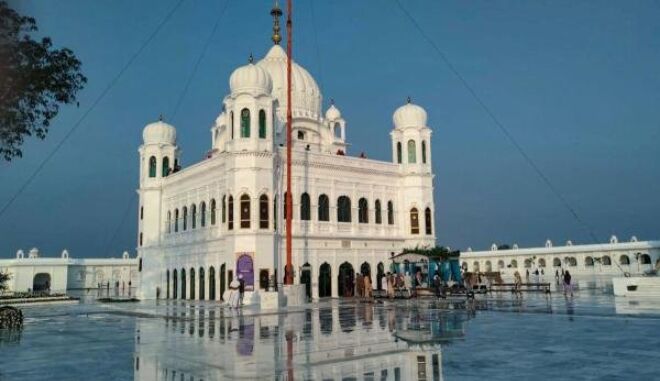
Pakistan has cancelled ‘Jashan-e-Bahar’ programme that was scheduled to take place from March 23 to 27 near Kartarpur Sahib Gurdwara due to objections raised by the Shiromani Gurdwara Parbandhak Committee (SGPC). The SGPC president Harjinder Singh Dhami had raised objections to the event being held near the gurudwara citing that it was against the code of conduct (maryada) of the religious place. Kartarpur Sahib Gurdwara is the final resting place of the Sikhism founder Guru Nanak Dev.
The SGPC received the information regarding
the cancellation of the programme through an email from CEO, PMU, Latif, on
Friday evening, the release said.
After objection from the Shiromani Gurdwara Parbandhak Committee (SGPC) the Pakistan government took note of the SGPC objection and immediately withdrew the Jashan-e-Bahar programme. “The decision by PMU, Sri Kartarpur Sahib, to stop the programme by taking the SGPC objection seriously is in the favour of the historical significance of the shrine and the maryada (code of conduct) of the Guru’s house. For the same, we thank the Pakistan Government and Evacuee Trust Property Board including the Pakistan Sikh Gurdwara Parbandhak Committee,” said Dhami.
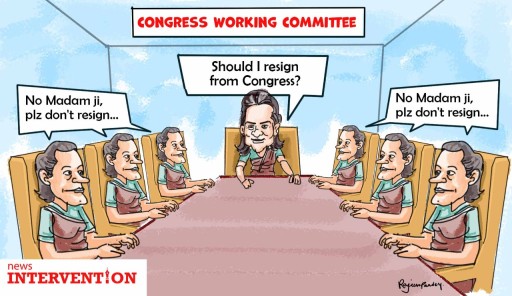
Sonia Gandhi offered to step down as Congress President, but Sonia Gandhi’s loyalists in Congress Working Committee (CWC) rejected Sonia Gandhi’s offer to resign.
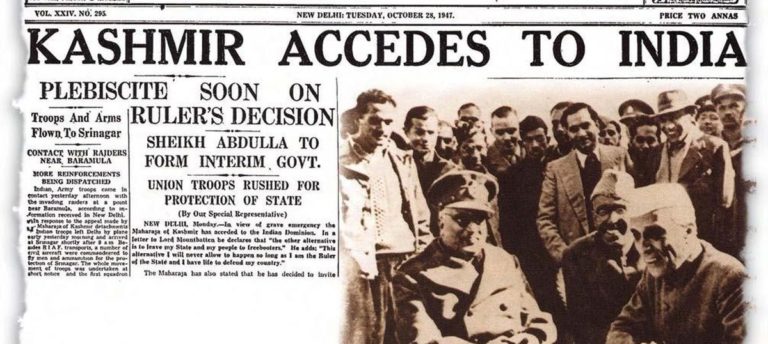
Though Pakistan puts up a very brave face when the
international community refuses to ‘buy’ its skewed Kashmir narrative and
glibly ascribes its rejection to a host of unconvincing reasons, but reality is
now dawning on the people of Kashmir. For nearly three quarters of a century, Kashmiris
have been fed a lot of untruths- the indisputable proof of which is the fact
that even after all the years gone by, Pakistan has failed to move even a
single step forward in furthering what it claims to be a “principled stand”
on Kashmir.
Au contraire, Pakistan has failed miserably to secure UN intervention on the ‘K’ issue, and UN as well as the international community have rightly determined that Kashmir is a bilateral issue that has to be resolved by India and Pakistan through dialogue with no requirement of any third-party inclusion. But Pakistan and the separatists don’t tell this to the people of Kashmir!
Pakistan knew all along that its Kashmir narrative lacked substance and whatever little hope of UN intervention may have existed, has been scuttled by Islamabad itself. It’s claim of J&K being a “disputed territory collapsed as early as in 1963, when Islamabad ‘ceded’ more than 34,000 square kilometres Shaksgam Valley, which is an undisputed part of J&K territory, to China”.
Readers would agree that if J&K is indeed “disputed
territory” as it claims, then Pakistan doesn’t have any ‘ownership rights’
over the same and hence has no legal right to dispose-off any part of it. Furthermore,
by allowing China to undertake extensive developmental activities under CPEC
project, Islamabad has further diluted Pakistan’s feeble “disputed
territory” claim. So, in trying to appease China, Pakistan has knowingly strangled
its own Kashmir narrative.
This is again something Pakistan or the separatists have never
told the people of Kashmir!
Despite having accepted UN’s direction to resolve the Kashmir issue through peaceful means, Pakistan still resorted to use of brute force instead. In 1965, it undertook a full-scale military campaign (‘Operation Gibraltar) to seize J&K, and by doing so, brazenly violated the very spirit and soul of UN resolutions on Kashmir. In 1999, Pakistan Army once again tried to alter the established Line of Control (LoC) alignment by intruding into J&K in Kargil.
Pakistan’s Army’s puerile ruse to pass-off the Kargil intrusions as the handiwork of ‘Kashmiri freedom fighters’ fooled no one. Showing utter disregards to UN resolutions on Kashmir twice is neither an isolated incident nor an ‘aberration’ and hence, Pakistan’s incessant cacophony on seeking peaceful resolution of the Kashmir issue in accordance with UN resolutions further lost whatever little value it may have had.
This too, Pakistan and separatists have never told the
people of Kashmir!
Ironically, while Pakistan continues to wax eloquent on Kashmiris being given their “right of self-determination” to decide whether they wish to remain a part of India or cede to Pakistan, it has denied this very facility to those living in Pakistan-occupied Kashmir (PoK). So much so that Section 7[3] of POK’s interim constitution states- “No person or political party in Azad Jammu and Kashmir [PoK] shall be permitted to propagate against, or take part in activities prejudicial or detrimental to the ideology of the State’s accession to Pakistan.”
Due to its shamefaced duplicity that constitutionally proscribes citizens of PoK from exercising fundamental right to freedom of expression and self -determination, all its lofty talk about UN resolutions on Kashmir is rightly perceived as mere gibberish. This is why no one takes Pakistan’s plebiscite demand in J&K for self determination, seriously.
But this too is something that neither Pakistan nor
separatists ever tell the people of Kashmir!
While it keeps accusing India of not honouring UN
resolutions on Kashmir, Pakistan is itself the main defaulter. UN resolution 47
unambiguously lays down two basic pre-requisites, which need to be complied
with before the ‘self-determination’ process can be undertaken:
Step
1- Pakistan has to withdraw all non-Kashmiris from PoK.
Step
2- India has to “progressively reduce” its forces to the
minimum level required for maintenance of law and order.
Since Pakistan has consistently refused to withdraw its
nationals from PoK, the first mandatory pre-requisite for facilitating the
self-determination process remains unfulfilled. As such the question of going
ahead with the right to self-determination exercise [as Pakistan keeps
demanding], doesn’t arise. This clearly indicates complete lack of seriousness
on Pakistan’s part as far as resolving the Kashmir issue is concerned.
But this neither Pakistan nor separatists have ever told the
people of Kashmir!
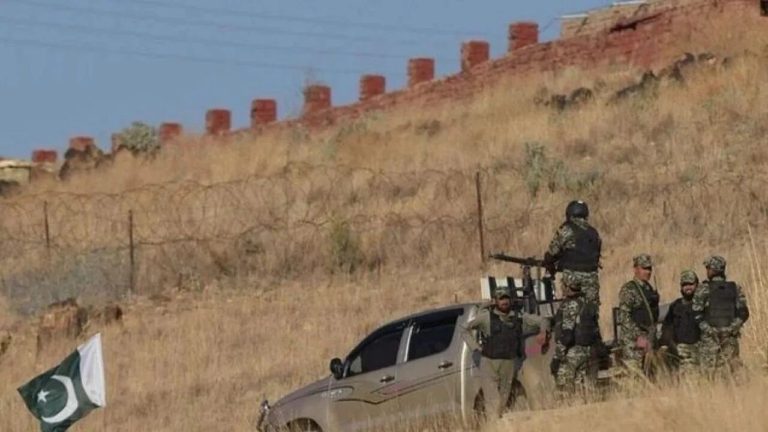
That Pakistan itself isn’t confident about its concocted Kashmir narrative is evident from its near-complete reliance on proxy war and intimidation of Kashmiris to keep the pot boiling in Kashmir Valley. This is no conjecture but the logical interpretation of Pakistan Army chief Gen Qamar Javed Bajwa’s 2019 announcement that “Pakistan Army firmly stands by the Kashmiris in their just struggle to the very end… We are prepared and shall go to any extent to fulfil our obligations in this regard.”
So, those who are hopeful that despite tasting failure repeatedly
for nearly seven and a half decades, Pakistan will somehow still be able to
compel UN and the international community to accept its irrational and
selective Kashmir issue related demands, are bound to be disappointed!
This is something that Pakistan and the separatists will most
certainly never tell the people of Kashmir- but this reality is exactly what the
Kashmiris need to know!
Central Spokesperson for the Baloch National Movement (BNM) said that the Pakistan Army has turned a large area of Jhaoo in Awaran district into a Nazi-style concentration camp. The months long military brutality has gained new momentum. Jhaoo is currently under the worst military siege. There is a complete ban on the movement of people in this region. Most of the population in the area have been shifted to the camps and are subjected to torture throughout the day. All local vehicles in the area have been taken into custody and stationed at the main military camp in Jhaoo Kohru. People are starving from hunger and have been deprived of treatment.
The spokesman said that a large number of troops had entered the Surgar area from Naal, Ornach, Larander, Wajah Bhag and Arah. The ground forces also have aerial support. He further said that Jhaoo area has always been under the control of Pakistan Army due to its significant role in the independence movement and being the land of brave fighters. But the current operation is the worst chapter of violence in recent times. Children and women are prohibited from engaging in any kind of activity without a military order. The purpose of this barbarism is to suppress the Baloch national struggle but they give a clear message to Pakistan through the writings on the wall that Balochistan cannot be subjugated by such brutalities.
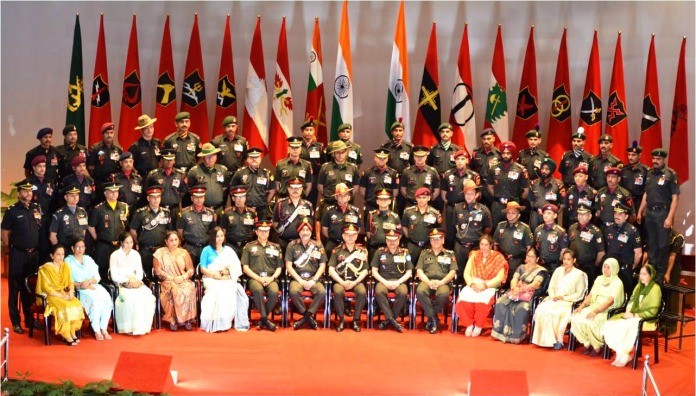
Lt. Gen Upendra Dwivedi, AVSM, General Officer Commanding- in-Chief (Army Commander), Northern Command, on 15 March 2022 presented gallantry awards and distinguished service awards to the gallant Officers, Junior Commissioned Officers and Other Ranks of the command.
Sena Medal, Yudh Seva Medal and Vashisht Seva Medal were awarded. The 92 recipients of the gallantry awards were those soldiers of the Command who have exhibited exemplary courage under extreme operational circumstances. The 25 distinguished service awards were presented for selfless service to the nation.
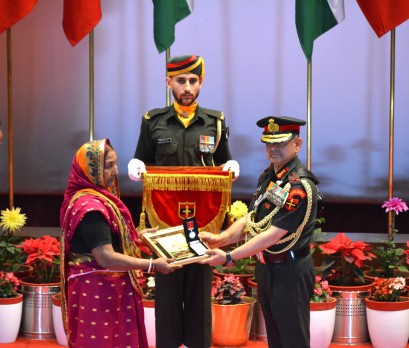
The Next of Kin (NOK) of the soldiers who had laid down their lives and were awarded by the grateful nation came proudly to accept the award on behalf of the fallen soldiers; among them were widows (Veer Naris) of the brave hearts. Mrs Sunita Dwivedi, Regional President AWWA, Northern Command, interacted with the NOKs and presented them with a token of appreciation for the sacrifices of their husbands.
Token of appreciation presented to the veer naris for the sacrifice of their husbands for the nation. (Photo: ADGPI)
While congratulating the awardees, whose singular acts of valour and selfless sacrifice have been instrumental for the operational successes achieved by the Northern Command, the Army Commander had a special word for the Veer Naris, “I commend the Veer Naris present here who bear the unfathomable loss of their loved ones with stoic silence. I wish to reassure you that we stand firmly besides you on your loss and remain committed to ensuring our unstinted support to you. We are deeply committed to ensure your resettlement with utmost dignity in society, he said.
The evening
before the ceremony, the Army Commander and his wife Mrs Sunita Dwivedi most
graciously welcomed the gallant heroes and families of the brave hearts in an
elegant function at Udhampur.
The investiture
ceremony witnessed an august gathering of the Army personnel and many
distinguished personalities from the civilian stream. The Army Commander, in
his address, welcomed the distinguished guests and expressed the pride and
honour that he felt in “sharing the moment of distinction and glory with our
gallant awardees”. He further extended his compliments to the brave awardees
for their inspiring acts of valour and sacrifice in the highest traditions of the
Indian Army.
Lt. General
Upendra Dwivedi took over the reins of the prestigious Northern Command in
February, 2022. The investiture ceremony afforded him an opportunity to put
forth his views on his new responsibility in an open domain and he did it so
brilliantly.
The Army
Commander assured the Nation about the high state of readiness of the Command
to meet all challenges posed by multiple threats from volatile adversaries. He
emphasised upon the “Whole of Nation” approach to meet the challenges
and thus reposed full faith in the support forthcoming from the Union
Government and the nation at large.
He lauded the bravery and professionalism of the troops that he commands while also acknowledging their exemplary courage and remarkable fortitude in testing times in all operations that the Command has conducted over time and continues to do so. “The extraordinary zeal and motivation among all ranks reassures me that the security of our borders is in safe hands,” he said.
He echoed the policy of constructive dialogue through both military and diplomatic means to resolve the border issues while making it clear that the Northern Command will remain “committed to defend India’s sovereignty and territorial integrity.” This constitutes a strong yet mature message to our adversaries, should they be attempting some misadventure in coming months.
In conclusion, he
exhorted all ranks of Northern Command to remain prepared for varied challenges
and live up to the hope and trust reposed upon them by their countrymen. The Army
Commander also expressed his gratitude
to the people of Jammu and Kashmir and Ladakh, the civil administration and the
media for their unstinting support.
The essence of
the investiture ceremony was explained, most aptly, by Brigadier Brijesh Pandey
of the Northern Command in a curtain raiser talk with All India Radio (AIR). “The
Indian army organises the investiture ceremony through the Northern Command
every year. Through this ceremony the army, on behalf of the nation, honours
and expresses its gratitude to the brave hearts who laid their lives and the
brave serving soldiers for the display of exceptional gallantry. We also salute
their families for standing behind the soldiers like a rock. This is the way in
which the Nation salutes them and celebrates the spirit that says ‘Nation comes first always and every time.’
It inspires the coming generations to keep serving the cause of the nation in
times to come”, he said.
The Northern
Command is responsible for guarding the Nation’s frontiers with China and Pakistan
including the Line of Actual control (LAC), the Actual Ground Position Line
(AGPL) with China and the Line of Control (LOC) and International Border (IB)
with Pakistan. It is the vanguard for meeting the challenge of the evil proxy
and asymmetric war imposed on our nation by our enemy. It is said to be “Always
in Combat”. It is also called “The People’s Army” because of its
humanitarian interventions in the region.
Troops of the
Indian Army are posted across India in their many tenures of duty. It is,
however, the tenures in Jammu and Kashmir and Ladakh that are the most
cherished because it is here that they get maximum professional satisfaction.
Investiture ceremonies are held in other Commands also, but the Northern
Command invariably has the largest number of gallantry award winners. Such is
the prestige of this Command in the Indian Army.
The recently
conducted investiture ceremony in the Northern Command has filled the heart of
every Indian with pride and given
complete confidence to the people that the borders of the country are in safe
hands. Lt General Upendra Dwivedi can be
rest assured of the respect and support of each and every citizen of the
country for his troops.
Prelude A war which should have never been fought if all actors had judged geo-political developments maturely and multi-laterally, rather than engage in brinkmanship. Even today the potential of the war escalating beyond the region is extremely high, unless negotiators reach an agreement expeditiously. India with her rising power potential (both economically and militarily) and soft power (friendly with all actors involved) is uniquely placed to act as an honest mediator.
Objectives as laid down by Putin The main articles of Russian draft proposed agreement demand included eight articles with the following points: Article 1: the parties should not strengthen their security at the expense of Russia’s security; Article 2: the parties will use multilateral consultations and the NATO-Russia Council to address points of conflict; Article 3: the parties reaffirm that they do not consider each other as adversaries and maintain a dialogue; Article 4: the parties shall not deploy military forces and weaponry on the territory of any of the other states in Europe in addition to any forces that were deployed as of May 27, 1997; Article 5: the parties shall not deploy land-based intermediate- and short-range missiles adjacent to the other parties; Article 6: all member states of the North Atlantic Treaty Organization (NATO) commit themselves to refrain from any further enlargement of NATO, including the accession of Ukraine as well as other States; Article 7: the parties that are member States of the North Atlantic Treaty Organization shall not conduct any military activity on the territory of Ukraine as well as other States in the Eastern Europe, in the South Caucasus and in Central Asia; and Article 8: the agreement shall not be interpreted as affecting the primary responsibility of the Security Council of the United Nations for maintaining international peace and security.
Bottom Line Condition/Red Line Ukraine must forswear joining NATO under a guaranteed (NATO/USA) agreement, and no NATO armaments must be positioned in Ukraine; and No additional members should join NATO (Aim plus – no military deployment in NATO member states who joined after May 27, 1997)
Status Since last 36 hrs President Zelenski of Ukraine, and NATO member nations including NATO and EU Presidents have categorically stated that membership of Ukraine was NEVER ON THE CARDS. Wish they had assured Russia and even formally signed an agreement.
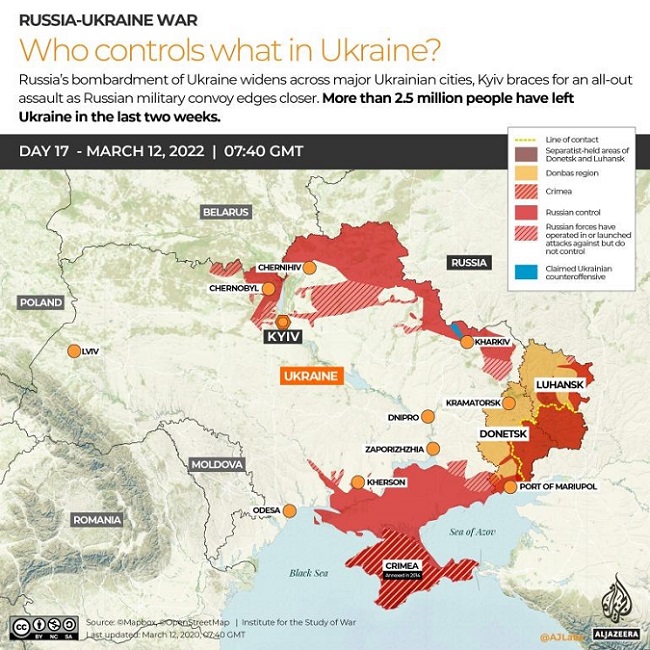
Who controls what in Ukraine?
Strategic and Operational Military Aim and Objectives
Strategic Military Aim Capture Kyiv at the earliest, resulting in capitulation of Ukraine politically and militarily.
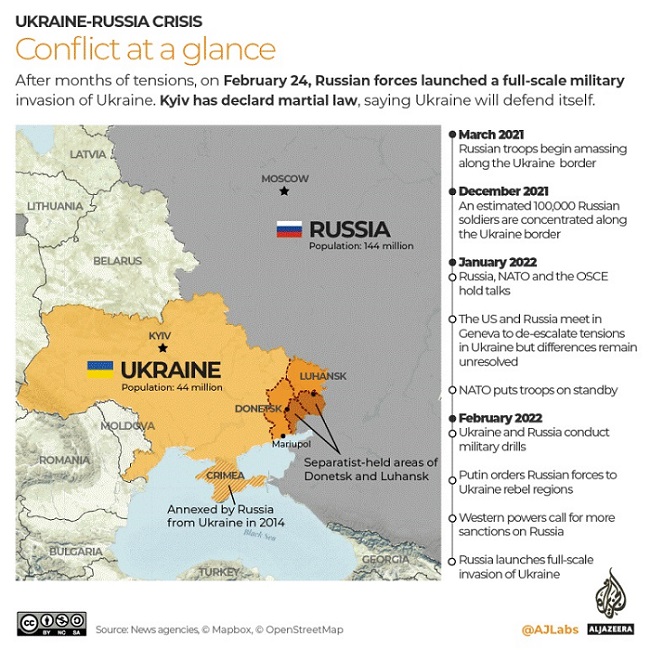
Operational Objectives Launch a multi-prong ground operation (3 prongs) to engage and neutralise maximum Ukrainian forces in different sectors as under– North Prong: Encircle and isolate Kyiv and be prepared to capture Kyiv. Eastern Prong: Capture the Luhansk and Donetsk regions and consolidate, and assimilate into the Russian Mainland. Southern Prong: Capture areas to include Mariupol, Kherson and Odessa and provide land corridor to Crimea from Russia (presently a 12 mile two parallel road bridges in Kerch provide the only connectivity), thus preventing access to the Black Sea to and from Ukraine. Be prepared for amphibious operations to capture Odessa from the sea. Consolidation operations: Link up all three thrust lines to provide depth and stability.
Forces for Offensive 41 Group Army (roughly 40 battalions and 1,20000 troops) with its inherent combat, combat support and logistics elements, and the Russian Air Force and Navy, Special Forces to provide full support and surge capabilities.
Review of the Situation as on 14 Mar (18th Day) Slow Progress of operations Could be due to numerous factors (both operational friction and logistical challenges)
The surprising tenacity and willingness of Ukrainian
forces to join battle, and possible rustiness of Russian forces to conduct
combined arms joint operations.
Vast supply of arms, armaments and smart potent
precision munitions (specially man portable anti-armour and anti-aircraft and
helicopter missiles) to vastly improve standoff capabilities and kill ratios.
Logistics support and vital intelligence inputs making the battlefield
transparent to Ukrainian.
Operations mainly through urban terrain; though Russians are bypassing major towns, movement is restricted to roads due to thaw and marshy nature of ground restricting cross country manoeuvre. Logistics and troop convoys are being ambushed and neutralized, and most bridges en route are being destroyed, leading to delays and human and material costs.
Russian attempt to avoid large scale collateral damage
and wanton destruction. This will go against their terminal aim of having a
neutral Ukraine as its neighbor, and govern by proxy.
Cautious employment of the Russian Air Force. Again,
to prevent collateral damage specially human (its concentrated employment would
certainly have speeded up operations with less casualties, plus allowed less
time for Ukrainian forces to regroup, reinforce or concentrate further speeding
up advance).
One important factor would be the steely resolve and morale of Ukrainian forces vis-a-vis the Russian troops who may not necessarily be overjoyed at starting a war which could bring the World against them.
Prognosis for next 48 to 72 hours Having looked at reason for slow progress, I must reiterate that operations are moving as per the plan. Next 48-72 hours could find the important city of Kyiv under total siege, the Eastern thrust nearing completion and operations launched for capture of Odessa. The linkup between the thrusts would have been consolidated provided stability and platform to launch further operations with fresh troops if geo-political or operational conditions make it necessary. The period unfortunately will also see more marked aggressive and kinetic responses from the Russians (employing their manoeuvre and fire power elements), resulting in indiscriminate destruction and human casualties. International pleas for ceasefire and cessation of hostilities and verbal assurances from US/EU/ NATO/Zelensky for negotiations or even verbal assurance on his basic demands, is unlikely to persuade Putin to stop or slow down his operations till his red line demands as stated are met in a formal institutionalized manner. Putin is aware that once he has launched the offensive, it has become a political and existential manoeuvre for him, unless he achieves a strategic and military victory which carries a positive message within Russia.
Why India’s Nuanced Position is in National Interest
It is time to remind ourselves that the World and the ‘times have changed to a multi-polar world’, that India is today a rising power (largest democracy, world’s sixth-largest economy by nominal GDP and the third-largest by purchasing power parity (PPP), military capability and power in the top 5 countries). Our geo-political and strategic options and stance should reflect our rising international status. Especially in this crisis, India is uniquely placed to act as an honest mediator, given its friendly relations with all actors involved in the crisis. Our national interest is to protect the sovereignty and integrity of our nation, including the 20,000 students caught in the war zone (since evacuated by remarkable diplomatic and logistic actions). Despite the rhetoric emanating about both sides of conflict viewing us poorly due to our principled stance of ‘strategic autonomy’, it is understood and respected. India acted based on its national interest, which is what it should be.
The Storm Intensifies As the war lingers on, exacerbating the probability of escalation both in terms of scope, intensity, violence, infrastructural destruction, human casualties (probability of nuclear exchange while remote is an unthinkable probability) and geographically (NATO involvement in Chapter 5 operations), there is an urgent need for the actors to sit and talk. The geo-political situation appears grim with fewer options by the day; Putin cannot and will not stop till his basic demands are met; Ukraine may be determined to continue with outside support despite near certain knowledge of adverse outcome of the war; NATO/EU having precipitated this crisis do not want to be perceived as losers and negotiate, apart from gaining geo-political and strategic benefits if the war continues (stronger NATO with a distinct adversary to provide impetus and rationale; nations re-arming specially Germany; EU finding alternate energy supplies and losing dependence on Russia); USA facing a weaker Russia with strong NATO opposing him, is now capable and free to focus in the Indo-Pacific region and China.
The Way Ahead With a weak and ineffectual UNSC specially with permanent members firmly on either side of the fence, and former cold war nations (virtually all the powerful and rich nations) involved intimately in the conflict, it devolves upon India or another uninvolved power like Israel to mediate and negotiate a temporary peace, stabilise the war zone, draw up an agreement which meets the basic geo-political needs of involved nations, and set the ball rolling for time and negotiations to create a lasting solution. A very tall order indeed, only time and history will tell the future.
Breaking News Ukranian President Zelensky has requested Israeli PM Naftali Bennett help broker a deal with possible talks in Jerusalem. Concurrently two divergent developments from Russia; Putin struck an optimistic note on consultations with Ukraine and Russian delegation by stating that he is seeing some positive developments in the talks; disturbing media inputs are also filtering in of Putin ready to deploy up to 16,000 battle hardened volunteers from the Middle-East along with Russian-backed rebels to fight in Ukraine. This will certainly worsen an already critical situation.
Article 6 of the International Convention for Protection of All Persons from Enforced Disappearance describes enforced disappearance as “a crime against humanity” and Article 1 of the same convention says, “no exceptional circumstances, whatsoever, whether a state of war or a threat of war, internal political instability or any other public emergency, may be invoked as a justification for enforced disappearance.”
The Pakistan Army, Frontier Corps (a paramilitary force), the intelligence agencies’ personnel, and the members of the state-sponsored armed militias are involved in the enforced disappearance of Baloch people. They arrest and abduct the people with impunity from anywhere whether it is a house, a hotel, hospital, hostel, train, airport, public bus, or any public place.
There are numerous instances in which the Frontier Corps and intelligence services have disappeared people even from the custody of police or the federal levies force. Here are two such incidences:
A prominent human rights defender and journalist Mr. Siddique Eido and his friend Yousuf Nazar were abducted by the Frontier Corps personnel from police custody on December 21, 2010 when police were carrying them in a van after producing them in the sessions court Gwadar. Later the mutilated bodies of both Siddique Eido and Yousuf Nazar were found dumped on April 28, 2011 at Makran coastal highway near Ormara, occupied Balochistan. Neither police were ever investigated nor were the F.C. (Frontier Corps) personnel tried and held accountable for the enforced disappearance and extrajudicial killing of Mr. Eido and his friend.
A similar case of enforced disappearance is that of Mir Khan Muhammad Shahwani, who was the son of Juma Khan and resident of Kalat, Balochistan. Mr. Khan was arrested by the Zehri Levies personnel in daylight from a motorcycle mechanic’s shop in Zehri bazaar in the presence of public. Later the intelligence agents had taken Mir Khan Muhammad in their custody from Levies station and disappeared him for more than three years. Khan was found on December 7, 2021 in a seriously injured condition dumped in the Hong River across the Iranian border in western Balochistan.
Pakistan’s security forces have been using “enforced disappearance” as an instrument of war in their so-called counter-insurgency policy against the Baloch independence struggle. As the freedom fighters aren’t only armed and militarily trained but are also ready to resist furiously against any attempt by the security forces to arrest or disappear them. It is the hardest and most risky job for the Pakistani security forces to arrest and make them disappear. Therefore, the security forces mostly target civil society, patriotic political activists, students, intellectuals, journalists, human rights defenders and common people because targeting civilians is only easiest and riskless but also helps spread terror among the masses.
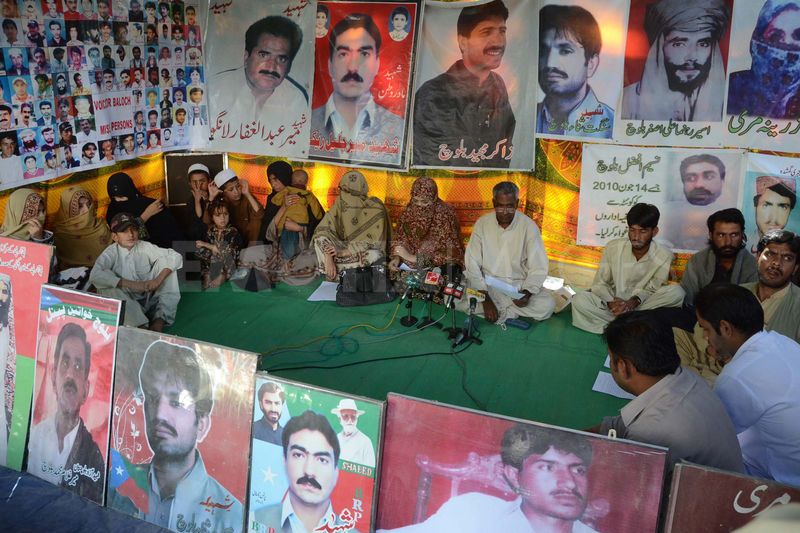
Protest camp of Voice for Baloch Missing Persons in front of the Quetta Press Club, occupied Balochistan. (Photo: News Intervention)
However, it’s evident from the
available record of enforced disappearances that the nationalist political
activists and the students are the prime targets of enforced disappearance in
occupied Balochistan. In fact, Pakistan’s security forces are committing a
preplanned intellectual genocide of oppressed Baloch people so as to turn
Baloch society intellectually barren.
An intense surge in the enforced disappearances of Baloch from all walks of life erupted following the Balochistan Liberation Front’s (BLF) capture of Pakistan Army’s Sibdaan post on January 25, 2022 and BLA Majeed Brigade’s attacks on Pak Army camps at Noshki and Panjgur on February 2, 2022. Over a dozen Pakistani soldiers were killed by the Baloch freedom fighters in Sibdaan.
It’s very important to note that the Baloch freedom fighters not only captured Pakistan Army’s Sibdaan post and killed Pak Army personnel but also seized all their weapons and ammunition. It’s worth mentioning that the main army camp was about 12 furlongs away from the Sibdaan post but the Pakistan Army didn’t dare to go to rescue their colleagues.
Similarly, Baloch freedom fighters of the Majeed Brigade successfully entered the Pakistan Army camps at Noshki and Panjgur. Despite the enemy’s use of fighter jets, helicopters, armored personnel carriers, and SSG Commandos; they maintained their control over Pakistan Army camp for seventy hours.
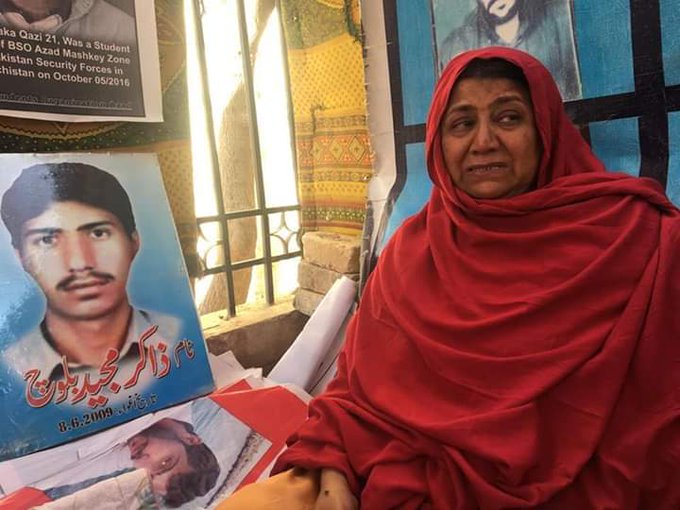
Mother of Zakir Majeed Baloch with the photograph of her son at the ‘Missing Persons’ camp. Zakeer Majeed Baloch was abducted by Pakistani forces on June 8, 2009 from Mastung, Balochistan. (Photo: News Intervention)
After the above mentioned attacks by Baloch freedom fighters, the Pakistan Army, as usual, started venting out its anger on the unarmed civilians. The Pak Army disappeared Ehtesham Baloch, a student of B.S. Biotechnology in the International Islamic University Islamabad on February 3, 2022 from Panjgur bus terminal. He was killed and dumped on the same day.
Later on Hafeez Baloch, a student of M Phil. Physics in the Quaid-i-Azam University, Islamabad was abducted by the intelligence agents when he was delivering a lecture in a local academy at Khuzdar, Balochistan.
Not long after Dr. Jamil Baloch, a political and social activist, was arrested and disappeared by the security forces on February 23, 2022 when he was sitting at his medical store in Barkhan. Dilip Baloch, a student of MA English literature in the Islamic University, Bhawalpur, Panjab was arrested on February 28, 2022 by the Frontier Corps check post personnel at Rakhni when he was going home to spend his vacation. Dilip is lucky to have been released within two days of his disappearance.
Since February 2, 2022 Pakistani security forces have abducted and forcefully disappeared more than one hundred Baloch, and this evil practice by Pakistani state forces continue unabated.
Pakistan Army and intelligence services are using enforced disappearance as a tool of repression against Baloch people to suppress their struggle for independence, as well as to suppress their voice for basic freedom and rights. In fact, enforced disappearances has been rampant across occupied Balochistan since 2000 with the revival of armed struggle by the Baloch nationalists.
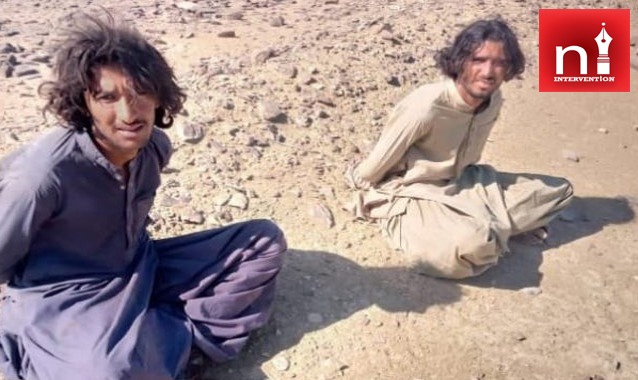
Pakistan Army-backed Death Squad released the photo of these two Baloch youths, who were abducted from Geshti, Parom in district Punjgur. (Photo: News Intervention)
Pakistan has never categorically denied the use of enforced disappearance in occupied Balochistan. Instead, Pakistan’s stance on enforced disappearances has always been vague and self-contradictory. Sometimes Pakistani authorities try to justify the enforced disappearances in the name of national security or so-called combat against separatism. For instance, Major General Asif Ghafoor, the former DG ISPR, in a press conference on April 29, 2019 said while answering a question from Mr. Hamid Mir: “We know you have a great attachment to missing persons (issue). We too have. We don’t want any person to go missing but where there is a war, you have to do a number of (undesirable) things. It’s said that everything is fair in love and war. War occurs to be ruthless”.
The above-referred statement by the top spokesman of Pakistan Army is a clear confession of both, a war of liberation in Balochistan as well as the use of enforced disappearance by Pakistan Army and intelligence services.
Sometimes they even confess the disappearances in clearer words by claiming the recovery and release of the victims of enforced disappearances in huge numbers. For example, Pakistan’s Army Chief General Qamar Javed Bajwa claimed in a meeting of the National Security Committee, while answering criticism from Mr. Mohsin Javed Dawar, a Member of Parliament that they have recovered thousands of the forcefully disappeared persons. However, he didn’t quote a single case of holding responsible the perpetrators.
The said statement of the Pakistan Army chief is quoted on July 2, 2021 in “Daily Intekhab” the largest newspaper of Balochistan. There are numerous such statements occasionally issued by different prime ministers and their ministers. The same army chief, during his visit to Panjgur, assured the local elders on February 12, 2022 in his speech that he would try his best to make sure the release of “Missing Persons”. Two things can be inferred from the above statement of the army chief; firstly the enforced disappearances are an issue of high concern in Balochistan, secondly, the Pakistan Army and other Pakistani security forces are responsible for enforced disappearances.
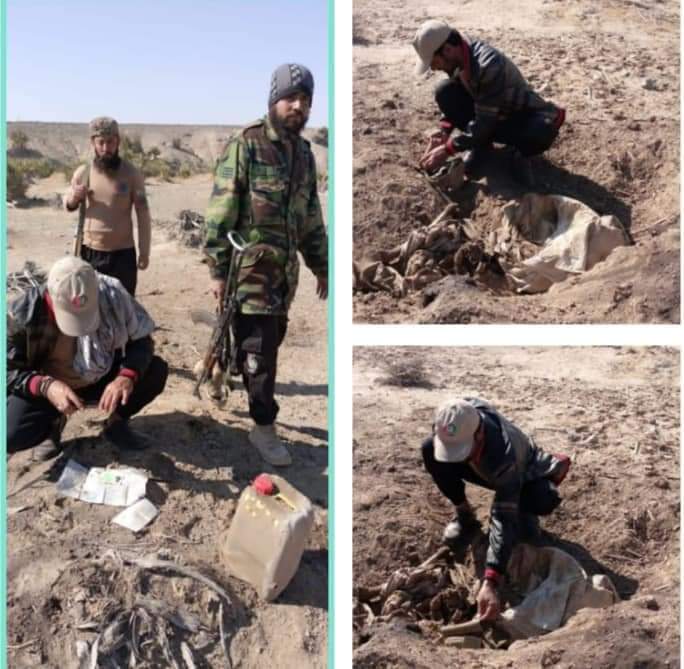
Decomposed dead body of Allah Dad Baloch found at Dalbandin, Pakistan-occupied Balochistan (POB). (Photo: News Intervention)
Sometimes Pakistani authorities try to infuse doubt on the veracity of reported cases of enforced disappearances by falsely alleging that the victims have either gone abroad, particularly to Afghanistan, India or Iran, or have joined freedom fighters in the mountains. Such false propaganda is usually disseminated by the army’s spokesman whose claims are repeated by the heads of so-called ‘Commission of Inquiry on Enforced Disappearances’, spokespersons for the puppet provincial and central governments. However, authorities have miserably failed to prove a single case of reporting a false enforced disappearance to substantiate their claim.
Similarly sometimes authorities,
instead of denying, try to dispute the numbers of enforced disappearances. Such
a job is also done mostly by Mr. Justice (Retired) Javed Iqbal, the head of the
so-called Commission of Inquiry on Enforced Disappearances, as well as
spokespersons for the puppet governments.
Irrespective of the false propaganda
of state authorities, the real number of all enforced disappearances is not
ascertained. Although the Voice for Baloch Missing Persons (VBMP), the Human
Rights Council of Balochistan, and BNM are doing their best to document and
register cases of enforced disappearances. But the lack of resources to collect
information or access to the victims’ families is a hurdle in the way of their
task.
Similarly, the Pakistani regime has also created hurdles to reduce their ability to register and report all cases. While the Commission of Inquiry on Enforced Disappearance is working only to deny, dispute, and hide the cases. However, the said organization complains that the victims’ families also don’t report the cases of enforced disappearances. That is why the number of registered cases is underreported. Now the question is why do the victims’ families don’t register the enforced disappearances? Some conspicuous reasons, besides numerous others, are discussed herein bellow:
With regard to enforced disappearances in occupied Balochistan, the Pakistan Army, Frontier Corps, the agents of intelligence services, and their formed and sponsored militias and death squads enjoy total impunity. Civilian authorities like the police and levies lack the power to register cases, arrest and investigate the perpetrators. Police and levies aren’t only powerless but they also are compelled or induced to cooperate with the culprits. Such a situation prevents the victims’ families from filing complaints
The police and levies, the courts have no power as well as the courage and the will to hold the mighty Pakistan military, Frontier Corps, intelligence agencies, and their death squads responsible. In such a situation, when victims’ families see no legal remedies or saviors they mostly opt to keep quiet.
The police, levies and courts not only lack jurisdiction or willingness to register, investigate and entertain complaints against powerful perpetrators but also due to bias, intentional disrespect and mistreatment of the complainants with a view to discourage and disappoint thereby preventing them from filing and pursuing the complaints.
The overwhelming majority of the victims’ families also don’t register complaints with the Commission of Inquiry on Enforced Disappearance because the commission has no branches in the far-flung war-ridden regions of occupied Balochistan. Despite its inaccessibility, the head of Commission Mr. Justice (R) Javed Iqbal is notorious for his corrupt and immoral character. There are numerous complaints against him for misbehaving and harassing the complainants, particularly the women.
With regard to enforced disappearances, the poor performance of police, levies, kangaroo courts, and the commission is apparent. Thousands of Baloch have gone missing during the last two decades of armed conflict in occupied Balochistan but the above mentioned authorities haven’t held a single perpetrator responsible. In view of such bitter facts, the victims’ families think the litigation against state organs is a futile exercise of wasting time and money.
As soon as a person is abducted, the agents of intelligence approach the victim’s family and pressurize them to keep quiet. They threaten the family not to report the incident to any authority and media, otherwise the abductee would face dire consequences. They also intimidate and defraud the family to cooperate with agencies so that their loved ones could soon be released. Such tactics prevent people from reporting the enforced disappearances.
Media blackout and creation of hurdles for human rights defenders is another reason for underreporting of the enforced disappearances in occupied Balochistan.
Last but not least there is no ample amount of pressure from the international community and international human rights bodies against the Pakistan Army and its government to take the Baloch “Missing Persons” issue seriously.
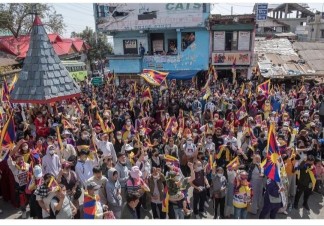
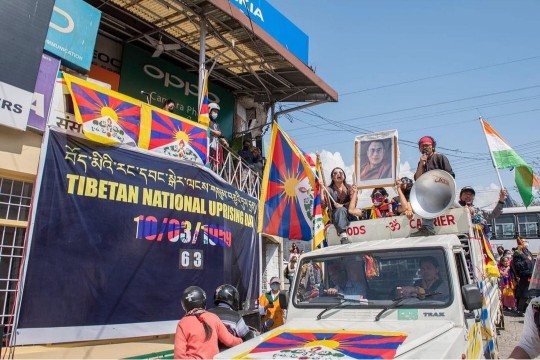
It was on 10 March 1959 when thousands of Tibetans took to the streets of Lhasa, Tibet’s capital to protest against forceful Chinese occupation of Tibet. They also came together and surrounded the Potala Palace to protect the Dalai Lama as there were rumours of his assassination. The Chinese soldiers came down heavily on the protestors resulting in a clash between the two sides. The resilient protestors did not give in to Chinese brutality. Dalai Lama crossed over to India and has remained in exile since then, but several Tibetans lost their lives on this day. Since then, every year, Tibetans all over the world mark this day as the Tibetan National Uprising Day and mourn the sacrifices made by Tibetan martyrs.
Tibet National Uprising Day procession at Dharamsala. (Photo: Sonam Tobgyal, Sonam Tshering & Tibet.net)
This year was the 63rd anniversary of the Uprising . Tibetans in exile and supporters took to the streets taking part in protest rallies, vigils, marches, hunger strikes and sit-in shouting Free Tibet slogans. Their new slogans in Hindi were, “Yaad karo Yaad karo- Galwan ghati yad karo!” (remember, remember the Galwan valley); “Hamara dushman ek hai- China hai! China hai!” (we have a common enemy, its China its China).
In Dharamsala, the Central Tibetan Administration (CTA) observed the day with Jiri Oberfalzer, the Vice Presdient of Czech Senate as the chief guest of the occasion and Rajya Sabha M.P. Amarendra Dhari Singh as a special guest. Singh in his speech assured India’s support for the Tibetans. The event was attended by the CTA heads, in exile-parliamentarians, secretaries, and Tibetans living in Dharamsala. They unfurled the Tibetan flag and sang the Tibetan national anthem.
We use cookies on our website to give you the most relevant experience by remembering your preferences and repeat visits. By clicking “Accept All”, you consent to the use of ALL the cookies. However, you may visit "Cookie Settings" to provide a controlled consent.
This website uses cookies to improve your experience while you navigate through the website. Out of these, the cookies that are categorized as necessary are stored on your browser as they are essential for the working of basic functionalities of the website. We also use third-party cookies that help us analyze and understand how you use this website. These cookies will be stored in your browser only with your consent. You also have the option to opt-out of these cookies. But opting out of some of these cookies may affect your browsing experience.
Functional cookies help to perform certain functionalities like sharing the content of the website on social media platforms, collect feedbacks, and other third-party features.
Performance cookies are used to understand and analyze the key performance indexes of the website which helps in delivering a better user experience for the visitors.
Analytical cookies are used to understand how visitors interact with the website. These cookies help provide information on metrics the number of visitors, bounce rate, traffic source, etc.
Advertisement cookies are used to provide visitors with relevant ads and marketing campaigns. These cookies track visitors across websites and collect information to provide customized ads.
Necessary cookies are absolutely essential for the website to function properly. These cookies ensure basic functionalities and security features of the website, anonymously.
Cookie
Duration
Description
cookielawinfo-checkbox-analytics
11 months
This cookie is set by GDPR Cookie Consent plugin. The cookie is used to store the user consent for the cookies in the category "Analytics".
cookielawinfo-checkbox-functional
11 months
The cookie is set by GDPR cookie consent to record the user consent for the cookies in the category "Functional".
cookielawinfo-checkbox-necessary
11 months
This cookie is set by GDPR Cookie Consent plugin. The cookies is used to store the user consent for the cookies in the category "Necessary".
cookielawinfo-checkbox-others
11 months
This cookie is set by GDPR Cookie Consent plugin. The cookie is used to store the user consent for the cookies in the category "Other.
cookielawinfo-checkbox-performance
11 months
This cookie is set by GDPR Cookie Consent plugin. The cookie is used to store the user consent for the cookies in the category "Performance".
viewed_cookie_policy
11 months
The cookie is set by the GDPR Cookie Consent plugin and is used to store whether or not user has consented to the use of cookies. It does not store any personal data.