Home Blog Page 279

Pakistani regime’s lies and deceit on Afghanistan

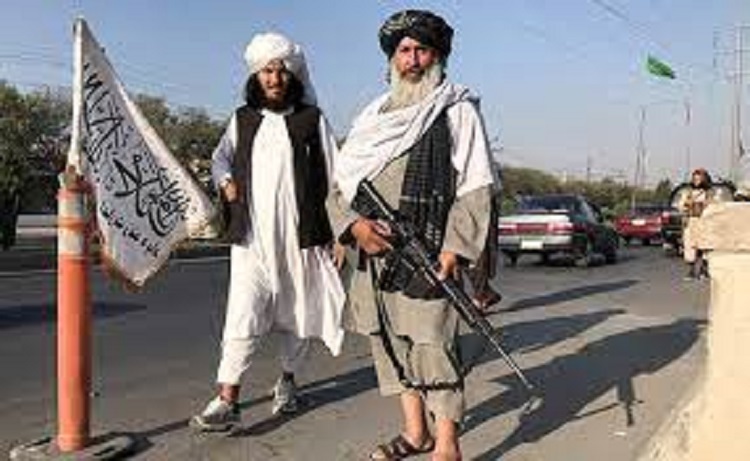
Afghan Taliban’s seizure of Kabul in August last year was met with great jubilation across Pakistan for several reasons. Pakistan’s anti-U.S. lobby saw America’s ignoble exit from Afghanistan as an appropriate affront for the shabby way in which Washington had been treating Islamabad. On the other hand, fundamentalists viewed U.S. withdrawal alongwith collapse of the ‘puppet’ pro-West Ashraf Ghani government and imposition of sharia law by Afghan Taliban as a big ‘victory’ for Islam.

Even the simple folks with no ultra-nationalistic leanings or fundamentalist mindset were happy since they truly believed the government [and Pakistan Army’s] claim that the entire problem of terrorism that Pakistan faced was being orchestrated by India from Afghanistan through terrorist groups like Tehreek-e-Taliban Pakistan [TTP]. Accordingly, they were confident that with Afghanistan under Taliban’s control, India’s purported “state sponsored terrorism” against Pakistan would finally come to an end.

Barely a week after Taliban seized Kabul, Pakistan’s Information Minister Fawad Chaudhary yet once again reiterated Islamabad’s allegation that TTP was being financed by India. While speaking to the media, he said, “We should be satisfied to know with regards to the TTP, that for the first time the process of Indian funding [to TTP], which had been going on for a long time, has ended and at this time they are in disarray”. However, the prevailing situation on ground didn’t endorse Chaudhary’s avowal because far from being “in disarray”, TTP stepped-up its attacks against Pakistani security forces.

In fact, such was the ferocity of violence perpetrated by TTP that Islamabad [with obvious approval of Rawalpindi] was forced to enter into a ceasefire agreement and hold dialogue with this terrorist group, which was responsible for the gruesome murder of 148 people [including 134 school children] during the 2014 Army School Peshawar [APS] massacre. Considering that the students killed were predominantly wards of Pakistani defence forces, isn’t entering into negotiations with TTP a rather unflattering commentary on Pakistan Army?

Rawalpindi had very high expectations from Afghan Taliban, and rightly so. For two decades, it had not only hosted Taliban leadership, but also enraged the international community by providing military hardware and logistical support to this proscribed terrorist group which was fighting the US-led coalition forces in Afghanistan.

So much so that in the October of 2016, Pakistan’s  daily Dawn carried an exposé aptly titled, “Act against militants or face international isolation, civilians tell military,which revealed how “In a blunt, orchestrated and unprecedented warning, the civilian government has informed the military leadership of a growing international isolation of Pakistan and sought consensus on several key actions by the state.” 

Two years later the then U.S. President Donald Trump, in his New Year tweet wrote- “The United States has foolishly given Pakistan more than 33 billion dollars in aid over the last 15 years, and they have given us nothing but lies & deceit, thinking of our leaders as fools. They give safe haven to the terrorists we hunt in Afghanistan, with little help. No more!” Even though Washington suspended financial aid to Islamabad which triggered the economic crisis due to which Pakistan is today in a state of near-bankruptcy, Pakistan army chief Gen Qamar Javed Bajwa still didn’t make any amends.

Having played a gracious host to Afghan Taliban for two decades and helping it militarily which accelerated Afghanistan National Army’s defeat, Rawalpindi was confident that an indebted Afghan Taliban would most certainly do its bidding as a return-favour. To further ensure that the Taliban government in Kabul remained pliable, Pakistan army took pains to ensure that members of its most favourite protégé [Haqqani network] occupy positions of power in the new setup [Remember how chief of Pakistan army’s spy agency Inter-Services Intelligence [ISI] Lieutenant General Faiz Hameed air dashed to Kabul for this purpose?]

Afghan Taliban’s refusal to take action against TTP may have come as a big shock to Rawalpindi, but this was expected as both groups have fought shoulder-to-shoulder against coalition forces in Afghanistan. Whatever doubts remained were dispelled when Afghan Taliban unconditionally set free TTP members who had been jailed by the previous regime. So, while Afghan Taliban may deny any affiliation with TTP, but this is just theatrics as it can’t afford to turn its guns on TTP at this point of time for several reasons.

Firstly, Afghan Taliban and TTP share the common ideology of establishing sharia rule in their respective countries and so, acting against TTP would antagonise the fundamentalist faction within Afghan Taliban. Secondly, since TTP has assisted Afghan Taliban in combat, acting against it at Pakistan’s bidding is tantamount to betrayal, and being violative of the time-honoured ‘Pashtunwali code’, unacceptable. Thirdly, use of force against TTP could make this group lean towards Afghan Taliban’s arch-enemy Islamic State- Khorasan Province [IS-K], which would make things more difficult for Kabul.

So, in order to protect its own interests, Afghan Taliban will in all probability replicate the brazen skulduggery of hunting with the hounds and running with the hare that its mentor Pakistan exhibited as a “front-line state” during the U.S.-led war on terror in Afghanistan.

It seems that for Islamabad, the chickens have finally come home to roost!

Tailpiece: In the coming days, it won’t be surprising to find Prime Minister Imran Khan [or more appropriately, his army chief Gen Bajwa] borrowing President Trump’s 2018 tweet that may read, thus: ‘Pakistan has foolishly hosted Afghan Taliban over the last two decades, and they have given us nothing but lies & deceit, thinking of our leaders as fools. They give safe haven to the TTP terrorists we hunt in Afghanistan, with little help. No more!’ .

BNA targets Lahore in retaliation to Pak Army atrocities on Baloch women and children

0

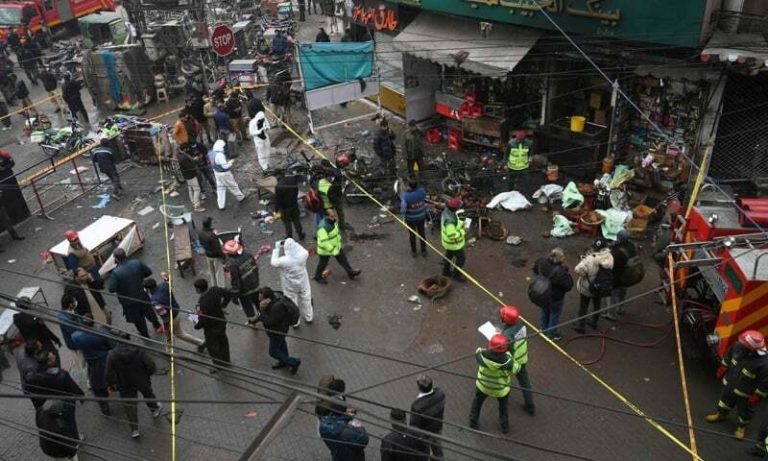
Violence is bad. Violence is no solution to any problem. Agreed. But what should a community, a colonized nation do when violence is thrust upon it and state-sponsored violent attacks take place all round the year on its people? Yes I am talking about the hapless Baloch and the systematic violence carried out by the Pakistani regime across occupied Balochistan. The Baloch Nationalist Army (BNA) retaliated Thursday by planting bombs at Anarkali bazar in Lahore targeting police and bank executives, symbols of Pakistani regime.

In most parts of the civilized world Balochistan remains an alien word. Even for the select few who may have heard about Balochistan look towards this occupied nation through the eyes of Pakistan’s Punjab province. This has emboldened Rawalpindi to successfully mask its genocide in Balochistan under the garb of curbing Baloch insurgency. ISPR (Inter-Services Public Relations) the propaganda arm of Pakistan Army justifies military operations across Balochistan as its efforts to curb terrorism.

It’s not the ISPR’s shenanigans that bothers me, what worries me instead is the naivety of civilized world that happily laps up ISPR’s falsities. How else can one call the retaliation of Baloch insurgents on Pakistani regime as a terrorist attack. Did the world ever bother to condemn the cold blooded murder of Taj Bibi? When Pakistani forces shot dead Baloch student Hayat Baloch? When activist Karima Baloch was eliminated in Canada by Pakistan’s ISI? When journalist Sajid Hussain was silently murdered by the ISI in Sweden? NO.

Over 70,000 Baloch went ‘Missing’, rather ‘Disappeared’ during the last two decades. And all these 70,000 are ordinary people. There are doctors, engineers, lawyers, professors, students, housewives, businessmen and children who were abducted by the Pakistani forces during the last decade and a half. Did we hear any outrage by any of the international human rights organization? Did the haloed United Nations (UN) ever take cognizance about these Enforced Disappearances? NO

During 2021 Pakistani forces conducted 600 military operations across Balochistan and abducted over 650 Baloch, whereabouts of whom remains unknown. More than 290 Baloch dead bodies were recovered who were killed by Frontier Corps (FC), Pakistan Army and ISI-backed Death Squads. The Pakistani security forces set ablaze more than 1000 Baloch homes and looted another 1900 Baloch homes. These aren’t bland statistics, rather a gigantic humanitarian crisis. Think of the Baloch families whose loved ones were killed or abducted, their houses set on fire and women taken upon as sex slaves by the Pakistan Army. And this isn’t a movie script or some figment of imagination, either. Did the media write about these atrocities? Did the human rights organizations or the US ever castigate Pakistani regime for Baloch carnage? NO

What are the options left for the hapless Baloch? What should they do if not pick up arms and retaliate against the colonizing Pakistan Army and shoo them away from their motherland, Balochistan.

Lahore blasts carried out by the newly formed Baloch Nationalist Army (BNA) is just a manifestation of collective Baloch anger. This anger and pain is about the civilized world’s neglect of the Baloch cause.

Soon after the blasts at Anarkali Bazaar in Lahore the BNA spokesperson took the responsibility. Even a cursory look at the media statement of Baloch Nationalist Army (BNA) should have given the perspective and background for Lahore attack.

“The Lahore blast was in response to the killing of women and children by Pakistani forces in Balochistan,” said Mureed Baloch BNA spokesperson.

Ironically, yet again, some prominent media organizations fell into the information trap laid by the ISPR. India Today and Times of India said (based on PTI report) that the place of Lahore blast is known for selling Indian commodities. Aaj Tak went a step further and termed the Lahore blast as a terrorist attack on Pakistan!

Prominent Indian media groups fell into ISPR’s information trap and called Lahore blasts as terrorist attack. (Photo collage: News Intervention)

These headlines and the reportage would have definitely brought smiles to ISPR (Inter-Services Public Relations) who managed to turn world’s attention from Pakistan Army’s genocide in Balochistan towards the attack on Anarkali bazar Lahore that sells Indian commodities.

Sadly, this will not quell the violence rather escalate it further. The root cause of this mindless violence spree is Pakistan Army’s ongoing genocide across Balochistan. And the first step towards stopping this is the acknowledgement that Pakistani regime is the perpetrator of violence.

Statement of the Baloch Nationalist Army (BNA) explaining the reasons of Lahore blast.

Indian media must shun the practice of looking anything and everything in their neighbourhood through ISPR lens, more so in the case of Balochistan.

It’s time the world sits up and take note of the rampant and massive violence across Balochistan and impose sanctions on Rawalpindi.

Outside Looking In: What is Blasphemy? What is Honour?

What is honour? Pakistan has the highest number of honour killings of any nation-state in the entire world. Is this an honourable state of affairs for the State?

In Pakistan, most appear to be women; women are murdered for dishonouring the family honour more than men in Pakistan. Is this honouring women?

Gulalai Ismail fled from Pakistan because of the impacts on her from the military forces and the theocratic control mechanisms, so a dual network of control in which a women’s rights defender had to flee. Her and her sister, Saba Ismail, have been highly important to articulating the rights of women and girls. Is this an honourable set of systems for governance?

They spoke to Pashtun rights; they spoke to rights of women survivors of sexual violence by state forces. That’s religious and armed forces oppressing and threatening the lives of family and individual women for arguing for the equal status of women. Is this reflective of an honourable religious leadership and armed forces?

I see nothing honourable in trying to kill, scare, or imprison, individuals who fight for equality, justice, and fairness. Nothing is new in Pakistan in regard to this. What about actual murders? Are these honourable? In fact, are these common or uncommon?

‘Qandeel Baloch’/Fouzia Azeem was murdered by her brother, M. Waseem, via drugging and asphyxiation for bringing disrepute to the family’s honour.

Ayman Udas was shot by two of her brothers.

Tasleem Khatoon Solangi was tortured and killed.

Three teens and two middle-aged women were beaten, shot, and buried alive in Balochistan in 2008.

Farzana Iqbal, née Parveen, was shot to death.

Saba Qaiser was beaten and shot in the head, though amazingly survived.

Samia Shahid was raped and strangled to death.

A Pakistani mother has burned her daughter alive.

Rozi Khan and Zainab Khan were shot; in fact, Rozi was shot to death.

In 2018, a 19-year-old woman was murdered in Karachi, Pakistan, and claimed as a “sinful woman.”

Shafilea Iftikhar Ahmed was murdered for becoming too westernized.

Sandeela Kanwal was murdered by her father.

Ghazala Khan was shot and killed by her brother.

Rukhsana Naz was murdered by family members.

Aqsa Parvez was murdered by her father, via strangulation.

Hina Saleem was murdered by her father slitting her throat 28 times.

Sadia Sheikh was shot to death by her brother.

The Kohistan video showed, at least, three girls murdered.

Samia Sarwar was shot to death.

What is honourable in these acts? Is the goal to make women’s rights defenders, such as Gulalai Ismail and Saba Ismail, or simply women and men making free and personally informed choices, subject to threat & fear of murder by close family – including father, mother, or brother – or the State?

Blasphemy is similar to these cases in the illegitimate use of force and threat of murder against innocent people who merely use words or make free choices in expression, similarly as women and men make free choices stated as dishonouring the family or otherwise.

‘Ayaz Nizami’/Abdul Waheed has received the death penalty for blasphemy, for words, as an example.

A god, Allah, infinitely powerful, all-knowing, and all-good, cannot carry out these acts for him, requires state apparatuses, religious fundamentalists, military personnel, and public conscience incapable of handling criticism, free women, or the mere existence of atheists in their midst. “But why go public with the words?”

Fair enough, some can live freely expressing opinions and others cannot. Inherently hypocritical, but open and honest in it, “But isn’t this all in the past?” Not truly, Abdul Waheed’s case is happening now.

Taimoor Raza was sentenced to death for ‘committing blasphemy’ on Facebook within the last little while.

80 people are imprisoned for blasphemy right now: Abdul Waheed is the most notable case as a public agnostic/atheist. Half of the 80, at least, have been sentenced to death, according to the U.S. Commission on International Religious Freedom.

The honour killings have been happening over the past two decades or so, in and out of Pakistan for those with Pakistani heritage – probably longer. It’s the culture of family honour entrenched as a mechanism to murder dissenters, exported or kept internal to the country, which is the issue.

Even recently, Aneeqa Ateeq, she was lured into a religious discussion group on WhatsApp and made comments about ‘holy personages,’ obviously critical. She has been sentenced to death.

So, I, and countless others like me, Muslim and non-Muslim alike, ask, “What is the honour here?”

What is honourable in killing others by the State, by religious dictates, by armed forces, by family (father, mother, or brother), or otherwise?

Did not the Quran state, “Therefore We ordained for the Children of Israel that he who slays a soul unless it be (in punishment) for murder or for spreading mischief on earth shall be as if he had slain all mankind; and he who saves a life shall be as if he had given life to all mankind.”? [Surah Al-Ma’idah Ayat 32 (5:32 Quran)]

If one praises the murderers, one praises those whom The Holy Quran claims have “slain all mankind.” You make the vote when you pick the side – and apathy is picking the side of the murderer, too, in many ways, passively, because a human being’s life has been taken wrongfully.

Blasphemy or dishonour to family, murder is murder and is a dishonourable act; and, indeed, we all know this, but, sometimes, act otherwise, and will continue to do so, I presume to the deaf to the message of this article or the blind to the meaning of its intent: Universalism for all humanity.

Photo by Hamid Roshaan on Unsplash

Mixed History: On Sir James Douglas

Long fore-running the days of all the major visitation spots in British Columbia, before the time of the founding of Canada on July 1, 1867, prior to the foundation of Fort Langley (though concomitant with it, later), definitively before the title of “Fort Langley National Historical Site of Canada,” or the places of art and the galleries[1], the accommodations[2], the restaurants[3], the businesses dealing in finance and real estate[4], the floral and bridal and antique shops[5], the gift and health & beauty shops[6], visitation spots and services[7], or any of the local community groups and activities and events and items[8], or the introduction of highly educated and well-to-do Evangelical Christians throughout the area from Trinity Western University, the fights at the Supreme Court of Canada for the Evangelical law school, the infamous artist and developer fights[9], or the civic debates of the Township of Langley Cllrs.[10], or such inane, and banal and almost pointless, meanderings as written by the current author on the subject(s) surrounding Fort Langley[11], there existed one individual by the name of Jim Douglas, or Sir James Douglas, KCB[12] (no known relation).*[13] A man whose life seems more titivating with nuance added to the story, small enhancements made clear, while learning more about him: Mr. Mix-A-Lot.

So many parties wish to lay claim to the titular ownership of “Fort Langley National Historic Site of Canada,” only a few wish to understand without claiming it. There’s a vast gulf between the former and the latter only learned through hard experience and conversations with the peoples of the area, settler or not. Douglas was the Governor of British Columbia 1858–1864 and of Vancouver Island 1851 to 1864. He did not start here. Born August 15th, 1803, in Demerara, Guyana (formerly British Guiana), his legacy between and death — on August 2nd, 1877 — remains the founding of British Columbia or, more colloquially, as “The Father of British Columbia.” Neither a minor figure in the community village nor in the provincial history, he set the tone and calibre of the attractiveness of the colonial outposts here. He assisted the Hudson Bay Company acquire a trade monopoly in the Pacific Northwest, as the Chief Factor of HBC from 1839 to 1858. He helped establish British rule west of the Rocky Mountains as the governor of Vancouver Island and British Columbia. A part of this had to do with the negotiation of land purchases with the First Nations. His career took him through the Fraser River Gold Rush, Cariboo Gold Rush, and the Fraser Canyon War.

Guyana, at the time of his birth, was a Dutch colony. His father, John Douglas, owned a cotton and sugar plantation in Demerara. John was a Scottish Merchant who came from the Earls of Angus. One of the oldest of the known mormaerdoms, regional/provincial rulers. His mother, Martha Ann Ritchie, was born in Bardados as a free woman of colour. ‘Person of colour’ referred to someone of mixed African and European heritage. In other words, a non-enslaved mixed ‘race’ woman. Martha met John while he was on the plantation business. They never married and had three children with John returning to Scotland, and who married in 1809 to begin anew with another family. Sir James Douglas — a man of mixed ‘race’ or ethnic heritage — and his brother, Alexander Douglas, were sent to Lanark, Scotland, to become educated. James never went back to Demerara and never saw his mother again — such were the times. They had three children together, though they never married. John Douglas returned to Scotland, where he married in 1809 and started a second family.

With the North West Company or the NWC, (Sir James) Douglas was 15 when he became a part of the working staff. He apprenticed with them, then sailed to Montreal, so was working in the fur trade learning its accounting practices. There was a period of intense competition between the NWC and the Hudson Bay Company or the HBC at the time. It was a mostly economic battle between trade giants. Douglas was caught in this as a teenager. Apparently, in 1820, he fought an HBC guide, Patrick Cunningham, in a bloodless duel. When the NWC merged with the HBC, Douglas became employed by the HBC. The HBC won the economic war. His first posting was in 1826 at Fort St. James in the mainland of modern British Columbia. Chief Factor, William Connolly, requested Douglas to become part of the overland fur brigade at Fort Alexandria to Fort Vancouver. Such as the times were, Douglas, in fact, married Connolly’s daughter, Amelia. Now, bearing in mind, Douglas comes from a mixed-race mother or free woman of colour and a Scottish father; Amelia’s mother was Cree. Ergo, a mixed ethnic background — First Nations and European — wife, Amelia, and mixed Guyanese and Scottish husband, James (Douglas), for a mixed ethnic coupling.

Which is to say, taking a moment to opine, even for today, this retains a character of the revolutionary to it. In that, even within the modern discourse of inter-ethnic couples, striving new paths and creating bridges in Afro-Canadian and Indigenous lives, Douglas simply did it. He did more, talked less. Amelia and James married on April 27th, 1828, and, again, at an Anglican ceremony in Fort Vancouver (1837). Something of a renewal of vows, presumably, and a sacralization of the union under the auspices of the Anglican Church. Within Fort Vancouver, Chief Factor John McLoughlin was the boss of Douglas, while Douglas was the superintendent of Columbia District fur trade for two decades. Douglas went to Alaska in 1840 to negotiate trade/boundary deals with the Russian American Company. Much of Douglas’s efforts vis-à-vis trade and boundary building appears part of a local effort against international efforts, including the Russians, though more acutely the Americans, with an increase in the American influence on the Pacific Northwest, Douglas started the construction of Fort Victoria (1843). Circa 1846, British North America in the West and the United States had a border set at the 49th parallel based on the Oregon Treaty (June 15th, 1846). Originally, the land was jointly held by the Americans and the British through the 1818 Treaty. This was monumental to British-American relations. The HBC moved from Fort Vancouver, presumably as a response. Douglas began a new fur brigade from Fort Langley to New Caledonia, then Fort Victoria became the place for furs shipped from the interior for the HBC.

With the continued threat of American expansionism, Vancouver Island was made a Crown colony (January 13th, 1849). Douglas was appointed an agent for the HBC on the island. Interestingly, in a twist of finance and trade overruling political power, Richard Blanshard was chosen by the British government as the governor; however, as it turns out, Blanshard found most of the associations were held in the hands of the HBC with the individual British colonists mostly associated with the HBC and power invested in the chief factor of the HBC — by that time, James Douglas, himself. In short, he chose to resign and leave Vancouver Island (August, 1851). ‘Why bother?,’ in other words. On October 30th, 1851, Sir James Douglas was selected as governor. In association with the HBC and while the governor, he was criticized for a conflict of interest. Even further, and not to his credit, Douglas appointed his brother-in-law as the chief justice of the Supreme Court of the time. Circa 1856, Douglas was — by definition — elitist in considering people wanting the rule classes to make the decisions for them. Sort of, ‘Get them, the fray, out of our hair, and let us get one with making the important decisions,’ as the attitude, that’s astonishing for someone of mixed ethnic heritage from Demerara. When making a legislative assembly — based on a request from the Colonial Office, Douglas put property qualifications on the right to vote. In other words, only a few could count for membership in the assembly: land-owners versus the rest, in short. Sir James Douglas was not democratic; he was anti-democracy, or a timocratist erring more on land-ownership side rather than the inherent sense of honour. In ironic fashion, we, in modern democratic Canada, honour Sir James Douglas, the timocrat who opposed universal suffrage.[14]

Between 1850 and 1854, Douglas negotiated land treaties with First Nations on Vancouver Island. 14 in total. The Fort Victoria Treaties or Douglas Treaties were cash, clothing, blankets, hunting and fishing rights, etc., in barter for land. In traditional colonial fashion, Douglas left the terms of the agreements blank at the time of the signing. So, the clauses were added at a later time. Is anyone else seeing a problem here? Douglas, in this wrinkle, too, was not a saint; he was through-and-through a settler in mind. Some oral history from the Indigenous claim the signatories — the Indigenous signatories — thought the signings were land sharing deals or peace signings, so sharing and not ceding land. Do you see the issue? The X signed looked like the Christian symbol of the cross, so a spiritual gesture — not the proverbial John Handcock, and so on and so forth. With the coming of Americans from California, too, during the Fraser River Gold Rush, the numbers of Americans to British subjects began to swell. So as to protect the land for the Crown (the British rulers), Douglas claimed the land and minerals for them. Licenses were given to miners to prevent invasion. This was seen as an attempt to keep HBC monopolization. He was reprimanded by the Colonial Office.

Douglas was a completely sympathetic individual to the British. He was a loyalist. Even so far as to go to the San Francisco Black community to find migrants sympathetic to the Crown, the issue was the increasing numbers of American migrants coming to the areas around Douglas without necessary identity links to Britain. Since the United States Supreme Court declared free and enslaved Black Americans unable to acquire citizenship in 1857, Douglas, ever the man looking for opportunities, offered citizenship after 5 years of land ownership. A few hundred Black American families moved to the colony in Victoria. In some ways, one can ask, “Is this good or bad?” It was politically opportunistic in service to the British; it was socially beneficial in giving the disenfranchisemed some modicum of enfranchisement. It depends on the aperture and the angle of the lighting.

Nlaka’pamux communities were the Indigenous communities along the Fraser River. Douglas worried of bloodshed between the Nlaka’pamux and the American miners, and warned the British who could not respond in time. American miners came and reached the lower Fraser River. Sexual violence was reported to happen against the Nlaka’pamux women. Gold was mined without Nlaka’pamux communities’ consultation. Nlaka’pamux fishing was interrupted. Nlaka’pamux communities armed to protect themselves, some of them. Douglas ordered one gunboat on the Fraser River and wanted licenses from miners who went to find gold. Having no army, so no force, and asking for help from the British, the British responded to the plea for help: Staking a claim to the Fraser River as part of the Crown. Alas, August, 1858 found Nlaka’pamux communities and the miners at war. Some 36 people (5 chiefs) were murdered, 3 were imprisoned, and unknown others were wounded. 5 Nlaka’pamux communities were burned down by the miners. By August 22nd, a truce was set. Comically, Douglas arrived with 35 armed men from the British government, though the fighting had ended by that point — fruitless pursuit of peace when a truce has been brokered.

Gold changes everything. Britain chose to remove the HBC privileges during March of 1859 with the discovery of gold. Douglas was made governor of British Columbia while on condition of no more ties to the fur trade industry. Although, governor of Vancouver Island at the time. He was inaugurated as governor of British Columbia in — of all places — Fort Langley, then made Companion of the Order of the Bath for work as governor on Vancouver Island. Fort Langley almost became the first capital of British Columbia. On January 6th, 1859, Royal Engineer Commanding Officer Colonel Richard Clement Moody went by Fort Langley en route to Yale. After visitation of the site, he decided a better place would be New Westminster, which became the first capital of British Columbia. With 1866 came the merger of the colonies of Vancouver Island and British Columbia, thereafter, Victoria became the capital of British Columbia. Douglas focused on the welfare of miners and setting reserves, via gold commissioners, for the Indigenous peoples. He, probably, didn’t want a repeat of war, as before, and worked on a land policy inclusive of mineral rights. In 1860, British Columbians wanted a form of popular government. He had to be confronted by the citizens, in other words. Whatever the response, the citizens were not happy with Douglas’s response to them. They petitioned the London Colonial Office in 1863. Douglas, subsequently, retired in 1864; these petitioners may or may not have influenced the decision. He was given the title of “Sir” as a Knight Commander of the Order of the Bath, thusly came to be known — to the plains-folk of the land of Fort Langley — as Sir James Douglas of Douglas Day fame. He died of a heart attack on August 2nd, 1877, incidentally the informal birth date of In-Sight Publishing (2012). All information above is publicly available on the “Father of British Columbia.” A governor, a chief factor, a British loyalist or someone tied deeply to the Crown, a latecomer to war needs, a diplomat knowing the influence of material goods to keep communities at peace, a mixed-ethnicity man (European and Guyanese) married to a mixed-ethnicity woman (First Nations and European) in an inter-ethnic union, someone opposed to popular democracy in favour of a form of ‘democracy’ more closely resembling timocracy or rulership by those who own land. Neither entirely evil nor wholly good, a mixed man of mixed heritage with mixed morals leaving a mixed legacy as “The Father of British Columbia.”

[1] Gallery 204, Kube Gallery, Berga Gallery, Barbara Boldt Studio, Jelly Digital Marketing, Fort Photo Images, Photography Elements, Fort Gallery Artists Collective, Fort Langley Artists Group, Elaine Brewer White Studio, The Neighborhood Art School, FREE iWork PAGES Templates, Old Dog Dons ~ Fort Sketches, Van Gogh Painting & Restoration, K’wy’i’y’e Spring Salmon Studio, Susan Galick Fine Art Studio, The Pencil Studio, Artist Linda Muttitt, and Susan Falk — Artist.

[2] Wisteria House in the Fort, Cranberry Country Inn B&B, Princess & the Pea B&B Langley, Fort Langley Camping, Vacation rental management, Lifty Life Hospitality.

[3] Trading Post Brewing Taphouse & Eatery, The Fort Pub & Grill, Wendel’s Books and Cafe, Mangia E Scappa Italian Foods, Seasons Fine Supplements & Juice Bar, lelem’ Arts & Cultural Cafe, Little Donkey Food & Drink, Rail and River Bistro, Saba Café & Bistro, Republica Roasters, Blacksmith Bakery, Beatniks Bistro, Planet 50’s Cafe, Into Chocolate, The Fort Wine Co., Bobs Growcery (Veggie Bob’s Kitchen Café), Lee’s Market, and Subway.

[4] RE/MAX Award Winning Service, Royal LePage Sterling, RE/MAX — Dean Hooseman, RE/MAX — Gloria McGalliard, Royale LePage- Lisa Bakx, Mortgage Professional Nadia Causley, Ivory Accounting and Advisory Services (formerly de Verteuil & Company), Coast Capital Savings — Fort Langley, Ivory Planning Group, Stocking & Cumming, CA, The Paper Clip Bookkeeping, and Nadia ~ Mortgage Services, Stocking & Cumming — CPA, Business Accounting Langley.

[5] Floralista Flower Studio, Niche Boutique Florals, Ivory Bridal — Dresses, Fort Lang Foto, Country Lane Antiques, and Rempel Mercantile.

[6] The Fort Finery, Gallery Beads and Gifts, Chuckling Duckling Farm, Peridot Decorative Homewear, Floralista Flower Design Studio, Blueberry Meadows Interiors, Sxwimela Boutique and Giftstore, Watermelon Tree Baby & Kids, Kizmit Gift Gallery, Bella & Wren Design, Treasure Landing, Fort Langley Cyclery, The Fort Finery, Cranberries Naturally, Floralista Flower Studio, The Happy Kitchen, Aimee B Clothing And Accessories, Pacific Bottleworks Company, DDBooski Clothing, Dove Coterie, A Quilted Stitch, Bagheera Boutique, Roxanns Hats, Diana’s Sheepskins & Gifts, Roxanns of Fort Langley, Aimee B Clothing, I.D. Salon, SuCasa Spa & Laser Hair Removal, ThriveLife Counselling & Wellness, Pharmasave Fort Langley, Incrediball — The Core Store, Fort Langley Dental Office, Fort Family Chiropractic, Evergreen Chiropractic, Fort Physio Clinic, Fort Sport and Family Physio, Health Roots & Reflexology, Hardman Acupuncturist & TCM, Fort Langley Massage Therapy, TAP True Aromatherapy Products, Integrated Health Clinic, Fort Langley Colonics, Rees Personal Training, ID Hair Salon, TinyKittens Society, and Fort Langley Colonics.

[7] Fort Langley Community Hall, Fort Langley Spirit Square, B.C. Farm Machinery Museum, Langley Centennial Museum, Heritage C.N. Rail Station, Fort Langley Firehall #2, Fort Langley Golf Course, Redwoods Golf Course, Pagoda Ridge Golf Course, Double Header Sport Fishing, Fort Langley Air Floatplane Tours, Mountain View Conservation Centre, Park Lane ~ Bedford Landing, Dogwood Christmas Tree Farm, Trinity Western University, Fort Langley Evangelical Free Church, Living Waters Church, Fraser Point Church — Meeting Place, St George’s Anglican Church, United Churches of Langley — St. Andrew’s Chapel, Vineyard Christian Fellowship, Fraser Point Church Offices, Jubilee Church, and Fellowship Pacific, Brae Island Regional Park, Fort Langley Cemetery, Fort Langley Veterinary Clinic, Waldo & Tubbs Pet Supplies, Strands Bead Company, Spacial Effects Design Inc., Thunderbird Show Park, Dogwood Christmas Tree Farm, Devry Greenhouses, Cedar Rim Nursery, Krause Berry Farms, Driediger Farms, Fort Langley Dental Office, Fort Langley Locksmith, Expedia Cruise Ship Center, Goretti Faria — Family Therapy, Fort Langley Childcare, Fort Langley Web Design, Paper Clip Bookeeping, Stirling Noyes | Design and Marketing, Maven Fort Langley, Fort Horseless Carriage Service Ltd., Spacial Effects Design Inc., Custom Line Homes, Coast Pro Contracting, Site Lines Architecture, Special Effects Interior Design, Fort Fabrication and Welding Ltd., Fort Langley Lumber, Cassian Contracting, B&D Excavating, Local Musician John Gilliat, Heritage Music School, Red Stone Alley Blues Band, Cascades Casino, and Krazy Bobs Music Emporium.

[8] Seyem’ Qwantlen Business Group, Fort Langley Youth Rowing Society, Fort Langley Community Rowing Club, Fort Langley Canoe Club, History of Fort Langley, History of the Albion Ferry, Langley Weavers and Spinners Guild, Biodegradeables ~ Organic Recycling, Eric Woodward Foundation, The Fort Langley Project, Fort Langley Community Association, Langley Heritage Association, Fort Langley BIA (Dissolved), Fort Langley Canoe Club, Fort Langley Canoe Club Paddle Pushers, Fort Langley Canoe Club Sun Dragons, Fort Langley Canoe Club Fraser Dragons, Fort Langley Canoe Club Spirit of a Renegade, Fort Langley Canoe Club Dragon Spirit, Fort Langley Canoe Club Dragon Alliance, Fort Langley Canoe Club Women on Water, Fort Langley Canoe Club Chicks Ahoy, Fort Langley Canoe Club Kindred Spirits, Fort Langley Canoe Club Fort Fusion, Fort Langley Canoe Club Fortified, Fort Langley Canoe Club Vikings, Fort Langley Canoe Club Fort Fury, and Fort Langley Canoe Club Abreast with Fortitude, Fort Langley Canoe Club Dragonflies, Fort Langley Canoe Club — Kayak, Cranberry Festival, Bloom Designer Market, Fort Langley Mayday Parade, Historic Fort Half Marathon, St. George’s British Motoring Show, Fort Langley Celebration of the Arts, Chief Sepass Theatre, Fort Langley Farmer’s Market, The Fort Wine Company, Circle Farm Self Guided Tours, Double Header Sport Fishing, and, formerly, the Albion Ferry (before 2010).

[9] In the recent years, the infamous fights happened between prominent Kwelexwelsten, Kwantlen First Nation artist, Brandon Gabriel (Brandon Gabriel-Kwelexwecten) — and owner of Well Seasoned gourmet foods inc. (2004-) and former Township of Langley Cllr. (2014–2018), Angie Quaale — and developer and Cllr. Eric Woodward.

[10] Mayor Jack Froese, Councillor Petrina Arnason, Councillor David Davis, Councillor Steve Ferguson, Councillor Margaret Kunst, Councillor Bob Long, Councillor Kim Richter, Councillor Blair Whitmarsh, and Councillor Eric Woodward.

[11]Addendum on Wagner Hills Farm Society/Ministries,” “Municipal Case Study: British Columbia and Permissive Tax Exemptions,” “Suffering’s Fortress — Not Bad or Lost People, But Bad and Lost Theology,” “The Fantastic Capacity for Believing the Incredible,” “The Message of William Marrion Branham: Responses Commentary,” “Freethought for the Small Towns: Case Study,” and “Canadians’ and Others’ Convictions to Divine Interventionism in the Matters of the Origins and Evolution.”

[12] Knight Commander of the Order of the Bath.

[13] All hyperlinks and publicly acquired information availablehere.

[14] Fort Langley celebrates Douglas Day in honour of Sir James Douglas.

Photo by Robbie Down on Unsplash

Pervez Domki stands up to Pak Army, attains martyrdom

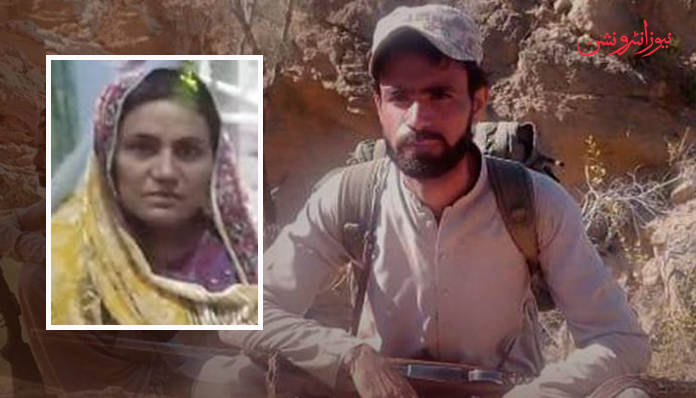
Pervez Domki attained martyrdom while fighting valiantly with the Pakistani forces at Sibi in Pakistan-occupied Balochistan on Tuesday. Pervez Domki was from the Baloch Republican Guards (BRG) who continued to fight even after Pakistani soldiers had taken his mother into custody and were using her as a pawn to force him to surrender.

As a true Baloch freedom fighter Pervez Domki chose to fight. He killed several soldiers of the Frontier Corps (FC), including one officer, and injured several others. The desperate Pakistanis, in a display of blatant barbarism, killed Domki’s mother in cold blood.

The Pakistani Frontier Corps personnel who were killed by Pervez Domki include SM Rana Muhammad Aslam, while the injured include Major Anwar Kamal and Hawaldar Rehmatullah, among others.

The Pakistani military officials started this operation on a tip-off in Loni area of ​​Sibi when they encircled Domki’s house and took his mother into custody.

A spokesman for the Baloch Republican Armed Forces (BRG), said in his media statement that the BRG’s regional commander Pervez Jan Domki was engaged in a battle in Loni Sibi with the occupying Pakistani forces. “Pervez Domki attained martyrdom along with his mother after a long resistance.”

The BRG spokesman added that in a historic resistance Commander Pervez Domki killed several Pakistani personnel, including a senior officer of the enemy army. “When he ran out of bullets he followed the Baloch philosophy of last bullet and shot himself, rather than let the Pakistanis capture him alive.”

Shaheed Pervez Domki had been associated with the Baloch national armed resistance since 2013. Domki had carried out several successful attacks on the occupying enemy in and around Sibi Jaffarabad. He was a successful civilian guerrilla soldier. Considering his abilities, he was appointed as the Regional Operational Commander five years ago. Until his martyrdom, he continued to fulfill his responsibility in the best possible way. BRG paid heartfelt tributes and saluted him for his supreme sacrifice.

“We want to make it clear that during this battle the occupying Pakistani forces had arrested Pervez Jan Domki’s mother and shot her dead after they could not force Domki to surrender and their soldiers continued to fall to Domki’s bullets. This only shows the insanity of the occupying Pakistani forces,” explained the spokesman of Baloch Republican Guards (BRG).

The central spokesperson of Baloch National Movement (BNM) termed the Pakistani barbarism in Sibi as a continuation of its barbaric act and inflicting collective punishment on innocent Baloch people. BNM said that the mother of Baloch activist Shaheed Pervez Domki was taken into custody and martyred during the military operation in Loni Sibi.

“By infiltrating Balochistan, Pakistani soldiers are violating Baloch values. In a society where women are highly respected, such brutality is tantamount to defying Baloch traditions. Pakistan Army will be held accountable for all these crimes,” added the central spokesperson of BNM.

Do you know the real Ajay Ajit Peter Kerkar?

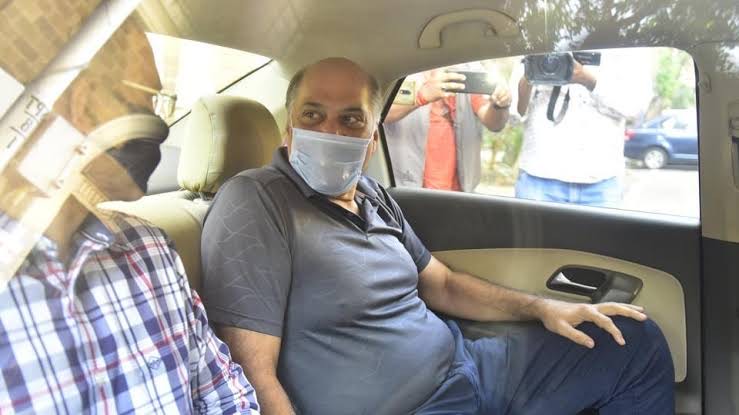
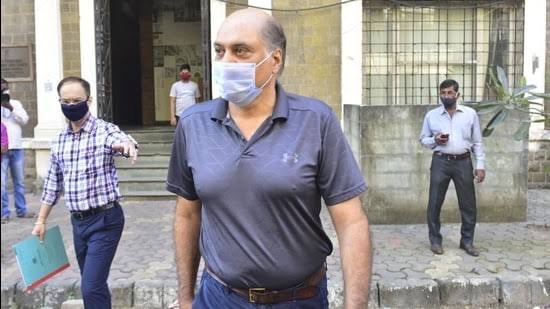
Kerkar, the main promoter of Cox and Kings, is lodged at the Arthur Road Jail in Mumbai. He has tied himself in knots after investigators have drilled several holes in his defence.

Intricate details about the way cash was siphoned out from Cox and Kings are coming out like worms from the closet of company’s top promoter Peter Kerkar, currently lodged in Mumbai’s Arthur Road Jail.

As many as three charge sheets out of ten have been filed by investigators trying to get to the bottom of the case, the list includes the Economic Offences Wing of Mumbai Police, Enforcement Directorate, Central Bureau of Investigation and the Ministry of Finance.

At stake is a whopping Rs 8,000 crore and over 2500 jobless employees demanding an estimated Rs 100 crore as their dues. They have not been paid.

But details of how the cash was swindled has first surfaced from a 200-page report filed by the EOW, a copy of which is with this reporter.

The EOW report comes 15 months after cops on the railway tracks found the body of Sagar Deshpande, a chartered accountant employed by Cox & Kings as its finance manager. Deshpande had agreed to become a witness in the cases being probed by the investigators. And then, very mysteriously his body was found on the railway tracks in Thane, Mumbai, on October 12, 2020, days before he was to reportedly testify and provide documents to the ED. Mumbai Police continues to investigate circumstances behind his unnatural death. The EOW report highlights views of his colleagues who found him under tremendous pressure having done what was asked of him and now was fearful that he would be accused of the same.

Peter Kerkar, promoter of Cox and Kings

Top sources say Kerkar is in deep trouble because of the EOW chargesheet which has been submitted to a court in Mumbai, terming the FIRs filed by him against his employees, the company’s top brass and his bankers as false. The report has concluded that Kerkar had filed the FIRs to “safeguard himself from the onus of criminality arising out of 10 cases registered against him.”

The EOW report highlights the following:

  • Stanford-educated Kerkar tried filing FIRs with cops near his office. He failed and then faked an address at a chawl in Sewri near Lower Parel. And when the investigators went to Sewri, his lies collapsed like a pack of cards.
  • The Desai Saksena and Associate forensic report, the foundation of Kerkar’s claims, was  — shockingly — disowned by the accounting firm itself.
  • The firms told the EOW they never had access to the books of account, but were pressured to selectively focus on a Rs 83 crore transaction between Ezeego and Redkite (owned by the CFO of Cox and Kings and its internal auditor). And all this while being stonewalled over their query regarding receivables of Rs 1000 crore from fraudulent parties.
  • As many as 15 fraudulent customers were at the core of bogus revenues being booked to inflate the financial performance of both Cox and Kings and Ezeego. The accounts were masked away from the SAP/Oracle accounting system. The idea, claimed EOW, was to help in the proposed IPO in 2009 of Cox & Kings. So, the scheme to inflate financials and give false sense of security to stakeholders and employees was in place for over a decade.

Kerkar, claimed the EOW, blamed almost anyone and everyone who worked with him, the list was a huge one and ranged from lending banks and their employees to the Ares SSG fund, from who he had raised money, and its partner  and even some of his own employees. The idea, claimed EOW, was to siphon cash and hide the true state of affairs from the promoters. He even pushed the audit firm Desai, Saksena and Associates to write a forensic analysis of the financial health of Cox and Kings Limited, a listed entity, and Ezeego, a privately held promoter company.  

The EOW says the plans were executed cleverly by Peter Kerkar, his sister Urshilla Kerkar and other members of his coterie. The EOW says Peter Kerkar himself negotiated with various banks for loans and presented false and inflated data about the company’s financial status. Kerkar also issued personal guarantees and then claimed his signatures were faked but eventually fell silent when forensic reports claimed that he had actually signed all the papers.

Cox & King employees protesting against the non-payment of their dues.

EOW says an estimated Rs 900 crore was siphoned from Ezeego and diverted into promoters’ companies to either pay off their liabilities and finance loans Kerkar took against his shares in Cox and Kings.

The EOW report is the second nail in the coffin of Kerkar.

Earlier, the UK High Court has dismissed Kerkar’s pleas against SSG Capital and one of its founders, Shyam Maheshwari. The court said Kerkar’s personal bankruptcy proceedings can continue in the UK. The court also said there is no or insufficient evidence to support the allegations made by Kerkar to satisfy the court that there is a real prospect of success.

What is interesting is that the UK Court studied papers offered by Kerkar for over 18 months to come to this conclusion. The ruling by Judge Burton evaluated all evidence tendered and allegations made by Kerkar before dismissing the same.

The court ruled that Kerkar allegations of fraud against creditors and their employees are based on his unsubstantiated belief that Maheshwari, as the controller of SSG entities, is responsible for PHUK’s inability to repay monies it borrowed from SSG with Kerkar as guarantor. The court also said that no further investigation is warranted as there is no reasonable chance of any success.

Ares SSG Capital had lent Rs 500cr (in foreign currency) to PHUK, the holding company of Meininger Hotel. Aside from security of the Meininger Hotel, it had corporate guarantees of Cox and Kings Limited and Mr. Peter Kerkar. On payment default of the loan, Ares SSG invoked personal guarantee of Mr. Peter Kerkar, which he defended vigorously in the UK courts – but ultimately failed to prove any of his allegations.

The UK Judge also highlighted this fact that Kerkar planned a unique defence strategy to prevent the charging of the promoters with banking frauds by blaming the creditors. 

The UK Judgment further said the following: “It is inherently implausible that a man of Mr. Kerkar’s extensive business interests would have been prepared to rely on a statement without accepting his allegations that the guarantees were merely procedural and not to be invoked.”

What is interesting is the defence strategy and allegations made by Kerkar in the UK were similar to those being adopted by him in the Indian proceedings. Kerkar — very strategically — had filed complaints against all banks, employees of these banks, funds including SSG Capital and its Partners and all others whose loans he had defaulted on, blaming them for the downfall of the CKL group.

Incidentally, all the banks, and SSG Capital had filed prior complaints against Kerkar and his sister Urshila, CKL and other relevant employees before the EOW, Mumbai. And what is interesting is that just like the UK Court, the Indian court also saw through Kerkar’s lies before rejecting the bail application in the money laundering case. This is what the PMLA Court in Mumbai said: “When illegal things were uncontrolled and gone beyond capacity of Mr. Ajit Ajay Peter Kerkar as he was taking the account in quarter end of each financial section, he woke up and lodged the report with intent not only to save himself but also to save from the actions to be initiated by the other promoters/directors/shareholders of CKL group of companies. Hence, all this resulted in registration of FIR and led to registration of ECIR, which was dug out by ED in the investigation to show the offence of money laundering”. 

This is not all. 

The Court actually noted that Kerkar was the main perpetrator of cheating and fraud, and misused his position as CEO, possibly in collusion with Anil Khandelwal and Naresh Jain, in siphoning of funds from CKL.

Highly placed sources told this reporter that Kerkar knew that SSG Capital would be able to pin him down abroad — where his illegal assets were parked — and as a result, Kerkar levelled serious allegations against SSG in India, replicating the same in the UK Court.

Kerkar said SSG Capital engineered the default in the UK in order to take over the Meininger Hotel business. Kerkar did not mention that he was on the board of the hotel business. 

Now, the sale process was run by Lazards, a firm of high repute. The process stopped because of the Covid outbreak in early 2020. What worked for SSG Capital and its co-investors was that they provided much needed capital for the COVID hit business to survive. This was quite different from Kerkar letting his employees in India fend for themselves without any recourse.

Kerkar’s allegation that SSG Capital co-founder Maheshwari controlled Redkite, which allegedly benefitted from monies from Cox and Kings indirectly via Ezeego, fell flat. The judge held that Maheshwari was neither a director nor shareholder in Redkite.

The judge further said there was simply no evidence before the Court that Maheshwari would exercise control over Redkite. The judgement rightly noted that “Mr. Kerkar  has failed to provide any evidence beyond his own complaint to the police to show:  i) how Ares SSG Group was involved in Redkite ; ii) how Mr Maheshwari allegedly controlled Redkite; and iii) that monies siphoned away from CKL (of which Mr Kerkar was CEO), to Ezeego (a company controlled and owned by Mr Kerkar and his sister) which were then allegedly transferred to Redkite were ultimately used to fund the acquisition of TFCI.”

The fact that Kerkar has failed in proceedings in Mauritius and the UK in addition to the ongoing Indian proceedings, clearly indicates no judiciary is convinced by his claims.

Flashy Kerkar, who once was a frequent flier between Mumbai and London and sweet talked (read conned) people into deals which eventually failed, is now in a cell in a Mumbai jail. The fact that this long-standing fraudulent scheme continued at Cox and Kings is surprising but not beyond imagination – as similar ponzi schemes have been perpetrated numerous times by people who are seen as nice, dependable, caring, persuasive but ultimately fraudsters.

Set up in 1758, Cox and Kings was the oldest of its kind in the world. It was set up around the time the British rulers established control over large tracts of India after a resounding victory in the Battle of Plassey in Bengal. Cox and Kings is in total doldrums, its employees remain unpaid.

Sindh demands independence, massive rally at Sann despite Pak repression

Thousands of Sindhi activists, intellectuals and political workers stood up against the Pakistani diktat and converged together on January 17 at Sann, Jamshoro district in Sindh, to celebrate the 118th birthday of Sain (pronounced Sanyeen) GM Sayed, Father of Sindhi Nation. The Pakistani regime had put up roadblocks and made every possible effort to stop people from reaching Sann, and yet the Sindhis braved all oppressive actions and took out a huge rally under the aegis of Jeay Sindh Freedom Movement (JSFM).

The Sann rally was marked by Sindhi activists raising slogans against CPEC (China-Pakistan Economic Corridor). They also demanded the release of Sindhi and Baloch ‘Missing Persons’ who have been forcefully abducted by Pakistan Army soldiers. Slogans were also raised against the illegal capture of Sindh’s land by Pakistan Army. The rally began from the Sheikh Abdul Majeed Sindhi Chowk at Sann and culminated at the grave of Sain GM Sayed. Sindhi activists demanded the Pakistan Army to end its military operations across Sindh. They raised slogans against Pak Army’s Bahria Town and rejected its illegal land capture in toto.

The Sindhi workers sang the Sindhudesh National Anthem at the grave of Sain GM Sayed and pledged to fight for Sindh’s independence as envisioned by Sain GM Sayed.

Sindhis commemorated the 118th birthday of Sain GM Sayed by taking out a rally in Sann, Jamshoro on January 17, 2022. (Photo: News Intervention)

The surge in Sindhi nationalism has turned Islamabad and Rawalpindi jittery. Pakistani regime had put up roadblocks and barriers across Sindh and Sindhis were being stopped at all locations from reaching Sann, but all these repressive actions only strengthened the resolve of Sindhis and as a result thousands converged at Sann and took out a massive rally.

JSFM workers also celebrated Sain GM Sayed’s 118th birthday at Karachi, Malir, Sachal Goth, Hyderabad, Qasimabad, Ghotki, Sukkur, Rohri, Shikarpur, Lakhi Ghulam shah, Larkana and other cities of Sindh. Jeay Sindh Freedom Movement (JSFM) Central Chairman Sohail Abro, Vice Chairman Zubair Sindhi, General Secretary Hussain Sindhi Shabrani and others leaders condemned the arrest of Jeay Sindh leaders Mehfooz Notkani, Adil Shah and twenty five other workers arrested by Jamshoro Police.

The Sann rally was led by the newly elected office bearers of JSFM such as Amar Aazadi and Pirh Sindhi. During the rally slogans were also raised against the illegal capture of Sindh’s land at Bahria Town by the Pakistan Army and loud demands were made for an independent Sinhudesh.

Pandits of Kashmir: Saga of a vanishing community

January 19, 1990 is a black day in the history of Kashmir and of Indian secularism. This day saw the beginning of the genocide of the small harmless and defenceless religious minority of Kashmiri Hindus (Pandits). The exiled community has entered the 33rd year of displacement. This article is dedicated to the memory of those sons and daughters of the soil who sacrificed their lives in defending superior values of Hindu culture. May their souls rest in peace?

Kalhan Pandit’s Rajtarangini
Very few communities of great antiquity like the Kashmiri Hindus (Pandits) have borne persecution and oppression for almost seven centuries for the sin of adhering to their ancestral faith, Hinduism, and struggling against calamitous odds to preserve their pristine and colourful culture and traditions. The Hindus of Kashmir are the indigenous inhabitants of Kashmir Valley and their early history is steeped in colourful mythology. Kalhan Pandit, the celebrated historian and scholar of the 12th century wrote Rajatarangini, the versified history of ancient Kashmir in 1147 A.D. in which he traced the origin of Kashmiri Hindus to nearly six thousand years beginning with Gonanda ruling house in 3450 CE.

Kalhan Pandit authenticated his record by reference to at least six preceding histories including the historical geography, Nilamata Purana. Additionally, he had visited hundreds of ancient Hindu and Buddhist temples, shrines, viharas and stupas in the vast kingdom to trace Kashmir history in the folklore and decipher the inscriptions of immense epigraphic value. Thanks to the celebrated Hungarian scholar of Sanskrit and Indology, Aural Stein, who translated the chronicle from Sanskrit/Sharada into English and enriched it with annotations of the rarest scholarship highlighting the rulers, the people and the land of Kashmir. 

Beginning of the decline of Kashmir’s Hindu Kingdom
By the beginning of the 12th century A.D. five-thousand-year-old Kashmir Hindu kingdom was faced with decline essentially for two main reasons. Firstly, Kashmir trade and commerce along the fabulous Silk Road was severely hampered by the Turko-Mongol Invaders and plunderers

Secondly, the local warlords and commanders had become too powerful and defiant. And lastly, the creeping mutual rivalry and dissensions among the courtiers and administrative echelons caused great damage to the stability of the Hindu Kingdom. The elitist class became highly self-centred and treated the peasantry almost with disdain. By the beginning of the 14th century, the Kashmir Hindu kingdom had begun to show cracks. Queen Kota Rani, the last ruler of the Kashmir Hindu kingdom was deceitfully besieged and treacherously deposed by one of her commanders named Shah Mir in 1339 A.D.

Kashmir’s first Muslim dynasty
Shah Mir, a fugitive Khashya Muslim chieftain from Panchghavara (present Rajouri-Budhal) region deposed Queen Kota and seized the throne of Kashmir by perfidy. He founded the first Muslim ruling dynasty of Kashmir under the title Sultans Shamsu’d-Din Shahmir in A.D. 1339. For the following seven centuries of the rule of Sultans over Kashmir, one and only one task became their passion or obsession. It was that of decimating the people of indigenous faith and destroying all of their civilizational symbols and icons. Alternately, they zealously undertook the propagation of the new faith of Islam that rose in distant Arab lands and was brought to Kashmir by the zealous Islamic missionaries from Iran and Turkistan. The propagators of faith from Iran and Central Asia, who called themselves Sufis, brought havoc to Kashmir’s ancient civilization next only to what happened to the Zoroastrian faith in Iran after the defeat of the Sasanian empire at the hands of the Arab invaders.

The foremost of Iranian missionaries whom Kashmiri Sunni Muslims adore as the founder of Islam and Islamic traditions in Kashmir was Mir Sayyid Ali Hamadani (d. A.D. 1389) from Hamadan (Ecbatana of Herodotus) in Iran. In Kashmir, he established his headquarter on the large compound of Kali Mandir, Fateh Kadal, Srinagar, built a huge platform and began delivering sermons on Islam and Sufism of which he had only a smattering for he had never gone through the traditional rigours of Sufi practices. A rabid Islamic propagator, Hamadani aimed at diverting the Kashmiri masses from their long adherence to the Shaivite School of philosophy to the Sufism and Islamic practice. Kashmir Sufism introduced through the instrumentality of proselytized Hindu Rishis is pretence of Iranian Sufism. Hamadani and his followers had to juxtapose their pseudo-Sufi tradition and practice to all-pervasive Shaivite philosophy.

Sikandar ‘butshikan’
Sultan Sikandar (A.D 1389 -1413), the sixth in-line of Shah Mir, has received the label of ‘butshikan’ –- the iconoclast. Under the atrocious influence of an Iranian Islamic zealot Mir Muhammad Hamadani, (the son of Mir Sayyid Ali) Sikandar undertook the wicked task of decimating the traces of Hindus of Kashmir and their civilization.

Sikandar ‘butshikan’ breaking the Hindu Bhagwan murtis in Kashmir.

Describing vividly the atrocities perpetrated on the Kashmir Hindu population, their temples, shrines, traditions, culture, and life under the instructions of this Iranian missionary, Kashmir historians tell us: immediately after his (Sufi Mir Mohammad’s) arrival, Sultan Sikandar submitted to him and proved his loyalty by translating his words into deeds. He eradicated aberrant practices and infidelity. He also put an end to the various forbidden and unlawful practices throughout his kingdom.(Baharistan-i-Shahi, tr. Dr. K.N. Pandit), Pir Ghulam Hasan (A.D. 1891) writes in his Tarikh-i-Kashmir that Sultan Sikandar obliged Sayyid Muhammad Hamadani, the Iranian missionary, “…by destroying many big Hindu temples some of which were Martandesvara near Mattan, three at Parihasapura, Maha Shri, and Tarapitha temples in Iskandarpora, Srinagar.” Details of large-scale forcible conversion of Hindus to the Islamic faith and their massacre in case they refused are vividly told by Hasan in his Tarikh (pp. 178-80). One significant detail is that three kharwars (one kharwar is approximately equal to eighty kilograms) of Hindu ceremonial thread (yagnopavita/zunnar) were burnt under the orders of Sultan Sikandar. The Hindus were asked to cast away the thread at the time of conversion.

The barbaric mission of fanatical Sultans of Kashmir of persecuting the Hindu subjects, destroying Hinduism and decimating all of its civilizational traces in Kashmir at the hands of their commanders and musclemen reached its peak during the authority of Kaji Chak (cir. A.D. 1527) and his contemporary Musa Raina on the behest of the most loathsome Iranian missionary of Nurbakhshiyya order, namely Shamsu’d-Din Araki, A.D. 1574. The author of Baharistan writes: “One of the big tasks completed by him (Kaji Chak) and one of the major commands of Amir Shamsu’d-Din Muhammad Araki carried out by him was the massacre of infidels and polytheists of this land.

It happened as follows: During the government of Malik Musa Raina, all the depraved heretics of this land had been converted to Islam. [But] with the help of some of the chiefs of this land, many had reverted to the customs of the infidels and polytheists. These apostates had resumed idolatry. Amir Shamsu’d-Din Araki summoned Malik Kaji Chak and told him to punish the infidels. 

Araki’s biography Tohfatu’l Ahbab contains one full chapter on the destruction of a large number of temples and viharas besides the hair-raising story of forcible conversions of Kashmiri Hindus village after village. (My English translation of this work was published under the title Tohfatu’l Ahbab: A Muslim Missionary in Medieval Kashmir by Aditya Prakashan of 2/18 Ansari Road, New Delhi).

Kashmiri Pandits under Mughal Rule
Kashmiri Hindus, known as Kashmiri Pandits since the Mughal rule over Kashmir in A.D. 1586, remained marginalized under the oppressive authority of the Mughal and Afghan subedars. Their persecution had no relent during the reign of Shahjahan and Aurangzeb (1707 A.D.) resulting in the flight of many Hindu families to the plains of India.

One erroneous impression from Indian historians and commentators needs to be clarified. It is not correct to call Babur and his ruling house the Mughals. The word ‘Mughal’ is not known to Iranian historians and they have tried to hide their ignorance about its origin behind the term ‘Maghulan-e Gorkan’. Gorkan is a Chaghatai word meaning son-in-law. Originally it was Mangolan-e-Gorkani meaning the son-in-law of the Mongols. But after some resentment from the original Mongols, the word was corrupted into Mughool or Mughal.

Babur was not a Mongol. Ethnically he was from the clan of the people of East Turkestan or what we today call Uighur (now in Chinese Xinjiang province). The language they spoke was Chaghatai or Uighur. Babur wrote his memoirs (Tuzak-e Baburi) in Chaghatai/Uighuri and neither in Mongol nor Farsi. Four generations of Babur spoke Uighur. Hence they were Uighurs and not Mughals. Of course, the Uighurs are descendants of a mixed-race of Mongols, Turks and other races we find in the Great Steppes.

It was only during one century of the Dogra rule, (1846-1947 A.D.) that the Pandits found some respite from long persecution. On 28 October 1947, a former community member of theirs whose family had migrated to Allahabad (now Prayagraj) during the oppressive reign of Shahjahan, and who had risen to the exalted position of the first Prime Minister of free India, snatched away Kashmir from the hands of the descendants of a ruling house that had shaped and structured the State of Jammu and Kashmir with sweat and blood and handed it over to a wily autocrat with absolute powers who reduced our historic minority community to a non-entity. He re-invented the sordid saga of discriminating against and marginalizing the Pandits under the mask of secular democracy. In a letter to Kashyapa Bandhu, a Hindu member of the NC Executive Committee, the Sheikh said that he was “first a Muslim and then a nationalist”. (See Kashmir Sentinal

Sheikh Abdullah’s prejudice towards Kashmiri Pandits
The impact of the partition and independence of India on Kashmiri Pandits was that overnight they were reduced to the status of second-rate citizens, the dhimmis. The Muslim leadership of Kashmir unjustly considered them an unfriendly lot. In his biography Aatish-e Chinar, the Sheikh calls them Indian spies. What an irony! Three generations of the Sheikh ruled over Kashmir with the patronage of New Delhi and yet the miserable Pandits are labelled as Indian spies. Who is the Indian (precisely Congress) spy?

Sheikh Abdullah, founder of the political outfit National Conference that has a presence in certain pockets of the Kashmir Valley. (File Photo)

The populist constitution of J&K State did not recognize any group as a minority thereby depriving the Pandits of the privileges which the national minorities, including the Muslims of Kashmir, enjoy under the law. Sheikh Abdullah quietly accepted and enforced in the state all privileges accruing to the Muslims as the national minority but denied minority status to all minorities including the Pandits in the state. The Muslim landlords managed to shift the title of their holdings to orchards and saved these from being taken away under the Land Reform Act. They could do so because the revenue officers were Muslims with a soft corner for their co-religionists. He expelled the people from Srinagar who had supported his freedom movement but had opposed his dictatorial style of functioning. He discontinued grant-in-aid facilities to private educational institutions mostly run by the Hindu societies/trusts. They were forced to close the institutions owing to financial stringency.

The inclusion of Article 370 and Article 35A in the Indian Constitution on the Sheikh’s insistence left J&K mostly out of the administrative reach of New Delhi except for frugal but unaccountable funding. The Pandits argued that they also needed protection against the highhandedness of the majority community. The Sheikh’s dictatorial proclivity can be gleaned from the plethora of letters exchanged between Maharaja Hari Singh and Sardar Patel (Home Minister) during the period when the Sheikh functioned as the Chief Administrator and then the PM of the State. Handing over power and authority to the Sheikh by the end of October 1947 was tantamount to signing the death warrant of the religious minority of the Pandits of Kashmir.

Apprehending grave uncertainty of their future in hostile environs of Kashmir under the authoritarian regime many Pandit families were forced to leave the valley and seek a livelihood elsewhere. In this way, another exodus of the religious minority of Kashmiri, the Pandits became a regular feature.

Mufti Muhammad Saeed’s stratagems
Mufti Saeed, the State Congress President in the mid-1980s, nursed rivalry against Mir Qasim, the then Chief Minister of J&K. To dislodge him, the Mufti hatched the conspiracy of an attack on Pandit temples in A.D 1986 in South Kashmir through Jamat-i-Islami goons of his patronization. Attacks on dozens of Hindu temples shocked the Hindus in South Kashmir and the threat of destruction forced many of them to leave the valley. Congress’s government did not move its finger. The inaction of the police and state authorities was discouraging. Pandits like Kurds had no friends.

President Zia’s Topac project aimed at avenging the A.D. 1971 Bangladesh defeat of the Pakistan Army by initiating a proxy war in Kashmir. Jihadists trained and indoctrinated in training camps in PoK and Pakistan initiated guerrilla attacks after infiltrating back into Kashmir in the late 1980s. Kashmir Liberation Front with headquarters in Birmingham/Luton in UK, and Rawalpindi was the engine to generate insurgency. J&K Police, border forces, some security forces and many in the bureaucracy were bribed to let Kashmiri youth ex-filtrate or infiltrate across the border.

January 19, 1990
On the night of 19 January 1990, the entire Muslim population of Srinagar rose in revolt against the authority of India. Hundreds of thousands assembled on roads, squares and streets raising anti-India and anti-Hindu slogans, yelling and rejoicing that India had been thrown out. Jama’at-i-Islami firebrands poured venom against the Hindus through loudspeakers. The Pandits huddled up in one room out of fear expecting the sword to fall at any moment. Administration collapsed. The police disappeared from the city and not a single soldier moved out of the Badami Bagh Cantonment to protect the civilians. How could they since the Home Minister, Mufti Saeed sat stoically.

The next morning, the Pandits found to their consternation that the entire vernacular press had become hostile to India and them also. Al Safa, the Urdu spokesman of the jihadists warned the Pandits to leave but without their womenfolk. The traumatized community had no option but to leave their ancestral homes en masse and go into exile to unknown places, people and environs. This is the thirty-year of their exile.

After resigning as coalition chief minister Dr. Farooq fled to London to play golf. Ex-ministers ran away to Jammu-occupied government bungalows and deployed the local police to guard their families. The threatened Pandits were left to become the prey of wild wolves pacing the streets of Srinagar.

The horrendous stories of the barbaric killing of many Pandits served a rude shock to the entire community of Hindus. Panun Kashmir, the frontline organization of displaced Pandits in Jammu, listed 1341 killings in a compilation submitted to the NHRC. A Pandit girl teacher gone to collect her salary was waylaid by the terrorists, raped and then cut under a machine saw. Nails were drawn into the forehead of another Pandit victim. One of them was tied to a jeep and dragged along the cobbled road till his bones got crushed and he bled to death. Horrendous stories of barbarism sent a shock down the spine of the Pandits. Destiny drove them to unknown places, people and environs. By the middle of summer 1990, almost 99 percent of Kashmiri Pandits had been forced to leave their homeland. The jihadists regaled at the ethnic cleansing of Kashmir. Islam had emerged victorious but over whom — the Kashmiri Pandits who did not even have a knife to cut the vegetables, not to speak of Kalashnikov.

No political party, much less the ruling Janta Dal or Congress, came to their help. Of course, the RSS and BJP combine did make some effort to provide a blanket or a bucket to the lost tribe after it arrived in Jammu and got their details documented. The unfortunate Pandits had braved seven centuries of persecution and oppression under the autocratic rule of the Sultans in Kashmir but in the secular democracy of India (Congress, to be precise), they were forced to leave their six thousand years old birthplace and live as refugees in their own country. Genocide and ethnic cleansing were the gifts which the independence of India brought to them.

Refugees in their own country
Hindsight tells us that throwing the Pandits out of their ancient homeland was a calculated policy of the Jamaat-i-Islami and Congress. No political party could form a government in J&K unless it enjoyed the support of one of the two or both. The Pandits had failed to understand that Congress was the soft face of Muslim League. The partition had helped in the purge of more aggressive and explosive elements of the Muslim League. What remained behind would carry forward the Islamic agenda under Congress banner. No wonder, therefore, if today we have the Shaheen Bagh and JNU agitations being run under the national flag. One can shed tears on the naivety of the Kashmiri Pandits who thought that freedom had brought a true national government and went about eulogizing Nehru and Gandhi as the Father and the Uncle of the Indian nation.

Kashmiri Pandits protesting for their rights. (Representative image)

National media considered it a sin to trace and publicize the sordid saga of the Pandits. Some of the stalwarts of national media brought all the blame to the doorsteps of the Pandits as some of them continue to do so even today. It pays to be on the side of the oppressor in this country. The National Human Rights Commission pontificated that what was done to the Kashmiri Pandits was “akin to genocide but not genocide”. It declined to categorize them as “internally displaced persons” for which the Pandits had supplicated following the definition of the UN Human Rights Working Group’s stipulation. The State and the Union government both stuck to the nomenclature of “Migrants” as if the Pandits had migrated or would return out of their free will. Thirty-two years of exile still make no promise of their return and restitution. The rhetoric of Kashmir Valley leadership that Pandits are an inseparable part of Kashmirian society is the peculiar sadism that rubs salt into their wounds. They know that. Kashmir is now radicalized to the hilt and the new generation cannot think outside the Wahhabi Islamic frame. The Congress gave them the legitimacy of running a theocratic state within a secular union.

Notwithstanding all these atrocities, the Pandits, one and all, want to go back to Kashmir, the homeland where the ashes of their ancestors remain embedded. Nobody can predict whether conditions will change to suit their return. So far, no government has shown any interest in their return. Nobody can say whether the conversion of the state into two union territories will bring any relief to the displaced Pandits or change in their lives. BJP leaders often speak of their suffering and destitution but they do not spell out if, when and how the Pandits can return to Kashmir. Perhaps they understand the complexity of the issue. And for the Congress party, theocratic Kashmir as its vote bank is preferable to secular Kashmir.

All Pandit organizations have unanimously demanded that their return and rehabilitation in Kashmir should be along the resolutions of the UN Human Rights Working Group on IDPs. The stipulated pre-requisites are that the IDPs will (a) return and resettle in whatever way and wherever they want to, (b) they are provided crutches to stand on their feet and become economically independent, (c) they are compensated for the losses they have suffered, (d) they are provided adequate and dependable security to eschew their re-foulment, (d) they are politically empowered to voice their difficulties aspirations and expectations, and (f) they are part of the decision making apparatus in matters concerning their interest and welfare.

Pandits believe that unlike previous governments at the Centre, the Modi government is much better informed about their plight under the local governments. Therefore, it is better equipped to resolve the issue without further delay. One bold public declaration by the Prime Minister that Kashmiri Pandits will return to the valley in whatever way and whatever form they want without any conditions will de-freeze the three-decade-old narrative.

We all agree that the return and restitution of the Pandits in Kashmir is a very complicated issue. The complicacy arises from two situations. First is that the locals have grabbed the moveable and unmoveable properties of the Pandits and its return to the owners means a social and economic blow to the illegal occupants whom the state government wants to protect. The second is the outright radicalization of Kashmir Muslim society and linking it to the tenets of Islam. The third thing is unrelenting indoctrination by Pakistan through spreading anti-Hindu and anti-India venom.

Pakistan has managed to influence the opinion of the world community that India is a state inimical towards Muslims. No Muslim country counter-argues that India has the second-largest Muslim population after Indonesia. The Muslim population in India has increased three-fold and even more since independence. But yet the Indian Muslim leaders and intellectuals go about trumpeting the canard that Muslims are being oppressed in India.

In these circumstances, the return of the Pandits seems to be no less than an uphill task. Economic stability, security, minority right, representation, freedom of enjoying the culture, restoration of religious symbols and icons etc. are vital components of rehabilitation. Above all, the goodwill of the majority and the government both at the state and central level is of crucial importance. Goodwill at both levels is dismally missing. In December last (2021) Home Minister Amit Shah was on a four-day tour to Jammu. He visited border areas of Rajouri, Poonch and Kathua. He met with the Gujars, Bakarwals, and the Paharis. But out of four days, he had not even four minutes at his disposal to talk to the waiting Kashmiri Pandit delegation, leave aside giving it a few minutes of a formal meeting.

After much noise, the Delimitation Commission appointed by the Home Ministry has submitted its report. It has recommended increase of six more seats for Jammu region and one seat for Kashmir region. While it has recommended reservation of six seats for OBCs, it has not recommended any reserved seat for the internally displaced Kashmiri Pandits nor has it agreed to give the refugees from PoK their quota from 24 reserved seats

Farooq Abdullah speaks in every public meeting that Kashmiri Pandits are integral to Kashmir society and that Kashmir society is incomplete without the Kashmiri Pandits. These are sweet words. But Farooq has been in power from 1996 until 2019 in one way or the other. We would like to ask him what practical steps he had taken as Chief Minister of the State to show that he considers the Pandits as integral to Kashmir society. This rhetoric is repeated by all political stalwarts of the valley including the BJP. But in practice, there is nothing to show that they mean it. No government even demanded constituting of a Commission of Inquiry into the rise of insurgency and genocide of the Pandits in Kashmir.

Like Kurds, the Pandits have no friends. The worst is that they have no land even. This is a vanishing community. A few hundred Kashmiri Pandit families have immigrated to the foreign countries particularly the US. That Diaspora may maintain the cultural and linguistic continuity of the community for some time.

This is not a pessimistic view; we must try to understand the ground situation. The simple formula is that no minority can feel safe and comfortable unless it enjoys the goodwill of the majority community. The majority community of Kashmir being the Muslims are enjoined by their faith to decimate the non-Muslims especially the kafirs and the idol worshipers. Therefore there is no rationale in thinking that the two can live a harmonious life. The Pandits are a people without a country or land.

However, some years back, when Manmohan Singh was the Prime Minister, a group of Kashmiri Pandit intellectuals with social standing had proposed a Twin City of Srinagar as the formula for rehabilitating the displaced Pandits in the valley. A new township was suggested in an area of about one lakh kanals of land somewhere in the vicinity of the present airport in Srinagar. The new township would accommodate 47 thousand Kashmiri Pandit families plus a few thousand families of local Muslims and Sikhs also to give it an inclusive outlook. With time, the people would develop friendly relations and perhaps a smooth life could be led. This would take about fifty years to complete but this is the right solution. The Padgaonkar Committee constituted by the Union Ministry of Home Affairs, too, had very strongly recommended the idea of the twin city of Srinagar.

This is perhaps the best solution. The other solutions like the satellite townships, clusters, homes for government servants or transit camps as these are called, are all flawed and unviable.

With all said and done the Pandits have had to live in fortitude. They are getting dissolved in the vast Indian milieu. They may remain in the pages of history for some time. This is the saga of the vanishing community of Kashmiri Pandits.

Extremism in Pakistan is ‘Home Grown’

While addressing a consultative conference on terrorism in Islamabad last month, Pakistan’s Federal Minister for Information and Broadcasting [I&B] Fawad Chaudhary said, “We don’t have any potential threat from India . . . We face no danger from America . . . We face no danger from Europe. The biggest danger we face is [extremism] from within.” For a country that has consistently remained in a perpetual state of denial to acknowledge that ‘domestic extremism’ is Pakistan’s greatest threat was a welcome sign as it indicated the possibility of Islamabad’s paradigm and long overdue shift towards reality.

However, this was not to be. Just the other day, Chaudhary seems to have suddenly realised that the real “danger for Pakistan” comes from “two extremist regimes [that] have cropped up on [the] right and left of Pakistan”. It appears that what he wants the world to now believe is that whereas Pakistan doesn’t have any serious extremism related problems, Kabul’s “retrogressive thinking” could find resonance in Pakistan and New Delhi’s “Hindu extremist mindset” would spawn extremist ideology within the country. Hence, it’s amply clear that there’s no change in Islamabad’s self-deceiving view that extremism within Pakistan is being sustained and propelled by external forces.

One had thought that after its bitter experience with Tehreek-e-Taliban Pakistan [TTP], Islamabad would have stopped living in wonderland and revisited its unsubstantiated ‘foreign hand’ obsession. Ever since this terrorist group came into being in the early 2000s, Islamabad has branded it as India’s creation. To ‘prove’ this incredulous allegation, it even produced former TTP spokesperson Ehsanullah Ehsan before the camera to talk at length about this group’s strong links with India’s intelligence agency R&AW. However, Pakistan army’s failure to charge Ehsan and his mysterious ‘escape’ from the military’s custody let the cat out of the bag!

Yet, when India pulled out its diplomatic staff from Afghanistan due to Taliban’s onslaught a jubilant Chaudhary kept up the pretence, exclaiming that “We should be satisfied to know with regards to the TTP, that for the first time the process of Indian funding [to TTP], which had been going on for a long time, has ended and at this time they are in disarray”. However, instead of being in a state of disarray, there was such a quantum increase in the intensity and ferocity of TTP attacks against Pakistan army, that Rawalpindi made Islamabad eat crow by opening negotiations with those who perpetuated the 2014 Army Public School Peshawar carnage and has all along been touted as India’s proxy!  

So, it is apparent that the I&B Minister’s demonstrated concern of internal developments in India and Afghanistan triggering Chaudhary extremism within Pakistan is nothing but another attempt to downplay Rawalpindi’s more than four-decade old symbiotic relation with this scourge.  After the Soviet invasion of Afghanistan in the 70s, it was Pakistan army’s spy agency ISI that willingly became an unquestioning and servile lackey of America’s CIA, and at its bidding created a force of highly radicalised fighters who called themselves ‘mujahideens’ and were convinced that they were not fighting America’s proxy war against the Soviets in Afghanistan but waging ‘jihad’ [holy war].

Former Pakistan President and army chief Gen Pervez Musharraf has admitted that “In 1979, we had introduced religious militancy in Afghanistan to benefit Pakistan and to push Soviets out of the country. We brought Mujahideen from all over the world, we trained them, [and] supplied weapons.” Whereas he didn’t elaborate on what “religious militancy” meant, but there can be no two views that this was undoubtedly the process of promoting religious fundamentalism by contorting and misinterpreting Islamic tenets to bestow divine sanction on violence and bloodshed! Despite Chaudhary’s prognosis that provocative acts by “two extremist regimes” [India and Afghanistan] could spawn extremism in Pakistan, the fact of the matter is that if extremist ideology in Pakistan is thriving today like never before, it’s thanks to Pakistan army  exercising extra-constitutional  powers and through Faustian deals compelling the Imran Khan led government to make comprises with politico-religious groups that brazenly promote retrogressive thinking and propagate violent ideology. Pakistan army brokering a deal between the government and Tehreek-e-Labbaik Pakistan [TLP] to end the 2017 Faizabad ‘sit-in’, with DG ISI and not a government representative signing the agreement as ‘guarantor’, is a case in point.

Since Chaudhary has insinuated that external influences are prime sources radicalising Pakistanis, it becomes all the more necessary not only to set the record straight, but expose his duplicity on this issue. Readers would recall that in an interview given to Der Spiegel, Musharraf had revealed that “We poisoned Pakistani civil society for 10 years when we fought the Soviets in Afghanistan in the 1980s.” By acknowledging that “educational institutions [in Pakistan] had been radicalised as teachers were hired during the 80s and 90s as part of a plot to teach extremism”, the I&B Minister has further endorsed what Musharraf had said. This is why Chaudhary’s attempt to play the ‘victim card’ and portray Pakistan as a hapless target of external machinations will fool no one!

Pakistan-Taliban bonhomie under stress

The Afghans were not very happy with the creation of a dominion called Pakistan to the east of their country as a result of the partition of India in August 1947. They had more than one reason to be cheerless. The newly created dominion was the handiwork of the colonial power which the Afghans did not trust. The Durand Line drawn by the British meant dividing the Pukhtoon (Pashtun) community that lived on either side of the line. Afghans knew that “divide and rule” was the old game of the colonial power and the Durand Line had no other purpose for the British.

As the partition of India was becoming a reality and the province of Punjab was getting divided into two parts — the western part remaining with Pakistan and the eastern part joining India —- King Zahir Shah of Afghanistan aspired to capture the whole of NWFP (North-West Frontier Province) as part of the Afghan Kingdom with Peshawar as the capital city. He said that this was originally part of Afghan territory and ethnically, linguistically, culturally and historically the NWFP was part of the Afghan Kingdom. He asserted that the British colonialists had arbitrarily cut off the chunk of land and created a new province which they called North-West Frontier Province (NWFP). It was meant to serve as a buffer between the British Indian Territory and Afghanistan.

When the Pukhtoons (Pashtuns) of the NWFP resisted the British plan of Durand Line, the British initiated the old strategy of divide and rule as they had done in the case of Hindustan were nearly 560 semi-independent princely states were created and recognized by the Crown. The British rulers of India identified more powerful and influential sirdars meaning tribal chiefs in the NWFP (North-West Frontier Province) and negotiated a deal with them. At the time of partition of India on 15 August 1947, we are told that the British paid 7 crore rupees to the tribal chiefs for distribution among their clansmen against a commitment of not interfering or violating peaceful relations with the British Raj. This cheap strategy stands at the root of many debilities of the Afghan polity.

The practice of buying the tribal chiefs continued even after the British left. Pakistan’s government had initially accepted to offer annual cash doles to the tribal chiefs with no conditions whatsoever. Understandably, many Pukhtoon (Pashtun) tribal chiefs of various clans had accepted the suzerainty of the nascent dominion of Pakistan.

Nevertheless, the far-sighted Pukhtoon (Pashtun) leader, Khan Abdul Ghaffar Khan was much influenced by Gandhian philosophy especially that of non-violence which he thought was an effective instrument of winning freedom from the foreign rule. He became an ardent supporter and political disciple of Gandhi and was given the title of “Frontier Gandhi”. His corps of volunteers called Khudai Khidmatgar (Servants of God) discarded violence and eschewed the gun, which is no small a contribution by any far-sighted leader.

The treatment meted out by the creators of Pakistan to the Khudai Khidmatgar made the Afghans hate the Muslim League leaders who now ruled Pakistan. And lastly, the creation of a new state based on religion was reprehensible to the Afghans who, though deeply religious, had always tried to keep religion separated from politics.

The Taliban of Afghanistan are the creation of Pakistan, albeit with American approval. As lawlessness and disorder overtook Afghan polity in the aftermath of withdrawal of the Soviets in 1990, Pakistan convinced the Americans that the creation of a moralist force from among the mujahedeen would help restore law and order in war-torn Afghanistan. Washington caved in. Nobody knows how much American money flowed into Pakistan and where it went. The Taliban, headed by Mullah Omar of Kandahar was the alumni of a Karachi-based seminary. Initially, he posed as the head of a  moralist force. But then he emerged as a Pakistan-controlled and Pakistan-financed force that brutally liquidated President Dr. Najibullah and captured Kabul in 1996. Their hobnobbing with Al-Qaeda and its leader Osama bin Laden dragged the US into the Afghan conundrum seeking to take revenge for the 9/11 attack and massacre in New York.

Taliban at the Hamid Karzai International Airport in Kabul, after the withdrawal of US troops. (Photo: Reuters)
Taliban at the Hamid Karzai International Airport in Kabul, after the withdrawal of US troops. (File Photo: Reuters)

After two decades of fighting against the Afghan Taliban gorillas, the US ignominiously withdrew from war-torn Afghanistan, once again proving the axiom that Afghanistan is the graveyard of world empires. Pakistan, which had committed to be on the side of Americans in the war against terror was functioning as the main covert supporter of the Afghan Taliban in their war against the US plus NATO troops.

Finally, on 15 August 2021 the Afghan Taliban with the national army contingents surrendering to them one after another province, and supported by Pakistani troops in civilian mufti, managed to oust the elected government of Ashraf Ghani and establish the Taliban administration for the second time.

Pakistan emerged as the biggest gainer from this complex political scenario. She succeeded in getting the elected government in Kabul ousted and replaced it by the theocratic and radical regime of the Taliban which suits her interests. Pakistan also succeeded in ousting India and India’s influence in Afghanistan as it was sore in her eye. Indian nationals, the Hindus and Sikhs of Afghan nationality were forced to leave Afghanistan. Now with their hand-picked government in Kabul Pakistani rulers and intelligence sleuths thought of prompting the victorious and heroic Taliban of Afghanistan to turn their guns on Kashmir and win Kashmir for Pakistan. Acting under the prompting of ISI, the representative of the Haqqani network even stated that after Kabul, Kashmir was their agenda. Pakistan gloated on its one-upmanship in her rivalry with India. She had come close to her long ambition of political space westward.

As the Taliban began stabilizing their regime in Kabul after early hiccups, we noted sudden escalation in terrorist-related activities in Kashmir Valley, particularly in South Kashmir. It was matched by the surcharged anti-India spite exuded by the almost defunct valley leadership that once used to be considered the regional mainstream parties. In a state of frustration, the  Gupkar Alliance (nicknamed by sadists as Gupkar Gang) was forged in the name of unity by those who had been till then seeking each other’s blood. “Talk to Pakistan” was their refrain and somehow grabbing political power was their ultimate aim. In reality, Gupkar Alliance was, it still is, a pack of confused rabble-rousers that’s completely out of tune with the times.

However, astute Indian leadership took a patient and considered view of the situation that was unfolding in the region. It was in no haste to react to the fast-changing scene on the chessboard of Afghan politics. Indian Minister of External Affairs silently got into touch with the more responsible Taliban sources and their advisers. At least it became possible to elicit a simple statement from Taliban sources that their regime wanted normal relations with all and that the Taliban would follow the tradition of not allowing their land to be used for attacks on a third country.

India has a good understanding of the mind of the Afghans. The Taliban need not be told repeatedly that India, a traditionally friendly country, had made a substantial investment in providing Afghanistan with some vital infrastructure, roads, bridges, construction work, dams, healthcare assistance, banking and many other services. They are aware that despite the sincere contribution of India, some activists of the Haqqani network indulged in anti-India acts of violence like attacks on the Indian mission in Kabul and Jalalabad and other assets. This was done at the behest of Pakistan.

Hardly three months have passed when the Taliban assumed power in Kabul. A cursory glance of Pakistan – Afghanistan relations reveals that the bonhomie has begun to sour. The Durand Line is the bone of contention between the two countries. Afghans of all denominations, faith, sect, ethnicity, ideology, language and lifestyle etc. are united in opposing the implementation of the Durand Line in a way it has been drawn. Against this, Pakistan leaves no stone unturned to ensure that the Durand Line remains in place. Thus bone of contention is not disappearing easily and as the Taliban consolidate their position, the chances of a standoff between the two will become brighter.

The UN has appealed to the international community to save Afghanistan from impending hunger and famine. It is about a month that India approached Pakistan to allow Indian trucks laden with wheat to pass through its highway to Kabul. The Taliban foreign minister Muttaqi personally visited Islamabad to implore Pakistani authorities that the Indian trucks carrying fifty thousand metric tons of wheat to Afghanistan be allowed to pass on humanitarian ground. Pakistani die-hards do not budge. It shows that religion is no criterion of relationship.

In yet another act of humanism, India airlifted large consignments of anti-Covid vaccine to Kabul. The Taliban have expressed their thanks to India for the humanitarian gift.

There have been skirmishes between the Taliban and Pakistani troops when the Taliban discovered that Pakistanis were trying to fence the Durand Line with barbed wire. Taliban uprooted the poles and dismantled the fence line. They warned Pakistan that it should forget fencing the border along the Durand Line. Some soldiers of the Pakistan Army guarding the border are reported to have lost their lives in the melee. Pakistan has offered to sit around a table and discuss the issue. The Prime Minister’s Security Adviser is reported to be visiting Kabul to initiate the talks.

The Taliban spokesman Zabihulah Mujahid said in a press conference that Kabul will not allow interference in the internal affairs of Afghanistan at any cost. Hence, we see that shock aftershock is what Pakistan is receiving from the side of the Taliban.

The ground situation in the region is fast changing. One inference that is loud and clear is that Afghanistan is not going to allow any country to use its soil for launching attacks on a third country. It is a saddening message for the self-styled stakeholders in the Afghan crisis. Moreover, India’s relations with Afghanistan will steadily revive; both sides will strive to remain allies against the rise of terrorist and barbaric forces that are patently anti-human.