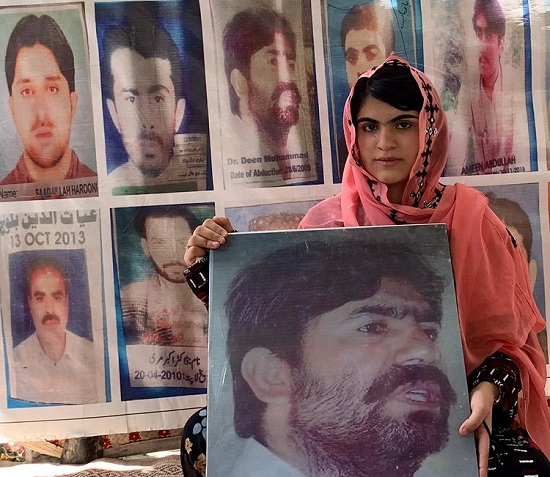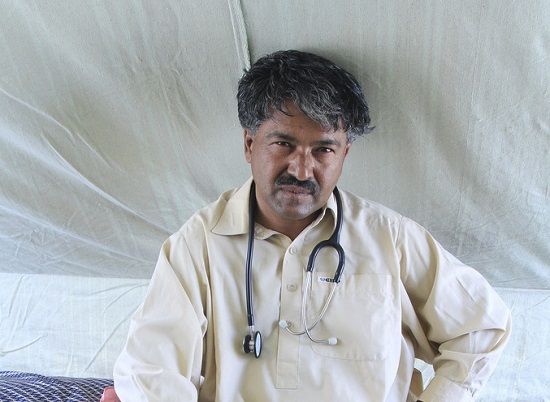
Worldwide protests to mark 12 yrs of Dr Deen Mohammad’s abduction by Pak regime
In Pakistan-occupied Balochistan (POB), ‘enforced disappearance’ of Baloch people has been going on for the last several decades. Ever since Pakistan illegally occupied Balochistan in 1948, thousands of Baloch have been abducted and disappeared and thousands have been killed under Pakistan’s ‘kill and dump’ policy.
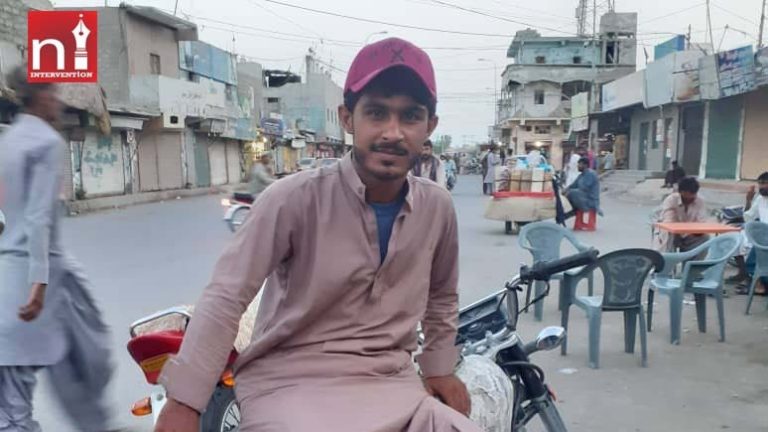
Baloch intelligentsia that includes scientists, doctors, engineers, lawyers and political activists are specifically targeted by the Pakistani regime. Eminent Baloch activist Dr. Deen Mohammad Baloch was abducted on June 28, 2009 by the Pakistani forces. He remains “missing” till today. Dr Deen Mohammad Baloch was former central committee member of the Baloch National Movement (BNM) from Ornach, district Khuzdar. Dr Deen was on duty at the Ornach Civil Hospital when he was abducted by the Pakistani soldiers and ISI.
Sammi Baloch, daughter of Dr Deen Mohammad, said that after her father went missing, she and her mother moved to Karachi in 2013 because her mother was indisposed. They rented an apartment in Karachi. Later in the year 2018 their ancestral home in Mashkay was looted and burnt by the Pakistan Army and local Death Squads. All the memories that they had of their father which included hundreds of books were also burnt.
Sammi Deen Baloch and her sister Mehlab Deen Baloch, have been struggling to find their father and have knocked the doors of every court in Pakistan. The sisters spent their childhood in front of Press clubs. Sammi Baloch along with Mama Qadeer, vice chairman of Voice for Baloch Missing Persons (VBMP) also went on a historical long march from Quetta till Karachi then to Islamabad spanning more than 2000 km in 2013, but even this heroic effort failed to secure the release of Dr Deen Mohammad Baloch.
Mehlab Baloch had joined the Missing Persons’ Camp in Quetta, Karachi and Islamabad since the day of her father’s abduction, and has spent a decade in front of press clubs. “After the enforced disappearance of my father the pain that we have been going through, only my family can understand. We have knocked all the doors for justice, but I have to say with regret, that 12 years have passed and we couldn’t get justice,” said Sammi Baloch, with tears in her eyes.
Dr. Deen Mohammad Baloch was born on May 5, 1969 at Mashkay, Balochistan. Dr Deen was a bright student and completed school education at Mashkay with flying colours. He then cleared the entrance examination at Bolan Medical College Quetta. In the year 2000 he was appointed as a medical doctor at Mashkay. He served as a doctor in remote areas of Balochistan where most doctors were hesitant to go.
Dr. Deen Mohammad along with his close friend martyr Dr. Mannan Baloch served in inhospitable places of Awaran, Khuzdar, Jhaoo, and Mashkay in occupied Balochistan. Dr. Mannan Baloch was also the secretary general of Baloch National Movement (BNM). He was martyred by Pakistan Army and death squads in district Mastung.

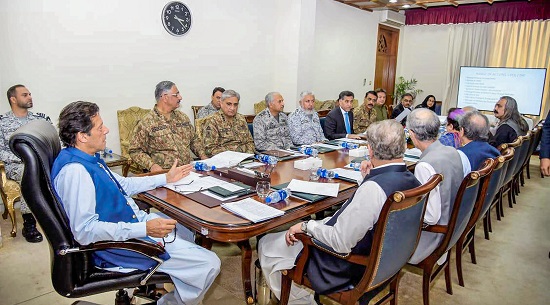
Early this year, Sammi Baloch along with other 13 Baloch missing persons’ families started a sit-in at the D-Chowk in Islamabad for the safe return of her father Dr. Deen Mohammad Baloch. After spending a week under open sky in Islamabad’s biting cold and sleeping on the roads at D-Chowk, they were assured that Prime Minister Imran Khan would meet them in mid-March and promised that they would be updated about the progress made in this regard. On 18 March, three representatives of Baloch missing persons’ families including Sammi Baloch, accompanied by Minister of Human Rights Shireen Mazari and Zubeida Jalal met Prime Minister Khan with infinite hopes and expectations. However, their meeting remained futile as they were again given only blank assurances and fake promises as earlier.
Few days after this meeting, Zia Langove, Islamabad’s puppet home minister for in Balochistan said that he was given a list of 400 missing persons out of which 300 Baloch had been recovered and sent home with the help of federal government. All this was a blatant lie. These blank promises and distorted statements only raise further questions about the intent of Pakistani regime.
Daughters of Dr. Deen, Baloch National Movement (BNM) and family members of other Missing Persons of Balochistan have announced a worldwide protest demonstration , on the occasion of the twelfth anniversary of the disappearance of Dr. Deen Mohammad Baloch.
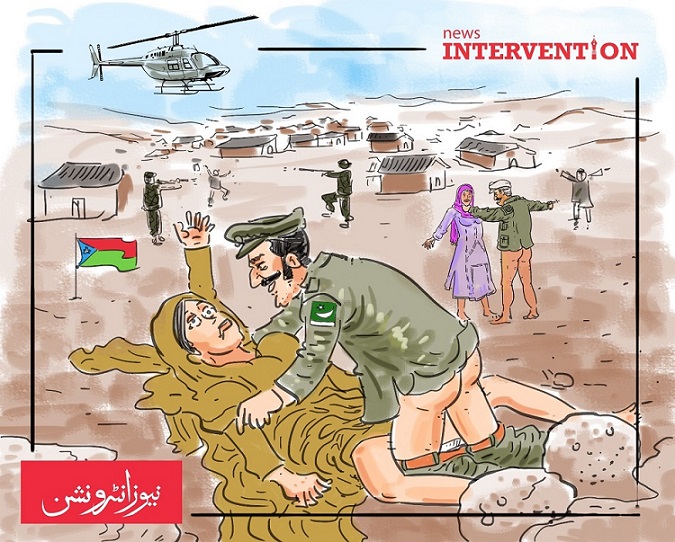
Pak Army gang rapes Baloch women in Panjgur villages
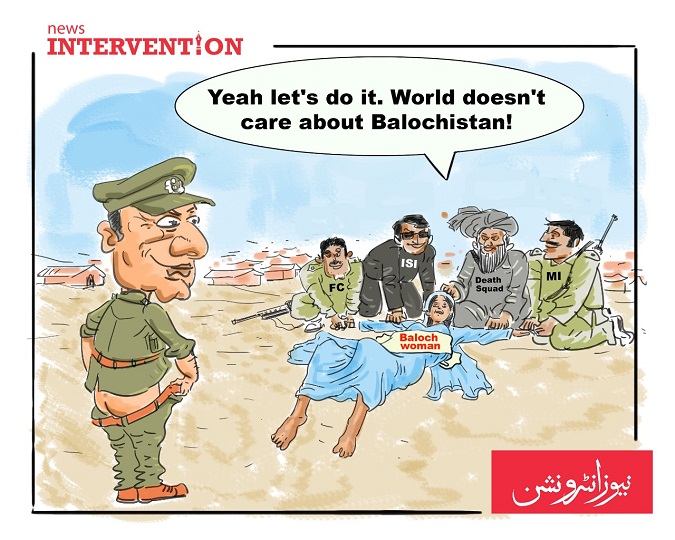
What do Pakistani men in military fatigues brandishing sophisticated guns do in Balochistan? They rape. Yes, you read it right. Rape has always been a lethal weapon of the Pakistan Army, one that it has tried and tested several times. They used it on East Pakistan (now Bangladesh) and have now unleashed against Balochistan.
Scores of Baloch women, young girls and boys are sexually assaulted and abducted to be kept as sex slaves in cantonments and are made to ‘serve’ Pakistani military personnel and the Chinese contractors of CPEC (China-Pakistan Economic Corridor). These military cantonments in the CPEC zone double up as rape bases.
During the last fortnight Pakistan Army regulars and their propped stooges Death Squad members raided the Keelkor area of Panjgur district. The sole objective of this raid was to subjugate the hapless Baloch people. And what better way to achieve this objective than to rape all the women! The thinking in Rawalpindi is that a community whose women have been ‘violated’ would easily concede to their demands.
Most of the men in Keelkor villages had already been abducted by the Pakistani Frontier Corps (FC) and ISI, and the only people left were old men, women, young boys and girls. What followed would put anybody to shame.

All the women across Keelkor villages were rounded up and raped by Pakistan Army soldiers and the members of Death Squads. Girls as young as seven-eight years were not spared either. There young girls and their mothers were raped simultaneously, in front of each other. Local Baloch people say this widespread sexual assault took place in seven Keelkor villages of the district Panjgur.
But why would Pakistanis suddenly raid these Keelkor villages and gang rape all the women? Well, this is not a sudden occurrence. Pakistanis follow a satanic war doctrine, where sexual assault is used as a deadly psychological tool against warring population.
During the 1971 Bangladesh Liberation War the soldiers of Pakistan Army had direct orders from Rawalpindi to rape ALL the Bengali women across Bangladesh. Every day the soldiers were asked about the rape count in their barracks. Rawalpindi’s Panjabi generals thought that the number of Bengalis laying down their arms would be in direct proportion to the Bangladeshi women being raped by Pakistani soldiers. That the Bengalis never surrendered and Bangladesh attained independence is history.

Pakistanis, however, never learnt from their own history. And this happened largely because all these Pakistani soldiers were never tried, nor shamed for their despicable war crimes committed on those unlucky Bengali women of Bangladesh. This emboldened Rawalpindi. The stoic silence of the world meant that the 93,000 Pakistani POWs (prisoners of war), after being sent back by the then Indian government as part of Shimla Agreement, began their atrocities with renewed vigour, this time in Balochistan. Since 1973 till 1977-78 the Pakistan Army regulars were looting, killing and raping across Balochistan with impunity. After sexual assaults the Baloch women were taken away to be sold in Heera Mandi, Lahore’s infamous red light area.
There was a slight change in Pakistan’s gambit in Balochistan. Smarting under the ignominious defeat of 1971 Bangladesh war Rawalpindi has now learnt to keep their nefarious activities in Balochistan below the radar. So the first thing was to ban independent media from visiting far flung areas of Balochistan, similarly international human rights organisations and women rights groups were stopped from talking to Baloch women. Any journalist who goes inside Balochistan needs to take permit from Pakistan Army and/or is taken on a guided tour as embedded journalists. Internet and mobile connectivity is non-existent while the ‘rape-raids’ are on. Adequate care is taken that news from far flung Baloch villages do not leak out.
Yet, the Baloch have refused to give up. Over the last decade, freedom struggle in Balochistan has taken a decisive turn. Baloch sarmachaars (freedom fighters) have intensified their revolutionary activities against the loot of Baloch resources in the name of CPEC (China-Pakistan Economic Corridor) and are fighting Pakistani forces with grit and determination.
Pakistani soldiers despite their sophisticated weapons, gunship helicopters and fighter jets are not able to match up the raw courage of Baloch sarmachaars. It’s in this backdrop that the Panjabi generals of Rawalpindi have tried to repeat their Bangladesh misadventure in Balochistan.
And thus, the body of Baloch woman has once again become the battleground for Pakistan Army.

During the attack on Keelkor villages the area around Panjgur was cordoned off, internet and mobile connectivity was shut down. The vulnerable Baloch women and girls were paraded, raped and humiliated. During one of such ‘rape-raid’ an old Baloch father, Peeri, stood up to save his daughter. Bereft of any weapons he fought the heavily armed Pakistani soldiers with bare hands but was soon overpowered and shot dead. Peeri’s daughter was gang raped alongside the dead body of her father.
Noor Jaan was another proud Baloch father who willingly chose to give up his life when asked by the Paki soldiers to send his daughter to the army cantonment. The story of sexual assault of eleven year old Amir Murad by the Pakistani soldiers at Hoshap proves young Baloch boys are also vulnerable.
Similar ‘rape-raids’ were reported in 2017 at Mashkay in Awaran district as well, wherein twelve Baloch families are still in the custody of Pakistani cantonment. In January this year four women of Akeem Baloch’s family were gang raped by Death Squad members at Mashkay.
The list of such cases may be mere statistics for the champions of human rights and women rights’ activists but shouldn’t the civilized world question Rawalpindi? The world looked the other way when Pakistan illegally and forcibly captured Balochistan, an independent nation, in 1948. Ever since the world continues to maintain its deafening silence to the enforced disappearances, rapes and murders of innocent Baloch people. It’s time we get rid of our ostrich-like approach and help Balochistan attain its independence.
May ’21: Pak forces abducted 61 people and looted 200 homes in Balochistan
Special Report
Detailed report on the war crimes of Pakistani regime during the month of May in Pakistan-occupied Balochistan (POB). All the data has been collated from social media posts, reports in various Baloch publications and from reports filed by our journalists.
Let’s take a look at the situation of serious human rights violations, military operations, enforced disappearances, massacres, looting of houses and the ongoing war crimes committed by Pakistani security forces during the month of May 2021.
Pakistan Army and its various agencies conducted more than sixty operations across occupied Balochistan in the month of May. Pakistani forces detained and disappeared 61 Baloch people during these military operations. And during these operations, Pakistani forces looted more than 200 Baloch homes. Pakistani security forces also set several Baloch houses and forests on fire. The forces took away more than 100 cattle.
In the month of May, thirty one bodies of Baloch were recovered from Pakistan-occupied Balochistan. Of these 14 Baloch attained martyrdom at the hands of Pakistani forces. The motive for the cause of death of remaining 16 Baloch could not be ascertained. In Dasht, district Kech, a young Baloch man died when the Pakistanis infused him with an expired intravenous drip.
Pakistani forces set up several new outposts across occupied Balochistan during May. A girls’ school in Dasht was turned into a Pakistan Army camp.
Further during this month, seventeen ‘Missing Persons’ were recovered from the Pakistani forces’ prisons. Of these, one was ‘missing’ since 2016, four since 2018, two since 2019, four since 2020 and six since 2021. All these ‘Missing Persons’ were forcefully abducted and were in the state torture cells and were released in May.
Mir Abdul Nabi, an elderly Baloch pro-freedom activist, was shot dead by Pakistani intelligence personnel in Afghanistan, and a child was killed in Iranian Balochistan. The Pakistani forces also looted cattle from different areas and burnt forests in Jhao, Mashkai, Gichk and Soler.
Ground and aerial military operations of Pakistani forces intensified in Kech, Bolan, Awaran, Panjgur, Kalat and Kohlu districts.
Baloch revolutionaries fighting against the against these occupying Pakistani forces also inflicted heavy blows on them, killing dozens of their heavily armed personnel.
A tragic incident took place in Awaran district when a father committed suicide after being harassed by Pakistani forces. Noor Jan took his own life because the state forces had asked him to send his daughter to the Pakistan Army camp. Noor Jan, being a proud Baloch laid down his life while upholding the Baloch national dignity and conveyed the message to the enemy forces with his blood that the Baloch can give their lives for their honor and dignity.
Noor Jan’s only crime was that he got his daughter married to a Baloch political activist, which in the eyes of Pakistani forces was as an unforgivable crime. The rape of a woman by Pakistani forces in the Mashkai Valley had enraged the Baloch people against Pakistani occupation of Balochistan.

The ferociousness of Islamic Pakistan Army in occupied Balochistan is increasing every passing day. Kidnapping women and children from their homes and sexually abusing them has now become the norm for these occupying forces.
However all the religious Imams, Muftis and parliamentarians who chant the slogan of Palestine appear blind to the atrocities committed by Islamic Pakistan Army against Balochistan.
Ironically, this Islamic Pakistan Army that claims to be the protectors of Madinah, are spilling the blood of Baloch people and raping Baloch women and children. And yet the parliamentary politicians are silent about these horrific incidents. Not speaking out against oppression is tantamount to supporting the oppressor.
In addition to targeting civilians, Pakistani forces have now resorted to burning forests in occupied Balochistan. This devious practice of forest burning was started last year and has now gained momentum. Wherever the Pakistanis conduct operations, they burn down the forests in these areas.
In May 2021, forests were set on fire in Awaran, Panjgur and Bolan districts. The Pakistani forces also added poison to the waters of natural springs to kill humans and animals.
Demonstrations against Pakistan’s nuclear blasts also took place across various countries in May. It was in May 28, 1998, when Pakistan simultaneously detonated five nuclear warheads at Chaghi, occupied Balochistan. It was due to these nuclear blasts in 1998 that the nuclear spread radiation across Balochistan.
The Baloch nation is still plagued by this nuclear disaster. The deadly effects of nuclear radiation can be gauged from the numerous diseases that afflict the people of Chaghi. The fertile land of Chaghi is still barren.
Though Pakistan is suffering from severe internal problems due to economic catastrophe and political instability yet it is also facing severe international criticism for putting curbs on the freedom of expression. Despite severe internal problems, the state forces and its intelligence agencies continue to oppress the people. None of the Pakistani mainstream media groups report about these brazen atrocities committed by Pakistan Army on the hapless people of occupied Balochistan.
Pak Army abducts and kills Gowahram Baloch in cold blood
Pakistani security forces killed a Baloch teenager Gowahram on Monday after forcefully abducting him from district Kech in occupied Balochistan. The seventeen year old Gowahram, who was the resident of Konshkalat village of Tump tehsil, suffered extreme torture at the hands of Pakistani forces before being shot dead.
The unrepentant and unabashed Pakistani military personnel called the family of Gowahram and informed them that Gowahram had died the previous night and ordered them to take the body. However, before his family could go to the military cantonment, the Pakistani security forces sent Gowahram’s dead body to his home.
On Tuesday morning after handing over Gowahram’s body to his family at 11:40 AM, the Pakistan Army soldiers cordoned off the Konshkalat village to control public anger.
Gowahram was the son of Nadal Baloch who had forcibly “disappeared” on 12 June 2021, along with there others who are Abdullah, Sattar and Sohrab. Local Baloch people said that Gowahram’s body had marks of violence and forceful injection of some fluids. The soldiers of Pakistan Army did not allow the post mortem of Gowahram’s body fearing intense public reaction.
Habib, the top Lashkar terrorist shot dead in Afghanistan
Habib, a top commander of the terror outfit Lashkar-e-Taiba, was shot down Monday night at Galla Padai area, district Sirkanay of the Kanter (Kunar) province in Afghanistan. Sayed Zewar Shah Saadat, head of Sirkanay district, told media that the dead body of Habib alias Zakir was quickly and secretly buried in village Pashd.
Afghan people accuse Lashkar-e-Taiba of being an arm of the Pakistani intelligence agencies which is active in Afghanistan only to achieve Pakistan’s goals. “Lashkar-e-Taiba was involved in target killings of Baloch refugees in Kandahar Province. Maulana Ameer Hamza leads this network of target killings. He lives in the army cantonment of Peshawar in Pakistan,” an Afghan national told News Intervention requesting anonymity.
Maulana Ameer Hamza is also known for making statements in support of Pakistan Army chief, General Qamar Javed Bajwa. Recently, in a video message about Gen Qamar Javed Bajwa, Maulana Ameer Hamza said in a flattering tone that Bajwa is the true lover of Rasool (Prophet Mohammad, PBUH), who offers Tahajjud prayers and has never heard any song from the Indian films in his entire life. Maulana Ameer Hamza is a preacher at the Digi Mohalla Lahore Mosque and boasts himself as the close family member of General Qamar Javed Bajwa.
What is Lashkar-e-Taiba?
Lashkar-e-Taiba is one of the ‘Mujahideen’ organizations formed under the auspices of Pakistan Army during the so-called Afghan Jihad. Lashkar-e-Taiba was formed in 1986 after Russia’s withdrawal from Afghanistan. Thereafter, Pakistan has used it against India in Kashmir and create chaos in Afghanistan.
As the leadership of Lashkar-e-Taiba is still in the hands of Punjabis, it continues to be the favorite terror outfit of Pakistan Army. After a global ban on LeT, the terror outfit now runs a couple of welfare activities to create the smokescreen of innocence. And in order to give LeT this much needed cover of innocence, the Pakistan Army continues to propagate that LeT has not been involved in any operation.
Hafiz Mohammad Saeed, the head of Lashkar-e-Taiba, is from Sargodha. Lashkar-e-Taiba operates in Pakistan under the name of Jamaat-e-Dawa.
Lashkar-e-Taiba also runs a religious Death Squad in Balochistan under the auspices of Pakistan Army. Terrorists of the Lashkar-e-Taiba were also involved in the 2008 Mumbai attacks, and under global pressure Pakistan was forced to arrest several Lashkar-e-Taiba leaders.
A key facilitator of the Mumbai terrorist attack was Mullah Mujib, a resident of Zamuran who was the leader of Lashkar-e-Taiba in Balochistan. Mullah Mujib was a close associate of Hafiz Muhammad Saeed and was killed in an attack in Karachi on July 4, 2020. Mullah Mujib was involved in anti-Bloch activities across Balochistan.
In January 2020, BRAS (Baloch Raaji Aajoi Sangar) the coalition of Baloch armed liberation organizations claimed responsibility for the attack on Lashkar-e-Taiba operatives in Zamuran. Several LeT terrorists were killed in this BRAS attack. BRAS spokesman Baloch Khan had said in his statement that the LeT terrorists were involved in direct attacks on Baloch freedom fighters (sarmachaars).
Galwan: China cornered, India continues to boost military prep
One year ago, on 15 June 2020, there was a clash between Indian and Chinese troops in the Galwan Valley that was both heroic and unprecedented in nature. Its unique place in military history is derived from a number of factors.
Firstly, it involved hand to hand fighting with primitive hand made weapons like spiked clubs, staffs, Kirpans (short daggers carried by Sikhs) etc. between the two armies that had deployed the most sophisticated weapons in an eyeball to eyeball combat in the region.
Secondly, the clash took place in the area of responsibility of 16 Bihar, yet, troops from an Artillery regiment, Mahar and the Punjab battalions fought side by side in a spirit that only the Indian Army can boast of. Finally, the People’s Liberation Army (PLA) was told in no uncertain terms that the Indian Army would no longer tolerate its intransigence and expansionist tactics.
India lost 20 brave hearts in the clash. Against our 20, the Chinese (who had come completely prepared for the clash) lost more than double including a number of officers; some reports put the number at a 100 plus Chinese casualties. Reports suggest that the Chinese troops on ground became psychological wrecks due to the ferocity of the Indian soldiers and they had to be evacuated post the operation.

Today, we remember the epic clash and pay tribute to the mighty soldiers who fought bravely and fell in the cause of their nation. One remembers Colonel Santosh Babu, the courageous Commanding Officer of 16 Bihar who led from the front and was killed due to Chinese treachery. One also remembers Sepoy Gurtej Singh, the 23 year old soldier from Ghatak (Commando) Platoon of 3 Punjab who had less than two years of service but the heart of a lion; he took down 12 Chinese soldiers single-handedly before embracing a hero’s death. All who fought in Galwan on that fateful evening were heroes whose courage and audacity is what folklore is made of.
On the anniversary of the clash it is also important to see how things stand in eastern Ladakh, and between India and China. In the course of the long drawn face-off in eastern Ladakh there was universal consensus with regards to the righteousness of the Indian posture while the Chinese came across as self-serving, egoistic and petulant. Despite the setback in Galwan, the Chinese continued with their time tested policy of long drawn negotiations. The Indian Army then struck another blow in end-August by occupying the Kailash Range and thus exposing Chinese defences in the Spanngur Gap. China also got a taste to Indian nationalism when a call for boycott of all Chinese goods gained momentum and people started adhering to the norm.
The writing on the wall was very clear, India would protect her sovereignty at all cost and will never cow down to belligerence from any quarter, let alone China. Under the circumstances, China finally agreed to a negotiated disengagement. The same, however, is a long drawn process in which Chinese continue to be hard-nosed.
All, however, is not well with the “wolf warrior” strategy of President Xi Jinping. On 13 June 2021, the G-7 offered to developing nations an infrastructure scheme that could rival China’s multi-trillion-dollar Belt and Road Initiative (BRI). An angry and disconcerted China has issued a caution to the G-7 nations.
President Xi Jinping is realising, much to his chagrin, that US President Joe Biden is a very different kettle of fish than his predecessor Donald Trump. Now the era of twitter warfare with the US is over and matters will be taken head-on. “Addressing the China challenge will require a comprehensive strategy and more systematic approach than the piecemeal approach of the recent past,” said Kurt Campbell, who looks after Indo-Pacific affairs in the US National Security Council.
Another big setback for China was the successful conduct of QUAD 3.0 on 12 March, 2021. India played a pivotal role in the conference which is seen as a major step in consolidating the group. QUAD is now being referred to as the NATO of Asia.
An obviously disconcerted Xi Jinping is now downplaying the wolf warrior strategy. The talk of “the East is rising and the West is declining,” is now being replaced with directives to create a “trustworthy, lovable and respectable” image for the country and “make friends extensively.”
India, in the course of Eastern Ladakh face-off, has shown how the hegemonic tendencies of the Dragon can be dealt with through firmness, maturity and patience. India has also shown that eastern Ladakh is not as far away from the Indo-Pacific as the Chinese leadership would like to believe.
For India, however, the time to sound the victory bugle has not arrived. The stand-off in eastern Ladakh is far from over. De-escalation of tensions has not been achieved to a degree that can be called comfortable. There are reports of feverish Chinese build up in Tibet, which includes setting up of additional military camps and activation of high altitude airstrips. Training and acclimatization of troops for warfare under conditions obtainable in the region is continuing.
India needs to remain conscious of the fact that notwithstanding alliances and treaties, she will be on her own when push comes to shove against China. Military preparation must go on regardless of the internal situation created by COVID and other pressing issues. Build-up of Comprehensive Nation Power must continue till the Chinese threat is well and properly neutralised. Thankfully, efforts in this direction have not relented. The armed forces have a clear-cut mandate to ensure sanctity of the LAC and respond effectively to Chinese adventurism.
It would be best for China to remove its confusion and adopt a policy of positive engagement with the rest of the world. It should use its massive resources to fight COVID and take more interest in issues like the environment rather than show belligerence to feed the massive ego of its leadership.
Reality of CPEC hub Gwadar Exposed
China’s fishing trawlers are looting Balochistan’s marine resources. Pakistani regime has virtually sold off Gwadar sea port to their Chinese masters. Watch this story in our short video report.
Video text: English