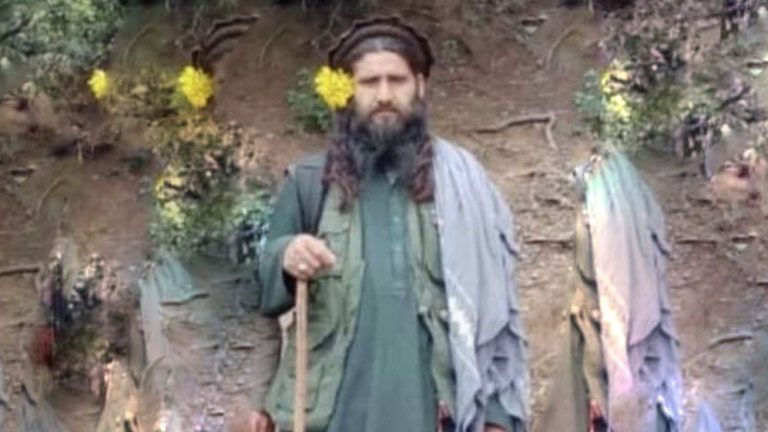
Afghan people accuse Lashkar-e-Taiba of being an arm of the Pakistani intelligence agencies which is active in Afghanistan only to achieve Pakistan’s goals. “Lashkar-e-Taiba was involved in target killings of Baloch refugees in Kandahar Province. Maulana Ameer Hamza leads this network of target killings. He lives in the army cantonment of Peshawar in Pakistan,” an Afghan national told News Intervention requesting anonymity.
Maulana Ameer Hamza is also known for making statements in support of Pakistan Army chief, General Qamar Javed Bajwa. Recently, in a video message about Gen Qamar Javed Bajwa, Maulana Ameer Hamza said in a flattering tone that Bajwa is the true lover of Rasool (Prophet Mohammad, PBUH), who offers Tahajjud prayers and has never heard any song from the Indian films in his entire life. Maulana Ameer Hamza is a preacher at the Digi Mohalla Lahore Mosque and boasts himself as the close family member of General Qamar Javed Bajwa.
What is Lashkar-e-Taiba? Lashkar-e-Taiba is one of the ‘Mujahideen’ organizations formed under the auspices of Pakistan Army during the so-called Afghan Jihad. Lashkar-e-Taiba was formed in 1986 after Russia’s withdrawal from Afghanistan. Thereafter, Pakistan has used it against India in Kashmir and create chaos in Afghanistan.
As the leadership of Lashkar-e-Taiba is still in the hands of Punjabis, it continues to be the favorite terror outfit of Pakistan Army. After a global ban on LeT, the terror outfit now runs a couple of welfare activities to create the smokescreen of innocence. And in order to give LeT this much needed cover of innocence, the Pakistan Army continues to propagate that LeT has not been involved in any operation.
Lashkar-e-Taiba also runs a religious Death Squad in Balochistan under the auspices of Pakistan Army. Terrorists of the Lashkar-e-Taiba were also involved in the 2008 Mumbai attacks, and under global pressure Pakistan was forced to arrest several Lashkar-e-Taiba leaders.
A key facilitator of the Mumbai terrorist attack was Mullah Mujib, a resident of Zamuran who was the leader of Lashkar-e-Taiba in Balochistan. Mullah Mujib was a close associate of Hafiz Muhammad Saeed and was killed in an attack in Karachi on July 4, 2020. Mullah Mujib was involved in anti-Bloch activities across Balochistan.
In January 2020, BRAS (Baloch Raaji Aajoi Sangar) the coalition of Baloch armed liberation organizations claimed responsibility for the attack on Lashkar-e-Taiba operatives in Zamuran. Several LeT terrorists were killed in this BRAS attack. BRAS spokesman Baloch Khan had said in his statement that the LeT terrorists were involved in direct attacks on Baloch freedom fighters (sarmachaars).
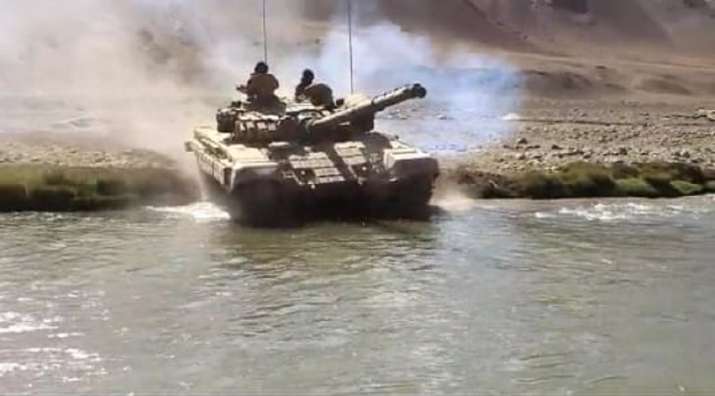
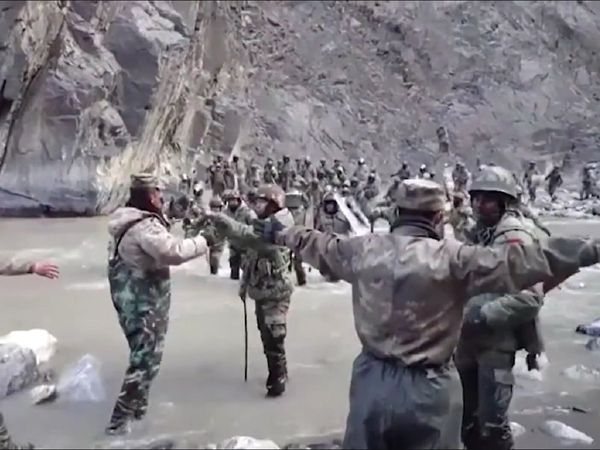
One year ago, on 15 June 2020, there was a clash between Indian and Chinese troops in the Galwan Valley that was both heroic and unprecedented in nature. Its unique place in military history is derived from a number of factors.
Firstly, it involved hand to hand fighting with primitive hand made weapons like spiked clubs, staffs, Kirpans (short daggers carried by Sikhs) etc. between the two armies that had deployed the most sophisticated weapons in an eyeball to eyeball combat in the region.
Secondly, the clash took place in the area of responsibility of 16 Bihar, yet, troops from an Artillery regiment, Mahar and the Punjab battalions fought side by side in a spirit that only the Indian Army can boast of. Finally, the People’s Liberation Army (PLA) was told in no uncertain terms that the Indian Army would no longer tolerate its intransigence and expansionist tactics.
Visuals from the video footage of the India China clash at the Galwan Valley.
Today, we remember the epic clash and pay tribute to the mighty soldiers who fought bravely and fell in the cause of their nation. One remembers Colonel Santosh Babu, the courageous Commanding Officer of 16 Bihar who led from the front and was killed due to Chinese treachery. One also remembers Sepoy Gurtej Singh, the 23 year old soldier from Ghatak (Commando) Platoon of 3 Punjab who had less than two years of service but the heart of a lion; he took down 12 Chinese soldiers single-handedly before embracing a hero’s death. All who fought in Galwan on that fateful evening were heroes whose courage and audacity is what folklore is made of.
On the anniversary of the clash it is also important to see how things stand in eastern Ladakh, and between India and China. In the course of the long drawn face-off in eastern Ladakh there was universal consensus with regards to the righteousness of the Indian posture while the Chinese came across as self-serving, egoistic and petulant. Despite the setback in Galwan, the Chinese continued with their time tested policy of long drawn negotiations. The Indian Army then struck another blow in end-August by occupying the Kailash Range and thus exposing Chinese defences in the Spanngur Gap. China also got a taste to Indian nationalism when a call for boycott of all Chinese goods gained momentum and people started adhering to the norm.
The writing on the wall was very clear, India would protect her sovereignty at all cost and will never cow down to belligerence from any quarter, let alone China. Under the circumstances, China finally agreed to a negotiated disengagement. The same, however, is a long drawn process in which Chinese continue to be hard-nosed.
All, however, is not well with the “wolf warrior” strategy of President Xi Jinping. On 13 June 2021, the G-7 offered to developing nations an infrastructure scheme that could rival China’s multi-trillion-dollar Belt and Road Initiative (BRI). An angry and disconcerted China has issued a caution to the G-7 nations.
President Xi Jinping is realising, much to his chagrin, that US President Joe Biden is a very different kettle of fish than his predecessor Donald Trump. Now the era of twitter warfare with the US is over and matters will be taken head-on. “Addressing the China challenge will require a comprehensive strategy and more systematic approach than the piecemeal approach of the recent past,” said Kurt Campbell, who looks after Indo-Pacific affairs in the US National Security Council.
Another big setback for China was the successful conduct of QUAD 3.0 on 12 March, 2021. India played a pivotal role in the conference which is seen as a major step in consolidating the group. QUAD is now being referred to as the NATO of Asia.
An obviously disconcerted Xi Jinping is now downplaying the wolf warrior strategy. The talk of “the East is rising and the West is declining,” is now being replaced with directives to create a “trustworthy, lovable and respectable” image for the country and “make friends extensively.”
India, in the course of Eastern Ladakh face-off, has shown how the hegemonic tendencies of the Dragon can be dealt with through firmness, maturity and patience. India has also shown that eastern Ladakh is not as far away from the Indo-Pacific as the Chinese leadership would like to believe.
For India, however, the time to sound the victory bugle has not arrived. The stand-off in eastern Ladakh is far from over. De-escalation of tensions has not been achieved to a degree that can be called comfortable. There are reports of feverish Chinese build up in Tibet, which includes setting up of additional military camps and activation of high altitude airstrips. Training and acclimatization of troops for warfare under conditions obtainable in the region is continuing.
India needs to remain conscious of the fact that notwithstanding alliances and treaties, she will be on her own when push comes to shove against China. Military preparation must go on regardless of the internal situation created by COVID and other pressing issues. Build-up of Comprehensive Nation Power must continue till the Chinese threat is well and properly neutralised. Thankfully, efforts in this direction have not relented. The armed forces have a clear-cut mandate to ensure sanctity of the LAC and respond effectively to Chinese adventurism.
It would be best for China to remove its confusion and adopt a policy of positive engagement with the rest of the world. It should use its massive resources to fight COVID and take more interest in issues like the environment rather than show belligerence to feed the massive ego of its leadership.
Mother is the most valuable and precious gift in this world. A mother’s devotion and affection is everlasting as she remains concerned about her children. She always thinks good about her children, hopeful that the children would safeguard their mother in the old age.
My son is my eye he is my future he becomes adult he will be a protector of his mother he will accompany his father and brothers he has swords and spears Every time he will be fighting against enemies he will be a protector of his mother.
Every human being has an ideology and belongs to a religion. Every human being believes and worships one Allah; bowing is obligatory. There are two types of worship, one way is to hold ones’ hand and pray to God, and the second way is to bow one’s head to pray.
However, sons often leave their motherland because of fear of death, considering their lives more important than their mother’s protection. Even when the motherland is occupied by enemies, her sons have managed to migrate to foreign countries for their safety. Ironically, they still claim that they love their motherland. What can be said in such situation?
But the motherland will still say, ‘Oh son, you are gone, but I do hope that you are fine and safe. Your departure has put me in deep sorrow and worriedness!’
I am often confused in such a scenario. People leave their motherland, but they claim that they love their motherland, so one needs to decide about the truth of such sayings. On the flip side, fear of death does compel a person to migrate, but they still retain their affection for motherland.
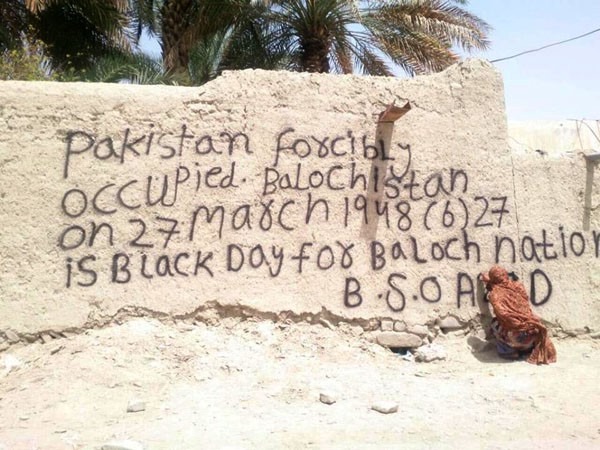
If an individual wants to live, he must live in his land. Similarly, if he wants to die, than he must die in his land. The success and victory are related to the protection of motherland in this world. Paradise awaits those who protect their motherland. My suggestion is that Baloch should sacrifice their life for the motherland. If a person deceives his motherland, he will be deemed as a fraud. And history never forgives fraud. If we look at the history of Bangladesh, then we can see the condition of those Biharis who were puppets in the name of religion. Today they are miserable and their condition is worsen than animals.
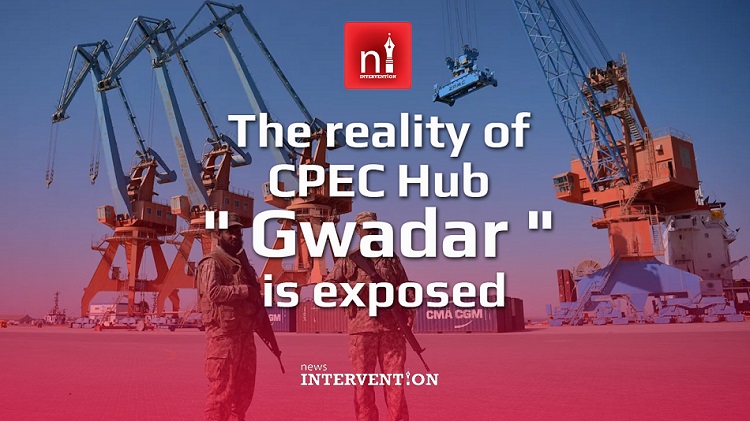
China’s fishing trawlers are looting Balochistan’s marine resources. Pakistani regime has virtually sold off Gwadar sea port to their Chinese masters. Watch this story in our short video report.
Click on the YouTube link to watch this short video report on Gwadar. Video text: English
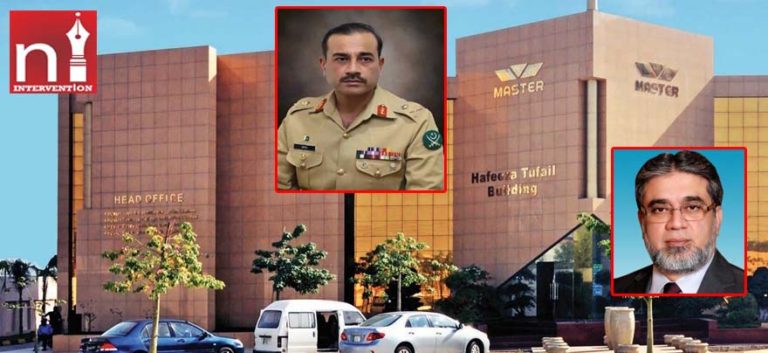
Lt. Gen. Asim Munir had earlier held the plum positions of DG ISI (Inter-Services Intelligence) and DG Military Intelligence.
Last year in February, the Supreme Court of Pakistan had castigated ISI for its the inept handling of the 2017 Faizabad sit-in that catapulted the hitherto unknown Tehreek-e-Labbaik Pakistan (TLP) to limelight across Pakistan. Lt Gen. Asim Munir was the director general of ISI at the time of this judgement. Ironically, Maj Gen. Faiz Hameed who was the deputy of Lt Gen Asim Munir at ISI and in charge of ISI’s internal security wing also faced heat in this judgement but was promoted as Lieutenant General and took over the reins of ISI from Asim Munir.
Lt. Gen Asim Munir was unceremoniously shunted out from the plum job of ISI’s director general and had to move on as the Corps Commander of Gujranwala, thereby earning the dubious distinction of being ISI chief for the shortest period of time. Asim Munir is now nearing his retirement and in order to make a quick buck like other Pak Army officers he contacted Sheikh Mahmood Iqbal, the chief executive officer of Master Tiles, and demanded ninety crore rupees.
Aghast at this blatant demand of extortion from the Corps Commander of Gujranwala, Sheikh Mahmood Iqbal, CEO Master Tiles wrote a letter to Prime Minister Imran Khan Niazi, dated June 5, 2021, describing all the details of his meeting with Lt Gen Asim Munir and his subsequent demand of Rs 90 crore extortion money.
“Lt Gen Asim Munir sent a message to me by a staff member Colonel Ehtesham last Thursday morning that he wanted to have lunch with me. I left a meeting with Japanese importers and went to the cantonment to meet him (Asim Munir). I was offered good food, salmon fish cooked with broccoli and olive oil, among other delicacies. As we sipped black coffee with luxurious Cuban cigars Lt Gen Asim Munir said that he had found out that the executive range of our bathroom tiles was being smuggled to the Central Asian nations of Tajikistan and Uzbekistan through the Wakhan corridor in Afghanistan. He then said that billions of rupees was being lost in the form of taxes to the national treasury. Of course, all of this was a conspiracy to trap me,” wrote Sheikh Mahmood Iqbal, CEO of Master Tiles in his letter letter to Prime Minister Imran Khan Niazi.
“… they seized two of our company trucks from Peshawar at the Afghan border… this seizure was carried out in a similar fashion like the anti-narcotics force grabbed fake 20 kg heroin from Rana Sanaullah’s car, who is a leader of the Pakistan Muslim League (Noon). Asim Munir told me that in politics, business and espionage operations, perception is more important than reality, and if a perception gets etched into people’s mind that Master Tiles is involved in smuggling then our share price would tumble at the stock markets. I asked Lt Gen Asim Munir in a trembling voice as to what did he want from me. It was then the vileness of the whole world came to his little dirty eyes,” said Sheikh Mahmood Iqbal in his letter to PM Imran Khan.
“Lt Gen Asim Munir said that he wanted five million seven hundred thousand dollars which is equivalent to ninety crore rupees in Pakistani currency. Asim said that if I transfer the money to his Macau bank account then he would help me smuggle tiles to Central Asia as the Core Commander Peshawar has been his batchmate and roommate…,” explained Sheikh Mahmood Iqbal in his letter.
“…if at all, in order to save my business, I agree to give this kind of money to Lt Gen Munir, yet how long can we feed these fauji snakeletsAsim. They trample the constitution every time. Sometimes they torture journalists Asad Ali and Matiullah Jan, at other times through Papa Jones they set up a business empire funded by smuggling on the Pak-Iran border. I request you to help me with this issue, otherwise I will shift my whole business setup to Dhaka. But then you will have to manage one crore five thousand jobless people in Pakistan. After this incident, I have understood that a man loves his self-esteem more than his homeland. The vile Satanism and arrogance of power in these ugly eyes is unbearable. Sometimes when I am asleep, this anger wakes me up at night and I have to take water with aspirin,” said Sheikh Mahmood Iqbal, CEO Master Tiles in his letter to Imran Khan Niazi.
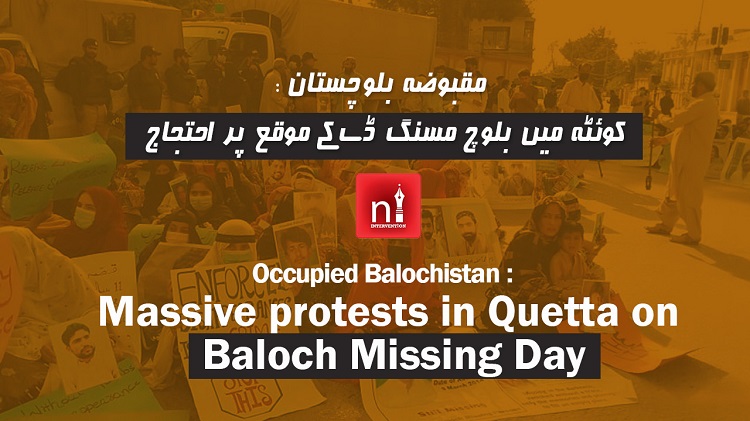
Who is Zakir Majeed Baloch? Why did Pakistani regime abduct Zakir Majeed on June 8, 2009? More than 30,000 Baloch people have been abducted by the Pakistani forces who remain ‘Missing’ till today. June 8 is observed as Baloch Missing Day, and this year, on this day, Balochistan erupted in protests. However, instead of listening to the genuine grievances of Baloch families, the Pakistani security forces used violent force on peaceful Baloch protesters.
Click on the YouTube link below to watch this video report. Video language: Urdu
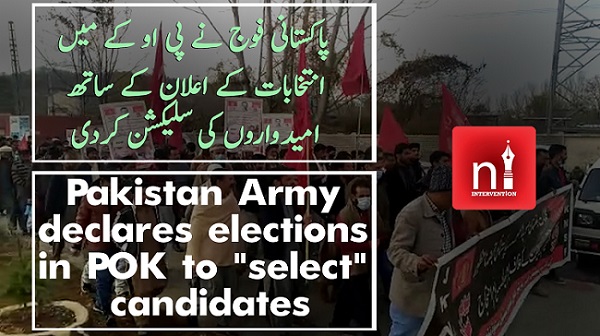
Pakistan-occupied Jammu Kashmir (POJK), fallaciously called as “Azad Kashmir” and Gilgit-Baltistan is one among the most oppressed and exploited regions in the world. This region is legitimately a part of India but due to certain unfortunate circumstances at the time of partition, it remained under Pakistani control. Pakistan has refused to embrace the region and its people as its own. The dominant Punjabi Muslims of Pakistan look down upon the Kashmiri Muslims who inhabit POK, a bigger revulsion is reserved for the inhabitants of Gilgit-Baltistan who are of the Shia faith and as such an anathema to the Sunni Punjabis.
The Punjabi elite that rules the country has been exploiting and looting POJK for the last seven plus decades since partition. The resource rich region has been systematically subjugated, converted into a colony and bled ruthlessly. With each passing year, new methods are being evolved to strengthen the vice-like grip of the oppressive state.
The most evil manifestation of this policy is the ongoing process of demographic engineering of the region. It is being carried out to gain absolute control of the land and its assets and to ensure its final accession to Pakistan. The intention is to reduce the indigenous population to virtual slavery.
Demographic engineering is feasible in the region because of its sparse population and large area. The objective is being achieved with a two-pronged strategy of targeted genocide and settling down of Punjabi elites and former army men across POJK. Now even the Chinese are being settled there with impunity under the garb of operating the China-Pakistan Economic Corridor (CPEC) and this after the illegal handing over of the 5,180 square km Shaksgam Valley of Gilgit-Baltistan to China. This apart, Pakistan is blatantly grabbing forest and agricultural lands to transfer them to Chinese companies for large scale infrastructure projects. The work force in these projects comprises of Sunni settlers who have totally displaced the Shia population from villages on the Karakoram highway.
Islamabad has gradually diluted constitutional provisions in the area to facilitate outsiders in grabbing the land and resources of the illegally occupied areas. It abolished the State Subject Rule in Gilgit-Baltistan in 1984, which opened the area for purchase of land and resulted in the demographic changes. “Pakistan has never kept its end of bargain when it comes to Jammu and Kashmir (POJK). It has encroached on the land….. it has awarded the land to China… it is changing the local demography that further violates the State Subject Rule,” says Senge H. Sering, a resident of Gilgit-Baltistan now living in exile in the US. He speaks for his people in international forums through his Institute for Gilgit-Baltistan Studies in Washington. “It (Pakistan) robs the locals of their resources. It denies them jobs and services. It has never paid royalty on local water resources. It never pays tolls on local transit routes. All these activities are illegal and not acceptable,” he adds.
The situation is so sensitive that in 2018 the then Indian Army Chief, General Bipin Rawat, openly flagged it in the course of a lecture. “Pakistan has very cleverly changed the demography of so-called Pakistan-occupied Kashmir and Gilgit-Baltistan….. People from Gilgit-Baltistan are also now being taken over gradually…” he had said.
Statistics give a fair idea of the dismal situation in the region. In Gilgit-Baltistan, the locals to outsider population ratio has tripled in favour of the latter; the Shia population has diminished by almost 20 percent. Large Punjabi and Pashtun settlements have come up across the region, more so in important cities such as Gilgit, Ghizer, Shardo, Diamer etc.
While removal to the State Subject Law opened the floodgates in Gilgit-Baltistan, an equally malevolent design has been working in POK. The trade, banking and commerce of the region is now firmly in control of “outsiders.” Contracts for government-owned forest lands are being given predominantly to Punjabis, mostly retired army officers. The locals are being reduced to working as labourers with no rights to form unions. Almost all civil service posts are occupied by non-locals.
In POK too statistics give a clear indication of the level of demographic engineering that has been resorted to. The population index in POK rose from 2.9 million in 1998 to 4.5 million in 2017. Where did so many people come from? The federal government of Pakistan has a firm grip on the region with the toothless government of so-called “Azad Kashmir” looking on as a mute spectator.
The biggest demographic menace being faced by the region comes from the endless stream of militants who are brought in for infiltration into Jammu and Kashmir in India. These notorious gun-toting sub-humans harass the people endlessly; they are responsible for taking the crime rate to unacceptable levels, cases of rape and molestation of women are rampant. Many of these criminals prefer to settle in the region and are used to subjugate the poor people. The headquarters of terrorist organisations like United Jihad Council (UJC), Hizbul Mujahedeen, Lashkar-e-Taiba etc. are in POK.
In order to strengthen its position, Pakistan has suppressed all critical voices. Hundreds of activists have been executed and given life-time sentences in false charges of terrorism and spying. A large number of them emigrated to other countries. Further, the travails of the people remain hidden from the world because of repressive media restrictions. There is hardly any newspaper being published over there, what to talk of electronic media. The world gets to see only the few video clips that are smuggled out and shown by freedom fighters of the area living in exile across the globe. The brutality of the establishment is clearly visible in these video clips which is available on social media.
The people of the region have been protesting against this demographic engineering but their voices are not heard. The international community led by India needs to address the threat of extinction faced by these people in their homeland for millennia. Pakistan’s immorality in this cruel game plan to control the region has to be checked under all circumstances.
A highly expensive yacht acquired by the family of Cyrus Mistry earlier this year has raised eyebrows in both corporate and bureaucratic circles.
The Rs 700 crore acquisition is not illegal, it is the timing.
The Mistrys, promoters of Shapoorji Pallonji (SP) group, took delivery of the yacht earlier in 2021, the acquisition looked perfectly sensitive on paper but grossly insensitive otherwise because it happened in the midst of a raging pandemic that killed over 350,000 this year alone.
This is the second yacht the family acquired from the same company in recent times. The family of Shapoor Mistry along with friends like Eddie Poonawala and Homi Katgara regularly holiday on yachts, routine with Indian business families. Presently the yachts have been put in the charter market, which is an usual practice by yacht owners.
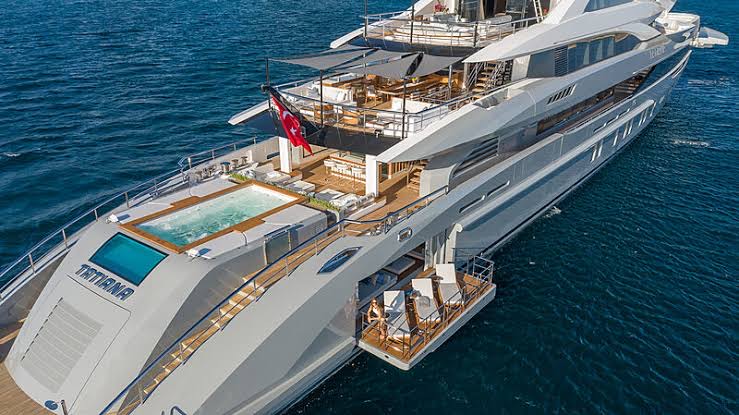
But the question many are asking is whether Indian banks, financial institutions or retail shareholders funded Mistry’s $100 million superyacht Tatiana? The development of the superyacht purchase during these difficult times may invite additional scrutiny from regulators and corporate governance experts, claim sources.
An official spokesperson of the SP group said the company has no comments to offer on the acquisition of the vessel.
Top corporate sources said the 262 feet long yacht, Tatiana, is built by Turkish company Bilgin Yachts. The Mistrys took delivery of the vessel earlier this year even as their companies are plagued with debt issues and a challenging business environment.
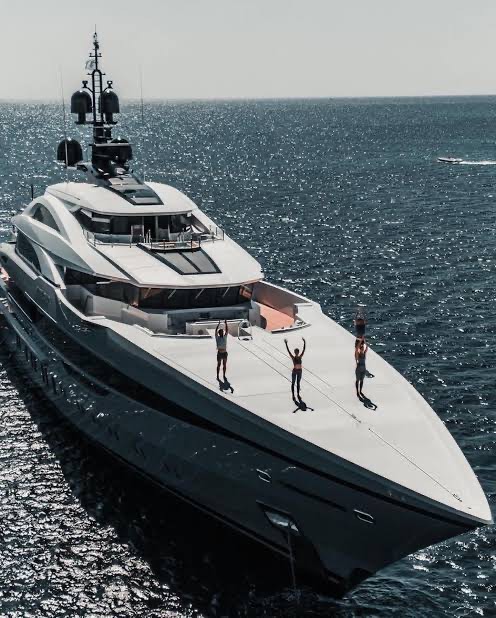
Ranked among the top 150 yachts in the world in terms of length, the mega yacht Titania is the largest yacht built in Turkey boasting steel hull and aluminium superstructure. The vessel’s naval architecture is by Unique Yacht Design and interiors by H2 Yacht Design. The yacht is the first of the Bilgin 263 series, showcasing striking exterior lines and modern interiors with huge deck spaces and innovative contemporary layout. The yacht accommodates up to 12 guests in 8 deluxe suites and a crew of 20.
Tatiana, the super luxury yacht bought by the Mistrys.
Tatiana’s vast range of inside spaces include an upper salon and vast main salon with separate lounge and dining area. Each social space holds its own entertainment center including a cinema room. The yacht holds a beautiful swimming pool, bar, and lounge space as also as a steam room, massage room and fully equipped gym. The super yacht which was delivered earlier this year has been put in the charter market. Details of the yacht can be accessed at https://www.yachtcharterfleet.com/luxury-charter-yacht-49357/tatiana.htm
Tatiana is the second yacht that the Mistrys have acquired from Bilgin. Tatiana, claim sources, has a Cayman Island flag and is presently in the Marmara Sea off Turkey. The first yacht, Tatiana1, has a Malta flag and is presently around Bodrum (Turkey).
The acquisition of the super yacht comes at a time when Mistry-owned SP Group has been undergoing financial restructuring including availing of a One Time Resolution (OTR). In September 2020, the SP Group had sought relief to restructure its Rs 10,900-crore of debt under the resolution framework for pandemic-related stress. SP Group had applied under the OTR, under which the company had asked the loan repayment timeline to be extended by two years. The OTR was approved by the Reserve Bank of India in the last week of March 2021.
This is not all. The SP Group has also been questioned by SEBI and the Registrar of Companies, Mumbai for its inability to fully repay the inter-corporate deposits of Rs. 2341 crore which was due to be paid within 90 days of taking Sterling Wilson Solar IPO in August 2019. SP Group has repeatedly waivered on the timelines of the repayment and Rs. 760 crore (approximately $100m) is outstanding and due to be paid by September 2021 as per the renegotiated timeline.
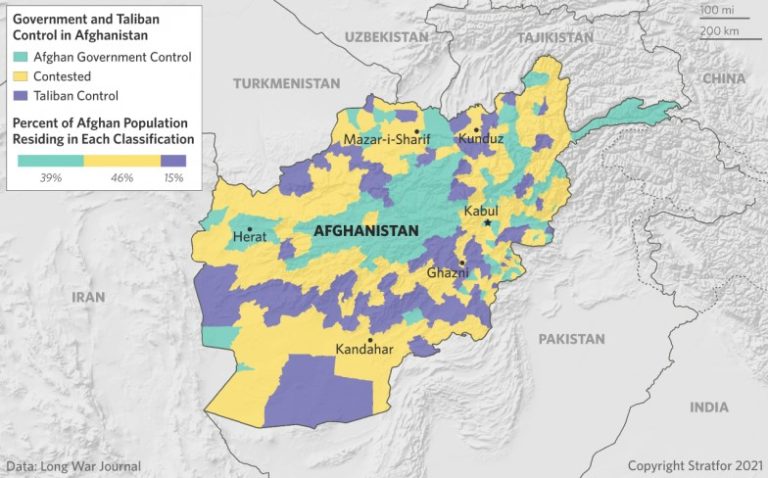
‘We have won the war, America has lost’[i], says Haji Hekmat, Taliban’s shadow Mayor in Balkh district to BBC correspondent on 15 April 2021. Interestingly the government forces stay within their base, as the territory belongs, or is controlled by the Taliban. This is the case in many districts/towns in Afghanistan. In addition to a stronghold in the strategically important Southern province of Helmand, the Taliban controls or contests territory in nearly every province, and continues to threaten multiple provincial capitals.
Taliban has control of the Southern and South-west portion of Afghanistan. On 3 May 2021, a series of bomb blasts outside a school in Kabul killed dozens of people, mostly students. The death toll in a horrific bombing at a girls’ school in the Afghan capital has soared to 50, and over 100 wounded, the Interior Ministry said on 4 May 2021. Officials blamed the Taliban who denied they were involved in the bombing and condemned it. Meanwhile, the hashtag “AfghansWantPermanentCeasefire” trended in Afghanistan on Facebook and Twitter in the lead-up to Eid[ii]. Taliban spokesman Zabihullah Mujahid told the Reuters news agency that the social media trend was an “emotional thing” and that the group “respected” these emotions. “But a ceasefire is something bigger than emotion, it is related to the larger issue of our country,” he said, adding that there would be no permanent ceasefire until the group’s goal of restoring an Islamic government is achieved.
A three-day ceasefire agreed by the warring Taliban and Afghan government come into force as celebrations of Eid-ul-Fitr got underway, after weeks of heavy fighting across the country. The temporary deal starting 13 May 2021 was proposed by the Taliban and agreed to by President Ashraf Ghani. The Taliban and the Afghan government launched peace talks in September last year, but progress has stalled despite international efforts to jump-start the negotiations. Ceasefires in the past have largely held in what is widely thought to be an exercise by the Taliban leadership to prove they have firm control over the myriad factions across the country that make up the hardline movement. While the Taliban have avoided engaging US troops, they have stepped up attacks against Afghan government forces.
Taliban Continue to Capture Territory in Afghanistan The Taliban have reportedly captured at least twenty-six Afghan National Security Forces (ANSF) outposts and bases, along with four district centres, in the provinces of Laghman, Baghlan, Wardak, and Ghazni since the beginning of May[iii]. On 15 May after the ceasefire announcement, Taliban fighters seized Nerkh district, which lies in Wardak province about 40 kms from Afghanistan’s capital, Kabul. Several highways run through Nerkh. While the US and NATO forces have pledged to withdraw their troops by September 11, the US military has completed an estimated 16–25 percent of the process of withdrawing from Afghanistan, US Central Command said[iv]. Military officials said they hope to have troops fully withdrawn by mid-July. The NATO led ‘Resolute Support Mission’ has indicated that its withdrawal will be co-terminus with US forces.
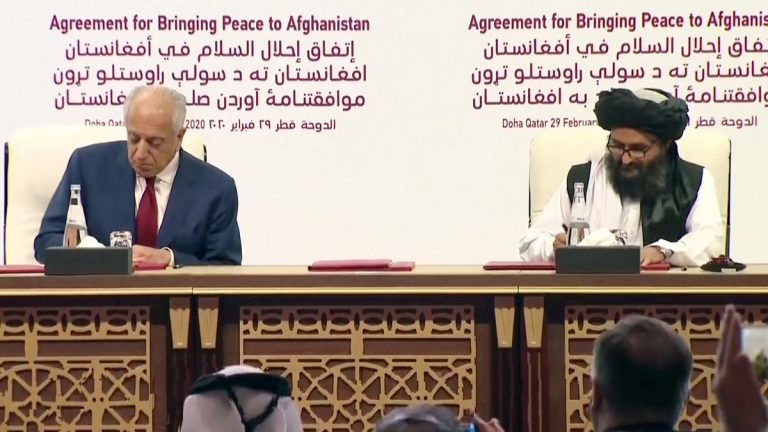
Zalmay Khalilzad, US Special Representative for Afghanistan and Mullah Abdul Ghani Baradar, Taliban’s senior commander signing the US-Taliban peace agreement at Doha.
Afghan Government forces conducted operations last week of May 21, that aimed to retake four districts in central and eastern Afghanistan from the Taliban, according to reports. The defense ministry said at least ninety Taliban fighters were killed across eleven provinces in a twenty four hour period. The Afghan Taliban on 26 May 2021, warned nearby nations against allowing the United States to use their territory for operations in the country after they withdraw from Afghanistan. On 25 May 2021, Australian PM Scott Morrison announced closing its embassy. Taliban reacted saying it will provide ‘safe environment’.
The Taliban has conducted sputtering talks with the Afghan government in April 21 in Turkey. Taliban has also promised to renew attacks on US and NATO personnel if foreign troops are not out by the deadline; and said in a statement it would not participate in “any conference” about Afghanistan’s future until all “foreign forces” have departed. It is not clear whether the militants will follow through with the earlier threats given Biden’s plan for a phased withdrawal between now and September[v].
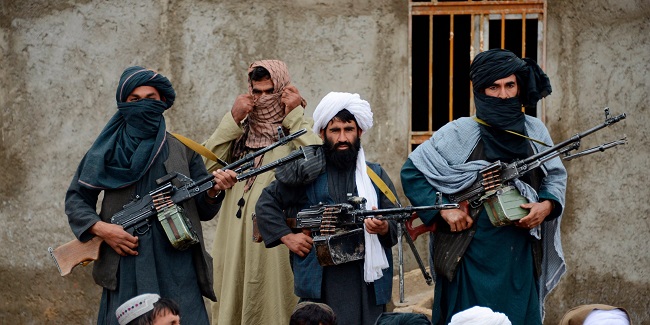
Taliban fighters in Afghanistan. (File Photo: AP)
Trump’s Doha Peace Accord followed by the Biden Peace Plan
Trump astounded the world after more than a year of direct negotiations, by signing a peace agreement on February 29, 2020 (Doha Accord) with the Taliban, that set a timeline of 18 months for the withdrawal of US forces from Afghanistan. Taliban pledged to prevent territory under their control from being used by terrorist groups and enter into negotiations with the Afghan government by March 2020, which were tentatively started in September 2020 and immediately floundered.
The Biden administration has proposed a modified peace plan to the Afghan government and the Taliban, seeking to bring violence to a halt and form an interim government. The proposal included many elements; first, a UN-led conference of representatives of Russia, China, Pakistan, Iran, India and the US “to discuss a unified approach to support peace in Afghanistan”; share written proposals with the Afghan leadership and the Taliban to accelerate talks. It urges both sides to reach a consensus on Afghanistan’s future constitutional and governing arrangements (the Taliban and the Afghan government still disagree on fundamental issues, including whether the country should remain a republic or even retain any features of electoral democracy); third, find a road map to a new “inclusive interim government”[vi]; and lastly, agree on the terms of a “permanent and comprehensive ceasefire”.
Essentially, the Biden administration is attempting to embed the peace process in a wider regional framework. The Biden administration has chosen a more decisive course in Afghanistan and has to make substantial movement on above aspects before final withdrawal. Cutting all rhetoric to the bone, ALL Nations want mainly two things, which need not necessarily be aligned to Afghan interests specially its people.
An Afghanistan aligned to their interests.
Their strategic space, influence and economic payoffs are bettered,
whatever the political dispensation, while ensuring ‘no spread of jihadi
culture leading to terrorism[vii]’.
Despite this new agreement, there is still no official ceasefire in place, and both sides including the US and NATO forces have launched attacks (US air targeting has actually increased) on each other till date. Taliban have restricted their attacks on ANSF (Afghan National Security Forces), their bases, government targets and made substantial territorial gains. The Taliban have also carried out high-profile attacks across the country, including in Kabul. There is also a disagreement on the timing of the release of five thousand Taliban prisoners. The Taliban expects the prisoners to be released before talks can proceed, while the Afghan government plans to release the prisoners after the negotiations make some headway.
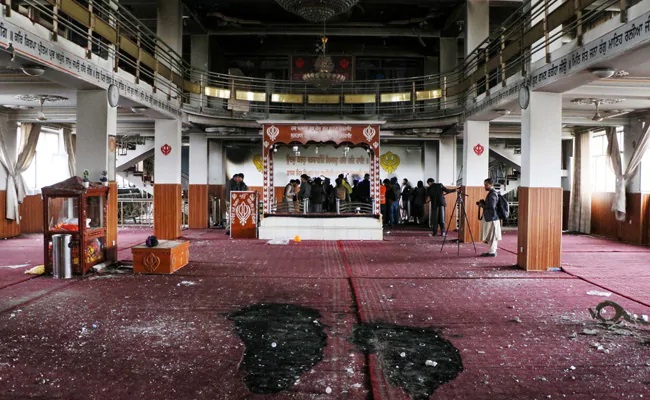
Terrorists of the Islamic State of Khorasan (IS-K) admitted to having killed 25 Sikhs at the Gurdwara in Kabul. (Photo: AFP)
The Islamic State in Khorasan– IS(K) has also continued to expand its presence in several eastern Afghan provinces (sources talk of five provinces), continues to carry out major attacks in Kabul, and is responsible for an increase in suicide attacks targeting civilians. Uncertainty surrounding the future of international donor assistance has strained the Afghan economy. While the United States, its allies and international institutions and NGOs have pledged to provide support to Kabul, the transition to a peacetime economy risks further destabilizing Afghan society by inflating the budget deficit and increasing unemployment rates.
Regional Geo-Politics: China and Pakistan Commons Once Taliban comes to power it will use jihad and terrorism to create trouble, and exploit the façade of ambiguity. The longer the conflict more clout China and Pakistan will have with Taliban and thus in Afghanistan. They will enhance their geo-strategic and political clout in the region and leverage it with Iran, CAR (Central Asian Republics), and Russia. They will try to keep India out of Afghanistan, and constrict its strategic space.
China:Integrate CPEC with Afghanistan (Pakistan may not be too pleased), enhance land route of BRI towards CAR, Russia and Europe.
Pakistan: Cement its notion of strategic depth against India, keep Durand Line issue quiet and formalise it, opportunities for trade, entry into CAR, access to Middle East, influence Iran and play power broker in Middle East specially KSA (Kingdom of Saudi Arabia) and Turkey.
Russia: Russia’s own security and geopolitical interests make it an interested party in a stable Afghanistan and in putting an end to armed conflict in the region. Its concern is that in the event of heightening instability, threat of extremist and radical ideology and violence could spill over into Central Asia and cause destabilisation close to Russia’s borders.
Iran: Seat of Shia Islam, Iran has historically been at ideological odds with a powerful Sunni Taliban. Tehran nurtures high-level contacts with the Taliban aimed at stopping the growth of the Islamic State (Khorasan) in the region and get US out of its underbelly. Currently adopted two-pronged approach; one regional in nature, and second in the context of Iran’s fractured relations with the US.
The Flipside. There is also a flipside to Taliban usurping power or having a major say in geo-politics in Afghanistan. It can bite back like the proverbial snake.
Spread of jihadi culture.
Taliban like others has never accepted the Durand Line (renewed demand for Pakhtunistan). It can cause instability as also interfere in China’s handling of Uighurs in Xinjiang, by supporting them (a threat which China takes very seriously).
Talibanisation of Pakistan.
Indian stakes in Afghanistan are not existential India too desires Afghanistan aligned to its national interests. The necessity is more due to geography as also the China-Pakistan adversarial collusivity with scope to exploit the violent jihadist elements in Afghanistan using ambiguity as a cover, causing both external and internal instability in India. On a positive note, India can also use its strategic partnership (India-Afghanistan Strategic Partnership Agreement in October 2021) with a stable aligned Afghanistan to leverage geo-political and economic gains and entry into CAR (Central Asian Republics), Iran and onto Middle East and Europe. We are well placed to play a pivotal role (despite being a low-key player so far) to form a consensus on how to shape the future of Afghanistan, which naturally depends on how we handle Taliban.
Iran is wary of elements who are anti-Shia which suits India, as it places Pakistan in the opposite camp. India views Russia as a balancer in the regional security matrix, despite its proximity with China, due to its interests in CAR and Europe. India needs to broaden diplomatic engagement/appoint Special Envoy, and further enhance multi-dimensional assistance.
The Future: Advantage Taliban, but can they close out the match?
The Taliban are not a monolithic organisation or a homogeneous group. The Taliban now have somewhere between 50,000 and 60,000 active fighters and tens of thousands of part-time armed men and facilitators, according to Afghan and American estimates. They are an assortment of groups/clusters; Afghan Taliban is the biggest cluster, and rest are broadly divided into Pashtun, CAR group apart from presence of IS (Khorasan) and Al-Qaida (AQ). “It is a networked insurgency; but very decentralized, and has the ability for the commanders at the district level to mobilise resources, and be able to logistically prepare,” said Timor Sharan, an Afghan researcher and former senior government official[viii].
However, at the top, they gain legitimacy from a single source, a single leader; Mawlawi Hibatullah Akhundzada, commander of the faithful. Taliban political chief Mullah Abdul Ghani Barada, and military chief Mohammad Yaqoob, son of Mullah Omar, the erstwhile spiritual leader of Taliban; form the top leadership.
The Taliban insurgency has also been a unifying cause for some smaller foreign militant groups. Around 20 foreign militant groups are active in Afghanistan, including Pakistani extremist groups like the Pakistani Taliban, Lashkar-e Jhangvi, Lashkar-e Taiba, Jaish-e Muhammad, and Central Asian militant groups including the Islamic Movement of Uzbekistan (IMU), the Islamic Jihad Union, and the East Turkestan Islamic Movement, a militant group fighting for Uyghur independence in China. Some of these groups operate under the Taliban umbrella.
Each of these groups has a unique relationship with the Taliban; operationally, ideologically, or economically. One thing that slowed down the negotiations with the US was that the Taliban’s political leaders wanted to take every small issue down to their commanders, bringing them on board to avoid rebellions and breakaways. They will likely face many of the challenges that once dragged the country into anarchy. The relationship between the political leaders and the military commanders who have monopoly over resources and violence will be tested. The 1990s civil war in Kabul happened not because the political leaders couldn’t agree among each other; it happened because the political leaders could not control the ground commanders, as they were not on the same page.”[ix]
As the Taliban smell victory, it is imperative that they the keep the groups together under one umbrella. The major thing holding the Taliban back at this point is the government’s supremacy of the air and its superior strike forces in the form of commandos and special police units. But those units are being worn down and the Afghan Army has been slowly failing as an institution for the past five years.
Al-Qaeda and IS (Khorasan) Al-Qaeda is a largely diminished force, with only several hundred fighters in Afghanistan. But it remains a crucial part of the Taliban insurgency. Taliban and Al-Qaida have been long time partners and are co-dependent, according to experts. The IS (Khorasan) group has bases in a few districts of Kunar Province, and they are also likely present in parts of neighboring Nuristan Province, another remote, mountainous province. Reports that IS (Khorasan) militants are active in northern Afghanistan are “unreliable”. The recent arrests of IS (K) fighters and leaders in major urban areas shows that there are still IS (K) “sleeper cells” in the country. Most IS fighters are thought to be former members of Pakistani militant groups, especially the Pakistani Taliban.
Getting Stronger with Political Legitimacy The new agreement and the looming US exit places the Taliban in the strongest position they have ever been. The Taliban have demonstrated to the Afghan people, the world, and especially militant groups around the world, that they possess the (military) capability to resist a US invasion and outlast a superpower. They have made themselves an intrinsic part of any attempt to find a long-term solution for peace. Adding to the Taliban’s leverage is the political legitimacy it has managed to gain as an international actor; one that the US has negotiated with, and now asking them to be part of an interim Afghan government[x] (and coercing Ghani!).
The Taliban over the years has evolved its relationships with all regional stakeholders barring India. Here too Taliban has shown diplomatic finesse stating that it will not act nor allow any party to act against another country, specifically naming India[xi].
A word of caution: Taliban has always rejected the democratic ideals of universal suffrage, free and fair elections, and respect for minorities, all of which are prerequisites, as outlined in the draft agreement. It has also always considered the ANG (Afghan National Govt) an ‘American puppet’. The Taliban are not pressed for time and can wait until they get what they want: A complete US withdrawal, a slow surrender of democracy, and a return to the Islamic Emirate of Afghanistan that the group installed and commandeered in Afghanistan from 1996 until losing it to the US invasion in 2001.
The Final Battle for Power Afghan government forces are in disarray. The Afghan National Army, which is meant to be the country’s backbone of defence, and the blue-uniformed police, which tends to bear the brunt of Taliban attacks, are operating at roughly 50 to 70 percent of their official maximum strength of 352,000, due to a combination of corruption, attrition and difficulty finding replacements. The most effective Afghan units are the special operations forces, which together with the remaining Americans, are holding things together. Yet even the Afghan special operations forces struggle to hold back the Taliban without the help of US advisers and airstrikes. After all, they are up against an enemy that uses suicide car bombs and improvised explosive devices, devastating tools that the Afghan government thankfully does not employ[xii].
In addition to local cadres, the Taliban field special “red units,” or quick reaction forces, that are trained, and are deployed to spearhead major offensives. The Taliban’s recent success on the battlefield will almost certainly motivate the group to fight on. With the South and East Afghanistan already in Taliban control the Government could collapse. It is also possible that the government, its special operations forces, and the old Northern Alliance—Tajik, Hazara, and Uzbek leaders—could muster enough unity and grit to stave off the fall of Kabul.
Indeed, the Northern Alliance is already rumoured to be mobilizing forces to fight. Violence levels and attacks by Taliban on ANSF (Afghan National Security Forces) will escalate once US and NATO finally withdraw. Even given the most optimistic scenario the ANSF (Afghan National Security Forces) may not hold on for long. Forecasting this very volatile geo-political and turbulent scenario is fraught with danger. US is vaguely talking of keeping mobile reserve forces either in bases nearby or even at sea and adopt ‘over the horizon’ counter-terrorism policy; deploying of USS Eisenhower aircraft carrier and Qatar or a CAR (Central Asian Republic) nation as mother base and basing of long range strategic lift aircraft, are being talked off. But will these actions even if executed be able to stave off the inevitable?
The Internal Political Wrangles and Prognosis Watching the inevitable, recently a fair number of Afghans are now willing to tolerate Taliban rule if it means finally achieving peace. As already discussed, not only will the Afghans and Americans determine the course of the war, but China, India, Iran, and Russia all have interests in Afghanistan and do not wish to see a Taliban Emirate (except Pakistan; China too will exploit its relationship with Pakistan and are getting closer to Taliban leadership).
However, it is unlikely that any of the regional players (certainly not India) will be keen to deploy peace keeping forces in Afghanistan. This has already been vehemently opposed by the Taliban, and was the raison d’etre for Taliban to emerge after the occupation of Afghanistan by USSR, to drive away any foreign forces from Afghanistan.
The current Afghan National Government led by Ashraf Ghani is on a weak footing with internal dissensions and very low credibility with the people. Their intransigence and inflexible approach have worsened the political environment. The rapprochement between Afghan government and Taliban seems even more unlikely and an ‘inclusive interim government’ appears to be a mirage. Neither side wants to compromise as President Ghani feels he is democratically elected leader. Unless the regional players coalesce and act towards peace and reconciliation in Afghanistan setting aside their differences and own aspirations: ‘We are staring at the grim prospect of a civil war’.
We use cookies on our website to give you the most relevant experience by remembering your preferences and repeat visits. By clicking “Accept All”, you consent to the use of ALL the cookies. However, you may visit "Cookie Settings" to provide a controlled consent.
This website uses cookies to improve your experience while you navigate through the website. Out of these, the cookies that are categorized as necessary are stored on your browser as they are essential for the working of basic functionalities of the website. We also use third-party cookies that help us analyze and understand how you use this website. These cookies will be stored in your browser only with your consent. You also have the option to opt-out of these cookies. But opting out of some of these cookies may affect your browsing experience.
Functional cookies help to perform certain functionalities like sharing the content of the website on social media platforms, collect feedbacks, and other third-party features.
Performance cookies are used to understand and analyze the key performance indexes of the website which helps in delivering a better user experience for the visitors.
Analytical cookies are used to understand how visitors interact with the website. These cookies help provide information on metrics the number of visitors, bounce rate, traffic source, etc.
Advertisement cookies are used to provide visitors with relevant ads and marketing campaigns. These cookies track visitors across websites and collect information to provide customized ads.
Necessary cookies are absolutely essential for the website to function properly. These cookies ensure basic functionalities and security features of the website, anonymously.
Cookie
Duration
Description
cookielawinfo-checkbox-analytics
11 months
This cookie is set by GDPR Cookie Consent plugin. The cookie is used to store the user consent for the cookies in the category "Analytics".
cookielawinfo-checkbox-functional
11 months
The cookie is set by GDPR cookie consent to record the user consent for the cookies in the category "Functional".
cookielawinfo-checkbox-necessary
11 months
This cookie is set by GDPR Cookie Consent plugin. The cookies is used to store the user consent for the cookies in the category "Necessary".
cookielawinfo-checkbox-others
11 months
This cookie is set by GDPR Cookie Consent plugin. The cookie is used to store the user consent for the cookies in the category "Other.
cookielawinfo-checkbox-performance
11 months
This cookie is set by GDPR Cookie Consent plugin. The cookie is used to store the user consent for the cookies in the category "Performance".
viewed_cookie_policy
11 months
The cookie is set by the GDPR Cookie Consent plugin and is used to store whether or not user has consented to the use of cookies. It does not store any personal data.