Home Blog Page 300

Pakistan Army calls itself ‘guardian’ of Islam and yet commits un-Islamic acts

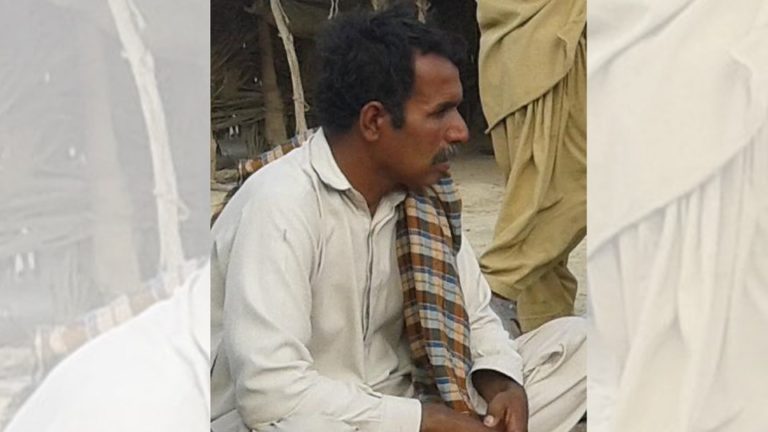
Recently a piece of news surfaced on the social media about a Baloch father’s suicide, whose name was Noor Jaan. News of suicide is a daily occurrence in a weak and economically unstable country like Pakistan, especially in the Punjab province of Pakistan. Suicide, kidnapping of minor children, murder after rape, or molestation of corpses by removing bodies from graves happens on a regular basis. Something similar also occurred on May 21 with Noor Jaan at Kasur in Punjab.

But in Balochistan, and especially with a Baloch, incidents of suicide are rare. There are no suicides or social evils in this nation. However, during the last year there have been some cases where some youths committed suicide. These suicides were not due to social ills in the society.

Awaran district of Balochistan is an important city in the current struggle for Baloch independence. Awaran is important also because Dr Allah Nazar Baloch belongs to Mashkay Tehsil of this district. Of course, during the current Baloch struggle the whole of Balochistan is affected, hundreds of people have been killed by the forces, including the displacement of more than one lakh people from the Awaran district.

The suicide of Baloch father Noor Jaan in Awaran was not due to an act of scarcity, poverty, unemployment, rather due to the ‘so-called’ Islamic Pakistan Army, which calls itself as the protector of Islam. That is to say, the army of the Islamic Republic of Pakistan forced the Baloch father to take his life to escape the humiliation of the family and to prevent the Baloch national dignity from being undermined at the hands of the Pakistan Army. Yes this was not a suicide, rather a murder. Not just the murder of a father, of a family, but humanity and Islam.

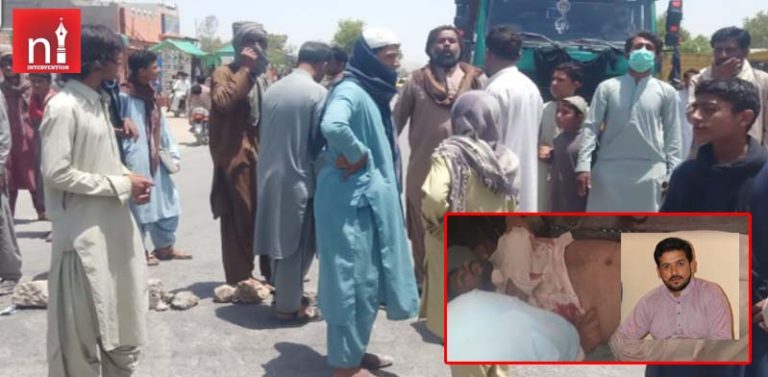
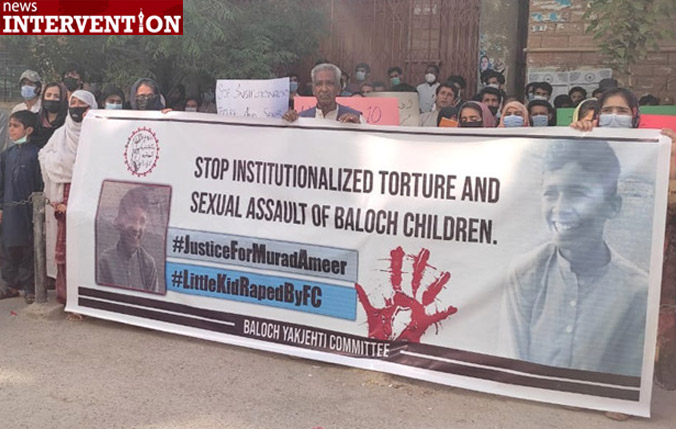
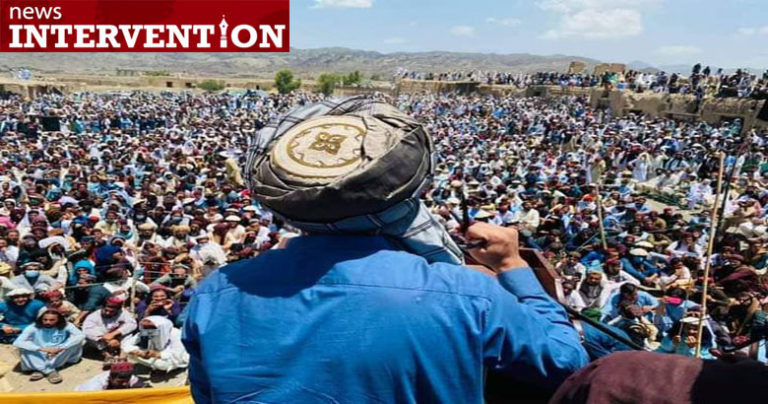
Protest rally in Quetta against the sexual assault of ten year old Murad Ameer by the Pakistan Army soldiers. (Photo: News Intervention)

But the Punjabi Islamic Army, unfamiliar with the Baloch traditions forgot that it is not the offspring of the Punjab province who would greet every occupier with a drummer as soon as he arrives and hand over his honour to the occupier. Maybe the generals of this army were not aware that Baloch prefers death for their honour and dignity. The Baloch father Noor Jaan sacrificed his life for the sake of dignity as he refused to bow down to Pakistan Army’s demand of handing over his daughter to them. And before Noor Jaan committed suicide he sent a message to the Pakistan Army, “my body is waiting for you”.

The death of an unarmed and innocent Baloch did not get even a minute’s coverage in the local and national media, TV channels and newspapers of Pakistan. The human rights organizations also remained silent on this issue due to fear and pressure, as always. The only crime of the Baloch father was that his daughter was engaged to a Baloch freedom fighter. Pakistan Army continues to repeat its history in Bangladesh by rape and sexual assault as potent weapon. But this time the battle is against a Baloch nation, a warrior nation. I don’t know what will be the destination of this journey for Balochistan, but if we look back at the pages of history, this nation never bowed down in front of anyone.

Further, if we take a closer look at the activities of Baloch social media activists, it is not impossible to assess the situation in Balochistan. The media and human rights organizations are barred from entering this province of Pakistan rendering Balochistan ‘no-go’ area.

Thanks to technology, the situation across Balochistan comes to light for the rest of the world in the form of photographs and video clips. Noor Jan’s suicide is one such example.

Several such cases of blatant atrocities have come to light. A ten-year-old boy was sexually abused by our ‘Islamic’ Pakistan Army in Kech district, Balochistan, the hometown of former Chief Minister of Balochistan Dr Malik. Last year, Hayat Baloch, a student was shot dead by the Paksitan Army in front of his mother. The mother of the young Bramsh Baloch was killed and injured, but most Pakistani politicians, including Dr Malik, a Baloch politician remained silent.

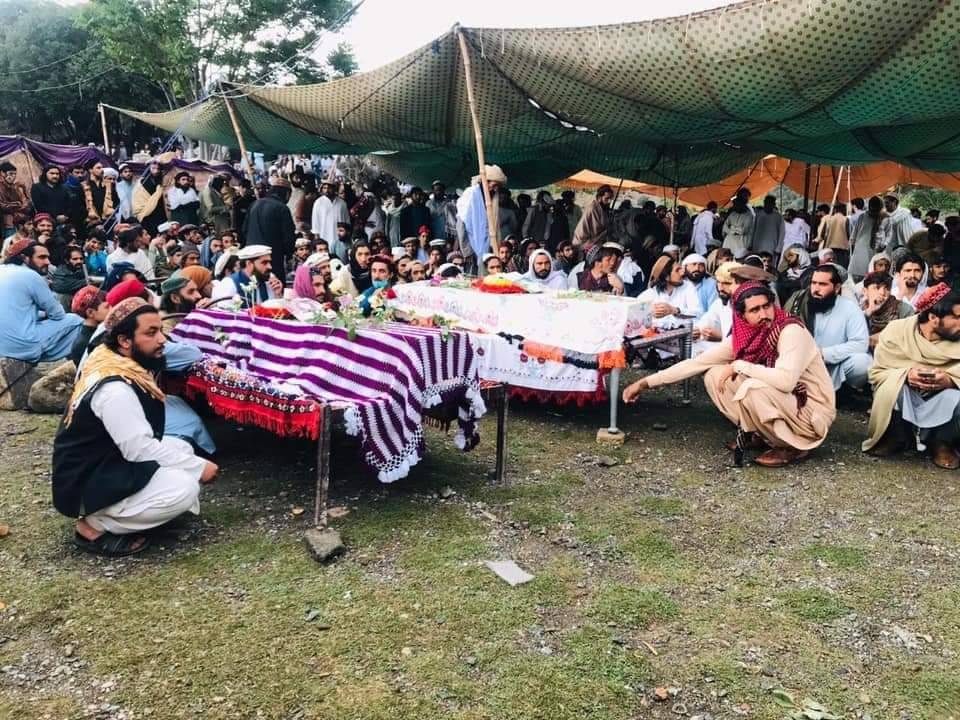
Pashtuns protest with the dead bodies of two teenage boys who were sexually assaulted and killed by Pakistan Army in Makin, South Waziristan. (Photo: News Intervention)
Pashtuns protest with the dead bodies of two teenage boys who were sexually assaulted and killed by Pakistan Army on April 25, 2021 in Makin, South Waziristan. (Photo: News Intervention)

Today, these so-called pro-federation Baloch politicians are becoming blind and dumb for the sake of their seats. If you monitor and follow the Baloch social media activists one can easily understand that these atrocities against the Baloch are a daily occurrence.

Ironically, it’s not the Israeli army but the Pakistan Army that calls itself the protector of Islam in the world. It’s a shame that those who chanted slogans of Islam and Jihad at al-Aqsa Mosque are silent on the military atrocities in Khyber-Pakhtunkhwa and Balochistan. Whether the oppressed are Baloch, Sindhi, Pashtun or Punjabi themselves, if the ‘Islamic’ Pakistan Army oppresses them, doesn’t a fatwa of jihad be issued against such an army?

Those who are active on the issue of Palestine, let them first look at what is happening in their own home. Military repression has been going on in Balochistan since 1948 and it has reached a record high in the last fifteen years. Generations of Pashtuns have been destroyed in the name of Islam. Today the political struggle of the Pashtun Tahafuz Movement (PTM) is before us in this regard. The situation is still not right and a large population in Punjab itself is being used in the name of Islam, especially the poor and the unemployed.

In our so-called state of Madina, the fatwa of jihad in favour of Palestine is issued, on the other hand, the state of Madina also considers it a sin to speak out against the atrocities against millions of Uyghur Muslims in China, which has been reported to be the biggest atrocity in the world right now.

Born from India’s womb, Pakistan interfered in the affairs of Muslims in India, carried out terrorism through jihadis in Kashmir on both sides, and yet the ‘Islamic’ Pakistan Army is permitted to burn the Holy Quran, turn mosques and schools into army camps and sexually abuse children, girls and women in Balochistan.

It is not clear which Islam do we follow. There is no such thing in the Islamic religion that you should take up arms against a non-Muslim country with whom you do not share any borders and have no connections just for the sake of so-called Jihad. But on other hand you oppress your Muslim people, burn the Holy Quran which you consider most sacred, kill your people in captivity, make them disappear for years, rape them, bomb them just because they demand their rights, or believe in freedom of expression.

Pakistan is a hypocritic and fascist country which uses Islamic card for the sake of her vested interest. Pakistan is not protector or well-wishers of Muslims but a stooge of the international powers to protect their interests in the region.

Pakistan’s nuclear weapons test at Chagi continues to violate international laws

Pakistan is an irresponsible state that’s violating Article 6 of the Declaration of Human Rights (1948) which protects the fundamental recognition of the right of individual, namely the right to live and also Article 6 of the Covenant on Civil and Political Rights which is peremptory norm of general international law (Jus Cogens) and cannot be derogated by state even during the period of emergency.

Additionally Pakistan has seriously violated Article 25 and Article 3 of The Declaration of Human Rights on account of which the basis of a safe and healthy environment. The rights were inserted and reiterated in the 1972 Stockholm Declarations at the United Nations Conference on Environment.

Pakistan has also violated the adopted resolution on Nuclear Weapons Test and and Principle 26 of the Declaration, when Pakistan tested Nuclear weapons at Ras Koh Hills at district Chagi in Balochistan on 28 May 1998. These nuclear tests were a crystal clear violation of NPT’s (Non-Proliferation of Nuclear Weapons) Articles’ obligation, which says that man and his environment must be spared the effects of nuclear weapons and all other means of mass destruction.

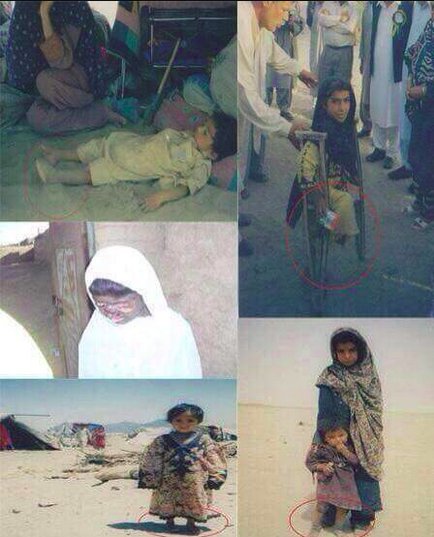
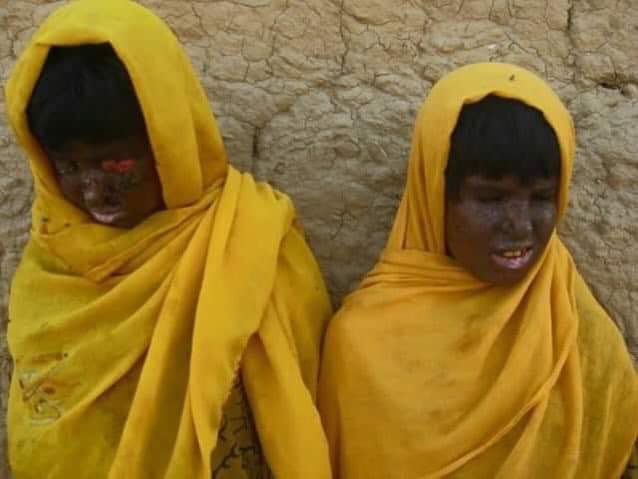
Dilemma with United Nations and international states community is that they have not paid attention to what is happening in the areas of Chagi and Dera Ghazi Khan in Balochistan where uranium was explored and the nuclear weapons test was carried out by Pakistan, in consequence of which environment effects directly to the health — mentally as well as physically and cancer has been spreading. It’s due to these nuclear tests that many children have been died and perpetual drought is prevailing. Rather the life of the inhabitants’ survival has become difficult because of change in physical, chemical and biological conditions of the environment.

In Balochistan, deforestation, soil, water degrading and desertification are in an alarming proportion and are seriously endangering the living condition due to nuclear weapons test in Chagi. Pakistan’s nuclear tests have violated the international environmental law, Stockholm Conference on Human Environment (1972) & its Declaration on Human Environment, and particularly Article 6 of the Covenant on Civil and Political Rights which is Jus Cogens and cannot be derogated by state even during the period of emergency.

World has failed to launch infringement proceeding against those states that are breaching the treaties and international laws.

According to the charter of United Nations Articles 1 and 55 which accepted and recognized self-determination as a peremptory norm of International Law from which there can and should be, no derogation. The right to self-determination is therefore applicable to all self-governing territories, that includes Balochistan by virtue of the charter of United Nations.

Let me shed light about what is the peremptory norm which was before known Jus Cogens and the United Nations Commission changed the title of the topic from (Jus Cogens) to peremptory norms of general international law in 2017. Peremptory norm as a norm accepted and recognized by International Community of States as a whole as a norm from which no derogation is permitted and which can be modified only by subsequent norm of general international law having the same charter.

Untold saga of Pak’s 1998 atomic blasts: Nuclear radiation ill-effects in Balochistan

The men in uniform at Rawalpindi and their acquiescent politicians in Islamabad miss no chance to harp about Pakistan’s nuclear status and how it has given them that much needed ‘edge’ in military strength. Amidst this chest thumping and blatant self-aggrandizement an important aspect is conveniently hidden that remains out of public discussion and media scrutiny even to this day, such that none of the international health or human rights organisations have even bothered to talk about it. And that’s the ill-effects of lethal nuclear radiation on Baloch people across Balochistan.

Pakistan conducted five nuclear blasts on 28 May 1998 at Chagi district in Balochistan. Immediately after the atomic blasts Pakistan said its nuclear tests were in response to India’s nuclear tests conducted a fortnight earlier on 11th May 1998. This remains the popular narrative even today, so much so that journalists and political analysts still discuss how Pakistan’s nuclear tests brought back equilibrium in the Indian subcontinent that had tilted in favour of India after May 11. But, this narrative conveniently ignores two points; one that Pakistan’s nuclear ambitions were afoot for several years that dates back to early seventies which was led by Rawalpindi’s delusion to gain an edge over India. However, it’s the second point which is much more significant, and this is the ill-effects of lethal nuclear radiation on hapless Baloch people.

Ever since Pakistan deceitfully captured Balochistan in 1948 it has been unsuccessfully trying to tame the Baloch revolutionaries but failed miserably. Islamabad that had constantly been on a look out for an opportunity to teach a lesson to the Balcoh, found one, when it decided to conduct nuclear tests in 1998.

The atomic blasts were mandatory before Pakistan could declare herself a nuclear state. However, before conducting nuclear tests all civilized nations choose uninhabited zones and take adequate checks and balances so that their citizens are not harmed. Pakistan did the opposite. In a carefully calculated move, the Rawalpindi’s Generals zeroed upon the Ras Koh mountain range in Balochistan’s district Chagi.

Thereafter Pakistan conducted five nuclear blasts in the Ras Koh mountain range in district Chagi on May 28, 1998. Due to these nuclear blasts the black mountains of Ras Koh turned white within seconds. If these nuclear blasts can change the colour of a black mountain to white, one can very well imagine how much hazardous these nuclear radiation would be for the Baloch people who lived in the vicinity of these mountains. The nuclear radiation and its ill effects continue even to this day.

Soon after the atomic tests the Pakistani politicians and Pakistan Army merrily gave bytes to media about the success of nuclear blasts and walked away in gleeful abundance knowing that the lethal nuclear radiation would silently gnaw the hapless Baloch population.

Experts opine that animals who have been exposed to nuclear radiation must be eliminated and a clear boundary be drawn such that any living form be it the plants, fish, wild animals, livestock etc. that had been exposed to nuclear radiation remain confined within the line such that none of these living being enter the human food chain. This offers a glimpse of how lethal are the effects of nuclear radiation and how high the standards of safeguards should be to contain it.

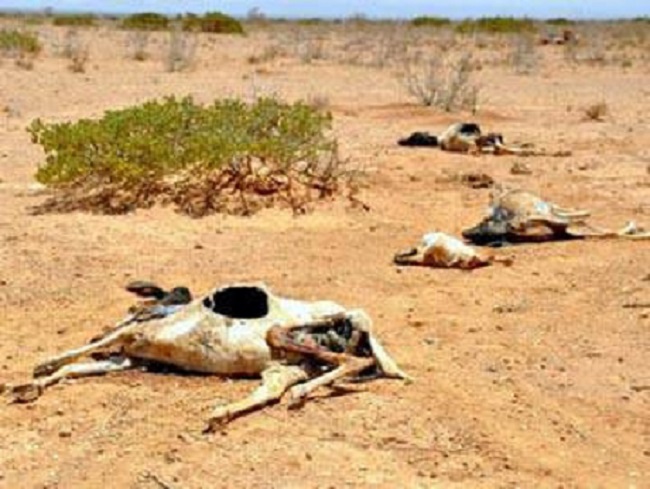
Thousands of cattle and other animals died in Balochistan due to the nuclear radiation caused by Pakistan’s May 28, 1998 nuclear blasts at Ras Koh mountains in district Chagi, Balochistan.

Safety guidelines against nuclear radiation further state that despite all precautions if some people do get exposed to nuclear radiation then they must remain under constant supervision of doctors for at least five to ten years for regular and periodic medical check-ups. The ill effects of nuclear radiation include cancer, tumours, respiratory diseases, birth defects, miscarriage, infertility etc. However, the motive of Pakistani generals was to deliberately spread death and disease across Balochistan and so they never gave any notice to the unsuspecting Baloch people in the vicinity of Ras Koh mountain range to move to safer locations before the nuclear blasts, nor did they make any arrangements for medical aid to mitigate the radiation’s ill-effects. On the contrary, nuclear radiation was allowed to spread across Balochistan.

After Pakistan’s nuclear misadventure in 1998 Balochistan experienced continuous drought for seven long years; wild animals, livestock such as sheep and goats died in hordes, water bodies and its aquatic life became contaminated and above all the Baloch people developed nuclear radiation related disorders and diseases.

Yet another ill-effect of Pakistan’s 1998 nuclear blast has been on the source of income for Baloch people. Trade of livestock and other animals was the main livelihood of Baloch people living in these areas. All of this was destroyed and it remains in shambles. Thousands of sheep and goat died, water bodies became poisonous rendering fishing unviable. Sheep and goat were not been able to breed, such has been the lethal impact of nuclear radiation on animals, livestock and aquatic life. With the only source of income gone, the Baloch have been forced to live in abject poverty. This led to mass migration of Baloch population from Chagi and adjoining areas who were forced to live a life of refugee in different areas of Balochistan. Thousands of these displaced Baloch people still live like refugees in different cities.

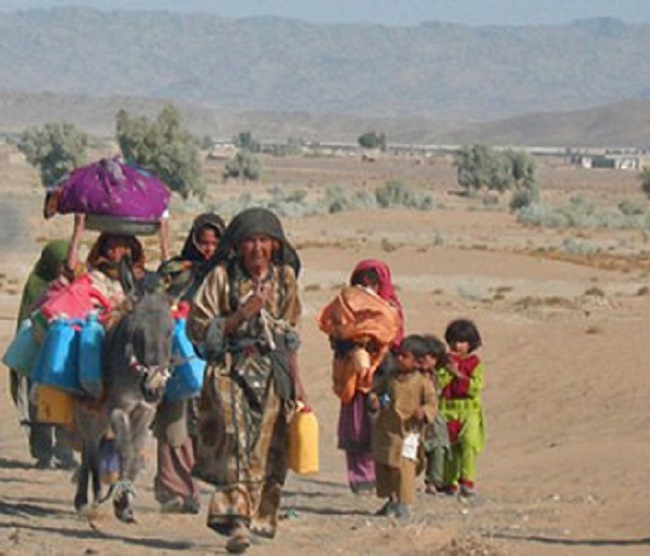
Baloch people leaving their home to escape the nuclear radiation caused due to Pakistan’s atomic blast at Ras Koh mountains in district Chagi, Balochistan.

A colonizer and occupying state uses all kinds of tactics to subdue the native population and this is what Pakistan did with the Baloch people with its 1998 nuclear tests. Rawalpindi calculated that a sick population that’s fighting congenital diseases will have no time to fight back Pakistan Army and so the uniformed faujis can continue to loot the resource-rich Balochistan.

Dr Abdual Qadeer Khan, once hailed as the father of Pakistan’s nuclear bomb is now a disgraced scientist who had been clandestinely selling nuclear know-how to other nation states notably to North Korea and Iran. It’s high time the world realizes that Pakistan is a rogue nuclear power state that pays no regards to the life of people. The nuclear bomb and its technology must remain in the hands of responsible powers where it’s used only as a deterrent rather than fall into the hands of power hungry maniacs of Rawalpindi and Islamabad who miss no chance to flaunt the nuclear muscle even as their populace sleeps on empty stomach and thousands battle nuclear radiation related diseases.

Massive Pashtun jalsa at Datta Khel to protest Pakistani atrocities

The Pashtun Tahafuz Movement (PTM) surprised Rawalpindi by holding another historic gathering (jalsa) at Datta Khel in North Waziristan on Wednesday, May 26 despite all pressures by the Pakistani regime to stop this gathering. The Datta Khel Pashtun jalsa was in the memory of the Kharqamar massacre that took place on May 26, 2019 in which fifteen Pashtuns lost their lives due to indiscriminate firing by the Pakistani forces.

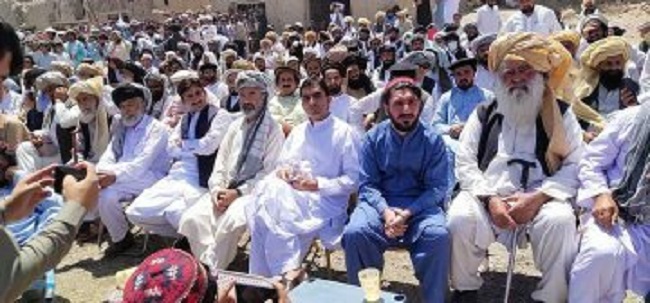
Pashtun Tahafuz Movement (PTM) paid tribute to the martyrs of Khar Kamar and martyr Arif Wazir by holding a historically large rally in Datta Khel in North Waziristan despite the crackdowns, pressures, and arrests by Pakistani security forces. The Pashtun gathering called for an immediate release of Ali Wazir, Hanif Pashtin, Yusuf Ali Khan, Owais Abdal, among other Pashtun leaders who continue to languish in Pakistani prisons on frivolous charges.

It was announced at the Jalsa that there would be widespread protests if Pakistan continues to keep political leaders of PTM in prison. Pashtun leaders who addressed the Jalsa called for the return of Pashtun IDPs
(internally displaced people) from Afghanistan and said that it if this is not achieved then they Pashtuns will protest by sitting on the border. The PTM meeting called for indiscriminate action against the good and bad Taliban, as well as a complete cleansing of landmines and for a stop of target killings, including enforced disappearances, and demanded quick punishment Kharqamar target killers.

Pashtun Tahafuz Movement (PTM) leaders at the Datta Khel jalsa on May 26, 2021 (Photo: News Intervention)

“..before this, our people used to be killed by landmines, but now the state has changed its way of killing,” said Manzoor Pashteen, head of the Pashtun Tahafuz Movement (PTM). “Target killings and extrajudicial killings are continuing and our people are being targeted on daily basis. No one knows when the court’s judiciary will take actions against this state killing actions.”

Manzoor Pashteen added that a member of parliament Ali Wazir is in the lockup, but the police officer Rao Anwar who killed more than four hundred innocent people is roaming around freely. “In North Waziristan law and order is the responsibility of the state, if there are more target killings then the state will be responsible.”

Manzoor Pashteen appealed to the world to play its role in ending terrorism in Pashtunistan. He said that Pashtun Tahafuz Movement (PTM) is a peaceful movement that calls attention to set up a global commission to investigate crimes against humanity in military operations. “It is not a crime to demand peace, to protest for peace, and speak for peace,” said Manzoor Pashteen. He added that if Ali Wazir, Hanif Pashtin, Yusuf Ali, and Owais Abdal were not released soon then there will be protests for Ali Wazir in Karachi, for Hanif in Bannu, for Yusuf in Swabi, and Owais Abdal in Chaman. “We will call for a sit-in.”

In this Jalsa member of the National Assembly of Pakistan, Mohsin Dawar said that the Pashtun nation has once again proved that we are a peace-loving nation. “We will not be misled by the generals. Now the international community should know that our future is not bound with Pakistan they don’t need to talk about it, now we have enough ability to make the right decisions by ourselves.”

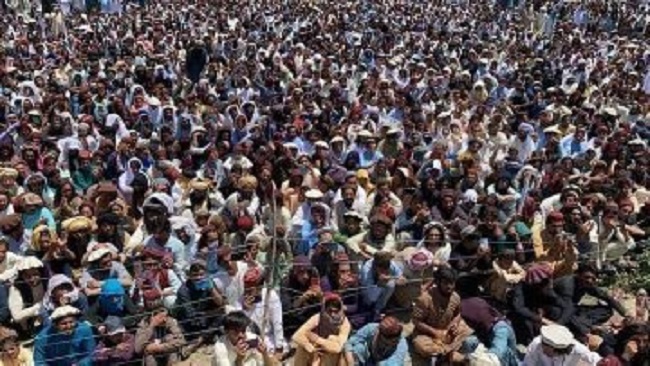
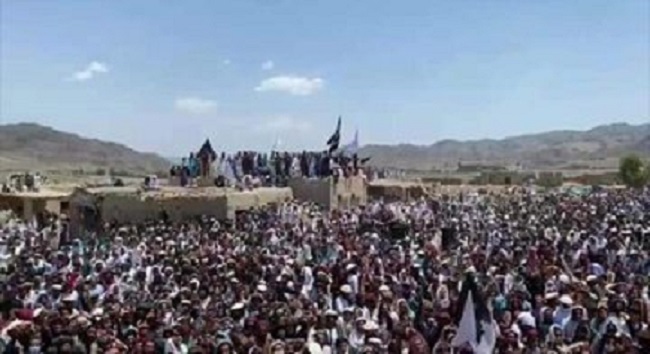
The massive Pashtun jalsa at Datta Khel, North Waziristan on May 26, 2021 (Photo: News Intervention)

Mohsin Dawar added that if the IDPs (internally displaced persons) in Afghanistan want to come back safely and the Pakistani state must allow them to come back. “If our demands are not accepted, we will be forced to sit-in at the border.” Mohsin Dawar said that recently Afghan President Ashraf Ghani expressed his views in an article that the Afghan nationals have a right to their choice. “Taliban does not believe in parliamentarian democracy and they shouldn’t interfere in Afghanistan. There is no need to learn about Islam from Taliban. The Taliban war in Afghanistan is against Afghans with the help of Pakistani generals that is aimed at destroying Afghan identity. The Taliban are proxies in the state of Pakistan,” said Mohsin Dawar.

Pashtuns across Pashtunistan have called this Jalsa by the Pashtun Tahafuz Movement (PTM) as a great success. The Pakistani state used its full might to stop this Jalsa. Yet, once again, the Pashtuns came to the streets and were united against Pakistani military atrocities.

Ironically, Pakistani media didn’t cover this massive Pashtun gathering and there was an eerie silence among Punjabi Pakistani media organisations that only report on issues cleared by Rawalpindi.

Pashtuns came out in very large numbers at Datta Khel, North Waziristan on May 26, 2021 to protest against the atrocities committed by Pakistani regime. (Photo: News Intervention)

It should be noted that two years ago Pakistani forces attacked the local population in Kharqamar in the Datta Khel area of North Waziristan and injured an old woman. Then on May 26, 2019 when the Pashtuns protested, Pakistani forces opened fire and killed fifteen people and injured more than 45 residents. In the memory of Kharqamar massacre at Datta Khel, the Pashtun Tahafuz Movement (PTM) had called for this Jalsa and once again sent a clear message to the Pakistani forces that Pashtuns would no longer remain silent against the injustices done by the Pakistani regime.

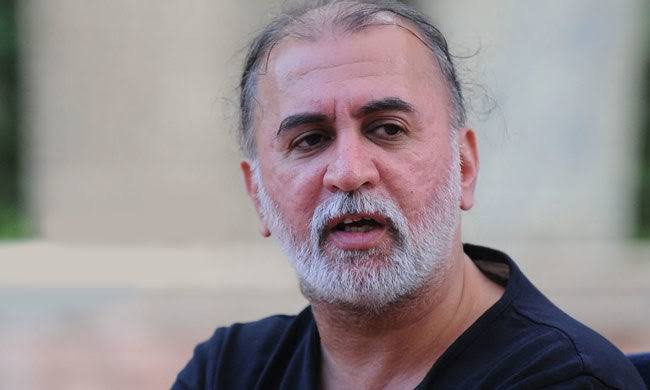
Who is gunning for Tarun Tejpal?

Opinion

No matter where you stand in the verdict acquitting Tarun Tejpal, the actions of the government of India on Thursday morning made one thing clear: the political directions in the case come from the highest quarters in the land.

What else might explain that the Solicitor General of India, Tushar Mehta, himself appeared for the State in the urgent appeal the prosecution has filed against the trial court verdict?

Bear in mind that already, the Chief Minister had, within hours of the verdict, vowed to appeal it, without the prosecution or the CM even having received or read a copy of the verdict itself. The SG, it is clear, hasn’t either, the verdict being 527 pages long. The appeals process, it must be remembered, does not exist because one party does not like the verdict. It exists in case there is grave error on the part of the judge in arriving at her conclusion, something that cannot be proclaimed before you have read the verdict in its entirety.

Yet on Thursday morning, the prosecution at the direction of the CM having filed an immediate appeal against the verdict and got an immediate listing in the High Court, the Solicitor General decided to appear to make visible to the judge, clearly, what the government wants.

Setting aside the fact that the pandemic devastation underway in the country that might require the attention of the SG to answer to the life and death appeals of millions of citizens of the country is not by a long shot over, it begs the question, what really is the interest of the Government of India in this case? 

It should be noted that the role of the SG is to advise the GOI in matters in which it is interested or to represent the Government in matters of a constitutional nature, or to represent the government when the President of India requires the advise of the Supreme Court of India on crucial matters. It should also be noted that the verdict in the Tejpal case comes after years of regular court proceedings and do not constitute a new and urgent matter demanding the immediate attention of the SG.

Mehta had already appeared against Tejpal in multiple hearings in the Supreme Court of India on every occasion the former editor’s appeals with regards to evidence or charges were heard by the Apex Court. This would have been stark enough. But today’s appearance is in a whole other league.

And given the thousands of activists, protestors, undertrials in jails all over the country unable to have their cases heard, their appeals listed, their basic safety upheld as the pandemic rages in crowded prison cells, the urgent and immediate action on this appeal reinforces what the past months have brutally shown, that the interest of the government of India is not what we might call the interest of its citizens. 

For that we need only look at the utter collapse of the vaccination drive, the brazen ongoing construction of the Central Vista, and the SG telling counsel for the Delhi Govt who was pleading for resolution of the devastating oxygen shortage in Delhi just weeks ago, “let us not be a cry baby.”

Do you know what the judgement said in Tarun Tejpal case?

Exclusive

In a scathing and devastating indictment of the Goa Police and the prosecution, the District and Sessions Court, Mapusa, Goa on Tuesday released Justice Kshama Joshi’s exhaustive 527 page judgement in the Tarun J Tejpal case that radically overturns the public narrative in the case and illustrates a copybook case of malafide and vitiated investigation.

The judge examined over 70 prosecution witnesses during the course of the trial, alongside exhaustive CCTV footage — there were over 48 hours of recordings submitted — was viewed in the case that hit national and global headlines since November 2013.

“Anomalies, discrepancies, inaccuracies, improvements, omissions, contradictions and sheer impossibilities mark the narrative of the prosecutrix, yet the IO and the prosecution have turned a blind eye to them at every stage,” the verdict states.

“It is not merely well-settled law but a fundamental principle of jurisprudence and of our justice system itself that the Right to Fair Investigation is guaranteed to Accused under Article 21 of the Constitution,” Justice Kshama Joshi writes.

The allegations in the case rest around less than 120 seconds in which the prosecutrix alleged that Tejpal forcibly restrained her in a lift in the Grand Hyatt hotel and assaulted her, and prevented the lift from opening on any of the two floors of the hotel block while she struggled against him. “According to the prosecutrix, in that encounter, she was trapped by him in an elevator that he managed to stall, whose doors refused to open and which she could not get moving,” the verdict notes.

A close examination of the CCTV footage has comprehensively proved this to be a lie. “The Defence has during cross established through the CCTV footage that the lift did in fact open twice on the ground floor during the relevant period though the prosecutrix claimed that they absolutely did not open.”

Even more startling was the disclosure in the judgement that crucial CCTV footage of the first floor of block 7 that was viewed by Goa Police was mysteriously omitted and destroyed when the evidence was submitted and made available to the Court and to the Defence.

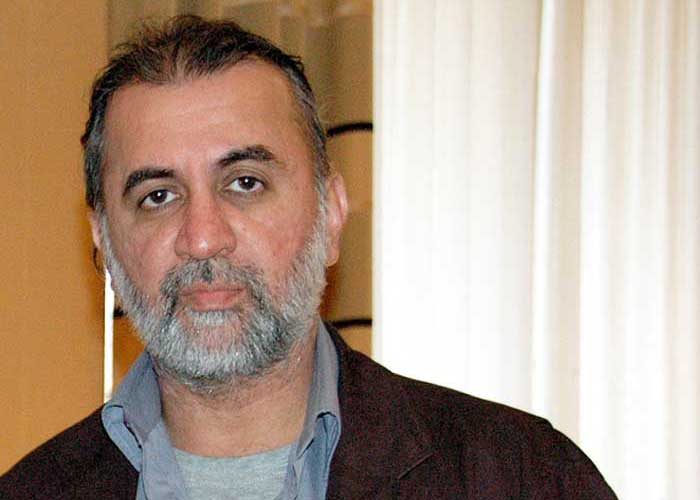
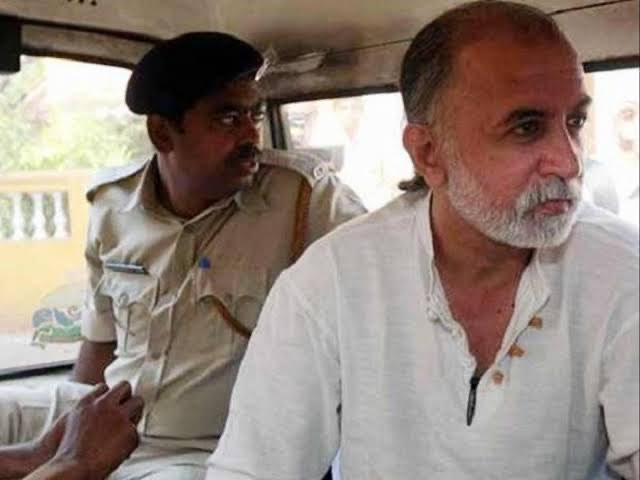
Tarun Tejpal, founder and Editor-in-Chief Tehelka in police custody after allegations of sexual assault were made by his colleague at Tehelka. Tejpal has now been acquitted of all charges.

The judgement highlights that the Defence had argued that Mr Tejpal and the prosecutrix were not in the lift during the relevant two minutes but had exited the lift on the first floor. On cross-examination it was revealed that the CCTV footage of the first floor had been seized and viewed by the Investigating Officer, then mysteriously disappeared and was never attached as evidence.

“It can be said that because the footage of the First Floor would have wholly destroyed the Prosecution’s case, P70, the IO (Investigating Officer) sought to keep out the relevant footage for the First Floor and render it unavailable,” the judgement states. “If the first floor footage was viewed on 29/11/2013, where did it disappear and there is absolutely no explanation for the same from the prosecution.” She goes on to say, “the only conclusion that can be drawn is that the Investigating Officer tampered with and destroyed the CCTV footage of the first floor guest lift of block 7 since it would conclusively corroborate the defence of the accused.”

All the CCTV footage that is on record, she goes on to highlight, also falsifies every claim of the prosecutrix, including on the alleged second day of the assault. “It is crucial to note that while in her complaint PW1 had stated that he grabbed her wrist and pulled her in, the CCTV footage showed that he had not touched her at all. But she not only accompanies him, she first follows him to the lift and then waits alongside him outside the lift…”

“It is crucial to note that the contradictions are often so glaring that the exact opposite of what the Prosecutrix is claiming actually happens on screen yet, the IO did not even question the Prosecutrix on the same,” the judgement notes.

The judgement also makes note of three messages sent by the Prosecutrix to Tejpal soon after the alleged second assault telling him where she was at that moment, even as her narrative claimed she was terrified and keeping her distance from him. “Her sending the same message thrice in the span of a very few minutes clearly establishes that the prosecutrix was not traumatised nor terrified of being located or found by the accused, and completely belies the prosecution case that immediately before the said messages, the accused had sexually assaulted the prosecutrix again.”

The judge further notes that the alleged “apology” issued by Tejpal was demanded by the prosecutrix in exact terminology and specific language with promise of closure of the complaint against him and that the law clearly recognises the extremely suspect nature of ‘confessions’ when demanded against closure of a complaint. Dealing with the so-called personal apology, an email titled ‘Personal’ that Tejpal sent to the Prosecutrix after she lodged her complaint against him, the judgement goes on to state, “a bare reading of the alleged personal apology categorically shows that his email neither implicitly nor explicitly makes any of the admissions or confessions which PW1 demanded in the apology, or with relation to any other offence with which the accused was charged and is clearly therefore not an apology but an attempt to assuage any discomfort the prosecutrix might have post-facto felt.”

Tejpal had clarified that in the five minutes preceding the alleged assault, when the Prosecutrix and he had left Block 7 and stood outside chatting — a fact that CCTV proves but that the Prosecutrix repeatedly omitted from her narrative and complaint — they had engaged in “drunken banter”. “The accused submits that the said email shows that even as the accused outright denied the prosecutrix’s version of the incident and disputed her claims of what had happened, he offered an apology only to any discomfort she might have felt about the previously mentioned ‘drunken banter’,” the judgement states.

WhatsApp and email evidence in the case also proved that the Prosecutrix suppressed evidence that would have proved that the first person she met after the alleged assault and to whom she claimed to have revealed what had happened in fact completely falsified her version of events. “Nikhil was the first person the prosecutrix met virtually minutes after the alleged incident of 7/11/2013, a fact which the prosecutrix completely hid during the investigation and in her evidence before this court, despite the crucial role a nearly contemporaneous witness plays in any investigation,” the judgement states. It goes on to call out the IO regarding the blatant omission of this witness. “It is also very important to note that despite there being a reference to Nikhil being the first person the Prosecutrix had met, in her draft complaint of 16/11/2013, a reference which she later deleted, the IO did not do any investigation by contacting Nikhil Agarwal, or even did not make attempt to question the Prosecutrix.”

The judgement also notes that on November 22, the very date on which Goa Police let it be known that there was CCTV footage in the case, Tejpal had issued a press release demanding the footage be released to the public, despite not having seen it himself. “The importance of the CCTV footage to the truth was first heralded by the accused, in Delhi, as early as 22/11/2013 itself, i.e. the very date of the registering of the FIR, vehemently demanding that the police should procure the CCTV footage and that it would reveal the truth, as admitted by the witnesses below. The media statement was made by the accused to secure the CCTV footage to reveal the truth and to establish his innocence which has been confirmed by the witnesses.”

Indian Army’s helping hand in Kashmir

The Indian army in Kashmir is only associated with anti-terrorist operations by some people and there’s nothing wrong in this as our soldiers are in the thick of a proxy war unleashed by Pakistan in this region. Even though many are aware of the wide-ranging assistance being provided by the army to empower locals and improve their quality of life under Project Sadbhavna [Goodwill], not many know about the sterling role the Indian army is playing in providing humanitarian assistance at grassroot levels to the needy inhabitants of J&K. This is because of two reasons- one, since they are devoid of sensationalism, such incidents seldom make it to the national news, and second, the Indian army doesn’t quite believe in blowing its own trumpet!

Rescue at 11,000 feet

Last week, a man named Bashir Ahmed, decided to go from Kathua, which is situated in the lower reaches of J&K, to Marwah Valley alongwith his wife and three children. Even though this trek entailed an arduous walk involving an ascent of 11,000 ft while negotiating the Naginsur ridge, he wasn’t perturbed, as being from the bakarwal [nomad] community, he and his family members were quite accustomed to such journeys while grazing sheep. Furthermore, he alongwith his family had walked this route many a times during seasonal migration and since the weather during this time of the year remained clear, there was no reason for him to worry. However, metrological conditions in mountains can be very unpredictable- as the seasoned nomad Ahmed would soon realise!

While this family was enroute, tragedy struck in the form of a freak blizzard accentuated by heavy snowfall. Fearing that they might get trapped and being ill-equipped to protect themselves from high velocity winds and snow, or run the risk of losing life or limb, Ahmed’s friends approached the nearest Indian army post at Chingam for assistance. The thumb rule of rescue operations in snow covered mountainous terrain is to wait for weather conditions to improve so that the rescuers themselves don’t get trapped due to adverse climatic conditions and further complicate the situation. This is all the more necessary when the rescue team has to go into an unfamiliar area and this was true in this case.   

However, since Ahmed family wasn’t carrying sufficient warm clothing to ward off extreme cold or food to sustain themselves, there was no way they could protect themselves from hypothermia [extreme exposure], which could prove fatal. Realising the criticality of the situation, the army post commander decided to take the risk of launching the rescue mission in inclement weather. After a 24 hours grueling trudge in the snow, the rescue patrol succeeded in locating the Ahmed family and provide them with the much-needed medical aid and succor. For Ahmed this was really a blessing in disguise as one of his children had become ill and things would have become serious had the army men not arrived.

Saving a Bear Attack Victim

On 14 May, a group of bakarwals were moving from Kalakote area of Rajouri district to Kupwara in north Kashmir in search of greener pastures. While traversing the densely forested jungles in Poonch district, a wild bear attacked a 19-year-old member of this group named Mohammad Sharif, badly mauling him in the face and head. His hapless associates approached an Indian army post in Poonch district for assistance.

The army immediately rushed out a Quick Reaction Medical Team to attend to and provide medical assistance to the bear attack victim. While this team was able to arrest the flow of blood and provide immediate medication to stabilise the patient, the nature of injuries was serious and required immediate hospitalisation. Realising that he required more advanced medical attention immediately, the army men evacuated Sharif on a stretcher to the Primary Health Centre at Saujiyan, located more than 2 km from the site of the incident. Due to the timely intervention and speedy evacuation of the victim by the army the man was rescued.

Extrication from River in Spate

On 18 May, Sajid Ahmad Mir, hailing from Anantnag, and Mushtaq Ahmad, a resident of Ramban, were working on the banks of River Marua near Nawapachi village in Marwah Valley of Kishtwar district when the JCB in which they were seated accidentally plunged into the fast-flowing river. The current was so strong that it even washed away a heavy vehicle like JCB for a distance of half a kilometre. As the JCB got submerged, its trapped occupants were stuck and were in imminent danger of drowning.

Locals approached the army post at Nawapachi, which immediately dispatched a rescue column to rescue the trapped JCB crew. However, there was a problem. The rescue operation entailed securing ropes to the JCB, which would facilitate safe extrication of the stranded duo and to do so, someone would have to enter the river and fix ropes to the JCB. Since the JCB could topple due to the fast current and shifting sand below, time was at a premium and the army men rose to the occasion by plunging into the river and fixing ropes.

After more than an hour and a half of superhuman efforts, the Indian army rescue team succeeded in bringing the trapped men to safety. In this rescue operation, the army was wholeheartedly assisted by J&K police and locals- a wonderful example of the exemplary coordination that exists between the army and police as well as their excellent rapport with civilians.

Demystifying Army’s Extraordinary Outreach

The above-mentioned incidents are but a few of the numerous instances of the Indian army in J&K extending a helping hand to locals even when it is fraught with the risk of bodily harm, and this praiseworthy attribute of remarkable bonhomie merits attention. The first thing that strikes the mind is, what makes the rank and file of the Indian army so forthcoming in helping civilians who are victims of unfortunate accidents? The answer lies in the time honoured army tradition of reaching out to their brethren in need of assistance, even if it involves putting men in uniform in grave danger and one such shining example is that of Col M.N. Rai.

In January 2015, the father and brother of a local terrorist who had been trapped in a house alongwith another terrorist approached and told Col Rai that they would convince him to surrender. Touched by the old man’s appeal and wanting to save the life of a misled youth, Col Rai acceded to this request and went near the house with the father-son duo to convince the trapped terrorist that he would come to no harm if he surrendered. However, instead of surrendering, the holed-up terrorists opened fire which caused the death of Col Rai. Can there be any other parallel of such great concern for a civilian’s life?

So, while All Parties Hurriyat Conference and the pro-Pakistan lobby may try their best to demonise Indian army, the people of J&K are with them- a fact vindicated by timely and specific information being provided by locals regarding the location of terrorists- be it Burhan Wani or Riyaz Naikoo!

Pakistan’s economic crisis and the future of Sino-Pak relations

The good news is that in its Global Trends 2021 report published every four years, the US National Intelligence Council has assessed that in the next two decades, Pakistan’s gross domestic product [GDP] would jump 17 slots and make it the world’s 23rd largest economy. The bad news is that the way things are panning out doesn’t inspire much confidence that for Pakistan the present or immediate future would be bright. Although, the COVID pandemic has played rogue in Pakistan’s march into progress, but there are many other ‘villains’ that have since long been compounding the country’s economic woes.

Just last month, Special Assistant to Pakistan’s Prime Minister on Power and Petroleum Tabish Gauhar made a startling disclosure regarding the precarious position of the country’s ‘circular debt stock’ [money that government owes to independent power producers [IPP] to meet the shortfall on account of subsidised electric tariff that it provides to consumers]. He revealed that in case no remedial steps were taken, the country’s current circular debt stock, [which currently stands at Rs 2.3 trillion] could double to Rs. 4.6 trillion in just two years.

What makes this revelation disquieting is the fact that despite Prime Minister Imran Khan’s repeated claims of having controlled Pakistan’s debt crisis, the circular debt stock [which stood at 1.1 trillion under PML-N government] has more than doubled to 2.3 trillion in just two-and-a-half years of the PTI government’s rule. Moreover, with Pakistan’s Finance Minister Shaukat Tarin’s announcing that International Monetary Fund [IMF] had been informed that Islamabad would not raise tariffs, the circular debt crisis is bound to get even more acute- not a very encouraging proposition as far as making Pakistan the world’s 23rd largest economy is concerned!  

Pakistan’s financial misery can be attributed to two main reasons. One, it has always been heavily dependent on foreign aid and to achieve this it readily became Washington’s frontline state, first, through the cold war, thereafter during Soviet occupation of Afghanistan and after 9/11, by joining America’s war on terror. Plush with foreign aid and with Generals running the country for most of the time, little was done to reinvigorate the country’s sagging economy. The second reason for Pakistan’s financial woes is Rawalpindi’s over-obsession of achieving militarily parity with India, for which the armed forces of Pakistan pocket a lion’s share of the country’s GDP.

Pakistan’s military fixation stood out like a sore thumb even during the outbreak of covid pandemic last year (2020). On the one hand, Prime Minister Imran Khan made passionate appeals to the international community for loan waiver pleading that “We don’t have the money to spend on already  overstretched health services and to stop people from dying of hunger”. Nonetheless, despite humungous financial crisis due to covid pandemic, Islamabad still approved a whopping 11.9 per cent increase in the country’s defence budget. Similarly, even though Pakistan got the benefit from the G-20 Debt Service Suspension Initiative [DSSI] relief, plus a $1.4 billion emergency funding from IMF for fighting the COVID pandemic, it’s vaccination programme ranks amongst the lowest in the region. Yet, despite being unable to find the money to vaccinate its people against the COVID pandemic, Pakistan Army has no qualms in negotiating a 2018 deal worth $1.5 billion for buying 30 attack helicopters from Turkey!

Islamabad has repeatedly been warned by the international community and IMF against taking “excessive loans” from Beijing and resultantly falling into debt trap, but to no avail. Au contraire, Islamabad has gone to the extent of not only taking enormous loans for the China-Pakistan Economic Corridor [CPEC] and Belt and Road Initiative [BRI], but has even borrowed money at undisclosed rates of interest to repay its outstanding loans to Saudi Arabia- a novel [but economically debilitating] strategy that could be aptly phrased as ‘borrowing from Xi Jinping to Pay Mohammed bin Salman! However, latest developments related to financing of Main Line 1[ML1] railway project, which is the largest CPEC project, indicates that Beijing’s unbounded munificence towards its “all weather friend” Islamabad seems to be wearing out.

In December last year, media reports quoted unnamed Pakistani officials saying that in view of the terms and conditions of the G-20 DSSI availed by Pakistan, China was seeking additional guarantees from Islamabad prior to releasing a $6 billion loan for ML-1 railway line project. It was also reported that while Islamabad had requested this loan at concessional rates of interest, Beijing wanted to give it at both concessional and commercial interest rates. However, since Chinese Foreign Ministry spokesman Zhao Lijian not only rejected this claim but even said that Chinese inputs in CPEC had “increased against the odds”, this news soon became a non-issue.

However, just the other day, media was once again abuzz with news of some disagreements on the ML-1 railway project loan issue, and this time the media cited records of a meeting held between Chinese and Pakistani officials and also quoted senior Pakistani officials by name. The Express Tribune mentioned Deputy Chairman Planning Commission Dr Jehanzeb Khan saying that “The Chinese side have sought clarification regarding the possibility of raising further debt by Pakistan during currency of the IMF programme”. A written communication between Beijing and Islamabad purportedly mentions that “The Chinese side expressed concerns about Pakistan’s debts, including IMF’s requirements for the Pakistani government to avail loans and about the impact of restrictions under the G-20 DSSI on the financing of the ML-1 project”.

From information available, the deadlock on financing the ML-1 project appears to be rather serious as Beijing has adopted a not-so-benign stance, such as:

  • Refusal to accept Islamabad’s request for loan as a mix of US dollars as well as RMB [Chinese currency] and instead insisting that the entire loan should be paid in RMB.
  • Not accepting Islamabad’s request for release of entire loan amount at concessional rates.
  • Rejecting Pakistan’s request for scheduling a repayment over 25-years with a 10-year grace period, and instead, insisting on a 15-20-year loan repayment period with a grace period of only five years.

It’s time Prime Minister Imran Khan woke up and smelt the coffee, because while domestic audiences may believe that the miracle called ‘Naya [New] Pakistan’ would happen-but Beijing doesn’t, and for good reasons. Pakistan’s public debt which stood at 72.5 per cent of its GDP when Khan came into office has shot up to a stupendous 87.2 per cent in the last fiscal year, and as mentioned above, the country’s circular debt which was Rs. 1.1 trillion under the previous government, has more than doubled and is touching an astounding Rs. 2.3 trillion. Since Pakistan’s accumulated loans are in far excess of its repayment capacity, it is but natural for Beijing to be fiscally more cautious while committing additional funds on CPEC projects.

Beijing’s hesitation in extending loans to Islamabad is evident from the fact that the ML-1 railway project continues to languish in suspended animation for the last three years- a far cry from Beijing’s recent claim of having speeded up work on CPEC projects. However, the most damning indication of China’s tardiness on financing the ML-1 project comes from the fact that three years after its approval, Beijing has now suddenly realised that extending the $6 billion loan for ML-1 project was difficult as this debt could not be taken on its books due to the decrepit financial condition of Pakistan Railways!

Islamabad has been touting CPEC and BRI as a “game changer” that will permanently end Pakistan’s economic crisis. While financial benefits for Pakistan from these projects are yet to accrue, the CPEC ML-1 railway project has certainly proved to be a ‘game changer’ as it has successfully created perceptible differences between two countries that keep singing paeans about their all-weather friendship that is higher than mountains, deeper than oceans, stronger than steel and sweeter than honey”!

It seems that American writer Patrick James Rothfuss was right when he said, “There are two sure ways to lose a friend, one is to borrow, the other is to lend”.

Tailpiece: Former Pakistan President Ayub Khan gave his autobiography the cryptic title of ‘Friends not Masters’– perhaps to record for posterity, his utter disenchantment on Washington’s ‘betrayal’ in not standing by it’s cold war ally Pakistan during its 1965 conflict with India. However, with Beijing slowly becoming more and more assertive on financial issues concerning CPEC and BRI, could Ayub Khan’s enigmatic phrase regain relevance in Sino-Pak context in the days to come?

India needs to aggressively challenge Pak’s fake propaganda

Pakistan, with its abrasive postures toward all the major crises that the world is grappling with, is walking on a thin line. The country is indulging in negative and unsubstantiated propaganda and taking sides in international conflicts in a manner that gives rise to passions rather than diffusing the situation. It is going against the international thought process in too many such cases. 

India is fighting courageously against an unprecedented spike in COVID and the entire world has come forward in her support, Pakistan however is resorting to divisive innuendoes that can trigger internal unrest in India. “India has failed its people because of five major factors: Poor governance, a disregard of lower classes, a confused and fake leadership, bankruptcy of morality, and hiding of health data. These are covered in detail here,” says Adeela Naureen, a Pakistani journalist in The Express Tribune, while giving a detailed exposition of mismanagement and poor governance. The article does not quote any facts, figures and instances to substantiate the allegations being made.

The narrative that Pakistan is peddling is blatantly propagandist in nature. It is directed towards creating doubts in the minds of the poorer sections of the Indian society with regard to seriousness of the Indian government in looking after their interest. The intention, very obviously, is to instigate the poorer sections of the Muslim population.

The second propaganda offensive of Pakistan is directed towards the state of Israel. While the rest of the world is working 24/7 to bring about a rapprochement and ceasefire, Pakistan is busy spouting anti-Zionist venom. Even as the news of a ceasefire came by, Pakistan continued with calls for Jihad against Israel. In an address to the Pakistan Parliament, Asma Qadeer, a member of the National Assembly of Pakistan claimed that Israel has been ‘torturing women and children’ and in the fight back the first step should be to wage ‘Jihad’ against the Zionists. “Palestine Day” demonstrations have been held across Pakistan and the country’s foreign minister has been accused of “anti-Semitism” during a US television appearance. “The people of Pakistan and the government of Pakistan stand by the people of Palestine and … we strongly condemn Israeli aggression against innocent Palestinians and also the (raiding) of Al-Aqsa Mosque,” said Pakistani Information Minister Fawad Chaudhry. Such statements leave no doubt about the posture adopted by the country.

Internally, Pakistan is going more and more into the hands of fundamentalist organisations like the Tehreek-e-Labbaik Pakistan (TLP) that has been orchestrating massive demonstrations and agitations across the country. It insisted on the expulsion of the French Ambassador, due to the crackdown ordered by the French President on the fundamentalist Muslim organizations in France that are of fomenting terrorist violence. Its posture and demands are causing serious diplomatic fissures between the country and Europe.

The Tehreek-e-Labbaik Pakistan (TLP) has complete support of militant organisations like Lashkar-e-Toiba (LeT), Jaish-e-Mohammad (JeM) and Tehreek-e-Taliban Pakistan (TTP) among others. While maintaining its political mask the TLP is also a feeder of radical volunteers for the militant groups. It has given a new impetus to the militant war lords in Pakistan who are now looking towards seizing complete political power while continuing with the build up of huge and lethal personal armies. It can do so since there is no dearth in Pakistan of weapons and war like stores or of political support to such disruptive activity.

With the Tehreek-e-Labbaik gaining dominance the possibility of Pakistan adopting even more stringent postures on world affairs and especially so against India is becoming more intense. It would be a part of the country’s policy to attain a dominant position in the global Islamic affairs now that many other Muslim countries like Saudi Arabia are veering towards a more moderate stand. It wishes to create strong bonds with the obscurantist Sunni elements worldwide. In the core of this attempt is the aspiration to keep the Kashmir issue alive among more radicalised elements of the Muslim world. In this attempt Pakistan has the complete support of Turkey under its fundamentalist President Recep Tayyip Erdoğan. Its second big ally in this malevolent plan is China that always remains content when Pakistan is brewing trouble across the world over as its proxy.

While veering recklessly on the aforementioned collision course Pakistan seems to be quite oblivious of its tottering economy and the terrible deprivation being faced by its people reeling under unfettered inflation with shortage of just about everything. The country is incapable of running its government if it does not get financial support from a few friends who are also fast decreasing in number. Very soon it will, once again, come under the scrutiny of the Financial Action Task Force (FATF) where it has been on the Grey List for a long time now. With the stringent stands taken in recent times, its downgrading to the “Black List” is very much feasible. This would be the final blow to its tottering economy.

India needs to revisit her policy of dealing with Pakistan. The country cannot be allowed to peddle its falsity that shows India in a bad light internationally. India is recognised as the largest and most vibrant democracies in the world and for it to be denigrated by a failed state is simply not acceptable. Also not acceptable is Pakistan’s attempt to position itself as the world leader of radical Islam since such a position would bring turmoil and insecurity to our very doorstep.

It is time for the Indian Ministry of Foreign Affairs (MEA) to contest not only Pakistan’s incorrect Kashmir narrative but also all other propagandist activities however small and reprehensible they may be. This includes the ongoing propaganda on the COVID situation in India. By maintaining what India looks upon as a dignified silence the neighbouring country is being given a free run for its evil machinations. The world needs to be sensitised about the danger that Pakistan is posing to work peace and security and this duty falls upon India.

Pakistan Army occupies another girls’ school in Kech, occupied Balochistan

Pakistan Army occupied yet another girls’ school and set up new checkpoints to intimidate school children in Kech district of occupied Balochistan. Earlier too, at Kashaap in district Kech the Pakistan Army had seized a girls’ school during the holy month of Ramadan and set up a checkpoint on its roof, which remains a bone of contention among the people of the village.

Local Baloch people said that there is plenty of space for the soldiers of Pakistan Army to stay and yet the Pakistani forces choose to occupy girls’ schools. “This is only school for girls in the whole village which the Pakistan Army has now occupied. We cannot send our children to study in the presence of Pakistani soldiers … we are concerned about the future of our girls in the district,” a local Baloch said.

It should be noted that Pakistan Army has taken over most of the schools in occupied Balochistan and turned them into military camps. In April 2021, Pakistan Army occupied a school and set up eight new outposts within few yards in the confined area. It has also been reported that many schools’ teachers, including girl students, have been sexually abused in occupied Balochistan.

Last year a teacher was sexually abused at a girls’ school in occupied Balochistan’s district Awaran. However, due to media’s apathy most of such cases, which happen almost on a daily basis, go unreported and the world doesn’t know about them. A delegation of the local residents from the area met with Pakistani military officials on the issue and requested them to vacate their checkpoints from the girls’ schools. The military officials flatly denied and lied that they had set up checkposts at the girls’ schools.

A local resident of Kashaap in the Kech district told media on conditions of anonymity that the presence of Pakistani military personnel has adversely affected Baloch people’s social life and the people are now scared. “Military personnel have banned people from leaving their homes at night and have warned the residents that if anyone leaves the house at night without their notice will be responsible for all wrongs with their family.”