Home Blog Page 310

Humanists International on International Vaccine Access and Distribution

0

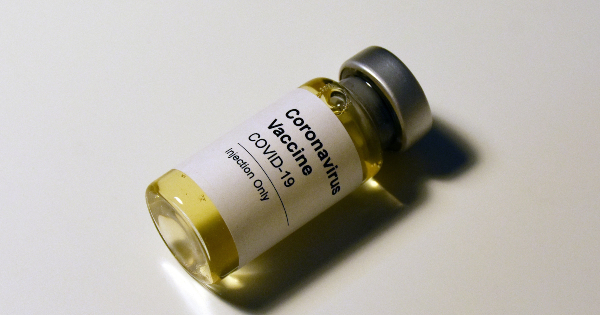
Humanists International’s Lillie Ashworth wrote on the vaccine programmes in progress in several countries within a setup of “accelerated development and approval” for several of them, where this amounts to “an unprecedented scientific achievement.”

Ashworth’s concern in “Vaccines sans frontières: the ethics of equitable vaccine distribution” is the separation between the comparatively wealthier countries and the comparatively poorer countries in the world.

For example, if a country does not have sufficient infrastructure, due in part to its financial status, especially as regards healthcare, then the distribution will be inequitable.

International property law and nationalism are the core issues for the ability of the international community to provide equitable access and distribution of the coronavirus vaccines available at present.

Ashworth stated, “Much of the potential vaccine manufacturing capacity for 2021 has already been spoken for. The European Union, together with Canada, the United States, the United Kingdom, Australia and Japan have pre-ordered more than half of the global supply. While the People’s Vaccine Alliance has warned that almost 70 developing countries will only be able to vaccinate 1 in 10 people next year.”

Ashworth quoted UN Secretary-General Antonio Guterres as saying the nationalization, in the sense of turning inwards, vis-à-vis the virus and the vaccines, is futile in the international fight against the global pandemic.

“The more the virus is free to circulate, the more mutations there will be, and the longer it will take for the global economy to recover,” Ashworth wrote.

There are a number of unprecedented facts about the current vaccine unveiling. The first, of course, is the rapidity of its development. Another fact is the distinct demarcations of equitable access based on the income of a country.

Typically, Western and North American nations have higher finances and great medical infrastructure; thus, the access, development, and distribution of the vaccines is far more rapid than in many of the poorer countries in the world.

Additionally, as Ashworth described, “It took years for the antiviral drugs which revolutionized HIV/AIDS treatment in high-income countries to become widely available to African countries. A feat that was only achieved after intensive lobbying by civil society groups and the decision by an Indian company in 2001 to manufacture treatment at a low-cost (today, India continues to supply over 80% of the world’s HIV drugs).”

This rapid development still works through three phases of development for the vaccines to be considered reasonably safe.

Phase 1 deals with some volunteers. This phase assesses the safety of the immunological response to the vaccine and sets some baselines as to the correct dosages. The volunteers, typically, are healthier.

Phase 2 is given to hundreds of volunteers. It examines the immune response looking at volunteers by age, sex, and the like. Those people who the vaccine is intended to help the most. This happens in multiple trials while still within Phase 2.

A comparison group is not given the vaccine to compare and contrast the immune response to the vaccine, as such. It differentiates between possible confounding factors and can show the differences between no vaccine and vaccine cases by different ages and sexes.

Phase 3 is given to thousands of volunteers and then compared to another similar group of volunteers who have not received the vaccine. This creates a robust comparison group of people.

While, Phase 2 and Phase 3 are ongoing; the test volunteers and scientists are blind to who receives the vaccine and who receives the placebos. With the finalization of the trial, the results can show the efficacy of the proposed vaccine. If implemented, so successful, the vaccines are continually monitored for safety in the public domain.

The greatest need is a distribution network or some mechanism by which to implement vaccine rollouts for the international population, such a mechanism exists.

COVAX, a global procurement mechanism dedicated to ensuring the access to COVID-19 vaccines for all countries, provides a promising example of multilateralism in action,” Ashworth said, “But will this be enough to overcome the impulse towards vaccine nationalism? Notably, the United States has not signed up to the COVAX facility, and vaccine hoarding behaviour by rich nations undermines the initiative by cutting into global supply.”

Ashworth, rightfully, pointed to the human rights inherent in these vaccine issues globally. That is, the right to health. As noted by the World Health Organization, in its Constitution, “The enjoyment of the highest attainable standard of health is one of the fundamental rights of every human being without distinction of race, religion, political belief, economic or social condition.”

Thusly, the ideal is access for all and distribution across the world. The intellectual property law’s being vague is the crux of the matter for Ashworth, who sees the opacity as preventive of the attainment of said rights to health.

A challenge is the market basis for the vaccine program and the development itself. In that, the intellectual property laws can prevent the full distribution of the scientific knowledge behind and about the vaccine to reach an international or global audience in an equitable manner. The prices become standardized by the rendering nations themselves.

“Behind the scenes, a war is currently being waged within the World Trade Organization, where a proposal by South Africa and India to temporarily waive patents on COVID-19 vaccines – supported by 100 mostly low and middle-income countries and endorsed by UN human rights experts – is being blocked by a small group of high-income countries, including Brazil, the European Union, Canada, the United States, Japan and the United Kingdom,” Ashworth wrote.

In turn, those countries with the most financial investment in the vaccine programs around the world have some of the greatest abilities to restrict access to and distribution of the vaccines to countries with far less income, infrastructure, and ability to cope with the blows of the coronavirus seen in even some of the richest countries in the world.

As Member States of the United Nations, the status of a Member State comes with a variety of obligations and responsibilities. 194 countries in the world are officially classified as Member States of the World Health Organization, 193 in the United Nations. Both stipulate international human rights and responsibilities.

Therefore, as stipulated within the Constitution of the World Health Organization, these Member States, or countries with formal membership in the World Health Organization, have duties to fulfill to the international community via the World Health Organization.

Ashworth quotes the UN Committee on Economic Social and Cultural Rights (CESCR) General Comment No. 12 on the right to health:

[G]iven that some diseases are easily transmissible beyond the frontiers of a State, the international community has a collective responsibility to address this problem. The economically developed States parties have a special responsibility and interest to assist the poorer developing States in this regard.

Aptly, General Comment No. 24 deals with intellectual property rights. Those which will not deny access to essential medicines as something necessary to the enjoyment of life and health. In turn, this means fulfillment of this so as to enjoy the right to health, and also the constitutional obligations to the World Health Organization, too. This kind of rights-based analysis could form an M.A. thesis because it’s so obvious and necessary to report on it, as Ashworth has done commendably as an intern at Humanists International.

Her main concern stands as valid and evidence-based, as above, and shows the importance of an international infrastructure for equitable distribution of the vaccines to high-income and low-income Member States alike without barriers due to intellectual property, including the expansion of the construction of multilateral efforts seen in COVAX.

With files from Humanists International.

Photo by Hakan Nural on Unsplash

They Are Risen: Evangelical Protestant Christian Prophets

0

Apparently, there is an increasing number of prophets emergent in the last couple of years. As there have been a number of self-titled prophets of the gods or a god, or most-often the Abrahamic God, there is an increasing emphasis on making political predictions.

Ruth Graham in The New York Times reported on the proliferation of the ‘prophets’ in the period of the Trump Administration. They are a select group of people within Christian circles.

Those individuals who are part of a hardline Evangelical Protestant Christian movement who believe sincerely in the supernatural powers of their purported prophets.

Those who can see into the future. Those who can make political predictions. Those have some ethereal ability to foretell the future. There is a tendency to promote conspiracy theories amongst these people.

These individuals, interestingly enough, neither offer institutional church life nor a place of life.

“They operate primarily online and through appearances at conferences or as guest speakers in churches, making money through book sales, donations and speaking fees. And they are part of the rising appeal of conspiracies in Christian settings, echoed by the popularity of QAnon among many evangelicals and a resistance to mainstream sources of information,” Ruth wrote.

These are individuals prone to honestly believe in prophetic powers of online ‘prophets.’ One is a 33-year-old Jeremiah Johnson, who predicted former President Donald Trump would win the 2020 election.

As Trump did not win the election, Johnson failed in the prophetic vison of a win. Many others predicted an end to the pandemic by April, 2020. Those failed too.

Graham points to 33-year-old Jeremiah Johnson as one of the many “self-described prophets” who predicted that President Donald Trump would be reelected in 2020 — only to be embarrassed when Joe Biden, now president of the United States, defeated him. Other evangelical “prophets,” according to Graham, predicted that the COVID-19 pandemic would be long gone by April 2020.

AlterNet’s Alex Henderson said, “It is within evangelical Protestant Christianity specifically that the “prophet” phenomenon has caught on in such a big way. Evangelicals are distinct from Mainline Protestants, who range from Lutherans to Episcopalians to the African Methodist Episcopal Church. While evangelicals have strict fundamentalist views and believe that salvation can only come through Christianity, Mainline Protestants tend to be more accepting of non-Christian faiths and are more likely to engage in interfaith activities.”

Allegedly, Graham received death threats when Biden won. Graham said, “I was wrong. I am deeply sorry, and I ask for your forgiveness. I would like to repent for inaccurately prophesying that Donald Trump would win a second term as the President of the United States.”

With files from AlterNet and The New York Times.

Photo by Ben White on Unsplash

We’re Above the Law: We’re (Some) Canadian Christians

0

In the ongoing saga of narcissism masquerading as humility in the form of some brands and expressions of Christian sects and Christian personalities, a pastor from Alberta has been arrested for violation of COVID-19 public health rules and the orders from the Alberta Health Services.

The violation of the public health order and rules happened for several weeks in a row coming from an outskirts Edmonton pastor. The RCMP came and arrested the pastor at GraceLife Church of Edmonton.

As an aside, this continues to come from churches, not synagogues, in British Columbia: Congregation Beth Hamidrash, Congregation Schara Tzedeck Synagogue, and Congregation Beth Israel, Vancouver, Beth Tikvah Congregation (Richmond, BC),  Congregation Emanu-El (Victoria, British Columbia), Temple Sholom, Kolot Mayim Reform Temple, Temple Sholom, Or Shalom Synagogue, Ahavat Olam, Aish Ha’Torah, Center for Judaism of the Lower Fraser Valley, Chabad Centre of Vancouver Island, Chabad of Richmond, Chabad of Vancouver Island, Congregation Har El, Congregation Schara Tzedeck, Eitz Chaim Congregation, Lubavitch of British Columbia, and probably others, do not engage in these behaviours, as far as I know it.

These kinds of actions tend to come from Christian groups, primarily. It may be a matter of demographics, but, even so, it doesn’t seem to come from public secular groups much or at all.  

The church, GraceLife Church of Edmonton, is located on Highway 627 in Parkland County. The Alberta Health Services issues a work order on December 17, 2020. This kept going until a closure happened in January, 2021.

Apparently, Edmonton Corn Maze’s parking lot has been full with the church welcoming members every single Sunday. This is the post-request of closure for not wearing masks, ignoring social distancing.

Even further, hundreds were inside, which violates 15% capacity limits. Some ~300 members of GraceLife Church of Edmonton were shown not wearing masks in the video of the services.

The RCMP and Alberta Health Services have been working together to investigate the non-compliance of the rules and health orders by the GraceLife Church of Edmonton members and leaders.

The pastor arrested was James Coates. He was charged with a Section 73(1) contravention of the Public Health Act with violation of capacity limits and non-compliance with physical distancing requirements of the health order.

Mike Lokken, Parkland RCMP detachment Inspector, said, “There are many different discussions and considerations at play in relation to the GraceLife Church and their non compliance… In collaboration with AHS, we have now followed up with escalated enforcement.”

Pastor Coates was given a $1,200 fine, ordered to attend Stony Plain Provincial Court (on March 31), and released with conditions. Some updates to the church website, apparently, downplay the seriousness of the pandemic.

The statement on the website states:

what follows will shed light on our approach to what is being called a “pandemic.” The reason we put “pandemic” in quotes is because the definition of a pandemic was changed about 10 years ago. At one time, a pandemic was defined as an infectious disease that resulted in a certain percentage of excess deaths over and above normal annual averages. The definition was changed in connection with H1N1 to remove this threshold. Ten years ago, COVID-19 would not have qualified as a pandemic. In fact, not even close.

When COVID-19 first appeared, we shifted to livestream and abided by most of the new government guidelines for our gatherings. But when the first declared public health emergency ended, we opened our doors and returned to nearly normal gatherings on Sunday June 21st, 2020. We did so recognizing COVID-19 was much less severe than the government had initially projected. This sentiment was reflected in the assessment of the Premier of Alberta, who deliberately referred to COVID-19 as “influenza” multiple times in a speech announcing the end of the first declared public health emergency.

Concluding:

Death looms over all of us. But there is a message of concrete hope, in the gospel of the Lord Jesus Christ.

In short, many statistics and arguments are proposed via redefinition in a form of denialism of the pandemic because of what they see as a redefinition and the use of the lockdowns and other measures to reduce civil liberties. Then it closes on a soliloquy about the only life being given through the saviour of Jesus Christ.

The short of the long is, more or less, religious conclusions about the need for services and, with some secular governmental conspiratorial additions, so the religious foundations of defying the public health orders, because the ultimate aim is to gather as a congregation and worship God in public.

The main form of denialism made public in the statement is the GraceLife Church of Edmonton authorities don’t consider their collective actions to contribute to the spread of COVID-19.

In contradistinction to GraceLife Church of Edmonton and others, a group of several faiths, Indigenous leaders, and charitable organizations, released a statement:

We encourage our fellow citizens to not merely adhere to them begrudgingly and minimally, but willingly and with an overabundance of care. We pledge to model this ourselves each in our own particular communities as well in ways appropriate to contexts.

The same thing happened in Langley with the Riverside Calvary Chapel and some other churches. They disobeyed the public health order for religious reasons without the side justifications of marginal denialism.

The chief medical officer for Alberta, Dr. Deena Hinshaw, has not commented on GraceLife Church of Edmonton. Hinshaw has reiterated the need to follow the health orders.

Hinshaw, recently, said, “There have been recent events in some faith gatherings that indicate some are not taking these measures seriously… I want to reinforce these measures are mandatory, not optional, and that in Alberta we have made great efforts to make sure that faith communities can continue to meet in a safe way… Those who are not following current restrictions are breaking the law.”

Which is to state, GraceLife Church of Edmonton violated the law.

With files from Dean Bennett and The Canadian Press.

Greek Community of Toronto is in Debt: Proposal to Sell Property

0

The Greek community in Toronto is in a bit of hot water because of some massive debt numbers coming their way.

They have a debt of $4.5 million. The COVID-19 restrictions due to the pandemic and public health concerns have prevented raising funds. For example, one charitable organization promoting Greek culture in the Greater Toronto Ara wants to sell a property due to financial strains.

The Greek Community of Toronto represents more than 150,000 Canadians of Hellenic descent. Its revenue has dropped by 90%+ with a debt sitting at $4.5 million. Now, by the end of 2021, it will lose earnings of $2 million.

The firs vice president and treasurer of the organization, Nikona Georgakopoulos, stated, “We’re facing reality… These are extremely tough decisions. Nobody on the board wanted to make these decisions, but unfortunately, it’s better we make them now than somebody else making for you… “All of the fundraising events we were able to have in the past we can’t do anymore. Ninety per cent of our revenue is gone right off the bat.”

The organization’s properties include churches and about 40% of its income, while the other approximately 60% of its revenue comes from cultural event, festivals, and Greek schools. With a disappearance of the revenue, and the increasing debt, the Greek community organizations are having to make some of the tough decisions.

With a limit of religious services to 10 people due to the lockdown, it sets a boundary of possibilities for fundraising of some of the religious organizations. Georgakopoulos noted whole buildings are empty, need to be maintained, and cannot be used. It sets limits on the functionality of the public spaces for them.

Georgakopoulos said, “I know the rules are there to protect people from the disease, but unfortunately, from a business perspective, you just can’t make a go of it.”

Typically, the charity can run between 20and 30 fundraising events per annum with A Taste of Danforth as the most prominent. They take advantage of the provincial and federal level grans available to them. However, these do not cover the total expenses of the project.

They may be unlikely to cover more of the expenses with the grants because they’re simply too great. Even the schools, they had about 1,000 students. Now, they have about 100. It becomes another financial shortfall.

An independent advisory committee has formed based on the deliberations of the board of directors to explore solving the financial problems. They proposed selling one of its organization’s properties:

St. John’s & Alexander the Great Cultural Centre (1385 Warden Ave.).

St. Demetrios & Polymenakion Cultural Centre (30 Thorncliffe Park Dr.).

St. Irene’s Church (66 Gough Ave (795 Carlaw Ave.).

Virgin Mary’s Cathedral (136 Sorauren Ave.).

They put out a press release, which stated:

According to our constitution, as board of directors, we have a moral and legal obligation to preserve and promote the Greek Community of Toronto. We have weathered many storms in the past and thrived despite them.

This current situation is unlike anything we have experienced in the past. Eventually, all final decisions will be approved by you.

It is troubling and very saddening to be in a position that forces us to contemplate selling one of our most treasured assets, but the alternative is considerably worse. We hope you agree and are willing to see this through with us. The very survival of the Greek Community of Toronto hangs in the balance.

With files from Farrah Merali.

Byelection for Chilliwack School Board and Religion

0

In Chilliwack, religion in the community and for the school board are factors for consideration in the election cycles. Wits current setup is Board Chair Willow Reichelt, Board Vice-Chair Jared Mumford, Trustee David Swankey, Trustee Heather Maahs, Trustee Darrell Furgason, and Trustee Barry Neufeld, where its former Board Chair is Dan Coulter.

The commentary in some of the news notes a fight between only two sides in spite of four candidates in the running. Apparently, these are in a sort of split around Neufeld. In the past, Neufeld’s remarks have been seen as offensive to a wide range of groups, including the board’s Minister Rob Fleming requesting a resignation by Neufeld.

There is a review ongoing by the province of the board for making the school system an inclusive and welcoming space.

On the split, candidate Brian VanGarderen stated, “Rather than who’s going to be best in the position, it’s one side versus the other. I’m well aware of that.”

VanGardaren is a teacher in Abbotsford who lives in Chilliwack. The controversial Sexual Orientation and Gender Identity (SOGI) curriculum has been an issue in different places throughout the province. For SOGI and Chilliwack, this is an issue here, too.

Candidate Richard Procee argues the SOGI curriculum should be re-evaluated. Another candidate, Adam Suleman, stated that the views of the board do not represent the perspective of the community at large, or Chilliwack.

Suleman is a business analyst and the Treasurer of the SFU Conservatives club. He doesn’t think the board should legislate on religious beliefs because he believes the representation of conservativism of the board is representing religious forms of conservativism. He doesn’t believe in that at all.

“I want to see change in our school district. It’s much needed, and I think a lot of people want to see new faces on this school board. I come from a place of respect for science and respect for people of religious faith. I think they are not mutually exclusive,” Suleman said.

The fourth candidate is Carin Bondar who is a professor at the University of the Fraser Valley and has presented on science in the media for about a decade.

She said, “I take science and make it palatable to all kinds of audiences… I think that my skills of drawing together ideas and presenting them in ways that are constructive, I think those are really good skills for me to use.”

Apparently, there was a small controversy over using the music video of “Wrecking Ball” by Miley Cyrus to promote the teaching and evolution. This blew up into attacks online and billboards. School Trustee Darrell Furgason called the video “soft porn” and then “mocking the creation beliefs of the Christian community,” which is to state the ignorance proclaimed as fact by Furgason’s brand of Christianity.

Bondar stated, “I think that sets such a shameful example, really and truly, let’s stop that… We are growing rapidly out here, and I don’t think that those dismissive views really represent a large portion of our population at all. We’ve very open and diverse.”

With files from Julie Landry.

Photo by Element5 Digital on Unsplash

Geo-politics necessitates more political awareness amongst Armed Forces’ Officers

“War is a continuation of politics by other means”
Carl Von Clausewitz

Prelude
Let us start by unequivocally stating that it is nations that go to war. The Armed Forces are one of the pivotal constituents of comprehensive national power (CNP) in a multi-polar, multi-domain international security environment, where nations are in 24X7 persistent engagement of cooperation, competition, confrontation and even conflict when national interests/sovereignty are threatened. And since confrontation/conflict are mainly geo-political and economic in nature as Clausewitz aptly puts it, it is axiomatic that armed forces and its senior hierarchy should mandatorily be geo-politically and politically[i] aware and well versed in its nuances.

Armed Forces: Traditional Apolitical Compartmentalised Culture        Armed Forces serve the country and/or its constitution and its personnel remain apolitical whilst in service. The exception being the PLA in China which serves the CCP (Chinese Communist Party). In fact, military personnel are discouraged from giving political views and frown upon members who show an interest in political affairs. For the military, to be a professional implies knowing the business of arms, security and conflict, but staying outside the purview of political understanding and compulsions impacting security. It will not be incorrect to say that the military and political spheres are distinctly separate, and in most democracies, including USA and India neither side wants the other to intervene/interfere in their domains. This has major implications in today’s geo-political environment, where many nations like Iran, Pakistan, North Korea have mastered the art of hybrid multi-domain warfare/operations (MDW/O), and stay below the adversary’s red lines of war, whilst concurrently achieving their strategic objectives. Understanding geo-politics, national politics and strategy as long as it pertains to national security is slowly being welcomed specially amongst the senior leadership. Therefore, it has become very important that the political and administrative, and military spheres understand each other and have overlapping strategic and activity areas, to optimise, integrate and synergise responses both pro-active and reactive. 

Military Officers in National Policy and Decision-Making Roles
The primary role of any armed forces is to protect the sovereignty and integrity of the nation against external aggression, and also ensure its internal security.  As the scope, strategies, space, timelines and domains impacting national security enhances and widens, it is natural for military officers to get more involved in national security policy and decision making. I have felt strongly since the last decade or so, that armed forces officers should become security professionals and not just military professionals. Civil-military-security architecture integration is an essential component to ensure optimum comprehensive national power (CNP) and stability of a nation (henceforth civil implies political direction and also bureaucratic/administrative participation as both are inseparable in India today).

In the most powerful democracy, President Trump surpassed many US Presidents in nominating unprecedented number of military officers in top posts in his administration, from Gen(s)/Adm(s) Mattis, Michael Flynn, John Kelly, Michael Rogers, David Petraeus to name a few. President Biden has already nominated Gen Lloyd Austin as Secretary of Defence. Being a global power, for these military officers to function optimally they must be both politically and geo-politically well versed, apart from being experts in the realm of military strategy. In India too, though fewer in number we have/had the likes of Gen V.K. Singh, B.C. Khanduri, Jaswant Singh, Rajesh Pilot, Capt Amarinder Singh and Col Rathore. It is true that they all stepped out of the military domain and established themselves as individuals in the political arena unlike the US military officers listed above, who were pushed straight to tenant political appointments.

Functions and Role of DMA and CDS
To illustrate the necessity of overlapping civil and military spheres, as also the requirement of geo-political and political awareness of military officers (needed more at the senior levels, but Rome was not built in a day), let us look at the national and strategic job profile of the CDS Gen Bipin Rawat who assumed his appointment on 1 Jan 2020, based on Government approval of 24 Dec 19[ii],[iii],[iv] (see links given at endnotes). He heads the Department of Military Affairs (DMA), created within the Ministry of Defence and functions as its Secretary, and will also be the Permanent Chairman of the Chiefs of Staff Committee. He will act as the Principal Military Adviser to Raksha Mantri on all tri-Services matters and provide impartial advice to the political leadership, is the military adviser to the Nuclear Command Authority. All tri-services commands including Space and Cyber will come under command of the CDS. DMA deals with all three services; integrated HQs of MoD and three service HQs; Territorial Army, all infrastructure works; procurements less capital acquisitions; promote jointness in procurement, training and staffing; restructuring of military commands for optimal utilisation of resources by bringing about jointness in operations, including through establishment of joint/ theatre commands. A glance at his charter makes it obvious that CDS must have a deep understanding of the civil domain.

Traditionally Civil Controls the Military in a Democracy                        One of the critical characteristics of a democracy is the ‘established civil control of the military’. Making a military officer (serving or retired) in charge of defence, like Gen Mattis or now Gen Lloyd, does upend this trait a little. Critics and media in USA and India (hold strong views on participation of military in political sphere) have written/ insinuated often that this decays the civilian control of the armed forces, and repeatedly placing a military man in charge accelerates the decay.

Culture of Professionalism in Indian Armed Forces: Impact on Civil-Military Relationship
An overriding characteristic of our armed forces personnel is pride in their professionalism, and a very strong inclination to stay apolitical. It is taught from inception of his/her entry into the armed forces, along with a strong culture and tradition going back centuries, that a true military professional is above politics and serves the country and constitution. This automatically makes the individual ill-suited for the rough and tumble of dirty politics, and world of real politik.

The challenge/or even problem of a military man getting involved in the national policy making realm, is not that the military man has to become political, but that they think they can ignore politics altogether.[v] The politician and bureaucrats on one side of the divide, and the military professionals on the other side feel that their domains are strictly separate, whereas increasingly they overlap and in many non-kinetic, cognitive security challenges, their cohesive multi-domain responses both reactive and pro-active is mandatory for a strategic resolution. Take the increasing employment of information influence (including media and social media), psychological (IIO/IO and PSYOPS) and cyber operations by our main adversaries China and Pakistan, which targets the networks and more importantly the human mind/response systems, and thus impacting decision making; both spheres are affected and have to fight jointly, and master the IO and PSYOPS domain. The military professional culture cuts both ways; leads the military to resent when political/civilian leaders intervene in battlefield decisions, hindering political leaders’ ability to scrutinize military activity and ensure it serves geo-political goals.

So, does this prevailing culture of military professionalism, undermine Indian national security? Because it could absolve military leaders of national/strategic accountability during periods of confrontation/ conflict. Conversantly, political leadership can quietly ask the military to resolve the situation if they find the situation politically damaging or critical and would prefer the military to bear the consequences. Naturally there must exist an exquisite balance of power between the two separate but inseparable spheres in the relationship.

Security, Armed Forces and the State: Clear-cut compartments of military and geo-politics no longer exist
Traditionally and as amplified by Samuel Huntington in his seminal book ‘The Soldier and the State[vi], compartmentalisation of military and political spheres, however, respect for each other’s domain and silos, has been the ethos. The military culture of professionalism virtually dictates how military officers should deal with politics and political thinking, and makes them apprehensive and wary of discussing even domestic and international geo-politics, forget about electoral politics.

Rigid/pure politics free thinking (only military thinking and activity) is virtually ordained (informally but pervasive) from the time a military man enters service. Unfortunately, such compartments adversely impact decisive and effective strategic planning and action. This also creates an unwanted sentiment and environment within the nation (people, political and administrative dispensation) that overlapping of spheres is wrong and incorrect.

Officers respect civilian authority and remain committed to keeping out of partisan and electoral politics. One could say that this approach has worked reasonably well for our armed forces and India since independence. Time will only tell if the same will ring true, in a future multi-domain environment where confrontation envelopes both the kinetic and non-kinetic domains, and warfare/ conflicts have expanded to hybrid, informational, economic, scarce critical resources, psychological, and cyber domains. It is a very fine line as rigid compartments can have very serious irrevocable impact on national security, in case understanding and synergy between all elements of national security do not coalesce.

Necessity of Military Participation for Geo-Political and Strategic Decision Making
It is generally understood that civilian control means military follows orders, which without a consultative and advisory process will prove disastrous. Civilian power should not imply unilateral orders in the realm of military or even security issues today. A process suited to the style and needs of the executive which is interactive (institutionalised and informal), and works in synergy for both political ends and military objectives/modus operandi is a strategic necessity. It ultimately is a two-way street; the executive lays down the objective/terms of reference and wants to ascertain from the military the efficacy of achieving it through military and multi-domain means; the military must in a forthright manner elucidate the probability of success and repercussions/fall out in case of failure (part failure).

The military prefers to be left alone to carry out its task unhindered, unsupervised and is uncomfortable at being micro-managed. Thus, the interaction essentially remains transactional, where military leaders expect to be provided definitive political guidance from civilians and respond by devising options in a potentially iterative but inherently transactional process that reflects the notion of clear boundaries between military and political domains. When civilians fail to play their assigned part, military leaders often chalk it up to dysfunction and poor leadership instead of to the character of the political decision-making process.

Overlapping Influence: Two sides of a Coin
There are pros and cons of strict compartmentalisation vis-a-vis overlapping influence of civil and military spheres. One could even argue that compartmentalisation creates a deficit in accountability and ownership. While the civil polity outline the political goals, the military lay down military objectives and measure success based on its achievement. Enduring strategic success gets lost sight of. From the military point of view, civilian oversight (nobody likes constant oversight) on what is generally considered military domain and operational and tactical activity is very disconcerting.

Till recently, not only the military but security professionals considered domain autonomy as a right and not privilege. Even today as I write one hears statements from very senior military officers (serving and retired) that providing resources including fiscal to meet operational military capacity and capability building is the onus of the civil hierarchy. They feel their responsibility is just to state their requirements which needs to be met in the interest of national security, which could be excessive, fiscally impossible or even unnecessary. The military must learn to cut their coat based on the cloth (prioritisation is a must). 

One of the main reasons of acrimony is that armed forces professionals often attribute intervention to be driven by domestic politics. When politicians limit troops, impose timelines on operations, or otherwise micromanage events on the battlefield, they are, the thinking goes, treading on the military’s terrain. Occasionally, like in the present case along the LAC where the standoff is ongoing, even tactical operations/ incidents take on strategic proportions. In fact, while operational issues against Pakistan along the Line of Control and even International Border is resolved by military, against the Chinese even tactical incidents (transgressions, minor and temporary standoffs resolved by set protocols) have strategic connotations (with experience, one can state that I have felt that some actions are best left at operational level, as it provides more flexibility to manoeuvre and resolve, compared to strategic/political dimension).

Concurrently, geo-politics sometimes dictate that strategic effectiveness gets optimised on visible intrusive civilian oversight. The tactical and operational levels of war have their own logic and rhythm and can too easily become disconnected from larger political considerations. As history amply illustrates, USA has won all of its battlefield conflicts/wars but rarely achieved strategic/political victory/ resolution. Whether either side likes it or not, military cannot dismiss domestic political constraints as external impositions on strategy and operations, and similarly the civil given the vast and changing domains of confrontation, must accept overlapping and synergised civil and military planning and action as essential. Any future strategy without this connect has little or no chance of success. Everybody acknowledges that the current LAC standoff in East Ladakh needs political resolution, but the ground is prepared by military manoeuvres, and both have to concurrently work alongside.

Dawning Realisation
A nation’s geo-politico-economic-military-informational strategy is essential in today’s 24X7 persistent global engagement to create/ maintain/expand strategic space and be reckonable amongst the comity of nations. Even the global powers USA and China have to resort to it. India a rising regional and balancing power will increasingly get involved in international and regional issues. This further reinforces the necessity of overlapping knowledge and synergy of civil-military spheres. While this has been known and understood for some time (structures/institutions like CCS, NSA, RM assisted by Defence Secretary, CSC, IDS), the implementation and creation of overlapping structures/institutions and synchronisation has gained momentum in India. Creation of CDS, DMA, and organisations to coordinate non-kinetic domains, in addition to existing institutions are a welcome and necessary step to meet new world challenges. These individuals and organisations translate political goals into military means, and ensure two-way communication and understanding of capabilities, capacities, resources availability (fiscal, technological, human) and vulnerabilities. Specifics and details are left for another day.

Transformation of Military Traditional Values
There must be a gradual but relentless transformation. It starts from the beginning of an armed forces officers’ journey, and must carry on institutionally and informally. He must engage and study in geo-political and political thinking, with emphasis on civil-military relations. Nuances of civil-military synergy is a must know. Importantly I want to emphasise that rather than distancing themselves from engagement with politics altogether, officers should strive to become politically aware and astute.

Absolutist tendencies always have adverse implication, and awareness will prepare officers to understand and participate in strategic discussions and assessments, and actually provide the instinct and knowledge to stay away from partisan politics. This can only be achieved by a sustained process from both the civil and military senior hierarchy (not based on whims and fancies of individuals), confident that in today’s geo-political environment, awareness is better than the dangers of seclusion and closing one’s eyes to reality still allows the others to see you.

Conclusion
The time has come for holistic civil-military integration and synergy in India to meet the challenges of a multi-polar, multi-domain world specially with a belligerent and hegemonistic China and its ally Pakistan in our immediate neighbourhood. This necessitates change in the culture of the armed forces to become more geo-politically and politically aware and nuanced. The military will be better able to achieve a military victory/objective which corresponds to political ends. This can come about only when both the civil and military acknowledge the limitations of compartmentalised action, and work towards true integration. .


[i] Geopolitics is the analysis of the interaction between, on the one hand, geographical settings and perspectives and, on the other, political processes. Geopolitics and politics are generally the same thing, except on a global scale. While politics will centre around individuals or groups of people, in geopolitics you will mostly see countries or international organizations being discussed.

[ii] Cabinet approves creation of the post of Chief of Defence Staff in the rank of four star General, PIB, GoI, 24 Dec 19.

[iii] Cabinet Secretariat Notification, 30 Dec 19

[iv] MoD Order dated 09 Jan 20 giving Allocation of Work and Staff between DoD and newly created DMA

[v] ‘The Real Threat to Civilian Control of the Military: The Officer Corps Can No Longer Simply Ignore Politics’, by Risa Brooks, Foreign Affairs, 08 Jan 2021. This article provides few ideas on the subject, but related to the US and Western concept.

[vi] ‘The Soldier & the State – The Theory & Politics of Civil–Military Relations, by Samuel Huntigton, first published in Belkamp Press, 1957

Ad Nauseam: Trans-Substantia, the Reality Beyond the ‘Substance’

0

A central claim of the ritualization of the doctrines of the Roman Catholic Church is the transubstantiation or the creation of ordinary church bread into the body and flesh of a Jewish purported Messiah who allegedly died over 2,000 years ago.

Fundamentally, scientifically, empirically, this claim holds no – ahem – substance; thus, the centralization of this claim in the faith is a failure of both imagination and evidence, so as to render a large portion of the Canadian population engaging in mass benign delusional fantasies.

Those who attend Mass and take a hardline approach, or a sincerely serious belief in the transubstantiation. Behind these beautiful rituals, loving and transcendentalist words and religious poetry, scents, tastes, and sentiments and sentimentalities celebrating the life of a person deemed a God-man, there sits a rather large criminal sexual history.

Crimes of the flesh of the priesthood against the flesh of the young. It comes routinely in the written news record.

Recently, there has been another claim, so an allegation, by a former student who went to a Vancouver Catholic school. They claim a teacher in the 1980s abused him. The teacher was sent to another school in the West Coast based on a confession of preying on boys at an infamous Newfoundland orphanage.

Darren Liptrot has a proposed class action suit filed last Monday in the B.C. Supreme Court. Liptrot claimed his abuser and five others were transferred across the country (as abusers). The claim is being moved from Mount Cashel facility, in Newfoundland and Labrador, to his high school, Vancouver College and St. Thomas More Collegiate (1976-1983).

On the basis of a possible certification of the class action lawsuit, the head of the defunct Christian Brothers and the Roman Catholic Episcopal Corp. of St. Johns could be held liable to sexual abuse charges.

The alleged abuser of Liptrot is Edward English, is former vice-principal, John Kavalec, the Catholic Independent Schools of Vancouver Archdiocese, and the Roman Catholic Archbishop of Vancouver. These are huge names and ma have devastating consequences.

Apparently, the corporations who own and run the two high schools are currently being sued, too. Joe Fiorante, Liptrot’s lawyer, speaking on behalf of Liptrot reflected on the fact of the Christian Brothers, the Catholic school system, and the hierarchs of the Catholic Church knew about the pedophilia and still did nothing to protect the students.

The Supreme Court of Canada refused a recent attempt – in January – by the Roman Catholic Archdiocese of St. John’s to appeal the ruling finding the church liable for sexual abuse at Mount Cashel orphanage. Often, the theology speaks in strong tones about justice.

They don’t want justice; they don’t even want to mete out forgiveness. They want to weasel out of trouble, simple as that. The Roman Catholic Archdiocese of St. John’s is financially liable for the abuse.

Indeed, I have heard claims of individuals thinking the Roman Catholic Church is under attack in this country. Quite the opposite, this country’s citizens and the land’s native inhabitants have been under attack by the Roman Catholic Church for a long time.

The Roman Catholic Archdiocese of St. John’s claimed no ownership of the emotional devastation at Mount Cashel orphanage or the Christian Brothers who ran it. Purportedly, Peter Hundt, the Archbishop of St. John’s, became aware of the lawsuit only recently.

Melissa Godbout who is a spokesperson for the Archdiocese of Vancouver, expressed regret and sadness for those who may have suffered sexual abuse from a person in power. Godbout questioned being mentioned in the suit, as they neither own nor operate the school.

This has been a story rippling across Catholics in the country for years now. It seems, as the Catholic Church continues to bleed members, some of the darker truths are coming out now. Expression of sadness and grief may ring hollow to a large number of people who come from these religious organizations and backgrounds.

These are not isolated events, but international phenomena. The Archdiocese of Vancouver is dealing with its own class action lawsuit against them, too.

As in recent reportage, the Archdiocese of Vancouver has been alleged to cover-up decades of various abuse by members of the clergy. No allegations have been set forth as definitive within a court of law.

A certification by a judge of the class-action lawsuit would mean plaintiff representation of claimants to physical and sexual abuse by clergy between 1976 and 1995. Students from Vancouver College and St. Thomas More Collegiate are making the allegations.

The Christian Brothers ran Vancouver College and St. Thomas More Collegiate. While, they finished operations in Canada in the middle of the ‘90s due to paying compensation to individuals physically and sexually abused by them. Those who entrusted with their care.

Apparently, Vancouver College and St. Thomas More Collegiate reached an agreeable deal with a liquidator.

As for Liptrot, who is 53, he claims his life was derailed after claiming or making allegations of physical and sexual abuse in grades 9 and 10 by a Mr. English of Vancouver College. He had dreams be a lawyer in high school.

However, he claims use of alcohol and cannabis, heavily, after the abuse, which led to a path of addiction. He sought treatment in 2006.

Now, in 1991, Mr English received 13 charges of assault causing bodily harm, gross indecency, and indecent assault, for which he received 12 years in jail. Liptrot learned Mr. English was not in jail circa 2014. At this point, he decided to go after him.

Apparently, 2007 was when a former British Columbia student sued Mr. English, as well as the Roman Catholic Archdiocese of Vancouver, and the Christian Brothers. Fiorante states this case, as many others, was settled out of court.

With files from CBC News.

Photo by Brayden Law on Unsplash

Riddle: Why is Pak probing its former spymaster Asad Durrani?

‘The Spy Chronicles,’ which hit the book stands in 2018, aroused much interest among the readers, and the reason was obvious. This book contained details of dialogue between former ISI chief Lt Gen [Retd] Mohammad Asad Durrani and former Indian spy agency Research and Analysis Wing [R&AW] chief AS Dulat on intelligence related issues. However, contrary to expectations, this book contained no explosive revelations and this comes as no big surprise because being old hands and arch enemies, who had played cloak and dagger games with each other, both Durrani and Dulat have been extremely cautious in their expositions (as every sleuth would). Yet, soon after this book was published, Durrani was placed on Exit Control List (ECL) by the Ministry of Interior on recommendation of the Pakistan Army’s Military Intelligence.

This is indeed very surprising because in this book, the former ISI chief has not divulged any state secrets, berated any organisation or personality and nor is he the first one to talk about cross-border terrorism. In fact a year before ‘The Spy Chronicles’ was published, Asad Durrani’s namesake Maj Gen (Retd) Mahmud Ali Durrani, who was the National Security Advisor (NSA) of Pakistan when the 2008 Mumbai terrorist attacks took place, made an explosive revelation, while addressing the 19th Asian Security Conference held at the Institute of Defence Studies and Analyses at New Delhi. He said, “I hate to admit that the 26/11 Mumbai attack carried out by a terror group based in Pakistan on November 26, 2008 is a classic trans-border terrorist event.”

Pakistani regime has put severe restrictions on its former ISI Chief Lt. Gen. (Retd.) Mohammad Asad Durrani for co-authoring this book.

Though the former Pakistan NSA subsequently tried to disassociate Islamabad and Rawalpindi from any involvement by telling reporters that “the Government of Pakistan or the ISI was not involved in 26/11 terrorist attack,” and added that he was “110% sure,” but what he said was far more damning than whatever the former ISI chief has said in ‘The Spy Chronicles’, for two reasons. One, he confirmed what New Delhi had been claiming all along, of how the Mumbai attacks were planned and executed by a terrorist group based in Pakistan. Two, even if Pakistani regime or deep state wasn’t involved, the very fact that this despicable act of terrorism that extinguished the lives of 166 innocent people and left more than 300 injured was planned and executed by a terrorist group operating from Pakistani soil made it legally and morally incumbent on Islamabad to bring the perpetuators of this carnage to book something is not done till date!

So, the  question  arises-why did the army take umbrage to its former ISI chief’s inconsequential elucidations but overlook a former General and ex-NSA’s extremely damaging revelation of the Mumbai attacks being “a classic trans-border terrorist event”? Rawalpindi may not have provided any explanation for its duplicitous approach on this issue, but some plausible reasons for the same can be deduced with a little bit of analysis. It’s not that the military establishment had any liking or a soft corner for former NSA Durrani- it elected to overlook his Mumbai attack admission because if it had acted against him then it would have only amounted to adding fuel to fire by drawing greater attention to the fact regarding Pakistan’s covert patronage to terrorist groups and providing them safe sanctuaries on its soil.

Rawalpindi’s stoic silence on the Mumbai attack revelations seems to have worked because it appears that New Delhi has overlooked presenting this crucial evidence before the Financial Action Task Force [FATF] with the earnestness that it rightly deserves. However, Rawalpindi was in no mood to let bygones be bygones because the former NSA and retired General had pioneered a new practice of veterans speaking out the truth, even if is unpleasant or embarrassing for the Pakistan Army. Rawalpindi must have realised that if unchecked, this new trend could well set a precedent in future and many skeletons would tumble out of the ISI’s cupboard due to revelations by former military officers! So, making an example of the former ISI chief was the best way to send a message across to the veteran military community that any relations with people belonging to the country’s “existential enemy” is absolutely unacceptable.

That’s why Rawalpindi has literally thrown the book at the former ISI chief. Though he has revealed nothing that wasn’t known earlier, the defence ministry maintains that ‘the Spy Chronicles’ contains “certain contents concerning national security of Pakistan, being in contravention of the provisions of the Official Secrets Acts, 1923.” In an effort to portray Asad Durrani as the veritable Quisling, it has alleged that the former ISI chief was “affiliated/interacting with hostile elements especially Indian RAW since 2008,” and justified him being placed on ECL, as it applies to “acts of terrorism, or its conspiracy, heinous crimes and ‘threatening national security.” Strangely, in its reply to the court, the ministry has not specified which of the above charges have been applied to Durrani and if he was indeed “affiliated or interacting with hostile elements,” then why wasn’t he tried for treason?

However, by mentioning that “it was inappropriate of his stature to co-author a book that too with an ex-Indian RAW chief and Indian journalist on matters concerning the national security of the country,” the defence ministry has unwittingly admitted that it’s not contents of the former ISI chief’s narrative mentioned in ‘The Spy Chronicles’, but his cosying up with an “ex RAW chief and Indian journalist” that’s objectionable.

A military court has deprived Asad Durrani both his pension and post-retirement benefits and he continues to be pilloried for something that he’s not done. On the other hand, people like former NSA Durrani, who revealed the Pakistan link to Mumbai attacks, or former Pakistan Army chief Gen Pervez Musharraf, who openly boasts of not only how Pakistan Army created and trained terrorist groups to fight in India and Afghanistan, but also of how Rawalpindi had introduced “religious militancy (Islamic terrorism) in Afghanistan” have got away scot-free!  

That’s why one wonders if Groucho Marx had Rawalpindi in mind when he quipped “Military justice is to justice what military music is to music”!

General Bajwa’s peace inferences have zero credibility

“It is time to extend a hand of peace in all directions,” said Pakistan Army Chief, General Qamar Bajwa, in an address at a military function. “Pakistan is a peace-loving country that has rendered great sacrifices for regional and global peace. We stand firmly committed to the ideal of mutual respect and peaceful co-existence,” he added. Such double faced statements are standard operating procedures for all Pakistan Army Chiefs. Those in the hot seat before him have said the same in similar forums. Even the wordings stay by and large similar.

There are, however, a number of reasons for the Army Chief to have made this fallacious and unsophisticated attempt towards smoking the peace pipe. The main is that the next plenary and working group meeting of the Financial Action Task Force  (FATF) is scheduled from 21 to 26 February. FATF is the global money laundering and terrorist financing watchdog which has placed Pakistan on its “Grey List” since 2018. The country has been given a number of deadlines to fulfill its commitments to improve transparency in financial dealings and take action on the financing of terrorism. Sadly, it has not responded with anything more than some face-saving gestures. FATF is getting more and more vocal in its censure and there is a possibility of the country being downgraded to the “Black List”, which would be disastrous for its tottering economy. 

In the last few years, despite pressure from the FATF, Pakistan has managed to mull along albeit in a precarious financial position. It is so because financial bailouts had been coming from Islamic countries like Turkey, Malaysia, UAE, Saudi Arabia and particularly China and the International Monetary Fund (IMF).

Now, there is no money coming from the Islamic nations that are facing COVID related fiscal crunches of their own. Some are, in fact, looking for a return of the advances given, which would mean remittance of billions of dollars that Pakistan does not have.

Under these grim circumstances, if Pakistan is put on the black list of FATF, it will be denied loans from institutions like IMF, World Bank and Asian Development Bank (ADB). To survive, the country will need to pick up loans from Chinese banks at more than 3 per cent interest rate, something that it simply cannot afford.

The CPEC dream is fast turning into a nightmare with trade activity not picking up to desirable levels. Only Chinese ships are hitting the Gawadar port. To add to the woes of the country, its repayment schedule for CPEC is now getting activated which would imply parting with a few billion dollars every year. There is no money available.

It seems that the only viable asset that Pakistan has, is its army that has been kept well equipped and in fine fettle at the cost of the people of the country. The army, therefore, can escape decimation by selling itself. China would be a possible customer for its military services to be used mainly against India. It is, therefore, not surprising that the Pakistan Army has moved to take over complete control of CPEC, it probably wishes to establish itself as a loyal servant by protecting the assets of its masters and improving upon their productivity. It is, after all, from here that finances for it to stay afloat can be generated. 

By hinting towards a rapprochement with India, General Qamar Javed Bajwa is attempting to hasten China on to the path of providing financial sustenance to the army to enable it to stay afloat, this is the second big reason behind his smoking the proverbial peace pipe.

Bajwa’s calculations, however, are going wrong in the human angle. As things stand, the Pakistani economy is on the verge of a collapse, there is an acute shortage of food grains and fuel is becoming too expensive with increase in international rates. Pakistan cannot even go through the COVID vaccination process without foreign assistance since it does not have the funds to purchase even the required doses. If conditions had not been so bad the army would have probably taken over the country by now. If the army bails itself out through China and leaves the masses to fend for themselves it will lose its stranglehold over the country. 

Of equal significance is the second portion of General Bajwa’s statement “Pakistan and India must also resolve the long standing issue of Jammu and Kashmir in a dignified and peaceful manner as per the aspirations of the people of Jammu and Kashmir and bring this human tragedy to its logical conclusion,” he said. He then went a step ahead and issued the standard warning to India, “The armed forces of Pakistan are fully capable and prepared to thwart any threat.” By so saying he has kept the window of opportunity open to maintain the status quo.

There is no end to the level of double speak and perfidy that the Pakistan Army can go to in order to save itself. The Pakistani Generals look at all circumstances (however adverse for the country) as opportunities for personal advancement, especially so, in financial terms. It is no wonder then that all of them are multi-millionaires and some are also billionaires.

No credence, therefore, needs to be given to such “peace” statements made by the Pakistan Army Chief. He does not mean a word of what he says. His words have no credibility. What is more significant is the diabolic message which becomes clear in the second part of his speech where he says that the Pakistan Army looks upon India as a “threat” and that Pakistan will not cease support to the Kashmir cause till “aspirations of the people are not met.” The Pakistan Army’s interpretation of the aspirations of the people of Kashmir is well known. Such statements mostly are a lull before the storm, and as such, the Indian security forces need to step up vigilance in Kashmir.

Indian ‘Agents’ and ‘Armed Proxies’ in Pakistan

During his visit to the headquarters of Pakistan army’s spy agency Inter Services Intelligence (ISI) in September 2018, Prime Minister Imran Khan had opined that “ISI is our first line of defence and stands out as the best intelligence agency of the world”. However, subsequent assertions of Khan, his advisors and party members tell an entirely different story- of how by successfully subverting loyalties across the board, fomenting secessionist movements, patronizing terrorist groups and infiltrating into every nook and corner of Pakistan, India’s intelligence agency Research and Analysis Wing [R&AW] has not completely overwhelmed ISI, but also made it look more than a bunch of bumbling neophytes.

During a TV interview in October 2020, Prime Minister Imran Khan’s National Security Advisor [NSA] Moeed Yusuf made the shocking claim that “Malik Faridoon [an Afghan national] who masterminded the [Army Public School Peshawar] attack from Jalalabad [Afghanistan] was in touch with handlers at the Indian consulate as children were massacred in broad daylight.” However, if his allegation is indeed true, then why did Tehreek-e-Taliban [TTP] not only put out a video message taking responsibility for this act and post a video in which a terrorist named Umar Mansoor claimed having masterminded the APS carnage? Where was the need for TTP to take the trouble of trying to justify this despicable genocide by saying, “We selected the army’s school for the attack because the government is targeting our families and females … we want them to feel the same pain?”

Furthermore, if Faridoon had indeed masterminded the APS Peshawar massacre, then two pertinent questions arise. First, why did Pakistani authorities claim that Umar Mansoor had merely conveyed TTP chief Maulana Fazlullah’s instructions to the operational commander of TTP’s Tariq Gedar group named Saddam Jan, and was it he who planned and carried out this attack? Second, since Jan was killed in an encounter with security forces nine days after the APS carnage, could it be possible that he was falsely portrayed as being the mastermind of this massacre in order to bolster the image of ISI as an efficient intelligence agency that was able to track him down so quickly? Therefore, coming six years after the APS carnage, doesn’t the allegation of an Indian angle to APS Peshawar massacre made by the Pakistan Prime Minister’s NSA debunk the claim of his boss of ISI being the “best intelligence agency of the world”?

On 2 January this year 11 Hazara Shia coalminers were killed after being abducted in the Machh area of Balochistan and Islamic State-Khorasan Province [ISKP] claimed responsibility for this horrific act. A week after this incident, under intense pressure from the Hazara Shias which was protesting against the government’s failure to bring perpetrators of this gruesome act to book, a helpless and beleaguered Khan tried to wriggle out of this crisis by doing what he does best- blaming India! However, in doing so, he ended up putting his foot into his mouth by his derisory allegation that “[though] this [carnage] that has been claimed by ISIS [ISKP]… [but] the opinion of all of us [and] our security agencies, is that India is backing ISIS [ISKP].”

Scrambling to wipe the egg off its PM’s face, Pakistani media attempted to endorse Khan’s puerile utterance by applying the equally fatuous logic that since the leader of the terrorist squad involved in Kabul’s Gurdwara Har Rai Sahib massacre in March last year was an Indian national who had joined ISKP, New Delhi’s links with this group was conclusively ‘established’ even though ISKP is proscribed in India. However, this argument has only made things even more embarrassing for Islamabad because if this very same yardstick is applied to Pakistan, then with it currently having the largest number of citizens and entities after Iraq and Afghanistan in the UN’s ‘ISIL [Da’esh] and Al-Qaida Sanctions Committee list’, doesn’t Pakistan rightly become both the fountainhead and epicentre of global terrorism? After all, isn’t what’s sauce for the goose also sauce for the gander?

It was in October 2015 that Islamabad announced with great flourish that it had handed over dossiers containing “evidence of Indian involvement in terrorism and fomenting instability in Pakistan” to the then UN Secretary-General Ban Ki-moon.” Exercising his ‘Right of Reply’ in UN General Assembly [UNGA], Pakistan’s representative further elaborated in the “The dossiers include details of Indian interference and support for terrorism in Balochistan and Karachi as well as its security and intelligence agencies link with the TTP, especially in FATA.” Interestingly, despite more than five years having elapsed, nothing has been heard about these dossiers that supposedly contain incriminating “evidence of Indian involvement in terrorism”.

Au contraire, it was Pakistan that ended landing up in the grey list of international terror funding watchdog Financial Action Task Force [FATF] for failing to curb financing of terrorism related activities. What’s ironical is that this happened even though then Prime Minister Nawaz Sharif, had in his UNGA address, taken the high moral ground on the issue of combating terror by boasting of how Pakistan had undertaken the “largest, most robust and most successful anti-terrorism campaign anywhere in the world” and sermonised on how “terrorism must be addressed comprehensively and in all its forms, including state terrorism.”

Two months ago, Pakistan once again handed over yet another dossier to UN Secretary General which according to Pakistan’s envoy to the UN Munir Akram contains “irrefutable evidence” of India’s “systematic campaign to destabilise Pakistan through terrorist attacks, promotion of secession and subversion in what is called Hybrid/fifth generation war”.

Some of the specific charges against New Delhi contained in this dossier are:

  • Patronising and sponsoring proscribed terrorist organisations like TTP and Jamaat-ul-Ahrar [JuA], which were uprooted from Pakistan, to conduct cross-border attacks and creation of a new Nangarhar [Afghanistan] based militia, called “Daesh-Pakistan”.
  • Disrupting China Pakistan Economic Corridor [CPEC] by sponsoring Baloch revolutionaries, investing Rs. 500 million for creating a special cell and raising a special clandestine force of 700 operatives and providing weapons, ammunition and IEDs to these groups to sabotage the CPEC project and undermine Pakistan’s progress and economy.
  • Merging TTP splinter groups and creating a coalition between the TTP and Balochi secessionists.
  • Using terrorists to execute targeted killings of important Pakistani personalities.

Weaving such an elaborate and multi-faceted web of intrigue and subversion is something that obviously couldn’t have been accomplished overnight. However, things get really serious if one takes into account Khan’s assertion that he’s “100 percent” certain that former Prime Minister Nawaz Sharif is being supported by India and PML-N Vice President Maryam Nawaz in turn contending that Khan himself is a “Jewish agent” who had received foreign funding from Pakistan’s arch enemies- India and Israel!

Hence, even if a fraction of all these allegations is true, then the ISI has obviously been sleeping over its job for quite some time and for this unpardonable lapse that has resulted in several deaths, many heads within the so called “best intelligence agency in the world” should have rolled. But as this hasn’t happened and neither has the UN hasn’t taken any cognisance of Islamabad’s 2014 dossiers,  it certainly wouldn’t be presumptuous to conclude that Islamabad’s latest dossier ‘offensive’ is yet another attempt to and peddle its phantastic ‘false flag operation’ narrative!