Home Blog Page 319

No fear, no tear. Kashmiris observe Human Rights Day in full gear

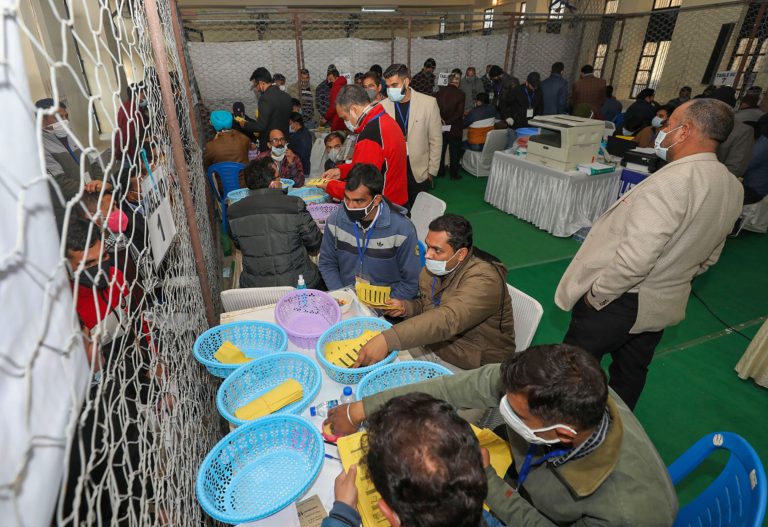
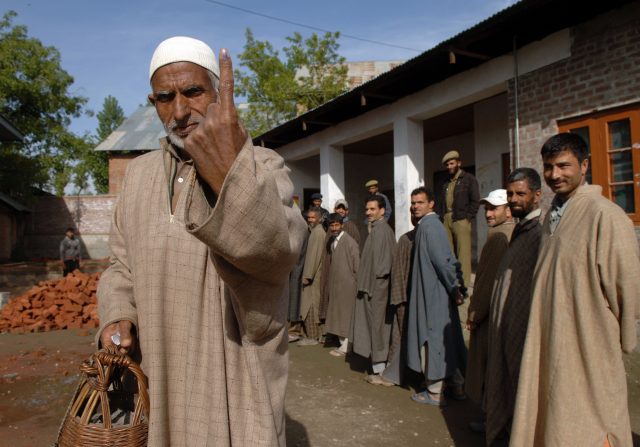
December 10, which coincides with the proclamation of the Universal Declaration of Human Rights (UNDR) by the United Nations in 1948, is observed as the World Human Rights Day. In India, in Jammu and Kashmir, for many years, the day has been marked by protests to project India as an oppressor of human rights on the people of the state. However, this year was different- the day coincided with the fifth phase of the District Development Council (DDC) election in the state, witnessing an overwhelming response from the voters, who came out in numbers and voted enthusiastically. A new concept for the voters of the state, DDC was introduced on October 17 by the Union by amending the Jammu and Kashmir Panchayati Raj Act, 1989, and J&K Panchayati Raj Rules, 1996, with an aim to strengthen grassroots democracy and Panchayati Raj system.

Another welcome event on the occasion was the observance of “National Human Rights Day” by the Legal Services Authorities (LSA) of the Union Territory of Jammu and Kashmir and Union Territory of Ladakh. This was done under the leadership of Justice AM Magrey. Several programmes were held to commemorate the adoption of UDHR.

The recently- concluded DDC elections and a peaceful environment in the newly- created Union Territory has laid to rest all the allegations of Human Rights violations, which has been doing the rounds since decades by some vested interests in the state, with support of inimical foreign forces.  Such fallacious attempts have not elicited any results so far, as they are based on a subjective view and posture. The protests have always been, “full of sound and fury signifying nothing.”

 However, as they say, old habits die hard. Some voices could not be deterred from attempting to vitiate the environment. National Conference President Farooq Abdullah chose this occasion to claim that “unilateral” and “unconstitutional” scrapping of Jammu and Kashmir’s special status has coincided with a steep rise in the infringement of fundamental and human rights in the Union Territory. His statement didn’t elicit much response for obvious reasons- it had a political overtone. 

In the present scenario, where a sincere attempt is being made by the Government of India to usher in absolute freedom and democracy in the region by abolishing the draconian, inhibiting and unconstitutional legislations like Article 370 and Article 35A, voices like those of Farooq Abdullah are at the behest of some very big powers having a vested interest to weaken Kashmir and the whole country.  

Today, Jammu and Kashmir is enjoying the fruits of democracy and experiencing all facets of freedom, which are the basic tenets of a democracy. Political leaders, who had to be detained due to security consideration post the abrogation of Article 370 and change in status of the region in August 2019, are now free and participated actively in the DDC elections.

Another welcome change that has come post the change of status is the marked reduction of violence and disruption in the form of stone pelting, hartals (strikes), bandhs (lockouts), processions etc.  People have realised the fallacy of such disruptive activities that caused loss of life and property. Notably, the wings of the foreign- sponsored perpetrators, who instigated the local population, have also been clipped and their financial conduits sealed.

The people of Jammu and Kashmir should be lauded for challenging foreign-sponsored terrorism with great courage and fortitude to bring normalcy in the UT. Thanks to their courage and incisive counter-terrorist operations, the remaining terrorists are under severe pressure. The best part is that in these operations, ample opportunity for surrender is being given to youth, who have been coerced or misguided into following the self destructive path. In a welcome development, many are availing this opportunity. The peace constituency thus created is giving an opportunity to the local population to move freely without fear or intimidation.

India has a distinguished record in the creation and observance of the UDHR, with New Delhi being a member of the first Commission on Human Rights, in charge of drafting an ‘International Bill of Rights.’ The Indian delegates demonstrated a remarkable degree of magnanimity and foresight in their contributions towards the formation of the UDHR. They were able to translate into words and action lessons learnt from decades of the freedom struggle. The Indian resolution formed was adopted while drafting the UDHR. The UDHR later contributed to the formation of the Constitution of India. In later years, India always stood up for human rights and social justice globally.

India has always been a champion of Human Rights. The problems in Jammu and Kashmir had a foreign signature and were aimed at striking the integrity of the nation. They failed because the country challenged them with the strength of its inherent humanity, righteousness and sense of justice. Human Rights Day, this year, has witnessed a new dawn in Kashmir, a region that has suffered immensely due to rapacious interventions by evil foreign powers.

Rise of a new dawn in Jammu & Kashmir

‘Human Rights Day’ is celebrated globally on 10 December each year. This date coincides with the proclamation of the Universal Declaration of Human Rights (UDHR) by the United Nations General Assembly (UNGA) in 1948. However, for many years in Kashmir, the day has been marked by protests and fallacious attempts to project the Indian state as an oppressor of human rights. This year things have been vastly different. The Human Rights Day coincided with the conduct of the fifth phase of the District Development Council (DDC) elections in Jammu and Kashmir. As the polling for the day began , the State Election Commissioner, Shri K.K. Sharma stated that over 51 per cent of people voted peacefully and enthusiastically across 37 seats that went for polls across the state. 

DDC is a new concept introduced on 17 October by the Government of India by amending the Jammu and Kashmir Panchayati Raj Act, 1989 and J&K Panchayati Raj Rules, 1996. Its objective is to strengthen grassroots democracy and the Panchayati Raj system. The DDC election is being held in eight phases and will culminate on 19 December and the results is scheduled to be declared on 22 December. It is to the credit of the people, the administration and the security forces that the election is being conducted in a peaceful manner. 

Another welcome event on the occasion was observance of ‘National Human Rights Day’ by the Legal Services Authorities (LSA) of the Union Territory of Jammu & Kashmir and Union Territory of Ladakh. This was done under the visionary leadership of Justice A.M. Magrey. Several programmes were held to commemorate the adoption of UDHR.

The peaceful environment prevalent in the state has put paid to all allegations of human rights violations that certain vested interest in the state, with support of inimical foreign forces, attempt to spread year after year. Such fallacious attempts have not elicited any results so far because they are based on a subjective view and posture. The protests have always been, “full of sound and fury but signifying nothing”.

Some voices could not be deterred from attempting to vitiate the environment. National Conference President Farooq Abdullah chose this occasion to claim that “unilateral” and “unconstitutional” scrapping of Jammu & Kashmir’s special status has coincided with a steep rise in the infringement of fundamental and human rights in the Union Territory. His statement has not elicited much consideration since it very obviously and blatantly has a political overtone. 

In the present scenario, where a sincere attempt is being made by the Government of India to usher absolute freedom and democracy in the region by removal of draconian, inhibiting and unconstitutional legislations like Article 370 and Article 35A, voices like that of Farooq Abdullah are at the behest of some very big powers having a vested interest in weakening Kashmir and further the whole of India.  

Jammu &Kashmir today is enjoying the fruits of democracy and experiencing all facets of freedom that being part of a great democratic country like India entails. Such political leaders who had to be detained due to security consideration post the abrogation of Article 370 and change in status of the region in August 2019 are now free and participating actively in the DDC elections in support of their candidates. All people are expressing themselves freely and electing their representatives from the grass roots upwards. Media is covering all issues without inhibition or pressure as it has always been doing; those who insinuate that the media is being muzzled are telling a white lie.

Another welcome change that has come by is the marked reduction of violence and disruption in the form of stone pelting, hartals (strikes), bandhs (lockouts), processions, etc. It is so since the people have realised the fallacy of such disruptive activities that caused avoidable loss of life and property; alongside, the wings of the foreign sponsored perpetrators of these evil activities have also been clipped and their financial conduits sealed. The sponsored nature of the agitations with the help of financial power is now quite apparent.

People have challenged foreign sponsored terrorism with great courage and fortitude to reach to the present situation where it stands virtually eliminated. The few terrorists who are active are under severe pressure through incisive counter-terrorist operations being conducted with minimum collateral damage. In these operations ample opportunity for surrender is being given to such youth who have been coerced or misguided into following the self destructive path. In a welcome development, many are availing of this opportunity. The peace constituency thus created is giving to the people an opportunity to go about their work without fear or intimidation.

India has a distinguished record in the creation and observance of the UDHR having been a member of the first Commission on Human Rights, which was charged with the task of drafting an ‘International Bill of Rights’. The Indian delegates demonstrated a remarkable degree of magnanimity and foresight in their contributions towards the formation of the UDHR. They were able to translate into words and action lessons learnt from decades of the freedom struggle. The Indian resolution formed one of the documents on the basis of which drafting of the UDHR could begin. The UDHR later contributed to the formation of the Constitution of India. In later years India always stood up for human rights and social justice globally.

To insinuate that a civilised and enlightened country like India would do anything that is detrimental to the liberty and rights of its own people is atrocious to say the least. The troubles faced in Jammu & Kashmir had a foreign signature and were aimed at striking the integrity of the nation. They failed because the country challenged them with the strength of its inherent humanity, righteousness and sense of justice. Human Rights Day, this year, has witnessed a new dawn in Kashmir, a region that has suffered immensely due to rapacious interventions by evil foreign powers.

Bedi says no to Jaitley statue at Feroze Shah Kotla

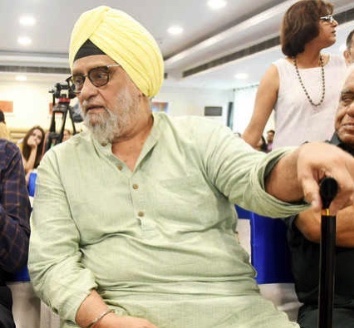
Former Indian skipper Bishen Singh Bedi has protested the decision of the Delhi and District Cricket Association (DDCA), an affiliate of the BCCI, to install a statue of Arun Jaitley at the Feroze Shah Kotla stadium in the Indian Capital. Bedi, considered one of the most outspoken cricketers of his times, has resigned from DDCA in protest.

In a letter to the DDCA president Rohan Jaitley, a copy of which is with News Intervention, Bedi said the following: “It’s WG Grace at Lords, Sir Jack Hobbs at the Oval, Sir Donald Bradman at the SCG, Sir Garfield Sobers at Barbados & Shane Warne of recent vintage at the MCG, who adorn their cricket stadia with the spirit of cricket never out of place. So when the kids walk into these stadiums these majestic statues/busts enhance & enliven the inspiring stories of these past heroes that their elders tell them. Sporting arenas need sporting role models. The place of the administrators is in their glass cabins.”

Bedi said he wrote the letter with a heavy heart & deep sense of embarrassment.

“I’m old enough to know that one doesn’t talk ill of the dead.

“I pride myself as a man of immense tolerance & patience..but all that I’m afraid is running out. DDCA has truly tested me & forced me to take this drastic action. So, Mr. President, I request you to remove my name from the stand named after me with immediate effect. Also, I hereby renounce my DDCA membership. I’ve taken this decision with sufficient deliberations,” wrote Bedi.

Statue of Indian politician Arun Jaitley.

The stadium has various stands named after Virat Kohli, Bishan Singh Bedi, Mohinder Amarnath, and Gautam Gambhir. Another stand is expected to be named in the memory of Chetan Chauhan, a former India opening batsman and DDCA vice-president who passed away this August 16.

The statue of the former Union Minister Arun Jaitley is to be unveiled on his 68th birth anniversary on December 28, 2020. Jaitley was president of the Delhi and District Cricket Association (DDCA) for 14 years, from 1999 to 2013, before he opted out of cricket administration due to the 2014 general elections. 

Presently, DDCA is headed by his son Rohan, 31, who was elected president unopposed on October 17, 2020. The decision to install a statue of Arun Jaitley was taken in the first meeting of the DDCA apex council in October, soon after Rohan, a new treasurer, and four other directors were elected, a source said.

The statue is being designed by the same father-son Suthar duo of Ram Sutar Art Creations Pvt. Ltd and Ram Sutar Fine Arts Pvt. Ltd, which designed Sardar Patel’s Statue of Unity – the world’s tallest at 597 feet — on the banks of river Narmada in Gujarat.

Bedi said his relationship with Jaitley was never quite on the same page. “Let’s say we weren’t really cricketing buddies when he was the President of DDCA. My reservations about the choice of people he hand picked to run the day to day affairs of DDCA is well known. I remember walking out from a meeting at his residence whence he was unable to throw out a rowdy element using terribly foul language. It pains me no end to point out the far from flattering facts about DDCA’s unsavoury past, but trust me it has a context. I was not raised to carry on the fight to the next generation. But I was also taught that if I firmly believe in taking a stand I must stick with it.”

“I pride myself as a man of immense tolerance & patience..but all that I’m afraid is running out,” said the veteran spinner.

“Mr President, if ever you get to travel to the cricket stadiums around the world you will find how aesthetically challenged Kotla is and how it lacks the grandeur of a Test Centre,” wrote Bedi.

Pakistan’s King & his Trumpeter-in-Chief

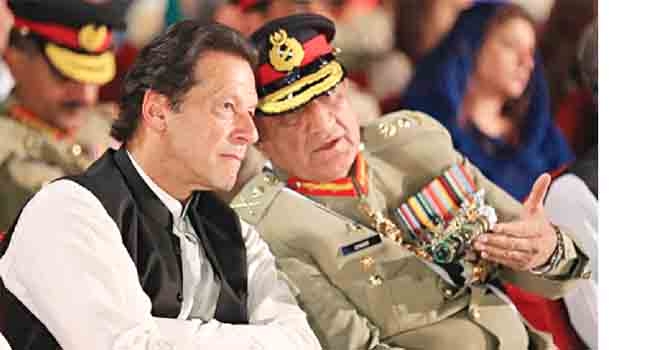
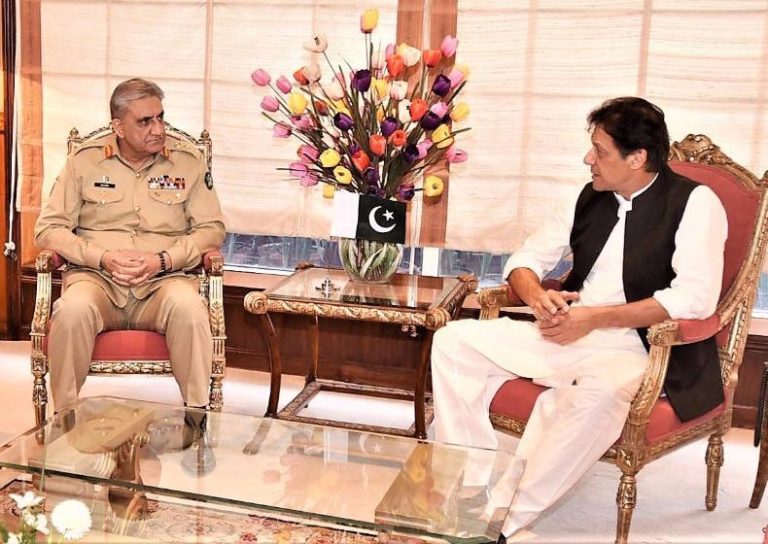
It may be extremely difficult to ascertain whether Pakistan’s Prime Minister Imran Khan has been elected by the people, (or as opposition parties contend), ‘selected’ by the army. But the one thing certain is that the former star-cricketer seems to have been ‘clean bowled’ by the persona of army chief Gen Qamar Javed Bajwa. What else explains his extraordinary determination to take on both the legislature and judiciary to ensure that Gen Bajwa gets a three-year service extension? Why else would he defend the army chief’s unconstitutional antics like holding a meeting with business honchos minus any government representatives, and even going to the extent of holding secret parleys with opposition leaders and that too without any legislature or government representative being present?

Khan’s phenomenal concern for upholding the army’s image by protecting it from slander is really amazing. His party member Amjad Ali Khan tabled the Criminal Law (Amendment) Bill 2020, which reads,“Whosoever intentionally ridicules, brings into disrepute or defames the Armed Forces of Pakistan or a member thereof, he shall be guilty of an offence punishable with imprisonment for a term which may extend to two years, or with fine which may extend to five hundred thousand rupees, or with both.” [Emphasis added]. Human Rights Minister Shireen Mazari did try her best to disassociate the government from this move by tweeting that “Amjad Ali Khan’s bill to amend the PPC [Pakistan Penal Code] is a private member bill.” But not everyone is convinced, as even an amateur Pakistan watcher will agree that it’s inconceivable that a party legislature could table such an amendment without the explicit permission from its chief Imran Khan as well as approval from Rawalpindi.

Protecting the armed forces from being ‘ridiculed’ is indeed a noble idea. But being an issue, which is abstract and relates to perception and interpretation, even healthy criticism of the armed forces for its own betterment can easily be misconstrued as an intentional act to defame it. Accordingly, the proposed PPC amendment will end up becoming the proverbial Damocles Sword hanging over the heads of not only the media carrying factually correct, albeit negative news about the forces, but also well-intentioned social activists whose sole objective is to highlight the truth so that it can set-off the process of improvements within the armed forces.

But how does the proposed PPC amendment measure up in terms of Article 19 of Pakistan’s constitution [which guarantees freedom of speech and expression] is something that remains debatable!

Despite drawing flak from the opposition and earning the dubious moniker of being a ‘selected’ Prime Minister toeing Rawalpindi’s line, Khan continues to go overboard while acting as the army’s goodwill ambassador, in general, and that of Gen Bajwa, in particular, Khan. Au contraire, he has been so passionate about eulogising the army and Gen Bajwa that he forgets where to draw the line and so, invariably ends up exposing its dark side.

For example, two months ago, in an interview with Nadeem Malik on Samaa TV, while roasting his predecessor Nawaz Sharif for having criticised the army chief, Khan spoke about how Sharif had been nurtured by the army and in this process unwittingly confirming Rawalpindi’s historical role of interfering in the country’s politics. Then, in his attempt to project the army as a model of virtue and portray Sharif as the villain, Khan went on to say that his predecessor had issues with all army chiefs because “he wanted to control them.” In any democracy, the legislature exercises control of the army and so, Khan pointing out Sharif’s attempt to do so as something sacrilegious is indeed an unambiguous admission coming from the horse’s mouth that in Pakistan, the army isn’t prepared to accept supremacy of the legislature.

During an interview on Samaa TV on last Friday, when asked whether Sharif’s offensive tirade against the army was causing resentment within its rank and file, Khan heaped lavish praises on the army chief, whom he described as “an uncomplicated man” who “believes in democracy.” Whereas there’s nothing wrong in admiring the personal qualities of an individual, but things sound scary when the Prime Minister of a country says that “There is composure in him [Gen Bajwa], that is why he is tolerating this. There would be a big reaction if somebody else was leading the army.” Because isn’t the suggestion that had the army chief been less tolerant, such criticism would have led to the military taking things into its own hands- what else does “big reaction” mean? This in turn once again highlights the undeniable fact that even the Prime Minister of Pakistan accepts that the army is above the law!

Since Sharif has been found guilty of financial impropriety by a court of law, he deserves no mercy. But at the same time, one expects the same legal yardstick to be equitably applied across the board with any exceptions. So, while one does appreciate the efforts being made by government of Pakistan to see that proclaimed offender Nawaz Sharif is extradited from UK so that he can serve out his sentence, one also expects similar endeavour to get back another proclaimed offender-former army chief Gen Pervez Musharraf, so that he too can face the law! Any discrimination, whether real or perceived, needs to be dispelled because as in 1924, the then Lord Chief Justice of England Lord Hewart had said, “Justice must not only be done, but must also be seen to be done.”

But in a country where senior sitting High Court judge Shaukat Aziz went on record to say that “the judiciary and media have come in the control of ‘bandookwala’ [army]” and that “the ISI forms benches of its choice to get desired results,” expecting that Sharif would be given the same treatment as Gen Musharraf may be a case of great expectations! The Irony is that even though Dunya News, quoting its December 2016 interview with Gen Musharraf, tweeted, “Musharraf speaks out, says Raheel [Gen Raheel Sharif, the then army chief] influenced the govt and helped me out, behind the scenes our judiciary works under pressure,” Justice Siddiqui who had the moral courage to say just as much two years later, was summarily sacked through a presidential reference against him. The lesson learnt is that in Pakistan, rules applicable to an ex-army chief and a former prime minister are as different as chalk and cheese.

Postscript: So, while the law to take its own convoluted course through the minefield of the military and ISI interference, it would certainly do Gen Bajwa’s image some good if he discontinues using the Prime Minister as his ‘trumpeter-in-chief’, as his performance has been a monumental disaster!

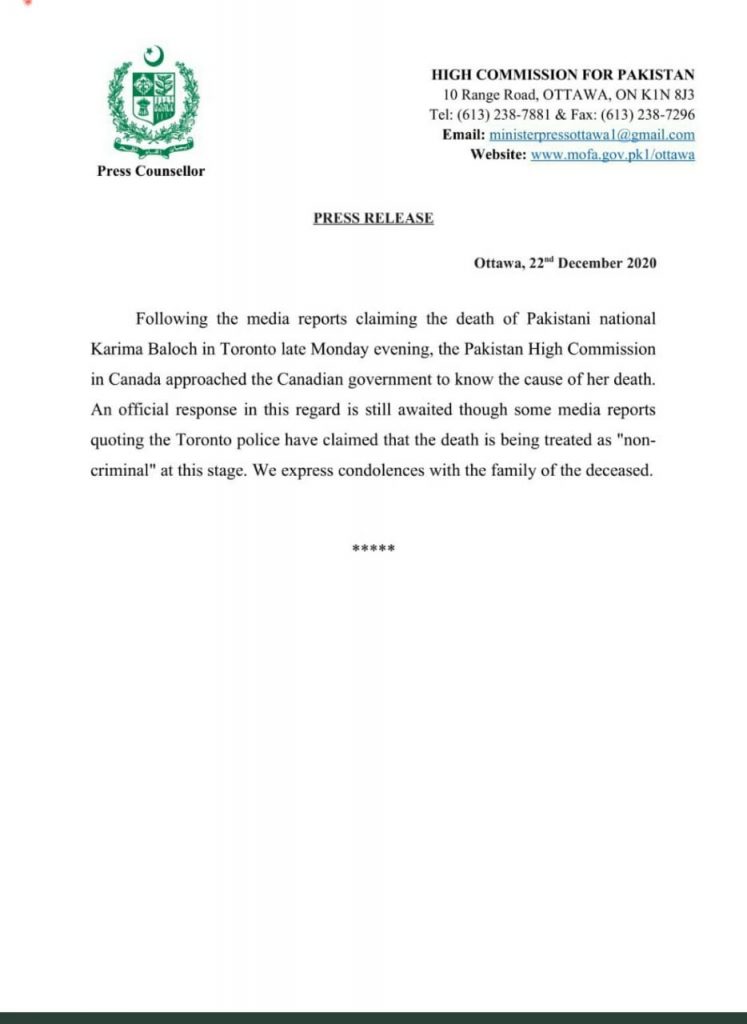
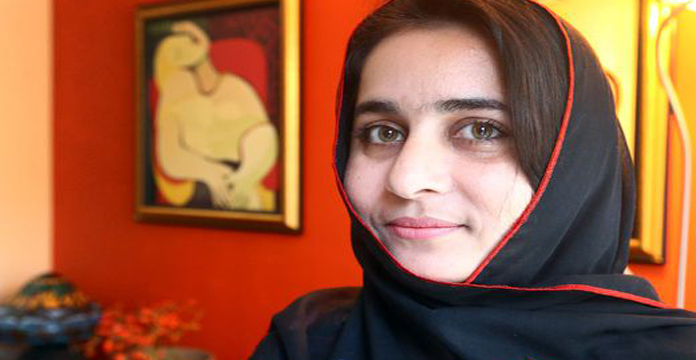
ISI murders Balochistan’s daughter Karima Baloch in Toronto; BNM announces 40 days mourning

The spokesperson of the Baloch National Movement said that the martyrdom of Karima Baloch, a BNM leader living in exile in Canada and former chairperson of BSO Azad, is a great loss to the Baloch nation and the national movement. With the death of Banuk Karima, we have lost a visionary leader and a national symbol. Compensation for this great loss is impossible for centuries.

The spokesperson said that Banuk Karima Baloch had been missing for a day. His body was found by Toronto police in Canada today. The Baloch National Movement has declared 40 days of mourning for the sudden death of its leader and former chairperson of BSO Azad and National Leader Banuk Karima Baloch, and all zones are directed to suspend other activities for 40 days.

The spokesperson said that Banuk Karima Baloch was not only the party leader and former chairperson of BSO but also the first female chairperson in the history of Baloch Student Organization. He took command of the BSO at a time when Pakistani barbarism was on the rise. The organization’s vice chairman, chairman, information secretary and other cabinet members had gone missing at the hands of the state. But the brave leader of the Baloch nation in these difficult times not only led the organization with the best strategy but also rendered significant services to the entire Baloch national movement, and her role for the full participation of women in the Baloch national movement will always be remembered.

He said that Banuk Karima Baloch, due to her courage, bravery and political acumen, will always be alive and will remain as a symbol for the Baloch nation and other oppressed nations of the world. With her ability, commitment and bravery, she achieved a prominent position in the Baloch national movement and internationally. She was named one of the BBC’s 100 Most Influential Women by the leading British broadcaster BBC.

Naturopathy – How Not to be a Doctor and Harm the Public Good

1

Naturopathic medicine is a distinct primary health care system that blends modern scientific knowledge with traditional and natural forms of medicine. It is based on the healing power of nature and it supports and stimulates the body’s ability to heal itself. Naturopathic medicine is the art and science of disease diagnosis, treatment and prevention using natural therapies including: botanical medicine, clinical nutrition, hydrotherapy, homeopathy, naturopathic manipulation, traditional Chinese medicine/acupuncture, lifestyle counselling and health promotion and disease prevention. – Canadian Association of Naturopathic Doctors

Naturopathy is a cornucopia of almost every quackery you can think of. Be it homeopathy, traditional Chinese medicine, Ayurvedic medicine, applied kinesiology, anthroposophical medicine, reflexology, craniosacral therapy, Bowen Technique, and pretty much any other form of unscientific or prescientific medicine that you can imagine, it’s hard to think of a single form of pseudoscientific medicine and quackery that naturopathy doesn’t embrace or at least tolerate. – Dr. David Gorski

Naturopaths claim that they practice based on scientific principles. Yet examinations of naturopathic literature, practices and statements suggest a more ambivalent attitude. NDhealthfacts.org neatly illustrates the problem with naturopathy itself: Open antagonism to science-based medicine, and the risk of harm from “integrating” these practices into the practice of medicine. Unfortunately, the trend towards “integrating” naturopathy into medicine is both real and frightening. Because good medicine isn’t based on invented facts and pre-scientific beliefs – it must be grounded in science. And naturopathy, despite the claims, is anything but scientific. – Scott Gavura (Science-Based Medicine)

Naturopathic training does not prepare them to be primary care physicians. Their profession is not science-based, does not have a science-based standard of care, and is largely a collection of pseudoscience and dangerous nonsense loosely held together by a vague “nature is always best” philosophy.

This is one of those situations where most people will not believe that the situation can be as bad as it really is. This is similar to when I describe to people, who are hearing it for the first time, what homeopathy actually is. They usually don’t believe it, because they cannot accept that something so nonsensical can be so widespread and apparently accepted in our society. The same is true when I tell people about the core chiropractic philosophy of life energy (at least for those chiropractors who have not rejected their roots), or about what Scientologists actually believe.

One common reaction is the “no true Scotsman” logical fallacy. Defenders will insist that what we are describing is the exception, and that a “real” naturopath is not like that. Obviously there will be a range of practice (especially since there is no standard), but the pseudoscientific treatments that make up naturopathy are not the exception. They are at the core of their education and their philosophy. – Dr. Steven Novella

“Naturopathic medicine” is an eclectic assortment of pseudoscientific, fanciful, and unethical practices. Implausible naturopathic claims are still prevalent and are no more valid now than they were in 1968. – Kimball C. Atwood

Naturopathic medical school is not a medical school in anything but the appropriation of the word medical. Naturopathy is not a branch of medicine. It is a combination of nutritional advice, home remedies and discredited treatments… Naturopathic practices are unchanged by research and remain a large assortment of erroneous and potentially dangerous claims mixed with a sprinkling of non-controversial dietary and lifestyle advice. – The Massachusetts Medical Society

Naturopathy[1] is, and always has been, a declaration of pseudoscience and pseudomedicine mixed together with truism dressed-up in cheap makeup to appear legitimate, respectable, even advanced and modern, and real, as per the first statement at the top in contrast to reliable and respected voices following it. Ignorance in a tutu is still ignorance.

It’s not an alternative way of knowing, a different form of medicine, or a novel line of thought. It’s not cheaper than medicine because real medicine works on the cases needing it and, therefore, utilize the finances of patients properly, i.e., effectively.

Naturopaths are not doctors, medical doctors, or real MDs. By peddling nonsense as sensible, they harm the public good and, thus, become a negative force in society, as purveyors of illegitimate practice. Why deal a light critique to individuals harming public in the most important areas of life, for example, medical care or health?

In turn, as self-proposed practitioners for the betterment of the health of the public, they detract attention and legitimacy away from real medical doctors, real medicine, in addition to the finances of the public. If alternative medicine became effective, then it would become non-alternative medicine, also known as medicine. So, what’s the point of it, in the first place?

As noted in “Freethought for the Small Towns: Case Study,” “Canadians’ and Others’ Convictions to Divine Interventionism in the Matters of the Origins and Evolution,” “Making a Buck as a Mountebank – Astrologers, Mediums, and Psychics,” “The Message of William Marrion Branham: Responses Commentary,” “The Fantastic Capacity for Believing the Incredible,” religious fundamentalism, pseudoscience, and pseudomedicine, play off one another, as gullibility in the pulpit informs gullibility in the wellness marketplace, and vice versa.

One ignorance feeds into another. Whether in the local Township of Langley or in the wider province of British Columbia, even in small towns including Fort Langley, this is the nature of the pseudoscience and pseudomedicine landscape. Bad people, even thinking themselves good, bilk the public earning good money, even bad money or minimum wage income.

These individuals and, more fundamentally, fraudulent practices, should be combatted directly, even at the legislative level as they have been enforced in countries like the United States largely through legislative efforts. Why such a directed effort at legislation rather than randomized double-blind trials? Let me know how those homeopathic studies turn out.

In British Columbia, widely, when you do a search, you can find more than 100 places, so associations, colleges, clinics, centres, integrative clinics, medical centres, practitioners, and so on. All devoted to a pseudoscientific practice within one province. All either harming the bank accounts through fraudulent practices, or, potentially, harming the public.

Personally, they should not be able to operate in British Columbia generally, or in the Township of Langley in particular. It’s easily viewable as a wide range of pseudomedicine postulated as real medicine while without proper medical credentials, only fake qualifications, as in ‘real’ to the fake medicine while fake to the real medicine.

There’s a large number of practitioners and clinics of naturopathy, including associations, colleges, and institutes, such as the College Of Naturopathic Physicians Of British Columbia and the BC Naturopathic Association/BCNA.

It’s a – literal – zoo with the number of them. In a general search of the Canadian province of British Columbia, one set includes Dr. Janine Mackenzie ND, Abby Naturopathic Clinic: Dr. Cristina Coloma ND, Horizons Holistic Health Clinic, Edgemont Naturopathic Clinic, Boucher Naturopathic Medical Clinic, Dr. Aggie Matusik, Integrative Naturopatic Medical Centre, Dr. Marisa Marciano, ND, Dr. Melanie DesChatelets ND, Vitalia Naturopathic Doctors Vancouver, Dr. Grodski – White Rock Naturopathic, Dr. Lindsey Jesswein, ND, Noble Naturopathic, Local Health Integrative Clinic, Dr. Carlson-Rink C., Dr. Andrea Gansner Naturopathic Physician, Dr. Lorne Swetlikoff, BSc.,, ND, Polo Health + Longevity Centre, A New Leaf Naturopathic Clinic, Dr. E. D’Souza-Carey, ND – Family Health Clinic.

Another, second set includes Family Health Clinic: Naturopathic Medicine and Midwifery Care, Integrated Health Clinic, Dr. Jiwani, Naturopathic Physician Surrey Clinic (Not Vancouver) Autoimmune Weight Loss, Dr Andrew Eberding Naturopathic Doctor, Boucher Institute of Naturopathic Medicine, Meditrine Naturopathic Clinic, Vancouver Naturopathic Clinic, Selkirk Naturopathic Clinic, Cross Roads Naturopathic clinic, OZONE THERAPY BC: Dr. Walter Fernyhough, Dr. Allana Polo N.D Polo Health + Longevity Centre, Pangaea Clinic of Naturopathic Medicine Inc, Dr Eric Chan, Dr Tawnya Ward, Dr. Rory Gibbons, Naturopathic Physician, Dr. Caroline Coombs Naturopathci Doctor, Dr. Brian Gluvic, Kitsilano Naturpathic Clinic, Agency Health, and Richmond Alternative Medical Clinic.

There there’s the third set with Arc Integrated Medicine – Delta & Surrey Naturopathic Doctors, Dr. Kali MacIsaac, Naturopathic Doctor, Aspire Naturopathic Health Centre – Naturopath North Vancouver – Dr. Emily Habert, ND, Dr. Hal Brown, Red Cedar Health Ray Clinic, Lonsdale Naturopathic Clinic, Metrotown Naturopathic and Acupuncture, Yaletown Naturopathic Clinic, Flourish Naturopathic, Northshore Naturopathic Clinic, and Dr. Jonathon F. Berghamer.

The fourth set includes Dr. Scarlet Cooper, ND., Dr. Terrie Van Alystyne, Naturopathic Physician Whistler, Butterfly Naturopathic, Dr. Jason Marr, ND: Naturopathic Doctor, Peninsula Naturopathic Clinic, Dr. Karen Fraser, Yaletown Integrative Clinic, Serenity Aberdour ND – Horizon Naturopathic Inc, Dr. Tasneem Pirani-Sheriff, ND, Avisio Naturopathic Clinic & Vitamin Dispensary, Dr. Robyn Land, Naturopathic Physician, Springs Eternal Natural Health, Dr. Alaina Overton, Cornerstone Health Centre: Maryam Ferdosian, ND, Dr. Kim McQueen, BSc, ND, Dr. Safia Kassam, and Restorative Health.

The fifth set of them include Dr. Esha Singh, ND, Dr. Bobby Parmar Naturopathic Doctor, Lansdowne Naturopathic Centre, West Kelowna Integrative Health Centre, Dr. Shalini Hitkari, ND, Dr. Jolene Kennett, Naturopathic Doctor, Dr. Karina Wickland, ND, Dr. Phoebe Chow – Lumicel Health Clinic, Dr. Maltais Lise, Vitality Wellness Centre, Dr. Lisa Good, ND, Dr. Heidi Lescanec, ND, Dr. Rod Santos, ND, Inc., West Vancouver Wellness Centre, Dr. Kully Sraw, Naturopathic Physician, Juniper Family Health, Dr. Peter Liu, ND, Garibaldi Health Clinic, Dr. Kayla Springer, ND, and Dr. Donna Ogden, ND, MSc, Naturopathic Doctor.

The sixth – yes, there’s more – set includes Dr. Cortney Boer, ND, Burnaby Heights Integrative HealthCare Inc., Dr. Amelia Patillo, ND, Jamie Sculley, Dr. Ewing Robert J., Central Park Naturopathic Clinic, Dr. Kira Frketich, Living Wellness Centre, Dr. Jennifer Brown, ND, Dr. Randi Brown – Naturopathic Doctor, West Shore Family Naturopathic Ltd., Rejuv-Innate Naturopathic Clinic-Dr. Jamie Gallant, Dr. Tonia Winchester, Nanaimo Naturopathic Doctor – Tonic Naturopathic, NaturopathicVictoria.net, Fourth and Alma Naturopathic Medical Centre, Cheam Wellness Group, Maureen Williams, Dr. Meghan Dougan, ND, Dr. Brittany Schamerhorn, ND, and Dr. Jenna Waddy.

The seventh – almost there – set includes Inner Garden Health, Dr. Brit Watters, ND, Dr. Laruen Tomkins, ND, The Natural Path Clinic Inc., Elizabeth Miller, Dr. Jennifer Moss – Naturopathic Physician, Dr. Penny Seth-Smith, Seeded Nutrition, Northern Centre for Integrative Medicine, Aqua Terra Health, Dr. Kelsea Parker, ND, Maple Ridge Naturopathic Clinic, Newleaf Total Wellness Centre, Vitality Integrative Health, Dr. Orissa Forest, BSc, ND, Acacia Health – Dockside, Dr. Megan Kimberley, Naturopath, Dr. Landon McLean Healthcare, Back to Our Roots Indigenous Medicine, and N.A. Hemorrhoids Centre.

The eighth set is Legacies Health Centre, Kelowna Naturopathic Clinic, Marseille’s Remedy – Traditional Oil Blend, Lani NYkilchuk, ND, Dr. Heather van der Geest, ND, Hummingbird Naturopathic Clinic, Dr. Elli Reilander, ND, BodaHealth, The Natural Family Health Clinic, Dr. Chelsea Gronick, Naturopathic Doctor, Dr. Carla Cashin, ND, Dr. Karen McGree, Saffron Pixie Yoga & Naturopathy, Wild Heart Therapies and Farmacy, Dr. Andrea Whelan, Well+Able Integrated Health LTD., Dr. Kim Hine, ND, Dr. Graham Kathy, Dr. Emily Freistatter, Naturopathic Doctor, Inner Garden Health.

The ninth set is Dr. Emily Pratt, BSc, ND, Inc., Life Integrative, Dr. Michael Tassone, ND, Harbour Health: Massage Therapy, Physiotherapy, Chiropractor, Naturopath, Broadway Wellness, Spokes – Clinical Naturopathy, Dr. Fulton Lynne, Electra Health, Dr. Macdonald Deidre, Ray Lendvai Naturopathic Physicians, Dr. Maryam Ferdosian, ND, Yinstill Reproductive Wellness, Prajna Wellness, Fountain Wellness & Physiotherapy, Qi Integrated Health, Paradigm Naturopathic Medicine, Apex Chiropractic Coquitlam, Kamloops Naturopathic Clinic, Dr. Carmen Anne Luterbach, and Dr. Mar Christopher.

The final and tenth set is Dr. Lawrence Brkich, The Phoenix Centre, Cave Cure & Therapies, Twisted Oak Holistic Health, Coast Therapy Maple Ridge, Balance Natural Health Clinic, Dr. Theresa Camozzi, ND, BC Pulse Therapy, Naramata Lifestyle Wellness-Best Naturopathy, Meditation, Weight Management Centre Okanagan, Acubalance Wellness Centre, Ltd., Dr. Milanovich David, Catalyst Kinetics Group, and Dr. Kimberly Ostero, BSc., ND, and Kontinuum Naturopathic Medicine, Inc.

The obvious benefit in these titles compared to the astrologers, mediums, and psychics, is the appearance of professionalism, while, in a mysterious manner, acquiring an entire reputation based on a fallacious premise, pseudomedicine, in addition to a false title.

It’s less turtles, turtles, turtles, all the way down, and more falsehoods all the way down, and to the top. People with all the accoutrement of the professional and medical world while, in fact, lacking the substance, the content, and so mimicking, or parroting, the forms and stylings of them.

A shame, a scandal in the province, a waste of the public’s dime, a tax on the wellbeing of the province as a whole because real medicine exists, and ignorance without proper medical bases, while idiotic in its proposition and imbibing by the general public. Everyone’s to blame here; while, some are more culpable than others.

This shows both a failure in critical thinking on the part of the public, individuals entering into the schools for training, and a firm action on the part of the proper authorities to regulate public health in such a manner as to delegitimize failed philosophies from the 1800s proposed as modern medicine.

As stipulated, succinctly, by the skeptic Wiki, RationalWiki, the titles of ND in British Columbia naturopaths and naturopathic physicians, self-proclaimed, as in Naturopathic Doctor, does not mean a doctor, a physician, or a medical doctor.

These titles, ND, remain false proclamations of credentials and qualifications, by and large, rejected by both mainstream medicine and mainstream science. These are a manner in which to attempt to co-opt the earned legitimate legacy of modern medical science and modern science, as per credentials, e.g., MD, with illegitimate pseudoscience and pseudomedicine.

In fact, the issue in North America is widespread, as stated by RationalWiki, in “Alternative Medicine Education,” “…there are actually 7 accredited institutions in North America that award this degree (as of 2012), 5 in the United States (Bastyr University, National College of Natural Medicine, National University of Health Sciences, Southwest College of Naturopathic Medicine and University of Bridgeport College of Naturopathic Medicine) and 2 in Canada (Boucher Institute of Naturopathic Medicine, and Canadian College of Naturopathic Medicine). For those who want a shorter route, it is also widely available from diploma mills.”

These individuals will use the title of “Dr.” If you don’t believe me, then I would propose looking at the ten sets above. How often does the use of the term ‘Dr.” get used in the public face of the institutions?

Next, we can ask about the private face. How many? How often? It is probably more, and more forcefully, because “Dr.,” rightfully, earned the title because the education is more difficult and the positive effects on society far more great.

That which was known as health fraud in prior generations through consistent efforts continues to be regarded more as medicine rather than ‘medicine.’

It should be halted, deconstructed, and shown for its farcical foundations and direct, and indirect, harms on the public.

 [1] Even Wikipedia, as a minor resource, it states:

Naturopathy or naturopathic medicine is a form of alternative medicine that employs an array of pseudoscientific practices branded as “natural”, “non-invasive”, or promoting “self-healing”. The ideology and methods of naturopathy are based on vitalism and folk medicine, rather than evidence-based medicine (EBM). Naturopathic practitioners generally recommend against following modern medical practices, including but not limited to medical testingdrugsvaccinations, and surgery. Instead, naturopathic practice relies on unscientific notions, often leading naturopaths to diagnoses and treatments that have no factual merit.

Naturopathy is considered by the medical profession to be ineffective and harmful, raising ethical issues about its practice. In addition to condemnations and criticism from the medical community, such as the American Cancer Society, naturopaths have repeatedly been denounced as and accused of being charlatans and practicing quackery.

BRAS kills 10 Pak Army personnel in Awaran

Baloch Khan, spokesperson of Baloch Raaji Aajoi Sangar said in a statement that at least 10 personnel of the Pakistani Military were eliminated by Baloch freedom fighters in Awaran district of occupied Balochistan. Several other Pakistani military personnel were also injured in the attack on a convoy of military vehicles and motorbikes in Jath Bazar, Kolwah.

“The enemy forces were targeted when they were carrying out an operation against civilians in the area. These forces have carried out similar operations in the area in past forcing thousands to abandon their ancestral homes,” Baloch Khan said in his statement.

BRAS (Baloch Raaji Aajoi Sangar is an alliance of four Baloch revolutionary armies — Balochistan Liberation Front (BLF), Baloch Liberation Army, Baloch Republican Army and the Baloch Republican Guard. All these organisations are jointly fighting for the independence of Balochistan from Pakistan.

Baloch Khan added that Baloch freedom fighters (Sarmachaars) are always prepared to defend Baloch civilians and their interests. The occupying forces, their agents and all exploitative projects will continue to face severe attacks.

I never wanted a ‘size zero’ figure. And yes, I am perfect

1

All through my life, I had suffered from weight issues. No matter what size I was, I was never thin enough! I struggled with body issues since the time I learnt about waistlines and cellulites. I would not even look at the mirror as I hated my body and how it made me look. Nothing suited me and I was envious of women who had the perfect figure or a slim body. I would look in the mirror and suck in my stomach until I couldn’t breathe.

I hated the way I looked and never felt comfortable in my skin. I was more comfortable wearing baggy or very loose clothes throughout my life. It was very frustrating and depressing. There were days when I would starve myself in the name of dieting. What made things worse was being body shamed by people around me. I recall instances where a close relative told me that I would never become thin in life and I had more chances of contriving diseases sooner than other unhealthy people.

Often women are perceived and assumed to be lazy, unfit or eat unhealthily if they are bulky or are simply fat. But it isn’t as simple as that. I personally after my second pregnancy felt physically tired and exhausted most of the time. I realized later in life that I was suffering from what is called ‘postpartum depression’.

However, one good thing was that I always had faith in me that I would someday overcome this issue sometime in my life. I had attempted all kinds of fad diets like the keto diet, intermediate fasting to name a few, but it wasn’t until I trusted and began on home cooked or balanced meal along with proper workout. Also not to forget the importance of good sleep and rest. I learnt with time that there is no easy way or quick fixes to lose weight.

With this realisation, I took control of my health and started working out and taking a balanced diet. During my weight loss journey, my husband became my only support. His helped determined me further. For almost many weeks I did not see much changes in my body and weight but I did not lose hope. I consistently focused on myself and continued with my new regime.

Soon everyone around me noticed the changes in me. I lost more than 30 kg and body goals were achieved. This achievement was possible because I learnt the importance of being healthy and became the healthier version of myself. I also learnt that working out and eating healthy can be fun. There’s not a single day since I started working out that I have skipped being active. Even if I do not exercise properly I still maintain my 10,000 steps every day. I do light walks, dance or play with my kids.

Divya Burman had to face body-shaming for being overweight (left photo), but with a positive outlook she has transformed herself and now leads a healthier and happier life (right photo).

My day starts with one hour workout. Initially, when I started working out I started walking and then joined aerobics and Zumba classes. There I found my interest in dancing as a workout. So its always important to do what you love otherwise one tends to get bored with the same kind of exercise and very easily gives up. My classes continued till everything came to a halt due to COVID-19. All the classes and gyms were suspended. Fortunately, until the pandemic I had already had the habit of working out so I didn’t require external motivation any more and started practicing what I had learnt and found Google to be helpful in trying to find fun ways of working out at home. During this time I lost most weight while still eating a healthy home-cooked meal.

I am enjoying the best time of my life as peoples’ opinions hardly matter anymore as opinions are there to stay. Today, I don’t need anyone to tell me how beautiful I look or I don’t need any particular outfit to make me look pretty. I am not size zero today and never wanted to be. But what I learnt is to love yourself unconditionally as beauty comes in all shapes and sizes.

An Edge of Heterodox Economics 1 – Everything has a History

1

Dr. Carolina Cristina Alves is a Joan Robinson Research Fellow in Heterodox Economics at Girton College at the University of Cambridge, a co-founder of Diversifying and Decolonising Economics, and an editor of the Developing Economics blog. She sits on the Rebuilding Macroeconomics Advisory Board, the Progressive Economy Forum Council and the Positive Money. This educational series will focus on Heterodox Economics with emphasis on heterodoxy, Dr. Alves’s research, the current research situation, and decolonizing economics. Here we talk about the necessity of Heterodox Economics.

Scott Douglas Jacobsen: Today, Dr. Carolina Alves joins us. She is the Joan Robinson Research Fellow in Heterodox Economics at Girton College at the University of Cambridge. This educational series focuses on the subject matter of Heterodox Economics covering the expertise of Dr. Alves. We will emphasize heterodoxy regarding economics, where mainstream economics becomes ‘homodox economics,’ the broad strokes of Dr. Alves’s research, the current developments or situation in Heterodox Economics, and then aspects of decolonizing economics. To begin today, when an individual enters into the field of economics, what is economics?

Dr. Carolina Christina Alves: Economics as a discipline has had many definitions through time. These definitions, often, understood economics as a discipline concerned with the creation, appropriation, and distribution of wealth, where the social and political contexts were of equal concern to economists. However, as the discipline evolved, we saw growing debates around what economics is, with tensions, for example, related to the scientificity of economics and its normative and positive aspects. 

It was not until 1932, with Lionel Robbin’s An essay on the Nature and Significance of Economic Science, when the profession seemed to head to an agreement on the definition of economics. With a view understanding that the technical condition of production and the history of the social construction of the ‘means’ are not directly part of the occupation of an economist, Robbins argues economics is “the science which studies human behaviour as a relationship between [given] ends and scarce means which have alternative uses.”

Robbins’ definition of economics is widely used and accepted. Thus, nowadays, there seems to be no doubt that economics narrowed down to studying human behaviour in the distribution of scarce means, with a focus on market analysis and choices. 

Jacobsen: Following from the previous question, how is this considered mainstream or ‘homodox’ economics, henceforth economics or orthodox economics? “Orthodox economics,” in this sense, is descriptive, not pejorative. It is the mainstay of economics.

Alves: Modern economics, or what we call orthodox economics, is about studying human interaction mainly through markets, where markets are theorized as being about the interaction between demand and supply, with equilibrium as a central concept and enduring reliance upon methods of mathematical modelling. This approach went to become ‘the mainstream economics,’ as it is the main and widely taught and researched approach. 

An important point here is that the definition of economics cannot be separated from the methods and methodology used by economists. It is not a coincidence that Robbin’s Essay paved the way for a decade where economic methodology would be widely questioned. Engagements with Robbin’s Essay focused on issues of economic theory versus empirical analysis, how economic theory is to be conceived, and the role of ethics in economics. It is not a coincidence either that Robbin’s definition came to ‘stay.’ As Backhouse and Medema (2009) argue, insofar as the Robbinsian conception deals with the influence of scarcity and human behaviour, it becomes an analytical definition. As a consequence, it allows for regularities and the homogeneity of the market economy. For  Wootton (1938), a fierce critic of Robbins’ definition, it is like if all market processes ought to have a certain objectivity comparable to the regularities of the natural world, so that changes in the market can be predictable and show uniformity – not being subjected to ‘arbitrary caprice.’

For this reason, Robbin’s definition fitted very well to a familiar argument dating back to Walras’ and his idea that economics would gradually evolve into a scientific discipline similar to hard sciences, with economic laws being rational, precise, and as incontrovertible as the laws of astronomy. With a trend drifting economics towards a more inductive approach, largely limited to understanding social behaviour through the lens of equilibrium solution of mathematical models, the scientificity brought by Robbins wrapped in the ideas of equilibrium and generalization about human behaviour represented a happy – albeit some may argue unnatural –  marriage that has since then flourished and become stronger. 

There were many events in the last century that contributed to strengthening this marriage, which could be summaries in terms of a formalization and also uniformization of the economics profession since the 1950s. In this process, not only economics became apolitical and ahistorical, but also economists uncritically accepted the standard choice of taking market equilibrium and human rationality as the starting point of their analysis. This context led to the definition of orthodox economics mentioned above and to an increasing number of economists thinking of themselves as modellers, ‘simplifying’ reality through models and invoking the necessary assumptions regarding equilibrium, representative agents, and optimisation (see also Alves and Kavangraven, 2020).

Jacobsen: What made Heterodox Economics come forward into the fray of economics discourse?

Alves: Heterodox Economics, in the modern sense used, can be traced back to the 1960s; although not many economists, at the time, would not put their hands up and call themselves heterodox economists. The 1960s and 70s experienced the developments mentioned in the previous questions as a gradual and constant exclusion of theories and economists whose intellectual traditions did not lie within what would become orthodox economics. From institutional, evolutionary, and feminist economics to Marxian, Keynesian and structuralist economics, these years witnessed the formation of various different communities of economists who at the time were not necessarily connected or self-identified as heterodox (See Lee, 2009). 

The stronger the movement narrowing down the definition and methods within economics, the greater was the need for other approaches to find a new home, institutional support. Therefore, it should not be a surprise that we see the Union of Radical Political Economy being founded in 1968, the establishment of Post-Keynesian Economics from 1970 onwards, the creation of the Council for the Development of Social Science Research in Africa (CODESRIA) in 1970, and efforts to revive and develop the Association for Institutional Thought (AFIT) in 1979. 

The political, institutional, and ideological marginalization of other approaches and ways to do economics was violent; it did not take long for these communities to start claiming the need for pluralism within our profession. By the 1980s and 1990s, there was a slow integration of these various communities, which can be seen, for example, with the creation of The International Confederation of Associations for Pluralism in Economics in 1993, the Progressive Economics Forum in 1998, the Association for Heterodox Economics (AHE) in 1999 and the Society of Heterodox Economists in 2002 (See Lee 2009). Meanwhile, new heterodox organizations kept emerging, such as the European Association for Evolutionary Economics (1988) and the International Association for Feminist Economics (1992).

So, heterodox economics comes forward into the fray of economics discourse due to a battle within the profession over who defines and shapes the economics researched and taught in our field. The term is a large umbrella that will continue to expand as long as orthodox economics carries on being narrow and intolerant towards other approaches to economics.

Note, some economists like to argue: heterodox economics is everything that is not orthodox economics; it is a self-definition in terms of the other. Swiftly referring back to the etymological meaning of the word, Wikipedia or dictionaries, these scholars are adamant that no other definition is possible. This is wrong. If anything, it implies an economics that emerges as a sort of reaction to mainstream economics, which is not accurate, as approaches under the heterodox economics umbrella go way back to any coherent idea of mainstream economics. 

Further, to think that heterodox economics can be defined by the negative denies agency to a rich and useful bunch of research that, quite frankly, could not care less about what’s happening in the orthodoxy of economics. Finally, in social sciences, one can only wish that concepts used to try and make sense of a word can be reduced to dictionary definitions.

Serious thought about what heterodox economics is starts with an investigation of when and how heterodox economics became a consistent and identifiable object. Two aspects stand out here: 1 –  to trace back the term in history (where we look into the intellectual history of the term – how and when the term was first used and so on); and also 2 – to understand how different communities of economists started organizing themselves (that is, the sociology of heterodoxy). 

In this sense, although the term heterodox economics can be traced back as far as 1863, the key point for us is that the more economics started narrowing down its methods, theory, and approaches during the last century (to then go and become essentially mathematical modelling and econometrics), the more other ways of doing economics were excluded from departments, syllabuses, funding, and journals. 

These [excluded] economists essentially started looking for a home to live. That’s why the term is of crucial importance for our current historical moment. To think that the term is a mere definition of what is not is to overlook the institutional power within the discipline itself; it is to be complacent to the exclusion of many equally ‘rigorous’ and ‘legit’ economic approaches.

Jacobsen: In particular, what makes Heterodox Economics necessary for the advancement of the universe of discourse seen in homodox economics?

Alves: Pluralism of methods and ideas is key for the progress of any social science. Despite enjoying being the queen of social science, economics is not exempt from these dynamics. Mainstream economists like to argue that we are where we are because of the ‘evolution’ of economic ideas. Something like an evolutionary process where other approaches to economics were not able to survive. This could not be further from the truth, especially considering that these approaches were systematically excluded and marginalized. 

Also, it is quite problematic to assume that one single approach and method is enough to understand social reality. Authors such as Colander (2009) and Coyle (2013) argue that the profession has been more open. For them, the inclusion of endogenous growth theory, behavioural and experimental economics, complexity economics, and other theoretical innovations have reduced the dominance of mainstream economics. Although this may be partially true – and, indeed, there are criticisms of economics coming from within – we have to ask ourselves two questions: 1) the extent to which these criticisms mean that economics, at the research and teaching level, became more open to different ways to do economics, to different communities of economists that are not placed within the mainstream basket; 2) the extent to which these changes also mean changes at the very core methodological assumptions and theories of orthodoxy. That is, are these changes and criticisms challenging mathematical deductivism, the idea of rational actors, selfish individuals maximizing their own interest, individuals as the units of analysis, the equilibrium state of the economic system, and so on?

Diversity of approaches and methods is necessary for our field. Both orthodoxy and heterodoxy have the same object of analysis, the economy, but their tools and assumptions are different, which can then lead to different policy recommendations, conclusions. We need a rich and vibrant intellectual environment where competing approaches allow us to see all the options available to tackle an economic problem. We need a situation where Queen Elizabeth II would not knock at the LSE door asking, “Why did no one see it coming?”, but, rather, “Why did orthodox economics not see it coming;  what is the heterodoxy saying about all this?”

My brilliant co-author, Ingrid Kvangraven, whose ideas have helped and shaped most of the arguments expressed in this interview, and I have been forcefully vocal about the need to both i) acknowledge the existence of heterodox economics as a body of economists who rely on different methods and theories to analyze the economy, and ii) bring this body of economists together. This is partially a political strategy to reclaim a rightful space within departments of economics and partially a genuine attempt to open up the profession with the aim to build a more inclusive, just, and fair society.

For this reason,  we have engaged in a bumpy path to look at the history of heterodox economics and these different communities of economists to try and define heterodox economics. In stark contrast with the definition by Robbins mentioned at the beginning of this interview, for us:

heterodox economics is concerned with the study of production and distribution of economic surplus, including the role of power relations in determining economic relationships, the study of economic systems beyond market relations, and the employment of theories focusing on these issues (Kvangraven and Alves 2019)

Jacobsen: Thank you for the opportunity and your time, Dr. Alves.Alves: My pleasure! Thank you very much for inviting me.

Photo by NeONBRAND on Unsplash

Male ‘Religious’ Misfits: or, Man on Mammon, God Gone Dogged

0

Christian is a Philosopher that comes from Belgium. What identifies him the most and above all is simplicity, for everything is better with “vanilla ice cream.” Perhaps, for this reason, his intellectual passion is criticism and irony, in the sense of trying to reveal what “hides behind the mask,” and give birth to the true. For him, ignorance and knowledge never “cross paths.” What he likes the most in his leisure time, is to go for a walk with his wife.

Scott Douglas Jacobsen: With this American election ongoing, what is the most striking fact of the American situation now?

Dr. Christian Sorensen: I think that the most surprising, is the fact to perceive a polarized society, between parts, that defend what I will name as individualistic rights, and that fight, as counterpart, for social rights, by voguing what for me is an integrationist society, in the sense of being one, more humane and just, not because of a liberalism ill-conceived, but because commonwealth prevails, in what I understand as the good of the people, in contrast to what would be personal good, which leads in the case of the last, to social self-referentiality, and therefore pushes to conflict, in the context of disintegration, in consequence, ultimately unable to reach synthetic terms as plausible instances, from prior antithetical premises.

Jacobsen: There have been direct restrictions and repeals of women’s reproductive rights. Mostly, this happens with male leaders. Which isn’t saying much because, most leaders in the world are male. So, maybe, a more interesting line of thought is the following question: “Why those particular male leaders, e.g., Jair Bolsonaro, Donald Trump, Recep Tayyip Erdoğan, Abdel Fattah el-Sisi, Xi Jinping, Vladimir Putin, or Rodrigo Duterte, and so on?” So, Christian, why those particular leaders?

Sorensen: What happens, is because most of these leaders are Christians, and if not, they’re close to some kind of religious fanaticism. All of them have in common, the fact of always climbing over the rights of women, since they have the will, of turning them, into what I will name the apple of discord, since they have perceived them as threats, because from the optical prism of a patriarchal society, and according to their philosophy of life, they firmly express the possibility of women to master their own body, which would imply in turn, a feminine self-sufficiency, that in time, due to an increasing disappointment, can reach to dispense with masculine need, and further carry, the loss of control over the gift of life, due to the reason, that if this logical sequence is followed, then the right to life, would be intrinsically linked to the reproductive rights of women.

Jacobsen: Looking at the consequences of the actions of these individuals, the general tale is one of oppression or suppression of the majority of the population to prevent garnering more equality with the richer minority of the population. Is it all about mammon? Have these, excluding China, highly religious countries succumbed, surrendered to both the temptation of mammon and God?

Sorensen: They have established, what I will name the eugenics of richness, since relying on different resources, that are used for mass extermination, such as it could be the current or other pandemics, which regardless of whether they have caused them or not, they have known well how to utilize these, as control mechanisms, in order to achieve said end, which ultimately is a covered expectative, for eliminating anything human, that humanely can hinder any minority of humans, especially, if they succumb to necessity, since the last would be highly threatening. Nevertheless, what’s not generally noticed, is the fact that the richest, are the only ones who place the burden and yoke, at the same time that they naively convince themselves, of being forced to bend their will, in order to subsidize subsidiarily the neighbor, meanwhile they have been artificially creating since ever, the unequal distribution for everything that could be invested, with feelings leading to the possession of something, and therefore, to the suffering associated with the state of lackness. In other words, some men have placed man, at the center of its own maelstrom and nightmare, by wanting to make him believe, that he’s fighting against the arms of giants, when actually what he has in front, are just the blades of windmills that turn. In this sense, it could be said, that minorities determine and control the destiny of the majorities, which paradoxically is exactly the opposite, of the principle that rules democracy, because in pragmatic terms, in my opinion, what occurs is that the richest, represent God in the world, and consequently, these are the ones who define, existentially speaking, the significance of desire, the object towards which it is cathected, and the goal to which it is headed. Therefore, strictly speaking, and contrary to what it’s commonly believed, it’s not the minority, who succumbs to the temptation of wealth and to God, but on the opposite, they have become God, and then, the temptation of wealth, has been placed in front of the vast majority, since when man, recognizes the existence of a reality that’s beyond the numerical unity, is when the imperiousness of necessity appears, and in consequence, is then this is what leads the majority, to fall into the idolatry of a small God, who basically is any other fellow man, to whom is given the character of omnipotence, for the simple fact of possessing what awakens the desire, but whose only need and temptation, respectively, is the need of the most needy, and their paralyzing feeling of resignation.

Jacobsen: What is the utility of international rights organizations and the United Nations now?

Sorensen: I think it depends, because the United Nations sometimes works with a quota system, that obeys to underlying political interests, which have nothing to do with their natural functions, while some international human rights organizations, also exhibit biases in favor of certain ethnic groups, which demonstrates as such, a sort of invisible bad marriage of convenience, with certain interest groups, respect to whom, they have ideological or political affinities. Under this frame of reference, I think that both fulfill what for me, would only be instrumental objectives, that are at the service of third parties, who telemetrate with an iron hand, these organizations, for placing them far away from their original missions, which in turn, derives in practical and ethical consequences, since a significant number of issues, related with the inhumane conditions of victims, who suffer the scourge of some type of oppression, remain adrift. The aforementioned, enables to state, that fundamental rights, are being constantly trampled, in front of their eyes, which means in concrete, that United Nations and international human rights organizations, are perfectly aware of everything around them, but simply they want to ignore what is happening, and act as if they weren’t knowing anything, which is the same, to say that coincidences do not exist, because when human rights violations appear everywhere, as if it were by chance, what has occured, is that these organizations, in order to follow faithfully the framework of international cooperation agreements, or to remain under the umbrella of certain cultural and religious beliefs, they actually see, out of the corner of their eye, all these catastrophes, nevertheless, they have preferred to let them pass, or directly and unfortunately, to let them pass away.

Jacobsen: What isn’t a utility in them? They are flawed organizations after all.

Sorensen: I think that the fact that these are defective organizations, in no case, makes them a cause for scandal, because like any other organization, they are made up of human beings, and therefore, are inherently imperfect, although they can progress, and then they’re perfectible, nevertheless the aforementioned, does not justify, regarding the pragmatic purposes pursued, the high level of distortions reached within their structures, which as such, is something completely different, from the fact of being defectives or useless under some aspects. In other words, what is ethically reprehensible about them, is their denialist attitude in front of abusive situations, that are linked, in my opinion, with their vested interests and secondary gains, that in some sense, allow them to get a slice of the cake, and leads these organizations, not to want to recognize nor to assume a reality, that irrefutably demonstrates, severe violations of basic human rights, which are morally and politically unacceptable, in a society that proclaims itself, to be culturally and ethically avant-garde.

Jacobsen: With the decades of embarrassment of Christian sects around the world, what will become of their image in the 2020s?

Sorensen: I think that currently, one of the difficulties that Christian sects face, in addition to being, in the particular case of the Roman Catholic Church, an extemporaneous religion, is the fact that they do not have any image, and therefore, that actually they have nothing to project of themselves anywhere, in this sense, I think that what has evolved within them, is what I will name the phenomenon of transfiguration, since there’s an absence as form of form’s negation, where there isn’t any possibility of retaining nothing within themselves, in terms of a determined generator of contents as figures, therefore Christians show, by going through supposed images, and eclipsing of senses, that is to say, the expression of something that specularly is not equivalent, because what is seen from the inside, ends up not being, what is seen from the outside, and in consequence finalizes not being nothing in absolute, in this manner, what has occurred to these sects, is that they have fallen, from their level of figurative image, because of a irreparable break point, that drives them into a process of unstoppable dissolution, which will be given, by what I’m going to denominate phenomenon of identity diffusion, since carries within them, a crisis of self-concept, and of sense of internal coherence, due to the intricate web of aberrations, in which they have been implied, and that lastly, has sealed their destiny, not only in a moral sense, but also from a gnoseological perspective, because Christian sects, have intended to confront, what for me, are essentially incompatible polarities, that along time, not only have not been able to integrate, but that they have also brought in the après quoi, with some lines of expression on their faces, which translates, as those facts have been already consummated, which ultimately means, that each time, they are more screwed and perturbated, when it comes to wanting to generate, dogmatic precepts and ethical values. In consequence, beyond the manipulative efforts, through which, Christian sects try to seek communicational strategies, for discovering conquering formulas, in order to raise a downcast image, what’s happening, is that their failure of coherence and false truths, has been internally converted, in a rupture of unity, that has thrown them, towards a dynamic of continuous deterioration, that I will name process of progressive spoiling, since by it, they’re going to continue expressing, instances of degradation, which will work as cumulative strings, that will turn them into landfills. The aforementioned means, that the more Christians try to correct their deviations, greater is going to be the intensity of these manifestations, therefore within the near future, they will hatch, due to saturation, with other signs and symptoms, which are going to obey to a second process, that I’m going to denominate, involution on behalf of the anguishing splitting.

Jacobsen: How will this impact the political situations in many countries where religion is political, is politics?

Sorensen: In countries where religion is political, politicians have historically established, with extraordinary success within their population, what for me is the dialectic of master and slave, since through it, they have managed to subdue the people, by stagnant mechanisms of educational and cultural precariousness, that have driven them to act, more as collective masses than as thinking subjects. Probably this paternalistic and political strategy, that is founded on figures, who present themselves with omnipotence, will be seen as saviour of nations, since people need to project their patriarchal religious beliefs and feelings onto it, nevertheless and paradoxically, it will begin to succumb progressively, once they recognize, what has kept them numbed and duped, within the terror of Christian theocracies, although there’s also a latent risk, because they can become politically and existentially disoriented, if there is no other worldview able to confort them, and therefore, that’s capable to take the place of a Christian paradigm, that didn’t have much more to give. In this sense, I think that it is essential, to strengthen the channels of quality education in these countries, taking into account the fact, that besides, this is one of the fundamental human rights, which if it’s taken widely, not only should be focused in the development of cognitive resources, but that also must promote, the consolidation of democratic and civic values, which may enable them, to get out, of what for me is the entropic political vicious circle, to whom the vast majority of these Christian countries, have been praying, and paying religious orders for more than a century.

Jacobsen: Thank you for the inside insight in sight on this site, Dr. Sorensen.

Sorensen: Looking forward that reflects the inside, you’re welcome, Mr. Jacobsen.

Image Credit: Christian Sorensen.