Actor
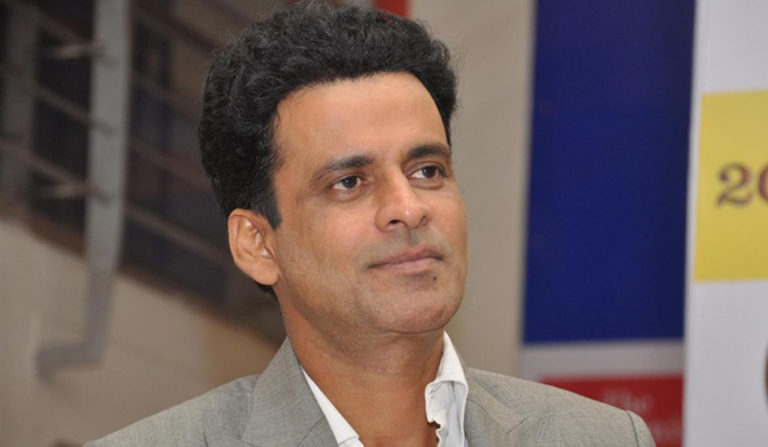
Manoj Bajpayee has condemned the terror attack on a CRPF convoy in Jammu and
Kashmir that claimed the lives of at least 40 soldiers, saying one will fall
short of words to express his anger over the dastardly act.
“What
has happened in Pulwama is very sad. My prayers are with the families of
soldiers who have lost their dear ones. Their loss is irreparable. Words will
fall short to express our anger for this kind of heinous act. As far as the
anger of the people is concerned, I can say the government will take the right
decision and we all should have faith in the government and support it in such
circumstances,” Bajpayee told reporters here at an event on Friday.
He
was talking at Cine and TV Artistes’ Association (CINTAA) and 48 Hour Film
Project’s first edition of ‘Act Fest 2019’.
The
Pulwama terrorist attack points to a dangerous new trend of militants
jettisoning ambushes for tactics with an aim to wreak maximum destruction on
security forces while suffering minimum casualties themselves. The suicide
bomber, Adil Ahmad Dar, a 20-year-old school dropout from Pulwama, who
joined Jaish-e-Mohammad (JeM) last year was specifically
trained for the suicide attack. He said in a video released by the outfit
that he was eagerly waiting for this day. What followed was a year of
reconnaissance and detailed planning, which culminated in Dar ramming a car
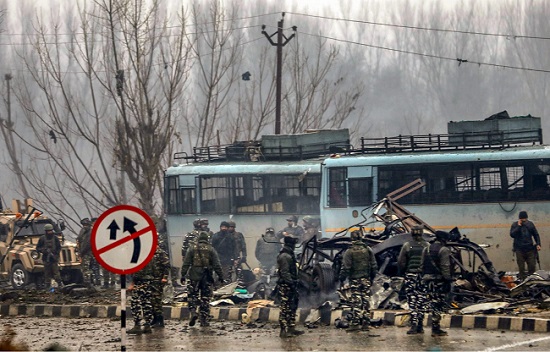
packed with around 300 kg explosives into a CRPF bus carrying 51 soldiers as
part of a large convoy. The JeM claimed responsibility for the attack.
It
is quite apparent that JeM has been drawing inspiration from Taliban and Al-Qaeda,
which have been conducting large scale IED (improvised explosive device) blasts
and suicide attacks in Afghanistan and Pakistan. The attack also has a
signature of the Islamic State (IS) modus operandi which rests on
mobility and volume for the success of suicide bombings.
The
conventional modus operandi for Fidayeen
(suicide) attack in Jammu and Kashmir involved constituting a small group
of militants who broke into the target area (normally military installations) causing
heavy casualties in the initial breakthrough followed by engagement with the forces
for as long as possible. But, with a shift in tactic of the militants to
Vehicle Bound Improvised Explosive Device (VBIED) suicide attacks, the security
forces are bound to devise plans to deal with them.
Prime
Minister Narendra Modi was quick to ensure the nation that the “sacrifice of martyred
soldiers will not go in vain” and the perpetrators of the attack (Pakistan)
will be made to pay a heavy price. The government then convened a meeting of
the Cabinet Committee of Security (CCS) and also an all party meeting where it
was assured of unmitigated support by all political parties in opposition.
In
the initial reaction, the Most Favoured Nation (MFN) status given to Pakistan
by India was withdrawn which is likely to stall trade between the two countries,
a substantial part of which is being carried out from Kashmir. Indian diplomatic
outreach to other countries led to a strong international condemnation of the attack.
Many big countries stood behind India and expressed their support.
Pakistan
believes that its successes in Afghanistan can be replicated against India with
particular reference to Kashmir Valley. Pakistan’s ISI has, for decades,
attempted to turn Kashmir Valley into India’s Vietnam but could not do so. The
simple reason is that the bulk of the people of Kashmir Valley, with the
exception of the hard-line fringe elements, root for an existence within the
framework of the Indian Union albeit with a certain degree of freedom to
maintain their unique identity and culture.
China,
for its own national security interests and safeguarding the eastern flank of
the China-Pakistan Economic Corridor (CPEC) passing through Pakistan-Occupied
Jammu and Kashmir (POJK) has deliberately synchronised its aims with those of
the Pakistan Army so far as Kashmir is concerned. While it does not openly
support the terror machinery operating from Pakistan in Kashmir, it has also
never condemned it. It has stalled the declaration of Masood Azhar as a global
terrorist and it is Azhar’s organisation that has now carried out this horrific
attack.
China
has condemned the Pulwama attack but once again declined to back India’s
appeal to list its chief architect Masood Azhar as a ‘global terrorist’ by the
UN. It can be said with a fair degree of confidence that China’s intentions
towards India have never been “benign” and are unlikely to be so in the near
future.
While
the aftermath of Pulwama attack sucks in many countries across the globe,
especially Pakistan and China, the average Kashmir is looking at a long haul of
insecurity and economic despondency. Enhanced security measure will make normal
life in Kashmir all the more difficult. Kashmiris working in other states of
the country are already facing attacks and living in an environment of
insecurity. Any escalation of military engagement will impact Jammu and
Kashmir, especially Kashmir, the maximum.
While
it is necessary to take all steps to rein in Pakistan it also needs to be
ensured that the average Kashmiri does not suffer in the process to a degree
that further alienates him. Reasonable restrictions on movement are something
that can be accommodated even though the present scenario is restrictive
enough. However, a massive intelligence crackdown, escalation of foreign
sponsored violence, enhanced economic restrictions would be very painful indeed
for the Kashmiris. In such a scenario the entire exercise of “teaching Pakistan
a lesson” would become counterproductive. All actions taken need to be weighed
for their ability to save future generations from decades of animosity. Nothing
should be done which causes many more Adil Ahmads to be born leading to Islamic
State (IS) and the JeM finding firm roots in Kashmir yet again. The government
of India should formulate a policy that looks towards the greater cause of stopping
bloodshed in Kashmir. Protagonists needed to compromise for the greater common
good. Kashmiri youth at risk of radicalization should be shown alternatives
through an exchange of ideas.
Film actors erroneously defend wearing a hijab as ‘freedom of choice’. If this ‘freedom’ to make a ‘choice’ becomes available only to privileged few and a select group of women in positions of power, then it no longer remains ‘choice’. Mullahs take a cue from the celebrities in Hijab, and create an ecosystem for institutional oppression of Muslim women.
India’s
Hindi film industry, popularly known as Bollywood, has made remarkable progress
in depicting women on screen over the years. Traditional depressive roles of
women have been replaced by confident and independent women in movies such as Piku,
Queen and Pink. However, Muslim women have been depicted in the same passive
and helpless roles in majority of the Indian movies.
It would be fair to say that Bollywood has
typically stereotyped Muslim women as a burqa-clad modest women who remains
helpless and trapped in abusive relationships.
Depicting
Muslim women in characters that show them covered from head to toe in so called
‘modest’ attire that represents a regressive ideology, is actually a disservice
to its own image of being a diverse and progressive film industry.
The
only progress that Bollywood seems to make in depicting Muslim women is that
now they are portrayed as bold women in hijab, instead of the burqa clad “dukhee
naari”(poor and depressed woman).
In
reality, one needs to ask whether these stereotypes are true. In fact wearing “modest
wear” such as a burqa or niqab is not the only thing that defines a Muslim woman’s
identity.
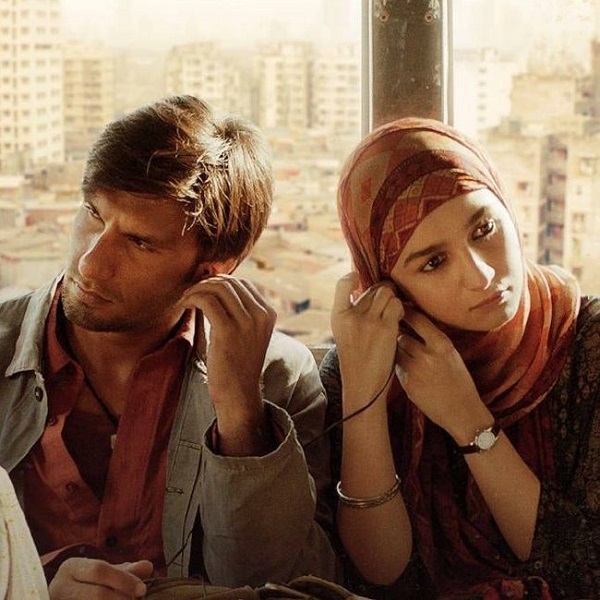
The
character of Safeena in the Bollywood’s
latest release “Gully Boy” is a reaffirmation of these stereotypes. I am unable
to understand that when a Muslim woman Safeena leads a mundane life like any
other Indian girl in the movie, why her appearance is bound to be a reflection
of her religious identity that is largely based on the fetishisation of modesty
culture.
This is no secret that modesty, in
conservative Muslim societies, is a regressive notion that mostly applies on
women to keep them in man-made ordained roles.
It largely manifests itself through discriminatory
traditions aimed to control women by denying their right to bodily autonomy. Mainly
patriarchal norms and misogynistic traditions coupled with extremist
interpretations of modesty rooted in religious orthodoxy perpetuate these discriminatory
practices against women in such society.
The mindset that if a woman knows the
pleasure she might go astray in the marriage or an uncovered woman might bring
shame to the community is related to modesty and honour culture that provides
justifications for invidious treatments of women.
It is so baked into this assumption that a woman’s
body movements, style, shape and clothing are considered to have the potency to
seduce ‘pious’ Muslim men and they deem to be solely responsible for
instigating male sexual arousal.
Therefore, compulsory veiling, FGM (female
genital mutilation) and other constraints on women are considered as divinely
ordained solutions to save ‘pious’ men from committing sin.
Such regressive modesty culture that throws women
under insufferable situations and makes children comply with such rigid and
apathetic lifestyle is abomination which is often brushed under the carpet
either to preserve the community standards or to avoid hurting Muslim
sentiments.
In such situations, blatant display of piety
and fetishisation of modesty culture by some privileged ones may eclipse the
bitter prevalence of FGM (female genital mutilation), mandatory veiling and
other discriminatory practices against women and children within the Muslim
community.
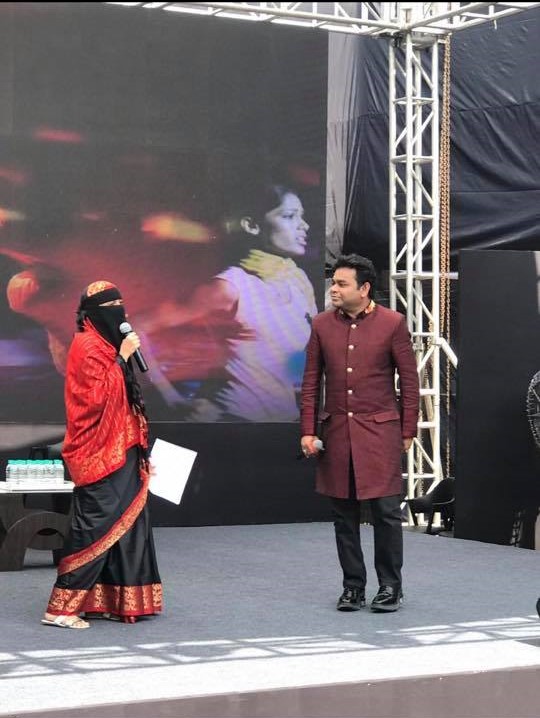
Recently, famous Indian singer and composer A R Rahman was severely criticised for defending his daughter Khatija’s right to wear head to toe veil (niqab) that represents the same regressive culture of modesty in which women are treated as second class citizens.
Khatija Rahman “chose” to wear a niqab when she shared the stage with A R Rahman, her father and a world famous musician, at an event in Mumbai.
I have been a big fan of A R Rahman,
especially for courageously carving his way out of the Islamic orthodoxy that
doesn’t recognise the ethical constraints outside of the religious discourse where
many of his fellow believers tend to feel ordained to see certain social
practices as a threat to their values such as considering music haram (impermissible)
and a source of evil.
A R Rahman is loved and admired by millions
of people around the world. His views and actions to reconcile music and faith
have a deep impact on people’s understanding of different aspects of religion.
But I admit that, unfortunately, my
jubilation for his resilience met with utter despair when he defended a
regressive manifestation of “freedom of choice” for women knowing that such
freedom has clearly no basis in the society he belongs to.
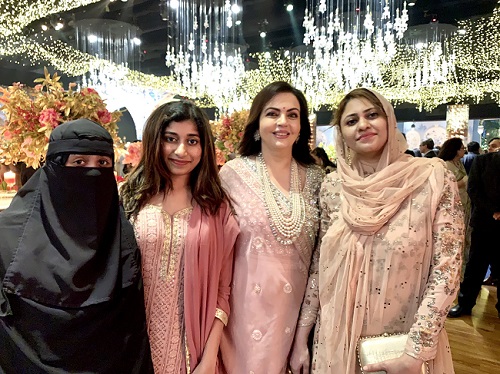
After receiving flak, he went on to post a family photo on social media, “The precious ladies of my family” to shun his critics by showing his daughter Khatija in burqa and his wife as well as another daughter without the full veil.
AR Rahman shared this photo on Twitter with the caption: “The precious ladies of my family Khatija ,Raheema and Sairaa with NitaAmbaniji. #freedomtochoose“
Regrettably, this photo displayed harmony
between regressive and progressive values in the most farcical way that even bypasses
veracity.
On the other hand, Khatija took this
opportunity to show-off how she exercises her will, being covered from head to
toe in an attire that is a hallmark of suppressive regimes such as Saudia
Arabia and Iran and other hardliner communities.
Khatija posted on FaceBook, “I would like to say that the
attire I wear or the choices I make in my life does not have anything to do
with my parents. The veil has been my personal choice with complete acceptance
and honour. I am a sane mature adult who knows to make my choices in life.”
It was bizarre to see her sanitising this
modesty culture as a symbol of freedom of choice that paves the way for women’s
exploitation in a superstitious society where privileged daughters like Khatija
might have enjoyed the freedom of wearing a burqa but other women face death or
violence at home for not doing the same thing.
This distortion of “freedom of choice” is deeply
enmeshed and embedded in discriminatory practices which applies only on women
in the name of modesty.
In reality, the right to make a choice has
seldom been extended to Muslim women who have to conform not only to the
religious orthodoxy but also to the imposed superstitious societal norms.
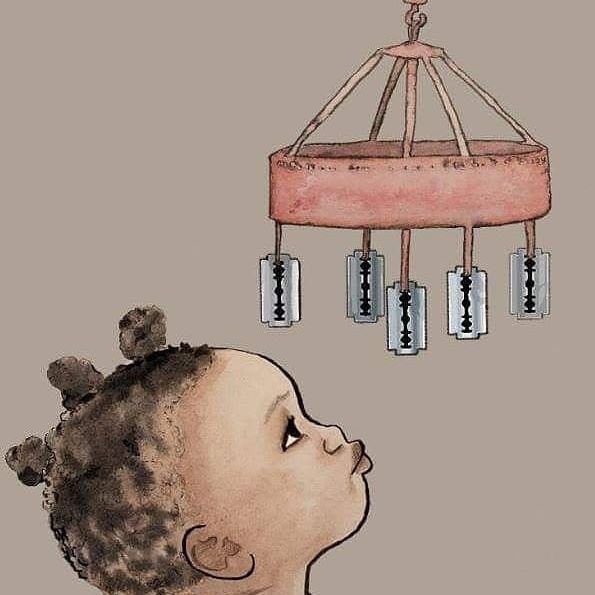
Her niqab reflected volumes about indoctrination within Indian Muslim community where a few years back a father killed his four year old girlby repeatedly thrashing her to the ground merely for failing to notice that her dupatta (headgear) had slipped off her head while having food with her mother. The little girl faced such brutality for deeming to be immodest in the eyes of her extremist father. Killing a child for not being enough modest is the level of sickness that festers within this so-called modesty culture.
Khatija, whether unwittingly or deliberately,
chose to manifest modesty in a regressive way while brushing aside this deeply
disturbing aspect of the oppressive tradition of veiling that reduces a woman’s
integrity to being a merely sinful object. She may have been applauded for
being outspoken as niqab-wearing independent Muslim woman but her appearance in
niqab conveyed a misleading message that doesn’t resonate with the courageous Muslim
women who are defying patriarchy at the risk of their lives in suppressive
cultures.
It no way corresponds to the brave women who stand up to the perpetual fear of being stranded by their husbands, who can divorce them merely by uttering ‘Talaaq’ three times. Neither has it seemed to help countless victims of FGM (female genital mutilation) who would be put through mutilation process in the name of honour in her own country.
It is offensively bizarre to even imagine how little girls from Muslim Bohra community are allured into dark rooms, pinned down and mutilated in the presence of their own loved ones. They cut off their clitoris considering it “haram ki boti” (source of sin). And this all happens in name of honour and modesty.
Female Genital Mutilation (FGM) is the worst form of Child Abuse.
Unfortunately, it’s a bitter reality that cannot be ruled out since the practice of FGM is yet not considered a crimein India.
According to a survivor-led study, 97% FGM victimsstill remember how they had been put through painful mutilation process; the excruciating pain still haunts them. The report revealed that the practice of FGM (female genital mutilation) in Indian Bohra community remains unabated.
Ironically, Indian laws that recognise a
system to protect women and girls do not deal with FGM offense. On the other
hand, Rights activists have petitioned the highest Indian court to ban this
practice which is lamentably still under consideration.
In such desperate situations, it has become a
moral duty for all influential people in the society to put aside their
privileges and exclusive rights for calling out the detrimental aspects of this
culture on behalf of people suffering in silence.
Therefore, it is highly disingenuous to say that
A R Rahman was trolled on social media as his daughter merely wore niqab or
Alia Bhatt faced criticism for merely donning hijab in her movie “Gully Boy”. Since
this attire doesn’t represent modesty as a virtue for women, it rather embodies
all radical edicts given by extremist Mullahs which are uniformly oppressive
for Muslim women.
Conspicuously, this potential for intolerance
lies in the
systemic and institutional oppression of women which is endemic under the
banner of modesty culture that perpetuates
rape culture, FGM (female genital mutilation), honour killing, and all other
forms of discrimination against women, even to the point of violence.
Above all, one must not forget that when
freedom to make a choice becomes perquisite for some selected women then it is
no more a choice. It is merely a privilege that is meted out to some selected
women under thinly disguised patriarchate.
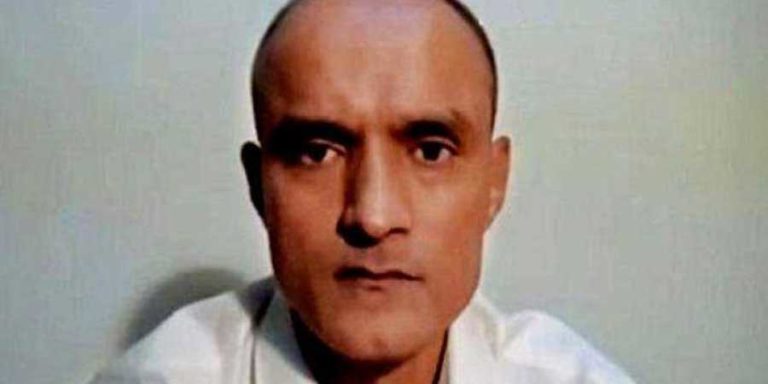
The International Court of Justice, the principal judicial organ of the United Nations, will hold public hearings in Kulbhushan Jadhav case from Monday 18 February to Thursday 21 February, 2019, according to the ICJ website.
Jadhav, 48, was sentenced to
death by a Pakistani military court on charges of espionage and terrorism in
April 2017. India moved the International Court of Justice (ICJ) in May the same
year against the verdict. A 10-member bench of the ICJ on May 18, 2017, had
restrained Pakistan from executing Jadhav till adjudication of the case.
Ministry of External Affairs Spokesperson
Raveesh Kumar said, “The oral proceedings on the International Court of
Justice are commencing on February 18. India will present its case before the
court. Since the matter is subjudice it is not appropriate for me to state our
position in public.Whatever we have to do, we will do at the Court.”
Bollywood
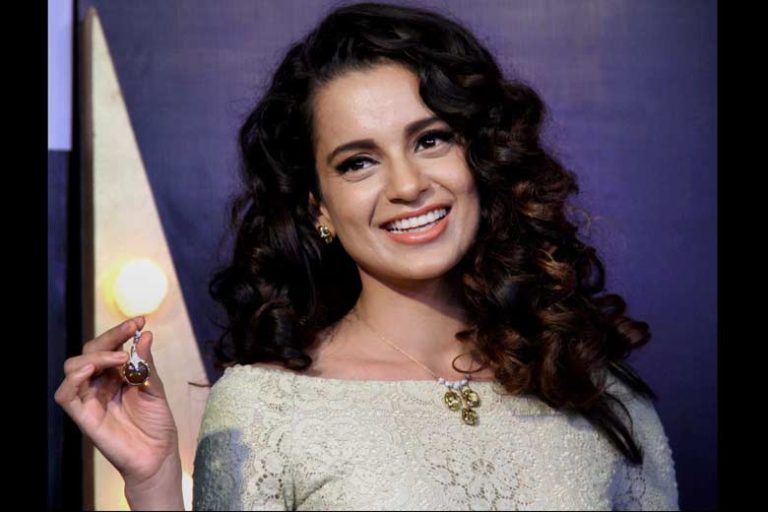
actress Kangana Ranaut has termed veteran actress Shabana Azmi ‘anti-national’,
questioning her decision to participate in an event in Pakistan in the first
place. The veteran actress and her husband Javed Akhtar was supposed to attend
a two-day literary event on her father Kaifi Azmi in Karachi, but decided not
to go as a sign of protest after the Pulwama attack.
Kangana
was quoted in a DNA report, saying, “People like Shabana Azmi calling for
halt on cultural exchange – they are the ones who promote Bharat Tere Tukde
Honge gangs… Why did they organise an event in Karachi in the first place
when Pakistani artists have been banned after Uri attacks? And now they are
trying to save face? The film industry is full of such anti-nationals who boost
enemies’ morals in many ways, but right now is the time to focus on decisive
actions… Pakistan ban is not the focus, Pakistan destruction is.”
“Bharat
is bleeding today, the killing of our sons is like a dagger in our gut; anyone
who lectures about non-violence and peace at this time should be painted black,
put on a donkey and slapped by everyone on the streets,” she said.
Kangana
has also cancelled the success bash for Manikarnika as a sign of protest.
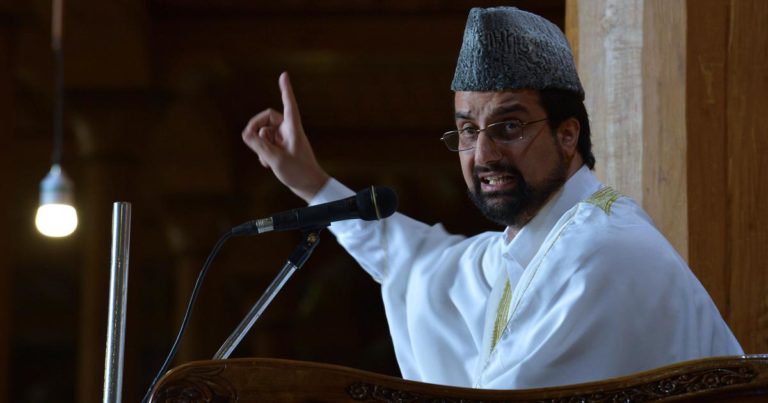
Security cover granted to five separatist leaders in Kashmir has been withdrawn by the government. The separatists whose security has been withdrawn are Hurriyat Conference leader Mirwaiz Umar Farooq, Shabir Shah, Hashim Qureshi, Bilal Lone and Abdul Ghani Bhat, PTI reported. The cover was withdrawn following a terrorist attack on a Central Reserve Police Force convoy in Pulwama on February 14, killing 40 soldiers. Pakistan based Jaish-e-Mohammed terrorist group has claimed responsibility for the attack.
The decision to remove security cover was taken at a meeting chaired by Union Home Minister Rajnath Singh in New Delhi on Saturday. On Friday, Singh had said that security provided to such people who take money from Pakistan and ISI, should be reviewed.
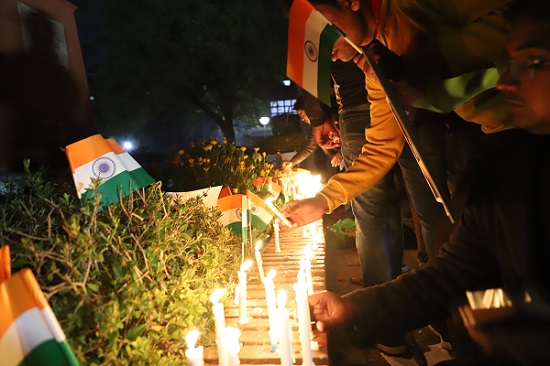
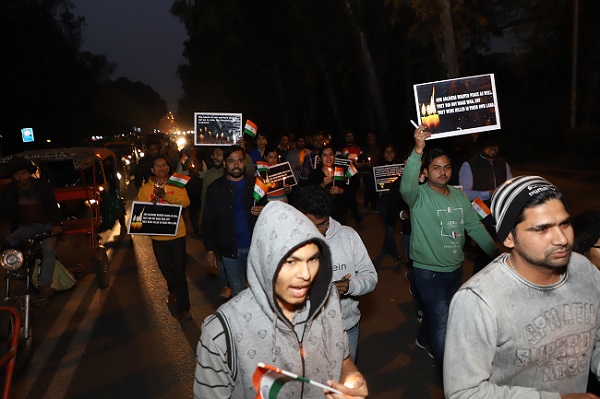
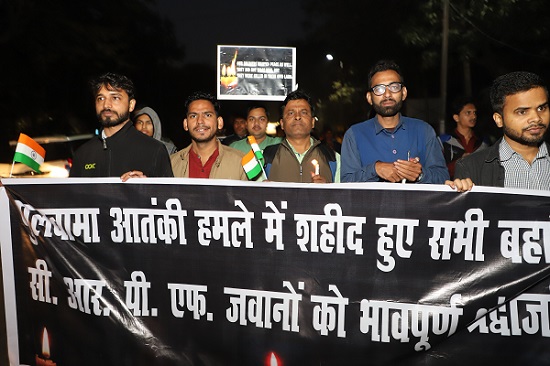
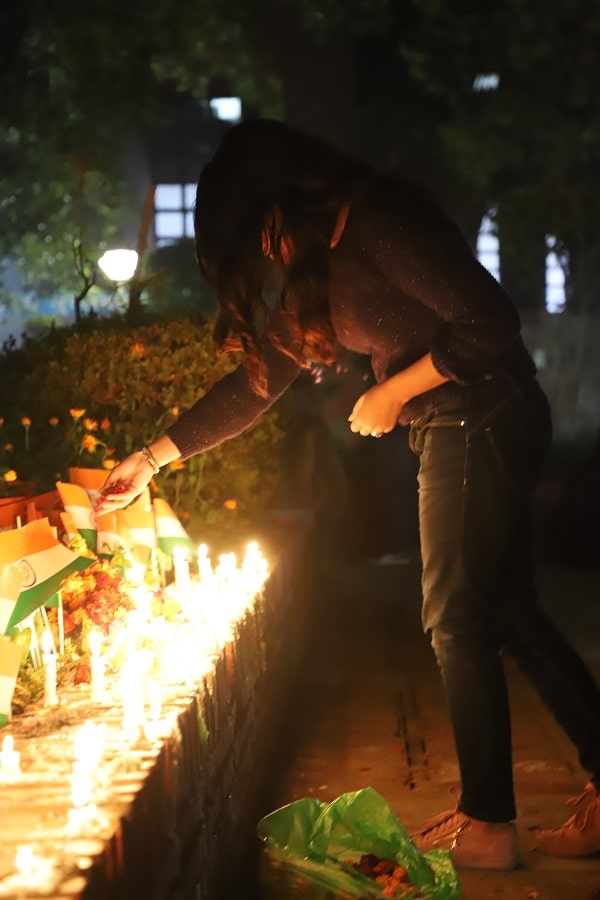
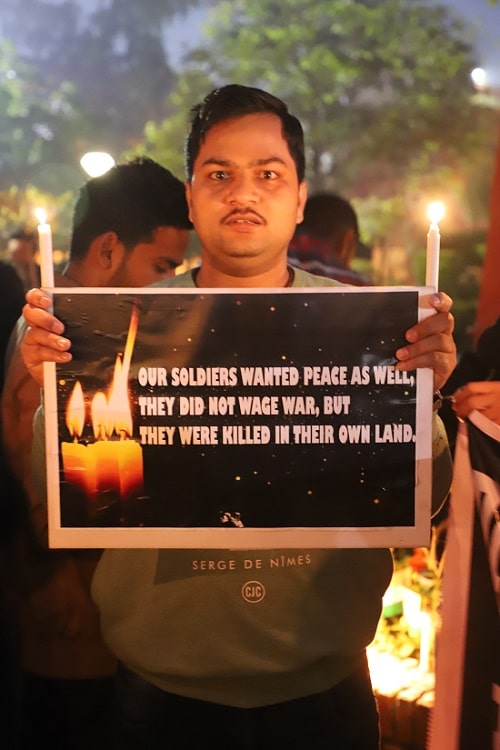
Thousands of students from the University of Delhi participated in a candle light procession to express solidarity with the families of soldiers martyred in the suicide attack at Pulwama on February 14, 2019. The procession aptly named “Solidarity March” was taken out to raise awareness about the National Defence Fund among general public.
The National Defence Fund takes voluntary donations from general public that is used on welfare of the members of Armed Forces, Para Military Forces and their dependents. The Fund is administered by an executive committee that is headed by Prime Minister as its Chairperson. Defence, Finance and Home Ministers are the other members of this fund. Accounts of the National Defence Fund are kept with the Reserve Bank of India. This fund is entirely dependent on voluntary contributions from the public and does not get any budgetary support.
DU students take out a‘Solidarity March’to raise awareness about the National Defence Fund. Money from this fund is used on the welfare of soldiers and their families.
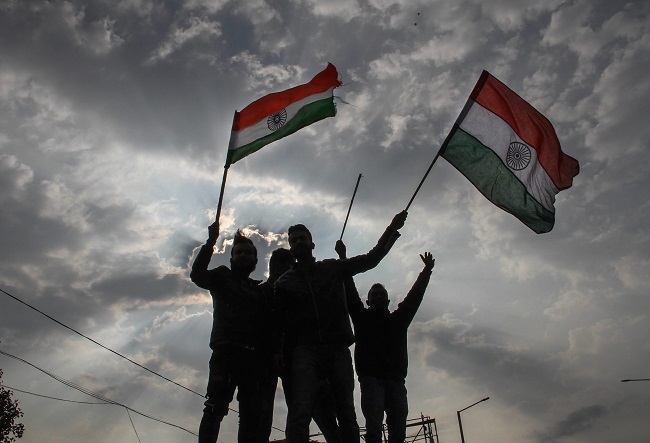
40 CRPF jawans have been martyred and several others seriously injured when a suicide bomber rammed his car laden with around 250 kilogram explosives into the CRPF convoy at Pulwama. A wave of anger has swept through the nation after this brazen suicide attack on our soldiers by Pakistan-backed Kashmiri terrorist. Prime Minister Narendra Modi has promised countrymen that India will give a befitting reply to Pakistan and to the terrorists being nurtured by its Army and ISI.
Most of the martyred Indian soldiers in the Pulwama attack were sole bread earners in their family. Delhi University students have taken it upon themselves to create awareness that people donate generously for the welfare of soldiers’ families such that their children’s education and sustenance needs can be met honourably.
Yes, we will remember our heroes. DU students pay tribute to martyred CRPF jawans in the Pulwama suicide attack on February 14, 2019.
We will never forget and we will never forgive. DU student offers her prayer for the martyred soldiers.
Yes we want peace, but Indian soldiers will not remain mute spectators. DU student holds a placard for the world to see that terrorists have entered our country. And, it’s time to flush them out.
The
pall of gloom that descended on the entire nation with newsbreak of Thursday’s dastardly
suicide attack on a CRPF convoy at Pulwama in South Kashmir has now transformed
into widespread public anger and demands for appropriate retribution. However, as
is wont whenever such tragic incidents occur, petty politicking and playing the
blame game has already begun. This is not only very unfortunate but also a self-defeating
exercise as in the cacophony of such unproductive discussion and debate we
invariably miss the wood for the trees. While it’s very easy to demand strong actions
like seeking revenge or even waging war to annihilate Pakistan, those who
recommend such actions overlook the fact that these options have international
ramifications and therefore can’t be executed at the click of a button.
Moreover,
neither military action by itself nor pandering to the separatists alone can
end this proxy war being waged against us by Pakistan. Such humongous tragedies
bring back bitter memories of bygone days and suppressed emotions break free
and goads one to give vent to personal views and feelings that may not
necessarily be the most perceptive or inclusive. With this disclaimer in mind
go ahead and read on.
Ending the Blame Game
Within
hours of the Pulwama attack, the snapshot of an advisory purportedly issued by
Jammu and Kashmir Police on February 8 went viral on social media. Addressed to
CRPF as well as other security forces, this confidential communication mentions the likelihood of improvised explosive devices (IEDs) being
planted by terrorists and advises soldiers to “sanitise” an area before
occupying it. The first question that comes to mind after seeing this advisory
on social media is, who made this secret communication public and why? However,
if one realises how the prime focus during initial discussion on this incident
suddenly shifted from “intelligence failure” to “security lapses,” the ‘how’
and ‘why’ behind this leak becomes quite apparent and thus needs no elaboration.
In
this particular case the advisory reads, “before occupying your place of
deployment please sanitise the area properly as there are inputs of use of
IEDs. Matter most urgent.” On the face of it this communication appears to be a
timely warning that the CRPF didn’t pay any heed to and because of which they
had to pay a very heavy price. But on closer scrutiny, the advice to sanitise
(search) the place of deployment makes clear that this advisory is referring to
IEDs that terrorists often plant in deployment places used by security forces
performing road opening duties so that soldiers can be targeted by detonating the
concealed explosive device once they occupy these positions.
The
reality is that advisories issued by intelligence agencies usually contain
generic information and often appear to be based on speculation of anticipated
attacks. Those who have served in J&K will recall regularly receiving
intelligence advisories of the likelihood of a terrorist attack without any
specific details of where, when and how are the terrorists are going to attack.
Resultantly, while such advisories are of little use to soldiers on the ground,
they serve as the fig leaf for preserving modesty of intelligence agencies
whenever they fail to give timely information such as in the Pulwama suicide
attack.
Acquiring intelligence in a hostile environment is undoubtedly a herculean task that gets even more difficult when it concerns asymmetric warfare since conventional templates of logical analysis don’t work in such a scenario. Therefore, it’s but natural that the rate of intelligence failure when it comes to timely uncovering of terrorism plots is always high and this needs to be accepted. Let’s not forget that even the FBI failed to unearth the 9/11 World Trade Center attack plot, even though it was an elaborate affair with more than one and a half dozen men who participated in this incident being aware of the plan of this terror attack.
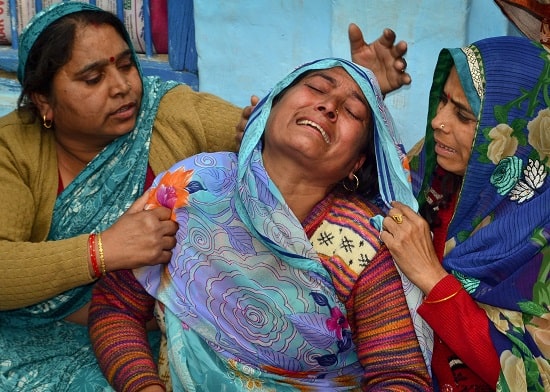
Family members mourn the death of CRPF soldier Kaushal Kumar Rawat, at his residence in Agra. Rawat was amongst the 40 CRPF personnel who were martyred when the JeM suicide bomber attacked the CRPF convoy in Pulwama. (Phto: PTI)
Therefore,
our intelligence agencies need to guard against the tendency of either adopting
a ‘play safe’ approach by routinely issuing advisories or indulging in
‘one-upmanship’ by trying to beat each other by hastily arriving at conclusions
just to be first to give an input. Trying to plant the idea that the Pulwama
incident occurred since a very precise intelligence input was overlooked is not
only unprofessional but also traumatises the bereaved families for life as they
wrongly believe that their near and dear one perished due to organisational
apathy.
Let
our intelligence agencies have the moral courage to accept failure!
Playing Politics
The
urge to show each other down is so overwhelming within India’s political class that
whenever a major terror related incident occurs, instead of expressing
solidarity with the government, the opposition starts criticising it. We saw
the BJP flaying the UPA government in 2008 during the Mumbai attacks and in
2016, we witnessed Congress repaying the NDA government in the same coin after
the Uri terror attack. Though Congress President Rahul Gandhi has displayed
remarkable maturity by expressing solidarity with the Narendra Modi-led
government after the Pulwama attack, the possibility of petty politicking
getting the better of sagacity in just a couple of days remains very high.
Here
we need to take a cue from Pakistan where despite the many existing serious political
and ideological differences, all parties unite when it comes to passing any
resolution against India or those in favour of the secessionist lobby in
Kashmir. The government must be hauled over coals for its lapses by the
opposition, but the prevalent practice of trying to score brownie points by
holding it responsible for a terrorist attack is despicable.
Setting our Own House in Order
Many activists
defend their insensitive remarks criticising the actions of security forces that
are combating terrorism by evoking their constitutional right to freedom of
speech and citing human rights concerns. Such prejudices or criticism doesn’t
unduly offend security force personnel as they are faithfully discharging their
duties and thus have a clear conscience. But what does hurt a soldier who is
putting his life on the line daily when people pretending to be rights
activists start championing the cause of those who are openly waging war
against the nation and make no bones about their intention of dismembering the country.
Democracy
gives us complete freedom of expression, but isn’t it pathetic to see learned
people misuse this right to further their poorly disguised motivated agendas by
casting unfounded aspersions on their professional integrity and even
questioning their motives? As a veteran I would suggest my comrade-in-arms in active
service not to get upset by these pseudo-intellectuals and brush off their
criticism by recalling Aaron Sorkin’s famous words that “I have neither the time nor the inclination to explain
myself to a man who rises and sleeps under the blanket of the very freedom that
I provide, and then questions the manner in which I provide it!”
Appropriate Response
Politicians
and analysts who accuse the government of lacking the resolve and courage to
take punitive action against Pakistan, tend to forget that trans-border terrorism
being patronised by the Pakistan Army in J&K is a full-fledged covert military
operation. Hence any retribution won’t deter Rawalpindi from its aim of
bleeding India ‘through a thousand cuts’ and therefore a broad-based response
incorporating diplomatic, economic and military measures are essential for the
desired effect. Simultaneously, if we want to militarily ‘punish’ Pakistan then
we too need to be mentally prepared to face escalated violence levels as
Rawalpindi won’t keep silent. Let’s not forget that since it is the Kashmiris
who are fighting security forces and losing their lives in Pakistan Army’s
proxy war in Kashmir, escalating the violence levels is not a big deal for
Rawalpindi.
Therefore
those of us who advocate adopting a proactive Israel like offensive policy against
terrorist acts need to acquire the ability to face a heightened threat level
and be prepared for hard times like the Israelis. They must also be practical
and get over the ‘quick-fix’ mentality that is reflected in the complaint that
India’s ‘surgical strikes’ have failed to end trans-border terrorism.
Though a lot of fancy remedies like ‘winning hearts and minds’ are being suggested by the intelligentsia for eradicating terrorism, the fact of the matter is that terrorism in J&K has today become an industry where romantic notions of terrorists being ‘misguided youth’ who can be brought back into the mainstream through acts of compassion and proper guidance doesn’t work.
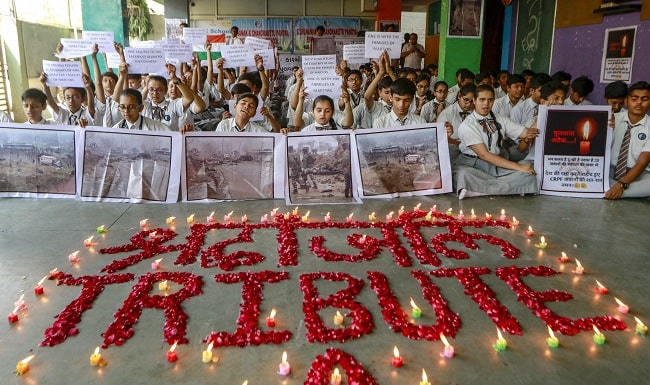
School children in Ahmedabad light candles and pay tribute to CRPF soldiers who were martyred in terrorist attack at Pulwama. (Photo: PTI)
There
are many who still maintain that violence in Kashmir is politically or
ideologically motivated, but this is far from true. Though it may offend
pseudo-secularists and those whose hearts bleed for secessionists, but the
actual fact is that the so called ‘movement’ in Kashmir is totally Islamised.
This isn’t my assessment- it’s what Syed Salahudin who heads the amalgam of
terrorist outfits fighting in Kashmir admitted in an interview. What Salahudin
said was that “The Kashmiri movement was Islamised from day one. Why do you
think an educated young man who has a bright future otherwise, is willing to
die? Azaadi is not his objective. He is into militancy because he knows that if
he dies for a noble cause, he would become a martyr, as per Islam. We tell him
that he would get into the ‘real life’ after this death and he would get
peace.”
Does this revelation still leave
any scope for blaming the unresolved Kashmir issue as the stimulus for
terrorism in Kashmir?
Epilogue
Terrorism is a ‘dirty war’ that
can’t be won by strictly adhering to the rules of engagement applicable to
conventional warfare. Whereas it is not intended to suggest that we go to
extremes like the Sri Lankan Army did in its final fight against the LTTE, but we
can’t tackle terrorism by taking the other extreme of following ‘Gandhigiri’.
In the mid-nineties, roads were cleared of all civilian traffic whenever a
security force convoy passed through that stretch and though this caused some
inconvenience to commuters, but it also prevented the Pulwama kind of attack.
However, as time went by peaceniks and rights groups started clamouring for a
reduction of security force ‘footprints on the ground’ as it traumatized the
public and our leaders acquiesced by permitting civil vehicles to mingle with
security force convoys. And, Pulwama was just waiting to happen!
The terrorist attack on a CRPF
(Central Reserve Police Force) convoy at Pulwama in Kashmir Valley is a tragedy
of monumental proportions. It was a cowardly act of mindless violence that has
left the entire nation aghast and horrified. The foreign hand is well
established since the terrorist involved had allegiance with the Pakistan-based
terrorist organisation, Jaish-e-Mohammad (JeM). As the country grapples with
the calamity, many questions are being raised about the attack and the possible
reaction of the Indian government to the same; volumes have already been said
and written about the same.
It is being alluded that there
was an intelligence failure and a security lapse in assessing the danger being
posed in movement of such big convoys of security forces. There is also talk of
lack of synergy between security forces in the passage of intelligence. One
need to remain assured that the Intelligence network in Kashmir is strong, effective
and synergised as is visible through the incisive and very successful joint
counter-terrorist attacks being launched in the Kashmir Valley since the last
year and plus. It needs to be acknowledged here that the enemy we are dealing
with is equally determined and strives to finds ways to break our network! They
will succeed sometimes, as in this unfortunate incident.
The increasing capacity of the
Pakistan-based JeM in influencing the conflict situation in Kashmir needs to be
assessed in detail. This incident was a Fiyadeen
(Suicide) attack by a local terrorist and preparing a person for such an
operation takes a lot of time and effort. Preparation of the attack,
identifying the target, carrying out the research and reconnaissance, getting
the necessary explosives and the vehicle, all require detailed and professional
planning. It is not something that can be done by a novice terrorist or a
single individual. The JeM was also behind the recent grenade attack on a
school in Pulwama in which 19 students were injured, it is also responsible for
mobilisation of civilians for creating disruptions during counter-terrorist
attacks. That the JeM has developed such capacities, which also include
psychological conditioning of locally recruited terrorists and detailed
planning for engineering of violence, is something to think about.
The time has come for the government to remain aloof from political pressures and optimally utilise all resources at its disposal to address the situation in Kashmir. Strong action needs to be taken to stop the process of radicalisation that is in place across the Kashmir Valley through paid agents of the Pakistan-based terrorist machinery. How is the Hurriyat being able to implement its abhorrent protest calendars with such relative ease? Will the Hurriyat now condemn this dastardly, inhumane and cowardly act? If not, then it should be assumed that the conglomerate supports the same and, on this basis, it be declared as an enemy of the state.
The most urgent requirement of the moment, however, is for the nation to stand steadfast behind its security forces in this moment of grief. The families of those killed need to be given succour and looked after. This setback provides no reason for doubting the capability and capacity of the security forces to deal with the situation in Kashmir. On the other hand, they need to be assured of the nation’s faith in their ability and they be helped to overcome the huge loss of their comrades.
The media would be well advised to desist from finding fault in the operational procedures and try to blame the entire incident on intelligence failure etc. There is no scope here for sensationalising the incident nor is there any need to call Pakistan-based commentators on Television shows where they can lie blatantly and gloat over the dastardly incident. It is well known that Pakistan is behind the attack, so there is no need to dwell on the subject. There is a need to exhibit sensitivity for the lives of the nation’s soldiers lost. It is best to remain assured that any loop holes found in the standard operating procedures will be identified and rectified. It is in the interest of the security forces to do so and they will do it well.
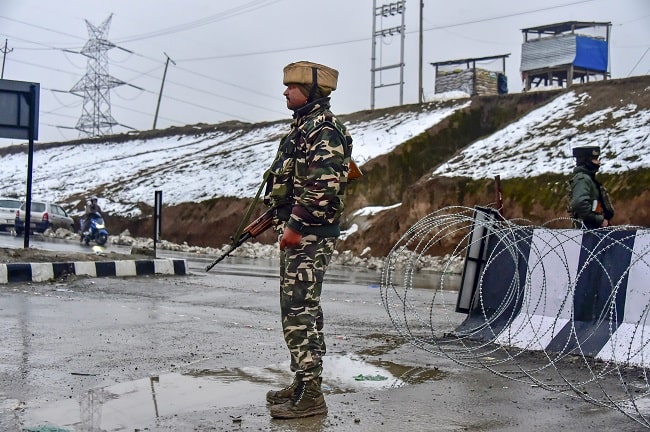
An Army soldier guarding rescue operations at the site of suicide attack in Pulwama. (Photo: PTI)
The Prime Minister has already
condemned the attack and assured that the sacrifice of the soldiers will not go
in vain, the government should be given the opportunity to react in the most
appropriate manner. The government is already at the job. The Cabinet Committee
of Security (CCS) the apex national body on security issues has already held a
meeting to assess the situation and come up with an action plan. A team of the
National Investigation Agency (NIA) has already been dispatched for this
purpose; it will undoubtedly boost the internal investigation process and come
up with suggestions on what is required to be done to strengthen security. Undoubtedly,
the Union Home Minister and National Security Advisor (NSA) will interact with
the commanders on ground and provide them all support that they need to face
the emerging security challenges.
One would also expect the
political parties in Kashmir, especially the local mainstream entities like the
National Conference and the Peoples Democratic Party (PDP) to come up with a
workable plan to mobilise its cadre to control the situation. They can make a
big contribution in isolating their people from the machinations of the enemy.
It is notable here that such parties have been speaking about the inconvenience
being caused to civilians due to convoy movement, it is such pressures on the
security forces that leads to situations of the type that we have in hand now.
It is also expected that all national
political parties will leave their personal vendettas and agendas behind and
join as one to meet the challenge posed by the enemy through the medium of this
attack. This is not the time to make political brownie points through a blame
game. It is the time to remain united in a strong response and support the
government in its endeavours.
That our soldiers are the best
in the world and not afraid to give their lives for the country is amply proved
time and again, it is now up to the nation to stand up for them.
Yet again India lost her brave hearts at Pulwama, in a never
ending saga of terrorist attacks. While our army and political leadership would
definitely take stern action against systemic perpetrators, we as a nation need
to review our internal weaknesses critically. Let us not forget that a body
having poor immunity and flaws is certainly affected by diseases.
When the great hero Field Marshal Sam Mankekshaw died on 27 June 2008, the government of India was represented by a sole junior minister at his funeral. “We, as a nation, simply don’t respect or remember our heroes. Cricketing ones are honoured even after 25 years of winning a world cup, soldiering ones are forgotten promptly after the war is over. The nation turns to the armed forces only in times of emergency,” said a Brigadier in the Indian Army.
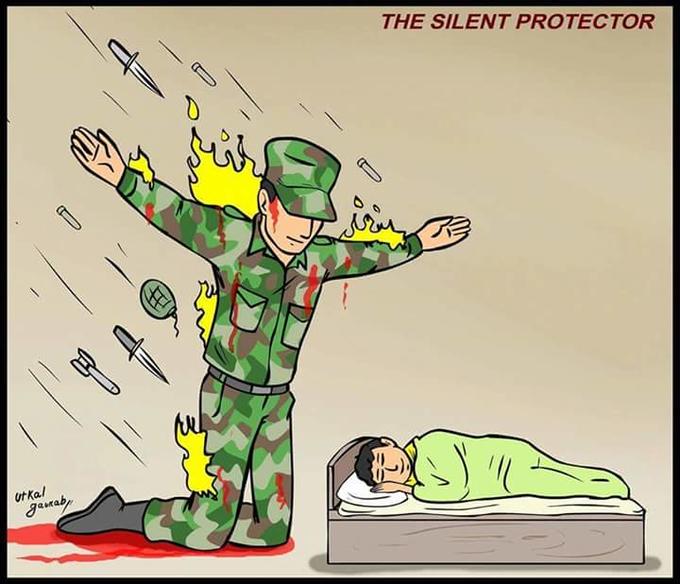
When soldiers leave home, no one can say when would they come back, or whether they ever would? They may avoid seeing loved ones in their eyes as they leave their homes, out of fear of never seeing them again.
Losing life in a battle field is painful, yet acceptable as
an act of heroism in action. Losing life traveling in a bus or sleeping in
bunkers, could be doubly painful. But who cares, really? They are out doing
their job, after all. This sentence may make you angry, and rightfully so. Yet,
a few days later we would all forget. Families of the dead would continue to
suffer their utmost loss, forever.
Can we as a nation do better? Can we go beyond offering condolences? Could
we strive to be a nation that deserves sacrifice of their soldiers?
To begin with, can each one of us make sure that we
contribute some part of our income, that no soldier’s family ever feels
deprived for money, at least? But then could we simply buy our peace by trading
their deaths with money? Ideally shouldn’t we all get to be a soldier for some
time during our lifetime?
And what about the nationhood? Can we not stand together as
one and outcast the farce claimants of free speech and freedom who dare to
decry the ‘very purpose of nationhood’, in our University campuses? Why should
a soldier die, if the nation is not viewed as ‘one’ really? Can a section of cunning
and selfish media, and political people or anyone not be held legally
accountable when they purport such nation-breaking propaganda in the name of
free speech? Why should we continue to blame outsiders, when we are inflicted
with enemies from within?
And how about our obsession with our own selves. Could we
stop pretending to be concerned for the society, while we are simply interested
in sucking it up?
Could we shed petty selfishness for short-term gains, to
make an extra buck unfairly by manipulating others? Past generations may have
failed badly, but could our youth rise to the occasion, and take pride in
growing through excellence and merit, rather than short-cuts and easy money?
Getting ahead in India was never meant to be at the cost of society or nature, or else our civilisation would have never survived for thousands of years in coexistence. Do we really deserve to be a nation if we are not concerned of our collective well-being at all levels? The question is: Could we act with the spirit of a soldier when we go to our work place, tomorrow?
We use cookies on our website to give you the most relevant experience by remembering your preferences and repeat visits. By clicking “Accept All”, you consent to the use of ALL the cookies. However, you may visit "Cookie Settings" to provide a controlled consent.
This website uses cookies to improve your experience while you navigate through the website. Out of these, the cookies that are categorized as necessary are stored on your browser as they are essential for the working of basic functionalities of the website. We also use third-party cookies that help us analyze and understand how you use this website. These cookies will be stored in your browser only with your consent. You also have the option to opt-out of these cookies. But opting out of some of these cookies may affect your browsing experience.
Functional cookies help to perform certain functionalities like sharing the content of the website on social media platforms, collect feedbacks, and other third-party features.
Performance cookies are used to understand and analyze the key performance indexes of the website which helps in delivering a better user experience for the visitors.
Analytical cookies are used to understand how visitors interact with the website. These cookies help provide information on metrics the number of visitors, bounce rate, traffic source, etc.
Advertisement cookies are used to provide visitors with relevant ads and marketing campaigns. These cookies track visitors across websites and collect information to provide customized ads.
Necessary cookies are absolutely essential for the website to function properly. These cookies ensure basic functionalities and security features of the website, anonymously.
Cookie
Duration
Description
cookielawinfo-checkbox-analytics
11 months
This cookie is set by GDPR Cookie Consent plugin. The cookie is used to store the user consent for the cookies in the category "Analytics".
cookielawinfo-checkbox-functional
11 months
The cookie is set by GDPR cookie consent to record the user consent for the cookies in the category "Functional".
cookielawinfo-checkbox-necessary
11 months
This cookie is set by GDPR Cookie Consent plugin. The cookies is used to store the user consent for the cookies in the category "Necessary".
cookielawinfo-checkbox-others
11 months
This cookie is set by GDPR Cookie Consent plugin. The cookie is used to store the user consent for the cookies in the category "Other.
cookielawinfo-checkbox-performance
11 months
This cookie is set by GDPR Cookie Consent plugin. The cookie is used to store the user consent for the cookies in the category "Performance".
viewed_cookie_policy
11 months
The cookie is set by the GDPR Cookie Consent plugin and is used to store whether or not user has consented to the use of cookies. It does not store any personal data.