Home Blog Page 471

Brand NaMo versus Brand Gandhi : Lighting up the political firecrackers

0

In the absence of any visible pro-Modi wave, it’s opportune time for Congress to position ‘Brand Gandhi’ firmly in the political battlefield.

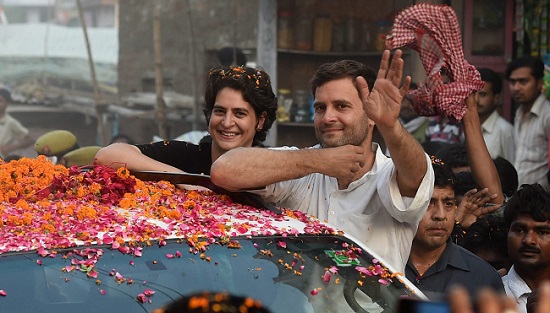
Eleven days after celebrating her 47th birthday, Priyanka Gandhi Vadra has been given a formal position, clubbed with a momentous responsibility, in the Congress Party. While bitiya Priyanka has beena popular face in her mother’s and brother’s constituencies of Rae Bareilly and Amethi, how much political mileage she can derive in rest of the state only time will tell. Nevertheless, it’s going to be a high pitch battle of Brand NaMo Vs Brand Gandhi, with political strategists, media brokers and image builders providing the necessary ammunition to both the sides.

Reactions of both – Congress and BJP, to Priyanka Gandhi Vadra’s ‘entry’ into politics, have been on the predicted lines. While Congress party leaders and workers are rejoicing, equally charged up are the BJP functionaries. Devoid of any major issues against the Congress, they have now got the fresh ammunition. Criticizing and denouncing the move of Congress Party, BJP’s spokesperson Sambit Patra  lost no time in launching an offensive against the Congress accusing it of dynasty politics. PM Modi also made a veiled attack on Priyanka through his “For BJP, party is family; for others, family is party” remark while interacting with the BJP workers from Maharashtra via video conferencing. With political temperature rising, more firecrackers will be burnt in the public.

For BJP,  2014 election, was all about the newly created Brand NaMO, and the entire political campaign was weaved around it, something which Congress could not do with Manmohan Singh and Rahul Gandhi. In 2019, while Brand NaMo is now five-years old, and has already lost much of its sheen,   with absence of any visible pro-Modi wave, and their recent defeat in the hind heartland – the scenario demands a brand activation campaign for them. On the contrary, ‘Brand Gandhi’ is fresh, enjoys huge credibility and is widely accepted in the country. BJP understands it well; hence Priyanka ‘Gandhi’ Vadra will be the prime target of their attack before and during the elections. Within 24-hours of her entry into politics, focus has already shifted on Priyanka’s husband Robert Vadra’s dubious land deals, which are currently being investigated by various government agencies.

BJP knows the real magic lies in the surname “Gandhi”. During the last five years, BJP has tried to use Mahatma Gandhi’s name to their political advantage, and they will try their best to ensure ‘Gandhis’ don’t take the ‘ownership’ back.  It is learnt that instructions have been issued to state broadcasters – Doordarshan and All India Radio that news bulletins should refer to her as Priyanka Vadra without any mention of Gandhi! Soon, social media platoons will be activated to focus on her being a daughter of videshi bahu or comparing her to Rahul Gandhi to project the latter as a failed leader. Congress, on its part, has already started pitching Priyanka as ‘Indira Gandhi’, given her striking resemblance with her grandmother.

With less than three months in hand, Priyanka Gandhi has an uphill task to perform in a state where the Congress has been completely wiped out. It is too early and premature to say, whether, as a fifth generation politician of Congress party, she can turn around the party’s fortunes in the upcoming elections or not , however, her presence will definitely alter the course of Indian politics in the coming future.

Court to decide about summoning Priya Ramani on January 29

In a defamation case filed by former Union minister M J Akbar against journalist Priya Ramani, a Delhi court has reserved for January 29 its order on whether to summon Ramani as an accused in the case. Additional Chief Metropolitan Magistrate Samar Vishal reserved the order after listening to arguments from Akbar’s lawyer, who said a prima facie case was made out against Ramani.

Akbar, who resigned as Union minister on October 17 last year, filed a private criminal defamation complaint against Ramani after his name cropped up on social media when he was in Nigeria as the #MeToo campaign raged on in India. Ramani had accused Akbar of sexual misconduct around 20 years ago, which was denied by him.

Hollywood star Anne Hathaway quits drinking for next 18 years

Anne Hathaway has decided to quit alcohol for the next 18 years because she does not want to drink around her two-year-old son Jonathan.

The 36-year-old actor said she does not want to be hungover when her son, whom she has with husband Adam Shulman, needs her during the morning school runs.

“I quit drinking back in October, for 18 years. I’m going to stop drinking while my son is in my house just because I don’t totally love the way I do it and he’s getting to an age where he really does need me all the time in the morning.

“I did one school run one day where I dropped him off at school, I wasn’t driving, but I was hungover and that was enough for me. I didn’t love that one,” Hathaway said during an appearance on “The Ellen Degeneres Show”.

The actor and her husband welcomed Jonathan in April 2016.

Army Chief Bipin Rawat laid out an honest and transparent Kashmir policy in annual media interaction

The annual press conference of Chief of Army Staff (COAS), Indian Army, on the occasion of Army Day, was held on January 10, this year. As was expected, more than 50% of the questions were related to Kashmir and the situation in the state. This is a clear indication that the media stays tuned to the Kashmir imbroglio more than anything else. The Army Chief, General Bipin Rawat, was forthright in his answers, he did not hesitate at any point and spoke his mind with utmost honesty.

What the media thinks about situation in Kashmir and how the Indian Army is responding to it can be deciphered from the proceedings of the press conference.

Media raised questions about the ongoing cycle of violence and questioned as to why the operational gains of the Army over last two years have not resulted in reduction in the number of local boys gravitating towards terrorism. In these questions there was a hint of media-perception that excessive force is being used in Kashmir. There was the usual concern about the continuing cease fire violations, especially so, in the region south of the Pir Panjal mountain range.

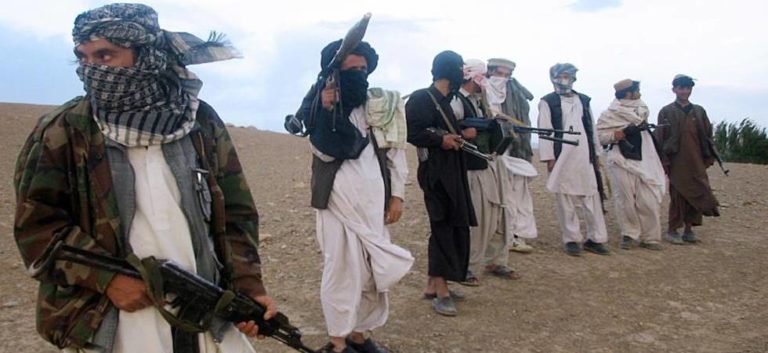
Expectedly, the issue of Army Chief rooting for India being a party to talks with the Afghan Taliban and the statement by ex-Chief Minister of Jammu and Kashmir Mehbooba Mufti suggesting application of the same template for talks with Hurriyat leaders came up during the press conference.

With regards to operations in Jammu and Kashmir, the Army Chief said that there was a gradual forward movement discernible in the situation. He reiterated the appeal to those pursuing the path of terrorism to come over ground and look at peace as an option. He mentioned that recruitment is on the downside despite terrorist Tanzeems terrorising the people into joining their ranks. It is so because the people are understanding that terrorism is not the best way forward and a different approach is required to break the cycle of violence.

Notwithstanding the appeal to the youth, the chief left no doubt about the Army pursuing its mandated task of purging the region of the curse of terrorism in order to ensure that peace comes to the valley. “If we slow down operations who will guarantee that our convoys and installations will not be attacked?” he posed as a counter question. On the issue of quantifying the amount of force to be used, the chief, while explaining the difficulty on ground in differentiating between a pistol fire and an AK-47 fire, said that once contact is made with the enemy the troops across the world fire with what they have.

On the issue of propaganda being used as a tool to enhance recruitment in terror folds, the chief admitted that enhanced information sources through media and social media are giving a boost to enemy propaganda. He identified the large procession during funerals of slain terrorists, according to them a martyr like status, giving exalted stature to their mothers and wives and indoctrination through Mullahs and Maulvis as the most potent tools of the propaganda campaign. He gave a hint of action being in hand to counter these anti national actions being taken by terrorist Tanzeems and their supporters.

On the issue of equating his suggestion to talk with the Taliban with engaging the Hurriyat as suggested by Mehbooba Mufti the Army Chief, very rightly, advised against comparing the two as one is related to international diplomacy while the other is an internal/bilateral matter. While on the subject he clarified that the Hurriyat should come to the negotiating table after breaking contact with Pakistan since talks and terror cannot go together.

The chief hinted upon the use of soft power by the Army on a number of occasions during his interaction, thus giving an indication of the importance that he accords to the approach. He spoke of the benefits being accrued from the Army’s civilian welfare initiative, Operation Sadbhavana, and the high aspiration levels of the Kashmir youth which need to be leveraged.

On the issue of ceasefire violations, the chief said that the same are continuing mainly to facilitate infiltration and also to extricate the terrorists during failed infiltration attempts. He explained that Quad Copters are being used for area sanitisation operations and their being shot down by the enemy does not amount to a big loss or a big issue. He reiterated the concern of the army for civilians on both sides of the border and the line of control who are suffering due to the cross border firing but also explained the difficulty in differentiating between the terrorist and the civilians once an infiltration bid begins from the other side.

To summarise, the media continues to show concern about the situation in Kashmir in terms of the cycle of violence, recruitment of local youth into the fold of terrorism, infiltration and quantum of force being used by the security forces. It is looking for new initiatives, both military and diplomatic, to break the status quo and get the region of the road to normalcy.

The chief, on his part, has left no doubt about continuance of counter-terrorist operations till such time that the last terrorist is not eliminated by the security forces, even as efforts to wean away the youth from pursuing the self destructive path of terrorism will continue. He has laid a lot of emphasis on the use of soft power to wean away the youth from the vice-like grip of terrorist organisations and their helpers. He stuck a positive note by saying that the number of youth joining the terrorists ranks is on the down slide since people are realising the futility of pursuing this path.

It is to the credit of General Bipin Rawat that he took on questions from the attendant media for two hours and gave comprehensive answers to all queries in a precise and transparent manner. What remains to be seen is how the political class, the civil society, the parents, elders, role models and religious leaders of Kashmir respond to his appeal to stop the youth from following the road to self destruction.

Priyanka Gandhi Vadra enters Indian politics

0


Priyanka Gandhi Vadra has entered active politics. Yes, you read it right. Priyanka Gandhi, a scion of Nehru-Gandhi family, is the fifth generation from her family to enter active political arena of India. She is the great grand daughter of country’s first Prime Minister Jawaharlal Nehru, grand daughter of Indira Gandhi and daughter of Rajiv Gandhi. Jawaharlal Nehru’s father, Motilal Nehru was the first person from the family who dabbled into active politics. 

Priyanka Gandhi’s entry into Indian political arena, which comes barely two months ahead of the forthcoming General Elections of India has made the electoral battle interesting. She has been officially assigned as the secretary-in-charge of East Uttar Pradeh (UP). Her taking up charge at the politically crucial UP indicates that Congress is in no mood to let go the 2019 General Elections without giving a tough fight.

In fact, Priyanka’s entry has been a well planned strategy. Political pundits had always talked that Priyanka Gandhi was crucial for Congress Party’s revival. Her lack of experience in active politics, a rather reticent life away from the public eye and a stark resemblance to her grandmother and former Prime Minister Indira Gandhi is expected to work in her favour. Congress strategists understand these nuances and are expected to encash her emotional appeal with the electorate. Her brother and current Congress President Rahul Gandhi understands all of this. He knows his sister could turn the tables in favour of Congress in the upcoming General Elections.

Congress has won Assembly elections in politically crucial Hindi heartland states of Madhya Pradesh, Rajasthan and Chhattisgarh. The party is peaking at the right time and so it decided to field Priyanka from the politically crucial UP. She had already been canvassing for her mother Sonia Gandhi at
Raebareli and for her brother Rahul Gandhi at Amethi. Both these constituencies are from UP. And a large section of UP’s electorate knows Priyanka Gandhi as the grand daughter of Indira Gandhi.

UP sends 80 parliamentarians to Lok Sabha, which is maximum for any Indian state and it plays a pivotal role in government formation at New Delhi. In the 2014 General Elections Narendra Modi-led BJP won a total of 71 seats of the 80 from UP. 

The 47 year old Priyanka Gandhi spearheading the party’s affairs in eastern UP will also rub into another politically crucial state Bihar, which sends 40 parliamentarians to the Lok Sabha. BJP had won 22 Lok Sabha seats from Bihar in the 2014 General Elections.

Prime Minister inaugurates 15th Pravasi Bharatiya Diwas in Varanasi

The Prime Minister Shri. Narendra Modi inaugurated the plenary session of the 15th edition of Pravasi Bharatiya Diwas at Deendayal Hastkala Sankul in Varanasi today. Chief Guest of PBD 2019, Prime Minister of Mauritius, PravindJugnauth, ,Governor of Uttar Pradesh Ram Naik, External Affairs Minister Sushma Swaraj along with UP Chief Minister Yogi Adityanath, Chief Minister of Haryana, Manohar Lal Khattar, Chief Minister of UttarakhandTrivendra Singh Rawat, Union Minister of State for Overseas Indian Affairs Retd.General V K Singh and several other dignitaries graced the occasion.

In his address, Prime Minister Narendra Modi said it is the love and affection of the diaspora for the land of their forefathers which has brought them to India. He called upon the NRI community to join hands for building a new India.

PM lauded the role of Indian diaspora in keeping alive the tradition of VasudhaivaKutumbakam. He said the NRIs are not only the Brand Ambassadors of India but also represent its strength, capabilities and characteristics. He urged the diaspora to participate in building a New India specially in research and innovation.

PM said that with its rapid progress, India is being seen on a high pedestal across the world and is in a position to lead the global community. International Solar Alliance is one such example. Mr. Modi added that local solution and global application is our mantra. He termed International Solar Alliance as a step in the direction of One World, One Sun, One Grid.

Prime Minister said that India is on course to become a global economic powerhouse. It has one of the largest start-up ecosystems and world’s largest healthcare scheme to its credit. We have moved on with great strides in Make in India. A bumper harvest production has been our major achievement.

PM lamented that due to lack of will power and proper policies of the previous Government, a large chunk of funds earmarked for them was not available for the Beneficiaries. However today, he said we have plugged the loopholes in the system with the help of technology. The loot of public money has been stopped and 85 percent of the lost money has been made available and transferred directly into the bank accounts of the beneficiaries. PM said that now Rs. 5,80000 crores has transferred directly into people’s accounts over the past four and a half years.PM narrated how 7 crore fake names have been struck off the list of beneficiaries, which is almost equal to the population of Britain, France and, Italy.

National Museum of Indian Cinema inaugurated by the Prime Minister

The Prime Minister Shri Narendra Modi recently inaugurated National Museum of Indian Cinema in Mumbai. Governor of Maharashtra Shri C. Vidyasagar Rao, CM of Maharashtra Shri Devendra Fadnavis, Union Minister of State Shri Ramdas Athawale and Union Minister of State Col. Rajyavardhan Rathore (Retd.) along with other dignitaries were also present on the occasion.  

In his address, the Prime Minister said that the National Museum of Indian Cinema will provide a wonderful opportunity for the younger generation to understand and learn about Indian cinema. He added that the Museum will have detailed information about the history of Indian entertainment industry, along with tales of struggles of various film personalities.

The Prime Minister said that the Indian Cinema has a big role in enhancing India’s soft power, its  credibility and building the Brand India across the world. He said that through Cinema important social issues such as sanitation, women empowerment, sports etc are now reaching to people. Cinema plays an important role in nation Building and strengthens the feeling of Ek Bharat Shresth Bharat. PM said that the film Industry has a huge potential of contributing in the growth of Tourism in the country.

He mentioned that Government is working to provide facility of ‘Ease of Filming’  by putting in place a Single Window Clearance system, for Film Shooting approvals in different parts of the country. Prime Minister said Government is working on amending Cinematograph Act 1952 to check the problem of Film Piracy. PM said Government is also working towards setting up a National Centre for Excellence for Animation, Visual Effects, Gaming and Comics. 

Prime Minister Shri Narendra Modi said that a fully dedicated university for Communication and Entertainment is a need of hour and urged Film personalities to suggest and contribute on this. He also suggested the idea of Global Film Summit similar to Davos Summit which would focus on the expansion of market for Indian Cinema.

Kinnar Akhara, new feature at Prayagraj Kumbh

Kinnar Akhara, a group of transgender saints pursuing religious activities has emerged as a very significant feature at Prayagraj Kumbh.

Acharya Mahamandaleshwar Lakshmi Narayanan Tripathi has said that transgenders were badly exploited in the society and even their parents were forced to live a disgraceful life. He said transgenders have been part of Sanatan Dharm and they have been given respectful status in religious epics and books of Hindu mythology. He said Akhara has provided a forum to transgenders to pursue a dignified life with religious rituals. He said Juna Akhara a traditional powerful Akhara of Sanyasi saints and seers has given the recognition to Kinnar Akhara and has allowed to be part of Shahi Snan procession. Expressing gratitude towards Acharya Mahamandaleshwar Of Juna Akhara Swami Awadeshanand ji Maharaj and Mahamandaleshwar Hari Giri ji Maharaj Kinnar Akhara chief said that Akhara has felt honoured with the decision.

Kinnar Akhara has set up a huge camp in sector 12 at Prayagraj Kumbh and it attracts hundreds of thousand devotees on daily basis. Visitors seeks blessings from the Akhara members. Akhara’s camp will continue till Mahashivaratri contrary to traditional Akharas who leave the Mela after taking third Shahi Snan on the auspicious occasion of Basant Panchami. Akhara Chief Lakshmi Narayanan Tripathi has announced to set up a Ashram at Prayagraj.

111-year old Shivakumara Swamiji passes away

Prominent Lingayat seer of Siddaganga Math, 111-year old Shivakumara Swamiji, also known as the ‘Walking God’, died today after a prolonged illness. “The seer left for the heavenly abode leaving his mortal body at 11.44 am,” announced the Siddaganga Education Society founded by the seer.

Chief Minister H D Kumaraswamy told reporters in Tumakuru, “I am deeply saddened to announce that the walking God, Parama Poojya Siddaganga Sri, has passed away. It is an irreparable loss to the state. His contribution to the society transformed lakhs of people from across the state. He shaped the future of many people,” Kumaraswamy also announced a government holiday on Tuesday and state mourning for three days.

The highly revered pontiff of the influential Lingayats, the major community in Karnataka, is a recipient of Padma Bhushan and Karnataka Ratna, the highest state civilian award. He was in a serious condition for the past two months and had undergone a surgery at a private hospital in Chennai about two months ago for his liver related complications.

Raucous on Rafale is senseless

This needless controversy and continuous criticism of the purchase of Rafale combat aircraft from Dassault Aviation is akin to playing into the hands of vested interest groups that want to jeopardize India’s security.

The acquisition of 36 Rafale fighter aircrafts by India has unfortunately been put through an unnecessary controversy, where innuendo and mud throwing have taken the place of reasoned debate. India needed a Medium Multi Role Combat Aircraft (MMRCA) and the process for its acquisition started as early as 2001, when the Ministry of Defence put in a request for information (RFI). Subsequently, a request for proposal (RFP) for 126 MMRCA was issued six years down the line in August 2007 to meet the urgent requirements of the Indian Air Force. Of these, 18 aircraft were to be purchased in a fly-away condition and the remaining 108 were to be manufactured by Hindustan Aeronautics Limited (HAL) under transfer of technology.

Four years later, there were six contenders for supplying the MMRCA to India: Boeing’s F/A-18E/F Super Hornet, Lockheed’s F-16 Fighting Falcon, Mikoyan’s MiG-35, Saab’s JAS 39 Gripen, Eurofighter Typhoon, and Dassault Aviation’s Rafale. After extensive trials, two aircraft that passed all technical specifications were short listed in 2011— the Eurofighter Typhoon and Dassault’s Rafale. On 31st January, 2012 it was announced that Dassault Aviation had won the contest on account of lower life-cycle costs and contract negotiations commenced thereafter. However, by 2014 these negotiations had reached a total impasse. While Dassault was willing to give a guarantee for the products it supplied in a fly away condition, it was not willing to give a similar guarantee for the products manufactured in India by HAL, making the then Defence Minister, Mr Manohar Parrikar remark that the ‘deal was as good as dead’. But that did not take away the fact that India still needed an MMRCA.

To address the acute shortage of fighter aircraft, as seen in the dwindling fighter squadron strength of the Indian Air Force, the BJP-led NDA government scrapped the 126-jet MMRCA contract and decided to purchase 36 new Rafale fighter jets from Dassault Aviation through an inter-governmental (G-to-G) agreement. From a projected strength of 44 fighter squadrons, the Air Force is down to 32 and this number too is going down with the retirement of MiG 21 and Sukhoi fighters that are nearing the end of their life expectancy. The delay in the Tejas programme too has contributed to this unhealthy state of affairs.

The present controversy pertains to direct purchase of 36 Rafale aircraft through the G-to-G route. Arguments put forward against the deal pertain to cost, competition and cronyism. Why, for instance, was an equal opportunity not given to Typhoon, to quote its best rates that could have forced Dassault Aviation to quote more competitive terms? The answer to that is simple. The Defence Procurement Procedure (DPP) of 2016, in para 104, clearly states that in a G-to-G route, ‘geo-strategic advantages that are likely to accrue take precedence over competition, transparency and accountability’. Now the opposition parties are seeking to know the specificities of these advantages, but the very nature of such deals means that they have value only if cloaked in secrecy. We would do well to remember that major defence deals between two countries are also an instrument of a nation’s foreign policy objectives and are invariably a part of a larger package, wherein both sides have certain obligations with serious security implications. Such agreements between two nations are never made public. G-to-G deals come with sovereign guarantees, and the seller government provides logistic, training and exploitation support. Also, such deals are clean and do not involve payment of slush money. It is sad to note that every time India tries to acquire game-changing defence capability, a controversy is deliberately created by inimical forces. Such forces need to be exposed.

On transfer of technology, the situation is more complicated. Writing in the Quint, Abhijit Iyer-Mitra postulates that viable transfer of technologies which were possible upto four decades ago are no longer so as the ground situation has now changed dramatically. Given the extraordinary division of labour that has happened since the 1980s, many of the aircraft components are outsourced to small and micro industries, which means that transfer of technology of those parts are not available for the aircraft manufacturer to give away. In addition, the complex nature of a plane, the limitations of technology transfer and the fluid nature of technology with fast obsolescence rates means that, ‘even if technology is given, forget setting up manufacture, even before the technology is mentally absorbed by domestic engineers, it is obsolete’.

The cost factor needs elaboration. Allegations are flying thick and fast that the deal negotiated by the present government is far higher than the one negotiated by the earlier UPA regime. This flies against the face of facts. There was no deal done by the earlier establishment as the deal did not fructify. As there was no deal, there could not have been an agreed price. In any case, a non-deal cannot be compared with a deal and a non-starter aborted arrangement cannot be used as a datum for price comparison. More importantly, the earlier quotes were for the platform as such and the add ons that gave a punch to the aircraft were not concluded. What has been procured now brings to the fore certain India specific capabilities, and the price paid is commensurate with those capabilities.

The next charge is of capital cronyism, where it is alleged that the government has favoured the Anil Ambani Reliance group by ousting HAL. This charge has more to do with ignorance or malicious intent than with anything else. For starters, Dassault Aviation is providing 36 Rafales to India, all of which are being manufactured in France. There is no question of a partner here, be it HAL or anyone else. Reliance hence is not making any aircraft. To quote from an article written by Maj Gen. Mrinal Suman: Fulfilment of offset obligations entails compensating the buyer country for the outflow of its resources through designated offset programmes. India’s offset policy has been spelt out at Appendix D to Chapter II of the defence procurement procedure. Provisions related to the current discussion are as follows:

Quantum of Offsets. As per Para 2.2, all ‘Buy Global’ cases of estimated value of more than Rs 2,000 crore have to carry offset obligations equal to 30 percent of the contract value. Interestingly, India has managed to obtain offsets equal to 50 percent of the contract value, despite stiff opposition by the French. It is a huge gain as Dassault has to incur considerable additional expenditure to fulfil extra offset obligations.

Selection of IOP (Indian offset partner). Para 4.3 unambiguously states that the foreign vendor is free to select IOP and the government has no role to play at all.

Responsibility for Fulfilling Offsets. Para 5.1 categorically states that the foreign vendor will be responsible for the fulfilment of offset obligations. Failure invites huge penalty (five percent of the unfulfilled offset obligation with a cap of twenty percent) and even debarment from future contracts. It is a huge punishment by all accounts.

Avenues for Discharge of Offset Obligations (Para 3). The policy specifies six avenues for the discharge of offset obligations and the foreign vendor is free to choose any one or a combination of them. The avenues include direct purchase of eligible products and services; FDI in joint ventures; and investment in kind/technology. Eligible products/services cover the complete range of defence, inland/coastal security and civil aerospace products. It is a vast choice.

The above provisions make eminent sense. If the vendor is responsible for offsets, he must have independence to select Indian offset partner (IOP) in whom he has faith. The government cannot dictate IOP and yet hold the vendor responsible for timely completion. Dassault has chosen Reliance as a major IOP. No one can question it.

Instead of running down each and every government purchase, which in turn leads to time delays and overrun costs, the focus should be on further streamlining our procurement systems. Why for instance is India dealing with seven different types of combat jet fighters? On a long term basis, the focus should be on getting HAL to perform and produce the Tejas Mark I and Mark IA. And in future the Mark II, all these as per requirement and as per schedule. We should also focus on getting the indigenous AMCA (Advanced Medium Combat Aircraft) as per schedule.

Besides further refining of procurement procedures, we need to see that those in charge of such procurements are well versed in the procedures. We need to have officers who have been trained in the subject and who then need to be posted for long tenures with the establishment. Unless a holistic view is taken of our procurement needs, we will continue to flounder. Let us also remember that in the very competitive environment of defence deals, the loser invariably cries foul, which is then exploited by vested interests. The Rafale deal is a good one for the country and the matter should rest here.