Home Blog Page 474

Pandya, Rahul suspended, out of the ODI series against Australia

Hardik Pandya and K L Rahul have been suspended, by the Committee of Administrators (CoA), for their sexist comments on a TV show . The dec ision came hours after Virat Kohli expressed his strong disapproval about their remarks. Due to suspension, they will be out of the three-match ODI series against Australia beginning Saturday in Sydney.

The ‘Koffee with Karan’ episode featuring the cricketers has also been taken down by the channel’s online platform. On the show, Pandya had boasted about hooking up with multiple women and being open about it with his parents. However, later Pandya regretted his comments  on his official Twitter page and also in response to the BCCI show cause notice.

In the light of the current controversy, it is speculated that the BCCI might bar players from appearing on entertainment shows.

Indian soccer fans locked up by UAE man

In a shocking incident, a man locked up supporters of the Indian football team in a bird cage ahead of the match on Thursday. A video, purportedly of the incident, has also gone viral, prompting the UAE authorities to arrest several persons. A statement has also been released from the UAE Attorney General’s office after the offensive video went viral on social media.

In the viral video, the man, brandishing a stick, is seen sitting and talking to several workers locked up in a bird cage. He asks them who do they support between the UAE and India, Upon replying that they support India, he tells them that’s not good, they live in the UAE and should support it. After knocking on the wiring, he asks them again and they reply they support the UAE and he lets them out of the cage.

India lost the match against the hosts United Arab Emirates (UAE) 2-0 in the AFC Asian Cup in Abu Dhabi Thursday.

Proposal to UK’s Home Secretary Sajid Javid: A set of laws to target sub-cultures of crime

FGM (female genital mutilation), forced marriage and child sex abuse are criminal acts in the UK. But as they proliferate, the state needs additional investigative and judicial tools to prosecute and convict the perpetrators, even if they are from the migrant community. And – there is a precedent.

Recently, as an Indian guest of a wonderful British-Pakistani friend, I went to a London event where Riz Ahmed and Mohsin Hamid discussed “Migration And Magic”.

Riz Ahmed drew a parallel between America’s Italian sub -culture and UK’s South Asian sub-culture (both roughly 5% of population he said). His point was the richness of the works of Copolla and Scorsese, among othersin their depiction of their Italian-American community, and the work of Mohsin Hamid among others in their depiction of their Brit-Asian one.

I got up and asked Riz a long-winded question (I was scared of being too direct!). “One way for America to mediate the convergence of the American ‘us’ and the ‘us’ that would brook no other (ie that part of Italian-American society for whom the ‘us’ was the mafia etc) were the anti-racketeering laws. What do you think of that possibility as a means for the UK to mediate the entry of Asians? I’m thinking of forced marriages for example. And you guys could make fantastic art about that.” His brow briefly lowered at ‘mafia’ and I felt the fear of one who might face the public censure of a multicultural DemiGod in London.

The dangers of viewing Migration through the ‘Magical Realism’ of its literary champions

He answered something like: “well the dark underbelly of societies does make for fascinating stories”. Etcetera.

Days later (I confess) it occurred to me that what I really wanted to say that day was: “There are many spaces in the UK today where one sees a crowd bonding over a demonisation of the ‘other’. That obviously is dangerous. What I see here is a crowd bonding over a canonisation of the ‘other’. Which is at least as dangerous?”

For the discourse in that crowd was implicitly and explicitly disparaging of almost any criticism/critics of immigration, or immigrants/migrants. Especially brown ones (the audience was around 45-55% Asian as far as I recall.) And even more especially, of the ‘Islamic’ ones.

Questions were raised about racism (almost exclusively white racism, as if it were the only type ever existed: though for example as an Indian I am aware of the monumental dimensions of racism in my country, pre-dating British colonialism); nationalism; and – wanting to ‘go back’ to a purer (‘white’) past: which, as both speakers brilliantly observed, is basically impossible. If there was a reference to slavery it was slavery by whites, as if no other race ever practiced it.

It seemed clear to me that what I was witnessing was, in part, just another day in a courtroom where the white race was in the dock (the extent to which that is deserved is a separate issue.)

All this – together with Riz’s excellent analogy between Italian-Americans and Brit-Asians made me delve deeper into the Italian-American experience.

Once upon a time, in America – the “Italophobia”

Yes it was a thing, according to John Paul Russo, (of The University of Miami, Florida), and Wikipedia. Though Collins Dictionary lists it only as an example under the ‘Italo-‘ prefix.

Historian Thomas Repetto records that in New York City alone, the number of Italian immigrants and first-generation Italian-Americans soared between 1880 and 1910  to 5,00,000 or one-tenth of the city’s population. The majority of these immigrants ‘were law-abiding, but as with most large groups of people, some were criminals who formed neighborhood gangs, often preying on those in their own communities.’

Many resident Anglo Saxons of America were not comfortable with all this. The parallels with UK immigrant communities today are obvious.

‘Italophobia’ was a horrifying reality. It had a strong racial component: darker south Italians (including Sicilians: Mafia etc.) were looked upon by the Anglo Saxons as not ‘really’ white people.

According to author Ed Falco , in 1891, ‘After nine Italians were tried and found not guilty of murdering New Orleans Police Chief, … a mob dragged them from the jail, along with two other Italians … and lynched them all … Teddy Roosevelt, not yet president, famously said the lynching was “a rather good thing”. John Parker, who helped organize the lynch mob, later went on to be governor of Louisiana. He said of Italians that they were “just a little worse than the Negro, being if anything filthier in [their] habits, lawless, and treacherous.”’

The other horrifying reality: Cosa Nostra – ‘Our Thing’

Which horror preceeded which, and to what extent, is of course open to debate.

‘Cosa Nostra’ was the insiders’ name for the Mafia. The Mafia’s American story took off with 1920’s prohibition. As History.com notes: “…Italian-American gangs (along with other ethnic gangs) entered the booming bootleg liquor business and transformed themselves into sophisticated criminal enterprises … During this time, the Sicilian Mafia in Italy, which had flourished since at least the mid-19th century, was under attack from the Fascist regime of Benito Mussolini. Some Sicilian Mafiosi escaped to the United States …. The Mafia in the U.S. and Sicily were separate entities, although the Americans adopted some Italian traditions, including omerta, an all-important code of conduct and secrecy that forbid any cooperation with government authorities.”

Then too a certain sub-culture already evolved and operational abroad transplanted its branches to a country taking in immigrants: and adapted to survive and proliferate in local conditions. Bringing with it the good (e.g. Italian food. In UK, Indian food.), and the bad. The recent UK equivalents of the latter include unsavoury practices imported from immigrant countries like child marriage, forced marriage (both rampant in India and generally across the Indian sub-continent) FGM (female genital mutilation) rampant in many African countries and some Muslim communities, and the Islamist practice of treating ‘Kaffir’ females as fair game for sexual slavery/conversion (rampant in Pakistan – even though the existant minorities there are miniscule, and continue to dwindle apace.)

Then too, a major impediment of discovering and prosecuting crimes was a culture of silence, mutual self-protection and worst, the imposition of this culture by threats of violence, torture and death.

Ominously, the repeal of prohibition in 1933 did not eliminate the Mafia. History.com notes “the Mafia moved beyond bootlegging and into a range of underworld activities, from illegal gambling to loan-sharking to prostitution rings … into labor unions and legitimate businesses, including … the New York garment industry, and raked in enormous profits through kickbacks and protection shakedowns. Instrumental to the Mafia’s ever-spreading success was its ability to bribe corrupt public officials and business leaders, along with witnesses and juries in court cases.” Almost certainly its ‘ability to bribe’ (and perhaps more importantly corrupt and coerce) was greatly enhanced by its ability to make threats and take lives of officials who didn’t comply – and their families. This ability stems partly from the peculiar strengths of criminal sub-cultures further expanded upon elsewhere in this article.

Nothing makes clearer than The Mafia chapter of American history that platitudes about ‘don’t divide the world between us and them’ are useless – worse than useless – when dealing with a community or sub-community (which is what the Mafia and its allies constituted) that is defined by an ‘us’ preying murderously upon a more peaceful ‘them’ (which, as noted before, included the majority of peaceful Italian-Americans.)

The ‘OUR’ thing of the COSA NOSTRA was exclusionary, anti-multicultural– and murderously resisted convergence with any more inclusive, liberal notion of ‘us’.

Racial profiling? Or Cultural profiling?

One of the most dangerous aspects of such an underworld is the ease with which its self-serving, self-contained, self-referential shell can remain hidden from its prey—i.e., everyone else.

This was doubtless one reason ‘some government leaders, including FBI Director J. Edgar Hoover, voiced skepticism about the existence of a national Italian-American organized crime network and suggested instead that crime gangs operated strictly on a local level. As a result, law enforcement agencies made few inroads in stopping the Mafia’s rise during this period.’ Part of this ignorance of a clear-and-present – and rapidly proliferating – danger, it would be fair to assume, was due to an incapacity to grasp that the law-and-order infrastructure America had evolved thus far was not calibrated to tackle a conspiratorial, self-preserving culture of crime of the scale, scope and ferocity of the Italian Mafia. There are clear – and by now proven – parellels here with the retarded recognition of UK’s cultures of crimes (FGM, forced marriage, child grooming etc.)

As every month reveals (Telford etc) this recognition is still considerably lagging reality.

By the 1960’s the Mafia was a major player in American life and crime, and it became clear that the present provisions of law and police powers were insufficent to stem its proliferation.

RICO: A set of laws based on cultural profiling. To be exact: ‘culture-of-crime’ profiling

In 1970 the American Congress passed the Racketeer Influenced and Corrupt Organizations (RICO) Act, ‘targeting organized crime and white collar crime … Geared toward ongoing organized criminal activities, the underlying tenet of RICO is to prove and prohibit a pattern of crimes conducted through an “enterprise,” which the statute defines as “any individual, partnership, corporation, association, or other legal entity, and any union or group of individuals associated in fact although not a legal entity.’ (britannica.com)

RICO gave the police and judiciary special powers to tackle organized crime– perhaps most famously, extra-ordinary wire-tapping powers. The range of offences it covered included any act or threat involving murder, kidnapping, gambling, arson, robbery, bribery, extortion.

Suggestion to the excellent Sajid Javid: A RICO style ‘POCCA’ to deal with UK cultures-of-crime

I for one hooted and cheered when I heard UK Home Secretary Sajid Javid anounce:“I will not let cultural or political sensitivities get in the way of understanding … and doing something about [the scandal of child grooming gangs] … I’ve instructed my officials to look into this unflinchingly … And where the evidence suggests that there are certain cultural factors driving this, I will not hesitate to act. Just as there is damage in insensitive words or actions, these cases have shown the cost of being over-sensitive … This is how the seeds of destructive populism are sown.” He went on to add that he would use the Home Secretary’s powers to strip British citizenship from dual-citizens involved in “gang-based child sexual exploitation” and other serious crimes. According to him, Brexit would help in making all this possible (which may or may not be relevant to the importance of his statement).

Sajid Javid has also made clear he will crack down on FGM and forced marriage: and would tackle the reality that abusers were being handed visas.

But perhaps he – and the government – need another set of laws for these problems.

This writer humbly submits that there are important parallels between the COSA NOSTRA-related sub-cultures within the Italian-American community and the ‘OUR THING’ type of sub-cultures within the Brit-Asian community around practices such as FGM, forced marriage, child marriage, child-grooming. That’s why they should be classified as acts of organized crime (which they are), and targetted by a set of laws partly modelled on RICO – perhaps a Prevention Of Culture-of-Crime Act (POCCA), created for UK conditions today.

Ideally, such an act could also be used to prevent say child abuse by gangs of Christian clergy, immigration on false pretences through arranged marriages, etc. (In fact there have been arguments to use RICO against the Catholic Church in America for covering up child abuse, but none has as yet been successfully brought to bear.)

Some examples of how a POCCA (Prevention Of Culture-of-Crime Act) might be used:

  • Its added police powers could be used to monitor suspected FGM ‘surgeons’ or ‘clinics’. And pursue cultural units – families, clans etc … repeatedly practicing the atrocity.
  • Similarly with ‘match-makers’ who had a pattern of conspiring in cases of child marriages or forced marriages.
  • RICO ‘proved especially valuable in the pursuit of organized crime networks’ senior leaders who, being far removed from the individual criminal acts perpetrated by low-level members, were previously out of prosecutors’ reach’ (britannica.com). A POCCA modern UK adaptation could similarly pursue ‘religious’ and ‘cultural’ leaders who incite their followers to commit criminal acts.
  • Child grooming gangs clearly fall under the category of ‘organized crime’ – in this case, for motives worse than financial.

Did anti-mafia RICO demonise Italians?

This author would argue that, apart from the special powers of investigation required for breaking up criminal conspiracies that a POCCA (Prevention Of Culture-of-Crime Act) would provide, it would also enable a broad attack on sub-cultures-of-crimes that would have the vigour, purposefulness, and unashamed special law-and-order powers that RICO did.

Because it would be following a precedent proven to have worked in the free world (or should I say the ‘relatively free world’ – a description few reasonable people would dispute), it would be easier for Mr Javid to defend it from the knee-jerk cries of ‘Islamophobia’ and ‘racism’ so prevalent today. It would give him a comprehensible, respectable branding around which to concentrate resources and minds to take urgently needed, long overdue action.

And it would do the opposite of ‘demonising’ Brit-Asians, I would argue. As Sajid Javid said that the cost of doing nothing is to sow the seeds of destructive populism. Just as RICO ultimately helped bring the Italian community into the mainstream by isolating and targetting that subsection of Italian-Americans who were engaged in criminal sub-cultures, so will a similar approach fecilitate assimilation of Brit-Asian sub-cultures into a modern, liberal (I use the word ‘liberal’ in the classical sense) society.

Of course many of those who won laurels in fighting COSA NOSTRA were Italian-Americans themselves. Many of them welcomed the special protection and powers that made it easier for them to fight this war against a criminal sub-culture within their minority culture.

Mentioning them brings to mind those splendid Brit-Asians fighting against the contemporary COSA NOSTRA’s in their own communities– people like Nazir Afzal, Gita Sahgal and Maajid Nawaaz – and Sajid Javid. Though the wonderful Sarah Champion, I’m sure they’d all agree, could be made ‘honorary Brit-Asian’ and her name included in this list.

Alok Verma removed from CBI, yet again

After the interim relief given by the Supreme Court, CBI Chief Alok Verma was today removed by a high-powered committee headed by Prime Minister Narendra Modi. Verma  has now been made the director general of fire services.

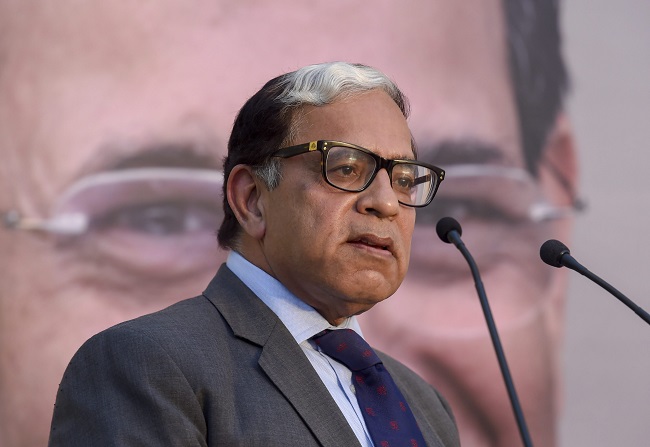
The high-powered committee met for over two hours on Thursday to decide the fate of Alok Verma, reinstated by a Supreme Court order after he was sent on forced leave by the government. Chaired by the PM, the meeting was also attended by Congress leader Mallikarjun Kharge and Justice A K Sikri, who was nominated by Chief Justice of India Ranjan Gogoi to represent him. Verma was removed by 2-1, as Modi and Justice Sikri voted for Verma’s removal, while, Kharge raised objections in the meeting.

Verma, who had resumed office on Wednesday, had revoked most of the transfers done by M Nageshwar Rao, who was appointed as the interim CBI chief in his absence.

Prime Minister meets Bollywood stars

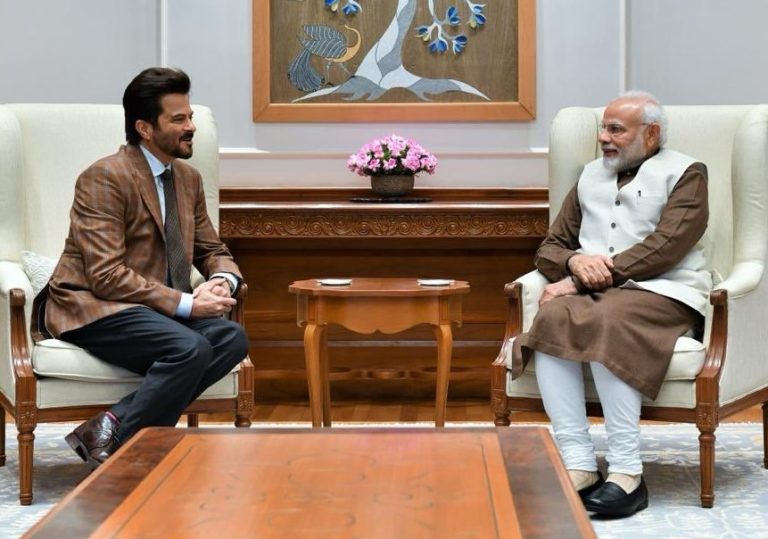
After meeting with a delegation of Bollywood producers, few weeks back, Prime Minster Narendra Modi, today met another delegation, which was a mix of directors and actors. Major Bollywood stars such as Ranveer Singh, Ranbir Kapoor, Alia Bhatt and Varun Dhawan were part of the meeting, which, according to the sources, was organized by filmmaker Karan Johar.

While in the December 19 meeting with PM, there was no female representation, this time Alia Bhatt and Bhumi Pednekar and other female actors were part of the delegation.  Others who were part of the delegation were director Rohit Shetty, Rajkummar Rao, Vicky Kaushal, Ayushmann Khurrana and Sidharth Malhotra.

Kashmir’s Chilla-e-Kalan and the Army’s role

Kashmir at present is going through the period of Chilla-e-Kalan. This period represents the harshest 40 days of winter in the Valley marked by glaciated conditions with icicles hanging down from trees, slippery earth/roads and the frozen water. In fact, getting fresh water is a challenge during these days since all taps and water pipes remain frozen. Movement outside the house is severely restricted. Interestingly, this is the period before the advent of snowfall, which brings with it some respite from chilling cold.

As the valley grapples with Chilla-e-Kalan with roads and communication channels closing down, few outside the region are aware of the massive effort that goes into preparing for this period and the overall harsh winters. Fewer know the contribution of the Indian Army personnel posted there in making the lives of the locals easier while staying operationally active themselves, despite the hostile weather conditions.

The extreme cold conditions leads to general sickness that gives rise to several emergency medical cases for which aid is not easily available. The situation is even more critical in remote areas of the valley where communication is a challenge even in the best of conditions during summers. There was a time, during the period of peak terrorism, when no doctor or nursing assistant was ready to man the Primary Health Centres (PHC’s). Presently, with efficient governance in place, the PHC’s are functioning and the situation is much better but still the capacity of the PHC’s to function independently remains limited due to a host of administrative and climatic challenges.

Indian Army in Kashmir is well aware of these problems and prepares its medical assistance plan in concert with the PHC’s and the community leaders well in advance and very meticulously. Much before the winter sets in, adequate communication facility is established between the PHC’s and the nearest Army locality to ensure that maximum assistance is made available as a routine and more so during emergencies. The presence of the army is a great morale booster for the PHC’s and they remain motivated towards performing their duty.

Years of experience has created in the army, a system, to prepare for the winters well in advance, as was done this year too. As the Kashmiri people built stocks of dried vegetables and other items for the winters, especially Chilla-e-Kalan, the army too began its preparation for medical assistance.  The first stage of preparation entailed holding of medical camps. Before the onset of Chilla-e-Kalan in the ongoing winters, medical camps were held across the valley and extensively in remote areas. A general round-up of the health of the locals was taken and those needing special care were advised, assisted and helped. Apart from the medical check-up, classes were held to educate the locals about health problems that they are likely to face during the winter and the steps required to be taken to avoid the same. Doctors from the army and from the civil medical services as well as volunteers worked together for this noble cause. A few of these medical camps elicited coverage by the media but most went unheralded due to the remoteness of their location. All of this was done by the army under the ambit of its humanitarian and development oriented scheme – Operation Sadbhavna. Active support from the government health services was sought and it was forthcoming with enthusiasm.

The troops deployed in remote areas have a good stock of medicines and the regimental medical officer’s strength is to capacity. Army medical officers have been regularly visiting areas that come under their unit’s responsibility, to see if everything is all right. Despite the cold wave, medical camps are being held regularly and medicines are being disbursed free of cost.

There are standard operating procedures in place to carry out medical evacuation of emergency cases both by road and by air. Fully equipped Army ambulances and other vehicles are ready for this purpose; the process for carrying out air evacuation by requisitioning Air Force helicopters, mostly MI-8 is in place. Special attention is being paid to remote areas like Gurez where air evacuation is the only option.

Keeping the communication channels open is crucial all through the winters in order to ensure timely movement of medical emergencies.  It is for this reason that the Army is mostly seen working in conjunction with the civilians in snow clearance. The joint effort also strengthens the bond between public and the army personnel.

Over the years, other security forces (Jammu and Kashmir Police and the paramilitary forces), have also started contributing gainfully towards creating facilities for the winter season. They are constrained, not by intention, but due to limited resources as compared to the Army, but the will is there and whatever is available is put to use optimally. This year, a large number of non-government organisations have also joined in the effort to ensure that the winter months in Kashmir become more bearable.

As in the previous years, this year also there have been instances when the good work being done by the forces has been misconstrued with the intention of harming the good reputation of the security forces. Inimical forces are leaving no opportunity to spread propaganda about there being some hidden agenda behind provision of such assistance. The people very well understand that the assistance being provided is no more than a manifestation of the close bond between them and the security forces. The harsh conditions for survival are equal to all and they bring the locals and the soldiers close to each other. The army and other security forces, as such, tend to ignore such diatribes by a few frustrated people. For them, the biggest joy comes in the form of the happy faces of those who benefit from their humanitarian gestures.

The goodwill of the army, however, should not lead to complacency in the Government of Jammu and Kashmir. There is an urgent need for the government to ensure that there is adequate medical infrastructure in place to meet all health related challenges. Extensive use of technology should be resorted to. The number of Primary Health Centres and staff on ground also needs to be boosted so that the distance between the patient and the hospital is reduced. There are many countries across the world that face such weather related challenges, their methods and procedures need to be studied, modified for local conditions and implemented.

No Indian content for Pakistani viewers: Pakistan Supreme Court

Bringing back 2016 curbs, Pakistan’s Supreme Court has reintroduced a ban on Indian films and television shows being broadcast on Pakistan’s local channels. It was in 2016 that Pakistan Electronic Media Regulatory Authority (PEMRA) had imposed a ban on airing Indian content on local television and FM radio channels. However, the Lahore High Court lifted ban in 2017, declaring it null and void as the Pakistan government had no objections regarding the same.

In the latest turn, the apex court was hearing a case filed by the United Producers Association pertaining to the broadcast of foreign content on Pakistani television channels. During the hearing, Chief Justice of Pakistan Mian Saqib Nisar ordered a “shut down” and made it clear that authorities should “only air appropriate content”. The Chief Justice said, “They are trying to (obstruct the construction) of our dam and we cannot even ban their channels?” He was also of the view that Indian content on Pakistani TV channels as it “damages our culture”.

Shah Faesal resigns from IAS, likely to join National Conference

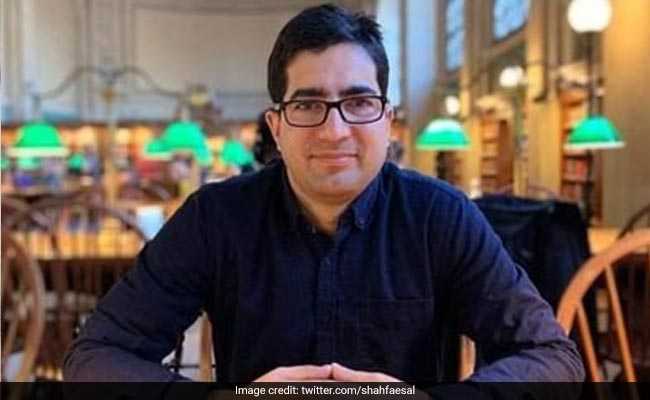
In a surprising move, first Kashmiri IAS topper, Shah Faesal, has resigned today, protesting the “unabated” killings in Kashmir and the marginalisation of Indian Muslims. He had topped the Civil Service exam in 2009. The 35-year-old officer said his resignation was to protest “the marginalisation and invisiblisation of around 200 million Indian Muslims at the hands of Hindutva forces reducing them to second-class citizens; insidious attacks on the special identity of the state and growing culture of intolerance and hate in mainland India in the name of hyper-nationalism”.

Faesal, who had recently returned from Harvard University, after a foreign training and was awaiting posting, said that “subversion of public institutions like the RBI, the CBI and the NIA has the potential to decimate the constitutional edifice of this country and it needs to be stopped”. He also said that he would be addressing media on Friday to announce his next move. He is likely to join the National Conference and might also contest the Lok Sabha elections.

Faesal’s resignation has come six months after the Jammu and Kashmir government initiated disciplinary action against him for a tweet on frequent rapes which was seen by the Centre’s Department of Personnel and Training as his failure to maintain absolute honesty and integrity in discharge of duties.

Faesal’s resignation will now  be forwarded by the state chief secretary along with vigilance status of the officer. The resignation will be considered by the Department of Personnel and Training.

Big relief for Alok Nath in rape case

Bollywood actor Alok Nath has been granted relief on a surety bond of Rs 5 lakh by the Additional Sessions Court Judge S S Oza.  In its order, the judge noted that the allegation raised by the complainant might have been inspired by her “unrequited and un-reciprocated love” for Nath. “The duo was working in the production unit of a television serial (in Mumbai) when they met Alok Nath in mid-80s, and a fast friendship developed between the three of them. He (Nath) proposed to Ashu in 1987 and they got married,” the court said in the order.

Earlier, the sessions court, while granting a pre-arrest bail to the Bollywood actor last week observed, that the rape case against Alok Nath was lodged on the basis of a “defamatory” and “false” report of complainant Vinta Nanda. “The offence against the actor has been registered on the basis of patently defamatory, false, malicious, derogatory and imaginary report of the first informant or complainant (Nanda),” the judge noted.

The Judge said in his order, “It is to be noted that the complainant remembers the entire incident but does not remember the date and month of the incident. In view of all these facts, the possibility cannot be ruled out that the applicant has falsely been enroped in the crime.’

It was in October 2018, the screenwriter had shared her experience on social media when MeToo movement was at its peak, without naming Nath. She later filed a complaint with the Oshiwara police in Mumbai stating that Nath raped her in her house in 1998 after spiking her drink. Nath, 62, was booked in November under section 376 (punishment for rape) of the Indian Penal Code (IPC).

Christian Bale, Rami Malek win top honours at 2019 Golden Globes

Christian Bale bagged his second ever Golden Globe honour for his role as former U.S. President Dick Cheney in ‘Vice’. The 44-year-old actor got the Best Actor in a Musical or Comedy award at the 2019 Golden Globes. Bale beat out Lin-Manuel Miranda (Mary Poppins Returns), Viggo Mortensen (Green Book), Robert Redford (The Old Man & The Gun) and John C. Reilly (Stan & Ollie) to take home the trophy. While accepting his award, Bale said, “Aw, look at us, what a bunch of lucky buggers we are, to make a life out of doing something that we love. Thank you for allowing me to be a part of that for so many years.”  He concluded the speech by thanking “Satan for giving me inspiration.” The actor won his first Golden Globe award in 2011 for his role in ‘The Fighter’.

Rami Malek won his first Golden Globe for Best Performance by an Actor in a Motion Picture (Drama) for his film ‘Bohemian Rhapsody’. Speaking on the occasion, Malek said, “My heart is pounding out of my chest right now. This is a profound honor to receive this, and to be counted amongst such extraordinary actors.” The award was presented to Malek by Richard Gere and Julianne Moore.

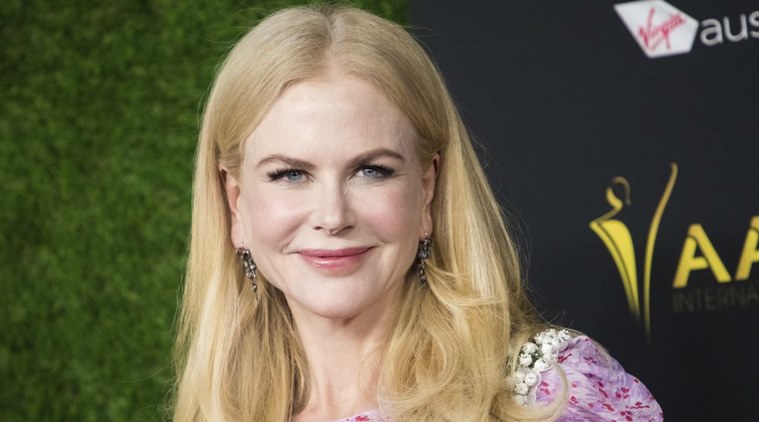
‘Bohemian Rhapsody’ was announced, by actor Nicole Kidman, as the HFPA’s Best Drama. Producer Graham King took to the stage and thanked the audience for the award. The 2018 biographical film is about the British rock band Queen that followed singer Freddie Mercury’s life from his joining the band in 1970, to their Live Aid performance at Wembley Stadium in 1985.