Home Blog Page 92

Pensioners protest in Pak-occupied J&K; demand hike amid soaring inflation

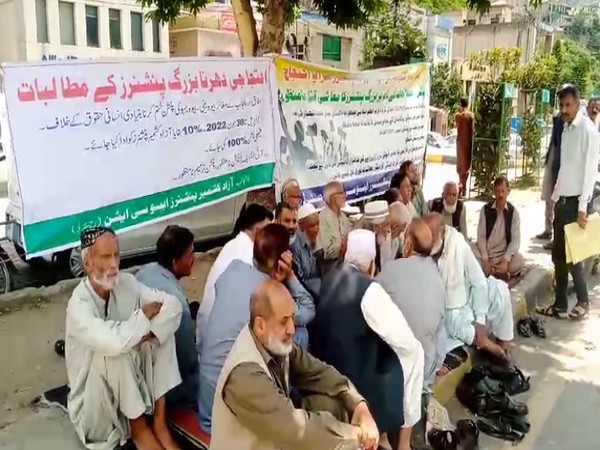
Scores of former occupied govt’s employees and pensioners in Pakistan-occupied Jammu and Kashmir (PoJK) took to the streets in a desperate bid to have their voices heard, holding a sit-in protest to demand an increase in their pensions amid soaring inflation.

Sharing heart-wrenching accounts, the protesters stated that managing household expenses has become an uphill battle, with skyrocketing cost of living rendering their meagre pensions inadequate. Despite holding numerous demonstrations over the past year, their pleas have fallen on deaf ears, with the Pak establishment not willing to address their plight.

“It is a fact that the Prime Minister of PoJK cannot make any announcements on his own. This has to be done by the government of Pakistan, and for this, the budget is fixed,” said Raja Muhammad Mumtaz, one of the protesters, highlighting the region’s lack of autonomy and dependence on Islamabad.

The pensioners also demanded the implementation of a law that would ensure the transfer of pensions to widows or unmarried daughters in the event of a pensioner’s demise, a basic right that has been denied to them.

Frustration was palpable as another protester questioned the authorities’ indifference, “When we ask the officials to address our concerns, they turn their faces away, as if nobody should come to them, and they won’t say anything. This is our condition that we are forced to sit on roads. We are old. People passing by are watching us. But our rulers are not concerned to even hear us out.”

The protesters blamed the Occupied government for not only neglecting the welfare of the people in the backward region but also compounding their misery by passing on the economic losses faced due to policy paralysis.

Pak Army acquires PoGB properties at questionable rates

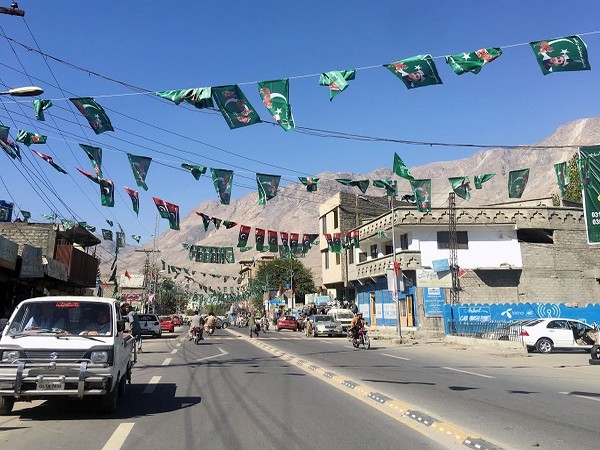
The administration of Pakistan-occupied Gilgit Baltistan (PoGB) has reportedly leased 37 rest houses in forest locations to Green Pakistan Tourism, a subsidiary of the Pak military, at questionable rates.

The rental rates are set at Rs. 7 lakh per month for 20 buildings from the Communication and Works Department and Rs. 1.35 lakh monthly for 17 properties spanning 450 acres from the Forest Department.

The insatiable urge of the Pakistan Army to run public affairs has led it to start a new company called Green Tourism Limited and going a step further, it has now taken dozens of tourism sites on long-term lease and is now planning to run hotels and other such facilities.

The leasing of 37 prime rest houses and vast tracts of forest land to Green Pakistan Tourism at rates that can only be described as exploitation. These properties, which should have been developed as public spaces and revenue generators for impoverished region, have been handed over to the military’s commercial interests on a silver platter.

POGB Properties

The military’s land acquisitions, including those under the guise of initiatives like the “Green Pakistan Initiative,” have negative impact on local communities and small-scale farmers. The Army’s methods of grabbing land in PoGB are multifaceted and often involve a combination of legal manoeuvres, coercion and strategic exploitation of resources.

The military often justifies land acquisition under the pretext of strategic infrastructure development. Incidentally, the Pakistan Army runs huge commercial entities all over the country, starting from gas and petrol stations to housing colonies. It also runs many industrial units and there is hardly a sector in which the Pakistan Army is not involved.

Projects such as roads, military bases, and communication networks are often used as a pretext to acquire land, sometimes without proper compensation or consultation with local communities.

The military often collaborates with civil authorities, including local governments and administrative bodies, to acquire land through legal or quasi-legal means. This collaboration involves influencing decision-making processes, manipulating land records, or using political pressure to secure land.

While POGB grapple with crumbling infrastructure, lack of basic amenities, and marginalization, the PoGB authorities have once again chosen to prioritize the insatiable greed of the all-powerful Pak Army over the well-being of its own people.

Armed men launch grenade attack on Pak Army in Quetta

In a daring attack, Pak security forces were targeted by unknown men in the capital city, Quetta of Pak-occupied-Balochistan on Thursday. They hurled a hand grenade at a checkpoint manned by Pak forces on the Western Bypass, Brewery Road, triggering a powerful explosion.

Reportly, intense firing was witnessed after the blast rocked the area. While authorities have yet to confirm any casualties, the assault has sent shockwaves to the Army.

https://twitter.com/ZirNoor_Baluch/status/1800923148264804453

Recently, armed men abducted two personnel from the Frontier Corps (FC) in the Apsar area of Turbat on Sunday afternoon. No group has claimed responsibility for the abduction so far, but Baloch freedom organizations are known to operate in the region.

The situation in Pak-occupied-Balochistan has long been a point of concern for human rights organizations. The Pak Army has been heavy-handed, resulting in of human rights abuses. Enforced disappearances and extrajudicial killings have been employed to suppress the independence movement in the region.

Pak Army abducts another Baloch teenager in Dera Bugti

The unrelenting oppression of the Baloch community by Pak Army shows no signs of abating, with two more disturbing incidents of enforced disappearances coming to light.

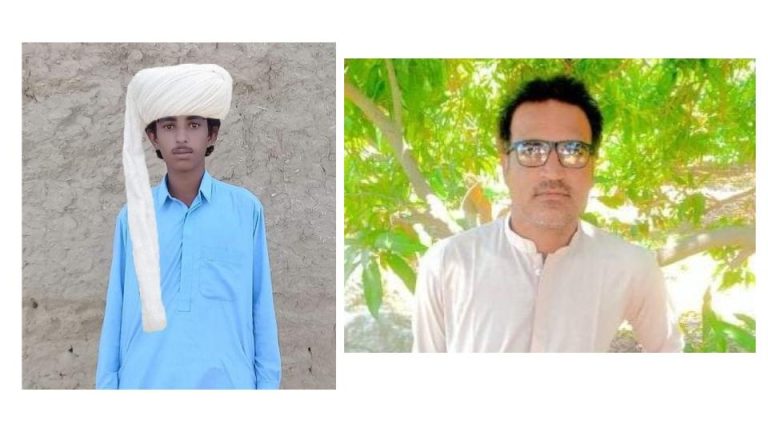
In Dera Bugti, another teenage victim, identified as Jaffar s/o Malhar Bugti, was abducted by Pak Army from the city streets in broad daylight operation.

Meanwhile, in the remote town of Teertege in Awaran district, a recent raid by the Pak military has left the local population reeling. Dill-Jan, the son of Allah Bakhsh, has become the latest victim of the Army’s brutal campaign of enforced disappearances in the region.

Since Pakistan’s forced occupation of Balochistan in 1948, the Baloch people have endured a relentless nightmare of oppression at the hands of the powerful and cruel Army. In addition to the scourge of enforced disappearances, they have been subjected to frequent raids, extrajudicial killings, and a complete disregard for their basic human rights.

Pakistan’s iron-fisted approach is only pushing the region deeper into chaos with no end in sight to the cycle of violence.

Family of missing student faces Pak police brutality during Tejaban protest

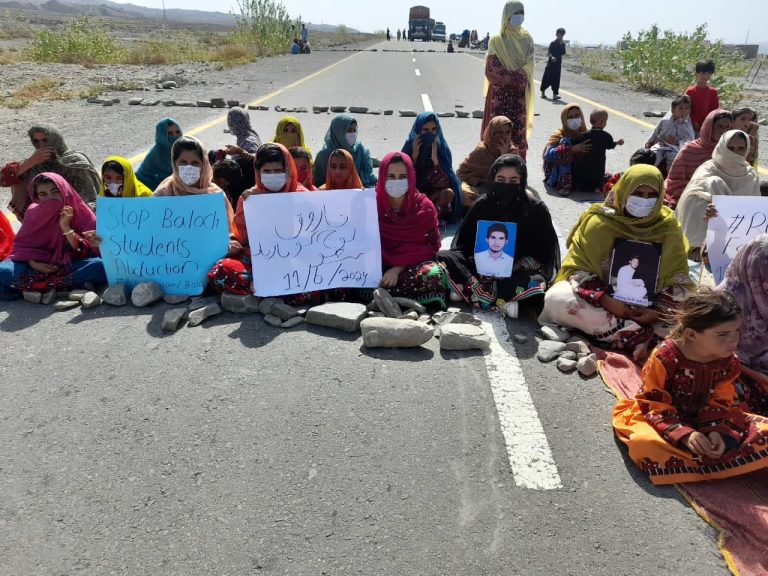
In Kech district, Pak Frontier Corps (FC) personnel have assaulted and used forceful measures against the family members of a missing Baloch student, Farooq Baloch, who have been staging a protest by blocking the China-Pakistan Economic Corridor (CPEC) route at Tejaban.

The FC personnel beat and threatened the protesters, demanding that they end their demonstration within two hours. The protesters have appealed to the Baloch nation to support their cause, which has gained momentum across various parts of Pak-occupied-Balochistan.

The sit-in protest by Farooq Baloch’s relatives on the Kech Tejaban CPEC Road continues, with demands for his immediate recovery. Farooq Baloch was one of six students who went missing after being taken into custody from Quetta on May 28. While five of his companions have been recovered, Farooq’s whereabouts remain unknown.

In a bid to intensify their protest, the family blocked the strategic CPEC route at Tump, completely halting traffic. Meanwhile, a rally is scheduled to take place in Quetta, calling for the safe recovery of Farooq Baloch and Anees Baloch, another missing student.

The protesters have vowed to maintain their blockade of the CPEC road at Tejaban until Farooq Baloch is released, defying the threats and use of force by the security personnel.

Sindhi diaspora to rally in London for release of abducted Hindu girl Priya Kumari

The Sindhi Foundation, a Washington-based human rights organization, has announced plans to organize a long march in London on June 14 to commemorate the abduction of Priya Kumari, a young Hindu girl from Pakistan’s Sindh province, three years ago.

The protest march, stretching from 10 Downing Street to the Pakistani High Commission, aims to draw attention to the plight of the minor and demand her safe return.

“We, the Sindhis living in London and elsewhere worldwide, have taken to the streets along with humanitarians, women, and men of conscience, to seek justice for Priya Kumari and bring her back home,” said Sufi Munawar Laghari, the Sindhi Foundation’s Executive Director.

Priya Kumari, then seven years old, was forcibly abducted near her home in Sangrar village, near Sukkur, while serving water to mourners during a Muharram commemoration. Since then, her whereabouts remain unknown despite the family’s efforts.

Laghari said that the highly politicized police in Sindh is failing miserably to recover the abducted minor, despite being aware of her location. He emphasized that Pakistan, as a signatory to the UN General Assembly’s Declaration of the Rights of Children and other international instruments, has an obligation to protect children like Priya Kumari.

The Executive Director alleged that Priya Kumari’s abductors belong to the “political power corridors” and targeted her because she hails from the Sindhi Hindu community, whose daughters are frequent victims of forced conversions to Islam.

“There are hundreds of Sindhi Hindu young women and girls who are forcibly converted on an everyday basis in Sindh, which goes unabated,” Laghari said.

During the long march, the Sindhi Foundation plans to present memorandums to the staff of the UK Prime Minister and the Pakistani High Commissioner, highlighting Priya Kumari’s plight and urging authorities to facilitate her safe return to her family.

Notably, Sindh has the highest population of Hindus in Pakistan and therefore witnesses most cases of forced conversion. The forced Islamisation of religious minorities has led to the steep decline in their population in the Islamic Republic.

BLA attacks Pak Army vehicle, kills two and injures four

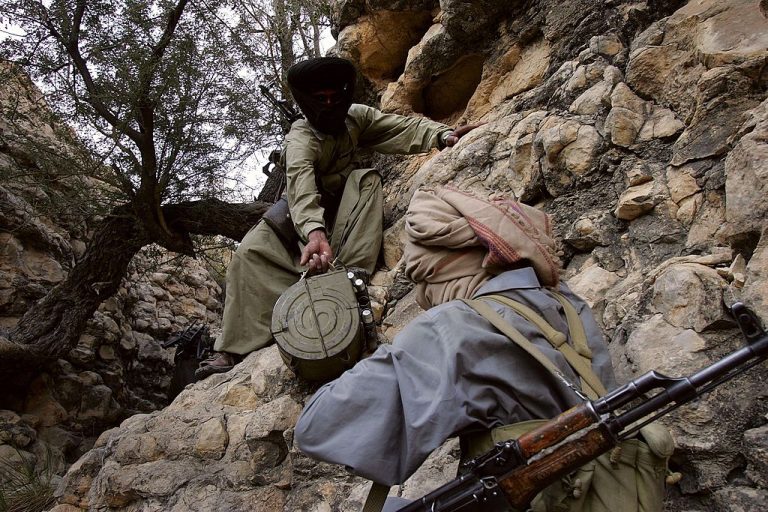
The Baloch Liberation Army (BLA), a prominent pro-independence group, has claimed responsibility for a deadly attack on Pak security forces in Panjgur district of Pak-occupied-Balochistan province.

According to a statement issued by Jeeyand Baloch, the BLA’s spokesperson, their fighters targeted a vehicle of the occupying Pak forces with a remote-controlled improvised explosive device (IED) on Sunday.

The attack, which took place in the Makoi Dan area of Sorap, resulted in the deaths of two Pak Army personnel, with at least four others sustaining injuries. The BLA spokesperson said that the vehicle was severely damaged in the blast.

“The Baloch Liberation Army takes responsibility for this attack. Our operations will continue until the complete evacuation of the occupying forces from Balochistan,” the statement read.

Balochistan, forcefully occupied by Pak Army is the largest but least populated province, has grappled with a long-running freedom struggle. Various Baloch freedom fighter groups, including the BLA, have waged an armed struggle against the Army, for the freedom of Baloch people and to stop the exploitation of the resource-rich region’s natural resources.

The BLA has been at the forefront of the fight, frequently carrying out attacks on security forces and infrastructure projects in the region. The group aims to establish an independent homeland for the Baloch people, who have been marginalized and oppressed by the Pak establishment.

Pak Army’s enforced disappearances target Baloch youth

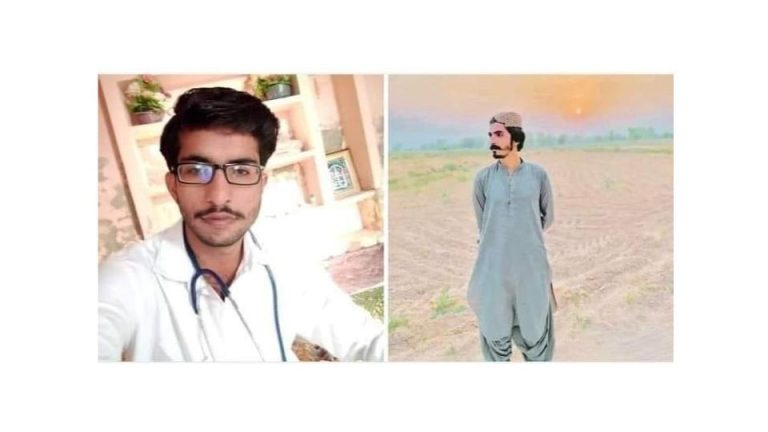
The enforced disappearance of Dr. Shahid and Saif Baloch, abducted from a clinic in Beirut Mandwani area of Taunsa, has once again brought the plight of the Baloch people to the forefront. This egregious act is a grim reminder that no corner of the region is safe from the heavy-handed brutality of Pak forces.

From the coastal towns of Makuran to the inland cities like Taunsa, the Baloch populace lives in constant fear of falling victim to the Army’s oppressive tactics. The youth, including students and activists, bear the brunt of this relentless crackdown on dissent and demands for basic human rights.

Enforced disappearances have become a chilling norm, with countless Baloch individuals unlawfully detained and forcibly made to vanish without a trace. Human rights organizations have repeatedly condemned these harrowing practices and urged Pak authorities, but their pleas have fallen on deaf ears.

In response to the alarming surge in enforced disappearances and harassment targeting the Baloch student community, organizations across Pakistan are mobilizing to raise their voices in protest. These demonstrations underscore the growing frustration and unwavering determination to bring global attention to the violations perpetrated by the very state that is duty-bound to protect its people.

Since the Pak Army’s occupation of Balochistan in 1948, Baloch community has endured a relentless nightmare of oppression, not only subjected to enforced disappearances but also frequent raids, extrajudicial killings, and a complete disregard for our basic human rights.